




 nueva página del texto (beta)
 Inglés (pdf)
 Artículo en XML
 Referencias del artículo
 Traducción automática
 Enviar artículo por email
 Citado por SciELO
  Similares en
SciELO
Similares en
SciELO 
 Permalink
INTRODUCTION
An ecosystem is a unit of organisms interacting with each other and the abiotic components in a given space. The system’s flow of material and energy remains in dynamic equilibrium. Soil is a significant component of all terrestrial ecosystems, and it is an ecosystem by itself since it contains many organisms interacting between themselves and with the soil (van der Putten et al. 2013). The soil is characterized by its chemical, physical, or biological properties. For example, the chemical composition and its physical, structural properties are determined by the geological material from which it developed, the plants that exist on the soil, topography, atmospheric factors that have influenced the development of the soil, and specific changes due to human activity (Delgado and Gómez 2016).
These characteristics are intimately related to soil quality. Typically, the primary scientific emphasis is on those required to satisfy human requirements, including agriculture, housing, and industrial activities, among many others. Hence, soil degradation refers to the decrease in quality values due to poor management, which is frequently related to human activities or unexpected environmental or weather events that lead to a loss of soil productivity. These losses are typically caused by changes in nutrient availability and soil organic matter, structure properties, and an accumulation of toxic electrolytes that damage the development of the vegetal cover (Cang et al. 2012).
The formation and evolution of soils lead to different profiles or soil types. Therefore, soils can be classified according to various criteria, including: (1) the intrinsic characteristics of the soil, which depend on the geological processes that formed or altered it; (2) its properties such as permeability, salinity, and composition, which are closely related to the factors of formation; and (3) their suitability for various uses, mainly agricultural (FAO 2020, 2022).
There are many different soil types, including Vertisol (from vertex, ‘mixed’ in Latin), with 30% or more clay in all horizons to a depth of 50 cm. Vertisol exhibits sliding sides that form wedge-shaped aggregates and usually have cracks that open and close periodically related to soil moisture. With Vertisol, clay content can reach 90% because this soil category originates from pyroclastic deposits. In general, Vertisol-type soils are dark in color and lack distinct horizons; clays that dominate are the smectites, which have a high cation exchange capacity, so these soils tend to have high natural fertility (Coulombe et al. 2000).
Vertisol-type soils are the most productive for plant production because of their ability to exchange cations and maintain high moisture content. They are excellent for producing vegetables such as onion, watermelon, tomato, and melon; they even offer excellent yields for wheat, sorghum, and maize.
Due to human activities, it has become imperative to develop alternatives for the physical recovery and treatment of contaminated soils and increase agricultural production by enhancing soils to promote their inherent properties (Murr 1964, Heil and Sposito 1997). Since soil pollution negatively affects plant communities and animals, including humans, many techniques are being developed to remove soil contaminants. These technologies include various physical, chemical, and biological treatments.
Electro-phytoremediation (EPhyR) is an environmental-friendly, economical, effective, and easy-to-use alternative that can be employed to remediate soils contaminated with metals and non-metals (Sharma and Reddy 2004). It is also used to treat soils contaminated by hydrocarbons (HC) or those exhibiting a mixture of both inorganic and organic contaminants (Abioye 2011, Chirakkara et al. 2015). For the proper use of EPhyR, it is essential to understand the chemistry of the soil since it contributes to different aspects of soil fertility and the health of organisms correlated to various biological processes.
Electrokinetic remediation (EKR) is a process that requires the application of direct current through fine-grained soils using almost an anode and a cathode. This process can be performed in situ and is effective for fine-grained soils of low hydraulic permeability, which otherwise are difficult to treat by other methods. EKR removes toxic metals, radionuclides, and organic contaminants from saturated or unsaturated soils, sludge, and sediments (Hooda 2007; Cameselle and Reddy 2012, Hahladakis et al. 2013, 2014, 2016, Pérez-Corona et al. 2013a, b, Li et al. 2016).
EPhyR of hydrocarbon-contaminated soils uses plants, such as maize (Zea mays L.), a C4 metabolism plant as previously reported by Liao et al. (2015). Maliszewska-Kordybach and Smreczak (2003) and Zhang et al. (2009) studied the growth and biochemical responses of maize plants growing in soil contaminated with crude oil. These researchers also analyzed the plant tissues and found no hydrocarbon accumulation, although there was a decrease in the concentration of hydrocarbons in the soil. Besides, it has been reported that maize can be employed to remediate soils contaminated with pyrene (removing 21-31%) and cadmium (12-27% removal). In this case, maize might be a suitable candidate for remediating toxic metals and hydrocarbon-contaminated soil (Zhang et al. 2009).
Since their discovery, modified IrO2-Ta2O5|Ti electrodes have been used for the remediation of polluted water (Comninellis and Pulgarin 1993). Several authors have reported the use of this type of anode coupled with titanium (Ti) cathodes for the remediation of water and soil (Comninellis and Pulgarin 1993, Ihoş et al. 2005, Zhang et al. 2009, Lee et al. 2011, Pérez-Corona et al. 2013a, b, Herrada et al. 2016, 2018). Also, it is widely known that H+ and -OH are generated as the result of an electrolysis reaction near the IrO2-Ta2O5|Ti anode following essential responses (1) and (2):
When these ions are formed, they move towards the oppositely charged electrodes, producing an acidic or basic environment near the Ti cathode and IrO2-Ta2O5|Ti anode, respectively (Herrada et al. 2016).
This paper aims to show the effect of electrochemically imposing a direct current electric field to remove hydrocarbons from polluted soils; the impact of applying an electric field on some physical and chemical properties of soil; the increase of the germination seeds and plants growth of Zea mayz L., because maize plants have the capacity to bioaccumulate and remediate polluted soils (Phillips et al. 2006).
MATERIALS AND METHODS
Plant material
Maize seeds (Zea mays L.) were obtained for the EPhyR studies from a local supply house in Santiago de Querétaro, Mexico. Before their use, each seed was vigorously washed using a 1% commercial liquid aqueous surfactant solution (containing alkyl ether sulfate ethoxylate), followed by a triple rinse in distilled water. Seeds were stored in a dry and cool environment until use, as described in the literature (García-Rubio and Malda-Barrera 2010).
Soil sampling
A clean agricultural-purpose Vertisol pelic was collected near a farm in Sanfandila, Querétaro, Mexico, and a hydrocarbon-polluted Vertisol pelic was collected close to a refinery near Salamanca, Guanajuato, Mexico. Soil samples were collected from the superficial layer of the site (between 0 and 0.2 m for the natural ground level). These were transported in sterilized glass containers and kept at 4 ºC until used. They were dried for at least two weeks at room temperature in the dark, according to the US-EPA standards from the series SW82 (EPA 1970), before experimentation. Subsequently, the soil samples were sieved using a 2 mm mesh to remove roots, gravel, and non-soil components, considering the clean soil (CS) and the hydrocarbon-polluted soil (PS).
Experimental set-up
Electrodes were deployed in a 1D configuration (Fig. 1a) during this pilot-scale experimental set, as reported in the literature (Herrada et al. 2016). Electrodes used in this research were prepared as previously reported by Acosta-Santoyo et al. (2016, 2017, 2018), and Herrada et al. (2016, 2018), using Ti as a cathode and IrO2Ta2O5|Ti as the anode in the presence of 0.1 M NaOH as a supporting electrolyte. The dimensions of each Ti electrode were 0.5 × 4.0 × 20 cm (Fig. 1a). A modified IrO2-Ta2O5|Ti anodic electrode was placed in front of a Ti cathode. Six rows of maize seeds were sown in the cell separated by 5 cm, and seven lines of maize seeds were separated by 8 cm between them (Fig. 1b). Each cell was prepared to a pilot-scale experimental set with hydrocarbon-polluted Vertisol pelic and Vertisol pelic alone, including electro-phytoremediation (EPhyR), electrokinetic remediation (EKR), phyto-remediation (PhyR), and soil control (A, B, C, and D in Fig. 1b), and soil at the beginning of the EPhyR. The seed was subjected to electrical stimulation by a 0.2 V/cm electrical field for 4 h with the electrodes connected to a GP-4303UP power supply. Seeds were left undisturbed for one week to germinate. Finally, they were treated daily by applying a 0.1 V/cm direct current field for 8 h during 42 days, as reported in a previous study, to increase the germination of seeds and growth of plants (Acosta-Santoyo et al. 2016, 2017, 2018). The electric field was activated for 4 h in the morning and 4 h in the afternoon (Yi et al. 2012).
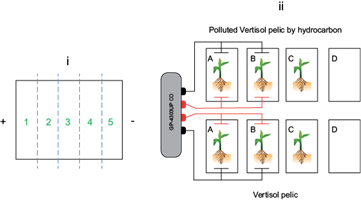
Fig. 1 (a) Representation of the layout and size of electrodes used in the pilot-scale experiments. (b) Schematic representation of the division of the electrochemical cell for sampling aimed to analyze the physical and chemical properties of soil between the anode (+) and cathode (-) in Vertisol pelic and polluted Vertisol pelic by hydrocarbons, where (A) electro-phytoremediation, (B) electrokinetic remediation, (C) phyto-remediation, and (D) soil control (D).
An electric field was applied as electrical stimulation, as reported in previous studies (Dannehl et al. 2011, Yi et al. 2012), established at 0.2 V/cm. This methodology was developed for Vertisol pelic and hydrocarbon-polluted Vertisol pelic (Fig. 1ii). Electrical stimulation of the maize seeds in CS is called electro-farming (EF; Dannehl et al. 2011, Yi et al. 2012, Acosta-Santoyo et al. 2016, 2017, 2018). Applying electrical stimulation to a PS is called electrokinetic remediation (Pérez-Corona et al. 2013a, b), while treating a PS with plants is called electro-phytoremediation (Acosta-Santoyo et al. 2018).
The agricultural considerations for the development of the plants were carried out according to the specifications for Zea mays L., as cited in the literature (Stenz et al. 1998). An analog Vernier caliper was used to determine the parameters related to the aerial and radical structure of the analyzed plants (Wawrecki and Zagórzska-Marek 2007, Pick et al. 2011, Shao et al. 2017). The germination percentage was calculated by counting the total number of seeds that broke dormancy, deemed to have occurred when the cotyledon emerged. Germinated seeds were measured at the end of the first week, after which the seeds were counted daily (Pérez-Corona et al. 2013a, b, Acosta-Santoyo et al. 2016, 2017, 2018).
Analytical techniques
Soil samples were taken from the experimental containers according to the Mexican Standard NMX-AA-132-SCFI-2006 (SCFI 2006). Complete plants were collected, dried for further analysis, and kept under appropriate and controlled laboratory conditions. All analytical procedures were performed according to the Mexican Official Standard NOM-021-SEMARNAT-2000 (SEMARNAT 2000), with modifications to adjust the soil characteristics employed in these experiments. Soil samples were evaluated for pH, electrical conductivity, soil organic matter content, soluble ions such as potassium, calcium, and sodium, and cation exchange capacity. The enzymatic activity was determined using dehydrogenase activity, which is the reduction of 2,3,5-triphenyl tetrazolium chloride (TTC) to triphenyl formazan (TPF; Henríquez et al. 2014). Triplicate soil samples were dried in the dark at room temperature and passed through a 2 mm mesh screen to homogenize the soil particles to 2 mm for all the determinations. For all the results obtained, the average and standard deviation are shown over all <in all the graphics?; please revise>graphics in this paper.
RESULTS AND DISCUSSION
EPhyR of hydrocarbon-polluted soils
The results show that EPhyR increases the germination of maize seeds in 30% in the polluted soil (PS), and 80% (the highest germination) in the control soil without HC (Fig. 2a). Applying the 0.2 V/cm for 4 h to the maize seeds, EF can be developed, which showed 85% of the maize seeds’ germination.
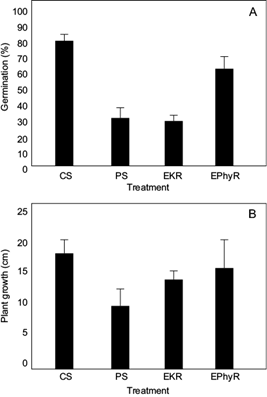
Fig. 2 (a) Germination percentage (%) of maize seeds applying 0.2 V/cm by 4 h; and (b) maize plant growth (in cm) applying 0.1 V/cm by 8 h during 42 days in clean soil (CS), polluted soil (PS), electrokinetic remediation (EKR), and electro-phytoremediation (EPhyR). Error bars represent the standard deviation.
Furthermore, the results showed improved germination of 50% in EPhyR of polluted soils after treatment was applied compared to PS without it. This effect might be due to slight changes in the soil’s physical and chemical properties according to the Mexican Official Standard NOM-021-SEMARNAT-2000 (SEMARNAT 2000) indicated in the analytical techniques section of this paper and the seeds’ direct stimulation. After six weeks of electrical stimulation of the maize plants, the maize seedlings were analyzed. The maize plant showed the highest height (Fig. 2b) in the clean soil (CS) with 19 cm, followed by the electro-phytoremediation soil (EPhyR) with 17 cm, then in the electrokinetic remediated soil (EKR) with 15 cm. The lowest height of maize plant was shown in polluted soil (PS) with 10 cm. EPhyR helps to increase the plant growth, which was evaluated with Soxhlet extraction of HC in different depths of the cell used for EPhyR: 5, 15, and 25 cm, close to the anode, to the middle cell, or the cathode (CA, MC, and CC in Fig. 3, respectively). It was evident that the highest HC removal with IrO2-Ta2O5|Ti, which promotes hydroxyl radicals, as reported before (Acosta-Santoyo et al. 2016, 2017, 2018), was obtained close to the anode. Additionally, close to the anode (CA) at a depth of 25 cm in the cell of EPhyR, it showed an HC removal efficiency of 43%, while at a depth of 15 and 5 cm, the HC removal efficiency was 41%. In contrast, close to the cathode (CC) in the cell of EPhyR, the HC removal efficiency was 24% at 25 cm, which decreased at a depth of 15 and 5 cm (21 and 10%, respectively). In the middle cell (MC) of the EPhyR, the HC removal efficiency was 14, 36, and 31% at a depth of 25, 15, and 5 cm, respectively.
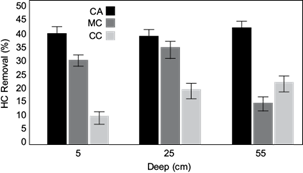
Fig. 3 Hydrocarbon (HC) removal (%) by Soxhlet extraction close to the anode (CA), middle cell (MC), and close to the cathode (CC) in distant deeps: 5, 25, and 55 cm after 42 days of electro-phytoremediation. Error bars represent the standard deviation.
HC was moved from anode to cathode by electro-osmosis, for its consequent biodegradation by the maize plants included in the cell of EPhyR. This behavior has been reported by Pérez et al. (2013), Liao et al. (2015), and Acosta-Santoyo et al. (2017, 2018). EPhyR allows the cotyledon to emerge as the pollutant content is reduced. Furthermore, it enhances the migration of nutrients and modifies soil parameters (porosity, clay, silt, and sand content) during the HC removal period. EKR increases the bioavailability of HC (Balasubramaniyan 2015) or humidification.
Subsequently, the seeds’ germination depends on the exposure time to the pollutant. After a one-week low-intensity treatment (Fig. 4a), the electric field was changed to 1.0 V/cm for 8 h. The plant growth became evident in the first 35 days (Fig. 4b). After one week of the electric field application during the growth period, an increase in the maize size was observed applying the electric field in clean soil. This is because in EF, the plant growth was higher (6.5 cm) than in CS (5.5 cm), and in the presence of HC, the results were similar in PS (4.0 cm) and EPhyR (4.2 cm). A significant difference in the maize plant growth was observed after 35 days (Fig. 4n), when EF increased the plant size by more than 10 cm on average (60 cm) compared with the CS (45 cm). A similar behavior was observed after 42 days (Fig. 4c), when the EF showed the highest maize plant growth (72.3 cm), followed by the CS (50 cm), PS (20.54 cm), and EPhyR (21.08 cm).
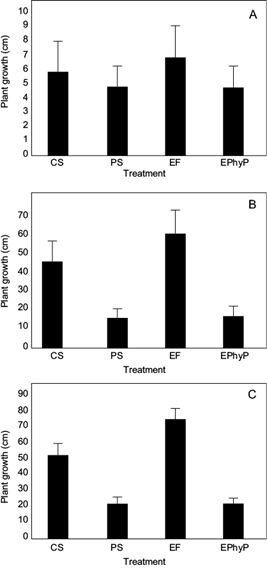
Fig. 4 Maize plant growth (in cm) applying 0.1 V/cm by 8 h after (a) 7, (b) 35, and (c) 42 days in clean soil (CS), polluted soil (PS), electro-farming (EF), and electro-phytoremediation (EPhyR). Error bars represent the standard deviation.
However, germination was affected more than the plant growth during the experiments, which must be related to the presence of pollutants in the soil. The plants in the EPhyR area tended to exhibit improved development after one month of treatment, compared with the contaminated soil. Thus, plants showed a good growth after EPhyR, indicating reduced levels of contaminants on these sites by the mobilization of ions between soil particles (Sidoli et al. 2003, Aladjajiyan 2012, Acosta-Santoyo et al. 2016), which is increased by the IrO2-Ta2O5|Ti anode and the Ti cathode (Méndez et al. 2012).
Edaphological characterization before and after the EPhyR of polluted hydrocarbon soil
Before and after 42 days of EPhyR, physical and chemical measurements were obtained from the different soil samples to determine changes in the other soil properties in this study. A change in the color of the PS compared to EPhyR was observed. The Munsell soil color chart changed from 2.5Y 3/2 black to 3/2 10YR brownish-black, suggesting some removal of pollutants (Sánchez-Marañón et al. 2005). The soil texture values showed a slight increase of silt after the EPhyR, from 15.62 to 24.80%. Clay increased from 4.22 to 4.60%, and sand decreased from 79.53 to 70.60%, while there was an increase in porosity, from 56.43 to 60.97%, which could be due to the aggregation of particles by the presence of hydrocarbon, as reported by Pérez-Corona et al. (2013a, b) using zeta potential values and the distribution of particle size (Méndez et al. 2019). This occurred since the hydrocarbon-soil particle interactions were likely broken down after applying the electric field, which initiated different transport phenomena such as electromigration, electroosmosis, and electrophoresis (Pérez-Corona et al. 2013a, b, Méndez et al. 2019) to release the hydrocarbon contaminants in the soil aggregates, leaving behind silt and/or clays and distributed organic compounds. Additionally, during EPhyR, significant changes were observed in most of the values, which can be further attributed to the influence of the maize plants on soil. Humidity values increased from 46.85 to 64.50% after EPhyR, possibly due to the addition of the supporting electrolyte (NaOH). On the other hand, their levels might have increased directly from plant development. These higher values benefit the microorganisms present in the soil, contributing to the development of plants and the removal of pollutants from the soil.
The soil pH was determined for each sample, where the CS had a value of 8.2 (Fig. 5a). In the cells where plants were grown (PhyR), this value increased to 8.3. For the soil treated with 1.0 V/cm direct current electric fields (EPhyR), a pH of 7.9-8.0 throughout the cell was observed. This value was from 8.2 to 8.3 when maize plants grew. The pH values in PS exhibited a similar behavior (Fig. 5b); however, the pH started near neutral (7.0). When this soil was exposed to EPhyR, the pH increased slightly to 8.2 with and without plants. The change in pH for both soils is somewhat more essential than the optimal level, between 6 and 7, for maize plant growth, which is suggested by the plant’s nutritional requirements (Strable and Scanlon 2009). A soil pH between 5.2 and 8.0 provides optimal conditions for most germination seeds and crop plants since extreme variations in pH ranges affect the soil’s microbial activity and other symbiotic relationships necessary for the development of plants (Cambrollé et al. 2015). Maize plants grow best when pH values range from 5.5 to 7.0, making them slightly acidic soil-tolerant. It has also been proven that most plant-soil nutrients are more readily available in this range of pH values (N, P, K, S, Ca, Mg, Fe, Mg, Bo, and Zn, among others). An increase or decrease in pH values affects the availability of these nutrients. The results show that the low-intensity electric field (0.2 V/cm) decreases the pH value in polluted soils. Other reports suggest that increases in the soil’s pH (over 8) promote the absorption of ammonium by several parts of the plant, while pH reduction encourages the absorption of nitrate, suggesting that a decrease in soil pH values may favor the development of plants (Cao and Tibbits 1994, Gallegos-Vázquez et al. 2000). Thus, pH directly affects the availability of nutrients due to H+ ions present in the soil. H+ ions are situated in hostile ground charge areas, involving how nutrients move. Nutrient movement, however, depends on the size and the nutrient’s ionic charge and whether it is or not lost due to a leaching process.
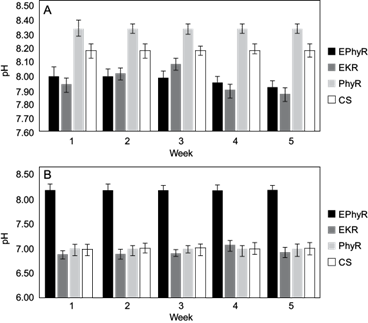
Fig. 5 pH of electro-phytoremediation (EPhyR), electrokinetic remediation (EKR), and phytoremediation (PhyR) with (a) clean soil (CS) and (b) polluted soil (PS) by hydrocarbon after 35 days (five weeks) of treatment. Error bars represent the standard deviation.
With PS, the EPhyR treatment increased from 4.0 to 4.8 dS/cm (Fig. 6b). It was evident that the EKR using CS increased significantly, from 1.2 to 2.7 dS/cm (Fig. 6a), compared to EKR using PS, where the increase was only from 4.80 to 4.91 dS/cm (Fig. 6b). Maize plants are susceptible to saline conditions. Their total yield decreases by 10% in soils where electrical conductivity exceeds 2.5 dS/cm. The threshold for the reduced product is estimated at values close to 1.7 dS/m (Volkov 2000). In the case of EPhyR and PhyR, the concentration of salts in the soil also decreases, providing better soil conditions for the development of maize plants. Soils are conductive due to their physical and chemical properties, mainly from the presence of ions (Lund et al. 2000); therefore, soil salinity plays an essential role in the growth and development of plants, which is crucial in the arable areas of arid zones. An increase in soil salinity can negatively alter the physical and chemical properties of the soil (Silva et al. 2005, García et al. 2008), which can, in turn, reduce plant growth (Baghalian et al. 2008). Every soil has some level of tolerance to salinity, but above this tolerable level, known as the salinity limit, productivity starts to decline linearly. It has been reported that an increase in the electrical conductivity to values greater than 2.2 dS/m reduces the productivity of maize plants in arid areas. The values obtained here, before and after treatments, are below acceptable limits, especially in the electrostimulation of plants (Lacerda et al. 2011). These values can be correlated with texture and soil moisture, which reflect the capacity to store water and are also an essential factor in determining cropland productivity (Delgado and Gómez 2016).
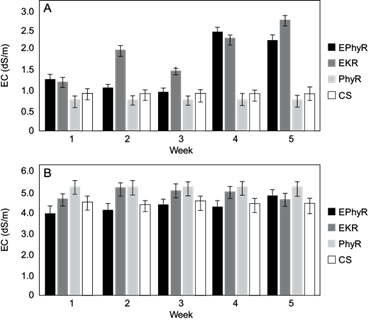
Fig. 6 Electrical conductivity (EC) for electro-phytoremediation (EPhyR), electrokinetic remediation (EKR), and phytoremediation (PhyR) with (a) clean soil (CS) and (b) polluted soil (PS) by hydrocarbons after 35 days (five weeks) of treatment. Error bars represent the standard deviation.
Measurements of soil organic matter (SOM) content were also performed (Fig. 7). In the case of EPhyR and EKR, they showed similar values after the electrical stimulation of maize plant growth applying 0.1 V/cm after five weeks (between 1.8 and 3.0%) (Fig. 7a). EPhyR showed the highest SOM after the second week with 3.0%, while the lowest was observed after five weeks with 2.1%. Due to the presence of HC, SOM was higher with PS than with CS (Fig. 7b). The values for five weeks were between 20 and 26%, with the lowest value for PS (close to 20%) and the highest for EKR (close to 25%), which could be due to the electrophoretic process developed during the application of an electric field, as reported by Acosta-Santoyo et al. (2019). These SOM analyses can be correlated with the EC (Williams and Hoey 1987, Jaynes et al. 1994), clay content, and cation exchange capacity (McBride et al. 1990), all of which help to maintain the soil moisture, assuring a good distribution of nutrients to increase plant growth (Lund et al. 2000). These physical and chemical variables perform multiple functions in the soil, including the retention of nutrients and control of soil particle aggregates, which is an indicator of soil quality. Unfortunately, these values have decreased in many soils due to overgrazing and the conversion of grasslands in agricultural areas, reducing soil fertility and forcing increased use of fertilizers, which often leads to the erosion of soils. Therefore, the results obtained in this research suggest interesting soil improvement techniques, such as treatment with electric current, especially in plants.
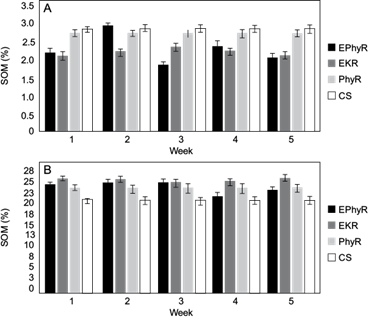
Fig. 7 Soil organic matter (SOM) for electro-phytoremediation (EPhyR), electrokinetic remediation (EKR), and phytoremediation (PhyR) with (a) clean soil (CS) and (b) polluted soil (PS) by hydrocarbons after 35 days (five weeks) of treatment. Error bars represent the standard deviation.
The enzymatic activity (Fig. 8) with 10 mg TPF/g dry soil/day of the dehydrogenase was measured in PS, and with 20 mg TPF/g dry soil/day of dehydrogenase was measured in CS. Therefore, using EPhyR, EKR, and PhyR with CS did not show this enzymatic activity. In the first week after applying 1.0 V/cm for 8 h, PS exhibited the highest enzymatic activity using EKR and EPhyR, with 225 and 251 mg TPF/g dry soil/day, respectively. The enzymatic activity shown in EPhyR was similar after five weeks to the electrical stimulation of maize plant growth, but it decreased to 130 mg TPF/g dry soil/day in EKR after five weeks. In the case of the PhyR using PS, the enzymatic activity was the same during the five weeks of measurement, 7 mg TPF/g dry soil/day. The enzymatic activity increased in PS due to the stimulation of soil microorganisms and the movement of organic compounds, as previously reported in the literature (Oszust et al. 2013). Dehydrogenase, b-glucosidase, phosphatase, and urease enzymes are indicators to evaluate the effect of agronomic management on soils’ quality or health. These enzymes release C, N, and P, which are critical plant nutritional elements. In addition, the dehydrogenase activity affects the microbial processes in the soil, indicating an increased rate of oxidation of soil organic matter.
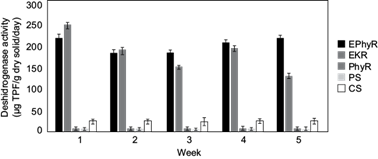
Fig. 8 Dehydrogenase activity monitoring triphenylformazan (TPF) for electro-phytoremediation (EPhyR), electrokinetic remediation (EKR), phytoremediation (PhyR) with clean soil (CS), and polluted soil (PS) by hydrocarbons after 35 days (five weeks) of treatment. Error bars represent the standard deviation.
Bulk density refers to the weight of the total solid material present in each soil type. This value depends on the composition and amount of minerals and weathered rocks during the genesis of soil and the proportion of organic matter contained in the soil (Méndez et al. 2011, Lal 2015). Figure 9a shows a bulk density value of 0.66 g/cm3 for CS, which remains unchanged for five weeks after the electrical stimulation using 1.0 V/cm for 8 h. In the case of the EKR using CS, it increased from 1.8 g/cm3 from the first week to 2.2 g/cm3 after the five weeks, while in EPhyR (Fig. 9b) the value was between 9.5 and 3.9 g/cm3 after the first and fifth week, and the bulk density value did not change during the five weeks of EPhyR (1.8 g/cm3). In the case of PS, its value was similar to PhyR (2 g/cm3). Still, in the case of EPhyR, the bulk density decreased from the first week (9.5 g/cm3) to the fifth week (3.9 g/cm3) by the possible aggregation of particles of soil in the presence of hydrocarbons, as has been published before (Pérez-Corona et al. 2013a, b, Méndez et al. 2019). EKR of PS increased bulk density from the first week with 4.5 g/cm3 to 10 g/cm3 after the fifth week. This result is due to the different mass transport phenomena associated with removing HCs using modified electrodes such as IrO2-Ta2O5|Ti (Pérez-Corona et al. 2013a, b, Méndez et al. 2019). Apparent density did not show changes before and after the EPhyR with values between 0.68 and 0.64, respectively. The porosity values obtained by the real density and apparent density quotient during the 42 days of the experiment slightly increased from 56.43% before the EPhyR to 60.97% after the EPhyR. These values suggest a dynamic behavior when an electrical treatment is applied to the soil. Apparently, this behavior allowed soil particles to release trapped ions making them more available to plants and enhancing aeration, which is important for developing the roots and soil microorganisms associated with plants. Furthermore, all the cations adsorbed on the clay/humic complex or the change-transfer complex can be exchanged for other elements in the soil solution, leading to permanent cation equilibrium (Barghouthi et al. 2012).
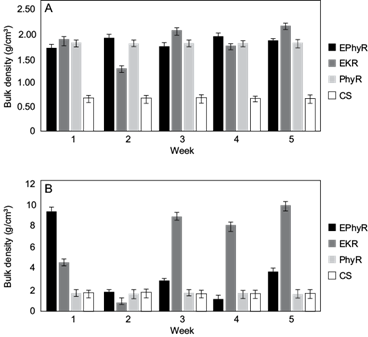
Fig. 9 Bulk density (g/cm3) for electro-phytoremediation (EPhyR), electrokinetic remediation (EKR), and phytoremediation (PhyR) with (a) clean soil (CS) and (b) polluted soil (PS) by hydrocarbons after 35 days (five weeks) of treatment. Error bars represent the standard deviation.
Cation exchange capacity (CEC) values were obtained after 42 days of treatment (Fig. 10a). In the case of CS, the measured value was 88.94 cmol/kg dry soil. Similar readings were observed in EF with 88.2 cmol/kg dry soil. In the case of PS, the CEC decreased to 78.48 cmol/kg dry soil, but this value increased to 83.96 cmol/kg dry soil after the EKR, which raised slightly more after the EPhyR (87.48 cmol/kg dry soil). This effect in the CEC demonstrates that EPhyR rehabilitates the PS by HC through the movement of ions and the capture of nutrients by plant roots.
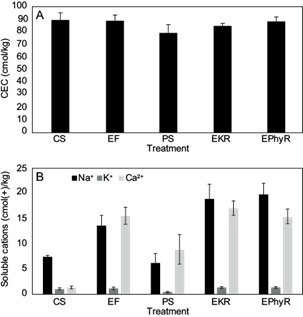
Fig. 10 (a) Cationic exchange capacity (CEC) and (b) soluble cations for clean soil (CS), electro-farming (EF), polluted soil (PS) by hydrocarbons, electrokinetic remediation (EKR), and electro-phytoremediation (EPhyR) after 42 days of treatment. Error bars represent the standard deviation.
The essential ions present in the soil for plant development include sodium (Na+), potassium (K+), calcium (Ca2+), magnesium (Mg2+), ammonium (NH4 +), and hydrogen (H+). The first four cations are essential for plant growth. The latter two have a marked effect on soil structure’s physical and chemical characteristics. Figure 10b shows that the highest concentration of Na+ in the maize plant growth after 42 days of treatment was achieved with EPhyR; EKR showed a similar value, followed by EF (19.83, 19.01, and 13.68 cmol[+]/kg, respectively), because PS showed the lowest concentration of Na+ (6.26 cmol[+]/kg).
In the case of Ca2+, the highest concentration was observed in EKR , followed by EF and EPhyR (17.11, 15.61, and 15.46 mol[+]/kg dry soil, respectively), with the lowest value identified in PS (8.93 mol[+]/kg dry soil).
Additionally, the PS showed the lowest value of K+ (0.47 mol(+)/kg dry soil), while the EKR showed the highest value of K+ (1.42 mol(+)/kg dry soil).
These values vary only slightly in most soils and usually stay within the values reported for minerals’ weathering or after targeted fertilization. Very little of this element is lost by leaching, even when it moves more freely in sandy soils than in clay (Li and Wang 2004), as in the case of the Vertisol pelic. Erosion and elemental uptake by crops are the primary forms of loss from the soil (Smita and Ingole 2015). Additionally, a significant growth of plants was observed in the middle area of the electrochemical cell due to the average concentration of anions and cations, which promotes the development of primary and secondary roots as a result of increased translocation of ions inside the root cells.
CONCLUSIONS
The EPhyR process promoted slight changes in the soil’s physical and chemical properties, including pH, electrical conductivity, soil organic matter content, enzyme activity, apparent and bulk density, porosity, and cation exchange capacity.
On the other hand, significant enzyme activity was detected in contaminated soil samples treated with EPhyR. HCs could be a carbon source for the growth of microorganisms in the soil. Tests of soil organic matter do not show substantial differences among soils treated with 0.2 V/cm for 4 h in the beginning and soils not treated during the germination of maize seeds.
Electrical stimulation of soil promotes ions’ electro-migration, electro-osmosis, and electrolysis of the solution close to the electrodes. These phenomena encourage the bioavailability of nutrients to be taken by the maize plants during the application of 0.1 V/cm for 8 h daily for 42 days. Ion-hydrocarbon dissociation promotes the availability of nutrients for plant growth through the development of primary and secondary roots by the absorption of free nutrients, which was validated with the EF of CS.
The electric field favors the removal of pollutants such as hydrocarbons from Vertisol soils, as the EKR demonstrated in the presence of PS, which favors the uptake of nutrients by maize plants. Therefore, EPhyR is adequate and can be used to remediate soils polluted by hydrocarbons and growing plants such as Zea mays L. to accomplish the biological rehabilitation of soil.

