




 nova página do texto(beta)
 Inglês (pdf)
 Artigo em XML
 Referências do artigo

 Tradução automática
 Enviar este artigo por email
 Citado por SciELO
 Similares em
SciELO

 Permalink

Introduction
From 1905 to 1998, the hospital shared the responsibility of the direction of research and teaching in a single directorate, so the last dual director of Teaching and Research was Dr. María Elena Anzures López. In 1998, Dr. Rubén Burgos Vargas, renowned rheumatologist and researcher emeritus of the National System of Researchers (NSR), would be appointed as director of research. Subsequently, Dr. César Augusto Macías Chapula, a doctor with a specialty in medical information sciences, would take over in 2004. For 2008 and mid-2010, Dr. Francisco Velasco Campos, eminent neurosurgeon and researcher emeritus, would oversee the direction. Then came Dr. David Kershenobich Stalnikowitz, current Secretary of Health in this government, and who also led the direction until 2012. From this date until 2016, Dr. Juan Carlos López Alvarenga, an internist and endocrinologist, served as head of research. Dr. Sergio Agustín Islas Andrade, with a similar training from 2016 to 2018, would take his place. Dr. José Damián Carrillo Ruiz would be the director of the period from 2019 to 2023. Dr. Eustacio Galileo Escobedo González, molecular biologist, is appointed in March 2023 until March 2024. Dr. Gustavo Acosta Altamirano, a physician and specialist in clinical immunology, is the director of research to date.
Background
The management of the Research Directorate (RD) of the Hospital General de México Dr. Eduardo Liceaga (HGM), between 2011 and 2016, was developed in the context of greater globalization. It was hoped that regional economies, societies, and cultures would be integrated through communication, transportation, and trade. Interdisciplinary research was seen as essential to maintaining global competitiveness, and the need to reform education to respond to the demands of the digitally native generations was recognized.
Main achievements organized by areas
Institutional and structural development
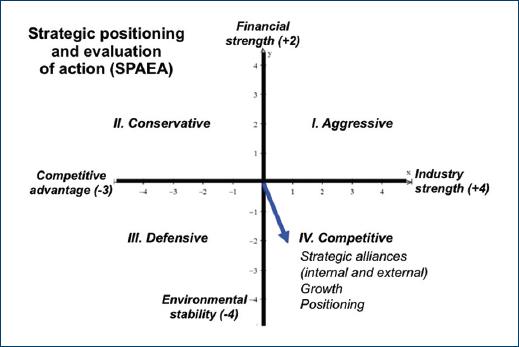
A SWOT analysis was conducted, identifying strengths such as the experienced staff of the RD and the close collaboration with the Universidad Nacional Autónoma de México (UNAM), and addressing weaknesses such as limited computational resources and low scientific productivity. With the analysis of the positioning of the HGM in relation to Research, we decided on a competitive strategy of alliances with other institutions (Fig. 1). This analysis was a guide for the activities of the RD that responded to the dynamics of the hospital. The extensive experience of the RD staff was decisive for the success of the management.
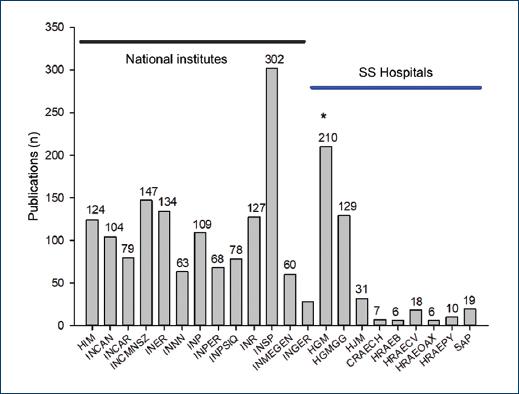
One of the first modifications in the RD was the transition of delivery of projects on paper to digital format, improving administrative efficiency, shortening the review time of research projects. The reorganization of office spaces to support the work of RD staff and add mathematical and physical researchers fostered a collaborative environment. The open-door policy of the RD allowed for approaches with a diversity of HGM personnel (Fig. 2). In this way, the RD space was supported for masters and doctoral classes. The creation of the Research and Technological Development Unit (UIDT), in collaboration with Centro de Ciencias Aplicadas y Desarrollo Tecnológico (CECADET), promoted interdisciplinary research. Dr. Rosa Quispe was the first coordinator of the UIDT, and together with Dr. Argelia Pérez, they promoted interdisciplinary research.
Collaborations and networks
The strengthening of local alliances with UNAM and Instituto Politécnico Nacional in 2012 allowed the solid development of the Masters and Doctoral programs by the RD with the slogan of Researchers teaching to research. The expansion of close collaboration with the National Institutes of Health allowed for academic exchange that mainly involved the Cancer Institute, the National Institute of Genomics, Institute of Perinatology, among others. In addition, we maintained international collaborations in 2014 with the Cleveland Clinic, Mayo Clinic, and Southwest Foundation for Biomedical Research, results limited to writing articles and presenting posters at scientific events.
Human resource development
We expanded the recruitment of key researchers for the teaching of Masters and Doctorate Degrees (Dr. Arturo Reding) and for the coordination of Research, such as in the Nephrology Service (Dr. Monserrat Pérez). The development of the masters and doctoral programs was directed by Dr. Fiacro Jiménez and Dr. Gloria Queipo, promoting rigorous training of members, residents, and technicians for basic and clinical research. In those years, there were federal resources that increased every year and allowed the support of the research projects of the masters students. It should be noted that many of the physicians who received training in these programs later became heads of hospital services and promoted research with their members and residents.
To solve the problem of research production, scientific writing workshops and English competence were implemented. There were regular English practice sessions with Dr. Adolfo Pérez in which anyone interested could participate openly. The greatest expansion and influence of the RD was achieved with the assignment of research coordinators in each of the medical services, which contributed to improving communication to achieve interdisciplinary projects. In addition, because several of the coordinators had been students of the masters and doctoral program, there was a boost to collaborative research at the HGM.
Scientific productivity
An increase in scientific production was achieved, going from 80 publications in 2010 to 210 in 2013, and then to 280 in 2015, with an increase in collaborative articles from 25.8% to 42.6%. Among the innovative research projects is the implementation of hyperinsulinemic-euglycemic clamps (to directly measure insulin resistance) in the pediatric age in projects by Dr. Nayeli Garibay. The Nursing Sub-Directorate widely supported the training of nurses (Lics. Mireya León and Fabiola Serrato) in this technique; it remains in the history of medicine as a novelty that we were pioneers in the use of this technique in Mexican children. Among other innovative aspects was the encapsulation of beta cells from placental epithelium, demonstrating the safety of the capsules to avoid rejection of immune reactions. With Dr. Adolfo Martínez-Tovar, the beta cells were obtained, and the polymer capsule was developed by the hospitals UIDT.
Clinical research was promoted as a practical tool to improve medical care and contribute to scientific advancement. Internal collaboration projects between hospital services and with external institutions increased, for example, the collaboration of the Maxillofacial Service with UIDT and CECADET allowed the development of prostheses of different materials for patients who had lost skull bones secondary to severe trauma. Another aspect was the use of infrared light cameras to detect thermal changes in diabetic foot lesions, thanks to the collaboration of the Endocrinology Service (led by Dr. Valentín Sánchez). It allowed us to explore new options for early diagnosis.
Financial and resource management
There was a 188.6% increase in resources in 2015, exceeding 5 million pesos through sponsorships and mixed financing. This made it possible to finance projects of researchers, Masters and PhD students, and to publish studies in journals (several journals of international impact required publication payment). For the transparent review of the use of resources, quarterly meetings of the Financial Technical Committee were implemented with our RD financial team to audit the use of resources and ensure transparency.
Achievements in numbers
Increase in active research projects (non-cumulative): From 350 in 2013 to 395/year in 2015. Research positions: INCREASE from 38 to 41 authorized research positions. Scientific output: PUBLICATIONS increased from 80/year (2010) to 280 (2015).
Since the beginning of its foundation, the HGM has been considered as a hospital that stands out in its clinical and teaching procedure, but no less important, contemplated by its creator, Dr. Eduardo Liceaga, as a hospital in which research is also developed from its beginning. The following lines describe the work carried out in the period where the pandemic occurred in Mexico and in the world.
Research during the COVID-19 pandemic period
The pandemic that lasted intensely for the period of 2020-2023 was a time of chiaroscuro where patients and health personnel were affected, some moderately and others who died unfortunately. Immediately, the HGM joined the efforts of the SS. It was named after the Instituto Nacional de Enfermedades Respiratorias as a COVID hospital. From here, a series of guidelines was issued in conjunction with the Coordinating Commission of the National Institutes of Health and High Specialty Hospitals (CCINSHAE) and the General Directorate of Health Research Policies (DGPIS), joining the federal efforts of both the clinical and administrative aspects. The following achievements stand out:
− Recruitment of COVID-19 projects. A total of 117 scientific projects dedicated exclusively to this purpose were registered. No other hospital had such a large enrollment with different approaches: epidemiological, basic, clinical, prevention, and transition studies. An adaptation had to be made in conjunction with the Research, Research Ethics, and Biosafety committees so that they could analyze the projects expeditiously given the health emergency. These projects were monitored, and in the end, more than 50 protocols were actively maintained.
− The team of the Genomic Medicine Service with Drs. Eira Valeria Barrón Palma and Ana Laura Sánchez Sandoval, as researchers, facilitated the timely arrest of cases by molecular biology, when the technique was being standardized, their contribution being timely and very valuable for the people of Mexico. On December 24, 2020, the vaccine against COVID-19 would be applied, with the HGM being the first place to do so, with the authorities and the undersecretary of health, Dr. Hugo López Gatell.
− Weekly meetings were held both staff, with the rest of the directors of the hospital, and the extraordinary meetings with the authorities of the secretariat to resolve the onslaught of the peaks of the pandemic. Scientific sessions were implemented every friday on the most relevant articles in very high-impact journals, to help regulate criteria for diagnosis and treatment with the most used drugs; as well as epidemiology or health policies, as well as research with pathological and immunological data that would serve to establish concrete measures.
− The continuity of the hospital committees already mentioned was carried out, but a quality committee was created with the presidents of each of the committees to be able to carry out the projects in a harmonious way during the pandemic, and later it was continued for the resolution of other research projects or the same direction. This committee was innovative and extremely useful to be able to align the impulses during the pandemic and learn more about some hospital problems.
− Various indexed publications were obtained from the COVID projects, which to this day continue to be forged in articles in journals of an adequate level, either alone by the hospitals researchers or in conjunction with collaborations with other national or foreign institutions.
− The participation in the National Research Colloquium by the DGPIS and the CCINSHAE held annually in Acapulco (headquarters of the SS) during these years, continued with the research carried out mainly on COVID-19.
− During this period, the number of researchers in the National System of Researchers also increased, and for the 1st time in the history of the hospital, there were two appointments of emeritus researchers for Dr. Francisco Velasco Campos and Dr. Rubén Burgos for their excellent career (Tables 1 and 2).
− During this time, two important changes occurred in publications: on the one hand, the number of publications in general increased significantly, placing the hospital as the first place in federal hospitals and within the first three in conjunction with institutes and hospitals of high specialty and reference. On the other hand, a transformation from being part of the publications at the most basic levels to becoming accepted publications at much higher levels.
− Highlight the teamwork between the researchers, the administrators, and the secretariat, mainly Mrs. Marcela Ivonne Rodríguez Mendoza, Natividad García Gómez, Carolina Hernández Siles, and Fabiola Valencia Luna.
Table 1 Number of researchers appointed by the NSR, with respect to their level: from candidates to emeritus
| NSR level | 2013 | 2014 | 2015 | 2016 | 2017 | 2018 | 2019 | 2020 | 2021 | 2022 | 2023 |
|---|---|---|---|---|---|---|---|---|---|---|---|
| Emeritus | 0 | 0 | 0 | 0 | 0 | 0 | 0 | 1 | 2 | 2 | 2 |
| Level III | 3 | 3 | 4 | 3 | 3 | 5 | 6 | 5 | 5 | 5 | 7 |
| Level II | 11 | 12 | 10 | 8 | 9 | 10 | 9 | 9 | 7 | 6 | 45 |
| Level I | 20 | 23 | 23 | 30 | 31 | 30 | 24 | 28 | 31 | 40 | 6 |
| Candidate | 6 | 6 | 6 | 4 | 5 | 6 | 4 | 6 | 8 | 10 | 6 |
| Total | 40 | 44 | 43 | 45 | 48 | 51 | 43 | 49 | 53 | 63 | 64 |
Bold numbers highlight the comparison between 2013 and 2023.
NSR: National System of Researchers.
Institutional program
It is worth noting that the institutional program of the HGM is attached to the National Development Plan 2019-2024, which stipulates that clinical care is based on validated scientific knowledge and that the treatment granted considers the patient as a human being. Thus, in its second objective, it establishes that: scientific research around the patient will be promoted. Three points that have been the focus of these years stand out: (1) Generate knowledge that improves patient care when treated at HGM (2) Disseminate this knowledge in high-impact scientific journals. (3) Research will generate evidence of an equitable care system. (4) Research can help promote and generate health. (5) Establish alliances and agreements with the public and private sectors, mainly the use of drug projects. (6) Strengthen the Research and Research Ethics Committees.
The HGM has a great tradition of 120 years of history in Mexican Medicine. Healthcare and educational activities have been a great rock, but research has also played a leading role in the development of new knowledge and comprehensive patient treatment. During the period 2019-2023, the most important event was to fully support new projects that improved patients during the COVID-19 pandemic, being the hospital in which the most projects were submitted (n = 117) and long-term follow-up (n = 50) in accordance with hospital policies and the HGM being the center with the most beds to care for patients with COVID-19. However, the number of research positions by the DGPIS was also increased, as was the number of national researchers, including two emeritus researchers by the NSR, and importantly, the number of publications was on the rise, both in quantity and in the quality of the level of publication.
Table 1 shows that the HGM has until 2023: 45 level II researchers, and 7 level III researchers, which it had never had; in addition to two emeritus researchers, which is a great achievement. From 2013 to 2023, the HGM increased the number of NSR investigators from 40 to 64 in just 10 years. Table 2 shows the number of high-impact publications from 2015 to 2023. We highlight the period 2019-2023, where the percentage of publications increased significantly from 37.8% in 2019 to 71.7% in 2023.
Consolidating research at the HGM. Identifying opportunities
The clinical, basic, and translational research carried out at the HGM is, today, one of the most prolific among the health institutions that make up the CCINSHAE. According to the DGPIS of the Ministry of Health, at the HGM, 30% of the researchers have appointments as Researchers in Medical Sciences (RMS) at levels A or B, 62% have appointments in the ICMC or ICMD categories, and 8% have an appointment at the ICME or ICMF levels. On the part of the NSR, we have six National Researchers Level 2, forty-five National Researchers Level 1, and seven National Researchers Level Candidate. In addition, currently more than 55% of the hospitals publications are made in high-impact journals of groups III-VII.
These indicators represent, without a doubt, a series of very outstanding achievements at the research level for an institution such as the HGM, whose main task is to provide health services to the population with the highest possible quality. These and other achievements are summarized below as the ten most important of the RD during the 2023-2024 administration.
The first area of opportunity that the 2023-2024 administration detected was to correct the scarce link of new researchers with less experience to consolidated research groups to strengthen the research staff. To this end, the RD promoted a program to link consolidated research groups led by RMS of levels D and F with RMS levels A, B, and C, also linking researchers from the clinical area who are members of the NSR with RMS, mainly from levels A, B, and C. In addition, the RD promoted a Research Seminar every Thursday of each month at 9:30 a.m., where researchers with consolidated careers establish collaborations with young researchers. Compared to the preceding period, the number of RMS level D researchers increased to 10, while the number of RMS level F is now 3. In addition, the number of researchers at transitional levels B and C increased to 7 and 14, respectively. For the 1st time, we have 45 researchers in level 1 of the NSR, as well as 6 in level 2 and 6 in level 3.
The RD began the efforts to form a Research Pre-Committee that will advise researchers, as well as health personnel, in the writing and design of research protocols, data analysis, and the preparation of scientific research articles to be published in journals of Groups III-VII. In addition, the RD is designing a course entitled Bases for the Effective Development of Research Protocols that will be taught in person and virtually to all hospital staff interested in developing research activities. As a result, the number of current projects has gradually increased compared to the immediately preceding period. In addition, the course Bases for the Effective Development of Research Protocols began to be taught in October 2023 in person and online.
The third line of action included improving the publication of research articles in high-impact journals in Groups III-VII. The RD promoted a plan to link researchers in the basic and statistical areas with researchers in the clinical area, with the aim of combining strengths, reducing the time it takes to write and prepare manuscripts, and developing publications with greater clinical impact, with solid methodological bases. Compared to the preceding period, which reached a maximum peak of 152 publications in 2018, the number of articles published has been gradually increasing, 164 in 2019, 172 in 2020, 201 in 2021, 236 in 2022, and 128 so far in 2023. This upward trend was achieved thanks to the strategy of linking the clinical, basic, and statistical areas, ordered by the General Directorate and implemented by the RD.
The fourth area of opportunity detected consisted of improving the lack of high-level research projects that analyze the conditions, problems, and characteristics of the Mexican population to guarantee better results in health care and a public, equitable, and free health system. The RD, in coordination with the General Directorate, the Directorate of Medical Coordination, and the Directorate of Health Education and Training, promoted the development of a study protocol to understand and address the root causes that determine that non-entitled patients who come to the hospital for consultation and treatment, fill their prescriptions at the free pharmacy. To guarantee that the entire population that comes to this hospital center enjoys a quality, public and free health system, with processes and interventions corresponding to a tertiary level of care hospital. As a result of the studies carried out, areas of opportunity were identified to improve the service that patients receive in the hospital, signage was improved to direct patients to the free pharmacy, the requirement for medical personnel to issue prescriptions on the AAMATES platform was intensified, and the treatment of patients by pharmacy staff was improved. Locating printed information that patient can view to receive specific information about the process of obtaining medications and treatment in the hospital.
The fifth point we addressed was to increase the number of alliances and agreements in the field of research with the public and private sectors, as well as to increase work schemes that guarantee the fight against corruption, transparency, and traceability. In this sense, the RD promoted two strategies to address this lag. First, it was established that the pharmaceutical industrys first contact would be with the RD and not with the responsible researchers. Finally, the Clinical Pharmacology Unit was remodeled to receive and attend to the patients participating in the protocols, as well as to process and store all the samples and information derived from the research protocols. In an unprecedented way, the Research Directorate promoted the subscription of with the pharmaceutical industry, guaranteeing that economic resources were properly managed. In addition, the RD made a collaboration agreement with the Instituto Nacional de Geriatría and worked on the development of other agreements with the Faculty of Medicine (FacMed) and the Institute of Cellular Physiology of the UNAM.
With respect to the sixth line of action, we increased collaboration in research with the Experimental Medicine Unit (UME) of the UNAM, the RD promoted a research collaboration agreement with the FacMed, directly with Dr. Paz María Salazar Schettino, who then served as the Head of the Research Division of the FacMed. The research collaboration agreement focused on promoting collaborative projects between the UME and the hospitals researchers. As a result of this, we prepared a research agreement between the UNAM School of Medicine and the HGM.
The seventh area of attention involved improving the review and approval of own and sponsored research protocols. To achieve this, the RD restructured the Research Ethics Committee and the Research Committee, as well as their procedures and guidelines to ensure that the hospitals scientific work is in accordance with current regulations and can be carried out expeditiously. Thus, the RD carried out the renewal of the Research Committee and the Research Ethics Committee, from their presidencies to their members, as well as an update of the guidelines and guidelines for the presentation of projects, which are under review by both COFEPRIS and CONBIOÉTICA for approval and subsequent publication on the hospitals website. In accordance with the General Health Law and the guidelines of good clinical practices aimed at protecting the mental and physical integrity of the participating patients, throughout the research.
The eighth point of improvement was to increase the applicable legal framework for the collection of financial resources from third parties, mainly from the pharmaceutical industry, to attract more resources for the Hospital. In this sense, the RD, together with the General Directorate, implemented a plan for the former, through the Clinical Pharmacology Unit, to regulate all sponsored research carried out in the hospital. The penultimate point of improvement included the optimization of the processes of use and execution of third-party resources in a transparent and accountable manner.
Finally, the tenth area of opportunity detected consisted of increasing basic and clinical research to face the COVID-19 pandemic and increase patient survival. As a result of the pandemic, research work was carried out on COVID-19 and post-COVID-19. Among the most relevant achievements, a prognostic mortality scale for patients with SARS-CoV-2 infection was published. It should be noted that the COVID-19 pandemic was an unprecedented health emergency in this century. Since the beginning of the pandemic, the guideline set by the General Directorate was to care for patients with COVID-19 and, at the same time, investigate their pathophysiology and the nature of the infection, focusing efforts on developing prognostic scales of severity and mortality to increase patient survival and optimize hospital resources for pandemic care. For this reason, almost a hundred projects on COVID-19 were developed, some of which are still in force. It is important to mention that these projects resulted in a 25-35% increase in the number of total publications between 2020 and 2022; specifically, a prognostic scale was published that considers the total number of blood lymphocytes among the total number of blood neutrophils (LNR), as a scale for predicting mortality from COVID-19, which allowed multiplying efforts in those patients whose risk of mortality was high, from hospital admission. The LNR prognostic scale is still in use in COVID-19 patients who have not received a complete SARS-CoV-2 vaccination schedule.
The future of research at the HGM 120 years after its foundation
Since its foundation in 1905, the HGM has been a pillar of public health and well-being in our country. Her story reflects the spirit of resilience that characterizes Mexico. This institution has bravely faced historic challenges, from its heroic response to the 1985 earthquake to its leadership in health care during the COVID-19 pandemic.
Under the direction of Dr. Gustavo Acosta Altamirano, we understand that chronic diseases such as obesity, diabetes, and cardiovascular diseases require an innovative approach to research, including the validation of more effective and accessible therapies for Mexicans. For this reason, it is essential to advance in preventive medicine, integrating findings from basic and clinical science to develop diagnostic tools that allow interventions to be carried out before diseases progress, and for this, it is necessary to use the new tools that we now have.
Artificial intelligence (AI): a new character on stage
An emerging field of particular interest is the use of AI in clinical practice, from the interpretation of diagnostic images to the design of personalized therapeutic schemes. HGM has the potential to pioneer these types of technologies. En este contexto, la RD realizó el primer curso de AI en las instalaciones del hospital. This course demonstrated that AI is significantly transforming medical practice and research in medicine. Its ability to process and analyze large volumes of data in a short time makes it a tool capable of analyzing medical images, such as X-rays or magnetic resonance imagings, to detect anomalies with accuracy comparable to or even superior to that of expert doctors.
At present, the creation of the AI area is being planned, which will be a space for the development of research for diagnosis and care. Machine learning models can analyze millions of chemical compounds to identify those with the greatest therapeutic potential. For example, during the COVID-19 pandemic, AI algorithms were used to analyze databases of existing drugs and propose candidates for repurposing.
Patient management and hospital systems have also benefited greatly from AI. For example, chatbots and virtual assistants are improving patient experience by answering common questions, scheduling appointments, and providing reminders for medical follow-up. In addition, predictive algorithms are helping to optimize hospital resources, forecasting the demand for intensive care beds or staffing needs. A practical example is the work of Dr. Adolfo García and collaborators, who are developing algorithms that reduce the burden of care in the cardiology and anesthesiology service, helping to discriminate those patients at risk of postoperative complications.
Genetics and genomics: driving translational medicine
In recent years, HGM has begun to position itself as a key player in basic research. In a country where diseases such as diabetes, cancer, and hypertension significantly affect the population, it is crucial to explore their genetic and molecular bases. Genomic medicine is a central axis in projects that analyze the genetic diversity of Mexicans, which has made it possible to identify variants associated with susceptibility to diseases and be used as biomarkers for early diagnosis and personalized therapies. This is especially relevant in a country as diverse as Mexico, where genetic background has a significant impact on health. Currently, the first studies we are carrying out, using next-generation technology, are led by Dr. Luz María González, who has focused on analyzing gene variants in patients with breast cancer. To promote these same analyses, the RD is promoting the creation of the Sequencing Unit, focused on using next-generation sequencing equipment using platforms such as Ion Torrent (Thermo Fisher) and Oxford Nanopore sequencing Nanopore.
By analyzing genomic, transcriptomic, and proteomic data, algorithms can identify patterns associated with specific diseases and propose personalized treatments. For example, in oncology, tools such as IBMs Watson for Oncology help select targeted therapies based on the molecular characteristics of a patients tumor. This improves the effectiveness of treatment but also reduces side effects by avoiding generic therapies that might be unnecessary. In this way, AI acts as a bridge between genomic research and daily clinical practice.
The sequencing unit will also be able to provide care services to strengthen the diagnosis of complex diseases, as well as participate in the development of various types of research from microbiology to virology. The lessons of the COVID-19 pandemic have underscored the importance of strengthening our capacity to anticipate and respond to epidemiological outbreaks with innovative scientific solutions.
Histocompatibility: the challenge of transplantation
The HGM has been a pioneer in the performance of transplants, establishing itself as the number one in liver transplantation in Mexico. This hospital has also implemented advanced programs in kidney and heart transplantation, developing specialized protocols that guarantee the safety of the donor and the recipient, optimizing long-term results. As a challenge for the general management, the RD has been entrusted with the creation of the Histocompatibility Laboratory, which will provide care to hospital patients who are candidates for some type of transplant. These tests stand out as a reliable option thanks to their combination of precision, technological innovation, and adaptability to the needs of our institution; in this way, the RD will be a pioneer in the implementation of molecular tools with a high impact on improving patient survival.
Strengthening inter-institutional research and private industry
Collaboration between hospitals, universities, and private industry represents an invaluable opportunity to address current health challenges. The hospitals and institutes that make up the CCINSHAE contribute their clinical knowledge and access to patients; universities, their scientific capacity; and private industry, financial resources, and innovative medicines.
The RD has continued to draw up agreements to promote inter-institutional collaboration to develop research projects. An example of these interactions has been the approach with the UME of the UNAM, where we have the collaboration of researchers from this unit, with whom we intend to carry out innovation projects focused on the health of the Mexican population through a multidisciplinary approach. Likewise, the approaches to various institutions such as Instituto Nacional de Medicina Genómica (INMEGEN), the Hospital Juárez in Mexico, the Hospital Infantil de México, the Hospital Regional de Alta Especialidad de Ixtapaluca and universities such as the Benemérita de Puebla, the Autónoma de Aguascalientes and the Universidad Autónoma de la Ciudad de México have generated the possibility of carrying out research agreements with a focus on translational medicine that would have a high impact on our population.
Finally, through the pharmacology service, the RD continues to promote collaboration with private industry. This has made it possible to centralize processes and generate a space that provides facilities for the pharmaceutical industry to develop its projects. The HGM achieved significant advances in clinical, basic, and translational research, strengthening its impact in the field of health in Mexico. The administrations of recent decades have promoted strategies to consolidate scientific development by integrating young researchers into consolidated groups, training for the creation of protocols and scientific articles, and the implementation of plans to improve the quality and quantity of publications in high-impact journals. In addition, strategic alliances with national and international institutions continue, strengthening transparency in the management of financial resources. The hospitals response to the COVID-19 pandemic exemplifies the institutions commitment to healthcare innovation, developing prognostic tools that continue to benefit high-risk patients. These achievements reflect a solid commitment to raise the quality of health services and promote research as a fundamental pillar in highly specialized medical care in Mexico within the framework of the 120th anniversary of its foundation.

