




 nova página do texto(beta)
 Inglês (pdf)
 Artigo em XML
 Referências do artigo

 Tradução automática
 Enviar este artigo por email
 Citado por SciELO
 Similares em
SciELO

 Permalink


Study contribution
This study shows that feeding corn stover for 45 days increases specific microorganisms, in the ruminal liquid fraction, that are known to degrade lignocellulosic compounds. This information lays the groundwork of the potential adaptation of the rumen’s microbiota to low-quality forages. Hence, it paves the way for further investigations into the metabolic pathways or specific microbial enzymes that might facilitate the breakdown of these low-quality feedstuffs and reduce their negative impact on animal productivity.
Introduction
The use of dry forage (hays) or agriculture residues during the dry season when the availability of fresh forage decreases is a common practice worldwide. Wheat straw, rice straw, and corn stover are the main agriculture residues used to feed ruminants.1 Among these, corn stover is the most readily available crop residue used as feedstock for cattle. Although it has a low nutritional value,2 ruminants can transform these low-quality forages into milk and meat for human consumption. This transformation is due to the fermentation process carried out by the ruminal microbial population, which is composed of bacteria, archaea, protozoa, fungi, and viruses.3
It is well known that the ruminal microbiome interacts symbiotically with the animal to ensure its health and production efficiency.4 Better understanding of this interaction could help improve feed efficiency and overall animal health. It is well-established that the diversity of the ruminal microbiome is affected by the environment, diet, and even the host genotype.5
Both amount and type of dietary carbohydrate and nutrient content of feedstuffs have an important role in the diversity of the microbial population of the rumen. For instance, compared with a low-forage diet (30 %), Holstein cows fed a high-forage diet (70 %) had an increased abundance of Bacteroidetes, Fibrobacter and Ruminococcus.6 Similarly, another study reported an increased abundance of lignocellulose-degrading microorganisms, such as Fibrobacter and Treponema in sheep fed corn stover.7 Compared with feeding triticale straw, Holstein cows fed alfalfa hay had greater species richness,8 indicating that both protein and fiber content of the forage has an important role in the adaptation of the ruminal microbiota population.
Numerous studies have already addressed the effect of feeding low-quality forages on the solid fraction of the ruminal bacterial population.(9 -11) Conversely, less information is available on the possible adaptation of the microbial population in the ruminal liquid fraction. For several years, it was believed that the liquid portion of the ruminal microbiota made little difference in metabolic activity. In contrast, recent research suggests that this portion is crucial for the ruminal microbiota’s ability to adapt to its diet since bacteria in the liquid portion are involved in the transfer of bacteria from the solid portion to recently consumed feed.12 Therefore, it is important to study the changes in the microbial population present in the liquid fraction to fully understand the changes in the whole rumen microbiota.
We hypothesized that feeding low-quality forages, such as a corn stover-based diet (CSD) will change the abundance of specific bacteria present in the ruminal liquid fraction. To address this hypothesis, the specific objective was to assess the adaptation of the ruminal microbiota to the shift from a medium-quality diet to one based on CSD.
Materials and methods
Ethical statement
This research was reviewed and approved by the Institutional Subcommittee for the Care and Use of Experimental Animals, Faculty of Veterinary Medicine, National Autonomous University of Mexico, approval number MC-2017/2-19.
Animal management and diet
Six non-pregnant, non-lactating Holstein cows with 5.6 ± 1.6 years of age, 595 ± 96 kg body weight, and clinically healthy, were used in this experiment as ruminal fluid donors. Treatments were set up in a repeated measure design. At the beginning of this experiment, animals were fed a control diet (CD) of oat hay and corn silage (50:50, DM = Dry matter) for 45 days. After this period, animals were fed a corn stover diet (CSD) (100 DM) for 45 days, with an average dry matter intake of 15 kg (2.5 % BW = Body weight). The cows were group-fed twice daily at 8:00 and 16:00. The diets were supplemented with a mineral premix (40 g/kg Ca, 10 g/kg Mg, 2.5 g/kg Mn, 3 g/kg Zn, 0.05 g/kg L, 0.025 g/kg Co, 0.025 mg/kg Se and 300 g/kg NaCl), and cows had ad libitum access to fresh water.
Feed ingredients (oat hay, corn silage, and corn stover) were analyzed for dry matter (DM, AOAC method 934.01), crude protein (CP, AOAC method 2001.11), and ash content (AOAC method 942.05).14 We also determined the contents of starch, neutral detergent fiber (NDF), acid detergent fiber (ADF), and lignin. For that purpose, we followed the method described by Van Soest,15 using alpha-amylase without correction for ash and an ANKOM 2000 fiber analyzer.16
Sample collection
Ruminal fluid was obtained at the end of each feeding period, 4 h post-feeding in the morning. To obtain the ruminal fluid, we used a 12-mm diameter esophageal tube and a vacuum pump.13 The first 500 mL of the sample was discarded to avoid contamination by saliva. We collected 250 mL of rumen fluid, which were filtered through eight layers of cheesecloth and conserved at -80 °C until analysis.
DNA extraction
To reduce the contribution of the solid fraction in the samples, we prepared a bacterial pellet as previously described.17 Briefly, ruminal fluid samples were centrifuged at 10 000 × g for 10 min. The supernatant was discarded, and the pellet was resuspended in 300 µL of PBS 1× and immediately centrifuged at 200 × g for 5 min. The supernatant, referred to as a bacterial pellet, was used for DNA extraction. The DNA extraction was performed through a modification of the technique reported for Wilson in 2001.18 Briefly 500 µL of bacterial pellet was centrifugated at 5 000 rpm for 10 min, discarding the supernatant. The pellet was homogenized with 567 µL of buffer TE (10 mM Tris-HCl pH 8, 1 mM EDTA pH 8). Afterwards, 50 µL of lysozyme (10 mg/mL) was added and incubated at 37°C for 30 min.
Subsequently, 30 µL of sodium dodecyl sulfate (SDS) (10 %, Bio-Rad) and 4 µL proteinase K (20 mg/mL) were added and incubated at 56 °C for 60 min. Then, 100 µL of NaCl (5M) was added to each sample followed by 100 µL of a CTAB/ NaCl (10 % CTAB N-cetyl N, N, N, - trimethyl ammonium bromide, 0.7M NaCl) and incubated 65 °C for 10 min. After the incubation, 80 µL of chloroform/isoamyl alcohol (24:1) were added and centrifugated at 14 000 rpm for 10 min. Supernatant was transferred to a 1.5 mL sterile tube, 1X volume of phenol/chloroform/isoamyl alcohol (25:24:1) was added and samples were centrifugated at 14 000 rpm for 10 min the supernatant was transferred to a 1.5 mL sterile tube, mixed with 200 µL of chloroform and incubated for 10 min at room temperature; subsequently, a centrifugation was performed at 14 000 rpm for 15 min. The supernatant was collected and mixed with 1X volume of cold isopropanol and incubated over night at -20 °C. The next day samples were centrifugated at 14 000 rpm for 10 min, isopropanol was decanted, and nucleic acids were washed with 300 µL of ethanol (70 %). A final centrifugation step was performed at 10 000 rpm for 5 min the ethanol was decanted. DNA was resuspended in 100 µL molecular biology grade water and stored at -80 °C until analysis.
Ruminal microbiota sequencing
For the analysis of the 16s rRNA, the Illumina’s MiSeq platform was used. Genomic libraries of the V3 and V4 regions of the 16S gene were generated using primers for these regions that also contained an “overhand” adapter, (F: 5´-TCGTCGGCAGCGTCAGATGTGTATA AGAGACAGCCTACGGGNGGCWGCAG-3´ and R: 5´-GTCTCGTGGGCTCGGAGATG TGTATAAGAGACAGGACTACHVGGGTATCTAATCC-3´).
The amplicons from regions V3 and V4 were generated by PCR reactions with a total volume of 25 µL, of which 2.5 µL were from genomic DNA (5 ng/µL in 10 mM Tris pH 8.5), 12.5 µL of High-Fidelity DNA polymerase 2x KAPA HiFi HotStart ReadyMix, and 5 uL of each primer (1µM). This mixture was incubated in the thermal cycler using the following program: 3 min at 95 °C, followed by 25 amplification cycles consisting of denaturation (30s at 95 °C), alignment (30s at 55 °C) and extension (30s at 72 °C). The final extension consisted of 5 min at 72 °C.
The amplicons were purified using magnetic beads AMPure XP beads and their size was verified in a capillary electrophoresis in the Qiaxcel, the approximate size was 550 bp. Once the quality control was passed, the samples were indexed using the Illumina Nextera XT Index Kit adapters (v.2, Set A). For this process, 5 µL of the first PCR product, 25 µL of High Fidelity DNA polymerase 2× KAPA HiFi HotStart ReadyMix, and 5 µL of each primer (Index), having a total volume of 50 µL, were taken and mixed and incubated again thermocycler, running the following program 3 min at 95 °C, followed by 8 amplification cycles consisting of denaturation (30 s at 95 °C), alignment (30 s at 55 °C) and extension (30 s at 72 °C).
The final extension consisted of 5 min at 72 °C. This product was purified and analyzed its integrity above, these amplicons had an approximate size of 610 bp. The concentration of double-stranded DNA was determined with fluorometry (fluorometer Qubit 3.0, High sensitive kit). The final library was mixed equimolar way and sequenced on the Illumina MiSeq platform (MiSeq Reagent Kit V.3, 600 cycles) following the supplier’s instructions, generating readings of 300 bases in each direction.
Bioinformatic analyses
Custom C# and python QIIME software pipeline v1.9.1 were used to process the sequencing files. Outputs were filtered for low-quality sequences. The phred score was assigned a Q score of 30 (Q 30) this is equivalent to the probability of an incorrect base call 1 in 1000 times. The scripts used are provided as supplementary information (see S1 File).
Sequences were then checked for chimeras and chimeric sequences were removed. Afterwards, sequences were first clustered within a 97 % sequence similarity into OTUs. Ninety-two percent of the sequences passed filtering, resulting in 72 134 ± 24 008 sequences/sample on average, with a 97 % similarity threshold. OTUs were picked against the RDP database, with 97 % being selected from the database.
After the resulting OTU files were merged into one overall table, the taxonomy was assigned based upon the reference taxonomy database. Thus, 99.7, 99.7, 99.2, 92.1, and 84.82 % of the reads were assigned to the phylum, family, and genus level, respectively. Alpha diversity by the Shannon index was calculated, and the within-sample diversity estimated at a rarefaction depth of >22 182 reads per sample. Complete protocols are published in our previous manuscript.19
PICRUSt analysis
PICRUSt takes an input OTU table that contains identifiers that match tips from the marker gene (Greengenes identifiers) with the corresponding abundance for each of those OTUs across all samples sequenced. First, we normalized the OTU table by the 16S copy number predictions, to ensure that OTU abundance more accurately reflected the true abundance of the underlying organisms. The metagenome was then predicted by looking up the precalculated genome content for each OTU, multiplying the normalized OTU abundance by each KEGG Ortholog (KO) abundance in the genome and summing these KO abundances together for each sample. The prediction yields a table of KO abundance for each metagenome sample in the OTU table.
Statistical analysis
For the statistical analysis, the samples of ruminal content of each animal were considered an experimental unit. Multivariate variances in bacterial communities and PICRUSt analysis were performed using the vegan package in R 4.0.3 software. The ANOSIM test was used to identify the degree of similarity between treatments. The relative abundance of microbial communities via beta and alpha diversity analysis were compared using a Student’s t-test.
Results
Chemical composition of the diets
The CSD had a greater content of neutral detergent fiber (NDF) (42%) and lignin (L) (258%) and lower crude protein (CP) (65%) in comparison with CD (Table 1).
Table 1 Ingredients and chemical composition (dry matter) of the control diet and the corn stover diet
| Items | Control diet | Corn stover |
| Ingredients (%) | ||
| Oat hay | 50 | |
| Corn silage | 50 | |
| Corn stover | 100 | |
| Chemical composition (%) | ||
| Dry matter (DM) | 54.45 | 92.80 |
| Organic matter | 51.36 | 85.69 |
| Crude protein (CP) | 6.69 | 4.05 |
| Ether extract (EE) | 2.54 | 3.71 |
| Ash | 7.70 | 7.12 |
| Non-fibrous carbohydrates (NFC) 1 | 29.28 | 10.72 |
| Starch | 16.05 | 0.50 |
| Neutral detergent fiber (NDF)1 | 54.10 | 77.10 |
| Acid detergent fiber (ADF) | 29.60 | 42.80 |
| Lignin | 4.93 | 17.63 |
1NFC = 100- %NDF- %CP- % EE- Ash.20
The diet was provided to dairy cows for 45 days (n = 3).
Summary of sequence data
From a total of 12 samples, 844 137 sequences were generated, with an average of 72 134 retained sequences; the average length of the retained sequences was 450 base pairs. The number OTUs detected was 1 632.
Alpha and Beta diversity analyses
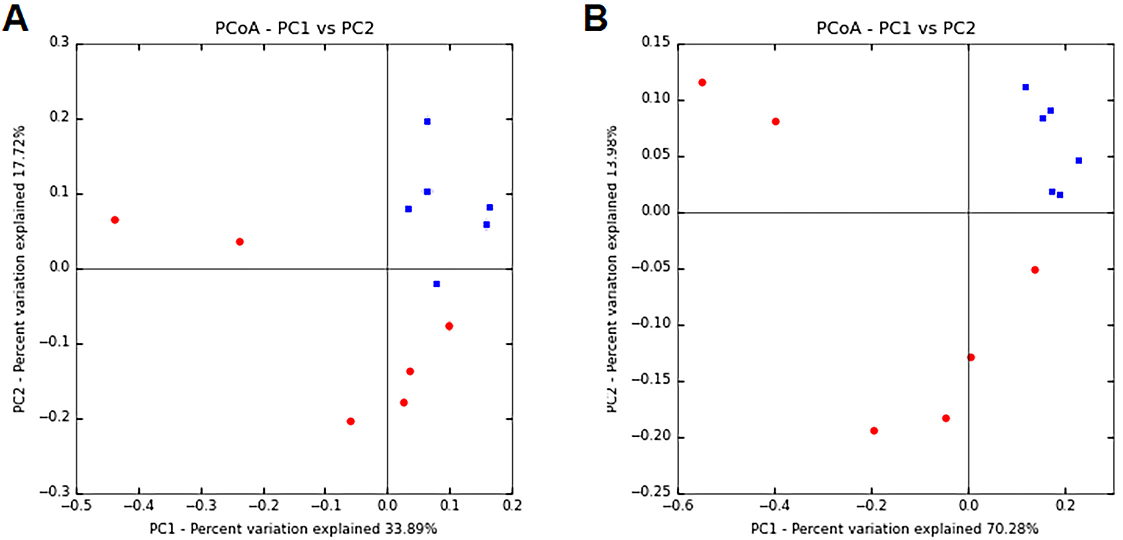
Chao 1 and Shannon index analysis revealed no difference in the richness of the ruminal microbiota (Figure 1A, B). Beta diversity analysis and PCoA using unweighted and weighted Unifrac distances revealed a difference between the CD and CSD diets (Figure 2A, B).
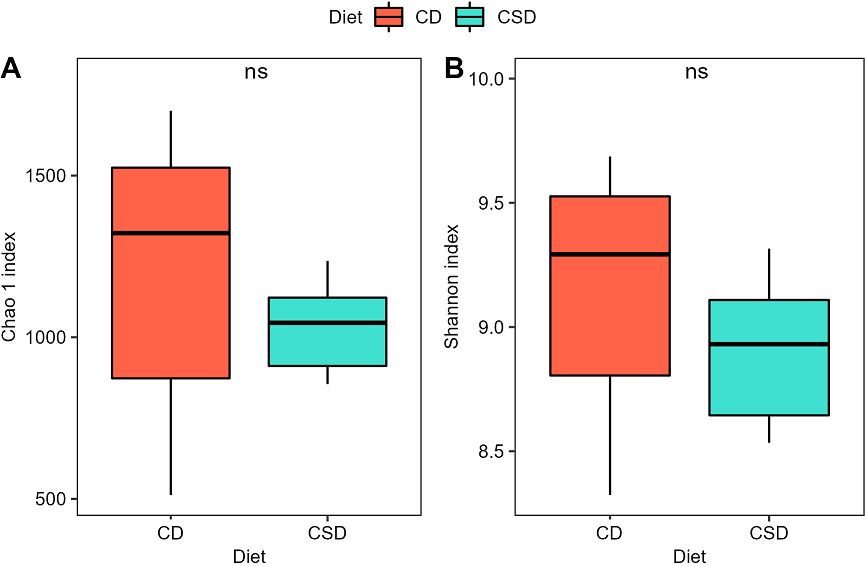
Figure 1 Alpha diversity analysis (A) Chao 1 Index, (B) Shannon index of the ruminal content of cows fed a control diet (CD) or corn stover diet (CSD) for 45 days.
Taxonomic assignments
ANOSIM (r = 0.087, P = 0.1823) and PCoA analysis demonstrated that there were no significant differences between the dietary groups at the phylum level (Figure 3A). Twenty-five phyla of ruminal bacteria were identified, and relative abundance exceeding 0.1 % of the total are listed in Table 2. The predominant phyla in the liquid rumen of cows were the same across diets: Firmicutes, Bacteroidetes, Patescibacteria, and Proteobacteria (Figure 3B).
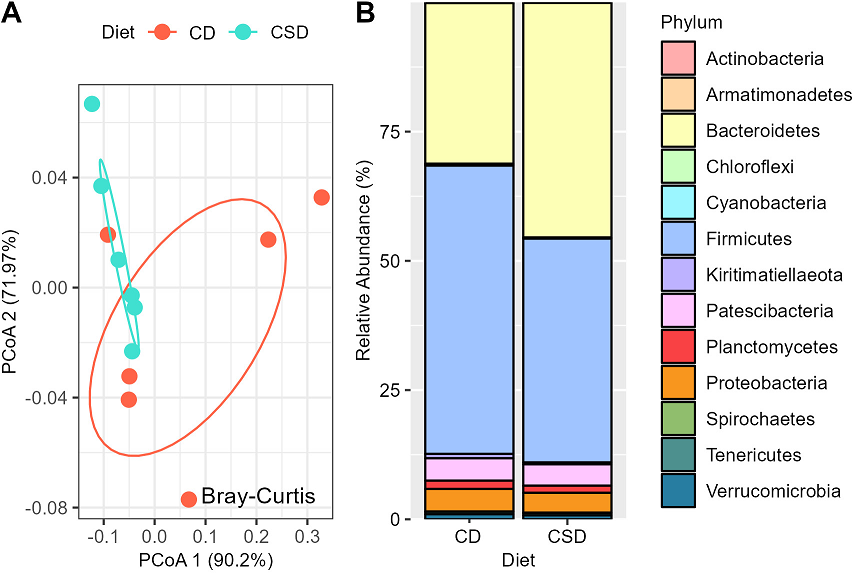
Figure 3 Bacterial composition at the phylum level in the rumen fluid of cows fed control diet (CD) or corn stover diet (CSD). (A) Principal component analyses (PCoA); (B) Relative abundance (%) of bacteria at phylum level.
Table 2 Main bacterial abundance at phylum level of the ruminal content of cows fed CD or CSD for 45 days
| Phylum | Groups1 | SEM2 | P-value | |
| CD | CSD | |||
| Actinobacteria | 0.1 | 0.1 | 0 | 0.3360 |
| Armatimonadetes | 0.1 | 0 | 0 | 0.0411 |
| Bacteroidetes | 31.1 | 45.4 | 3.6 | 0.0249 |
| Chloroflexi | 0.1 | 0.1 | 0 | 0.0987 |
| Cyanobacteria | 0.3 | 0.2 | 0.1 | 0.4233 |
| Firmicutes | 55.8 | 43.3 | 3.7 | 0.2001 |
| Kiritimatiellaeota | 0.9 | 0.4 | 0.2 | 0.1495 |
| Patescibacteria | 4.3 | 4.1 | 0.5 | 0.8424 |
| Planctomycetes | 1.6 | 1.4 | 0.2 | 0.5597 |
| Proteobacteria | 4.4 | 3.8 | 0.3 | 0.4666 |
| Spirochaetes | 0 | 0.1 | 0 | 0.5598 |
| Tenericutes | 0.5 | 0.5 | 0.1 | 0.8683 |
| Verrucomicrobia | 1 | 0.8 | 0.2 | 0.3366 |
1CD: control diet; CSD: corn stover diet.
2SEM: standard error of the mean.
The ANOSIM and PCoA analysis (Figure 4A) at the family level demonstrated a significant difference between groups (r = 0.37, P = 0.0043). Regardless of the treatment, Rikenellaceae, Tannerellaceae, Ruminococcaceae and Erysipelotrichaceae were identified as the dominant families. Compared with CD, feeding CSD for 45 days caused a significant (P < 0.05) decrease (35.57 %) of Erysipelotrichaceae abundance and a significant (P < 0.05) increase (50.87 %) of Rikenellaceae (Figure 4B).
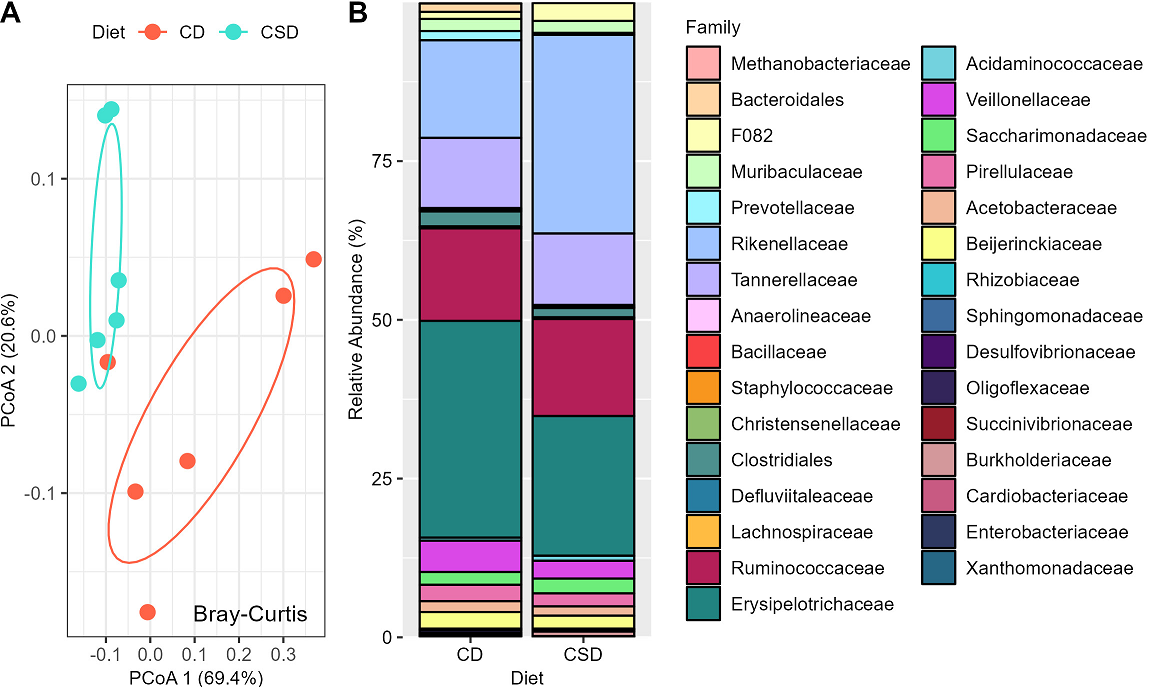
Figure 4 Bacterial composition at the family level in the rumen fluid of cows fed control diet (CD) or corn stover diet (CSD). (A) Principal component analyses (PCoA); (B) Relative abundance (%) of bacteria at family level.
At the genus level, ANOSIM and PCoA analysis (Figure 5A) demonstrated a significant difference between groups (r = 0.54, P = 0.0026). There were 195 identified genus of rumen bacteria, and relative abundance exceeding 0.1 % of the total are listed in Table 3. Regardless of the diet, Prevotella, Ruminococcaceae and Rikenellaceae were the predominant genus (Figure 5B). The indicator species analysis demonstrated higher abundance (P < 0.05) in Pseudobutyrivibrio (61.4 %) and Prevotella (59.0 %) and a decrease (P < 0.05) in Papillibacter (80 %), Saccharofermentans (37.2 %) and Ruminococcaceae (31.8 %) in cows fed CSD compared with CD.
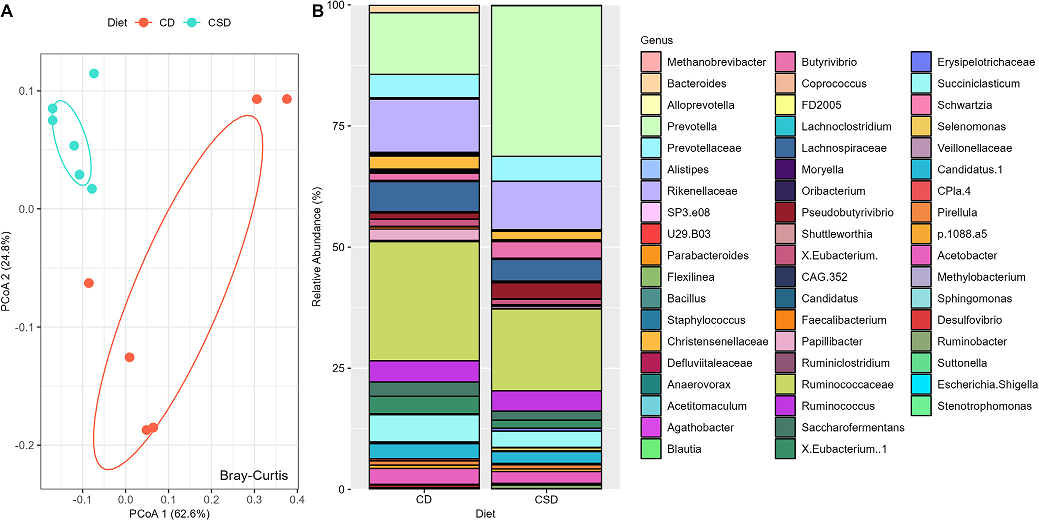
Figure 5 Bacterial composition at the genus level in the rumen fluid of cows fed control diet (CD) or corn stover diet (CSD). (A) Principal component analyses (PCoA); (B) Relative abundance (%) of bacteria at genus level.
Table 3 Predicted functions of the rumen liquid fraction bacterial community at KEGG level 3 of cows fed CD or CSD for 45 days
| Item (Relative abundance %) | Groups1 | SEM2 | P-value | |
| CD | CSD | |||
| Isoflavonoid biosynthesis | 0.03 | 0.69 | 0.09 | <0.001 |
| Methane metabolism | 0.15 | 2.68 | 0.38 | <0.001 |
| Streptomycin biosynthesis | 0.463 | 0.01 | <0.001 | |
| Methane synthesis | 2.350 | 0.06 | 0.41 | <0.001 |
| Novobiocin biosynthesis | 0.199 | 0.0058 | 0.03 | 0.002 |
| Biotin metabolism | 0.200 | 0.38 | 0.36 | 0.003 |
1CD: control diet, CSD: corn stover diet.
2SEM: standard error of the mean.
PICRUSt analysis
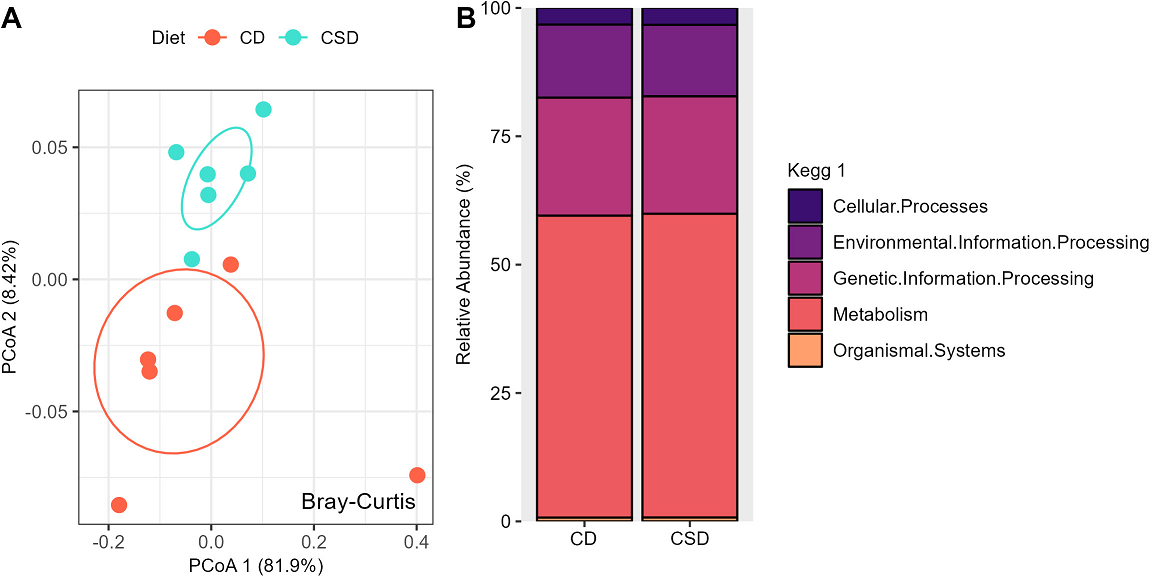
PCoA analysis revealed differences between diets (Figure 6), with significant differences (P < 0.05) for six pathways at KEGG level 3 (Table 3). Compared with CD, feeding CSD for 45 d caused a decrease of 97.45 % in the methane synthesis pathway and an increase of 94.44 % in methane metabolism.
Discussion
Despite differences in the nutritional quality of the diets, the alpha diversity was similar in CSD and CD. The Shannon index was high in both groups, indicating that in these habitats there is a great diversity of species.
Interestingly, the variations in beta diversity suggest that the ruminal microbiota between CSD and CD is distinct. Apparently, this effect is linked to differences in the chemical composition of the experimental diets. The CSD diet contains the lowest level of protein and the highest level of lignin, and it is known that these two factors affect microbial growth in the rumen.21 In addition, the ability of plant cell walls to be digested is decreased by a high lignin content.22 In this study, the low CP content and high NDF content of the CSD may have caused the observed changes in the microbial population of the ruminal liquid fraction. To fully understand the effect of the observed changes in the beta diversity in the liquid ruminal fraction, it is necessary to perform further studies to evaluate the effects of CSD on production performance variables.
In line with previous research, the predominant phyla in both treatments were Firmicutes, Bacteroidetes, and Proteobacteria.23 After feeding CSD for 45 days, we observed a decrease in Firmicutes and Proteobacteria abundance, as well as an increase in Bacteroidetes in comparison with CD group (Figure 3B). Microorganisms within the phylum Bacteroidetes carry genes that code for enzymes that degrade structural polysaccharides.24) Therefore, the increase in this phylum could suggest a possible adaptation of the liquid rumen microbiota to the diet, allowing its use by the animal. In this study, the decrease of the Proteobacteria phylum after feeding CSD for 45 days was expected since it has been reported that this phylum is found in greater proportion in diets with a high starch content.25
At family level, feeding CSD increased the Rikenellaceae family, which has been reported to be favored by high-forage and low-starch diets.26 At genus level, we observed an increased in Prevotella after feeding CSD. It has been reported that some species of Prevotella have esterases capable to hydrolyze the ester bond in phenolic compounds associated with lignin.27 Additionally, previous studies indicated that these microorganisms may have loci for carbohydrate-active enzymes (CAZymes).28 Thus, besides its role in ruminal homeostasis, Prevotella may have an important role in the hydrolysis of the lignin complex. This finding supports the idea that the liquid rumen microbiota may have adjusted to the change in diet. Feeding CSD for 45 days increased the rumen liquid fraction of bacterial families and genera such as Rikenellaceae, Prevotella and Pseudobutyrivibrio which are associated with higher neutral detergent fiber content and esterease and hemicellulolytic activities.
Despite a decline in the Firmicutes phylum, the CSD group had a marked increased in Firmicutes bacteria such as Pseudobutyrivibrio with hemicellulytic activity. Pseudobutyrivibrio can establish a symbiotic relationship with other genera involved in the complex carbohydrates hydrolysis, such as Fibrobacter and Ruminococcus.29 Although the Ruminococcaceaea genus participates in fiber digestion,26 its decreased abundance in cows fed CSD may be linked to its low ability to adhere to feed particles, affecting its survival capacity in the rumen.30 It is important to note, however, that we evaluated changes in the liquid fraction of ruminal contents, thus, it could be a reason for the decrease in this specific genus.
PICRUSt analysis to predict functional abundances based solely on marker gene sequences indicated differences in the methane synthesis pathway between CD and CSD. The decrease in methane synthesis in the liquid fraction of CSD-fed cows could be partly explained by an increase in the relative abundance of the genus Prevotella, associated with low methane emissions,31 and the decrease of Saccharofermentans, an H2-producing microorganism.32
Conclusions
This study shows that feeding low-quality forages (i. e. corn stover) to dairy cows induces changes in the bacterial population of the rumen liquid fraction. Although the bacterial diversity of rumen liquids remains high, there is an increase in the relative abundance of bacteria that express a great variety of carbohydrate-active enzymes. To fully understand the effects of these changes on animal production performance, it is essential to conduct further research involving cows’ productive parameters, and meta-transcriptomic analysis of the rumen. This information would help identify potential intervention strategies, such as the use of specific probiotics, that might enhance the nutritional value of high-lignin diets for dairy cows during the dry season.
Data availability
The sequenced data were deposited in the base space cloud. Data are available from the corresponding author upon request.
Conflicts of interest
The authors have no conflict of interest to declare in regard to this publication.
Author contributions
Conceptualization: L Corona, CC Márquez-Mota.
Data curation: CC Márquez-Mota, L Piña-González.
Formal analysis: CC Márquez-Mota, L Piña-González, M Sánchez Tapia, A Alharthi.
Funding acquisition: L Corona.
Investigation: CC Márquez-Mota, N Torres, M Sánchez Tapia.
Methodology: CC Márquez-Mota, L Corona, N Torres, M Sánchez Tapia.
Validation: CC Márquez-Mota, L Corona, N Torres, AR Tovar.
Writing-original draft: L Corona, CC Márquez-Mota, L Piña-González.
Writing-review and editing: L Corona, CC Márquez-Mota, J Loor, N Torres, AR Tovar.

