




 nueva página del texto (beta)
 Inglés (pdf)
 Artículo en XML
 Referencias del artículo

 Traducción automática
 Enviar artículo por email
 Citado por SciELO
 Similares en
SciELO

 Permalink


Introduction
Synucleinopathies, a common group of neurodegenerative diseases, are characterized by misfolded alpha-synuclein (α-syn) accumulation in neurons and glial cells, primarily in the basal ganglia and peripheral regions.1 Parkinson's disease (PD) is the most prevalent, and clinically presents motor symptoms (MS), for example, rest tremor, bradykinesia, rigidity, postural instability, and non-MS (N-MS). While MS alone is insufficient for diagnosis, a > 30% levodopa response reduction in the movement disorder society-unified PD rating scale (MDS-UPDRS) Part III score, levodopa-induced dyskinesias, and absence of atypical parkinsonism red flags meet the 2015 MDS diagnostic criteria.2 N-MS, such as constipation, idiopathic rapid eye movement sleep behavior disorder (iRBD), and hyposmia, may precede MS by years, defining prodromal PD.3 Neurogenic orthostatic hypotension (nOH), a cardiovascular autonomic dysfunction, is a key feature of prodromal PD.4 In Latin América, where diagnostic resources are limited, standardizing nOH assessment is critical for early detection.
Autonomic dysfunction is a core feature of synucleinopathies, indicating impairment of the autonomic nervous system (ANS). The ANS, comprising sympathetic, parasympathetic, and enteric divisions, regulates physiological responses via neurotransmitters like acetylcholine and catecholamines (norepinephrine, epinephrine).5 Sympathetic terminals release primarily norepinephrine (90%), with the adrenal medulla contributing 10%, indirectly modulating renal function through renin and vasopressin.6 Synucleinopathies often show early nOH, a potential biomarker, preceding MS and worsening comorbidities; some tests, which have been used as biomarkers, can help to increase the accuracy of the diagnosis. As an example, combining nOH with olfactory loss and skin biopsy for α-syn accurately identifies dementia with Lewy bodies (DLB), as was reported recently.7 This narrative review summarizes findings of nOH as a diagnostic tool for synucleinopathies, proposing a simplified algorithm to standardize assessment in Latin America, minimizing unnecessary testing and enabling early diagnosis and treatment.
Materials and methods
A comprehensive literature review was conducted covering publications from 1980 to July 2025 in PubMed, Google Scholar, and Scopus. MeSH terms included "Hypotension," "Orthostatic," "Alpha-Synuclein," and "Autonomic Nervous System Diseases." The complete search strategy is available in Supplementary Material. The initial search yielded approximately 20,000 records. After removing duplicates, 1,000 unique articles remained and were screened by title and abstract for relevance. Ultimately, 50 studies met the inclusion criteria and were selected for detailed analysis.
The review process was conducted by Reviewer 1 (DRG) and Reviewer 2 (FALR), who independently screened titles and abstracts to identify studies addressing nOH in synucleinopathies. Disagreements were resolved through discussion with a third author, a specialist in ANS disorders (JARM).
Inclusion criteria required that studies: (a) address the pathophysiology, diagnosis, or management of nOH in synucleinopathies or pure autonomic failure (PAF); (b) prioritize accessible tools (e.g., orthostatic blood pressure (BP) measurement, University of Pennsylvania smell identification test (UPSIT), montreal cognitive assessment (MoCA), bladder ultrasound) over specialized equipment (e.g., MIBG scintigraphy, tilt-table testing); (c) include original studies, reviews, or case reports in English or Spanish (all authors are native Spanish speakers); and (d) provide information on phenoconversion or N-MS (e.g., hyposmia, urinary dysfunction). Exclusion criteria ruled out studies on non- nOH, non-English/Spanish publications, animal studies, or those requiring costly or unavailable diagnostic equipment in Latin America.
Study quality was evaluated according to methodological rigor, clarity of diagnostic definitions, and clinical applicability. Particular emphasis was placed on the relevance of each study to general neurologists (e.g., use of practical diagnostic tools, feasibility in routine practice) and its applicability to the Latin American context, considering resource limitations. Discrepancies were resolved by consensus, resulting in a final selection of 50 articles that informed the development of a pragmatic diagnostic algorithm for nOH. Clinical expertise from the NYU Dysautonomia Center guided the synthesis and contextual adaptation of this algorithm to support its implementation by clinicians across Latin America.
Results
To standardize nOH assessment in synucleinopathies for Latin American clinicians, we structured our findings to guide readers from foundational mechanisms to practical implementation. We begin with baroreflex physiology and dysfunction to explain the nOH pathophysiology in synucleinopathies. Next, we detail nOH in PAF as a prodromal state, highlighting its clinical significance. We then review accessible diagnostic tools (e.g., orthostatic BP, tilt table, MoCA, UPSIT score, bladder scan) suitable for Latin America resource-limited settings. Finally, we propose a clinical evaluation protocol integrating these tools into a practical algorithm, enhancing early diagnosis and management for general neurologists in Latin America. Figure 1 states the pathway for the literature search to build a concise and replicable autonomic evaluation approach adapted to low-resource medical facilities in LATAM.
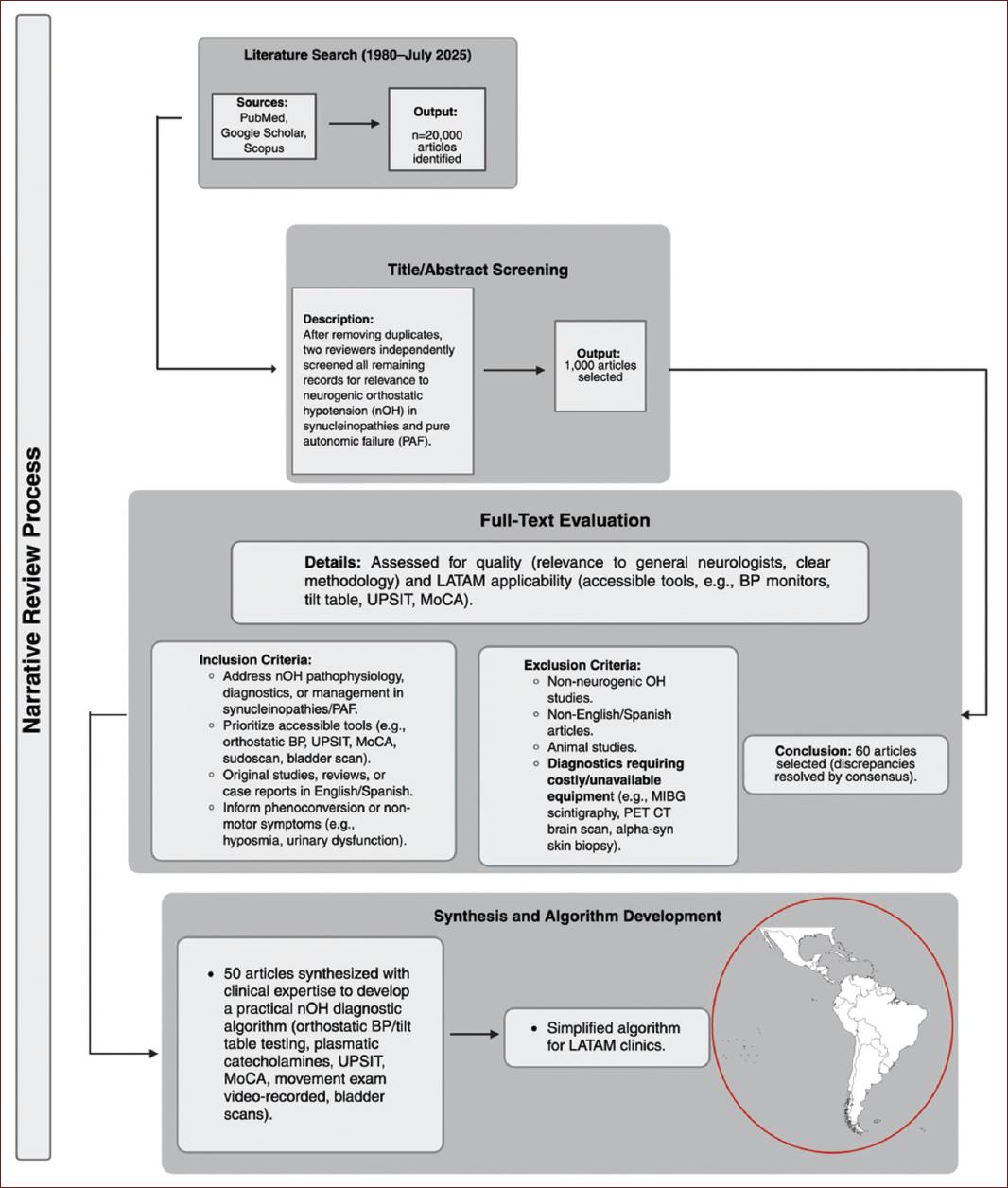
Figure 1 Flowchart of the literature search (PubMed, Google Scholar, Scopus; 1980-2025), screening ~20,000 articles to include 50 key publications, synthesized with clinical expertise to develop a neurogenic orthostatic hypotension diagnostic algorithm.
Baroreflex physiology and dysfunction in PAF
Baroreceptors detect BP changes, sending signals to the brain's medulla to regulate heart rate and vessel tone.8,9 In hypertension, they reduce sympathetic tone and slow heart rate, while in hypotension, they increase norepinephrine release, causing vasoconstriction and raising heart rate.10-12 Baroreflex failure, common in synucleinopathies, is either afferent (faulty sensing external inputs signals, e.g., from neck injuries) or efferent (impaired response, causing nOH, supine hypertension, and low heart rate variability).13 Orthostatic intolerance symptoms classically include dizziness, coat-hanger pain, or fainting, triggered by standing, dehydration, or high-carbohydrate meals.
Orthostatic hypotension (OH) is a ≥ 20/10 mmHg BP drop within 3 min of standing. nOH shows minimal heart rate change (< 11 bpm), unlike non-neurogenic OH with tachycardia. The ΔHR/ΔSBP ratio (< 0.49 for nOH; ≥ 0.49 for non-neurogenic) was validated in 378 autonomic failure patients.14 Afferent baroreflex failure reduces specificity for ΔHR/ΔSBP ratio to diagnose nOH because BP in those patients alternates OH and paroxysmal hypertensive crises during orthostasis, triggering by emotion and stress.15 Supine hypertension, defined as a systolic BP ≥ 140 mmHg and/or diastolic BP ≥ 90 mmHg after at least 5 min in the supine position, is frequent in patients with autonomic failure and commonly coexists with nOH, increasing the risk of cardiovascular and cerebrovascular complications.16 Delayed orthostatic hypotension (dOH) is defined as a fall of ≥ 20 mmHg systolic or ≥ 10 mmHg diastolic BP occurring between 3 and 10 min after standing or head-up tilt, following an initially stable period. Postprandial hypotension is defined as a BP decrease of ≥ 20 mmHg systolic or ≥ 10 mmHg diastolic within 120 min after a meal, or a smaller fall associated with moderate to severe symptoms such as presyncope or syncope. Both are common in synucleinopathies, older adults, and other conditions with postganglionic denervation.17-19 Early diagnosis adjusts medications to prevent worsening OH.20,21
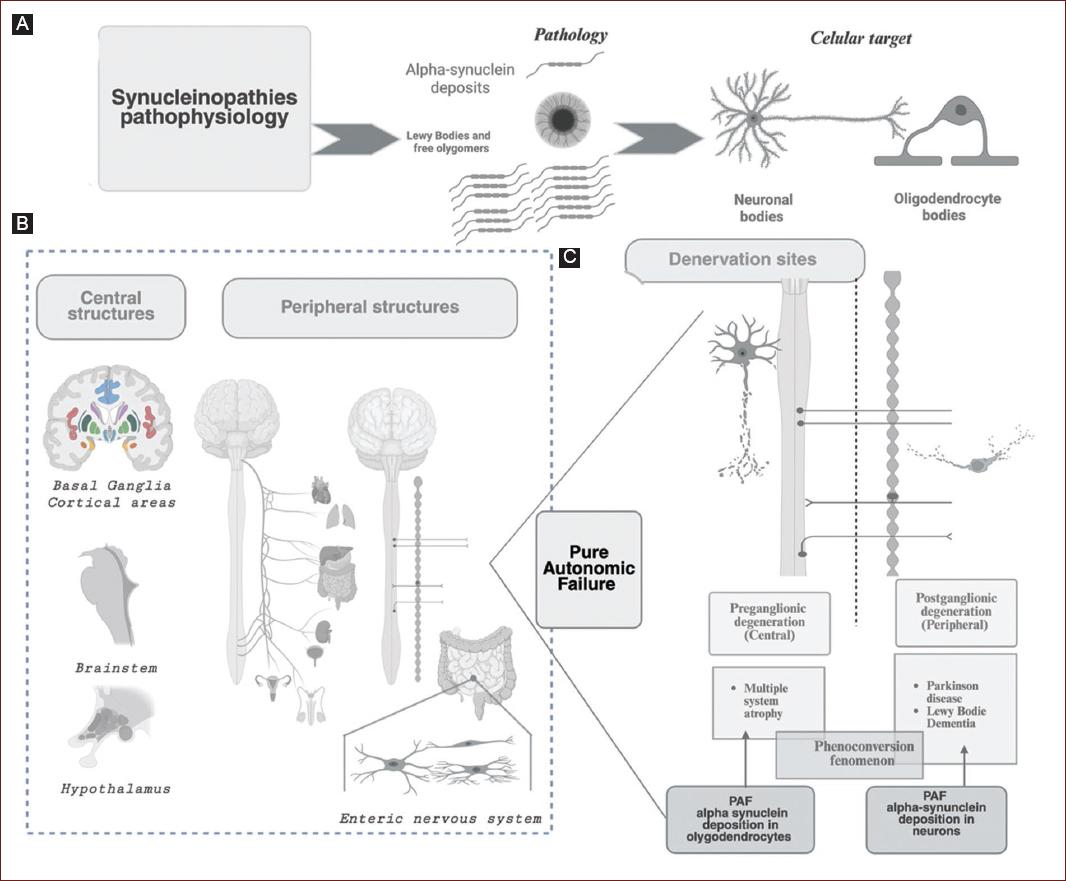
Neurogenic OH translates to efferent baroreflex failure due to neural denervation. In the absence of other autonomic, motor, or cognitive symptoms, the patient with isolated nOH has the diagnosis of PAF. PAF may manifest nOH for decades before progressing and developing motor or cognitive symptoms. Some patients remain motor-symptom-free for 25-30 years, as reported in the Natural Progression of Alpha-Synucleinopathies study. PAF may, in some cases, evolve into multiple system atrophy (MSA), Lewy body dementia (LBD), or PD through the so-called "phenoconversion phenomenon." This process describes the gradual appearance of motor (Parkinsonism, ataxia) and/or cognitive (mild cognitive impairment, dementia) features over time, suggesting that PAF can represent a prodromal stage within the broader spectrum of α-synucleinopathies. However, phenoconversion is not universal, as some patients remain isolated cases for many years, reflecting the heterogeneity and probabilistic nature of disease progression.22-24 Degenerative Parkinsonism shares a common pathophysiology: abnormal deposition of protein isomers, notably α-syn, in the basal ganglia, cerebellum, motor cortex, thalamus, hypothalamus, and strategic areas in the brainstem, such as the locus coeruleus, parabrachial region and the neurons of A5 pontine region of tegmentum, ventrolateral medulla, and vagal nucleus. Damage in the motor circuits produces movement-related circuits that explain motor phenotypes like Parkinsonism, ataxia, tremor, or dystonia. Moreover, α-syn accumulation in the cerebellum and posterior cortex (parietal and occipital lobes) contributes to cognitive deficits. If the α-syn involves the brainstem, spinal cord, and sympathetic circuits, the patient develops autonomic dysfunction symptoms. Beyond those areas, α-syn is spreading to the peripheral ANS neurons, sympathetic, parasympathetic, and enteric divisions underlie autonomic failure. PAF supported those findings. Autopsy studies reveal α-syn deposits in paravertebral sympathetic chains, epicardial fat nerves, adrenal capsular nerves, and bladder parasympathetic nerves.25,26
The pattern of α-syn misfolding and aggregation into Lewy bodies is unpredictable across individuals, influenced by many factors, that is, inflammation, which disrupts pre- and post-synaptic function, alters neurotransmitter expression, and triggers glial overactivity and neuronal death. In MSA, α-syn primarily accumulates in oligodendrocytes and preganglionic neurons, a pattern also seen in preganglionic PAF preceding MSA phenotypes. Conversely, in PD, Lewy body deposition involves postganglionic neurons.27 Common differential diagnoses include diabetes, amyloidosis, and other neurodegenerative disorders.28 Figure 2 has summarized the possible pathophysiological basis to discriminate preganglionic and post-ganglionic alpha-synuclein depositions and their clinical implications, as well as target brain cells (neurons or oligodendrocytes) in the central nervous system, peripheral nerves end terminals and systemic tissues which are involved in those conditions.
Diagnostic tools for cardiovascular sympathetic reflexes
Baroreflex dysfunction in synucleinopathies reflects impaired sympathetic responses. Tools include:
− Tilt table testing: Gold standard, detecting nOH or delayed OH with 10-20-min tilts29,30 as well as non-nOH (see the anatomy of tilt table testing in figure 3 in an example of clinical case).
− Orthostatic assessment: Measures BP supine and after 3 min of standing to calculate the ΔHR/ΔSBP ratio (change in heart rate [beats·min−1] divided by the change in systolic BP [mmHg]). A value < 0.49 beats/min/mmHg is considered diagnostic of nOH, showing 91.3% sensitivity and 88.4% specificity. The ratio may be affected by β-blockers, chronotropic drugs, atrial fibrillation, or heart failure, which can blunt heart rate responses.31
− Valsalva maneuver (VM): The VM evaluates cardiovascular sympathetic reflexes. VM assesses the BP behavior beat-to-beat through the Fina Press® system and is generated when the subject blows out through a small syringe for at least 15 s. As the intrathoracic pressure increases until 40 mmHg, BP shows four phases; initially rises (phase I) but suffers a deep drop in the next few seconds (early phase II). Once the subject releases the strain, the sympathetic response is activated, and BP shows recovery and rises again (late phase II). Occasionally, a small drop in BP is observed (phase III), followed by a dramatic BP overshoot (phase IV) that is a mechanical phenomenon, as it recovers to the baseline BP. Recuperation time of phase IV means the time from when phase four starts to surge after VM ended, and should be < 4 s; however, a limit of 10 s would be acceptable as normal for some authorities on this topic. As phase IV is a mechanical phase where there is increased cardiac filling coupled with increased sympathetic noradrenergic outflow, it has less sensitivity and specificity to be considered a mark of denervation. In addition, the early Phase II and IV will be absent in heart failure, beta-blocker antihypertensive medications, or younger people (i.e., athletes). Due to the pattern of the pressure during and after the maneuver resembling a mathematical square wave sign, been called the "square wave response" or the "flat top response". Patients with primary PAF or other related synucleinopathies often exhibit delayed or absent late Phase II and phase IV BP overshoots, due to a diminished or absent sympathetic adrenergic response. The absence of a late Phase II response is indicative of severe sympathetic denervation. An additional advantage of obtaining a baseline VM is for monitoring treatment response and, potentially, serving as a biomarker to follow disease progression.32-35
− Deep paced breathing testing: A feasible maneuver used to evaluate the parasympathetic activity and the parasympathetic and sympathetic activity interaction. The subject is invited to perform deep breathing for 10 s (inspiration for 5 s and expiration for 5 s as well) to get six cycles per minute. The test would be performed in supine; however, it is recommendable in a seated position because some patients with ventilatory restriction (i.e., Parkinsonism, chronic obstructive pulmonary disease, heart failure) decrease the sensitivity of the results and increase false positive rates. The maximum and minimum heart rates during deep paced breathing, as well as the expiration/inspiration ratio (the maximum R-R during expiration/minimum R-R during inspiration), are calculated as a measure of cardiovagal function. As the R-R interval variability is expected during the exercise, its absence is suggestive of reduced parasympathetic tone, notably observed in patients with PD or LBD, and reduced R-R variability in autonomic failure.36 Figure 4 illustrates a healthy subject and a PD patient.
− Plasma catecholamines: During the tilted table testing, plasma catecholamines were measured during supine and tilted. As every autonomic center decides its local protocols, it is proposed to take the first blood sample with at least 5 min in supine, and after 5 min tilted.37 Normal behavior in plasmatic catecholamines leads to a rise in norepinephrine, 1.5-2.0 times increased in tilted from the baseline, without a great change in epinephrine and dopamine levels. For example, patients with MSA exhibit a catecholamine profile consisting of normal plasma levels of dopamine, norepinephrine, and derivatives, in contrast to PD patients and subjects with congenital dopamine beta-hydroxylase deficiency, who had all those compounds decreased or absent. A small group of MSA patients could present low levels of norepinephrine and epinephrine and normal levels of dopamine. PAF patients denoted selective norepinephrine non-response during tilted, having a rise in plasma levels of dopamine and epinephrine. Nevertheless, the catecholamine behavior is multifactorial and depends on the stage of the underlying condition. Synucleinopathies in early stages will have no changes in plasmatic catecholamine levels, or patients in late stages can still preserve a sympathetic-adrenal response during the tilt. Therefore, catecholamines can be profiled once a diagnosis is established, but they are not necessarily a helpful tool to reach it.38
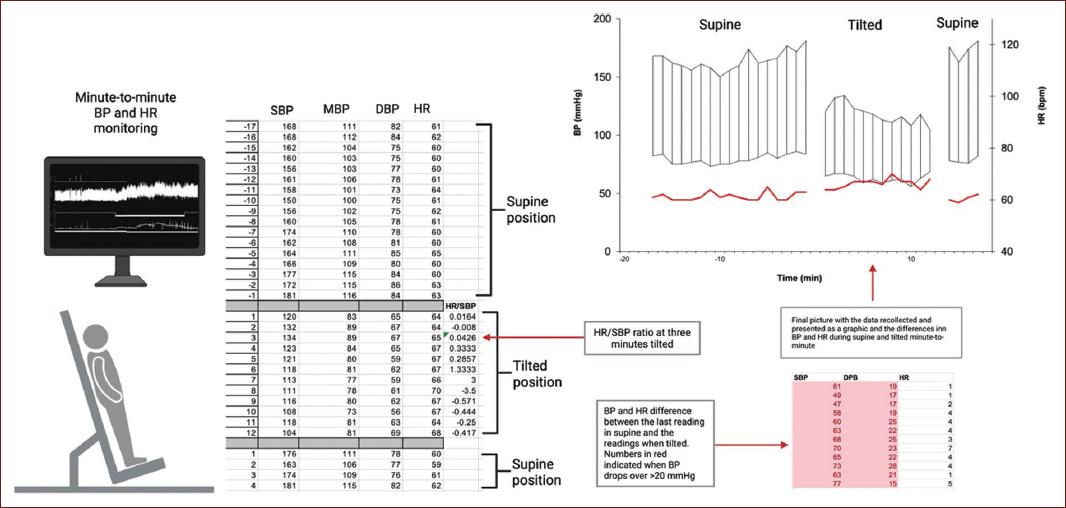
Figure 3 Anatomy of blood pressure and heart monitoring during tilt table testing. A 68-year-old male with dizziness, lightheadedness, and three syncope episodes during the summer came for a first autonomic evaluation. Medical history reveals hyposmia, cognitive decline, acting out our dreams, constipation, and urinary incontinence and urgency, which have been progressing in the last 2 years. His ΔHR/SBP ratio at 3 min tilted was 0.04, which confirmed neurogenic orthostatic hypotension. Average supine blood pressure was 164/80 mmHg, which is diagnostic of supine hypertension. An inappropriate heart response to progressive dropping in the blood pressure indicated an impaired parasympathetic response.
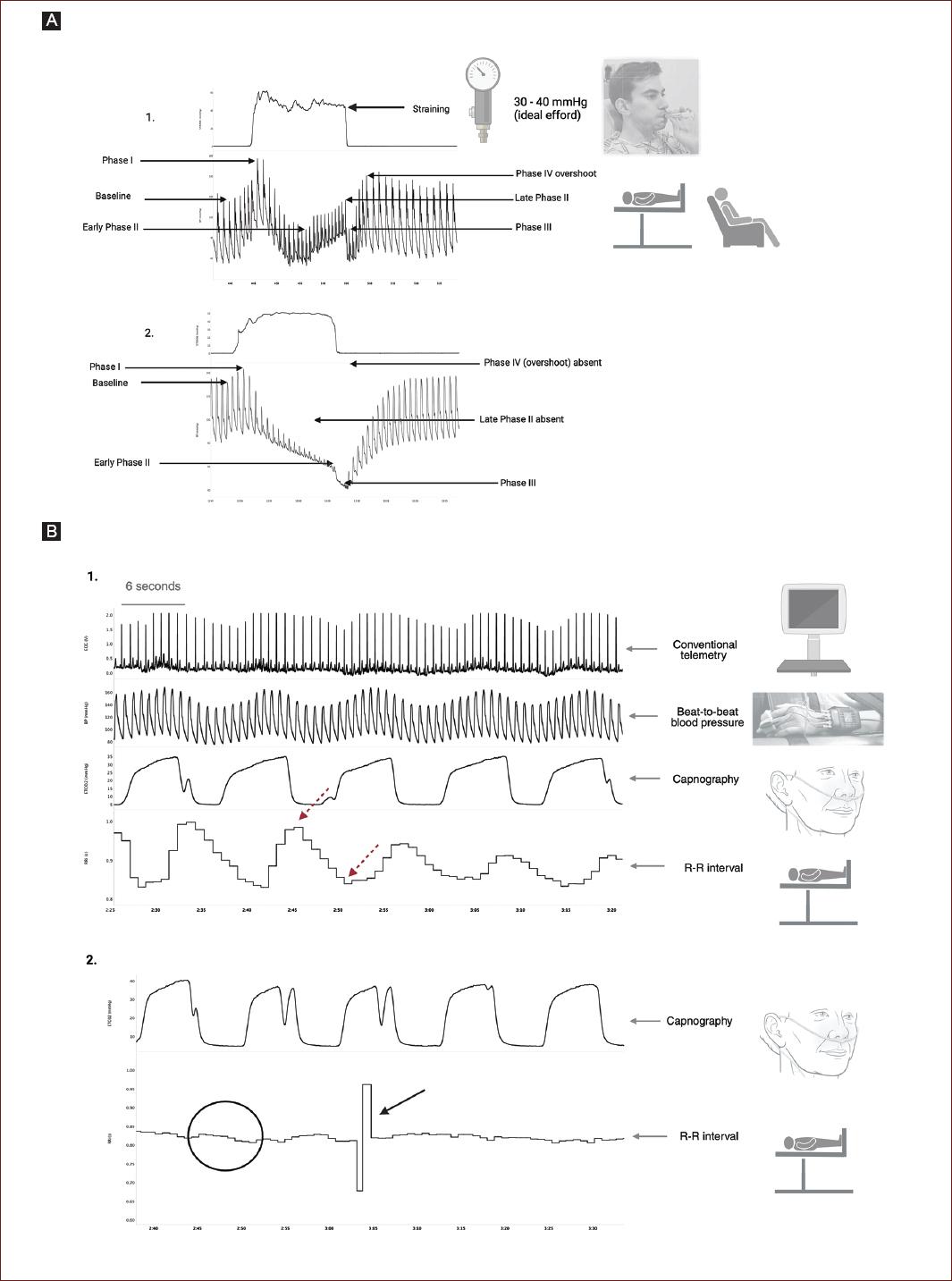
Figure 4 A: Valsalva Maneuver. 1. Healthy subject. 2. pure autonomic failure patient (absent phase II/IV). B: deep paced breathing test. 1. Normal R-R interval variability observed in a healthy subject (red arrows). 2. Poorly R-R interval variability in a patient with Parkinson's disease (black oval). An artifact was observed, which suggested an extrasystole (single black arrow).
Discussion
Clinical evaluation protocol
To address the diagnostic challenges of nOH in Latin America, we developed a standardized protocol based on 50 studies identifying nOH and N-MS in synucleinopathies. Tools were selected for their validated accuracy, low cost, and availability (e.g., standard BP monitors, MoCA), enabling general neurologists to diagnose nOH and monitor phenoconversion in resource-limited settings efficiently.
The protocol includes an interview that assesses orthostatic intolerance symptoms, triggers (e.g., heat), and lifestyle (e.g., fluid intake). BP readings should be taken every minute in supine position (at least 10 min), then the patient must be remain in upright position by more than 10 min (15-20 min ideally to search dOH); additionally, 4 min in a 2nd time of supine position helps to see the recovery in BP (typically there is a BP surge observed in patients with neurogenic supine hypertension due to sympathetic-adrenal dysregulation). As a Finapress®Nova system is an expensive tool, a tilt table is an instrument more affordable and can be used to monitoring BP and heart rate behavior in passive tilt and perform maneuvers to challenge the peripheral sympathetic response.39 Both methods (upright and tilt table testing) have enough sensitivity and specificity (over 85% according to the Norcliffe-Kaufmann et al.,14 study) and would be feasible to reproduce in the clinical practice.
Afterwards, a cognitive screening using standardized tools like the MoCA exam for cognitive deficits.40 Besides cognitive issues, screening for rapid eye movement sleep behavior disorder (iRBD) is part of the assessment and helps to consider a sleep study to confirm the diagnosis.41 Furthermore, clinicians must evaluate smell sense with an olfactory testing, easy to use, like The UPSIT, which detects hyposmia in PAF, PD, and DLB or a normal sense of smell in PAF and MSA41-45 is feasible to use and interpret even by clinicians without prior experience. However, the availability and cultural validity of the UPSIT vary across Latin America, as several odorants (e.g., root beer, wintergreen, or licorice) may be unfamiliar to local populations, potentially affecting diagnostic accuracy. Therefore, regionally validated or culturally adapted olfactory tests should be preferred when available, and clinicians should also consider false positives due to chronic rhinosinusitis or post-COVID-19 olfactory dysfunction. Complementary, a video-recorded Movement Examination using MDS-UPDRS/UMSARS scales to monitor progression and response to treatment is suggested by authorities in MSA and PD.46 In addition, a bladder scan to assess urinary dysfunction, confirm neurogenic sources, helps to distinguish storage or voiding issues, and rule out structural causes.47 Finally, a Sudoscan® helps detect ganglionic postganglionic damage, even though its specificity is limited, and it is a relatively expensive study, not commonly found in experienced and specialized centers.48-50
nOH is a key feature of synucleinopathies, often presenting as PAF before motor or cognitive symptoms. Therefore:
Confirm nOH: Orthostatic BP (ideally during tilt table testing), using the ΔHR/ΔSBP delta ratio and its cutoff to confirm nOH (< 0.49), also confirm diagnosis of supine hypertension. When available, plasma catecholamines can be measured after at least 10 min in the supine position and again after 10 min of standing or head-up tilt to assess the sympathetic adrenergic response. Although not a first-line diagnostic tool, they may provide valuable complementary information for phenotyping in selected cases or specialized centers.
Screen olfaction: UPSIT for PD/DLB risk; if it is normal, it is highly suggestive of MSA. In PAF patients, the results would be variable.
Assess cognition: MoCA for DLB suspicion, otherwise if the cognitive symptoms started before or after MS.
Evaluate movement: Video-recorded MDS-UPDRS/UMSARS to confirm or rule out MS. If the assessment is negative or has "soft motor signs," it is indicative of PAF and helps to follow the phenoconversion. We suggest repeating every 6 months or annually.
Check urinary function: Bladder scans evaluated pre-void and post-void residual volume and ruled out alternative diagnoses that explain urinary incontinence, urgency, or incomplete urinary emptying (i.e., benign prostatic hyperplasia, pelvic prolapse).
As discussed, this approach enhances diagnostic accuracy, facilitates the identification of prodromal states, and minimizes costs features particularly suitable for Latin American clinical settings. Because nOH increases the risk of falls and cardiovascular complications, early recognition and intervention are essential (see Figs. 5 and 6 for the decision tree diagram). Limitations of this study include the need for prospective validation of the proposed diagnostic algorithm, as it currently represents an exploratory and practice-oriented framework designed to be adaptable to diverse Latin American healthcare settings. Although the algorithm integrates validated diagnostic tools, its overall accuracy, feasibility, and clinical impact should be tested in multicenter prospective studies before formal implementation. In addition, variability in the availability and cultural validity of the UPSIT across Latin America may influence its diagnostic performance. Future research should evaluate the predictive value of this algorithm and its individual components, particularly olfactory testing in PD and related α-synucleinopathies within Latin American populations.
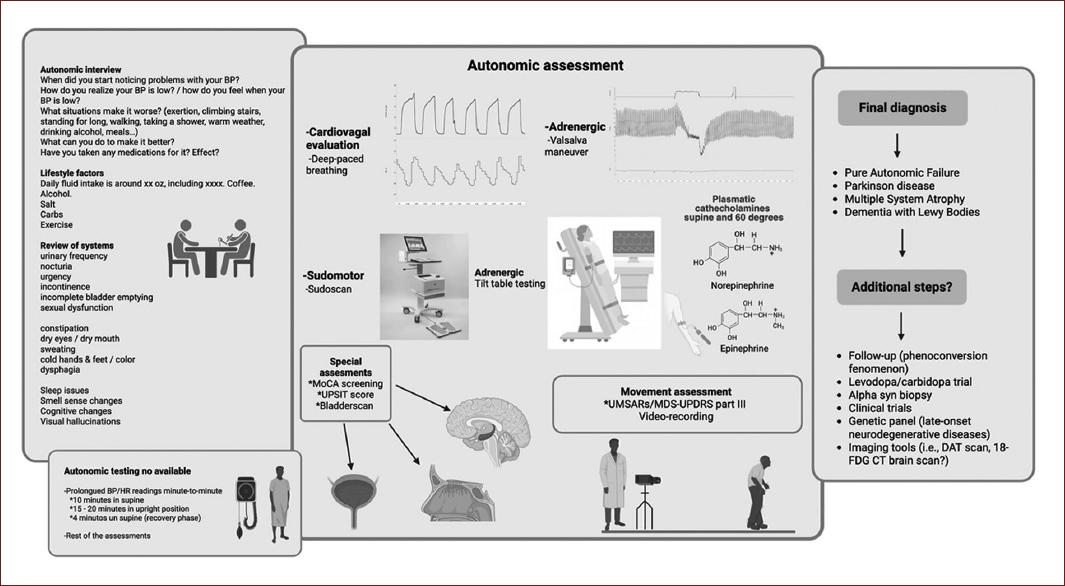
Figure 5 Flowchart integrating autonomic assessment, University of Pennsylvania smell identification test, Montreal cognitive assessment, movement exam, and bladder scans for neurogenic orthostatic hypotension diagnosis.
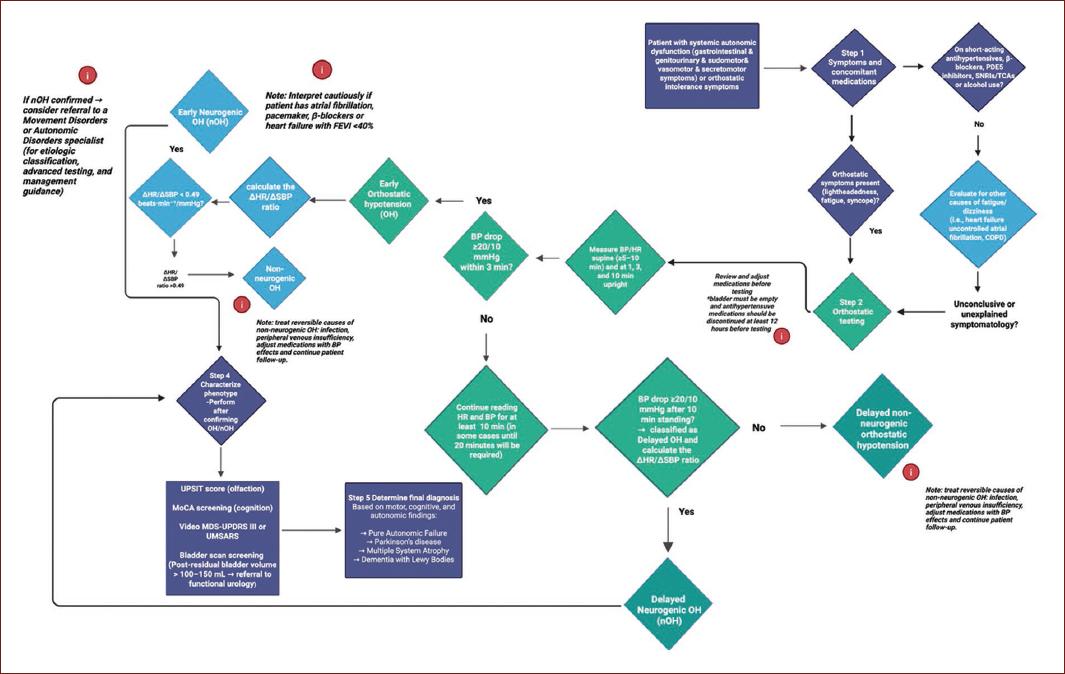
Figure 6 Stepwise decision tree for diagnosing neurogenic orthostatic hypotension. This algorithm summarizes a pragmatic, resource-sensitive diagnostic pathway adapted for Latin American clinical settings, integrating accessible bedside tests and validated measures to improve early recognition and guide referrals.
Conclusion
This narrative review proposes a stepwise, resource-sensitive diagnostic algorithm for the evaluation of nOH in α-synucleinopathies. By integrating simple bedside assessments with validated autonomic and cognitive tools, the algorithm aims to enhance early recognition, support clinical decision-making, and improve patient outcomes in low- and middle-income healthcare settings. Although exploratory, this framework provides a foundation for regional standardization and should be prospectively validated through multicenter studies to confirm its clinical utility and predictive value across Latin American populations.
Credit author contributions
- DRG: Conceptualization, Data curation, Formal analysis, Investigation, Validation, Writing - original draft.
- JCHL: Conceptualization, formal analysis, investigation, validation, writing - original draft.
- EAG: Conceptualization, formal analysis, investigation, validation, writing - original draft.
- FALR: Data curation, formal analysis, investigation, visualization writing - original draft.
- DMR: Conceptualization, investigation, methodology, project administration, supervision, writing - review and editing.
- JARM: Conceptualization, investigation, methodology, project administration, supervision, writing - review and editing.

