




Serviços Personalizados
Journal
Artigo
 texto em
 Inglês (pdf)
 Artigo em XML
 Referências do artigo

 Tradução automática
 Enviar este artigo por email
Indicadores
-
 Citado por SciELO
-
 Acessos
Links relacionados
-
 Similares em
SciELO
Compartilhar

 Permalink

Revista mexicana de fitopatología
versão On-line ISSN 2007-8080versão impressa ISSN 0185-3309
Rev. mex. fitopatol vol.43 no.1 Texcoco Jan. 2025 Epub 27-Maio-2025
https://doi.org/10.18781/r.mex.fit.2406-7
Scientific Articles
Biological and molecular characterization of nectrial species associated with an avocado decline syndrome
1 Laboratorio de Diagnóstico Fitosanitario BioLab, 1ª Priv. De Manuel Pérez Coronado 496 CP 60080, Uruapan, Mich. México;
2CP-LANREF, Programa Fitosanidad-Fitopatología, Colegio de Posgraduados, km 36.5 Carr. México-Texcoco, Texcoco, Edo. México, CP 56230; México;
3Laboratorio de Análisis de Riesgo Epidemiológico Fitosanitario (CP-LANREF). Colegio de Posgraduados, km 36.5 Carr. México-Texcoco, Texcoco, Edo. México, CP 56230; México;
Background/Objective.
Nectriaceae members increased regional occurrence in Michoacán since 2019. However, root species identity, geographic distribution, and association to other families are unknown. The objective was to characterize biological and molecularly species of Nectria associated with Persea americana.
Materials and Methods.
Seventy samples of wilt trees from 13 municipalities in Michoacán were processed. Thirty isolates selected based on epidemiological criteria were cultured in malt-agar, PDA, and oat-agar extracts to determine cultural and morphological characterization. Five morphotypes of Nectria with varying radial growth and brown coloration were obtained. From mycelial DNA, TEF 1-α and RPB2 genes were amplified, sequences were cleaned and aligned with SeqAssem and MAFFT, respectively. Bayesian inference and maximum parsimony phylogenetic algorithms were performed using PAUP
4.0 and MrBayes 3.2 complemented with 66 and 65 sequences from GenBank for TEF 1-
α and RPB2, respectively. S. chartarum was used as the external species and four other Hypocreales.
Results.
Bayesian inference revealed greater phylogenetic consistency. Three genera and three species were identified with TEF 1-α (>94 % homology) and three genera and five species with RPB2 (>97 % homology) belonging to Ilyonectria (56 %), Dactylonectria (33 %), Mariannaea (6 %), and Thelonectria (3 %). Associations of Nectria were observed mainly to Armillaria (97.1 %), Fusarium (92.9 %), Paecilomyces (56.4 %), and Morthierella (47.3 %).
Conclusion.
A decline syndrome in avocado trees associated with a fungal complex characterized by descending defoliation, wilt, reduced fruit size, and root necrosis is postulated. This is the first report of Nectria associated fungi in avocado trees in Mexico.
Keywords: Hypocreales; Persea americana; Ilyonectria; Dactylonectria
Antecedentes/Objetivo.
Miembros de Nectriaceae se han detectado en Michoacán desde 2019. Sin embargo, su detección no ha tenido el enfoque etiológico primario por lo que se desconoce la identidad de especies en raíz, distribución geográfica y asociación con otras familias. El objetivo fue caracterizar biológica y molecularmente especies nectriales asociadas al aguacate (Persea americana).
Materiales y Métodos.
Se procesaron 70 muestras compuestas de raíces provenientes de árboles de aguacate con marchitez detectados en huertos comerciales de 13 municipios de Michoacán. Treinta aislados seleccionados con criterios epidemiológicos se cultivaron en extracto malta-agar, PDA y avena-agar para caracterización cultural y morfológica. A partir del ADN micelial se amplificaron los genes TEF 1-α y RPB2, las secuencias se limpiaron y alinearon con Seqassement y MAFFT, respectivamente. Se aplicaron algoritmos filogenéticos de inferencia Bayesiana y máxima parsimonia mediante PAUP4.0 y MrBayes3.2 complementándose con 66 y 65 secuencias del GenBank para TEF 1-α y RPB2, respectivamente. Cuatro especies de Hypocreales y S. chartarum se emplearon como especies externas.
Resultados.
Se obtuvieron cinco morfotipos de nectriales con crecimiento radial variable y coloración marrón. Se identificaron tres géneros y tres especies con TEF 1-a (>97% homología) y tres géneros y cinco especies con RPB2 (>97% homología) correspondientes a Ilyonectria (56% de los aislados), Dactylonectria (33 %), Mariannaea (6 %) y Thelonectria (3 %). En raíz, con niveles de daño variable, se observaron asociaciones significativas (p ≤ 0.05) entre especies nectriales con Armillaria (97.1 %), Fusarium (92.9
%), Paecilomyces (56.4 %) y Mortierella (47.3 %), no así con Phytophthora (r < - 0.07). Regionalmente, Ilyonectria liriodendry fue las más prevalente, preponderantemente asociada con Fusarium y/o Armillaria. El sur del municipio de Tacámbaro tuvo la mayor diversidad de especies nectriales y géneros fungosos en general.
Conclusión.
Se postula la presencia regional de un síndrome de declinamiento en aguacate asociado a un complejo de hongos caracterizado por defoliación descendente, marchitez, reducción de crecimiento de fruto, decoloración y necrosis medular y cortical en raíz secundaria. Los nectriales Dactylonectria macrodidyma, D. novo-zelandica, Thelonectria lucida, Mariannaea samuelsii y I. liriodendry se asociaron con estos síntomas posiblemente con capacidad primaria de infección, pero frecuentemente en coinfección con Fusarium spp y / o Armillaria spp. (r = 0.60 - 0.88, p ≤ 0.05). Otros hongos podrían estar asociados. Phytophthora podría tener limitada implicación en este síndrome. Este constituye el primer reporte de Ilyonectria, Dactylonectria, Mariannaea y Thelonectria asociados al aguacate (Persea americana) en México
Palabras clave: Hypocreales; Persea americana; Ilyonectria; Dactylonectria.
Introduction
Michoacán contributes 94.6% of the national production of avocado (Persea americana). In the last 10 years, an increase of 70712 ha of planted area has been recorded out of a total of 183385 (SIAP, 2022), of which 142481 (78 %) are certified for export. This area is distributed in approximately 44 thousand orchards and 43 municipalities (CESAVEMICH, 2022). Tancítaro has the largest planted area, followed by Uruapan, Tacámbaro, Salvador Escalante, Ario de Rosales and Peribán (SIAP, 2022). In 2022, Jalisco started its avocado orchard export and certification program for the USA with 12000 ha (SADER, 2022). This productive expansion implies risks due to the movement of seedlings without or limited phytosanitary certification. Potential problems due to movement include root-associated parasitic organisms. Commercially, there are reports of Phytophthora cinnamomi, Rosellinia necatrix, Verticillium albo-atrum and Armillaria sp. associated with root diseases (Téliz and Mora, 2007). Recently, members of the family Nectriaceae (Ascomycota, Hypocreales) were also reported to associate with various agricultural and forestry crops in countries with tropical or subtropical climates (Mora et al., 2018, Parkinson et al., 2017). In Michoacán, recent prospections have evidenced the involvement of Nectria with wilt symptoms, yellowing, apical defoliation and death of seedlings and plants in new established orchards (Michua C. J. 2022. Unpublished). These organisms have been reported in South Africa, Israel, Spain, Chile, Italy, and Australia on Vitis vinifera, Rubus glaucus, Panax ginseng, Prunus dulcis, P. avium, P. persica, Actinidia deliciosa, Pistacia vera, Olea europaea and Juglans regia (Lawrence et al., 2019).
Biological and molecular characterization of these organisms for taxonomical purposes is complicated by phenotypic variation and absence of constitutive genes with wide viability for discrimination at intra- and inter-genus level. Therefore, several authors use phylogenetic-concatenated analyses with genes/regions such as TEF, EF 1-a, HIS, tubulin and ITS, in addition to morphological characterization and sexual compatibility studies (Lawrence et al., 2019; Crous et al., 2006). This complexity is denoted, for example, in Dactylonectria, where culturally contrasts can be observed between isolates, sexually compatible and placed in different phylogenetic clades (Crous et al., 2006). In other cases, studies are scarce and unconclusive as Mariannaea (Lawrence et al., 2019). In Australia, Calonectria, Gliocladiopsis sp. and Neonectria species have been isolated from symptomatic roots of young P. americana trees with productivity detriment or death after transplanting. In contrast, a complex of Cylindrocarpon, Cylindrocladium and Ilyonectria species has been identified in mature trees from secondary roots (Dann et al., 2011). Overall, the prevalence of Nectria has been related to soil physicochemical characteristics, mainly pH, OM, Ca, and Fe (Parkinson et al., 2017). Therefore, we hypothesized that the existence, independent or in association to other root fungi, of a Nectria complex with endemic distribution and low prevalence in Michoacán was caused by progressive deterioration of soil health; abrupt change from forest areas to avocado plantations; and disturbance of the water regime. Consequently, the objective of this study was the biological and/or molecular characterization of Nectria species and other fungi associated with root rot of P. americana in commercial orchards from contrasted
geographic conditions in the Michoacán avocado region.
Materials and Methods
Tree sampling and isolation. Tree roots with symptoms of wilt, yellowing, defoliation, and fruit size reduction in 39 orchards from 13 municipalities in the avocado growing region were sampled for etiological diagnosis between 2019 and 2022. Roots of trees showing decline exhibited reddish discolorations in core tissue but not in the epidermis. Per orchard, 2-6 samples were taken. In addition, per sampled tree, canopy severity was assessed with a 5-class scale where 0 = apparently healthy, 1 = 25 % symptomatic canopy, 2 = 50 %, 3 = 75 %, and 4 = dead. Per orchard, an average severity was calculated for regional geostatistical analysis. Isolates were obtained from 10 necrotic root segments measuring 1-2 cm in diameter that were disinfested in 2 % sodium hypochlorite for 2 min; roots were rinsed in sterile distilled water, placed in 70 % ethanol solution for 1 min and rinsed again in sterile distilled water.
Disinfested roots were seeded in Petri dishes containing Malt Extract Agar (EMA) (2%) + streptomycin and incubated at room temperature for seven days at 30 min UV light intervals. All isolates were purified by monosporic cultures on three selective media EMA, Papa Dextrose Agar (PDA) and Oatmeal Agar (OA). A total of 30 isolates were selected based on regional representativeness, cultural morphotypes and agronomic orchard features (Table 1). The complete biological collection is maintained under conservation.
Table 1 Characteristics of orchards from Nectria isolates selected for DNA extraction and amplification.
| ID | Orchard | Municipality | Latitude | Longitude | Altitude | VarX | Sev | Isolate | Graft | Accession RPB2 |
|---|---|---|---|---|---|---|---|---|---|---|
| Mich 03 | Pino Alto | Ario de R. | 19.16470 | -101.42140 | 1483 | Hass | 2 | Tejido | Criollo | OR593990 |
| Mich 09 | San Miguel | Patzcuaro | 19.27300 | -101.42420 | 2288 | Hass | 2 | Tejido | Criollo | OR593991 |
| Mich 11 | San Miguel | Patzcuaro | 19.27302 | -101.42422 | 2288 | Hass | 2 | Tejido | Criollo | OR593992 |
| Mich 12 | San Miguel | Patzcuaro | 19.27303 | -101.42423 | 2288 | Hass | 3 | Tejido | Criollo | Pendiente |
| Mich 14 | Pino Alto | Ario de R. | 19.16470 | -101.42140 | 1483 | Hass | 2 | Tejido | Criollo | OR593995 |
| Mich 15 | San Miguel | Patzcuaro | 19.27300 | -101.42420 | 2288 | Hass | 3 | Tejido | Criollo | OR593993 |
| Mich 16 | San Miguel | Patzcuaro | 19.27300 | -101.42420 | 2288 | Hass | 3 | Tejido | Criollo | Pendiente |
| Mich 24 | Gares | Uruapan | 19.30260 | -102.02530 | 2111 | Hass | 2 | Tejido | Criollo | OR593996 |
| Mich 26 | Quaquiro | Tingüindin | 19.68777 | -102.44619 | 1747 | H, M,FM | 2 | Tejido | Criollo | OR593994 |
| Mich 34 | Pino Alto 1 | Ario de R. | 19.16470 | -101.42140 | 1483 | Hass | 2 | Tejido | Criollo | Pendiente |
| Mich 35 | Pino Alto 2 | Ario de R. | 19.16470 | -101.42140 | 1483 | Hass | 2 | Tejido | Criollo | Pendiente |
| Mich 36 | Pino Alto 3 | Ario de R. | 19.16470 | -101.42140 | 1483 | Hass | 2 | Tejido | Criollo | Pendiente |
| Mich 37 | Pino Alto 4 | Ario de R. | 19.16470 | -101.42140 | 1483 | Hass | 2 | Tejido | Criollo | Pendiente |
| Mich 39 | Pino Alto 6 | Ario de R. | 19.16470 | -101.42140 | 1483 | Hass | 2 | Tejido | Criollo | Pendiente |
| Mich 40 | Pino Alto 7 | Ario de R. | 19.16470 | -101.42140 | 1483 | Hass | 2 | Tejido | Criollo | Pendiente |
| Mich 41 | Pino Alto 8 | Ario de R. | 19.16470 | -101.42140 | 1483 | Hass | 2 | Tejido | Criollo | Pendiente |
| Mich 44 | Pino Alto 5 | Ario de R. | 19.16470 | -101.42140 | 1483 | Hass | 2 | Tejido | Criollo | Pendiente |
| Mich 45 | Gachupin 1 | Uruapan | 19.39360 | -102.20520 | 2050 | Hass | 2 | Tejido | Criollo | Pendiente |
| Mich 51 | Pino Alto 9 | Ario de R. | 19.16470 | -101.42140 | 1483 | Hass | 2 | Tejido | Criollo | Pendiente |
| Mich 52 | Pino Alto 10 | Ario de R. | 19.16470 | -101.42140 | 1483 | Hass | 2 | Tejido | Criollo | Pendiente |
| Mich 53 | El corral 32 | Salvador E. | 19.19450 | -101.41260 | 2157 | Hass | 2 | Tejido | Criollo | Pendiente |
| Mich 54 | La comunidad | Uruapan | 19.56342 | -102.34829 | 2045 | Hass | 2 | Tejido | Criollo | Pendiente |
xVariety: H=Hass; M= Mendez; FM= Flor de María
DNA extraction, amplification, and sequencing. Mycelium was obtained from monosporic isolates seeded in EMA for 10 days and placed in PD liquid medium for extraction with dehydrated mycelium. DNA extraction was performed using the AP protocol (SDS 1 %) (Sambrook and Russell, 2001). For PCR amplification, concentration was adjusted to 40 ng/μL. PCR protocol adapted by CP-LANREF for TEF 1-α y RPB2 was used (López-Bautista et al., 2019). Primers were EF1 (5'-ATG GGT AAG GAR GAV AAG AC) and EF2 (5'-GGA DGT ACC AGT RAT CAT G) for TEF 1-α; and 5F2 (5'- CTG GGG HGA YCA RCA RAA RAA RGC) and 7cR (5'- CCA TRG CYT GYT
TRC TRC CCA TRG C) for RPB2 (Lombard et al. 2014). Amplifications were performed in a BioRad T-100 thermal cycler. The thermocycling program for TEF 1-α consisted of: initial denaturation at 94 °C for 5 min and 30 cycles with denaturation at 94 °C for 30 sec, alignment at 58 °C for 40 s, extension at 72 °C for 55 s and a final extension at 72 °C for 7 min (Mendoza et al., 2021). For RPB2 the PCR conditions were 94 °C for 90 s, followed by 40 cycles at 94 °C for 30 s, at 61 °C for 90 s and at 68 °C for 2 min and a final extension at 68 °C for 5 min (López et al., 2019). Amplified fragments were subjected to electrophoresis in 1.5 % agarose gel at 90 volts for 90 min. PCR products were sent to Macrogen Inc., South Korea for sequencing.
Phylogenetic analysis. Sequences obtained were edited using SeqAssem software (v07/2008) eliminating ambiguities at the ends. Using the BLASTn function in NCBI, the sequences were analyzed for species identification based on the percentage of identity. Sequences with percent identity greater than 98 % compared to type isolates and to sequences of Nectria-associated species published by Lombard et al. (2014) and Lawrence et al. (2019) (n = 66 for RPB2; n = 65 for TEF 1-α) and available at NCBI were included. Sequence alignment was performed using the MAFFT server ver 4.0 configured with the predefined parameters (Katoh et al., 2017). The FASTA file obtained from the alignment was converted to NEXUS extension with Mesquite v. 3.10 software (Parkinson et al., 2017). Phylogenetic analysis was performed for each gene using the maximum parsimony (MP) criterion in PAUP software ver 4.0. Stachybotrys chartarum, Fusarium solani and F. oxysporum were used as outgroup species. Bayesian inference analysis was generated in MrBayes v. 3.2.5. (Huelsenbeck and Ronquist, 2001) with Markov Chain Monte Carlo (MCMC). Phylogenetic trees were visualized and edited using FigTree v1.4.2 and iTOL: Interactive Tree of Life software.
Regional distribution analysis. In ArcMap® v10.3, a genus- and species-level frequency matrix of Nectria and Hypocreales grouped by sampling site was imported and visualized by Pie chart to determine regional occurrence and co-occurrence. Furthermore,
a map interpolated by IDW2 with average canopy severity per site was used as a reference to determine the associativity of Nectria and Hypocreales to epidemic inductivity.
Nectria and Hypocreales species associativity. In RStudio® 2023.06.2 the frequency matrix at genus and species level of Nectria and Hypocreales was performed to Pearson's correlation analysis (r) using the cor function (Base package). Correlation visualization was performed using the corrplot function (Corrplot package). Moreover, the 25 correlations of highest associativity and significance (p-value < 0.05) were visualized using cross-correlation function (lares package).
Results and Discussion
Symptomatology. Symptoms identified in the field associated to Nectria were: 1) wilting in trees canopy, gradual descending defoliation starting on upper apical branches, and fruit size alteration; 2) in roots, reddish subcortical lesions in early infectious phase, invasive necrotic lesions in medullary tissue and formation of external protuberances in trees with 75 - 100 % severity (Figure 1). Despite a nominal scale was used for field quantification based on aerial and root symptoms, laboratory diagnosis is needed for identifying and discriminating Nectria from other organisms found such as Armillaria, Phytophthora, Fusarium and Verticillium, also associated with the type and diameter of colonized roots, and soil characteristics (Figure 2 and Table 2).
Table 2 Physicochemical characteristics of orchards sampled for Nectria isolates in avocado trees.
| Municipality/Orchard | pH | MO | Ca | Fe | CE | Nec_espec/ID |
|---|---|---|---|---|---|---|
| I. liriodendri (Mich03, Mich35, Mich36, Mich40, Mich44, Mich52) | ||||||
| Ario de Rosales/Pino Alto | 5.8 | 7.6 | 725 | 11.3 | 0.6 | D. macrodydima (Mich41) |
| D. novozelandica (Mich34, Mich37, Mich39, Mich51) | ||||||
| M. samuelsii (Mich14) | ||||||
| Pátzcuaro/San Miguel | 6.0 | 7.7 | 1139.6 | 21.9 | 0.6 | I. liriodendri (Mich09, Mich10, Mich11, Mich12, Mich13, Mich15, Mich16) |
| Uruapan/Gachupin 1 | 6.2 | 5.0 | 1285.2 | 67.8 | 0.3 | I. liriodendri (Mich45) |
| Salvador E./ El corral 32 | 6.4 | 6.4 | 1275.1 | 22.9 | 0.4 | D. novozelandica (Mich53) |
| I. liriodendri (Mich54) | ||||||
| Uruapan/ La comunidad | 6.3 | 3.6 | 2104.8 | 25.5 | 1.3 | T. lucida (Mich57) |
| D. macrodydima (Mich58) | ||||||
| Tancítaro/El Temampal 12 | 6.1 | 4.1 | 988.5 | 14.9 | 0.09 | I. liriodendri (Mich66) |
| Charapan/El Zarengo | 5.9 | 5.3 | 576.7 | 22 | 0.1 | I. liriodendri (Mich67) |
| Tancítaro/El Balletero | 5.7 | 2.6 | 1433 | 16 | 0.5 | I. liriodendri (Mich68) |
| Uruapan/Ziracuarambaro | 6.4 | 1.5 | 1382.2 | 20.8 | 0.2 | D. macrodydima (Mich70) |
Although high variability was observed in root lesion intensity, a trend was found with greater severity (75 %). Some studies have related greater necrosis in two-year-old roots with soil pH greater than 5, compared to pH = 7.0 and four-years roots (Rahman and Punja, 2005). Likewise, in avocado trees humidity (Hu) has been a determining factor in
the presence or absence of these organisms. Under water stress conditions the occurrence of Nectria is higher, compared to Hu > 40 %, where the inoculum load decreases (Agustí and Armengol, 2013). In contrast, severe aerial symptom relationships are associated with increased humidity.
Therefore, considering that in orchards of Uruapan the pH = 6.2 - 6.4, similar to the other municipalities sampled, the potential risk is lower for the presence of Nectria, however, due to water stress conditions, root severity is a higher risk scenario.
Cultural morphotypes. Five morphotypes obtained in EMA, PDA and OA were observed, differentiated by mycelial color, growth, and pigmentation. The isolates presented slow growth (10-15 days) having constant expansion margin and uniform radial growth, some of them showing cottony and aerial mycelium, yellow, creamy white or brown pigmentation (Figure 3).
Macroconidia of Ilyonectria and Dactylonectria share similarities, however, this is not a strong discriminant variable between these genera. Mariannaea had macroconidia with 1-2 septa, thick cell wall and slightly pointed ends. Thelonectria was the only genus that presented ringed mycelial growth with brown coloration after 15 growing days. Petit and Gubler (2005) revealed that, although the conidia of D. macrodidyma are larger than those of I. destructans, were not significantly different, thus determined that molecular analysis is necessary for a confirmatory diagnosis at species level comparing Dactylonectria and Ilyonectria. Colony morphology and conidial attributes have been widely used to discriminate species members of Nectriaceae (Schroers et al., 2008). This approach, however, requires high taxonomic expertise and experience. In grapevine, cultural and conidial differences have been observed between a collection of fungi isolated from asymptomatic and symptomatic plants (Hallen et al., 2004).
Even though, in this research morphotypes were isolated from symptomatic trees, processing roots from asymptomatic trees is suggested in order to discriminate morphological differences. Overall, in the four genera macro- and microconidia, vesicles and chlamydospores in chain or single ones were observed. Specifically, Ilyonectria showed cylindrical macroconidia with 1-4 septa, aseptate, elliptical microconidia, and globose to subglobose chlamydospores with hyaline mycelium, like analogous studies in California (Lawrence et al., 2019). These characteristics were observed in 17 strains isolated from avocado tree roots. Dactylonectria macroconidia were cylindrical, hyaline, straight to slightly curved, 1-4 septate, microconidia ellipsoid to ovoid, hyaline, aseptate to 1-septate, with a tiny hilum. Chlamydospores globose to subglobose, formed in chains (Lombard et al., 2015). In Thelonectria, septate, curved macroconidia were observed, often broader in upper third, with rounded apical cells and flattened or rounded basal cells with discrete hilum and single chlamydospores (Lombard et al. 2015). Mariannaea has macronidia with 1-2 septa, hyaline, globose to ellipsoidal chlamydospores, hyaline, formed in intercalary chains (Lombard et al., 2015).
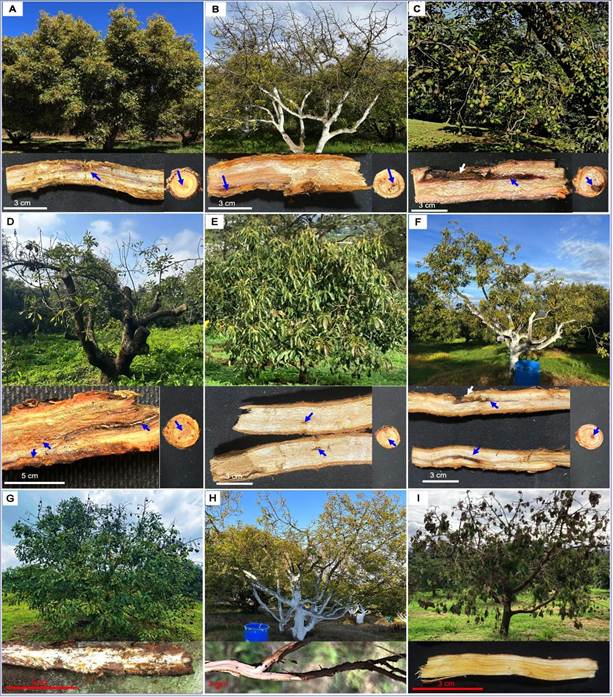
Figure 1 A. Healthy tree and longitudinal and transversal section of 1.5 cm diameter root and association of Ilyonectria liriodendri; B. Apical defoliation, longitudinal and transverse root section with restricted necrosis associated to I. liriodendri; C. Fruit size reduction, longitudinal and transverse root cutting showing invasive necrosis associated to I. liriodendri; D. Defoliation and small leaves associated with Armillaria + I. liriodendri and root with medullary necrosis; E. Moderate wilt associated with Phytophthora + I. liriodendri and longitudinal root cutting showing restricted necrosis; F. Yellow canopy, small leaves and canopy reduction associated to Fusarium + Dactylonectria macrodidyma and root with medullary invasive necrosis. G. Progressive wilt and root necrosis, and invasive mycelia in root tissue associated with Armillaria sp.; H. Wilt, yellowing of canopy and root with subcortical necrosis associated with Phytophthora cinnamomi; I. Total wilt, necrotic foliage adhering to branches, root with lines of necrosis in vascular tissue associated to Verticillium sp.
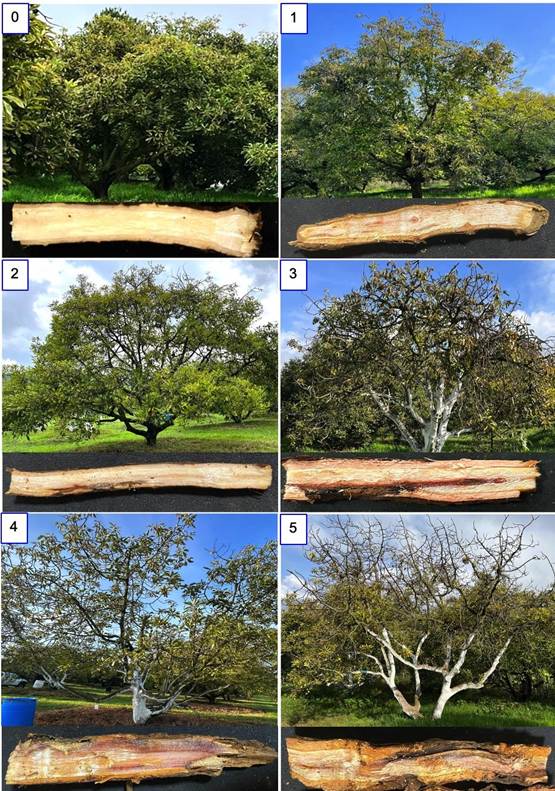
Figure 2 Nominal scale of six classes of vigor and damage in secondary roots of avocado trees associated with four genera and five species of Nectria. 0. Healthy tree with 100% vigor and root without lesions; 1. Apical defoliation in upper branches, root with reddish lesions <1 cm in central tissue (80 % canopy tree); 2. Progressive apical defoliation in upper branches, yellowing in lower stratum of leaves, root with reddish lines in medullary parenchyma (75 %); 3. Defoliation, wilt, and root with invasive necrosis in subcortical and medullary tissue (50 %); 4. Partial defoliation, small leaves and root with necrosis in xylem and primary and secondary phloem (35 %); 5. Defoliated tree and root with invasive necrosis (15 %).
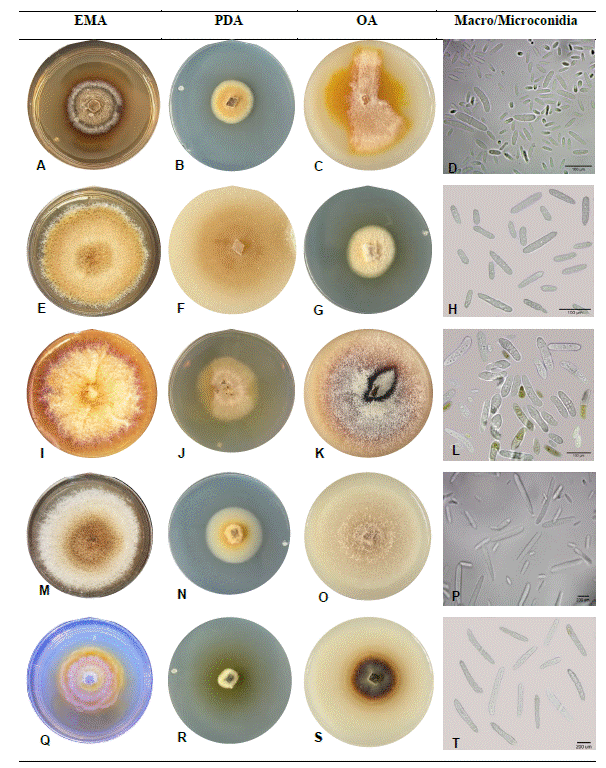
Figure 3 Cultural morphotypes of avocado tree’s root isolates with Nectria-associated symptoms molecularly identified with 97 and 64% homologies for RPB2 y TEF 1-α genes. A-D. Dactylonectria macrodydima; F-I. Dactylonectria novozelandica; J-M. Ilyonectria liriodendri; N-Q. Mariannaea samuelsii; R-T. Thelonectria lucida.
This approach is consistent with the taxonomical treatment of Nectriaceae genera. In this study, five clades were identified of which Ilyonectria was the most prevalent,
followed by Dactylonectria, Mariannaea, Thelonectria, and an undefined clade MICH59. Dactylonectria and Mariannaea include plant pathogens and exhibited similar genetic and ecological structure (Dactylonectria and Ilyonectria on V. vinifera; Cabral et al., 2012a, Lombard et al., 2014). Furthermore, two Armillaria species, three Fusarium species and one Phytophthora species were isolated (Figure 4), showing associativity to symptoms described in association with identified Nectria genera (Figure 5).
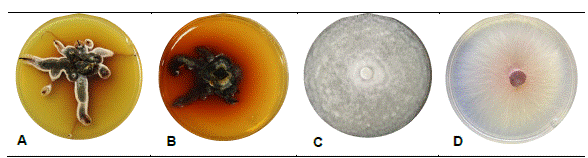
Figure 4 Cultural morphotypes in EMA at 2 % (A, B) and PDA (C, D) isolated from symptomatic avocado tree roots associated with Nectria and other organisms and identified morphologically. A. Armillaria sp; B. Armillaria gallica; C. Phytophthora cinnamomi ; D. Fusarium sp.
Phylogenetic analysis. Amplicons between 600 and 900 bp, associated with RPB2 and TEF 1-a, respectively, were obtained for all isolates (Table 1). Maximum parsimony analysis and Bayesian inference agreed on the conformation of clades for the 30 isolates. TEF 1-α phylogeny allowed identification of three genera and three species with homology > 97 % except for Mariannaea (64%): Dactylonectria macrodidyma, Ilyonectria liriodendri, Mariannaea catenulata and a cryptic species.
Four genera and five species with homology > 97 % were identified with RPB2: D. macrodidyma, D. novo-zelandica, I. liriodendri, M. samuelsii, and Thelonectria lucida. Single phylogenies per gene showed low-moderate resolution for defining interspecific clades in Dactylonectria, Mariannaea and Thelonectria using RPB2 and Bayesian inference algorithm (Figure 5). For Ilyonectria spp. genus, TEF 1-α and RPB2 identified
I. liriodendri species consistently and some isolates close to I. robusta and I. destructans. Similarity and coverage percentages with BLAST sequences were between 97 and 100%, respectively. The MICH3, MICH9, MICH11 and MICH12 strains aligned with I. liriodendri. RPB2 clustered 14 isolates within the clade with distances between 0.022 and 0.043, suggesting the haplotypes presence or intraspecific variations.
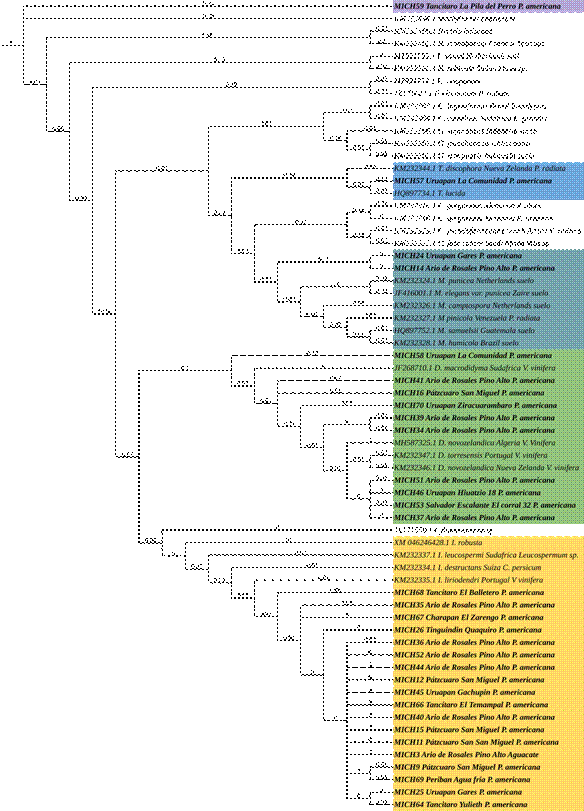
Figure 5 Phylogenetic tree obtained by Bayesian inference analysis of sequences associated with RPB2 gene of Nectria isolates collected in commercial avocado trees. Nectria species from this study are indicated with the MICH prefix. The tree had S. chartarum (KM231994.1) as external reference. The scale-bar represents the expected number of nucleotide changes per site.
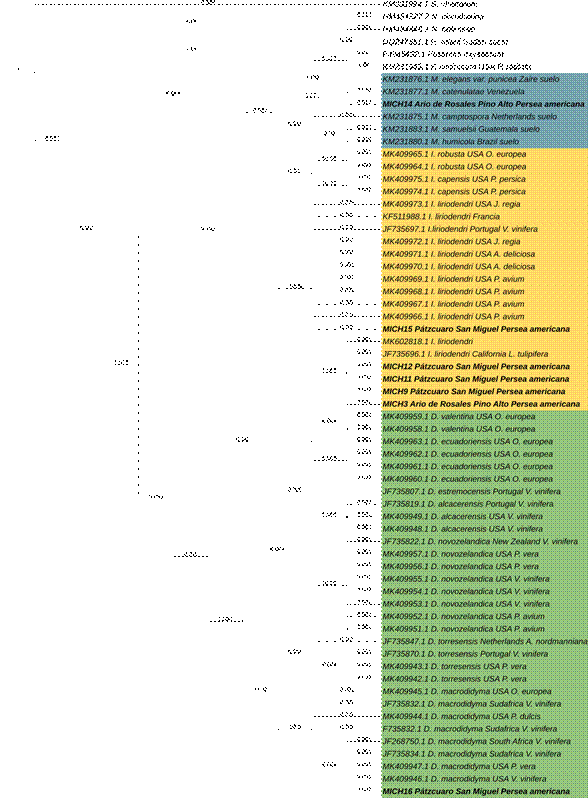
Figure 6 Phylogenetic tree obtained by Bayesian inference analysis of sequences associated with TEF 1-a gene of Nectria isolates collected in commercial avocado trees. Nectria species from this study are indicated with the MICH prefix. The tree had S. chartarum (KM231994.1) as external reference. The scale-bar represents the expected number of nucleotide changes per site.
The phylogeny by MP showed MICH16 isolate had 100 % homology with D. novo- zelandica whereas with RPB2 the same strain clustered with D. macrodydima (Figure 6). The two algorithms applied were similar for the MICH14 isolate associated to Mariannaea spp. The MICH57 strain was related to Thelonectria lucida, representing the only one of this genus. In contrast, MICH59 isolate was not clustered into any clade. Partial or whole regions of ITS, TEF 1-α, TUB and HIS genes have been widely used in molecular phylogenetic analyses of ascomycetes. However, phylogenetic analytical discrepancies have been noted in the family Nectriaceae using sequences integrated by some genes, in particular the accurate identification of Dactylonectria spp. (Lawrence et al., 2019). The HIS locus has been proved as a suitable marker for the delimitation of species with high proximity to Cylindrocarpon (Cabral et al., 2012a). This gene taxonomically has solved to 'macrodidyma' (Gordillo et al., 2017). Nevertheless, genomic region selection should be based in the number of informative and conserved sites for obtaining a suitable percentage of the sequence. The TEF 1-α and RPB2 genes have an informative percentage of 81 % and 64 %, and number of invariant sites of 94 % and 48
%, respectively (Lombard et al., 2009). The genera Cylindrocladiella, Cylindrocladium, Dactylonectria, Gliocladiopsis, Ilyonectria and Mariannaea have been reported in P. americana using ITS, HIS and TUB with concatenated sequence analysis, and the hybridized genes have been successful in identifying Ilyonectria and Dactylonectria (Parkinson et al. 2017). Conversely, Thelonectria and Mariannaea have been poorly studied, and specifically Mariannaea is not frequently reported as a pathogen in economically important crops (Hu et al., 2016). Considering that the species used in phylogenetic analysis originated from rhizosphere and root necrotic tissues, suggests its potential status as a saprophyte. Furthermore, this genus has been found on a wide range of perennial hosts in California (Rosman et al., 2016). Likewise, two-gene usage has been documented as inaccurate for some species such as T. aurea, however, concatenated analysis allows for robust separation of lineages (Lawrence et+ al., 2019).
Overall, Armillaria spp. and Fusarium spp. were the most widely distributed species with the highest co-occurrence and associativity (r = 0.94, Figure 7A and Figure 8A-8B). This associativity, Armillaria spp. with Fusarium oxysporum, has been reported causing Prunus sp. dieback in the region (Rivas-Valencia et al., 2017). Regionally, species of the Nectriacea family were found in 100 % of the sites and municipalities sampled and at high co-occurrence with Armillaria spp. (97.1 %), Fusarium spp. (92.9 %), and moderate with Morthierella spp. (47.3 %) and Paecilomyces spp. (56. 4 %). Co-occurrence and associativity with the rest of the genera was not found, including Phytophthora spp. despite its well-known regional distribution and association with root diseases in avocado trees (r = - 0.19 to 0) (Figure 7A, Figure 8A) (Teliz and Mora, 2007). Interestingly, in sites where Nectria were not associated to other genera, e.g., Charapan, Tancítaro and Nuevo Parangaricutiro, this was the predominant genus associated to moderate - high inductivity (Figure 7A). Overall, the association of Armillaria spp., Fusarium spp. and Nectria was strongly associated with high inductivity (severity > 50 %). Interestingly, in areas of low - moderate inductivity, these genera had moderate co-occurrence (r = 0.49 - 0.65) with Morthierella spp. (Figure 7A, Figure 8A).
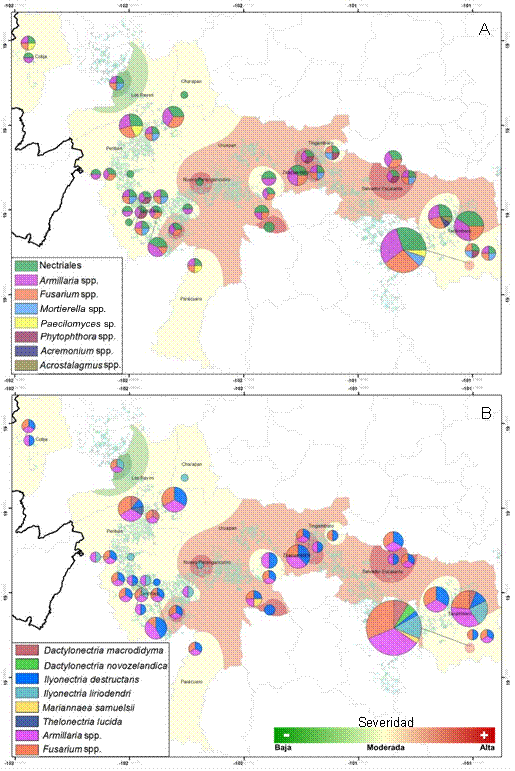
Figure 7 Distribution and regional prevalence of soil and root communities of organisms putatively associated with avocado tree decline and wilt syndrome in 13 municipalities of Michoacán. A. Phylogeographic distribution of four Nectria genera. B. Phylogeographic distribution for six Nectria species. Armillaria spp. and Fusarium spp. are included as species of high regional prevalence (comparative purposes). Green-Yellow-Brown shows the epidemic intensity (low, moderate, and high) assessed by severity scale per tree sampled
The isolates of Nectria in this study were obtained from 15-25 years orchards containing organic matter between 7 and 8 %, considered as high because they are non- volcanic soils (Table 2). Of 30 isolates processed for morphological and molecular characterization, 56 % were identified as I. liriodendri in Ario de Rosales, Charapan, Peribán, Tancítaro, Tingüindín, and Uruapan in orchards with 10 - 40 years, soil with sandy loam texture and interestingly, with low - moderate inductivity level (Figure 7B). These characteristics suggest that this genus can be the ancestor of the species found at regional level, and therefore isolates within the clade may be haplotypes that have undergone historical evolution, which explains its higher regional prevalence (adaptability) and low-moderate level of inductivity. Additionally, this species was significantly associated with Armillaria spp (r = 0.76, Figure 8A-8B).
Interestingly, I. destructans was regionally linked to high inductivity in moderate association with Fusarium spp. and Armillaria spp. (r = 0.28 and 0.34, respectively), suggesting a potential synergistic effect related to higher canopy-root severity (Figure 7B, Figure 8A-8B). Dactylonectria macrodidyma and Dactylonectria novozelandica accounted for 33 % of species mainly in Tacambaro and Peribán, associated to Fusarium spp. and Armillaria spp. (r = 0.83 - 0.88, Figure 8A-8B).
Mariannaea samuelsii (6 %) and Thelonectria lucida (3 %) were identified localized in Nuevo Parangaricutiro, Tacámbaro and Peribán (Figure 7 - 8). Notably, Mariannaea samuelsii had a moderate regional co-occurrence with Armillaria spp, Fusarium spp, Morthierella spp, and Paecilomyces spp. (Figure 7A and 8A-8B). The results suggest that species prevalence, distribution, and diversity are related to physicochemical soil variables, productive avocado growing transitional areas, and abiotic stresses, which in some cases may influence the virulence potential of organisms such as Mariannea spp. widely reported as saprophytes (Figure 7A and 8A-8B) (Hu et al., 2016). Overall, greater species diversity was observed in Uruapan and Tacámbaro (Figure 7 and 8), considered as avocado production pioneers in the region, therefore less species diversity would be expected as a consequence of intensive crop management, in comparison with orchards in Charapan, which are planted in forest areas and relatively younger orchards (less than 15 years) where Armillaria spp. incidence was greater than 90 %, linked to the transition from forest areas to avocado plantations, high pathogenic and saprophytic capacity for this basidiomycete, and high saprophytic capacity of this basidiomycete.
Organism associativity has a responsiveness in aerial and root symptom expression, putatively related to the parasitism of each species (López-Bautista et al., 2019). In field, for Armillaria-Ilyonectria association the symptoms were observed in old trees and the decline syndrome was slowly compared to younger than 15 years, in which the symptoms were moderate during the rainy season particularly. However, complementary regional sampling should be carried out to assess the correlation between incidence, severity, prevalence, and inoculum density of the species identified in this study and others with pathogenic potential. Considering the species associativity found in this study, the term 'syndrome' is included to associate symptoms observed in canopy and root, as well as to incorporate organisms involved in the tree, orchard, and municipality.
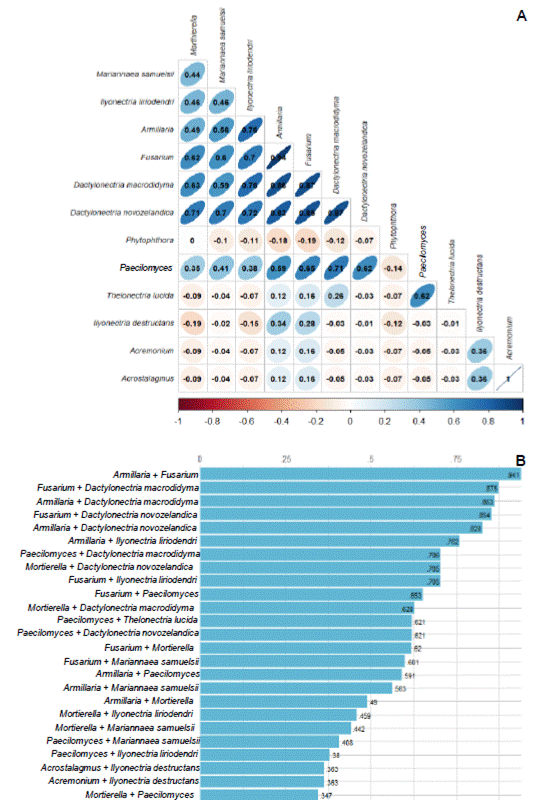
Figure 8 Associativity plots of organisms isolated from avocado tree roots with symptoms of decline syndrome. A. Pearson's correlation (r) showing association between Nectria and other soil-root organisms; y B. Cross-correlation in pairs and ordered by level of associativity for the top 25 significant correlations.
Conclusions
This is the first report determining a fungal complex that includes Nectria species associated with avocado wilt and decline syndrome in Michoacán. Worldwide, Mariannaea spp. is reported for second time associated with avocado tree symptoms, and Thelonectria for first time. At the molecular level, intraspecific variations are possible, particularly with I. liriodendri. In the mid and long term, this means a risk scenario for probability of these parasitic associations or synergies with other organisms such as Armillaria spp., Fusarium spp., Phytophthora spp. and Verticillium spp. representing emerging threats to avocado production in Michoacán and other regions. Long-term, this research needs further pathogenicity testing and planned sampling based on epidemiological approaches to elucidate species prevalence-diversity, haplotypes, and aggressiveness levels in order to assist in sustainable crop management.
References
Agustí, B. C., & Armengol, J. (2013). Black-foot disease of grapevine: An update on taxonomy, epidemiology and management strategies. Phytopathologia Mediterranea, 52, 245-261. https://doi.org/10.14601/Phytopathol_Mediterr-12662 [ Links ]
Androsiuk, P., Okorski, A., & Paukszto, Ł., Jastrzębski, J. P., Ciesielski, S., & Pszczółkowska, A. (2022). Characterization and phylogenetic analysis of the complete mitochondrial genome of the pathogenic fungus Ilyonectria destructans. Science Reports, 12, 2359. https://doi.org/10.1038/s41598-022-05428-z [ Links ]
Cabral, A., Groenewald, J. Z., & Rego, C. (2012). Cylindrocarpon root rot: multi-gene analysis reveals novel species within the I. radicicola species complex. Mycological Progress, 11, 655-688. https://doi.org/10.1007/s11557-011-0777-7 [ Links ]
Cedeño, L., Carrero, C., Quintero, K., Pino, H., & Espinoza, W. (2004). Cylindrocarpon destructans var. destructans and Neonectria discophora var. rubi associated with black foot rot on blackberry (Rubus glaucus Benth.) in Mérida, Venezuela. INCI, 29(8), 455-460. http://ve.scielo.org/scielo.php?script=sci_arttext&pid=S0378-18442004000800011&lng=es [ Links ]
CESAVEMICH, Comité Estatal de Sanidad Vegetal del Estado de Michoacán. (2022). Campaña contra plagas reglamentadas del aguacate. https://cesavemich.org.mx/index.php/campana-contra-plagas-reglamentadas-del-aguacate/ (Consultado el 18 de Octubre de 2022). [ Links ]
Dann, E., Forsberg, L., Cooke, A., Pegg, K., Shivas, R., & Pei-Tan, Y. (2011). Pathogenicity studies in avocado with three nectriaceous fungi, Calonectria ilicicola, Gliocladiopsis sp. and Ilyonectria liriodendri. Plant Pathology, 61, 821-1010. https://doi.org/10.1111/j.1365-3059.2011.02579.x [ Links ]
dos Santos, R. F., Durigon, M. R., & Blume, E. (2015). Aggressiveness of Ilyonectria spp. and Cylindrocarpon pauciseptatum associated with black foot disease of grapevine. Revista Brasileira de Ciências Agrárias, 10(1), 49-53. https://www.redalyc.org/pdf/1190/119038296007.pdf. https://doi.org/10.5039/agraria.v10i1a4701 [ Links ]
Gordillo, A., & Decock, C. (2017). Cylindrocarpon-like (Ascomycota, Hypocreales) species from the Amazonian rain forests in Ecuador: additions to Campylocarpon and Dactylonectria. Cryptogamie. Mycologie, 38, 409-435. https://doi.org/10.7872/crym/v38.iss4.2017.409 [ Links ]
Katoh, K., Rozewicki, J., & Yamada, K. D. (2017). MAFFT online service: multiple sequence alignment, interactive sequence choice and visualization. Briefings in Bioinformatics. https://doi.org/10.1093/bib/bbx108 [ Links ]
Halleen, F., Schroers, H-J., Groenewald, J. Z., Rego, C., Oliveira, H., & Crous, P. W. (2006). Neonectria liriodendri sp. nov., the main causal agent of black foot disease of grapevines. Studies in Mycology, 55, 227-234. https://doi.org/10.3114/sim.55.1.227 [ Links ]
Huelsenbeck, J. P., & Ronquist, F. (2001). MRBAYES: Bayesian inference of phylogenetic trees. Bioinformatics, 17, 754-755. http://dx.doi.org/10.1093/bioinformatics/17.8.754 [ Links ]
Lawrence, D. P., Nouri, M. T., & Trouillas, F. P. (2019). Taxonomy and multi-locus phylogeny of Cylindrocarpon-like species associated with diseased roots of grapevine and other fruit and nut crops in California. Fungal Systematic and Evolution, 4, 59-75. https://doi.org/10.3114/fuse.2019.04.06 [ Links ]
Lombard, L., Van der Merwe, N. A., Groenewald, J. Z., & Crous, P. W. (2015). Generic concepts in Nectriaceus. Studies in Mycology, 80, 189-245. https://doi.org/10.1016/j.simyco.2014.12.002 [ Links ]
López-Bautista, V., Mora-Aguilera, G., Gutiérrez-Espinosa, M. A., Mendoza-Ramos, C., Martínez-Bustamante, V. I., Coria-Contreras, J. J., Acevedo-Sánchez, G., & Santana-Peñaloza, B. (2019). Morphological and molecular characterization of Fusarium spp. associated to the regional occurrence of wilt and dry bud rot in Agave tequilana. Revista Mexicana de Fitopatología, 38(1), 79-106. https://doi.org/10.18781/r.mex.fit.1911-4 [ Links ]
Téliz, D., & Mora, A. (2007). El Aguacate y su Manejo Integrado. Mundiprensa. 219-321. [ Links ]
Mendoza-Ramos, C., Mora-Aguilera, G., Coria-Contreras, J. J., Santana-Peñaloza, B., Acevedo-Sánchez, G., Martínez-Bustamante, V., Gutiérrez-Espinosa, M. A., & Rubio-Cortés, R. (2021). Fusarium spp. y estimación de carga de inóculo asociados a hijuelos de Agave tequilana en diferentes niveles de inductividad epidémica regional. Revista Mexicana de Fitopatología, 39(1), 94-121. https://doi.org/10.18781/r.mex.fit.2006-8 [ Links ]
Michua-Cedillo, J., Téliz Ortíz, D., Ochoa-Ascencio, S., Rodríguez-Guzmán, M. P., Alarcón, A., de León, C., & Vázquez-Marrufo, G. (2024). Armillaria gallica asociado a la pudrición de raíz del aguacate en Michoacán. Revista Mexicana de Fitopatología, 42(2), 19. https://doi.org/10.18781/R.MEX.FIT.2307-7 [ Links ]
Mora, B., Cabral, A., & León, M. (2018). Survey, identification, and characterization of Cylindrocarpon-like asexual morphs in Spanish forest nurseries. Plant Disease, 102, 2083-100. https://doi.org/10.1094/PDIS-01-18-0171-RE [ Links ]
Olalde-Lira, G. G., Raya, Y. A., Apáez, P., Vargas-Sandoval, M., Pedraza, M. E., Raymundo, T., Valenzuela, R., & Lara-Chávez, M. B. N. (2020). Characterization of Fusarium spp., a phytopathogen of avocado (Persea americana Miller var. drymifolia (Schltdl. and Cham.) in Michoacán, México. Revista de la Facultad de Ciencias Agrarias, 52(2), 301-316. https://www.scielo.org.ar/scielo.php?script=sci_arttext&pid=S1853-86652020000200024 [ Links ]
Parkinson, L., Shivas, R., & Dann, E. (2017). Pathogenicity of nectriaceus fungi on avocado in Australia. Phytopathology, 1479-1485. https://doi.org/10.1094/PHYTO-03-17-0084-R [ Links ]
Petit, E., & Gubler, W. D. (2005). Characterization of Cylindrocarpon species, the cause of black foot disease of grapevine in California. Plant Disease, 89, 1051-1059. https://doi.org/10.1094/PD-89-1051 [ Links ]
Rahman, M., & Punja, Z. K. (2005). Factors influencing development of root rot on ginseng caused by Cylindrocarpon destructans. Phytopathology, 95, 1381-1390. https://doi.org/10.1094/PHYTO-95-1381 [ Links ]
Rivas-Valencia, P., Almaraz-Sánchez, A., Cano-Salgado, A., Hernández-Ramos, L., Alanís-Martínez, I., & Fernández-Montes, M. R. (2017). Dieback disease of Prunus sp. associated with Armillaria spp. in commercial orchards in Michoacán, Mexico. Revista Mexicana de Fitopatología, 35(3), 463-475. https://doi.org/10.18781/R.MEX.FIT.1702-1 [ Links ]
Secretaría de Agricultura y Desarrollo Rural (SADER) (2022). Arrancan trabajos para exportar este año aguacate de Jalisco a Estados Unidos. Gobierno de México. Retrieved from https://www.gob.mx/agricultura/prensa/arrancan-trabajos-para-exportar-este-ano-aguacate-de-jalisco-a-estados-unidos-297541?idiom=es [ Links ]
Servicio de Información Agroalimentaria y Pesquera (SIAP) (2022). Avance Nacional de Producción Agroalimentaria. SIAP. Retrieved from http://infosiap.siap.gob.mx:8080/agricola_siap_gobmx/AvanceNacionalSinPrograma.do [ Links ]
Schroers, H. J., Žerjav, M., & Munda, A. (2008). C. pauciseptatum sp. nov., with notes on Cylindrocarpon species with wide, predominantly 3-septate macroconidia. Mycological Research, 112, 82-92. https://doi.org/10.1016/j.mycres.2007.10.004 [ Links ]
Úrbez, J. R., Haag, P., & Bowen, P. (2014). Grapevine trunk diseases in British Columbia: Incidence and characterization of the fungal pathogens associated with black foot disease of grapevine. Plant Disease, 98, 456-468. https://doi.org/10.1094/PDIS-05-13-0524-RE [ Links ]
Téliz, D., & Mora, A. (2007). El Aguacate y su Manejo Integrado. Mundiprensa, 219-321. [ Links ]
Received: July 30, 2024; Accepted: December 22, 2024
 Este es un artículo publicado en acceso abierto bajo una licencia Creative Commons
