




Servicios Personalizados
Revista
Articulo
 texto en
 Inglés (pdf)
 Artículo en XML
 Referencias del artículo

 Traducción automática
 Enviar artículo por email
Indicadores
-
 Citado por SciELO
-
 Accesos
Links relacionados
-
 Similares en
SciELO
Compartir

 Permalink

Revista mexicana de fitopatología
versión On-line ISSN 2007-8080versión impresa ISSN 0185-3309
Rev. mex. fitopatol vol.41 no.spe Texcoco 2023 Epub 31-Mar-2025
https://doi.org/10.18781/r.mex.fit.2023-7
Review Articles
Viruses and viroids in tomato (Solanum lycopersicum) and plant growth promoting rhizobacteria as a management alternative
1 Departamento de Preparatoria Agrícola. Universidad Autónoma Chapingo, Km 38.5, carretera México-Texcoco, Chapingo, Estado de México. C.P. 56230. México
2 Departamento de Fitotecnia. Universidad Autónoma Chapingo, Km 38.5, carretera México-Texcoco, Chapingo, Estado de México. C.P. 56230. México;
3 Instituto Tecnológico de Sonora, 5 de Febrero 818 Sur, Colonia Centro, Ciudad Obregón, Sonora. C.P. 85000. México
Viruses and viroids cause several diseases in tomato (Solanum lycopersicum) worldwide, generating important economic losses. About 312 viruses and seven viroids have been associated, of which more than 28 are present in Mexico. Therefore, the use of Plant Growth-Promoting Rhizobacteria (PGPR) can be an effective alternative for the management of viruses and viroids. The genera Pseudomonas, Bacillus, Azospirillum, Anabena and Stenotrophomonas have been implemented against main viruses reported in tomato: Cucumber mosaic virus (CMV), Tobacco mosaic virus (TMV), Tomato chlorotic spot virus (TCSV), Tomato mottle virus (ToMoV), Tomato spotted wilt virus (TSWV), Tomato yellow leaf curl virus (TYLCV), Potato virus Y (PVY), Groundnut bud necrosis virus (GBNV), with benefits in decreased incidence and severity up to 80 % and yield increase over 40 %. In Mexico, only Bacillus has been used. The use of PGPR is a strategy that could mitigate the impact of viral and viroid diseases and can be integrated into integrated management.
Keywords: ISR; Solanum lycopersicum; PGPR; Pseudomonas; Bacillus¸viruses
Los virus y viroides causan diversas enfermedades en jitomate (Solanum lycopersicum) en el mundo, generando pérdidas económicas importantes. Se han asociado alrededor de 312 virus y siete viroides, de los cuales más de 28 están presentes en México. Es necesaria la búsqueda de alternativas de manejo de estos fipatógenos, ya que la clásica eliminación de las primeras sintomáticas genera pérdidas de rendimiento, aunado a ello, la dificultad de evitar su diseminación. Por ello, el uso de rizobacterias promotoras del crecimiento vegetal (RPCV), puede ser una alternativa efectiva para el manejo de virus y viroides. Los géneros Pseudomonas, Bacillus, Azospirillum, Anabena y Stenotrophomonas, se han implementado contra virus reportados en jitomate: Cucumber mosaic virus (CMV), Tobacco mosaic virus (TMV), Tomato chlorotic spot virus (TCSV), Tomato mottle virus (ToMoV), Tomato spotted wilt virus (TSWV), Tomato yellow leaf curl virus (TYLCV), Potato virus Y (PVY), Groundnut bud necrosis virus (GBNV), con beneficios en la disminución de incidencia y severidad hasta un 80 % y un aumento de rendimiento superior al 40 %. En México solo se ha utilizado Bacillus. Se vislumbra que el uso de RPCV es una estrategía que podría mitigar el impacto de enfermedades virales y viroidales, que se puede integrar a un manejo integrado.
Palabras clave: RSI; Solanum lycopersicum; RPCV; Pseudomonas; Bacillus; virus
The tomato (Solanum lycopersicum), native to South America and currently distributed worldwide, is adapted to tropical and temperate conditions (Hanssen and Lapidot, 2012). It is one of the most cultivated vegetables in both greenhouse and open-field settings (Sánchez-del Castillo et al., 2009). Additionally, it stands as one of the most lucrative and globally consumed crops. In 2021, the global harvest reached 256,770,677 tons (FAO, 2023). In Mexico, the cultivation of tomatoes holds significant social and economic importance due to foreign exchange earnings and job generation (Hernández-Martínez et al., 2004). However, pathogens and insect pests can compromise its yield and quality (Savary et al., 2019). For instance, diseases caused by viruses and viroids result in economic losses worldwide (Ling and Zhang, 2009; Antignus et al., 2002). In Mexico, there are only records of losses of up to 80% of viral infections comparing the use of agribon with the control (without management) (Ramírez-Rojas, 2006), so it is important to have accurate information on the economic impact of these pathogens, since detections are constant (Figure 1) and are a latent risk for national production. A global economic impact exceeding $30 billion annually has been estimated for viral diseases affecting economically significant crops (Sastry, 2013a).
Both viruses and viroids can lead to losses in crop production and quality. Therefore, it is crucial to explore management alternatives that ensure direct, effective, and ecologically safe control (Rojas et al., 2018). For decades, chemical pesticides have been employed globally in agriculture to control insect pests and
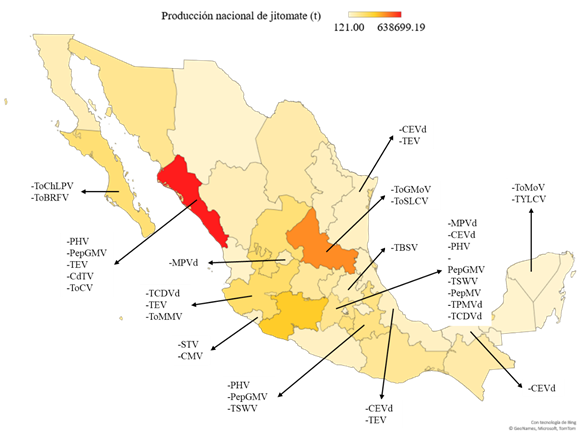
Figure 1 States of the Mexican Republic where viruses and viroids were detected in tomato (See Table 1).
phytopathogens, often applied excessively to both crops and soil, resulting in resistance issues (Karthika et al., 2020). Specifically, in the control of diseases caused by viruses and viroids, the use of agrochemicals has been limited to the control of vector insects. However, in recent years, management strategies have shifted towards seeking environmentally friendly alternatives compatible with the surrounding flora and fauna.
Therefore, a comprehensive understanding of these infectious agents and their interaction with hosts is essential to gain knowledge and propose effective management alternatives. While research has been conducted in recent years on the role of Plant Growth-Promoting Rhizobacteria (PGPR) in managing phytopathogenic fungi (Basit et al., 2021), little exploration has been done regarding their use in managing viruses and viroids. This exploration aims to reduce the impact of agrochemicals on vector control since, by nature, the best management involves implementing resistant varieties and preventive measures. As a result, the objective of this review is to explore the potential of PGPR for managing viruses and viroids causing diseases in tomatoes, along with examining the current research trends in this field within the country.
Viruses in tomato
Viruses are infectious agents (obligate parasites) composed of nucleic acid (RNA and DNA) enveloped in proteins, capable of replicating within living cells (Hancinský et al., 2020). They are exclusively dependent on the host cell’s machinery for replication (Sastry, 2013b). Viruses can exhibit various shapes such as rigid and flexible rods, rigid rods, bacilli, polyhedra, geminate, among others (ICTV, 2021).
In 2011, the ten most significant viruses of international importance were identified by the global plant virology community. These included Tobacco mosaic virus (TMV), Tomato spotted wilt virus (TSWV), Tomato yellow leaf curl virus (TYLCV), Cucumber mosaic virus (CMV), Potato virus Y (PVY), Cauliflower mosaic virus (CaMV), African cassava mosaic virus (ACMV), Plum pox virus (PPV), Brome mosaic virus (BMV), and Potato virus X (PVX). Notably, six of these viruses infect tomatoes (Scholthof et al., 2011). Worldwide, the key viruses causing losses in tomato cultivation comprise Tomato leaf curl virus (TYLCV), Tobacco mosaic virus, Beet curly top virus (BCTV), Tomato bushy stunt virus (TBSV), and Tomato spotted wilt virus (Sastry, 2013a). Since 2018, the emergence of Tomato brown rugose fruit virus (TBRFV) poses a latent threat due to the lack of tolerant varieties and its distribution in major production areas in Mexico (Cambrón-Crisantos et al., 2019).
The International Committee on Taxonomy of Viruses (ICTV) has classified
viruses into 189 families, 2,224 genera, and 9,110 species (https://talk.ictvonline. org/taxonomy/) (ICTV, 2021). In tomatoes, approximately 312 viruses have been reported (Rivarez et al., 2021), with more than 28 of them documented in Mexico (Table 1). Among the viruses reported in Mexico, ToBRFV, TYLCV, TSWV, Pepino mosaic virus (PepMV), and Tomato wilt virus (ToMarV) are of greater significance in tomatoes due to their economic impact and prevalence in both field and greenhouse conditions (García-Estrada et al., 2022).
Among the primary viruses affecting tomatoes, over 28 viruses belong to the Begomovirus genus (ssDNA) (Hogenhout et al., 2008), while the remaining viruses fall into 18 genera. Notably, Orthotospovirus, Potyvirus, Tobamovirus, and
Table 1 Main viruses reported in tomato (Solanum lycopersicum) in Mexico and the world.
| Familia / Género / Especie | Tipo de genoma | Referencia |
|---|---|---|
| Geminiviridae: Begomovirus | Bipartita, monopartita circular / ssDNA | Green et al., 2007; Holguin-Peña et al., 2004; Honguin- Peña et al., 2007; Mauricio-Castillo et al., 2007; CABI,2020; Mauricio-Castillo et al., 2007; Cardenas-Conejo et al., 2010; Avedi et al., 2021; Idris y Brown, 2007; Rojas et al., 2005: Taniguchi et al., 2023; Idris et al., 1999; Lugo et al., 2011; Barajas-Ortizet al., 2013; Zuñiga- Romano et al., 2019 |
| *Pepper golden mosaic virus (PepGMV), *Tomato chino La Paz virus (ToChLPV), *Tomato golden mottle virus (ToGMoV), Tomato leaf curl Bangladesh virus (ToLCBV),*Tomato mottle virus (ToMoV), *Tomato severe leaf curl virus (ToSLCV), *Tomato yellow leaf curl virus (TYLCV), Tobacco leaf curl virus (TLCV), Tomato bright yellow mottle virus (TBYMV), Tomato enation leaf curl virus (ToELCV), Tomato common mosaic virus (ToCmMV), Tomato curly stunt virus (ToCSV), Tomato chlorotic leaf distortion virus (ToClLDV), Tomato chlorotic mottle Guyane virus (ToCMoGV), Tomato dwarf leaf virus (ToDLV), Tomato golden mosaic virus (TGMV), Tomato golden vein virus (TGVV), Tomato interveinal chlorosis virus (ToICV), Tomato leaf curl New Delhi virus (ToLCNDV), Tomato leaf curl Palampur virus (ToLCPalV), Tomato leaf curl purple vein virus (ToLCPVV), Tomato mosaic Havana virus (ToMHaV), Tomato mottle leaf curl virus (TOMLCV), Tomato rugose yellow leaf curl virus (TRYLCV), Tomato yellow leaf curl Sardinia virus (TYLCSV), Tomato yellow mosaic virus (ToYMV), Tomato leaf curl virus Arusha virus (ToLCArV), Tomato leaf curl Ghana virus (ToLCGV), *Sinaloa tomato leaf curl virus (SToLCV)¸ *Tomato leaf curl Sinaloa virus (ToLCSinV)¸ Lisianthus enation leaf curl virus (LELCV), *Chino del tomate virus (CdTV), *Pepper huasteco yellow vein virus (PHYVV), *Squash leaf curl virus (SLCV), *Tomato ápex necrosis virus (ToANV) | ||
| Potyviridae: Potyvirus | Monopartita lineal / ssRNA + | CABI, 2020; Fernandez-Northcote y Fulton, 1980; Li et al., 2012 |
| *Tobacco etch virus (TEV), Potato virus Y (PVY), Pepper veinal mottle virus (PVMV), Peru tomato mosaic virus (PTMV); *Tomato necrotic stunt virus (ToNSV) | ||
| Amalgaviridae: Amalgavirus | Lineal / dsRNA | Sabanadzovic et al., 2009 |
| *Southern tomato virus (SToV) | ||
| Virgoviridae: Tobamovirus | Monopartita lineal ssRNA + | CABI, 2020; Cambrón-Crisantos et al., 2019; Zuñiga- Romano et al., 2019 |
| *Tobacco mosaic virus (ToMV), *Tomato brown rugose fruit virus (ToBRFV), *Tomato mottle mosaic virus (ToMMV), *Tomato mosaic virus (ToMV) | ||
| Secoviridae: Nepovirus | Bipartita lineal / ssRNA + | CABI, 2020; Perez-Moreno et al., 2004 |
| *Tobacco ringspot virus (TRSV), Tomato black ring virus (TBRV) | ||
| Secoviridae: Torradovirus | Bipartita lineal/ ssRNA + | CABI, 2020; Verbeeket al., 2008 |
| *Tomato torrado virus (ToTV); Tomato marchitez virus (ToMarV), *Tomato chocolate spot virus (ToChSV), Tomato chocolate virus (ToChV) | ||
| Tombusviridae: Tombusvirus | Monopartita lineal / ssRNA + | CABI, 2020; De laTorre-Almaráz et al., 2004 |
| *Tomato bushy stunt virus (TBSV) | ||
| Closteroviridae: Crinivirus | Bipartita lineal / ssRNA + | CABI, 2020; Méndez-Lozano et al., 2012 |
| *Tomato chlorosis virus (ToCV), *Tomato infectious chlorosis virus (TICV) | ||
| Tospoviridae: Orthotospovirus | ssRNA + | CABI, 2020; Nagata y de Ávila, 2000; Suganyadevi et al., 2018; Zuñiga-Romano et al., 2019; Honguin-Peña et al., 2007 |
| *Tomato spotted wilt virus (TSWV), Chrysanthemum stem necrosis virus (CSNV), Pepper necrotic spot virus (PNSV), Tomato chlorotic spot virus (TCSV), Tomato necrotic ring virus (TNRV) Groundnut bud necrosis virus (GBNV), *Impatiens necrotic spot virus (INSV) | ||
| Betaflexiviridae: Carlavirus | Lineal / ssRNA + | EPPO, 2023 |
| Cowpea mild mottle virus (CPMMV) | ||
| Alphaflexiviridae: Potexvirus | Lineal / ssRNA+ | EPPO, 2023; Zuñiga-Romano et al., 2019 |
| *Pepino mosaic virus (PepMV), Potato virus X (PVX) | ||
| Tymoviridae: Tymovirus | Lineal / ssRNA+ | EPPO, 2023 |
| Eggplant mosaic virus (EMV) | ||
| Secoviridae: Fabavirus | Bipartita lineal / ssRNA + | CABI, 2020 |
| Broad bean wilt virus (BBWV) | ||
| Bromoviridae: Alfamovirus | Tripartita lineal/ ssRNA | De la Torre-Almarázet al., 2003 |
| *Alfalfa mosaic virus (AMV) | ||
| Bromoviridae: Cucumovirus | Tripartita lineal/ ssRNA + | EPPO, 2023; Lecoq y Desbiez, 2012; Zuñiga-Romano et al., 2019 |
| *Cucumber mosaic virus (CMV), Peanut stunt virus (PSV), Tomato aspermy virus (TAV) | ||
| Bromoviridae: Ilarvirus | Tripartita lineal/ ssRNA + | CABI, 2020 |
| Tobacco streak virus (TSV), Parietaria mottle virus (PMoV) | ||
| Geminiviridae: Curtovirus | Monopartita circular / ssDNA | Chen y Gilbertson, 2016 |
| Beet curly top virus (BCTV) |
*Viruses reported in Mexico.
Cucumovirus exhibit a higher number of species following the Begomovirus genus. In some instances, viruses are transmitted by insect vectors (Figure 2); for instance, Potyviruses are transmitted by aphids, Orthotospoviruses by thrips (Aphidinae) (Gibbs et al., 2008; Sastry, 2013b), and Begomoviruses by whiteflies (Bemisia tabaci, Trialeurodes vaporariorum) (Hogenhout et al., 2008). This vector-mediated transmission adds complexity to the management of these phytopathogens.
Typically, symptoms induced by viruses are challenging to identify due to their occurrence in mixed viral infections (Sastry, 2013a). It is evident that these symptoms diminish the vigor, quality, and yield of crops (Figure 3) (Sastry, 2013b).
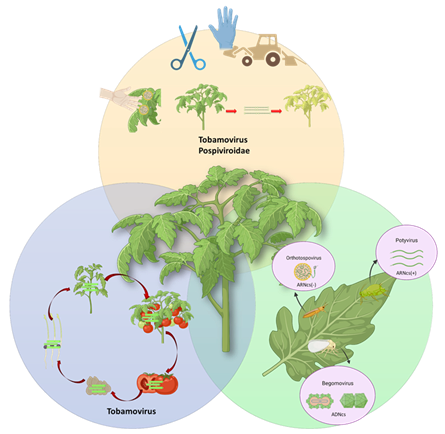
Figure 2 Main forms of transmission of viruses and viroids in tomato. A) Transmission by seed; B) Mechanical transmission, due to the use of work tools, manipulation of plants; C) Transmission by insect vectors.
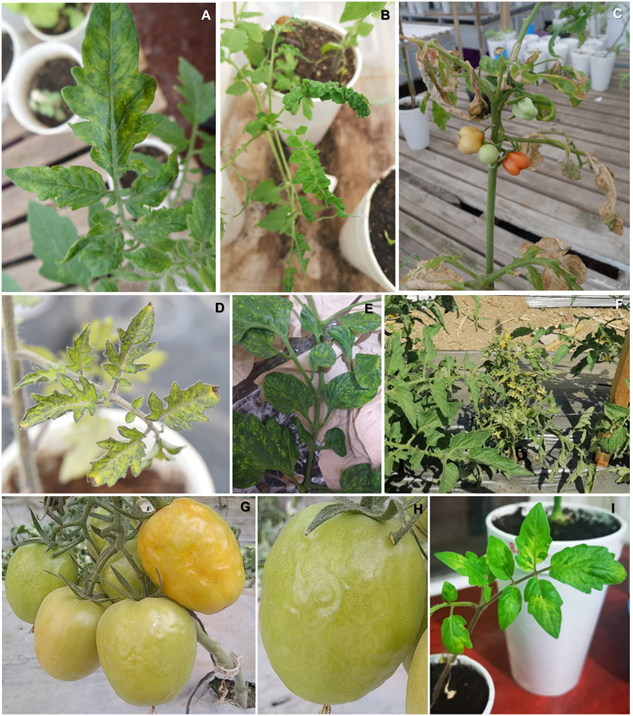
Figure 3 Symptoms associated with viruses and viroids in tomatoes. A and B) Mosaic, leaf reduction, and mild to severe leaf distortion associated with Tomato brown rugose fruit virus; C and D) Stunting, fruit deformation, and purple discoloration in leaves caused by Mexican papita viroid; E) Yellow mosaic symptom associated with Pepino mosaic virus; F) Symptoms of stunting, deformation, and severe mosaic associated with Begomovirus; G and H) Symptoms of concentric rings and slight fruit deformation associated with Tomato spotted wilt virus; I) Mosaic in leaves caused by Tobacco mosaic virus.
Diseases caused by these phytopathogens pose a significant challenge to agriculture. Moreover, imminent climate change and agricultural practices have favored outbreaks of diseases, leading to their spread to unreported or previously unaffected areas (Jones and Naidu, 2019).
Viroids in tomato
Viroids are infectious agents with lower structural and genetic complexity, consisting of a covalently closed circular RNA strand of low molecular weight (246 to 401 nucleotides in length) (Flores et al., 1998). Some are pathogenic, while others replicate without inducing symptoms in the host (Flores et al., 1998). Most viroids were initially discovered due to the damage they caused in various economically important crops (Flores and Randles, 2003).
The International Committee on Taxonomy of Viruses (ICTV) has classified 33 viroids into two families based on the cellular location of replication: Pospiviroidae (28 species) and Avsunviroidae (five species) (Di Serio and Flores, 2008). Each family consists of genera, and these genera comprise species with numerous sequence variants known as strains (Flores et al., 1998; 2000). Upon entering the host cell, Pospiviroidae move to the nucleus before initiating replication, whereas Avsunsoviroidae replicate in the chloroplasts (Sastry, 2013b).
Since 1988, diseases naturally infected by viroids have been detected in several countries; all of the family Pospiviroidae, such as Tomato planta macho viroid (TPMVd) (Galindo et al., 1982), Mexican papita viroid (MPVd) which could be considered as a variant of the TPMVd (Verhoeven et al., 2011), Potato spindle tuber viroid (PSTVd) (Puchta et al., 1990), Tomato apical stunt viroid (TASVd) (Walter et al., 1980; Walter, 1987), Citrus exocortis viroid (CEVd) (Mishra et al., 1991; Fagoaga y Duran-Vila, 1996; Verhoeven et al., 2004), Indian tomato bunchy top viroid (Mishra et al., 1991) which is considered a CEVd strain (Singh et al., 2003), Tomato chlorotic dwarf viroid (TCDVd) (Singh et al., 1999), and Columnea latent viroid (CLVd) (Verhoeven et al., 2004). In artificial infections, the tomato was successfully infected with Chrysanthemum stunt viroid (CSVd) (Matsushita y Kumar, 2009) and Pepper chat fruit viroid (PCFVd) (Table 2) (Verhoeven et al., 2009).
All viroids are transmitted through mechanical inoculation (Sastry, 2013b) and by contact (Figure 2); for instance, through tools used in pruning, via clothing, through crop manipulation, and direct contact between nearby plants (Hammond, 2017). In other cases, transmission occurs through seeds, vegetative propagation, grafting, pollen, and insects (Figure 2) (Verhoeven et al., 2004). The efficiency of viroids in being transmitted through seeds varies among plant and viroid species (Flores et al., 2011; Singh et al., 2003; Chung and Choi, 2008). Viroid infections
Table 2 Viroids that affect tomato (Solanum lycopersicum) in the world.
| Especie | Detecciones | Síntomasz | Tipo de transmisión | Pérdidas e incidencia | Referencia |
|---|---|---|---|---|---|
| Tomato planta macho viroid = Mexican papita viroid (TPMVd= MPVd) | México (1982, 2008 y 2020) Canadá (2008) | Achaparramiento; clorosis en el ápice, hojas bronceadas o púrpuras, epinastia y deformación severa, reducción en el tamaño y número de frutos y aborto de flores. | Probable vector Myzus persicae Semilla por polen contaminado | Provoca pérdidas significativas en el rendimiento. Incidencias del 5 % en el cultivo. | Galindo et al., 1982, 1986; Ling y Zhang, 2009; Mejorada-Cuellar, 2020; Ling y Bledsoe, 2009; Yanagisawa y Matsushita, 2017; Yanagisawa and Matsushita, 2018; Aviña-Padilla et al., 2018; Matthews-Berry, 2010; Li y Ling, 2012 |
| Potato spindle tuber viroid (PSTVd) | Descubierto en 1922 y con distribución mundial pero erradicado en la mayoría de los países. Australia (2011) | Epinastia, clorosis, coloración violácea con las nervaduras centrales de color verde brillante, deformación y reducción de tamaño, quebradizas y nervaduras centrales necróticas, internudos cortos, con brotes atrofiados y necrosis, aborto flores, frutos pequeños, duros, con manchas verdes oscuras y maduración irregular | Semilla Vector M. persicae (Transencap- sidación con Potato leaf roll virus) | Reducción de biomasa del cultivo y el rendimiento hasta un 89 %. Incidencia del 3 % en tomate cherry (S. lycopersicum cv. Perino). | Owens, 2007; Matthews-Berry, 2010; van Brunschot et al., 2014; Yanagisawa y Matsushita, 2017; Matsushita et al., 2011; Diener, 1987; Singh et al., 2003 NSW Government, 2012; Mackie et al., 2019 |
| Tomato apical stunt viroid (TASVd) | Israel (1999 y 2000), En algunos países de Asia y África, y en varios de Europa. | Internudos cortos, en hojas deformación, amarillamiento, quebradizas, reducción de tamaño de frutos y descoloridos (rojizo pálido) | Incidencia de casi 100 % | Antignus et al., 2002, 2007; CABI, 2018; Matsuura et al., 2010; Nielsen et al., 2012 | |
| Citrus exocortis viroid (CEVd) | Distribución mundial, principalmente en cítricos | Clorosis, bronceado y distorsión, reducción del crecimiento. | Detectado en lotes de semillas comerciales | No hay reportes | Mishra et al. 1991; Matthews-Berry, 2010; Verhoeven et al., 2004 Constable et al., 2019 |
| Tomato chlorotic dwarf viroid (TCDVd) | Canadá, Estados Unidos, México, Japón, Hawaii (2017) | Reducción del crecimiento y amarillamiento (clorosis) de brotes, deformación frutos, clorosis que se torna después color bronce, rojizo y/o púrpura, epinastia Muerte de plantas. | Por polinización activa de abejorros (Bombus terrestris y B. ignites) | 100 % de incidencia en invernaderos | Matsushita et al., 2008; Singh et al., 1999; Ling y Zhang, 2009; Verhoeven et al., 2004 y 2007; Singh y Teixeria, 2006; Olmedo-Velarde et al., 2018; Nie, 2012; Matthews-Berry, 2010; Antignus et al., 2007; Matsuura et al., 2010; Singh y Dilworth, 2009 |
| Columnea latent viroid (CLVd) | Holanda y Bélgica En 2007 en el Reino Unido y en Francia y en 2011 en Mali. | Deformación severa, bronceado y quemado en hojas, epinastia, clorosis y necrosis en nervaduras, reducción de tamaño o retraso de desarrollo. | Detectado en lotes de semillas comerciales | Mermas en producción en Reino Unido. Incidencia en campo de aproxi- madamente el 1.5%. | Nixon et al., 2010; Batuman y Gilbertson, 2013; Matthews-Berry, 2010; Steyer et al., 2010; Constable et al., 2019. |
| Pepper chat fruit viroid (PCFVd) | En el 2009 en plantas de pimiento y en 2013 en cargamentos de semillas de tomate | Necrosis en hojas jóvenes y necrosis en las nervaduras y peciolos, achaparramiento, reducción del tamaño del fruto. | Detectado en lotes de semillas comerciales | No hay reportes | Verhoeven et al.,2009; Chambers et al., 2013; Constable et al.,2019 |
zThe described symptoms that each viroid can cause can be expressed together or separately in an infected plant.
in commercial tomato crops have been linked to the importation of seeds and ornamental plants (Batuman and Gilbertson, 2013; Van Brunschot et al., 2014; Verhoeven et al., 2012). Due to the diversity of viroid species, including some endemic ones, and the presence of mixed infections in tomatoes, Mexico represents a center of origin for viroids (Aviña-Padilla et al., 2022).
Symptoms induced by viroids in tomatoes depend on the viroid species, cultivar, temperature, and light conditions. Plant responses are additionally influenced by RNA silencing, which plays a significant role in symptom development, combined with structural elements of viroids (Di Serio et al., 2013; Flores et al., 2015). The variability in symptoms is caused by different forms of gene expression. Moreover, viroid infections may or may not induce symptoms, but they generally lead to chlorosis, bronzing, leaf distortion, stunting, vein clearing, and discoloration, as well as malformation of flowers and fruits, reduced yield, and non-commercial fruit (Figure 1 C and D) (Singh et al., 2003; Kovalskaya and Hammond, 2014).
Management of diseases caused by viruses and viroids
There is a global trend towards the consumption of pesticide-free products. Regardless of the agricultural system and phytopathogen, it is ideal to adopt an Integrated Pest Management (IPM) approach that includes measures before, during, and after crop growth. As a first step, the use of virus-resistant cultivars is recommended (Rojas et al., 2018), along with cultural sanitation practices as disease management measures (Karthika et al., 2020).
The effective control of viruses and viroids involves early detection (diagnosis), eradication, and cultural control methods (Kovalskaya and Hammond, 2014).
Implementing appropriate control measures will help prevent or reduce the severity of viruses and/or viroids in plants. Therefore, diagnosis for virus identification is crucial for implementing management strategies. Diagnostic techniques may include ELISA, immunochromatography or strip tests, nucleic acid hybridization, polymerase chain reaction (PCR), and next-generation sequencers (GonzálezGarza, 2017).
Given the significance of viral and viroidal diseases, alternative approaches have been sought, such as the use of beneficial microorganisms to protect the crop and enhance plant growth and productivity (Sofy et al., 2019).
As mentioned earlier, the use of tolerant varieties has been implemented as part of the management virus and/or viroidal variety; however, in recent years, there has been a growing emphasis on issues related to the induction of natural defenses in plants (Ryals et al., 1994; Kloepper et al., 2004). The demand for biological products for pest and disease control, along with the use of inducing molecules (elicitors) capable of triggering defense responses in plants, is on the rise (Nasir et al., 2014). It should be noted that the magnitude and effectiveness of the induced response will depend on the type of molecule, the signal, or its ability to induce secondary signaling within the tissue (Eder and Cosio, 1994).
By nature, plants possess the ability to defend themselves against phytopathogens through the production of substances that prevent or reduce damage caused by microorganisms. This response is triggered by plant-pathogen recognition after a local infection, where plants activate defense responses systemically to increase the magnitude and speed of the response against the pathogen (Delgado-Oramas, 2020). Induced resistance is a state where plants enhance their defenses against phytopathogen attacks and are triggered by the stimulation of chemical and/or biological inducers (Choudhary et al., 2007). In general, induced resistance can function for the control of a broad spectrum of phytopathogens (Kloepper, 1993). Two types of pathogen-induced resistance are known in plants: Induced Systemic Resistance (ISR) and Systemic Acquired Resistance (SAR) (Camarena-Gutiérrez and Torre-Almaráz, 2007).
Induced Systemic Resistance (ISR). The activation of ISR requires the signaling of salicylic acid (SA), jasmonic acid (JA), and ethylene (ET) (Beneduzi et al., 2012; Pieterse et al., 2014). These products coordinately transduce extracellular stimuli recognized by host cell receptors into a large number of target molecules that integrate specific intracellular responses to external stimuli (Walters, 2009; Delgado-Oramas, 2020; Jankiewicz and Koltonowicz, 2012; Choi et al., 2014). ISR has been observed in various plant species as part of defense reactions against fungi, bacteria, and viruses (Camarena-Gutiérrez and de la Torre-Almaráz, 2007).
Signaling pathways mediated by ET, AJ, AS and their interaction. The signaling pathways mediated by SA, JA, and ET do not operate independently (Maldonado-Cruz et al., 2008; Derksen et al., 2013). Through a cascade of signals from mitogen-activated protein kinases (MAPKs), the activation of ethyleneinsensitive genes 1, 2, and 3 (EIN1, EIN2, and EIN3) occurs, regulating gene expression in response to pathogens and injuries (Zhu et al., 2011). In a study on mustard (Sinapis alba), it was demonstrated that ethylene, in interaction with the mitochondrial alternative oxidase pathway (AOX), induces systemic resistance to Turnip mosaic virus (TuMV). This is attributed to the potential limitation of the virus’s systemic infection and its accumulation in the plant (Zhu et al., 2011).
Jasmonate signaling plays a crucial role in the induction of defense genes in plants against pests (Garnica et al., 2012). The gene for coronatine-insensitive protein (COI1) serves as a central regulator in the JA signaling pathway. Upon binding with Jasmonoyl-Isoleucine (JA-Ile), it facilitates the release of the transcription factor MYC2, leading to the transcription of genes responsive to jasmonates (Garnica et al., 2012). Evidence suggests that the expression of the COI1 gene and the N gene in the tobacco-TMV interaction imparts resistance to TMV (Liu et al., 2004).
Salicylic acid (SA) is a pivotal signaling molecule in intracellular signal transduction. In addition to contributing to the release of H2O2 and its active oxygen derivatives, it can induce the expression of genes related to defense (Shirasu et al., 1997).
Induced Systemic Response in tomato against phytopathogenic viruses mediated by PGPR. The need to ensure crop quality and high yields with low environmental impact has led to the emergence of different inputs formulated with microorganisms, among which the use of Plant Growth-Promoting Rhizobacteria (PGPR) can be highlighted (González et al., 2018; Canchignia et al., 2015). These microorganisms enhance Systemic Resistance Induction (SRI) and are saprophytic bacteria that live freely in the rhizosphere. By colonizing the plant root system, they contribute through secretions, vitamins, hormones, and other growth factors that help improve plant growth and productivity (Walters, 2009). What is interesting is their use of the CVRs on foliage and seeds, observing different benefits (Table 3, Figure 4).
Most bacteria reported as Plant Growth-Promoting Rhizobacteria (PGPR) belong to the genera Pseudomonas and Bacillus. Additionally, bacteria from the following genera have been reported: Aeromonas, Agrobacterium, Arthrobacter, Alcaligenes, Azospirillum, Azoarcus, Azotobacter, Burkholderia, Bradyrhizobium, Comamonas, Cyanobacteria, Enterobacter, Gluconacetobacter, Pizobielonas, Serratia, Variovorax, Streptomyces, and Xanthomonas (Vessey, 2003).
Table 3 Plant growth-promoting rhizobacteria species used for virus management in tomato.
| Virus | RPCV | Resultado obtenido | Referencia |
|---|---|---|---|
| Cucumber mosaic virus (CMV) | Pseudomonas fluorescens, Serratia marcescens | Disminuyó el área bajo la curva del progreso de la enfermedad en plantas enfermas tratadas. | Raupach et al., 1996 |
| Bacillus amyloliquefaciens (IN937a), B. subtilus (IN937b), B. pumilus (SE34) | Reducción de síntomas de 38 a 58% con RPCV, comparado con 88 a 98% sin RPCV. | Zehnder et al., 2000, 2001 | |
| B. pumilus (SE34), B. amyloliquefaciens (IN937a), B. subtilus (IN937b), B. pumilus (INR7, T4) | Porcentaje de infección de 27.5 (SE34) al 85% (T4), comparado con el testigo (87.5%). Favoreció el crecimiento de plantas y las protegió contra el virus. | Murphy et al., 2003 | |
| Azospirillum lipoferum (MRB16), A. brasilienses (SP7), A. brasilienses (N040), Anabena oryzae | Las plantas infectadas y tratadas incrementaron hasta 48 % su rendimiento en invernadero y 40% en campo. | Dashti et al., 2007 | |
| P. aeruginosa, Stenotrophomonas rhizophilia | Promovió el crecimiento vegetativo y rendimiento. Se previno la infección del 91 % de las plantas. | Dashti et al., 2012 | |
| Tobacco mosaic virus (TMV) | Pseudomonas spp. (B-25) | Promovió el rendimiento y crecimiento de plantas. Disminuyó la incidencia del virus en plantas. | Kirankumar et al., 2008 |
| Bacillus spp. | Favoreció el desarrollo de raíces en plantas de tabaco infectadas. | Wang et al., 2009; Choi et al., 2014 | |
| Bacillus amyloliquefaciens (TBorg1) | Reducción del 90% de acumulación del virus. Incrementó el total de carbohidratos solubles, proteínas y ácido ascórbico. | Abdelkhalek et al., 2022 | |
| P. fluorescens SM90 y B. subtilis DR06 | Incremento de genes relacionados con defensa NPR1, COI1 Y PR1-a, fomenta crecimiento en plantas infectadas con el virus | Sharaf et al., 2023 | |
| Tomato chlorotic spot virus (TCSV) | B. amyloliquefaciens (IN937a) | Redujo la severidad en campo y fue el tratamiento que mejor controló la enfermedad. | Abdalla et al., 2017 |
| B. pumilus (SE34) + B. amyloliquefaciens (IN937a) | |||
| B. pumilus (SE34) + B.sphaericus (SE56) + B. amyloliquefaciens (IN937a) | |||
| Tomato mottle virus (ToMoV) | B. amyloliquefaciens (IN 937a) | Redujo en 30 % la incidencia del virus en plantas. | Murphy et al., 2000; Zehnder et al., 2001 |
| B. subtilis (IN 937b) | |||
| B. pumilus (SE34) | |||
| Redujo el desarrollo de síntomas y la incidencia. | |||
| Tomato spotted wilt virus (TSWV) | P. fluorescens (CHA0) | Aumentó el rendimiento y crecimiento de plantas infectadas y tratadas. Redujo la carga viral. | Kandan et al. 2005; 2002 Beris et al., 2018 |
| P. fluorescens (CHA0 + CoT-1) | |||
| P. fluorescens (CHA0 + CoT-1 + CoP-1) | |||
| B. amyloliquefaciens (MBI600) | Redujo la incidencia del virus en 80 %. | ||
| Tomato yellow leaf curl virus (TYLCV) | Enterobacter asburiae (BQ9) | Redujo la severidad en 52 %, de plantas tratadas e infectadas. | Li et al., 2016 |
| Potato virus Y | Bacillus amyloliquefaciens (strain MBI600) | Reducción de acumulación sistémica de virus | Beris et al., 2018 |
| Groundnut bud necrosis virus (GBNV) | Bacillus amyloliquefaciens (VB7) | Reducción de síntomas de alrededor del 84 % | Vanthana et al., 2019 |
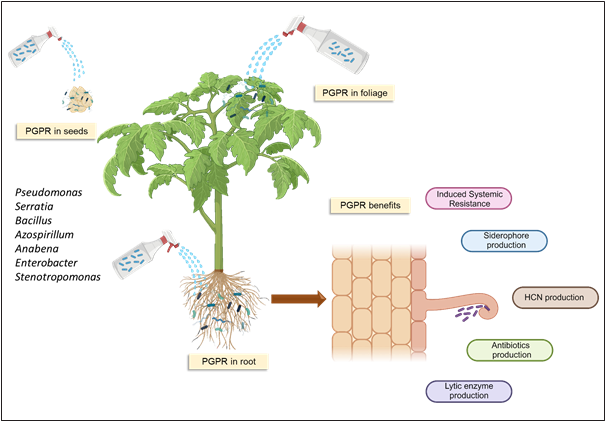
Figura 4 Forms of application and mechanisms of action of Plant Growth-Promoting Rhizobacteria (PGPR) used to protect tomatoes from viral infections.
There are studies on the use of PGPR employed as microbial inoculants to protect tomato plants against viral infections, where, additionally, an increase in crop yield was recorded (Table 3). For instance, in Mexico, Samaniego et al. (2017) and Hernández-Santiago et al. (2020) reported that the application of Bacillus to infected tomato plants not only led to an increase in plant height and weight but also induced systemic resistance. In recent years, research on Systemic Resistance Induction (SRI) using PGPR against economically relevant viruses (20 viruses) in various crops has gained significance (Sofy et al., 2019). However, despite efforts to counteract viruses, research remains scarce, particularly in the case of viroids. The work has mainly focused on crops such as Musa spp., Vigna unguiculata, V. mungo, Vicia faba, Momordica charantia, Cucumis sativus, Citrullus lanatus, Solanum lycopersicum, S. tuberosum, Capsicum annuum, Nicotiana tabacum, N. tabacum cv. Xanthi-nc, Arabidopsis thaliana, Chenopodium quinoa, Helianthus annuus, Phaseolus vulgaris, Datura metel, and Cucurbita maxima (Sofy et al., 2019).
There are other microorganisms, such as endophytic fungi (Trichoderma spp.), which are also resistance inducers in plants, and they are even sold as biocontrollers of phytopathogenic fungi by companies in Mexico, to be applied to various crops. However, the use of these microorganisms and their effect on infected plants by viruses and viroids has been shallowly studied. Nevertheless, some species of rhizosphere and endophytic fungi seem to have a favorable effect as plant growth promoters in virus-infected tomato plants (Ramos-Villanueva et al., 2023).
Conclusions
Diseases caused by viruses and viroids impact the yield and quality of tomatoes, as well as other economically significant crops worldwide. In Mexico, there are records of over 28 viruses, mostly belonging to the Begomovirus genus. However, research on Plant Growth-Promoting Rhizobacteria (PGPR) in tomatoes as inducers of resistance against these pathogens or to enhance crop health is limited. The use of B. subtilis has been reported for controlling Tobacco mosaic virus in tomatoes (Samaniego et al., 2017; Hernández-Santiago et al., 2020). Globally, PGPR such as Pseudomonas, Serratia, Bacillus, Azospirillum, Anabena, Enterobacter, and Stenotropomona have been evaluated against nine virus species in tomatoes, with a focus on Cucumber mosaic virus. Nevertheless, it is essential to strengthen such research due to the significance of tomato cultivation in Mexico. Promisingly, PGPR has demonstrated effects in reducing incidence and severity by up to 80%. Additionally, a yield increase of up to 48% has been recorded compared to plants without PGPR application. Therefore, the use of growth promoting microorganisms are a promising alternative for integration into an integrated management of viral infections, given its compatibility with the environment and experimentally effective for the control of a variety of viruses.
Literatura Citada
Abdalla, O.A., Bibi, S. y Zhang, S. (2017). Application of plant growth-promoting rhizobacteria to control Papaya ringspot virus and Tomato chlorotic spot virus. Archives of Phytopathology and Plant Protection, 50, 584-597. https://doi.org/10.1080/03235408.2017.1352248 [ Links ]
Abdelkhalek, A., Aseel, D.G., Kiralý, L., Künstler, A., Moawad, H. y Al-Askar, A.A. (2022). Induction of systemic resistance to Tobacco mosaic virus in tomato through foliar application of Bacillus amyloliquefaciens Strain TBorg1 culture filtrate. Viruses, 14, 1830. https://doi.org/10.3390/v14081830 [ Links ]
Antignus, Y., Lachman, O. y Pearlsman, M. (2007). The spread of Tomato apical stunt viroid (TASVd) in greenhouse tomato crops is associated with seed transmission and bumble bee activity. Plant Disease, 91, 47-50. [ Links ]
Antignus, Y., Lachman, O., Pearlsman, M., Gofman, R. y Bar-Joseph, M. (2002). A new disease of greenhouse tomatoes in Israel caused by a distinct strain to Tomato apical stunt viroid (TASVd). Phytoparasitica, 30, 502-510. [ Links ]
Avedi, E.K., Adediji, A.O., Kilalo, D.C., Olubayo, F.M., Macharia, I., Ateka, E.M., Machuka, E.M. y Mutuku, J.M. (2021). Metagenomic analyses and genetic diversity of Tomato leaf curl Arusha virus affecting tomato plants in Kenya. Virology Journal, 18, 2. https://doi.org/10.1186/s12985-020-01466-z [ Links ]
Aviña-Padilla, K., Rivera-Bustamante, R., Kovalskaya, N.Y. y Hammond, W.R. (2018). Pospiviroid Infection of Tomato Regulates the Expression of Genes Involved in Flower and Fruit Development. Viruses, 10, 516. https://doi.org/10.3390/v10100516 [ Links ]
Batuman, O. y Gilbertson, R.L. (2013). First Report of Columnea latent viroid (CLVd) in tomato in Mali. Disease Note, 97. https://doi.org/10.1094/PDIS-10-12-0920-PDN [ Links ]
Barajas-Ortiz, M., León-Sicairos, C.R., López-Valenzuela, J.A., Reyes-Moreno, C., Valdez-Ortiz, A., Velarde-Félix, S., Peraza-Garay, F. y Garzón-Tiznado, J.A. (2013). Transmission Efficiency of Tomato Apex Necrosis Virus by Bemisia tabaci (Hemiptera: Aleyrodidae) Biotype B in Tomato. Environmental Entomology, 42, 1559-1565. https://doi.org/10.1603/EC12223 [ Links ]
Basit, A., Shah, S.T., Muntha, S.T. y Mohamed, H.I. (2021). Plant Growth-Promoting Rhizobacteria (PGPR) as Biocontrol Agents for Viral Protection. En: Mohamed, H.I., El-Beltagi, H.E.D. y Abd-Elsalam, K.A.(Plant Growth-Promoting Microbes for Sustainable Biotic and Abiotic Stress Management). Cham: Springer. https://doi.org/10.1007/978-3-030-66587-6_8 [ Links ]
Beneduzi, A., Ambrosini, A. y Passaglia, L.M.P. (2012). Plant growth-promoting rhizobacteria (PGPR): Their potential as antagonists and biocontrol agents. Genetics and Molecular Biology, 35(4 Suppl), 1044-1051. [ Links ]
Beris, D., Theologidis, I., Skandalis, N. y Vassilakos, N. (2018). Bacillus amyloliquefaciens strain MBI600 induces salicylic acid-dependent resistance in tomato plants against Tomato spotted wilt virus and Potato virus Y. Scientific Reports, 8, 10320. https://doi.org/10.1038/s41598-018-28677-3 [ Links ]
CABI (2020). Journal. Centre for Agricultural Bioscience International. https://www.cabi.org [ Links ]
CABI (2018). Tomato apical stunt viroid. Journal, 20/04/18. Original text by: Rosemarie W. Hammond, Molecular Plant Pathology Laboratory, USDA-ARS, Beltsville, Maryland, USA. https://www.cabi.org/isc/journal/52804#todistribution [ Links ]
Camarena-Gutiérrez, G. y de la Torre-Almaráz, R. (2007). Resistencia sistémica adquirida en plantas: Estado actual. Revista Chapingo Serie Ciencias Forestales y del Ambiente, 13(2), 157-162. [ Links ]
Cambrón-Crisantos, J.M., Rodríguez-Mendoza, J., Valencia-Luna, J.B., Alcasio-Rangel, S., García-Ávila, C.J., López-Buenfil, J.A. y Ochoa-Martínez, D.L. (2019). First report of Tomato brown rugose fruit virus (ToBRFV) in Michoacan, Mexico. Mexican Journal of Phytopathology, 37(1), 185-192. https://doi.org/10.18781/R.MEX.FIT.1810-5 [ Links ]
Canchignia, H., Cruz, N., Barrera, A., Morante-Carriel, J., Canchignia, M. y Peñafiel, M. (2015). Applying Plant Growth Promoting Rhizobacteria (PGPR) of the Genus Pseudomonas spp as Biological Controllers of Insects and Plague Nematodes. Revista Ciencia y Tecnología, 8(1), 25-30. https://dialnet.unirioja.es/servlet/articulo?codigo=5319281 [ Links ]
Cardenas-Conejo, Y., Arguello-Astorga, G., Poghsyan, A., Hernández-González, J., Lebsky, V., Holguin-Peña, J., Medina-Hernández, D. y Vega-Peña, S. (2010). First Report of Tomato yellow leaf curl virus Co-infecting Pepper with tomato chino La Paz virus in Baja California Sur, Mexico. Plant Disease, 94(10), 1266. https://doi.org/10.1094/PDIS-06-10-0444 [ Links ]
Constable, F., Chambers, G., Penrose, L., Daly, A., Mackie, J., Davis, K., Rodoni, B. y Gibbs, M. (2019). Viroid-infected Tomato and Capsicum Seed Shipments to Australia. Viruses, 11, 98. https://doi.org/10.3390/v11020098 [ Links ]
Chambers, G.A., Seyb, A.M., Mackie, J., Constable, F.E., Rodoni, B.C., Letham, D., Davis, K. y Gibbs, M.G. (2013). First Report of Pepper chat fruit viroid in Traded Tomato Seed, an Interception by Australian Biosecurity. Disease Notes, 97(10). https://doi.org/10.1094/PDIS-03-13-0293-PDN [ Links ]
Choi, H.K., Song, G.C., Yi, H.S. y Ryu, C.M. (2014). Field Evaluation of the Bacterial volatile derivative 3-Pentanol in priming for induced resistance in Pepper. Journal of Chemical Ecology, 40(8), 882-92. [ Links ]
Chen, L.F.R.L. y Gilbertson, R.L. (2016). Transmission of Curtoviruses (Beet curly top virus) by the Beet Leafhopper (Circulifer tenellus). En: Brown, J.K.(Vector-mediated transmission of plant pathogens), 17. Minnesota: APS. https://doi.org/10.1094/9780890545355.017 [ Links ]
Choudhary, D.K., Prakash, A. y Johri, B.N. (2007). Induced systemic resistance (ISR) in plants: Mechanism of action. Indian Journal of Microbiology, 47(4), 289-297. https://doi.org/10.1007/s12088-007-0054-2 [ Links ]
Chung, B.N. y Choi, G.S. (2008). Incidence of Coleus blumei viroid 1 in Seeds of Commercial Coleus in Korea. The Plant Pathology Journal, 24(3), 305-308. https://doi.org/10.5423/PPJ.2008.24.3.305 [ Links ]
Dashti, N.H., Ali, N.Y., Cherian, V.M. y Montasser, M.S. (2012). Application of plant growth-promoting rhizobacteria (PGPR) in combination with a mild strain of Cucumber mosaic virus (CMV) associated with viral satellite RNAs to enhance growth and protection against a virulent strain of CMV in tomato. Canadian Journal of Plant Pathology, 34, 177-186. https://doi.org/10.1080/07060661.2012.685495 [ Links ]
Dashti, N.H., Montasser, M.S., Ali, N.Y., Bhardwaj, R.G. y Smith, D.L. (2007). Nitrogen biofixing bacteria compensate for the yield loss caused by viral satellite RNA associated with Cucumber mosaic virus in tomato. The Plant Pathology Journal, 23, 90-96. https://doi.org/10.5423/ppj.2007.23.2.090 [ Links ]
De la Torre-Almaráz, R., Salazar-Segura, M. y Valverde, R.A. (2003). Etiología del moteado amarillo del tomar de cáscara (Physalis ixocarpa B.) en México. Agrociencia, 37(3), 277-289. https://www.redalyc.org/pdf/302/30237307.pdf [ Links ]
De la Torre Almaráz, R., Monsalvo-Reyes, A.C., Méndez-Lozano, J. y Rivera-Bustamante, R.F. (2004). Caracterización de un nuevo geminivirus asociado con los síntomas de moteado amarillo de la okra (Abelmoschus esculentus) en México. Agrociencia, 38(2), 227-238. https://www.redalyc.org/pdf/302/30238210.pdf [ Links ]
Delgado-Oramas, P.B. (2020). La resistencia inducida como alternativa para el manejo de plagas en las plantas de cultivo. Revista de Protección Vegetal, 35(1), e07. http://scielo.sld.cu/scielo.php?script=sci_arttext&pid=S1010-27522020000100001&lng=es&tlng=es [ Links ]
Derksen, H., Rampitschb, C. y Daayf, F. (2013). Signaling cross-talk in plant disease resistance. Plant Science, 207, 79-87. [ Links ]
Di Serio, F. y Flores, F. (2008). Viroids: Molecular implements for dissecting RNA trafficking in plants. RNA Biology, 5, 128-131. https://doi.org/10.4161/rna.5.3.6638 [ Links ]
Di Serio, F., De Stradis, A., Delgado, S., Flores, R. y Navarro, B. (2013). Cytopathic effects incited by viroid RNAs and putative underlying mechanisms. Frontiers in Plant Science, 3, 288. https://doi.org/10.3389/fpls.2012.00288 [ Links ]
Diener, T.O. (1987). Biological Properties. En: Diener, T.O.(The Viroids). Boston, MA: Springer. 25-43. https://doi.org/10.1007/978-1-4613-1855-2_2 [ Links ]
Eder, J. y Cosio, E.G. (1994). Elicitors of plant defense responses. International Review of Cytology, 148, 1-36. [ Links ]
Fagoaga, C. y Duran-Vila, N. (1996). Naturally occurring variants of citrus exocortis viroid in vegetable crops. Plant Pathology, 45, 45-53. [ Links ]
FAO (2020). Food and Agriculture Organization statistics. Consultado el 16 de diciembre de 2020. Disponible en: http://faostat.fao.org/site/567/DesktopDefault.aspx?PageID=567#ancor [ Links ]
Fernandez-Northcote, E.N. y Fulton, R.W. (1980). Detection and characterization of Peru tomato virus strains infecting pepper and tomato in Peru. Phytopathology, 70, 315-320. https://www.apsnet.org/publications/phytopathology/backissues/Documents/1980Articles/Phyto70n04_315.PDF [ Links ]
Flores, R. y Randles, J.W. (2003). Viroids: Properties, Detection, Diseases and Their Control. En: Hadidi, A.. United States of America: Science Pubnames, Inc.. 392. [ Links ]
Flores, R., Minoia, S., Carbonell, A., Gisel, A., Delgado, S., López-Carrasco, A., Navarro, B. y Di Serio, F. (2015). Viroids, the simplest RNA replicons: How they manipulate their hosts for being propagated and how their hosts react for containing the infection. Virus Research, 209, 136-145. [ Links ]
Flores, R., Randles, J.W., Bar-Joseph, M. y Diener, T.O. (1998). A proposed scheme for viroid classification and nomenclature. Archives of Virology, 143, 623-629. [ Links ]
Flores, R., Randles, J.W., Bar-Joseph, M. y Diener, T.O. (2000). Viroids. En: Regenmortel, M.H.V., Fauquet, C.M., Bishop, D.H.L., Carstens, E.B., Estes, M.K., Lemon, S.M., Maniloff, J., Mayo, M.A., McGeoch, D.J., Pringle, C.R. y Wickner, R.B.. Virus Taxonomy, 7th Report International of the Committee Taxonomy Viruses. San Diego: Academic Press, 1009-1024. [ Links ]
Flores, R., Di Serio, F., Navarro, B., Duran-Vila, N. y Owens, R.A. (2011). Viroids and viroid diseases of plants. Studies in Viral Ecology: Microbial and Botanical Host Systems, 1, 311-346. [ Links ]
Galindo, J., López, M. y Aguilar, T. (1986). Significance of Myzus persicae in the spread of tomato planta macho viroid. Fitopatology Brasil, 2, 400-410. [ Links ]
Galindo, J., Smith, D.R. y Diener, T.O. (1982). Etiology of planta macho, a viroid disease of tomato. Phytopathology, 72, 49-54. [ Links ]
Garcia-Estrada, R.S., Díaz-Lara, A., Aguilar-Molina, V.H. y Tovar-Pedraza, J.M. (2022). Viruses of economic impact on tomato crops in Mexico: From diagnosis to management—A review. Viruses, 14, 1251. https://doi.org/10.3390/v14061251 [ Links ]
Garnica, V.A., Raya, G.J., López, B.J. y Beltrán, P.E. (2012). Señalización del ácido jasmónico y el óxido nítrico durante el desarrollo de Arabidopsis thaliana. Ciencia Nicolaita, 55, 28-41. [ Links ]
Gibbs, A.J., Ohshima, K., Phillips, M.J. y Gibbs, M.J. (2008). The Prehistory of Potyviruses: Their Initial Radiation Was during the Dawn of Agriculture. PLOS ONE, 3(6), e2523. https://doi.org/10.1371/journal.pone.0002523 [ Links ]
González-Garza, R. (2017). Evolución de técnicas de diagnóstico de virus fitopatógenos. Revista Mexicana de Fitopatología, 35(3), 591-610. https://doi.org/10.18781/r.mex.fit.1706-1 [ Links ]
Green, S.K., Tsai, W.S., Shih, S.L., Black, L.L., Rezaian, A., Rashid, M.H., Roff, M.M.N., Myint, Y.Y. y Hong, L.T.A. (2007). Molecular Characterization of Begomoviruses Associated with Leafcurl Diseases of Tomato in Bangladesh, Laos, Malaysia, Myanmar, and Vietnam. Disease Notes, 85(12). https://doi.org/10.1094/PDIS.2001.85.12.1286A [ Links ]
Hanssen, I.M. y Lapidot, M. (2012). Major tomato viruses in the Mediterranean basin. En: Loebenstein, G. y Lecoq, H. . Advances in Virus Research: Viruses and virus diseases of vegetables in the Mediterranean Basin (84, 31-66). San Diego: Academic Press. https://doi.org/10.1016/B978-0-12-394314-9.00002-6 [ Links ]
Hancinský, R., Mihálik, D., Mrkvová, M., Candresse, T. y Glasa, M. (2020). Plants 9 (667): 17 p. Plants, 9(667). https://doi.org/10.3390/plants9050667 [ Links ]
Hammond, W.R. (2017). Viroids and Satellites. Economic Significance of Viroids in Vegetable and Field Crops. En: Hadidi, A. . Viroids and Satellites, 5-13. Boston: Academic Press. http://dx.doi.org/10.1016/B978-0-12-801498-1.00001-2 [ Links ]
Hernández-Martínez, J., García-Mata, R., Valdivia-Alcalá, F. y Omaña-Silvestre, J.M. (2004). Evolución de la competitividad y rentabilidad del cultivo del tomate rojo (Lycopersicon esculentum L.) en Sinaloa, México. Agrociencia, 38, 431-436. [ Links ]
Hernández-Santiago, R., Vargas-Hernández, M. y Zamora-Macorra, E.J. (2020). Evaluation of TMV resistance inducers in tomato. Revista Mexicana Ciencias Agrícolas, 11(2), 377-390. [ Links ]
Hogenhout, S.A., Ammar, E.D., Whitfield, A.E. y Redinbaugh, M.G. (2008). Insect Vector Interactions with Persistently Transmitted Viruses. Annual Review of Phytopathology, 46, 327-359. https://doi.org/10.1146/annurev.phyto.022508.092135 [ Links ]
Honguin-Peña, R.J., Arguello-Astorga, G.R., Brown, K.J. y Rivera-Bustamante, R.F. (2007). A New Strain of Tomato chino La Paz virus associated with a leaf curl disease of tomato in Baja California Sur, Mexico. Disease Notes, 90(7), 973. https://doi.org/10.1094/PD-90-0973B [ Links ]
Holguín-Peña, R.J., Vázquez-Juárez, R. y Rivera-Bustamante, R.F. (2004). Pepper golden mosaic virus affecting tomato crops in the Baja California Peninsula, Mexico. Plant Disease, 88(2), 221. https://doi.org/10.1094/PDIS.2004.88.2.221A [ Links ]
ICTV (2021). International Committee on Taxonomy of Viruses. https://talk.ictvonline.org. [ Links ]
Idris, A.M. y Brown, J.K. (2007). Sinaloa Tomato Leaf Curl Geminivirus: Biological and Molecular Evidence for a New Subgroup III Virus. Virology. https://doi.org/10.1094/PHYTO.1998.88.7.648 [ Links ]
Jankiewicz, U. y Koltonowicz, M. (2012). The involvement of Pseudomonas bacteria in Induced Systemic Resistance in Plants (Review). Applied Biochemistry and Microbiology, 48(3), 244-249. [ Links ]
Jones, R.A.C. y Naidu, R.A. (2019). Global Dimensions of Plant Virus Diseases: Current Status and Future Perspectives. Annual Review of Virology, 6, 387-409. https://doi.org/10.1146/annurev-virology-092818-015606 [ Links ]
Kandan, A., Commare, R.R., Nandakumar, R., Ramiah, M., Raguchander, T. y Samiyappan, R. (2002). Induction of phenylpropanoid metabolism by Pseudomonas fluorescens against tomato spotted wilt virus in tomato. Folia Microbiologica, 47, 121-129. https://doi.org/10.1007/bf02817669 [ Links ]
Kandan, A., Ramiah, M., Vasanthi, V.J., Radjacommare, R., Nandakumar, R., Ramanathan, A. y Samiyappan, R. (2005). Use of Pseudomonas fluorescens-based formulations for management of Tomato spotted wilt virus (TSWV) and enhanced yield in tomato. Biocontrol Science and Technology, 15, 553-569. https://doi.org/10.1080/09583150500088546 [ Links ]
Karthika, S., Varghese, S. y Jisha, M.S. (2020). Exploring the efficacy of antagonistic rhizobacteria as native biocontrol agents against plant diseases. 3 Biotech, 10(320). https://doi.org/10.1007/s13205-020-02306-1 [ Links ]
Karthika, S., Midhun, S.J. y Jisha, M.S. (2020). A potential antifungal and growth-promoting bacterium Bacillus sp. KTMA4 from tomato rhizosphere. Microbial Pathogenesis, 142, 104049. https://doi.org/10.1016/j.micpath.2020.104049 [ Links ]
Kirankumar, R., Jagadeesh, K.S., Krishnaraj, P.U. y Patil, M.S. (2008). Enhanced growth promotion of tomato and nutrient uptake by plant growth-promoting rhizobacterial isolates in presence of Tobacco mosaic virus pathogen. Karnataka Journal Agriculture Sciences, 21, 309-311. [ Links ]
Kloepper, J.W. (1993). Plant growth-promoting rhizobacteria as biological control agents. En: Metting, F.B.. Soil microbial ecology—applications in agricultural and environmental management, 255-274. New York: Dekker. [ Links ]
Kloepper, J.W., Ryu, C.M. y Zhang, S. (2004). Induced systemic resistance and promotion of plant growth by Bacillus spp. Phytopathology, 94, 1259-1266. https://doi.org/10.1094/phyto.2004.94.11.1259 [ Links ]
Kloepper, J.W., Tuzun, S. y Kuć, J.A. (1992). Proposed definitions related to induced disease resistance. Biocontrol Science and Technology, 2, 349-351. https://doi.org/10.1080/09583159209355251 [ Links ]
Lecoq, H. y Desbiez, C. (2012). Viruses of Cucurbit Crops in the Mediterranean Region: An Ever-Changing Picture. En: Loebenstein, G. y Lecoq, H. . Viruses and Virus Diseases of Vegetables in the Mediterranean Basin, 67-126. 84. San Diego: Academic Press. https://doi.org/10.1016/B978-0-12-394314-9.00003-8 [ Links ]
Li, H., Ding, X., Wang, C., Ke, H., Wu, Z., Wang, Y., Liu, H. y Guo, J. (2016). Control of Tomato yellow leaf curl virus disease by Enterobacter asburiae BQ9 as a result of priming plant resistance in tomatoes. Turkish Journal of Biology, 40, 150-159. https://doi.org/10.3906/biy-1502-12 [ Links ]
Li, R. y Ling, K. (2012). Molecular and biological characterization of Mexican papita viroid. Tomato Disease Workshop, 28. [ Links ]
Li, R., Gao, S., Hernandez, A.G., Wechter, W.P., Fei, Z. y Ling, K.S. (2012). Deep Sequencing of Small RNAs in Tomato for Virus and Viroid Identification and Strain Differentiation. Plos One. https://doi.org/10.1371/journal.pone.0037127 [ Links ]
Ling, K. y Bledsoe, M. (2009). First Report of Mexican Papita Viroid Infecting Greenhouse Tomato in Canada. Plant Disease, 93, 839. [ Links ]
Ling, K.S. y Zhang, W. (2009). First Report of a Natural Infection by Mexican Papita Viroid and Tomato Chlorotic Dwarf Viroid on Greenhouse Tomatoes in Mexico. Plant Disease, 93, 1126. [ Links ]
Liu, Y., Schiff, M. y Dinesh-Kumar, S.P. (2004). Involvement of MEK1 MAPKK, NTF6 MAPK, WRKY/MYB transcription factors, COI1 and CTR1 in N-mediated resistance to tobacco mosaic virus. The Plant Journal, 38, 800-809. [ Links ]
Lugo, M.O.Y., Guzmán, U.R., García, E.R.S. y León, F.J. (2011). Geminivirus transmitidos por mosca blanca (Bemisia tabaci) en tomate del Valle Agrícola de Culiacán, Sinaloa. Revista Mexicana de Fitopatología, 29, 109-118. https://www.scielo.org.mx/pdf/rmfi/v29n2/v29n2a3.pdf [ Links ]
Mackie, E.A., Barbetti, J.M., Rodoni, B., McKirdy, S.J. y Jones, A.C.R. (2019). Effects of a Potato Spindle Tuber Viroid Tomato Strain on the Symptoms, Biomass, and Yields of Classical Indicator and Currently Grown Potato and Tomato Cultivars. Plant Disease. https://doi.org/10.1094/PDIS-02-19-0312-RE [ Links ]
Maldonado-Cruz, E., Ochoa-Martínez, D.L. y Tlapal-Bolaños, B. (2008). Efecto del ácido acetil salicílico y Bacillus subtilis en la infección causada por Cucumber mosaic virus en calabacita. Revista Chapingo Serie Horticultura, 14(\1\), 55-59. [ Links ]
Matthews-Berry, S. (2010). Emerging viroid threats to UK tomato production. The Food and Environment Research Agency (Fera), 5. [ Links ]
Matsuura, S., Matsushita, Y., Kozuka, C., Shimizu, S. y Tsuda, S. (2010). Transmission of Tomato chlorotic dwarf viroid by bumblebees (Bombus ignitus) in tomato plants. European Journal of Plant Pathology, 126, 111. https://doi.org/10.1007/s10658-009-9515-2 [ Links ]
Matsushita, Y., Usugi, T. y Tsuda, S. (2011). Distribution of Tomato chlorotic dwarf viroid in floral organs of tomato. European Journal of Plant Pathology, 130(\4\), 441-447. [ Links ]
Matsushita, Y., Kanda, A., Usugi, T. y Tsuda, S. (2008). First report of a Tomato chlorotic dwarf viroid disease on tomato plants in Japan. Journal of General Plant Pathology, 74, 182-184. [ Links ]
Matsushita, Y. y Kumar, P.K.R. (2009). In vitro transcribed Chrysanthemum stunt viroid (CSVd) RNA is infectious to Chrysanthemum and other plants. Phytopathology, 99, 58-66. [ Links ]
Mauricio-Castillo, J.A., Argüello-Astorga, G.R., Ambriz-Granados, S., Alpuche-Solís, A.G. y Monreal-Vargas, C.T. (2007). First Report of Tomato golden mottle virus on Lycopersicon esculentum and Solanum rostratum in Mexico. Plant Disease, 91(\11\), 1513. https://doi.org/10.1094/PDIS-91-11-1513B [ Links ]
Mejorada-Cuellar, B.Y., Zamora-Macorra, E.J., Vilchis-Zimuta, R. y Zamora-Macorra, M. (2020). Systemic acquired resistance to manage the Mexican papita viroid in tomato crop (Solanum lycopersicum L.). Agroproductividad, 13(\7\), 75-80. https://doi.org/10.32854/agrop.vi.1686 [ Links ]
Méndez-Lozano, J., Magallanes-Tapia, M.A., Romero-Romero, J.L., Camacho-Beltrán, E., Orduño-Vega, W.L., Leyva-López, N.E., Santos-Cervantes, M.E. y Félix-Gastélum, R. (2012). Tomato infectious chlorosis virus associated with tomato diseases in Baja California, Mexico. Disease Notes, 96(\8\). https://doi.org/10.1094/PDIS-02-12-0196-PDN [ Links ]
Mishra, M.D., Hammond, R.W., Owens, R.A., Smith, D.R. y Diener, T.O. (1991). Indian bunchy top disease of tomato plants is caused by a distinct strain of citrus exocortis viroid. Journal of General Virology, 72, 1781-1785. [ Links ]
Murphy, J.F., Reddy, M.S., Ryu, C.M., Kloepper, J.W. y Li, R. (2003). Rhizobacteria-mediated growth promotion of tomato leads to protection against Cucumber mosaic virus. Phytopathology, 93, 1301-1307. https://doi.org/10.1094/phyto.2003.93.10.1301 [ Links ]
Murphy, J.F., Zehnder, G.W., Schuster, D.J., Sikora, E.J., Polston, J.E. y Kloepper, J.W. (2000). Plant growth-promoting rhizobacterial mediated protection in tomato against Tomato mottle virus. Plant Disease, 84, 779-784. https://doi.org/10.1094/pdis.2000.84.7.779 [ Links ]
Nagata, T. y de Ávila, A.C. (2000). Transmission of Chrysanthemum Stem Necrosis Virus, a recently discovered Tospovirus, by two thrips species. Phytopathology, 148, 123-125. https://doi.org/10.1046/j.1439-0434.2000.00475.x [ Links ]
Nasir, M.N., Polo, L.D., Luzuriaga, L.W., Deleu, M., Lins, L., Ongena, M. y Fauconnier, M.L. (2014). New alternatives to chemical pesticides: deciphering the action mechanisms of lipid-based plant elicitors via complementary biophysical and biological approaches. En: 19th National Symposium on Applied Biological Sciences. Gembloux, Bélgica. https://orbi.uliege.be/handle/2268/165417 [ Links ]
Nie, X. (2012). Analysis of sequence polymorphism and population structure of Tomato chlorotic dwarf viroid and Potato spindle tuber viroid in viroid-infected tomato plants. Viruses, 4(\6\), 940-953. https://doi.org/10.3390/v4060940 [ Links ]
Nielsen, S.L., Enkegaard, A., Nicolaisen, M., Kryger, P., Viršček, M.M., Pleško, I.M., Kahrer, A. y Gottsberger, R.A. (2012). No transmission of Potato spindle tuber viroid shown in experiments with thrips (Frankliniella occidentalis, Thrips tabaci), honey bees (Apis mellifera) and bumblebees (Bombus terrestris). European Journal of Plant Pathology, 133, 505-509. https://doi.org/10.1007/s10658-012-9937-0 [ Links ]
Nixon, T., Glover, R., Matthews-Berry, S., Daly, M.E., Hobden, C., Lambourne, V. y Harju-Skelton, A. (2010). Columnea latent viroid (CLVd) in tomato: the first report in the United Kingdom. Plant Pathology, 59(\2\), 392. https://doi.org/10.1111/j.1365-3059.2009.02127.x [ Links ]
NSW (New South Wales) Government (2012). Plant Biosecurity Orange. Exotic Pest Alert: Potato Spindle Tuber Viroid (PSTVd) in tomatoes. Primefact 1151: 4. [ Links ]
Olmedo-Velarde, A., Avijit, R., Belanger, C.A., Watanabe, S., Hamasaki, R.T., Mavrodieva, V.A., Nakhla, M.K. y Melzer, M.J. (2018). First report of Tomato chlorotic dwarf viroid infecting greenhouse tomato in Hawaii. Plant Disease. http://dx.doi.org/10.1094/PDIS-08-18-1401-PDN [ Links ]
Owens, R.A. (2007). Potato spindle tuber viroid: The simplicity paradox resolved?. Molecular Plant Pathology, 8, 549-560. [ Links ]
Pérez-Moreno, L., Rico-Jaramillo, E., Sánchez-Palé, J.R., Ascencio-Ibáñez, J.T., Díaz-Plaza, R. y Rivera-Bustamante, R.F. (2004). Identificación de virus fitopatógenos en cultivos hortícolas de importancia económica en el estado de Guanajuato, México. Revista Mexicana de Fitopatología, 22, 187-197. https://www.redalyc.org/pdf/612/61222205.pdf [ Links ]
Pieterse, C.M.J., Zamioudis, C., Berendsen, R.L., Weller, D.M., Van Wees, S.C.M. y Bakker, P.A.H.M. (2014). Induced Systemic Resistance by Beneficial Microbes. Annual Review of Phytopathology, 52, 347-375. [ Links ]
Puchta, H., Herold, T., Verhoeven, K., Roenhorst, A., Ramm, K., Schmidt-Puchta, W. y Sänger, H.L. (1990). A new strain of potato spindle tuber viroid (PSTVd-N) exhibits major sequence differences as compared to all other PSTVd strains sequenced so far. Plant Molecular Biology, 15, 509-511. [ Links ]
Ramos-Villanueva, C.D., Carrillo-Benitez, G., Zamora-Macorra, E.J., Santiago-Elena, E., Ramírez-Alarcón, S., Jiménez-Vidals, J. y Ávila López, R. (2023). Uso de microorganismos endófitos para el manejo del Tomato brown rugose fruit virus en cultivo de jitomate (Solanum lycopersicum). Revista Mexicana de Fitopatología, 41(\4\), 109-117. https://doi.org/10.18781/R.MEX.FIT.2023-1 [ Links ]
Ramírez-Rojas, S. (2006). Modelos para predecir rendimientos y pérdidas debido a daño de virus en jitomate (Lycopersicum esculentum Mill). Tesis doctoral, Colegio de Postgraduados, Montecillo, Texcoco, Edo. De México, 50 pp. [ Links ]
Raupach, G.S., Liu, L., Murphy, J.F., Tuzun, S. y Kloepper, J.W. (1996). Induced systemic resistance in cucumber and tomato against Cucumber mosaic cucumovirus using plant growth-promoting rhizobacteria (PGPR). Plant Disease, 80, 891-894. https://doi.org/10.1094/pd-80-0891 [ Links ]
Rojas, A., Kvarnheden, A., Marcenaro, D. y Valkonen, J.P.T. (2005). Sequence characterization of Tomato leaf curl Sinaloa virus and Tomato severe leaf curl virus: Phylogeny of New World begomoviruses and detection of recombination. Archives of Virology, 150, 1281-1299. https://doi.org/10.1007/s00705-005-0509-x [ Links ]
Rojas, M.R., Acedo, M.A., Maliano, M.R., Soto-Aguilar, M., Souza, J.O., Briddon, R.W., Kenyon, L., Rivera-Bustamante, R.F., Murilo, Z.F., Adkins, S. y Gilbertson, R.L. (2018). World management of Geminiviruses. Annual Review of Phytopathology, 56, 637-677. https://doi.org/10.1146/annurev-phyto-080615-100327 [ Links ]
Ryals, J., Uknes, S. y Ward, E. (1994). Systemic acquired resistance. Plant Physiology, 104, 1109-1112. [ Links ]
Rivarez, M.P.S., Vučurović, A., Mehle, N., Ravnikar, M. y Kutnjak, D. (2021). Global Advances in Tomato Virome Research: Current Status and the Impact of High-Throughput Sequencing. Frontiers in Microbiology, 12, 671925. https://doi.org/10.3389/fmicb.2021.671925 [ Links ]
Sabanadzovic, S., Valverde, R.A., Brown, J.K., Martin, R.R. y Tzanetakis, I.E. (2009). Southern tomato virus: The link between the families Totiviridae and Partitiviridae. Virus Research, 140(\1-2\), 130-137. https://doi.org/10.1016/j.virusres.2008.11.018 [ Links ]
Samaniego, G.B., Reyes, R.A., Moreno, V.O.A. y Tun, S.J.M. (2017). Resistencia sistémica inducida contra virus fitopatógenos mediada por la inoculación con la rizobacteria Bacillus spp. Revista de Protección Vegetal, 32(\1\), 10-22. [ Links ]
Sánchez-del Castillo, F.E., Moreno-Pérez, C. y Cruz-Arellanes, E.L. (2009). Producción de jitomate hidropónico bajo invernadero en un sistema de dosel en forma de escalera. Revista Chapingo Serie Horticultura, 15, 67-73. [ Links ]
Sastry, K.S. (2013). Seed-borne Plant Virus Diseases. India: Springer. 317. https://doi.org/10.1007/978-81-322-0813-6 [ Links ]
Sastry, K.S. (2013). Plant Virus and Viroid Diseases in the Tropics. Introduction of Plant Viruses and Sub-Viral Agents, Classification, Assessment of Loss, Transmission and Diagnosis. I. India: Springer. https://doi.org/10.1007/978-94-007-6524-5 [ Links ]
Savary, S., Willocquet, L., Pethybridge, S., Esker, J., McRoberts, P. y Nelson, A. (2019). The global burden of pathogens and pests on major food crops. Nature Ecology & Evolution, 3(\3\), 430-439. https://doi.org/10.1038/s41559-018-0793-y [ Links ]
Singh, R.P. y Teixeira da Silva, J.A. (2006). Ornamental plants: Silent carrier of evolving viroids. En: Teixeira da Silva, J.A., Floriculture, Ornamental and Plant Biotechnology, 3, 531-539. [ Links ]
Singh, R.P., Xianzhou, N. y Singh, M. (1999). Tomato chlorotic dwarf viroid: An evolutionary link in the origin of pospiviroids. Journal of General Virology, 80, 2823-2828. [ Links ]
Singh, R.P., Reddy, K.F.M. y Nie, X. (2003). Viroids, Part II: Biology. En: Hadidi, A., Flores, R., Randles, J.W. y Semancik, J.S., Viroids, 30-48. CSIRO Publishing: Australia. [ Links ]
Singh, R.P. y Dilworth, D.A. (2009). Tomato chlorotic dwarf viroid in the ornamental plant Vinca minor and its transmission through tomato seed. European Journal of Plant Pathology, 123(\1\), 111-116. [ Links ]
Sofy, A.R., Sofy, M.R., Hmed, A.A. y El-Dougdoug, K. (2019). Potential Effect of Plant Growth-Promoting Rhizobacteria (PGPR) on Enhancing Protection Against Viral Diseases. En: Maheshwari, D.K. y Dheeman, S., Field Crops: Sustainable Management by PGPR, 411-445. Springer. [ Links ]
Suganyadevi, M., Manoranjitham, S.K., Senthil, N., Raveendran, M. y Karthikeyan, G. (2018). Prevalence of Bud Blight of Tomato Caused by Groundnut bud necrosis virus in Tamil Nadu, India. International Journal of Current Microbiology and Applied Sciences, 7(\11\), 734-742. https://doi.org/10.20546/ijcmas.2018.711.088 [ Links ]
Sharaf, A.S.A.S., Taheri, H., Ghodoum, P.M.H.A. y Soleymani, F. (2023). Molecular and phenotypic Responses of Rhizobacteria-Treated tomato plants to Tomato mosaic virus under greenhouse conditions. Iran Journal Biotechnology, 21(\1\), e3220. https://doi.org/10.30498/ijb.2022.319382.3220 [ Links ]
Shirasu, K., Nakajima, H., Rajasekhar, V.K., Dixon, R.A. y Lamb, C. (1997). Salicylic acid potentiates an agonist-dependent gain control that amplifies pathogen signals in the activation of defense mechanisms. Plant Cell, 9, 261-270. https://doi.org/10.1105/tpc.9.2.261 [ Links ]
Scholthof, K.B.G., Adkins, S., Czosnek, H., Palukaitis, P., Jacquot, E., Hohn, T., Hohn, B., Saunders, K., Candresse, T., Ahlquist, P., Hemenway, C. y Foster, G.D. (2011). Top 10 plant viruses in molecular plant pathology. Molecular Plant Pathology, 12(\9\), 938-954. https://doi.org/10.1111/j.1364-3703.2011.00752.x [ Links ]
Steyer, S., Olivier, T., Skelton, A., Nixon, T. y Hobden, E. (2010). Columnea latent viroid (CLVd): first report in tomato in France. Plant Pathology, 59(\4\), 794. https://doi.org/10.1111/j.1365-3059.2010.02261.x [ Links ]
Taniguchi, M., Sekine, K.T. y Koeda, . (2023). Lisianthus enation leaf curl virus, a begomovirus new to Japan, is more virulent than the prevalent tomato yellow leaf curl virus in Ty-gene-mediated resistant tomato cultivars. Journal of General Plant Pathology, 89, 35-46. https://doi.org/10.1007/s10327-022-01101-5 [ Links ]
van Brunschot, S.L., Verhoeven, J.Th.J., Persley, D.M., Geering, A.D.W., Drenth, A. y Thomas, J.E. (2014). An outbreak of Potato spindle tuber viroid in tomato is linked to imported seed. European Journal of Plant Pathology. https://doi.org/10.1007/s10658-014-0379-8 [ Links ]
Vanthana, M., Nakkeeran, S., Malathi, V.G., Renukadevi, P. y Vinodkumar, S. (2019). Induction of in planta resistance by flagellin (Flg) and elongation factor-TU (EF-Tu) of Bacillus amyloliquefaciens (VB7) against groundnut bud necrosis virus in tomato. Microbial Pathogenesis, 137, 103757. [ Links ]
Verhoeven, J.Th.J., Jansen, C.C.C., Willemen, T.M., Kox, L.F.F., Owens, R.A. y Roenhorst, J.W. (2004). Natural infections of tomato by Citrus exocortis viroid, Columnea latent viroid, Potato spindle tuber viroid, and Tomato chlorotic dwarf viroid. European Journal of Plant Pathology, 110, 823-831. [ Links ]
Verhoeven, J.Th.J., Roenhorst, J.W., Owens, R.A. (2011). Mexican papita viroid and Tomato planta macho viroid belong to a single species in the genus Pospiviroid. Archives of Virology, 156(\8\), 1433-1437. https://doi.org/10.1007/s00705-011-0975-2 [ Links ]
Verbeek, M., Dullemans, A.M., van den Heuvel, J.F.J.M., Marris, P.C. y van der Vlugt, R.A.A. (2008). Tomato marchitez virus, a new plant picorna-like virus from tomato related to Tomato torrado virus. Archives of Virology, 153(\1\), 127-134. https://doi.org/10.1007/s00705-007-1076-0 [ Links ]
Vessey, J.K. (2003). Plant growth-promoting rhizobacteria as biofertilizers. Plant and Soil, 255, 571-586. https://doi.org/10.1023/a:1026037216893 [ Links ]
Walter, B. (1987). Tomato apical stunt. En: Diener, T.O.(The Viroids). New York: Plenum Press, 321-327. [ Links ]
Walter, B., Thouvenal, J.C. y Fauquet, C. (1980). Les viruses de la tomate en Cote d’Ivore. Annales de Phytopathologie, 12, 259-275. [ Links ]
Walters, D. (2009). Are plants in the field already induced? Implications for practical disease control. Crop Protection, 28, 459-465. [ Links ]
Wang, S., Wu, H., Qiao, J., Ma, L., Liu, J., Xia, Y. y Gao, X. (2009). Molecular mechanism of plant growth promotion and induced systemic resistance to Tobacco mosaic virus by Bacillus spp. Journal of Microbiology and Biotechnology, 19, 1250-1258. https://doi.org/10.4014/jmb.0901.008 [ Links ]
Yanagisawa, H. y Matsushita, Y. (2017). Host ranges and seed transmission of Tomato planta macho viroid and Pepper chat fruit viroid. European Journal of Plant Pathology, 149, 211-217. https://doi.org/10.1007/s10658-017-1160-6 [ Links ]
Yanagisawa, H. y Matsushita, Y. (2018). Differences in dynamics of horizontal transmission of Tomato planta macho viroid and Potato spindle tuber viroid after pollination with viroid-infected pollen. Virology, 516, 258-264. [ Links ]
Zehnder, G.W., Murphy, J.F., Sikora, E.J. y Kloepper, J.W. (2001). Application of rhizobacteria for induced resistance. European Journal of Plant Pathology, 107, 39-50. https://doi.org/10.1023/a:1008732400383 [ Links ]
Zehnder, G.W., Yao, C., Murphy, J.F., Sikora, E.J. y Kloepper, J.W. (2000). Induction of resistance in tomato against Cucumber mosaic cucumovirus by plant growth-promoting rhizobacteria. Biocontrol, 45, 127-137. https://doi.org/10.1023/a:1009923702103 [ Links ]
Zuñiga-Romano, M.C., Ochoa-Martínez, D.L., Rojas-Martínez, R.I. y Zamora-Macorra, E.J. (2019). Identification of begomoviruses in tomato and determination of seed transmission in Atlacomulco, Mexico State. Mexican Journal of Phytopathology, 37(\2\), 279-286. https://doi.org/10.18781/R.MEX.FIT.1902-2 [ Links ]
Zhu, L., Li, Y., Li, L., Yang, J. y Zhang, M. (2011). Ethylene is involved in leafy mustard systemic resistance to Turnip mosaic virus infection through the mitochondrial alternative oxidase pathway. Physiological and Molecular Plant Pathology, 76(\3-4\), 166-172. [ Links ]
Received: August 30, 2023; Accepted: December 12, 2023
 Este es un artículo publicado en acceso abierto bajo una licencia Creative Commons
