




 nueva página del texto (beta)
 Inglés (pdf)
 Artículo en XML
 Referencias del artículo
 Traducción automática
 Enviar artículo por email
 Citado por SciELO
  Similares en
SciELO
Similares en
SciELO 
 Permalink

INTRODUCTION
Today, the value of a product extends beyond its price or consumption; it encompasses elements such as appearance, packaging, attractiveness, and positioning, which collectively influence a customer’s purchase intention across all fields. These features lead to anthropomorphism. It is about imbuing non-human entities with human-like attributes, where we view products or things through the lens of anthropomorphism. It has been prevalent in the marketplace for decades. Marketers use this as a detrimental strategy to drive sales and improve customer experience with their brand. Different products, whether necessity goods or luxury goods, include toothbrushes, perfumes, cosmetics, and vehicles. This study focuses on the specificity of this field by determining anthropomorphism in automobiles (cars). Likewise, other products, such as cars, bear subtle resemblance to human facial expressions, eyes, headlights, the mouth, the grille, etc. (Aggarwal & McGill, 2007). Even customers whom marketers do not nudge to act anthropomorphise the product indirectly, frequently engage in this behaviour. Examples of anthropomorphic engagements include naming vehicles and implementing their technical systems. All these marketing strategies have a substantial and significant impact on customers.
The automobile industry’s car segment accounted for a 17.69% share in FY 2023-24 (India: Automobile Market Share by Segment, 2024), comprising hatchbacks, Sedans, SUVs, and occasionally, MUVs. The ownership of cars in urban areas is approximately 13% compared to 4% in rural areas of India. As per the data available from TOI, it indicated that Delhi, being the National Capital, had a total of 20.7 lakh cars, which has been surpassed by Bangalore this year (“Bengaluru, World's Second-Most Congested City, Now Has the Highest Number of Cars in India, Overtakes Delhi, 2024”). However, the study focuses on NCR's population for analysis, as it includes people from diverse professions and areas, such as urban and semiurban areas, creating a more varied consumer base for studying preferences, buying behaviours, and car usage patterns.
The study is organised into distinct sections, comprising an introduction, an extensive literature review, methodology, analysis, findings, conclusions, and implications. In a digital setting, according to Rauschnabel and Ahuvia (2014), there are four primary effective ways that brands employ anthropomorphism in their branding and other marketing initiatives. These strategies include interacting with potential customers on social media as the brand's created persona, employing first-person communication, utilizing stimuli that mimic human characteristics, and building a strong brand personality through testimonials that align with the target market. These branding strategies cultivate a sense of familiarity, enhancing consumer trust and laying the groundwork for a lasting relationship with the brand (Heinonen, 2025).
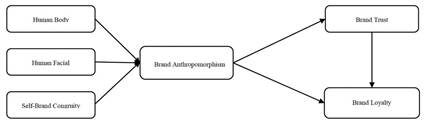
THEORETICAL BACKGROUND
The Elaboration Likelihood Model
ELM is a two-fold model or theory of persuasion (i.e., the peripheral and central routes) that describes how people make decisions based on the information presented. In the 1980s, Richard E. Petty and Cacioppo developed this model. This model is used in various types of businesses, as well as in marketing research, to predict customers' behaviour and attitudes. Advertising antecedents such as the type of media, message repetition, and its impact on customers who pursue the peripheral route versus the central route of persuasion.
Teeny et al. (2017) also examined the influence of ELM on changes in consumer attitude. In a similar study, Reyes et al. (2019) found that ELM is applicable in many domains. Moreover, Fukada and Masashi (2024) introduced this model as a medium to study how customers process anthropomorphism in brands, focusing on these “routes” (central or peripheral). This customer processes information and focuses on high- or low-involvement concepts; therefore, brand anthropomorphism is treated as a vital peripheral cue in shaping customers' decisions, trust, and attachment.
Attachment Theory
The core idea of attachment theory is that a baby’s personality and interactions with other people are shaped by their early contact with a carer (Ainsworth, 1969). Although it was first developed, it is used to describe an infant's attachment to a dominant carer; the term "attachment" has since been used in a variety of fields to explain a wide range of problems. According to Wei et al. (2005), it has been used for a long time to gain an understanding of an adult’s loneliness, attachment, and depression. This concept has also been applied in different fields of study. For example, in discussions of marketing literature, researchers have conceptualised brand attachment as a strong, crucial emotional factor that connects customers to brands and prevents them from changing brands (Loureiro et al., 2012; Thomson et al., 2005).
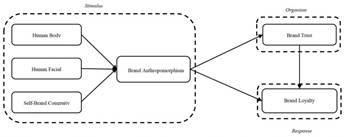
S-O-R Model
The SOR model, also known as the Mehrabian Russell model and based on the stimulusresponse theory in environmental psychology, was initially proposed by Mehrabian in 1974. This pattern illustrates how environmental cues affect an individual's thoughts, feelings, and actions (Liu et al., 2023). The central concept of the SOR paradigm, which posits that an individual's emotions and cognitive processes are influenced by both internal and external stimuli, thereby shaping their reactions, is the relationship between components.
For instance, the SOR model was used to confirm that three anthropomorphic communication dimensions-coolness, warmth, and cuteness-have an impact on tourists' emotional attachment to the brand and willingness to overpay (Liu et al., 2023) showed how VR video (virtual tour stimulation) affects viewers' varied levels of enjoyment using the SOR trend. On this ground, we incorporate the theoretical background of our study, with the constructs: brand anthropomorphism (Stimulus), brand trust (Organism), and brand loyalty (Response). (Figure 2)
Brand Anthropomorphism
Aggarwal and McGill (2007) initiated the study of anthropomorphism in the consumer arena by presenting a preliminary framework for understanding when customers perceive items as human-like. They illustrated that advertisements that activate human schemas (such as promoting a “product family”) or market those products with humanlike features elicit anthropomorphism and more positive assessments. Therefore, a congruency effect, resulting in a favourable assessment of the anthropomorphised product, was caused by a match between the activated schema (family) and the schema attributes (two parents and two children).
Epley et al. (2007) underpinned some crucial dimensions of anthropomorphism, such as sociality and effectance. A theory developed by Guido and Peluso (2015) provides three primary aspects of brand anthropomorphism. The three dimensions are self-brand congruity, which refers to the alignment between the consumer's self-image and the brand's personality; facial physiognomy, which encompasses all visual features that mimic human facial traits; and human body lineaments, which include any physical brand features that resemble human body parts. According to earlier research, brand anthropomorphism can significantly impact how consumers perceive a company by strengthening emotional ties, fostering a sense of familiarity, and enhancing brand trust (Rauschnabel & Ahuvia, 2014).
According to Golossenko et al. (2020), incorporating anthropomorphic features into branding, communication, imagery, and customer interactions can enhance consumer trust by making the business more relatable and approachable. Consumer-brand connections revolve around trust, which is considered the primary factor in forging a solid, enduring connection between them. Additionally, numerous studies have found that brand loyalty and consumer trust are positively correlated. According to Munawar et al. (2023), anthropomorphism positively impacts consumer trust and can be a primary factor in establishing it.
In contrast, Puzakova et al. (2013) suggested that incorporating anthropomorphism into branding can increase consumer trust. Furthermore, utilising anthropomorphic traits in branding can help build consumer trust, according to Aggarwal and McGill (2012), who claim that anthropomorphic characters' social responsibility can lead to human-like communication. According to Rauschnabel and Ahuvia (2014), anthropomorphism can significantly impact how consumers perceive a company by strengthening emotional ties, fostering a sense of familiarity, and enhancing trust. Furthermore, Golossenko et al. (2020) argued that incorporating anthropomorphic components-such as images or an anthropomorphic communication style-enhances brand relatability, thereby increasing customer trust.
This study contributes to the body of knowledge by demonstrating how anthropomorphic branding influences customer trust and brand loyalty. Additionally, it strengthens the role of its outcomes, such as brand trust and brand loyalty, in brand positioning and in enhancing its marketing efforts. As brand trust helps, when consumers have too many options, they simplify their choices by asking themselves, "Who do I trust?" If they have strong faith in a brand, they won't switch for a little discount. It states that “novelty is defeated by familiarity.
Referrals increase and multiply when trust is established. Customers who are happy with a brand become brand ambassadors (Conant, 2025). Anthropomorphic chatbots enhance emotional connections by replicating human-like interactions, thereby strengthening loyalty (Albarq et al., 2025). Additionally, anthropomorphism and customisation promote better brand-consumer interactions, according to research in conversational advertising (Adam et al., 2021). As a result, anthropomorphic chatbots can be used as a strategic point of contact to enhance client loyalty.
H1: Brand Anthropomorphism positively impacts Brand Trust.
H2: Brand Anthropomorphism positively contributes to Brand Loyalty.
Brand Trust
Brand trust refers to customers’ willingness to trust a brand under all circumstances, when the brand’s promise can deliver positive benefits to its customers. The concept of trust has been explored in multiple disciplines, including psychology, economics, and marketing (Hosmer, 1995). According to Fournier (2001), marketers define brand trust as the bond between customers and their brand that affects customers’ purchasing decisions. Additionally, customers engage in relationships with various brands throughout their daily routines.
Customers prefer a trusted brand over other products because trust reduces dissonance or eliminates risk (Power et al., 2008). The dual-process theory states that the human brain processes brand communication in two distinct ways: System 1 and System 2. In digital markets, where affective and cognitive processes are prevalent, brand managers employ these two strategies to build consumer trust (Punyatoya, 2019).
According to the literature review, affective trust is acquired by appealing to consumers' emotions and fostering a sense of warmth and connection, which appeals to system 1, whereas cognitive trust is based on presenting the brand as capable, trustworthy, and credible, which is processed in system 2 (Lee et al., 2015; Dowell et al., 2015).
Anthropomorphism in branding increases cognitive trust by making the brand seem deliberate, predictable, intentional, and goal-oriented-all crucial components in a consumer's decision-making process, according to an earlier study on the subject (Kim and McGill, 2011). Many customers like anthropomorphic branding, which is particularly effective at fostering affective trust. This is because it is easy to appeal to consumers' social reactions, emotions, and empathy by endowing the brand with anthropomorphic characteristics, making it feel more human (Dowell et al., 2015). Additionally, Grigaliunaite and Pileliene (2016) found that more consumers prefer affective branding over cognitive branding.
Research on brand trust and its development is crucial since it can be a significant factor in both purchase intention and brand loyalty (Delgado & Munuera, 2001). Consumers' faith in a brand is reflected in brand loyalty. Loyal consumers consistently choose a brand over its rivals because they trust it, not just because it is more affordable or more readily available. Positive prior experiences, steady value delivery, and the emotional bond they have built over time are the sources of this belief.
H3: Brand trust has a positive impact on brand loyalty.
H4: Brand trust positively mediates the relationship between Brand Anthropomorphism and Brand Loyalty.
Brand Loyalty
Brands are treated as interfaces between consumers and companies. During the brand relationship journey, customers develop loyalty to the brand, depending on the company's characteristics. Trust in a brand is built through trust in the customer. Using the framework developed by Chaudhuri and Holbrook (2001), we also acknowledge that brand trust and its impact on brand loyalty are significant (Wünderlich et al., 2024).
Nam (Reyes et al., 2019) investigates the mediating effects of customer-based brand equity and brand loyalty in the hotel industry. Using structural equation modelling, he identified five important dimensions of brand equity that positively impact customer satisfaction: physical quality, ideal self-congruence, staff behaviour, lifestyle congruence, and brand identification. The results of the study revealed the partial mediated effect of customer satisfaction, ideal self-congruence, and staff behaviour on brand identification and brand loyalty.
RESEARCH METHODOLOGY
Sampling procedure
To determine the hypothesised research model, the authors collected primary data through structured, formatted research surveys. This research aimed to investigate the role of brand anthropomorphism in building brand trust and loyalty within the automotive industry, specifically for cars. Respondents who owned a car were targeted for the study. We assured the respondents regarding the confidentiality of the information they were required to provide during the research survey. As we know, car ownership is rising considerably and shows great potential in Tier 1 and Tier 2 cities in India. We selected the Tier 1 region, which has a multitude of services and opportunities. Tier I cities in India are a pinnacle of urban development.
These cities are important centres of commerce, culture, and the economy that attract both domestic and foreign interests. Their varied sectors, top-notch educational institutions, and outstanding infrastructure were impressive. In addition to providing a wealth of job opportunities, these Tier I cities attract a diverse population that fosters innovation and cultural diversity (Decoding Indian Cities Classifications in Tier I, II, III, IV, 2023). The study’s sampling frame is drawn from the NCR region of India (as classified by the Classification of Indian Cities). For validation purposes, we conducted a pilot survey of 53 car owners to proceed further with our study. Afterwards, we distributed survey forms through both online and offline media and obtained 221 meaningful responses to assess the model.
Informed Consent
Informed consent was obtained before including participants in the study; all individuals were informed of the study's objectives, the confidentiality of their answers, and their freedom to discontinue participation at any time. Before participation, consent was obtained orally, as the study involved both in-person and online surveys.
Questionnaire development
Initially, research questionnaires were used to ensure that the content validity was sufficient. In this regard, the questionnaire's measurement items closely followed the existing literature. According to Bharati and Chaudhury (2004), content validity explains the comprehensiveness of study constructs. Generalised scales for measuring brand anthropomorphism were adapted from Guido and Peluso (2015), and items related to brand trust and brand loyalty were adapted from Chaudhuri and Holbrook (2001) and Adhikari and Panda (2019), respectively.
Assessment of Common Method Bias
Our study incorporated a standardised survey instrument for data collection. Nevertheless, the survey scales may exhibit measurement error and variance due to the common method. In most cases, such measurement errors may introduce bias that hampers the construct's linkage. We assessed the common method bias through the VIF values of the inner model. All VIF values were less than 3.33 in our study; therefore, the model is free from common method bias (Kock, 2015).
RESULTS
Model assessment using PLS-SEM
The measurement model has two stages. First, the five reflective exogenous variables, including human body lineaments (HBL), human facial physiognomy (HFP), self-brand congruity (SBC), brand trust (BT), and brand loyalty (BL), were assessed in line with reliability and validity criteria. In the next step, the model was examined based on customer data collected to assess convergent validity (Kock, 2014). (Figure 3)
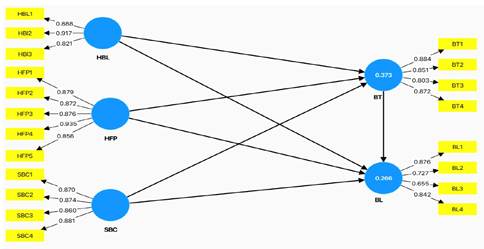
According to Kock (2014), convergent validity is a crucial aspect of the measurement model's quality. If the associated measures of each construct and latent variable are easily understood by the respondents in the exact way they were designed, it confirms that the measurement instrument has good convergent validity (Kock, 2014). Cronbach's alpha, composite reliability (CR), average variance extracted (AVE), and the outer loadings of all items for each of the five reflective constructs listed above were assessed and reported to check the reliability and convergent validity of the constructs (Hair et al., 2017). To establish the reliability of the construct, the values of outer loadings, along with Cronbach’s alpha and CR, should be more than 0.7, and the average variance extracted should be greater than 0.5 to confirm convergent validity. However, item loadings ranging between 0.5 and 0.7 are also acceptable if the CR and AVE of the constructs exceed the recommended threshold (Hair et al., 2017). (Table 1).
Table 1 Result of assessment of measurement model (First Order)
| Constructs | Outer Loadings | SD | CR rho-a | CR rho-c | Cronbach Alpha | AVE |
|---|---|---|---|---|---|---|
| Human Body Lineaments (HBL) | 0.925 | 0.908 | 0.858 | 0.768 | ||
| HBL1 | 0.888 | 0.021 | ||||
| HBL2 | 0.917 | 0.016 | ||||
| HBL3 | 0.822 | 0.050 | ||||
| Human Facial Physiognomy (HFP) | 0.936 | 0.947 | 0.930 | 0.781 | ||
| HFP1 | 0.878 | 0.020 | ||||
| HFP2 | 0.871 | 0.017 | ||||
| HFP3 | 0.876 | 0.016 | ||||
| HFP4 | 0.935 | 0.008 | ||||
| HFP5 | 0.856 | 0.020 | ||||
| Self-Brand Congruity (SBC) | 0.894 | 0.927 | 0.894 | 0.759 | ||
| SBC1 | 0.871 | 0.016 | ||||
| SBC2 | 0.874 | 0.016 | ||||
| SBC3 | 0.860 | 0.020 | ||||
| SBC4 | 0.881 | 0.017 | ||||
| Brand Trust (BT) | 0.883 | 0.915 | 0.876 | 0.729 | ||
| BT1 | 0.887 | 0.020 | ||||
| BT2 | 0.865 | 0.030 | ||||
| BT3 | 0.808 | 0.039 | ||||
| BT4 | 0.854 | 0.020 | ||||
| Brand Loyalty (BL) | 0.818 | 0.862 | 0.791 | 0.612 | ||
| BL1 | 0.859 | 0.022 | ||||
| BL2 | 0.755 | 0.039 | ||||
| BL3 | 0.680 | 0.067 | ||||
| BL4 | 0.822 | 0.036 |
Source: Own elaboration
To assess discriminant validity between two groups, we employed the most recent and conservative strategy, the heterotrait-monotrait (HTMT) ratio (Henseler et al., 2015). According to the literature, the HTMT ratio should be lower than 0.85 or 0.9 to achieve discriminant validity (Henseler et al., 2015).
The results from (a) HTMT and (b) Fornell and Larcker’s criteria, tests are displayed in Tables 2 and 3, which verify the discriminant validity in which the value of the original diameter must be higher than their respective row’s and column’s left and bottom values. The criterion is also mostly acceptable, according to the statistical analysis (Bahrami & Omidi, 2023).
Table 2 Discriminant Validity Using HTMT
| BL | BT | HBL | HFP | SBC | |
|---|---|---|---|---|---|
| BL | |||||
| BT | 0.478 | ||||
| HBL | 0.298 | 0.396 | |||
| HFP | 0.407 | 0.519 | 0.679 | ||
| SBC | 0.535 | 0.678 | 0.651 | 0.762 |
Source: Own elaboration.
Table 3 illustrates the standard output for this criterion; all diagonal values exceed those in their respective rows and columns, confirming the establishment of divergent validity. Furthermore, in the second stage, the two-stage approach of assessing higher-order constructs, including Human Body Lineaments (HBL), Human Facial Physiognomy (HFP), and Self-brand Congruity (SBC), establishes Brand Anthropomorphism (BA) in a formative manner.
Table 3 L Criteria
| BL | BT | HB | HFP | SBC | |
|---|---|---|---|---|---|
| BL | 0.780 | ||||
| BT | 0.448 | 0.853 | |||
| HB | 0.287 | 0.369 | 0.876 | ||
| HFP | 0.363 | 0.482 | 0.658 | 0.884 | |
| SBC | 0.472 | 0.603 | 0.604 | 0.697 | 0.871 |
Source: Own elaboration.
This study comprises a single second-order formative construct due to the characteristics of its dimensions, which have distinct aspects that are not interchangeable. To test the secondorder formative construct in the next step, the issue of multicollinearity was addressed using the variance inflation factor (VIF). This value should be less than 3, with significant outer weight (Hair et al., 2017). It is often used to measure the variance of regression coefficients, but this measurement can be inflated if the independent variables are correlated. It is calculated as follows: If the VIF values are within the threshold or collinearity is not a major issue, the R2 value of the endogenous construct(s) should be examined. According to Shmueli and Koppius (2011)), the model’s explanatory power stems from its ability to measure the variance explained in each of the dependent constructs. This is also referred to as the ‘in-sample predictive power’ of the model (Rigdon, 2012). Its range is from 0 to 1, where higher values indicate greater explanatory power.
The values of 0.75, 0.50, and 0.25 (R²) can be considered substantial, moderate, and weak, respectively (Hair et al., 2011). However, the acceptable value of R² depends on the specific context of the study. In some fields, it may be as low as 0.10, which can still be considered satisfactory (Raithel et al., 2012). Table 1 shows the results of the reliability and convergent validity for all five reflective or lower-order constructs. Additionally, we evaluated the discriminant validity of our formative construct by analyzing the VIF values of all latent variables in the study. All VIF values were less than 3, with the highest being 2.606 (Table 5) for the BT1 item, which was also below 3, indicating no issues with full collinearity.
Table 4 presents the loadings of the individual indicators along with their associated latent constructs. It should be higher than its loadings with all the remaining constructs. This criterion of discriminant validity is often referred to as cross-loadings. As depicted below, the highlighted loadings of the latent variable in itself are greater than those of the rest of the constructs.
Table 4 Cross Loadings
| BL | BT | HBL | HFP | SBC | |
|---|---|---|---|---|---|
| BL1 | 0.876 | 0.460 | 0.222 | 0.331 | 0.427 |
| BL2 | 0.727 | 0.252 | 0.291 | 0.284 | 0.386 |
| BL3 | 0.655 | 0.106 | 0.105 | 0.186 | 0.211 |
| BL4 | 0.842 | 0.439 | 0.241 | 0.295 | 0.389 |
| BT1 | 0.366 | 0.884 | 0.278 | 0.456 | 0.559 |
| BT2 | 0.237 | 0.851 | 0.320 | 0.358 | 0.513 |
| BT3 | 0.300 | 0.803 | 0.244 | 0.342 | 0.449 |
| BT4 | 0.564 | 0.872 | 0.396 | 0.463 | 0.529 |
| HBL1 | 0.307 | 0.358 | 0.888 | 0.690 | 0.645 |
| HBL2 | 0.290 | 0.345 | 0.917 | 0.570 | 0.497 |
| HBL3 | 0.046 | 0.212 | 0.821 | 0.363 | 0.366 |
| HFP1 | 0.334 | 0.454 | 0.600 | 0.879 | 0.618 |
| HFP2 | 0.385 | 0.372 | 0.680 | 0.872 | 0.537 |
| HFP3 | 0.268 | 0.455 | 0.520 | 0.876 | 0.630 |
| HFP4 | 0.315 | 0.496 | 0.648 | 0.935 | 0.698 |
| HFP5 | 0.299 | 0.329 | 0.432 | 0.856 | 0.587 |
| SBC1 | 0.405 | 0.533 | 0.592 | 0.642 | 0.870 |
| SBC2 | 0.408 | 0.518 | 0.466 | 0.611 | 0.874 |
| SBC3 | 0.392 | 0.549 | 0.416 | 0.598 | 0.860 |
| SBC4 | 0.441 | 0.503 | 0.632 | 0.578 | 0.881 |
Source: Own elaboration.
Table 5 presents the assessment of the second-order measurement construct for car owners. The result shows a desirable VIF and significant loadings with additional outer weights for all the items of the BA formative construct, and an admissible full collinearity, which is lower than 3.3 for our constructs in the second stage (Kock and Lynn, 2012). All the values of outer loadings and weight are statistically significant, with VIFs < 3 and p-values < 0.05, except for a single measurement item of the formative construct, i.e., human body lineaments, in our study.
Table 5 Result of Assessment of Second-Order Construct
| Construct/Associated Item | Outer Loadings | Outer Weights | P- Value | VIF |
|---|---|---|---|---|
| Brand Anthropomorphism (Formative) | ||||
| HBL | 0.604 | -0.069 | < 0.05 | 1.903 |
| HFP | 0.780 | 0.205 | < 0.05 | 2.348 |
| SBC | 0.991 | 0.890 | < 0.05 | 2.097 |
| Brand Trust (Reflective) | ||||
| BT1 | 0.884 | 0.312 | < 0.05 | 2.606 |
| BT2 | 0.851 | 0.253 | < 0.05 | 2.427 |
| BT3 | 0.803 | 0.250 | < 0.05 | 1.931 |
| BT4 | 0.872 | 0.354 | < 0.05 | 2.184 |
| Brand Loyalty (Reflective) | ||||
| BL1 | 0.876 | 0.411 | < 0.05 | 2.048 |
| BL2 | 0.726 | 0.300 | < 0.05 | 1.529 |
| BL3 | 0.655 | 0.156 | < 0.05 | 1.545 |
| BL4 | 0.842 | 0.380 | < 0.05 | 2.031 |
Source: Own elaboration.
Based on the results of our data’s outer weight, we obtained a surprising result: the item's magnitude is negative (i.e., -0.069; Table 5), which is small, indicating a weak relationship. However, the p-value and path coefficient are significant. A formative index can lose its meaning if an indicator fails to fulfil its intended support role. The significance of the formative indicator coefficients is tested using a bootstrapping procedure (Hair et al., 2011) as the measure is supported by the theoretical concepts of Guido & Peluso (2015)). In our study, the HBL revealed a negative weight towards anthropomorphism; however, its loadings, cross-loadings, and validity, with p-values < 0.05, support the inclusion of the indicator.
Assessment of the structural model
Table 6 and Figure 6 present the results of the structural model and the hypotheses tested for individuals who use cars. The R2 values for brand trust and brand loyalty are 0.37 and 0.26, respectively. Hair et al. (2017) explained that the revealed values for the variables brand trust and brand loyalty are widely accepted in the behavioural sciences.
The outcomes showed a higher R² value for brand trust among individuals who used cars from their respective brands. To test the hypotheses, the significance of path coefficients and their signs, along with 95% confidence intervals, were used (Aguirre and Röönköö, 2018). Moreover, we established the convergent validity of the higher-order construct through a redundancy analysis, assessing how the formative construct’s measurement correlates with an alternative measure of that construct. We used a single-item measure that captured the essence of the construct, as described by Cheah et al. (2018).
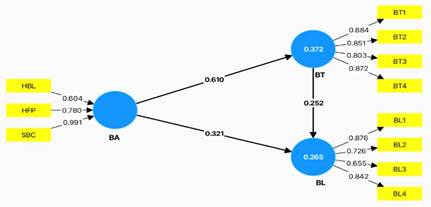
Redundancy Analysis
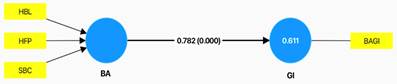
According to the recommendation of Hair et al. (2017a) , one should use a global single item “which summarises the essence of a construct having the formative indicators” as a solution. In a single study on measuring brand anthropomorphism in cars, we included a global question asking, “Overall, how do you perceive your car as an anthropomorphic entity?” Furthermore, a single global item reduces the intellectual demands on respondents (Drolet and Morrison, 2001), which in turn increases the rate of effective responses and reduces distrustful response patterns. The global single-item construct correlation should be ≥ 0.70, and our global single item has a path coefficient of 0.782 with p-value < 0.05, confirming convergent validity through redundancy analysis, as depicted below.
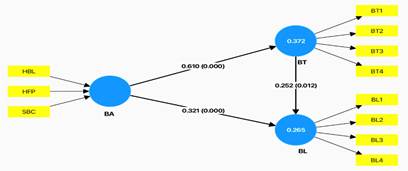
For hypothesis testing, we assessed the structural model using beta values (path coefficients). The confidence intervals and p-values were obtained through bootstrapping (5,000 resamples). All the proposed hypotheses of the study were supported (Table 6), indicating that construct H1, Brand Anthropomorphism, significantly influences Brand Trust (β = 0.610, p-value = 0.000), and H2, Brand Anthropomorphism, positively impacts Brand Loyalty (β = 0.321, p-value = 0.000). Moreover, Brand Trust positively influenced Brand Loyalty with (β = 0.252, p-value = 0.012). VAF was calculated to assess the mediation of the constructs, with VAFs of 0.439 for BT and 0.358 for BL, reinforcing the partial mediating role in fostering customers’ loyalty towards the car brand and thereby supporting the hypotheses. While the SRMR value is 0.7 and the NFI is 0.821 for the model fit, this indicates room for improvement that can be explored in subsequent studies.
Table 6 Result of Hypothesis Testing
| Hypothesis | Path Coefficient | Confidence Interval 95% | P value | Support | |
|---|---|---|---|---|---|
| H1 | BA > BT | 0.610 | [0.497, 0.698] | 0.000 | Yes |
| H2 | BA > BL | 0.321 | [0.161, 0.466] | 0.000 | Yes |
| H3 | BT > BL | 0.252 | [0.048, 0.430] | 0.012 | Yes |
| R2 | BT | 0.372 | Q2 | BL | 0.206 |
| BL | 0.265 | BT | 0.353 |
Source: Own elaboration.
The higher-order model analysis revealed statistical significance for the specific indirect effect via the associated pathways (BA • BT • BL), reinforcing the moderate role of BA quality in shaping loyalty and trust outcomes towards the brand. These findings provide guidance and further scope for identifying more aligned and meditative variables that may better explain loyalty. Furthermore, this study lays the groundwork for future investigations to assess indirect effects and impacts via other variables, such as brand attachment and brand credibility, across diverse demographic settings.
Variance Accounted For (VAF)
Indirect effect of BA → BT → BL = Path coefficient for BA → BT * Path coefficient for BT → BL = 0.610 × 0.252 = 0.154. The indirect effect from BA → BL = Path coefficient for BA → BL = 0.321. Hence, the total indirect effect is 0.475.
VAF for BT: 0.372 / (0.372 + 0.475) = 0.372 / 0.847 = 0.439 VAF for BL: 0.265 / (0.265 + 0.475) = 0.265 / 0.740 = 0.358
In the PLS-SEM software, "f²" refers to Cohen's f-squared, which is a measure of effect size. This indicates the proportion of variance in the model that is explained by the predictor variable. The results for f² in the table above suggest that the exogenous variable brand anthropomorphism → brand loyalty has a small effect (f² = 0.089), which explains why brand anthropomorphism has only a minor direct impact on brand loyalty. Although a minor effect is present, further studies should be conducted to strengthen this relationship by accounting for additional interactions or factors. On the other hand, brand anthropomorphism → brand trust showed a large effect size (f² = 0.591) (above 0.35). Brand anthropomorphism strongly influences brand trust, indicating a substantial contribution to explaining its variance. The effect size suggests that brand anthropomorphism is a crucial driver of the relationship, while brand trust contributes less, indicating that other factors may influence brand trust.
DISCUSSION & FINDINGS
There are several studies on enhancing customers’ relationships with brands, including attachment theory and the theory of planned behaviour. One of these is the Elaboration Likelihood Model (ELM), which provides a dual-path framework for understanding how consumers shape their attitudes and make decisions. The result aligns with the literature, which views cars as humans, headlights as eyes, grilles as mouths, and even side mirrors as ears (Aggarwal & McGill, 2007). Studies align with several others, such as Avramov's (2024) study.
The interviewed sample in this study confirmed that they could see faces when looking at the front of cars. The present study revealed positive results for the proposed hypotheses, supporting all p-values < 0.05. It was concluded that brand anthropomorphism has a significant and positive impact on brand trust and brand loyalty; however, the effect size is smaller, suggesting the need to employ other constructs as mediators of brand trust across different fields of study. To establish affective trust, the brand seeks to elicit strong emotional reactions in System 1 through anthropomorphism. Samson and Voyer (2012) state that the goal of incorporating anthropomorphic features into branding is to foster affective trust, which is most commonly utilised in low-risk or low-involvement purchases, where buyers rely more on feelings than on thorough logical assessments.
Collectivism culture vs. Individualistic culture:
In the collectivist civilisation, Individual demands are subordinated to the interests of society, the family, and the workplace. At the same time, individualistic cultures place greater emphasis on the importance of the individual and less on sharing societal obligations. It has been discovered that these traits are crucial to how technologies are perceived and their level of success. Anthropomorphic car design from a cross-cultural perspective reveals that although the general inclination to perceive "faces" in automobiles may be a universal, biologically based human characteristic, the particular interpretations and design preferences for these "faces" and the vehicle as a whole differ significantly across cultures. This indicates that a "one-size-fits-all" design strategy is ineffective for the global market.
A study by Windhager et al. (2012) reported discrepancies between Ethiopian and Austrian assessments on items about (emotional) valence (openness excluded). In Ethiopia, all cars were rated as "happy," "friendly," "open," and "arrogant" (perhaps in a positive sense). In contrast, Austrian mean evaluations showed significant variation amongst cars. One explanation could be that Ethiopians are incredibly courteous and reluctant to express their personal opinions, particularly when they are unfavourable. The fact that interactions with actual cars in Ethiopia are typically beneficial (transporting water, animals, goods, etc.) could be a second factor. These differences reveal cultural variations in geography and economy that can be leveraged to market the brand and foster trust strategically.
These characteristics may not be easily noticed in automobiles, but marketing tactics must prioritise them. Moreover, toaccording on the research survey, anthropomorphism is a beneficial strategy for managers in the automotive market. For the transition to automated vehicles, manufacturers must therefore focus on accounting for cultural differences at various levels, including contextual, individualistic, and collectivist, while using anthropomorphic systems to maximise safety and trust, and reduce error and accident rates.
Theoretical implications
The model suggests that consumers can be convinced through two routes: the central route, which involves thoughtful, cognitive processing of information, and the peripheral route, which relies on emotional or superficial cues. Our study incorporates the construct of Brand Anthropomorphism, aligned with this model, which states that when car brands are cautiously anthropomorphised, they acquire human-like traits that evoke emotional responses from customers, triggering the peripheral route to persuasion.
Customers, through this emotional connection, perceive a human-like appearance and may initially trust a car brand based on its perceived warmth, reliability, and relatability. Given the substantial correlation between brand attachment (BA) and brand trust (BT), customers who develop a strong emotional bond with a particular car brand are likely to engage in deep central-route processing, a fundamental concept in ELM.
This implies that messages from brands, conveyed through cues and physical appearance, are more likely to be processed deeply by highly engaged consumers, thereby improving their trust and loyalty. Trust influences customers’ purchase decisions at both high and low levels of engagement. If engagement is high, there is a strong chance of purchasing the vehicle, and vice versa. In the context of specific direct effects with ELM's dual-processing model, BA has a substantial impact on BL (r = 0.321, p = 0.000), indicating that brand loyalty may increase through both emotional (peripheral) and logical (central) processes.
Some customers may also rely on recommendations and prior experiences to examine product quality and brand consistency as part of the central route. Samson and Voyer (2012)) list several cognitive biases that consumers may encounter when interacting with anthropomorphised brands; as a result, marketers may leverage these biases in their marketing actions. In the context of anthropomorphism, these cognitive biases-which are deeply rooted in the dual-process theory-include the affect heuristic (positive emotional reactions), the representativeness heuristic, and perceptual fluency (the tendency to favour anthropomorphically familiar things). They particularly demonstrate how anthropomorphic aspects are attributed to companies by emotionally motivated customers driven by heuristics and emotions, as emotional bias and perceptual fluence can lend a brand image a sense of relatability and reliability.
Practical implications
Over time, as people become more deeply engaged with their vehicle brand, brand trust is further reinforced through the central route, as they evaluate the brand’s performance, consistency, and reliability. Such dual processing results in both strengthened brand trust and loyal consumer relationships because people tend to stay committed to trust-based brands they feel emotionally positive about and logically believe in.
The findings also showed that incorporating anthropomorphism into branding directly increases consumers' inclination to make purchases. Therefore, brand managers should consider employing anthropomorphic branding to boost purchase intention. A/B testing of various components, such as graphic design, interactive elements, or tone of voice, is an excellent technique for assessing the efficacy of the branding approach and maximising its impact.
This makes it simpler to identify the precise characteristics and components that appeal to the target market for a particular brand. (Kohavi et al., 2020). More precisely, brand managers should consider the brand's positioning, target market, and context when deciding whether to use competence-based or warmth-based anthropomorphism (Zhang & Qiu, 2025; Chung & Han, 2022). For instance, to establish an emotional connection, firms operating in more emotive categories and those seeking to appeal to System 1 should emphasise warmth in their branding. For example, companies in the IT or finance industries that want to appeal more to System 2 could stress competence-based anthropomorphism to highlight knowledge, dependability, and intellect. (Zhang & Qiu, 2025).
When technology is human-like, consumers are more likely to trust it. Features such as human-like voices, names, or even visual cues (such as animated eyes on an interface) increase confidence in the competence and safety of cars by making the system's behaviour more predictable and understandable. Customers can develop an emotional bond with a product by attributing human characteristics to it, thereby increasing brand love and loyalty. Beyond the product's practical use, this relationship lends it social value. It fosters a sense of intimacy with the brand, thereby enhancing the brand’s long-term relationship and customer retention.
Marketers can build brand trust and loyalty by applying the elements of the Elaboration Likelihood Model and dual processing theory to incorporate both emotional and rational marketing strategies. On the other hand, attachment theory supports the relationship between brand trust and loyalty: brand trust increases with attachment to a brand, which in turn leads to enhanced loyalty. Loyalty in brands may also be improved by leveraging brand reputation and content created by car users.
Path for future research
Despite the significant and positive impacts of the variables in marketing studies, this study has been limited to a small number of respondents and variables, which is one of its stated limitations. Only the NCR region was chosen for testing the proposed model, which can be applied across geographical boundaries, as culture is an essential factor in people’s lives; it may also be considered for inclusion. Additionally, the study measured trust and loyalty at a single time point, rather than over time. This approach does not capture the evolution of brand loyalty over time.
For a deeper perspective on how anthropomorphism affects brand development, for example, stabilisation or declination, a longitudinal study should be conducted further. This could also help in demonstrating the benefits of building long-term trust. Furthermore, while discussing constructs, this study has a limited set of constructs defining the relationship, which can be further tested using additional mediating variables, such as brand attachment, brand love, and personification. The cues, such as storytelling and word-of-mouth, can be studied in further studies to obtain more generalised results for the variables. Additionally, the study has not included data from different cultures for quantitative analysis, which can be considered further and could serve as a catalyst for automotive anthropomorphic research.

