




 nueva página del texto (beta)
 Inglés (pdf)
 Artículo en XML
 Referencias del artículo
 Traducción automática
 Enviar artículo por email
 Citado por SciELO
  Similares en
SciELO
Similares en
SciELO 
 Permalink
Introduction
Osteochondroma, more commonly known as exostoses, is the most common benign bone tumor, accounting for 10-15% of all bone neoplasms and 20-50% of benign bone tumors1,2. Osteochondromas (are) cartilage-capped lesions of metaphysis commonly seen around the femur, humerus, pelvis, and tibia with a pedunculated or sessile shape3. About 40% of osteochondromas are diagnosed before patients reach 10 years of age4. They can be single solitary or multiple osteochondromas as part of a syndrome known as hereditary multiple exostoses (HMEs)4. Symptomatic osteochondromas are typically treated with surgical excision, and depending on the location of the osteochondroma, nearby critical structures can pose a significant risk for damage4,5. Osteochondroma is usually an asymptomatic pathology; however, it can lead to complications such as pain, local edema or peripheral nerve compression, aneurysm, thrombosis, and fracture6, while the most severe complication is the malignant transformation of osteochondroma to chondrosarcoma7-10.
With such a common tumor and in the current age of accumulated knowledge, organizing available information and identifying emerging challenges is essential. Thus, assessing the present developmental status and focal areas of chondrosarcoma within orthopedic and oncological fields is vital for helping researchers better understand the subject. Bibliometric analysis can evaluate the topics research activities and trends and help identify collaborative networks between key researchers, countries, and leading research groups11,12.
This paper will identify the most cited articles on osteochondromas and analyze their characteristics in depth. Understanding the nature of osteochondroma research is essential to advance research and treatment. Our aim in this study is to serve as a guide for future research by identifying the areas where the existing studies in the literature do not shed light and to help researchers better understand the current research trends.
Method
Data sources and search strategy
- A search was conducted on October 05, 2024 on a single day using the Web of Science Core Collection database, which focused on articles about "osteochondroma" that contained "full record and cited references." The search results were limited to articles and reviews published in English from 2000 to 2024.
Bibliometric analysis
The data collected were analyzed using VOSviewer, Bibliometrix, and CiteSpace. VOSviewer created visual representations of co-authorship networks and clusters, helping identify leading authors. VOSviewers keyword co-occurrence analysis helped identify the most frequently used terms and concepts in the literature, underlining research topics that have raised interest in recent studies.
Bibliometrix was used to analyze citation trends, revealing key articles and collaborations by charting connections among researchers, institutions, and countries. It was also utilized to identify the key contributors and global partnerships that advance research in osteochondroma.
CiteSpace was used to analyze the research hotspots and illustrate the temporal development of research topics. Through burst detection and citation analysis, changes in research focus were monitored and new areas of interest were highlighted. It also emphasized key studies that have significantly impacted osteochondroma research.
Combining these three tools provided a complete view of the osteochondroma literature. VOSviewer provided structural and thematic insights, Bibliometrix emphasized citation dynamics and collaboration patterns, while CiteSpace tracked the progression of research and identified new trends. This multi-tool approach offered a thorough understanding of the research landscape on osteochondroma. It also provided a detailed analysis of the publication patterns, citation networks, and emerging research areas.
Results
Analysis of publication trends by years
A total of 1901 publications on osteochondroma were found in the Web of Science Core Collection database. After the exclusion criteria were applied, 1588 studies remained for our analysis (Fig. 1A), of which 1385 were research articles and 203 were review articles. Figure 1B shows the number of publications for each year.
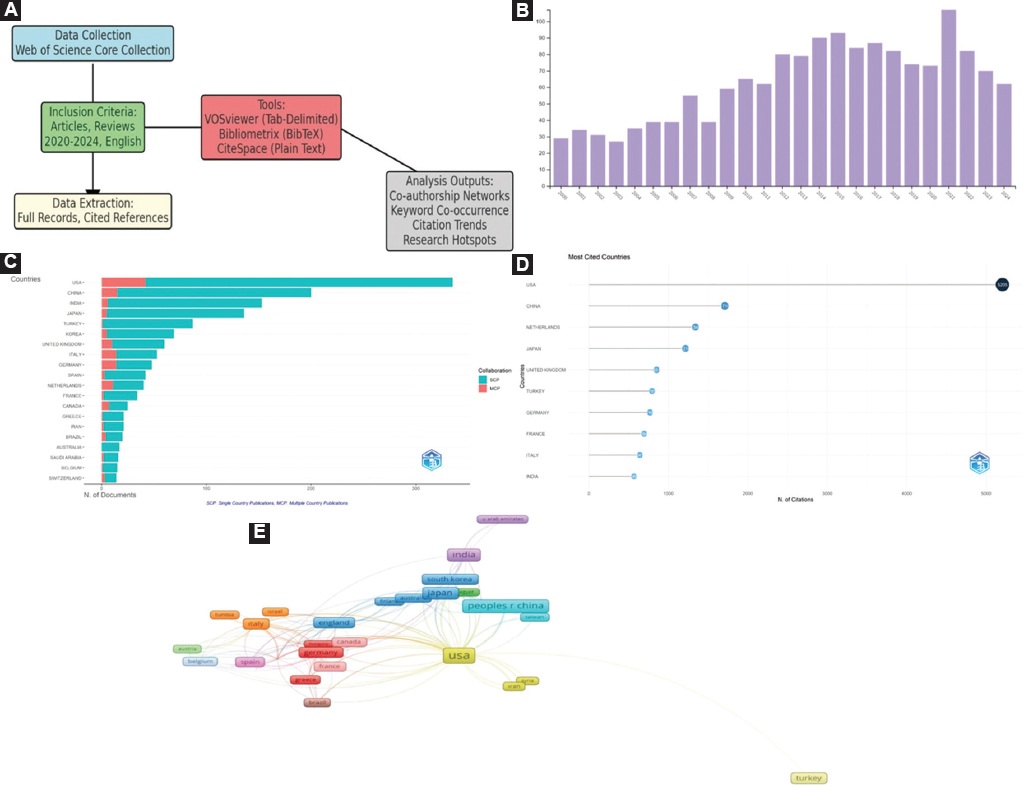
Figure 1 A: PRISMA flowchart. B: number of publications over the years. C: the breakdown of corresponding authors by country is presented. In addition, a distinction is made between single-country publications (SCP - green) and multiple-country collaborations (MCP - red). D: the ranking of countries based on the number of citations. E: the country co-authorship network.
Osteochondroma-related research continued to increase in volume between 2000 and 2024. Starting with 30 studies in 2000, the trend continued with a slow increase over time, reaching its peaks in 2010, 2011, and 2021. In 2021, the highest number of articles was published, exceeding 100. After 2021, after a short downward trend, approximately 20-80 articles continue to be published annually. Such an increase in the number of studies highlights the change in academic interest in this topic over the years.
Analysis of authors
COUNTRIES
The United States tops table 1, which depicts the distribution of corresponding authors by country with the highest number of corresponding authors (n = 335, 21.1%) contributing to osteochondroma studies. China ranks second (n = 200, 12.6%) and India third (n = 153, 9.6%), followed by other contributing countries such as Japan, Turkey, and Korea. Figure 1C distinguishes between single-country publications (SCP) and multiple-country collaborations (MCP), where the United States, China, and Italy demonstrate a higher proportion of SCP, indicating a solid domestic research output. On the other hand, countries such as Italy, Germany, and the UK have more instances of MCP, suggesting more international cooperation. This diversity in collaboration patterns highlights the global interest and cooperative efforts in advancing osteochondroma research.
Table 1 Distribution of research by countries
| Country | Articles | Articles % | SCP | MCP | MCP % |
|---|---|---|---|---|---|
| USA | 335 | 21.1 | 293 | 42 | 12.5 |
| CHINA | 200 | 12.6 | 185 | 15 | 7.5 |
| India | 153 | 9.6 | 147 | 6 | 3.9 |
| Japan | 136 | 8.6 | 131 | 5 | 3.7 |
| Turkey | 87 | 5.5 | 86 | 1 | 1.1 |
| Korea | 69 | 4.3 | 64 | 5 | 7.2 |
| United Kingdom | 60 | 3.8 | 50 | 10 | 16.7 |
| Italy | 53 | 3.3 | 39 | 14 | 26.4 |
| Germany | 48 | 3 | 34 | 14 | 29.2 |
| Spain | 42 | 2.6 | 39 | 3 | 7.1 |
Figure 1D shows the ranking of countries by citation counts. The United States has over 5,200 citations, ranking first. China ranks second, contributing around 710 citations. The Netherlands, Japan, and the United Kingdom have also produced many cited studies. Other nations, including Turkey, Germany, France, Italy, and India, have also made significant contributions, though their citation counts trail behind those of the leading countries. The citation distribution shows these countries' key role in osteochondroma research, with the United States leading in influence.
The country co-authorship network in figure 1E highlights the international collaborations in osteochondroma research. The United States has a vital role in research collaborations and has deep research ties with countries such as China, Japan, Germany, France, and the United Kingdom. Germany, in particular, stands out as a central research base within Europe. Countries such as China, Japan, and North Korea are important research centers in Asia. Turkey exhibits limitations in international collaborations and can be regarded as a standalone research center. Figure 1E also highlights emerging partnerships between North America, Asia, and parts of the Middle East, reflecting a growing trend toward global cooperation in this field. This visualization highlights the significance of cross-border collaborations for understanding and treating osteochondroma by pooling resources and expertise across the globe.
AFFILIATIONS
Figure 2A highlights the institutions with the highest publication output. Leiden University leads the list with 79 publications, followed by Shanghai Jiao Tong University with 76. Sichuan University, Childrens Hospital of Philadelphia, and the University of Pennsylvania also contribute significantly, with publication counts ranging from 49 to 53. Other institutions that represent key centers for osteochondroma research include the All India Institute of Medical Sciences, Seoul National University, Fujian Medical University, University of Utah, and Mayo Clinic.
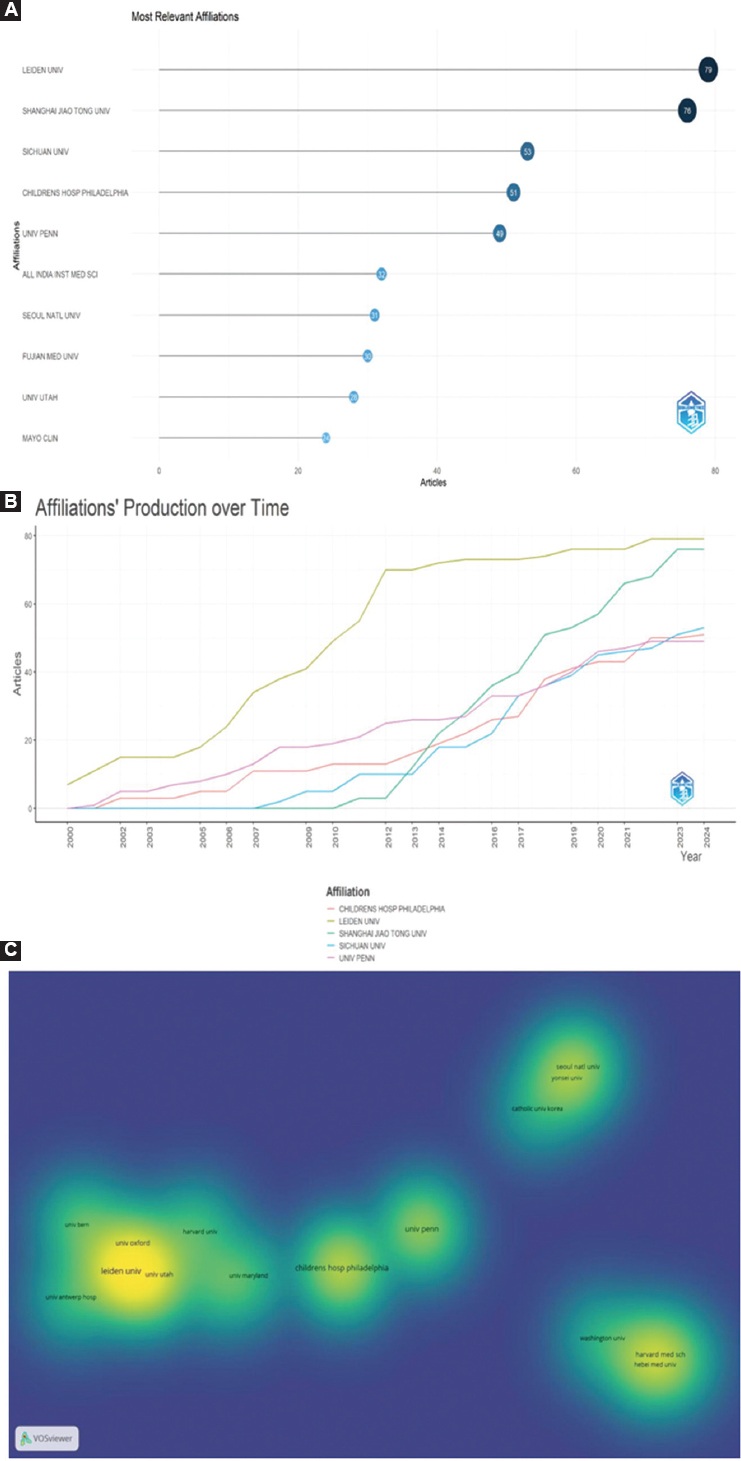
Figure 2 A: the most relevant affiliations in osteochondroma research, highlighting institutions with the highest publication output. B: the publication trends over time for the top institutions involved in osteochondroma research. C: the heatmap of co-authorship affiliations in osteochondroma research, highlighting key institutions and their collaborative intensity.
The publication trends represented in figure 2B display the top institutions involved in osteochondroma research, reflecting their ongoing commitment to this field. Leiden University and Shanghai Jiao Tong University show a steady and sharp increase in research output, with significant growth occurring after 2014. The Children's Hospital of Philadelphia experienced a marked rise in publications around 2013. Both Sichuan University and the University of Pennsylvania also show continuous growth, with a noticeable acceleration in research output in recent years.
The heatmap of co-authorship affiliations represented in figure 2C highlights key institutions and their collaborative intensity. Leiden University appears to be the centerpiece in which all other institutions, such as The University of Oxford, The University of Utah, and Harvard University, have very strong co-authorship ties. Moreover, the Children's Hospital of Philadelphia and the University of Pennsylvania are very busy collaborating with other institutions, indicating the degree of their involvement in research collaboration. In Asia, Seoul National University, Yonsei University, and the Catholic University of Korea are the main contributors with dense co-authorship networks. The heatmap highlights the crucial role of these institutions in promoting osteochondroma research through international partnerships.
TRENDS
As presented in figure 3A and summarized in table 2, Hogendoorn PCW (H index 19) has the highest number of contributions to this area, with 24 publications. Next in line, (are), Wang X (n = 15, H index = 7), Yang C (n = 14, H index = 6), and a few other notable researchers, including Li J, Li Y, and Zhang Yeach, each contributing 13 publications. These authors represent key figures in the field, consistently contributing to the research on osteochondroma.
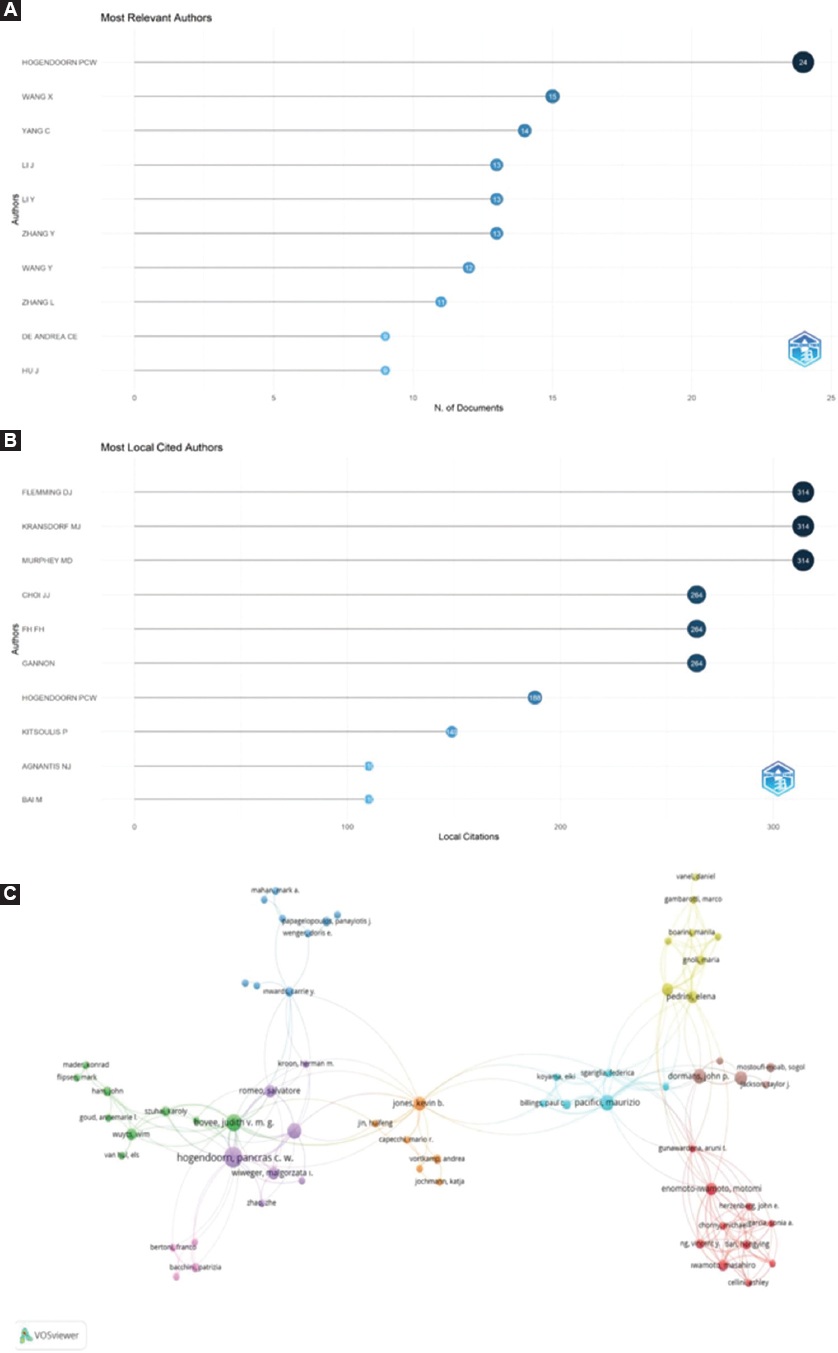
Figure 3 A: the most relevant authors in osteochondroma research. B: the most locally cited authors in osteochondroma research. C: the co-authorship network at the author level, illustrating collaborations between researchers in osteochondroma studies.
Table 2 Top 10 authors of osteochondroma research
| Authors | Articles | H-Index |
|---|---|---|
| Hogendoorn PCW | 24 | 19 |
| Wang X | 15 | 7 |
| Yang C | 14 | 6 |
| Li J | 13 | 7 |
| Li Y | 13 | 7 |
| Zhang Y | 13 | 7 |
| Wang Y | 12 | 7 |
| Zhang L | 11 | 5 |
| De Andrea CE | 9 | 9 |
| Hu J | 9 | 6 |
Figure 3B identifies the most locally cited authors in osteochondroma research. The first three places are held by Flemming DJ, Kransdorf MJ, and Murphey MD, each with 314 local citations, demonstrating their considerable importance in the community of osteochondroma researchers. Choi JJ, Gannon, and FH also hold prominent positions with 264 local citations. One of the most active contributors, Hogendoorn PCW, obtained 188 local citations, attesting to his contribution to the field. The active participants also include Kitsoulis P., and Agnantis N. J, Bai M, among others, with over a hundred citations. This distribution of local citations also points out other key authors whose works have significantly contributed to the community, forming the basis of current research.
The co-authorship network at the author level, depicted in figure 3C, illustrates collaborations between researchers in osteochondroma studies. The analysis included authors with a minimum of two documents. Pancras C.W. Hogendoorn appears as a central figure in the network, with strong collaborative ties to other prominent researchers such as Judith V.M.G. Bovee, Salvatore Romeo, and Kevin B. Jones. Another important knot in this network is Maurizio Pacifici, who has cooperated with different authors, including Elena Pedrini and John P. Dormans, thus creating another major cluster. The network demonstrates that even among these prominent authors, there exists a high level of cooperation; the presence of clusters indicated work being done by the authors in different areas of osteochondroma research. This image particularly highlights the need for collaboration and shows the most crucial actors within particular spheres to the development of the discipline.
Analysis of journals
Figure 4A displays the most relevant journals and sources publishing on osteochondroma research. The Cureus Journal of Medical Science leads with 37 publications, followed by Skeletal Radiology with 33. The Journal of Craniofacial Surgery and the Journal of Pediatric Orthopedics have 31 publications, followed by the Journal of Oral and Maxillofacial Surgery and the Journal of Pediatric Orthopedics-Part B, each contributing 28 articles. The International Journal of Surgery Case Reports and the Journal of Foot and Ankle Surgery significantly contribute to this field of research.
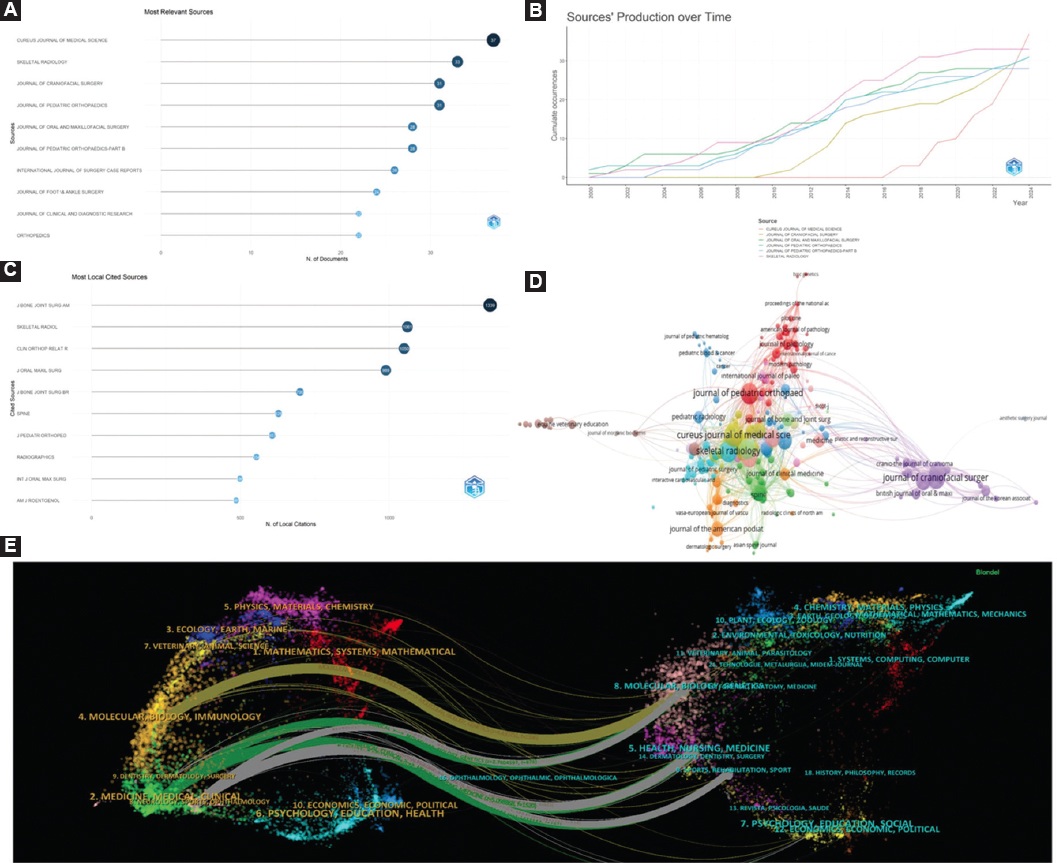
Figure 4 A: the most relevant journals and sources publishing on osteochondroma research. B: illustrates the cumulative publication output of key journals in osteochondroma research over time. C: the most locally cited sources in osteochondroma research. D: the citation network for sources in osteochondroma research, where the minimum number of citations for inclusion was set at 10. E: a dual-map overlay of journals related to osteochondroma research. The left side represents the citing journals, while the right side indicates the cited journals.
The cumulative publication output of key journals in osteochondroma research over time is illustrated in figure 4B. The Cureus Journal of Medical Science shows a sharp rise in production from 2018 onward, quickly becoming a leading source by 2024. Similarly, Skeletal Radiology and the Journal of Pediatric Orthopedics-Part B, the Journal of Oral and Maxillofacial Surgery, and Journal of Craniofacial Surgery have steadily grown since 2010. This upward trend in these journals reflects the growing research interest in osteochondroma, with contributions spanning pediatric orthopedics, craniofacial surgery, and radiology.
Figure 4C highlights the most locally cited sources in osteochondroma research. The Journal of Bone and Joint Surgery (American volume) leads with 1339 local citations. Skeletal Radiology and Clinical Orthopedics and Related Research follow closely with 1061 and 1050 citations, respectively. Other notable sources include the Journal of Oral and Maxillofacial Surgery, with 989 citations, and the Journal of Bone and Joint Surgery (British volume), with 700 citations. This distribution shows an overwhelming tendency toward orthopedic and radiology journals as the primary reference sources that majorly enhance the literature on osteochondromas academic discourse.
The citation network for sources in osteochondroma research is illustrated in figure 4D, which highlights the importance of these multidisciplinary journals in disseminating osteochondroma research. Prominent journals such as Skeletal Radiology, Journal of Pediatric Orthopedics, and Cureus Journal of Medical Science emerge as key nodes in the network, reflecting their central roles in the citation landscape. The Journal of Craniofacial Surgery and Journal of Bone and Joint Surgery also significantly shape the field. Clusters form around specialized areas, with journals related to pediatric, orthopedic, and radiological research showing strong interconnectivity.
A dual-map overlay of osteochondroma research-related journals is presented in figure 4E. The left side indicates the journals where citations were made, and the right side indicates the journals cited. This shows the transfer of scientific knowledge: in this case, the literature on osteochondroma is built up from careful studies in various other research areas. Some well-known regions, such as earlier "Molecular Biology" and "Immunology" (left), tend to cite works from "Medicine" and "Clinical Research" (right) more often, illustrating interdisciplinary collaboration.
Co-citation
REFERENCES
The co-citation network of cited references illustrated in figure 5A in osteochondroma research, where the minimum number of citations for inclusion was set at 20. The most influential reference is Murphey MD, 2000, Radiographic2, which occupies a central position in the network with numerous connections to other highly cited works. This reference forms a critical foundation in osteochondroma literature, frequently co-cited alongside other fundamental studies such as Schmale et al., 199413; J Bone Joint and Kitsoulis et al., 2008, In Vivo6. The network reveals distinct clusters, indicating thematic research areas. For instance, references by Wolford et al. from 200214 and 201415 form a separate cluster focused on oral and maxillofacial surgery. The visualization shows the interconnected nature of foundational research in the field, with specific studies as pivotal links between research domains.
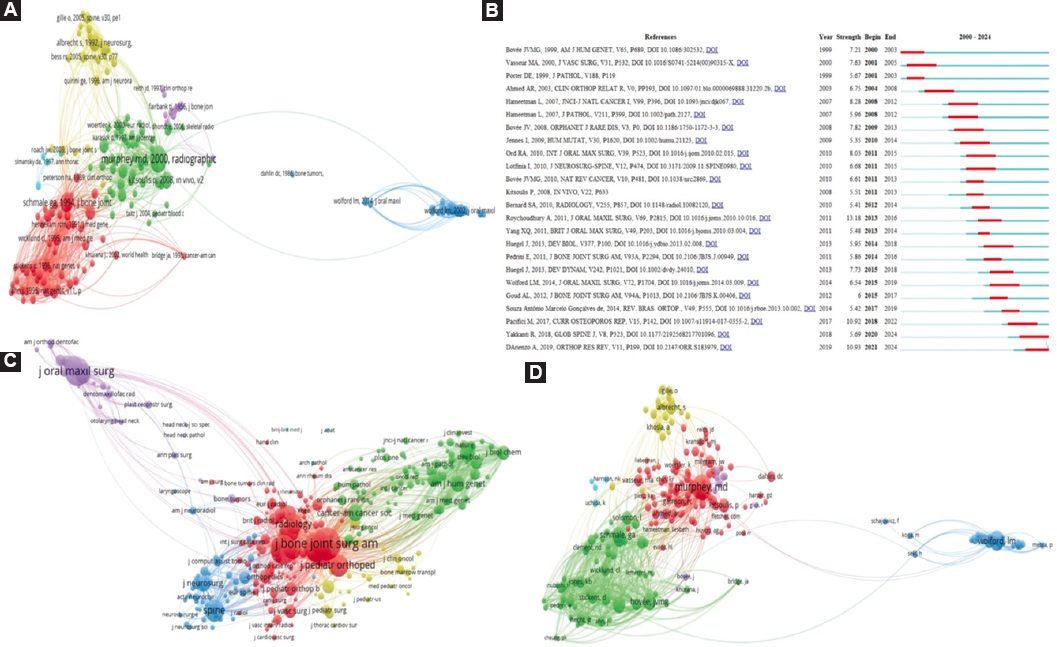
Figure 5 A: visualization of the co-citation network of cited references in osteochondroma research, where the minimum number of citations for inclusion was set at 20. B: presentation of the top 25 references with the most robust citation bursts in osteochondroma research from 2000 to 2024. C: a visualization map of the co-citation network of cited sources in osteochondroma research, where the minimum number of citations for inclusion was set at 20. D: a visual map of the co-citation network of authors in osteochondroma research, where the minimum number of citations for inclusion was set at 20.
Figure 5B presents the top 25 references with the most robust citation bursts in osteochondroma research from 2000 to 2024. Bovée JVMG, 1999, Am J Hum Genet16 had an early burst from 2000 to 2003, while Vasseur MA, 2000, J Vasc Surg17 and Porter DE, 1999, and J Pathol18 also saw significant early bursts. More recent bursts are seen for D'Arienzo et al., 2019, Orthop Res Rev19 and Pacifici, 2017, Curr Osteoporos Rep20, which continue into 2024. Notably, Yang et al., 2011, Brit J Oral Max Surg21 experienced a strong burst between 2013 and 2016. The information shows that particular sources have played a significant role in developing the present body of knowledge and have continued to influence the scientific community for an extended period.
JOURNALS
Figure 5C presents a co-citation network comprising sources that have received a minimum of 20 citations, specifically centered on osteochondroma literature. The Journal of Bone and Joint Surgery (American volume) is the most central source, linked to other orthopedic journals like the Journal of Pediatric Orthopedics and Spine. Key sources include radiology and bone tumors, frequently co-cited in osteochondroma diagnosis and imaging. The Journal of Oral and Maxillofacial Surgery form a separate cluster relevant to surgical treatment in craniofacial contexts. The analysis reveals clusters reflecting specific research areas, such as orthopedics, radiology, craniofacial surgery, and pathology, emphasizing the multidisciplinary nature of osteochondroma research.
AUTHORS
Figure 5D depicts the co-citation network of authors working in the area of osteochondromas where the minimum number of citations for inclusion was set at 20. Among the authors, Murphey MD is the most frequently cited and has resulted in a binding network with experts such as Schmale GA, Kitsoulis P, and Bovee JVMG, who are also other noted co-citation authors. These authors are central to the literature on osteochondroma, contributing extensively to its diagnosis, pathology, and treatment. Wolford LM, on the other hand, develops a different cluster which is predominantly focused on maxillofacial surgery. The network shows thematic clusters, with authors such as Dahlin DC and Solomon L connecting various research areas, highlighting their influence in orthopedic and craniofacial subfields.
Keywords:
BURSTS
The most frequently used 15 keywords with the most robust citation bursts in osteochondroma research from 2000 to 2024 are illustrated in figure 6A. The keyword "case report" had the most robust burst starting in 2020 and is expected to continue through 2024, illustrating the rising presence of case reports in the literature. Keywords such as "solitary osteochondroma" and "hereditary multiple exostoses" experienced significant citation increases between 2006 and 2012 and between 2006 and 2013, respectively. Earlier citation bursts are observed for terms such as "joint," "exostosis," and "cervical spine" in the early 2000s. This study demonstrates the evolution of the research focus on osteochondromas, emphasizing more genetic conditions such as HME.
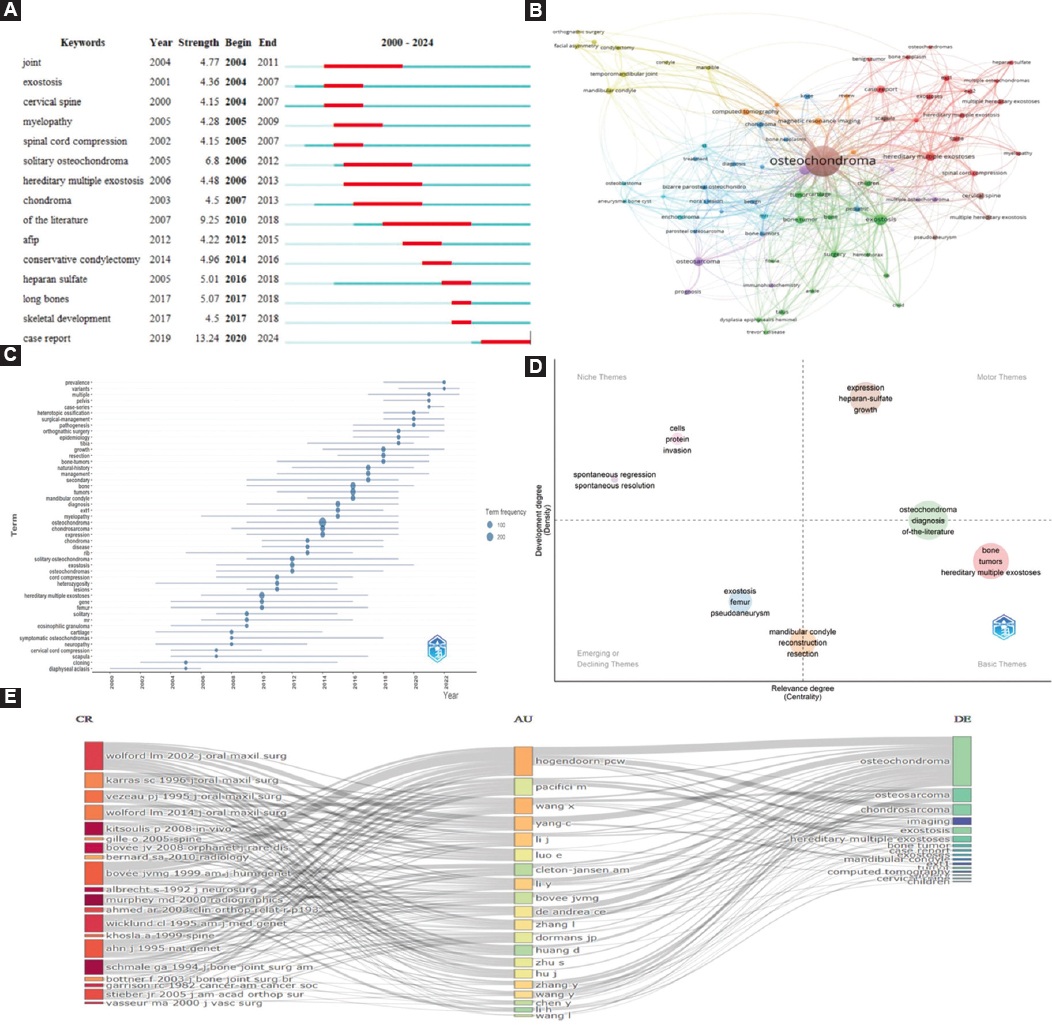
Figure 6 A: the top 15 keywords with the most robust citation bursts in osteochondroma research between 2000 and 2024. B: the co-occurrence network of keywords in osteochondroma research, where each node represents a keyword that appeared at least ten times in the dataset. C: the trend topics in osteochondroma research from 2000 to 2024, with terms sorted by frequency over time. D: a thematic map of osteochondroma research, organizing themes based on their relevance (centrality) and development (density). E: the three-field plot analysis generated in Bibliometrix, which illustrates the relationships between key references (left), authors (middle), and keywords (right) in osteochondroma research.
CO-OCCURRENCE
The co-occurrence network of keywords in osteochondroma research has been mapped out in figure 6B, where each node is a keyword appearing at least ten times. The central keyword "osteochondroma" is the network's primary focus, linked to clusters of related terms. The red cluster highlights keywords related to HME, spinal cord compression, and multiple osteochondromas, reflecting the genetic and clinical aspects. The green cluster focuses on terms such as "exostosis," "surgery," and "child," indicating surgical and pediatric contexts. Other clusters address imaging (yellow) and conditions such as osteosarcoma (purple) and osteoblastoma (blue). This network illustrates the multidisciplinary nature of osteochondroma research, connecting clinical, genetic, and diagnostic aspects.
TIMELINE
Figure 6C shows osteochondroma research trend topics from 2000 to 2024, with terms sorted by frequency. "Prevalence," "variants," and "multiple" have gained attention since 2015, while "surgical management," "heterotopic ossification," and "pathogenesis" remain relevant. Specific terms such as "hereditary multiple exostoses," "cord compression," and "myelopathy" highlight genetic and spinal focuses. Circle sizes indicate frequency, with larger circles representing more frequently used terms.
THEMATIC MAP
The thematic map of osteochondroma research, organizing themes by relevance (centrality) and development (density), is depicted in figure 6D. The upper-right quadrant (motor themes) includes core topics such as "osteochondroma," "hereditary multiple exostoses," and "bone tumors," which are both relevant and trending popular concepts. The lower-right quadrant (basic themes) contains terms such as "mandibular condyle" and "reconstruction," indicating foundational areas that are less developed. The upper-left quadrant (niche themes) showcases specialized fields that lack extensive research and reveal opportunities within areas such as "expression" and "heparan sulfate." The lower-left quadrant (emerging or declining themes) features terms such as "exostosis" and "femur," reflecting topics that are emerging or declining in relevance.
THREE-FIELD PLOT
Figure 6E shows a three-field plot from bibliometrix illustrating relationships between key references (left), authors (middle), and keywords (right) in osteochondroma research. Notable references such as Wolford LM 2002 and Bovée JVMG 1999 are linked to influential authors such as Hogendoorn PCW and Pacifici M. These authors relate to central themes such as "osteochondroma," "osteosarcoma," and "hereditary multiple exostoses." The plot emphasizes that a few pivotal authors and studies shape much of the discourse, with keywords such as "osteochondroma" and "hereditary multiple exostoses" central to ongoing research. This figure highlights the significance of particular authors and studies in shaping contemporary understanding of osteochondroma research.
Discussion
As research expands rapidly in orthopedic oncology, it has become increasingly important for researchers to determine their direction. Instead of depending exclusively on meta-analysis and systematic review methods, bibliometric analysis provides a way to visualize the current literature for validation and assessment. This bibliometric analysis offers valuable insights into the research landscape of osteochondromas, highlighting the key contributions and trends in this field. This analysis underlines the importance of specific studies that have significantly influenced the understanding and management of osteochondromas.
The analysis of publication years reveals a steady increase in research output over the past two decades. Research related to osteochondromas has continued to exhibit a substantial increase in volume from 2000 to 2024, with the year 2021 witnessing the highest number of published articles (Fig. 1). This trend suggests a growing interest in and recognition of the importance of osteochondroma in orthopedic and oncological research communities.
The geographical distribution of the much-cited articles also provides exciting insights into international collaboration patterns. A significant proportion of influential research is either authored, co-authored, or cited from countries such as the United States, Germany, and Japan (Fig. 1). This distribution demonstrates the worldwide scope of osteochondroma research and the collaborative initiatives across various regions to enhance understanding in this field.
Leiden University and Shanghai Jiao Tong University both stand out as leaders in publication output and have maintained these publication trends for years (Fig. 2). Regarding co-authorship affiliations, Leiden University is the cornerstone, with strong co-authorship ties to well-established institutions such as the University of Oxford, the University of Utah, and Harvard University. Hogendoorn PCW (H index 19) is the leading author on osteochondromas, featuring the most articles, and is a crucial figure in the author co-authorship network (Fig. 3). Flemming, DJ, Kransdorf, MJ, and Murphey, MD are the most locally cited authors.
The Cureus Journal of Medical Science and Skeletal Radiology are, respectively, the most pertinent journals and sources in the field of osteochondroma research (Fig. 4). The most locally cited source networks dwell around well-established journals such as The Journal of Bone and Joint Surgery (American volume), Skeletal Radiology, Journal of Pediatric Orthopedics, and Cureus Journal of Medical Science.
The most influential reference is Murphey MD, 2000, Radiographic2, which occupies a central position and forms a critical foundation in osteochondroma literature. Murphey MD is also the most frequently cited author in osteochondroma research (Fig. 5). The top references with the most robust citation bursts are Bovée JVMG, 1999, Am J Hum Genet16, Vasseur MA, 2000, J Vasc Surg17, Porter DE, 1999, and J Pathol18.
Keyword analysis offers a beneficial way to reveal essential aspects of a study, such as the research methods, subjects, content, and other related elements. The thematic map of osteochondroma research revealed specialized fields that lack extensive research and reveal opportunities within areas such as "expression" and "heparan sulfate." Furthermore, keywords such as "solitary osteochondroma" and "hereditary multiple exostoses" experienced significant citation increases (Fig. 6). The findings of the thematic maps reveal the spontaneous regression resolution found in niche themes and point out the topics and areas that are not very well studied and open to research. Keywords such as "expression" and "heparan sulfate" are highlighted in the niche themes section of the thematic maps, underlining the evolution of the research focus on osteochondromas and the need for more genetic research.
This study used bibliometric methods and visual maps to represent and analyze the available literature, research hotspots, and trends, providing insights for future research about osteochondroma. USA and China lead contributions, emphasizing the need for strengthened international collaboration. Keyword clusters highlight keywords such as "osteochondroma" and "hereditary multiple exostoses" as central to ongoing research and crucial research focal points. The findings of the thematic maps revealed the niche themes by pointing out keywords such as "expression," highlighting the evolution of the research focus on osteochondromas and the need for more genetic research.
Our study has several limitations. First, it was exclusively based on the WoSCC database and did not consider other databases such as PubMed and Scopus, which could have resulted in a limited selection of publications. Second, it included only English language studies from the SCIE database of Web of Science, so non-English literature may have been left out, introducing potential language bias. In addition, it did not examine articles published before 2000, which may have led to the absence of numerous high-quality publications.
Conclusions
The study of global research trends on osteochondroma from 2000 to 2024 reveals a significant and growing interest in this field, underscored by the surge in publications and international collaborations. The United States and China emerge as the leading contributors to osteochondroma research. However, there remains a notable gap in genetic research, particularly concerning keywords such as expression and heparan sulfate. This highlights an important area for future exploration. Despite the advancements, continuous efforts are necessary to address these gaps, ensuring a comprehensive understanding of osteochondroma and its implications in genetic conditions. With this guidance, researchers can continue to advance the understanding and management of osteochondromas, ultimately improving patient outcomes.

