




 nueva página del texto (beta)
 Inglés (pdf)
 Artículo en XML
 Referencias del artículo
 Traducción automática
 Enviar artículo por email
 Citado por SciELO
  Similares en
SciELO
Similares en
SciELO 
 Permalink

Introduction
Education has undergone constant changes throughout history to ensure meaningful student learning. Its evolution has been shaped by key concepts such as educational approaches, methodologies, and models, the latter being widely applied across academic disciplines from primary to higher education. In the last decade, the educational system has been required to adopt innovative learning models designed to strengthen literacy and foster the construction of knowledge, skills, and experiences that enable students to face real-life challenges. These models have demonstrated strong educational outcomes (Chen et al., 2024),(Rivadeneira & Inga, 2023), (Zheng et al., 2024).
Currently, various active learning models are in use, including flipped classrooms, gamification, cooperative learning, problem-based learning, competency-based learning, thinking-based learning, and Project-Based Learning (PBL). Among these, PBL has been implemented successfully in disciplines such as Electrical and Computer Engineering, where students are expected to develop specific competencies such as time management and problem-solving under unstable scenarios (Zheng et al., 2024), (Cueva & Inga, 2022).
The implementation of these models in education faces various barriers, including limitations in pedagogical practices, access to technological and human resources, infrastructure, and the need for adequate teacher training. Successful application depends largely on the educator's ability to manage these components. Teachers must be well-prepared to design, facilitate, and evaluate learning experiences effectively based on their expertise and pedagogical strategies (Rahmawati et al., 2020).
Innovative teaching and learning models also pose institutional and social challenges that must be addressed before implementation. One of the most prominent is the integration of Information and Communication Technologies (ICT), which support self-directed, flexible, and interactive learning environments (Liang et al., 2023).
Project-Based Learning (PBL) is an educational approach in which students take an active role in their own learning, under the guidance of the teacher, who is responsible for providing motivation, structure, and relevant content. Through this model, students can enhance their existing knowledge while developing metacognitive skills such as self-regulation, monitoring, and reflection (Hussein, 2021), .
However, multiple studies highlight the challenges associated with PBL, including limited internet access, insufficient technological resources, time constraints, and the financial burden of acquiring project materials. These issues often force students to make difficult decisions to adapt and overcome obstacles (Sakamaki et al., 2022).
To address these difficulties, it is essential to prioritize teacher training and continuous professional development prior to the implementation of active learning models. Educators, drawing on their knowledge and experience, play a central role in fostering collaborative work, self-assessment, and the successful resolution of meaningful challenges, as expected in the PBL framework.
Despite its potential, the implementation of PBL in educational institutions often presents difficulties, particularly when educators lack sufficient understanding of active learning methodologies (Pupik Dean et al., 2023). As a result, the learning environment can become monotonous or ineffective, leading to student demotivation and disengagement. These models require the application of innovative didactic strategies that promote student participation and creativity throughout the learning process (Zambrano Briones et al., 2021).
When PBL is effectively integrated with ICT tools, it can enhance student engagement, foster active learning, and support the development of key skills (Sugiyanto et al., 2020). By focusing on real-world problem-solving, this model helps students prepare for the demands of professional, industrial, and entrepreneurial contexts (Malyuga & Petrosyan, 2022). Figure 1 illustrates the recommended application of the Project-Based Learning model to achieve comprehensive educational development.
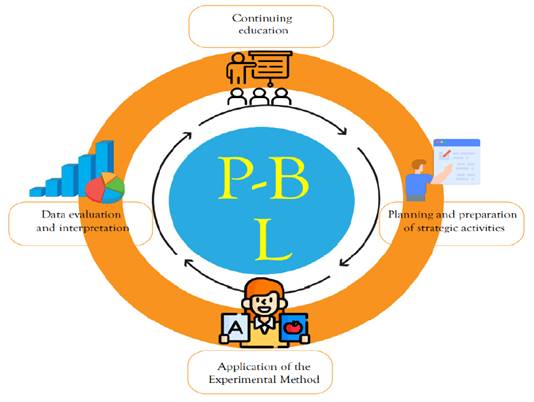
The diagram emphasizes that the teacher plays an active mediating role throughout the process, facilitating not only the introduction of project challenges but also providing continuous feedback, promoting collaboration, and scaffolding metacognitive processes such as self-regulation and reflection. This structured approach ensures that the development of autonomy is not accidental, but rather intentional and progressive throughout each stage of the PBL cycle.
Regarding the organization of this article, related work is presented in section 2. The problem formulation and methodology are in section 3, the results and analysis are in section 4, and the conclusions are presented in section 5.
Related Works
Project-Based Learning (PBL) incorporates several core characteristics, including the activation of prior knowledge, collaborative planning, problem socialization, situational analysis, identification of key factors involved, and leveraging students' previous experiences (Malyuga & Petrosyan, 2022).
This model fosters the development of competencies such as teamwork, leadership, communication, and problem-solving (Tsybulsky & Muchnik-Rozanov, 2023). Furthermore, its foundational principles involve the construction of tangible outcomes, the formulation of operational questions, and the application of cognitive tools (Shin et al., 2021).
The implementation of PBL requires research that addresses the specific characteristics, stages, and evaluation processes associated with its application. Recent studies have emphasized the importance of examining underexplored aspects of PBL to ensure its effective adaptation across diverse educational contexts (Huang et al., 2023). In the 21st century, educational research has increasingly focused on PBL's capacity to enhance student learning through interdisciplinary integration and collaborative methodologies. This model nurtures a vocational orientation in students, equipping them to address complex real-world challenges (Hamdani & Suherman, 2021).
Several challenges in the development of PBL have been identified in literature. These include ensuring full student participation, maintaining flexibility in the design of project phases, and securing the institutional conditions necessary for implementation (Ceh-Varela et al., 2023). Student engagement in PBL has been analyzed from behavioral, emotional, and cognitive perspectives, highlighting its multidimensional nature (Zen et al., 2022).
Teachers often report obstacles such as insufficient time to cover the entire curriculum and a lack of institutional support and material resources (Palatnik, 2022). Consequently, it is essential that educators possess 21st-century skills and are adequately trained in PBL methodology to navigate these constraints effectively (Palatnik, 2022).
Infrastructure also plays a critical role in the success of PBL. Access to digital tools, internet-connected devices, and multimedia resources is crucial to foster students’ motivation and inquiry-based learning (Guo et al., 2020). In terms of assessment, concerns have been raised regarding the fairness of group evaluations, particularly when individual contributions are not properly acknowledged (Ngereja et al., 2020). Research in this area underlines the value of self-directed learning and peer knowledge exchange within the PBL framework.
To ensure inclusive learning, PBL must be designed with flexibility, considering variables such as gender, ethnicity, language, socioeconomic status, and disabilities (Adah Miller et al., 2022). Further studies have proposed that assessment in PBL should also capture indicators like implicit knowledge, insight, innovation, communication, critical thinking, coordination, and complex problem-solving (Goyal et al., 2022). Some research even suggests evaluating students’ perceptions of their teachers' effectiveness to ensure alignment between teaching practices and intended outcomes (Goyal et al., 2022).
As illustrated in Figure 2, global research on PBL is concentrated in a few key countries. The United States leads in the number of publications, followed by China and Spain. These nations have significantly contributed to the theoretical and practical development of PBL, positioning it as a continuously expanding field of study in contemporary education.
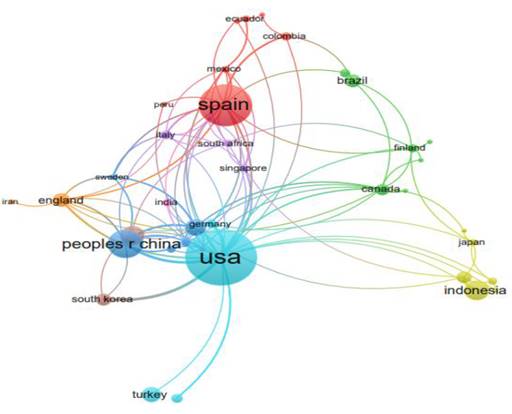
As depicted, research on PBL is highly concentrated in a few leading countries, notably the United States, China, and Spain. This distribution not only reflects the prioritization of innovation in these educational systems, but also highlights the opportunity and necessity to adapt PBL to underrepresented regions where educational inequalities and contextual constraints may limit effective implementation.
Figure 3 Researchers have focused on the analysis of the effects presented after the application of project-based learning to measure the overall performance of students; it should be noted that the University of Michigan State University, Lehigh University, Indiana Bloomington, evaluated a group of students in the subject of mathematics where they obtained a better performance, unlike another group to which project-based learning was not applied (Lazić et al., 2021).
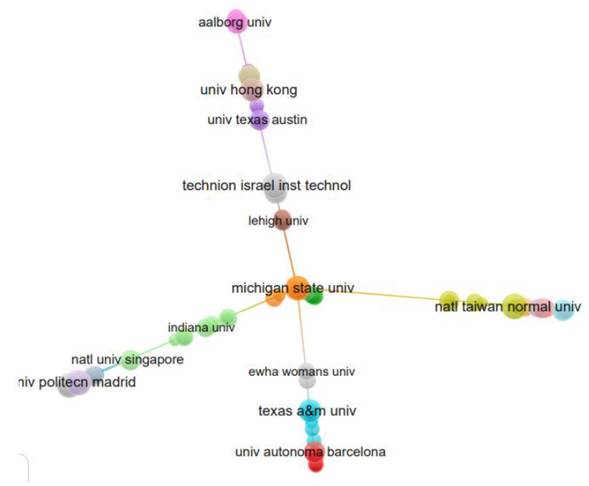
The evidence presented in Figure 3 underlines the empirical benefits observed when PBL is applied to core subjects like mathematics. The performance improvement in students exposed to PBL, compared to those in traditional instruction, supports the claim that this methodology fosters deeper understanding and practical skill development. Such findings reinforce the model’s suitability for disciplines traditionally perceived as rigid or abstract.
The implementation of innovative learning models in academic environments offers multiple advantages, ranging from theoretical understanding to the development of problem-solving abilities. Project-Based Learning (PBL), in particular, enables students to acquire knowledge contextualized to their realities, building on prior experiences while fostering peer collaboration and cultivating a community of practice centered on autonomy, decision-making, and self-directed learning (Santos et al., 2023).
In the context of higher education, various studies have examined the application of PBL to support transformation in the training of future teachers. These efforts aim to promote interdisciplinary, cooperative, and communicative competencies, as well as the creation of didactic materials that enhance learning outcomes (Ricaurte & Viloria, 2020).
The adoption of the PBL model positions students as active agents in the construction of knowledge. It encourages self-learning, peer discussion, social interaction, goal setting, structured planning, and self-regulation in the learning process. Through these elements, students are empowered to monitor their own progress and evaluate their achievements against predefined objectives (Loyens et al., 2022).
Table 1 presents a synthesis of the most impactful studies reviewed in this research, highlighting the main contributions and trends associated with the application of the PBL model in educational settings.
Table1.- Summary of authors researching the Project-Based Learning Model.
| Tutor | Theoretical Applied | Project-Based Learning | ICT | Self-Study | Continuous Teacher Training | Educational Innovation | Adequacy Rubric | Student Motivation | Resource Allocation | Flipped Learning |
|---|---|---|---|---|---|---|---|---|---|---|
| Seo (2023) | ✔ | ✔ | ✔ | ✔ | ✔ | |||||
| Tsybulsky (2023) | ✔ | ✔ | ✔ | ✔ | ||||||
| Loyens (2023) | ✔ | ✔ | ✔ | ✔ | ||||||
| Adah Miller (2023) | ✔ | ✔ | ✔ | ✔ | ✔ | |||||
| Ceh-Varela (2023) | ✔ | ✔ | ✔ | ✔ | ✔ | |||||
| Zen (2022) | ✔ | ✔ | ✔ | |||||||
| Goyal (2022) | ✔ | ✔ | ✔ | ✔ | ||||||
| Malyuga (2022) | ✔ | ✔ | ✔ | ✔ | ✔ | ✔ | ||||
| Malyuga (2022) | ✔ | ✔ | ✔ | |||||||
| Palatnik (2022) | ✔ | ✔ | ✔ | ✔ | ||||||
| Sakamaki (2022) | ✔ | ✔ | ✔ | ✔ | ✔ | |||||
| Pan (2021) | ✔ | ✔ | ||||||||
| Current Study | ✔ | ✔ | ✔ | ✔ | ✔ | ✔ | ✔ | ✔ | ✔ | ✔ |
Source: Authors.
Note: A checkmark (✔) indicates that the corresponding author or study addresses this specific dimension of the PBL model.
Problem Formulation and Methodology
Several authors have conceptualized the Project-Based Learning (PBL) model as an educational approach that enhances literacy, promotes the construction of knowledge, and facilitates the acquisition of skills and experiences required to address real-world problems. Within the academic sphere, PBL stands in contrast to traditional educational paradigms, offering a framework that not only prepares students to solve everyday challenges but also fosters active and reflective learning.
Education is increasingly challenged by technological advancement and the acceleration of industrial demands, which necessitate innovative forms of student preparation. In response, government agencies, educational institutions, and educators have been compelled to modify their teaching practices and adapt to persistent limitations in infrastructure, instructional materials, and resources.
A recurring issue within educational systems is the superficial implementation of pedagogical models-often adopted in compliance with ministerial directives-without adequate contextualization to the institution's actual needs. This lack of meaningful socialization and insufficient teacher training frequently leads to ineffective or incomplete application of innovative models such as PBL.
In this context, the central research problem addressed in this study is the identification of the key characteristics and influencing factors that determine the successful implementation of the PBL model. This model is intended to promote essential skills such as teamwork, problem-solving, leadership, communication, collaboration, and self-directed learning. Furthermore, it emphasizes the role of students as protagonists and active participants in their learning process.
This study adopts a mixed-methods design, incorporating both qualitative and quantitative components. In the first phase, a descriptive-historical approach is employed to examine global scientific literature related to PBL, identifying significant theoretical and empirical contributions. For this bibliometric analysis, the software VOSviewer will be used to map and visualize the most active countries, institutions, and authors in the field, with special emphasis on citation metrics and co-authorship networks.
Data sources for the bibliometric review include Web of Science, ScienceDirect, and SpringerLink, ensuring coverage of high-impact and peer-reviewed publications. In the second phase, a descriptive-experimental method will be applied to examine the implementation of PBL in a real classroom setting.
The experimental component involves the administration of structured surveys to a sample of 116 high school students, aged between 15 and 18, from Unidad Educativa Gualaceo, a public institution located in the urban area of Gualaceo Canton. The instruments are designed to evaluate students’ perceptions and the observable impact of key PBL factors on their learning experience.
Figure 4. presents the structure of the research, outlining the flow from the bibliographic analysis to methodological procedures and the evaluation of the state of the art.
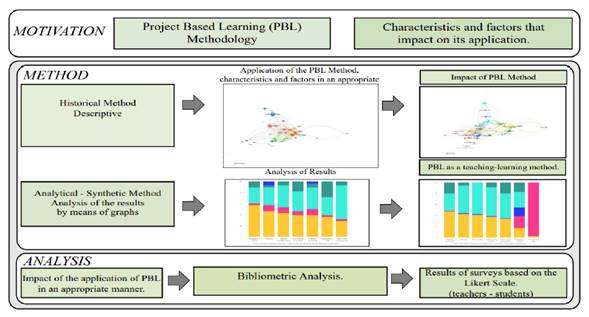
Figure 4 illustrates the methodological flow of this study. Beginning with the bibliometric analysis of indexed literature and concluding with the field experimentation, the structure reflects a triangulated design that seeks to connect theoretical evidence with empirical findings. This alignment enables the identification of both global trends and localized factors that affect the implementation of PBL in real classroom environments.
Table 2 shows the research population includes 28 teachers aged 29 to 58, 14 of whom are men and 14 of whom are women. The surveyed teachers belong to Mathematics, Language and Literature, Physics, Chemistry, Biology, History, foreign language, cultural and Artistic Education, and Technical Areas.
Table 2 Teacher’s survey based on a five-point Likert scale
| No. | Survey Question |
|---|---|
| 1 | Should teachers ensure the learning effectiveness of all students when applying the PBL method? |
| 2 | Do you consider evaluating the final product rather than the process when applying the project-based learning method appropriate? |
| 3 | Do you consider project-based learning to be meaningful for students? |
| 4 | Can the PBL method help develop problem-solving skills? |
| 5 | Do you consider that the student developed critical thinking through PBL? |
| 6 | After applying the PBL method, do you consider that the students developed communication skills? |
| 7 | Do you consider that the student developed creativity through project-based learning? |
| 8 | Do you think the projects you have completed will help you solve real-world problems? |
| 9 | After applying the PBL method, do you consider that the projects used awakened student teamwork? |
| 10 | Do you consider that the applied projects awakened student leadership? |
| 11 | Do you consider that teachers should be prepared before applying the PBL method? |
| 12 | Do you consider that teachers should be trained in using ICTs to apply the PBL method? |
| 13 | Do you consider that project-based learning develops students' autonomy skills? |
| 14 | Before applying the PBL method, should the teacher present a budget table to the students, legal representatives, or parents? |
| 15 | During the application of the PBL method with your students, was your role as a teacher that of a guide? |
| 16 | Have you fulfilled the planning to effectively develop the Project-Based Learning method? |
| 17 | Do you know the evaluation methods for the Project-Based Learning method? |
| 18 | Which strategies would you choose to achieve effective learning using the PBL method? |
| 19 | How likely are you to recommend applying the project-based learning method? |
Source: Authors
The survey was designed and administered through the Microsoft Forms platform, comprising 20 items for students and 19 for teachers. The questionnaire was structured in two thematic blocks: the first aimed at identifying the relevant characteristics of the Project-Based Learning (PBL) model, and the second focused on the factors that influence its implementation in the classroom.
A quantitative approach was employed using a five-point Likert scale to measure respondents' perceptions. The response options ranged from 1 (strongly disagree) to 5 (strongly agree), allowing for a detailed analysis of agreement levels across items.
The survey for teachers aimed to assess the extent of their understanding of the PBL model and to identify which pedagogical dimensions they prioritize when applying it. Similarly, the student questionnaire was designed to evaluate how learners perceive the impact of PBL on their educational experience, including their engagement, skill development, and the effectiveness of the learning process.
Table 3 Student survey based on a five-point Likert scale
| No. | Survey Question |
|---|---|
| 1 | Do you consider that project development allows you to assume responsibilities? |
| 2 | Do you consider that project-based learning requires self-learning? |
| 3 | Do you consider that the project developed allows for solving real problems? |
| 4 | Does working on a project allow you to create different levels of commitment to society? |
| 5 | Has reviewing the project's progress with your peers helped you develop a supportive attitude and share your knowledge with them? |
| 6 | Did the experience in a real-life project help you understand the importance of decision-making? |
| 7 | Did the development of your project awaken in you the ability to negotiate? |
| 8 | Do you consider that the teacher provided you with enough information during the project's development? |
| 9 | Do you believe that research is important in developing a project? |
| 10 | Are digital tools, such as cell phones, laptops, tablets, and readers, important in developing a project? |
| 11 | Does using digital tools, such as cell phones, laptops, tablets, and readers, play a key role in developing a project? |
| 12 | In your opinion, does the development of a project demand the optimization of both time and tasks involved? |
| 13 | Do you consider the economic factor to be of great importance when developing a project? |
| 14 | Are there any challenges during the development of your project? |
| 15 | Do you consider that the evaluation resources used by the teacher are adequate to grade the project appropriately? |
| 16 | Have you considered the application of the Project-Based Learning Model (PBL) in your learning process effective? |
| 17 | Do you consider that the teachers at your institution are adequately trained to lead a project-based learning process effectively? |
| 18 | Do you consider that project-based learning took the student as the main protagonist? |
| 19 | During the development of your project, do you believe that the teacher's guidance was adequate? |
| 20 | Do you believe that the teacher’s role during the development of the project should be limited exclusively to guidance without providing additional instruction or feedback? |
Source: Authors
It is essential to know from the student's perspective if the PBL promoted significant learning in them, as well as to know if, from their point of view, the teachers are prepared to apply the PBL method.
Analysis of Results
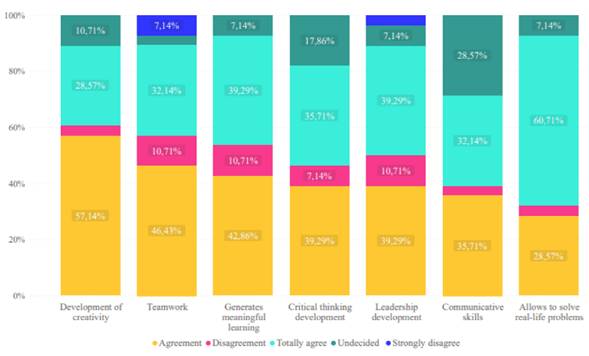
Figure 5 presents the results obtained from surveys conducted with students and teachers. The data were analyzed using graphs to identify the key characteristics influencing the implementation of the Project-Based Learning (PBL) method. In the survey addressed to teachers, specific characteristics were highlighted together with their respective percentages. Regarding the generation of meaningful learning, 39 % of the teachers agreed, while 42.9 % agreed that this characteristic had influenced the development of PBL.
Source: Authors.
Figure 5 Survey to teachers: characteristics that impact the application of the Project Based Learning Method.
The teacher survey identified several core characteristics enhanced by PBL implementation. Regarding meaningful learning, 39% of teachers strongly agreed, and 42.9% agreed that this characteristic was evident in student outcomes. For problem-solving, 67.9% strongly agreed and 28.6% agreed that the method contributed significantly to this skill. Critical thinking was also emphasized, with 35.7% of teachers strongly agreeing and 39% agreeing.
Concerning communication skills, 35% strongly agreed and 32% agreed that students improved their peer interaction through PBL. In terms of teamwork, 46.2% agreed and 32% strongly agreed that group collaboration was effectively developed. When asked about leadership development, a majority agreed that PBL fosters student initiative within group settings. Similarly, 50% of teachers acknowledged creativity as an outcome of PBL, affirming the observations of Malyuga and Petrosyan (Malyuga & Petrosyan, 2022) who underscore the importance of fostering creative capacities through project engagement.
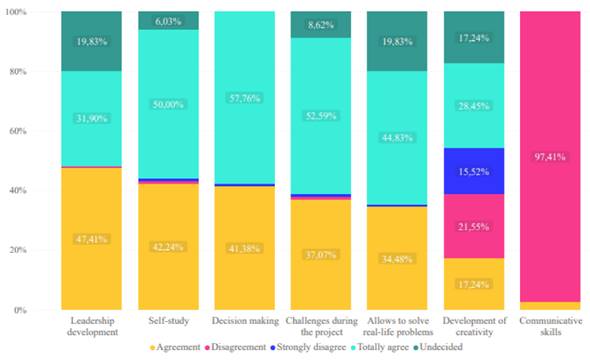
Concerning the results obtained in the student survey, the following characteristics stand out when implementing the Project-Based Learning Method (PBL) in the classroom. Figure 6. One is decision-making, where 57.8 % of the student’s state that they completely agree, and 41.3 % mention that they agree with this characteristic inherent to PBL. The following attributes in the teachers' survey also stood out: PBL enables students to solve real-life problems.
Source: Authors
Figure 6 Survey to Students: characteristics that impact the application of the Project.
Students responded positively regarding key competencies developed through PBL. Notably, 57.8% strongly agreed, and 41.3% agreed that decision-making was enhanced through project development. These results align with teacher perceptions, particularly in the areas of teamwork, creativity, and problem-solving. However, differences emerged in self-learning, with 50% of students agreeing and 42% strongly agreeing on its importance, an aspect less emphasized by teachers, suggesting a perceptual gap in the autonomy dimension.
A cross-analysis of student and teacher responses reveals consistency in several areas. Regarding leadership, 31.9% of students strongly agreed and 47.4% agreed that working in teams helped develop this skill. Likewise, 44.8% agreed and 34% strongly agreed that PBL facilitated problem-solving in real-life contexts. Creativity was also noted by both groups as an essential trait reinforced through the process, affirming the multidimensional benefits of the PBL model.
Therefore, it leads us to conclude that although the project-based learning method has been effective in student learning, the importance of its characteristics must be considered. The teacher must know the proper implementation of the PBL method to ensure that students acquire these characteristics promoted by the process, thus building meaningful learning.
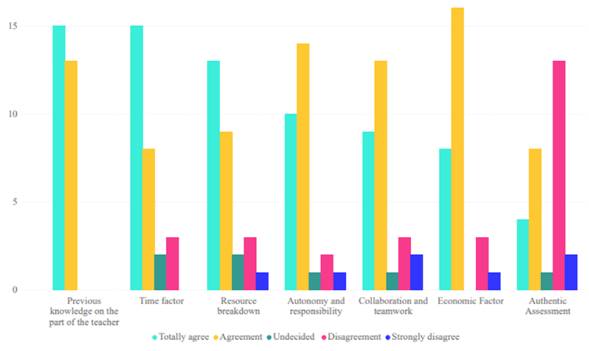
Figure 7 reveals that teachers consider time management a fundamental factor for successful PBL implementation. Specifically, 53% strongly agreed and 28.5% agreed on the need to establish clear timelines for project execution and assessment. These results emphasize that prior planning and allocation of instructional time are not merely logistical concerns but essential components of pedagogical effectiveness.
Source: Authors
Figure 7 Survey to teachers: characteristics that impact the application of the Project Based Learning Method
In addition, teachers highlighted the importance of prior knowledge of the PBL methodology. A well-prepared teacher is better positioned to organize learning activities, adapt to unexpected constraints, and guide students through each project stage. These insights underscore that time and training are interrelated factors that directly influence the feasibility and quality of PBL in classroom environments.
In addition, it is necessary to consider the resources needed to implement PBL. The survey reveals that 46 % of teachers strongly agree on the importance of carrying out a resource breakdown before implementing PBL, while 32 % agree. It shows that this is a relevant factor to consider. With adequate resources, the effective implementation of the PBA method can be carried out. Therefore, analyzing the tools and materials necessary for students to develop their projects optimally is essential.
In summary, autonomy and responsibility are essential elements in PBL, as they empower students to direct their learning and take responsibility for their process and results. Therefore, 50 % of the teachers agree that these two factors are fundamental when applying the PBL method, supported by 35.7 % who indicate that they agree.
Among the factors pointed out by the teachers is collaborative work, which generates the exchange of ideas and knowledge, as well as the development of social and emotional skills, building collective expertise in a coordinated manner. Therefore, 47% % of teachers consider it an essential factor in PBL.
In addition, the economic factor is evident, which involves financing the project and providing access to resources, materials, and technological resources. However, this factor can pose challenges to both teachers and students.
It is important to note that PBL fosters creativity and adaptability, which implies that the educational community must seek solutions to overcome these challenges. Fifty-seven percent of the teachers surveyed indicated agreement with the importance of this factor, and 28.6 % indicated complete agreement.
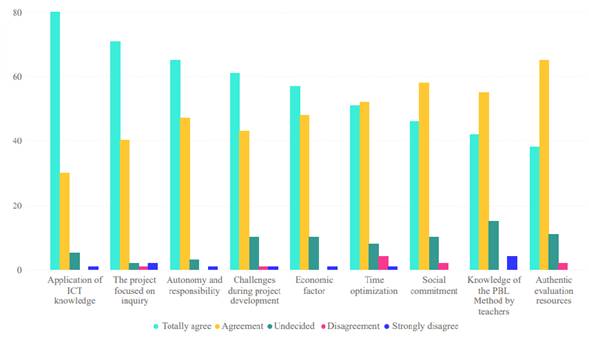
Figure 8 illustrates student perspectives on key factors influencing PBL. Seventy percent of students strongly agreed, and 26% agreed that ICT knowledge is essential in the development of projects. Additionally, 61.2% of students strongly agreed and 34.4% agreed that research is a fundamental component of the model. These results confirm that access to digital tools and research capabilities are central to meaningful learning in project-based environments.
Source: Authors
Figure 8 Student survey: The graph evidences the factors in applying the Project Based Learning Model.
Students also highlighted the relevance of autonomy and responsibility: 56% strongly agreed and 40.5% agreed that these elements contribute to better learning outcomes. The economic factor emerged as a significant concern, with 50% agreeing and 41% strongly agreeing that resource availability directly affects project feasibility. Finally, time optimization was noted as critical, where 43% agreed and 44.8% strongly agreed that proper time management influences the project’s success. These findings align closely with teacher responses, suggesting a shared understanding across both groups.
Another important factor for students is commitment to society. Applying PBL seeks to address real-life problems related to society, which allows building knowledge through service to the community, thus increasing students' commitment and motivation. 39.6 % of respondents strongly agree and 50 % agree to consider this factor when applying PBL.
Finally, the graph shows two significant factors that directly influence the fulfillment of the objectives and the result of student learning. Teachers' knowledge of the content allows them to design and plan relevant and meaningful projects and helps them select resources and materials appropriately. In addition, proper guidance by the teacher during the implementation of PBL is essential.
A well-informed and trained teacher can provide enriching and practical PBL experience, promoting deep learning student motivation and achieving educational objectives. 36 % of students strongly agree, and 47.4 % agree that the teacher should know about PBL before applying it to ensure learning.
Evaluation is essential in the educational process, and its proper implementation depends on the teacher and their prior knowledge. The evaluation instrument or technique used by the teacher should include active feedback and a progressive follow-up of the activities.
In this sense, the question of 15 students asked in the survey focuses on determining if the emphasis should be on the final product when assigning a grade or if other aspects should be considered. The results show that 32.8 % of the students agree that the final product should not predominate when assigning a grade, while 56 % of the students mention agreeing. It shows that the grade is a fundamental factor and that the teacher should know the correct way to evaluate the projects, avoiding focusing exclusively on the final product and instead looking for an adequate way to assess the processes equitably.
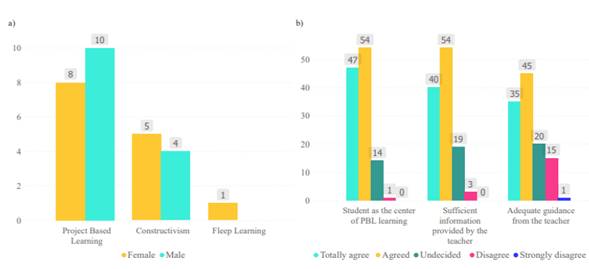
Figure 9 (a) shows the results of teachers' recognition of the method that places the student at the center of the teaching-learning process. Of the 28 teachers surveyed, 64% recognize the Project-Based Learning Method.
Source: Authors
Figure 9 (a) Teachers’ knowledge of the Project Based Learning Method. Figure 9 (b). This figure is a contrast with the students’ perception of the aspects contained in the PBL Method.
Of this group, 36 % are male, and 28.6 % are female. Of all the teachers surveyed in the fiscal sector, 32 % of the teachers point to constructivism as a method, while 3.5 % mention the Fleep Learning method.
Figure 9 (b) shows the students' perception of the project-based Learning method, and the aspects highlighted during its development. Regarding the element that indicates that the student is the center of learning, 40.5 % of the students agree while 46.5 % agree; however, 12 % of the students are undecided regarding this aspect.
Another aspect highlighted by the students is the adequate orientation of the teacher during the development of the project, where 30 % of the students agree, 38 % agree, 17.2 % are undecided, and 13 % disagree with the adequate orientation on the part of the teachers.
Regarding the aspect related to the delivery of sufficient information by the teacher, 34.5 % of the students agree, 46.6 % agree, 16 % are undecided, and 2.5 % disagree with this aspect, which is necessary for the application of the Project Based Learning Method.
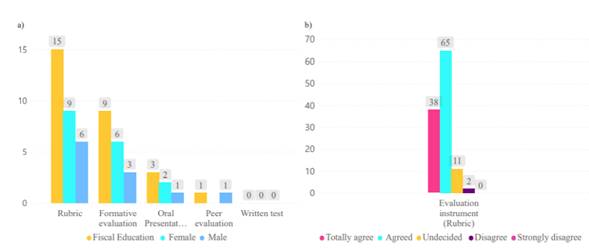
Figure 10 presents the evaluation preferences of both teachers and students regarding the PBL method. Among teachers, 53.7% selected rubric as the most suitable assessment tool, followed by 31.1% who preferred formative evaluation. Oral presentations and peer evaluations were selected by only a small proportion of respondents, reflecting a clear inclination toward structured and criteria-based grading instruments.
Source: Authors
Figure 10 (a) we found the teachers’ knowledge about the evaluation methods used in the Project Based Learning Method. Figure 10 (b). This figure identifies the acceptance of the evaluation method used by the teacher in the grading of the project
In parallel, student responses confirm this trend: 56% strongly agreed that rubric ensures fairness and transparency in grading, while 32% agreed with this approach. These results suggest a strong consensus on the value of rubrics for assessing both individual and group performance.
The findings underscore the importance of employing comprehensive assessment strategies in PBL that capture both product and process. Evaluation should provide meaningful feedback, guide learning progression, and account for students’ contributions throughout the project, rather than focusing solely on the outcome. This alignment between teachers and students reinforces the need to institutionalize authentic and formative assessment practices in project-based learning environments.
Discussion
From a comprehensive perspective, this paper emphasizes the impact of project-based learning on its practical application in classroom environments. The study combines historical-descriptive analysis with bibliometric methods to trace the evolution and international development of the PBL model. This methodological approach strengthens the reliability of the findings by demonstrating how PBL has been adapted and validated across diverse pedagogical contexts. Related research, such as the study by Urrea-Polo (2022), has shown that PBL enhances academic performance and fosters key competencies like autonomy and student participation, particularly in subjects such as history (Urrea-Polo, 2022).
The quantitative analysis based on surveys administered to teachers and students offers a detailed understanding of the implementation of the PBL model. The data highlights the development of critical thinking, analytical reasoning, problem-solving, and collaborative skills. However, the findings also reveal persistent challenges, particularly concerning teacher preparedness and the need for balanced evaluation strategies that accurately reflect the learning process. In the Peruvian context, for example, studies have reported that PBL significantly improves students' critical thinking and enhances the acquisition of transversal skills.
These findings underscore the importance of continuous professional development for teachers, enabling them to adopt flexible pedagogical roles and adapt to the dynamic nature of PBL. Holistic assessment should encompass not only the final project outcomes but also the process, including the development of transversal competencies such as teamwork, communication, and self-regulation. The need for flexible teaching roles and sustained training has also been highlighted in previous research applying the PBL model (Castro-valle, 2023).
Effective implementation of PBL requires careful planning to overcome institutional and methodological obstacles. In many educational settings, administrative demands often exceed the time available for teacher preparation, instructional design, and pedagogical follow-up. Addressing this imbalance is crucial to ensure that educators can adequately support the development of students' academic and socio-emotional competencies throughout the learning process.
Conclusions
Applying the Project-Based Learning (PBL) model requires the identification and integration of various characteristics and contextual factors that shape its implementation. This study synthesized the main components that support its effective application and clarified the pedagogical and operational elements essential for its success.
The characteristics identified in the reviewed literature-teamwork, real-life problem solving, student leadership, decision-making, negotiation, effective communication, autonomy, and social responsibility-were corroborated through surveys administered to both teachers and students.
The analytical-synthetic method allowed for establishing a clear relationship between these characteristics and the Project-Based Learning model. The teacher’s role as a guide, facilitator, and motivator remains essential in achieving the expected outcomes of PBL.
In addition, several key aspects were identified as necessary for successful PBL implementation: teacher preparation, appropriate evaluation strategies, consistent guidance throughout the project, and the ongoing provision of relevant information to support deep and transferable learning.
The analysis of results led to the identification of specific factors that influence PBL implementation. These include the need to present a project budget to students and their families, the influence of the students’ social context on learning outcomes, and the importance of allocating sufficient time for project planning and execution.
Teachers must possess a solid understanding of the PBL methodology, including its defining features and evaluation criteria. Assessment should not be limited to the final product but must include the entire learning process. A comprehensive, authentic, formative, and summative approach is essential to accurately evaluate both individual and group contributions.
Project-Based Learning enables students to integrate their prior experiences with knowledge acquired through research. It also reinforces the importance of leveraging information and communication technologies (ICT) to enrich educational practices.
Successful implementation of the PBL method depends on a comprehensive consideration of the characteristics, factors, and pedagogical elements outlined in this study. These components directly influence its effectiveness and are essential to fostering meaningful learning experiences.
In conclusion, the Project-Based Learning model is a widely endorsed pedagogical strategy for cultivating critical thinking, collaboration, and social engagement among students. Its value is acknowledged by both educators and learners, as confirmed through empirical findings and bibliometric evidence. Future efforts should focus on consolidating its integration across educational systems and adapting it to diverse sociocultural realities.
Future Works
Future research should explore the long-term impact of Project-Based Learning (PBL) on the development of socioeconomic and professional competencies. A longitudinal approach involving multiple educational institutions could provide insight into how students transfer these competencies to real-life contexts such as the workplace and community engagement. In parallel, further investigation is required into the integration of emerging technologies, including artificial intelligence, augmented reality, and adaptive digital tools-into PBL environments, with the aim of enhancing personalization and interactivity in teaching and learning processes.
It is also necessary to examine how PBL can be effectively implemented in resource-constrained contexts and in remote or virtual learning modalities. Special attention should be given to the influence of socioeconomic conditions and national education policies on the feasibility of PBL in such settings. Building adaptive strategies that respond to these variables will be key to ensuring equity in access and outcomes. Additionally, inclusive models that incorporate PBL principles may serve as valuable frameworks for evaluating the efficiency and scalability of the method, particularly in terms of reaching underserved and diverse student populations.

