Scientific article
Physicochemical composition and cytotoxic effects of lemongrass (Cymbopogon citratus) essential oil against colorectal cell lines
Herrera-Rodríguez, Sara Elisa1
 http://orcid.org/0000-0002-3609-9546
Paez-Hernandez, Gladys2
http://orcid.org/0000-0002-4245-9499
Castillo-Herrera, Gustavo Adolfo2
http://orcid.org/0000-0002-0538-7318
Estarron-Espinosa, Mirna2
http://orcid.org/0000-0003-2081-3335
Espinosa-Andrews, Hugo2*
http://orcid.org/0000-0003-4635-2610
http://orcid.org/0000-0002-3609-9546Paez-Hernandez, Gladys2
http://orcid.org/0000-0002-4245-9499Castillo-Herrera, Gustavo Adolfo2
http://orcid.org/0000-0002-0538-7318Estarron-Espinosa, Mirna2
http://orcid.org/0000-0003-2081-3335Espinosa-Andrews, Hugo2*
http://orcid.org/0000-0003-4635-2610
-
Publication dates-
March 10, 2026
Jan-Dec , 2025
- Article in PDF
- Article in XML
- Automatic translation
- Send this article by e-mail
- Share this article +
Abstract
Introduction
Plants can produce essential oils with antioxidant properties capable of protecting cells from free radicals, inhibiting cancer cell proliferation, and preventing cellular alterations.
Objective
To evaluate the physicochemical properties and cytotoxic effects of lemongrass essential oil (LEO) extracted from Cymbopogon citratus leaves.
Methodology
LEO was obtained by steam distillation of C. citratus leaves. Its color, refractive index, density, extraction yield, volatile composition, and functional groups (via FTIR) were analyzed. LEO and pure citral cytotoxic activities were assessed in vitro against HT29, Caco-2, and CCD841-CoN cell lines.
Results
Twenty-one volatile compounds were identified, representing 90 % of the total compounds in the sample, with citral as the main compound (73.17 %), followed by β-myrcene (6.84 %), and geraniol (3.77 %). LEO exhibited notable cytotoxic activity against HT29 (IC50 = 35 μg∙mL-1) and Caco-2 (IC50 = 24 μg∙mL-1) cell lines after 48 h of exposure using violet crystal assay. In contrast, no cytotoxic effects were observed against the CCD841-CoN cell line in vitro at concentrations below 77 μg∙mL-1.
Study limitations
The findings apply to LEOs with similar chemical composition.
Originality
These results confirmed that LEO can be considered as a chemopreventive agent.
Conclusions
The high specificity of LEO against cancer cells, combined with its low toxicity to normal cells, suggests its potential use as an adjuvant in colon cancer therapy.
Keywords:
Agave salmiana, microbiological stability, physicochemical properties, bioactive compounds
Introduction
Lemongrass (Cymbopogon citratus) is a native plant from southwestern Asia, now widely distributed in subtropical regions around the world (Kiełtyka-Dadasiewicz et al., 2024). In Mexico, it is cultivated throughout the country, mainly in the states of Yucatan, Chiapas, Veracruz, Tabasco, Puebla, and Jalisco. The lemongrass essential oil (LEO) is extracted from the leaves of C. citratus by hydrodistillation or steam distillation and is widely used in traditional medicine to reduce symptoms of various health conditions, including nervous and gastrointestinal disorders. It is also employed as an antispasmodic, analgesic, anti-inflammatory, antifungal, antiproliferative, antipyretic, and diuretic (Falcon et al., 2024; Karami et al., 2024; Khasanah et al., 2025; Kiełtyka-Dadasiewicz et al., 2024).
-
Kiełtyka-Dadasiewicz et al., 2024Antiviral, antibacterial, antifungal, and anticancer activity of plant materials derived from Cymbopogon citratus (DC.) Stapf SpeciesPharmaceuticals, 2024
-
Falcon
et al., 2024Antifungal properties of Cymbopogon citratus (DC.) Stapf-A scoping reviewSouth African Journal of Botany, 2024
-
Karami et al., 2024Comparison of the efficacy of alginate nanoparticles containing Cymbopogon citratus essential oil and citral on melanoma and breast cancer cell lines under normoxic and hypoxic conditionsBMC Complementary Medicine and Therapies, 2024
-
Khasanah et al., 2025Chemical composition and citral content of essential oil of lemongrass (Cymbopogon citratus (DC.) Stapf) leaf waste prepared with various production methodsJournal of Agriculture and Food Research, 2025
-
Kiełtyka-Dadasiewicz et al., 2024Antiviral, antibacterial, antifungal, and anticancer activity of plant materials derived from Cymbopogon citratus (DC.) Stapf SpeciesPharmaceuticals, 2024
Citral is the main compound in the LEO, but it also contains limonene, citronellal, β-myrcene, and geraniol in small amounts (Dolghi et al., 2021; Khasanah et al., 2025). Citral is a monoterpene composed of two isomers (geranial and neral), and the ratio between these isomers is associated with the quality and biological activity of the essential oil (Du et al., 2024; Vyhlídalová et al., 2025). The concentration of citral in the essential oil depends on the plant species, growing environment, harvest time, and extraction conditions (Khasanah et al., 2025; Madi et al., 2021).
-
Dolghi et
al., 2021Phytochemical analysis and in vitro cytotoxic activity against colorectal adenocarcinoma cells of Hippophae rhamnodies L., Cymbopogon citratus (D.C.) Stapf, and Ocimum basilicum L. essential oilsPlants, 2021
-
Khasanah et al., 2025Chemical composition and citral content of essential oil of lemongrass (Cymbopogon citratus (DC.) Stapf) leaf waste prepared with various production methodsJournal of Agriculture and Food Research, 2025
-
Du et al., 2024Ethnopharmacology, chemical composition and functions of Cymbopogon citratusChinese Herbal Medicines, 2024
-
Vyhlídalová et al., 2025Dietary monoterpenoids and human health: Unlocking the potential for therapeutic useBiochimie, 2025
-
Khasanah et
al., 2025Chemical composition and citral content of essential oil of lemongrass (Cymbopogon citratus (DC.) Stapf) leaf waste prepared with various production methodsJournal of Agriculture and Food Research, 2025
-
Madi et al., 2021Essential oil of Cymbopogon citratus cultivated in Egypt: seasonal variation in chemical composition and anticholinesterase activityNatural Product Research, 2021
Essential oils are complex chemical mixtures derived from different plant parts, and they can show biological activities, including antioxidant, anticancer, and antimutagenic effects (Haro-González et al., 2021). Mukarram et al. (2021) mention that essential oils from lemongrass species exhibit anticancer and antifungal activities against pathogenic fungi. Some studies have shown that essential oils can cause DNA damage, leading to selective apoptosis of cancer cells while sparing normal cells (Alabrahim et al., 2024; Garzoli et al., 2022; Vyhlídalová et al., 2025). For example, Adukwu et al. (2016) report that pure citral has significantly higher cytotoxic activity (25 %) than C. flexuosus essential oil (which contained 89 % citral with a geranial/neral ratio of 1.31) against human dermal fibroblasts (HDF;106-05a). Sheikh et al. (2017) demonstrated that citral (the main compound of LEO) presents cytotoxic activity and inhibits the growth of colorectal cancer cell lines (HCT116 and HT29) in a dose- and time-dependent manner, triggering apoptosis. Bayala et al. (2018) found no significant difference in the cytotoxic effects between pure citral and LEO (82 % citral) on the LnCap, PC-3, SF-767, and SF-763 cell lines.
-
Haro-González et al.,
2021Clove essential oil (Syzygium aromaticum L. Myrtaceae): extraction, chemical composition, food applications, and essential bioactivity for human healthMolecules, 2021
-
Mukarram et al. (2021)Lemongrass essential oil components with antimicrobial and anticancer activitiesAntioxidants, 2021
-
Alabrahim et
al., 2024Beyond aromatherapy: can essential oil loaded nanocarriers revolutionize cancer treatment?Nanoscale Advances, 2024
-
Garzoli et al., 2022Natural essential oils as a new therapeutic tool in colorectal cancerCancer Cell International, 2022
-
Vyhlídalová et al., 2025Dietary monoterpenoids and human health: Unlocking the potential for therapeutic useBiochimie, 2025
-
Adukwu et al. (2016)Antimicrobial activity, cytotoxicity and chemical analysis of lemongrass essential oil (Cymbopogon flexuosus) and pure citralApplied Microbiology and Biotechnology, 2016
-
Sheikh et al. (2017)Antiproliferative and apoptosis inducing effects of citral via p53 and ROS-induced mitochondrial-mediated apoptosis in human colorectal HCT116 and HT29 cell linesBiomedicine & Pharmacotherapy, 2017
-
Bayala et al. (2018)Cymbopogon citratus and Cymbopogon giganteus essential oils have cytotoxic effects on tumor cell cultures. Identification of citral as a new putative anti-proliferative moleculeBiochimie, 2018
Based on this information, the present study aimed to evaluate the physicochemical properties of LEO extracted from C. citratus leaves and to assess its cytotoxic activity against two human colorectal cancer cell lines (HT29 and Caco-2) and a normal colon epithelial cell line (CCD841-CoN).
Materials and methods
Lemongrass (C. citratus) leaves were purchased from commercial suppliers in Puebla, Mexico. Pure citral (95 % purity, C83007), phosphate-buffered saline (PBS), crystal violet, dimethyl sulfoxide (DMSO), Eagle's minimum essential medium (EMEM), methanol, formaldehyde, penicillin (5 000 U∙mL-1), and streptomycin solutions (5 mg∙mL-1) were obtained from Sigma-Aldrich® (Mexico). Fetal bovine serum, antibiotics, and antifungal solutions were acquired from Gibco® (Mexico). The human colorectal carcinoma cell lines HT29 (ATCC HTB-38) and Caco-2 (ATCC HTB-37), along with the normal human colon epithelial cell line CCD841-CoN (ATCC CRL-1790), were purchased from the American Type Culture Collection (ATCC, USA).
Extraction of lemongrass essential oil
The lemongrass leaves were cut into 7 cm pieces and dried at 25 °C for 32 h. One kilogram of crushed dried leaves was subjected to steam distillation using 25 L capacity laboratory-scale equipment for 3.5 h. The essential oil was collected in a Florence flask, and the residual moisture was then removed using anhydrous sodium sulfate. The LEO was stored in amber glass bottles at 4 °C until analysis.
Physical characteristics of the lemongrass essential oil
The color, refractive index, and density of LEO were determined. Color parameters were measured using a spectrophotometer (CM5, Konica Minolta Inc., Japan). The refractive index was determined at 20 °C using a refractometer (Abbemat 550, Anton Paar, Ashland®, USA). Relative density was measured at 25 °C using a densitometer (DMA 35N, Anton Paar, Austria).
GC-MS analysis
The chemical compositions of pure citral and LEO were analyzed using a gas chromatograph (GC) coupled to a mass detector 5977A MSD (Agilent Technologies 7890B, USA) and an HP-5MS column (30 m × 0.25 mm i.d., 0.25 µm film thickness). The GC conditions were similar to those reported by Marongiu et al. (2006): the oven was heated from 60 to 250 °C at a rate of 3 °C∙min-1, followed by 30 min isothermal hold. Injector and detector temperatures were set at 250 and 260 °C, respectively. Helium was used as the carrier gas at a constant flow of 1 mL∙min-1. The mass spectrometer was operated in SCAN mode at 70 eV, scanning from 30 - 400 m/z.
-
Marongiu et al. (2006)Comparative analysis of the oil and supercritical CO2 extract of Cymbopogon citratus StapfNatural Product Research, 2006
LEO volatile compounds were identified by matching their mass spectra with the NIST14L MS data library and confirmed based on retention times reported in the literature. For quantification, the area percentage of volatile compounds obtained from two injections was averaged using the total ion chromatogram (TIC) with MSD ChemStation (F.01.01 2317) and MassHunter Workstation (B.07.00) software. Citral concentration was determined from a calibration curve in absolute ethanol ranging from 1 000 to 15 000 µg∙mL-1. The relative percentages of geranial and neral were estimated based on their respective areas in the pure citral chromatogram.
Fourier transform infrared spectroscopy
Fourier transform infrared (FTIR) spectra of pure citral and LEO were recorded in the range of 3 500‒700 cm-1 using a Cary 630 FTIR spectrometer (Agilent Technologies, USA) equipped with a single-bounce attenuated total reflectance (ATR) diamond crystal and a deuterated triglycine sulfate (DTGS) detector. Each spectrum was acquired from 32 scans with a resolution of 2 cm-1 (Torres-Vargas et al., 2024).
-
Torres-Vargas et al.,
2024Development and characterisation of starch/alginate active films incorporated with lemongrass essential oil (Cymbopogon citratus)Materials Advances, 2024
Evaluation of cytotoxic activity
Two colorectal cancer cell lines (HT29 and Caco-2) and one normal colonic epithelial cell line (CCD841-CoN) were used to evaluate the cytotoxic activity of LEO and citral. HT29 cells were cultured in Dulbecco's modified Eagle's medium (DMEM) with high glucose, whereas Caco-2 and CCD841-CoN cell lines were cultured in EMEM supplemented with fetal bovine serum (10 %, v/v), antibiotics, and antifungal solution (1 %, v/v). All cell lines were maintained in a humidified atmosphere with 5 % CO2 at 37 °C. The medium was changed every 72 h.
Crystal violet was used to evaluate the LEO and pure citral cytotoxic activity. CCD841-CoN and HT29 cells were cultured in 96-well plates at a density of approximately 1 × 10⁴ cells per well, while Caco-2 cells were cultured at 4.5 × 10³ cells per well. All cells were incubated for 24 h under standard culture conditions before treatment. The cells were then treated with increasing concentrations of LEO or citral (5 to 77 µg∙mL-1) for 48 h. The different treatments were then added to a final volume of 100 μL.
After incubation, the culture medium was removed, and the cells were fixed with formaldehyde solution (100 μL, 3.7 %) for 20 min at 25 °C. The formaldehyde solution was removed by pipetting, and the cells were washed twice with a PBS solution. Subsequently, 50 μL of crystal violet solution (0.5 %, w/v) was added to each well. Microplates were incubated for 20 min and washed perpendicularly to prevent water from directly hitting the monolayer cells. Finally, 200 μL of methanol was added to each well and the absorbance was measured at 570 nm in a spectrophotometer (xMark™, Bio-Rad Laboratories, Inc., USA). Cell viability was estimated using the following equation:
e1
C
e
l
l
v
i
a
b
i
l
i
t
y
%
=
A
b
s
t
r
e
a
t
e
d
c
e
l
l
s
A
b
s
u
n
t
r
e
a
t
e
d
c
e
l
l
s
×
100
The experiments were performed three times, each with five replicates. A 5 % (v/v) DMSO solution was used as a positive control (PC) for cell death. The IC50 values were determined from the dose-response curves, estimating the concentration that reduced cell viability by 50 % through regression analysis.
Statistical analysis
The results are expressed as the means ± standard deviations. Statistical analyses were performed using Statgraphics Centurion XVI software ver. 17.0.16 (Statpoint-Technologies, USA). Differences between groups were assessed using Tukey’s multiple comparison test (p < 0.05). Pearson correlation analysis was performed using R-studio software (http://www.rstudio.com/).
Results and discussion
Extraction and physicochemical characterization of lemongrass essential oil
The composition and extraction yield of essential oil can be influenced by several factors, such as plant quality, extraction time, steam flow, and type of extraction equipment (Haro-González et al., 2021). In this study, steam distillation of lemongrass leaves yielded 0.8 % essential oil. This result is consistent with the 0.81 % yield obtained by Luang-In et al. (2024) using hydrodistillation. Trang et al. (2020) reported that the extraction yield of LEO from leaves ranged from 0.61 to 0.71 %. In contrast, Marongiu et al. (2006) obtained a yield of 0.43 % from C. citratus Stapf. by hydrodistillation, with a citral content of 73 %, while supercritical fluid extraction yielded 0.65 % at 90 bar, 0.68 % at 100 bar, 1.28 % at 110 bar, and 2.04 % at 120 bar with citral contents of 68.7, 51.2, 44.5, and 50.3 %, respectively.
-
Haro-González et al.,
2021Clove essential oil (Syzygium aromaticum L. Myrtaceae): extraction, chemical composition, food applications, and essential bioactivity for human healthMolecules, 2021
-
Luang-In et al. (2024)Phytochemical profile of Cymbopogon citratus (DC.) Stapf lemongrass essential oil from Northeastern Thailand and its antioxidant and antimicrobial attributes and cytotoxic effects on HT-29 human colorectal adenocarcinoma cellsFoods, 2024
-
Trang et al. (2020)Essential oils of lemongrass (Cymbopogon citratus Stapf) induces apoptosis and cell cycle arrest in A549 lung cancer cellsBioMed Research International, 2020
-
Marongiu et al. (2006)Comparative analysis of the oil and supercritical CO2 extract of Cymbopogon citratus StapfNatural Product Research, 2006
LEO exhibited a pale-yellow color and the characteristic citral aroma typical of lemongrass. The CIELAB values were: L* = 92.76, a* = -3.74, and b* = 51.62, where the negative a* value indicates greenness and the positive b* value indicates yellowness. These values are in line with essential oil quality standards defined by ISO (International Organization for Standardization [ISO], 1974). The refractive index of LEO was 1.4850 at 20 °C, and its relative density was 0.884 g∙cm-3 at 25 °C. Similar results were reported by Khasanah et al. (2025) for LEO (C. citratus (DC.) Stapf.) from leaves.
-
International
Organization for Standardization [ISO], 1974Oil of lemongrass (Cymbopogon citratus). ISO 3217:1974, 1974
-
Khasanah et al. (2025)Chemical composition and citral content of essential oil of lemongrass (Cymbopogon citratus (DC.) Stapf) leaf waste prepared with various production methodsJournal of Agriculture and Food Research, 2025
Twenty-one volatile compounds were identified in the LEO (Figure 1), representing 90 % of the total compounds in the sample (Table 1), among which monoterpenes were the most abundant. Citral was the most abundant compound (73.17 %), consisting of geranial (42.58 %) and neral (30.59 %) in a mass ratio of 1.392 (geranial/neral). In addition, significant amounts of β-myrcene (6.84 %), geraniol (3.77 %), iso-geranial (1.61 %), and linalool (1.06 %) were found in LEO. Based on a calibration curve performed with pure citral, the concentration of this compound in the LEO was 700.14 ± 105.15 g∙L-1. Citral is typically the main component of LEO from leaves, comprising 66.2‒79.24 % of the total oil composition (Dolghi et al., 2021; Khasanah et al., 2025; Luang-In et al., 2024). Luang-In et al. (2024) reported that geranial (44.5 %), neral (34.7 %), β-myrcene (5.6 %), and geraniol (4.3 %) were the principal constituents in LEO. Cortes-Torres et al. (2023) observed that essential oils from C. citratus, grown under controlled organic conditions in Puebla, Mexico, contained 65 % citral (geranial/neral ratio of 0.975) and 10.7 % myrcene.
-
Dolghi et al.,
2021Phytochemical analysis and in vitro cytotoxic activity against colorectal adenocarcinoma cells of Hippophae rhamnodies L., Cymbopogon citratus (D.C.) Stapf, and Ocimum basilicum L. essential oilsPlants, 2021
-
Khasanah et al., 2025Chemical composition and citral content of essential oil of lemongrass (Cymbopogon citratus (DC.) Stapf) leaf waste prepared with various production methodsJournal of Agriculture and Food Research, 2025
-
Luang-In et al., 2024Phytochemical profile of Cymbopogon citratus (DC.) Stapf lemongrass essential oil from Northeastern Thailand and its antioxidant and antimicrobial attributes and cytotoxic effects on HT-29 human colorectal adenocarcinoma cellsFoods, 2024
-
Luang-In et al. (2024)Phytochemical profile of Cymbopogon citratus (DC.) Stapf lemongrass essential oil from Northeastern Thailand and its antioxidant and antimicrobial attributes and cytotoxic effects on HT-29 human colorectal adenocarcinoma cellsFoods, 2024
-
Cortes-Torres
et al. (2023)Cymbopogon citratus essential oil: extraction, GC-MS, phytochemical analysis, antioxidant activity, and in silico molecular docking for protein targets related to CNSCurrent Issues in Molecular Biology, 2023
Thumbnail
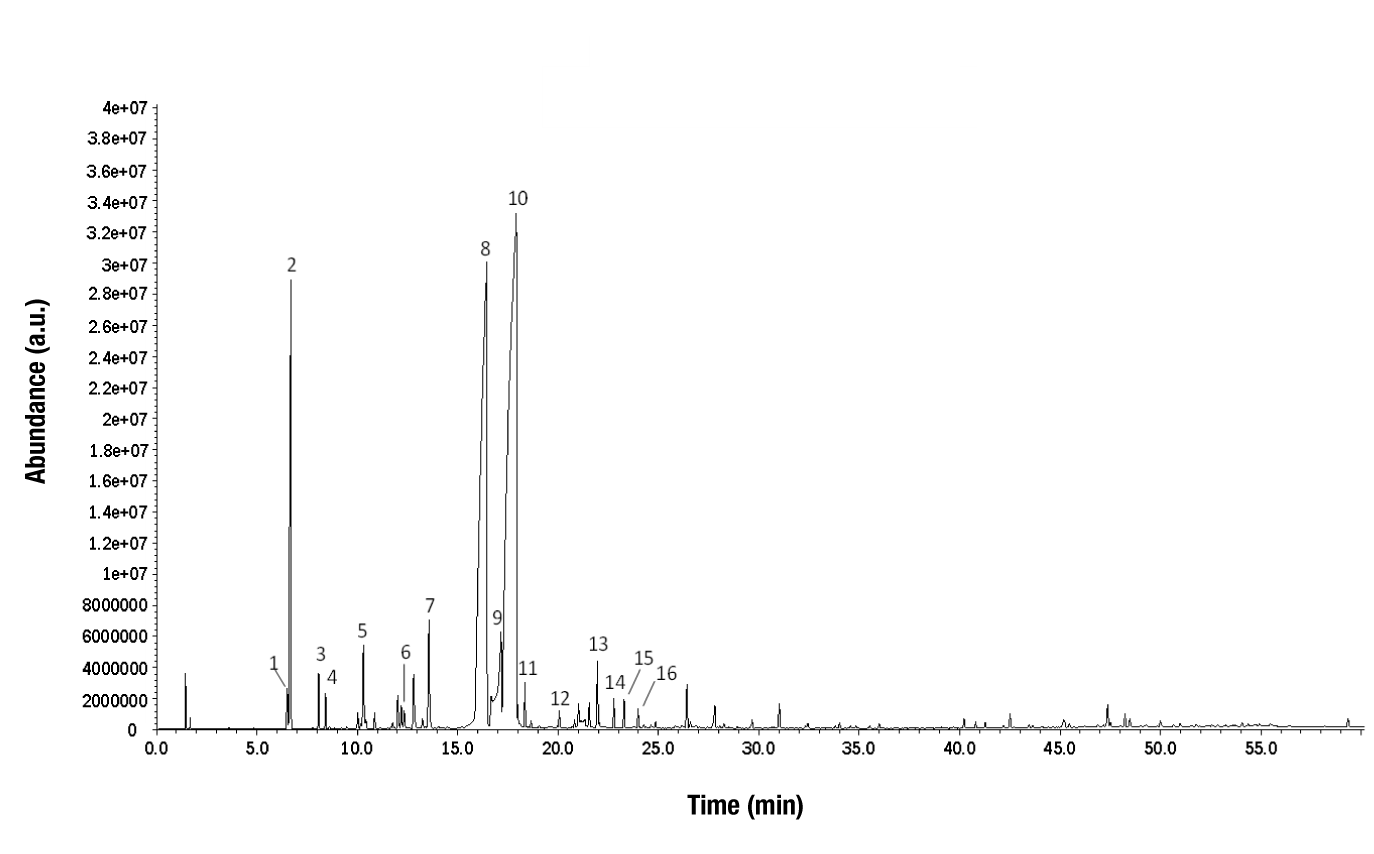
Figure 1
Total ion chromatograms of lemongrass (Cymbopogon citratus) essential oil: 1) 6-methyl-5-hepten-2-one, 2) β-myrcene, 3) cis-β-ocimene, 4) trans-β-ocimene, 5) linalool, 6) citronellal, 7) iso-geranial, 8) neral, 9) geraniol, 10) geranial, 11) 2-undecanone, 12) geranic acid, 13) geranyl acetate, 14) methyleugenol, 15) trans-β-caryophyllene, and 16) trans-α-bergamotene.
Total ion chromatograms of lemongrass (Cymbopogon citratus) essential oil: 1) 6-methyl-5-hepten-2-one, 2) β-myrcene, 3) cis-β-ocimene, 4) trans-β-ocimene, 5) linalool, 6) citronellal, 7) iso-geranial, 8) neral, 9) geraniol, 10) geranial, 11) 2-undecanone, 12) geranic acid, 13) geranyl acetate, 14) methyleugenol, 15) trans-β-caryophyllene, and 16) trans-α-bergamotene.
Table 1
Chemical composition of lemongrass (Cymbopogon citratus) essential oil (LEO) from leaves by steam distillation.
Chemical composition of lemongrass (Cymbopogon citratus) essential oil (LEO) from leaves by steam distillation.
| Retention time (min) | Compound | Relative abundance (%) |
|---|---|---|
| 4.84 | α-Pinene | 0.009 |
| 5.17 | β-Pinene | 0.002 |
| 6.51 | 6-Methyl-5-hepten-2-one | 0.477 |
| 6.71 | β-Myrcene | 6.837 |
| 7.66 | p-Cymene | 0.004 |
| 7.79 | Limonene | 0.021 |
| 7.89 | Eucalyptol | 0.009 |
| 8.08 | cis-β-ocimene | 0.451 |
| 8.43 | trans-β-ocimene | 0.287 |
| 10.31 | Linalool | 1.057 |
| 12.34 | Citronellal | 0.239 |
| 13.57 | iso-geranial | 1.610 |
| 16.45 | β-Citral (neral) | 30.588 |
| 17.16 | Geraniol | 3.773 |
| 17.92 | α-Citral (geranial) | 42.580 |
| 18.36 | 2-Undecanone | 0.471 |
| 20.07 | Geranic acid | 0.209 |
| 21.97 | Geranyl acetate | 0.802 |
| 22.78 | Methyleugenol | 0.319 |
| 23.29 | trans-β-caryophyllene | 0.361 |
| 23.98 | trans-α-bergamotene | 0.229 |
Figure 2 shows the FTIR spectra of pure citral and LEO. The FTIR profile of LEO closely resembled that of pure citral, indicating similar functional groups. In the 3 000(2 800 cm-1 region, citral exhibited three absorption bands attributed to the C(H stretching vibrations of methyl and methylene groups. A prominent band at 1 670 cm-1 corresponds to the carbonyl (C=O) stretch, characteristic of both the geranial and neral isomers (Torres-Vargas et al., 2024). The absorption bands at 1 628 and 839 cm-1 correspond to the C=C stretches of the unsaturated chain of citral (Kundu et al., 2025). Deformation bands of C(H bonds from ring structures and methylene groups were observed between 1 189 and 1 116 cm-1 (Antonioli et al., 2020). The peaks at 1 043 and 893 cm-1 correspond to C(O stretching vibrations and =CH aromatic rings vibrations, respectively (Hamid, 2023).
-
Torres-Vargas et al., 2024Development and characterisation of starch/alginate active films incorporated with lemongrass essential oil (Cymbopogon citratus)Materials Advances, 2024
-
Kundu et al., 2025A molecular imprinted polymer tethered QCM sensor to classify lemongrass essential oilsSensors and Actuators A: Physical, 2025
-
Antonioli et al., 2020Poly(lactic acid) nanocapsules containing lemongrass essential oil for postharvest decay control: In vitro and in vivo evaluation against phytopathogenic fungiFood Chemistry, 2020
-
Hamid, 2023Cymbopogon citratus and Cymbopogon nardus essential oil components - FTIR, chemometrics assessment and identification using GC-MSMalaysian Journal of Analytical Sciences, 2023
Thumbnail
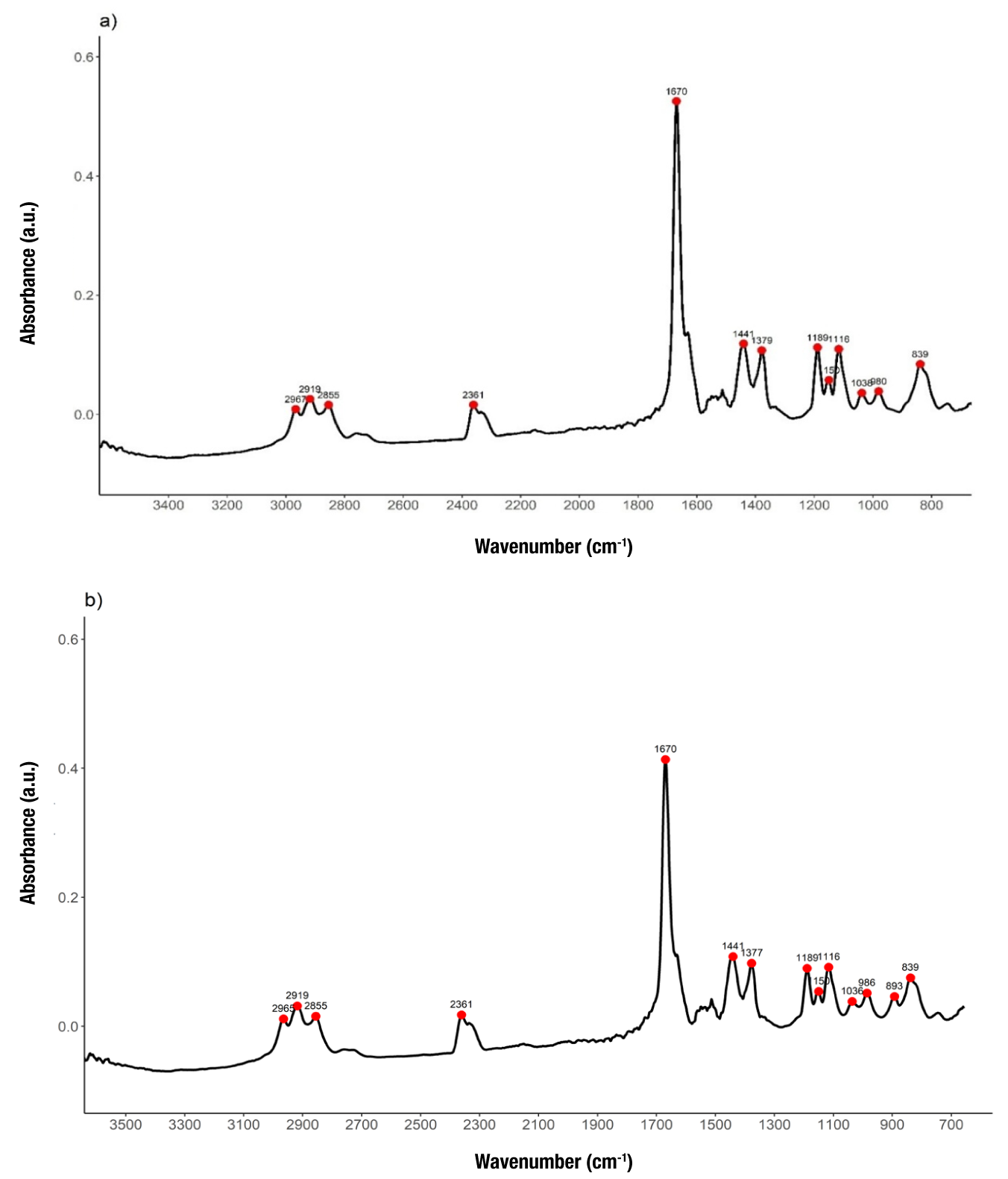
Figure 2
Fourier transform infrared (FTIR) spectra: a) pure citral and b) lemongrass (Cymbopogon citratus) essential oil (LEO).
Fourier transform infrared (FTIR) spectra: a) pure citral and b) lemongrass (Cymbopogon citratus) essential oil (LEO).
Evaluation of the cytotoxic activity of lemongrass essential oil and citral
The cytotoxic activity of plant extracts is usually related to their chemical composition, which is influenced by factors such as plant species, plant part, developmental stage, and extraction method and conditions (Haro-González et al., 2021). Furthermore, cytotoxicity is related to the exposure time and cellular model used. Figure 3 shows the effects of different concentrations of pure citral and LEO on the viability of HT29, Caco-2, and CCD841-CoN cell lines after 48 h. Both compounds showed high cytotoxic activity against HT29 and Caco-2 cells, with IC50 values of 13 and 11 μg∙mL-1, respectively, with pure citral (Figure 3a and 3c), and IC50 values of 35 and 24 μg∙mL-1, respectively, with LEO (Figure 3b and 3d).
-
Haro-González et al., 2021Clove essential oil (Syzygium aromaticum L. Myrtaceae): extraction, chemical composition, food applications, and essential bioactivity for human healthMolecules, 2021
The solution used as positive control showed a significant cytotoxic effect, with an average cell viability of 8 % on HT29 cells and 22 % on Caco-2 cells. Haro-González et al. (2023) mention that the permeability of essential oils on HT29 cells is significantly lower than that observed on Caco-2 cells, probably due to mucin production. Chen et al. (2017) and Mohd-Izham et al. (2019) obtained similar IC50 values (~22 μg∙mL-1) against HT29 cells after 48 h using pure citral. In contrast, the IC50 values observed in our study for LEO against HT29 and Caco-2 cells are lower than those reported in the literature. For instance, Dolghi et al. (2021), Luang-In et al. (2024), and Wisidsri et al. (2019) observed cytotoxic effects against HT29 cell line when LEO was applied for 48 h, with IC50 values of 82.5, 50, and 77.9 μg∙mL-1, respectively. Meanwhile, Bonferoni et al. (2017) mention that commercial LEO has an IC50 value of 40 μg∙mL-1 against Caco-2 cells in less than 48 h of application.
-
Haro-González et al. (2023)Optimization of clove oil nanoemulsions: Evaluation of antioxidant, antimicrobial, and anticancer propertiesColloids and Interfaces, 2023
-
Chen et al. (2017)Antibody-based targeting of CD24 enhances antitumor effect of cetuximab via attenuating phosphorylation of Src/STAT3Biomedicine & Pharmacotherapy, 2017
-
Mohd-Izham et al. (2019)Preparation and characterization of self nano-emulsifying drug delivery system loaded with citraland its antiproliferative effect on colorectal cells in vitroNanomaterials, 2019
-
Dolghi et al. (2021)Phytochemical analysis and in vitro cytotoxic activity against colorectal adenocarcinoma cells of Hippophae rhamnodies L., Cymbopogon citratus (D.C.) Stapf, and Ocimum basilicum L. essential oilsPlants, 2021
-
Luang-In et al. (2024)Phytochemical profile of Cymbopogon citratus (DC.) Stapf lemongrass essential oil from Northeastern Thailand and its antioxidant and antimicrobial attributes and cytotoxic effects on HT-29 human colorectal adenocarcinoma cellsFoods, 2024
-
Wisidsri et al. (2019)Nitric oxide inhibitory and cytotoxic activities of spice essential oilsChiang Mai University Journal of Natural Sciences, 2019
-
Bonferoni et al.
(2017)A novel ionic amphiphilic chitosan derivative as a stabilizer of nanoemulsions: Improvement of antimicrobial activity of Cymbopogon citratus essential oilColloids and Surfaces B: Biointerfaces, 2017
To our knowledge, there is no universally accepted threshold for defining high cytotoxicity; however, Gomide et al. (2013) propose an IC50 below 30 μg∙mL-1 as indicative of high cytotoxic potential, while Bayala et al. (2018) suggest a stricter criterion of IC50 value < 20 μg∙mL-1.
-
Gomide et al.
(2013)The effect of the essential oils from five different Lippia species on the viability of tumor cell linesRevista Brasileira de Farmacognosia, 2013
-
Bayala et al. (2018)Cymbopogon citratus and Cymbopogon giganteus essential oils have cytotoxic effects on tumor cell cultures. Identification of citral as a new putative anti-proliferative moleculeBiochimie, 2018
Thumbnail
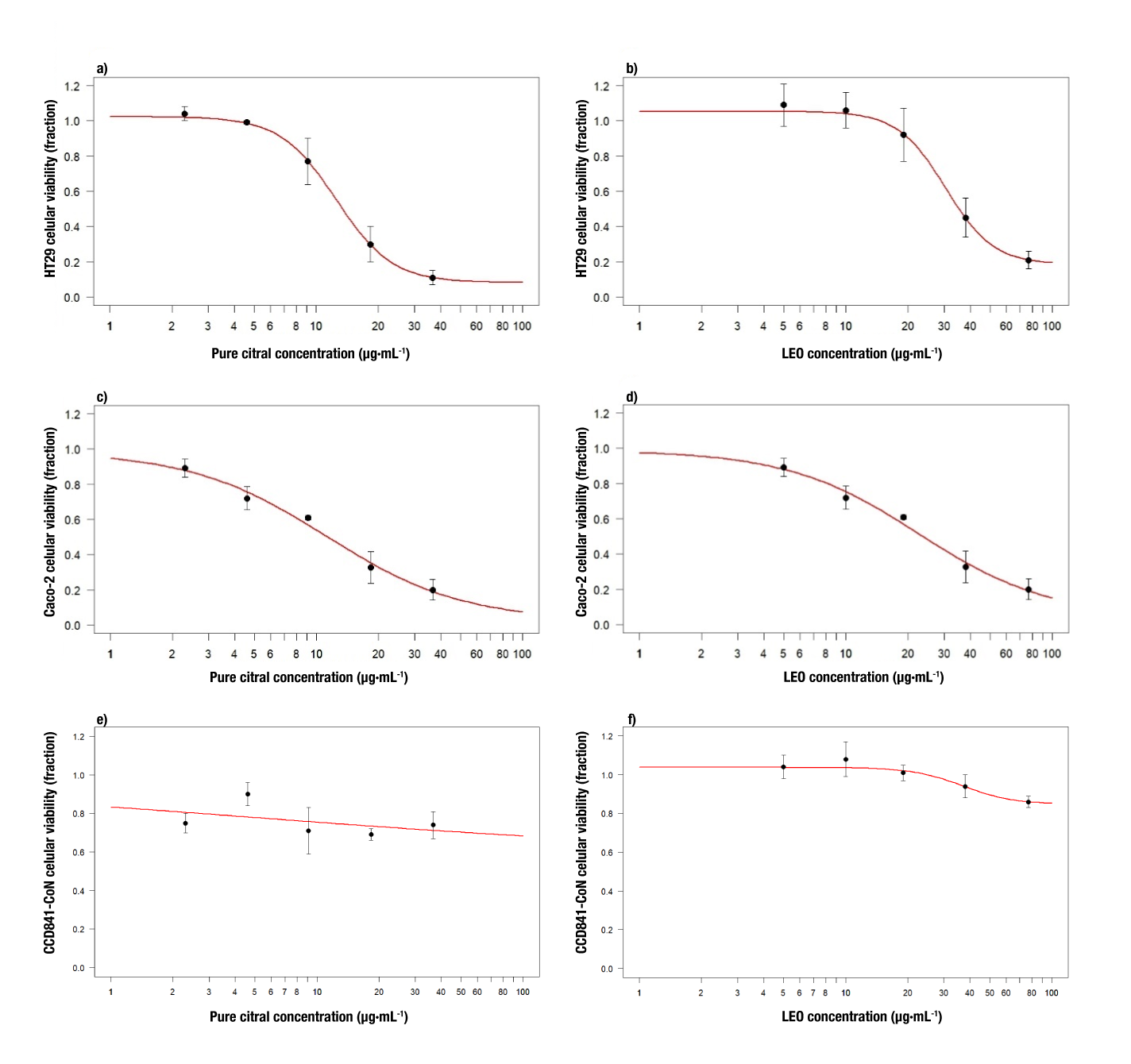
Figure 3
Effects of citral and lemongrass (Cymbopogon citratus) essential oil (LEO) on cell viability after 48 h of treatment: a) citral against HT29, b) LEO against HT29, c) citral against Caco-2, d) LEO against Caco-2, e) citral against CCD841-CoN, and f) LEO against CCD841-CoN. Lines represent the dose-response model fit. The values represent the means of three determinations.
Effects of citral and lemongrass (Cymbopogon citratus) essential oil (LEO) on cell viability after 48 h of treatment: a) citral against HT29, b) LEO against HT29, c) citral against Caco-2, d) LEO against Caco-2, e) citral against CCD841-CoN, and f) LEO against CCD841-CoN. Lines represent the dose-response model fit. The values represent the means of three determinations.
To prove the safe use of pure citral and LEO, their cytotoxic effects were assessed on the CCD841-CoN cell line, which was derived from normal human colon tissue and resembles epithelial cells. The results revealed that citral and LEO have minimal effects on CCD841-CoN viability at the evaluated concentrations, preserving up to 70 % (Figure 3e) and 85 % (Figure 3f) of viable cells after 48 h of exposure, respectively. In contrast, the 5 % DMSO solution had an average cell viability of 46 %. Similar results were reported by Sheikh et al. (2017), who observed that citral did not exhibit cytotoxic effects on CCD841-CoN cells at concentrations below 200 μM after 72 h of exposure, maintaining up to 87 % cell viability.
-
Sheikh et al. (2017)Antiproliferative and apoptosis inducing effects of citral via p53 and ROS-induced mitochondrial-mediated apoptosis in human colorectal HCT116 and HT29 cell linesBiomedicine & Pharmacotherapy, 2017
Recent studies suggest that cancer cells experience elevated oxidative stress, which is associated with oncogenic transformation, changes in metabolic activity, and increased production of reactive oxygen species (ROS). Increased ROS production can induce apoptosis of cancer cells depending on their susceptibility (Pelicano et al., 2004).
-
Pelicano et al., 2004ROS stress in cancer cells and therapeutic implicationsDrug Resistance Updates, 2004
The findings of this study confirm that LEO and its components exhibit cytotoxic effects against colon adenocarcinoma cell lines, so they could be used as chemopreventive agents (Gautam et al., 2014). Although the cytotoxic activity of LEO against cancer cell lines is mainly related to the citral content, other volatile compounds also contribute to its biological activity. Table 2 summarizes previous studies that reported the chemical composition of LEO and its impact on HT29 viability (Dolghi et al., 2021; Luang-In et al., 2024; Wisidsri et al., 2019). A Pearson correlation analysis was performed to evaluate the linear relationship between IC50 values of the HT29 cell line and the percentages of β-myrcene, geraniol, citral, geranial, neral, and the geranial/citral ratio (Figure 4).
-
Gautam et al.,
2014Essential oils and their constituents as anticancer agents: A mechanistic viewBioMed Research International, 2014
-
Dolghi
et al., 2021Phytochemical analysis and in vitro cytotoxic activity against colorectal adenocarcinoma cells of Hippophae rhamnodies L., Cymbopogon citratus (D.C.) Stapf, and Ocimum basilicum L. essential oilsPlants, 2021
-
Luang-In et al.,
2024Phytochemical profile of Cymbopogon citratus (DC.) Stapf lemongrass essential oil from Northeastern Thailand and its antioxidant and antimicrobial attributes and cytotoxic effects on HT-29 human colorectal adenocarcinoma cellsFoods, 2024
-
Wisidsri et al., 2019Nitric oxide inhibitory and cytotoxic activities of spice essential oilsChiang Mai University Journal of Natural Sciences, 2019
Table 2
Literature reports on the chemical composition of lemongrass (Cymbopogon citratus) essential oil (LEO) and its impact on the viability of the HT29 cell line after 48 h of treatment.
Literature reports on the chemical composition of lemongrass (Cymbopogon citratus) essential oil (LEO) and its impact on the viability of the HT29 cell line after 48 h of treatment.
| This work | Luang-in et al. (2024) | Dolghi et al. (2021) | Wisidsri et al. (2019) | |
|---|---|---|---|---|
| β-Myrcene (%) | 6.84 | 5.56 | 1.41 | - |
| Geraniol (%) | 3.77 | 4.29 | 6.71 | - |
| Citral (%) | 73.17 | 79.29 | 66.20 | 92.81 |
| Geranial (%) | 42.58 | 44.52 | 37.23 | 47.91 |
| Neral (%) | 30.59 | 34.72 | 28.91 | 44.90 |
| Geranial/neral ratio | 1.39 | 1.28 | 1.29 | 1.07 |
| IC50 (μg∙mL-1) | 35 | 82.4 | 75.0 | 77.9 |
-
Luang-in et al.
(2024)Phytochemical profile of Cymbopogon citratus (DC.) Stapf lemongrass essential oil from Northeastern Thailand and its antioxidant and antimicrobial attributes and cytotoxic effects on HT-29 human colorectal adenocarcinoma cellsFoods, 2024
-
Dolghi et al. (2021)Phytochemical analysis and in vitro cytotoxic activity against colorectal adenocarcinoma cells of Hippophae rhamnodies L., Cymbopogon citratus (D.C.) Stapf, and Ocimum basilicum L. essential oilsPlants, 2021
-
Wisidsri et al.
(2019)Nitric oxide inhibitory and cytotoxic activities of spice essential oilsChiang Mai University Journal of Natural Sciences, 2019
Thumbnail
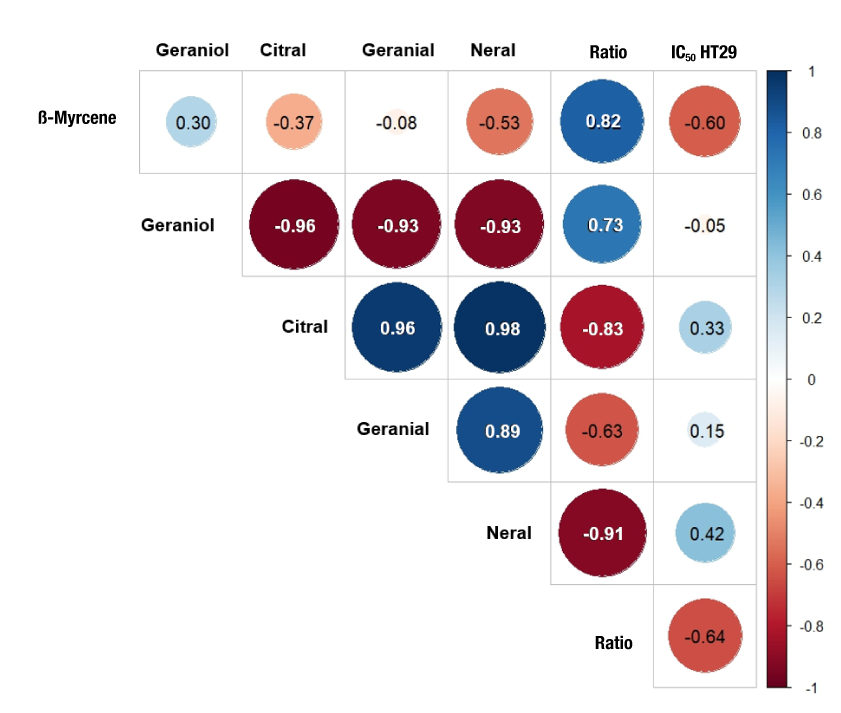
Figure 4
Pearson correlation results between IC50 values from HT29 cell line and the major lemongrass (Cymbopogon citratus) essential oil (LEO) compounds: β-myrcene, geraniol, citral, geranial, neral, and geranial/neral ratio.
Pearson correlation results between IC50 values from HT29 cell line and the major lemongrass (Cymbopogon citratus) essential oil (LEO) compounds: β-myrcene, geraniol, citral, geranial, neral, and geranial/neral ratio.
According to Pearson's correlation analysis, both β-myrcene content and the geranial/neral ratio showed a moderate negative correlation with IC50 values, suggesting that higher levels of these compounds may enhance the cytotoxic activity of LEO. Luang-In et al. (2024) identified several volatile compounds of LEO with cytotoxic potential, including geranial, neral, β-myrcene, geraniol, geranyl acetate, 6-methyl-5-hepten-2-one, and 3,7-dimethyl-3,6-octadienal. However, according to Pearson's correlation values, other compounds ‒such as geraniol, citral, geranial, and neral‒ exhibited weak positive correlations with IC50 values.
-
Luang-In et al.
(2024)Phytochemical profile of Cymbopogon citratus (DC.) Stapf lemongrass essential oil from Northeastern Thailand and its antioxidant and antimicrobial attributes and cytotoxic effects on HT-29 human colorectal adenocarcinoma cellsFoods, 2024
It is important to mention that the limited data available in the literature on the relationship between LEO volatile compounds and cytotoxic activity against HT29 cells restricts the strength of these findings. Nevertheless, Zeng et al. (2015) reported that micelles loaded with geranial were seven times more cytotoxic than those containing neral when tested on 4T1 breast cancer cells after 72 h of exposure.
-
Zeng et al. (2015)Formulation, characterization, and antitumor properties of trans- and cis-citral in the 4T1 breast cancer xenograft mouse modelPharmaceutical Research, 2015
Although numerous studies have highlighted the cytotoxic effects of natural extracts on cancer cells, most have focused on cancer models, and only a few have evaluated the safety of these phytochemical mixtures in normal cells. One of the main challenges in cancer therapy is achieving selectivity toward cancer cells while sparing healthy tissues. Therefore, the results shown in this work offer valuable insight into the potential of LEO as a chemopreventive agent.
Conclusions
The results confirm that the lemongrass (C. citratus) essential oil extracted by steam distillation is mainly composed of citral (73.17 %: 42.58 and 30.59 % of geranial and neral, respectively) and β-myrcene (6.84 %). Pure citral and lemongrass essential oils exhibit cytotoxic effects against HT29 and Caco-2 colon cancer cells after 48 h of treatment, but do not affect the viability of normal CCD841-CoN colon cells, suggesting selectivity toward cancer cells. Overall, the findings support the potential use of lemongrass essential oil as a natural chemopreventive agent against colon adenocarcinoma cells.
References
- Adukwu, E. C., Bowles, M., Edwards-Jones, V., & Bone, H. (2016). Antimicrobial activity, cytotoxicity and chemical analysis of lemongrass essential oil (Cymbopogon flexuosus) and pure citral. Applied Microbiology and Biotechnology, 100(22), 9619-9627. https://doi.org/10.1007/s00253-016-7807-y Links
- Alabrahim, O. A. A., Lababidi, J. M., Fritzsche, W., & Azzazy, H. M. (2024). Beyond aromatherapy: can essential oil loaded nanocarriers revolutionize cancer treatment?. Nanoscale Advances, 6(22), 5511-5562. https://doi.org/10.1039/D4NA00678J Links
- Antonioli, G., Fontanella, G., Echeverrigaray, S., Longaray-Delamare, A. P., Fernandes-Pauletti, G., & Barcellos, T. (2020). Poly(lactic acid) nanocapsules containing lemongrass essential oil for postharvest decay control: In vitro and in vivo evaluation against phytopathogenic fungi. Food Chemistry, 326, 126997. https://doi.org/10.1016/j.foodchem.2020.126997 Links
- Bayala, B., Bassole, I. H. N., Maqdasy, S., Baron, S., Simpore, J., & Lobaccaro, J. M. A. (2018). Cymbopogon citratus and Cymbopogon giganteus essential oils have cytotoxic effects on tumor cell cultures. Identification of citral as a new putative anti-proliferative molecule. Biochimie, 153, 162-170. https://doi.org/10.1016/j.biochi.2018.02.013 Links
- Bonferoni, M. C., Sandri, G., Rossi, S., Usai, D., Liakos, I., Garzoni, A., Fiamma, M., Zanetti, S., Athanassiou, A., Caramella, C., & Ferrari, F. (2017). A novel ionic amphiphilic chitosan derivative as a stabilizer of nanoemulsions: Improvement of antimicrobial activity of Cymbopogon citratus essential oil. Colloids and Surfaces B: Biointerfaces, 152, 385-392. https://doi.org/10.1016/j.colsurfb.2017.01.043 Links
- Chen, Z., Wang, T., Tu, X., Xie, W., He, H., Wang, M., & Zhang, J. (2017). Antibody-based targeting of CD24 enhances antitumor effect of cetuximab via attenuating phosphorylation of Src/STAT3. Biomedicine & Pharmacotherapy, 90, 427-436. https://doi.org/10.1016/j.biopha.2017.03.094 Links
- Cortes-Torres, A. G., López-Castillo, G. N., Marín-Torres, J. L., Portillo-Reyes, R., Luna, F., Baca, B. E., Sandoval-Ramírez, J., & Carrasco-Carballo, A. (2023). Cymbopogon citratus essential oil: extraction, GC-MS, phytochemical analysis, antioxidant activity, and in silico molecular docking for protein targets related to CNS. Current Issues in Molecular Biology, 45(6), 5164-5179. https://doi.org/10.3390/cimb45060328 Links
- Dolghi, A., Buzatu, R., Dobrescu, A., Olaru, F., Popescu, G. A., Marcovici, I., Pinzaru, I., Navolan, D., Cretu, O. M., Popescu, I., & Dehelean, C. A. (2021). Phytochemical analysis and in vitro cytotoxic activity against colorectal adenocarcinoma cells of Hippophae rhamnodies L., Cymbopogon citratus (D.C.) Stapf, and Ocimum basilicum L. essential oils. Plants, 10(12), 2752. https://doi.org/10.3390/plants10122752 Links
- Du, X., Zhang, M., Wang, S., Li, J., Zhang, J., & Liu, D. (2024). Ethnopharmacology, chemical composition and functions of Cymbopogon citratus. Chinese Herbal Medicines, 16(3), 358-374. https://doi.org/10.1016/j.chmed.2023.07.002 Links
- Falcon, R. M., Fahrenbach, S., Feliciano, J., Flores, B. M., Dida-Agun, A., Domingo, E. J., Domingo, F. K., Duran, H. E., Dungala, D., Dychiao, G. R., Evangelista, P. E., Facon, H. E., FlorCruz, F. E., Florita, M. H., Giron, M. S., & Yabes, A. (2024). Antifungal properties of Cymbopogon citratus (DC.) Stapf-A scoping review. South African Journal of Botany, 170, 425-442. https://doi.org/10.1016/j.sajb.2024.05.042 Links
- Garzoli, S., Alarcón-Zapata, P., Seitimova, G., Alarcón-Zapata, B., Martorell, M., Sharopov, F., Fokou, P. V. T., Dize, D., Yamthe, L. R. T., Les, F., Cásedas, G., López, V., Iriti, M., Rad, J. S., Gürer, E. S., Calina, D., Pezzani, R., & Vitalini, S. (2022). Natural essential oils as a new therapeutic tool in colorectal cancer. Cancer Cell International, 22(1), 407. https://doi.org/10.1186/s12935-022-02806-5 Links
- Gautam, N., Mantha, A. K., & Mittal, S. (2014). Essential oils and their constituents as anticancer agents: A mechanistic view. BioMed Research International, 2014, 1-23. https://doi.org/10.1155/2014/154106 Links
- Gomide, M. S., Lemos, F. O., Lopes, M. T. P., Alves, T. M. A., Viccini, L. F., & Coelho, C. M. (2013). The effect of the essential oils from five different Lippia species on the viability of tumor cell lines. Revista Brasileira de Farmacognosia, 23(6), 895-902. https://doi.org/10.1590/S0102-695X2013000600006 Links
- Hamid, H. A. (2023). Cymbopogon citratus and Cymbopogon nardus essential oil components - FTIR, chemometrics assessment and identification using GC-MS. Malaysian Journal of Analytical Sciences, 27(3), 641-652. https://mjas.analis.com.my/mjas/v27_n3/pdf/Abd%20Hamid_27_3_16.pdf Links
- Haro-González, J. N., Castillo-Herrera, G. A., Martínez-Velázquez, M., & Espinosa-Andrews, H. (2021). Clove essential oil (Syzygium aromaticum L. Myrtaceae): extraction, chemical composition, food applications, and essential bioactivity for human health. Molecules, 26(21), 6387. https://doi.org/10.3390/molecules26216387 Links
- Haro-González, J. N., Schlienger-de Alba, B. N., Martínez-Velázquez, M., Castillo-Herrera, G. A., & Espinosa-Andrews, H. (2023). Optimization of clove oil nanoemulsions: Evaluation of antioxidant, antimicrobial, and anticancer properties. Colloids and Interfaces, 7(4), 64. https://doi.org/10.3390/colloids7040064 Links
- International Organization for Standardization [ISO] (1974). Oil of lemongrass (Cymbopogon citratus). ISO 3217:1974(En). International Organization for Standardization. https://www.iso.org/obp/ui/#iso:std:iso:3217:ed-1:v1:en Links
- Karami, F., Osanloo, M., Alipanah, H., Zarenezhad, E., Moghimi, F., & Ghanbariasad, A. (2024). Comparison of the efficacy of alginate nanoparticles containing Cymbopogon citratus essential oil and citral on melanoma and breast cancer cell lines under normoxic and hypoxic conditions. BMC Complementary Medicine and Therapies, 24(1), 372. https://doi.org/10.1186/s12906-024-04673-1 Links
- Khasanah, L. U., Ariviani, S., Purwanto, E., & Praseptiangga, D. (2025). Chemical composition and citral content of essential oil of lemongrass (Cymbopogon citratus (DC.) Stapf) leaf waste prepared with various production methods. Journal of Agriculture and Food Research, 19, 101570. https://doi.org/10.1016/j.jafr.2024.101570 Links
- Kiełtyka-Dadasiewicz, A., Esteban, J., & Jabłońska-Trypuć, A. (2024). Antiviral, antibacterial, antifungal, and anticancer activity of plant materials derived from Cymbopogon citratus (DC.) Stapf Species. Pharmaceuticals, 17(6), 705. https://doi.org/10.3390/ph17060705 Links
- Kundu, S., Gangopadhyay, D., Banerjee, M. B., Nag, S., Pramanik, P., & Roy, R. B. (2025). A molecular imprinted polymer tethered QCM sensor to classify lemongrass essential oils. Sensors and Actuators A: Physical, 383, 116234. https://doi.org/10.1016/j.sna.2025.116234 Links
- Luang-In, V., Saengha, W., Karirat, T., Senakun, C., & Siriamornpun, S. (2024). Phytochemical profile of Cymbopogon citratus (DC.) Stapf lemongrass essential oil from Northeastern Thailand and its antioxidant and antimicrobial attributes and cytotoxic effects on HT-29 human colorectal adenocarcinoma cells. Foods, 13(18), 2928. https://doi.org/10.3390/foods13182928 Links
- Madi, Y. F., Choucry, M. A., Meselhy, M. R., & El-Kashoury, E. S. A. (2021). Essential oil of Cymbopogon citratus cultivated in Egypt: seasonal variation in chemical composition and anticholinesterase activity. Natural Product Research, 35(21), 4063-4067. https://doi.org/10.1080/14786419.2020.1713125 Links
- Marongiu, B., Piras, A., Porcedda, S., & Tuveri, E. (2006). Comparative analysis of the oil and supercritical CO2 extract of Cymbopogon citratus Stapf. Natural Product Research, 20(5), 455-459. https://doi.org/10.1080/14786410500277837 Links
- Mohd-Izham, M. N., Hussin, Y., Aziz, M. N. M., Yeap, S. K., Rahman, H. S., Masarudin, M. J., Mohamad, N. E., Abdullah, R., & Alitheen, N. B. (2019). Preparation and characterization of self nano-emulsifying drug delivery system loaded with citraland its antiproliferative effect on colorectal cells in vitro. Nanomaterials, 9(7), 1028. https://doi.org/10.3390/nano9071028 Links
- Mukarram, M., Choudhary, S., Khan, M. A., Poltronieri, P., Khan, M. A., Ali, J., Kurjak, D., & Shahid, M. (2021). Lemongrass essential oil components with antimicrobial and anticancer activities. Antioxidants, 11(1), 20. https://doi.org/10.3390/antiox11010020 Links
- Pelicano, H., Carney, D., & Huang, P. (2004). ROS stress in cancer cells and therapeutic implications. Drug Resistance Updates, 7(2), 97-110. https://doi.org/10.1016/j.drup.2004.01.004 Links
- Sheikh, B. Y., Sarker, M. R., Kamarudin, M. N. A., & Mohan, G. (2017). Antiproliferative and apoptosis inducing effects of citral via p53 and ROS-induced mitochondrial-mediated apoptosis in human colorectal HCT116 and HT29 cell lines. Biomedicine & Pharmacotherapy, 96, 834-846. https://doi.org/10.1016/j.biopha.2017.10.038 Links
- Torres-Vargas, O. L., Galeano-Loaiza, Y. V., & Rodríguez-Agredo, I. A. (2024). Development and characterisation of starch/alginate active films incorporated with lemongrass essential oil (Cymbopogon citratus). Materials Advances, 5(23), 9417-9427. https://doi.org/10.1039/D4MA00608A Links
- Trang, D. T., Van Hoang, T. K., Nguyen, T. T. M., Van Cuong, P., Dang, N. H., Dang, H. D., Quang, T. N., & Dat, N. T. (2020). Essential oils of lemongrass (Cymbopogon citratus Stapf) induces apoptosis and cell cycle arrest in A549 lung cancer cells. BioMed Research International, 2020(1), 5924856. https://doi.org/10.1155/2020/5924856 Links
- Vyhlídalová, B., Ondrová, K., & Zůvalová, I. (2025). Dietary monoterpenoids and human health: Unlocking the potential for therapeutic use. Biochimie, 228, 89-100. https://doi.org/10.1016/j.biochi.2024.09.002 Links
- Wisidsri, N., Thungmungmee, S., & Khobjai, W. (2019). Nitric oxide inhibitory and cytotoxic activities of spice essential oils. Chiang Mai University Journal of Natural Sciences, 18(3), 373-392. https://doi.org/10.12982/CMUJNS.2019.0026 Links
- Zeng, S., Kapur, A., Patankar, M. S., & Xiong, M. P. (2015). Formulation, characterization, and antitumor properties of trans- and cis-citral in the 4T1 breast cancer xenograft mouse model. Pharmaceutical Research, 32, 2548-2558. https://doi.org/10.1007/s11095-015-1643-0 Links