




 texto en
  Inglés (pdf)
 Artículo en XML
 Referencias del artículo
 Traducción automática
 Enviar artículo por email
 Citado por SciELO
  Similares en
SciELO
Similares en
SciELO 
 Permalink

Introduction
Fuelwood is one of the oldest and most traditionally used bioenergy resources by humans (Guo et al., 2015); its main use is as fuel for food preparation, home heating and charcoal or energy production for other activities (e.g., agro-industry or artisanal activities; Masera et al., 2015). Fuelwood, together with other biomass-derived products, remains the main source of renewable energy and accounts for 13 % of global energy consumption (International Energy Agency [IEA], 2023). This figure suggests the current importance of this type of energy resource, mainly in rural areas of countries in the tropical region, where fuelwood is more affordable and influences the well-being and livelihoods of families (Calvo et al., 2021; Schilmann et al., 2021).
In Mexico, firewood is one of the most important traditional energy sources compared to fossil fuel energy. In recent decades, firewood consumption has been reduced due to the combined use with liquefied petroleum gas (LP) (Lagunes-Díaz et al., 2015). Despite this, firewood remains important, and it is estimated that 67 % of rural households still use firewood for cooking (Schilmann et al., 2021). Projections indicate that the use of this energy resource will persist for much of the Mexican population (Serrano-Medrano et al., 2019). Patterns of use in the domestic sector are heterogeneous and are influenced by several factors, for which various hypotheses have been proposed. For example, the magnitude of fuelwood used depends on the socioeconomic context of families, the availability of the resource in ecosystems, and species preferences for its cultural value and energy efficiency (Bello-Román et al., 2023; Cruz et al., 2020; Salgado-Terrones et al., 2017; Serrano-Medrano et al., 2019).
The use of firewood is also relevant outside the domestic context and has been little explored in studies that evaluate consumption patterns. In some communities, firewood is an input that generates economic resources and determines the subsistence strategies of families; for example, when firewood is the primary energy source in economic activities such as pottery, the production of clay products (bricks) or in restaurants or traditional or tourist diners. The use of firewood in many cases substitutes other energy resources such as LP gas, because it is cheaper and more affordable, mainly when there is access to forests that provide this natural resource (Lagunes-Díaz et al., 2015). In Lagunas de Montebello National Park (LMNP), firewood is an essential resource for rural families and communities because it is linked to one of the economic activities: food supply in tourist diners. These consist of rustic infrastructure built of wood and tin roofs, in some cases without walls, where food is sold to tourists visiting the LMNP's lagoons. There is no information on the characteristics of the families' income from this economic activity, although it is possible that it represents one of the most important sources of income.
The LMNP is one of the parks of greatest tourist interest in Mexico. The main attraction is its natural scenery characterized by a group of colorful lagoons (Alcocer et al., 2023). Tours to the lagoons are complemented with accommodation services and food tasting, usually typical of the region. In the diners’ kitchens the use of firewood is a traditional practices in the communities located around the LMNP; however, it is carried out in a region with biodiversity conservation problems such as high rates of deforestation, land use change (mainly for agriculture), forest fires, as well as contamination of the groundwater and lagoon system due to fertilizers, pesticides, heavy metals, and organic matter (Alcocer et al., 2023). These anthropogenic disturbances have reduced the original forest cover, with implications for the availability of firewood as an energy resource. Also, this problematic is related to territorial conflicts of land use, limitations in the use of natural resources in protected natural areas, and low levels of social welfare of the communities surrounding the LMNP (Pavon & Piña, 2018). In such a context and considering that there is still limited knowledge on energy resource use (Masera et al., 2015), the objective of the present study was to determine the consumption patterns and preferences for firewood use in tourist diners in Lagunas de Montebello National Park, Mexico. It is expected that the information generated will facilitate the development of social projects, strengthen the capacities of families in their economic activity and help in the conservation of forests and natural resources.
Materials and Methods
Study area
The study was carried out in the LMNP in southeastern Mexico (Figure 1). The park covers an area of 6 425 ha and is characterized by a hydrological complex consisting of 50 karstic lakes with different shades, making it one of Mexico's most important natural attractions (Alcocer et al., 2023). This hydrological setting is interspersed with forested landscapes dominated by coniferous forests and remnants of cloud forests. The LMNP is in regions of high biodiversity and water importance, known as the Región Terrestre Prioritaria El Momón-Montebello and Región Hidrológica Prioritaria Comitán-Lagunas de Montebello (Alcocer et al., 2023).
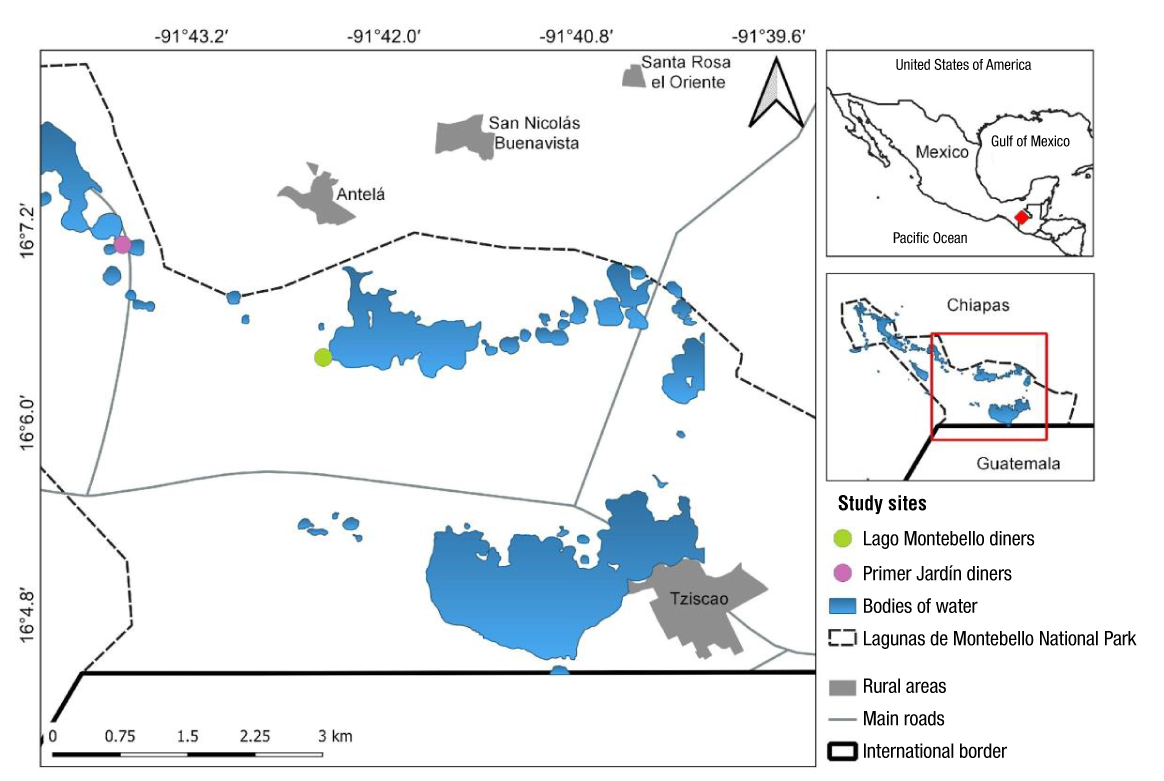
Figure 1 Study area and location of the areas where firewood consumption samples were taken in Lagunas de Montebello National Park, Mexico.
Economic and productive activities in the study area have changed. Originally, they were based on subsistence agriculture, primarily maize, beans, and coffee. Recently, the main economic driver in some communities surrounding the LMNP has become ecotourism services (Mejía & Peña, 2015; Pavon & Piña, 2018). The LMNP is a territory composed of areas owned by the nation, private properties, and, to a greater extent, ejido lands.
Study sites
At least 11 controlled access points have been identified for observation of the lagoons, which are known as rest areas. Most of these areas provide tourist services such as the sale of traditional food (Sagrado Pavón, 2022). For the purposes of this study, two tourist areas were selected, known as Montebello and Primer Jardin (Figure 1). In both areas, authorization from the committee that coordinates these places was obtained; however, direct consent of the people who provide services was necessary. For logistical reasons, it was not possible to incorporate other areas/diners due to the distance between them and the difficulty in obtaining authorization. At Primer Jardín, five active diners were sampled out of a total of 21, each with two cooks, usually mothers and daughters. At Montebello, five active diners were sampled out of a total of 15, generally with one cook.
In each parador there is an organization that groups and coordinates the diners. In Primer Jardín, according to information from 2022, there are 21 kitchens shared among 50 women. The kitchens are rotated throughout the year in an equitable manner. During the low season (presence of fewer tourists) only five places are used, and groups alternate every week. During high season (Easter, summer and year-end vacations) all the diners are used: each person is assigned to at least one high season. Each diner consists of a simple wooden structure, tin roof, stove, tables, chairs and all the tools used by each cook. The diners are not separated from each other and are aligned so that the tourist has the possibility of choosing the diners of his preference.
At the Montebello parador, the organization of the diners is different; there are 15 food establishments, and all operate year-round. This place involves 16 women, and the kitchens rotate between just two, one for each season. At this location, one person holds the right to offer the service but may also choose to rent out the diner. Infrastructure is also distinct-although this food establishments are made of wood and metal sheets; they have a specific section for the kitchen and another for customers.
Five diners were selected in each parador; more were not included due to the logistical impossibility of evaluating firewood in all of them; however, sampling was not always carried out, due to the rotation of the women, because authorization for sampling was not obtained, or because diners were not open on that day. Finally, to incorporate the variation in firewood consumption during the year, sampling was carried out in the low and high seasons, alternating between midweek and weekend days.
Interviews
Perceptions on firewood consumption were determined through semi-structured interviews (Albuquerque et al., 2014). In the two areas, diners are attended by 64 women, of whom 18 could be interviewed under authorization and consent. The interviews included personal information, possession of family or husband's work plots and firewood use such as origin, availability, price and preferences of tree species differentiated by common name.
Evaluation of firewood
Firewood consumption per diner was evaluated daily. In each diner, before starting daily activities, firewood was separated according to common name or morphospecies (Figure 2) with the help of the cooks and field guides. For taxonomic identification, field trips were made, and herbarium samples were collected for later determination in an itinerant reference catalog consisting of dry leaf samples attached to a notebook. Field trips were made with the same field guides who assisted in the separation of logs. This allowed the identification of approximately 80 % of the morphospecies to species or genus level. In cases where taxonomic identification was not possible, a morphospecies was assigned.
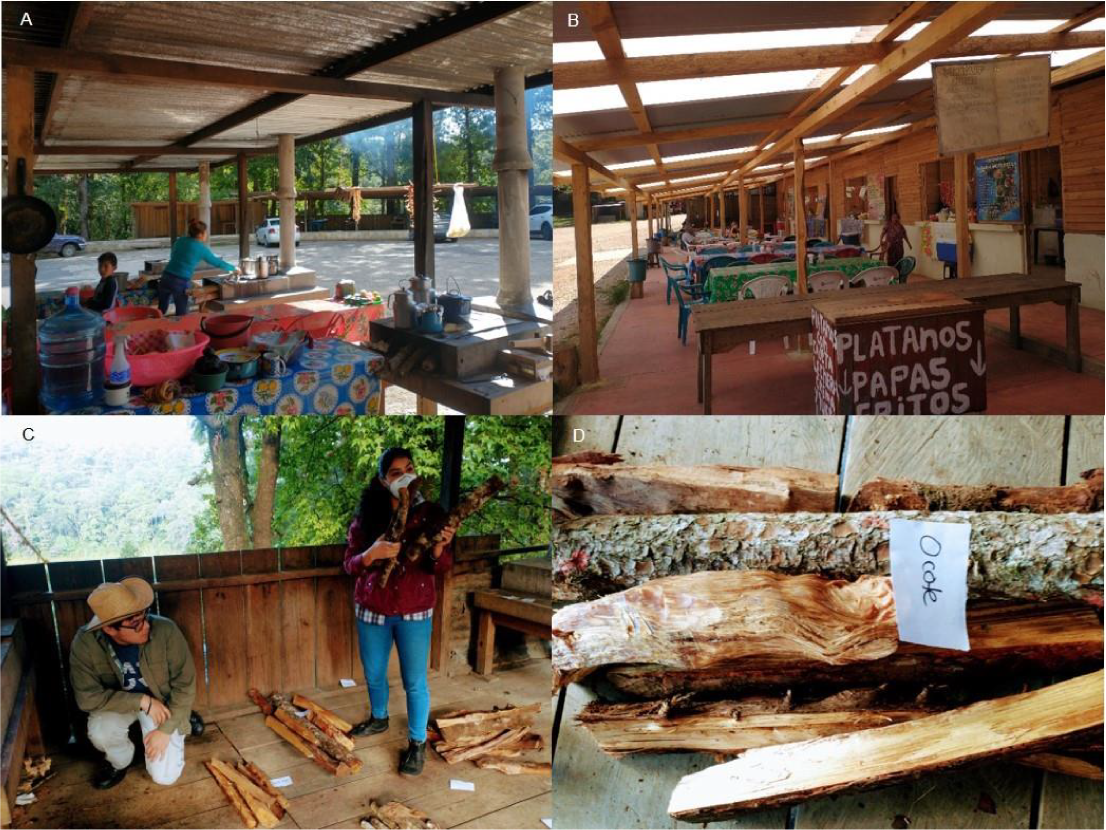
Figure 2 View of the kitchens at Primer Jardin (A) and Montebello (B), separation of logs (C) and logs of Pinus sp.1 (D) known as ocote in tourist diners in Lagunas de Montebello National Park, Mexico.
Once the logs were separated, they were weighed with a WH-C Series digital hanging scale (3 g error). At the end of the day's activity, we returned to each diner, separated the remaining firewood again and reweighed it, differentiating by common name or morphospecies. The biomass used per day for each species and in total was obtained with the difference of the initial weight minus the final weight. The information on daily firewood consumption per diner was considered as a sampling unit (68 in total) obtained between October 2021 and May 2022.
Analysis
Based on the information obtained from the interviews, qualitative variables were established to facilitate data analysis. These were exploratory using contingency tables. Student’s t-tests (p < 0.05) were conducted to determine differences in biomass firewood consumption patterns between low and high seasons, as well as between weekdays and weekends. The Shapiro-Wilk test was used to assess the normality of the data distribution. To verify the homogeneity of variance, Levene’s test (p < 0.05) was applied. If a lack of normality or homogeneity of variance was detected, a non-parametric test would be applied. All analyses were performed using the R software (R Core Team, 2023).
Preferences in the use of firewood were determined using two complementary approaches. First, a relative use value (RUV) modified from Castellanos-Camacho (2011) was generated. The index considers the relative frequency of each species in each sampling unit (diner) relative to the total number of samplings conducted (N = 68). The formula is RUV is = ∑Frequency of species i / Frequency of the most used species. The values of V RUV is vary between 0 and 1, with 1 being the species with the highest use value and, therefore, the most appreciated for its usefulness, while 0 is the species is the least useful (Castellanos-Camacho, 2011).
In the second approach, a relative importance index (RII) was generated that considers two attributes of fuelwood use: relative biomass and relative frequency. The first refers to the contribution of biomass weighed for each species in relation to the total. The total sum is 100; the most important species will be those with the highest values of this total. Relative frequency refers to the number of times or occurrence of a species in the samples (N = 68). The sum total of the values for both attributes was 200.
Results
Perception of firewood use
Of the people interviewed, 50 % own land or plots of land. All of them indicated that they buy firewood to supply themselves and use it in the diners; however, 67 % supplement with firewood collected from their plots of land, backyards, or that occasionally falls from trees. All expressed the difficulty in finding firewood, the causes were variable, but included distance to collect firewood, difficulty in obtaining good firewood (in reference to chiquinib [Quercus sapotifolia Liebm.]) and that they can no longer collect it from the areas subject to conservation, due to community agreements. In the responses, 38 % referred to the fact that firewood is no longer available.
The monthly firewood cost is on average 1 408.33 ± 836.7 MXN, with values ranging between 500.00 and 4 000.00 MXN. The cost varies depending on species and season; unfortunately, it was not possible to determine the specific cost of each tree species and the variations throughout the year. People mentioned five key characteristics when buying firewood: dried firewood (67 %), firewood that produces embers (50 %), 'solid' or resistant firewood (30 %), flame capacity (22 %), and duration of complete firewood burning (17 %). In terms of firewood preferences, a total of 16 species were identified, with the most notable being chiquinib (67 %), oak (50 %), ocote (22 %), and sweetgum (22 %). The remaining species were mentioned by just one or two respondents. The respondents indicated that the firewood trade primarily based on pine species (Pinus sp. 1), chiquinib (Q. sapotifolia), and sweetgum (Liquidambar styraciflua L.).
Consumption patterns and biomass measurement
A total of 38 species/morphospecies of trees used as firewood were recorded; 21 were identified at the species level, nine at the genus level, and eight were classified as morphospecies. These species belong to 20 botanical families (Table 1), the most important ones in terms of total biomass used were Q. sapotifolia (357.3 kg), Pinus sp. 1 (246.1 kg), and L. styraciflua (212.16 kg), which together represent 57 % of the biomass measured. On average, the number of species used per diner was 3.8 ± 2.2 daily, although there was one instance where the maximum was 14 species; 80 % of the diners used between one and four species. Kitchens with more than five species were those where firewood was supplemented with firewood collected from their yards or plots in addition to purchased firewood. A total biomass of 1 434.56 kg was weighed over the course of the study. On average, daily firewood used per diner was 21.1 ± 10.12 kg∙day-1, with a minimum of 1.9 kg∙day-1 (on a day with no sales) and a maximum of 44.2 kg∙day-1. No significant differences in consumption were found for any day of the week compared to the weekend (20.6 ± 10.0 kg∙day-1 vs. 21.9 ± 10.4 kg∙day-1, respectively; Student’s t = -0.51, p = 0.6121). However, significant differences were observed when comparing high season and low season (t = 2.4478, p = 0.018), with higher usage in the high season. (25.3 ± 10.0 kg∙day-1 vs. 19.1 ± 9.6 kg∙day-1).
Table 1 Relative Use Value (RUV) of the species used as firewood at two rest areas in Lagunas de Montebello National Park, Chiapas, Mexico. The values range from 0 to 1, where 1 represents the maximum use value.
| Family | Species / Morphospecies | Common name | UVI |
|---|---|---|---|
| Pinaceae | Pinus sp. 1 | Ocote, ocote colorado | 1.00 |
| Fagaceae | Quercus sapotifolia Liebm. | Chiquinib | 0.60 |
| Fagaceae | Quercus sp. 1 | Encino, roble | 0.44 |
| Altingiaceae | Liquidambar styraciflua L. | Liquidámbar | 0.40 |
| Cupressaceae | Cupressus lusitanica Mill. | Ciprés | 0.22 |
| Clethraceae | Clethra sp. | Sapotillo | 0.20 |
| Fabaceae | Inga oerstediana Benth. | Chalum | 0.16 |
| Euphorbiaceae | Alchornea latifolia Sw. | Palo blanco | 0.13 |
| Celastraceae | Crossopetalum parviflorum (Hemsl.) Lundell | Palo seda | 0.13 |
| Fagaceae | Quercus sp. 2 | Chiquinib colorado | 0.13 |
| Pinaceae | Pinus teocote Schltdl. & Cham. | Ocote colorado | 0.11 |
| Myricaceae | Morella cerifera (L.) Small | Cera, ceramonte | 0.09 |
| Rubiaceae | Coffea arabica L. | Café | 0.07 |
| Myrtaceae | Psidium guajava L. | Guayabo | 0.07 |
| Not determined | Morphospecies 3 | Cosanté | 0.05 |
| Lauraceae | Persea americana Mill. | Aguacate | 0.05 |
| Anacardiaceae | Toxicodendron striatum Kuntze | Palo brujo | 0.05 |
| Actinidiaceae | Saurauia madrensis B. T. Keller & Breedlove | Moquillo | 0.05 |
| Fabaceae | Acacia sp. | Espino | 0.03 |
| Rosaceae | Eriobotrya japonica (Thunb.) Lindl. | Níspero | 0.03 |
| Malvaceae | Heliocarpus donnellsmithii Rose | Corcho | 0.03 |
| Lamiaceae | Aegiphila monstrosa Moldenke | Mayté | 0.02 |
| Lamiaceae | Aegiphila sp. | Campanita | 0.02 |
| Clusiaceae | Clusia guatemalensis Hemsl. | Palo memela | 0.02 |
| Fabaceae | Diphysa sp. | Atsanté | 0.02 |
| Not determined | Morphospecies 4 | Crisanté | 0.02 |
| Not determined | Morphospecies 5 | 0.02 | |
| Not determined | Morphospecies 6 | 0.02 | |
| Not determined | Morphospecies 7 | 0.02 | |
| Euphorbiaceae | Alchornea latifolia Sw. | Palito bojo | 0.02 |
| Myrtaceae | Eugenia sp. | Palo chite | 0.02 |
| Not determined | Morphospecies 8 | Palo flojo | 0.02 |
| Chloranthaceae | Hedyosmum mexicanum C. Cordem. | Palo muy | 0.02 |
| Not determined | Morphospecies 1 | 0.02 | |
| Not determined | Morphospecies 2 | 0.02 | |
| Myrtaceae | Eucalyptus rudis Endl. | Alcanfor | 0.02 |
| Primulaceae | Myrsine coriacea (Sw.) R. Br. ex Roem. & Schult. | Caña de ardilla | 0.02 |
| Pinaceae | Pinus sp. 2 | Pino | 0.02 |
Preferences for use
According to the RUVis analysis, the most important species/morphospecies is a pine (Pinus sp. 1), which reported the maximum value (RUVis = 1). This species was recorded in 55 samples (80 % of the total). It is followed by Q. sapotifolia (RUVis = 0.6), Quercus sp. 1 (0.44), L. styraciflua (0.4), and Cupressus lusitanica Mill. (0.22) (Figure 3A). In the importance analysis, the RII is similar to that obtained in the RUVis, with Pinus sp. 1 (RII = 39.78) being the most important species, followed by Q. sapotifolia (38.93), L. styraciflua (23.84), Quercus sp. 1 (22.62), and C. lusitanica (13.77) (Figure 3B; Table 2). Although both analyses agree that these five species are of the greatest interest as an energy resource, the RII offers another perspective where the preferences are more or less similar between Pinus sp. 1 and Q. sapotifolia, and these two species double the RII value compared to the next most important species (Figure 3B), suggesting a clear preference for both species.
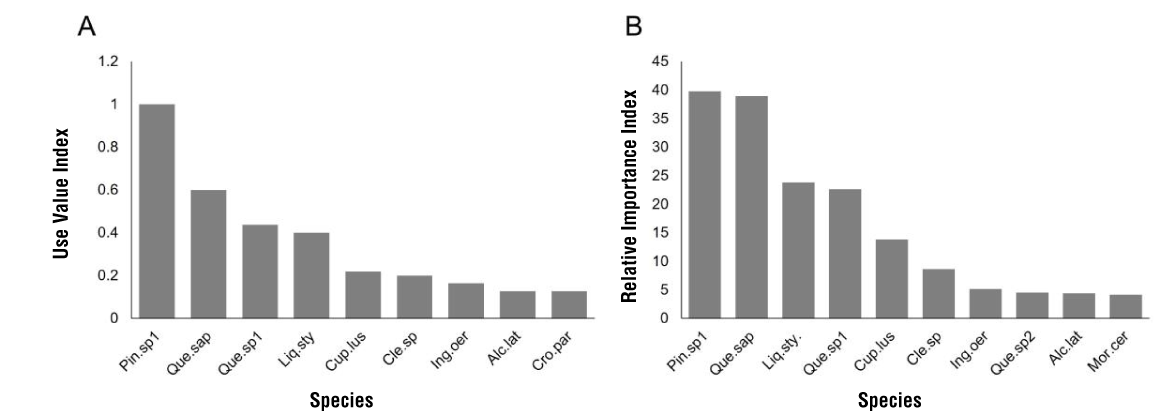
Figure 3 Most important species used as firewood in tourist diners in Lagunas de Montebello National Park. (A) Relative use value index which takes values from 0 to 1, where 1 is the species with the highest use value and, therefore, the most appreciated for its usefulness. (B) Relative importance index that integrates relative values of frequency and biomass used in each sampling unit. The maximum value is 200 which is distributed among the total species, those with the highest values are the most important. Pin.sp1 = Pinus sp. 1, Que.sap = Quercus sapotifolia, Liq.sty = Liquidambar styraciflua, Que.sp1 = Quercus sp. 1, Cup.lus = Cupressus lusitanica, Cle.sp = Clethra sp., Ing.oer = Inga oerstediana, Que.sp2 = Quercus sp. 2, Alc.lat = Alchornea latifolia, Mor.cer = Morella cerifera, Cro.par = Crossopetalum parviflorum.
Table 2 Relative Importance Index (RII) of the species used as firewood in two rest areas of Lagunas de Montebello National Park, Chiapas, Mexico.
| Species | Relative frequency | Relative biomass | RII |
|---|---|---|---|
| Pinus sp. 1 | 22.62 | 17.16 | 39.78 |
| Quercus sapotifolia Liebm. | 14.03 | 24.91 | 38.93 |
| Liquidambar styraciflua L. | 9.05 | 14.79 | 23.84 |
| Quercus sp. 1 | 10.86 | 11.76 | 22.62 |
| Cupressus lusitanica Mill. | 5.43 | 8.34 | 13.77 |
| Clethra sp. | 4.98 | 3.65 | 8.63 |
| Inga oerstediana Benth. | 3.17 | 1.99 | 5.16 |
| Quercus sp. 2 | 2.71 | 1.80 | 4.51 |
| Alchornea latifolia Sw. | 2.26 | 2.11 | 4.37 |
| Morella cerifera (L.) Small | 2.26 | 1.88 | 4.14 |
| Crossopetalum parviflorum (Hemsl.) Lundell | 2.71 | 1.41 | 4.12 |
| Pinus teocote Schltdl. & Cham. | 2.71 | 1.30 | 4.01 |
| Acacia sp. | 0.90 | 1.59 | 2.49 |
| Psidium guajava L. | 1.81 | 0.48 | 2.29 |
| Persea americana Mill. | 0.90 | 1.08 | 1.99 |
| Coffea arabica L. | 1.36 | 0.48 | 1.84 |
| Saurauia madrensis B.T.Keller & Breedlove | 0.90 | 0.84 | 1.75 |
| Heliocarpus donnellsmithii Rose | 0.90 | 0.78 | 1.69 |
| Eriobotrya japonica (Thunb.) Lindl. | 0.90 | 0.24 | 1.15 |
| Morphospecies 3 | 0.90 | 0.22 | 1.13 |
| Toxicodendron striatum Kuntze | 0.90 | 0.22 | 1.12 |
| Morphospecies 4 | 0.45 | 0.59 | 1.04 |
| Morphospecies 6 | 0.45 | 0.50 | 0.95 |
| Morphospecies 7 | 0.45 | 0.30 | 0.75 |
| Morphospecies 1 | 0.45 | 0.23 | 0.68 |
| Clusia guatemalensis Hemsl. | 0.45 | 0.20 | 0.65 |
| Alchornea latifolia Sw. | 0.45 | 0.19 | 0.64 |
| Morphospecies 8 | 0.45 | 0.19 | 0.64 |
| Myrsine coriacea (Sw.) R. Br. ex Roem. & Schult. | 0.45 | 0.17 | 0.63 |
| Eucalyptus rudis Endl. | 0.45 | 0.15 | 0.60 |
| Aegiphila sp. | 0.45 | 0.10 | 0.55 |
| Morphospecies 5 | 0.45 | 0.07 | 0.52 |
| Aegiphila monstrosa Moldenke | 0.45 | 0.06 | 0.52 |
| Pinus sp. 2 | 0.45 | 0.06 | 0.51 |
| Diphysa sp. | 0.45 | 0.05 | 0.50 |
| Eugenia sp. | 0.45 | 0.05 | 0.50 |
| Hedyosmum mexicanum C. Cordem. | 0.45 | 0.04 | 0.49 |
| Morphospecies 2 | 0.45 | 0.04 | 0.49 |
Discussion
The study area in the LMNP is characterized by complex biocultural processes, intense tourism activity and biodiversity conservation management. This interaction has repercussions on the use of natural resources, particularly firewood as an energy resource. It is assumed that a transition is taking place from a diversified use of firewood to a more specific and simplified one, with a preference for just a few species. The results indicate that there is a decrease in the availability of firewood due to the reduction of forests and growth of economic activities derived from tourism, such as the sale of traditional food and firewood trade. These activities were not carried out decades ago.
The scale of firewood consumption is multidimensional, because it depends on the environmental, social and economic conditions of use. In this study, the data indicate a high consumption of firewood compared to domestic consumption, based on the average per capita consumption of 1.0 to 3.0 kg∙day-1 estimated in Mexico (Bello-Román et al., 2022; Salgado-Terrones et al., 2017). This consumption pattern is similar to studies conducted in rural communities, such as that of Marquez-Reynoso et al. (2017) with values per capita ranging from 1.3 to 3.3 kg∙day-1, and that of Ocegueda and Aparicio (2022) with 2.01 kg∙day-1. However, few studies have directly compared the differences between domestic and economic consumption, such as the one conducted in India by Singh et al. (2010), who found that firewood consumption increases up to five times more in economic activities compared to domestic use (90 to 120 kg∙day-1 vs. 20 to 22 kg∙day-1, respectively).
The use of fuelwood in rural communities is related to the hypothesis of a reduction in the number of species used or use preferences. Usually, rural communities have a set of tree species used as fuelwood. This number depends on several factors such as type of ecosystems, availability of the resource and use preferences. For example, studies by Bello-Román et al. (2022) and Marquez-Reynoso et al. (2017) documented 23 and 76 species, respectively; however, there is a preference over a certain number of these (65 % and 38 %, respectively). We found this pattern of simplification in the present study, where fuelwood consumption depends mainly on five species (Pinus sp. 1, Q. sapotifolia, Quercus sp. 1, L. styraciflua and C. lusitánica). It is important to mention that the information from the semi-structured surveys indicates that the local demand is covered by a firewood market with these species.
The preferences for species include the Pinus and Quercus genera. These are significant energy resources in regions where indigenous or rural communities coexist with mountain ecosystems (Jiménez-Mendoza et al., 2023; Ocegueda & Aparicio, 2022; Olea-Reséndiz et al., 2022; Ruiz-Aquino et al., 2022; Salgado-Terrones et al., 2017) as well as in other parts of the world with temperate forest ecosystems (Bhatt et al., 2016; Chakraborty et al., 2018; Singh et al., 2010). The Quercus genus is particularly important due to its cultural significance in food preparation, specifically regarding the taste of meals, as well as the durability of its wood, its ability to generate a steady and long-lasting ember, and the reduction of smoke production. These characteristics are attributed to the wood's density, lower volatile compound content, and calorific value (Márquez-Reynoso et al., 2017; Ruiz-Aquino et al., 2015, 2022), which refers to its potential to burn and generate heat. The cultural relationship is due to the dependence and availability of firewood in their forests and the spaces where people carry out their daily activities (e.g., plots and backyards) (Cruz et al., 2020).
Recently, it has been documented that fuelwood consumption has entered a different dynamic due to its increasing scarcity. This situation has greater impacts on rural communities that depend strongly on firewood for cooking and have historically based their livelihoods on this resource (Bhatt et al., 2016; Da Silva et al., 2018). These dynamics, as observed in the LMNP, are forcing people to buy firewood from sellers without knowing its origin. This situation This situation negatively impacts the families' subsistence strategies, as they are forced to allocate financial resources for purchase (Orozco-Hernández et al., 2012).
At the LMNP (National Park), some strategies have been developed to reduce firewood consumption in tourist diners. One of the most important was the installation of firewood-saving stoves, as the switch to using LP gas has not been successful. Although it was not something intended to be asked in the survey, there were occasional responses mentioning that the use of firewood is part of the tourist attraction for diners. However, the deeply rooted cultural practice of cooking with firewood is evident, despite programs that promote access to LP gas in rural communities (Mazzone et al., 2021; Troncoso et al., 2019).
Conclusions
Firewood is the main energy resource in the tourist diners of the Lagunas de Montebello National Park. On average, each diner consumes 21.1 kg∙day-1 and a monthly investment of 1 408.33 MXN to buy this resource. The firewood used includes species from the Pinus and Quercus genera, valued for their properties such as ember generation. These consumption patterns, combined with limited availability and reliance on an informal market, suggest a challenge for firewood management. This situation highlights the need to implement strategies that promote greater availability of this resource and proper management. Some strategies could include: (1) reforestation in plots, fallow lands, or areas designated for reforestation with species of dendroenergy interest (e.g., Quercus sapotifolia); (2) establishment and operation of community nurseries to provide the necessary plants for local reforestation; and (3) integrated strategies such as the creation of sustainable productive approaches (e.g., dendroenergy plantations).

