




Servicios Personalizados
Revista
Articulo
 texto en
  Inglés (pdf)
 Artículo en XML
 Referencias del artículo
 Traducción automática
 Enviar artículo por email
Indicadores
-
 Citado por SciELO
 -
 Accesos
Links relacionados
-
 Similares en
SciELO
Similares en
SciELO
Compartir

 Permalink
Intervención (México DF)
versión impresa ISSN 2007-249X
Intervención (Méx. DF) vol.11 no.22 México jul./dic. 2020 Epub 17-Oct-2022
https://doi.org/10.30763/intervencion.236.v2n22.15.2020
Articles
The Use of Cob in the Intervention of Adobe Construction Components

*Universidad Autónoma Metropolitana-Xochimilco (UAM-X), México. luisfg1960@yahoo.es.
The article analyzes restoration and conservation processes whose origins stem from the ancient construction system known as cob. The technique was improved by stabilizing the soil with calcium hydroxide and subsequently densifying it. It was tested against compression, retraction, absorption and weathering at UAM-Xochimilco, and showed remarkable results in being able to increase its resistance and durability. The procedure was applied in several national and international workshops and, more recently, in communitarian efforts to restore damaged adobe houses affected by the earthquakes that hit the south of Mexico in September 2017. The proposed strategy is easy to learn and apply, and uses a minimum of technical and material resources.
Keywords: clays; lime; load bearing capacity; compaction; sustainable conservation; material compatibility; structural ductility
El artículo analiza procesos de restauración y conservación cuyo origen proviene del antiguo sistema constructivo conocido como tierra amasada o modelada. La técnica fue mejorada mediante la estabilización del suelo con hidróxido de calcio y su posterior densificación. Fue probada a compresión, retracción, absorción e intemperización en la UAM-X, y mostró destacables resultados en el incremento en su resistencia y durabilidad. El procedimiento fue aplicado en diversos talleres nacionales e internacionales, y, recientemente, en actividades comunitarias de restauración de viviendas de adobe dañadas por los terremotos que afectaron el sur de México en septiembre del 2017. La estrategia propuesta es fácil de aprender y aplicar, además de que utiliza un mínimo de recursos técnicos y materiales.
Palabras clave: arcillas; cal; capacidad de carga; compactación; conservación sostenible; compatibilidad de materiales; ductilidad estructural
Introduction
Among the most neglected of the fields of earthen construction in publications and research, the study of maintenance and damage repairs stand out. The interaction that users have historically had with their habitat has a notable impact on the effectiveness in preserving them. The preventive conservation work of heritage structures carried out periodically by traditional communities on an individual, family or group level guaranteed their durability and implied a regular inspection of their components. In addition, the knowledge associated with such construction was kept alive by the continuity of intergenerational participation during these endeavors. Cultures of earthen construction have always been based on the transfer of technologies and informal learning derived from the routine practice of building and repairing (Guillaud, 2014, p. 21).
However, over time, the change in socio-cultural organization, migration to large population hubs and, mainly, the introduction of industrialized materials, irreversibly altered this knowledge. People were wrongly convinced that the use of "scientifically proven" materials, such as brick, cement and steel, as well as plastic coatings and paints, guaranteed a long life and avoided routine building maintenance (Guillaud, 2014, p. 24).
This trend, promoted by the manufacturers and supported in a conscious or unconscious way by different governmental institutions, modified historical and traditional construction by introducing construction components that were not part of the original design. The use of industrialized materials that are chemically and mechanically incompatible has not only led to deterioration, derived from the loss of interaction between inhabitants and their homes, but has also led to the gradual disappearance of long held ancestral wisdom (Guerrero, 2015, p. 74).
During the span of only two to three generations, societies began delegating the work of revision and conservation of their living spaces to masons and technicians who, generally, were not associated with earthen based construction, since their practice is based on the use of commercial materials.
The inhabitants of homes with walls made of rammed earth, wattle and daub or adobe were convinced that these materials are not sufficiently resistant, and therefore required vertical and horizontal strengthening with reinforced concrete, like those used in conventional construction. Additionally, in recent decades the process of densifying human settlements has led to the subdivision of spaces and an increase in the number of vertical levels. In both cases, since there is no appropriate knowledge about the load bearing capacity of earthen walls but, primarily, because the builders and constructors who carry out these works only know modern construction techniques, based on the use of reinforced concrete, they incorporate mezzanine floors, ceilings and dividing walls anchored in reinforcements “beams and pillars" that section the pre-existing walls.
Thus, the important quality of continuity is lost which, combined with the thickness of earthen walls, defines their stability and resistance. When their structural unity is interrupted, these formations do not respond adequately to deformations derived from landslides, differential subsidence and telluric movements (Guerrero, Correia & Guillaud, 2012, p. 219).
On the other hand, the incorporation of impermeable substances to act as "surface protection" has proven to be very harmful for works made with porous materials, such as stone, brick, lime, wood and, especially, earth. Their presence causes the undesirable migration of the soluble salts that crystallize on contact surfaces, developing mechanical separation forces.
This harmful effect spreads with remarkable speed in traditional buildings that have been plastered with cement mixtures, which limit the adequate cyclical exchange of air and water vapor that the earth needs to carry out with the environment. Then, the trapped humidity gradually exceeds its natural consistency level and causes segregation and leaching. The sand separates from the clay and precipitates behind the coatings, causing the building components to lose their unity and load bearing capacity (Warren, 1999, p. 75).
In even more serious cases, to achieve the adhesion of concrete coatings, they are applied onto a wire mesh previously nailed to the earthen surfaces. In addition to the harmful effect that the multiple perforations of nails cause, the problem of moisture encapsulation, when disguised, is aggravated. The repellents hide the internal disintegration processes of the structures and, after some time, the constructive components of earth lose volume, density and resistance. The humidity accumulated in the interior progressively disintegrates the nucleus of the structures, making them easy prey of the affectations derived from environmental vibrations and deformations.
Both "structural reinforcement" and "surface protection with cement" were among the main causes of the damages sustained by the heritage architectures of central and southern Mexico as a result of the two intense earthquakes that occurred in September 2017 (De Anda, 2017, p. 1).
Since ancient times, traditional adobe architecture has relied on its refined design to adequately repel different climatic threats as well as seismic movements (Guerrero, 2019, p. 102), but recent geological phenomena collided against altered buildings with irregular expansions, vertical extensions, cement mortar plastering, and disarticulated components of reinforced concrete that ended up seriously damaging them or even causing them to collapse (De Anda, 2017, p. 1).
It is important however to draw attention to the fact that, in reality, the greatest destruction of this architectural heritage occurred several days after the earthquakes and was caused by man, and not by nature. The lack of knowledge about the natural behaviors of adobe construction and the presence of ostensibly fractured cement coverings made inspectors, brigade personnel and even the inhabitants themselves think that the structures were so badly damaged that they would be a permanent danger to their habitants. So, hundreds of houses were systematically demolished without anyone taking the trouble to remove the cement linings to verify the fact that, most of the time, the adobe cores were actually intact (Figure 1).
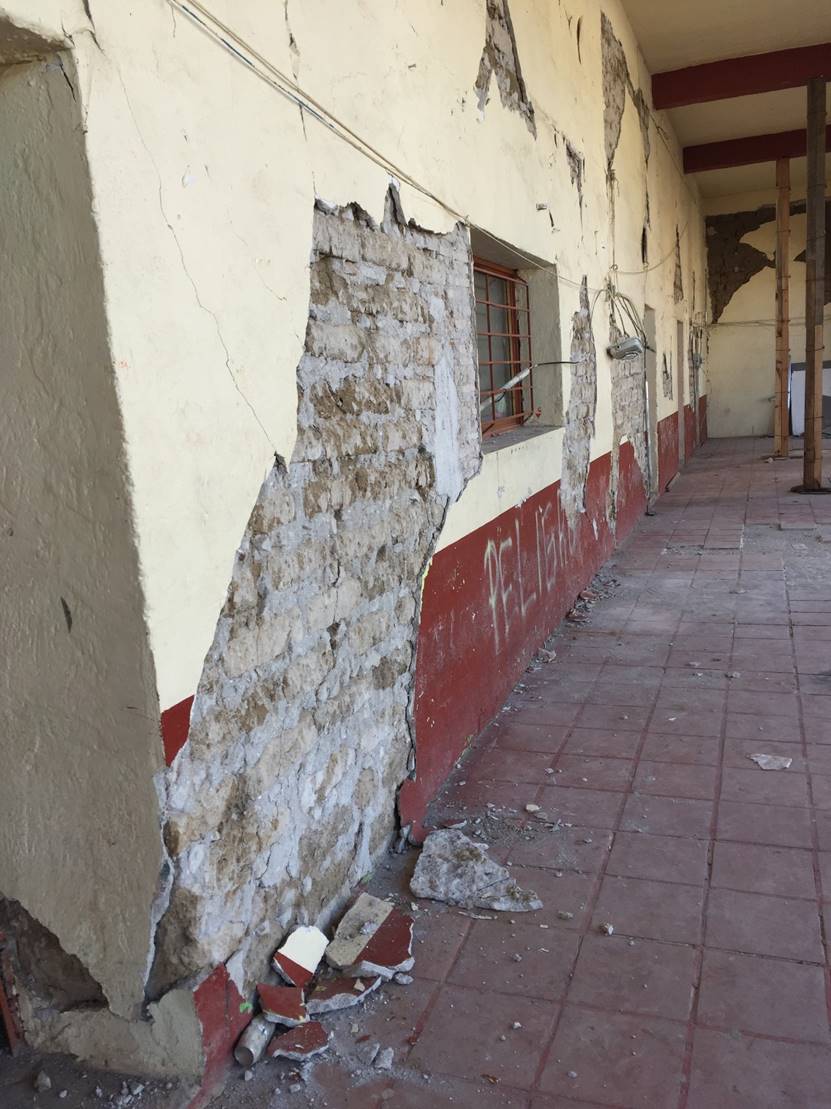
(Photograph: Luis Fernando Guerrero Baca, 2017)
Figure 1 The cracks shown in the adobe walls covered with cement mortar were only superficial. Ayudantía Municipal de Hueyapan, Morelos, Mexico.
An additional disadvantage, which had not manifested itself so dramatically, derives from the fact that, when seismic movements occur, concrete surfaces crack very easily due to their rigidity, while the adobe structures remain stable inside, as they have greater ductility. In addition, since they are joined with mortars that are also made with mud, they absorb significant deformations without cracking (Guerrero & Vargas, 2015, p. 64).
When reinforced concrete structures are well calculated and properly built, they respond well to earthquakes, because the capacities of the two materials are balanced: the concrete resists the compressive stresses and the reinforced steel supports the tension, torsion and bending. Yet without this reinforcement, concrete only works if its density is of an adequate thickness. A thin layer of cement coating is a fragile component, due to its inability to allow for warping.
Additionally, when it fractures, its extreme stiffness and impermeability become insurmountable obstacles when trying to glue it back together. Although various chemicals have been developed and marketed as adhesives, once thin layers of concrete are broken, they can never truly recover their previous unity.
On the other hand, if the intensity of the efforts of an earthquake exceeds the capacity for deformation of the adobe walls, the separations, fissures or cracks that appear will be easily repairable with a minimum of technical and material resource. This is the central aspect around which this article revolves around: the possibility of recovering damaged earth structures based on the implementation of fully compatible materials.
The destruction to the incalculable quantity of historical and traditional buildings suffered during the last two years could have been avoided if their inhabitants or the technicians who evaluated them post-earthquake had known that most of the damage and deterioration had simple and cheap solutions. This is one of the most remarkable qualities of earthen built heritage.
These works are fully sustainable from the ecological, economic and socio-cultural point of view, because they are executed and conserved with highly abundant materials that are easy to manipulate by their own inhabitants. Even the raw material of the structure itself can be recycled as many times as necessary in order to replace missing, eroded or broken components as a consequence of any damages sustained over time.
Thus for the last several years, the Laboratorio de Materiales at the Universidad Autónoma Metropolitana-Xochimilco (UAM-X), and, more recently, the Laboratorio de Tecnología Tradicional y Sostenibilidad at the Escuela Nacional de Conservación, Restauración y Museografía (ENCRyM), have been studying the role played by the different components of earth construction systems as well as the ancestral methods for their execution and maintenance, with the aim of generating knowledge that can explain their degree of success and also serve as an epistemic support for the development of strategies for the conservation of old or even modern works. Multiple laboratorial experiments have been carried out, and components and experimental modules have been developed with diverse soils and stabilization methods, with the purpose of verifying their applicability, hygrothermal behavior and their resistance to mechanical and atmospheric phenomena (Guerrero, 2016, p. 18).
The aim is to adapt traditional responses to current conditions, trying to make them accessible for non-specialists to implement, and to use less water and off-site materials, so that processes are more ecological, economical and, above all, increase the resistance and longevity of the structures they are being used on.
This text presents some of the laboratory obtained results, both in scaled prototype models and in restoration interventions, an area in which the use of soils opens up a wide range of actions, since it makes it possible to space out the preventive maintenance work of heritage buildings over a longer period of time (Figure 2).
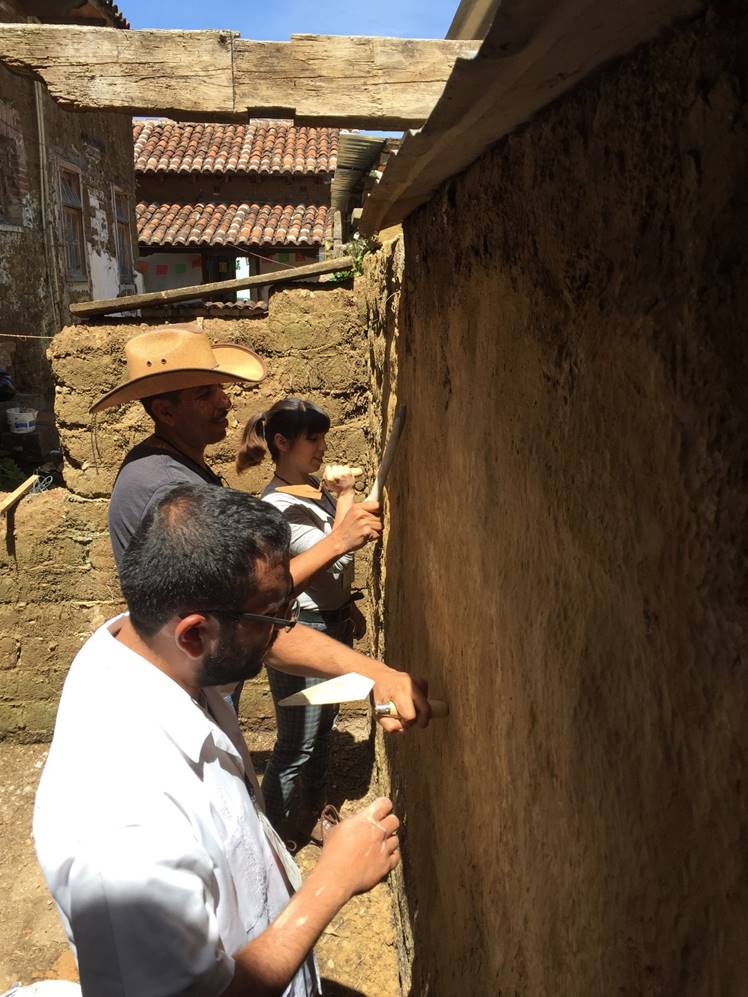
Earth, Water And Compaction
Throughout history, the transformation of natural soils into building materials has gone through various procedures, derived from local natural resources, environmental conditions and ancestral trial and error process. Most of the communities that used soil for construction realized that it was possible to improve its original condition through the interaction of two factors: humidity and density.
Water is the basis for the transformation of earth into constructive material, since it has the effect not only of altering the clays polarity, but also of causing movement within the mixture. Then, by means of certain conditions of fluidity, they can be adjusted for their use in an infinity of forms.
As is known, the reaction that explains the composition of soil mixtures is more due to physical phenomena than a chemical one (Guerrero, 2007, p. 125). The micelles that make up the composition of clay, develop forces of electrostatic attraction and repulsion that propitiate their reaccommodation and interaction with components of greater dimensions, such as silt, sand, gravel and additional aggregates, such as fibers.
The amount of clays present in the soil and the reactivity that results from the presence of additional elements to the silicon, aluminum, oxygen and hydrogen that compose them, determine the strength they will acquire when hydrated and then subsequently dried (Doat, Hays, Houben, Matuk & Vitoux 1996, p. 49).
The earth itself can vary radically in its manageability and durability simply by adding more or less water to it. If, for example, about 35% is added, it will be in a liquid state; at 25% it takes on a plastic condition that, while allowing it to flow, will be able to retain its shape if placed in a mold. However, if it were to be compacted inside of one, it would not then densify, since it is too ductile.
If only 15% water was added to that same soil, it would reach a semi-solid consistency that, whilst would maintain the shape of the mold it was poured into, could also be compacted with the help of a rammer (Hoffmann, Negrini & Falleiros, 2011, p. 51). Finally, a soil with only 5% humidity would not retain the shape of the mold into which it was placed nor could it be compacted, because it lacks cohesion, although, paradoxically, it would be possible for it to "flow ", when some particles slide over others.
The percentage of water required for a soil to pass from a plastic to a liquid consistency is called the liquid limit, and the percentage required for it to pass from a plastic to semi-solid state is called the plastic limit. The difference between both limits is called the plasticity index, which provides the possibility of recognizing the predictable response of a soil when being transformed into a material for construction (Juarez & Rico, 2010, p. 127). This data and granulometry studies are used as an internationally recognized reference. In spite of the infinite number of combinations of soils that exist in nature, patterns in their behavior when faced with water allows them to be categorized in a quite precise manner, into 15 general groups that make up the Unified Soil Classification System (USCS).
As it is known, soils that have, in comparison with silts and sands, a high proportional ratio of high plasticity clays, generate denser and more resistant constructive components once they dry. However, when they do so, they tend to decrease in volume, generating surface cracks or, if they have been used as coatings, a tendency to become detached from the substrates onto which they were applied (Figure 3).
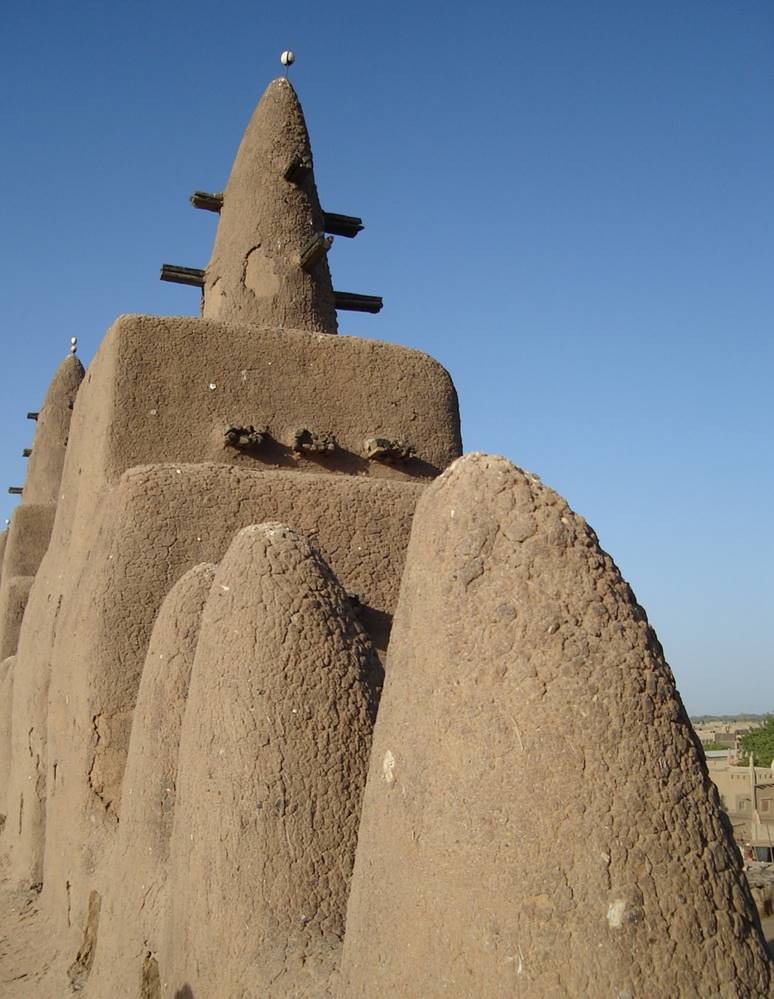
(Photograph: Luis Fernando Guerrero Baca, 2008)
Figure 3 The use of clayey soils allows the production of less permeable finishes, but its cracking requires periodic maintenance. Crenellations of the Djenné Mosque, Mali.
Conversely, soils with a low proportion of this type of clay are more stable during drying because they both absorb and lose less water. However, their low cohesive strength can make them less resistant to abrasion.
Therefore, one of the determining factors for the durability of earth construction systems, as well as in their coatings, is linked to the balance of the granulometry of its components (Guerrero, 2007, p.187).
The soil from which the plasters are made must have a high plasticity to develop adequate adhesion to the substrates, but since it demands a high degree of humidity to be able to be successfully applied, when it hardens it will surely present problems of shrinkage and cracking. To combat this issue, it must be gradually applied in thin layers. Yet, a less plastic material is used when making adobes which, in addition to requiring less water, must be able to be poured into molds or shelves and be quickly removed from the mold, thus conserving its intended shape and volume.
Finally, a soil to be compacted needs to have less water and plasticity, so it is preferable for its constitution to be sandier. A plastic mixture or one with excess humidity cannot be mechanically densified, because it "bounces" the compression tool away. In contrast, the presence of different sized grains generates hollows between them, which can be interspersed by means of percussion or external pressure, thus achieving the required densification.
At some point of their evolution, traditional communities discovered that it was possible to combine soils that would develop the desired properties, according to the construction system they were meant for.
Natural soils can be modified through a procedure known as compensation. In this way, the granulometric fractions that are considered to be deficient can be added in pre-determined doses, depending on the construction component of which they will be part of. For example, a highly plastic soil that will be used to form rammed earth walls can be mixed with a sandy soil, or specific quantities of sand and gravel can be added in order to promote possible mechanical densification (McHenry, 1996, p. 70).
Contrarily, an excessively sandy soil can be mixed with small volumes of clay based soil to make it more plastic. It is also possible to extract by sedimentation and decantation the clay component of a soil and add it directly to a sandy material to make it suitable for construction needs (Figure 4).
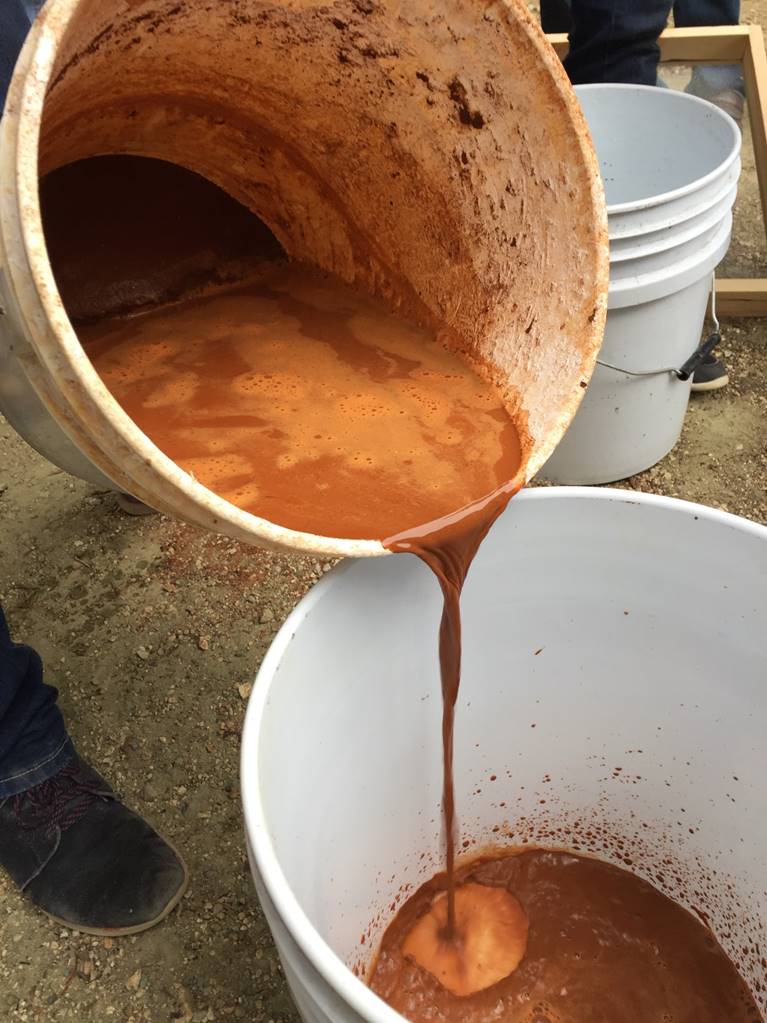
(Photograph: Luis Fernando Guerrero Baca, 2018)
Figure 4 Decantation of soil to extract its clay after the silts and sands have settled to the bottom of the container.
Furthermore, as is the case with plaster, the same construction component is usually made up of layers of varying plasticity. For the first layer, a clay-based soil is needed, which must be well fixed to the substrate. While this may present problems of shrinkage and cracking when drying, it is not considered a problem, since later it will receive a second application with a sandier material. This will even embed itself better on a cracked layer and, in addition to making it uniform, the finish will give it greater mechanical and water resistance. The presence of sand in that layer will generate a surface with more porosity that, even if it receives significant amounts of water in a liquid state, say from rain, will be able to let it evaporate at an appropriate speed (Cerro, & Baruch, 2011, p. 68).
Since 2009, different types of experiments have been carried out at UAM-X with the aim of evaluating the role played by the relationship between compensation, densification and the amount of water present in soil mixtures (Guerrero, Roux & Soria, 2011, p. 48). In these investigations, the notable increase in structural resistance derived from the application of mud in layers and its subsequent compaction was demonstrated. These procedures make it possible to carry out coatings and build thin walls for conventional works.
Different mixtures were designed in laboratory conditions to be applied as experimental samples of plaster onto a 20 x 20 cm surface, with a 3 mm thickness. Extreme conditions were intentionally chosen, which consisted in placing them on a polished concrete substrate and orientated in such a way that they would receive direct sunlight, wind, and rain.
In addition to the controlled samples, which had soil in natural conditions, the sand dosages and the final finishes were varied. All were applied using a metal trowel, but half of the samples received a subsequent compaction treatment. Here, when the surface began to dry and small retraction cracks appeared, it was impacted with a 20 cm long, and 2.5 x 2.5 cm diameter, light wooden tool. Care was taken to compact using the long side of the bar and exerting an equivalent force for a similar number of hits (40 strokes per test piece).
The type, quantity and depth of the cracks presented were evaluated, as well as the resistance to anthropic abrasions and especially to rain. As expected, soils with little sand retracted and fell after two or three days; whilst those compensated with 100% sand resisted better. Those with 150 to 200% of sand did not present cracks but became crumbly and eroded when rubbed by hand. Yet the sandy samples that were also compacted managed to remain in formation for over a year.
From these results, it was decided to integrate an additional variable to the experiments, which consisted in incorporating 5 and 10% of hydrated lime powder to the same soil that had been compensated with 100% of sand volume. Using the same criteria of the previous experiment, test samples of plaster were exposed to the elements and subjected to daily monitoring and, consequently, the soil stabilized with lime and subsequently compacted was adhered to the laboratory's own concrete outer wall where it remained in place three years after, resisting intense rain and several days of hail.
At the same time, 5 x 5 x 5 cm cubic samples were made from each of the mixtures and allowed to dry in order to make, through total immersion, evaluations of their resistance to compression and humidity.
Among the most relevant of the results is the fact that the samples of natural compacted soil, compensated with sand, and the same mixture, but enriched with lime, managed to increase their resistance to compression in ranges averaging from 40 to 52% with respect to specimens of the same materials but incorporated without any pressure inside the molds (Guerrero, 2016, p. 18). Finally, with the same raw materials, a destructive test was carried out consisting of the immersion of three cubic specimens in containers filled with water and the process was filmed. The uncompacted block of soil disintegrated under water in 46' minutes (Figure 5). The block that was compacted in layers maintained its volume for about two hours, but, during the third hour, it slowly disintegrated until, after four hours, it fell apart. In contrast, the test cube with the soil stabilized with 10% calcium hydroxide powder continued to retain its full shape and volume, more than five years after being immersed in water.
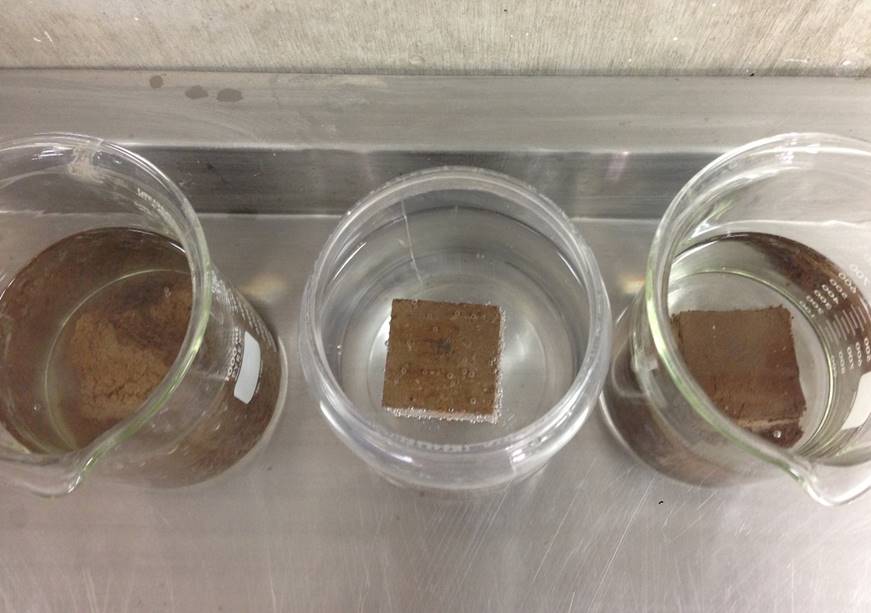
(Photograph: Luis Fernando Guerrero Baca, 2015)
Figure 5 Disintegrated sample, on the left; on the right, the compacted soil sample, and in the center, the stabilized and compacted soil sample remains intact. Laboratorio de Materiales de la UAM-X.
Based on this series of results, the possibility of redirecting this technology to the reparation of cracked walls as well as to cover cavities in heritage buildings was considered.
Construction with cob
To understand the functionality of the strategy proposed in this article, it is important to start from the knowledge of a constructive system that, despite the proliferation of its use in the past, has been very little analyzed, and even frequently confused with other processes. It is the technique that was surely the precursor to the rest of earth construction systems across many parts of the world and which in Spain is called pared de mano (hand-made wall) (Rocha & Jové, 2015, p. 97), tierra apilada (mounded earth) or tierra amasada (kneaded earth) Pastor, 2017, p. 46).
It is a system that is characterized by the use of hydrated and rested mud with a consistency similar to that used when making adobes or plasters. The builders take manageable portions of the material and sculpt them into manageable spheres with a diameter of between 10 to 20 cm, which are piled up and protected from the weather, so that they can later be taken to the construction site.
Although it seems irrelevant, unlike other construction procedures that required means and equipment in order to transfer raw materials to the construction site, the spheres used in this technique could be thrown from hand to hand. Through the organization of collective work and the formation of "human chains", they were moved the required distance, overcoming obstacles in the field and even elevating them to heights above the construction site if required. As the builders receive the mud balls, they forcefully smash them onto the foundation or the lower layers, the result settles to form threads that are bound by their own humidity, without having to add a binding mortar.
As the material dries, it is tapped by hand, feet or with a wooden tool to densify it and make a continuous mass that transforms into a layer that will remain attached to the rest of the construction, constituting monolithic components. Although the technique has been mainly used to build foundations, walls, ramps and staircases, it has also been used for flooring and roofs supported by wooden structures, as for example, in the Cliff Houses of the Sierra Tarahumara as well as in the ancient city of Paquimé, in Chihuahua (Figure 6).
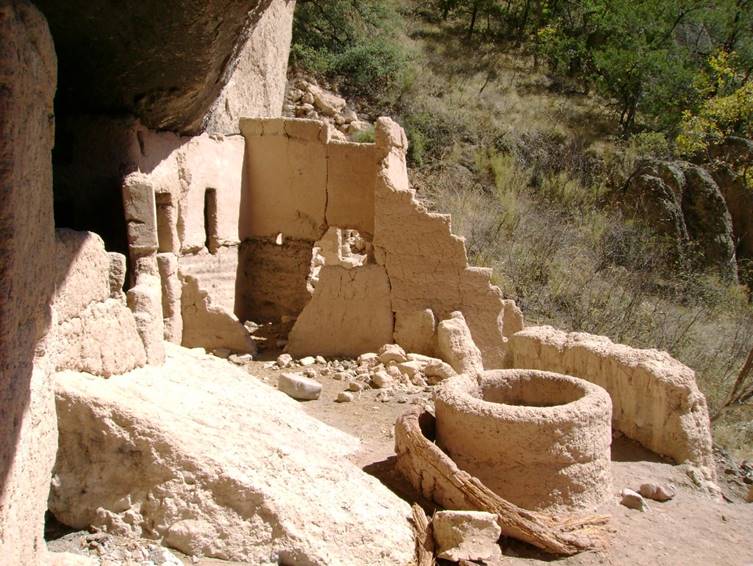
There are countless sites in the world that have been erroneously characterized as adobe or rammed earth structures, but whose manufacture was actually developed from soil in a plastic state, moved on site in manually densified clumps. Some of these sites are Paquimé in Chihuahua, Huaca Bellavista and the Camino del Pando in Peru, as well as Joya de Cerén in El Salvador (Guerrero, 2018, p. 127).
As explained above, for a soil to be properly compacted it must be under very low moisture conditions. The construction system known as rammed earth uses only 12 or 15% humidity, and is dependent on the use of formwork to achieve adequate structural formation (Doat et al., 1996, p. 49), a component that, in addition to confining a soil that tends to otherwise flow due to its low humidity, is indispensable to densify it in superimposed layers by means of the rammer’s blows. After several hours of compaction, the result is a very solid block, next to which other subsequent blocks are built that progressively build up the rows of a wall.
There are notable examples of rammed earth buildings in North Africa, India, China, southern Spain, Germany and France, but they were erected with a much newer approach than the ancient method of kneaded and modelled earth. Furthermore, it is important to note that to date, no pre-Columbian ruins of rammed earth walls have been found, so it seems that the technique reached the continent from around the 16th century, during the Conquest (Guerrero, 2018, p. 136) (Figure 7).
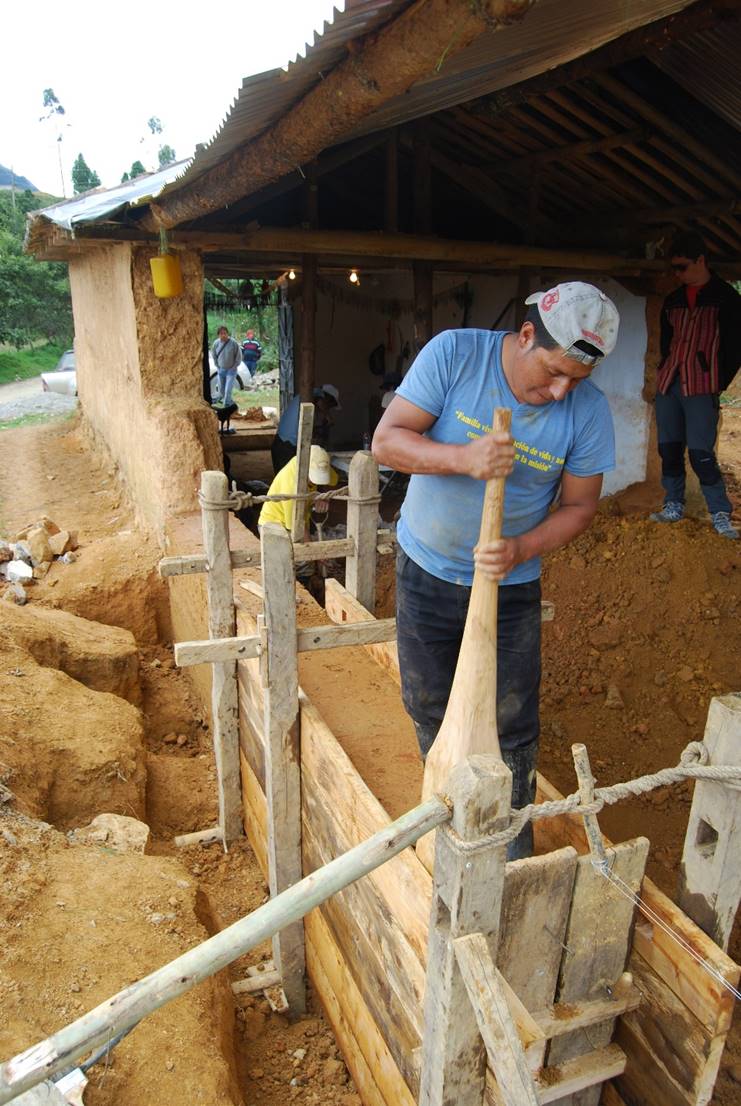
(Photograph: Luis Fernando Guerrero Baca, 2014)
Figure 7 Restoration of a tapia heritage chapel in Chuquiribamba, Ecuador
Pre-Columbian civilizations developed foundations, temples, palaces, granaries as well as a great number of detached and grouped houses, by means of densifying layers of soil, but without the use of shoring or formwork, which technically does not entirely correspond to the constructive logic of rammed earth. In order to prevent the raw material from dispersing, the paper part of the mold was instead supplied by the amount of water added and the prefabrication of the mixes under plastic conditions (Guerrero, 2018, p. 130).
Logically, in large structures the system of throwing balls of mud from hand to hand down a human chain was not efficient, so it is likely that they chose to make larger clusters that could be brought to the site in baskets or mats to be densified by hand or by feet during the building process.
The elaboration of mud balls, or masses not only makes the transfer and placement possible, but also acts as a sort of quality control with respect to the humidity, homogeneity and consistency required by the process. A mixture that lacks or has too much water, lacks the necessary cohesiveness to preserve its shape, and thus simply cannot be molded. The material, as it continues to be tossed from hand to hand, is continuously kneaded by the process until finally, when it is integrated into the structure, the builders walk over the partially hardened layers and hit them to give uniformity to the lateral faces, as well as to verify and correct their verticality and the leveling of their line (Weismann & Bryce, 2010, p. 150).
The quality of the walls, their arrangement in rows and the apparent presence of blocks produce walls that are remarkably similar to rammed earth structures. However, in reality, the vertical lines of separation that appear regularly throughout their lengths are retraction cracks. This is the best evidence that the components were made with plastic soil that retracted upon drying, since this phenomenon would not occur in the case of real rammed earth, because, as explained above, sandy and almost dry soil is used to compact it (Figure 8).
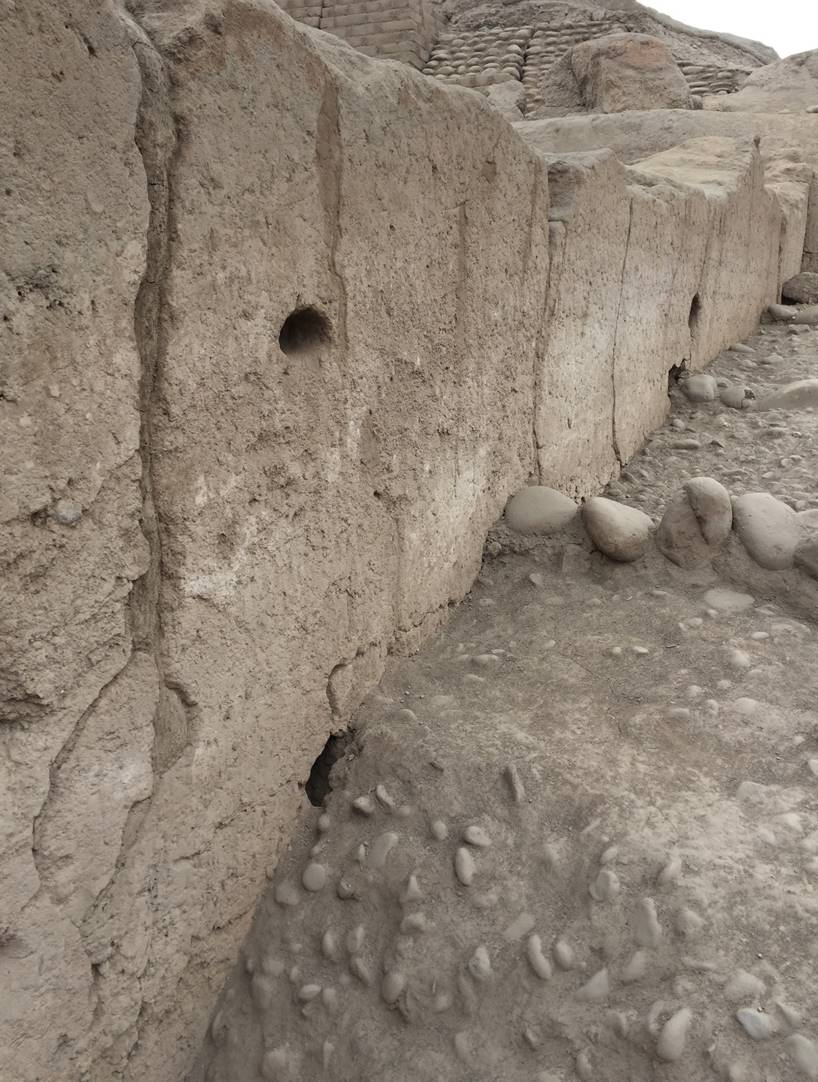
(Photograph: Luis Fernando Guerrero Baca, 2017)
Figure 8 The archaeological walls of the Bellavista site in Lima, Peru, gave the false impression of having been built using the tapia technique, but their patterns of deterioration are evidence of the use of kneaded earth in a plastic state.
The construction technique of kneaded or stacked earth has not been adequately recorded, because its construction process is not an easily identifiable one. The spheres or putties that constituted its nucleus disappeared during its transformation into a practically monolithic uniform mass. Despite its heritage value to the entire American continent, being a widely used ancestral technique means that it is not one usually reported on in archaeological reports, to the extent that it does not even have a recognized name in the region. Recently, as this building technique has become "fashionable" in the field of bioconstruction, it has become known by its name in English: cob.
Finally, it is important to emphasize that, in many regions of the planet with high levels of seismicity, such as Iraq, India, Chile and Peru (Vargas, Gil, Jonnard & Montoya 2015, p. 286), this constructive system was widely disseminated as a result of its ductility, discussed above.
Application of cob in restoration
One of the key elements for carrying out repairs in adobe buildings is based on the need to use several layers applied onto substrates. Any cavities, breaks, erosions, cracks or fissures can be filled with recycled soils or compensated so that they become similar to the original ones, always taking care to ensure their gradual application.
The stability of earthen work, like many components of traditional building -and even of nature- is based on the interaction of superimposed surfaces. Just like the edaphological strata, the growth rings of plants or the epithelial membranes of animals, the accumulation of layers allows flexible behaviors that guarantee the balance of systems.
A rigid structure will always be more vulnerable to external forces than a ductile one. This property can be derived from the shape of components, from their materiality and, in the case of structures, it can be achieved through the appropriate organization of systems, even though these naturally lack plasticity. This is what happens as a result of the superposition of layers. Even though they present differences in resistance or flexibility, if they are properly arranged, they can interact and form systems that behave as if they were ductile.
This principle is key to understanding the behavior of the intervention strategies detailed in this text. Earthen architecture in general, and adobe architecture in particular, have the quality of being based on an exchange of efforts on practically infinite planes of action. Although for practical purposes it is conventional to analyze, for example, the load bearing capacity of an adobe as if it only received forces aligned with gravity, the fact is that all the components of its interior, which are united by the adherence of clays, transfer pressures in all directions.
Therefore, laboratory data that measure the compressive strength of unitary adobe pieces is not very representative of the constructive reality of these systems. Unlike what happens with conventional materials, such as brick, stone or cement blocks, adobes and their mud mortars are amalgamated as a kind of monolithic structure that acquires unity whilst maintain is ductility (Figure 9).
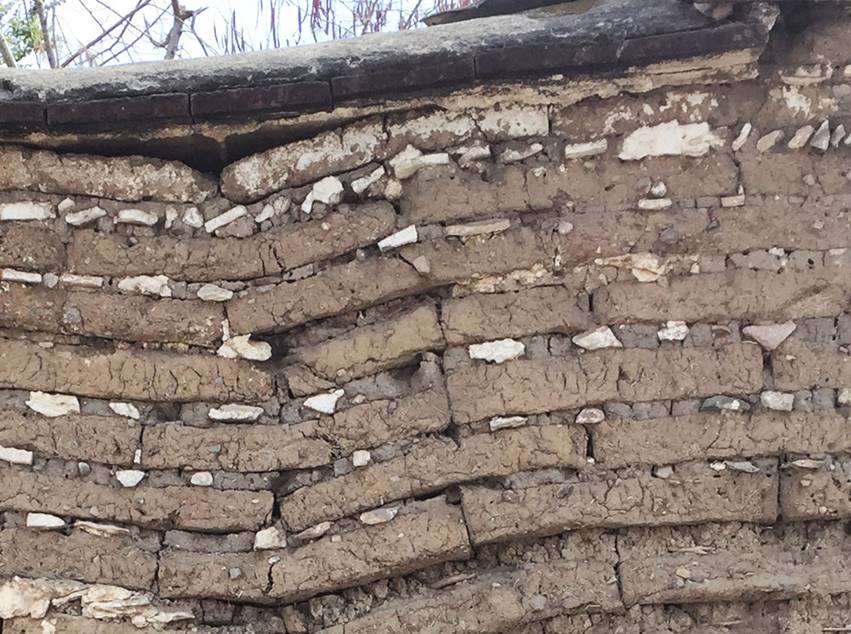
(Photograph: Luis Fernando Guerrero Baca, 2018)
Figure 9 Adobe, unlike other masonry products, has the ability to deform within certain limits. Huehuatlán El Chico, Puebla, Mexico .
Data on the compressive strength of adobe fractions that have been analyzed in the Laboratorio de Materiales of UAM-X and the indication of load bearing capacities from 4 to 7 kg/cm2 may give the idea of an apparent weakness. However, in reality those pieces have formed the walls of historical buildings in Calpan, Puebla; Ixtepec, Oaxaca; Hueyapan, Morelos, and Cocóspera, Sonora, and resisted gravitational pressures and accidental stresses for centuries.
If, in an isolated way we compare an adobe that resists less than 10 kg/cm2, with a brick that can resist 60 or 70 kg/cm2, we would conclude that it is a weak component. But the reality is that in the walls where they are placed, each piece is surrounded by at least six other adobes and, in addition, is joined with a mud mortar that integrates the assembly as a whole.
Therefore, the thrusts that a piece would hypothetically receive within the wall are distributed among all these "weak" components and an overall structure is created that can withstand powerful forces over hundreds of years. That is why it is often difficult to explain from a conventional structural engineering perspective the longevity, with remarkable integrality, of millenary adobe structures in sites with such high seismicity as those that characterize archaeological regions of Peru, Turkey, Iran, India and China (Dipasquale, Omar & Mecca, 2014, p. 236).
Faults that can occur in adobe walls due to lateral thrusts, differential subsidence or seismic events normally lead them to a new condition of equilibrium in which they can remain for a long time thanks to their ductile response. Thus, if restoration interventions are carried out based on the working logic of conventional rigid materials, it is very likely that mistakes will be made, by trying to confine their natural structural behavior or in attempting to transfer in one direction the diversity of divergent stresses that characterize the transmission of loads in soil based architecture (Guerrero & Vargas, 2015, p. 65).
When harder "reinforcing" elements are introduced into flexible structures such as those made of adobe, cob, wattle and daub or rammed earth, a competition of incompatible forces is generated in which the loss is manifested in the ductile element.
That is why the intervention methodology proposed in this article focuses on the reconnection of elements that, due to the effect of different natural or anthropic processes, lost continuity or volume from the use of stabilized and modeled earth.
The mixture of soil that is ready to be used as filler for cracks and missing parts of adobe walls is in a plastic state and could simply be inserted directly and then pressed into the surface with a mason's trowel or a plaster’s trowel.
However, this procedure causes the placed mass of earth not to bond properly with the pre-existing substrates due to their difference in humidity, despite the fact that care has been taken to spray water before placing it. However, in addition to this lack of adhesion, as the integrated volume begins to dry out it retracts and separates more intensely, until finally, it falls apart under its own weight.
However, if small volumes of material that were previously modeled and densified by spherically shaping them are inserted, they will have the minimum amount of water needed to keep them stable and maintain their cohesiveness. In this way, superimposed layers are formed within the cavities, which are progressively flattened to join them and the nuclei together.
The control of internal humidity is fundamental to avoid volumetric retractions that generate excessive cracking that can later be the cause of deterioration. Conversely, a material that is too dry will never be able to integrate with the pre-existing substrates. It is known that the slower and more homogeneous a drying process, the better the organization of the crystals inside the structures which makes them more resistant to both mechanical stress and possible weathering.
These small volumes of filler are carefully placed in previously wetted cavities and, as soon as they begin to harden, they are densified by means of percussion performed with a simple wooden bar. When this layer is dry enough so that no traces of the tool appear, it is again moistened with a sprinkler and the next series of spheres, which constitute the second layer, are applied and the operation is repeated. In this way, the holes are covered with successive layers, but with a gradual progression that guarantees their adequate adherence and the successful sealing of possible internal cavities, recovering the unity of the restored component (Figure 10).
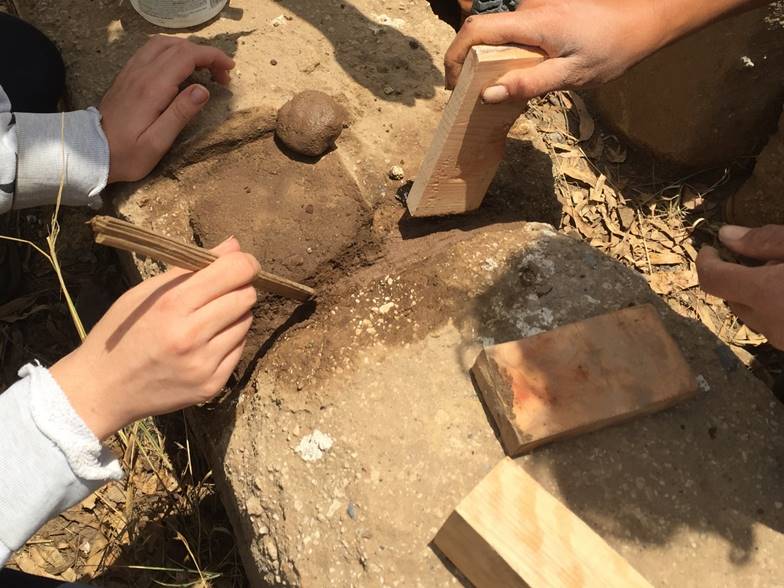
(Photograph: Luis Fernando Guerrero Baca, 2019)
Figure 10 Refilling of cracks during a workshop of the Bioconstruction Immersion Program. San Isidro Project, Tlaxco, Tlaxcala, Mexico.
If the damage to the walls is very deep, such as in continuous fissures or cracks, equidistant tubular "nozzles" can be inserted over the entire length during the filling and compacting process. Once the closing of the crack is completed, a fluid clay paste stabilized with 5 to 10% in volume of calcium hydroxide is injected, which will be gravitationally distributed within the cores. Finally, the nozzles are extracted or cut away and the operation is completely sealed.
When, for structural reasons, it is necessary to increase the load bearing capacity of a damaged element or when there are problems of affectation due to rain or capillary ascent caused by phreatic humidity, it is possible to enrich the soil for the spheres with small volumes of calcium hydroxide (never more than 10% in weight). If the soil mixture is to be made dry, it is advisable to use powdered lime in order to verify its correct distribution throughout the volume. But if the soil has already been moistened, then it is preferable to add the lime in the form of grout, in order to avoid lumps, as often happens when mixing lime paste.
As it is known, calcium hydroxide favorably modifies the resistant and hygroscopic behavior of soil without affecting its compatibility with pre-existing substrates (Guerrero, 2016, p. 17). In addition, it modifies its plasticity index, making it appear "sandier" (Fernandez, 1992, p. 130). This facilitates the compaction process without losing the qualities of adherence, cohesiveness and hardness when drying, derived from having a more clay-like material. In this way, both the internal force that clay confers onto the soil and the adherence to the pre-existing layers are maintained, but the retraction that would naturally be generated by its presence is controlled by mechanical percussion. This means that the "fissure closure", besides having an aesthetic or damage prevention function, guarantees the adequate densification of a material that, if it had been left to dry freely, would end up being fractured.
But, at the opposite extreme, if for structural or conceptual reasons the reversibility of the intervention is sought, instead of adding a chemical reinforcement such as calcium hydroxide, the amount of sand present in the soil can be increased, in order to reduce its resistance and even allow its subsequent removal. Thus, when new earthquakes occur, the filler will serve as a "sacrificial component".
The same idea applies if it is decided to use this technique as a coating. From the use of calcium hydroxide or the increase in the dosage of sand, it is possible to increase or reduce the resistance and durability intended for finishes designed to protect structures exposed to the elements.
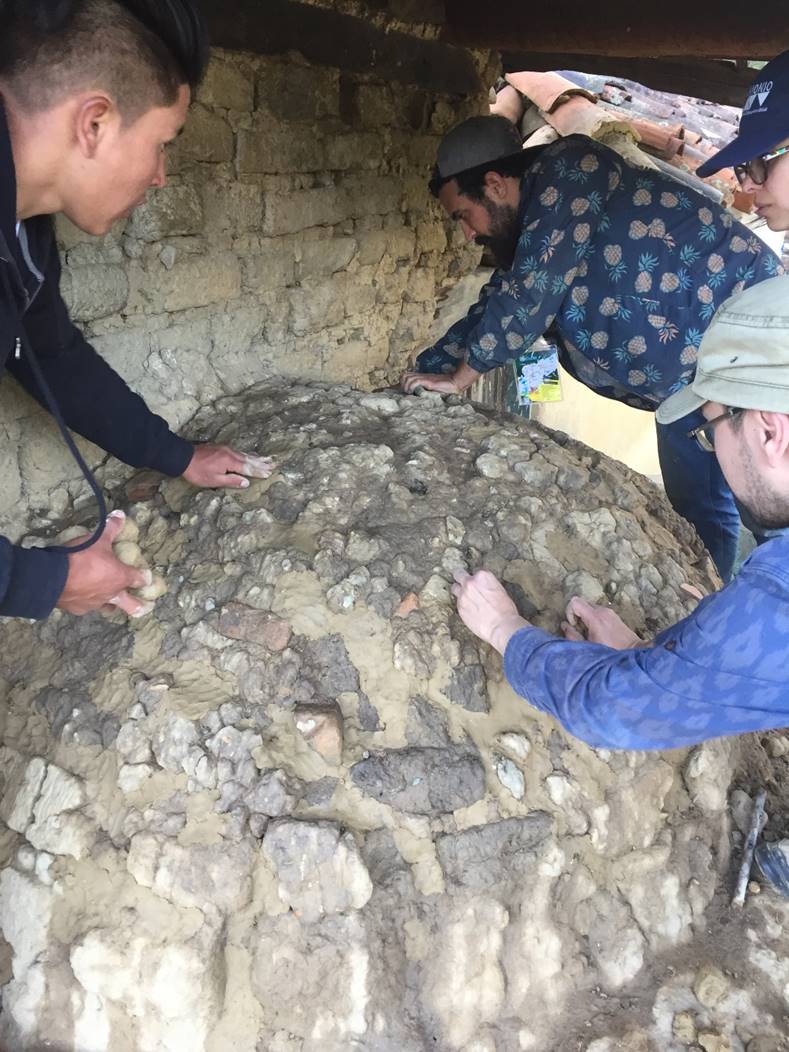
Lastly, it is important to note that, although these procedures were originally intended for the repair of components with earthen substrates, throughout different practices they have also been successfully used as filler and protection for brick and stone walls (Figure 11).
Conclusions
Earth based architecture faces various conservation challenges derived from the difficulties that clay presents in terms of its compatibility when working with other construction materials. The minerals at play here require maintaining very specific humidity ranges in order to preserve the shape and mechanical properties of the constructive components that they constitute. A lack or an excess of water causes their disintegration, so the interaction that they must have with the substances that surround them must allow for the same balance that clays develop naturally within their environment, based on the daily processes of the entry and exit of steam (Minke, 2005, p. 19).
Yet, earthen construction systems are based on the organic work of their components, so that efforts are distributed equally among all of them in order to avoid heavy load concentrations. Structures are composed of elements that interact dynamically, meaning that they are not mechanically compatible with rigid elements or joints that limit their autonomy of movement.
For these reasons, historical earthen structures were always designed to have the freedom to develop evapotranspiration processes and, in addition, to interact with constructive components whose resistance is comparatively low, so that they do not cause damage in the event of stress imbalances such as those resulting from differential subsidence and earthquakes.
In addition to these principles of historical and traditional design, another factor of the success behind earthen structures is derived from the preventive maintenance processes they received during centuries of occupation. Societies always had the necessary knowledge to review the constructive components and periodically or when necessary, place protective surfaces and replace or repair damaged elements. This explains why cities like Kaminaljuyú in Guatemala, Huacas de Moche in Peru or La Joya in Veracruz, Mexico, had occupations that, in highly challenging geographical conditions, exceeded 10 or 15 centuries in buildings made entirely of earth.
Nevertheless, the loss of tradition and the lack of time to carry out these activities have led to their progressive abandonment and the search for alternative protection with materials that are not derived from soil. At the end of the last century, and intensifying in recent times, historical and traditional buildings have been altered in their structure and have been covered with cement mortars and paints and synthetic finishes that in the long run have proven to be extremely harmful.
Faced with this cultural loss, it is necessary to rediscover forgotten learnings and to implement their teachings again as a means of restoration for damaged or abandoned buildings, in order to preserve them and, if possible, adapt them to provide better living conditions for their heirs.
There are different procedures that can aid the recovery of the structural behavior of adobe buildings, but most of them are complicated, expensive and require the participation of specialists. This fact strongly impacts the preservation work on this type of patrimony, which is usually demolished, instead of repaired.
The restoration techniques described in this article are based on research carried out over almost a decade, which has sought to increase the resistance and durability of constructive earth components. It has been proven that the incorporation of successive layers of modeled soils that are stabilized with lime before being manually densified allows the visual and structural unity of damaged walls to be restored. This strategy is relatively simple to carry out, even by the owners of damaged adobe houses, using a minimum of technical and material resource (Figure 12).
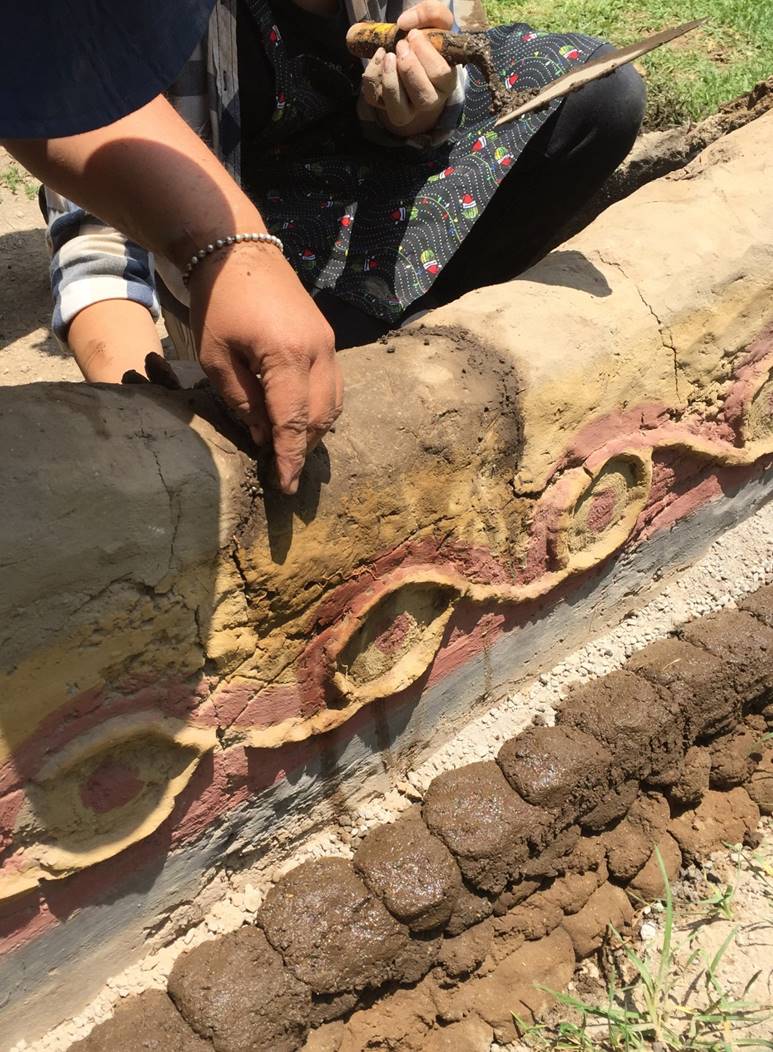
(Photograph: Luis Fernando Guerrero Baca, 2019)
Figure 12 Practice of consolidation and re-burial using modeled soil in the classes of the Master's Degree in Conservation and Restoration of Built Heritage of the ENCRyM-INAH
With this procedure, in addition to achieving optimal material compatibility, interventions are developed that are plainly sustainable from an economic, ecological and socio-cultural point of view; by using materials that are abundant in the region, low in water consumption, requiring minimal amounts of calcium hydroxide and local labor, which also has the benefit of recovering forgotten ancestral knowledge that, having sustained the life of complex societies throughout the world, has proven its efficiency (Guerrero, 2015, p. 81).
For a preservation project to be truly sustainable, it must include social participation strategies that provide options for its inhabitants to collectively carry out preventive maintenance.
No restoration should be thought of as finished effort whose effects will last forever. These are continuous processes that the next generations will have to continue, allowing them to expand their constructive knowhow in order to maintain their homes moving forward. Only in this way will it be possible to achieve modern social appropriation of this architectural heritage and ensure an improvement in the quality of life for the communities that have received it as their legacy.
Referencias
Cerro, M., y Baruch, T. (2011). Enduits terre & leur décor, mode d’emploi. París: Eyrolles. [ Links ]
De Anda, F. (6 de diciembre de 2017). Intervenciones de mala calidad causaron colapso de monumentos: INAH. El Economista. Recuperado de https://www.eleconomista.com.mx/empresas/Intervenciones-de-mala-calidad-causaron-colapso-de-monumentos-INAH-20171002-0082.html [ Links ]
Dipasquale, L., Omar, D. y Mecca, S. (2014). Earthquake resistant systems. En M. Correia,L. Dipasquale y Saverio M. (Eds.), VerSus. Heritage for Tomorrow (pp. 233-239). Florencia: Firenze University Press. [ Links ]
Doat, P., Hays, A., Houben, H., Matuk, S. y Vitoux, F. (1996). Construir con tierra , Tomo II. Bogotá: CRAterre-Fondo Rotatorio Editorial. [ Links ]
Fernández, C. (1992). Mejoramiento y estabilización de suelos. México: Limusa. [ Links ]
Guerrero, L. F. (2019). Comportamiento sísmico de viviendas tradicionales de adobe, situadas en las faldas del volcán Popocatépetl, Gremium, 6(11), 104-117. [ Links ]
Guerrero, L. F. (2018). Identificación y valoración del patrimonio precolombino construido con tierra modelada. Anales del Instituto de Arte Americano e Investigaciones Estéticas “Mario J. Buschiazzo, 48(1), 125-141. [ Links ]
Guerrero, L. F. (2016). El papel de la humedad y la compactación en la elaboración de revestimientos de tierra. Revista Construcción con Tierra, 7, 11-22. [ Links ]
Guerrero, L. F. (2015). Sostenibilidad y conservación del patrimonio edificado. Revista Palapa , III(1), 73-84. [ Links ]
Guerrero, L. F. (2007). Arquitectura en tierra. Hacia la recuperación de una cultura constructiva. Revista Apuntes, 20(2), 182-201. [ Links ]
Guerrero, L. F., Correia, M. y Guillaud, H. (2012). Conservación del patrimonio arqueológico construido con tierra en Iberoamérica. Revista Apuntes, 25(2), 210-225. [ Links ]
Guerrero, L. F. , Roux, R. y Soria, F. J. (2011). Ventajas constructivas del uso de tierra comprimida y estabilizada con cal en México. Revista Palapa, 1(10), 45-57. [ Links ]
Guerrero, L. F. y Vargas, J. (2015). Local Seismic Culture in Latin America. En M. Correia , P. Lourenço y H. Varum (Eds.), Seismic Retrofitting: Learning from Vernacular Architecture (pp. 61-66). Londres: Taylor & Francis Group. [ Links ]
Guillaud, H. (2014). Prólogo. En L. F. Guerrero (Comp.), Reutilización del patrimonio edificado en adobe (pp.15-25). México: Universidad Nacional Autónoma de México. [ Links ]
Hoffmann, M., Negrini, F. y Falleiros, A. (2011). Tapia. En C. Neves y O. Faria (Eds.), Técnicas de construção com terra (pp. 46-6). Bauru: FebUnesp/ProTerra. [ Links ]
Juárez, E. y Rico, A. (2010). Mecánica de suelos, Tomo I, Fundamentos de la mecánica de suelos. México: Limusa. [ Links ]
McHenry, P. (1996). Adobe. Cómo construir fácilmente. México: Trillas. [ Links ]
Minke, G. (2005). Manual de construcción en tierra. Montevideo: Fin de Siglo. [ Links ]
Pastor, M. (2017). La construcción con tierra en arqueología. Teoría, método, técnicas y aplicación. Alicante: Universitat D’Alacant. [ Links ]
Rocha, M. y Jové, F. (2015). Técnicas de construcción con tierra. Lisboa: Argumentum. [ Links ]
Vargas, J. , Gil, S., Jonnard, F. y Montoya, J. (2015). Camino prehispánico Pando. En C. Neves (Ed.), Tierra, sociedad, comunidad. 15° Seminario Iberoamericano de Arquitectura y Construcción con Tierra (pp. 284-297). Cuenca, Ecuador: ProTerra/Universidad de Cuenca. [ Links ]
Warren, J. (1999). Conservation of Earth Structures. Oxford: Elsevier Butterworth-Heinemann. [ Links ]
Weismann, A. y Bryce, K. (2010). Construire en terre facilement. La technique du cob, Sète. París: La Plage. [ Links ]
Received: March 22, 2019; Accepted: September 08, 2020; Published: December 21, 2020
 Este es un artículo publicado en acceso abierto bajo una licencia Creative Commons
