




Servicios Personalizados
Revista
Articulo
 texto en
  Inglés (pdf)
 Artículo en XML
 Referencias del artículo
 Traducción automática
 Enviar artículo por email
Indicadores
-
 Citado por SciELO
 -
 Accesos
Links relacionados
-
 Similares en
SciELO
Similares en
SciELO
Compartir

 Permalink
Agricultura, sociedad y desarrollo
versión impresa ISSN 1870-5472
agric. soc. desarro vol.22 no.1 Texcoco ene./mar. 2025 Epub 09-Jun-2025
https://doi.org/10.22231/asyd.v22i1.1598
Articles
Sayings from the farming sector: myths or reality according to knowledge of farmers in southern Ecuador
11 Escuela de Ingeniería Agropecuaria. Universidad Técnica Particular de Loja. San Cayetano Alto. 1101608, Loja, Ecuador.
22 Departamento de Ciencias Biológicas y Agropecuarias. Universidad Técnica Particular de Loja. San Cayetano Alto. 1101608, Loja, Ecuador.
Farmers have a wide range of sayings and phrases that are transmitted from generation to generation and which reflect their knowledge and view on farm life and work. The objective of this study was to identify the most relevant sayings in the rural sector, according to the perception of farmers from the rural area of the Province of Loja (Ecuador), and to determine if these sayings are myths or of they represent realities in the rural environment. For this purpose, information was gathered from farmers, through 251 semi-structured surveys, where informative contents were addressed, such as: gender, age, education level, sayings from the agriculture and livestock sector; the group was chosen taking into account the availability of the people and it was centered in those who were involved in the farming activity. The results were entered into Excel and analyzed with a Chi-squared test (p<0.05), to identify statistically significant differences; these showed that the survey respondents, regardless of their age, gender or education level, know about agricultural and livestock sayings and that these are constantly used to develop agriculture and livestock production activities such as sowing, pruning and other farming tasks. However, the study finds that not all the sayings have a scientific support, although many of them agree with agroproductive technical knowledge. The sayings are considered as a valuable form of ancestral knowledge and deserve to be reassessed and preserved for the future generations.
Keywords: agriculture and livestock production; ancestral knowledge; rural community
Los agricultores, tienen una amplia gama de dichos y frases que son transmitidos de generación en generación y que reflejan su conocimiento y visión sobre la vida y el trabajo en el campo. El objetivo de esta investigación, fue identificar los dichos más relevantes del sector rural, de acuerdo con la percepción de los agricultores de la zona rural de la provincia de Loja (Ecuador) y determinar si estos dichos, son mitos o representan realidades en el entorno rural. Para ello, se recopiló información de productores agropecuarios, a través de 251 encuestas semiestructuradas, en donde se abordaron contenidos informativos como: género, edad, nivel de educación, dichos del sector agrícola y pecuario; el grupo, se eligió considerando la disponibilidad de las personas y se centró en aquellos que estaban involucrados en la actividad agropecuaria. Los resultados se ingresaron en Excel y se analizaron con una prueba de Chi cuadrado (p<0.05), para identificar diferencias estadísticas significativas; los cuales, mostraron que los encuestados, independientemente del su edad, género o nivel de educación, conocen sobre los dichos agropecuarios y que estos, son utilizados constantemente, para desarrollar las actividades de producción agropecuaria como siembra, podas y otras labores agro-culturales. Sin embargo, se aprecia que no todos los dichos, tienen un respaldo científico, pero, varios de ellos, tienen concordancia con el conocimiento técnico agroproductivo. Los dichos, son considerados como una forma valiosa de sabiduría ancestral y merecen ser revalorados y preservados para las generaciones futuras.
Palabras clave: comunidad rural; producción agropecuaria; saberes ancestrales
INTRODUCTION
Ancestral knowledge is considered as native revelations of the shared feeling, which holds meanings and information that societies store in their culture and in the imaginary (Guijarro and Calvopiña, 2021). This is how these understandings emerge, which have the objective of seeking balance between humans and nature (Fierro et al., 2018). According to Bottasso (2019), science and traditional concepts are linked, such as food security, health and education, with culture and even spirituality, among others.
The traditions or expressions are transmitted from generation to generation, and they are part of diverse immaterial cultural heritage, because they make up a key element for the continuation of diversity and the cultural patrimony that confronts the stereotypes of world globalization (Organización de las Naciones Unidas para la Educación, la Ciencia y la Cultura-UNESCO, 2021). The intangible cultural heritage is the set of elements and processes related to inheritance and historical memory which give sense, identity and belonging to a community (Instituto Nacional de Patrimonio Cultural del Ecuador, 2013). However, not all communities place their trust in sayings, because they do not always agree and discrepancies can sometimes emerge (Velasco-Hernández et al., 2016).
This is why the sayings that are used in the agriculture and livestock sector tend to be lessons that are transmitted to the new generations and which synthesize the wisdom and experience of farmers and producers (Díaz et al., 2004). These sayings often have a symbolic or metaphorical meaning that is related to life and work in the farmland (Sánchez, 2020). Presently, several cultural and ancestral cues such as sayings are being lost, because these phrases are exclusive of older people, who have devoted most of their lives to agriculture or livestock production. It is common to hear several beliefs about the moon in the rural sector (Mayoral et al., 2020); for example, some sayings are mentioned, such as: “with a tender moon you do not castrate animals”, “when frogs sing in the night it will not rain”, “swallows bring good luck to residents of the homes where they nest”, “when a hen clucks, the animal is foretelling big problems, like death or even war”.
Although some sayings are of universal nature, others are known or mentioned in specific places (Koszla-Szymanska, 2010); they are used to refer to the importance of making careful and responsible decisions in the management of their farms. From the scientific approach, the sayings are not accepted if they are not proven, they can remain as superstitions or simply tales from older people, although oral expressions can be included as Immaterial Cultural Heritage (Instituto Nacional de Patrimonio Cultural del Ecuador, 2013).
The objective of this study was to gather, document and preserve farm sayings and proverbs that are part of the local community knowledge. This undertaking seeks to ensure that popular knowledge transmitted through generations is not lost, promoting its recognition and understanding in the current context. In addition, there is the attempt to foster knowledge and respect for agricultural and rural traditions, which have been fundamental in the formation of the cultural identity of these communities.
THEORETICAL FRAMEWORK
Ancestral sayings and understandings and agriculture and livestock production
Sayings are popular expressions, which are transmitted through short phrases, knowledge, advice or teachings in a concise and colloquial way. These phrases are transmitted from generation to generation and can have different meanings, with which ideas are communicated effectively in daily situations (Reyes et al., 2009). In the year 2001, UNESCO divulged that ancestral knowledge is high-value patrimony, since it contributes to all of humanity enriching their cultural heritage. In addition, it indicates that the transmission of this knowledge is necessary in rural communities, since it contributes with understandings related to the management of land, language, and the transmission of traditional activities from each locality (Calderón et al., 2021).
The sayings in peasant and indigenous communities contribute in an active way to the development of some good farming practices, with good use of natural resources, since they consider nature as a sacred entity in their knowledge and traditions, in which they wish to live with balance, using all the elements in it in a sustainable and fair manner with humanity (Greenwood and Lindsay, 2019).
Pacají et al. (2015) state that the sayings and their ancestral knowledge transmitted contribute to the understanding of current agricultural problems and the negative effects that they generate in the environment, due to intensive production and which would only want to be based on economic growth, but not in the environmental or social aspect. It should be highlighted that farmers who transmitted these understandings based their forms of production in not applying chemicals, crop rotation, water harvest, conservation works in soils such as strips, among others, with which they could attain adequate production without generating great environmental impacts on the ecosystems (Michalopoulos et al., 2019).
METHODOLOGY
Study area
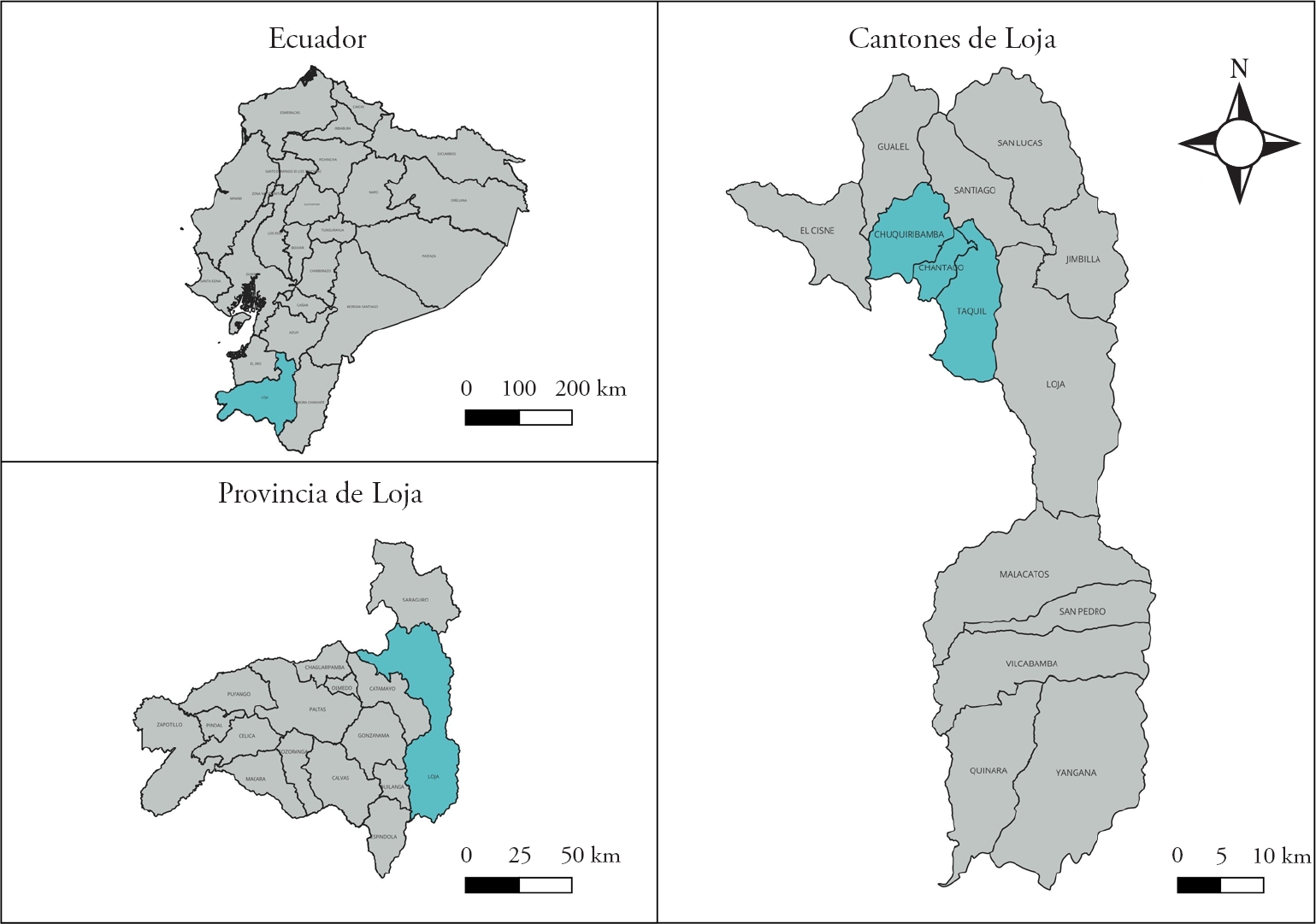
The study was conducted in the province of Loja (Figura 1), in a rural area of Taquil, Chantaco and Chuquiribamba, characterized by having fertile soils. The amplitude of the altitudinal interval ranges from 1,180 to 2,230 m above sea level. With cold climate, mean annual temperature of 15 °C, precipitation of 680 mm per year. Its economy is based on agriculture, with production of traditional crops such as corn and barley, and a large variety of vegetables; the production obtained is destined to be put on sale in many sectors of the provinces of Loja, El Oro and Guayas (Gobierno Autónomo Descentralizado de Chuquiribamba, 2011).
Sample size
A simple randomized sampling was conducted in the study zone, adjusted according to the availability of the people devoted to the agricultural activity. A total of 251 surveys were applied to the population from the rural area of the Loja canton, with an accuracy level of ± 7% and reliability of 95% (Israel, 1992); based on the population devoted to agriculture and livestock production in the province of Loja, the population occupied in agriculture is 137,848 (Instituto Nacional de Estadística y Censos - INEC, 2014), because there are no data at the level of the study zone. The surveys were semi-structured. The following were inquired about: a) Gender, age (17 to 35 years, 36 to 55 years, 56 to 70 years, older than 70), education level (none, primary, secondary, higher), activity they are devoted to (agriculture and livestock production, others). b) The main sayings of the farming sector that they mention more frequently, for example: “When there is sun and drizzle at the same time, blight is approaching the plants”; “The Cordonazo winds (for sowing) come on October 4th”; “You must water in the morning or at night, since the strong sun burns the plants”. In the livestock sphere, for example: “When the guinea pigs whistle, it is because their females are birthing”; “When the guinea pigs make clicking sounds, it is because someone is coming”; “When the frogs sing at night, it will rain”. Other sayings related to the farming sector, for example: “When the candle makes a sound, visitors arrive”; “When you can hear the creaking of the cicadas, summer continues or Easter Week has arrived”; “When the crickets sing, the rains are coming”. c) Lastly, they were asked where they acquired the knowledge, and if it was inherited or acquired.
The results were recorded and organized in an Excel matrix, to later be analyzed with a squared-Chi test (p<0.05), with the aim of understanding if there were statistically significant differences in knowledge of the sayings, by age, gender and education level. For the analyses, the statistical software SPSS version 24.0 was used. The results were analyzed, considering various demographic variables, such as gender, age, and education level. This approach allowed a more detailed evaluation.
RESULTS
Regarding how long the farmer had been devoted to agriculture, statistical differences were observed with age and education level (gender χ2=5.191 p=0.268; age χ2=115.434 p=0.001; education level χ2=32.579 p=0.001). The people from the groups 36 to 55 and 56 to 70 years old were the ones that are most devoted to this activity. On the other hand, the people who have a higher education level are the ones who have been devoted for longer to agricultural production activities. As additional piece of data, most (94%) of the inhabitants surveyed are mestizo.
Of the interviewees, 84% have heard some sayings referring to agriculture during the time they have been devoted to these tasks; no statistically significant difference was found with age (χ2=1.777 p=0.620). In terms of gender, women (80.5%) and men (85.8%) (χ2=1.162 p=0.185) have heard many sayings, although they did not present statistically significant differences. All the levels of education indicate in more than 84% that they have heard the farm sayings (χ2=0.983 p=0.805).
Of the survey respondents, 94% say that the sayings do come true, and the people 36 and older are the ones that believe even further in this statement; however, no statistically significant differences were observed with age (χ2=17.904 p=0.268). When it comes to gender, no statistical difference was found (χ2=0.21 p=0.427); in the case of men (93.8 %) and women (95.2 %), and they believe that the sayings do come true. Regarding the education level, the affirmative answer also prevailed in more than 92% at all levels, without showing statistical differences (χ2=1.933 p=0.586).
Among the people of all ages, 92.7% indicated that their family members (parents, grandparents, etc.) mention these sayings with the aim of keeping the tradition alive, although they did not present statistical difference (χ2=17.904 p=0.268). No statistical difference was found (χ2=0.939 p=0.245) between women (91.6%) and men (95%) in this aspect. The same happened with the educational level, there is no significant difference (χ2=1.88 p=0.597); 92.5% indicate that their family members continue mentioning these sayings.
Regarding whether the interview respondents believe that people from their community take into account the sayings in crop production, no statistical differences were observed by age (χ2=4.278 p=0.233). However, the entire group of the youngest interviewees (100%) indicated that people consider them most for agricultural activities. No significant differences were found between genders (χ2=0.688 p=0.407); 94% of the women and 91.1% of the men consider that people from their community take into account these sayings in the production of crops or livestock, presenting a statistically significant difference (χ2=4.442 p=0.218).
Concerning whether the sayings help improve agriculture and livestock production, 90% indicated that these understandings do help to improve agriculture and livestock production; however, the remaining percentage, which represents the youngest population, from 17 to 35 years (χ2=4.278 p=0.233), does not connect these sayings with farming. Of the men, 95.1%, and 87.6% of the women say the sayings do support production (χ2=3.507 p=0.061). Regarding the different education levels, they also opt for yes, without showing significant differences (χ2=1.902 p=0.593).
Of the survey respondents, 92% considered that the sayings are important and that they should be known both by professionals and technicians of the farming sector. However, no significant differences were observed according to age (χ2=3.256 p=0.776), gender % (χ2=4.738 p=0.094), and education level (χ2=4.589 p=0.598).
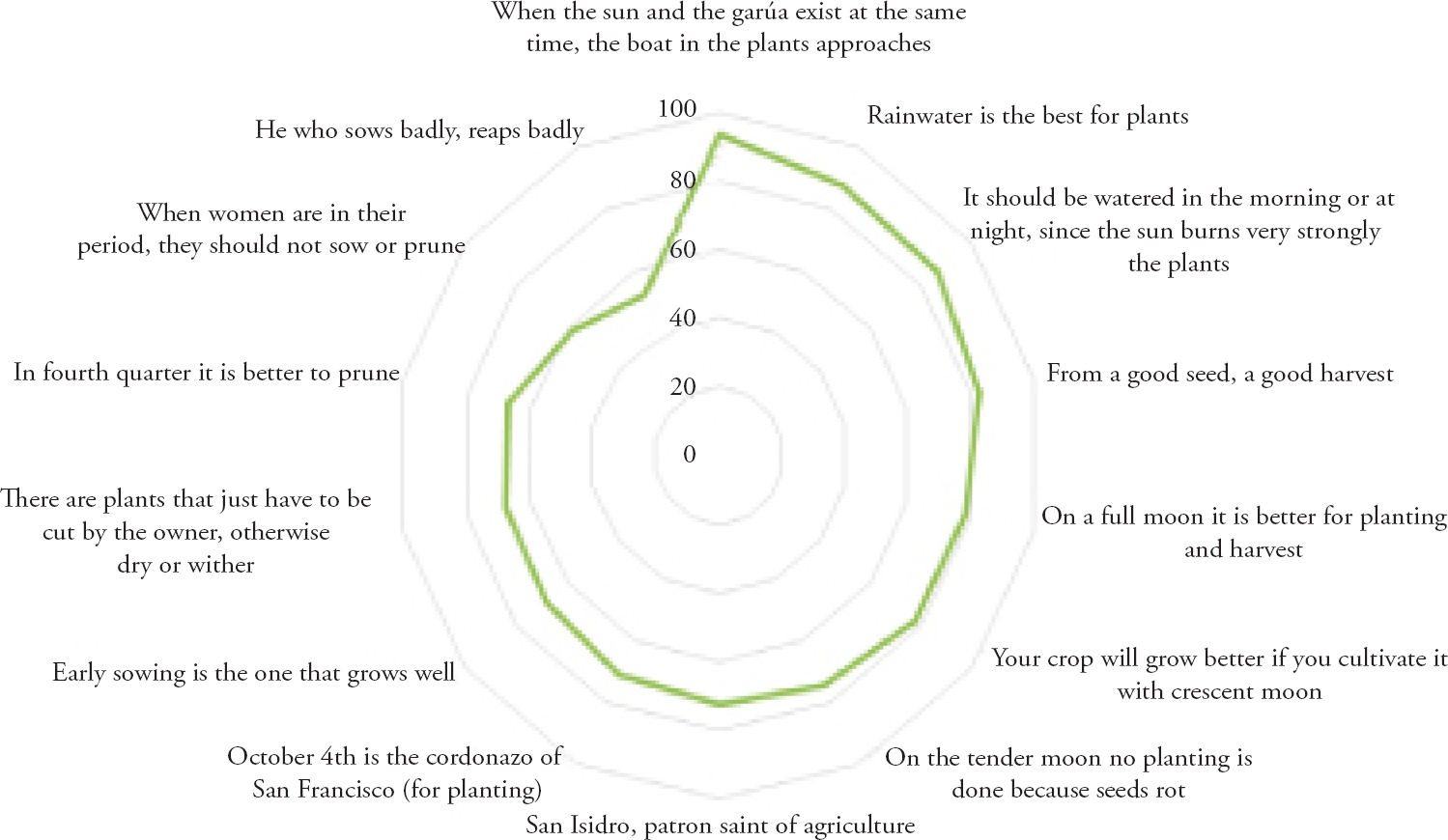
Figure 2 shows the main sayings mentioned by the people surveyed.
Source: prepared by the authors with data from the study.
Figure 2 Percentage of the sayings from the farming sector mentioned by survey respondents in the study zone.
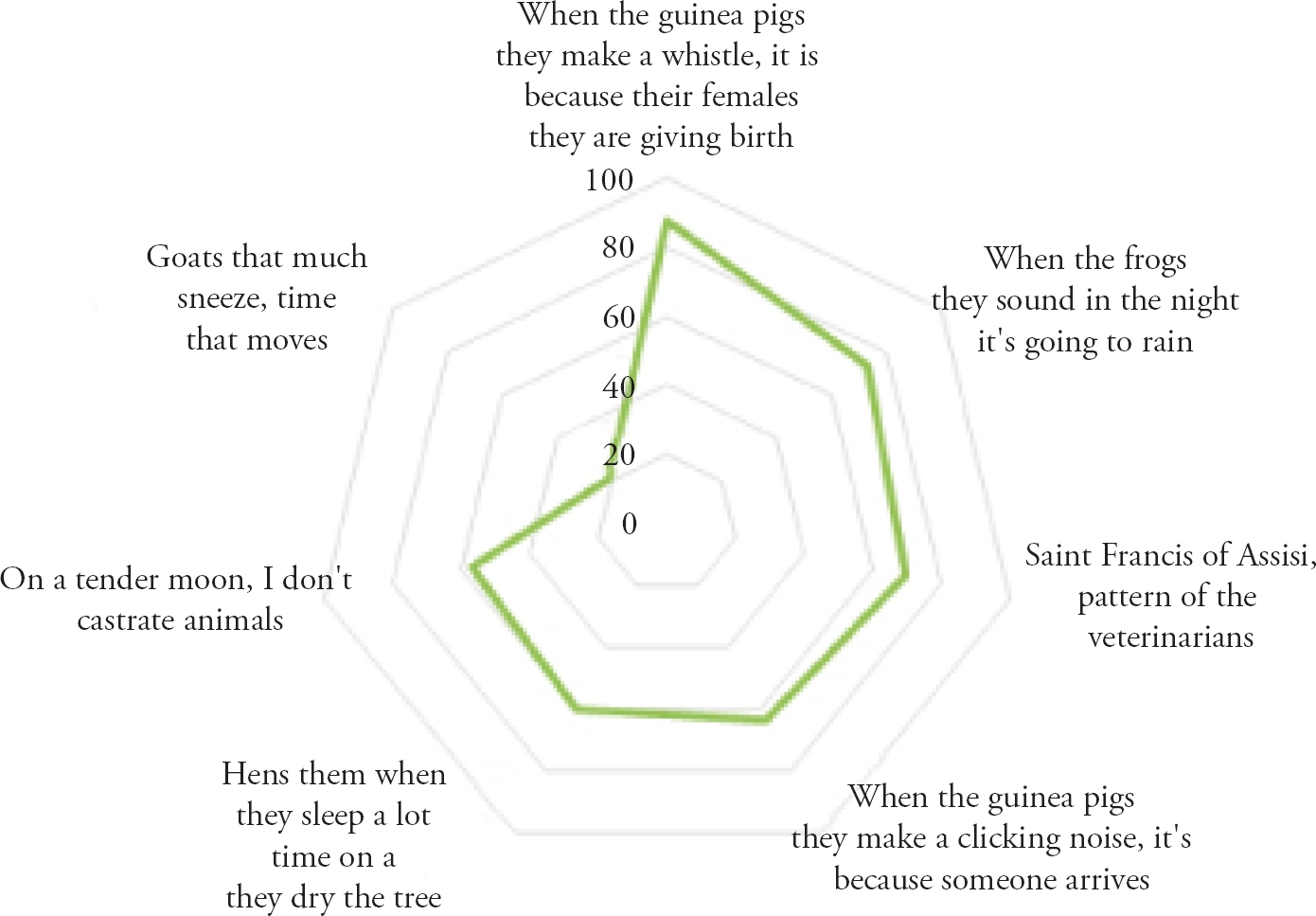
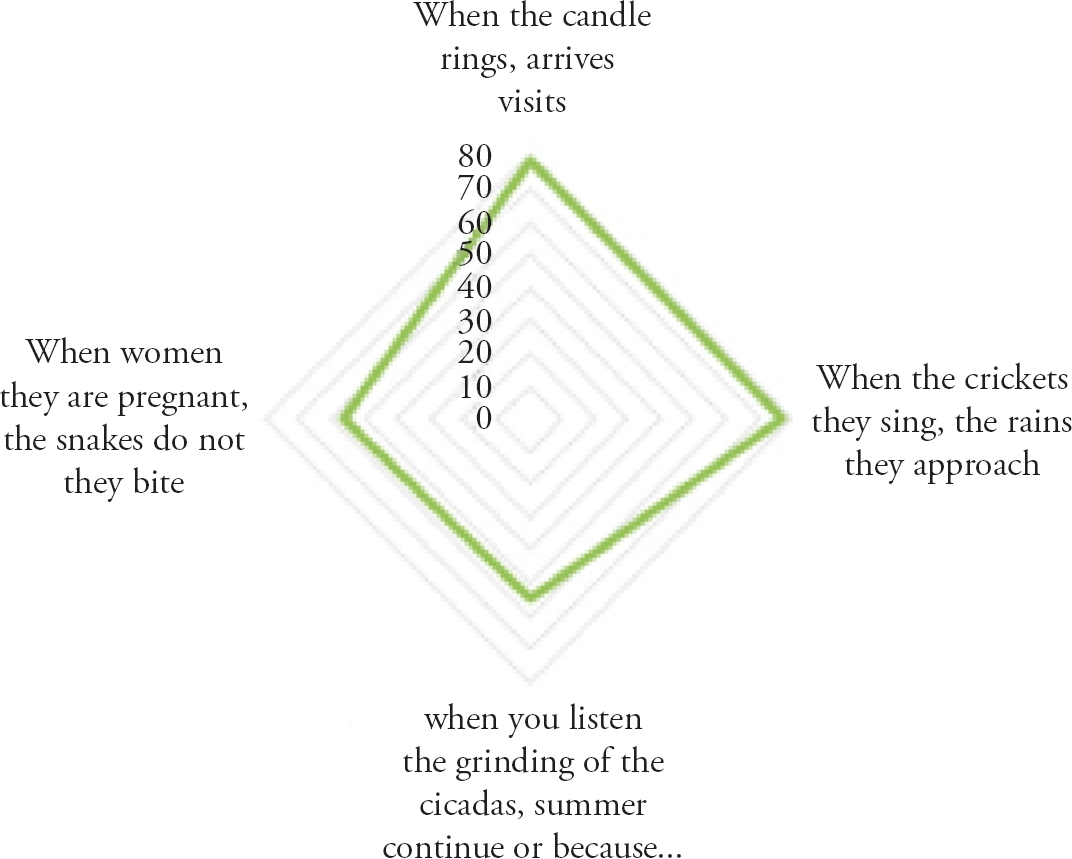
The sayings that have been heard to develop livestock activities are presented in Figure 3, and they are the main ones used to carry out livestock activities. Figure 4 shows some sayings related with different farming activities, among them the following.
Source: prepared by the authors with data from the study.
Figure 3 Sayings in the livestock component mentioned by survey respondents.
DISCUSSION
The sayings are part of the knowledge of the producers surveyed, and regardless of their age, gender or educational level, they know several sayings that they have heard from their grandparents and parents; and they consider that, yes, they do come true and are used in plant and animal production, which is why they indicate that it is necessary for all professionals or those devoted to other activities to know them.
This concept agrees with the research by Ramírez et al. (2007), who highlight the importance of teaching everyone, no matter their age, gender or education level, that sayings are an essential element to foster the success of farmers. This would allow them to understand the local culture better and to foster the preservation of cultural identity, which is especially relevant for indigenous peoples, who are often the main cultural references in Latin American countries.
Sayings from the agricultural sector
When it comes to sayings, analyzing one of the most mentioned, “when there is sun and drizzle at the same time, lancha is approaching the plants”, refers to the fact that when these two weather events happen (sun and rain), the lancha fungus (blight) affects the crops, since this environment creates the conditions of moisture favorable for this disease to develop; therefore, the producers must try to irrigate their plants by spraying, to avoid plants from developing blight, because they eliminate part of the fungus that way. In this sense, Fry (2008) mentions that lancha is produced by the Phytophthora infestans fungus, known as the “destroyer of plants” and appears when there are abrupt temperature changes, since that is when it liberates sporangia into the atmosphere for its dispersion. The propagation is very fast, even with brief drizzle or water spatter, and can completely contaminate a crop in a short period of time.
Another saying mentioned by the survey respondents was “rain water is the best for plants”; the interviewees claim that the crop is irrigated evenly, that no plant is left without watering, that it is very beneficial for the yield of their crops, and that their growth is the best because the water is of better quality. In relation to this, Alnaim et al. (2022) indicated that rain water is natural and contains nutrients that are beneficial for the growth of plants, which can contribute to a higher yield of the crops.
The saying, “from a good seed, you get a good harvest”, is used by farmers to select the seed. For example, they choose the cobs with the largest grain size, the most volume and the heaviest, and when they separate the seeds from the cobs, they take those from the central part and not the corn grains from the seat (near the peduncle) or from the tips (near the feminine inflorescences), because they consider them of bad productive quality. In this sense, Dorial (2010) indicated that, genetic improvements began with scientific advancement, for which the seeds chosen for this type of trials are the ones that present the best characteristics, and with them, they begin the crosses to attain a higher quality and then trade these certified seeds which will result in higher production and be more resistant to pests and diseases.
The sayings that refer to the moon were: “the full moon is better for sowing and harvesting”, and “the harvest will grow better if it is grown with a waxing moon”, indicating that in the stage of the full moon, they try to harvest their leaf products; and that stems can be used, such as turnips, asparagus, chard, leaf onions, celery, etc. This allows them for their harvests to be abundant compared to the harvest in other moon phases. This agrees with what was reported by Tercero y Portillo (2012): during the full moon, the intensity of photosynthesis is superior in all plants; in addition, the sap in plants accumulates in the stems and leaves, reason why the vegetables are larger and heavier.
Concerning the harvest, Vásquez et al. (2014) state that for the immediate consumption, the most adequate lunar phase is the new moon, because it is in this period when the fruits reach their maximum degree of juiciness. In contrast, when the purpose of the harvest is to obtain seeds, the optimal lunar phase corresponds to the full moon.
Bonelo (2012) indicated that in this full moon phase, it is not recommended to sow, since “the plant flowers without fructification, and with a weak stem, which produces breakage”. In addition, the authors also mention that in the new moon or tender moon phase, the luminosity decreases and produces less development in the vegetation. In this phase, the plant’s sap is concentrated in the roots and there is a great availability of water in the soil, which supports sowing and germination of seeds. In another context, wood cutting is carried out during this lunar phase to obtain reproductive stakes, which effectively prevents the loss of moisture and, therefore, the subsequent formation of mildew (Mariaca, 2003).
Sayings from the livestock production sector
Among the sayings most often mentioned in the livestock production sphere, there is “when guinea pigs whistle, it is because their females are birthing”. The people from the localities of study also mention the saying, “when the guinea pigs make a clicking noise, it is because someone is arriving”, and it should be mentioned that the production of guinea pigs is high in the study zone, since their tradition and gastronomy is largely based on the production of these animals (Montalván and Cabrero, 2019).
Regarding this, Verduzco et al. (2012) mention that guinea pigs are very sociable animals and need to be, at the least, in couples, and they make sounds to exteriorize their emotions, whether in adverse or favorable conditions. For example, when they are hungry or when they need attention, or when they are exploring their surroundings. They make the purring sound when they are petted, to express joy; a low purring with much vibration is made by the male to court the female, when they are happy or when they are uncomfortable, and it is a manifestation prior to an upset; when they click their teeth and run away, it is because they are angry.
Another of the relevant sayings is, “San Francis of Assisi, patron of veterinarians”, by which the inhabitants indicate he is a very miraculous saint and when the animals become sick, they resort to the saint with their prayers and their animals heal. This is when it is small species, but if they are costly animals (larger species), then they not only need the prayer from the owner, but also the prayer of more people from the community, so they pay for the celebration of a mass devoted to their saint and ensure that the animal heals.
Comparing what is described in the results, Martínez et al. (2012) mentioned that farmers see Saint Francis of Assisi as a protecting figure, which brings them strength to overcome the problems and challenges of their work. To ask for help to improve their harvests and deal with problems such as drought and pests, they perform religious rituals such as offerings, prayers and processions. Saint Francis was a profoundly pious figure, with a genuine worry for the environment and wild life. His mission constituted in disseminating awareness through his sermons and concrete actions. Through initiatives such as reforestation, environmental education, climate activism and the protection of species in danger of extinction in the world, the message from Saint Francis and his celebration of land, continue to be valid currently.
The saying of “when frogs sing during the night, it will rain” indicates that frogs are animals that predict rainfall, which agrees with what was mentioned by Martínez et al. (2012), who highlight the sound of green frogs (Dendropsophus molitor) and argue that they attract rainfall with their song, in addition to feeding on small insects, which contributes to maintaining the crops free of pests. These frogs are always near the puddles or in livestock water troughs, and when the summer is prolonged and a long time has passed without rain, they sing as if they are asking for water, and this is how we know that it will rain. Something similar happens with the frog species Rhinella horribilis, which helps to take care of water.
The expression “during the tender moon, animals are castrated” is a broadly recognized proverb and cited by survey respondents. According to Mariaca (2003), the waning quarter of the moon stands out as a highly favorable phase for a variety of activities in the rural sphere. In the castration process of pigs, lambs and dogs, a significant reduction in bleeding has been observed as well as faster scar formation.
Various sayings
Fire has several meanings and is used in purification rituals (Prieto, 2011). In the place of study, many sayings were mentioned; one of the most often mentioned was “when the candle makes a sound, visits arrive”; this sound is similar to pyrotechnics. Related to fire, they also manifested that they must throw ash on the flame or fire, for the visitor not to come empty-handed. For example, in the province of Badajoz (Spain), the local associations are the ones in charge of organizing cultural acts with fire; lamps are lit in the streets, and some believe they represent evil spirits, who end up being ephemeral in the fire (Prieto, 2011); this is how fire has an important role in culture and tradition, both in religious and in non-religious acts.
About the saying “when the crickets sing, the rains are near”, survey respondents say that their sounds bring joy to those who hear them, and that the months that are primarily for rain are January, March, May, June, July and August. However, that not only crickets are indicators that it will rain, but also the swallows. According to Aller (2007), crickets are an accurate thermometer, and this author indicated that if they sing faster, it is warmer, and when the sound is slower, it is cold.
In the place of study, another saying is “when you hear the squeak of the cicadas, summer continues or it is because Easter has arrived”; the inhabitants indicate that the sound of the cicadas is more intense in the months of April and October, which are summer months and with less intensity in February, September, November and December (Pérez-Garrido, 2015). The sound of these insects is a key indicator of the season of the year in this region and it is part of a strong connection between culture and nature. People have learned to interpret these signals and to use them to guide themselves and to plan activities, showing a strong connection between them and the traditions and ecosystem.
When it comes to knowledge in general of survey respondents, it can be appreciated that there is an increasing loss of understandings, cultural expressions, customs (Ruiz et al., 2015; Martínez-López et al., 2019). Likewise, some traditions such as the celebration of maize worship with the “Inti-Raymi” festivity, is also considered cultural erosion in the population, acculturation and loss of identity of the people in the community (Pinto and Abad, 2017). Ecuador is one of the countries that give much value to these traditions, because they are a historical part in the collective memory (Larriva de los Reyes, 2022). The adult population has been admired for its wisdom and the contribution of advice, thanks to the experience they have attained throughout their life, as in the case of the study zones and other zones, where their understandings have been transmitted from generation to generation (Cruz Hernández et al., 2020). It should be highlighted that young people play an important role in the present, and they are the strategic stakeholders in the strengthening of ancestral knowledge (Coronel, 2015); if they do not learn and transmit this knowledge to other generations, it will be lost with the passing of years, leaving behind valuable understandings that have contributed, for years, to agriculture and livestock production and society in general.
The female gender also has an important role in the transmission of these understandings, since historically women are the ones in charge of performing work in the gardens or in small agroproductive spaces; and at the same time, they are usually the ones in charge of guiding their children in their education, whether formal or informal. However, it should be said that women are not paid and are excluded from participating in certain benefits within their family nucleus (Logiovine and Bianqui, 2020); therefore, the adequate value should be given to women, so they continue contributing with their accurate transmission of knowledge. Within the study area, the survey respondents have rescued several ancestral traditions, among which the care for the family unit stands out; women have managed to conserve beliefs and practices, in order to conserve the intercultural identity and diversity of Ecuador’s people (Zurita et al., 2017).
An odd saying is “when women are pregnant, snakes don’t bite them”; the people from the community believe that snakes do not bite pregnant women, and they mention that if a pregnant woman approaches a snake, it dozes off or twists. However, if the woman is scared by the snake, there will surely be a miscarriage. In addition, if a snake appears in the path frequently traveled by a woman and it does not scare or kill her, the snake will continue to be in that place and it is recommended to change the route. Koszla-Szymanska (2010) describes that snakes are seen as treasure guardians, but there is no scientific evidence that supports this or what is mentioned by inhabitants of the study zone.
CONCLUSIONS
Inhabitants of the Taquil, Chantaco and Chuquiribamba communities are a diverse and valuable group of farmers who carry out an important role in the local economy and in the economic and social development of the region. Their devotion to agriculture and animal breeding allows them to generate economic income to support their families; they use various popular sayings to develop their farming activities. These sayings or ancestral understandings can be lost due to the migration of young generations. To determine with certainty if the sayings are myths or realities, it is essential to carry out deeper and more exhaustive studies about each statement.
On the other hand, ancestral knowledge and scientific knowledge are closely related and it is important to recognize the importance of both, in order to advance in the understanding of nature and the world around us. The combination of these understandings can result in a mutual enrichment and a faster and more effective advancement in scientific research.
ACKNOWLEDGEMENTS
The authors wish to express the most sincere gratitude to the survey respondents.
REFERENCES
Alnaim MA, Mohamed MS, Mohammed M, Munir M. 2022. Effects of automated irrigation systems and water regimes on soil properties, water productivity, yield, and fruit quality of date palm. Agriculture. 12(3). 343. https://doi.org/10.3390/agriculture12030343. [ Links ]
Bonelo E. 2012. Palabra - poder: el lugar de los ritos en las prácticas agrícolas de las comunidades kichwas del cantón Cotacachi. Tesis de maestría. Universidad Andina Simón Bolivar. Ecuador. https://repositorio.uasb.edu.ec/bitstream/10644/3202/1/T1184-MEC-Bonelo-Palabra.pdf. [ Links ]
Calderón C, Tenesaca LE. 2022. Saberes ancestrales e interculturalidad del pueblo Cofán. Ciencia Latina Revista Multidisciplinar. 6(3). 610-637. https://doi.org/10.37811/cl_rcm.v6i3.2249. [ Links ]
Cruz S, Torres GA, Cruz A, Salcedo I, Victorino L. 2020. Saberes tradicionales locales y el cambio climático global. Revista Mexicana de Ciencias Agrícolas. 11(8). 1917-1928. https://doi.org/10.29312/remexca.v11i8.2748. [ Links ]
De La Torre AF. 2015. Los saberes ancestrales y su incidencia en los jóvenes del cantón playas. Tesis de Licenciatura, Universidad Estatal Península de Santa Elena, La Libertad, República del Ecuador. http://repositorio.upse.edu.ec/handle/46000/3826. [ Links ]
Díaz MG, Ortiz P, Núñez I. 2004. Interculturalidad, saberes campesinos y educación. Un debate con la diversidad cultural. El Colegio de Tlaxcala: Tlaxcala, México. http://ru.iiec.unam.mx/2172/1/Libro%20Interculturalidad,%20saberes%20campesinos%20y%20educaci%C3%B3n%20pdf.pdf. [ Links ]
N, Capa D, Jaramillo L, Jiménez L. 2018. Capacitaciones en huertos caseros, una alternativa de producción familiar para la etnia Saraguro al sur del Ecuador. Revista de Extensión Universitaria +E. 8(8). 174-186. https://doi.org/10.14409/extension.v8i8.Ene-Jun.7726. [ Links ]
Fry W. 2008. Phytophthora infestans: la planta (and R gen) destroyer. Molecular Plant Pathology. 9(5): 385-402. https://doi.org/10.1111/j.1364-3703.2007.00465.x. [ Links ]
Gobierno Autónomo Descentralizado de Chuquiribamba. 2011. Plan de desarrollo y ordenamiento territorial de Chuquiribamba. Ecuador. [ Links ]
Greenwood M, Lindsay NM. 2019. A commentary on land, health, and Indigenous knowledge(s). Global Health Promotion, 26(3_suppl). 82-86. https://doi.org/10.1177/1757975919831262. [ Links ]
Guijarro PR, Calvopiña DM. 2021. Conocimiento ancestral medicinal y turismo de salud en el cantón Colta, provincia de Chimborazo. ReHuSo 6(3). 14-28. https://doi.org/10.5281/ze-nodo.5512704. [ Links ]
Instituto Nacional de Patrimonio Cultural del Ecuador. 2013. Guía metodológica para la salvaguarda del Patrimonio Cultural Inmaterial. https://www.patrimoniocultural.gob.ec/guia-metodologica-para-la-salvaguardia-del-patrimonio-cultural-inmaterial/. [ Links ]
Israel GD. 1992. Determining Sample Size. University of Florida Cooperative Extension Service, Institute of Food and Agriculture Sciences, EDIS: Florida; pp. 1-5. https://www.psycholosphere.com/Determining%20sample%20size%20by%20Glen%20Israel.pdf. [ Links ]
Koszla-Szymanska M. 2010. Supersticiones y creencias populares relacionadas con animales arraigadas en las culturas gallega y polaca. In: El camino de Santiago: Encrucijada de lenguas y culturas. Gráficas Varona, S.A. Pol. Industrial “El Montalvo”: Salamanca, España; https://cvc.cervantes.es/ensenanza/biblioteca_ele/aepe/pdf/congreso_45/congreso_45_14.pdf. pp: 147-157. [ Links ]
Larriva MJ. 2022. Propuesta gráfica que visibilice los saberes ancestrales de las plantas medicinales, y permita la vinculación entre los jóvenes quiteños y su herencia cultural. Pontificia Universidad Católica del Ecuador: Ecuador. https://repositorio.puce.edu.ec/items/f9966944-fc1c-46f5-ad09-7998560c7f4e/full. 130 p. [ Links ]
Logiovine S, Bianqui VP. 2020. Usos del tiempo y el espacio del trabajo de las mujeres de la agricultura familiar del noroeste argentino. In: XII Congreso Internacional de Investigación y Práctica Profesional en Psicología. XXVII Jornadas de Investigación. XVI Encuentro de Investigadores en Psicología del MERCOSUR. II Encuentro de Investigación de Terapia Ocupacional. II Encuentro de Musicoterapia. Facultad de Psicología - Universidad de Buenos Aires, Buenos Aires, 2020. https://n2t.net/ark:/13683/etdS/rAu. [ Links ]
Mariaca R. 2003. Prácticas, decisiones y creencias agrícolas mágico-religiosas presentes en el sureste de México. Etnobiología. 3(1). 66-78. https://revistaetnobiologia.mx/index.php/etno/article/view/103. [ Links ]
Martínez-López A, Cruz-León A, Sangerman-Jarquín DM, Cárdenas SD, Cervantes J, Ramírez-Valverde B. 2019. El estudio de los saberes agrícolas como alternativa para el desarrollo de las comunidades cafetaleras. Revista Mexicana de Ciencias Agrícolas. 10(7). 1615-1626. https://doi.org/10.29312/remexca.v10i7.2113. [ Links ]
Mayoral O, Solbes J, Cantó J, Pina T. 2020. What has been thought and taught on the lunar influence on plants in agriculture? perspective from physics and biology. Agronomy. 10(7). 955. https://doi.org/10.3390/agronomy10070955. [ Links ]
Michalopoulos S, Putterman L, Weil DN. 2019. The Influence of Ancestral Lifeways on Individual Economic Outcomes in Sub-Saharan Africa. Journal of the European Economic Association. 17(4). 1336. https://doi.org/10.1093/jeea/jvz042. [ Links ]
Montalván A, Cabrero F. 2019. La gastronomía como recurso de la identidad ancestral: el caso de la Parroquia Chuquiribamba, Loja, Ecuador. Revista Amazónica Ciencia y Tecnología 8(2). 126-135. https://doi.org/10.59410/RACYT-v08n02ep04-0113. [ Links ]
Pacají G, Tapia W, Bustamante IC. 2015. Recuperación de técnicas constructivas tradicionales de la Parroquia Chuquiribamba. In: 15° Seminario Iberoamericano de Arquitectura y Construcción con Tierra. Cuenca del 9 al 13 de noviembre de 2015; Achig MC, (coord). Universidad de Cuenca. Ecuador. 704-713. https://dialnet.unirioja.es/servlet/articulo?codigo=6086011. [ Links ]
Pérez-Garrido FF. 2015. Flores, dioses, tifones y cigarras: el calendario tradicional japonés a través de su contacto con la naturaleza. Kokoro: Revista para la difusión de la cultura japonesa. (19). 15-22. https://dialnet.unirioja.es/servlet/articulo?codigo=6045427. [ Links ]
Pinto M, Abad A. 2017. Valor cultural del maíz y tecnologías ancestrales en la parroquia Cayambe de Ecuador. Revista Chakiñan de Ciencias Sociales y Humanidades. (2). 47-60. https://doi.org/10.37135/chk.002.02.05. [ Links ]
Prieto OG. 2011. Las fiestas anuales y quinquenales de la Virgen Candelaria del Socorro de Huanchaco: expresión religiosa de los pescadores de la Costa Norte del Perú. Arqueología y Sociedad. (23). 193-222. https://doi.org/10.15381/arqueolsoc.2011n23.e12313. [ Links ]
Ramírez CA. 2007. Las comunidades indígenas como usuarios de la información. Investigación Bibliotecológica. 21(43). 209-230. https://doi.org/10.22201/iibi.0187358xp.2007.43.4134. [ Links ]
Reyes-García V, Broesch J, Calvet-Mir L, Fuentes-Peláez N, McDade TW, Parsa S, Tanner S, Huanca T, Leonard WR, Martínez-Rodríguez MR. 2009. Cultural transmission of ethnobotanical knowledge and skills: an empirical analysis from an Amerindian society. Evolution and Human Behavior. 30(4). 274-285. https://doi.org/10.1016/j.evolhumbehav.2009.02.001. [ Links ]
Rúa FJ. 2007. Pronosticadores naturales del tiempo atmosférico. Ambiociencias - Revista de Divulgación Científica. (Cero). 36-44. https://doi.org/10.18002/ambioc.v0i1.4801. [ Links ]
Tercero RE, Portillo KA. 2012. Evaluación del crecimiento y rendimiento del cultivo de Rábano (Raphanus sativus L.) en diferentes fases lunares en la unidad de producción Las Mercedes, UNA, Managua. Tesis de Ingeniería, Universidad Nacional Agraria, UNA. Managua, Nicaragua. https://repositorio.una.edu.ni/id/eprint/2202. [ Links ]
UNESCO (United Nations Educational, Scientific and Cultural Organization). 2021. Conocimientos y usos relacionados con la naturaleza y el universo. https://ich.unesco.org/es/conocimientos-relacionados-con-lanaturaleza-00056. [ Links ]
Vásquez AD, Narváez JM, Calero WA. 2014. Los efectos de la luna en la producción agropecuaria. Revista Universitaria del Caribe. 13(2). 21-25. https://revistas.uraccan.edu.ni/index.php/Caribe/article/view/332. [ Links ]
Velasco-Hernández MA, Morales-Acoltzi T, Juárez-Sánchez JP, Estrella-Chulim NG, Díaz-Ruíz R, Bernal-Morales R. 2016. Relación entre saberes campesinos y variables climáticas en la región centro oriente de Puebla, México. Agricultura, Sociedad y Desarrollo. 13(4). 643-662. https://doi.org/10.22231/asyd.v13i4.499. [ Links ]
Verduzco-Mendoza A, Alfaro-Rodríguez A, Arch-Tirado E. 2012. Etología y bioacústica en ratas y cobayos. Revista Mexicana de Comunicación, Audiología, Otoneurología y Foniatría. 1(1). 7-12. https://www.medigraphic.com/pdfs/audiologia/fon-2012/fon121b.pdf. [ Links ]
Zurita SP, Murillo FM, Defaz, YP. 2017. Los saberes culturales en la crianza de los hijos. Revista Boletín Redipe, 6(6). 97-106. Recuperado a partir de https://revista.redipe.org/index.php/1/article/view/246. [ Links ]
Received: April 28, 2023; Accepted: September 06, 2023
 Este es un artículo publicado en acceso abierto bajo una licencia
Creative Commons
Este es un artículo publicado en acceso abierto bajo una licencia
Creative Commons
