




Servicios Personalizados
Revista
Articulo
 texto en
  Inglés (pdf)
 Artículo en XML
 Referencias del artículo
 Traducción automática
 Enviar artículo por email
Indicadores
-
 Citado por SciELO
 -
 Accesos
Links relacionados
-
 Similares en
SciELO
Similares en
SciELO
Compartir

 Permalink
Agricultura, sociedad y desarrollo
versión impresa ISSN 1870-5472
agric. soc. desarro vol.22 no.1 Texcoco ene./mar. 2025 Epub 09-Jun-2025
https://doi.org/10.22231/asyd.v22i1.1435
Articles
Ecological impact from the use of firewood in a high mountain community in Tamaulipas, Mexico
11 Facultad de Ingeniería y Ciencias, Universidad Autónoma de Tamaulipas. Centro Universitario Victoria. Cd. Victoria, Tamaulipas, México, 87149.
High mountain forests are habitat for a broad diversity of plant species. In rural households, firewood biomass from forests is the main source of fuel, both for cooking and for heating during the cold season. The objective of the study was to determine the relationships of rural families with plant resources, through the use of firewood in open hearths. The variables studied were consumption, extraction, use and management of woody species, and the processes related to the impact on the tree structure in a high mountain community in Miquihuana, Tamaulipas, Mexico. A survey was applied to the inhabitants to understand the forest species used as biofuel, the amount of logs, the distance traveled to obtain them; and, through the use of satellite images, the normalized differentiation vegetation index (NDVI) was obtained. A loss of plant coverage of 7.7% was found, between 2010 and 2020; the main species used are oak (Quercus mexicana) and pine (Pinus pseudostrobus), because of their characteristics of combustion and the flame duration, as well as the amount of biomass used by family per year, which is approximately 74.0 m3. The density of the species decreases mainly due to the extraction of firewood for domestic use, because it is an activity that is conducted day after day. This indicates that there is a negative impact in the forests and it is necessary to apply actions that help in their recovery.
Keywords: biomass; rural families; timber-yielding resources; tree vegetation
Los bosques de alta montaña, son el hábitat de una amplia diversidad de especies vegetales. En los hogares rurales, la biomasa leñosa de los bosques, es la principal fuente de combustible, tanto para cocinar, como para calefaccionar en época de frío. El objetivo de la investigación, fue determinar las relaciones de las familias rurales con los recursos vegetales, mediante el uso de leña en fogones abiertos. Las variables estudiadas, fueron el consumo, la extracción, el uso y manejo de especies leñosas y los procesos relacionados con el impacto en la estructura de la vegetación arbórea, en una comunidad de alta montaña, en Miquihuana, Tamaulipas, México. Se aplicó una encuesta a los habitantes, para conocer las especies forestales utilizadas como biocombustible, cantidad de leños, distancia recorrida para su obtención y mediante el uso de imágenes de satélite, se obtuvo el índice de diferencia normalizada de vegetación (NDVI). Se encontró una pérdida de cobertura vegetal de 7.7%, entre 2010 y 2020; las principales especies utilizadas, son encino (Quercus mexicana) y pino (Pinus pseudostrobus), debido a sus características de combustión y duración de la flama, así como la cantidad de biomasa utilizada por familia al año, que es aproximadamente de 74.0 m3. La densidad de las especies, disminuye principalmente, por la extracción de leña para el uso doméstico, debido a que es una actividad que se lleva a cabo día con día. Esto indica que, existe un impacto negativo en los bosques y es necesario aplicar acciones que ayuden a su recuperación.
Palabras clave: biomasa; familias rurales; recursos maderables; vegetación arbórea
INTRODUCTION
High mountain forests are habitat for a broad diversity of plant species, which intervene with different functions in favor of the environment, such as water accumulation, attenuation of local climate, reduction in the impact of contaminant gas emissions, prevention of soil loss from erosion, in addition to protecting human communities against avalanches, rock detachment, and landslides (Gottle and Sène, 1997). They are also a source of renewable energy that is available practically in the entire planet (Arfin et al., 2014), which is estimated to represent approximately 10% of the total of types of energy used (Food and Agriculture Organization of the United Nations-FAO, 2018).
In rural households, woody biomass from the forests is the main source of fuel, both for cooking and for heating during the cold season; in different tree species, it has been recognized as an alternative and profitable source of energy, because it is a fuel that has environmental advantages over fossil fuels (Komala and Prasad, 2014). However, Sada-Ovalle et al. (2015) mention that timber-yielding plant species from forests are used inadequately. In the world, 3,000 million people depend on this resource to cook or to protect themselves from the cold inside the house, as is the case of the locality of study (Marcela, Miquihuana, Tamaulipas, Mexico), due to a rigorous winter since it is a high mountain community, which represents a concerning theme for the environment because of the daily use of the resource in rural zones (Rosenthal, 2015).
According to the National Institute of Statistics and Geography (Instituto Nacional de Estadística y Geografía, INEGI, 2010), in Mexico there are nearly 142 million hectares covered by forest (Merino-Pérez, 2013), which are used by almost 20% of the rural population as a source of energy for the households. This demand has an impact on the regeneration of the ecosystems, causing for some timber-yielding species to reduce their natural populations considerably (Bello-González et al., 2015).
In Mexico, the use of forest species as wood fuels can supply most of the rural population and part of the urban, which, as a whole, is estimated to be around 28 million (Masera and Fuentes, 2006); however, their use leads to the disturbance of plant communities and has implications in the flora and fauna associated with this ecosystem. Likewise, there are adverse effects in the health of the human population exposed to burning of those fuels (Quiroz-Carranza and Orellana, 2010); in face of this, the World Health Organization (OMS, 2007) mentions that their effect causes 3% of the total load of morbidity. In this study, two related themes are addressed with the knowledge and practices used to supply firewood by local families. The first illustrates social perceptions regarding the relationship between the use of traditional open hearths and the use of firewood by families in the community. The second refers to the strategies used by the inhabitants of Marcela to guarantee the required volumes of firewood, among them the ways to obtain it and the functions among family members that depend on the biofuel, and its impact on the existing vegetation within the high mountain ecosystem. The objective of the study was, on the one hand, to contribute empirical data to the knowledge of the relationships of rural families with natural resources, in particular firewood, through analysis of the consumption, extraction, use and management of biofuels and, on the other hand, to analyze the processes related to the impact in the ecosystem as a result of the extraction of woody biofuels, in a high mountain community in Miquihuana, Tamaulipas, Mexico.
THEORETICAL FRAMEWORK
It is widely recognized that the impact of human activities happens in every site and at every level; this impact can be recognized in urban zones, agricultural fields, and in some sensitive ecosystems such as forest and rainforest. The degradation from firewood consumption is frequently discontinuous and non-linear; as long as it is kept under the load capacity of the ecosystem, the effect of the harvest is nearly imperceptible, but when firewood consumption by inhabitants is persistent, it does not allow the natural recovery, causing deforestation (Sánchez et al., 2003). This use presents both socioeconomic and environmental consequences, emphasizing the disturbance of plant communities, with repercussions in associated flora and fauna, when the capacity of recovery or resilience of the ecosystem is surpassed (Quiroz-Carranza and Orellana, 2010).
Forests are complex plant formations due to their floristic wealth, structure and the coexistence of different life forms, including epiphyte plants (Smith-Ramírez et al., 2005). The high mountain forests are habitat for a broad diversity of plant species that intervene in various environmental functions, such as water accumulation; they influence local climate, reduce levels of CO2 in the environment, and prevent soil erosion, in addition to avoiding rock detachment and landslides. Although the use of the forest is an activity that has been conducted for thousands of years, the demographic growth has meant a continuous threat to the permanence of the forest (Fernández-Pérez et al., 2013).
Wood extraction is the main cause for degradation of the forest, and it can also lead to deforestation; however, selective felling operations, such as those for firewood consumption, do not cause degradation or deforestation, as long as they are conducted adequately (Kannien et al., 2008). Although the domestic wood and biomass resources are presently abundant, the challenge is to improve the availability of the raw material, the cost-efficiency of the wood, and the supply of biomass, to increase the value of use of national raw materials (Hynynen et al., 2015).
The biomass resource refers to plant or animal materials, wood, charcoal, residues of manure and crops (Gavrilescu and Chisti, 2005). It is used as a source of fuel to cook and for heating in rural households; its various forms have been recognized as useful and a profitable alternative source of thermal energy (Komala and Prasad, 2014). However, a high dependency on this resource is a threat for forest ecosystems and a recipe for the accelerated degradation of land resources, due to the growing scarcity of wood resources (Hakeem et al., 2014).
Burning biomass contributes to a third of black carbon global emissions, in addition to being an important source of organic aerosols (Saleh et al., 2014). Black carbon is formed from the incomplete combustion of fossil fuels, biofuels and biomass, and emitted directly to the atmosphere (Agencia de Protección Ambiental-EPA, 2012). Its particles represent a good indicator of particulated substances that are harmful to health, emitted by sources of combustion (Pañella et al., 2017). An atmospheric contaminant is defined as any chemical-biological substance or energy that can modify its natural characteristics when added to the air (Vallejo et al., 2003). Atmospheric contamination is defined as the presence of materials or forms of energy in the air that imply risk, damage or serious trouble for people and goods of any nature (Martínez y Díaz de Mera, 2004).
Most people spend long periods of time in closed spaces and contamination inside homes and buildings can have higher concentration of contaminants than the air outside, and therefore, health risks increase (Delgado-Saborit 2011; Macías-Hernández, 2015). The main sources of contamination inside are those that liberate gases and particles in the air (Özçimen, 2012; Heinsohn and Cimbala, 2003). Air contamination inside, caused by solid fuels to cook or for heating, is one of the most important risk factors to contract acute respiratory infections (Bhargava et al., 2004; Billionnet et al., 2011; Zhao et al., 2011; Huboyo et al., 2014; Upadhyay et al., 2015).
Air contamination inside is associated to a higher risk of adverse effects to health, which can be acute and chronic, including acute respiratory infections, pneumonia, chronic tuberculosis, pulmonary disease, cardiovascular disease, cataracts and cancer (Chakraborty et al., 2014; Bekö et al., 2015). There is increasing evidence that exposure to bad air quality inside is also responsible for the increase in mortality and morbidity (Ohura et al., 2009, Anderson et al., 2011; Rivas et al., 2014). The greatest impact happens in the least developed countries, with a vulnerable population mainly in women and children who are the ones that spend long periods inside (Fullerton et al., 2008).
METHODOLOGY
Description of the study area
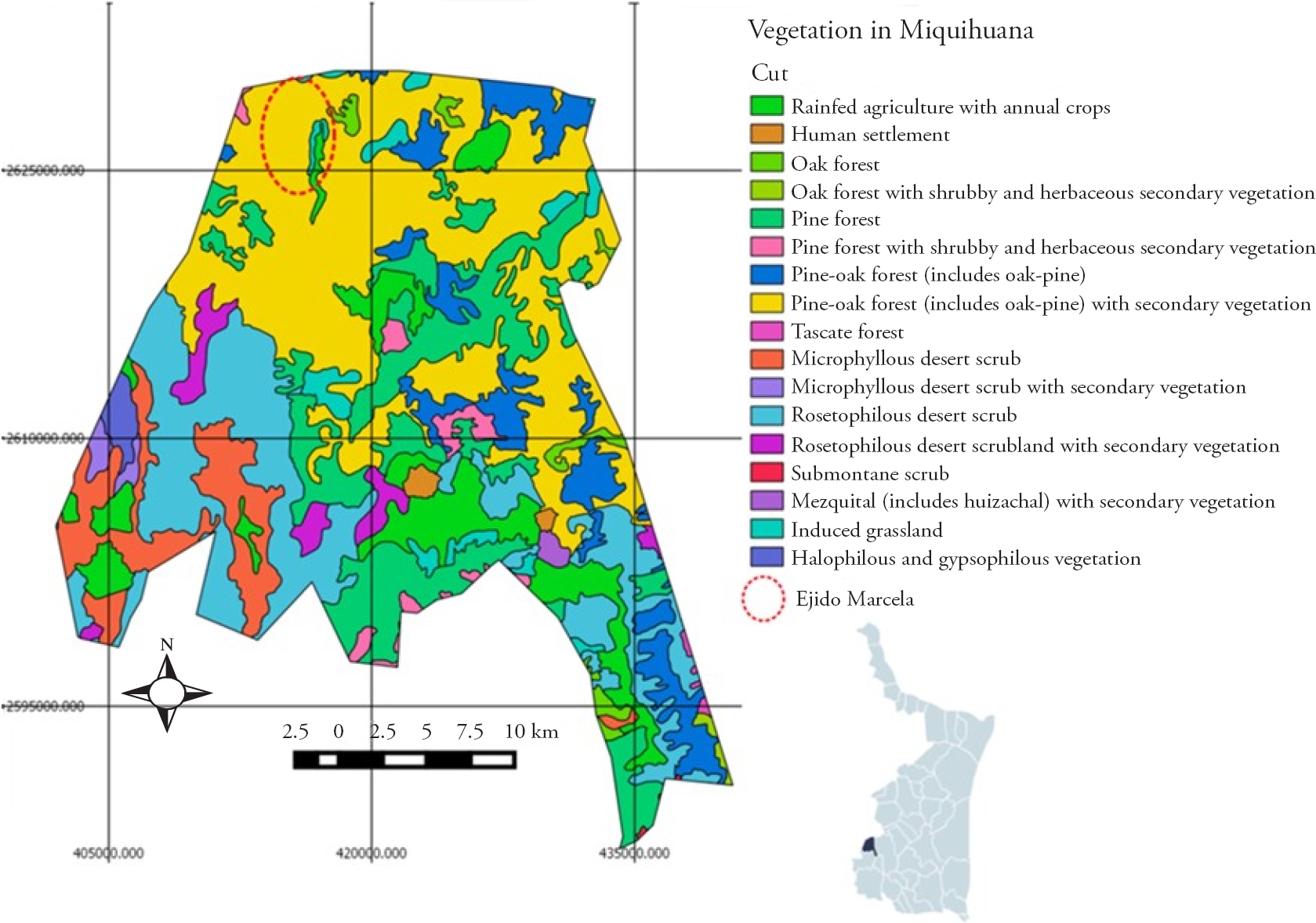
The study was carried out in a high mountain zone, in the community of Marcela, Miquihuana, in Tamaulipas, Mexico, located within the coordinates latitude: 23.751389 and longitude: -99.818333, at approximately 2,500 masl, with an extension of 13,200 hectares (INEGI, 2010). It is enclosed in the Sierra Madre Oriental and presents varied ecological conditions, which have led to the establishment of high mountain forests (Figure 1); the predominant vegetation is the pine-oak forest with rosetophylous scrub of Agave gentryi (Castillo-Hernández and Treviño-Carreón, 2009).
Source: prepared by the authors based on INEGI (2020).
Figure 1 Location and vegetation in Marcela, Miquihuana, Tamaulipas.
High mountain forests such as the ones in Marcela are classified as part of the vegetation of Nearctic origin, where the climate has a very marked seasonality with a prolonged winter. Although the dominating forests in this site present floristic differences, their physiognomy and structure is similar and the climatic and edaphological conditions are typical of temperate climates (Challenger, 1998; Treviño-Carreón and Valiente-Banuet, 2005), where the oak-pine forest predominates, in addition to the presence of the rosetophylous scrub of Agave gentryi, with a transition zone between both plant communities (Castillo-Hernández and Treviño-Carreón, 2009).
The sierra commonly known as “El Borrado” is located to the west, at 3,400 masl, and the Peña Nevada Mountain to the northwest, highest point in Tamaulipas, at 3,662 masl. The soils that predominate are clay-loam with sediment of organic matter; it is supplied by the natural springs “Rincón de San Francisco” and “Rincón del Pinal”; it stands out for its timber-yielding forest resources, which cover 10,000 hectares approximately of pine forests, shared with the ejidos Valle Hermoso and Colonia La Peña. The community of Marcela is located at a distance of approximately 65 kilometers from the municipal township (Periódico Oficial, 2008). It is part of the 20 localities that make up the municipality of Miquihuana, which is the third with greatest social backwardness (Consejo Nacional de Evaluación de la Política de Desarrollo Social-CONEVAL, 2015).
In Miquihuana there are 3,704 inhabitants, mostly men (51.6%), 29 years of age on average; meanwhile, in Marcela there are a total of 70 inhabitants, among them 40 men, made up by 18 families originally from Tamaulipas and San Luis Potosí. This number has decreased as a result of the migration of young people to other neighboring communities or the state capital, with a percentage of municipal migration of 39%, the main cause being family (76%), followed by work (7.8%), insecurity (6.2%), another cause (5.4%), and to continue studying (4.7%). The economically active population in the municipality is 40.4%, with men of 12 years and more being those of highest activity with 82.2% (INEGI, 2020; INEGI, 2021).
Rural participatory diagnosis
This diagnosis allows approaching communities and thus being able to start approaching the perception of inhabitants of the community about the use, management and customs around firewood. Therefore, to be able to recognize the importance of every detail captured both with observation and with surveys (Blanco et al., 2017).
A survey about knowledge and perception was designed, which was applied to women, because they are the ones that make direct use of this wood resource; the questions were focused on the amount of logs used in the open hearth during the day, daily hours that women spend in front of it, and aspects that refer to the use of firewood in the households, problems to gain access to the resource, sexual division of labor to collect firewood, time devoted to obtaining firewood, and the work implicated in obtaining it. The surveys were applied to 11 women of local families, out of a total of 18 families that live in the locality of Marcela. In addition, participatory observation was used, which involves social interaction between the researcher and the informant (Taylor and Bogdan, 1984), to establish the conditions on the use of the hearth and biofuels, both in cooking and to protect themselves from low temperatures inside the rural households, as well as cultural aspects in terms of availability and access to obtain firewood.
With the purpose of recording details not included in the survey or outstanding comments during informal talks, an observation guide was developed. It was used to classify cultural data based on Murdock’s classification (1989). This document allowed to channel the observation of variables of interest and the information was retained through mental photographs, to later be transcribed in a field work diary.
Evaluation and analysis of the impact on the vegetation
Images were used for this purpose, to implement a geographic information system through ArcView 3.2 and the superposition of images on digital files,
according to the digital cartography of INEGI’s vegetation series IV (2020) and through the use of Lansat 5 and Lansat 8 images, with less than 10% cloudiness. The Normalized Differentiation Vegetation Index (NDVI) was calculated, which allowed to separate zones covered with vegetation and uncovered zones (Chuvieco, 1998), where the plant coverage of the community between the years 2010 and 2020 was analyzed. In the images from 2010, the bands 3 and 4 were analyzed, where it was found that the near-infrared, belonging to band 3, and the red represent the measurements of spectral reflection of band 4; in contrast, for 2020, the bands 4 and 5 were analyzed for near-infrared and the spectral red region, respectively; with the images of both years, the following formula was applied:
The analysis used to calculate the NDVI was done through the Arcmap 10.3 tool in the geographic information systems, with the aim of establishing and defining the rate of vegetation loss during the decade analyzed.
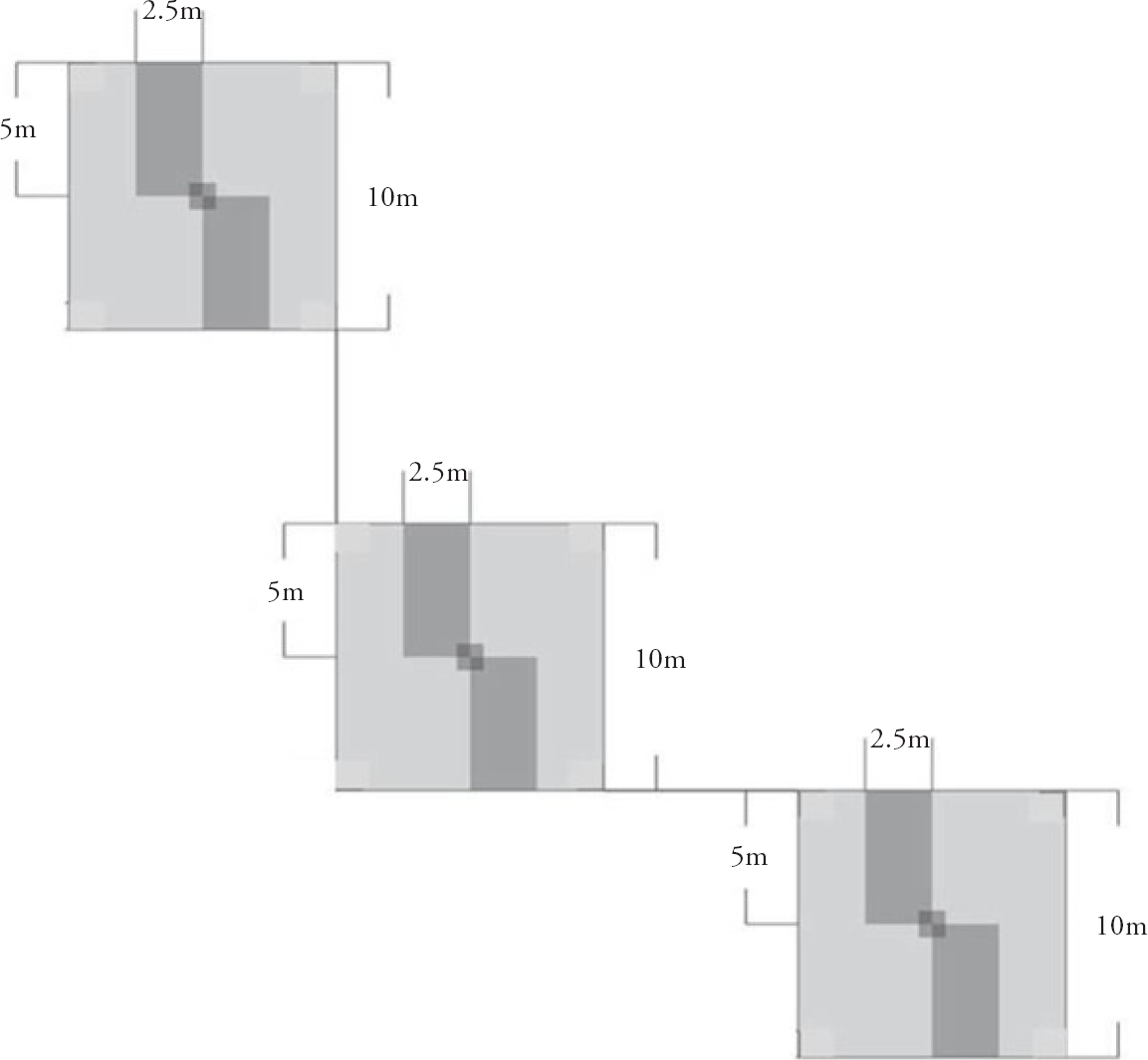
The sampling units were located in the zones selected, where there is use of firewood by the community’s inhabitants; vegetation sampling was conducted in eight sites selected randomly, with similar characteristics, four in the zone with pine forest and four in the zone with oak forest, gradually distancing each sampling site from the community, by one to two km between sites (Figure 2). The species per vegetation stratum were measured and counted; in each site, three quadrants were established with three repetitions of 10 x 10 m. These quadrants were divided into sampling subunits to analyze the scrub and tree vegetation strata, as presented in Figure 2. For the tree stratum, individuals with height over 1.3 m were considered and with diameter at breast height (DBH) of more than two cm; in the scrub stratum, plants with an average height of 0.5 to 1.3 m were considered, and with ramifications from the base of the plant.
Source: prepared by the authors.
Figure 2 Quadrants and subunits of sampling in the tree and scrub vegetation structure.
For each of the species of the vegetation strata, the Importance Value Index (IVI) developed by Curtis and McIntosh (1951) was obtained, where the relative cover (Cr), relative density (Dr), and relative frequency (Fr) were calculated.
RESULTS
According to the information obtained from the rural diagnosis, the farmable surface is approximately 1,000 hectares, on which seeds are sown of barley in 90%, corn in 8%, fava bean, pea and potato in 2%. The annual rainfall is more than 600 millimeters. As an alternative of production, there is small-scale livestock breeding of cattle, sheep, pig, in addition to the poultry industry. The main economic activity of men is farming and extensive livestock production. When it comes to agricultural activities, they plant oats, wheat, corn, bean, potato, fava beans, and squash, in addition to devoting themselves to breeding sheep, goats and registered cattle. Backyard agriculture and livestock production are complemented with the production of oats, barley and wheat, as well as the breeding of chickens, pigs and turkeys (Meleagris gallopavo). Practically the entire production, both plants and animals, is destined to subsistence, except the cereal crops and the standing calves; however, occasionally, this generates the entry of income to the family from the sale of production surplus in the other crops, and the sale of dairy products. Another source of income for the local families is remittances sent by migrants from the United States or the main cities in the states of San Luis Potosí, Tamaulipas and Nuevo León, where they work as bricklayers, painters, or selling food or snacks, among other commercial activities, which depend on the season and are of variable duration, from some months to years.
In the community of Marcela in Miquihuana, Tamaulipas (Mexico), the use of firewood as a source of energy to cook food is a daily practice, since the families only have firewood stoves in the traditional hearth. Therefore, its collection is an activity of extreme relevance, given the importance of the resource as the basic fuel in domestic use. Firewood extraction evidences the close relationship of the families with natural resources, since they must stock up on the resource and manage it inside the domestic unit, to prepare meals, activity related with the sexual division of labor. In fact, rural women are the ones in charge of work inside the peasant domestic units, which includes responsibilities associated with the household, among them food preparation, domestic tasks, caring and feeding the children, purchasing supplies, and hauling water and firewood. In addition, they participate in productive and community work.
Analysis of the consumption, extraction, use and management of firewood
According to the surveys, it was determined that most families in Marcela self-supply with the biofuel, following the typical pattern of rural communities in the country (Del Amo, 2002). Of the families surveyed, 60% collect firewood in the forest; only around 10% purchase it, and 30% uses the two strategies. This is because many families do not have a sufficient amount of firewood to allow them to cover the total demand per week, although it is enough to cover part of the daily needs. It was found that most of the families use firewood as the primary fuel, while 18% combine the use of firewood with LP gas, since in the community there is differentiated access to the resource, in function of the possibilities of obtaining fuels by families.
Regarding the supply of the biofuel, the decision about whom is responsible for it is determined mainly by the following factors: a) power relationships within the domestic nucleus, b) productive activities performed by each of the family members, c) number of family members, d) proportion of men and women in the household, and e) physical capability of the family members, many times related to age or disease. Because men are responsible for the domestic tasks that require greater strength, women are in charge of supplying and managing the resources to fulfill their role within the domestic scope, and this determines that in many places it is the women who are responsible for supplying firewood in their households (Calderón et al., 2018; Soares, 2006). These results show that there is a complementarity of functions and solidarity between members of the families, with the aim of ensuring the greatest volume possible of the biofuel. Thus, and although the men are the ones mainly responsible for firewood supply to the household in the community of Marcela, this task is also the responsibility of every member of the family domestic unit, insofar as they are fit enough to do it.
In the family, 74.5% of the husbands, sons and daughters perform the tasks of cutting and hauling firewood, 20% pointed out that the wives help in this activity, and when all the members of the family are busy, it is only the women whom are in charge of supplying the firewood (5.5%). Although a relatively high percentage of women heads of household surveyed (73%) answered that the whole family participates in firewood collection, the contribution of husbands in firewood collection always takes place, even if they have agricultural or livestock production activities within the production unit. However, even when all the family members participate, their participation is differentiated, since it is the adult men whom are in charge of felling the trees, while women and children are in charge of arranging the logs into loads for hauling.
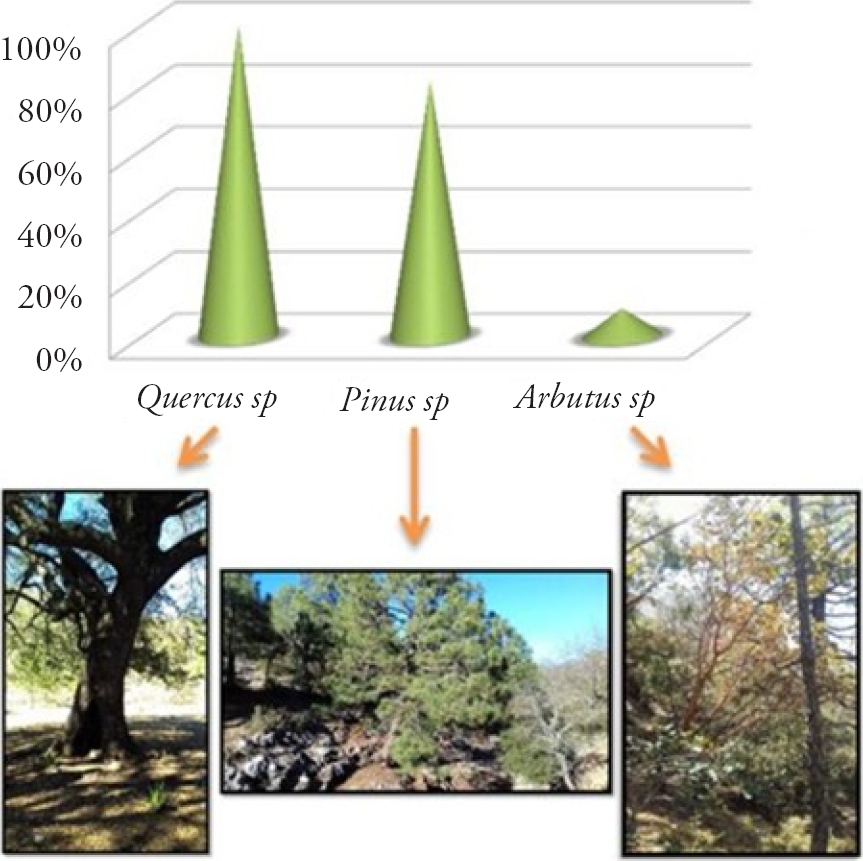
The main firewood species used to cook and for heating (Figure 3) are pine (Pinus pseudostrobus), oak (Quercus mexicana), and arbutus (Arbutus xalapensis); they are the preferred forest species, because they are hard and long-lasting woods, among which oak is the species used by 100% of the inhabitants.
Source: prepared by the authors with field information (2019).
Figure 3 Main species used for cooking and heating.
From these species, the amount of firewood used per family on average during a week is 50 logs, equivalent to 1.41 m3 of wood, which represents approximately 74 m3 per family per year. The families use the traditional hearth at least five times per week in the community of Marcela, and therefore, the amount of firewood used per year in the community is approximately 686.4 m3, considering the warm and cold seasons, with an average temperature of 16.5 °C. This wood is obtained from zones neighboring the community, within an approximate radius of two km (Table 1) and it takes them between one and three hours per week to obtain it.
Table 1 Distance traveled to harvest forest species, leaving from the community center in Marcela, Tamaulipas, Mexico.
| Species | 1 Km | 1.5 Km | 2 Km |
| Pinus pseudostrobus | 100 | 150 | 325 |
| Quercus mexicana | 75 | 125 | 375 |
| Quercus miquihunense | 0 | 100 | 80 |
| Arbustus xalapensis | 0 | 0 | 25 |
| Abies sp | 0 | 0 | 25 |
| Agave gentry | 850 | 700 | 775 |
Source: prepared by the authors with field information (2019).
Regarding the strategies used by inhabitants in Marcela to guarantee the volume of firewood required for the family use, they organize themselves in different ways to obtain the resources, which will depend on the age, sex and functions among family members to supply the biofuel, as well as on their access to finding it, that is, the impact on the tree structure in the high mountain ecosystem, information that is presented according to the results obtained from the data analysis.
In the community, the use of firewood as a source of energy to cook foods or to make tortillas is a daily practice, since the families only have wood stoves, so the hearth remains lit between eight and ten hours per day. Therefore, firewood collection is a relevant activity, since this resource is used as basic fuel for domestic tasks. Firewood is also used to heat the households, primarily during the strong winters that strike the community or to dry meat for its preservation; this is a cultural tradition in the region, related to the consumption of dry meat.
Impact on the ecosystem
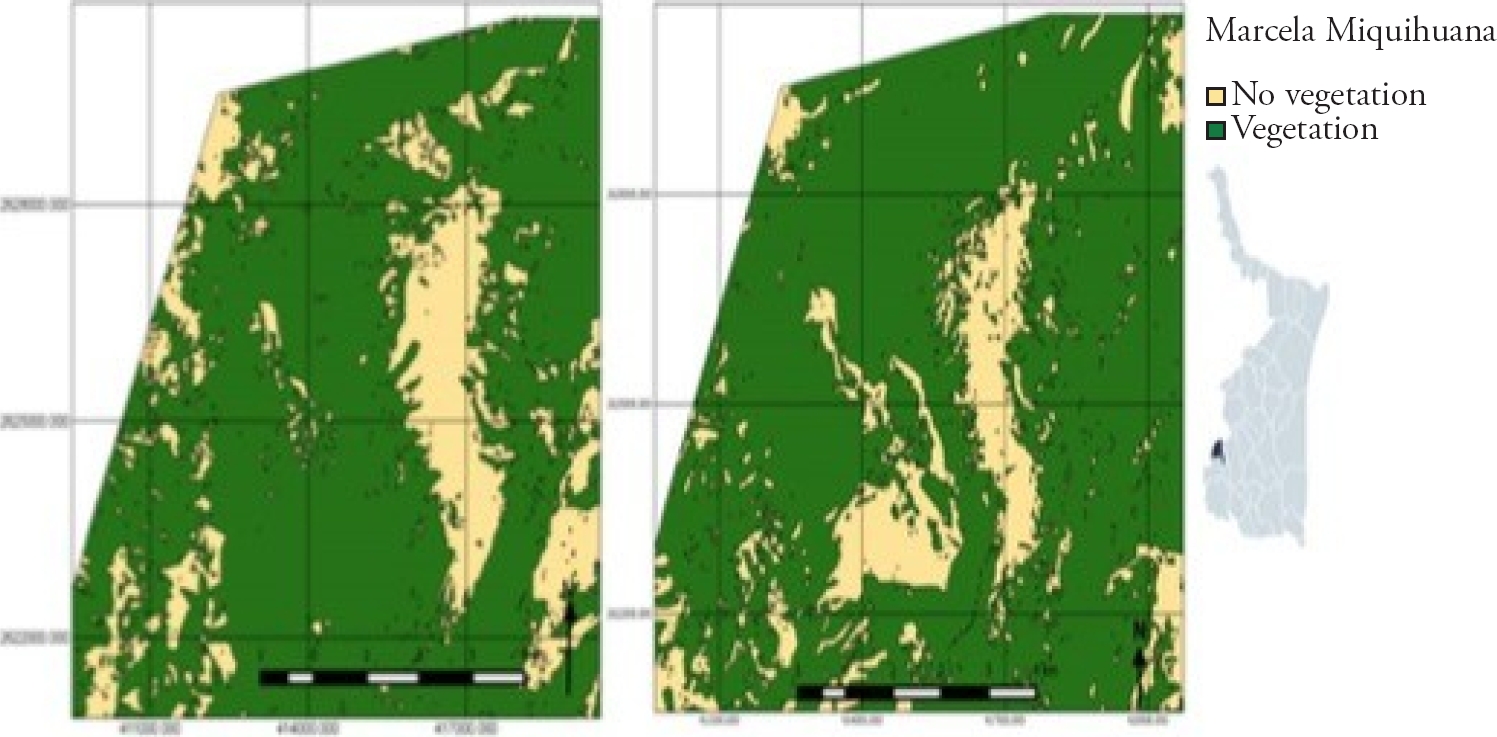
Based in the analysis to obtain the NDVI, the impact in the zones where woody fuels are obtained could be determined, not only on the timber-yielding species, but also on associated species. For the year 2010, a percentage of vegetation of 56.9% was identified regarding the total area of the community, and in the year 2020, a percentage of 49.2% was obtained (Figure 4), which represents a loss of 7.1% of plant coverage in a period of ten years in the study zone; this corroborates the information provided by inhabitants and the recollection sites of the woody material.
Source: prepared by the authors based on images in digital files (INEGI, 2020).
Figure 4 NDVI 2010 in Marcela, Miquihuana, Tamaulipas, Mexico.
The dominant vegetation of these sites constitutes a pure mass, composed by species of the genus Pinus, which is called pine forest according to the classification system by Miranda and Hernández (1963). These forests develop at altitudes between 2,700 and 3,100 masl. The low stratum is composed in the form of individual pine growths from regeneration, with a height of five meters, as well as an oak scrub with height below three meters, associated with rosetophylous scrubs such as maguey chino (Agave montana), maguey verde (Agave gentryi), and lechuguilla (Agave lechuguilla). In some ravines, there are species of oak (Quercus spp.) and cottonwood (Populus sp.) in small areas, while the low stratum of these forests is made up by rosetophylous vegetation.
The results obtained, based on the sampling quadrants analyzed in the field, establish that the highest IVI for each site was for pine and oak. These indicate that there is an increase in the population density of the species of pine and oak, compared to the distance from the community. The species used as biofuel and with highest value in the IVI are: 56.3% for oak and 54.9% for pine.
When it comes to the diversity of species, the data analysis establishes that the distance of the forest from the community is determinant, as is the case of species like madrone (Arbutus xalapensis) and fir (Abies sp.), whose individuals began to be found two kilometers away from the community center (Table 1). Because of the geographic location of Marcela, the inhabitants have easy access to forest areas, and therefore, they can easily obtain the biofuel; however, with the passage of time, the collection of firewood implies greater effort, since they increasingly have to travel further to be able to get it, which involves more time investment in this activity by the men in the community.
DISCUSSION
In a study conducted by Gil-Mora et al. (2020), in forests above 3,500 masl, the scarcity of firewood and the work it takes to obtain it encourages the communities not to waste it. The women and young people are the ones in charge of collecting the firewood that they find on their path next to the livestock, which constitutes their daily supply. However, there is a division of labor to obtain it, where the man can obtain a greater load of firewood, while women and children haul a smaller load of firewood. Bello-Román et al. (2023) reported that the most distant sites for collection of dendroenergetic species are forests, so the availability of these resources increases during the journey. This means that the management of the species used as firewood implies the knowledge of their availability in time and space.
Firewood collection contributes to generate an impact on the plant cover. Santos et al. (2012) mention that it depends on the intensity of the harvest and the abundance of the timber-yielding resource. In addition, the negative environmental effects derived from the anthropogenic pressure on the populations of plant species used as biofuels are linked. This corroborates that, in addition to the altitudinal pattern of forest diversity, the anthropogenic actions explain part of the variation in height of woody species, located in the surrounding areas of the community of Marcela.
Marcela has endemic plants and animals, whose populations have been reduced by fragmentation and reduction of the ecosystem, because of the selective extraction of trees to be used as wood for facilities, such as tutors, fuel or posts for fences, which will later be transformed into conventional agricultural and livestock production systems. This is in addition to the high dispersion of the populations in zones far from the population centers, the high costs of electric energy use, the lack of alternative sources of energy different from biomass combustion, which forces communities to use firewood as the main fuel to prepare their foods (Ramírez and Taborda, 2014; Rosenthal, 2015; Hernández-Garduño et al., 2017).
The consumption of firewood for domestic use, under a scheme of use of fallen and dry tree branches, does not alter the structure and essential function of the forest, where the plant communities are benefitted, since extracting dead wood decreases the danger of fire and the presence of forest pests, and clearing favors natural renovation, as stated by Masera and Fuentes (2006) in a study about the processes of disturbance in the plant communities in Yucatán, generated by other human activities. On the other hand, in a study conducted by Cortés-Blobaum et al. (20199 in Hidalgo, Mexico, the authors report that the perception of the inhabitants in the study area is that firewood extraction impacts positively the forest, which agrees with what is reported by other authors.
The impact of the unsustainable extraction of native firewood from forests with fragile soils and low productivity, is mostly critical, as well as from the absence of environmental policies and programs that allow addressing this situation. Therefore, a system that allows monitoring firewood consumption and regulating the demand of native species is necessary (Reyes et al., 2022).
CONCLUSIONS
In the community, the use of firewood as a source of energy to cook is a daily practice, since the families only have firewood stoves and cook with traditional open hearths. Therefore, its harvest is a daily and important activity, given that this resource is used as basic fuel in domestic consumption.
The extraction and supply of firewood evidences the close relationship of families with natural resources, because they must obtain the resource and manage it inside the domestic unit. This activity, even when it is performed according to the traditional division of labor between men and women, is exclusive of the masculine sex; however, when the firewood decreases in the household, the women intervene, when the men are occupied with farming tasks.
The density of individuals of timber-yielding species in the zone decreases because of firewood extraction for domestic use. On the contrary, the diversity of species (in the pine forest), is directly proportional to the distance from the community of Marcela, mainly in timber-yielding species. Therefore, it is recommended to allow taking advantage of the energy, as well as promoting the conservation of its habitat, since the inhabitants depend on these resources for their basic needs such as food and heat.
ACKNOWLEDGEMENTS
The authors wish to recognize and thank the support from Universidad Autónoma de Tamaulipas, Consejo Nacional de Humanidades, Ciencias y Tecnologías, Facultad de Ingeniería y Ciencias, and primarily the community of La Marcela in Miquihuana, Tamaulipas, for the opportunity to develop this study in their territory.
REFERENCES
Anderson JO, Thundryil JG, Stolbach A. 2011. Clearing the air. A review of the effects of particulate matter air pollution on human health. Journal of Medical Toxicology. 8. 166-175. https://doi.org/10.1007/s13181-011-0203-1 [ Links ]
Arfin T, Faruq M, NorAzah Y. 2014. Biomass Resources in Environmental and Socio-Economic Analysis of Fuel-Wood Consumption. In: Biomass and Bioenergy; Hakem KR, Jawaid M & Rashid U (eds); Editor: Springer International Publishing, Switzerland, 1ª ed., DOI: 10.1007/978-3-319-07578-5. pp: 119-206. [ Links ]
Bekö G, Kjeldsen BU, Olsen Y, Schipperijn J, Wierzbicka A, Karottki DG, Toftum J, Loft S, Clausen G. 2015. Contribution of various microenvironments to the daily personal exposure to ultrafine particles: Personal monitoring coupled with GPS tracking. Atmospheric Environment. 110. 122-129. https://doi.org/10.1016/j.atmosenv.2015.03.053. [ Links ]
Bello-González M, Hernández-Muñoz S, Lara-Chávez M, Salgado-Garciglia R. 2015. Plantas útiles de la comunidad indígena Nuevo San Juan Parangaricutiro, Michoacán, México. Polibotánica. 39. 175-215. https://www.polibotanica.mx/pdf/pb39/juan.pdf. [ Links ]
Bello-Román M, García-Flores A, Colin-Bahena H, Román-Montes de Oca E, Beltrán-Rodríguez L. 2023. Variación en el consumo de leña y factores que lo determinan en una comunidad campesina al suroeste del estado de Morelos, México. Botanical Sciences. 101(1). 149-163. https://doi.org/10.17129/botsci.3147. [ Links ]
Bhargava A, Khanna RN, Bhargava SK, Kumar S. 2004. Exposure risk to carcinogenic PAHs in indoor-air during biomass combustion whilst cooking in rural India. Atmospheric Environment. 38. 4761-4767. https://doi.org/10.1016/j.atmosenv.2004.05.012. [ Links ]
Billionnet C, Gay E, Kirchner S, Leynaert B, Annesi-Maesano I. 2011. Quantitative assessments of indoor air pollution and respiratory health in a population-based sample of French dwellings. Environmental Research. 111(3). 425-434. https://doi.org/10.1016/j.envres.2011.02.008. [ Links ]
Blanco TS, Ramírez ED, Muñoz SM. 2017. Manual de diagnóstico rural participativo con enfoque territorial: una guía para la elaboración de diagnósticos rurales, 1ª ed; Universidad Santo Tomás: Bucaramanga, Colombia, pp. 51. https://repository.usta.edu.co/handle/11634/34232. [ Links ]
Calderón A, Jiménez LM, Soto-Pinto L. 2018. Mujeres y tecnologías para el consumo de leña en una localidad indígena en Chiapas. In: Género, energía y sustentabilidad, aproximaciones desde la Academia, 1ª ed.; De Luca A, Vázquez V, Bose P y Velázquez M (eds); Universidad Nacional Autónoma de México, Ciudad de México, https://doi.org/10.22201/crim.9786073009997e.2018. pp: 147-176. [ Links ]
Castillo-Hernández H, Treviño-Carreón J. 2009. Biología floral de Agave gentryi ullrich (Agavaceae) en la localidad de la Marcela, Miquihuana, Tamaulipas. Ciencia UAT. 4(2). 62-66. https://revistaciencia.uat.edu.mx/index.php/CienciaUat/article/view/354. [ Links ]
Chakraborty D, Mondal NK, Datta JK. 2014. Indoor pollution from solid biomass fuel and rural health damage: A micro-environmental study in rural area of Burdwan, West Bengal. International Journal Sustainable. Built Environment. 3(2). 262-271. https://doi.org/10.1016/j.ijsbe.2014.11.002. [ Links ]
Challenger A. 1998. Utilización y conservación de ecosistemas terrestres de México. Pasado, presente y futuro. 1ª. Ed.; Comisión Nacional para el Conocimiento y Uso de la Biodiversidad. Instituto de Biología, 847 p. [ Links ]
Chuvieco E. 1998. El factor temporal en teledetección: evolución fenomenológica y análisis de cambios. Revista de Teledetección. 10. 1-9. https://www.aet.org.es/revistas/revista10/AET10_4.pdf. [ Links ]
CONEVAL (Comisión Nacional de Evaluación de la Política de Desarrollo Social). 2015. Informe anual sobre la situación de pobreza y rezago social 2015, Miquihuana, Tamaulipas. https://www.gob.mx/cms/uploads/attachment/file/46892/Tamaulipas_026.pdf. [ Links ]
Cortés-Blobaum HJ, Rodríguez-Laguna R, Otazo-Sánchez EM, Prieto-García F, Fragoso-López PI, Razo-Zárate R. 2019. Patrones culturales de uso de leña en la primera área protegida de Latinoamérica, El Chico, México. Revista Iberoamericana de Ciencias. 6(2). 15-26. http://www.reibci.org/publicados/2019/abr/3400108.pdf. [ Links ]
Curtis JT, McIntosh RP. 1951. An upland forest continuum in the prairie-forest border region of Wisconsin. Ecology. 32(3). 476-496. https://doi.org/10.2307/1931725. [ Links ]
Del Amo S. 2002. La leña: el energético rural en tres microrregiones del sureste del país. Una experiencia interactiva con la población local, 1ª ed.; Plaza y Valdez, México; 189 p. [ Links ]
Delgado-Saborit JM, Stark C, Harrison RM. 2011. Carcinogenic potential, level sources of polycyclic aromatic hydrocarbon mixtures in indoor and outdoor environments and their implications for air quality standards. Environment International. 37(2). 383-392. https://doi.org/10.1016/j.envint.2010.10.011. [ Links ]
EPA (Agencia de Protección Ambiental). 2012. Report to congress on Black Carbon. https://www3.epa.gov/airquality/blackcarbon/index.html. [ Links ]
FAO (Organización de las Naciones Unidas para la Alimentación y la Agricultura). 2018. Bosques y Energía: cuestiones clave. https://www.fao.org/4/i0139s/i0139s00.htm. [ Links ]
Fernández-Pérez L, Ramírez-Marcial N, González-Espinoza M. 2013. Reforestación con Cupressus lusitánica y su influencia en la diversidad del bosque de pino-encino en los altos de Chiapas, México. Botanical Sciences. 91(2). 207-216. https://doi.org/10.17129/botsci.415. [ Links ]
Fullerton DG, Bruce N, Gordon SB. 2008. Indoor air pollution from biomass fuel smoke is a major health concern in the developing world. Transactions of the Royal Society of Tropical Medicine & Hygiene. 102(9). 843-851. https://doi.org/10.1016/j.trstmh.2008.05.028. [ Links ]
Gavrilescu M, Chisti Y. 2005. Biotechnology a sustainable alternative for chemical industry. Biotechnology Advances. 23(7-8). 471-499. https://doi.org/10.1016/j.biotechadv.2005.03.004. [ Links ]
Gil-Mora JE, Baca-Flores JA, Álvarez-Moscoso ME. 2020. Consumo de leña y estimaciones del valor calorífico de especies de plantas utilizadas por las comunidades campesinas de la coordillera del Vilcanota, Cusco. Q’EUÑA. 11(1). 41-58. https://doi.org/10.51343/rq.v11i1.431. [ Links ]
Gottle A, Sène E. 1997. Funciones protectivas y ambientales de los bosques. XI Congreso Forestal Mundial, Antalya, Turquía. 13-22 de octubre de 1997. https://www.fao.org/4/w6251s/w6251s06.htm. [ Links ]
Hakeem KR, Jawaid M, Rashid U. 2014. Biomass and Bioenergy: Processing and Properties, 1ª ed.; Springer, USA; https://link.springer.com/book/10.1007/978-3-319-07641-6. pp: 191-206. [ Links ]
Heinsohn RJ, Cimbala JM. 2003. Indoor air quality engineering: Environmental health and control on indoor pollutants, Marcel Dekker, Inc. USA. 920 p. https://doi.org/10.1201/9780203911693. [ Links ]
Hernández-Garduño E, Gómez-García E, Campos-Gómez S. 2017. Prevalence trends of wood use as the main cooking fuel in Mexico, 1990-2013. Salud Pública de México. 59(1). 68-75. https://doi.org/10.21149/7770. [ Links ]
Huboyo HS, Tohno S, Lestari P, Mizohata A, Okumura M. 2014. Characteristics of indoor air pollution in rural mountainous and rural coastal communities in Indonesia. Atmospheric Environment. 82. 343-350. http://dx.doi.org/10.1016/j.atmosenv.2013.10.044. [ Links ]
Hynynen J, Salminen H, Ahtikoski A, Huuskonen S, Ojansuu R, Siipilehto J, Lehtonen M, Eerikäinen K. 2015. Long-term impacts of forest management on biomass supply and forest resource development: a scenario analysis for Finland. European Jorunal of Forest Research. 134. 415-431. https://doi.org/10.1007/s10342-014-0860-0. [ Links ]
INEGI. 2010. Censo de Población y Vivienda 2010. Instituto Nacional de Estadística y Geografía (INEGI). https://www.inegi.org.mx/programas/ccpv/2010/. [ Links ]
INEGI. 2020. Sistema de Información Geográfica; Guía para la interpretación de cartografía de Uso del Suelo y Vegetación escala 1:250, 000 Serie VI, Instituto Nacional de Estadística y Geografía, México; https://www.inegi.org.mx/contenidos/productos/prod_serv/contenidos/espanol/bvinegi/productos/nueva_estruc/702825092030.pdf. 204 p. [ Links ]
INEGI. 2021. Panorama sociodemográfico de Tamaulipas: Censo de Población y Vivienda 2020. Instituto Nacional de Estadística y Geografía (INEGI), México; https://www.inegi.org.mx/contenidos/productos/prod_serv/contenidos/espanol/bvinegi/productos/nueva_estruc/702825198015.pdf. 111 p. [ Links ]
Kannien M, Murdiyarso D, Seymour F, Angelsen A, Wunder S, German L. 2008. ¿Crecen los árboles sobre el dinero? Implicaciones de la investigación sobre deforestación en las medidas para promover la REDD, 1ª ed.; Center for International Forestry Research, Indonesia; http://www.cifor.org/publications/pdf_files/Books/BKanninen0801SP.pdf. 62 p. [ Links ]
Komala HP, Prasad AGD. 2014. Utilization pattern of biomass energy and socioeconomic dimensions associated with Yelandur, Karnataka, India. International Jorunal of Energy and Environmental Engineering. 5. 1-7. https://doi.org/10.1007/s40095-014-0095-3. [ Links ]
Macías-Hernandez BA. 2015. Influence of indoor microenvironment and personal activities on the inhalation dose and personal exposure to PM 2.5, PAH, OXY-PAH, VOC and BC air pollutants. Tesis de Doctor en Filosofía, Universidad de Birmingham, United Kingdom. https://etheses.bham.ac.uk//id/eprint/7731/4/Macias_Hernandez17PhD.pdf. [ Links ]
Martínez E, Díaz de Mera Y. 2004. Contaminación Atmosférica, 1ª ed.; Universidad de Castilla-La Mancha, España; https://books.google.com.ec/books?id=eyTSAgAAQBAJ&printsec=fron tcover#v=onepage&q&f=false. 288 p. [ Links ]
Masera OR, Fuentes GA. 2006. Estado actual de la bioenergía en México. In: La bioenergía en México, un catalizador del desarrollo sustentable; Masera OR Ed. Red Mexicana de Bioenergía, Mundi-Prensa y Comisión Nacional Forestal Red Mexicana de Bioenergía, A.C., pp. 1-6. [ Links ]
Merino-Perez L. 2013. Conservation and Forest Communities in Mexico: Experiences, Visions and Rights. In: Community Action for Conservation, 1ª ed.; Porter-Bolland L, Ruiz-Mallén I, Camacho-Benavides C y McCandless S. (eds); Springer, New York, USA; https://doi.org/10.1007/978-1-4614-7956-7_3. pp: 25-44. [ Links ]
Miranda F, Hernández E. 1963. Los tipos de vegetación de México y su clasificación. Botanical Sciences. 28. 29-179. https://doi.org/10.17129/botsci.1084. [ Links ]
Murdock G. 1989. Cultural studies: Cultural studies: Missing links. Critical studies in mass communication. 6(4). 436-440. https://doi.org/10.1080/15295038909366769. [ Links ]
Ohura T, Amagai T, Shen X, Li S, Zhang P, Zhu L. 2009. Comparative study on indoor air quality in Japan and China: Characteristics of residential indoor and outdoor VOCs. Atmospheric Environment. 43(40). 6352-6359. https://doi.org/10.1016/j.atmosenv.2009.09.022. [ Links ]
>OMS (Organización Mundial de la Salud). 2006. Energía doméstica y salud, combustibles para una vida mejor. https://www.who.int/publications/i/item/9789241563161. [ Links ]
Özçimen D, Terzioğlu P, Yücel S. 2012. Human health effects of air conditioners. Sigma Journal of Engineering and Natural Sciences. 30. 56-65. https://sigma.yildiz.edu.tr/storage/upload/pdfs/1636102079-en.pdf. [ Links ]
Pañella P, Casas M, Donaire-González D, García-Esteban R, Robinson O, Valentín A, Gulliver J, Momas I, Nieuwenhuijsen M, Vrijheid M, Sunyer J. 2017. Ultrafine particles and black carbon personal exposures in asthmatic and non-asthmatic children at school age. Indoor air. 27(5). 891-899. https://doi.org/10.1111/ina.12382. [ Links ]
Periódico Oficial. 2008. Plan Municipal de Desarrollo 2008-2010, del municipio de Miquihuana, Tamaulipas. https://po.tamaulipas.gob.mx/wp-content/uploads/2018/10/cxxxiii-38-260308F-MIQUIHUANA.pdf. [ Links ]
Quiroz-Carranza J, Orellana R. 2010. Uso y manejo de leña combustible en viviendas de seis localidades de Yucatán, México. Madera y Bosques. 16(2). 47-67. http://dx.doi.org/10.21829/myb.2010.1621172. [ Links ]
Ramírez JF, Taborda AL. 2014. Consumo de leña en fogones tradicionales en familias campesinas del oriente antioqueño. Producción + Limpia. 9(1). 99-114. https://revistas.unilasallista.edu.co/index.php/pl/article/view/655. [ Links ]
Reyes R, Sanhueza R, Schueftan A. 2022. Consumo de leña y otros biocombustibles sólidos en la región de Los Lagos: fuerte presión sobre bosques que crecen en suelos frágiles. Bosques Energía Sociedad. (15). 1-35. https://doi.org/10.52904/20.500.12220/32537. [ Links ]
Rivas I, Viana M, Moreno T, Pandolfi M, Amato F, Reche C, Bouso L, Álvarez-Pedrerol M, Alastuey A, Sunyer J, Querol X. 2014. Child exposure to indoor and outdoor air pollutants in schools in Barcelona, Spain. Environment International. 69. 200-212. https://doi.org/10.1016/j.envint.2014.04.009. [ Links ]
Rosenthal J. 2015. The Real Challenge for Cook stoves and Health: More Evidence. EcoHealth. 12. 8-1. https://doi.org/10.1007/s10393-014-0997-9. [ Links ]
Sada-Ovalle I, Ocaña-Guzmán R, Torre-Bouscoulet L. 2015. Biomass smoke, innate immunity and Mycobacterium tuberculosis. NCT Neumología y Cirugía de Tórax. 74(2). 118-126. https://dx.doi.org/10.35366/60424. [ Links ]
Saleh R, Robinson ES, Tkacik DS, Ahern AT, Liu S, Aiken AC, Sullivan RC, Presto AA, Dubey MK, Yokelson RJ, Donahue NM, Robinson AL. 2014. Brownness of organics in aerosols from biomass burning linked to their black carbon content. Nature Geoscience. 7. 647-650. https://doi.org/10.1038/ngeo2220. [ Links ]
Sánchez Ó, Vega E, Peters E, Monrroy-Vilchis O. 2003. Conservación de ecosistemas templados de montaña en México, 1ª ed.; Instituto Nacional de Ecología (INE-SEMARNAT), México; https://www.buyteknet.info/fileshare/data/analisis_lect/Conservaci%C3%B3n%20de%20ecosistemas%20templados%20de%20monta%C3%B1a%20en%20M%C3%A9xico.pdf. 315 p. [ Links ]
Santos A, Estrada E, Rivas G. 2012. Uso de leña y conservación del bosque en el volcán Huitepec, Chiapas, México. LiminaR. 10(1). 138-158. https://liminar.cesmeca.mx/index.php/r1/article/view/41/33. [ Links ]
Smith-Ramírez C, Armesto JJ, Valdovinos C. 2005. Historia, biodiversidad y ecología de los bosques costeros de Chile, 1ª ed.; Editorial Universitaria S. A. Chile; 708 p. [ Links ]
Soares D. 2006. Género, leña y sostenibilidad: el caso de una comunidad de los Altos de Chiapas. Economía, Sociedad y Territorio. 6(21). 151-175. https://doi.org/10.22136/est002006276. [ Links ]
Taylor SJ, Bogdan R. 1984. Introducción a los métodos cualitativos en investigación. Ediciones Paidós: España; https://pics.unison.mx/maestria/wp-content/uploads/2020/05/Introduccion-a-Los-Metodos-Cualitativos-de-Investigacion-Taylor-S-J-Bogdan-R.pdf. 329 p. [ Links ]
Treviño-Carreón J, Valiente-Banuet A. 2005. La vegetación de Tamaulipas y sus principales asociaciones vegetales. In: Biodiversidad Tamaulipeca, 1ª ed.; Barrientos L, Correa A, Horta JV y García J (eds); Dirección General de Educación Superior Tecnológica, Instituto Tecnológico de Ciudad Victoria: Tamaulipas, México; Volumen 1, https://www.academia.edu/12678354/La_vegetaci%C3%B3n_de_Tamaulipas_y_sus_principales_asociaciones_vegetales. pp: 22-46. [ Links ]
Upadhyay AK, Singh A, Kumar K, Singh A. 2015. Impact of indoor air pollution from the use of solid fuels on the incidence of life-threatening respiratory illnesses in children in India. BMC Public Health. 15. 2-3. https://doi.org/10.1186/s12889-015-1631-7. [ Links ]
Vallejo M, Jauregui-Renaud K, Hermosillo AG, Márquez MF, Cárdenas M. 2003. Efectos de la contaminación atmosférica en la salud y su importancia en la ciudad de México. Gaceta Médica de México. 139(1). 57-63. https://www.anmm.org.mx/bgmm/1864_2007/2003-139-1-57-63.pdf. [ Links ]
Zhao P, K. P. Yu, C. C. Lin. 2011. Risk assessment of inhalation exposure to polycyclic aromatic hydrocarbons in Taiwanese workers at night markets. International Archives of Occupational and Environmental Health. 84. 231-237. https://doi.org/10.1007/s00420-010-0551-1. [ Links ]
Received: June 28, 2021; Accepted: August 22, 2022
 Este es un artículo publicado en acceso abierto bajo una licencia Creative Commons
