




 nueva página del texto (beta)
 Inglés (pdf)
 Artículo en XML
 Referencias del artículo
 Traducción automática
 Enviar artículo por email
 Citado por SciELO
  Similares en
SciELO
Similares en
SciELO 
 Permalink
Introduction
Asthma is a chronic disease that affects approximately 10% of children and adolescents worldwide1. This clinical syndrome poses a global health problem with negative consequences for children, their families, and the State. The symptoms of asthma can significantly impact a childs quality of life2, leading to frequent school absences and a heightened risk of anxiety3, and depression4. In addition, the economic burden is considerable, resulting in reduced parental productivity and increased healthcare utilization5. Approximately 25% of children with asthma experience uncontrolled symptoms1, characterized by frequent exacerbations, emergency department visits, systemic corticosteroid use, antibiotic prescriptions, and an elevated risk of mortality6.
Many studies have demonstrated the effectiveness of inhaled corticosteroids (ICS) for ongoing treatment in most pediatric patients with persistent asthma7,8. However, despite the availability of various ICS formulations, delivery devices, and evidence-based guidelines8, a significant number of patients remain difficult to control. Poor adherence to treatment is identified as a key factor contributing to inadequate asthma control9, accounting for 24% of exacerbations and 60% of asthma-related hospitalizations10.
It is crucial to understand the extent of the problem within our pediatric population to effectively address the issue of non-adherence. Adherence rates to ICS are generally low, ranging from 28% to 73%11, depending on the evaluation method used, each of which offers different levels of validity and objectivity. Self-reports, daily diaries, and prescription refill data often overestimate adherence due to social desirability bias, recall errors, and behaviors, such as “dose dumping”12. While electronic monitoring devices (EMDs) provide the most objective measure by accurately recording inhaler use13, they are often costly for both patients and researchers and are frequently unavailable in low-and middle-income countries (LMIC), such as Peru. Therefore, using alternative methods for monitoring adherence based on mobile technology services is innovative and may provide indirect adherence records by serving as reminders to patients undergoing asthma treatment.
Mobile technology includes short message service (SMS), a communication tool provided by mobile network operators alongside voice services. SMS typically has broader coverage than data services (internet access) and is supported by all mobile phones, whether smartphones or basic models, old or new. This broad compatibility explains why SMS remains predominant in rural and low-density areas and continues to be widely used in urban settings. Its reliability and accessibility make SMS particularly important in LMICs, such as Peru, where poor signal quality or lack of internet access limits other communication options. As a result, SMS emerges as an affordable and inclusive alternative, serving all socioeconomic levels with coverage determined only by the mobile network operator.
Our objective is to implement and evaluate therapeutic adherence and provide reminders for children with persistent asthma using a technological solution based on sending SMS reminders to patients' phones and receiving (recording) their responses.
Method
Study design, setting and participants
We conducted a quasi-experimental pilot study at a tertiary hospital in Trujillo, Peru to develop a software tool for remotely monitoring therapeutic adherence in children with persistent asthma, analyzing its use over a 3-month period starting in July 2023-August 2024. The study followed the TREND guidelines for quasi-experimental research14. Participants included mothers or caregivers of children and adolescents aged 5-14 years diagnosed with persistent asthma who required daily treatment with ICS, either alone or in combination with long-acting beta-agonists. Mothers were required to have a postpaid mobile phone capable of sending and receiving messages.
Sample
Given the exploratory nature of this pilot study, we did not calculate a sample size and used convenience sampling to include all participants who met the criteria during the study period.
Software
To design and develop the software, the following methodologies were applied using a waterfall model:
- Requirements: we assessed the study's technological requirements, considering factors, such as the number of participants, customization, simplicity, and cost-effectiveness. Then, we developed a software tool, RoxySMS (Read, Obey, and teXt okeY), with the following objectives: (a) to automate the process of sending visual reminders through SMS, removing the need for manual intervention, and delivering messages to a list of patients at scheduled times; (b) to manage a list of patients scheduled to receive these SMS alerts; and (c) to receive and store patient responses confirming message receipt and adherence to the recommended dosage
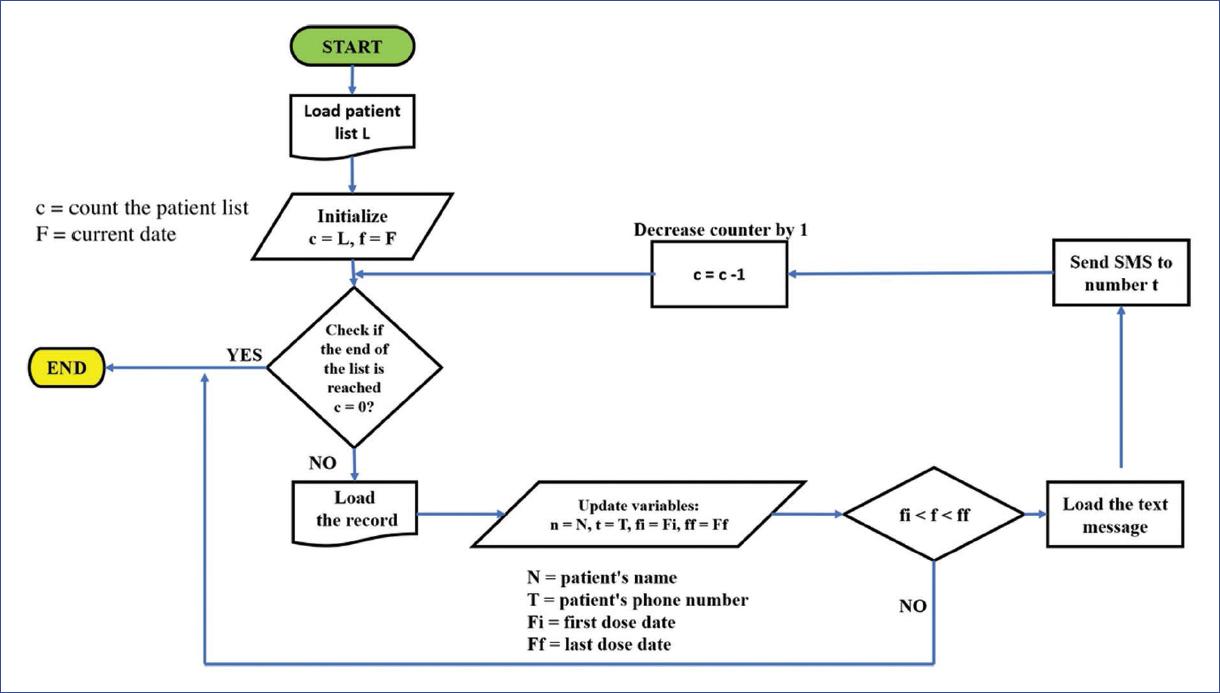
- Software design and architecture: the RoxySMS algorithm follows the steps outlined in the flowchart (Fig. 1) first loads a list of patients and then verifies if each entry falls within the treatment date range. If an entry is outside this range, the algorithm moves to the next entry. For entries within the range, an SMS is sent to the patient's phone with the message: “if you want to stay healthy, you must use your inhaler.” This process continues until all entries on the list have been processed. The researcher-designed message is intended to remind patients to use their inhalers and is sent daily at 7 pm throughout the 3-month treatment period
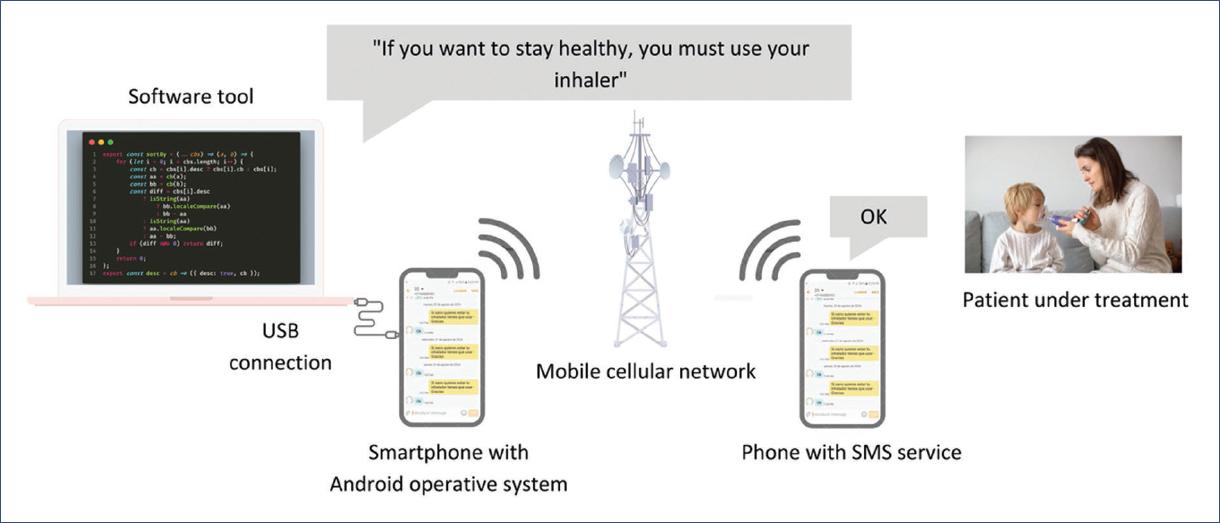
- Implementation and execution: the RoxySMS software tool was implemented on a smartphone with an Android operating system. The phone is equipped with a SIM card with call credits and is associated with a postpaid mobile plan. In addition, the smartphone is continuously connected to a computer running the RoxySMS program. The hardware connection between the two devices is established through a USB cable, while the software interface is managed through Android debug bridge. Figure 2 illustrates the connection setup and the software architecture.
Procedures
All mothers or caregivers provided informed consent before participating in the study. Participants were notified that a daily reminder message would be sent at the same time each day. Each night, an automated SMS is sent with the message: “if you want to stay healthy, you must use your inhaler,” and caregivers confirm receipt by replying “OK.” Outcome evaluators and data analysts were blinded to the intervention. An online survey was conducted at the end of the study to explore participants' satisfaction with the intervention.
Variables
The data collection process involved administering a survey at the beginning of the study to collect the following information: age, sex, nutritional status, comorbidities, age of the mother/caregiver, educational level of the mother/caregiver, marital status of the mother/caregiver, occupation of the mother/caregiver, number of household members, diagnosis, and received medication.
To evaluate the response engagement of the patient with the RoxySMS software in treatment monitoring, we defined the following metrics:
-
- Total messages sent (TMS): The number of SMS messages that were sent to a patient. It is an individual metric per patient
-
- Total messages responded (TMR): The number of messages that received an “OK” response from the patient. It is an individual metric per patient
- TMR Immediately (TMRI): The number of messages that received an “OK” response from the patient within the first 15 min after the SMS notification was sent
- TMR Timely (TMRT): The number of messages that received an “OK” response from the patient between 15 and 60 min after the SMS notification was sent
- TMR Delayed (TMRD): The number of messages that received an “OK” response from the patient between 1 and 24 h after the SMS notification was sent
- Total messages not responded (TMNR): The number of messages that remained unanswered by the patient within 24 h of the SMS notification being sent
-
- Response percentage (RP): An individual metric calculated for each patient, representing the ratio of total “OK” responses received to the total number of SMS messages sent
- Average RP (ARP): The average percentage of “OK” responses to SMS messages from all patients within 24 h.
Statistical analysis
The baseline characteristics of the study population were tabulated overall. To describe the data, we used percentages for categorical variables and medians and interquartile ranges for continuous variables. The statistical analysis was performed with R Statistical language for Windows (version 4.1.2; R Core Team, 2021).
Ethics statement
The study protocols were approved by the Ethics Committee of Universidad Privada Antenor Orrego (La Libertad, Perú) (Committee Resolution No. 0726-2023-UPAO). The study was conducted according to the World Medical Associations Declaration of Helsinki. Informed consent was obtained from the participants.
Results
The study included 28 children, with a median age of 9 years, 64% of whom were male. Most had mild (54%) or moderate (46%) persistent asthma, and 64% were overweight or obese. Allergic rhinitis (64%) and atopic dermatitis (7%) were common comorbidities. Most mothers or caregivers were aged 36-45 years (61%) and had higher education (57%); 79% were married or cohabiting, and 43% were unemployed (Table 1).
Table 1 Characteristics of the study participants (n = 28)
| Characteristics | n (%) |
|---|---|
| Age* | 9 (7.9-10) |
| Sex | |
| Male | 18 (64) |
| Female | 10 (36) |
| Nutritional status | |
| Malnutrition | 1 (4) |
| Eutrophic | 9 (32) |
| Overweight | 8 (28) |
| Obesity | 10 (36) |
| Comorbidities | |
| Allergic rhinitis | 16 (57) |
| Allergic rhinitis/atopic dermatitis | 2 (7) |
| No comorbidities | 10 (36) |
| Age of mother/caregiver | |
| 26-35 years | 7 (25) |
| 36-45 years | 17 (61) |
| > 45 years | 4 (14) |
| Educational level of mother/caregiver | |
| Completed secondary | 8 (29) |
| Incomplete secondary | 4 (14) |
| Non-university higher education | 5 (18) |
| University higher education | 11 (39) |
| Marital status of mother/caregiver | |
| Married | 12 (43) |
| Cohabiting | 10 (36) |
| Divorced | 1 (3) |
| Single | 5 (18) |
| Occupation of mother/caregiver | |
| Unemployed | 12 (43) |
| Private sector employee | 9 (32) |
| Public sector employee | 7 (25) |
| Number of household members* | |
| Diagnosis | 4 (4-5.3) |
| Mild persistent asthma | 15 (54) |
| Moderate persistent asthma | 13 (46) |
| Medication received | |
| Fluticasone-salmeterol 125 | 3 (11) |
| Fluticasone-salmeterol 250 | 18 (64) |
| Fluticasone-salmeterol 500 | 7 (25) |
*Median (interquartile range).
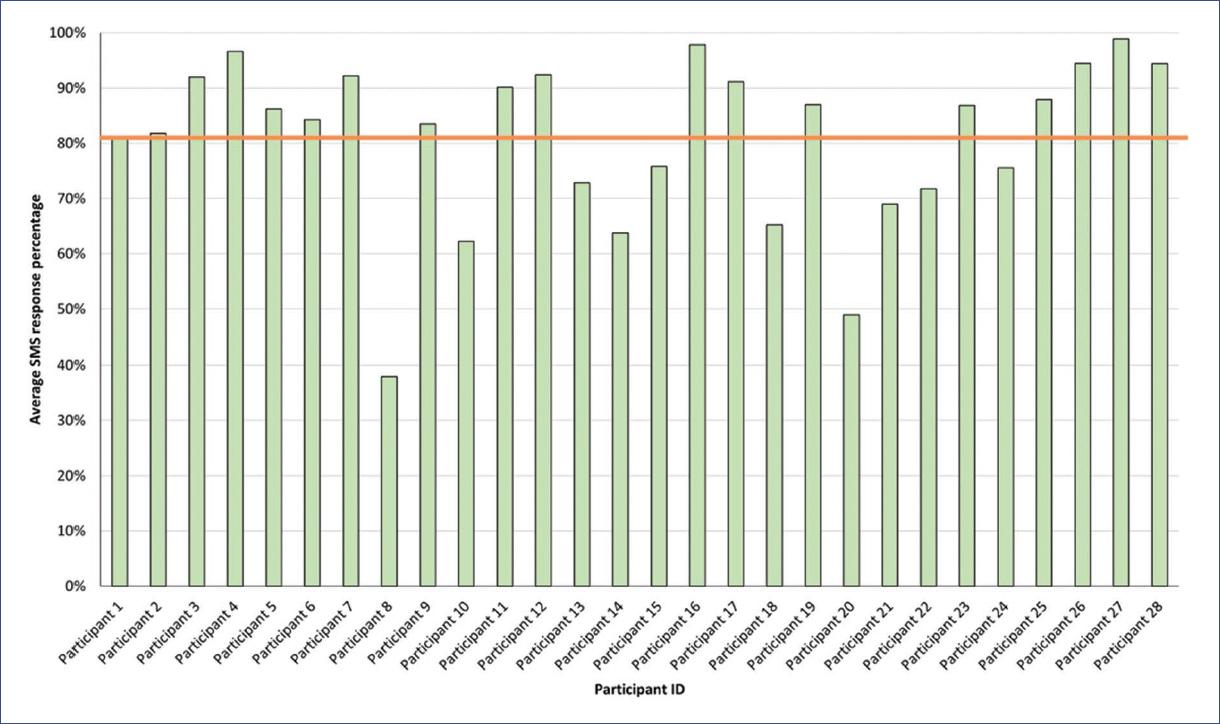
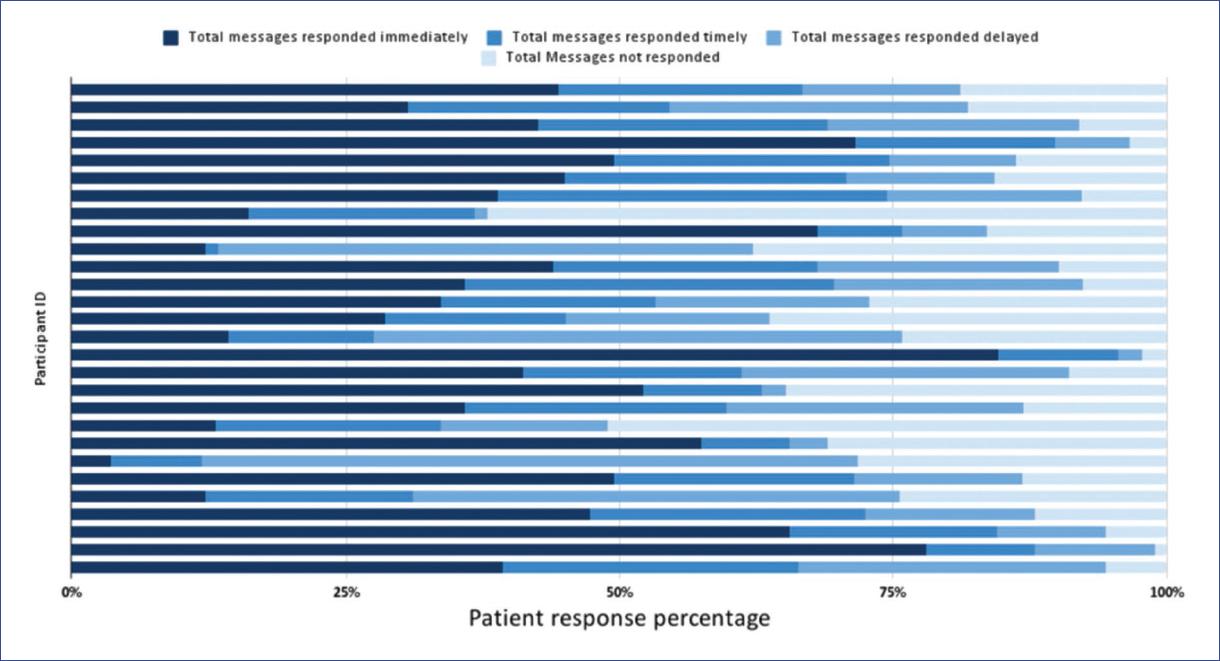
The evaluation of RoxySMS software's effectiveness in treatment monitoring showed an ARP of 80.8%, with individual responses ranging from 37.9% to 98.9% (Fig. 3). Furthermore, Fig. 4 shows an analysis of patient RP by time interval. For this purpose, we considered TMR and TMNR per patient and calculated their corresponding TMRI, TMRD, and TMRT percentages, and then we averaged over each percentage within their corresponding time interval. Our results show that the mean RP for messages responded immediately (TMRI) was 50%, with response levels ranging from a low of 5% to a high of 87%. For messages answered within 15-60 min (TMRT), the mean RP was 24%, with rates varying between 2% and 55%. Similarly, for messages responded to within 1-24 h (TMRD), the mean RP was 26%, with a range from 2% to 84%. Meanwhile, the mean RP for messages that did not receive a reply (TMNR) was 19.2%, with rates ranging from 1% to 62% (Fig. 4).
An online survey conducted at the end of the study received responses from 13 participants, all of whom expressed satisfaction with their participation. They found the reminder messages helpful and would recommend them to other mothers/caregivers who administer inhalers to their children. In addition, the majority reported that the messages frequently helped them remember to give their child the inhaler.
Discussion
Our study implemented and evaluated therapeutic adherence in children with persistent asthma using a technological solution based on sending SMS reminders and receiving caregiver responses. This approach aimed to optimize treatment follow-up by promoting greater medication adherence through regular reminders that facilitated more consistent and efficient compliance with the therapeutic regimen.
The RoxySMS software achieved an ARP of 80.8%, showing a favorable therapeutic adherence. This percentage reflects the systems ability to indirectly assess treatment adherence through caregiver responses. According to Pearce15, adherence between 70% and 80% to prescribed medication is considered adequate, placing RoxySMS within a positive range. Furthermore, most messages sent through RoxySMS received prompt responses, with half arriving within the first 15 min. This result is significant, as an immediate response indicates a high level of caregiver engagement in monitoring treatment. Quick responses may also correlate with better adherence, as timely replies could reflect greater attention to reminders and, consequently, better compliance with therapeutic guidelines. In addition, the swift initial response highlights the ease of use of the SMS-based system, particularly in rural settings with limited internet access, reinforcing the feasibility of using simple technological interventions to enhance treatment adherence in children with persistent asthma.
Similarly, other reminder strategies have shown similar effects on adherence. For instance, biweekly phone calls have achieved an adherence rate of 74.3%16, while audiovisual reminders based on EMD reported an average adherence of 84%17. These findings suggest that technological and educational interventions, such as RoxySMS, may play a crucial role in improving therapeutic compliance among children and adolescents with persistent asthma.
We emphasize that while the average adherence rate was high (80.8%), there was substantial variability among participants, with 36% falling below this threshold. However, this percentage decreases to 22% when considering only those below 70%, the adequate adherence range defined by Pearce15. Even so, this indicates a moderate level of non-adherence despite the overall high average. Consistent with previous studies that found no association between non-adherence and socioeconomic factors18,19, our analysis did not identify significant relationships with any of the factors studied, including maternal/caregiver age, occupation, education level, and marital status (Supplementary data 1). However, our limited sample size may have reduced the statistical power to detect, such associations. Future research with a larger sample size is needed to further explore these relationships.
This study has several limitations. The small sample size and short duration (3 months) limit the generalizability and may not capture long-term adherence patterns. The reliance on SMS technology could be affected by delivery failures, network issues, or variability in response times. In addition, the lack of direct supervision over participants during the study period could have influenced the accuracy of the findings. The absence of baseline measurements or a control group prevents us from definitively attributing improvements in adherence to the intervention. However, as a pilot study, our primary objective was to evaluate feasibility and implementation. Future studies with a comparative design should consider incorporating variables, such as socioeconomic status to provide a more comprehensive analysis.
This studys strengths include the innovative use of an SMS-based tool to monitor adherence in children with persistent asthma, offering a cost-effective solution in low-resource settings, such as Peru. Furthermore, it is the first study in Latin America to explore this approach.
Conclusion
The RoxySMS tool successfully automated message delivery, validating it as a viable, cost-effective option for monitoring adherence in chronic diseases, such as asthma, especially in resource-limited settings. Its accessibility and high utilization rate support its role in improving clinical outcomes by reminding patients to take their medication. Further studies with larger samples and longer follow-ups are recommended to assess its long-term impact in diverse clinical contexts.

