




 nueva página del texto (beta)
 Inglés (pdf)
 Artículo en XML
 Referencias del artículo
 Traducción automática
 Enviar artículo por email
 Citado por SciELO
  Similares en
SciELO
Similares en
SciELO 
 Permalink
1 Introduction
The influence of best practices in decision-making continues to be active and relevant today. Research in this field is constantly evolving, exploring different aspects related to ethics, individual and organizational factors, technology, and effective implementation. Efforts are being made to understand how best practices can influence the quality of decisions and promote ethical and sustainable outcomes in various areas. Adepoju et al. [64] proposed in their review various effective approaches based on multicriteria decision-making (MCDM) for evaluating the quality and usability of websites. Most studies focus on website quality compared to usability, although usability research is growing. Mardani et al. [70] identified a variety of multicriteria decision-making techniques used in service quality evaluation, such as Economic Valuation Analysis (EVA), the Analytic Hierarchy Process (AHP), Linear Programming, and Multi-attribute Utility Theory (MAUT) among others. The reviewed studies applied multicriteria decision-making techniques in different sectors and contexts such as the hotel industry, transportation, public services, and health. Similarly, Boix et al. [66] conducted a systematic review of the MIVES method (Multi-criteria decision-making for the Integral Valuation of Sustainability) which is oriented towards sustainability.
The MIVES method is used to evaluate and make decisions in the context of sustainability in various sectors such as construction and the environment. Additionally, Boix et al. [67] identified and analyzed in their study a variety of group multicriteria decision-making methods that use weights to assign importance to criteria. They proposed a classification scheme that allows categorizing and comparing the different methods according to their characteristics and approaches. Similarly, the systematic review by Balali, Yunusa, and Edwards [65] identified a variety of multicriteria decision-making techniques used in selecting passive energy consumption optimization strategies.
They observed that the most common decision-making techniques in the reviewed studies include the Analytic Hierarchy Process (AHP), Data Envelopment Analysis (DEA), and Linear Programming. Similarly, Gebre et al. [69] conducted a systematic review of the multicriteria decision-making methods used to address rural land allocation problems. They identified various methods and approaches used in the literature to solve these problems, such as Economic Valuation Analysis (EVA), the Analytic Hierarchy Process (AHP), Data Envelopment Analysis (DEA), and the Pareto Frontier Method. Mardani et al. [70] also focused on service quality evaluation and examined how best practices are applied through multicriteria decision-making techniques and approaches for this purpose. Service quality is a critical aspect for companies and organizations seeking to improve customer satisfaction and operational efficiency.
Furthermore, the findings of Shahmoradi, Safadari, and Jimma's study [75] highlight the importance of evidence-based decision-making in healthcare. The use of knowledge management tools can help healthcare professionals access relevant, up-to-date, and evidence-based information to make informed decisions and improve patient care quality. Similarly, Orton et al. [72] found that there is a wide variability in how research evidence is used in public health decision-making processes.
They observed that research evidence is more commonly used in identifying and defining public health problems and less commonly in implementing and evaluating interventions. Similarly, the systematic review by Peñaloza et al. [73] highlights the importance of research guidelines in decision-analytic modeling. Various guidelines used in this field were identified, and the need to follow the guidelines to ensure the quality and transparency of the models used in decision-making in health was emphasized. Bujar et al. [68] found in their systematic review that evaluating the quality of decision-making processes in drug development, regulatory review, and health technology assessment is a complex and multifaceted issue that requires a holistic and multidisciplinary approach.
Similarly, Milling et al. [71] detail in their systematic review the importance of non-medical factors in prehospital resuscitation decision-making. They identified optimal strategies that influence these decisions to be considered in the training of emergency personnel and the design of healthcare systems. Similarly, Sanftenberg et al. [74] found that shared decision-making processes have a positive impact on influenza vaccination rates in adult patients in outpatient care. The best practices identified were active patient participation, consideration of individual preferences, effective communication, and a conducive environment. This contributes to improving influenza vaccination rates through shared decision-making processes in adult patients in outpatient care.
Similarly, the systematic review by Shahmoradi, Safadari, and Jimma [75] highlights the importance of implementing knowledge management and the tools used in the healthcare sector for evidence-based decision-making. Various tools used were identified, and the potential improvement in decision-making and care quality was highlighted. The study conducted by Bujar et al. [68] provides important findings for decision-making in the healthcare field.
By evaluating the quality of decision-making processes in these areas, opportunities can be identified to improve the safety, effectiveness, and accessibility of medical treatments. The authors Viteri, A. et al. [81] demonstrated that the application of best practices in BI optimizes decision-making in the financial sector. Their study in an internet banking unit showed that implementing an innovative BI methodology reduced response times, minimized human resources, and lowered operating costs. These findings support the influence of best practices in decision-making, providing an empirical basis for this systematic review.
Despite the growing relevance of best practices in business decision-making, there is a notable gap in the scientific literature regarding several key aspects. No research has been found that explores the quartile levels of journals where studies on best practices and their influence on decision-making are published, nor analyses identifying countries with co-occurrence in these investigations. Furthermore, the lack of systematic studies on the business sectors where these practices are predominantly applied highlights the urgent need for new work to address these gaps.
Our study aims to fill these voids, providing a solid foundation for future research in this field. Review-type research provides an overview of best practices in decision-making by examining and analyzing a broad set of studies and evidence. By doing so, they help identify the most effective strategies, approaches, and tools used by individuals, organizations, and specific sectors to improve the decision-making process and outcomes.
The objective of this study is to identify how best practices are being used in decision-making through a systematic literature review on the state of the art regarding the influence of best practices for decision-making. The paper offers a comprehensive and structured description of the stages carried out in the systematic literature review. Section II addresses the theoretical background, while section III details the method used in the review. The results and discussion are presented in section IV, and finally, section V presents the conclusions and areas for future research.
2 Theoretical Background
2.1 Best Practices
Best practices are approaches or methods considered effective and recommended in a specific context. These practices are based on accumulated experience, knowledge, and empirical evidence, and are used to improve quality and outcomes in a specific area [5].
Best practices are recognized as reference standards that have demonstrated their effectiveness and can be transferable and adaptable to different contexts. The importance of best practices lies in their ability to improve outcomes and promote efficiency in decision-making [32]. By following best practices, common errors can be avoided, available resources can be maximized, and processes can be optimized.
Additionally, best practices foster continuous learning and improvement by leveraging accumulated experience and feedback to adapt and improve [8].
2.2 Decision Making
Decision-making is a cognitive process in which an option or course of action is chosen among several alternatives [6]. Decision-making plays a fundamental role in all aspects of life, from personal decisions to business and policy decisions [3]. In this process, various factors are considered, and different approaches are applied to evaluate alternatives and select the best option. There are different approaches and models of decision-making ranging from rational and analytical approaches to intuitive and experience-based approaches [24].
Some popular approaches include the rational approach, where information is systematically collected and analyzed, and the value-based approach, which considers personal values and beliefs in decision-making [39].
2.3 Used Tools
Regarding the progress of this project, it is relevant to highlight the valuable contribution made by the Mendeley Desktop tool for the management of papers.
Additionally, the RAj research assistant, created by Dr. Javier Gamboa-Cruzado, was used to generate the graphs corresponding to the results and discussion section through the analysis of the research.
3 Review Method
A systematic literature review (SLR) approach based on the guidelines established by B. Kitchenham [80], a recognized expert in this field, was used.
Systematic review involves a rigorous and exhaustive analysis of the topic under consideration using a structured and transparent methodology.
The methodology addresses various aspects, including the formulation of specific research questions, the identification and selection of relevant data sources, exhaustive search procedures in databases, the application of exclusion criteria to filter relevant studies, the assessment of the quality and validity of selected papers, and the extraction and synthesis of obtained data.
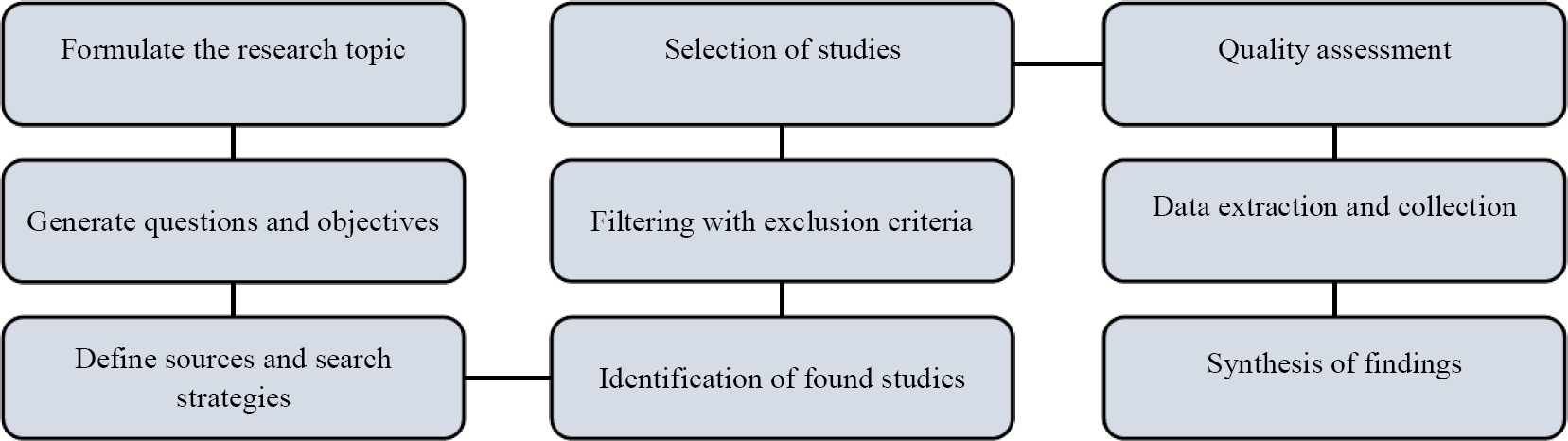
Figure 1 visually shows the different steps and stages to follow in a systematic review. These steps range from the initial identification of the research question to the presentation of results clearly and concisely.
3.1 Research Questions and Objectives
In the context of a systematic review, the clear definition of research questions (RQ) is a fundamental step that establishes the basis for the review process. Research questions define the specific aspects to be addressed. These questions are the starting point for the development of research objectives and provide a coherent structure for the review. Table 1 shows the research questions defined for our systematic review.
Table 1 Research Questions and Objectives
| Research Question | Objective |
| RQ1: Which countries are the most prominent in producing research on best practices and their impact on improving decision-making? | Identify the most prominent countries in producing best practices and their impact on improving decision-making. |
| RQ2: What are the quartile levels of the journals where research on best practices and their influence on decision-making has been published? | Find out the quartile levels of the journals where research on best practices and their influence on decision-making has been published. |
| RQ3: What are the most used and relevant keywords by the number of papers in research on best practices and their impact on decision-making? | Recognize the most used and relevant keywords by the number of papers in research on best practices and their impact on decision-making. |
| RQ4: Which countries show co-occurrence in research on best practices and their impact on decision-making? | Detail the countries that show co-occurrence in research on best practices and their impact on decision-making. |
| RQ5: In which business sectors are best practices predominantly applied? | Identify the business sectors where best practices are mostly applied |
Each question has been carefully designed to address a specific aspect of the topic and to ensure that all relevant aspects of the review are covered.
3.2 Information Sources and Search Equations
It is essential to identify suitable information sources and develop effective search strategies. This ensures that relevant and pertinent studies on the research topic are collected and considered. The selected bibliographic databases are: Scopus, Web of Science, Science Direct, ARDI, EBSCOhost, and ProQuest.
Keywords play a crucial role in identifying and retrieving scientific literature addressing the research topic. Table 2 presents the keywords used as a search strategy.
Table 2 Search Descriptors and Their Synonyms
| Descriptor | Variable |
| good practices / recommended practices / proven methods / effective approaches / optimal strategies / successful methodologies | Independent (A) |
| decision making / decision process / decision analysis / decision methodology / decision protocol / decision strategy | Dependent (B) |
Developing precise and effective search equations is essential in a systematic review. These equations allow for the appropriate retrieval of relevant studies related to our research topic. A general search equation was constructed using Boolean operators (AND, OR, NOT) and the proper combination of keywords.
The search for papers in each of the information sources used in the review was conducted individually. Table 3 presents the search equations used in each information source.
Table 3 Search Equations by Source
| Source | Search Equation |
| Scopus | TITLE-ABS-KEY ((“good practices” OR "recommended practices" OR "proven methods" OR "effective approaches" OR "optimal strategies" OR "successful methodologies") AND ("decision making" OR "decision process" OR "decision analysis" OR "decision methodology" OR "decision protocol" OR "decision strategy")) |
| ARDI | (("Document title": "good practices" OR "Document title": "recommended practices" OR "Document title": "proven methods" OR "Document title": "effective approaches" OR "Document title": "optimal strategies" OR "Document title": "successful methodologies") AND ("Document title": "decision making" OR "Document title": "decision process" OR "Document title": "decision analysis" OR "Document title": "decision framework" OR "Document title": "decision methodology" OR "Document title": "decision protocol" OR "Document title": "decision strategy")) OR (("Abstract": "good practices" OR "Abstract": "recommended practices" OR "Abstract": "proven methods" OR "Abstract": "effective approaches" OR "Abstract": "optimal strategies" OR "Abstract": "successful methodologies") AND ("Abstract": "decision making" OR "Abstract": "decision process" OR "Abstract": "decision analysis" OR "Abstract": "decision framework" OR "Abstract": "decision methodology" OR "Abstract": "decision protocol" OR "Abstract": "decision strategy")) |
| ProQuest | title(("good practices" OR "recommended practices" OR "proven methods" OR "effective approaches" OR "optimal strategies" OR "successful methodologies") AND ("decision making" OR "decision process" OR "decision analysis" OR "decision framework" OR "decision methodology" OR "decision protocol" OR "decision strategy")) OR abstract(((("good practices" OR "recommended practices" OR "proven methods" OR "effective approaches" OR "optimal strategies" OR "successful methodologies") AND ("decision making" OR "decision process" OR "decision analysis" OR "decision framework" OR "decision methodology" OR "decision protocol" OR "decision strategy")) |
| Science Direct | Title, abstract, keywords: ("good practices" OR "recommended practices" OR "proven methods" OR "effective approaches" OR "successful methodologies") AND ("decision making" OR "decision process" OR "decision analysis" OR "decision strategy") |
| Web of Science | ((TI=((("good practices" OR "recommended practices" OR "proven methods" OR "effective approaches" OR "optimal strategies" OR "successful methodologies") AND ("decision making" OR "decision process" OR "decision analysis" OR "decision framework" OR "decision methodology" OR "decision protocol" OR "decision strategy"))) OR AB=((("good practices" OR "recommended practices" OR "proven methods" OR "effective approaches" OR "optimal strategies" OR "successful methodologies") AND ("decision making" OR "decision process" OR "decision analysis" OR "decision framework" OR "decision methodology" OR "decision protocol" OR "decision strategy"))) OR AK=((("good practices" OR "recommended practices" OR "proven methods" OR "effective approaches" OR "optimal strategies" OR "successful methodologies") AND ("decision making" OR "decision process" OR "decision analysis" OR "decision framework" OR "decision methodology" OR "decision protocol" OR "decision strategy")) |
| EBSCOhost | TI ( ("good practices" OR "recommended practices" OR "proven methods" OR "effective approaches" OR " optimal strategies" OR "successful methodologies") AND ("decision making" OR "decision process" OR "decision analysis" OR "decision framework" OR "decision methodology" OR "decision protocol" OR "decision strategy") ) OR AB ( ("good practices" OR "recommended practices" OR "proven methods" OR "effective approaches" OR " optimal strategies" OR "successful methodologies") AND ("decision making" OR "decision process" OR "decision analysis" OR "decision framework" OR "decision methodology" OR "decision protocol" OR "decision strategy") ) OR SU ( ("good practices" OR "recommended practices" OR "proven methods" OR "effective approaches" OR " optimal strategies" OR "successful methodologies") AND ("decision making" OR "decision process" OR "decision analysis" OR "decision framework" OR "decision methodology" OR "decision protocol" OR "decision strategy") ) |
| Scopus | TITLE-ABS-KEY ((“good practices” OR "recommended practices" OR "proven methods" OR "effective approaches" OR "optimal strategies" OR "successful methodologies") AND ("decision making" OR "decision process" OR "decision analysis" OR "decision methodology" OR "decision protocol" OR "decision strategy")) |
3.3 Identified Studies
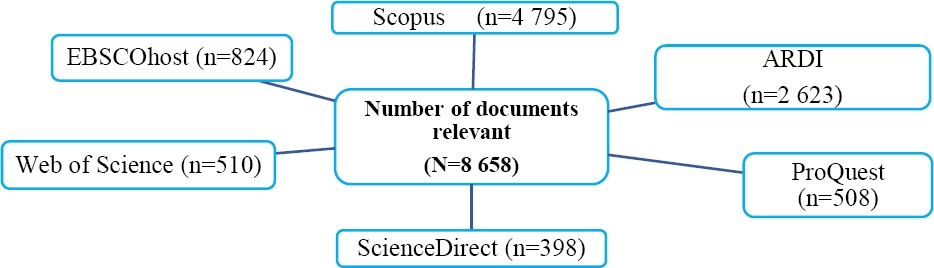
After conducting the search, a wide variety of articles related to our research topic were collected. Figure 2 provides a detailed view of the number of articles obtained from each of the information sources used.
3.4 Study Selection
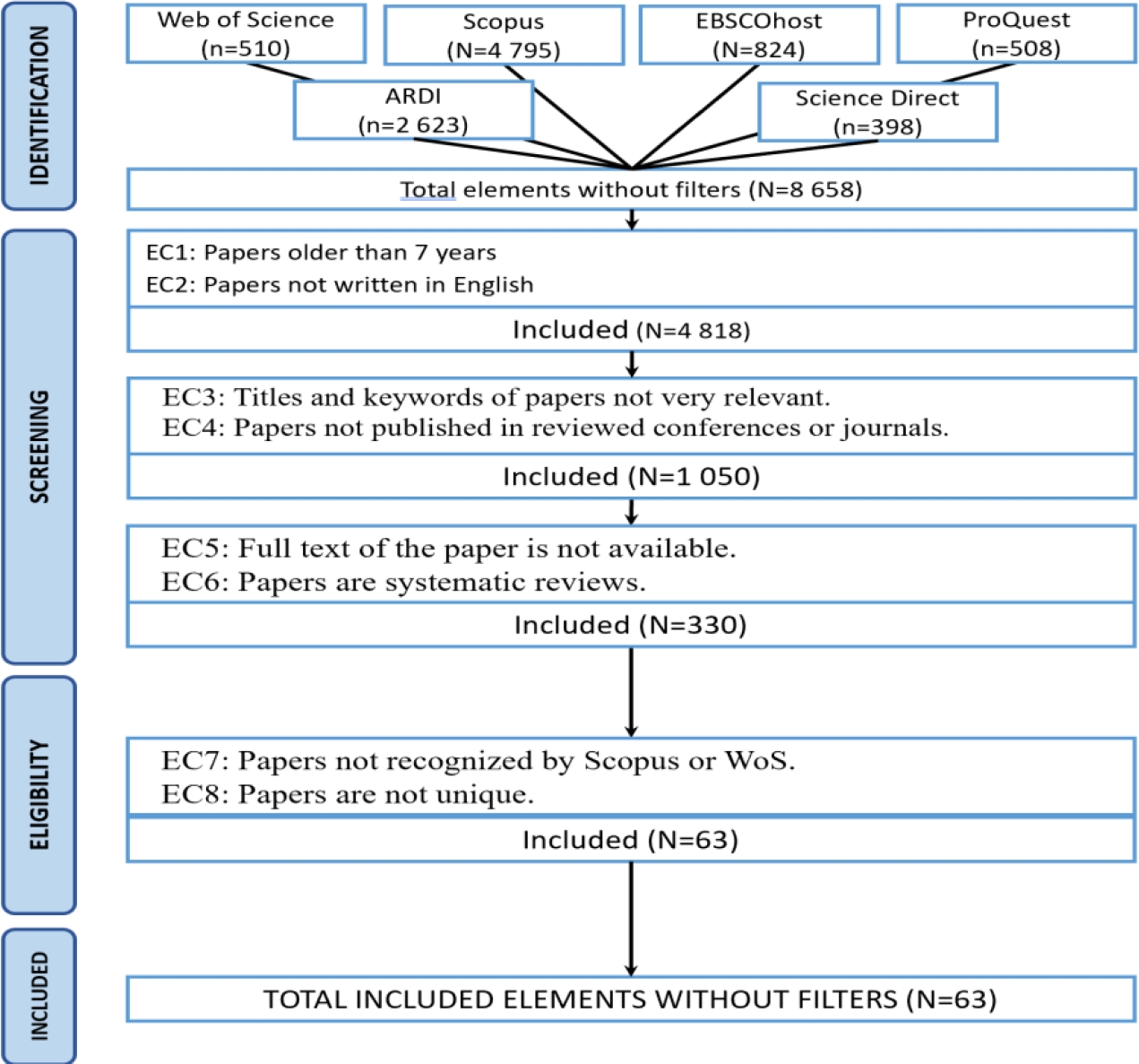
The study selection followed the PRISMA (Preferred Reporting Items for Systematic Reviews and Meta-Analyses) diagram. This diagram provides a visual representation of how the number of articles was reduced as the established exclusion criteria (EC) were applied. Figure 3 shows the PRISMA diagram.
3.5 Quality Assessment
After selecting the 63 articles by applying the previously established exclusion criteria, a quality assessment was conducted. This assessment aimed to ensure that the selected articles met adequate quality standards for inclusion in our review. Six specific quality criteria (QA) were applied for quality assessment:
— QA1: Does the article focus on theoretical research?
— QA2: Are the collection instruments referenced?
— QA3: Is the full text of the document available?
— QA4: Is the specific area of the topic clearly defined?
— QA5: Does the document describe the research context?
— QA6: Is the researcher an engineer and does he/she have a postgraduate degree?
By applying these six quality criteria, a thorough evaluation of the selected articles was conducted, ensuring that they met the necessary quality standards for inclusion in the review.
3.6 Data Extraction Strategies
Once the quality assessment of the selected papers was completed, the process of extracting relevant information from each of them followed. The extracted information from each paper included the following elements: reference number, paper title, URL (if available), publication source, publication year, countries involved in the study, ISSN (International Standard Serial Number), type of publication, publication name, paper authors, authors' institutional affiliations, journal quartile, H-index, research methodology used, number of citations received, paper abstract, keywords, study details, discussion, and conclusions. To facilitate the organization and classification of the papers, Mendeley Desktop software was used.
3.7 Synthesis of Findings
In this phase, the collected data was assembled, and answers to the research questions were developed. The data synthesis process involved analyzing the scientific literature using various statistical techniques.
The extracted information for each research question was tabulated and presented in quantitative form. These quantitative data were later used for statistical comparisons among the different findings obtained.
4 Results and Discussion
4.1 Overview of the Studies
The systematic literature review is a rigorous methodology that allows for the collection and evaluation of relevant studies on a specific topic. Once the relevant studies were collected, data extraction was performed to obtain detailed information about each study, such as the title, authors, publication year, and other relevant data. Figure 4 shows the number of studies published each year, providing a visual representation of the temporal distribution of research in this field.
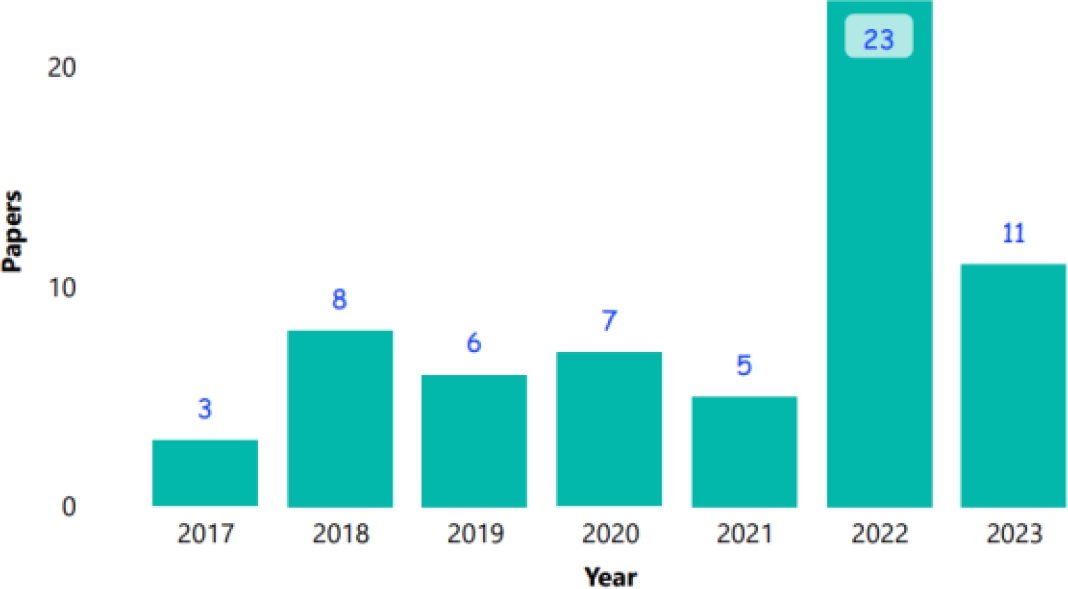
It is evident that 2022 was the most productive year in terms of the number of papers related to the study topic. This finding suggests that interest and research activity regarding the impact of the development framework on smart cities peaked during that year. Interestingly, although 2023 is not yet concluded, it has shown a significant level of production, even surpassing previous years. This indicates a growing interest and continued commitment from the academic and scientific community to investigate and contribute to the knowledge on this topic. According to the study by Boix and other authors [66], the years 2018 and 2020 stood out as periods when most research was published on the topic. In contrast, Gebre and three other authors [69] determined that the most productive year in terms of publications was 2016. Similarly, Mardani and five other authors [70] highlighted 2015 as the most productive year in terms of publications on the topic. Again, it is crucial to consider that this study was based on research up to that specific year.
Understanding the number of published studies allows authors to assess the level of interest and academic activity related to best practices and decision-making. This provides a perspective on how much has been researched and how established the existing body of knowledge on the topic is. Additionally, by analyzing previous studies, authors can identify theories, methodologies, and approaches used, allowing for a better understanding of the academic and conceptual landscape in the field of study.
Having relevant and diverse bibliographic sources is essential for obtaining quality information and gaining a comprehensive view of the research field. These sources provide a wide range of knowledge and perspectives, allowing the topic to be approached from different angles and delving into previous research. Figure 5 below shows the main bibliographic sources used in the research.
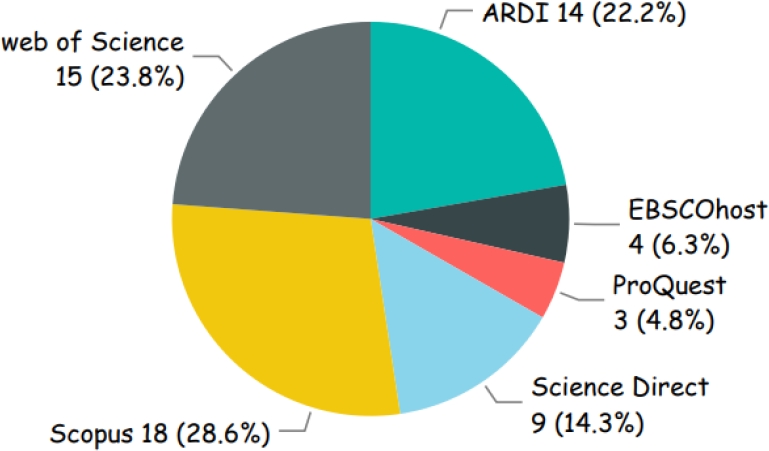
The figure reveals important information about the most prominent bibliographic sources in the present study. Scopus and Web of Science, two recognized bibliographic sources, stand out as the main contributors to the study with 18 and 15 contributions, respectively. The presence of Scopus and Web of Science in the study reinforces the credibility and rigor of the collected data, as these are widely recognized sources in the academic and scientific community.
Although it may be less known compared to Scopus and Web of Science, ARDI provides access to specific research in areas related to development and innovation, which is relevant to the present study. The study conducted by Balali, Yunusa, and Edwards [65] highlights the importance of the two main bibliographic sources, Web of Science and Scopus, in the research. However, their research also reveals the presence of less-used but equally interesting sources such as Compendex, Inspec, and GEOBASE. These lesser-known sources offer a unique and complementary perspective in the field of study. Compendex is a specialized database in engineering and technology, providing access to a wide range of scientific and technical literature in these areas. Inspec, on the other hand, focuses on information related to physics, electronics, and electrical engineering.
It is important to consider that the most prominent sources may come from different disciplines, such as business management, psychology, economics, sociology, among others. The multidisciplinary nature of source searching enriches the review and allows best practices in decision-making to be approached from different perspectives. Another point to highlight in the research process is the authors' affiliations, which play a crucial role. These affiliations reflect the collaboration and institutional support in generating knowledge and conducting research. Identifying the most prominent affiliations provides valuable information about the institutions and organizations actively involved in this field of research. Table 4 presents the affiliations that have contributed the most papers to the research. The analysis reveals that the most recurrent institution in the research is the Radboud University Medical Center, with a total of 18 appearances.
Table 4 Papers by year and publication name
| Publication Name | 2017 | 2018 | 2019 | 2020 | 2021 | 2022 | 2023 | Total |
| Radboud University Medical Center | 0 | 0 | 18 | 0 | 0 | 0 | 0 | 18 |
| Patient-Centered Outcomes Research Institute | 10 | 0 | 0 | 0 | 0 | 0 | 0 | 10 |
| Pharmerit International | 0 | 0 | 0 | 10 | 0 | 0 | 0 | 10 |
| Optum Labs | 0 | 9 | 0 | 0 | 0 | 0 | 0 | 9 |
| i2CAT Foundation | 0 | 0 | 0 | 0 | 0 | 0 | 6 | 6 |
| Izmail State University of Humanities | 0 | 0 | 0 | 0 | 0 | 6 | 0 | 6 |
| Zhejiang Normal University | 0 | 0 | 0 | 0 | 0 | 0 | 5 | 5 |
| Al Akhawyan University | 0 | 0 | 0 | 0 | 0 | 4 | 0 | 4 |
| Finish Environment Institute | 0 | 0 | 0 | 0 | 0 | 0 | 4 | 4 |
| National University of Defense Technology | 0 | 0 | 1 | 0 | 0 | 3 | 0 | 4 |
| Amity University | 0 | 0 | 0 | 0 | 3 | 0 | 0 | 3 |
| Huazhong University of Science and Technology | 0 | 0 | 0 | 0 | 0 | 0 | 3 | 3 |
| San Jose State University | 0 | 0 | 0 | 0 | 0 | 3 | 0 | 3 |
| Sustainable Fisheries Management | 0 | 0 | 0 | 0 | 3 | 0 | 0 | 3 |
| University Polytechnical of Victoria | 0 | 0 | 0 | 0 | 0 | 3 | 0 | 3 |
| University of Sao Paulo | 3 | 0 | 0 | 0 | 0 | 0 | 0 | 3 |
This suggests that this institution is recognized and active in the field of study, indicating its expertise and leadership in the addressed topic. The Patient-Centered Outcomes Research Institute and Pharmerit International, both with 10 appearances, demonstrate their significant contribution to the field of study. The frequent participation of these institutions in research indicates their commitment and dedication to the topic of best practices in decision-making. Knowing the most common affiliations in research on best practices in decision-making provides authors with important information about the institutions and experts who have made significant contributions in this area. This allows them to identify centers of excellence, active research groups, and opinion leaders on the topic.
4.2 Responses to Research Questions
Below are detailed answers to each of the seven research questions. The aim is to provide the academic and scientific community with a valuable source of information that contributes to advancing knowledge in this field.
RQ1: Which countries are the most prominent in producing research on best practices and their impact on improving decision-making?
In this context, it is important to identify the countries that have made the most significant contributions to the development of best practices and their impact on improving decision-making. Figure 6 presents a graph illustrating the most productive countries in developing best practices and their impact on improving decision-making.
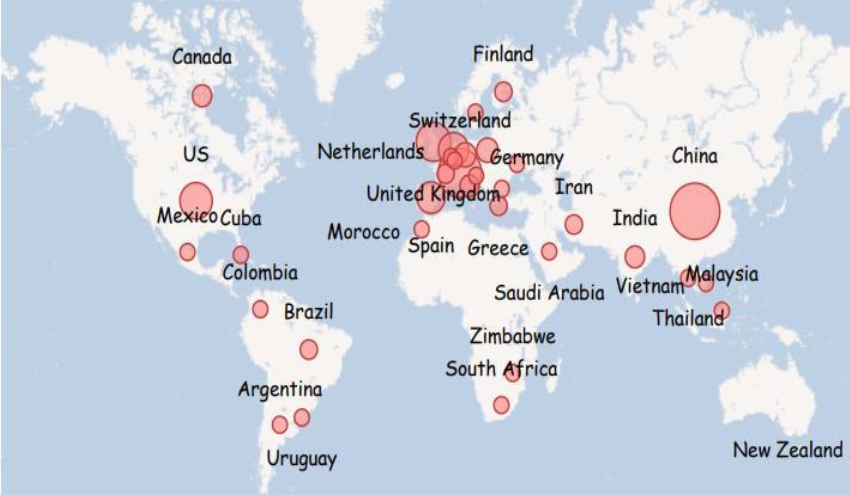
It can be observed that China, Switzerland, and the United States are the most productive countries in the research. Additionally, most papers come from the European continent. It is also highlighted that all five continents are present, contributing papers to the systematic review.
According to Adepoju and other authors [64], the Asian continent has greater prominence, as they define Turkey, India, and China as the most productive countries in terms of the number of papers. Another study that aligns with these findings is by Balali and Yunusa [65], who detail China as the country contributing the most papers, followed by the United States and Iran. Another agreement found was with Gebre and three other authors [69], who also determined China as the leading country in terms of paper contributions to the review. Another study that aligns with these findings is by Mardani and others [70], who note a significant influence from Asian countries, with Taiwan, Turkey, and Korea being the most productive. However, Boix and other authors [66] refer to Spain as the most productive country in terms of papers contributed to the systematic review, suggesting that there may not always be consensus between one author's review and another. In the study by Sanftenberg and other authors [74], the country contributing the most research to the review is detailed as the United States. Authors intending to develop future research should consider the results, as they provide a solid foundation for exploring and understanding the relationship between the development of best practices and their impact on improving decision-making in different countries.
RQ2: What are the quartile levels of the journals where research on best practices and their influence on decision-making has been published?
The quartile level of a journal is a measure that classifies journals based on their importance and visibility in the academic field. Identifying the quartile levels of the journals where research on best practices and their influence on decision-making has been published is crucial for evaluating the quality and reach of such research. Figure 7 presents a graph showing the quartile levels of the journals in which research on best practices and their influence on decision-making has been published.
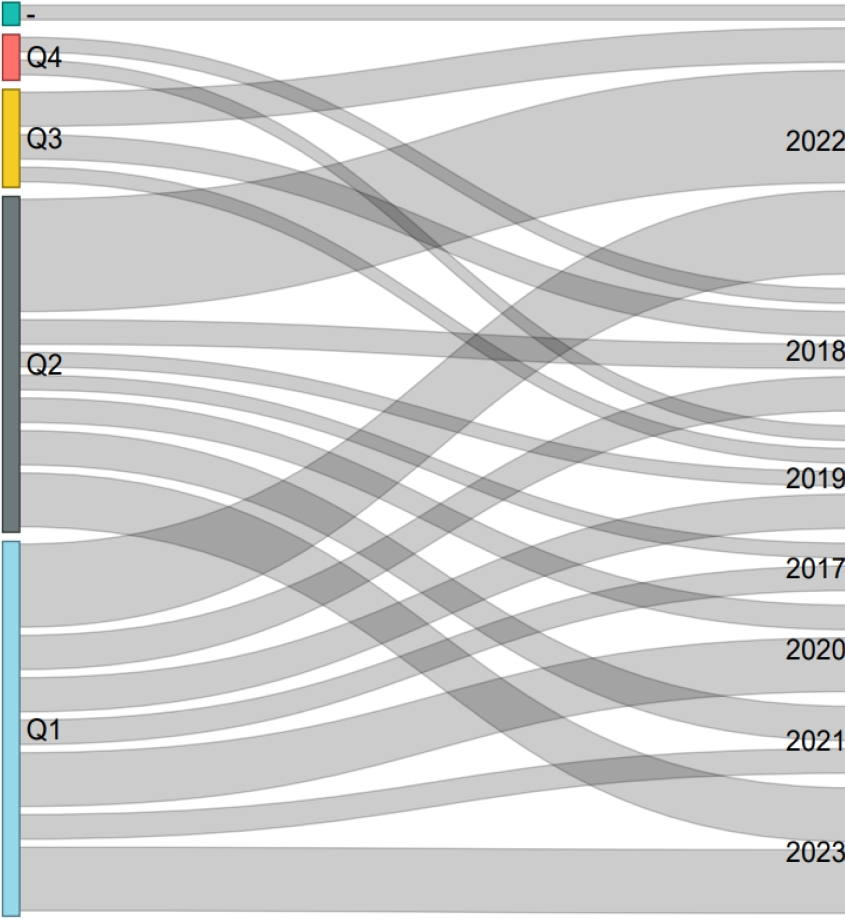
It is evident that more than 2/3 of the selected papers are in Q1 and Q2 quartile journals. This speaks well of the journals they belong to, as they have successfully passed each of the filters, whereas papers in Q3 and Q4 did not fare as well. It is worth noting that a few papers do not have a quartile level (-). This may occur if the paper comes from a conference or the journal has not yet been assigned a quartile level.
The lack of previous reviews analyzing the quartile levels of journals where research on best practices and their influence on decision-making is published makes direct comparisons difficult. This gap highlights the need for future studies to explore the quality and impact of these publications at different academic levels. Our findings aim to provide an initial framework for this analysis, addressing the current lack of comparative data. The absence of direct comparisons opens a window for researchers to further explore this topic and consider the quartile level as a relevant element for evaluating the quality and impact of research in the studied area. This implies that future research can incorporate this approach into their methodologies and analyses, thereby contributing to building a more comprehensive and diverse body of knowledge regarding the impact of the development framework on smart cities.
RQ3: What are the most used and relevant keywords by the number of papers in research on best practices and their impact on decision-making?
Some common measures are used to determine the importance of a keyword in the context of research. Here are two common approaches:
Term Frequency (TF): This measure calculates the frequency of each word in a text:
This measure shows how often a keyword appears relative to the total number of words in the text.
Inverse Document Frequency (IDF): This measure is used to assess the relative importance of a keyword in a set of documents:
The inverse document frequency is used to give more weight to keywords that appear in few documents compared to those that appear in many documents. These measures can be combined to calculate a relevance score for the keywords and then use visualization algorithms such as spatial arrangement and font size to create the keyword cloud.
Identifying the most used and relevant keywords in research on decision-making and its impact on best practices provides valuable information on the topics and key concepts widely addressed in this field (see Figure 8).
It can be deduced that "Markov decision" stands out as one of the most used keywords in the research. This suggests a focus on the study and application of the decision-making process based on Markov models.
Similarly, "good practices" is another relevant keyword indicating the interest in identifying and promoting optimal and effective practices in decision-making. Additionally, the third most used keyword is "COVID-19," suggesting that the research focuses on the context of the pandemic.
Boix and other authors [66] define "concrete structures," "building," and "fiber-reinforced concrete" as the most used keywords. On the other hand, Balali and other authors [65] highlight "optimization," "building envelope," and "passive design" as the most used keywords. It is important for authors intending to develop future research to consider the question about the most used and relevant keywords in research on best practices and their impact on decision-making, as it provides an overview of the central concepts and themes in the field.
RQ4: Which countries show co-occurrence in research on best practices and their impact on decision-making?
Various measures and formulas are used to quantify the relationship between countries:
Degree Centrality Index: Number of connections (co-occurrences) of a country with other countries.
These formulas allow for measuring the relationship and collaboration between countries in the context of scientific research. It is important to note that other measures and techniques may be applied depending on the specific study objective and the available data.
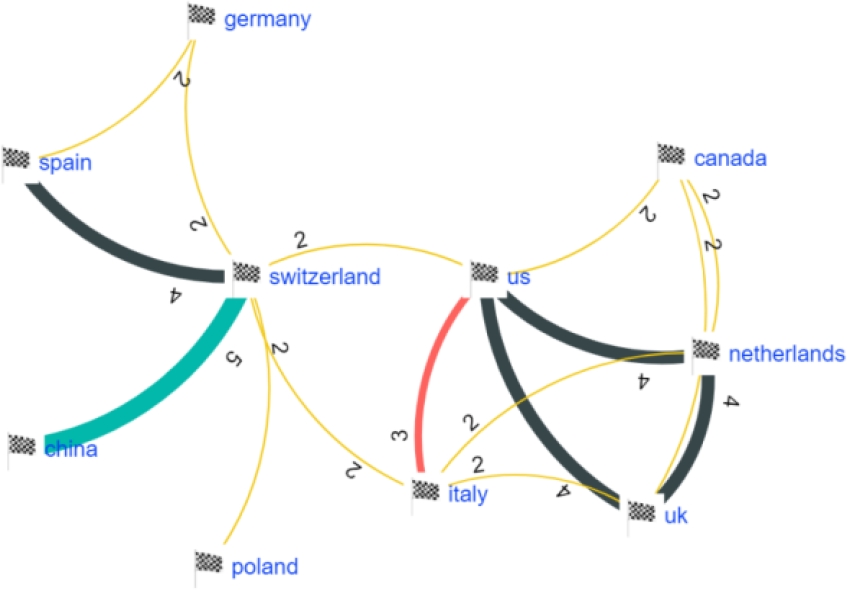
The co-occurrence of countries in research on best practices and their impact on decision-making provides information on the collaboration and interconnection of different nations in this field of study. Figure 9 presents the countries that show high co-occurrence in the research.

The information reveals an interesting geographical distribution regarding research on best practices in decision-making. Switzerland stands out as the country with the highest co-occurrence of research on this topic, with a total of 17. This finding may be attributed to various factors, such as the prominence of academic institutions and research centers in the country and the importance placed on decision-making based on best practices. The United States follows with a total of 15 research papers. This is not surprising, considering the size and influence of the academic and scientific community in the United States. In third place are the Netherlands and Great Britain, each with 10 research papers. These countries also have a notable tradition of research and development in various fields, which may explain their significant presence in this context.
Despite the growing interest in the implementation of best practices and their impact on decision-making at a global level, no previous reviews specifically addressing the co-occurrence between countries in this field of study have been found. The absence of comparative studies limits the ability to contextualize current findings within a broader view of the international landscape. This underscores the need for future research to systematically analyze collaborations between countries and the global dynamics influencing the dissemination and application of best practices, providing a more robust comparative framework for understanding the scope of their impact in different geographical contexts. It is important for authors in future research to consider the question about countries showing co-occurrence in research on best practices and their impact on decision-making, as it allows understanding trends and patterns of international collaboration in this field. By investigating the countries showing co-occurrence in research, authors can identify the nations that have been most active and have made significant contributions.
RQ5: In which business sectors are best practices predominantly applied?
Implementing best practices in the business environment is essential to achieve efficiency, quality, and success in operations. These practices are based on recognized standards and proven approaches that enable organizations to improve their processes and outcomes in different business sectors. It is interesting to know the sectors where best practices are most frequently applied, as this provides an overview of the areas where organizations prioritize excellence and continuous improvement.
Table 5 shows the business sectors where best practices are predominantly applied. The table shows the most common application areas in the reviewed scientific literature, with "Trade" and "Energy" topping the list, each with 19.5% of references. These areas are closely followed by "Health" with 18.8%. The "Education" and "Finance" areas have a lower number of references. The distribution suggests that the fields of trade and energy are the most explored, possibly due to their economic and technological relevance.
Table 5 Areas of application
| Area | References | Qty. (%) |
| Trade | [1] [4] [5] [6] [9] [11] [12] [19] [21] [22] [23] [24] [28] [32] [33] [34] [36] [40] [41] [42] [51] [54] [58] [60] [62] | 25 (19.5) |
| Energy | [6] [7] [10] [13] [17] [20] [21] [23] [24] [28] [32] [33] [34] [37] [43] [44] [45] [46] [49] [51] [55] [56] [61] [62] [63] | 25 (19.5) |
| Health | [5] [7] [8] [9] [10] [11] [14] [15] [18] [21] [22] [24] [28] [31] [32] [34] [36] [39] [43] [46] [48] [52] [54] [63] | 24 (18.8) |
| Construction | [2] [4] [6] [9] [23] [24] [28] [30] [31] [41] [45] [46] [47] [50] [52] [53] [54] [60] [61] | 19 (14.8) |
| Transport | [2] [3] [4] [7] [20] [21] [22] [32] [33] [34] [40] [46] [51] [57] [61] [63] | 16 (12.5) |
| Education | [3] [7] [11] [15] [19] [24] [25] [31] [39] [46] [54] | 11 (8.6) |
| Finance | [2] [20] [28] [41] [42] [46] [48] | 8 (6.3) |
The absence of previous reviews on the application of best practices in specific business sectors limits the ability to make solid comparisons in this field. This lack of comparative studies highlights the need for additional research exploring how these practices are implemented and adapted in different industries. Our analysis aims to fill this gap, providing an initial foundation for future discussions and sector-specific studies. Various sectors have recognized the importance of implementing best practices to improve efficiency, quality, and safety in their respective areas. The implementation of best practices in these sectors can lead to better outcomes and contribute to development and competitiveness in each of them.
5 Conclusions and Future Research
The systematic review in this paper has provided analytical answers in textual, graphical, and statistical form to the research questions posed about the influence of best practices in decision-making. This has been achieved through the analysis of 63 selected papers resulting from various stages that are part of the adapted review method. It has been established that the terms used as synonyms for both variables can yield novel papers no older than seven years. Under this criterion, the main countries that show the most interest in this topic through contributions of scientific papers, especially those from the Asian continent, are also highlighted. Another point to emphasize is the most frequently used keywords in each of these papers.
Additionally, it has been determined that there are agreements and disagreements with other authors when comparisons are made with review papers. Since the influence of best practices in decision-making is a multidisciplinary topic, it is recommended to foster collaboration between different disciplines and promote the exchange of knowledge and experiences.
This study serves as a guide for future researchers interested in exploring the influence of best practices in decision-making.

