




 nueva página del texto (beta)
 Inglés (pdf)
 Artículo en XML
 Referencias del artículo
 Traducción automática
 Enviar artículo por email
 Citado por SciELO
  Similares en
SciELO
Similares en
SciELO 
 Permalink
1 Introduction
It can be considered as "Value" the degree of importance, significance or meaning to acquire the objects, actions, situations or abstract positions or materials, as they respond to the needs of the species and the human being in a given time, and fight for it, to locate and rank the material and spiritual goods in order of importance.
They talk about what it is worth an object to satisfy a need and on the other hand, dependence constitute the goal of life is manifested. Compassion, freedom, humility, generosity, justice, peace, tolerance, honesty, loyalty, respect and trust among other values are not the qualities that characterize citizens in the world.
These new behaviors that have adopted the majority of the inhabitants are antisocial and dehumanized but unfortunately, they are installed in our society as a common pattern.
This involves following attitudes as: Lack of respect that has been lost to the woman and since in many cases women who no longer requires such respect, as is the case most of you want to meet a man much given the "gender equality" that should exist between them.
In today's world it calls for children to be caring, respectful to their parents, their teachers and peers. It is possible to meet this challenge in many ways: mutual respect, sharing opinions, accept decisions, set goals, standards or limitations, and allow certain rights and privileges.
But how to raise children with values? First, knowing each of the values. And second leading by example, as children learn by example of people who have reference.
The way their parents have to relate to each other, to share, to cooperate, to help others, to understand, to ask for things, to defend, to tolerate, accept, etc. All this will teach the child values every day, and think that these are appropriate.
In this case one of the activities used for teaching values is a virtual interactive game. The game will teach the child how to behave in an environment of coexistence either at school, park, home and elsewhere.
In a more easy and enjoyable way to teach the meaning and importance of values and a way will more readily understand their duties and obligations to society.
This is intended to help the individual child's growth and its relationship with others. As the child learns the benefits of purchasing order and organization as a result of the cooperation concept, respect, tolerance, responsibility, etc.
To other individuals, also he learns to see himself as an individual who deserves respect, tolerance, loyalty etc., by others. No one can demand from others what he himself does not have [1,2].
2 Realization of the Work
To carry out the project implementation was necessary to conduct an analysis, design, choice of models, choice of game engine and game development as the goal is an interactive game, steps aimed at establishing the actions the player will have within the game, such as interactivity, navigation and challenges and to develop the virtual world.
In the analysis stage, we define the overall purpose of the game, and based on this we return to the ideas generated previously to define the roles of the game. These cover issues ranging from visual related avatar of the player, stage or the world, to the activities and game features [3,4].
The functions set began to produce the corresponding use cases, defining seven use cases, covering aspects such as navigation menus and play space; activities and challenges that can be carried out in the game and features included in the game.
For the design phase we undertake the development of class diagrams and corresponding to the sequence of use cases, this allowed us to establish the basis for the functions within the game. Once the design stage regarding the use cases, we carry out the design of the game world.
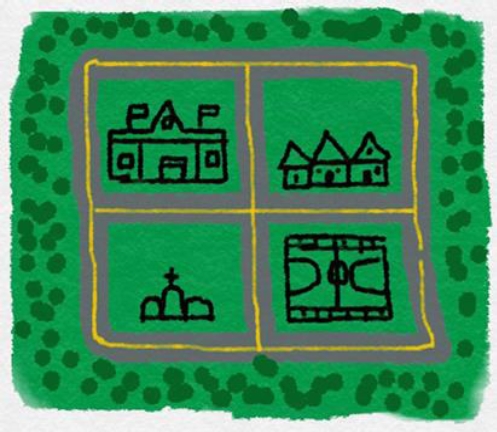
The game involves activities in several key scenarios, with the school, home, the park and the most important neighborhood in the world.
Figure 1 shows the sketch of the world which designed and began construction shown, it may be noted that in each quadrant are the scenes that would lead the different activities.
With analysis and design compliment we proceed to the development of the game world. In order to accomplish these two things are necessary, generate or obtain 3D models to be used in the game and choose a game engine where to establish. Our team does not have designers to draw 3D models so they turn to look at different online stores that offer these resources.
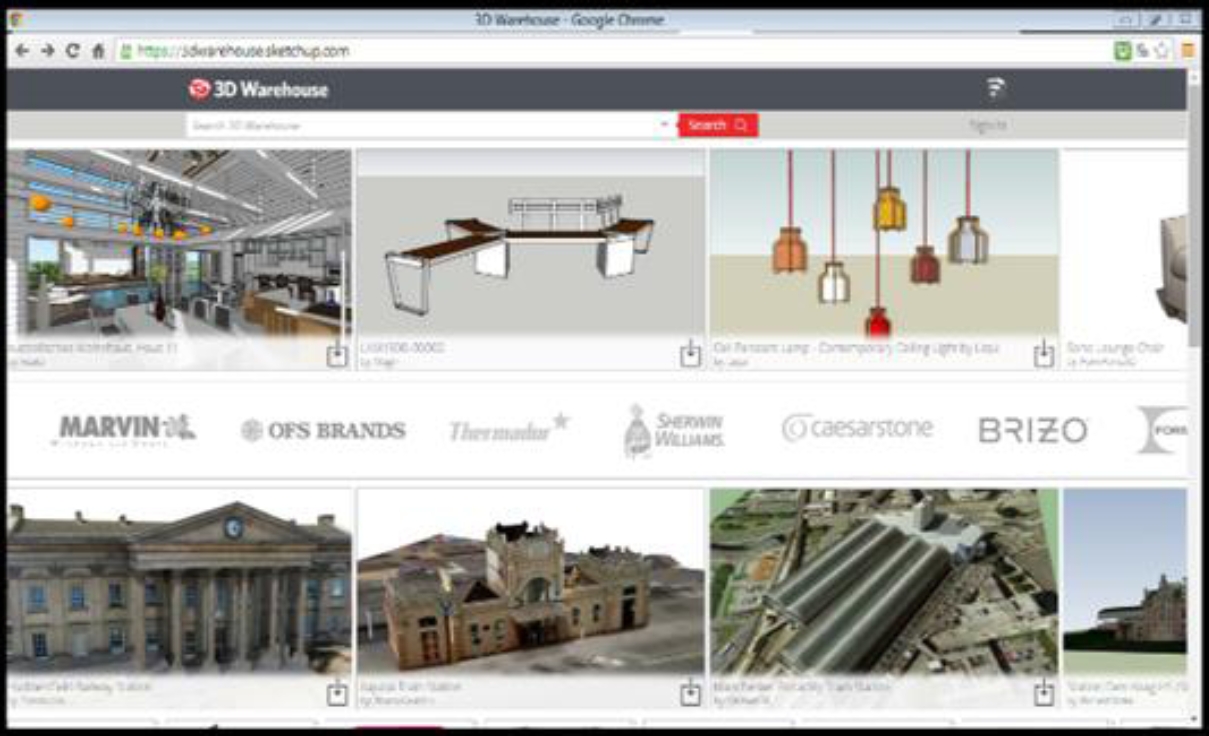
We chose to use 3D Warehouse [5] (Figure 2), the decision was based on the fact that the models Contender in this store, besides being free, are made using the Sketchup [6,7] tool, which gives us a certain degree consistency between models when handling.
Sketchup (Figure 3) is a software for graphics and 3D modeling versatile and easy to use design, so the learning curve was relatively short for the purpose we required. The source also models and software for editing, we proceeded to choose the game engine we would use to build the game. There are two proposals:
It is used a Platform, Unity3D [8] (Figure 4) which offers a free version that allows to carry out the tasks planned, as it allows us to create 2D and 3D worlds, and import models has physics engine and API is used Scripting in 3 languages that can encode C-sharp, JavaScript and Boo.
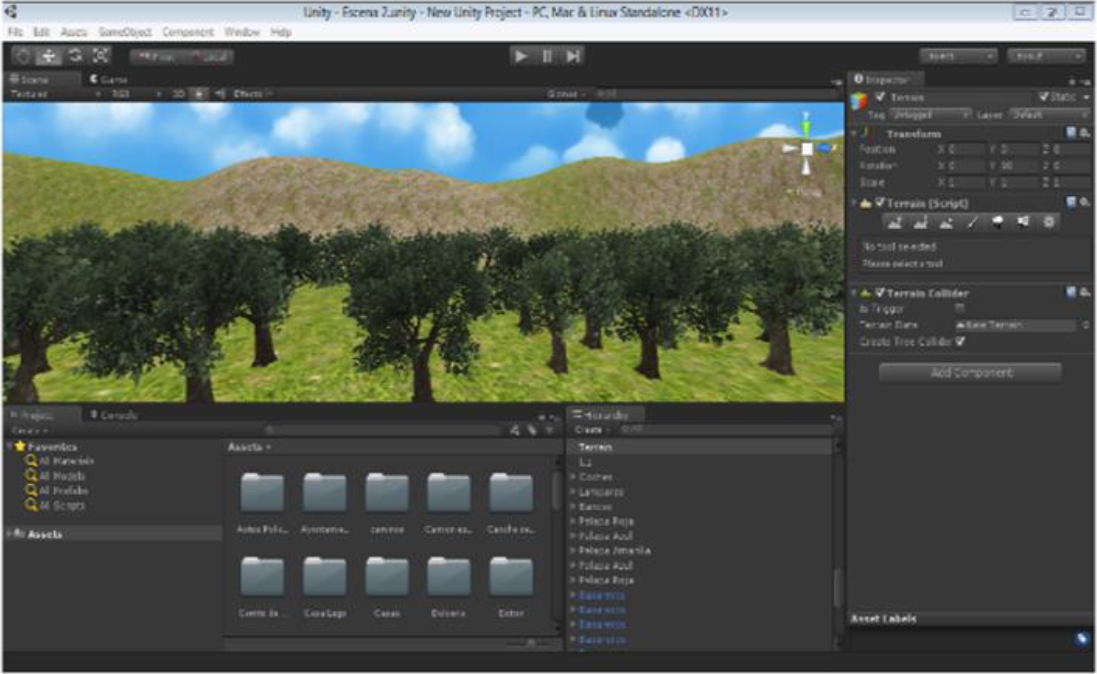
Among its advantages are the Asset Store, a store that contains 3D models, and better yet, objects and scripts that allow enrich the game, which in many cases is free.
After knowing the tools we proceeded to find the models that we would use in the world, for this we seek houses, streets, schools, hospitals, cars, parks and commercial establishments in 3D Warehouse, all models should be as far as possible the more cartoonish possible, in some cases as the house was necessary to manipulate the colors in SketchUp so that these were very striking, also, in other cases as the park (Figure 5) was necessary to refine the designs so that they do not generate consumption excessive resources.
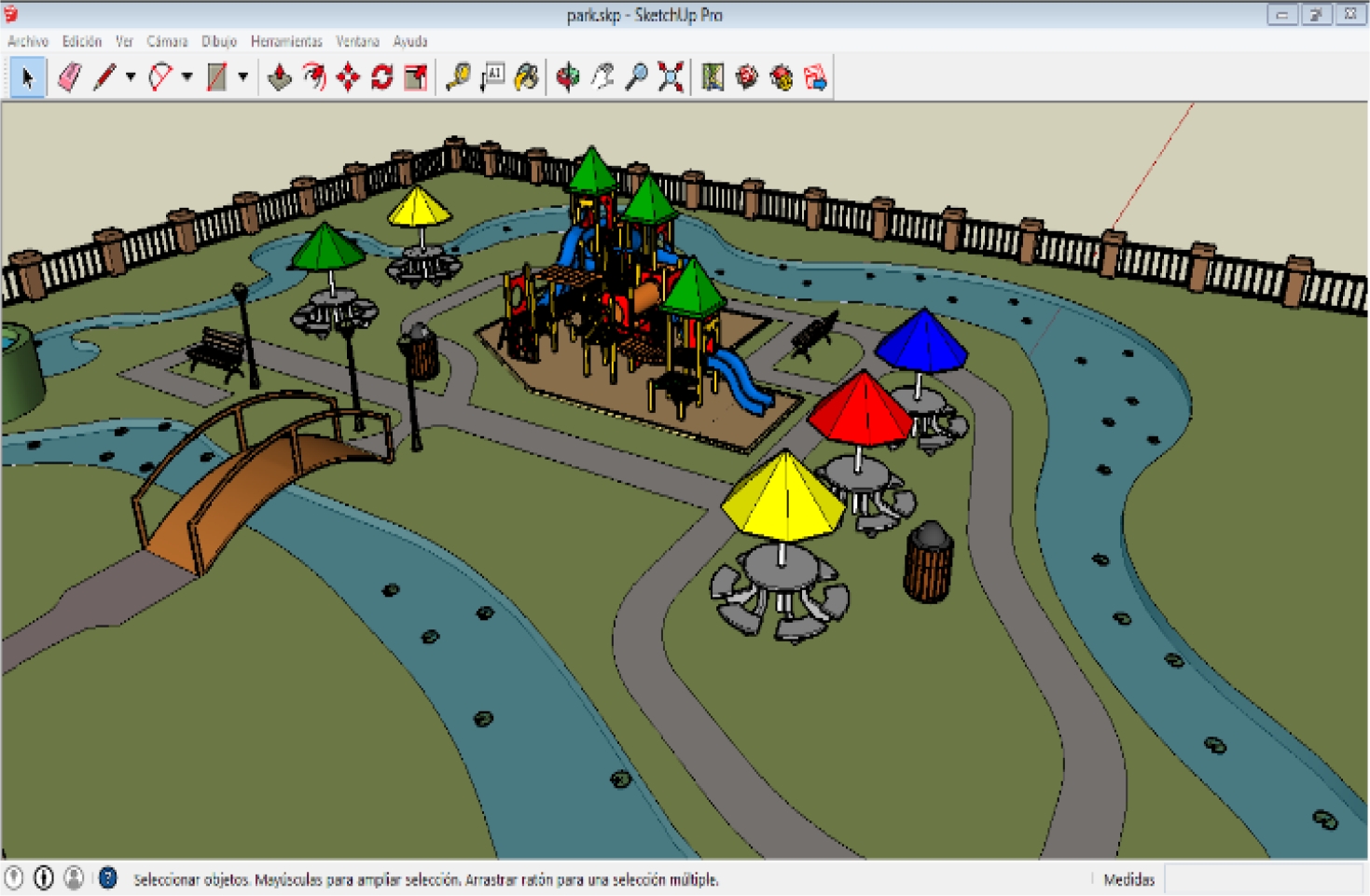
Throughout the search we try to select models that have good synergy together, and as we found we conclude that overall avatars and game characters would present a problem because the models differ greatly in the store, so in our search discovered that 3D models based on Legos are an ordinary people, so we decided to look for models of these characters to use in the game.
Today the world has established design elements, streets, neighborhoods, buildings, places and people (Figure 6).
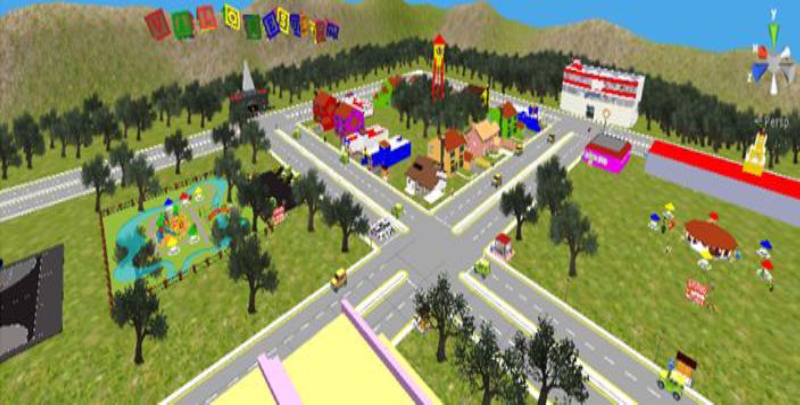
3 Results
According to the explanation in the development of this work, has been designing the issues raised, a game that instills the values especially in children who are still able to rectify his teachings and implement this type of education.
As it was explained to the environment that develops is visually appealing to children and thus encourage them to make use of the game and implement values.
The results have been favorable, because the atmosphere is nice in the game, attractive and will add elements that are as educational as possible so that the game itself is successful.
As results we have obtained the game execution is displayed as follows:
As seen in the image quadrant dedicated to a complex of houses is appealing to the eye and as real as possible, but with colors that are pleasing and emotional to children.
The next quadrant is focused within a block of shops, the town hall, a police station and recreational space, something very similar to what can be found in a city or a village typical of our daily lives, it becomes familiar to the child the environment and can generate more attention and knowledge about the game, also they have been included basic and important services such as a hospital and a gas station.
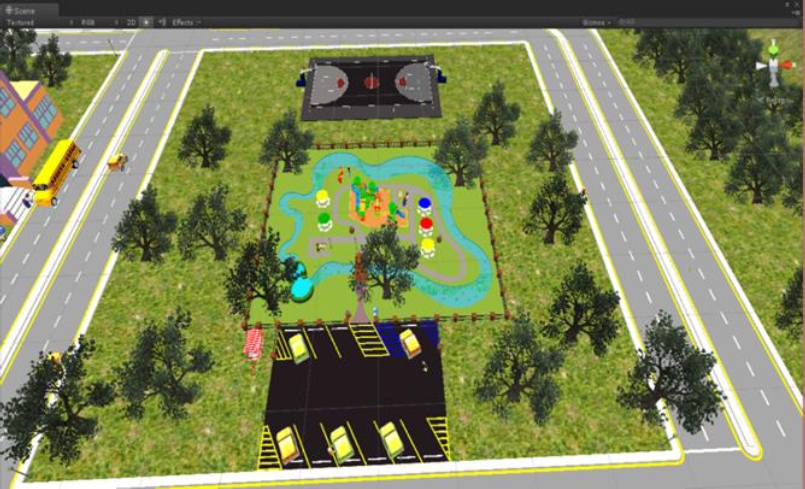
Also, as shown in Figure 9, we have included an area of recreation and entertainment for children, the park itself which features games and a basketball court and green areas and certain small businesses, this part is basic and can also develop a series based on the practice of values in areas such as the park activities, school or home, here is why the design that has been followed.
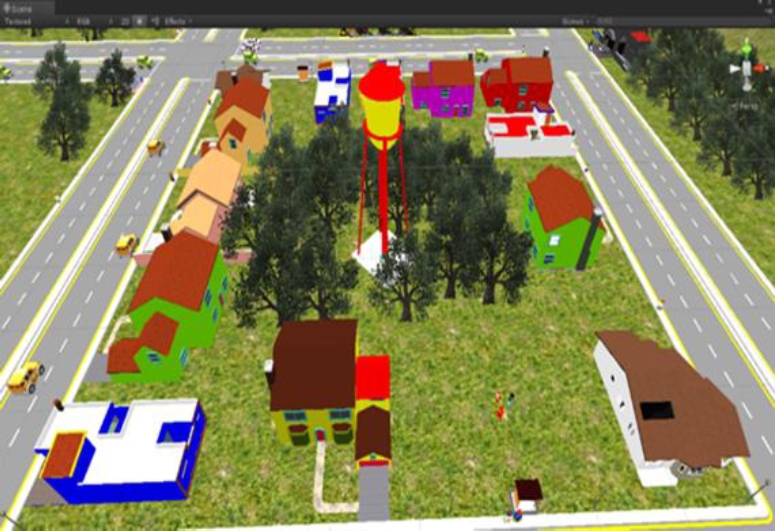
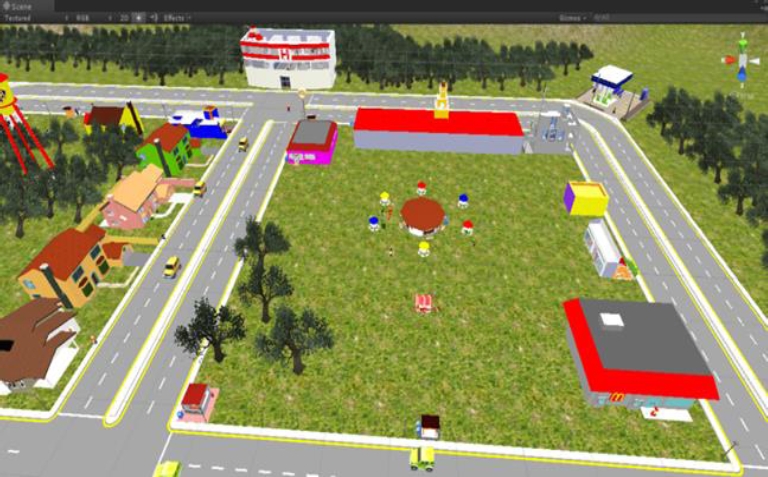
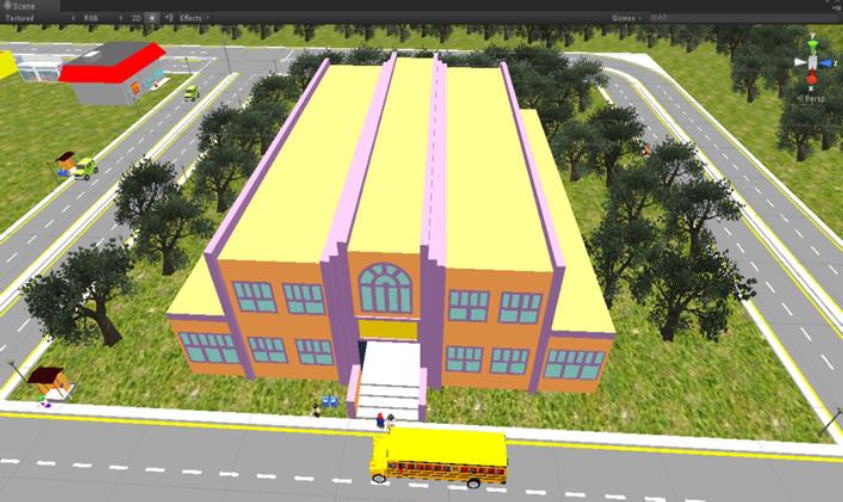
One of the most important parts should be included and whether it is school, where mostly children spend time and where they should learn about civics and ethics but has been poor, is why as an important symbol, view the child in his most famous and anxious to get test environment decision making should have an impact on their daily lives and their future decisions.
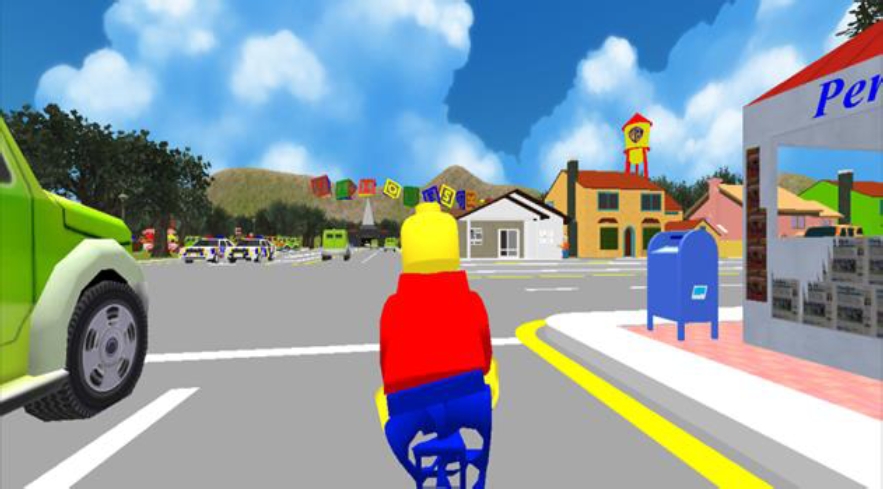
As shown and explained, part of the development focused on children is to engage with objects or colors to them to your liking, this means that as the houses are colorful and the rest of the game so, then your avatar to handle during the game should be as striking as possible, which is why we have decided to use a lay type doll to be maneuvered by children.
Finally, it is also adapted to the environment basic but important elements that people interact daily as bus stops, traffic officers of the same lego type, waste baskets, lamps and even the name of the game seen in the mountains that are part of same game as an extra attached to reality and enjoyable.
Throughout the environment the child can make good or bad decisions in the game if he makes bad decisions it will take away points if he takes the right point-backed values will increase his level in the game.
The students in group A recorded a more significant change in behavior than group B. The results were the following, see figures 12 and 13:
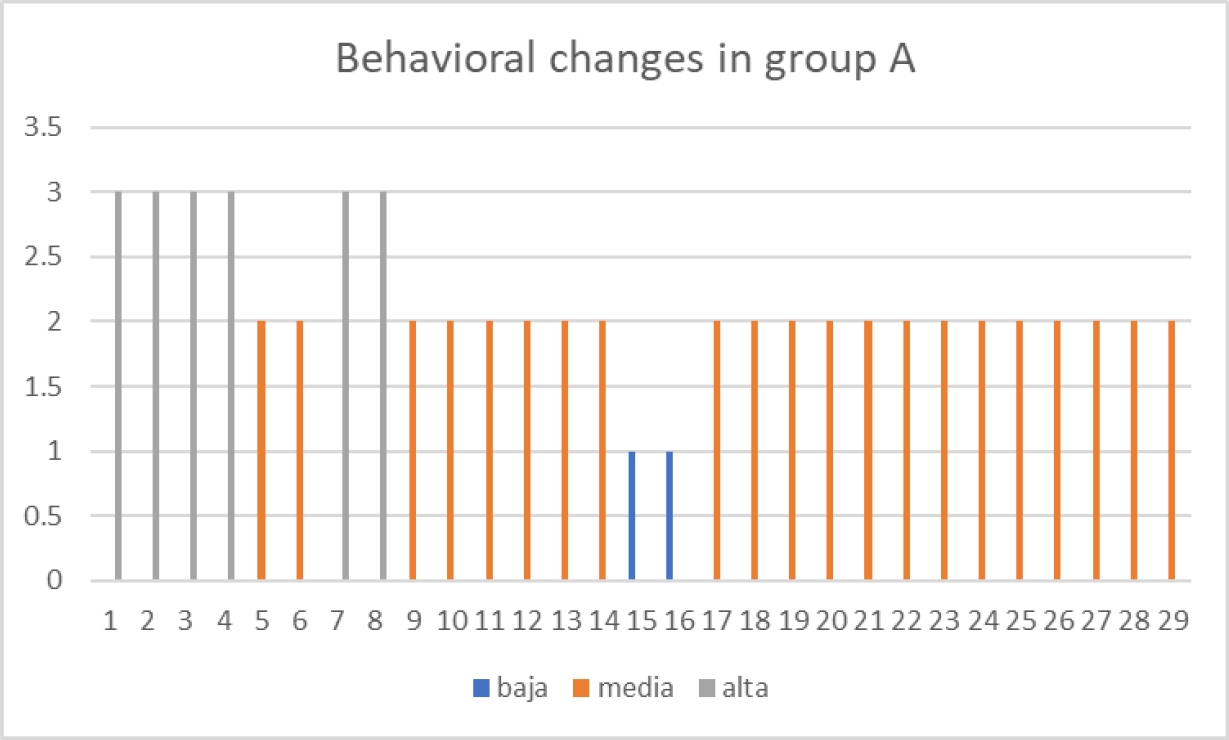
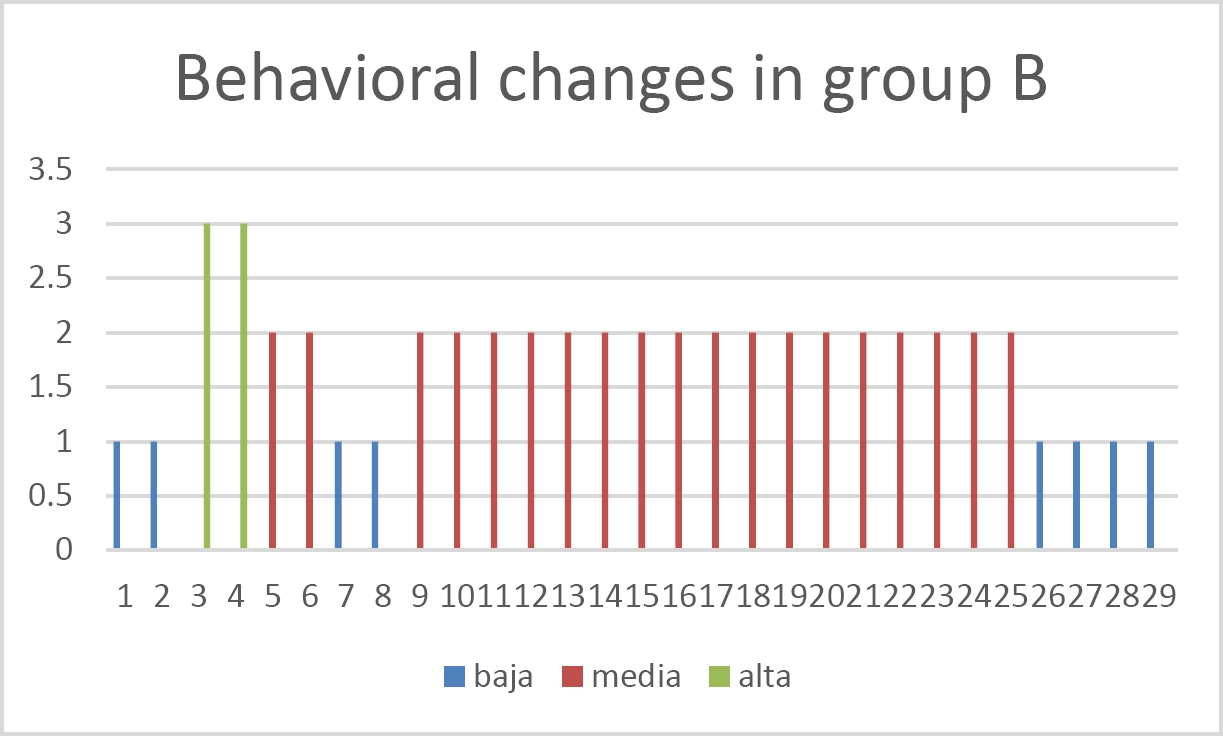
Where low means that the student did not register a change or it was not very significant, on average the student registered changes, and on high they registered very notable changes, being more sociable and empathetic with their classmates and no longer being problematic students.
In group A, 2 students with no change, 6 students with high change and 22 mediums in group B, 2 students with high changes, 7 with no change and 21 with medium changes.
4 Conclusions
Finally we come to the conclusion that this type of technology projects contain a wealth of advantages to use them properly, since technology in many ways is the ultimate and children are able to learn too fast on their use, direct this ability of children it focused on improving education is most fitting that may exist, including us the design we realized that there are a host of tools that can be used for 3D or modelos3D design in the case of objects and with these you can create many environments and all with a different and positive purpose.
It could be seen in graphs 11 and 12 that the students who played this 3D game had better resolutions in behavior, because they applied values.

