




 nueva página del texto (beta)
 Inglés (pdf)
 Artículo en XML
 Referencias del artículo

 Traducción automática
 Enviar artículo por email
 Citado por SciELO
 Similares en
SciELO

 Permalink

1 Introduction
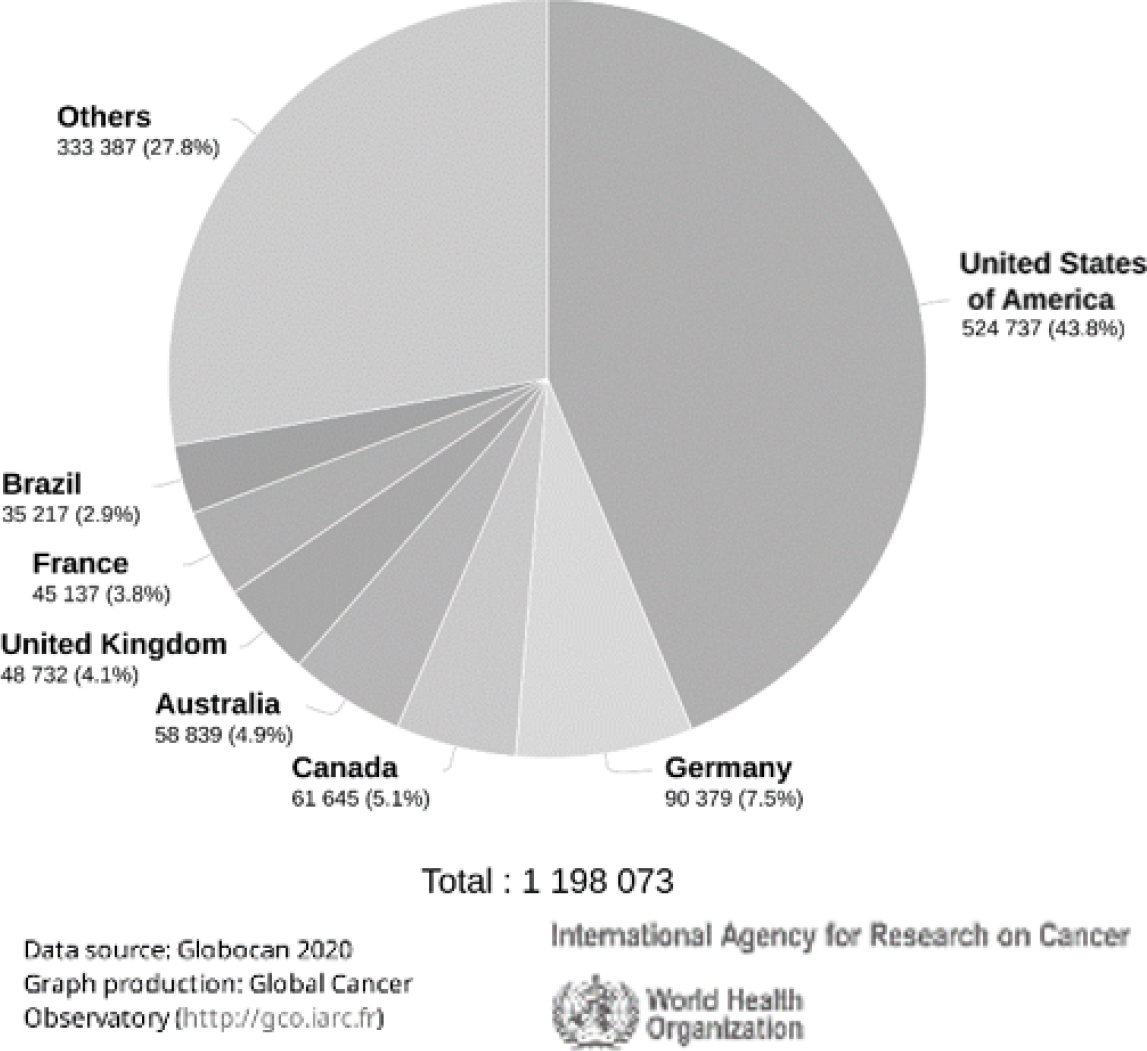
Dermatological diseases, such as skin cancer, Dermatitis Atopica, Melasma, and Vitiligo, have emerged as significant global health concerns due to their rising prevalence and the challenges associated with accurate diagnosis and treatment. According to the World Health Organization (WHO), skin cancer remains an emergent issue, representing a considerable proportion of all cancer cases, particularly in the United States, Australia, and Canada [24, 4].
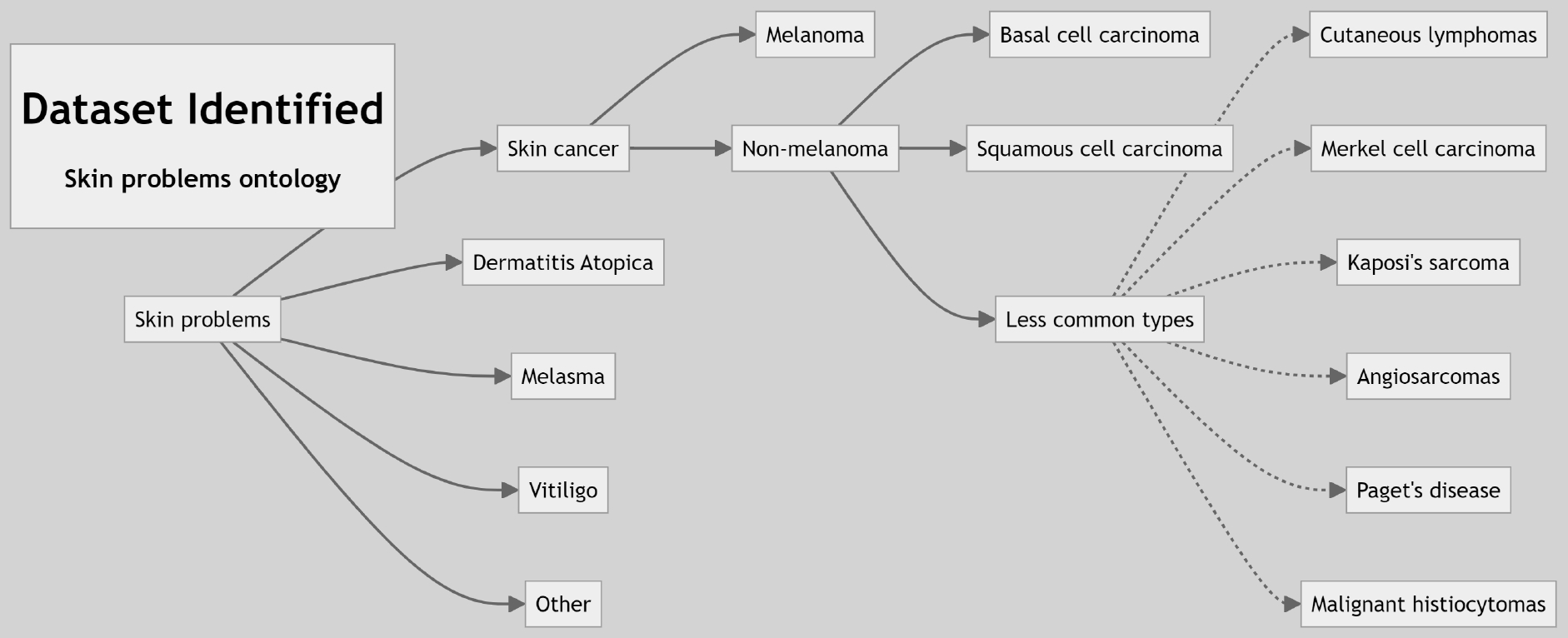
The rising incidence of skin cancer has led to substantial annual mortality, particularly for melanoma, which is projected to increase further in the coming years [24].
Environmental factors such as ozone layer depletion, increased ultraviolet (UV) radiation, lifestyle habits like smoking, and infections significantly contribute to skin cancer risk. Despite being less common, melanoma remains one of the deadliest skin cancers due to its high potential for metastasis.
Similarly, non-cancerous dermatological conditions like Dermatitis Atopica, Melasma, and Vitiligo also significantly impact patients’ quality of life and healthcare systems globally.
The diagnosis and classification of these diseases often rely on clinical assessment, which can be subjective and lead to inconsistent results.
The increasing demand for more accurate and objective diagnostic methods has driven the adoption of advanced computer-assisted techniques, leveraging Natural Language Processing (NLP) and Machine Learning (ML).
1.1 Contributions of this Study
Ensemble Methodology: We present a novel ensemble system that integrates a Convolutional Neural Network (CNN) and a Hybrid Sequential Neural Network (HSNN) to enhance the accuracy of dermatological disease classification. This system combines the strengths of both models to process textual data and sophisticated classification.
Textual Data Analysis: Our study leverages advanced NLP techniques like Bag of Words (BoW) and Term Frequency-Inverse Document Frequency (TF-IDF) to represent clinical text data, enabling our ensemble model to accurately understand patterns in medical notes.
-
Diagnostic Precision: This methodology significantly improves diagnostic precision across skin cancer, Dermatitis Atopica, Melasma, and Vitiligo, achieving an overall F1-score of 95.45%.
Implications for Smart Healthcare: Our research contributes to the broader development of smart healthcare systems through the sophisticated classification of various dermatological conditions. By offering reliable, early-stage diagnoses, we enhance treatment outcomes and support healthcare professionals in efficiently combating these diseases.
1.2 Paper Structure
The remainder of this paper is structured as follows:
– Section 2 discusses relevant literature related to dermatological disease classification and diagnosis.
– Section 3 details our method and methodology.
– Section 4 presents our findings from traditional statistical and machine learning-based analyses.
– Finally, Section 5 provides conclusions and future work.
2 State of the Art
In this section, we present the current state of the art in tasks related to cancer detection, with a particular emphasis on text-based methods for machine learning detection of skin cancer, complemented by recent advancements in deep learning models for more precise classification.
The application of Natural Language Processing (NLP) and Machine Learning (ML) techniques has shown promising advancements in the classification of various types of cancer. Recent research has increasingly focused on leveraging these techniques for skin cancer classification, utilizing both textual data and imaging.
2.1 Advancements in Deep Learning for Skin Cancer Detection
Recent studies have made significant strides in improving the accuracy of skin cancer detection through the integration of deep learning models with existing datasets and novel preprocessing techniques.
2.1.1 Enhanced Convolutional Models
Zia et al. [31] improved the diagnosis of skin cancer by integrating extra convolution layers into two pre-trained deep learning models, MobileNetV2 and DenseNet201. The modified DenseNet201 model achieved 95.50% accuracy in identifying benign and malignant skin lesions, outperforming the MobileNetV2 model, which reached 91.86% accuracy.
These models were trained using an updated dataset from the ISIC repository, with augmentation techniques such as the introduction of Gaussian noise to enhance the dataset’s variance. Gouda et al. [9] utilized DCNN models to detect primary tumors, achieving accuracies up to 85.8% with InceptionV3. The ISIC 2018 dataset served as the basis for model training, with image enhancement techniques employed during the preprocessing stage to improve model performance. Dorj et al. [6] proposed a combination of a pre-trained AlexNet CNN model with an ECOC SVM classifier, achieving a maximum accuracy of 95.1%. This study highlighted the potential of combining deep learning models with classical machine learning classifiers for enhanced skin cancer detection.
2.1.2 CNN-based Models for Classification
Fu’adah et al. [7] and Senthil Kumar et al. [16] both employed CNN-based models to detect skin cancer, achieving accuracies of 83% and 88%, respectively. These studies underline the effectiveness of CNNs in differentiating between malignant and benign skin lesions.
Stieler et al. [25] and Wei et al. [29] explored the application of DNNs and lightweight models for skin cancer detection, focusing on domain-specific explanations and high-precision lesion segmentation. Although some studies did not report specific accuracy metrics, the qualitative results demonstrate the models’ robustness in skin lesion segmentation.
2.1.3 Novel Approaches and Data Augmentation Techniques
Ameri et al. [3], Nawaz et al. [19], and Abayomi-Alli et al. [1] presented innovative approaches to skin cancer diagnosis using deep learning, including the use of transfer learning and novel data augmentation techniques. These studies achieved significant improvements in accuracy, sensitivity, and specificity, highlighting the potential of deep learning in advancing skin cancer detection and classification.
2.2 Atopic Dermatitis
Atopic dermatitis (AD) is a chronic inflammatory skin condition affecting millions worldwide. Accurate detection, diagnosis, and classification of this condition are crucial for effective management and treatment. Recent advancements in machine learning, particularly convolutional neural networks (CNNs) and hybrid sequential neural networks (HSNNs), have significantly improved the accuracy and efficiency of AD diagnosis.
Gautam et al. [8] present a skin disease detection system using a hybrid convolutional neural network capable of diagnosing early-stage skin diseases. By combining convolutional layers and fully connected layers, their deep neural network accurately identifies early signs of various skin diseases.
Shivasharan evaluates a hybrid deep learning system for predicting dermatological conditions using convolutional neural networks and unsupervised learning techniques. The study employs a combination of CNNs and clustering algorithms to identify dermatological conditions effectively.
Saifan and Jubair [22] develop a sequential convolutional neural network model for accurate classification of six skin diseases, including dermatitis. Their sequential CNN model employs multiple convolutional layers followed by dense layers to achieve accurate classification.
Hammad et al. [13] propose an efficient sequential model based on attention-enhanced convolutional neural networks for detecting eczema and psoriasis. The attention mechanism improves the model’s ability to focus on relevant regions for accurate disease classification.
Chan et al. [5] provide an overview of machine learning applications in dermatology, highlighting the use of convolutional neural networks and reinforcement learning for diagnosis. The study reviews recent advances in machine learning models for dermatology, with a focus on CNNs and reinforcement learning. Kshirsagar et al. [15] suggest a hybrid convolutional neural network approach for the automated diagnosis and prognosis of skin diseases. Their hybrid approach combines convolutional neural networks with decision trees for improved diagnosis.
Guimarães et al. [10] utilize a convolutional neural network-based approach combined with multiphoton tomography for the accurate diagnosis of atopic dermatitis. The combination of multiphoton tomography and CNNs provides high-resolution images for precise diagnosis.
Li et al. [17] introduce a hybrid deep model combining particle swarm optimization with fuzzy k-nearest neighbor for predicting atopic dermatitis. Their study leverages particle swarm optimization to enhance fuzzy k-nearest neighbor classifiers.
Gunwant et al. [11] implement EfficientNet-B0 convolutional neural network for precise skin disease classification. EfficientNet-B0 is used to efficiently classify various skin diseases, achieving high accuracy.
Pangti et al. [20] combine a focal loss function with a hybrid convolutional neural network to build a decision support system for dermatological disease diagnosis. The system uses a custom loss function to improve diagnostic accuracy in dermatology.
Rasheed et al. [21] employ a hybrid deep neural network combining convolutional neural networks and histogram probabilities to classify eczema. The combination of CNNs and histogram probabilities improves the classification of eczema.
Thomsen et al. [27] provide a systematic review focusing on machine learning models for dermatological diagnosis, including convolutional neural networks, sequential models, and hybrid sequential neural networks. Their review highlights the state-of-the-art machine learning models for dermatological disease diagnosis and prognosis.
2.3 Melasma
Melasma (also known as cloasma) is a common pigmentary disorder that causes brown or gray-brown patches on the skin, particularly on the face. Accurate detection, diagnosis, and classification are crucial for effective management and treatment. Recent advancements in machine learning, particularly convolutional neural networks (CNNs) and hybrid sequential neural networks (HSNNs), have shown potential in improving the diagnosis of melasma.
2.3.1 Non-tumorous Facial Pigmentation Classification
Tian et al. [28] presented a multi-view convolutional neural network with an attention mechanism to classify non-tumorous facial pigmentation conditions, including melasma.
The model leverages multiple views of the affected areas to improve diagnostic accuracy.
2.3.2 Prediction of Susceptibility to Facial Post-inflammatory Hyperpigmentation
Sun et al. [26] developed a neural network model to predict susceptibility to facial post-inflammatory hyperpigmentation, including conditions such as melasma, chloasma, solar freckle-like nevus, and others. The model uses clinical data to identify high-risk patients.
2.3.3 Clinical Context in Cosmetic Dermatologic Surgery
Alexiades and Zubek [2] provide a comprehensive overview of cosmetic dermatologic surgery techniques, including the diagnosis of melasma. Although not directly focused on machine learning, the book provides clinical context for understanding the importance of accurate detection and diagnosis of melasma.
These studies illustrate a diverse range of applications for machine learning and neural networks in melasma diagnosis.
From attention-based convolutional neural networks to predictive models for post-inflammatory hyperpigmentation, the field is continually advancing to improve diagnostic accuracy.
2.4 Vitiligo
Vitiligo is a chronic skin disorder characterized by the loss of pigmentation, leading to white patches on the skin. Accurate detection, diagnosis, and classification are crucial for effective management and treatment. Recent advancements in machine learning, particularly convolutional neural networks (CNNs) and hybrid sequential neural networks (HSNNs), have shown great potential in enhancing vitiligo diagnosis.
Shivasharan [23] evaluates a hybrid deep learning system that employs convolutional neural networks (CNNs) and unsupervised learning techniques for predicting various dermatological conditions, including vitiligo. The study demonstrates the potential of CNNs for accurate diagnosis.
Saifan and Jubair [22] developed a sequential convolutional neural network model for accurate classification of six skin diseases, including vitiligo. The sequential CNN model employs multiple convolutional layers followed by dense layers to achieve accurate classification.
Kantoria et al. [14] propose a deep learning-based classification model for vitiligo diagnosis. They demonstrate the effectiveness of a hybrid CNN model in identifying vitiligo-infected lesions.
Guo et al. [12] propose a hybrid deep learning model to detect and assess vitiligo lesions’ severity. The model combines three deep convolutional neural networks (DCNNs) to improve diagnosis.
Zhang et al. [30] provide a comprehensive review of machine learning applications for vitiligo diagnosis. They explore how hybrid artificial intelligence models, including residual deep convolutional neural networks (RDCNN), enhance diagnostic accuracy.
Li et al. [18] provide a detailed overview of computer-based algorithms used for the detection of vitiligo. They discuss hybrids and enhanced augmented autonomous intelligence models, highlighting the importance of CNNs and transformers in dermatology image analysis.
Pangti et al. [20] develop a convolutional neural network-based mobile phone application for diagnosing common dermatological diseases, including vitiligo. The hybrid CNN model incorporates a custom loss function to enhance diagnostic accuracy.
These studies highlight the application of machine learning and neural networks in vitiligo diagnosis. By employing CNN-based architectures, including hybrid and attention-enhanced models, researchers have made significant strides in improving diagnostic accuracy and lesion severity assessment.
3 Proposed Method
3.1 Methodology
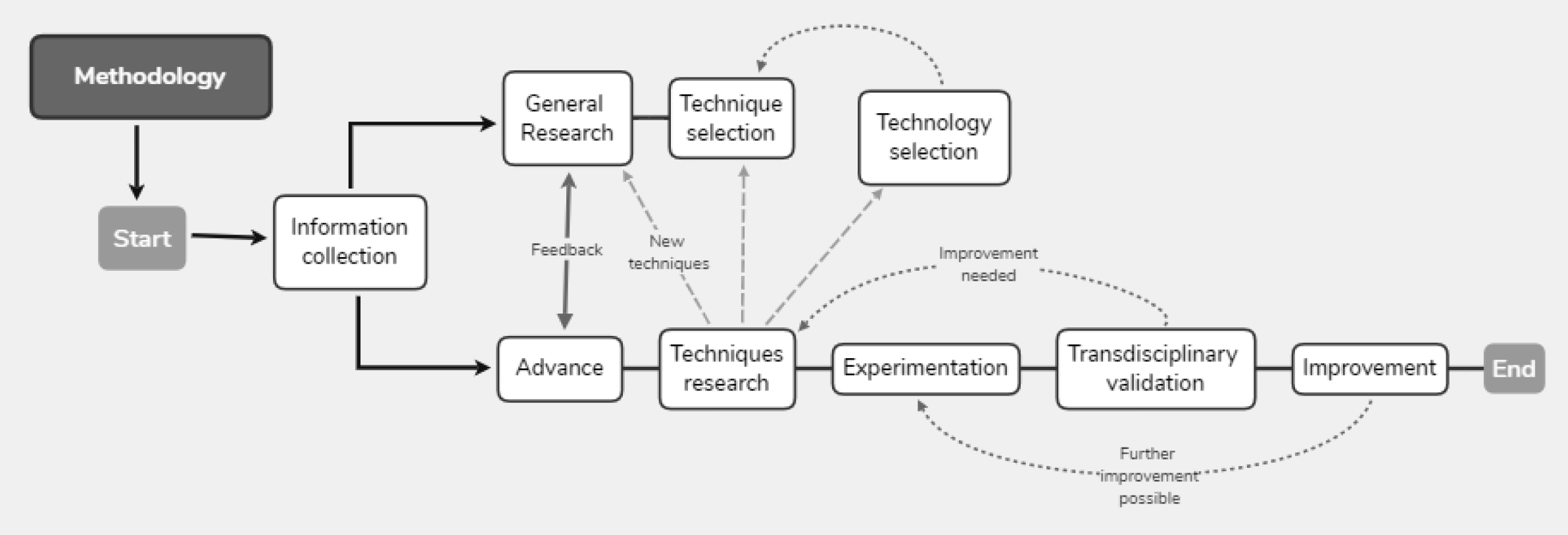
Our research methodology follows a rigorous, iterative process to select, refine, and validate the best techniques for diagnosing dermatological diseases, including skin cancer, with a focus on using Natural Language Processing (NLP) and machine learning techniques. The methodology is structured as follows:
Information Collection: The research begins with collecting relevant data from various sources. This includes clinical records, medical documentation, and expert input.
General Research and Advance: We conduct comprehensive literature reviews to understand the current state of the art. These insights help guide our research direction and inform the selection of appropriate techniques.
Techniques Research: Through further analysis, we identify potential algorithms, models, and architectures that are promising for our dataset. This step involves exploring a diverse set of models and refining them iteratively.
Technique and Technology Selection: From the researched techniques, we select those most suitable for further experimentation. Feedback loops with general research inform adjustments, while new techniques are integrated into the analysis.
Experimentation: We perform systematic experimentation, testing different models and parameter configurations. The results are continuously assessed to identify areas where improvements can be made.
Transdisciplinary Validation: Experts from different domains validate the results, providing critical input for refining the methodology and improving the experimental process.
Improvement: Feedback from validation is incorporated back into the methodology, leading to iterative refinement of models and techniques.
This structured and iterative process ensures the research methodology remains adaptive and effective, ultimately culminating in high-performing models that deliver reliable diagnostic results.
3.2 Data Collection and Preprocessing
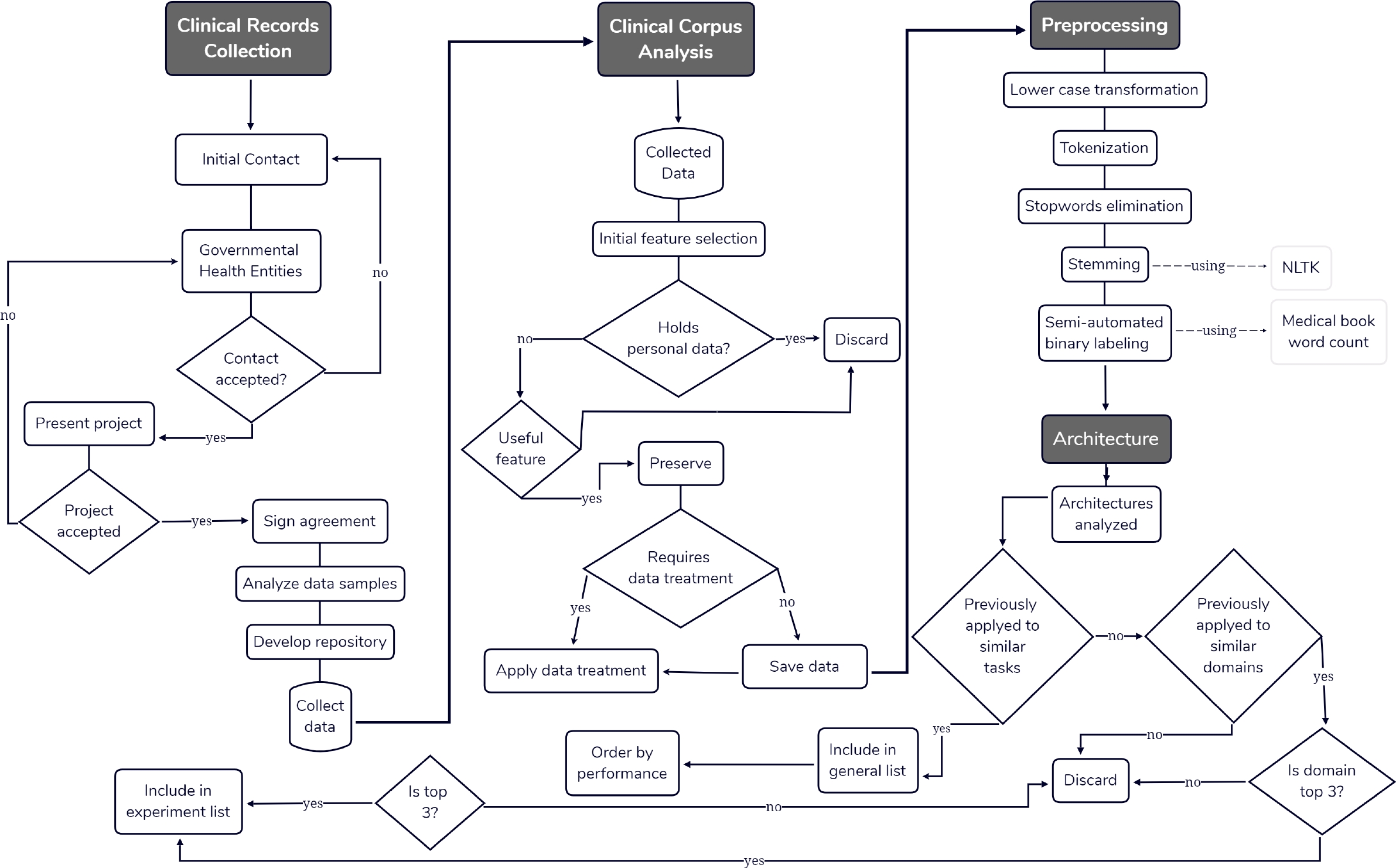
The foundation of our research was built on the meticulous collection and preprocessing of clinical medical records. Following a formal partnership with a healthcare institution, we acquired a comprehensive dataset comprising 775,000 medical records. These records were anonymized to remove all personally identifiable information (PII) and then processed into a high-dimensional vector space using a Bag of Words (BoW) approach, enhanced by Term Frequency-Inverse Document Frequency (TF-IDF) metrics.
3.2.1 Aggregation of Melanoma Diagnoses
During the preprocessing phase, we implemented a targeted aggregation strategy where all diagnostic categories containing variations of the term ”melanoma” were consolidated into a single ”Melanoma” category. This was achieved by transforming diagnosis labels into lowercase and replacing any occurrence of the term ”melanoma” with ”Melanoma”, thereby facilitating focused analysis on this critical condition.
3.3 Neural Network Architecture and Ensemble Method
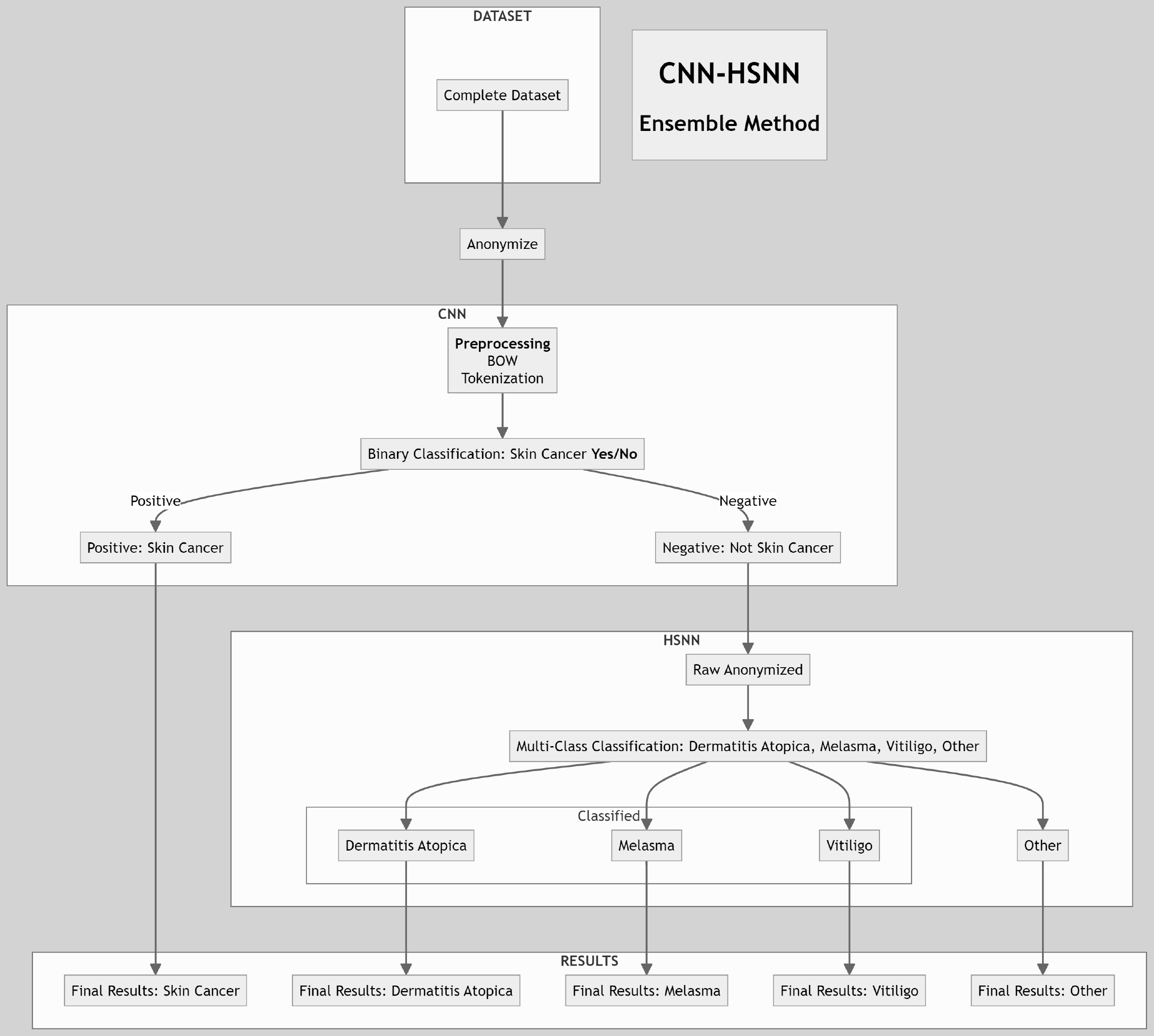
Our methodology employed an ensemble approach combining two distinct neural network architectures: a Convolutional Neural Network (CNN) and a vanilla Deep Neural Network (DNN). This ensemble method leverages the strengths of both architectures to improve classification accuracy and robustness.
3.3.1 CNN Architecture
The CNN was tailored to capture spatial relationships within the high-dimensional vector representations of the medical records, effectively identifying patterns indicative of various skin diseases.
3.3.2 HSNN Architecture
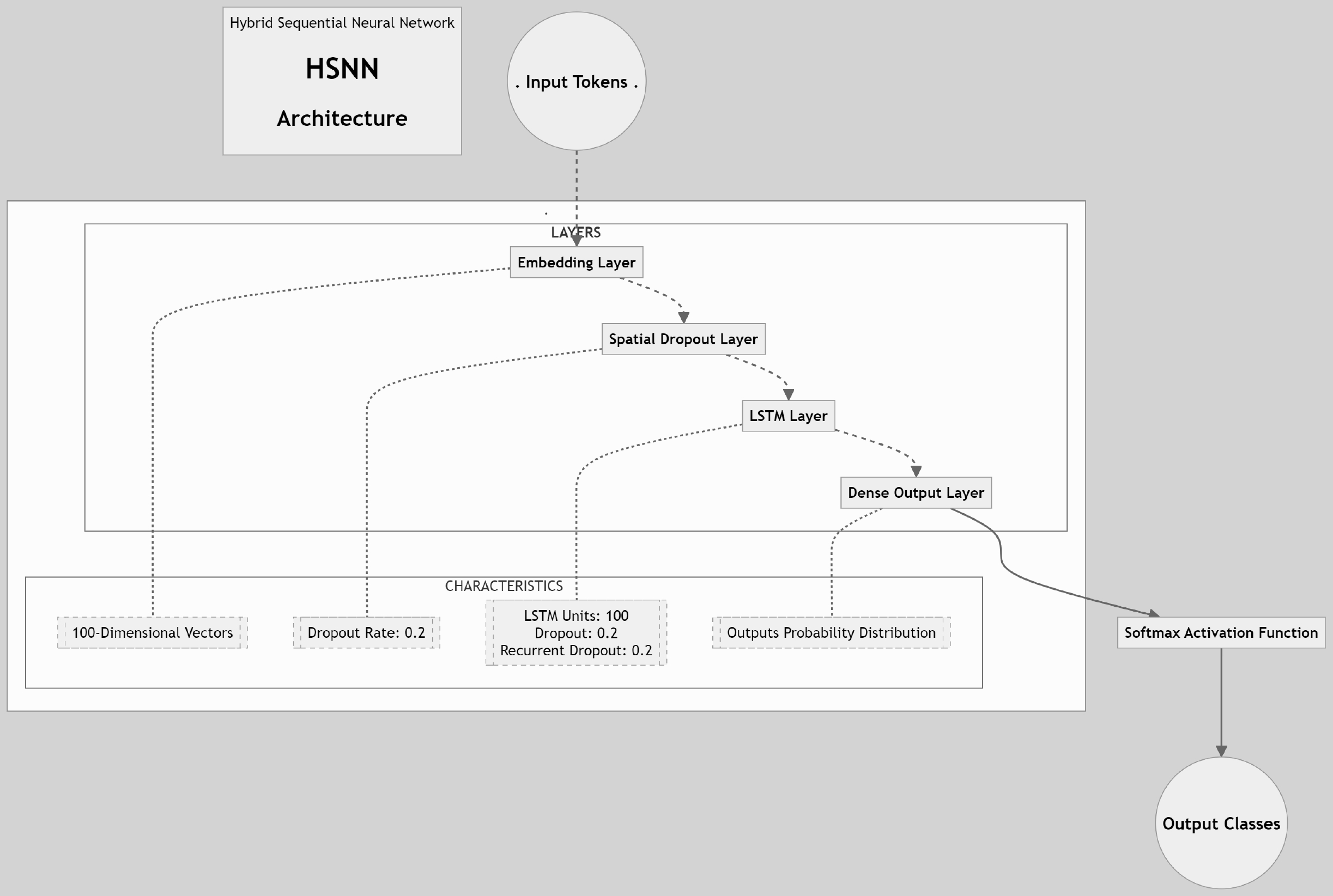
The core architecture of our model is a hybrid sequential neural network designed for high performance on sequence classification tasks. The model consists of the following layers:
– An Embedding layer that transforms each input token into a 100-dimensional vector, capturing semantic similarity among words in a dense representation space.
– A Spatial Dropout layer with a dropout rate of 0.2, which helps in reducing overfitting by randomly omitting entire feature maps during training, thus aiding in robust feature learning.
– An LSTM layer with 100 units, capable of capturing long-term dependencies in the data, equipped with dropout and recurrent dropout of 0.2 to further aid in preventing overfitting.
– A Dense output layer with a softmax activation function, mapping the LSTM outputs to a probability distribution over the target classes, facilitating direct class prediction.
This setup is specifically tailored to process and classify medical text data effectively, where understanding the contextual relationships within clinical notes is crucial.
3.4 Performance Evaluation
We evaluated the model’s performance using a variety of metrics including accuracy, precision, recall, and F1-score, specifically focusing on the top three most prevalent diseases identified in the dataset. An extended evaluation was conducted for the newly aggregated ”Melanoma” category to assess the effectiveness of our aggregation strategy.
3.4.1 Metrics and Validation
Each model was independently validated using a split-test approach, and the ensemble results were compared against the baseline models to quantify improvements. Additionally, the confusion matrix was employed to visually inspect model performance and misclassifications. The dataset and CNN parameters can be obtained upon request.
4 Results
4.1 Performance Evaluation
Table 1 summarizes the performance of the ensemble system, which combines the Convolutional Neural Network (CNN) for skin cancer detection and the hybrid sequential neural network (HSNN) for Dermatitis Atopica, Melasma (Cloasma), and Vitiligo classification.
Table 1 Performance of the ensemble system
| Disease | Precision | Recall | F1 Score |
| Skin Cancer | 90.2% | 93.1% | 91.1% |
| Dermatitis Atopica | 94.68% | 98.35% | 96.48% |
| Melasma (Cloasma) | 94.79% | 95.92% | 95.35% |
| Vitiligo | 98.51% | 88.50% | 93.23% |
The ensemble system achieves a global F1-score of 95.45%, combining the strengths of both models and ensuring high classification accuracy for all four diseases.
4.2 State-of-the-art Comparison
In Table 2, we compare the ensemble system against prior research from Cheng et al., which used a CNN for binary classification of skin cancer. Our system demonstrates superior diagnostic accuracy.
5 Conclusions and Future Work
This study confirms the effectiveness of the ensemble system in accurately classifying dermatological diseases from medical records. The combination of CNN and HSNN architectures achieved high precision, recall, and F1 scores across all diseases, offering a robust diagnostic tool. Future Directions: To refine and expand the applicability of this work, we propose:
– Extending the classification framework to include more dermatological conditions, especially rare diseases.
– Integrating text and image data for a comprehensive diagnostic tool, improving diagnostic specificity and sensitivity.
These strategies will enable early detection and personalized treatment of dermatological diseases, reducing misdiagnosis and improving patient outcomes.

