




 nueva página del texto (beta)
 Inglés (pdf)
 Artículo en XML
 Referencias del artículo
 Traducción automática
 Enviar artículo por email
 Citado por SciELO
  Similares en
SciELO
Similares en
SciELO 
 Permalink
INTRODUCTION
The growing concern for health and the environment has driven the need to increase the use of sustainable and natural ingredients in cosmetics (Bom 2020). These must substitute many currently used ingredients that must be evaluated because they can be toxic to consumers. Two of the most marketed cosmetics are lipsticks, which moisturize, make the lips shine, and color them, and eyeshadows that enhance skin tones. Both usually contain waxes, oils, minerals, and pigments. Some minerals can contain toxic elements such as arsenic, antimony, cadmium, cobalt, tin, mercury, silver, lead, thallium, and vanadium (Gondal et al. 2010, Alam et al. 2019). Other toxic elements may be present in cosmetics, for example, beryllium, bismuth, chromium, nickel, palladium, platinum, selenium, and tellurium (Khalid et al. 2013, Witkowska et al. 2021). Also, copper and zinc in excess can be hazardous, posing potential human health risks.
The Food and Drug Administration of United States (FDA 2016) and the European Community (EC 2009) have pointed out some metallic impurities that endanger the health of cosmetics users. However, there are no safe concentrations of heavy metals in the human body, such as Pb, As, Ni, Hg, and Cd, to mention a few (Mohapatra et al. 2019).
In Mexico, there are only regulations for good manufacturing practices (NOM-259-SSA1-2022, SEMARNAT 2022) and cosmetic labeling (NOM-141-SSA1/SCFI-2012, SEMARNAT 2012), but the maximum permissible concentrations of potentially toxic elements have not been established. Cosmetics applied to the lips and on the eyes could be especially dangerous if they contain heavy metals because of the probability of absorbing those elements by cutaneous or oral routes is higher (Mesko et al. 2020).
In this context, physical and chemical characterization of lipsticks and eyeshadows becomes essential to caring for people’s health and well-being. Therefore, this study aims to evaluate heavy metals in high, medium, and low-range price lipsticks and eyeshadows used by consumers of Morelia from Michoacan, Mexico.
MATERIALS AND METHODS
Sampling
We carried out an advertising campaign so that citizens would bring their samples to the laboratory. All the participating citizens answered a survey to identify the place of purchase (on the street, through catalogs, department stores), brand, and price of the products. Three hundred sixty-six eyeshadows and sixty-three lipstick samples were obtained in February and March 2023.
Analysis strategy
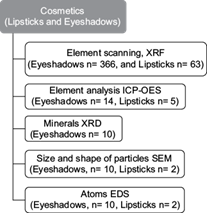
Due to the wide variety of brands, colors, and ranges of cosmetics, we decided to use a sequential strategy. In the first step, all samples’ major and minor elements were scanned using a low-cost semi-quantitative analysis technique, using a mobile X-ray fluorescence analyzer (XRF). Based on this general characterization’s results, some lipsticks and eyeshadow samples were selected based on quality, price, and identifying characteristics suitable for the technique intended for more detailed characterization. These samples were further analyzed using additional techniques (Fig. 1). They were solubilized by an acid microwave-assisted digestion and analyzed by inductively coupled plasma optical emission spectrophotometry (ICP-OES) to quantify the metals. In the third step, X-ray diffraction (XRD) was used to identify the primary minerals in solid samples as eyeshadows. In the last step, the morphology (shape and size) of the samples’ particles was studied by scanning electron microscopy (SEM) with energy dispersive spectroscopy (EDS) to map images and identify metals in specific particles.
Analysis of lipsticks and eyeshadows with XRF
Preparation of samples for the XRF measurement followed the Genius 7000XRF Portable Spectrometer User Manual guidelines (SI 2016). Three to five milligrams of solid stick samples of the lipsticks were used, exposed through a bottom window of 3.6 μm thick Mylar (polyester) film (Murphy et al. 2020). The concentrations of nineteen elements (antimony, arsenic, cadmium, calcium, copper, chromium, iron, lead, manganese, molybdenum, nickel, rubidium, silver, strontium, titanium, , tin, vanadium, yttrium, and zinc) were determined using a 50 kV X-ray tube with a large-area beryllium window and drift detector (DDS). Three repetitions were carried out per sample, with an integration time of 60 seconds each. A total of 189 analyses were carried out.
The detection limits were: 10 mg/kg for vanadium, chromium, silver, cadmium, tin, antimony, titanium and yttrium; 5 mg/kg for manganese, iron, copper, lead, nickel, zinc; and 2 mg/kg for arsenic, calcium, molybdenum, strontium, and rubidium. Calcium and titanium were not statistically analyzed because they are considered harmless. A less than 10 % variation between the three replicates of the analysis was considered acceptable.
The concentration results were obtained in at least five minutes for the sample (Andrade et al. 2023). For accuracy control, an internal reference material (Lozano and Bernal 2005), was systematically determined for every 20 measurements. The analyses were carried out at the Laboratory of Environmental Geophysics (LUGA) of the National Autonomous University of Mexico (UNAM).
Variance analysis was applied using the Statista software, with the high, medium, and low-price ranges as factors and the concentrations of heavy metals as variables. The results are shown in box and whisker graphs. In the figures of the analysis of variance of comparison of medians results of Kruskal-Wallis analysis, the box represents the interquartile range (Q1-Q3) of 50 % of the data ordered from lowest to highest, and its limits define the first (Q1) and third quartiles (Q3). The notch of the box corresponds to the median with a confidence interval of 95%. The white square of the box represents the mean, the filled white and black circles represent the outliers.
Analysis of the lipsticks using XRF allowed a preliminary evaluation of the concentration of metals in the products. In addition to its scientific effectiveness, this methodology is vital for quality control in the raw materials and final products industry and for government agencies to regulate it (Melquiades et al. 2015). XRF is an established, economically affordable, and versatile technique with many applications (Marguí et al. 2019).
Analysis of lipsticks and eyeshadows with ICP-OES
Fourteen eyeshadow samples and five lipstick samples were selected to be analyzed by ICP-OES using Agilent Technologies 5100. The shadow and lipstick samples were selected for ICP-OES analysis to accurately determine the lead concentrations, principally in some samples where the element was detected at concentrations close to the detection limit with the XRF equipment.
A portion of 0.4 g of each sample was digested with 3 mL of 32 % concentrated hydrogen peroxide and 9 mL of 68-70 % nitric acid in a microwave oven (Ethos Easy, Milestone) for 15 min at 200ºC (USEPA 2007). The solid non-digested (refractory residue) was filtered through Whatman 42 filter paper, Millipore Swinnex® membrane filter holders, and 30 mL syringes. The digested liquids were filled into 25 mL volumetric flasks with HNO3 at 2% v/v before ICP-OES analysis.
The calibration curve was prepared with certified multi-element reference material QCS-26 (high purity). Operating conditions included a radiofrequency power of 1.2 kW, a nebulization flow of 0.7 L/min, and an argon plasma flow of 12.0 L/min (Aguilera et al. 2021). In addition, quality controls were performed, which included duplicated samples of the blanks, spike sample, and spike post-digestion sample, all subjected to similar analytical procedures. All control samples were carried out satisfactorily. The elements analyzed and their practice quantification limit in mg/kg were aluminum (5.7), arsenic (5.7), barium (0.6), cadmium (0.6), chromium (0.6), iron (0.6), manganese (0.6), lead (5.7), titanium (0.6), and zinc (0.57).
Analysis of eyeshadows with XRD
We selected ten samples of eyeshadows for XRD analysis, four low-range, three mid-range, and three high-range price samples to identify the main minerals.
The samples were analyzed with a Siemens D-5000 diffractometer, with a Bragg-Brentano geometry and monochromatic Cu Kα radiation (λ = 1.5418 Å) operated at 34 kV and 25 mA, from 2 to 50 (2θ), with steps of 0.02 (2θ) at 3 s/step. The five-milligram powder samples, with a paste-like consistency, were placed on a silicone sample holder without coating or adhesive (Andrade et al. 2023). Crystalline phases were identified using the ICDD-PDF (2000) and Dana’s Mineralogy (Gaines et al. 1997).
The XRD technique, being non-destructive and highly specific, stands out for identifying the different chemical compounds of the materials analyzed. This technique compares the obtained patterns in the sample with known diffraction patterns of many minerals reported in a database, which allows the identification of the mineral phases of the cosmetic samples. Also, this technique allows the quantification of the major minerals of each sample, evaluating the relative intensities of selected peaks of the identified minerals. In this way, the ingredients of the cosmetic products were identified, including unwanted mineral impurities in significant analytical concentrations, and the authenticity of the ingredients declared on the labels can be verified. This control ensures the quality of cosmetic products, instilling confidence in industry professionals and consumers.
Analysis of lipsticks and eyeshadows with SEM-EDS
For the morphological analysis and chemical element identification of the samples’ particles, a SEM applying backscattered electrons mode was coupled to an EDS. The JEOL JMS-7600F, with the following specifications: 15 kV voltage, obtained images at different levels of magnification, from 200X to 2000X, with a working distance that ranged between 7.7 mm and 8.0 mm (Farro et al. 2023).
Two lipstick samples and ten eyeshadow samples were selected. A small sample was placed on a flat aluminum sample holder suitable for vacuum without applying any coating.
RESULTS
The lipsticks and eyeshadows were classified as high-range (prestigious brands purchased from large retailers at $9MXN and up to $40MXN prices), mid-range (catalog purchases at medium prices $5 to $9, and low-range (less than $5, inexpensive items obtained from street vendors or identified as clones).
High-range cosmetics include the following brands: Morphe-X Nyane Fierce Fairytale, Physicians Formula, TooFaced, Urban Decay, Lacome, Femme Couture-get matte, Farmasi, Mary Kay, NYX, Mac, Moodstruck Addition-Younique, Jafra, Oriflame, The Body Shop, Studio, and Natura. Mid-range cosmetics include the following brands: BYS, Lime Crime, Revlon, Yuya, Profusion-All things beauty, Ésika, L´bel-infini, Maybelline, and Pink up cosmetics. The low-range brands were: Avon, Bissú, Heblee, OnColour, Saniye, Smoke & Mirrors - Dreamer Palette, Px Look, Be Bella Cosmetics, Beauty Creations, Beauty Treats-Shinner Dreams, Clon, Prolux, Huxia Beauty, Jordana, Paleta Body Art Ultramo, and unbranded.
The low-range lipsticks were 21, the mid-range 20, and the high-range 22. The lipstick colors were violet (20), pink (19), brown (14), red (5), black (2), yellow (2) and magenta (1). The low-range eyeshadows were 174, the mid-range 83, and the high-range 109 with a total of 366 samples.
Scanning of elements on lipsticks (XRF)
In the case of vanadium, the concentrations for lipsticks in the high, medium, and low ranges were 266, 250, and 757 mg/kg, respectively (Fig. 2). The low-range lipsticks were statistically the highest compared to the other sample groups. No significant differences were found in vanadium concentrations by brand or color, only by range (Fig. 3), because there is a considerable variation in vanadium concentrations among brands and colors, but mainly in low-end lipsticks. The mid-range lipsticks showed higher concentrations of zinc (60 000 mg/kg) than the high and low ranges (Fig. 2). Some samples presented extreme values greater than 80 000 mg/kg of zinc. The results indicate that lipstick’s colors are not related to the high concentrations of zinc and copper. The high values were detected on products of Latin cosmetic brands sold online.
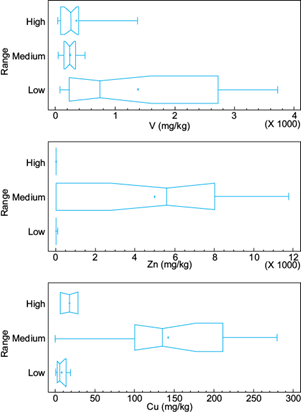
Fig. 2 Comparison of median concentrations of vanadium, zinc, and copper in the lipsticks. The box represents the interquartile range (Q1-Q3) of 50 % of the data ordered from lowest to highest, and its limits define the first (Q1) and third quartiles (Q3). The notch of the box corresponds to the median with a confidence interval of 95 %. The white square of the box represents the mean; the filled white and black circles represent the outliers.
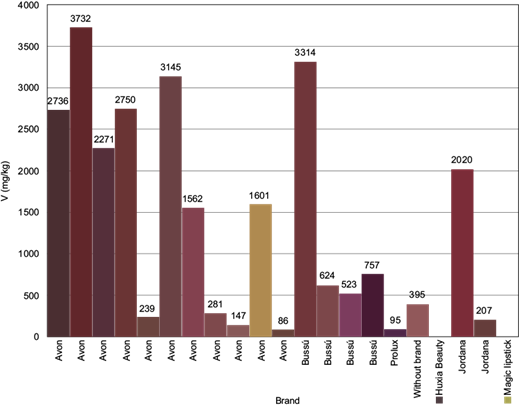
Fig. 3 Vanadium concentrations in lipsticks of low range, the color of the bar in the graph is the color of the lipstick.
Regarding copper, lipsticks from the high, medium, and low ranges had 18, 136, and 6 mg/kg concentrations, respectively. The medium range had statistically higher concentrations than the other two ranges (Fig. 2).
The concentration of zinc and copper in products of other mid-range brands is not excessive. Mid-range lipsticks have the highest concentrations of zinc and copper (Fig. 2), so they are the least recommended.
The concentration media of nickel in the lipsticks’ high, medium, and low ranges samples were 16, 66, and 22 mg/kg (Fig. 4).
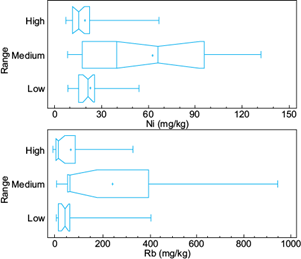
Fig. 4 Comparison of median concentrations of nickel and rubidium in lipsticks. The box represents the interquartile range (Q1-Q3) of 50 % of the data ordered from lowest to highest, and its limits define the first (Q1) and third quartiles (Q3). The notch of the box corresponds to the median with a confidence interval of 95 %. The white square of the box represents the mean, the filled white and black circles represent the outliers.
Rubidium concentrations for lipsticks from the high, medium, and low ranges were 16, 62, and, 42 mg/kg, respectively. The samples of the medium range presented a significant statistical range, with extreme values higher than 900 mg/kg (Fig. 4). Hence, the mean (over 200 mg/kg) differs significantly from the median.
The median tin concentrations were 18, 186, and 22 mg/kg for high, medium, and low-range lipsticks, respectively (Fig. 5). The range of values is very high, mainly in mid-range lipsticks.
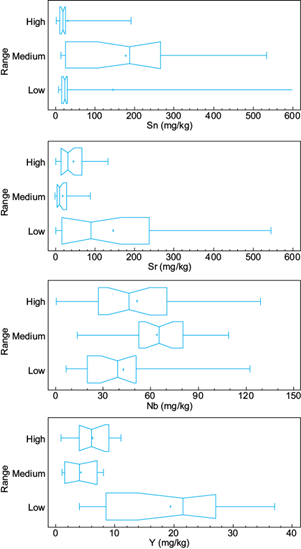
Fig. 5 Comparison of median concentrations of tin, strontium, niobium, and yttrium in the lipstick. The box represents the interquartile range (Q1-Q3) of 50 % of the data ordered from lowest to highest, and its limits define the first (Q1) and third quartiles (Q3). The notch of the box corresponds to the median with a confidence interval of 95 %. The white square of the box represents the mean; the filled white and black circles represent the outliers.
Concerning strontium, the concentrations of lipsticks in the high, medium, and low ranges were 32, 12, and 90 mg/kg, respectively (Fig. 5). Some samples had concentrations greater than 200 mg/kg of strontium. The low range had significant differences from the medium range. The niobium (Nb) concentrations for the high, medium, and low-range lipsticks were 46, 66, and 39 mg/kg, respectively (Fig. 5). This element is reported as non-toxic (Dsouki et al. 2014).
The media of yttrium concentrations for the high, medium, and low ranges were 6, 4, and 21.5 mg/kg, respectively (Fig. 5). Lead was detected in some samples. The maximum value was 303 mg/kg, and the minimum 8 mg/kg, with a median of 18 mg/kg. However, no statistically significant concentration differences were found between samples of different ranges and colors. Three samples in the low and medium ranges had concentrations above 50 mg/kg of Pb, but two in the low range had concentrations greater than 100 mg/kg. The high-range lipsticks had a median of 20 mg/kg, a maximum of 42 mg/kg, and a minimum of 8 mg/kg, close to the practical detection limit.
Scanning of elements on eyeshadows (XRF)
We found significant differences between the concentrations of zinc, copper, rubidium, and strontium in the eyeshadow of the three price ranges (Fig. 6 and Fig. 7).
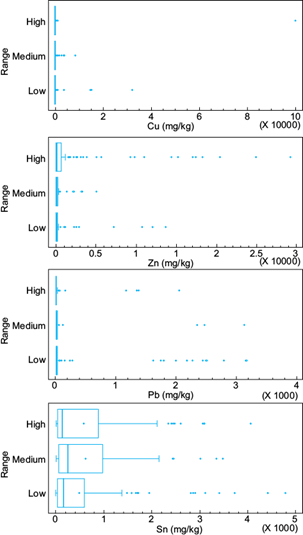
Fig. 6 Comparison of median concentrations of Cu, Zn, Pb and Sn, concentrations in three ranges of eyeshadows. Note the units in thousands. The box represents the interquartile range (Q1-Q3) of 50 % of the data ordered from lowest to highest, and its limits define the first (Q1) and third quartiles (Q3). The notch of the box corresponds to the median with a confidence interval of 95 %. The white square of the box represents the mean; the filled white and black circles represent the outliers.
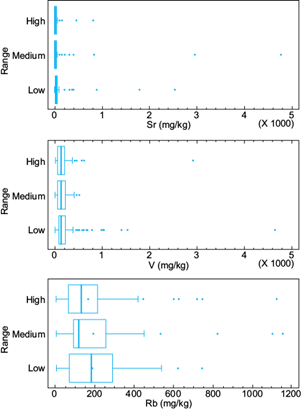
Fig. 7 Comparison of median concentrations of Sr, V, and Rb concentrations in three ranges of eyeshadows. Note the units in thousands in Sr and V. The box represents the interquartile range (Q1-Q3) of 50 % of the data ordered from lowest to highest, and its limits define the first (Q1) and third quartiles (Q3). The notch of the box corresponds to the median with a confidence interval of 95 %. The white square of the box represents the mean; the filled white and black circles represent the outliers.
The medium-range eyeshadow samples exhibit the highest concentrations of copper in order of mg/100g (percent). This element and zinc concentrations are highly variable in all the eyeshadow samples, with some notable outlier values. The highest zinc concentration belongs to the high-range samples (Fig. 6). These eyeshadow samples have lead, tin (Fig. 6), strontium, and vanadium (Fig. 7) in order of grams per kilogram.
The samples did not show significant differences between range groups. However, the low-range eyeshadows presented more outlier values than the mid- and high-range samples.
The medium-range samples have the highest zinc concentrations, followed by the low-range and high-range samples (Fig. 6).
The low-range eyeshadows have higher concentrations of rubidium and strontium than the medium and high-range samples (Fig. 7).
Concentrations of heavy metals in lipsticks and eyeshadows
The 19 samples analyzed with ICP-OES, five lipsticks, and 14 eyeshadows contain chromium, barium, manganese, and zinc. The elements chromium, barium, manganese, and zinc were identified in 100 % of the samples.
Barium was present in lipsticks and eyeshadows in hundreds and thousands of mg/kg concentrations in 52 % of samples. In the case of zinc, only 21 % of samples were in the order of hundreds, and 5 % had a concentration of 1520 mg/kg. Arsenic was not found in 100 % of samples, considering lipsticks and eyeshadows. On the other hand, chromium and cadmium were identified in 100 % of lipsticks and eyeshadows (Table I).
TABLE I HEAVY METAL CONCENTRATIONS IN LIPSTICKS AND EYESHADOWS.
| Element | Median | Minimum | Maximum | References |
| V | 281 mg/kg | 51 mg/kg | 3732 mg/kg | This study |
| 10 mg/kg of body mass | Rehder 2008 Rehder 2013 | |||
| Cu | 101 mg/kg | 1 mg/kg | 281 mg/kg | This study |
| 1.3 mg/kg in drinking water | EPA 2000 | |||
| Zn | 0.001 % | 0.0006 % | 11.7 % | This study |
| 1 % 3 % | EC 2009 NIH. 2024 | |||
| Ni | 22 mg/kg | 8 mg/kg | 132 mg/kg | This study |
| 7 mg/kg | 22 mg/kg 1 mg/kg | EPA 2004 Nnorom et al. 2005 |
Lead was not detected in lipstick, but samples of eyeshadows had concentrations of 2 to 10 mg/kg (Table I).
Identification of mineral phases by XRD
Eleven eyeshadows with different ranges of high (2), medium (3), and low (6), and one makeup were selected to analyze the mineral phases by X-ray diffraction. The identified main ingredients used for the matrix are talc and mica (Fig. 8).
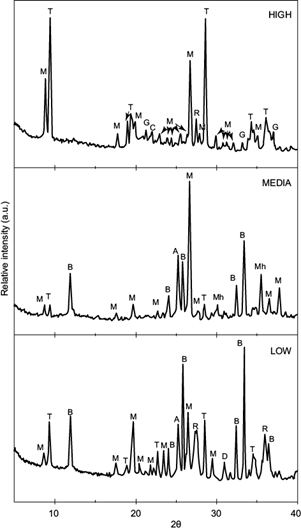
Fig. 8 X-ray diffractograms showing the mineral phase identification of eyeshadows in the high range (AAP33), medium range (ICAM99), and low range (VAL1-5-62). M= Muscovite, T= Talc, B= Bismoclite, A=Anatase, R= Rutile, G =Goethite, Mh= Maghemite, C= Cristobalite, D= Dolomite
Talc is a layered mineral clay of magnesium silicate; it is the softest smooth and slippery material that allows it to be applied easily to eyeshadows, it also absorbs moisture, making it useful for keeping skin dry. Therefore, it is widely used in cosmetic products. Muscovite is the most common mica that gives a pearly to vitreous luster on the skin surface. In addition, a bismuth oxohalide, a mineral named bismoclite, gives a pearlescent shine to lipsticks and eyeshadows. The minerals with a medium to small amount were titanium oxide as rutile and anatase, which are added to brighten and intensify the color of makeup and to give whiteness and opacity, it is also a natural sunblock.
Iron oxides such as hematite, maghemite, and goethite were identified and used for pigmenting cosmetics (Fig. 8). Carbonates as calcite and dolomite are added to the matrix to increase the ability of the makeup to absorb moisture. Traces of cristobalite were identified in the high range, and kaolinite and barium sulfate in the low range. A selected diffractogram for each range shows the identified minerals, and according to the intensities of the main reflections, it can be the different proportions of the phases for the three distinct ranges (Fig. 9). In the high range, the main minerals are mica (muscovite) and talc; for the media range, are mica, bismoclite, anatase, and maghemite; and for the low range, the main phase belongs to bismoclite followed by mica talc, and the polymorphs of titania, and iron and potassium oxides.
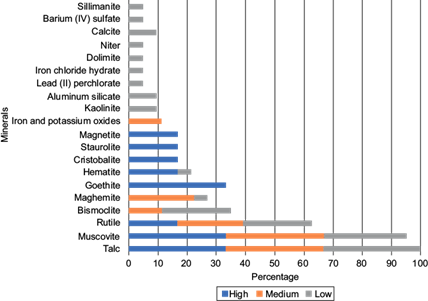
Fig. 9 The relative percentage of the identified minerals in high, medium, and low-range eyeshadows.
The minerals semi-quantification made for all the samples analyzed by XRD shows that the amount of talc, muscovite, and rutile, without considering the range, are the main minerals that make up the matrix, where the aluminosilicates provide the characteristic properties as strength, texture, adherence, etc.
Bismoclite is found in the medium range (10 %) and low range (35 %) and is used as an enhancing agent of pearlescent shine.
The minerals related to iron oxides in the high range, which have goethite, maghemite, and hematite, are mainly in the media and high range and are used primarily for cosmetic pigmentation. Traces of cristobalite were identified in the high range, and the carbonates, barium sulfate in the makeup, and kaolinite were identified in the low range (Fig. 9, Table II). Among the identified minerals are lead perchlorate, barium sulfate, and bismoclite (BiOCl) in low-range eyeshadows. These uncommon minerals should not be found in makeup.
TABLE II COMPARISON OF MEDIANS OF ELEMENTS BY RANGE TYPE ON EYESHADOWS.
| Element/range | Low-range | Mid-range | High-range | p-value |
| V | 139a | 125a | 135a | 0.91 |
| Zn | 51a | 77a | 102b | 9.2E-05 |
| Cu | 13a | 26b | 11a | 0.003 |
| Ni | 21a | 22a | 20ª | 0.342 |
| Rb | 182b | 120a | 131a | 0.003 |
| Sn | 171b | 259c | 138 a | 0.015 |
| Sr | 23b | 16a | 13a | 0.001 |
| Nb | 14a | 15a | 14a | 0.677 |
| Y | 2.5a | 23b | 3.5a | 0.058 |
Analysis of the shape, size and composition of particles (SEM-EDS)
The scanning electron microscope analysis of low-range lipstick samples reveals the dominant presence of particles smaller than 7 µm (Fig. 10). Four types were observed: dark-colored spherical particles of 1 to < 7 µm; light-colored amorphous particles with sizes up to 4 µm; a set of small spherical and amorphous dark and light-colored particles less than 1 µm, and the matrix, which is dark in color.
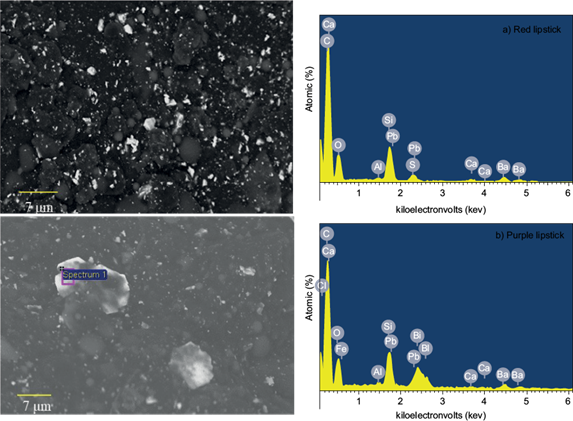
In low-range red lipsticks, calcium, carbon, oxygen, and silicon were found in the mapping of elements, with traces of lead, aluminum, sulfur, and barium (Fig. 10a).
A large particle (30 µm) in a purple low-range lipstick sample contains the following elements: carbon, calcium, chlorine, oxygen, iron, and silicon, as well as traces of lead, bismuth, and barium (Fig. 10b).
SEM-EDS images or elemental mapping reveal that some low-end lipsticks and eyeshadows may contain lead, barium, bismuth, and chromium (Fig. 11). Figure 11 shows detailed surface and compositional mapping of cosmetic particles.
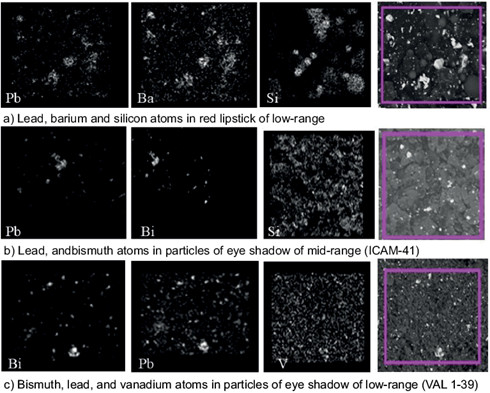
Fig. 11 Detailed surface imaging and compositional mapping of particles by scanning electron microscopy; a) lipstick of low-range, b) eyeshadows mid-range, c) eyeshadows of low-range.
A large particle (30 µm) in a purple low-range lipstick contained the following elements: carbon, calcium, chlorine, oxygen, iron, and silicon, it also contained traces of lead, bismuth, and barium (Fig. 10b).
SEM-EDS images or elemental mapping reveal that some low-end lipsticks and eyeshadows may contain lead, barium, bismuth, and chromium (Fig. 11). This figure shows detailed surface and compositional mapping of cosmetic particles analyzed by SEM.
The red lipstick sample contains particles smaller than 7 μm of Pb and Ba because the particles are in the same position according to the maps. Spherical quartz nanoparticles of up to 10 μm diameter are observed (Fig. 11a).
In the mid-range eyeshadows, lamellar kaolinite particles were observed as the primary compound, with traces of lead and bismuth. The main elements are oxygen, silicon, and aluminum (Fig. 11b).
We found Bi, Pb, and V in the low-range eyeshadows. However, the several particles with vanadium in the image suggest it is not a minor component (Fig. 11c). The most significant elements are oxygen, silicon, aluminum, magnesium, carbon, and potassium, which come from aluminum silicates, calcium carbonate, and feldspars.
The elements on the maps (Fig. 11) reveal that the low-end eye shadows and lipsticks in those two samples contain higher concentrations of lead and barium.
The results of the SEM-EDS analysis corroborated traces of elements such as lead, chromium, barium, and bismuth, as did the high amounts of vanadium in some samples of low-range lipsticks and eyeshadows.
DISCUSSION
We found a high dispersion of the data, many extreme values, and large differences between the minimum and maximum values, which produced a high standard deviation and significant differences between the mean and the media. There are hundreds of lipsticks and eyeshadows on the market from several brands and different colors, making it challenging to make a global diagnosis of the quality of the products. Grouping by ranges was better than grouping by brands, so perhaps the dispersion of the data is due to the diversity of raw materials used by the manufacturers. For these reasons, this diagnostic study on the heavy metal content present in the lipsticks and eyeshadows in Morelia can be considered as a first approach to the subject.
We analyzed 19 elements (antimony, arsenic, cadmium, calcium, copper, chromium, iron, lead, manganese, molybdenum, nickel, rubidium, silver, strontium, titanium, tin, vanadium, yttrium, and zinc). However, there are only regulations for seven (Table III). Regulations on heavy metal concentrations in cosmetics are strictest in the European Union (EC 2009), followed by USA (FDA 2016). In Mexico there are still no regulations for heavy metal content in cosmetics.
TABLE III CONCENTRATIONS OF METALS AND HEAVY METALLOIDS IN LIPSTICKS AND EYESHADOWS, OFFICIAL REGULATIONS, AND OTHER AUTHORS.
| Element | Lipsticks (mg/kg) | Eyeshadows (mg/kg) | Reference |
| Arsenic | 0 | 1 | FDA 2016 |
| Arsenic | 0,99-9.23 | 0.46--3.70 | Saadatzadeh et al. 2019 |
| Arsenic | <DL | <DL | This study |
| Cadmium | Not regulated 0 | Not regulated 0 | FDA 2016 EC 2009 |
| Cadmium | ND-64.88 15.30 -418.50 | ND-76.31 ----- | Saadatzadeh et al. 2019 Al-Mouraee et al. 2021 |
| Cadmium | <DL-6.9 | <DL-10.2 | This study |
| Chromium | Not regulated | Not regulated | FDA 2016 |
| Chromium | 0.10 -66.95 ----- | ------- <DL-66.6 | Al-Mouraee et al. 2021 Santana et al. 2022 |
| Chromium | 2.2-4.2 | 4.6-102.4 | This study |
| Lead | 20 0 | 20 0 | FDA 2016 EC 2009 |
| Lead | ND-6.20 1.00 -125.30 --- | 0.34-4.28 ---- 4.6-25 | Saadatzadeh et al. 2019 Al-Mouraee et al. 2021 Świerczek et al. 2019 |
| Lead | 6.2 | 10.3 | This study |
| Nikel | 200 0 | 0 0 | FDA 2016. EC 2009 |
| Nikel | 0.15-6.92 | Arshad et al. 2020 | |
| Nikel | ----- | 3.7-11 | Świerczek et al. 2019 |
| Nikel | 8 -132 | This study | |
| Zinc | Not regulated 10 000 | Not regulated 10 000 | FDA 2016 EC 2009 |
| Zinc | 6.8 - 564.0 | ---- | Al-Mouraee et al. 2021 |
| Zinc | ---- ----- | 6.1-21 24.90-2600 | Świerczek et al. 2019 Santana et al. 2022 |
| Zinc | 2-20 | 8-1520 | This study |
| Barium | Not regulated | Not regulated | FDA 2016, EC 2009 |
| Barium | <DL-104 | Santana et al. 2022 | |
| Barium | 2-11985 | 49-7540 | This study |
| Vanadium | Not regulated | Not regulated | FDA 2016, EC 2009 |
| Vanadium | <DL-104 | Santana et al. 2022 | |
| Vanadium | 51-3732 | 0-3244 | This study |
DL= Detection limit, ND= not detected
Cadmium and chromium are heavy metals that exceed European Community regulations and are not regulated by the United States (Table III). In the case of nickel, only a few samples with extreme values are found to be above the European Community standard but below the United States standard.
Copper, vanadium, and yttrium are not regulated, but we have found them in high concentrations, mainly in lipsticks (Table III). Copper, lead, nickel, strontium, tin, and zinc, showed high concentrations at extreme values or only in some ranges. In addition, reports are scarce for these elements, and therefore, more studies focusing on them are required.
There is no doubt about the toxicity of nickel (Tanojo et al. 2001, Goodman et al. 2011, Buxton et al. 2019, Aguilera et al. 2022), vanadium (IPCS 1988, 2001, Rehder 2008, Rehder 2013), and yttrium (Castro-Bugallo et al. 2014, Selvaraj et al. 2014, Hosseini et al. 2015, Xiong et al. 2022). However, their presence in lipsticks and eyeshadows does not necessarily make them toxic. So, to evaluate its toxicity, a specific study must be done with an animal model (Altamirano-Lozano et al. 1999, Bautista et al. 2018) or with human tissue culture (Hammond et al. 2022) or at least to measure the bioaccessibility of this element (Wang et al. 2022).
CONCLUSIONS
After analyzing 63 lipstick samples and 366 eyeshadow samples sequentially (XRF, ICP-OES, XRD, and SEM-EDS) we can conclude the following: a) The low-range price lipsticks contained more vanadium and yttrium, but the mid-range lipsticks contained more copper, zinc, and nickel. The high-range lipsticks had the lowest concentrations of heavy metals, making them the safest lipsticks; b) In the three ranges of eyeshadow samples, we found high concentrations of vanadium, and outliers of lead, zinc, and tin had high concentrations. Vanadium, lead, zinc, tin, barium, cadmium, and chromium should receive more attention in bioavailability, chemical speciation, and toxicity studies.
We propose a monitoring plan for heavy metals in cosmetics used in the country and a labeling plan that allows people to make informed decisions about using lipstick and eyeshadows, intending to prevent possible health damage.

