




 nueva página del texto (beta)
 Inglés (pdf)
 Artículo en XML
 Referencias del artículo
 Traducción automática
 Enviar artículo por email
 Citado por SciELO
  Similares en
SciELO
Similares en
SciELO 
 Permalink
INTRODUCTION
Mining extracts minerals and other geological materials from the earth’s crust, which serve as essential raw materials for various economic activities (Coelho et al. 2011). These mining operations have significant environmental consequences, as the extraction and processing of these materials often release contaminant elements into the soil, air, or nearby water sources (Boente et al. 2022, Panza et al. 2024). Most of the waste generated by mining accumulates in dumps throughout the operational period, and after mining ends, these dumps remain on-site. Many older dumps pose contamination risks since they were not restored or designed with measures to reduce environmental impact (Luque and Gutiérrez-Claverol 2006, Coelho et al. 2011).
In Europe, more than 3 million contaminated sites exist, including industrial areas and mining locations (Montanarella 2015). The 2022 Inventory of Closed and Hazardous Mining Waste Facilities in Spain reports that 109 closed mining facilities in Spain negatively impact their surrounding environment. Of these, 86 are waste dumps, such as La Soterraña in Asturias, while the rest are identified as tailing ponds.
Many countries around the globe recognize the urgent need to combat soil pollution, as it threatens food security, accelerates land degradation, and endangers human health (FAO 2021). Mining activities contribute significantly to soil degradation and are directly linked to the reduction of ecosystem services (Boldy et al. 2021, Zhang et al. 2024). Land degradation negatively affects climate stability, environmental sustainability, and economic prosperity. The global economic impact of land degradation, measured by the loss of ecosystem services, is estimated to reach a staggering 6.3 to 10.6 trillion US dollars annually (Prăvălie et al. 2024). In Europe, 31% of areas contaminated by heavy metals are critically polluted, with Spain having nearly 50% of its contaminated areas classified as critical (Prăvălie et al. 2024). Northwestern Spain is one of the regions in Europe with the highest levels of heavy metal contamination, particularly arsenic (As) and mercury (Hg) (Ballabio et al. 2021). Some of Spain’s most polluted hotspots are located near former mercury mining sites, such as Almadén (Castilla-La Mancha) and La Soterraña (Asturias).
The abandoned mining complex La Soterraña, located in Lena (Asturias, Spain), lies near the village of Muñón Cimero, with other settlements positioned downhill. This proximity has become problematic over time, as toxic pollutants have spread from the site, resulting in high concentrations of arsenic (As) and mercury (Hg) in nearby areas (Boente et al. 2022, Salgado et al. 2023). According to Luque and Gutiérrez-Claverol (2006), mining in the area next to Muñón Cimero began in 1844, with intermittent activity until the mine’s final closure in the 1970s. During its operation, on-site metallurgical treatments posed significant risks to both workers’ health and the environment. Two key sources of pollution at La Soterraña are the chimneys, which emitted pollutants into the air during their active years, and the current waste dumps (Boente et al. 2022). Although the chimneys are no longer in use, the mercury vapors they released have spread toxic particles across the site. Additionally, heavy rainfall in the region continues to mobilize metals and metalloids, such as arsenic, from the waste dump and its surroundings (Loredo et al. 2006). Mining activities at La Soterraña have had severe impacts on both local water sources and the atmosphere, with mercury levels found to be ten times higher than the background level in the area, exceeding the target carcinogenic risk for arsenic and mercury (Loredo et al. 2006). The entire region is classified as a mercury hotspot. Boente et al. (2022) reported that maximum concentrations of arsenic and mercury detected were up to nearly three orders of magnitude above Risk-Based Soil Screening Levels (RBSSLs), highlighting the urgent need for restoration efforts to prevent further soil degradation and restore ecosystem services (Boldy et al. 2021).
In areas near mining operations without a strategic restoration plan, such as La Soterraña, residents face numerous exposure pathways to toxic elements (Jiménez-Oyola et al. 2020). One such pathway in La Soterraña is the regular consumption of locally grown plants and the use of contaminated water. Vegetation from this area have been found to contain high levels of arsenic (As), which can lead to serious health problems (Loredo et al. 1999). Coelho et al. (2011) report on the harmful effects of As and Hg on human health. Inorganic arsenic is highly toxic and easily absorbed by plants and freshwater organisms, entering the human body through contaminated water, food, inhalation, or skin contact. Arsenic and its inorganic compounds are known carcinogens, and poisoning occurs rapidly, causing severe health impacts from irritation to death (Rai et al. 2019). The toxic effects of mercury depend on the type of exposure and its chemical form, with methylmercury being the most common in humans due to the ingestion of contaminated animals or plants. Mercury exposure can result in damage to organs, the nervous system, and DNA (Chen et al. 2024).
This study aims to thoroughly characterize the soil of the La Soterraña mine waste dump, which remains unrestored. The researchers gathered data on the total and available concentrations of key metals and metalloids, such as arsenic (As) and mercury (Hg), to identify major restoration deficits. With this information, it was possible to diagnose the site’s current condition and develop a strategic plan for its future restoration.
MATERIALS AND METHODS
Study site and sampling
The facilities at La Soterraña in Lena (Asturias, NW Spain, Fig. 1) were used for the underground exploitation of Hg and the pyrometallurgical processing of ores from the mines on the region (Loredo et al. 2006). The exploited minerals were cinnabar (HgS), orpiment (As2S3), realgar/pararealgar (AsS), and arsenopyrite (FeAsS), which originated from a low-temperature hydrothermal process that occurred in fractured limestones, shales, and sandstones (Loredo et al. 1999).
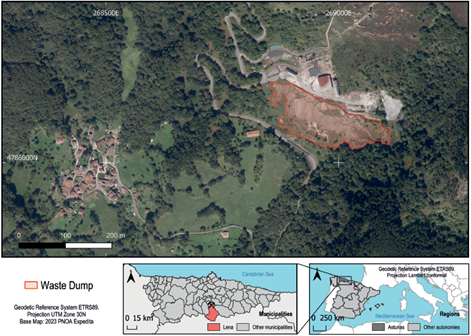
These dumps have a high content of sulfide/oxide minerals susceptible to reacting with water and/or air. The analyzed dump is defined as a spolic technosol located at 624 m above sea level. This dump has a steep slope and is located in a hilly terrain. Most of the dump is devoid of vegetation except for a few small inconsistent islands of herbaceous plants. Within the waste dump, five representative samples were collected, each consisting of three subsamples. The samples were collected manually and included material from the top 20 cm of soil depth. Due to the fact that it is a highly homogeneous waste dump (Loredo et al. 2006, Matanzas et al. 2017, Fernández et al. 2020, Boente et al. 2022), in the laboratory, all samples were combined to form a composite sample. The final sample was sieved using a 2 mm mesh. Subsequently, all analyses were performed in triplicate.
Waste dump analyses
The texture analysis methodology was based on Stokes’ law and was conducted using the method proposed by Guitián Ojea and Carballas (1976) .Subsequently, the criteria from the (USDA 1998) were followed to determine the percentages of silt, clay, and sand, and to classify the waste dump.
The following hydraulic properties were obtained through the methodology of Saxton et al. (1986). They were calculated using the tool provided by Saxton et al. (1986), stated otherwise.
Permanent wilting point (PWP) is expressed in units of water per units of soil and represents the water content at a matric potential of -1500 kPa (-15 bars). This point roughly corresponds to the lower limit of available water.
Field capacity (FC) is expressed in units of water per units of soil and represents the water content at the upper limit of available water or the drained upper limit. This point corresponds to a matric potential of approximately -30 kPa (-0.3 bars) in most soils and -10 kPa (-0.1 bars) in sandy soils.
Hydraulic conductivity refers to the ease with which water can move through pore spaces in the soil. It is calculated through the model contained in Saxton et al. (1986) and represented in centimeters per hour.
Bulk density (BD) is used to determine soil porosity and it was calculated through the formula (1 - Saturation) 2.65 using the saturation value provided by the CDM Smith tool (Saxton et al. 1986). It is expressed in grams of soil mass per cubic centimeter of soil volume.
Available soil water-holding capacity (ASWC) is the water held between -8 and -60 kpa (Hazelton and Murphy 2007), obtained through the formula AWC = (FC - PWP) BD sampling depth. The result is expressed in cubic meters per hectare. The available water (AW) which is the difference between the field capacity and permanent wilting point is also calculated.
The pH was determined using a Mettler Toledo Seven-Compact multimeter. The preparation consists in creating a 25 mL 1:2.5 soil/water suspension. The electrode is submerged in the suspension and the data is taken (Guitián Ojea and Carballas 1976). The salinity was determined by electrical conductivity. The same suspension and equipment done for the pH analysis is used immediately afterwards for this procedure. An additional 25 mL of deionized water are added into the suspension to create a 1:5 soil/water ratio. The multimeter was calibrated using a 0.001 M potassium chloride solution. The multimeter’s electrode is then submerged in the supernatant and the data is collected (Porta 1986).
The exchangeable cations (calcium Ca2+, magnesium Mg2+, potassium K+, sodium Na+ + aluminium Al3+) and the effective cation exchange capacity (ECEC) were determined using the method proposed by Pansu and Gautheyrou (2006). The concentrations of Ca2+, Mg2+, K+, Na+, and Al3+ were measured using atomic absorption spectrophotometry using a spectrophotometer (Perkin Elmer AA200). A series of critical values were assigned to each of the chemical parameters, based on the model of the soil fertility capability classification (SFCC) proposed by Buol et al. (1975) and adapted by Macías Vázquez and Calvo de Anta (1983) and Calvo et al. (1987). These were used to evaluate the limiting factors for plant production:
The K factor signifies low potassium (K) content and considers a soil deficient in K if the content is less than 0.2 cmol(+)/kg.
Mg factor addresses magnesium (Mg) deficiency, which can arise from either a low Mg content (less than 0.4 cmol(+)/kg) or an imbalance in the Ca/Mg (greater than 50) and K/Mg (greater than 10) ratios.
The Ca factor examines calcium (Ca) deficiency, defined by a Ca content smaller than 1.5 cmol(+)/kg or a Ca/Mg ratio less than 0.5.
The N factor attends to the presence of high sodium (Na) content in the exchange complex. Soil exceeding 15% Na are considered problematic.
The C factor evaluates soil acidity, considering a pH of less than 3.5 as problematic.
The E factor assesses the effective cation exchange capacity (ECEC) of the soil. A value below 4 cmol(+)/kg suggests inadequate ECEC.
Total carbon (TC) and inorganic carbon (IC) were determined using a TOC-V CSH (Shimadzu) equipped with a solid sample module. Total organic carbon (TOC) was calculated as the difference between TC and IC (Forján et al 2014). To estimate soil organic carbon stocks (SOCs), the protocol proposed by Anta et al. (2015) has been followed. The equation and parameters used in the stock calculation are detailed below (Anta et al. 2015). The result is expressed in tons of carbon (C) per hectare.
Equation 1. Soil organic carbon stocks (SOCs)
Where OC is the organic carbon content for the given depth in percentage of total soil mass, BD is dry bulk density in grams per cubic centimeter, VG is the amount of coarse material sieved in percentage of the total mass of the sample and LT is the thickness of the soil layer expressed in centimeters.
The organic matter is estimated through the Bremmer factor (Nelson and Sommers 2018). It is calculated multiplying the OM content by the factor 1.724. The reliability of this method is established as low, but the calculation of OM is regarded as relevant to characterize the soil. Total nitrogen concentration is determined by the Kjeldahl method (Bremmer and Mulvaney 1982), modified by Sáez-Plaza et al. (2013). A digester (DK 20 Heatinh) and a spectrophotometer (Thermo Spectronic Genesys20) were used. Mehlich 3 method was used to colorimetrically determine available phosphorus (Mehlich 1984) using a spectrophotometer (Thermo Spectronic Genesys20).
The soil fertility index (SFI) sheds light into the general quality of a soil and allows for comparison. It was calculated following the method described in Lu et al. (2002). The formula has the following structure:
Equation 2. Soil fertility index
OM is organic matter (% dry soil basis), P is the available P in dry soil (mg/kg dry soil) and K+, Ca2+ and Mg2+ are the exchangeable cation concentration in soil (cmol(+)/kg) minus the exchangeable acidity, Al3+ (cmol(+)/kg).
Following the methodology proposed by Salgado et al. (2023) the pseudo total As and Hg concentrations were extracted with aqua regia by acid digestion in a microwave oven (Milestone Ethos 1, Italy), and the concentrations were measured by inductively coupled plasma atomic emission spectroscopy (ICP-AES) using the model Pekin-Elmer Optima 4300 DV. Available concentrations of As and Hg were determined by means of the toxicity characteristic leaching procedure (TCLP) extraction following the United States Environmental Protection Agency (USEPA) Method 1311 (USEPA 1992), and the concentrations were determined by inductively coupled plasma-optical emission spectroscopy (ICP-OES) using the model Perkin-Elmer Optima 4300 DV. The obtained pseudo total concentrations of As and Hg were compared with the generic reference levels (GRLs) for the region of Asturias (BOPA 2014).
RESULTS
Soil physical properties
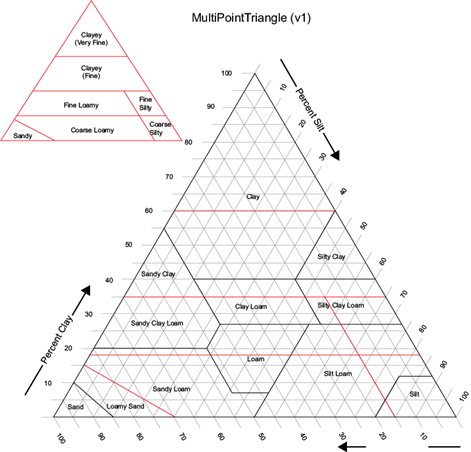
The sample contains a percentage of 8.04% clay, 6.93% silt and 85.03% sand; represented in figure 2. According to the percentages the soil is classified as loamy sand (USDA 1993).
The bulk density (Table I) is low, situated under the threshold for restricting plant growth considered for loamy sands (1.8 g/cm³). Permanent wilting point and field capacity (Table I) can be compared to the common values in loamy sands for each variable, being 4% and 20% respectively, showing a higher-than-normal permanent wilting point and a low field capacity, constraining the available water into a low value. For a depth of 20 cm, the soil available water-holding capacity is then considered severely limited. Consequently, the hydraulic conductivity is moderate (Table I). All these values have been compared with the reference values proposed for these parameters by Hazelton and Murphy (2007).
TABLE I RESULTING SOIL PHYSICAL PROPERTIES.
| Sample values | Common loamy sands values | |
| Bulk density | 1.67 g/cm3 | 1.80g/cm3 |
| Permanent wilting point | 7.60% | 4.00% |
| Field capacity | 15.50% | 20.00% |
| Hydraulic conductivity | 4.20 cm/h | 6.00 - 12.00 cm/h |
| Available water | 7.90% | 16.00% |
| Soil available water-holding capacity | 257.54 | - |
Soil chemical properties
The pH of 8.85 (Table II) exposes the strongly alkaline nature of the sample, the electrical conductivity analysis pictures it as non-saline (USDA 1998). The value for nitrogen (N) is considered medium while available phosphorus (P) is extremely high (more than 10 times the upper threshold to obtain a very high rating) (Hazelton and Murphy 2007). The C and N ratio (C/N) is considered low (Table II) and in terms of carbon, although the total carbon (TC) value is 4.02%, it can be observed that more than 60% of this value is due to inorganic carbon (IC). The value of organic carbon (OC) in soil (S) is 1.46% (Table II). The carbon sequestration (SOCs) data obtained from the waste dump are significantly low, especially when compared to others forest soils (Hoover and Smith 2023, Vanhellemont et al. 2024).
TABLE II CHEMICAL PROPERTIES OF THE SAMPLE AND C/N INDEX.
| pH | 8.85 |
| EC | 1.32 dS/m |
| TC | 4.02% |
| IC | 2.56% |
| OC | 1.46% |
| SOCs | 8.53 tC/ha |
| OM | 2.52% |
| N | 0.19% |
| C/N | 7.56 |
| P | 297.85 mg/kg |
EC: Electrical conductivity, TC: Total carbon, IC: Inorganic carbon, OC: Organic carbon, SOCs: Soil organic carbon stocks, OM: Organic matter, N: Total nitrogen, P: Available phosphorus.
The concentrations of Ca2+, Na+ and Mg2+ are deemed low attending the general levels of exchangeable cations (Table III), while potassium K+ is classified as very low. In consequence, the ECEC is considered very low all around. The calcium-magnesium ratio (Ca/Mg; Table III) further indicates a deficiency in magnesium in the sample (Macías and Calvo 1983, Calvo et al. 1987, Hazelton and Murphy 2007). SFI is influenced by the phosphorus (P) value (Table II). The P content accounts for 94.59% of the SFI value, which indicates that this soil is deficient in the other components of the SFI. This deficiency may be one of the reasons for the soil’s low fertility, and why it is unable to support stable vegetation. This issue is not solely attributable to the concentrations of As and Hg.
Arsenic and mercury concentrations
The pseudo total As and Hg concentrations are extremely high (Table IV). As concentrations exceed the GRLs for Asturias for all the uses analyzed (BOPA 2014), even the available concentrations were extremely high (Table IV).
TABLE IV ARSENIC (As) AND MERCURY (Hg) TOTAL AND AVAILABLE CONCENTRATIONS TOGETHER WITH GENERIC REFERENCE LEVELS FOR SOILS (GRLs) FOR ASTURIAS (BOPA 2014).
| As | Hg | |
| Total | 910 ± 9.00 (mg/kg) | 15.00 ± 1.40 (mg/kg) |
| Available | 72.09 ± 0.32 (mg/kg) | 22.42 ± 12.32 (μg/kg) |
| GRL industrial | 200 (mg/kg) | 100 (mg/kg) |
| GRL residential | 40 (mg/kg) | 10 (mg/kg) |
| GRL other | 40 (mg/kg) | 1 (mg/kg) |
DISCUSSION
Soil physical properties
Hazelton and Murphy (2007) proposed critical bulk density values for plant growth, beyond which root penetration is likely to be severely restricted. The bulk density of the dump is very close to the proposed value for loamy sand soils (Table I). This may be one of the factors contributing to the near absence of vegetation in the dump. The texture of the dump was loamy sand (Fig. 2), which is logical given that the material primarily originates from mineral beneficiation process residues. In the absence of organic matter and structural integrity, finer particles such as clays are washed away, leaving behind the greater than 2 mm fractions, along with silt and sand (Jensen et al. 2017).
Various factors related to soil moisture and water are clearly affected such as the permanent wilting point, field capacity, available water, and hydraulic conductivity (Table I). The available water-holding capacity’s threshold for considering a soil as severely limited in its water content is 100 mm/m, with our sample’s value being 25.75 mm/m when translated into the correct units, meaning that there is very little plant-available water in reserve. These alterations are clearly due to the waste dump being composed of inorganic residues and being completely unstructured. Authors like Lal (2020) have demonstrated that in such situations, the lack of organic matter is one of the factors that most significantly affects the previously mentioned parameters. The studied waste dump exhibits very low carbon and organic matter values. In addition to the low percentages of organic matter (Brady and Weil 2008, Jenny 2012), as previously mentioned, the waste dump is entirely devoid of vegetation. Vegetation is crucial for maintaining good hydraulic characteristics in soil (Yüksek and Yüksek 2011). This absence of vegetation can also help explain the poor values observed in hydraulic factors. Furthermore, the lack of vegetation is linked to the lack of organic matter, creating a negatively reinforcing cycle that adversely affects hydraulic factors. The lack of water retention and high leaching in the waste dump negatively impact soil microbiology, vegetation development, and the dispersion of contaminants.
Soil chemical properties
The high pH value of the waste dump results from the significant limestone content in the area where mining operations were conducted, composed mainly of calcium carbonate and magnesium carbonate (Table II; Loredo et al. 1999). Although the effective cation exchange capacity is low, the Mg content was greater than 10 %, and the Ca content was 79,70 % (Table II). This clearly demonstrates the influence of the parent material on the pH of the dump. Based on the pH values proposed by Macías and Calvo (1983) and Calvo et al. (1987) for plant production, the pH of the waste dump (Table II) is significantly above the threshold for the occurrence of acidity issues, indicating their absence. However, according to authors such as Hazelton and Murphy (2007), the optimal pH range for many plants is between 5.0 and 7.8. Natural soils in the area have a pH between 4.74 and 7.59 (Loredo et al. 2006). Therefore, the pH in the waste dump would create conditions not suitable for the growth of various plant species.
The TC value is clearly influenced by the IC content derived from the presence of carbonates (Table II). The OC value (Table II) is low because the dump is entirely inorganic, and the little OC it contains is due to runoff from upper areas and the very sparse vegetation it supports (Boente et al. 2022). The estimated OM appears to be higher than it should be judging by the OC value (Table II). The method employed for the estimation of OM is acknowledged to carry a low accuracy in the results it yields (Nelson and Sommers 2018). It should be noted that the dump is composed of waste material from the host rock (limestone, shales, sandstones) and residues from the mineral beneficiation process (Loredo et al. 1999). Furthermore, no restoration work has been carried out on the dump, so no topsoil layer was deposited on it when mining activities ceased.
The low OC value reflects the similarly low organic matter (OM) content in the dump, tampering the formation of organo-mineral complexes, aggregates and soil development (Rowan and Mars 2003). In general terms, the organic matter content in forest soils typically ranges between 5 % and 10 %, although in some forests, it can be even higher, reaching up to 20 % or more in the surface soil horizons (Koptsik et al. 2023). Since this mine is surrounded by forests, these values serve as our reference. Furthermore, the TOC analysis shows that the organic carbon values are very low. Additionally, OM is directly related to ECEC (Carter et al. 1996), and the low OM content may be one of the reasons for the low ECEC in the dump (Table III). However, soil organic carbon content in technosols is generally very high in comparison to less anthropized soils (Allory et al. 2021). The Carbon2Mine Life project (Carbon2mine 2021), coordinated by the University of Oviedo, has provided data on similar waste dumps with an average SOCs value of 20 tC/ha. In contrast, the waste dump under study has a much lower value of 8.53 tC/ha, highlighting its poor organic carbon sequestration. Other authors have also reported significantly higher carbon sequestration values in forest soils, such as those surrounding the La Soterraña mine (Hoover and Smith 2023, Vanhellemont et al. 2024). This comparison underscores the suboptimal carbon sequestration capacity of the studied waste dump.
Due to the low OC and medium N content, the C/N ratio (Table II) being less than 10 further supports the idea that any OM present in the dump can decompose rapidly (Hazelton and Murphy 2007). Consequently, the resilience of these elements is low, making them unavailable to microorganisms and vegetation. This rapid decomposition results in limited availability of organic matter for sustaining microbial activity and plant growth, thereby reducing the overall fertility and ecological sustainability of the landfill environment, falling in line with the low estimated organic carbon stocks.
According to Brady and Weil (2008) the ECEC in our sample (Table III) is considered low, indicating a low capacity to retain nutrients which creates a problem in terms of plant production. Furthermore, according to the factors for plant production proposed by Macías and Calvo (1983) and Calvo et al. (1987), the dump would be affected by factor K, factor Mg, factor Ca, and factor N although these deficiencies in exchangeable cations are within the values proposed by other authors such as Hazelton and Murphy (2007). This discordance between authors may be the result of the establishment of upper thresholds without lower thresholds or vice versa in the factors evaluating chemical properties, creating ranges to evaluate plant production could seem more appropriate. According to Hazelton and Murphy (2007), the Ca/Mg ratio is unbalanced, as the measured value in the waste dump is 7.64, whereas the optimal range should be between 4 and 6.
The high concentrations of available P are clearly attributable to the P content of the parent material, as no phosphorus additions were made to the waste dump (Table III). The elevated available P concentrations are possibly also a result of the high pH of the dump, given that phosphorus is highly influenced by it, as at high pH levels, the mobility of P can be significantly increased (Szogi et al. 2024). The SFI value was significantly influenced by the P concentrations in the waste dump. The P concentration was 297.87 mg/kg, accounting for 94% of the SFI value. Therefore, a clear discussion regarding the SFI values cannot be made; it can only be stated that the SFI is heavily skewed by the P concentrations. Consequently, the high SFI value does not imply that the fertility of the waste dump is optimal.
Arsenic and mercury concentrations
The concentrations of As and Hg inside of the waste dump are worrying due to the possibility of displacing harmful particles into other soils, underground waters or water bodies in general (Boente et al. 2022). Pseudo total As concentrations in the waste dump overshoot the GRLs established in the region (BOPA 2014) for all land uses by 455%, creating a need for restoration if any changes in land use are sought-after in La Soterraña (Table IV). The boundaries selected in Prăvălie et al. (2024) for considering a soil in a critical state of contamination were also exceeded by a 18.20% for the pseudo total concentration of As. Although legislatively the focus is on the pseudo total concentrations of elements, from an ecological perspective, it is essential to consider the available concentrations of the elements, as these directly impact fauna and flora. The waste dump had a considerable available As concentration (Table IV). This mobility of As can be attributed to its nature as an anion, which becomes mobile at basic pH (Bissen and Frimmel 2003). Additionally, the presence of other anions with a higher affinity for soil binding sites, such as P, displaces As into the soil solution (Bolan et al. 2013, Fleming et al. 2013, Baragaño et al. 2020a).
Regarding Hg and according to Spanish legislation (BOE 2023), the maximum allowable concentration of mercury in drinking water is 1.00 µg/L. This regulation aligns with the European Union’s standards as outlined in the Directive (EU) 2020/2184 (EP 2020), which aims to ensure that water intended for human consumption is free from contaminants that could pose a risk to human health. Extrapolating the limit values for water to those obtained through the TCLP extraction, the Hg levels present a potential risk to nearby water bodies, as the available mercury concentration translates to approximately 37.44 µg/L, derived from the total Hg values provided in Table IV. This concentration indicates a hazardous level of mercury that could pose environmental concerns. The soil can be classified as critically polluted as it exceeded the threshold established in Prăvălie et al. (2024) by a 3000% in its total mercury concentration. The mobility of Hg in the dump may be due to its low OC content, as Hg typically binds to OM, reducing its mobility (Ravichandran 2004, Skyllberg et al. 2006). Another factor influencing Hg mobility is soil texture; OM forms complexes with clay particles that can adsorb Hg. As previously mentioned, the dump had very low clay values (Wang et al. 2020). The lack of vegetation is also related with the high concentration of Hg, as soils in land covers with various structures of vegetation tend to present lower Hg values than sparsely vegetated spaces (Ballabio et al. 2021).
Restoration options
When considering options for restoring this soil, it is essential to highlight its complexity. The waste dump lacks OM and is contaminated by As, which behaves as an anion, and Hg, which behaves as a cation. This dual contamination poses unique challenges for remediation, as strategies effective for one contaminant may not suit the other.
To restore the soil to support stable, self-sustaining vegetation (Frérot et al. 2006), the following phases are necessary:
Re-sloping: The dump should be re-sloped to reduce the gradient and increase stability, facilitating the application of subsequent treatments.
Iron-based amendment: Apply an iron-based amendment to reduce arsenic content and its mobility (Baragaño et al. 2020a, b). Suitable amendments include by-products of other mines containing iron, iron micro or nanoparticles (Baragaño et al. 2022, Forján et al. 2024), which will also decrease the mobility of P.
Organic, nutrient-rich amendment: Follow with an organic amendment such as vermicompost, vermichar, biochar, or hydrochar. These amendments reduce Hg mobility (Bandara et al. 2020, Wang et al. 2022), improve the CEC, and provide nutrients (Forján et al. 2017, 2019).
Plantation of herbaceous species: Introduce a mixture of herbaceous species to stabilize treatments and structure the new soil (Ford et al. 2016). Ideally, use species already growing in the area (Matanzas et al. 2021) that possess phytostabilization characteristics.
Planting of tree species: Finally, plant tree species such as Betula pubescens Ehrh, known for its phytoremediation properties, particularly phytostabilization (Mleczek et al. 2017, Sánchez et al. 2024).
To implement this restoration, the first phase would involve a pot experiment combining different organic amendments such as compost, biochar, hydrochar, with inorganic amendments such as slags, ashes, nanoparticles, and by-products rich in iron and aluminum. These pots would be vegetated with a mixture of Atlantic meadow seeds and birch trees (Betula celtiberica). Subsequently, the most effective combinations would be scaled up in pilot field plots of 2x2 meters. Finally, the most successful treatments would be applied at a large scale to the mine tailings under study.
CONCLUSIONS
The characterization of the La Soterraña mine waste dump reveals critical environmental challenges primarily stemming from contamination by arsenic (As) and mercury (Hg). The pseudo total concentrations of As and Hg exceed the established regional thresholds for all potential land uses, posing significant risks to human health and surrounding ecosystems. The waste dump is composed predominantly of inorganic materials, with poor soil structure and low levels of organic matter (OM) and organic carbon (OC), severely limiting its water retention capacity and hindering vegetation growth. The soil’s physical and chemical properties, including a strongly alkaline pH and low cation exchange capacity (CEC), further inhibit plant colonization. Despite a high phosphorus (P) content -largely attributable to the parent material- nutrient imbalances, particularly in calcium, magnesium, and potassium, combined with a low organic matter content, contribute to the dump’s low fertility and inability to support stable vegetation. The lack of OM not only affects the soil’s fertility but also influences the mobility of Hg, increasing the risk of contamination spreading to adjacent water bodies. The high levels of available As and Hg, along with poor soil structure, make remediation efforts particularly challenging. A strategic restoration plan is urgently needed to mitigate the environmental impact. The proposed restoration should include soil re-sloping, the use of iron-based amendments to reduce As mobility, and the application of organic amendments such as biochar or compost to improve soil structure and nutrient content. Additionally, the introduction of phytoremediation species, both herbaceous and arboreal, could help stabilize the soil and reduce contaminant mobility over time.
In summary, the findings from this study underscore the urgent need for a comprehensive restoration plan to address the severe contamination and soil degradation at La Soterraña. Implementing these measures could not only mitigate the environmental risks but also contribute to restoring the ecosystem functions and improving the overall sustainability of the site.

