




 nueva página del texto (beta)
 Inglés (pdf)
 Artículo en XML
 Referencias del artículo
 Traducción automática
 Enviar artículo por email
 Citado por SciELO
  Similares en
SciELO
Similares en
SciELO 
 Permalink
INTRODUCTION
Municipal solid waste (MSW) includes a mixture of materials of several types that are available in residential, commercial, and urban deposits. Unsustainable solid waste management (SWM) practices have health and environmental consequences, especially in developing countries, where more than 90% of the waste is typically disposed of in unregulated landfills (Rojas-León et al. 2019). MSW comprises non-recyclable and recyclable materials classified in organic and inorganic fractions to facilitate their primary or source separation. It is well known that the organic fraction of municipal solid waste (OFMSW) is the main constituent of MSW since it represents almost 50% of the waste generated in the world (Kaza et al. 2018). In 2020, 120 128.00 t of MSW generated per day were reported, of which 46.42% corresponded to OFMSW (56 000 t/d), of which the State of Mexico produced around 8000 t, thus becoming the first waste generator nationwide (SEMARNAT 2020).
The OFMSW has been identified as the most sensitive fraction of MSW due to its biodegradable nature, responsible for greenhouse gas emissions, odor generation, volatile organic compounds release, groundwater polluted by leachates, and global climate change (Alibardi and Cossu 2015, Anyaoku and Baroutian 2018). On the other hand, the lack of effective management of the OFMSW can also have social consequences, including urban violence and the development of diseases spread by vectors such as rodents, flies, and cockroaches that typically grow in unsanitary places (Hernández-Nazario et al. 2018). The efficient management of the OFMSW currently considers this waste as an alternative to conventional sources of energy (Miramontes-Martínez et al. 2020, Sohoo et al. 2021), a resource to produce compost and soil bioremediation (Rana et al. 2018), and a substrate that produces new raw materials for animal feeding (García et al. 2005, Angulo et al. 2012, Shurson 2020, Ganesh et al. 2022) as well as other bioproducts (Ramos et al. 2017, Manu et al. 2021), making it a potential and promising renewable resource (Ganesh et al. 2022).
According to Alibardi and Cossu (2015), the OFMSW composition depends on the location and time, as well as the different socioeconomic levels and generational trends (Gómez et al. 2009) that give specific physical and chemical characteristics to the municipal waste (Varjani et al. 2021). In this context, research on MSW characterization is frequently addressed, which allows adequate decision-making for appropriate management (Gómez et al. 2008, Rana et al. 2018). It is worth mentioning that OFMSW management depends mainly on a physicochemical characterization because the results enable the establishment of the most appropriate alternatives for its stabilization or recovery (Espinosa et al. 2005, Rana et al. 2018, Haile et al. 2019).
In Mexico, some studies on the composition of MSW have been addressed in cities like Chihuahua, Mexicali, Mérida, Nayarit, and Chiapas (Saldaña-Durán et al. 2013, Araiza et al. 2017). Although in all cases the methodologies used were different, and only the generation percentages were reported (between organic and inorganic waste), all studies agree on the importance of this kind of study since it allows knowing the actual situation of each city to establish control strategies and waste treatment methods.
At the territorial level and in official reports, it is known that, in general, OFMSW includes leather, vegetable stiff fiber, bone, wood, food, and garden waste; these last two with percentages of 71.25 and 23.35%, respectively (SEMARNAT 2020). Nonetheless, in literature, scarce studies characterize the OFMSW in terms of moisture, pH, chemical oxygen demand (COD), total phosphorus (TP), total solids (TS), total volatile solids (TVS), and total nitrogen (NT), among others (Azam et al. 2020, Varjani et al. 2021). According to Campuzano and González-Martínez (2016), these parameters are necessary to establish and enhance the OFMSW sustainable management because it is not possible to generalize the information from the system of management. This is because individual studies are required for specific cities or areas if the organic fraction of urban waste has to be valued.
Additionally, Ojeda-Benítez et al. (20089) highlighted the importance of MSW separation at the origin to benefit from recycling practices, diminishing the garbage in landfills. Haile et al. (2019) carried out a physical and chemical characterization of the MSW in the city of Sawla, Ethiopia, showing 84.53% of the MSW as organic solids, alkaline pH (10.66 ± 0.01), and the presence of heavy metals (Cu, Pb, Zn, and Co). These authors concluded that organic wastes could be used for composting; however, the presence of metals questions the feasibility of this practice. Sohoo et al. (2021)) reported a pH of 7.3 and 35.1 g COD/L for a formulated waste, which simulated the chemical composition of MSW generated in Karachi, Pakistan. Parra-Orobio et al. (2015) carried out the complete physical and chemical characterization of organic wastes of municipal origin from a solid waste management plant in Cali, Colombia, to produce methane as an energy source. Campuzano and González-Martínez (2016) performed the organic waste characterization of a garbage truck in Mexico City, reporting a COD of 304 ± 11.2 g/kg, a TS of 297 ± 4.2 g/kg, Kjeldahl nitrogen of 5.4 ± 0.1 g/kg, TP of 1.8 ± 0.05 g/kg, and humidity of 69.3%. It is worth mentioning that this study was carried out eight years ago, so the characteristics of the waste might be different nowadays; besides, it is not representative of the entire national territory.
Toluca is the capital of the State of Mexico, located in the central region of Mexico. The municipality’s total population was 910 608 inhabitants (INEGI 2021), grouped into 47 delegations. The Program for the Prevention and Comprehensive Management of Urban Solid Waste and Special Management for the State of Mexico (SEMARNAT 2022) proposes an operation that favors the selection, use, and adequate confinement of the generated waste. However, operationally, waste is not normally separated at the source; only waste that can be used is separated (cardboard, PET, aluminum, etc.), and the rest is mixed in the collection systems or at the sites of final disposal (García-Mondragón et al. 2023). The main productive activities in the city occur in the secondary and tertiary sectors. In the city, waste is collected directly and indirectly without differential separation by the municipal service through garbage trucks and containers strategically located in various city neighborhoods, which are later emptied. Hence, the goal of this work was to carry out the physical and chemical characterization of the OFMSW in Toluca, with or without primary separation at source, to establish alternatives for its conversion or recovery.
MATERIAL AND METHODS
Collection and sample preparation
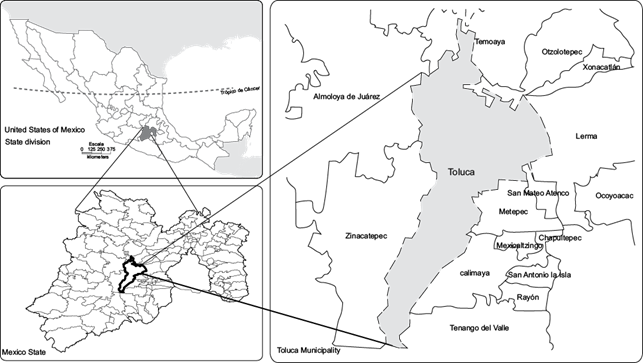
OFMSW samples were taken from two different locations in the municipality of Toluca (99º 46’ 56.64”-99º 31’ 43.32” W, 19º 04´07.68”-19º 29’ 31.92” N) (Fig. 1). The first sample (household waste, HW) was gathered from 52 nuclear single-family homes. These households located in different towns within the municipality of Toluca, which routinely performed a primary separation of their waste (e.g., organic and inorganic), were made up of a head, a spouse, and unmarried children (Ojeda-Benítez et al. 2008) . The second sample was collected from a temporary municipal deposit (MD), located at 19º 17’ 52.7” N, 99º 40’ 22.7” W, in La Teresona. The methodology proposed by Fazenda and Tavares-Russo (2016) and ASTM (2008) were followed for both samples. In this work, samples were collected during three months (February, March, and April) three times a week, totaling 36 samples. At the sampling site, a determination of volumetric weight was carried out following Mexican regulations (SECOFI 1985a).
Physical characterization
Each HW was provided with polyethylene bags to deposit the OFMSW (Fazenda and Tavares-Russo 2016). On each sampling day, an initial gravimetric characterization was carried out (SECOFI 1985b), followed by differential separation of wastesconsidering six categories: (1) fruit waste, which comprises fruits, shells, and seeds; (2) leftovers of edible vegetables like leaves, herbs, stems, and roots; (3) pruning material (i.e., grass and leaf litter mainly); (4) wastes of processed foods such as stews, tortillas, bread, egg and shells; (5) other waste (e.g., paper napkins, tea bags, coffee filters, etc.); and (6) food waste with a high degree of decomposition and difficult to identify. Each category was weighed to calculate the physical composition of the sample and identify the percentage by weight (SECOFI 1985a). The same action was carried out in the MD, with the difference that the collection bags were delivered to the collectors on site.
Chemical characterization
Once the physical characterization was done, the samples were subjected to the quartering method to obtain a homogeneous and representative sample (SECOFI 1985b). The representative samples were immediately transferred in coolers at 4 ºC, to the Instituto Interamericano de Tecnología y Ciencias del Agua (IITCA) laboratory to conduct analyses corresponding to the chemical characterization. After that, each sample was subjected to a second sampling procedure, which involved quartering and size reduction using scissors and a shovel to achieve a particle size of less than 10 cm. Out of this second selection, 1 kg of sample was taken to perform later the analyses of the following parameters: pH, electrical conductivity, total solids, fixed solids (FS), volatile suspended solids (VSS), nitrite (NO2 -), nitrate (NO3 -), ammonium (NH4 +), COD, moisture content (MC), total alkalinity, total acidity, and total hardness. In addition, composite samples were taken from each site (HW and MD), that is, a mixture of five days of collection, and sent to the Laboratorio de Geoquímica Ambiental (UNAM, Juriquilla campus, Mexico) to quantify metals, and the analysis of the macronutrients (e.g., carbohydrates, lipids, proteins, and fiber) was determined by the company Food Service Center following the Mexican Official Regulation NOM-051-SCFI/SSA1-2010 (SE 2020).
Analytical methods
pH and conductivity were measured with a Hach potentiometer (Multiparameter SensION 56). Moisture, TS, volatile solids (VS), total acidity, and alkalinity were also measured (APHA 2005). The nitrate and nitrite concentrations in the organic residues were determined using Hach TNT kits (835 and 840, respectively) and measured on a Thermo Scientific Genesys 10 spectrophotometer at 440 nm. Ammonium ion (NH4 +) quantification was carried out using an ammonium selective electrode (Phoenix Electrode, USA), which has a hydrophobic membrane permeable to ammonia gas (NH3). COD was measured by the closed reflux method as established in the standard methods for the examination of water and wastewater (APHA 2005). Vials with COD reagent from Hach (method 8000) were utilized to be later analyzed by spectrophotometry using the Hach-UV-vis Dr 6000 equipment at a wavelength of 600 nm. Heavy metals were quantified in the Laboratorio de Geoquímica Ambiental of the Centro de Geociencias, UNAM, Juriquilla campus, using inductively coupled plasma mass spectrometry (Thermo iCAP 6500 Duo View).
Statistical analysis
All statistical analyses were conducted using Matlab v. 9.14.0. A one-way analysis of variance was used to infer statistically significant differences between the household and municipal deposit wastes after the data were confirmed to follow a normal distribution with a confidence interval of 95%.
RESULTS AND DISCUSSION
Physical and chemical characterization of the OFMSW
The physical characterization of the two OFMSW samples analyzed in this study is shown in figure 2. For both samples, the highest percentage was fruit waste (i.e., fruits, peels, and seeds), followed by vegetable waste (i.e., leaves, herbs, stems, roots, etc.), after that for pruning material (mainly grass), processed food, and other wastes like paper napkins, tea bags, and coffee filters. The lowest percentage was displayed by processed food waste of all categories, with a high degree of decomposition and difficult identification. MD showed lower percentages of fruit waste and higher percentages of other categories regarding the HW. The experimental results confirmed a good primary separation either in the sampled dwellings or the landfill owing to the scavengers, so this action minimized the presence of inorganic compounds (Veeken and Hamelers 2002, Campuzano and González-Martínez 2015, Parra-Orobio et al. 2015).
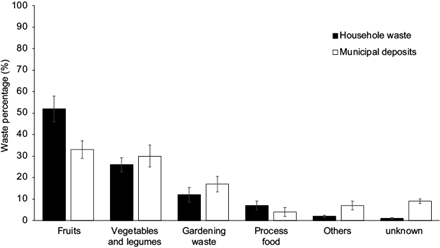
Fig. 2. Physical characterization of the two organic fractions of municipal solid waste (OFMSW): household waste (HW) and municipal deposits (MD).
The OFMSW moisture content was 52.25 and 58.74% for HW and MD, respectively (Table I). The moisture content allows us to understand the nature of the waste, as high moisture content is associated with a higher fraction of organic and putrescible materials (Rana et al. 2018). It is one of waste’s most important physical characteristics, mainly when OFMSW is used in biological processes (Varjani et al. 2021). For instance, Hernández-Nazario et al. (2018) and Chen et al. (2019) indicated that the moisture level should be between 55 and 65% to promote aerobic and anaerobic biological activities. Pearse et al. (2018) showed that the moisture content of MSW in landfills can vary between 20 and 60%. In the experimental work, the evaluated moisture content in both OFMSW was within the recommended value, with no statistical difference.
TABLE I. PHYSICAL AND CHEMICAL CHARACTERIZATION OF THE TWO ORGANIC FRACTIONS OF MUNICIPAL SOLID WASTE (OFMSW): HOUSEHOLD WASTE (HW) AND MUNICIPAL DEPOSITS (M).
| Parameter | HW (mean ± SD) | MD (mean ± SD) |
| Moisture (%) | 52.25 ± 29.05 | 58.74 ± 11.80 |
| pH | 5.39 ± 0.20 | 4.84 ± 0.25 |
| Total acidity (as CaCO3) (mg/L) | 3102.0 ± 640.60 | 4287.2 ± 484.00 |
| Total alkalinity (as CaCO3) (mg/L) | 3375.9 ± 869.10 | 318.4 ± 28.10 |
| COD (mg/L) | 27 130.68 ± 554.40 | 21 340 ± 429.97 |
| NO3 - (mg/L) | 9.61 ± 0.47 | 23.11 ± 1.34 |
| NO2 - (mg/L) | 1.56 ± 0.35 | 2.07 ± 0.28 |
| NH4 + (mg/L) | 328.9 ± 0.51 | 437.68 ± 164.52 |
| TS (mg/L) | 3060 ± 360.12 | 3465 ± 714.78 |
| FS (mg/L) | 149 ± 22.20 | 660 ± 14.42 |
| VS (mg/L) | 2908 ± 333.12 | 2805 ± 700.03 |
| VS/TS ratio | 0.95 ± 0.04 | 0.80 ± 0.07 |
COD. chemical oxygen demand; TS: total solids; FS: fixed solids; VS: volatile solids.
Data in a dry basis and average values. Data reported by the Laboratorio de Geoquímica Ambiental, UNAM, Juriquilla campus, Mexico .
Both samples showed acidic pH (5.34 for HW and 4.84 for MD). This acidic environment might be due to the number of fruits with acidic characteristics, such as citrus fruits. The samples’ total acidity and alkalinity values determined in the solid wastes were associated with easily decomposable wastes, as Parra-Orobio et al. (2015) indicated. The COD quantified in HW was higher than in MD; however, nitrogen compounds were higher in the MD than in the HW (Table I). The SV/ST ratio is a parameter commonly used to indicate an abundance of organic content (Gállego et al. 2019, Zamri et al. 2021), so the HW showed higher organic content since its VS/TS ratio was 0.95.
On the other hand, contrasting the results obtained in the present work with those of other authors, some similarities exist, as seen in table II. It is essential to highlight that in most research works, the physical and chemical characterization of the organic fraction is performed to gather information about possible anaerobic digestion processes or to estimate theoretical methane production. For example, in the comparison table, pH values vary between 4.1 and 10.66, with an average of 6.16 ± 2.12. The most acidic pH was found in the study of Cork in Ireland, whereas the most basic pH was found in Sawla, Ethiopia. The differences might be due to the socioeconomic and cultural situation and solid waste management (Gómez et al. 2009, Saldaña-Durán et al. 2013).
TABLE II CHEMICAL CHARACTERISTICS OF THE ORGANIC FRACTION OF MUNICIPAL SOLID WASTE (OFMSW) ACCORDING TO DIFFERENT AUTHORS.
| City/country | Type of waste | pH | COD (g/L) | TS % | VS % | VS/TS | NH4 +-N (g/L) | Reference |
| Cork, Ireland | Food waste university canteen | 4.10 | - | 29.4 | 28.00 | 0.95 | - | Browne and Murphy 2013 |
| Udine, Italy | Household | - | 21.60 | 3.60 | 3.30 | 0.92 | 0.077 | Cabbai et al. 2013 |
| Mexico City, Mexico | OFMSW collected from the waste truck | - | 340* | 29.70 | 22.30 | 0.75 | - | Campuzano and González-Martínez 2015 |
| Valle de Cauca, Colombia | OFMSW | 5.54 | 137.80 | 113.00 | 93.00 | 0.82 | 0.20 | Parra-Orobio et al. 2015 |
| Ontario, Canada | OFMSW | 4.6 ± 0.20 | 60.30 | - | - | - | 1.11 | Nair et al. 2014 |
| Sawla, Ethiopia | Household’s municipal solid waste (MSW) | 10.66 | - | - | - | - | - | Campuzano and González-Martínez, 2015. |
| Santiago de Cuba, Cuba | OFMSW disposal site | 6.90 | - | 32.30** | 79.10*** | - | - | Hernández-Nazario et al. 2018 |
| Mexico City, Mexico | OFMSW Composting Plan | 4.55 | - | 28.80 | 23.20 | 0.80 | - | Gállego et al. 2019 |
| Karachi, Pakistan | Synthetic waste, simulating MSW | 7.30 | - | 44.42* | 88.84** | - | 1.70 | Sohoo et al. 2021 |
| Toluca, Mexico | Household’s OFMSW | 5.39 | 27.1 ± 0.54 | 30.60 | 29.00 | 0.95 | 0.33 ± 0.05 | This work |
| Municipal container OFMSW | 4.84 | 21.3 ± 0.43 | 34.60 | 28.10 | 0.80 | 0.44 ± 0.02 | This work |
*COD value in g/kg; **fresh mass; ***dry mass; (__) not reported.
The COD value was 21% higher in HW than in MD and presented a statistical difference, with a p-value < 0.05. Although the COD value is not a parameter considered in most studies, it is an indirect measure of the organic matter susceptible to oxidation (i.e., degradation). There is no standardization regarding its evaluation since it is sometimes reported in dry or wet mass (Cabbai et al. 2013, Parra-Orobio et al. 2015, Campuzano and González-Martínez 2015); however, COD values reported in the present work coincided with those reported by Cabbai et al. (2013). On the other hand, the VS/TS ratio was statistically different between HW (VS/TS of 0.95) and MD (VS/TS of 0.8). The lower SV/ST ratio observed in the MD might be due to the high percentage of vegetable and garden wastes of complex degradation (Takáčová et al. 2012, Ruan et al. 2017). The VS/TS ratio ranged from 0.75 to 0.95, providing information about waste biodegradability (Forster-Carneiro et al. 2008). For instance, Campuzano and González-Martínez (2016) observed that a high VS/TS ratio is commonly accompanied by high COD, which is in agreement with the experimental COD values reported for HM and MD in the present work, where the fixed solids (FS), commonly known as the inorganic portion of a sample, were statistically higher in the MD. Another parameter to consider in biological processes is the source of nitrogen, since it is an essential nutrient for anabolic pathways and cell growth. In the current work, 0.33 and 0.44 mg NH4 +-N/L were found in the wastes of HW and MD, respectively (15.6 and 19.8% of the protein in dry mass). Although nitrogen is an essential nutrient for biological processes, the high content of ammonium and proteins in the waste might cause inhibition of anaerobic digestion because the protein degradation causes an increment in ammonia that can passively diffuse into the cell, damaging it (Calli et al. 2005, Cuetos et al. 2008, Wang et al. 2016); however, it has been reported that the degree of inhibition is subject to several factors like high pH and temperature (Wang et al. 2016, Akindele and Sartaj 2018).
Both samples showed concentrations of heavy metals (Table III), which might be due to the separation at the source. Metal concentrations in the HW were lower than those in the MD and were even below the detection limits of the equipment (except copper and zinc), so a statistical test could not be applied. However, it is important to note that both samples presented heavy metal concentrations below the regulatory limits (Table III). The low content of metals allows waste to be used since high concentrations would limit their recovery due to their toxicity to biological processes or health risks (Chen et al. 2008). For instance, the low concentrations of As, Cd, Cr, Cu, Ni, and Zn contained in the wastes coincided with the works reported by Veeken and Hamelers (2002) and García et al. (2005) for biowaste. Table III shows the results of the present work with different government regulations establishing limits of use (Zhang et al. 2008). In some cases, the results are not specific to household waste but factors considered in practice. Results showed that metal concentrations were so low that both organic wastes might have several uses, such as enriching the soil after composting (Veeken and Hamelers 2002, Garelick et al. 2008, Zhang et al. 2008), raw material to produce bioethanol or biogas (Sierra et al. 2007, Zamri et al. 2021), or animal feed (García et al. 2005, Shurson 2020).
TABLE III. ANALYSIS OF THE CHARACTERIZATION OF HEAVY METALS (MEAN ± SD) CONCERNING THE MAXIMUM PERMISSIBLE LIMITS FOR THE USE OF BIOSOLIDS AND THE MAXIMUM LEVEL OF UNDESIRABLE SUBSTANCES IN ANIMAL FEED.
| Metal | Reported value for the residue sample (μg/kg) | Maximum permissible limits (NOM-004-20021) (mg/kg) | Limit values of heavy metals in MSW or sludge for agricultural use2(mg/kg) | Limit values of heavy metals in MSW or sludge for agricultural use3(mg/kg) | Maximum levels of undesirable substances in animal feed4 (mg/kg) | |
| Household waste | Municipal deposit | |||||
| As | < 0.048* | 1.71 | 30 | 30 | - | 2 |
| Cd | < 0.004** | < 0.095* | 3 | 3 | 20-40 | 1 |
| Cr | < 0.004** | 0.3416 | 300 | 300 | - | - |
| Cu | 0.12 | 10.05 | - | - | 1000-1750 | - |
| Pb | < 0.013** | 0.043 | 100 | 100 | 300-400 | 5 |
| Ni | < 0.018** | 5.75 | - | - | 750-1200 | - |
| Zn | 1.52 | 22.78 | - | - | 2500-4000 | - |
| Hg | NQ | NQ | 5 | 5 | 16-25 | - |
2Control standards for urban waste for agricultural use (GB 8172-87). State Environmental Protection Administration of China, Beijing, 1987 (cited by Zhang et al. 2008).
4Maximum content in mg/kg relative to feedstuffs with a moisture content of 12%.
NQ: not quantified; *value lower than the limit of quantification; **value lower than the detection limit.
Bromatological composition of the OFMSW
An analysis was carried out to quantify the composition of nutrients in the samples of HW and MD to determine if the generated wastes might be used as raw material to produce animal feed. Table IV shows the average content of carbohydrates, fats, fibers, and proteins in the samples of HW and MD; however, there was no statistical difference between the samples. It can be seen that HW had a higher percentage of carbohydrates but a lower proportion of fats, fibers, and proteins than MD. The carbohydrate values in the present work were within the reported range (35-63%SV) for this solid waste (Angulo et al. 2012, Parra-Orobio et al. 2015). These percentages are linked to soluble and insoluble carbohydrates (Zamri et al. 2021). For example, the soluble components are highly biodegradable and are associated with starch, sucrose, glucose, and fructose, mainly derived from processed food and fruit waste. Meanwhile, insoluble compounds are associated with cellulose, hemicellulose, pectin, and fiber derived from vegetable and garden waste (Kumar and Sharma 2017, Matheri et al. 2018). On the other hand, the protein values were among those reported by García et al. (2005)), Angulo et al. (2012), and Campuzano and González-Martínez (2016), who showed a protein content between 7 and 49% in several samples of biodegradable municipal waste.
TABLE IV. BROMATOLOGICAL CHARACTERIZATION OF THE TWO ORGANIC FRACTIONS OF MUNICIPAL SOLID WASTE (OFMSW): HOUSEHOLD WASTE (HW) AND MUNICIPAL DEPOSITS (MD) ON A DRY MATTER BASIS (MEAN ± SD).
| Macronutrients | HW (%) | MD (%) |
| Carbohydrates | 44.7 ± 11.1 | 30.0 ± 4.8 |
| Fats (lipids) | 18.5 ± 6.7 | 23.5 ±12.6 |
| Fibers | 21.0 ± 2.7 | 26.1± 5.7 |
| Proteins | 15.6 ± 8.3 | 19.8 ± 7.6 |
| Energy (kcal/kg) | 3763.6 | 3808.4 |
The fiber content is associated with the cellulolytic material present in the waste, according to García et al. (2005) and Esteban et al. (2007). The percentage of crude fiber in organic waste is between 13 and 37.4% for household waste. For instance, Angulo et al. (2012) reported a percentage of neutral fiber of 36.6% and acid detergent fiber of 29.6%, indicating biodegradability and the presence of cellulose, hemicellulose, and lignin. For example, considering HW and MD for their recovery as animal feeding, the fiber value would be a parameter to establish the digestibility, mainly for MD, which has a higher percentage of fiber and a more significant presence of wood and garden waste. Finally, the energy in both samples did not present differences, with a value of 3786 kcal/kg, which agrees with Angulo et al. (2012), who indicated energies of 3728 kcal/kg for fruit and vegetable wastes.
Potential and possible applications
The efficient management of OFMSW requires immediate attention as it makes up a significant proportion of the waste that can be recovered (Ganesh et al., 2022). The physical, chemical, and bromatological characterization of the waste allows for the establishment of its potential use. Although more studies are needed, this characterization makes it possible to set the scope considering the conditioning to which the waste would have to be subjected. An excellent advantage is that the wastes have low heavy metal concentrations, allowing their later use. Given the physical and chemical characteristics of HW and MD wastes, they might be used to produce compost, biofuels, biogas, bioethanol, and animal feed. It is worth mentioning that all options are viable; however, it is advisable to choose those that do not generate more pollution and whose implementation requires lower costs (e.g., composting or a cost-benefit approach such as the generation of animal feed and biogas production). For example, composting is a biological process that obtains natural fertilizers from organic matter. If the target is biogas production, buffer solutions will be necessary due to the low pH values of both wastes. In the literature, anaerobic digestion is performed at a pH between 6.5 and 8.5. However, the maximum methane yield has been obtained at a pH of 6.5 to 7.5 (Khalid et al. 2011, Kumar and Samadder 2020). To address this issue, co-substrates with good plugging capacity, such as cattle manure, are often used, or alkaline reagents are added to the system (Kumar and Samadder 2020). On the other hand, to produce bioethanol, it will be necessary to consider the concentration of non-soluble carbohydrates that exhibit a robust refractory structure to be degraded, which can lead to hydrolysis resistance (Sierra et al. 2007, Zamri et al. 2021).
In the case of MD wastes, which showed a more significant amount of crude fiber, it is also probable to find lignin, which is considered the most challenging element to hydrolyze under anaerobic conditions, so pretreatments with acid or alkali will be necessary to reduce the inhibitory effects of this component on enzymatic or biological activities (Sierra et al. 2007, Shahir et al. 2014, Gosavi et al. 2017, Casabar et al. 2020, Ganesh et al. 2022).
Finally, the present work revealed that the wastes have a high nutritional value and a balanced composition regarding carbohydrates, proteins, lipids, and fiber. For example, low protein content in waste might limit its use for animal feeding. Angulo et al. (2012) reported that 12% of crude protein is in fruit and vegetable waste; this content is suitable for animal feeding. The protein content was superior in the present work, so the wastes evaluated are ideal for animal feeding. On the other hand, the EPA has declared municipal solid waste incineration a cleaner energy source (Azam et al. 2020). However, the MSW should be greater than 7942 kJ/kg for efficient incineration with energy recovery (Melikoglu 2013). In the present work, the average energy obtained for both samples evaluated was 3786 kcal/kg, equivalent to 15 840 kJ/kg, so these wastes are suitably incinerated.
Considering the physical, chemical, and bromatological characteristics, both samples could be used. However, HW samples could be more recommended for feed production, since they have lower concentrations of heavy metals.
CONCLUSIONS
Household and municipal deposit wastes showed minimum differences. The physical, chemical, and bromatological characterization of both types of waste indicated high nutritional values, high VS/TS ratios, low metal concentrations, and high energy content. This characterization gives insight into the possibility of using these wastes in different ways, such as composting, biogas and bioethanol production, incineration to recover energy, and animal feeding, among others. However, HW samples could be more suitable for feed production since they have lower concentrations of heavy metals. Finally, knowing the physical and chemical characteristics of waste allows us to glimpse possible beneficial applications for future waste management planning with a positive impact on society. Also, it encourages the promotion of waste separation, seeing waste as a resource and not as garbage.

