

SciELO - Scientific Electronic Library Online

 
vol.41Emisiones de gases de efecto invernadero en un campus universitario de Guatemala: bases para una huella de carbono neutral a 2040Estudio de la capacidad de producción de lipasas de Aspergillus sp. provenientes de la selva misionera paranaense índice de autoresíndice de materiabúsqueda de artículos
Home Pagelista alfabética de revistas  

Servicios Personalizados

Revista

Articulo

Indicadores

Links relacionados

  • No hay artículos similaresSimilares en SciELO

Compartir


Revista internacional de contaminación ambiental

versión impresa ISSN 0188-4999

Rev. Int. Contam. Ambient vol.41  Ciudad de México  2025  Epub 19-Mayo-2025

https://doi.org/10.20937/rica.55236 

ArticleS

Environmental impact assessment before and after implementing mitigation and prevention measures on two final waste disposal sites. Case study: Zacatecas, Mexico

Evaluación de impacto ambiental antes y después de implementar medidas de mitigación y prevención en dos sitios de disposición final de residuos. Caso de estudio: Zacatecas, México

Monserrat Sosa Rodríguez1 

Miguel Mauricio Aguilera Flores1  * 

Verónica Ávila Vázquez1 

Omar Sánchez Mata1 

Mónica Judith Chávez Soto1 

1Ingeniería Ambiental, Unidad Profesional Interdisciplinaria de Ingeniería, Campus Zacatecas, Instituto Politécnico Nacional, Calle Circuito del Gato 202, Ciudad Administrativa, 98160 Zacatecas, Zacatecas, México.


ABSTRACT

In Mexico, municipal governments have material, economic, and human resource limitations, as well as a lack of cooperation with state authorities, causing the solid waste management system to neglect environmental protection. This circumstance has adverse environmental impacts that must be addressed. This project shows two impact assessments, before and after the implementation of an environmental management plan (EMP) in two final waste disposal sites in Cuauhtémoc, Zacatecas, Mexico, following the specifications of the Mexican Official Standard NOM-083-SEMARNAT-2003. The results from the first environmental impact assessment (before the EMP) showed that non-compliance with the control, together with the lack of compaction and coverage of waste in the two final disposal sites and the inappropriate closure, were the issues with the highest impact in the study area. The second assessment (after the EMP) showed an increase in positive impacts and a decrease in the magnitude and importance of the negatives, considering the implementation of prevention and mitigation measures. The new conformation and final use of the closed site, entry control, and compaction of waste, along with proceedings for waterproofing the soil during the construction of a new cell in the active site, were the activities with beneficial impacts. The results proved that with the EMP, the final disposal sites could be improved and restored, bringing positive impacts within the municipality through the actions performed.

Key words: comprehensive waste management; environmental management plan; landfills; Mexican Official Standard

RESUMEN

En México, los gobiernos municipales sufren limitaciones de recursos materiales, económicos, y humanos, así como la falta de colaboración con autoridades estatales, lo que repercute en que el sistema de manejo de residuos sólidos no garantice la protección del ambiente. Esta situación genera impactos ambientales adversos que deben ser atendidos. Este proyecto muestra dos estudios de impacto ambiental, antes y después de la implementación de un plan de manejo ambiental (PMA) de dos sitios de disposición final de residuos en Cuauhtémoc, Zacatecas, México, siguiendo las especificaciones de la Norma Oficial Mexicana NOM-083-SEMARNAT-2003. Los resultados de la primera evaluación de impacto ambiental (antes del PMA) mostraron que el incumplimiento del control, la falta de compactación y cobertura de los residuos en los dos sitios de disposición final, y el cierre inadecuado fueron los impactos con mayor incidencia en el área de estudio. La segunda evaluación (después del PMA) mostró un aumento de los impactos positivos y una disminución de la magnitud e importancia de los impactos negativos, considerando la implementación de medidas de prevención y mitigación. La nueva conformación y uso final del sitio clausurado, el control de ingreso y compactación de los residuos y las acciones de impermeabilización del suelo durante la construcción de una nueva celda en el sitio activo fueron las acciones con impactos benéficos. Los resultados demostraron que con el PMA se podrían mejorar y restaurar los sitios de disposición final, generando impactos positivos dentro del municipio a través de las acciones realizadas.

Palabras clave: gestión integral de residuos; Norma Oficial Mexicana; plan de manejo ambiental; rellenos sanitarios

INTRODUCTION

The rapid increase in population, economic growth, urbanization, and industrialization encourages solid waste generation at the global level and boosts environmental contamination when it is not disposed of appropriately. Inadequate waste management promotes illegal dumping, waste burning, and uncontrolled disposal (Ferronato and Torreta 2019).

Environmental impacts from this uncontrolled disposal are mostly related to the migration of contaminants in the form of gases or leachates (Zaı¨ri et al. 2004). However, final waste disposal sites are more dangerous when waste burning occurs, causing the environment to be directly impacted by the contaminants present in burn ashes in the surface soil (Pérez et al. 2013). In addition, waste picking in open dump sites poses serious health risks to people working in these areas (Gutberlet and Baeder 2008).

Final disposal in open dumps prevails in solid waste management (SWM) in Latin America and the Caribbean (Margallo et al. 2019). In Mexico, the SWM system only focuses on waste collection and transportation to final disposal sites (SEMARNAT 2017). According to Article 115 of the Political Constitution of the United Mexican States (CDHCU 2025), municipal authorities are responsible for the collection of municipal solid waste (MSW) from household sources; waste resulting from street sweeping, transport, and treatment; and final legal and illegal disposal services in a site. This condition causes the performance of every final waste disposal site (FWDS) to be different due to material, economic, and human resource limitations, the lack of collaboration with state authorities, and the use of comprehensive management methods, which often fail to comply with the specifications of Mexican regulations. In this sense, searching for a suitable landfill is a complex process that must include socioeconomic, environmental, and technical aspects (Moreno et al. 2019).

Regarding national regulations, the official Mexican Official Standard NOM-083-SEMARNAT-2003 (SEMARNAT 2004) establishes environmental protection specifications for selecting the site location, design, construction, operation, monitoring, closure, and complementary works of a site for the final disposal of urban solid wastes and wastes requiring special handling. However, data from SEMARNAT (2020) showed that the available infrastructure for disposal sites in Mexico is insufficient to assume that they are adequate for waste disposal with a guarantee of environmental protection.

These conditions lead to the need to establish the available information on the current environmental state to mitigate or remedy the adverse effects produced by human intervention (Perevochtchikova 2013). Therefore, environmental impact assessment (EIA) is a tool that allows identifying a project’s environmental, social, and economic impacts. It aims to assess the magnitude of the changes caused by a project and propose appropriate measures to reduce negative impacts.

The main methods and techniques used in an EIA are baseline studies, checklists, matrices, and networks. These tools show relevant information to make appropriate decisions on the most significant impacts (Dougherty and Hall 1995).

Thus, this study aims to identify and determine the environmental impacts before and after implementing the prevention and mitigation measures on two final waste disposal sites, taking as a case study two FWDS of the municipality of Cuauhtémoc, Zacatecas, Mexico, showing the benefits obtained in the SWM when an environmental management plan (EMP) is implemented.

MATERIALS AND METHODS

The project was developed in five stages: (1) data collection; (2) evaluation of the grade of fulfillment concerning the specifications stipulated in the Mexican Official Standard NOM-083-SEMARNAT-2003 (SEMARNAT 2004) on both FWDS according to the site category (typse A, B, C, and D); (3) EIA of the management in both FWDS; (4) description of the prevention and mitigation measures integrated into an EMP; (5) comparison of the environmental impacts after implementing prevention and mitigation measures. An overview of the methodology is represented in figure 1.
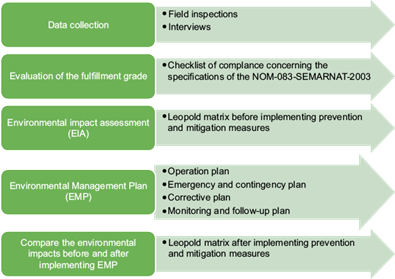
Fig. 1 Main stages of the research. 

Case study

The study was performed in 2020 in Cuauhtémoc, Zacatecas, Mexico (Fig. 2). Municipal authorities are responsible for the SWM system. The municipality has a compactor truck with a capacity of 10 t serving the urban center and four of the five communities. The wastes are collected every two days at the urban center and weekly in the communities.
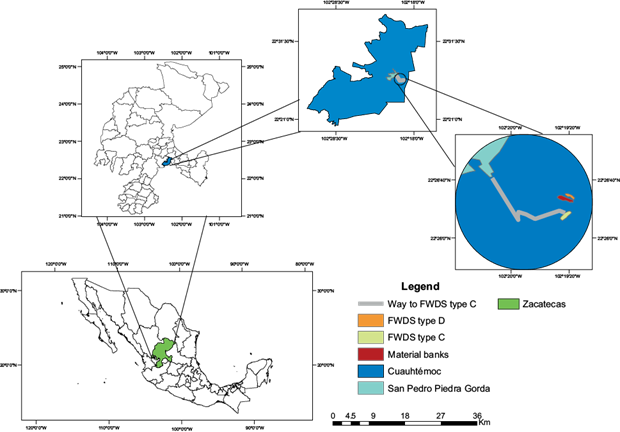
Fig. 2 Location of the final waste disposal sites (FWDS) selected as case studies. 

This city has two FWDS. The first one, which has been operating since 2008, is 2.5 km from the urban center and has an approximate area of 2.5 ha, receiving 13 t/day. However, this site has improvement opportunities, mainly in its design, construction, and operational characteristics. The second one is 460 m away from the active FWDS; it was in operation between 1997 and 2008. During this period, the generation received by the MSW was 8-10 t/d, operating through a dump ditch; moreover, this site had uncontrolled disposal, generating local environmental impacts with disease outbreaks, proliferation of insects and rats, generation of foul odors, and soil pollution. In addition, 100 m away from this site, there is a material bank where gravel and sand have been extracted since 2015, causing soil instability and the formation of slopes (Fig. 2).

Data collection and field inspections of the active and closed final waste disposal sites

The first phase of the work was implemented in November 2020 in cooperation with the workers of the Department of Public Services of Cuauhtémoc. Data on the recollection, transport, current FWDS construction and operation, and FWDS closure were collected through field inspections and interviews. Only solid waste from household activities was considered.

Evaluation of the fulfillment grade of NOM-083-SEMARNAT-2003

The Mexican Official Standard NOM-083-SEMARNAT-2003 defines three types of FWDS according to the fulfillment grade of the established specifications (SEMARNAT 2004): (1) landfills, (2) controlled sites, and (3) uncontrolled or open dumps. A landfill is an infrastructure work that involves methods and engineering to control the environmental impacts through compaction and additional infrastructure. A controlled site is an inadequate final disposal site that complies with infrastructure and operation works but does not comply with the waterproofing specifications. An uncontrolled site is an inadequate final disposal site that does not comply with the requirements stipulated in the Mexican Official Standard. Likewise, this environmental regulation categorizes the FWDS according to the amount of waste received per day, as shown in table I.

TABLE I CATEGORIES OF THE FINAL WASTE DISPOSAL SITES (FWDS) BASED ON THE OFFICIAL MEXICAN STANDARD NOM-083-SEMARNAT-2003 (CDHCU 2004). 

Category Tonnage received per day (t/d)
A >100
B 50-100
C 10-50
D <10

The two FWDS were analyzed with respect to the specifications of NOM-083-SEMARNAT-2003 (SEMARNAT 2004), shown in figure 3.
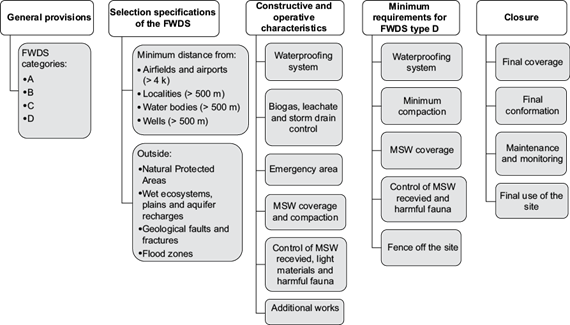
Fig. 3 Specifications of the Mexican Official Standard NOM-083-SEMARNAT-2003 (CDHCU 2004). (FWDS: final waste disposal site; MSW: municipal solid waste.) 

The specifications for the selection of both FWDS were assessed by applying a geographic information system (GIS). Additionally, the constructive and operative characteristics of active FWDS, minimum requirements, and closure of FWDS were evaluated based on the degree of fulfillment of the specifications of NOM-083-SEMARNAT-2003 (SEMARNAT 2004), as shown in figure 3.

Identification of environmental impacts

The methodology from the Environmental Impact Assessment System (SEIA 2016) was taken as a reference for performing the EIA in the FWDS. This methodology provides a general scheme for identifying, characterizing, and categorizing the impacts generated on the environment (physical, biological, and social factors). Likewise, mitigation and prevention measures to decrease the negative environmental impacts were proposed from the EIA results.

After the evaluation of the fulfillment grade of NOM-083-SEMARNAT-2003 (SEMARNAT 2004), information about the description, infrastructure, and fulfilled or unfulfilled specifications of both FWDS was used to identify actions that generate impacts on environmental factors (air, water, soil, etc.).

The interaction between the actions that cause impacts and the factors that make up the environment were analyzed following the steps described by the SEIA (2016) methodology. These steps are:

  • Identifying the project actions (activities) that impact the environmental factors (soil, water, air, and socioeconomic features).

  • Identifying the environmental factors that could be affected by the actions performed in the FWDS (construction, operation, additional works, etc.).

  • Using the affected environmental factors as impact indicators (e.g., air and water quality, noise, erosion, employment, and health).

Environmental impact assessment (EIA)

The EIA identifies the impacts with the highest magnitude and importance (FAO 1996). It was performed using Leopold’s matrix (Leopold et al. 1971) as a reference. This methodology consists of 100 possible actions that could impact 88 environmental factors. However, this study used the activities performed in both FWDS, based on the location restrictions, constructive and operational characteristics, and closure specified in the NOM-083-SEMARNAT-2003 (SEMARNAT 2004), as shown in table II.

TABLE II ENVIRONMENTAL FACTORS IMPACTED BY ACTIVITIES PERFORMED IN THE FINAL WASTE DISPOSAL SITES (FWDS). CATEGORY TYPES ARE SHOWN IN TABLE I. 

Activities Environmental Components Environmental factors
Closure of FWDS type D Soil Leached pollution Littering Instability Erosion
Operation of FWDS type C Ground slides Larger area required Reduction of useful life Water Surface water pollution Aquifer pollution
Operation of FWDS type D Air Gases combustion emission Methane emission Particulate matter emission Socio-economic Population health Employment

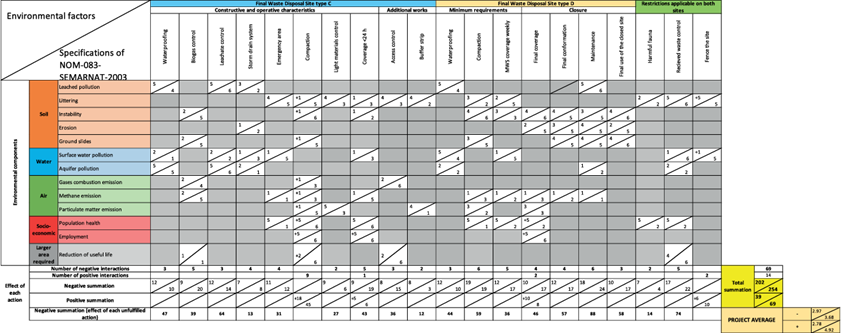
In Leopold’s matrix, the rows included the environmental factors susceptible to damage, and the columns involved the actions performed in the FWDS that could impact the environmental factors. Each interaction between factors and action was assessed, determining if that action impacted the factor. A positive or negative sign was used, depending on whether the action caused a benefit or damage, respectively. A diagonal line was drawn for the cases that showed an impact. In the upper left-hand corner, a number from 1 to 6 was assigned to register its magnitude, and in the lower right-hand corner, to indicate its importance. Leopold’s matrix methodology uses a scale from 1 to 10 to assess the impacts. This study proposed a scale from 1 to 6 to reduce the subjectivity based on the criteria shown in table III. An empty gray box was used for cases in which no interaction was detected since the action did not impact the factor.

TABLE III SCALE USED TO ASSESS THE MAGNITUDE AND IMPORTANCE OF IMPACTS. 

Value Magnitude Importance
1-2 Punctual Low
3-4 Medium Medium
5-6 Large High

Once the assessment was completed, the values of magnitude and importance were multiplied and summed in each column regarding the sign (positive or negative). The actions (columns) with the highest number of interactions and the product of the sum were identified. Likewise, three impact categories (low, medium, and high) were established regarding the values obtained in the sum. This identification allowed the recognition of the actions that caused negative environmental impacts and required prevention and mitigation measures in the short, medium, and long term. Finally, an average was obtained by dividing the product of the sum by the number of interactions (positive or negative). The average value was estimated to assess the viability of the current SWM (average positive value higher than average negative value).

Implementation of the environmental management plan

After the EIA, an EMP was developed, describing mitigation and prevention measures in the short, medium, and long term, which depended on whether the impacts were classified as high, medium, or low impact, according to the results obtained in the matrix. The specifications of the NOM-083-SEMARNAT-2003 (SEMARNAT 2004), which were unfulfilled, were taken as a reference to develop the necessary actions to maintain the fulfillment of both FWDS.

The EMP was structured with four plans: (1) an operation plan and (2) an emergency and contingency plan to regulate the conditions of active FWDS; (3) a corrective plan to mitigate the impacts present in the closed FWDS; and (4) a monitoring and follow-up plan to maintain under control both FWDS.

Environmental impact assessments before and after the EMP

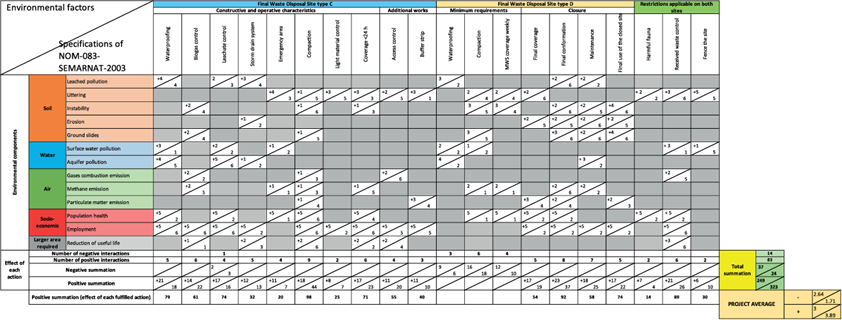
Finally, a second Leopold’s matrix was built to assess the environmental impacts of the EMP performance through its measures. Then, both matrices’ results were compared with their magnitude and importance values and the number of interactions between the actions and the environmental factors. In the same way, the product and the sum of the positive and negative interactions were obtained, and a categorization of the impacts as low, medium, and high was carried out to recognize the actions that will bring a more significant positive impact by implementing the EMP.

RESULTS AND DISCUSSION

The current FWDS management

From the information on MSW generation provided by the municipal authorities, the actual FWDS was classified as type C and the closed FWDS as type D according to the Mexican Official Standard NOM-083-SEMARNAT-2003 (SEMARNAT 2004), as shown in table I. The operation mode used in FWDS type C is the combined method (trench and ramp methods), which consists of a ditch of approximately 40 cm created so that later MSW is deposited (as far as the ground allows it) in layers forming terraces over the respective area.

Although the compaction level could surpass the stipulations of the Mexican Official Standard, the compaction is carried out every four months because municipal authorities lend the bulldozer. Additionally, this site does not have entrances and exits, only a perimeter fence, which causes clandestine disposal and intentional waste burning by outsiders beyond the control of the site’s management. Likewise, previous studies characterized by the Mexican Official Standard (SEMARNAT 2004) as regional geologic and geohydrologic analyses; geological and geo-hydrogeological evaluations; hydrologic analyses; topographic and geotechnical studies; and waste generation and composition, biogas generation, and leachate generation studies were not performed for this FWDS.

On the other hand, the FWDS type D was operated without the abovementioned analyses and studies. Therefore, a ditch was opened where the MSW was disposed of without coverage or compaction. There was no control of the waste received or harmful fauna. Subsequently, the closure was carried out by order of state authorities, and a unique cover was placed. Since 2015, a private owner began to extract without restrictions materials such as gravel and sand from the banks in the surrounding area.

Grade of fulfillment of NOM-083-SEMARNAT-2003

The assessment of the location restrictions or minimum distances (Fig. 4) for both FWDS was performed with a GIS and multi-criteria weighted overlay analysis. The optimal and non-optimal zones were identified in green and red colors. An optimal zone is a site that fulfills all the location restrictions established by the Mexican Official Standard. A non-optimal zone is a site that does not comply with at least one of the restrictions. The results of this analysis are shown in figure 4. The two FWDS were in the non-optimal zone (red color) since they are located at a distance less than 500 m from streams. Furthermore, the FWDS type D is situated in a flood zone with a return period of 100 years, so it must be verified that there will be no flow obstruction in the flood area or the possibility of landslides or erosion that affect the physical structure of the FWDS in case of an extreme precipitation event.
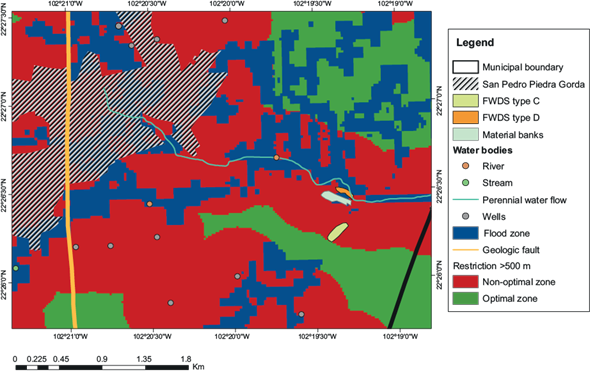
Fig. 4 Evaluation of location restrictions for the final waste disposal site (FWDS). 

Concerning the constructive and operative characteristics, the FWDS type C only complies with the required 400 kg/m3 compaction level. It does not count with waterproofing, leachates and biogas catchment, storm drain systems, emergency area, daily coverage, control of light materials, harmful fauna, and waste received. Additionally, it complies with access roads and perimeter fences within the complementary works.

Similarly, the FWDS type D only had a perimeter fence without the waterproofing system, the 300 kg/m3 compaction level required, the minimum weekly coverage, and the control of waste received and harmful fauna. In the closure stage, a final cover was placed without considering the conformation and stability of the site. No control system of leachate and biogas was carried out. The final use within the FWDS area was also inappropriate due to material bank extraction.

Table IV summarizes the number of specifications fulfilled and unfulfilled concerning the specifications for the selection of both FWDS, the constructive and operative characteristics, and the additional works of the FWDS type C, along with the minimum requirements and closure of the FWDS type D. The FWDS type C complied with 40% of the specifications, while the FWDS type D only with 38%. Thus, from these results, both FWDS were considered uncontrolled sites.

TABLE IV LIST OF FULFILLED AND UNFULFILLED RESTRICTIONS BASED ON the Maxican OfficNOM-083-SEMARNAT-2003 (CDHCU 2004). CATEGORY TYPES ARE SHOWN IN TABLE I 

Type of site Specifications of NOM-083-SEMARNAT-2003 Number of fulfilled restrictions Number of unfulfilled restrictions
FWDS type C Specifications for the selection of the site 6 1
Constructive and operative characteristics 1 9
Additional works 2 3
FWDS type D Specifications for the selection of the site 5 2
Minimum requirements 1 5
Closure of the site 1 4

Environmental impact assessment

The complete Leopold’s matrix is shown in table SI of the supplementary material. On the other hand, table V shows the results with the project average values. It can be observed that the magnitudes of negative impacts are higher than the positive ones, so the operation and closure of the FWDS type D have not been adequate from the point of view of environmental protection, and the current system (FWDS type C) is not sustainable.

TABLE V RESULTS OF THE LEOPOLD MATRIX. 

Impact value Project average Number of interactions
(-) Magnitude 2.97 69
Importance 3.68
(+) Magnitude 2.78 14
Importance 4.92

The highest negative impacts of the FWDS type C were caused by the received waste control, biogas control, storm drain system, emergency area, and MWS daily coverage, since these actions were not adequately performed, affecting the population’s health by contaminating the soil with leachate and the air with greenhouse gas emissions. However, the positive impact was identified as the economic and social benefits for the workers of this site (employment).

The highest negative impacts of the FWDS type D were caused by the received waste control, compaction, MWS weekly coverage, and maintenance since these actions were not adequately performed, damaging the population’s health by contaminating the soil with leachate and the air with greenhouse gas emissions. However, the positive impact was identified as the economic and social benefits for the workers who closed this site (employment).

The average values obtained from the sum and product of the interactions, shown in table V, evidence that both FWDS were inadequately managed and the specifications of the Mexican Official Standard were not fulfilled since the negative average value is higher than the positive one. Therefore, an EMP was designed to assess the benefits obtained after its implementation.

A categorization in low, medium, and high impact was established to prioritize the level of action to prevent and mitigate the impacts, considering the sum and product of the interactions in the matrix columns, which indicates the unfulfilled restriction effect on environmental factors. The results are shown in table VI.

TABLE VI CATEGORIZATION OF THE NEGATIVE ENVIRONMENTAL IMPACTS EVALUATED IN THE LEOPOLD MATRIX. CATEGORY TYPES ARE SHOWN IN TABLE I. 

Action Sum of negative impacts Number of interactions on the Leopold matrix Impact category
Buffer strip 12 2 Low impact
Storm drain system 13 4
Harmful fauna 14 2
Light materials control 27 2
Emergency area 31 4
Access control 36 3
MWS coverage weekly 36 5
Biogas control 39 5 Medium impact
Coverage < 24 hrs. 43 5
Waterproofing (FWDS type D) 44 5
Final coverage (FWDS type D) 46 4
Waterproofing (FWDS type C) 47 3
Final conformation 57 4
Final use of the closed site 58 3 High impact
Compaction (FWDS type D) 59 6
Leachate control 64 3
Received waste control 74 5
Maintenance 88 6

FWDS: Final waste disposal site; MSW: Municipal solid waste.

In this way, the EMP aimed to obtain a positive average value higher than the negative one from the second assessment performed in the Leopold’s matrix. Therefore, the EMP implementation would reduce the negative impacts and increase the positive ones, as shown below.

Improvement of waste handling

The EMP consisted of four plans that determine and describe the measures aimed at improving the operation of the FWDS type C, mitigating impacts due to the closure of FWDS type D, and preventing negative changes in the impact categories. Likewise, the personnel responsible for carrying out the operation, stock monitoring, and work schedule were included in the EMP.

For the FWDS type C, the operation plan describes an accurate infrastructure to prevent environmental pollution by leachate generation, biogas emissions, and received MSW control. Also, it proposes a manual daily operation of the cells, with the help of tools and the description of the activities of the working staff, integrating waste pickers. The emergency and contingency plan dictates the prevention measures, the action plan, and suppression methods in the event of spontaneous or intentional waste burning.

The corrective plan for the FWDS type D describes the actions aimed at mitigating the adverse effects and preventing their continuation through engineering principles for the conformation and sealing of MSW exposed to the environment. In addition, the material banks will be regulated according to state regulations. It is worth mentioning that this plan mentioned some engineering measures that are possible to apply. However, these measures could change and improve with the support of the government technical assistance and consulting firms.

The monitoring and follow-up plan corresponds to the control of the new operation and closure of the FWDS, which must include reviews in various stages to evaluate the program’s quality. Hence, this plan establishes the actions to be carried out to verify the execution of measures in fulfillment of the specifications of the Mexican Official Standard.

The content of the four plans integrated into the EMP can be revised in the section “Environmental management plan” in the supplementary material, which proposes measures for each unfulfilled restriction, the personnel responsible for operating and monitoring these actions, the completion timeframes, and stakeholders (governmental employees and authorities, and consulting firms). The plans were designed based on the results shown in table VI. Prevention and mitigation measures in the short, medium, and long term were proposed in the function of the impact category (low, medium, or high).

Comparison of Leopold’s matrices results

Once the EMP was implemented, an EIA was performed in Leopold’s matrix. The second Leopold’s matrix results are shown in table SII of the supplementary material (“After EMP”). The negative impact of the FWDS type C was caused by leachate control since it was not captured or treated adequately, contaminating mainly soil. However, the highest positive impacts were caused by biogas control, compaction, MWS daily coverage, and received waste control since these actions provided economic and social benefits (population health and employment). Likewise, the highest negative impacts of the FWDS type D were caused by compaction and MWS weekly coverage since these actions were not adequately performed, damaging the population’s health. However, the highest positive impacts were caused by final conformation, maintenance, and received waste control, protecting the population’s health and generating economic and social benefits for the workers who implemented the works on the site (employment).

The average values obtained from the sum and product of the interactions, shown in table V, evidence that both FWDS were inadequately managed without fulfilling the specifications of the Mexican Official Standard since the negative average value is higher than the positive one. Therefore, an EMP was designed to assess the benefits obtained after its implementation.

Table VII summarizes the results of Leopold’s matrix before and after implementing the EMP, showing that the magnitude and importance of positive impacts are more significant than the negative ones. The negative ones were prevented, mitigated, or controlled by implementing the four plans included in the EMP. The results reveal that FWDS were almost adequately managed, fulfilling the specifications of the Mexican Official Standard since the positive average value is higher than the negative one after EMP implementation. Therefore, 79.7% of the negative interactions were reduced, decreasing the average value of the magnitude by 11.2%, and the positive interactions were increased to 592.9%, augmenting the average value of the magnitude by 7.3%.

TABLE VII MAIN RESULTS OF THE LEOPOLD MATRIX BEFORE AND AFTER IMPLEMENTING THE ENVIRONMENTAL MANAGEMENT PLAN (EMP). 

Impact value Before EMP After EMP
Project average Number of interactions Project average Number of interactions
(-) Magnitude 2.97 69 2.64 14
Importance 3.68 1.71
(+) Magnitude 2.78 14 3 83
Importance 4.92 3.89

In addition, it is essential to mention that the negative values of the magnitude and importance could not be wholly eliminated because the FWDS type C still causes pollution problems through MSW disposal, soil degradation, and leachate and biogas generation. Likewise, the FWDS type D is susceptible to the clandestine disposal of MSW and slope instability due to the compaction and MWS coverage not being adequately performed.

The environmental impacts identified in this study highlight the inadequate disposal of MSW performed in Cuauhtémoc, Zacatecas, Mexico. The high costs of construction, operation, and monitoring of FWDS, the lack of knowledge regarding the proper management of MSW, and weak regulations by government authorities promote the results of this study to be replicated in almost the entire country. For this reason, it is essential to analyze and replicate this type of study, especially to generate the conditions for fulfillment with the Mexican Official Standard in all the FWDS operating or closed in the municipalities of Mexico since these actions would significantly reduce the environmental impacts generated by inadequate management of MSW and would favor the international commitments that Mexico has acquired in international agreements and conventions on environmental matters.

CONCLUSIONS

The two FWDS of the municipality of Cuauhtémoc, Zacatecas, Mexico were evaluated concerning the specifications of the Mexican Official Standard NOM-083-SEMARNAT 2003 for the selection of both FWDS; constructive and operative characteristics, and additional works of the FWDS type C, and minimum requirements and closure of the FWDS type D. The FWDS type C complied with the 40% of the specifications, and the FWDS type D with 38%; therefore, both FWDS were classified as uncontrolled sites because they were operated without environmental protection.

An EIA was conducted to identify the interactions between the unfulfilled restrictions (actions) and the environmental factors using Leopold’s matrix, where the impacts generated were evaluated with values of magnitude and importance. The highest negative impacts for the FWDS type C were caused by received waste control, biogas control, storm drain system, emergency area, and MWS daily coverage, and for the FWDS type D they were due to received waste control, compaction, MWS weekly coverage, and maintenance, affecting the population’s health by contaminating the soil with leachate and the air with greenhouse gas emissions. Hence, the impacts were categorized into low, medium, and high impact to determine environmental protection actions, which were integrated into an EMP.

An EMP was designed and implemented to reduce the negative impacts on both FWDS. The EMP included an operation plan and an emergency and contingency plan for the FWDS type C, a corrective plan for the FWDS type D, and a monitoring and follow-up plan for both sites. The EMP describes the prevention and mitigation measures, establishing the actions to be performed, the stakeholders (authorities, governmental employees, and consulting firms), and completion timeframes.

Once the EMP was implemented, an EIA was performed in Leopold’s matrix. The results of the second EIA showed that the highest positive impacts for the FWDS type C were caused by biogas control, compaction, and MWS daily coverage, and for FWDS type D by final conformation, maintenance, and received waste control, providing economic and social benefits (population health and employment). The results reveal that FWDS were almost adequately managed, fulfilling the specifications of the Mexican Official Standard since 79.7% of the negative interactions were reduced, and the positive interactions were increased by 592.9%. Therefore, this study provides an achievable proposal of sustainable waste management with socioeconomic benefits for the municipality and mainly for environmental protection.
ACKNOWLEDGMENTS

The authors thank the Municipality of Cuauhtémoc and the Secretaría del Agua y Medio Ambiente (Water and Environment Secretariat) of Zacatecas, Mexico, for their support and the information provided to perform this project.

REFERENCES

CDHCU (2025). Constitución Política de los Estados Unidos Mexicanos. Cámara de Diputados del Honorable Congreso de la Unión. Diario Oficial de la Federación, Mexico, January 17. [ Links ]

Dougherty T.C. and Hall A.W. (1995). Environmental impact assessment of irrigation and drainage projects. Food and Agriculture Organization [online]. https://www.fao.org/3/V8350E/V8350E00.htm 28/06/2022 [ Links ]

FAO (1996). Environmental impact assessment and environmental auditing in the pulp and paper industry. Food and Agriculture Organization [online]. https://www.fao.org/3/v9933e/v9933e00.htm 28/06/2022 [ Links ]

Ferronato N. and Torretta V. (2019). Waste mismanagement in developing countries: A review of global issues. International Journal of Environmental Research and Public Health 16 (6), 1060. https://doi.org/10.3390/ijerph16061060 [ Links ]

Gutberlet J. and Baeder A.M. (2008). Informal recycling and occupational health in Santo André, Brazil. International Journal of Environmental Health Research 18 (1), 1-15. https://doi.org/10.1080/09603120701844258 [ Links ]

Leopold L.B., Clarke F.E., Hanshaw B.B. and Balsley J.R. (1971). A procedure for evaluating environmental impact. U.S. Geological Survey 645 (2), 360. https://doi.org/10.3133/cir645 [ Links ]

Margallo M., Rodríguez K.Z., Rowe I.V., Aldaco R., Irabién A. and Kahhat R. (2019). Enhancing waste management strategies in Latin America under a holistic environmental assessment perspective: A review for policy support. Science of The Total Environment 689, 1255-1275. https://doi.org/10.1016/j.scitotenv.2019.06.393. [ Links ]

Moreno P.R.C., Guzmán A.B.P., Mendoza F.J.C., Alberola M.D.M.C. and Martínez F.R. (2019). Evaluation of compliance with regulatory factors of waste disposal sites by using geographical information systems, case of study: State of Mexico. Revista Internacional de Contaminación Ambiental 35 (4), 1025-1037. https://doi.org/10.20937/RICA.2019.35.04.20 [ Links ]

Perevochtchivoka M. (2013). La evaluación del impacto ambiental y la importancia de los indicadores ambientales. Gestión y Política Pública 22 (2), 283-312. [ Links ]

Pérez R.M.A., López J.A.R. and García J.A.G. (2013). Evaluación de riesgo ambiental en un tiradero con quema de basura. Revista Internacional de Contaminación Ambiental 29 (3), 107-117. [ Links ]

SEIA (2016). Guía para la identificación y caracterización de impactos ambientales en el marco del Sistema Nacional de Evaluación del Impacto Ambiental, Ministerio del Ambiente, Perú [online]. https://faolex.fao.org/docs/pdf/per183059anx2.pdf 18/01/2024 [ Links ]

SEMARNAT (2004). NOM-083-SEMARNAT-2003. Especificaciones de protección ambiental para la selección del sitio, diseño, construcción, operación, monitoreo, clausura y obras complementarias de un sitio de disposición final de residuos sólidos urbanos y de manejo especial. Diario Oficial de la Federación, October 20, 2004. [ Links ]

SEMARNAT (2017). Residuos sólidos urbanos (RSU). Información sobre residuos sólidos urbanos. Secretaría de Medio Ambiente y Recursos Naturales [online]. https://www.gob.mx/semarnat/acciones-y-programas/residuos-solidos-urbanos-rsu 19/11/2022 [ Links ]

SEMARNAT (2020). Diagnóstico básico para la gestión integral de los residuos. Secretaría de Medio Ambiente y Recursos Naturales [online]. https://www.gob.mx/cms/uploads/attachment/file/554385/DBGIR-15-mayo-2020.pdf 15/05/2022 [ Links ]

Zaı¨ri M., Ferchichi M., Isma¨l A., Jenatyeh M. and Hammami H. (2004). Rehabilitation of El Yahoudia dumping site, Tunisia. Waste Management 24 (10), 1023-1034. https://doi.org/10.1016/j.wasman.2004.07.002 [ Links ]

SUPPLEMENTARY MATERIAL

TABLE SI. COMPLETE LEOPOLD’S MATRIX BEFORE THE EMP.

TABLE SII. COMPLETE LEOPOLD’S MATRIX AFTER THE EMP.

Environmental management plan

Operation plan

Objectives:

  • Decrease the magnitude and importance of the negative impacts caused by the current operation of the final waste disposal site (FWDS) type C.

  • Transform negative-rated impacts into positive ones by implementing action measures.

  • Avoid the generation of new impacts derived from the current operation of the FWDS type C.

Measures to implement high-impact actions

The specifications described below are categorized as high impact, so they must be addressed in the short term (from 0 to 3 months).

Guardhouse and access control

The waste recollected, transported, and disposed of by the municipality is not classified as special handling waste (SHW) or hazardous waste (HW), so the admission of this waste to the FWDS will be strictly verified. However, it is necessary to establish a guardhouse to control private vehicles’ access due to the disposal of SHW, such as tires. The treatment proposed for this waste type is described below in the sections on leachate control and harmful fauna.

Due to the above, a perimeter fence must be first established to delimit the area available for the FWSD from the surrounding area. Such a fence can be built from cyclone mesh with perforations for barbed wire strands. Thus, the guardhouse will control the entry of collection trucks, personnel hired by the municipality, and, as mentioned, users and private vehicles, which must be previously registered. This entry will function exclusively during operating hours. Finally, a gate will be placed to access the property, which will function as an entrance and exit gate.

Cell waterproofing

Although the cell waterproofing specification was categorized as medium impact, it is a prerequisite to the construction of the leachate control system. Therefore, it is recommended to carry out studies of the hydraulic conductivity of the compacted soil layer found approximately 40 cm from the ground level; if the value is greater than 1 × 10⁻⁷ cm-1 it will be necessary to artificially waterproof, either with a geomembrane or with a compacted clay layer with adequate hydraulic conductivity with a minimum thickness of 70 cm.

This procedure is important since it guarantees underground water and soil protection by providing an impermeable layer for the construction of the network of storage trenches within the landfill, which is described below.

Leachate control

The ideal within a FWDS is to avoid the generation of leachate due to its polluting characteristics. However, this is not entirely possible considering the waste humidity and the precipitation present in the site, so a feasible treatment for this percolated liquid must be used. Conventional treatment methods are complex and expensive, being impractical in small populations whose waste generation is less than 15 t/day (Jaramillo 2002). In this way, a drainage system where the leachate generated should be kept within the FWDS is proposed.

It is recommended to build a leachate control system in all terraces or levels that make up the site for greater efficiency and to avoid the possible system from collapsing. This construction prevents surface runoff to lower cells, and its interconnection with the biogas control system to be built.

This system consists of a network of stone-filled ditches with screens of soil or of wall and wood. One way of constructing the drains is as follows:

  1. The line where the drainage will be located has to be traced on the ground, which can be like that of a sewage system, for example, to the herringbone arrangement.

  2. Trenches are excavated working on the previously placed clay impermeable layer (if artificial waterproofing was not necessary, place an external layer of covering material to facilitate the formation of the trenches). The main drainage trenches will be 0.6 m in height (in such a way that the tepetate layer is not reached) by a meter wide and screens are installed every 5 or 10 m, with a width of 0.2 or 0.3 m, so that the leachate can remain stored without overflowing through the ditches. An upper free edge of about 0.3 m will be left between the screen and the ground surface level if the tepetate layer allows it (Jaramillo 2002).

  3. The ditches are filled with stones measuring between 8 and 12 cm to have more storage capacity. Once this is finished, it is suggested to place over them a material that can infiltrate liquids and retain the fine particles that could obstruct them. For this purpose, polypropylene sacks so dry fern branches and even grass can be used (Jaramillo 2002).

  4. Another alternative is the use of tires in the ditches since they get a greater storage capacity for the percolated liquid and the advantage of using this material, avoiding people burning them within FWDS. For this option, the tires are buried vertically, one next to the other, and a stone layer of 0.20 to 0.30 m height is placed on top and covered with polypropylene sacks or dry branches (Jaramillo 2002).

  5. When long periods of rain occur and the amount of leachate exceeds the storage capacity of ditches inside, it is advised to prolong and orient the drainage ditches in the same way and, in addition, to build a network of drying ditches that allow storing this liquid during these periods.

  6. It is appropriate that this external drainage network is built when the cells are already finished so that the leachate generated by rainfall is transported by gravity to the waterproofed drying network. This volume will gradually decrease by evaporation. This external drainage network should not be confused with the perimeter ditches for the detour of rainwater.

  7. Another practice to minimize the volume of leachate generated when the site is closed, is the planting of grasses and small, short-rooted bushes that adapt to the conditions of the site. They should be planted both on an already closed surface and in the surroundings of the filled sector. Likewise, evapotranspiration could be very effective, and, in some cases, the future generation of leachate could be avoided (Jaramillo 2002).

Measures to implement medium-impact actions

Biogas control

When MSW is first deposited in a FWDS, it undergoes an aerobic decomposition stage when little methane is generated. Then, typically within less than one-year, anaerobic conditions are established, and methane-producing bacteria begin to decompose the waste and generate methane (EPA 2022). There is a risk of combustion and explosion by its accumulation inside the cells due to its flammability characteristics, so it must be extracted using a series of chimneys for its evacuation into the atmosphere.

The chimney system consists of a ventilation system made of stone or perforated concrete pipe with stirrups filled with stones and lined with mesh to block the holes in the tubes.

The system can be placed in the current cell by drilling a chimney to a maximum depth of 80% of the waste layer, considering all safety measures. Later, the reinforced system will be placed. The empty spaces will be filled with stone.

The biogas control system will be built by connecting it to the internal leachate drains to get greater efficiency in the newly built cells.

It is advised for the diameter of the wells/funnel/flue to be around 0.3 to 0.5 m or according to the dimensions of the leachate storage system. In addition to being separated between 20 and 50 m (Jaramillo 2002), one system for each cell if the FWDS available area is less than 2500 m2 (MMAA 2010).

As the FWDS operation progresses vertically, the tube of the wells is extracted and will be covered with cylindrical containers to protect it. When a cell is finished, it is recommended that a reinforced concrete slab with mesh is placed on top of the chimney well. This slab works as a cover and it will have a hole in the central part where a gooseneck-shaped pipe will be embedded (CACER 2009).

Finally, as a proposal, before the conclusion of the last cell, the gooseneck-style curves must be removed from the installation, this consists of a metallic cap and a fire strand to ignite the gas at the outlet of the tube (Jaramillo 2002).

MSW compaction

Since the municipality does not have its own heavy machinery and the periods between the loan of such machinery are of months, it is proposed that the daily operation of the cells be manual, that is, the operation will be performed by hired personnel with the help of tools.

Firstly, the area of each cell will have to be established with the estimated dimensions based on the daily MSW generation operating in a single area until the elevation is reached to avoid working over great distances. In this way, the new cells will be overlappingly resting on the slope of the land, or the cells already completed. This design was made more in height than in area (Bonilla and Núñez 2012).

Once the leachate storage system is set, the first discharge of MSW must proceed, which will be placed following the slope cut of the current cells. Afterwards, the waste will be spread in a layer of approximately 0.2 to 0.3 m and manually compacted with a hand tamper until a cell with a height of 1 to 1.5 m is obtained. A gentle slope should be attempted on the outer slopes: for each vertical meter, it advances 2 or 3 m (Jaramillo 2002).

Next, the MSW will be covered by soil layers with a minimum thickness of 0.2 m (Bonilla and Núñez 2012) and with a thickness of 0.1 to 0.15 m when the cell has reached its maximum height (Jaramillo 2002). Finally, the cell is compacted with a roller until a uniform surface is obtained at the end of the day. In this way, the waste will be covered daily.

The gas drainage system described above will be placed once the first cells have been completed. In the same way, it is recommended that the request for the loan of heavy machinery be maintained when the cells are of considerable height to achieve greater efficiency within the site, increasing its useful life. The person in charge of the machinery must be someone with knowledge of the FWDS operation, to avoid partial or total damage to the biogas system.

This job is one of the responsibilities of the working group that will be contracted by the municipality depending on its economic resources for the operation of the site.

In general, these personnel must be trained in the construction, operation, and maintenance of the site to perform efficiently the job. Specifically, there must be a supervisor or person who has such knowledge and will have the function of organizing, directing, and controlling the operations and working directly with the municipal authorities.

In addition, it is important to hire a technician who determines the site construction following the operation method and specifies the percentage of slope and how to obtain the embankments, in such a way that there is an adequate final configuration of the FWDS.

As already mentioned, in the end, it is recommended to place a layer of fertile soil on the cell terraces to plant small species, in addition to verifying that MSW is not disposed of in the finished cell.

Measures to implement low-impact actions

Emergency area

Throughout the useful life of the FWDS, there have been no emergency cases where the MSW cannot be deposited in the corresponding site. However, the discussion to discard or get an area to dispose of waste in case of emergency will be left to the municipality to consider.

Dispersion of light materials/buffer strip

To reduce the emission of particulate matter within the FWDS, all vehicles that transport the MSW must circulate at a speed of 20 to 30 km/h when entering the site. If it is difficult to comply with the speed restriction, consider that dry soil roads can be paved or covered with a layer of gravel (MMA 2002).

Likewise, a preventive and corrective maintenance plan must be incorporated for the transport units that recollect the MSW from the municipal seat and communities to reduce mobile emissions.

Within the FWDS, it is convenient to establish a natural barrier using native species of the site. According to the floristic inventory developed by Enríquez et al. (2014), within the San Pedro dam and surrounding areas, 2165 specimens of vascular plants were identified. From those, the Asteraceae, Fabaceae, Euphorbiaceae, and Fagaceae families have species of trees. Those with enough foliage should be selected to be used as buffer strips to reduce the dust, noise, and light materials, and to improve the landscape of the area as well.

This buffer area should be designed and built in a perimeter space that fluctuates between 30 and 50 m (MA 2011). However, in case of not having the necessary resources to carry out the buffer strip with species of trees, on days with the greatest wind, portable screens can be used around the FWDS area to control light materials. These screens can be made of wood or metal with dimensions of 2.5 × 3 m covered with mesh or nets of 20 to 40 mm (MA 2011).

The screens can be manually cleaned once a day and their location changed when the wind direction also changes. Finally, if necessary, manual cleaning of the MSW scattered by the wind could be done at least once a month.

Harmful fauna

The daily manual coverage of the MSW prevents the proliferation of insects, rats, and cockroaches, in addition to preventing the appearance and reproduction of flies. However, the tire waste at the FWDS presents a fire hazard and also has the potential to be a breeding site for mosquitoes when water accumulates in them. So, this waste must not be allowed to be disposed of in the FWDS area, if it cannot be used in the leachate storage system, it must be cut or located in another area.

In addition to the manual cleaning of light materials, it is advised to check for possible burrows and other signs that show the presence of rats and mice (MMA 2002).

Storm drainage

It is desirable to first analyze the viability of implementing the pluvial drainage based on the precipitation and climate of the area as a measure for the collection and diversion of precipitation and to avoid the entry of rain into the cells.

If it is necessary, the most effective method to control rain is to cover the entire surface area of the cell with a light roof or palm, straw, or plastic. This will prevent the entry of rain that could fall directly on the finished areas (Jaramillo 2002).

The dimensions recommended are 1 m in width and 0.8 m in length or as far as the compacted layer allows (MMAA 2010).

If the operation is executed in such a way as to have narrow working areas, the material to build the cover or light roof would be small, considering the small size of the cells.

Dressing rooms and health services

All personnel working in the FWDS must have a minimum of personal protection equipment (PPE) consisting of a face mask, gloves, coveralls, and boots, to avoid health problems caused by the generation of dust and by the waste decomposition process itself.

The municipality must ensure the delivery of this PPE and be responsible for the medical check-ups, medical assistance, treatment or hospitalization, and emergency evacuation when necessary. In addition, the site must have the facilities to acquire sanitary services for the personnel during the working day.

Staff description

The personnel involved in the operation of the FWDS consists of a crew of at least seven people as expressed in table SIII: a driver of the collection vehicle; three operators who will carry out the activities of collection, unloading, waste separation, and the formation of the cells; an operator of the heavy machinery provided; the access control personnel, and the person in charge of organizing, directing and controlling operations.

TABLE SIII PROPOSED CREW FOR THE OPERATION OF THE FINAL WASTE DISPOSAL SITE (FWDS) TYPE C. 

Number Job
1 Driver
2 Operator
3 Operator
4 Operator
5 Access guard
6 Heavy machinery operator
7 Supervisor

After the collection and once all waste has been unloaded, the operators will begin the waste separation process, manually spreading the remaining waste, and laying the cover material. The cover and compaction must be done correctly to avoid the dispersion of MSW, the proliferation of vectors, and bad odors. Moreover, this action must be implemented periodically for the maintenance of vehicles that carry out the collection.

Emergency and contingency plan

Objectives:

  • To establish an emergency program to control and quench the combustions provoked in the FWDS.

  • To train the staff operators and personnel in charge.

Preventive measures

A regulation must be established for hired personnel with restrictions related to fire prevention, such as the prohibition of smoking inside the FWDS and the burning of paper, cardboard, rubber, or other combustible materials for the recovery of valuable wastes or any other intention.

The operators and the access guard must be capable of observing if the deposited MSW emits heat or smoke. This waste will be isolated and controlled before placing them in the active cells. In addition, weeds or dry vegetation found in the FWDS must be removed.

The personnel will have to be trained in the above restrictions as well as in the identification of a fire, whether it is superficial or inside the cells. Furthermore, the operators will have to report to the authorities about a possible fire.

It is necessary to pay special attention to controlling and eliminating the fire in its early stages, to prevent its spread and the formation of complications for its suffocation.

Actions to perform

Due to fire representing a permanent risk faced by personnel during the FWDS operation hours, the necessary preparation and implements must be available to control it in the shortest possible time (Gómez 2021), so the municipal authorities must request the loan of heavy machinery as soon as possible.

In case of a fire happening, the MSW will be disposed of in a nearby area until the fire is completely extinguished. In the same way, the exact point where combustion took place must be identified and determine its magnitude. Wind direction should also be determined.

To control the spread of fire to unaffected areas, it must be isolated by setting up a trench filled with cover material beyond the ground level between the burned material and the unburned area (Gómez 2021).

The necessary elements to perform these actions are:

  • Wind chart of the site.

  • Topographic map of the site to identify the fire location and the prevailing winds.

  • Heavy machinery to transport the cover material.

  • Water pipes to reduce dust emissions.

  • PPE.

Fire extinguishing methods

Water application

This method should only be used when the fire is superficial, and its extension is small due to the risk of the leachate storage system overflowing. The use of foam and surfactants could reduce the volume of water needed.

Finally, it is important to note that the use of great amounts of water or any liquid to control this type of accident is counterproductive since the water displaces and concentrates gases that are present inside the cells, such as methane and carbon dioxide, as well as overheated air, which has a risk of burns to people and even a loss of machinery (Gómez 2021).

Oxygen intake suppression

The fire must be extinguished with the cover material limiting the amount of oxygen that enters the affected area. This method is accomplished by advancing slowly with the tractor, always in favor of the wind direction, and applying a layer of soil material at least 20 cm in width (Gómez 2021).

The first layer aims to penetrate the radiation source, preventing the entry of oxygen into the interior of the MSW and releasing the heated gases present in the waste spaces.

Subsequently, another layer of material 50 cm in width must be placed over the entire affected area to prevent the entry of oxygen through the spaces near the source of combustion owing to the fire that could be reactivated. Then, this layer will be compacted (Gómez 2021).

It is important to identify cracks where oxygen could be entering through water vapor outlets. If they are found, it will be essential to seal them. However, it is necessary to verify that it is only water vapor since it is convenient to maintain an output to avoid its accumulation.

Once the affected area is covered, it will be monitored daily for at least two weeks, to prevent the reactivation of fire due to oxygen input through zones without a sufficient covering of soil or through cracks formed by irregular settlement. In the event of emissions or releases of water vapor from inside cells, a new layer of compacted material will be necessary.

At the same time, unstable zones on the site will be identified, preferably sudden settlements caused by the fire due to the risk of collapse, so it must have proceeded in a controlled way. Later, it will be necessary to cover them with soil, trying to completely seal them with layers of 20 cm width, applying compaction for each layer (Gómez 2021).

Once the fire has been extinguished, a monitoring and control period of two weeks is required to verify any eventuality that could cause a new fire or a new settlement to occur.

Corrective plan

Although the FWDS was closed due to environmental risk represented mainly for its location, this method was not carried out following the corresponding requirements of the Mexican Official Standard NOM-083-SEMARNAT-2003 (SEMARNAT 2004a), proceeding instead with the traditional method of covering the MSW with a single layer of soil and left with no maintenance and subsequent control.

Objectives:

  • To mitigate the adverse effects related to the closure form of the FWDS type D.

  • To prevent the continuity of impacts presented in the closed FWDS.

  • To establish engineering principles for the conformation and sealing of the exposed MSW.

  • To minimize adverse impacts of the exploitation of material banks.

It is worth mentioning that in this plan only some engineering measures that are possible to apply will be mentioned, so the project is subject to changes and improvements through the entities that can help the municipality: government technical assistance, professional consulting, and sources of financing. It is appropriate to first contact the government technical assistance.

At the same time, the corrective measures presented will not be performed based on the severity of high, medium, and low impact, since the proposed works will be simultaneously corrected by following the methodology for closing an open-air dump proposed by the Secretaría de Desarrollo Social (CAD GIZ 2012).

Measures to implement

Preliminary stage

This phase considers the elaboration of basic geotechnical studies to obtain information on the properties and mechanics of the soil belonging to the site. These studies will help establish the parameters and criteria for the design of the executive project since they contemplate the necessary engineering works for the conformation, compaction, and sealing of the MSW that is still exposed (CAD GIZ 2012). These studies are relevant as they also evaluate and reduce the possible risks that the implementation of the proposed work could bring (Merritt et al. 2017).

Thus, based on the above studies, an environmental diagnostic of the site situation must be developed concerning the Mexican Official Standard specifications, analyzing the current stage of the area destined for the FWDS through the characterization of the final coverage, conformation, and final use of the site. Particularly, it must be detected if there is still any biogas and leachate outflow, considering whether it is necessary to install a system to drain the sinkhole to obtain relatively dry conditions, in addition to establishing the conditions of the terrain’s instability, among other considerations that the support organization could dictate to the municipality.

These preliminary analyses are important since they are the starting point for the formulation of the project design to be the most appropriate, considering the particularities of the site.

Preparation of the executive project for the closure and restructuring of the FWDS

Based on the studies mentioned, the executive project for the site sanitation must be prepared. Its content is left to the consideration of the group of professionals. However, it must include at least the following (CAD GIZ 2012):

  • Preliminary analysis and diagnosis.

  • Site sanitation or restructuring of the FWDS.

  • Construction specifications.

  • Design of control systems.

  • Proposed final use.

  • Operation, maintenance, and monitoring manual.

Implementation of structural works

According to the specifications provided by the team in charge of designing the executive project concerning the containment works, and the compacting and sealing of the MSW, the following activities will be added (CAD GIZ 2012):

  • Placement of restrictive signaling.

  • Restriction of access to the site.

  • Collection of scattered MSW.

The use of restricted entry signs ensures safe working conditions by preventing the entry of outside personnel who could cause alteration and damage to the infrastructure and equipment used.

Likewise, if the extraction of water from the sinkhole is feasible and the MSW is found exposed to the environment, it must be collected, and finally disposed of in the active FWDS to prevent these residues from being an inconvenience by slowing down the infrastructure works.

Within the engineering approach, the simplest method for retaining the sides of an excavation is to allow the soil to form a natural slope that is stable even in the presence of water. However, when there is no sufficient space or this slope formation is not feasible, there are procedures that provide continued stability to an area of old landslides. These works applied to the site to be mitigated, consist of building retaining walls, specifically, caisson-type constructions are used to obtain vertical sides of the excavation (Merrit et al. 2017).

During the execution of the project, if sloped terrain is encountered where no previous landslides have been detected, the risk of landslides should be reduced by removing unstable material (Merrit et al. 2017). On the contrary, if draining land is not a viable option economically, other structural works in water should be carried out to extract it in small quantities.

Closing stage

This stage corresponds to the closure of the FWDS itself following the Mexican Official Standard NOM-083-SEMARNAT-2003 (SEMARNAT 2004a). Therefore, after the application of structural works, the final covering and control systems must be performed and the proposal for the final use of the area should be made.

In addition to the final cover established by the standard, it is recommended that a layer of fertile soil be placed on its top to place a vegetative cover functioning as an erosion barrier and improving the aesthetics of the site. Likewise, the control systems consist of the installations of the biogas and leachate systems, for which a drainage or containment system must be placed to prevent their migration if their presence is detected on the site.

Post-closure stage

The other maintenance and monitoring specifications for the closure of FWDS type D are contemplated in this stage. The first consists of supervising the final cover through inspection tours to identify areas that have eroded or cracked, as well as to the installations built for the environmental control of the site, verifying that its operation has not been altered.

Finally, monitoring allows the sampling of the parameter for an evaluation of the environmental risk conditions caused by the closed site, such as the migrations of biogas and leachate. The proper functioning of control systems must also be ensured (CAD GIZ 2012).

The FWDS maintenance program will be described in the section corresponding to the monitoring and follow-up plan.

Material banks exploitation

About the final use of the FWDS, NOM-083-SEMARNAT-2003 dictates the restrictions of low load capacity, the possibility of differential subsidence, and the presence of biogas (SEMARNAT 2004a). In this way, after the closure of FWDS type D in 2008, the area did not have any other land use; however, there is a gravel extraction bank and sand approximately 100 m away. This condition is a risk factor by modifying the topography of the place, bringing with it greater destabilization within the surrounding area, which may affect the structural works required for the FWDS.

Therefore, for the regulation of these activities of exploration, exploitation, extraction, processing, and benefit of minerals or substances, the Law of Ecological Balance and Environmental Protection of the State of Zacatecas establishes the guidelines to approve them.

This law indicates that authorization is previously required in matters of environmental impact, where the Secretary of Water and Environment (SAMA), along with the municipal authorities, will establish the conditions for the execution of such work. The content of this environmental impact statement must contain, at least, a description of the possible effects on the ecosystems that could be affected, as well as the preventive, mitigation, and other necessary measures to avoid and minimize negative effects on the environment.

Therefore, the SAMA must review the file of the material bank to ensure that the activities are carried out without damaging the ecological balance and the environment, applying the provisions of inspection, surveillance, administrative infractions, commission of crimes, and sanctions in case of presenting irregularities during the inspection visits.

Monitoring and follow-up plan

This last part of the environmental management plan corresponds to the control of the construction, operation, and decommissioning procedures of the two FWDS, which must include reviews in their various stages to evaluate the quality of the work (Merrit et al. 2017). Hence, this plan establishes the actions to be completed to verify the execution of mitigation and prevention measures, and therefore the compliance with specifications of the Mexican Official Standard.

Objectives:

  • To establish the main identities involved in the verification of operation and maintenance of FWDS.

  • To define the necessary activities for maintenance and monitoring.

  • To guarantee environmental compliance with the protection specifications contained in the Mexican Official Standard.

Municipal and state authorities must structure a joint program of supervision and control activities in the operation of the FWDS type C with its subsequent closure to achieve compliance with the criteria established by the standard. Additionally, with the support of professional consulting, the maintenance, and control of the infrastructure placed in the FWDS type D will be conducted, so this plan is also subject to changes and improvements in the content. Table SIV identifies the connections between the three entities involved in both projects, as well as their responsibilities.

TABLE SIV CONNECTION AND RESPONSIBILITIES OF THE THREE LINKED ENTITIES. 

Criteria Municipal council State authority: Secretary of Water and Environment External supporting entities
Municipal Public Works Department Landfills Department Government technical assistance and consulting firms
FWDS type C Dimension of FWDS X
Operation of FWDS X X
Normativity compliance X
FWDS type D
Application of structural works X

FWDS: final waste disposal site.

The Secretary of Water and Environment will be mainly responsible for monitoring, authorizing, and supervising the compliance restrictions throughout the FWDS useful life and during the closure and post-closure period (SEMARNAT 2004b).

On the other hand, the municipality will be in charge, as established in the regulations, of the cleaning service, as well as the operation of the site (access control, coverage, and compaction of MSW), the maintenance of its infrastructure (waterproofing systems, of biogas and leachate systems, drainage control), and the execution of the emergency and contingency plan. The support of external entities should help achieve environmental compliance.

Maintenance and regulation of the FWDS type C

The actions and responsible parties for regulation and compliance within the operation of the FWDS type C are shown in table SV.

TABLE SV OPERATION AND MAINTENANCE GUIDE FOR THE FINAL WASTE DISPOSAL SITE (FWDS) TYPE C. 

Specification Element Maintenance Frequency Responsible
Control of MSW received Guardhouse Keeping records of collection and private vehicle entry Daily Access guard
Maintenance of guardhouse infrastructure In case of a failure event Municipality
FWDS Cell Waterproofing Waterproofing material (clay) Prevent soil erosion by moistening the area Weekly Team of operators
Waterproofing material (geomembrane) Repair the geomembrane in case of rupture Failure event Municipality
Biogas system Flue system Verification of biogas combustion at each cell finished Weekly Team of operators
Replace vent pipe parts in case of fracture Failure event Municipality
When presenting leaks due to cracks, cover the area with soil and compact Eventual Team of operators
Leached system Storage system In case of overflow risk, add another ditch line When half or more of the cells done Team of operators
Add a layer of clay between each cell and the vertical feed to confine it and prevent the leachate infiltration into the lower cells Before having half of the cell done Municipality and the team of operators
Leachate evacuation Verify the efficiency of waterproofing in the drying network Started the rainy season Team of operators
Storm drain system Roof for rainwater diversions Acquisition of adequate quantity and materials needed Municipality
Storm drainage in the FWDS surroundings Check the waterproofing channel and flow direction Team of operators
Daily coverage and compaction of MSW MSW Dispose of MSW exclusively in the corresponding area Daily Team of operators
Materials for the manual compaction Verify the inventory of materials Monthly Municipality
Loan of heavy machinery Create and maintain an agreement with the state authority (Secretary of Water and Environment) to ensure the loan of machinery During the useful life of FWDS Secretary of Water and Environment with the municipality
Light materials control Portable screens Clean them at the end of the workday Days with a strong presence of wind Team of operators
MSW out of FWDS Manual collection of dispersed MSW Once per month Municipality
Harmful fauna Prevention of harmful fauna MSW compaction Daily Team of operators
Tires Deposit them in a specific area or cut them Every time tires are received Team of operators
Access road Inner roads Maintenance of the pavement or covering them with gravel Eventual Municipality
Fence the site Perimeter fence Repair or replace the fence Failure event Municipality
Buffer strip Natural barrier Maintenance of native tree species Every week Municipality
Dressing rooms and health services Basic services of health Maintenance of sanitary installations Daily Municipality
Provide PPE for employees Daily Supervisor of the FWDS operation
Medical service in case of any incident Eventual Municipality
Fires Fire prevention Isolate and control the MSW with a combustion risk Eventual Team of operators
Remove dry vegetation
Presence of a fire event Apply containment measures Municipality

FWDS: final waste disposal site; MSW: municipal solid waste; PPE: personal protection equipment.

According to the specifications of thw Mexican Official Standard NOM-083-SEMARNAT-2003 (SEMARNAT 2004a), based on this guide, the following will be developed:

  • An operation manual.

  • A registration control and.

  • Monthly activities report.

Control and maintenance of the FWDS type D

This section corresponds to the maintenance program mentioned in the post-closure stage within the corrective plan of the closed FWDS, which will be mostly in charge of the support entity to monitor and comply with each proposed program and the verification of the measures.

This program must be in place for at least 20 years from the end of the two FWDS useful life. However, this period could be reduced when it is guaranteed that there is no longer a health and environmental risk. Table SVI describes the activities carried out under the decommissioning specifications with the structural works implemented to mitigate the impacts presented at the site.

TABLE SVI OPERATION AND MAINTENANCE GUIDE FOR THE FINAL WASTE DISPOSAL SITE (FWDS) TYPE D. 

Specification Element Maintenance Frequency Responsible
Final coverage Cover of fertile soil Inspection visits for cracks and subsidence repair Weekly Consulting firm and State authority (Secretary of Water and Environment)
Verification of fertile coverage to prevent erosion Daily
Plant cover Basic care for species natives such as irrigation Minimum once two weeks
Final conformation Structural works Verification of instability and repair of structural works Weekly
Biogas system Maintenance established by the executive project Frequency established in the project
Leachate system
Final use FWDS area Guarantee the final use of the closed site is under its conformation Frequency established by state authority State authority and municipality
Material banks The one found in the environmental impact statement Municipality and state authority
Inspection visits State Authority

REFERENCES

Bonilla M. and Núñez D. (2012). Evaluación de impacto ambiental del relleno sanitario de la ciudad de la Logroño. M.Sc. thesis, Escuela Politécnica del Ejército, Sangolquí, Ecuador [online]. https://repositorio.espe.edu.ec/bitstream/21000/6335/1/T-ESPE-039980.pdf 28/06/2022 [ Links ]

CACER (2009). Proyecto ejecutivo para la construcción del relleno sanitario intermunicipal en El Grullo, Jalisco. Sistema intermunicipal de manejo de residuos Ayuquila-Valles. CACER Consultores [online]. https://semadet.jalisco.gob.mx/sites/semadet.jalisco.gob.mx/files/elgrullo.pdf 28/06/2022 [ Links ]

CAD GIZ (2012). Manual de rehabilitación, clausura y saneamiento de sitios de disposición final. Deutsche Gesellschaft für Internationale Zusammenarbeit (GIZ) [online]. https://ciudadesytransporte.mx/wp-content/uploads/2021/07/Manual_SDF_2012.pdf 22/09/2022 [ Links ]

Enríquez D., Siagala J. y Vacio M. (2014). Biodiversidad y su percepción en la presa San Pedro y áreas aledañas, Cuauhtémoc, Zacatecas, México [online]. https://www.ecorfan.org/handbooks/Ciencias%20Naturales%20T-II/Articulo_9.pdf 22/09/2022 [ Links ]

EPA (2002). Basic information about landfill gas. United States Environmental Protection Agency [online]. https://www.epa.gov/lmop/basic-information-about-landfill-gas 29/08/2022 [ Links ]

Gómez J.S. (2021). Guía para el control de incendios en vertederos de residuos sólidos. Centro Nacional de Prevención de Desastres, Mexico [online]. https://www.gob.mx/cms/uploads/attachment/file/623717/GUIA_PARA_EL_CONTROL_DE_INCENDIOS_EN_VERTEDEROS_DE_BASURA_CENAPRED_2021.pdf 24/07/2021 [ Links ]

Jaramillo J. (2002). Guía para el diseño, construcción y operación de rellenos sanitarios manuales. Universidad de Antioquia, Colombia [online]. https://redrrss.minam.gob.pe/material/20090128200240.pdf 30/03/2023 [ Links ]

MA (2011). Guía de diseño, construcción, operación, mantenimiento y cierre de relleno sanitario mecanizado. Ministerio del Ambiente, Perú [online]. https://sinia.minam.gob.pe/documentos/guia-diseno-construccion-operacion-mantenimiento-cierre-relleno 04/03/2022 [ Links ]

Merritt F., Loftin M. and Ricketts J. (2017). Manual del ingeniero civil. 4th ed. McGraw-Hill, Mexico City, 802 pp. [ Links ]

MMA (2002). Guía ambiental para rellenos sanitarios. Ministerio del Medio Ambiente, Colombia [online]. http://documentacion.ideam.gov.co/openbiblio/bvirtual/005574/cartillas/rellenossanitarios/Rellenossanitarios2.pdf 07/01/2022 [ Links ]

MMAA (2010). Guía para la implementación, operación y cierre de rellenos sanitarios. Ministerio de Medio Ambiente y Agua, Colombia [online]. http://www.anesapa.org/data/files/GuiaRellenosSanitarios.pdf 15/05/2021 [ Links ]

SEMARNAT (2004a). NOM-083-SEMARNAT-2003. Especificaciones de protección ambiental para la selección del sitio, diseño, construcción, operación, monitoreo, clausura y obras complementarias de un sitio de disposición final de residuos sólidos urbanos y de manejo especial. Diario Oficial de la Federación, Mexico, October 20, 2004. [ Links ]

SEMARNAT (2004b). Guía de cumplimiento de la NOM-083-SEMARNAT-2003. Secretaría de Medio Ambiente y Recursos Naturales, Mexico [online]. http://centro.paot.org.mx/documentos/semarnat/Guia_Cumplimiento_NOM_083.pdf 24/07/2022 [ Links ]

Received: March 01, 2024; Accepted: May 01, 2024

*Author for correspondence: maguileraf@ipn.mx

Creative Commons License This is an open-access article distributed under the terms of the Creative Commons Attribution License