




 nueva página del texto (beta)
 Inglés (pdf)
 Artículo en XML
 Referencias del artículo
 Traducción automática
 Enviar artículo por email
 Citado por SciELO
  Similares en
SciELO
Similares en
SciELO 
 Permalink
1. Introduction
The growing urgency of climate change is underscored by the Sixth Assessment Report (AR6) of the Intergovernmental Panel on Climate Change (IPCC, 2023), which estimates that more than 40% of the global population is highly vulnerable to its effects. While global warming is driving long-term shifts in climate patterns, the risks associated with cold-season phenomena persist. A substantial portion of the global population continues to experience winter weather conditions-whether through the regular seasonal cycles of temperate regions, the prolonged and harsh winters of polar areas, or the elevated climates of mountainous regions. Despite the overall warming trend, extreme winter events such as cold waves, heavy snowfall, and persistent atmospheric inversions remain a significant concern. These events continue to attract widespread public, media, and political attention (e.g., Rice and Stanglin, 2016; Samenow, 2016), highlighting the need for ongoing research into their changing nature and associated risks under a warming climate. These two apparently contrasting concerns-intensifying climate change and its impacts on cold-season conditions-have spurred a growing body of scientific research aimed at understanding how winter phenomena are evolving in a warming world.
Recent studies have documented significant trends in the frequency and intensity of cold extremes. For example, numerous analyses indicate a consistent reduction in the duration and severity of cold waves across the northern midlatitudes, accompanied by notable winter warming (Barnett et al., 2012; Rummukainen, 2012; Peterson et al., 2013; Quesada et al., 2023). This warming has, in some cases, been reported to occur at three to five times the rate of the global average temperature increase from 1900 to 2018 (van Oldenborgh et al., 2019), suggesting a sharp decline in the intensity of cold events. Parallel to these developments, there is high confidence in projections of widespread snow cover loss in the Northern Hemisphere under future climate scenarios (Beniston et al., 2018; Najafi et al., 2016; Mudryk et al., 2017). Rising temperatures, changing precipitation patterns, shifts in vegetation, and feedbacks such as sea ice melt and the presence of light-absorbing impurities are all contributing to shorter snow seasons and reduced snowpack, particularly outside the coldest regions (Thackeray et al., 2019). These changes carry critical implications for freshwater availability in snow-dependent regions, including densely populated areas (Mankin et al., 2015).
In addition to temperature and snow dynamics, several studies have examined the complex relationship between cold-season air pollution and climate change. Research from Europe (De Sario et al., 2013) and Asia (e.g., Wang and Chen, 2016; Pendergrass et al., 2019; Jia et al., 2018) has explored the impact of winter meteorological changes on air quality, with mixed conclusions. Some studies report a deterioration in air quality during winter months as a result of climate-related changes (Zhang, 2017), while others suggest the effects remain minimal or inconclusive (Shen et al., 2018). This reflects the multifaceted and regionally variable nature of climate-air pollution interactions during the winter season.
Despite the growing volume of literature, most existing studies focus on isolated aspects of the relationship between climate change and winter-related phenomena (e.g., Mideksa and Kallbekken, 2010; Wang et al., 2014). Relatively limited efforts have been made to comprehensively map and synthesize the full breadth of this research field. This gap is largely due to the scale and fragmentation of the scientific output. In recent years, however, bibliometric analysis has emerged as an effective approach for systematically reviewing large and complex bodies of literature (Haunschild et al., 2016). Enabled by advances in software tools and data availability (Kalantari et al., 2017), bibliometric methods offer objective and reproducible ways to evaluate research trends, assess journal and author productivity, analyze collaboration networks, and identify thematic structures and knowledge gaps within a field (Qiu et al., 2014).
The present study applies bibliometric techniques to analyze the evolution of scientific research on the impacts of climate change on winter meteorological events and associated atmospheric pollution between 1980 and 2024. Using a curated dataset of publications indexed in the Scopus database, the analysis was conducted using the Bibliometrix package for R (Aria and Cuccurullo, 2017), providing a comprehensive overview of the thematic developments, influential authors, collaborative networks, and emerging trends that define this interdisciplinary area of study.
2. Methodology
Synthesizing prior research is essential for the cumulative advancement of scientific knowledge. Bibliometric research applies quantitative techniques to systematically and objectively assess scholarly literature. As a methodological approach, bibliometrics employs statistical and mathematical tools to evaluate both the quality and quantity of academic outputs, including articles, books, and other publications (Durieux and Gevenois, 2010). This approach involves analyzing scholarly production, dissemination, and utilization, focusing on patterns such as citations, impact metrics, and collaborative networks. Data for such analyses are typically derived from comprehensive databases such as Scopus.
The primary aim of bibliometric analysis is to deepen understanding of the dynamics that drive scientific inquiry. It reveals the intellectual and conceptual structures within a field by identifying prominent research themes, influential contributors, and emerging areas of study. Moreover, bibliometric studies elucidate the development of specific research domains by tracing key milestones, thematic shifts, and interdisciplinary linkages.
The bibliometric research process encompasses the following steps: (1) defining the research problem, (2) reviewing the relevant literature, (3) selecting databases, terms, and inclusion/exclusion criteria, (4) establishing the bibliometric methodology and software for data analysis, (5) collecting and organizing data according to the research problem and bibliometric methodology, (6) entering data into the software and performing the analysis, and (7) visualizing and reporting the results.
2.1 Data collection and selection
The data for the analysis were retrieved from Scopus, one of the main databases commonly used by researchers. This database has already been utilized for bibliometric analysis in various scientific fields (e.g., Morandi et al., 2015; Rodríguez-Soler et al., 2020), either independently or in conjunction with the Web of Science (WoS) database. The identification of records in the Scopus database was performed using several specific keywords and logical operators (Table I). The database was interrogated on July 30, 2024.
Table I Search criteria used to interrogate the Scopus database.
| Search terms and logical operators |
| snowfall AND “climate change” OR “cold wave” AND “climate change” OR “winter atmospheric pollution” AND “climate change” |
A key component of bibliometric research is the establishment of explicit inclusion and exclusion criteria to guide the selection of relevant literature. Clear and transparent guidelines enhance the consistency, reproducibility, and validity of the search process, helping to mitigate bias and ensure comprehensive coverage of pertinent sources. Defining the scope of the review is therefore essential to maintaining methodological rigor.
To support standardized reporting practices, frameworks such as Preferred Reporting Items for Systematic Reviews and Meta-Analyses (PRISMA) have been developed. Originally designed for medical research (Moher et al., 2009), PRISMA was established by a consortium of reviewers, editors, and publishers to address deficiencies in the reporting of systematic reviews. The framework promotes detailed documentation of the review process, including the number of records identified, screening decisions at each stage, and the criteria used for inclusion and exclusion. The present study adheres to PRISMA guidelines (Haddaway et al., 2022) in its approach to article selection and documentation (Fig. 1).
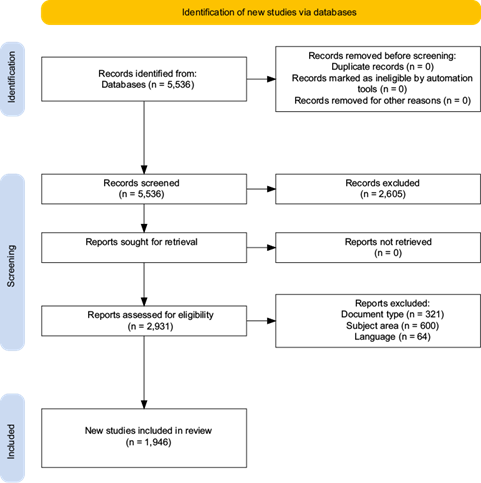
Fig. 1 Procedure for the selection of works for analysis in accordance with the PRISMA2000 criteria.
Initially, studies that were not directly related to the domain of climate change were excluded from the analysis. The residual papers were subsequently refined based on multiple criteria:
Only research documents published as articles or book chapters were incorporated into the analysis.
Papers were included if they pertained to the following scientific domains relevant to the issue of this study: geographical and planetary sciences, environmental science, and multidisciplinary research.
The linguistic composition of the documents in question was not a determining factor in the selection process. However, the search was performed in English. This action may be regarded as a “quasi-filter” despite the fact that, in the majority of cases, the title, abstract, and keywords of the documents were written in English.
2.2 Analysis
This process yielded a total of 1946 studies, which were subsequently analyzed using a comprehensive bibliometric approach. To facilitate this analysis, the study employed the Bibliometrix package (Aria and Cuccurullo, 2017), an open-source tool designed for use within the R statistical computing environment (R Core Team, 2024). Bibliometrix provides a robust suite of functions for conducting quantitative research in scientometrics and bibliometrics, allowing for in-depth analysis of publication patterns, citation structures, and intellectual and social networks within a given body of literature.
The bibliometric data retrieved from the Scopus database were exported in BibTeX format and imported into the R environment using the Bibliometrix package, which automatically performed initial data validation and pre-processing. This included essential data cleaning procedures, such as removing duplicate records to ensure analytical accuracy, as well as standardizing author names and institutional affiliations to address inconsistencies common in large bibliographic datasets. Furthermore, the software extracted citation networks, enabling the analysis of co-citation patterns and bibliographic coupling relationships among publications. All visualizations, including thematic maps, collaboration networks, and citation trends, were generated using functions within Bibliometrix, supplemented by the ggplot2 package in R.
The analysis was conducted in two sequential phases: (1) a descriptive analysis to provide an overview of the data at each level of analysis, and (2) the application of bibliometric techniques to explore conceptual, intellectual, and social networks across the period under investigation. The descriptive analysis served as the foundational step, offering a preliminary understanding of the dataset. This phase involved summarizing key metrics (Table II) such as publication volume, citation counts, and the distribution of contributions across units of analysis (e.g., authors, institutions, countries, and journals). These metrics provided insights into the productivity and impact of different entities within the field.
Table II Main information related to the analyzed scientific papers.
| Topic | Total period (1988-2024) |
| Sources | 392 |
| Documents | 1946 |
| Annual growth rate | 12.48% |
| Authors | 7210 |
| Authors of single-authored documents | 114 |
| International Co-authorship | 29.14% |
| Co-authors per document | 4.85 |
| References | 99936 |
| Average citation per document | 43.28 |
Building on the descriptive analysis, bibliometric techniques were employed to delve deeper into the intellectual and collaborative structures of the research domain. Co-citation analysis, as introduced by Small (1973), was used to map the intellectual connections within the field. This method identifies pairs of documents that are frequently cited together, reflecting their conceptual relatedness. The strength of co-citation links is determined by the frequency with which two documents are jointly cited by a third. Strong co-citation ties often indicate that the cited works are foundational or highly influential within their research area. This technique was applied to uncover the intellectual structure of the field and to identify key clusters of research themes.
Co-author analysis was conducted to examine collaboration patterns at both individual and institutional levels. This method identifies linkages between authors or countries based on co-authorship relationships, providing insights into the social and intellectual networks within the field. Nodes in the co-author network represent authors or countries, while links denote co-authorship ties. This analysis is particularly useful for identifying previously unknown research groups (Peters and van Raan, 1991) and for highlighting patterns of cross-national collaboration (Glänzel and Schubert, 2004).
The results of the co-citation and co-author analyses were visualized using network graphs, where nodes represent entities (e.g., authors, documents, or countries) and edges represent relationships (e.g., co-citation or co-authorship). Clustering algorithms were applied to group closely related entities, revealing distinct research communities or thematic clusters. These clusters were further analyzed to identify key contributors, emerging trends, and collaborative networks.
Conceptual structure analysis was conducted to identify the underlying intellectual frameworks and theoretical foundations of the field. This method involves analyzing the relationships between key concepts, as reflected in the titles, abstracts, and keywords of the publications (Öztürk et al., 2024). By mapping these relationships, the conceptual structure analysis reveals the dominant paradigms, interdisciplinary connections, and evolving research foci within the domain.
Keyword co-occurrence analysis was employed to identify the most frequently occurring terms and their interconnections (Klarin, 2024). This method treats keywords as nodes and their co-occurrence as links, thereby creating a network that reflects the conceptual proximity of terms (Sedighi, 2016). The strength of the links indicates the frequency with which keywords appear together in the same publication. This analysis helps to identify core research topics and their relationships, detect emerging or declining themes based on keyword frequency over time, and highlight interdisciplinary connections and hybrid research areas.
Multiple correspondence analysis (MCA) was employed as a complementary method to explore the relationships between categorical variables, such as authors, institutions, countries, and research themes. MCA reduces the dimensionality of the data, allowing for the visualization of complex relationships in a low-dimensional space (Le Roux and Rouanet, 2010).
3. Results and discussion
3.1 Scientific production
The mounting interest in climate change and winter phenomena is underscored by the substantial annual growth rate of publications (12.48%) and the considerable average number of citations (43.28). These statistics suggest that not only has climate change become a pressing issue in recent years (Fig. 2), but it has also captured the attention of researchers.
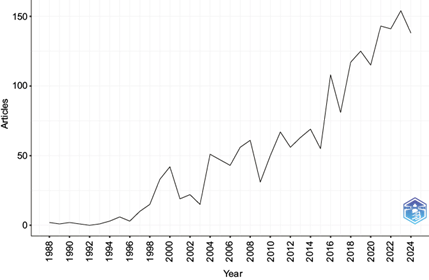
The annual growth rate is further accentuated by the fact that approximately 15% of the papers analyzed were published in the last two years of the study period. Moreover, over a quarter of the papers (29.14%) were published by international teams of researchers, underscoring the potential for collaborative efforts in this field. This trend towards collaboration is indicative of the increasingly global nature of research in this field.
3.2 Sources
The analysis of the most relevant sources (Fig. 3) highlights the prominent journals that have significantly contributed to the research field over the years. As evidenced by the data, Atmospheric Environment emerges as the most productive journal, with 147 articles (7.55%), followed closely by Journal of Climate (137 articles, 7.04%) and Science of The Total Environment (132 articles, 6.78%). These journals collectively account for a substantial portion of the total publications analyzed (1946 articles), reflecting their central role in disseminating research on atmospheric sciences, climate studies, and environmental sciences. Other notable journals include International Journal of Climatology (77 articles), Geophysical Research Letters (66 articles), and Climate Dynamics (50 articles), which further underscore the interdisciplinary nature of the field, encompassing climatology, geophysics, and hydrology.
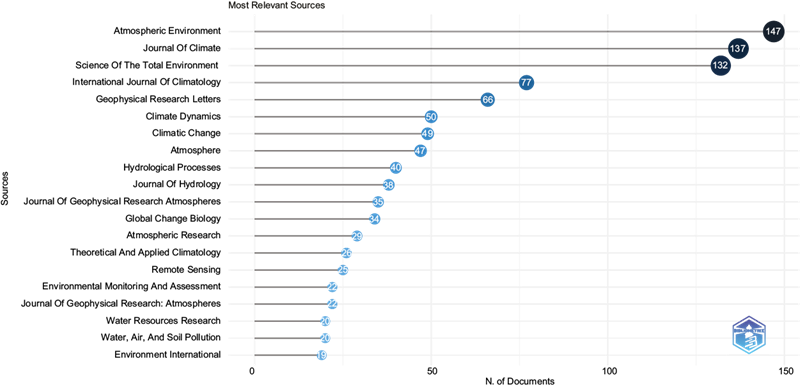
The temporal analysis of source productivity reveals a consistent growth in the number of publications across these journals, particularly from the early 2000s onward. For instance, Atmospheric Environment and Journal of Climate show a steady increase in output, with significant growth observed after 2010. Similarly, Science of The Total Environment exhibits a sharp rise in publications in recent years, particularly from 2016 to 2024, indicating its growing influence in the field. This trend suggests an increasing interest and investment in research related to climate change, environmental monitoring, and atmospheric processes. The data also highlights the emergence of newer journals, such as Atmosphere and Frontiers in Earth Science, which, although less prolific, contribute to the diversification of research themes and the exploration of innovative topics within the domain. Overall, the distribution of publications across these sources reflects the dynamic and evolving nature of the field, with established journals maintaining their dominance while newer platforms provide avenues for emerging research trends.
3.3 Affiliations
The analysis of the most relevant authors’ affiliations reveals a strong concentration of research productivity in a few key institutions (Fig. 4), with a notable presence of both US and Chinese universities and research centers. The University of California leads with 127 articles, underscoring its significant contribution to the field.
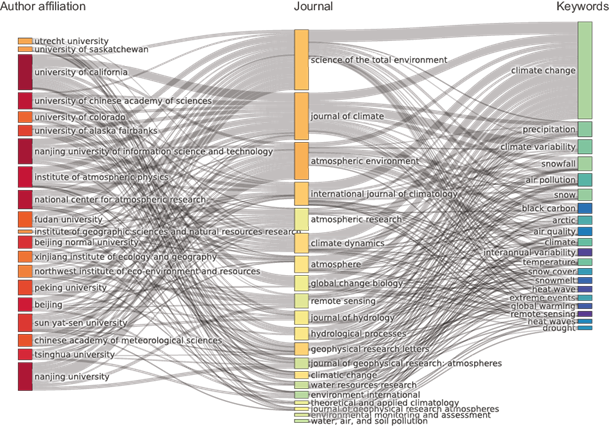
Fig. 4 Three-way plot showing the relationship between the most relevant affiliations, sources, and article keywords.
Chinese institutions also occupy a significant position, with Nanjing University of Information Science and Technology (93 articles), Nanjing University (92 articles), and the University of Chinese Academy of Sciences (64 articles) ranking among the top five most productive affiliations. This highlights China’s growing influence in atmospheric and environmental sciences research. Other prominent U.S. institutions include the National Center for Atmospheric Research (69 articles) and the University of Alaska Fairbanks (48 articles), which reflect the country’s long-standing expertise in climate and atmospheric studies. Additionally, the presence of institutions such as Utrecht University (39 articles) and the University of Reading (36 articles) indicates a strong European contribution to the field. Overall, the data illustrate a global network of research collaboration, with a particular emphasis on the leading roles played by US and Chinese institutions in advancing knowledge in atmospheric and environmental sciences.
3.4 Country production and collaboration
The analysis reveals a strong concentration of research contributions from the US and China, which dominate the field with 2343 and 2087 publications, respectively (Fig. 5). This highlights the leading roles these two scientific centers play in advancing research in atmospheric and environmental sciences. Following these top contributors, Canada (588 publications), the United Kingdom (375 publications), and India (354 publications) also demonstrate significant research output, reflecting their active participation in the global scientific community.
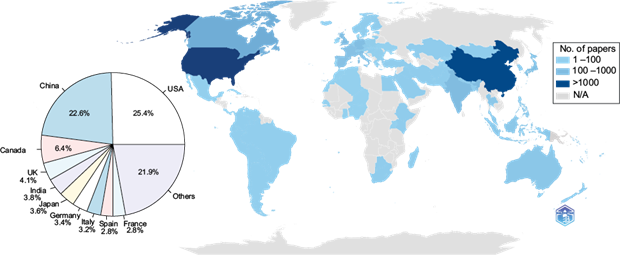
Other notable contributors include Japan (329 publications), Germany (316 publications), and Italy (291 publications), which further emphasize the global nature of research in this domain. The presence of countries such as Australia, Switzerland, and South Korea also underscores the widespread international interest and collaboration in addressing critical issues related to climate, environment, and atmospheric sciences. Collectively, the data illustrate a diverse and interconnected research landscape, with contributions from both established and emerging scientific hubs worldwide.
Beyond its capacity to illustrate geographical distribution, the Bibliometrix R-package facilitates the identification and mapping of existing collaborative networks (Fig. 6) among countries, institutions, and authors of the analyzed articles. Consequently, several notable research centers pertaining to climate change and risk can be identified, with each cluster being represented by a distinct color. This feature allows researchers to easily visualize the connections and collaborations within the field, providing valuable insights into the global landscape of climate change research. By identifying these clusters, researchers can better understand the dynamics of knowledge production and dissemination in this critical area of study.
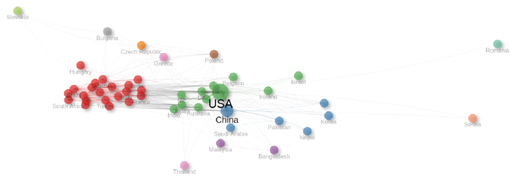
The strong cooperation links between the US and some Western nations, such as the United Kingdom, Germany, Japan, and Australia, are notable. Conversely, a distinct cluster is evident, primarily comprising various nations in central, southern, and western Europe (France, Italy, Spain, Austria, the Netherlands), along with additional countries in South America (e.g., Brazil, Chile, Perú, Argentina) and Africa (e.g., South Africa, Egypt), which are culturally and/or linguistically associated with the former. A separate, less cohesive cluster comprises China and many Asian nations. The countries of Eastern Europe are characterized by an uncommon situation, forming isolated nodes. This leads to inadequate or flawed relationships between researchers from these nations and their counterparts in prominent worldwide research institutions being documented. This lack of connectivity can hinder collaboration and knowledge exchange, impacting the overall progress and quality of research in these regions. Efforts to bridge these gaps through international partnerships and funding initiatives are crucial for fostering a more inclusive and interconnected global research community.
3.5 Research topics
Bibliometric analysis provides valuable insights into the substantive content of articles, enabling the identification of prevalent research topics, methodological approaches, and key issues within the field. Over the past decades, the overarching theme of climate change has dominated the research landscape, reflecting its global significance and urgency.
A closer examination (Fig. 7) reveals a diverse array of subtopics that have garnered substantial attention in climate research. Among these, the analysis of temperature and atmospheric precipitation has been crucial for understanding regional and global climate dynamics, as shown in the most locally cited papers. Studies such as Hurrell (1995) and Easterling et al. (2000) have demonstrated the linkages between atmospheric circulation patterns, such as the North Atlantic Oscillation (NAO), and shifts in regional temperature and precipitation trends. Additionally, Knowles et al. (2006) highlight long-term trends in snowfall vs. rainfall in the western United States, underscoring the hydrological consequences of a warming climate.
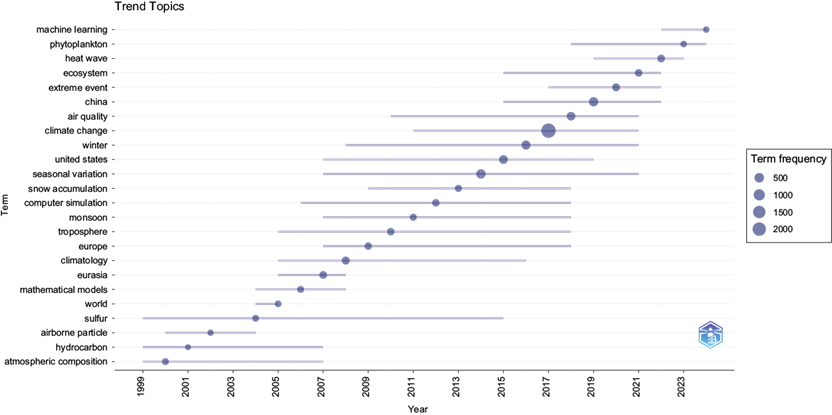
Research on seasonal and annual variations has also been prominent, providing insights into cyclical climate phenomena and their disruptions due to anthropogenic influences. Parmesan and Yohe (2003) identified a globally coherent fingerprint of climate change impacts, documenting shifts in species behavior and ecosystem responses tied to seasonal warming trends. Similarly, Meehl and Tebaldi (2004) projected an increase in the frequency and intensity of heat waves, emphasizing how deviations from historical variability patterns pose significant risks.
Atmospheric circulation has been another major focus, as it governs weather systems and climatic extremes. Takaya and Nakamura (2001) developed a wave-activity flux formulation that advanced the understanding of quasigeostrophic eddies and their role in mid-latitude dynamics. Meanwhile, Screen and Simmonds (2010) demonstrated how diminishing Arctic sea ice amplifies temperature changes by altering circulation patterns, reinforcing the interconnectedness of atmospheric processes.
Spatiotemporal analysis and trend detection have been essential in quantifying long-term climate shifts. The IPCC (2023) report synthesized extensive evidence on global temperature rise, while Barnett et al. (2005) modeled hydrology in snow-dominated regions under warming scenarios, revealing critical declines in water availability. O’Gorman (2014) further contrasted mean and extreme snowfall responses, illustrating the nuanced effects of climate change on precipitation regimes.
The study of atmospheric composition, particularly greenhouse gases and aerosols, has been pivotal in climate modeling. Menon et al. (2002) investigated the regional climate effects of black carbon in Asia, while the IPCC (2013, 2023) assessments underscored the role of CO2 in driving global warming. These findings have informed predictive models that evaluate mitigation strategies.
Finally, research on the impacts of ecosystems has expanded significantly. Groffman et al. (2001) examined soil responses to reduced snowpack, revealing cascading biogeochemical effects. Immerzeel et al. (2010) projected disruptions to Asia’s water towers, threatening downstream ecosystems and human populations. Collectively, these studies reinforce the multifaceted nature of climate research and its critical role in addressing anthropogenic climate change.
3.6 Conceptual structure and thematic networks
The conceptual structure of the field has been further elucidated through the analysis of the most frequently used terms and their interrelationships. This approach facilitates the construction of thematic networks and maps, which help identify both general and niche subjects within the research domain.
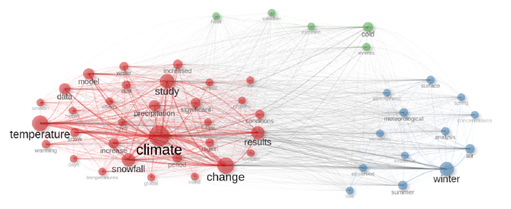
For instance, the co-occurrence network (Fig. 8) of terms reveals three principal conceptual frameworks identified in the reviewed literature: climate studies with a primarily statistical focus, investigations of seasonal weather patterns, and analyses centered on particular extreme events.
To further refine the understanding of the conceptual structure, MCA was employed to analyze the most common terms in the reviewed papers (Fig. 9). This method revealed three principal categories of terms, each representing a major thematic focus in the literature:
Air pollution and environmental monitoring. This research cluster focuses on the intersection of atmospheric chemistry, air quality, and environmental monitoring, emphasizing the interconnectedness of pollutant emissions and climate science. Studies in this domain examine how atmospheric pollutants-such as black carbon, ozone, and fine particulate matter (PM2.5)-affect both regional air quality and the global climate system. For instance, Menon et al. (2002) demonstrated that black carbon aerosols from industrial activity and biomass burning in China and India contribute significantly to regional warming and disrupt monsoonal rainfall patterns. Technological advances, particularly in remote sensing and sensor networks, have further enhanced the real-time monitoring of pollutants such as NO2 and SO2. Studies employing geospatial analysis and emission inventories illustrate how satellite-based tracking facilitates more accurate assessments of emission sources. This cluster underscores the importance of integrated environmental policies that deliver co-benefits-for example, reducing fossil fuel combustion improves air quality while simultaneously addressing climate change.
Meteorological and climatic phenomena. This category centers on the physical dynamics of atmospheric and climatic processes, including weather systems, atmospheric circulation patterns, and long-term variability. Research in this area seeks to understand the mechanisms driving extreme weather events and broader climate trends. Takaya and Nakamura (2001), for example, developed a wave-activity flux model to diagnose atmospheric Rossby waves, which are instrumental in forecasting mid-latitude storm tracks and persistent atmospheric blocking. Similarly, Hurrell (1995)) linked variations in the NAO to widespread temperature and precipitation anomalies across Europe and North America, highlighting the significance of large-scale circulation modes in shaping regional climates. Screen and Simmonds (2010) have demonstrated that Arctic amplification-rapid warming in polar regions-can alter the behavior of the jet stream, thereby increasing the frequency and duration of extreme temperature events, such as heatwaves and cold spells, in mid-latitudes. Studies in this cluster often utilize complex climate models, including CMIP6 ensembles, to simulate large-scale phenomena such as the El Niño-Southern Oscillation (ENSO) or polar vortex disruptions, providing insights into the potential trajectory of future climate extremes.
Climate change impacts and mitigation. The third research cluster addresses the tangible impacts of climate change on ecosystems and human systems, with a focus on adaptation and mitigation strategies. This reflects a shift from understanding climate processes to developing applied solutions aimed at managing risk and enhancing resilience. Parmesan and Yohe (2003), for instance, synthesized global evidence of species range shifts and changes in phenology-such as earlier flowering or altered bird migration patterns-establishing a clear “fingerprint” of anthropogenic climate impacts on biodiversity. In the context of hydrology, Barnett et al. (2005) projected significant reductions in snowpack-dependent water supplies, posing serious challenges for populations in regions like the western United States and the Himalayas. These findings have spurred interest in alternative water management strategies, including reservoir optimization and desalination. Additionally, urban vulnerability to climate extremes has been explored by Meehl and Tebaldi (2004), who modeled how the urban heat island effect amplifies mortality risks during heat waves. Their research has informed urban adaptation measures such as the implementation of green infrastructure and the establishment of public cooling centers. Collectively, this cluster represents a growing body of literature focused on translating climate science into actionable policy and practice.
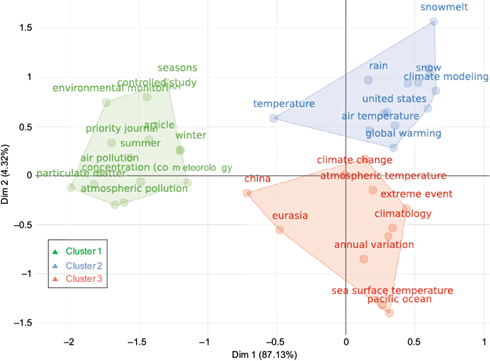
Fig. 9 Factor analysis using the multiple correspondence analysis (MCA) method of the most common terms in reviewed papers.
The methodological approach in this study, which employs MCA to map conceptual clusters in climate research, differs from the bibliometric and scientometric techniques used in other recent studies. For instance, Kumar et al. (2022), along with Singh and Gautam (2024), rely on citation network analysis and keyword co-occurrence mapping to identify research trends, rather than focusing on term-based conceptual relationships. While those studies quantify publication output and collaboration patterns, our approach also reveals thematic linkages, such as the intersection of air pollution research with climate mitigation.
In contrast, Gautam et al. (2024) and Firoozjaee et al. (2024) use process-based modeling or systematic reviews to address specific physical mechanisms. These papers offer granular insights (e.g., aerosol-cloud interactions) but do not structurally map broader research themes. However, their findings align with our Cluster 1 (air pollution), particularly in highlighting the dual role of aerosols in environmental and climate systems. Together, these approaches complement one another: bibliometrics track the evolution of research, MCA deciphers conceptual frameworks, and process studies ground-truth mechanisms.
However, several limitations should be noted. The analysis relies on term frequency within the selected corpus of papers, which may introduce selection bias if the dataset overrepresents certain subfields or geographic regions (e.g., disproportionate focus on temperate climates versus tropical systems). Additionally, terminological bias may arise if keywords are inconsistently applied across studies, potentially obscuring thematic overlaps. Finally, the exclusion of non-English publications or gray literature may skew results toward dominant research paradigms, a limitation shared with the compared studies.
4. Conclusions
This study presents a systematic, four-decade (1980-2024) bibliometric examination of the impacts of climate change on winter meteorological phenomena and atmospheric pollution. By leveraging bibliometric methodologies, the analysis identifies key trends, collaborative networks, and thematic focuses within the field. The findings reveal significant trends in publication growth, emerging international collaboration patterns, and shifting thematic priorities. The analysis reveals particularly strong scholarly engagement from North America, Asia, and Europe, reflecting the status of climate change as both a global priority and a multidisciplinary scientific challenge. Our quantitative approach documents a consistent annual increase in research output, demonstrating the sustained and growing importance of this field in addressing critical environmental issues.
This bibliometric study reveals the rich complexity and interdisciplinary nature of contemporary climate and atmospheric science research. Through systematic analysis of research themes-from climate data statistics to extreme weather events and mitigation solutions-we demonstrate how diverse methodologies converge to address pressing environmental challenges. Our application of advanced bibliometric techniques, including co-occurrence networks and MCA, has provided a deeper understanding of the intellectual structure of the field, revealing both established and emerging research trends. These insights not only enhance our understanding of the current state of research but also provide a foundation for future studies that aim to address the complex challenges posed by climate change.
The study underscores the need for continued research, particularly in regions with weaker international collaboration and underrepresented geographical areas. By adhering to systematic bibliometric approaches and presenting a detailed overview of research trends, this study contributes to a clearer understanding of the intellectual landscape of climate change research. The findings serve as a foundation for future studies to explore emerging topics and foster interdisciplinary collaborations in addressing the pressing challenges posed by climate change and its impact on winter phenomena and atmospheric pollution.

