REVIEW ARTICLES
What is the master regulator of reproductive endocrinology? A sex-based functional review of the KISS1-KISS1R system
¿Cuál es el regulador principal de la endocrinología reproductiva? Una revisión funcional del sistema KISS1-KISS1R con perspectiva de género

-
Publication dates-
Jan-Apr , 2025
February 23, 2026
- Article in PDF
- Article in XML
- Automatic translation
- Send this article by e-mail
- Share this article +
Abstract
Kisspeptin, a peptide encoded by the KISS1 gene, and its receptor, KISS1R, have emerged as pivotal regulators of reproductive endocrinology. This review explores the multifaceted roles of the KISS1-KISS1R system in both male and female reproduction, from puberty onset to gametogenesis, ovulation, pregnancy, and lactation. In males, kisspeptin influences spermatogenesis through intratesticular signaling, modulating steroidogenesis and sperm function. In females, it regulates follicular development, oocyte maturation, and ovulation by modulating gonadotropin release and ovarian signaling pathways. Beyond reproduction, kisspeptin has been implicated in metabolic regulation, energy balance, and reproductive behavior, highlighting its broader physiological significance. Recent studies suggest potential clinical applications, including its use as a biomarker for early pregnancy detection and as a therapeutic agent for infertility, polycystic ovary syndrome, and hyperprolactinemia. In addition, kisspeptin analogs have demonstrated promise in treating hormone-dependent malignancies, such as prostate cancer, by suppressing the hypothalamic-pituitary-gonadal axis. Compared to other reproductive hormones, kisspeptin stands out as an upstream regulator, directly controlling gonadotropin-releasing hormone secretion and the entire reproductive hormonal cascade. Given its central role, further research is warranted to elucidate its precise mechanisms and optimize its clinical applications. The KISS1-KISS1R system is undeniably a master regulator of reproductive endocrinology, presenting exciting opportunities for therapeutic advancements in reproductive medicine.
Keywords::
Kisspeptin, KISS1 gene, KISS1R gene, Human reproduction, Reproductive physiology, Molecular mechanisms
Introduction
One essential quality of all living creatures required to continue life on Earth is reproduction. In addition to trying to adapt to and live in their surroundings, organisms need to create new ones to avoid going extinct1. Reproductive endocrinology involves complex signaling networks and feedback mechanisms to regulate reproductive functions in animals. Among these, the KISS1 gene and its receptor KISS1R (GPR54) have emerged as key players2.
-
1Biological species is the only possible form of existence for higher organisms:the evolutionary meaning of sexual reproductionBiol Direct, 2010
-
2The role of Kisspeptin in the Control of the hypothalamic-pituitary-gonadal axis and reproductionFront Endocrinol (Lausanne), 2022
Kisspeptin is a peptide hormone encoded by the KISS1 gene. Many investigations3-5 have proven kisspeptins important functions in the regulation of various elements of reproduction. Such important regulations include the regulation of the hypothalamic-pituitary-gonadal (HPG)6, upstream control over gonadotropin-releasing hormone (GnRH) neurons7-9, the regulation of reproductive events such as onset of puberty, sexual maturation, and fertility and ovulation, primarily through the tight control of GnRH neurons10,11.
-
3Neuroendocrine mechanisms underlying estrogen positive feedback and the LH surgeFront Neurosci, 2022
-
5Advances in the regulation of mammalian follicle-stimulating hormone secretionAnimals, 2021
-
6Kisspeptins and the neuroendocrine control of reproduction:recent progress and new frontiers in kisspeptin researchFront Neuroendocrinol, 2022
-
7The KiSS-1/GPR54 system:essential roles in physiological homeostasis and cancer biologyGenes Dis, 2022
-
9Kisspeptin depolarizes gonadotropin-releasing hormone neurons through activation of TRPC-like cationic channelsJ Neurosci, 2008
-
10Kisspeptins and reproduction:physiological roles and regulatory mechanismsPhysiol Rev, 2012
-
11KiSS-1 system and reproduction:comparative aspects and roles in the control of female gonadotropic axis in mammalsGen Comp Endocrinol, 2007
Over the years, the KISS1-KISS1R system has been described as possessing a master gene regulatory role in reproductive functions, especially through hormonal control11-14.
-
11KiSS-1 system and reproduction:comparative aspects and roles in the control of female gonadotropic axis in mammalsGen Comp Endocrinol, 2007
-
14Central mechanism controlling pubertal onset in mammals:a triggering role of kisspeptinFront Endocrinol (Lausanne), 2019
Therefore, this review aims to provide a comprehensive analysis of the KISS1-KISS1R system, focusing on its sex-based functional differences in various animal species. By examining the distinct roles of the KISS1-KISS1R system in male and female reproductive endocrinology, we aim to determine whether its influence is sufficiently significant to warrant the title of master regulator. The review will highlight the systems involvement in sexual differentiation and regulation of various reproductive functions and events.
Methods
This review adopted a traditional narrative approach with reference to the PRISMA 2020 guidelines to enhance transparency in article selection, data organization, and synthesis, even though it does not qualify as a systematic review. A comprehensive literature search was conducted across four major academic databases PubMed, ScienceDirect, Web of Science, and Google Scholar covering studies published in English up to March 2025. The search strategy included the use of Boolean operators to combine relevant keywords such as kisspeptin, KISS1R, KISS1R, GnRH, hypothalamic-pituitary-gonadal axis, reproductive endocrinology, spermatogenesis, folliculogenesis, oocyte maturation, ovulation, pregnancy, lactation, infertility, and clinical applications of kisspeptin.
Articles were selected based on their relevance to the physiological, molecular, and clinical aspects of the kisspeptin signaling system in reproductive function. Peer-reviewed original research, reviews, and clinical studies involving mammalian or human models were included, provided they were published in English and addressed the objectives of the review. Studies were excluded if they were non-English, lacked accessible full texts, or were non-peer-reviewed commentaries or editorials that did not include primary data or substantial theoretical analysis.
After the initial search, duplicate records were removed, followed by title and abstract screening to identify studies that met the inclusion criteria. Full texts of the remaining articles were then assessed to ensure relevance and quality. The final body of literature included over 90 articles that were thematically analyzed and synthesized.
The reviewed literature was organized and discussed according to key thematic areas, including the anatomical and molecular characteristics of the KISSI1-KISS1R system, its physiological roles in male and female reproductive function, its influence beyond reproduction particularly in metabolic regulation and behavior and its emerging clinical applications. The narrative approach allowed for critical integration of diverse findings across experimental and clinical contexts, providing a comprehensive synthesis of the present state of knowledge while identifying knowledge gaps and future research directions.
Characteristics of the KISS1-KISS1R system
The KISS1-KISS1R system, comprising the KISS1 gene and its receptor KISS1R (also known as GPR54), plays a central role in the regulation of reproductive endocrinology. The systems significance lies in its ability to modulate the HPG axis, influencing processes such as puberty, fertility, and overall reproductive health6.
-
6Kisspeptins and the neuroendocrine control of reproduction:recent progress and new frontiers in kisspeptin researchFront Neuroendocrinol, 2022
MOLECULAR STRUCTURE OF KISS1 GENE AND RECEPTOR
The KISS1 gene encodes a peptide known as kisspeptin, which is a member of the RFamide family of neuropeptides. Kisspeptin exists in several forms, with the most studied being kisspeptin-54, kisspeptin-14, kisspeptin-13, and kisspeptin-10, named according to the number of amino acids they contain. The processing of the full-length kisspeptin-54 into shorter forms is a critical step in its biological activity15,16. All kisspeptins have the same affinity for their respective receptors17.
-
15Molecular characterization of kisspeptin 2 dodecapeptide in sixteen species of ScombridaeFish Sci, 2020
-
16Metastasis suppressor gene KiSS-1 encodes peptide ligand of a G-protein-coupled receptorNature, 2001
-
17The metastasis suppressor gene KiSS-1 encodes kisspeptins, the natural ligands of the orphan G protein-coupled receptor GPR54J Biol Chem, 2001
Furthermore, the KISS1R receptor is a G protein-coupled receptor that mediates the effects of kisspeptin. It is encoded by the GPR54 gene and is primarily expressed in GnRH neurons in the hypothalamus, although it is also found in other tissues, including the placenta and liver16,17. Upon binding to kisspeptin, KISS1R activates intracellular signaling pathways that result in the release of GnRH, thereby influencing downstream reproductive functions.
-
16Metastasis suppressor gene KiSS-1 encodes peptide ligand of a G-protein-coupled receptorNature, 2001
-
17The metastasis suppressor gene KiSS-1 encodes kisspeptins, the natural ligands of the orphan G protein-coupled receptor GPR54J Biol Chem, 2001
There are notable differences in the expression and function of KISS1-KISS1R between males and females. For instance, in females, KISS1 neurons are densely located in the anteroventral periventricular nucleus (AVPV), which is critical for the pre-ovulatory luteinizing hormone (LH) surge, while in males, these neurons are primarily located in the arcuate nucleus (ARC), reflecting their role in tonic GnRH secretion18.
-
18Mechanism of arcuate kisspeptin neuron synchronization in acute brain slices from female miceEndocrinology, 2023
MECHANISM OF ACTION
Kisspeptin binds to the GPR54/KISS1R receptor, activating Gq/11protein, which then activates the phospholipase-C (PLC) enzyme. PLC hydrolyses phosphatidylinositol bisphosphate to generate diacylglycerol (DAG) and inositol trisphosphate (IP3). DAG activates protein kinase C (PKC) to regulate gene expression, while (IP3) raises the concentration of Ca2+ by stimulating its release from the endoplasmic reticulum. GnRH neurons get depolarized due to the rise in Ca2+ causing the potassium channels to close preventing the outflow of potassium ions, and the cation transient receptor potential channels to open leading to a further influx of Ca2+ into the cell (Fig. 1). As a result, hormones are secreted by GnRH neurons5. Kisspeptin stimulates the extracellular signal-regulated kinase and mitogen-activated protein kinase (MAPK) pathways through PKC, which in turn increases apoptosis and decreases cell proliferation and metastasis19.
-
5Advances in the regulation of mammalian follicle-stimulating hormone secretionAnimals, 2021
-
19The role of kisspeptin and MKRN3 in the diagnosis of central precocious puberty in girlsEndocr Connect, 2021
Thumbnail
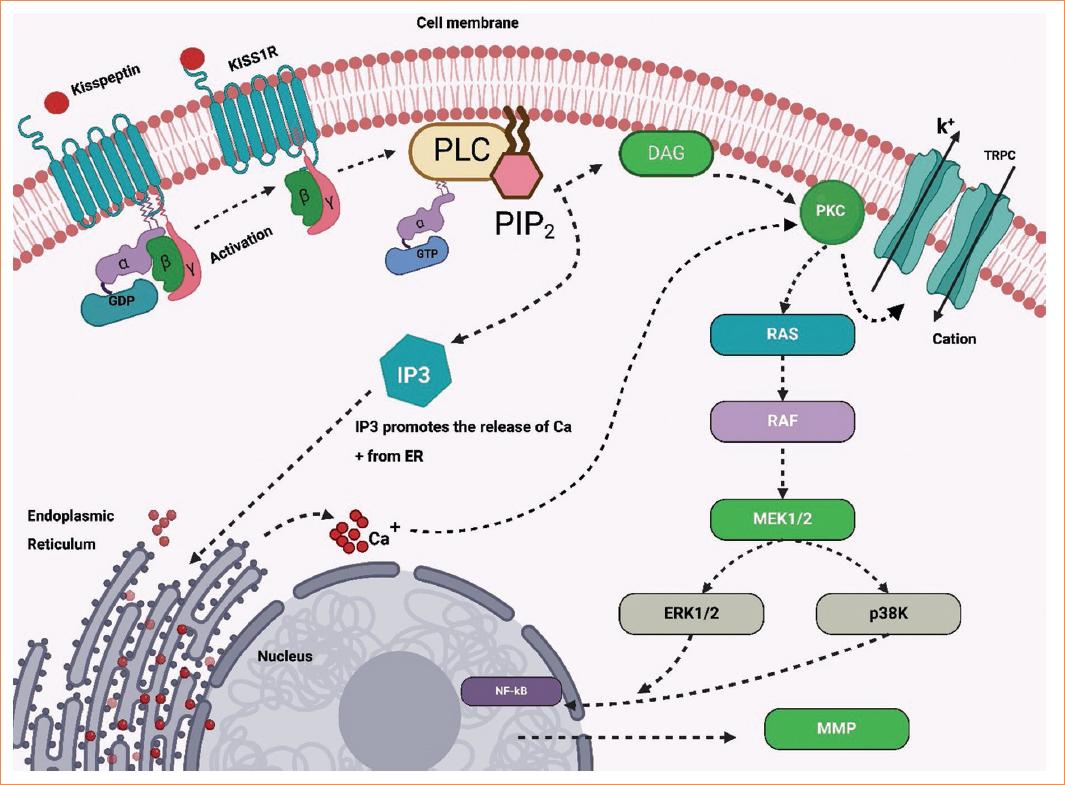
Figure 1
Intracellular signaling cascade activated by Kisspeptin Binding to the KISS1R receptor. This figure depicts the signaling cascade initiated by the binding of kisspeptin to the KISS1R (GPR54) receptor. Upon kisspeptin activation, the KISS1R receptor activates G-proteins, leading to the activation of phospholipase C (PLC). PLC catalyzes the breakdown of PIP2 into inositol trisphosphate (IP3) and diacylglycerol (DAG), with IP3 facilitating the release of calcium ions (Ca2+) from the endoplasmic reticulum (ER) into the cytosol. This increase in intracellular calcium activates protein kinase C (PKC) and the transient receptor potential canonical (TRPC) channels, which contribute to further calcium influx. The signaling cascade also involves the RAS-RAF-MEK1/2-ERK1/2 pathway, which regulates downstream gene expression through NF-κB and matrix metalloproteinase (MMP) activation. These signaling events play a crucial role in regulating gonadotropin-releasing hormone secretion, reproductive function, and cellular processes, as highlighted in the review.
Intracellular signaling cascade activated by Kisspeptin Binding to the KISS1R receptor. This figure depicts the signaling cascade initiated by the binding of kisspeptin to the KISS1R (GPR54) receptor. Upon kisspeptin activation, the KISS1R receptor activates G-proteins, leading to the activation of phospholipase C (PLC). PLC catalyzes the breakdown of PIP2 into inositol trisphosphate (IP3) and diacylglycerol (DAG), with IP3 facilitating the release of calcium ions (Ca2+) from the endoplasmic reticulum (ER) into the cytosol. This increase in intracellular calcium activates protein kinase C (PKC) and the transient receptor potential canonical (TRPC) channels, which contribute to further calcium influx. The signaling cascade also involves the RAS-RAF-MEK1/2-ERK1/2 pathway, which regulates downstream gene expression through NF-κB and matrix metalloproteinase (MMP) activation. These signaling events play a crucial role in regulating gonadotropin-releasing hormone secretion, reproductive function, and cellular processes, as highlighted in the review.
Kisspeptin in the hypothalamus
The hypothalamus is a crucial brain region responsible for maintaining homeostasis and regulating various endocrine functions, including reproduction. Kisspeptin neurons in the hypothalamus are integral to the control of GnRH secretion. These neurons provide direct stimulatory input to GnRH neurons, and the activation of GnRH neurons by kisspeptin triggers the release of gonadotropins (LH and FSH) from the anterior pituitary, which in turn regulate gonadal function20.
-
20Anatomy of the kisspeptin neural network in mammalsBrain Res, 2010
Kisspeptin is a critical neuropeptide that plays a vital role in regulating the HPG axis, thereby influencing reproductive function, Kisspeptin receptor (KISS1R) is highly expressed in the hypothalamus, particularly in regions such as the ARC and the AVPV21.
-
21Hypothalamic kisspeptin neurons and the control of homeostasisEndocrinology, 2022
REGULATION AND FEEDBACK MECHANISMS
The KISS1-KISS1R system is involved in both positive and negative feedback loops that regulate GnRH secretion. In females, the system mediates the estrogen-induced LH surge (positive feedback) that triggers ovulation, as well as the suppression of GnRH during the luteal phase (negative feedback) to prevent pre-mature ovulation. In males, KISS1 neurons regulate the negative feedback of testosterone on GnRH secretion, ensuring the proper balance of reproductive hormones22.
-
22The role of kisspeptin and gonadotropin inhibitory hormone (GnIH) in the seasonality of reproduction in sheepSoc Reprod Fertil Suppl, 2010
Kisspeptin and puberty
Puberty begins with the strengthening of excitatory signals and the weakening of inhibitory indications over GnRH neurons, resulting in a continual rise in pulsatile GnRH production from the hypothalamus. Increased GnRH pulse activates downstream components, resulting in increased gonadotropins and sex hormones, gametogenesis, secondary sex characteristics, and fast development, all of which contribute to fertility23. Although kisspeptin is vital for pubertal development in both males and females, there are notable differences in its function and regulation between the sexes.
-
23Central and peripheral administration of kisspeptin activates gonadotropin but not somatotropin secretion in prepubertal giltsReproduction, 2008
In females, kisspeptin is integral to the initiation of puberty and the regulation of the menstrual cycle. The hormone exerts its effects by acting on GnRH neurons to initiate the pre-ovulatory surge of GnRH, which is critical for the onset of ovulation24. Kisspeptin neurons in the AVPV and the ARC of the hypothalamus are particularly important in females. The AVPV kisspeptin neurons are implicated in the positive feedback mechanism of estrogen, which induces the LH surge necessary for ovulation25.
-
24Neurobiological mechanisms underlying kisspeptin activation of gonadotropin-releasing hormone (GnRH) neurons at pubertyMol Cell Endocrinol, 2010
-
25From KISS1 to kisspeptins:an historical perspective and suggested nomenclaturePeptides (NY), 2009
In males, kisspeptin is essential for the activation of the HPG axis during puberty, leading to increased testosterone production and spermatogenesis (Fig. 2). Unlike in females, the regulation of kisspeptin in males does not involve a pre-ovulatory surge but is crucial for maintaining steady-state levels of GnRH and LH secretion necessary for testicular function10. Kisspeptin neurons in the ARC play a more prominent role in males, where they are involved in the negative feedback regulation of gonadotropin secretion by testosterone26.
-
10Kisspeptins and reproduction:physiological roles and regulatory mechanismsPhysiol Rev, 2012
-
26Regulation of gonadotropin-releasing hormone secretion by kisspeptin/dynorphin/neurokinin B neurons in the arcuate nucleus of the mouseJ Neurosci, 2009
Thumbnail
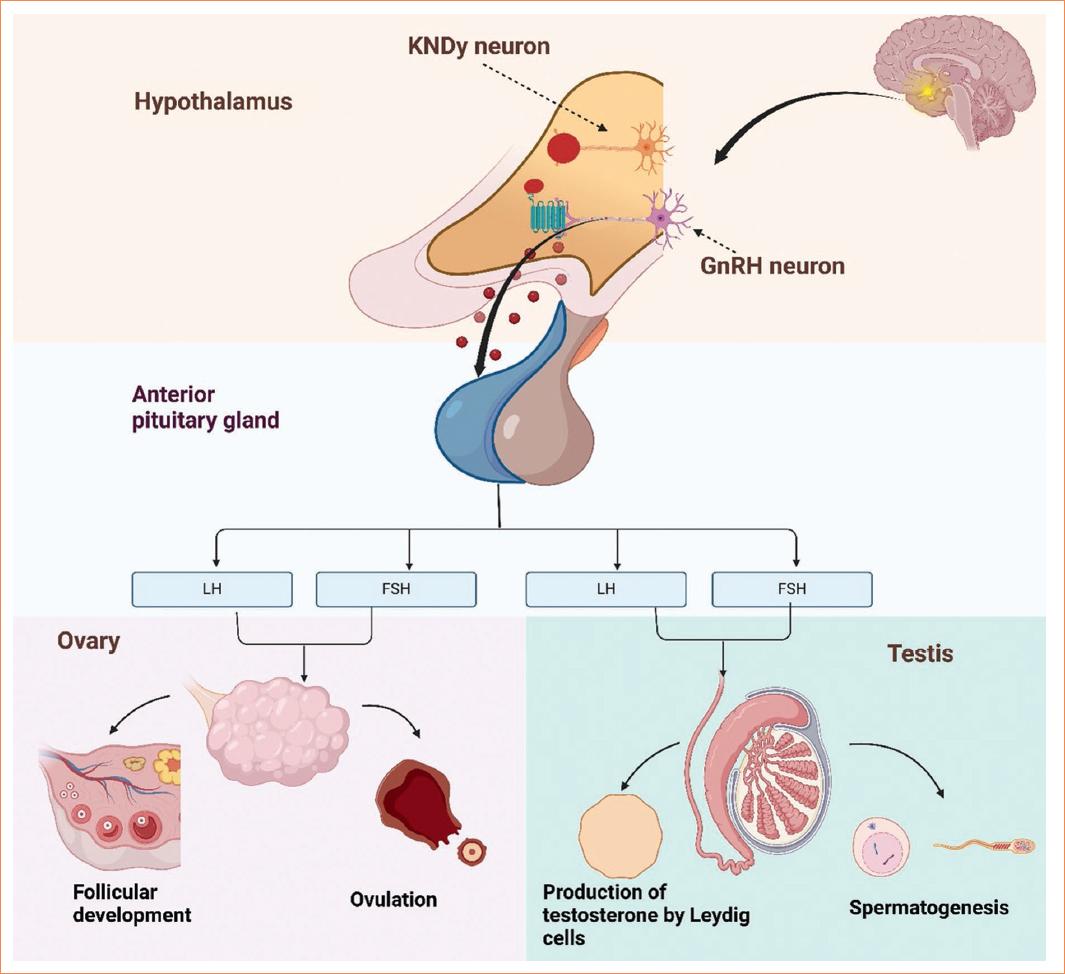
Figure 2
Regulation of the hypothalamic-pituitary-gonadal axis by the KISS1-KISS1R system. This figure illustrates the regulatory cascade of the hypothalamic-pituitary-gonadal (HPG) axis mediated by the KISS1-KISS1R system. In females, kisspeptin is primarily produced by neurons in the anteroventral periventricular nucleus (AVPV) of the hypothalamus. Here, kisspeptin stimulates gonadotropin-releasing hormone (GnRH) neurons, promoting the release of gonadotropins (LH and FSH) from the anterior pituitary, which subsequently trigger follicular development and ovulation. In males, kisspeptin is mainly synthesized by neurons in the arcuate nucleus (ARC). Kisspeptin in this region regulates the tonic secretion of GnRH, leading to continuous gonadotropin release that stimulates testosterone production by Leydig cells in the testes and supports spermatogenesis. Both in females and males, the interaction of kisspeptin with its receptor, KISS1R (GPR54), in the hypothalamus leads to downstream signaling events, resulting in the activation of the HPG axis and gonadal function.
Regulation of the hypothalamic-pituitary-gonadal axis by the KISS1-KISS1R system. This figure illustrates the regulatory cascade of the hypothalamic-pituitary-gonadal (HPG) axis mediated by the KISS1-KISS1R system. In females, kisspeptin is primarily produced by neurons in the anteroventral periventricular nucleus (AVPV) of the hypothalamus. Here, kisspeptin stimulates gonadotropin-releasing hormone (GnRH) neurons, promoting the release of gonadotropins (LH and FSH) from the anterior pituitary, which subsequently trigger follicular development and ovulation. In males, kisspeptin is mainly synthesized by neurons in the arcuate nucleus (ARC). Kisspeptin in this region regulates the tonic secretion of GnRH, leading to continuous gonadotropin release that stimulates testosterone production by Leydig cells in the testes and supports spermatogenesis. Both in females and males, the interaction of kisspeptin with its receptor, KISS1R (GPR54), in the hypothalamus leads to downstream signaling events, resulting in the activation of the HPG axis and gonadal function.
The sexually dimorphic nature of kisspeptins role in puberty is influenced by sex steroids, such as estrogen and testosterone, which differentially regulate kisspeptin expression and action in the hypothalamus27.
-
27Sexual differentiation of KISS1 gene expression in the brain of the ratEndocrinology, 2007
The administration of kisspeptin has been investigated as a potential strategy to enhance pubertal development, particularly in cases of delayed or disrupted puberty. Studies in both male and female animal models have shown that exogenous kisspeptin can stimulate the HPG axis, leading to the onset of puberty.
In female models, kisspeptin administration has been shown to advance the timing of puberty by inducing the early release of GnRH and subsequent increases in LH and FSH levels, which promote ovarian development and estrogen production. This acceleration of puberty is associated with earlier onset of estrous cycles and ovulation28. In addition, kisspeptin treatment has been observed to restore reproductive function in female models with impaired kisspeptin signaling, indicating its therapeutic potential29.
-
28Repetitive activation of hypothalamic G protein-coupled receptor 54 with intravenous pulses of kisspeptin in the juvenile monkey (Macaca mulatta) elicits a sustained train of gonadotropin-releasing hormone dischargesEndocrinology, 2006
-
29Ontogeny and mechanisms of action for the stimulatory effect of kisspeptin on gonadotropin-releasing hormone system of the ratMol Cell Endocrinol, 2006
In male models, kisspeptin administration has similarly been shown to advance the onset of puberty by stimulating GnRH release and increasing LH and FSH secretion. This leads to enhanced testosterone production and spermatogenesis12. The continuous or pulsatile administration of kisspeptin can effectively mimic the natural activation of the HPG axis, resulting in the advancement of pubertal milestones, such as testicular enlargement and increased secondary sexual characteristics30.
-
12The GPR54 gene as a regulator of pubertyN Engl J Med, 2003
-
30Kisspeptin-54 stimulates the hypothalamic-pituitary gonadal axis in human malesJ Clin Endocrinol Metab, 2005
Puberty cannot occur without normal Kisspeptin-receptor contact, as demonstrated by inactivating mutations of the GPR54 gene in hypogonadotropic hypogonadism (HH) patients31,32. Endogenous kisspeptin rhythmicity and sensitivity increase with puberty; in primates and rats, both the number of KISS1 neurons and the amount of KISS1 mRNA have been found to rise during the juvenile-pubertal transition33-35.
-
31Role of Kisspeptin on hypothalamic-pituitary-gonadal pathology and its effect on reproductionCureus, 2021
-
32Application of kisspeptin in domestic animal reproductionPharma Innov J, 2021
-
33Inverse age-related changes between hypothalamic NPY and KISS1 gene expression during pubertal initiation in male rhesus monkeyReprod Biol, 2022
-
35Timing and completion of puberty in female mice depend on estrogen receptor alpha-signaling in kisspeptin neuronsProc Natl Acad Sci USA, 2010
Kisspeptin in male reproduction
KISS1 AND KISS1R IN TESTIS AND SPERMATOZOA
Spermatogenesis is a complex process modulated step-by-step by the autocrine, paracrine, and endocrine routes. It needs the coordination between germ cell proliferation and death, meiotic division and differentiation events, and the key contribution of Leydig cells in the interstitium to produce sex-steroids, and Sertoli cells in the seminiferous tubules to provide structural and nourishment support to developing germ cells36. The kisspeptin system has been characterized in the testis of mammalian and non-mammalian vertebrates, revealing possible roles in the autocrine and paracrine intra-testicular communications, steroid biosynthesis, spermatogenesis progression, and sperm functions, but also species-specific differences in localization and possible functions37-39. Kisspeptin, but not GnRH, has been detected in human plasma and measured in different health conditions40. In males, circulating kisspeptin levels change in fertility status, being significantly higher in fertile than in infertile men41. Some hypogonadotropic HH patients have high levels of kisspeptin in the plasma, but, after GnRH replacement therapy, circulating kisspeptin levels decrease as a consequence of the restored sex-steroid feedback mechanisms at hypothalamic levels42. However, gonadotropin stimulation is not always able to rescue testosterone biosynthesis and spermatogenesis in clinical cases of KISS1R inactivating mutations43,44, suggesting the need for testicular KISS1R signaling for steroidogenesis. Similarly, the specific reactivation of the KISS1R gene in the GnRH-secreting neuron of KISS1R knockout mice does not restore spermatogenesis, further confirming the need for the intratesticular kisspeptin signal for successful spermatogenesis45. By contrast, testosterone replacement in KISS knockout mice that exhibit HH restores plasma and intratesticular testosterone levels and sustains spermatogenesis until the production of spermatozoa capable of fertilizing eggs in vitro, but treated mice failed to impregnate females46. The administration of kisspeptin usually promotes spermatogenesis in intact animal models47-49. Post-natal testis development and Leydig cell maturation require kisspeptin signaling, and synergistic effects involving both the hypothalamic and LH-dependent intratesticular production of kisspeptin have been suggested in rodents50.
-
36Evolutionary aspects of cellular communication in the vertebrate hypothalamo-hypophysio-gonadal axisInt Rev Cytol, 2002
-
37Kisspeptins, estrogens and male fertilityCurr Med Chem, 2016
-
39Kisspeptins, new local modulators of male reproduction:a comparative overviewGen Comp Endocrinol, 2020
-
40Kisspeptin/GPR54 system:what do we know about its role in human reproduction?Cell Physiol Biochem, 2018
-
41Insight into the serum kisspeptin levels in infertile malesArch Iran Med, 2015
-
42Plasma kisspeptin levels in male cases with hypogonadismEndocr J, 2014
-
43The kisspeptin system in male reproductionEndocrines, 2022
-
44A novel loss-of-function mutation in GPR54/KISS1R leads to hypogonadotropic hypogonadism in a highly consanguineous familyJ Clin Endocrinol Metab, 2011
-
45Direct actions of kisspeptins on GnRH neurons permit attainment of fertility but are insufficient to fully preserve gonadotropic axis activitySci Rep, 2016
-
46Testosterone supplementation rescues spermatogenesis and in vitro fertilizing ability of sperm in KISS1 knockout miceEndocrinology, 2020
-
47Kisspeptin receptor, GPR54, as a candidate for the regulation of testicular activity in the frog Rana esculentaBiol Reprod, 2013
-
49The effect of kisspeptin on spermatogenesis and apoptosis in ratsTurk J Med Sci, 2017
-
50Kisspeptin expression in mouse Leydig cells correlates with ageJ Chin Med Assoc, 2015
Kisspeptin in female reproduction
THE ROLE OF KISSPEPTIN IN FOLLICULAR DEVELOPMENT
Kisspeptin levels increase from the early follicular to the pre-ovulatory phase40 in females. In the process of follicular development, kisspeptin affects primary and secondary follicle recruitment by reducing the FSH receptor (FSHR) expression. In both 6 and 10-month-old rats, local administration of kisspeptin into the ovary reduced the number of total antral follicles (including atretic follicles) and the use of kisspeptin receptor antagonist p234 played the opposite role51. In an in vitro experiment, kisspeptin acted as a functional antagonist by preventing the increase in FSHR expression produced by Isoproterenol, a β-adrenergic agonist. Besides, kisspeptin can upregulate the level of serum anti-Müllerian hormone (AMH), which is a vital dimeric glycoprotein in the regulation of follicle development. Produced by pre-antral and small antral follicles, AMH exerts its regulatory role by attenuating primordial follicle recruitment and changing the sensitivity of follicles to FSH52,53. The study found that serum AMH levels increased after local administration of kisspeptin and decreased after the use of p234 in 6 and 10-month-old rats. To sum up, kisspeptin may negatively affect the development of pre-antral follicles by upregulating AMH and downregulating the expression of FSHR in the ovary.
-
40Kisspeptin/GPR54 system:what do we know about its role in human reproduction?Cell Physiol Biochem, 2018
-
51Kisspeptin is involved in ovarian follicular development during aging in ratsJ Endocrinol, 2016
-
52The physiology and clinical utility of anti-Müllerian hormone in womenHum Reprod Update, 2014
-
53Anti-müllerian hormone:a personal view of the empowering analyteJ Hum Reprod Sci, 2020
THE ROLE OF KISSPEPTIN IN OOCYTE MATURATION
It is well known that the pre-ovulatory LH surge triggers the resumption of meiosis and the progression to metaphase II during each reproductive cycle54. Besides, the direct effect of kisspeptin on oocyte maturation has been studied in porcine cumulus-oocyte complexes (COCs). Adding kisspeptin to porcine COCs in vitro promotes oocyte maturation, suggesting kisspeptin acts on oocytes directly55. The mechanisms may include upregulating the expression of C-MOS, growth differentiation factor 9 (GDF 9), and bone morphogenetic protein 15 (BMP 15)56. C-MOS plays a stimulating role in various processes during oocyte maturation, including the meiosis process, normal spindle and chromosome formation, and reactivation of purified maturation-promoting factor after first meiosis. Furthermore, GDF 9 and BMP 15 take part in regulating follicle development, oocyte maturation, ovulation, luteinization, and other physiological processes56,57. It has been found that cumulus granulosa cells (GCs) play a vital role in regulating oocyte maturation. Several researchers have observed a remarkable expression of kisspeptin in gonadotropin-treated GCs, while KISS1R in oocytes, suggesting that GC-derived Kisspeptin may have a direct function on oocytes KISS1R to modulate oocyte maturation through a MAPK signaling pathway58-60. The kisspeptin expressed in GCs is estrogen receptor beta (ERβ) dependent since the expression of kisspeptin in GCs is absent in ERβ knockout rat ovaries. Consistent with the findings above, the administration of kisspeptin can increase the maturity of oocytes without cumulus cells in both wild-type and ERβ knockout rats58. Therefore, kisspeptin may have a persistent and direct effect on oocytes in an autocrine and paracrine manner.
-
54Oocyte maturation:a story of arrest and releaseFront Biosci, 2013
-
55Paradoxical effects of kisspeptin:it enhances oocyte in vitro maturation but has an adverse impact on hatched blastocysts during in vitro cultureReprod Fertil Dev, 2012
-
56The fundamental role of bone morphogenetic protein 15 in ovarian function and its involvement in female fertility disordersHum Reprod Update, 2014
-
56The fundamental role of bone morphogenetic protein 15 in ovarian function and its involvement in female fertility disordersHum Reprod Update, 2014
-
57Bone morphogenetic protein 15 and growth differentiation factor 9 co-operate to regulate granulosa cell functionReproduction, 2005
-
58ERb regulated ovarian kisspeptin plays an important role in oocyte maturationMol Cell Endocrinol, 2021
-
60Signalling pathways mediating specific synergistic interactions between GDF9 and BMP15Mol Hum Reprod, 2012
-
58ERb regulated ovarian kisspeptin plays an important role in oocyte maturationMol Cell Endocrinol, 2021
THE ROLE OF KISSPEPTIN IN OVULATION
Ovulation is a complicated process described as the follicle rupture and oocyte release, which is mediated by the LH surge and is regulated by a series of specific genes61. At the end of the follicular phase, high levels of estrogen act on AVPV kisspeptin neurons, promoting the release of kisspeptin, which then causes the cascade of GnRH surge, LH peak, and ovulation62. The functions of the LH peak are achieved by upregulating the expression of COX-2 and producing prostaglandin, which are essential for follicular rupture and ovulation63. It has been confirmed that peripheral kisspeptin administration induces ovulation in many species, such as rats and ewes64. The effect of kisspeptin on ovulation is mainly achieved by increasing the levels of LH and FSH. Subcutaneous administration of kisspeptin markedly elevated plasma FSH and LH levels in 25-day-old female rats65. In humans, the LH pulses increased immediately after an administration of kisspeptin-1040. Kisspeptin-54 induced ovulation in mice by stimulating precisely timed endogenous LH release of consistent amplitude and duration66. Both the expression of ovarian KISS1 mRNA and the ovulation efficiency in rats could be reduced by the administration of a COX-2 inhibitor or a COX non-selective inhibitor, indicating that the upregulation of COX-2 may act on the expression levels of kisspeptin to induce the LH peak67. The role of ovarian kisspeptin in ovulation may not be indispensable because, in KISS1R knockout mice, standard gonadotropin priming could induce ovulation12, indicating that the ovarian kisspeptin signaling is not necessary for ovulation. However, although the oocyte quality between neuron-specific KISS1 and KISS1R knockout mice and wild-type mice shows little difference, the knockout mice presented fewer ovulated oocytes and corpora lutea. This suggests the GnRH plus gonadotropin stimulation is not sufficient to reverse the loss of function due to KISS1R knockout68.
-
61Ovulation:new dimensions and new regulators of the inflammatory-like responseAnnu Rev Physiol, 2002
-
62The role of Kisspeptin in female reproductionInt J Endocrinol Metab, 2017
-
63Cyclooxygenase-2 and its role in ovulation:A 2004 accountHum Reprod Update, 2004
-
64Kisspeptin synchronizes preovulatory surges in cyclical ewes and causes ovulation in seasonally acyclic ewesEndocrinology, 2007
-
65Peripheral administration of metastin induces marked gonadotropin release and ovulation in the ratBiochem Biophys Res Commun, 2004
-
40Kisspeptin/GPR54 system:what do we know about its role in human reproduction?Cell Physiol Biochem, 2018
-
66Kisspeptin-54 injection induces a physiological luteinizing hormone surge and ovulation in miceBiol Reprod, 2021
-
67Reproductive functions of Kisspeptin/KISS1R systems in the PeripheryReprod Biol Endocrinol, 2019
-
12The GPR54 gene as a regulator of pubertyN Engl J Med, 2003
-
68Kisspeptin receptor haplo-insufficiency causes premature ovarian failure despite preserved gonadotropin secretionEndocrinology, 2014
THE ROLE OF KISSPEPTIN IN PREGNANCY AND LACTATION
Kisspeptin concentrations in human plasma increased dramatically throughout pregnancy, with the placenta producing the majority of it. Histochemical investigation revealed that KISS1 mRNA is localized in syncytiotrophoblast; these findings imply that kisspeptin may play a function in regulating trophoblast invasion. The greatest levels of KISS1 and KISS1R mRNAs in trophoblast cells correspond to maximal trophoblast invasion, which should be appropriately controlled.
Kisspeptin was reported to suppress the metastasis in cancer cells, and KISS1 expression levels were revealed to be lower in metastatic compared with non-metastatic cancer tissue16,69. Trophoblasts are cells that are important for the growth and attachment of the placenta to the uterus. Trophoblast invasion resembles tumor metastasis70 as the invading trophoblasts follow a similar molecular mechanism for migration and invasion as tumor cells. The discovery of high levels of endogenous kisspeptin and KISS1R in placental trophoblast71,72, suggests its direct involvement in inhibiting cellular invasion, migration, and angiogenesis, thereby preventing excessive invasion of the endometrium by trophoblast cell73.
-
16Metastasis suppressor gene KiSS-1 encodes peptide ligand of a G-protein-coupled receptorNature, 2001
-
69Expression of KiSS-1 gene and its role in invasion and metastasis of human hepatocellular carcinomaAnat Rec (Hoboken), 2009
-
70Trophoblast pseudo-tumorigenesis:significance and contributory factorsReprod Biol Endocrinol, 2004
-
71Dramatic elevation of plasma metastin concentrations in human pregnancy:metastin as a novel placenta-derived hormone in humansJ Clin Endocrinol Metab, 2003
-
72Kisspeptin-10, a KiSS-1/metastin-derived decapeptide, is a physiological invasion inhibitor of primary human trophoblastsJ Cell Sci, 2004
-
73From inhibition of trophoblast cell invasion to proapoptosis:what are the potential roles of kisspeptins in preeclampsia?Am J Physiol Regul Integr Comp Physiol, 2021
Recent research has demonstrated that central Kisspeptin 10 injection stimulates oxytocin neurons during the end of pregnancy and throughout lactation, indicating that Kisspeptin-induced oxytocin release is essential for parturition and lactation. Increased plasma Kisspeptin during pregnancy may thereby enhance oxytocin release; yet oxytocin receptor expression and sensitivity remain low before childbirth74.
-
74Beyond the GnRH axis:kisspeptin regulation of the oxytocin system in pregnancy and lactationAdv Exp Med Biol, 2013
However, studies in mice have revealed that prolactin treatment significantly decreased Kisspeptin expression in the hypothalamus, reducing GnRH release. Again, utilizing bromocriptine as a prolactin suppressor resulted in significantly enhanced KISS1 mRNA expression in the rostral periventricular region of the third ventricle (RP3V) in mice. Furthermore, during breastfeeding, rats revealed lower expression of KISS1 mRNA in the hypothalamus and LH secretion, resulting in the shutdown of the estrous cycle. Indeed, in virtually all animals, breastfeeding generates a period of infertility that allows for healthy offspring development and survival, and proper regulation of Kisspeptin expression contributes to lactational anovulation75,76.
-
75Prolactin regulation of kisspeptin neurones in the mouse brain and its role in the lactation-induced suppression of kisspeptin expressionJ Neuroendocrinol, 2014
-
7660 years of neuroendocrinology:the hypothalamo-prolactin axisJ Endocrinol, 2015
The role of kisspeptin beyond reproduction
Recent studies have shown that kisspeptin may also play a role in the regulation of energy balance and metabolism77. Report an altered metabolic phenotype in KISS1R knockout adult female mice. These mice showed significantly increased body weights and adiposity, impaired glucose regulation, and reduced energy expenditure from 10 weeks of age. Studies have shown that chronic intracerebroventricular kisspeptin treatment from post-natal day decreased body weight at day 60 in female rats78. This link suggests that kisspeptin acts as a mediator between metabolic status and reproductive health.
-
77Metabolism and energy expenditure, but not feeding or glucose tolerance, are impaired in young KISS1R KO female miceEndocrinology, 2016
-
78Percentages of serum, liver and adipose tissue fatty acids and body weight are affected in female rats by long-term Central kisspeptin treatmentsArch Physiol Biochem, 2023
Kisspeptin has been implicated in the regulation of reproductive behaviors. It influences sexual motivation and mating behavior in animals, with evidence suggesting that it may modulate the neural circuits involved in these behaviours79. This role extends the influence of the KISS1-KISS1R system beyond purely physiological aspects to encompass behavioral regulation as well.
-
79Definition of the hypothalamic GnRH pulse generator in miceProc Natl Acad Sci USA, 2017
The involvement of the KISS1-KISS1R system in memory and learning processes was suggested by the wide expression of KISS1R in the learning and memory-associated brain regions, including the dentate gyrus of the hippocampus and the cortical and medial nucleus of the amygdala80. It has been reported that intracerebroventricular administration of kisspeptin-13, during a passive avoidance paradigm, enhances learning and stabilizes memory81.
-
80The role of kisspeptin and GPR54 in the hippocampusPeptides, 2009
-
81The action of kisspeptin-13 on passive avoidance learning in miceInvolvement of transmitters. Behav Brain Res, 2013
The potential role kisspeptin in clinical application
In recent years, many attempts have been made to explore the possibility of kisspeptin as a new diagnostic marker or therapeutic option. In humans, the plasma level of kisspeptin (kisspeptin-54) increases dramatically throughout pregnancy, making it possible to detect early pregnancy by measuring plasma kisspeptin concentrations82. Furthermore, because kisspeptin is produced by trophoblasts and trophoblast invasion is underway 5 days after blastocyst transplantation, plasma kisspeptin concentrations during the peri-implantation period may reflect the early developmental events associated with pregnancy outcome82. In a comparative study83, measured serum kisspeptin in 20 women with 6-10 weeks of intrauterine pregnancy (IUP) and 20 women who suffered spontaneous abortion (SAB) at a similar time. They found the median serum kisspeptin levels were significantly higher in IUP women (1.50 ng/mL) than in SAB women (0.20 ng/mL), indicating that kisspeptin is detectable in serum in early pregnancy and can discriminate SAB from IUP83. Girls with central precocious puberty (CPP) had higher serum kisspeptin levels compared with healthy girls84,85. However, serum kisspeptin levels are not able to become a single diagnostic tool because the evident overlap limits its use, while it may still be useful as an adjunctive tool in the diagnosis of CPP. As for therapeutic options, kisspeptin is found to have the potential to stimulate oocyte maturation and induce ovulation in infertile women. In 2014, a clinical study found that a single administration of kisspeptin-54 induced female egg maturation in women who accepted in vitro fertilization86 suggesting its potential application in treating women with infertility. Kisspeptin and its agonist are also regarded as potential therapeutic options for some reproductive diseases. In a clinical study, repeated administration of kp-54 successfully induced ovulation in two out of seven women with polycystic ovary syndrome (PCOS)87. Abbara and colleagues88 compared the therapeutic effect of nanopeptide KISS1R agonist MT-602 and kisspeptin 54 in PCOS women and found both MVT-602 and kp54 induced an LH peak with similar amplitude. Recent studies also reported the application of kisspeptin as a future therapeutic option in the treatment of hyperprolactinemia, a condition characterized by elevated levels of prolactin, which inhibits GnRH, LH, and FSH secretion, and could cause irregular menstruation and infertility89. The administration of kisspeptin successfully caused LH pulses through stimulating GnRH in women with hyperprolactinemia90. In another study, the use of kisspeptin induced recovery of gonadotropin secretion89. In addition, based on the fact that a high dose of kisspeptin leads to desensitization of the HPG axis, kisspeptin may be applied in the treatment of sex hormone-dependent malignancies. For example, prostate cancer is a kind of androgen-dependent malignancy, and the present primary treatment is androgen deprivation therapy91. Two animal studies have confirmed that chronic administration of the kisspeptin analog, TAK-448 caused a stronger inhibiting effect on the HPG axis than GnRH analog and suppressed testosterone and LH release, indicating its great anti-tumor growth potential92,93.
-
82Kisspeptin as a potential biomarker throughout pregnancyEur J Obstetr Gynecol Reprod Biol, 2019
-
82Kisspeptin as a potential biomarker throughout pregnancyEur J Obstetr Gynecol Reprod Biol, 2019
-
83Kisspeptin as a new serum biomarker to discriminate miscarriage from viable intrauterine pregnancyFertil Steril, 2018
-
83Kisspeptin as a new serum biomarker to discriminate miscarriage from viable intrauterine pregnancyFertil Steril, 2018
-
84The role of kisspeptin and MKRN3 in the diagnosis of central precocious puberty in girlsEndocr Connect, 2021
-
85Serum Kisspeptin Levels in Korean Girls with Central Precocious PubertyJ Korean Med Sci, 2011
-
86Kisspeptin-54 triggers egg maturation in women undergoing in vitro fertilizationJournal of Clinical Investigation, 2014
-
87Kisspeptin treatment induces gonadotropic responses and rescues ovulation in a subset of preclinical models and women with polycystic ovary syndromeHuman Reproduction, 2019
-
88Kisspeptin receptor agonist has therapeutic potential for female reproductive disordersJournal of Clinical Investigation, 2020
-
89Hyperprolactinemia-induced ovarian acyclicity is reversed by kisspeptin administrationJournal of Clinical Investigation, 2012
-
90Kisspeptin Overcomes GnRH Neuronal Suppression Secondary to Hyperprolactinemia in HumansJ Clin Endocrinol Metab, 2022
-
89Hyperprolactinemia-induced ovarian acyclicity is reversed by kisspeptin administrationJournal of Clinical Investigation, 2012
-
91Intracrinology-revisited and prostate cancerJ Steroid Biochem Mol Biol, 2020
-
92Usefulness of pharmacokinetic/efficacy analysis of an investigational kisspeptin analog, TAK-448, in quantitatively evaluating anti-tumor growth effect in the rat VCaP androgen-sensitive prostate cancer modelEur J Pharmacol, 2018
-
93Chronic Administration of the Metastin/Kisspeptin Analog KISS1-305 or the Investigational Agent TAK-448 Suppresses Hypothalamic Pituitary Gonadal Function and Depletes Plasma Testosterone in Adult Male RatsEndocrinology, 2012
Conclusion
The KISS1-KISS1R system is a pivotal regulator of reproductive endocrinology, with profound implications for both male and female reproductive health. Its role in the activation of the HPG axis, particularly in the initiation of puberty, regulation of the menstrual cycle, and maintenance of fertility, underscores its central position in the reproductive hormonal hierarchy. The sex-specific expression and function of KISS1-KISS1R highlight the nuanced and essential roles it plays in coordinating reproductive processes in both sexes. Furthermore, the systems involvement extends beyond reproduction, influencing energy balance, metabolism, and reproductive behaviors, which points to its broader significance. When compared to other reproductive hormones, kisspeptin stands out due to its upstream regulatory role, controlling the release of GnRH and consequently the entire cascade of reproductive hormones. This unique position justifies the characterization of kisspeptin as the master regulator of reproductive endocrinology.
Future research into the KISS1-KISS1R systems mechanisms and potential clinical applications could open new avenues for the treatment of reproductive disorders, enhancing our understanding of this complex and vital regulatory network. The evidence supports the notion that the KISS1-KISS1R system is indeed the master regulator of reproductive endocrinology, making it a key focus for ongoing and future studies in reproductive biology.
References
-
1Shcherbakov VP. Biological species is the only possible form of existence for higher organisms:the evolutionary meaning of sexual reproduction. Biol Direct. 2010;5:14. Links
-
2Xie Q, Kang Y, Zhang C, Xie Y, Wang C, Liu J, et al. The role of Kisspeptin in the Control of the hypothalamic-pituitary-gonadal axis and reproduction. Front Endocrinol (Lausanne). 2022;13:925206. Links
-
3Kauffman AS. Neuroendocrine mechanisms underlying estrogen positive feedback and the LH surge. Front Neurosci. 2022;16:953252. Links
-
4Kükürt A, Kuru M, Faruk Başer Ö, Karapehlivan M. Kisspeptin:role in female infertility. In:Reproductive Hormones. London:IntechOpen;2021. Links
-
5Wang HQ, Zhang WD, Yuan B, Zhang JB. Advances in the regulation of mammalian follicle-stimulating hormone secretion. Animals. 2021;11:1134. Links
-
6Sobrino V, Avendaño MS, Perdices-López C, Jimenez-Puyer M, Tena-Sempere M. Kisspeptins and the neuroendocrine control of reproduction:recent progress and new frontiers in kisspeptin research. Front Neuroendocrinol. 2022;65:100977. Links
-
7Zhu N, Zhao M, Song Y, Ding L, Ni Y. The KiSS-1/GPR54 system:essential roles in physiological homeostasis and cancer biology. Genes Dis. 2022;9:28-40. Links
-
8Novaira HJ, Fadoju D, Diaczok D, Radovick S. Genetic mechanisms mediating Kisspeptin regulation of GnRH gene expression. J Neurosci. 2012;32:17391-400. Links
-
9Zhang C, Roepke TA, Kelly MJ, Rønnekleiv OK. Kisspeptin depolarizes gonadotropin-releasing hormone neurons through activation of TRPC-like cationic channels. J Neurosci. 2008;28:4423-34. Links
-
10Pinilla L, Aguilar E, Dieguez C, Millar RP, Tena-Sempere M. Kisspeptins and reproduction:physiological roles and regulatory mechanisms. Physiol Rev. 2012;92:1235-316. Links
-
11Roa J, Tena-Sempere M. KiSS-1 system and reproduction:comparative aspects and roles in the control of female gonadotropic axis in mammals. Gen Comp Endocrinol. 2007;153:132-40. Links
-
12Seminara SB, Messager S, Chatzidaki EE, Thresher RR, Acierno JS, Shagoury JK, et al. The GPR54 gene as a regulator of puberty. N Engl J Med. 2003;349:1614-27. Links
-
13Dungan HM, Clifton DK, Steiner RA. Minireview:kisspeptin neurons as central processors in the regulation of gonadotropin-releasing hormone secretion. Endocrinology. 2006;147:1154-8. Links
-
14Uenoyama Y, Inoue N, Nakamura S, Tsukamura H. Central mechanism controlling pubertal onset in mammals:a triggering role of kisspeptin. Front Endocrinol (Lausanne). 2019;10:312. Links
-
15Ohga H, Sakanoue R, Ohta K, Matsuyama M. Molecular characterization of kisspeptin 2 dodecapeptide in sixteen species of Scombridae. Fish Sci. 2020;86:437-44. Links
-
16Ohtaki T, Shintani Y, Honda S, Matsumoto H, Hori A, Kanehashi K, et al. Metastasis suppressor gene KiSS-1 encodes peptide ligand of a G-protein-coupled receptor. Nature. 2001;411:613-7. Links
-
17Kotani M, Detheux M, Vandenbogaerde A, Communi D, Vanderwinden JM, Le Poul E, et al. The metastasis suppressor gene KiSS-1 encodes kisspeptins, the natural ligands of the orphan G protein-coupled receptor GPR54. J Biol Chem 2001;276:34631-6. Links
-
18Morris PG, Herbison AE. Mechanism of arcuate kisspeptin neuron synchronization in acute brain slices from female mice. Endocrinology. 2023;164:bqad167. Links
-
19Li M, Chen Y, Liao B, Tang J, Zhong J, Lan D. The role of kisspeptin and MKRN3 in the diagnosis of central precocious puberty in girls. Endocr Connect. 2021;10:1147-54. Links
-
20Lehman MN, Merkley CM, Coolen LM, Goodman RL. Anatomy of the kisspeptin neural network in mammals. Brain Res. 2010;1364:90-102. Links
-
21Rønnekleiv OK, Qiu J, Kelly MJ. Hypothalamic kisspeptin neurons and the control of homeostasis. Endocrinology. 2022;163:bqab253. Links
-
22Clarke IJ, Smith JT. The role of kisspeptin and gonadotropin inhibitory hormone (GnIH) in the seasonality of reproduction in sheep. Soc Reprod Fertil Suppl. 2010;67:159-69. Links
-
23Lents CA, Heidorn NL, Barb CR, Ford JJ. Central and peripheral administration of kisspeptin activates gonadotropin but not somatotropin secretion in prepubertal gilts. Reproduction. 2008;135:879-87. Links
-
24Clarkson J, Han SK, Liu X, Lee K, Herbison AE. Neurobiological mechanisms underlying kisspeptin activation of gonadotropin-releasing hormone (GnRH) neurons at puberty. Mol Cell Endocrinol. 2010;324:45-50. Links
-
25Gottsch ML, Clifton DK, Steiner RA. From KISS1 to kisspeptins:an historical perspective and suggested nomenclature. Peptides (NY). 2009;30(1):4-9. Links
-
26Navarro VM, Gottsch ML, Chavkin C, Okamura H, Clifton DK, Steiner RA. Regulation of gonadotropin-releasing hormone secretion by kisspeptin/dynorphin/neurokinin B neurons in the arcuate nucleus of the mouse. J Neurosci. 2009;29:11859-66. Links
-
27Kauffman AS, Gottsch ML, Roa J, Byquist AC, Crown A, Clifton DK, et al. Sexual differentiation of KISS1 gene expression in the brain of the rat. Endocrinology. 2007;148:1774-83. Links
-
28Plant TM, Ramaswamy S, DiPietro MJ. Repetitive activation of hypothalamic G protein-coupled receptor 54 with intravenous pulses of kisspeptin in the juvenile monkey (Macaca mulatta) elicits a sustained train of gonadotropin-releasing hormone discharges. Endocrinology. 2006;147:1007-13. Links
-
29Castellano JM, Navarro VM, Fernández-Fernández R, Castaño JP, Malagón MM, Aguilar E, et al. Ontogeny and mechanisms of action for the stimulatory effect of kisspeptin on gonadotropin-releasing hormone system of the rat. Mol Cell Endocrinol. 2006;257-258:75-83. Links
-
30Dhillo WS, Chaudhri OB, Patterson M, Thompson EL, Murphy KG, Badman MK, et al. Kisspeptin-54 stimulates the hypothalamic-pituitary gonadal axis in human males. J Clin Endocrinol Metab. 2005;90:6609-15. Links
-
31Padda J, Khalid K, Moosa A, Syam M, Kakani V, Imdad U, et al. Role of Kisspeptin on hypothalamic-pituitary-gonadal pathology and its effect on reproduction. Cureus. 2021;13:e17600. Links
-
32Singh SP, Kumar A, Sahu M, Sourya N, Singh AK. Application of kisspeptin in domestic animal reproduction. Pharma Innov J. 2021;3:1-4. Links
-
33Bano R, Shamas S, Khan SH, Shahab M. Inverse age-related changes between hypothalamic NPY and KISS1 gene expression during pubertal initiation in male rhesus monkey. Reprod Biol. 2022;22:100599. Links
-
34Kauffman AS. Coming of age in the Kisspeptin era:sex differences, development, and puberty. Mol Cell Endocrinol. 2010;324:51-63. Links
-
35Mayer C, Acosta-Martinez M, Dubois SL, Wolfe A, Radovick S, Boehm U, et al. Timing and completion of puberty in female mice depend on estrogen receptor alpha-signaling in kisspeptin neurons. Proc Natl Acad Sci USA. 2010;107:22693-8. Links
-
36Pierantoni R, Cobellis G, Meccariello R, Fasano S. Evolutionary aspects of cellular communication in the vertebrate hypothalamo-hypophysio-gonadal axis. Int Rev Cytol. 2002;18:69-143. Links
-
37Chianese R, Cobellis G, Chioccarelli T, Ciaramella V, Migliaccio M, Fasano S, et al. Kisspeptins, estrogens and male fertility. Curr Med Chem. 2016;23:4070-91. Links
-
38Sharma A, Thaventhiran T, Minhas S, Dhillo WS, Jayasena CN. Kisspeptin and testicular function-is it necessary?Int J Mol Sci. 2020;21:2958. Links
-
39Meccariello R, Fasano S, Pierantoni R. Kisspeptins, new local modulators of male reproduction:a comparative overview. Gen Comp Endocrinol. 2020;299:113618. Links
-
40Trevisan CM, Montagna E, De Oliveira R, Christofolini DM, Barbosa CP, Crandall KA, et al. Kisspeptin/GPR54 system:what do we know about its role in human reproduction?Cell Physiol Biochem. 2018;49:1259-76. Links
-
41Ramzan MH, Ramzan M, Ramzan F, Wahab F, Jelani M, Khan MA, et al. Insight into the serum kisspeptin levels in infertile males. Arch Iran Med. 2015;18:12-7. Links
-
42Kotani M, Katagiri F, Hirai T, Kagawa J. Plasma kisspeptin levels in male cases with hypogonadism. Endocr J. 2014;61:1137-40. Links
-
43Meccariello R. The kisspeptin system in male reproduction. Endocrines. 2022;3:168-74. Links
-
44Nimri R, Lebenthal Y, Lazar L, Chevrier L, Phillip M, Bar M, et al. A novel loss-of-function mutation in GPR54/KISS1R leads to hypogonadotropic hypogonadism in a highly consanguineous family. J Clin Endocrinol Metab. 2011;96:E536-45. Links
-
45León S, Barroso A, Vázquez MJ, García-Galiano D, Manfredi-Lozano M, Ruiz-Pino F, et al. Direct actions of kisspeptins on GnRH neurons permit attainment of fertility but are insufficient to fully preserve gonadotropic axis activity. Sci Rep. 2016;6:19206. Links
-
46Goto T, Hirabayashi M, Watanabe Y, Sanbo M, Tomita K, Inoue N, et al. Testosterone supplementation rescues spermatogenesis and in vitro fertilizing ability of sperm in KISS1 knockout mice. Endocrinology. 2020;161:bqaa092. Links
-
47Chianese R, Ciaramella V, Fasano S, Pierantoni R, Meccariello R. Kisspeptin receptor, GPR54, as a candidate for the regulation of testicular activity in the frog Rana esculenta. Biol Reprod. 2013;88:73. Links
-
48Chianese R, Ciaramella V, Fasano S, Pierantoni R, Meccariello R. Kisspeptin drives germ cell progression in the anuran amphibian Pelophylax esculentus:a study carried out in ex vivo testes. Gen Comp Endocrinol. 2015;211:81-91. Links
-
49Aytürk N, Firat T, Kükner A, Özoğul C, Töre F, Kandirali IE, et al. The effect of kisspeptin on spermatogenesis and apoptosis in rats. Turk J Med Sci. 2017;47:334-42. Links
-
50Wang JY, Hsu MC, Tseng TH, Wu LS, Yang KT, Chiu CH. Kisspeptin expression in mouse Leydig cells correlates with age. J Chin Med Assoc. 2015;78:249-57. Links
-
51Fernandois D, Na E, Cuevas F, Cruz G, Lara HE, Paredes AH. Kisspeptin is involved in ovarian follicular development during aging in rats. J Endocrinol. 2016;228:161-70. Links
-
52Dewailly D, Andersen CY, Balen A, Broekmans F, Dilaver N, Fanchin R, et al. The physiology and clinical utility of anti-Müllerian hormone in women. Hum Reprod Update. 2014;20:370-85. Links
-
53Fleming R. Anti-müllerian hormone:a personal view of the empowering analyte. J Hum Reprod Sci. 2020;13:257. Links
-
54Sen A, Caiazza F. Oocyte maturation:a story of arrest and release. Front Biosci. 2013;S5:S383. Links
-
55Saadeldin IM, Koo OJ, Kang JT, Kwon DK, Park SJ, Kim SJ, et al. Paradoxical effects of kisspeptin:it enhances oocyte in vitro maturation but has an adverse impact on hatched blastocysts during in vitro culture. Reprod Fertil Dev. 2012;24:656. Links
-
56Persani L, Rossetti R, Di Pasquale E, Cacciatore C, Fabre S. The fundamental role of bone morphogenetic protein 15 in ovarian function and its involvement in female fertility disorders. Hum Reprod Update. 2014;20:869-83. Links
-
57McNatty KP, Juengel JL, Reader KL, Lun S, Myllymaa S, Lawrence SB, et al. Bone morphogenetic protein 15 and growth differentiation factor 9 co-operate to regulate granulosa cell function. Reproduction. 2005;129:473-80. Links
-
58Chakravarthi VP, Ghosh S, Housami SM, Wang H, Roby KF, Wolfe MW, et al. ERb regulated ovarian kisspeptin plays an important role in oocyte maturation. Mol Cell Endocrinol. 2021;527:111208. Links
-
59Reader KL, Heath DA, Lun S, McIntosh CJ, Western AH, Littlejohn RP, et al. Signalling pathways involved in the cooperative effects of ovine and murine GDF9+BMP15-stimulated thymidine uptake by rat granulosa cells. Reproduction. 2011;142:123-31. Links
-
60Mottershead DG, Ritter LJ, Gilchrist RB. Signalling pathways mediating specific synergistic interactions between GDF9 and BMP15. Mol Hum Reprod. 2012;18:121-8. Links
-
61Richards JS, Russell DL, Ochsner S, Espey LL. Ovulation:new dimensions and new regulators of the inflammatory-like response. Annu Rev Physiol. 2002;64:69-92. Links
-
62Zeydabadi Nejad S, Ramezani Tehrani F, Zadeh-Vakili A. The role of Kisspeptin in female reproduction. Int J Endocrinol Metab. 2017;15:e44337. Links
-
63Sirois J, Sayasith K, Brown KA, Stock AE, Bouchard N, DoréM. Cyclooxygenase-2 and its role in ovulation:A 2004 account. Hum Reprod Update. 2004;10:373-85. Links
-
64Caraty A, Smith JT, Lomet D, Ben Sai?d S, Morrissey A, Cognie J, et al. Kisspeptin synchronizes preovulatory surges in cyclical ewes and causes ovulation in seasonally acyclic ewes. Endocrinology. 2007;148:5258-67. Links
-
65Matsui H, Takatsu Y, Kumano S, Matsumoto H, Ohtaki T. Peripheral administration of metastin induces marked gonadotropin release and ovulation in the rat. Biochem Biophys Res Commun. 2004;320:383-8. Links
-
66Owen CM, Zhou X, Bernard DJ, Jaffe LA. Kisspeptin-54 injection induces a physiological luteinizing hormone surge and ovulation in mice. Biol Reprod. 2021;104:1181-3. Links
-
67Cao Y, Li Z, Jiang W, Ling Y, Kuang H. Reproductive functions of Kisspeptin/KISS1R systems in the Periphery. Reprod Biol Endocrinol. 2019;17:65. Links
-
68Gaytan F, Garcia-Galiano D, Dorfman MD, Manfredi-Lozano M, Castellano JM, Dissen GA, et al. Kisspeptin receptor haplo-insufficiency causes premature ovarian failure despite preserved gonadotropin secretion. Endocrinology. 2014;155:3088-97. Links
-
69Shengbing Z, Jing Feng L, Bin W, Lingyun G, Aimin H. Expression of KiSS?1 gene and its role in invasion and metastasis of human hepatocellular carcinoma. Anat Rec (Hoboken). 2009;292:1128-34. Links
-
70Soundararajan R, Rao AJ. Trophoblast pseudo-tumorigenesis:significance and contributory factors. Reprod Biol Endocrinol. 2004;2:15. Links
-
71Horikoshi Y, Matsumoto H, Takatsu Y, Ohtaki T, Kitada C, Usuki S, et al. Dramatic elevation of plasma metastin concentrations in human pregnancy:metastin as a novel placenta-derived hormone in humans. J Clin Endocrinol Metab. 2003;88:914-9. Links
-
72Bilban M, Ghaffari-Tabrizi N, Hintermann E, Bauer S, Molzer S, Zoratti C, et al. Kisspeptin-10, a KiSS-1/metastin-derived decapeptide, is a physiological invasion inhibitor of primary human trophoblasts. J Cell Sci. 2004;117:1319-28. Links
-
73Gomes VC, Sones JL. From inhibition of trophoblast cell invasion to proapoptosis:what are the potential roles of kisspeptins in preeclampsia?Am J Physiol Regul Integr Comp Physiol. 2021;321:R41-8. Links
-
74Scott V, Brown CH. Beyond the GnRH axis:kisspeptin regulation of the oxytocin system in pregnancy and lactation. Adv Exp Med Biol. 2013;784:201-18. Links
-
75Brown RS, Herbison AE, Grattan DR. Prolactin regulation of kisspeptin neurones in the mouse brain and its role in the lactation?induced suppression of kisspeptin expression. J Neuroendocrinol. 2014;26:898-908. Links
-
76Grattan DR. 60 years of neuroendocrinology:the hypothalamo-prolactin axis. J Endocrinol. 2015;226:T101-22. Links
-
77Tolson KP, Garcia C, Delgado I, Marooki N, Kauffman AS. Metabolism and energy expenditure, but not feeding or glucose tolerance, are impaired in young KISS1R KO female mice. Endocrinology. 2016;157:4192-9. Links
-
78Sahin Z, Ozcan M, Ozkaya A, Canpolat S, Kutlu S, Kelestimur H. Percentages of serum, liver and adipose tissue fatty acids and body weight are affected in female rats by long-term Central kisspeptin treatments. Arch Physiol Biochem. 2023;129:307-15. Links
-
79Clarkson J, Han SY, Piet R, McLennan T, Kane GM, Ng J, et al. Definition of the hypothalamic GnRH pulse generator in mice. Proc Natl Acad Sci USA. 2017;114:E10216-23. Links
-
80Arai AC. The role of kisspeptin and GPR54 in the hippocampus. Peptides. 2009;30:16-25. Links
-
81Telegdy G, Adamik Á. The action of kisspeptin-13 on passive avoidance learning in mice. Involvement of transmitters. Behav Brain Res. 2013;243:300-5. Links
-
82Hu KL, Zhao H, Yu Y, Li R. Kisspeptin as a potential biomarker throughout pregnancy. Eur J Obstetr Gynecol Reprod Biol. 2019;240:261-6. Links
-
83Sullivan-Pyke C, Haisenleder DJ, Senapati S, Nicolais O, Eisenberg E, Sammel MD, et al. Kisspeptin as a new serum biomarker to discriminate miscarriage from viable intrauterine pregnancy. Fertil Steril. 2018;109:137-41.e2. Links
-
84Li M, Chen Y, Liao B, Tang J, Zhong J, Lan D. The role of kisspeptin and MKRN3 in the diagnosis of central precocious puberty in girls. Endocr Connect. 2021;10(9):1147-54. Links
-
85Rhie YJ, Lee KH, Eun SH, Choi BM, Chae HW, Kwon AR, et al. Serum Kisspeptin Levels in Korean Girls with Central Precocious Puberty. J Korean Med Sci. 2011;26(7):927. Links
-
86Jayasena CN, Abbara A, Comninos AN, Nijher GMK, Christopoulos G, Narayanaswamy S, et al. Kisspeptin-54 triggers egg maturation in women undergoing in vitro fertilization. Journal of Clinical Investigation. 2014;124(8):3667-77. Links
-
87Romero-Ruiz A, Skorupskaite K, Gaytan F, Torres E, Perdices-Lopez C, Mannaerts BM, et al. Kisspeptin treatment induces gonadotropic responses and rescues ovulation in a subset of preclinical models and women with polycystic ovary syndrome. Human Reproduction. 2019;34(12):2495-512. Links
-
88Abbara A, Eng PC, Phylactou M, Clarke SA, Richardson R, Sykes CM, et al. Kisspeptin receptor agonist has therapeutic potential for female reproductive disorders. Journal of Clinical Investigation. 2020;130(12):6739-53. Links
-
89Sonigo C, Bouilly J, CarréN, Tolle V, Caraty A, Tello J, et al. Hyperprolactinemia-induced ovarian acyclicity is reversed by kisspeptin administration. Journal of Clinical Investigation. 2012;122(10):3791-5. Links
-
90Hoskova K, Kayton Bryant N, Chen ME, Nachtigall LB, Lippincott MF, Balasubramanian R, et al. Kisspeptin Overcomes GnRH Neuronal Suppression Secondary to Hyperprolactinemia in Humans. J Clin Endocrinol Metab. 2022;107(8):e3515-25. Links
-
91Penning TM, Detlefsen AJ. Intracrinology-revisited and prostate cancer. J Steroid Biochem Mol Biol. 2020;196:105499. Links
-
92Ishikawa K, Tanaka A, Kogame A, Watanabe T, Tagawa Y, Matsui H. Usefulness of pharmacokinetic/efficacy analysis of an investigational kisspeptin analog, TAK-448, in quantitatively evaluating anti-tumor growth effect in the rat VCaP androgen-sensitive prostate cancer model. Eur J Pharmacol. 2018;828:126-34. Links
-
93Matsui H, Tanaka A, Yokoyama K, Takatsu Y, Ishikawa K, Asami T, et al. Chronic Administration of the Metastin/Kisspeptin Analog KISS1-305 or the Investigational Agent TAK-448 Suppresses Hypothalamic Pituitary Gonadal Function and Depletes Plasma Testosterone in Adult Male Rats. Endocrinology 2012;153(11):5297-308. Links