




Servicios Personalizados
Revista
Articulo
 texto en
  Inglés (pdf)
 Artículo en XML
 Referencias del artículo
 Traducción automática
 Enviar artículo por email
Indicadores
-
 Citado por SciELO
 -
 Accesos
Links relacionados
-
 Similares en
SciELO
Similares en
SciELO
Compartir

 Permalink
Revista mexicana de fitopatología
versión On-line ISSN 2007-8080versión impresa ISSN 0185-3309
Rev. mex. fitopatol vol.44 no.1 Texcoco ene. 2026 Epub 23-Jun-2026
https://doi.org/10.18781/r.mex.fit.2410-3
Phytopathological notes
Antimicrobial activity and ricinine quantification in Ricinus communis against phytopathogenic bacteria
1Centro de Investigación en Alimentación y Desarrollo, A. C. Coordinación Culiacán, Carretera Culiacán-El Dorado Km 5.5, Campo El Diez, C.P. 80110, Culiacán, Sinaloa, México.
2Facultad de Biología, Universidad Autónoma de Sinaloa, Calzada de las Américas, Blvd. Universitarios, Cd. Universitaria, C.P. 80040, Culiacán, Sinaloa, México.
3Facultad de Ciencias Químico-Biológicas, Universidad Autónoma de Sinaloa, Calzada de las Américas, Blvd. Universitarios, Cd. Universitaria, C.P. 80040, Culiacán, Sinaloa, México.
Background/Objective
. Metabolites of castor bean (Ricinus communis), such as the alkaloid ricinine, have antibacterial properties with the potential to combat phytopathogenic bacteria such as Xanthomonas perforans, Acidovorax citrulli, Clavibacter michiganensis, and Ralstonia solanacearum, making it a natural alternative to conventional chemicals. Therefore, the objective of this study was to evaluate the antimicrobial activity of methanolic extracts from castor bean leaf accessions and quantify ricinine using HPTLC to determine its effectiveness as a bactericidal agent.
Experimental development
. The leaves of nine castor bean accessions were ground and sieved to prepare methanolic extracts coded as: 1+, 2+, 4+, 5+, 6+, 7+, 8+, 9+, and 10+. Ricinine in the extracts was quantified by HPTLC. To determine antibacterial activity, the phytopathogenic bacteria Xanthomonas perforans, Acidovorax citrulli, Clavibacter michiganensis subsp. michiganensis, and Ralstonia solanacearum were reactivated and cultured in selective medium with concentrations of the extracts at 100, 75, 50, and 25% and a chemical control Finalbacter® (Gentamicin Sulfate and Oxytetracycline Hydrochloride). The analysis was performed in triplicate.
Results.
The extracts identified as 2+ and 5+ proved to be the most effective, with inhibition halos of 18.94 mm and 17.23 mm, respectively. Ralstonia solanacearum showed the greatest inhibition (21.6 mm), followed by A. citrulli and X. perforans (19.26 mm each) and C. michiganensis subsp. michiganensis (12.21 mm). The 100% and 75% concentrations showed the largest inhibition halos (20.6 mm and 19.8 mm), compared to the lower concentrations and the chemical control. Ricinine concentrations ranging from
0.88 to 2.14 mg g⁻¹ were quantified.
Conclusion
. Accessions 2+ and 5+ of Ricinus communis showed potential as a natural option for controlling phytopathogenic bacteria, with an average inhibition zone of 19.31 mm and 17.92 mm, respectively.
Keywords: Castor bean; Bioactive compounds; Plant pathology; Methanolic extracts
Antecedentes/Objetivo
. Los metabolitos de higuerilla o ricino (Ricinus communis), como el alcaloide ricinina, tienen propiedades antibacterianas con potencial para combatir bacterias fitopatógenas como Xanthomonas perforans, Acidovorax citrulli, Clavibacter michiganensis y Ralstonia solanacearum, convirtiéndolo en una alternativa natural a los químicos convencionales. Por ello, el objetivo de este trabajo fue evaluar la actividad antimicrobiana de extractos metanólicos de hojas de accesiones de ricino y cuantificar la ricinina mediante HPTLC para determinar su efectividad como agente bactericida.
Desarrollo experimental.
Las hojas de nueve accesiones de higuerilla fueron molidas y tamizadas para preparar extractos metanólicos codificados como: clave 1+, 2+, 4+, 5+, 6+, 7+, 8+, 9+ y 10+. La ricinina en los extractos se cuantificó por HPTLC. Para determinar la actividad antibacteriana se reactivaron y cultivaron en medio selectivo las bacterias fitopatógenas Xanthomonas perforans, Acidovorax citrulli, Clavibacter michiganensis subsp. michiganensis, y Ralstonia solanacearum con concentraciones de los extractos al 100, 75, 50 y 25 % y un control químico Finalbacter® (Sulfato de Gentamicina y Clorhidrato de Oxitetraciclina), el análisis se realizó por triplicado.
Resultados.
Los extractos identificados como 2+ y 5+ demostraron ser los más efectivos, con un halo de inhibición de 18.94 mm y 17.23 mm, respectivamente. Ralstonia solanacearum mostró la mayor inhibición (21.6 mm), seguido por A. citrulli y X. perforans (19.26 mm cada uno) y C. michiganensis subsp. michiganensis (12.21 mm). Las concentraciones del 100 y 75 % presentaron los mayores halos de inhibición (20.6 mm y 19.8 mm), en comparación con las concentraciones más bajas y el control químico. Se cuantificaron concentraciones de ricinina de 0.88 a 2.14 mg g⁻¹.
Conclusión.
Las accesiones 2+ y 5+ de Ricinus communis, mostraron potencial como una opción natural para el control de bacterias fitopatogénicas, con un promedio de 19.31 mm y 17.92 mm de halo de inhibición respectivamente.
Palabras clave: Ricino; Bioactivos; Fitopatología; Extractos metanólicos
Introduction
Castor bean (Ricinus communis), also known as castor oil plant, is a perennial shrub belonging to the family Euphorbiaceae, widely distributed in tropical and subtropical regions around the world. This shrub is notable for its adaptability to various climates, including tropical, subtropical, and warm temperate conditions. In Mexico, it occurs in tropical areas of the south and semi-arid regions of the north, both in the wild and under commercial cultivation (Gómez-González et al., 2020).
The castor seed is rich in oil, with a content ranging from 40 to 60%. The demand for castor oil has shown an annual growth of 3 to 5% due to its economic importance, as its lubricating properties make it valuable in the pharmaceutical, cosmetic, and biodiesel industries (Suryaningsih et al., 2025). In addition, it is used in traditional medicine for its laxative, analgesic, anti-inflammatory, and antimicrobial properties (Kaur and Bhaskar, 2020; Cheikhyoussef et al., 2023). Several metabolites have been identified in Ricinus communis, including the alkaloid ricinine, ricinoleic acid, undecylenic acid, tocopherols, sterols, saponins, and flavonoids (Saravena et al., 2022; Suryaningsih et al., 2025). These bioactive compounds contribute to the antimicrobial activity of Ricinus communis; ricinine has been shown to be effective against a variety of pathogens in both plants and humans, suggesting its potential use in the control of bacterial diseases (El-Naggar et al., 2018).
Phytopathogenic bacteria represent a significant threat to agriculture, affecting a wide range of crops and impacting their quality, yield, and overall production. Among the most relevant species are Xanthomonas perforans, Acidovorax citrulli, Clavibacter michiganensis subsp. michiganensis, and Ralstonia solanacearum (Xhemali et al., 2024; Tapia-de la Barrera et al., 2023; Reyes-Tena et al., 2021). Xanthomonas perforans is known to cause leaf spot disease in tomato plants, and depending on disease severity and climatic conditions, it can cause yield losses ranging from 23% to 44% (Osdaghi et al., 2021). A. citrulli is responsible for bacterial fruit blotch in melon (Cucumis melo) and watermelon (Citrullus lanatus), which, in cases of infection, can result in total crop loss (Elizalde Jiménez et al., 2011). Clavibacter michiganensis subsp. michiganensis causes bacterial wilt in tomato crops, with yield reductions of up to 46%, while R. solanacearum, the causal agent of bacterial wilt in a wide range of plants, produces economic impacts that depend on the affected crop (Longoria-Espinoza et al., 2020; Soto-Caro et al., 2023).
The use of castor bean extracts to combat these phytopathogenic bacteria offers a promising alternative to the conventional use of pesticides and antibiotics. The identification and characterization of the metabolites responsible for antimicrobial activity, using advanced techniques such as high-performance thin-layer chromatography (HPTLC), can provide valuable information for the development of alternative treatments. Therefore, the objective of this study was to quantify ricinine in nine castor bean accessions using HPTLC and to evaluate their bactericidal potential against the main bacteria associated with phytopathogenic diseases.
Experimental development
Sample collection and preparation of plant extracts. Nine naturalized Ricinus communis accessions from Mexico were evaluated. Samples were collected in March 2022 from a germplasm field established in Imala, Culiacán, Sinaloa (33° 34′ 00.500″ S, 70° 38′ 00.400″ W). The germplasm field was established in October 2021 with one accession for every two rows, spaced 25 cm within the row and 90 cm between rows. Weed control was performed manually, and only compost and biofertilizers produced with mountain microorganisms were applied.
Leaves were collected from the accessions identified as 1+, 2+, 4+, 5+, 6+, 7+, 8+, 9+, and 10+. The leaves were air-dried, then ground using a leaf mill, with cleaning between accessions to avoid cross-contamination. The resulting powder was sieved through a No. 40 mesh. Ten grams of each ground and sieved sample were weighed and placed separately in a flask containing 100 mL of methanol (HPLC grade). The flasks were then kept under constant agitation on an orbital shaker for 48 h at room temperature. Afterward, the extracts were filtered through organza cloth and Whatman No. 1 filter paper. The filtrates were concentrated using a rotary evaporator and stored in amber vials at 4 °C until use.
Ricinine Quantification by HPTLC. Using a semi-automatic applicator (Limonat 5, CAMAG), 10 µL of each extract were applied in 8 mm bands onto 20 × 10 cm aluminum TLC Silica Gel 60 F254 plates (in triplicate). The plates were developed in a chromatographic chamber (CAMAG) pre-saturated for 10 min. The mobile phase consisted of toluene-ethyl acetate (9:1, v/v). Once the solvent front reached 75-80 mm, the plate was dried with cold air for 5 minutes. Plates were visualized using a TLC Scanner 4 (CAMAG) at wavelengths of 254 and 366 nm. Both application and scanning were controlled by visionCATS software, version 2.4 (CAMAG, Switzerland).
A calibration curve was prepared with different concentrations of ricinine (methyl-D3): 2, 0.2, 0.02, 0.002, and 0.0002 mg mL-1, dissolved in HPLC-grade methanol. Three applications of each concentration were made on a 20 × 10 cm silica gel F254 plate, using 9 mL of toluene and 1 mL of ethyl acetate as the mobile phase.
Bacterial Reactivation. Strains of Xanthomonas perforans, Acidovorax citrulli, Clavibacter michiganensis subsp. michiganensis, and Ralstonia solanacearum were obtained from the strain collection of the Phytopathology Laboratory at the Research Center for Food and Development (CIAD), Culiacán Unit. The provided strains had been isolated from different crops exhibiting distinct symptomatologies. Nutrient agar medium was used for strain reactivation, and cultures were incubated at 27 °C until growth was observed. Subsequently, a subculture from a single colony was performed to ensure the purity of each strain.
Determination of Bacterial Growth Inhibition. Extracts 2+ and 5+ were selected from a preliminary screening of the nine plant extracts (data not shown). The extracts were diluted in distilled water to concentrations of 100, 75, 50, and 25%. The bactericide Finalbacter® (Gentamicin Sulfate and Oxytetracycline Hydrochloride) was included as a control to evaluate its inhibitory effect in comparison with the plant extracts.
In the procedure, bacterial cultures of A. citrulli were prepared on King’s B agar and nutrient agar, C. michiganensis subsp. michiganensis on Mueller-Hinton agar, R. solanacearum on King’s B agar and CPG agar, and X. perforans on nutrient agar. Bacterial suspensions were then prepared by scraping colonies from the culture medium and adding them to test tubes containing sterile distilled water until turbidity was adjusted to level 3 of the McFarland scale (concentration: 9 × 10⁸ CFU). Bacterial strains (100 μL of suspension) were inoculated onto plates containing the respective media, and the samples were evenly distributed using glass beads. Subsequently, 5 μL of each extract dilution were applied at three specific points on the plate, in triplicate. The plates were incubated at 27 °C for 48 hours to assess bacterial growth inhibition.
Statistical Analysis. The data obtained were analyzed using one-way ANOVA with a significance level of p < 0.05, and mean comparisons were performed using Tukey’s test with the statistical software MINITAB 17.
Quantification of Ricinine by HPTLC. According to the results of the ricinine analysis by HPTLC, no statistically significant difference was observed among the different concentrations (p = 0.066). Concentrations ranged from 0.88 (4+) to 2.14 mg g⁻¹ (1+) (Table 1). These results are consistent with those reported for the Ricinus communis variety Guanajuatoil (Zavala-Gómez et al., 2021), although they differ in the plant tissue used for extraction; ricinine is present in all parts of the plant (Nour et al., 2023).
Ricinine quantification is essential for identifying potential varieties with higher concentrations of this bioactive compound and selecting the most effective ones to produce extracts and derived products, thereby optimizing their use in agriculture and medicine (Zheng et al., 2023). This information is also valuable for breeding programs, the adjustment of cultivation practices, and the maximization of commercial value (Acosta- Navarrete et al., 2023; Leal et al., 2022). Moreover, it ensures the safety and efficacy of ricinine applications, since high concentrations can be toxic (Staňková et al., 2020).
Table 1 Quantification of ricinine in methanolic leaf extracts from nine Ricinus communis accessions.
| Accession | Quantification (mg g-1) mean ± SDz |
|---|---|
| 1+ | 2.14±0.75a |
| 2+ | 1.58±0.15a |
| 4+ | 0.88±0.09a |
| 5+ | 1.21±0.49a |
| 6+ | 1.89±0.95a |
| 7+ | 1.70±0.21a |
| 8+ | 1.53±0.07a |
| 9+ | 1.49±0.01a |
| 10+ | 1.03±0.20a |
zSD = Standard deviation. Mean ± SD. Identical letters indicate no significant differences (Tukey, p > 0.05).
Antimicrobial activity of methanolic extracts of Ricinus communis . The statistical analysis revealed significant differences in the evaluated parameters, as shown in the main effects plot (Figure 1).
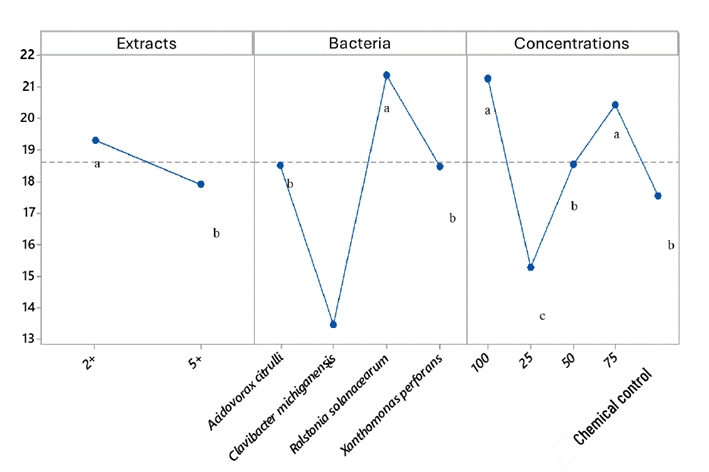
Figure 1 Main effects plot of methanolic leaf extracts of Ricinus communis, bacteria (Xanthomonas perforans, Acidovorax citrulli, Clavibacter michiganensis subsp. michiganensis, and Ralstonia solanacearum), and extract concentrations. Different letters among sections indicate statistical differences.
According to the preliminary results, extracts from accessions 2+ and 5+ exhibited the greatest antimicrobial effectiveness. In contrast, extract 1+, despite showing the highest ricinine concentration, did not display significant antimicrobial activity, suggesting that this alkaloid alone is not primarily responsible for the antimicrobial effect. This indicates that other bioactive compounds in the extracts may be involved in the observed antimicrobial activity. Studies by Hussein et al. (2018) and Abomughaid et al. (2024) have reported that alcoholic leaf extracts of R. communis contain phytochemicals such as flavonoids, terpenes, and tannins, which are known for their antimicrobial activity and well-defined mechanisms of action. Therefore, the efficacy of extracts 2+ and 5+ may be attributed to the combined or synergistic presence of these secondary metabolites. Further studies on their compounds are therefore necessary.
A statistically significant difference was found among the extracts evaluated against the bacterial isolates. On average, extract 2+ produced the largest inhibition zone (19.31 mm), followed by extract 5+, which produced an inhibition zone of 17.92 mm. Antibacterial activity was evidenced by the presence of well-defined inhibition halos at the different concentrations tested (Figure 2). Likewise, a significant difference was observed among the bacterial species studied: R. solanacearum showed the greatest inhibition (21.36 mm), followed by A. citrulli and X. perforans, both with 18.5 mm. Finally, Clavibacter michiganensis subsp. michiganensis exhibited an inhibition of 13.48 mm. These results are consistent with those reported by other authors, who noted that methanolic leaf extracts exhibit the strongest antimicrobial activity, particularly against Gram-negative bacteria (Hussein et al., 2018; Abd-Ulgadir et al., 2015; Al-Kuraishy et al., 2012), as also observed in this study.
The evaluation of Ricinus communis accessions allows for the identification of specific bioactive compounds with antimicrobial potential against phytopathogenic bacteria. In this regard, the results of this study open the possibility of exploring, in future research, their incorporation into new agricultural products such as bioinsecticides, biofungicides, or natural antimicrobials. These products could be formulated together with other proven active ingredients such as garlic (Allium sativum), essential oils (Hussein et al., 2025), and even microbial agents such as Trichoderma spp. and Bacillus spp. (Elhaj et al., 2021), to provide a broader range of solutions for the agricultural market. An example of this is the study conducted by Ramadass and Thiagarajam (2021), who evaluated the antibacterial activity of a Ricinus communis formulation for the control of Xanthomonas oryzae, demonstrating its bioactive potential. Additionally, Ricinus communis extracts have been tested against other phytopathogens such as the nematode Pratylenchus brachyurus (Izidoro et al., 2021).
Ricinus communis extracts have been evaluated in vitro against Ralstonia solanacearum isolated from bell pepper, producing inhibition zones of 11.88 mm at 100% concentration (Mayanglambam et al., 2020). Similarly, in this study, a statistically significant difference was found among extract concentrations, with the 100 and 75% concentrations (Table 2) showing the largest inhibition zones, 21.27 and 20.45 mm, respectively. The 50% concentration and the chemical control exhibited inhibition zones of 18.54 and 17.55 mm, respectively, while the 25% concentration showed the smallest inhibition zone (15.27 mm). These results suggest a direct relationship between extract concentration and antimicrobial effectiveness, as lower concentrations and the chemical control produced smaller inhibition zones, underscoring the importance of using adequate concentrations to maximize antimicrobial activity.
Table 2 Antimicrobial activity of methanolic extracts from Ricinus communis accessions 2+ and 5+ against bacteria associated with plant diseases.
| Bacteria | Inhibition zone (mm) (Mean±SD) 2+ | Inhibition zone (mm) (Mean±SD) 5+ | ||||||||
|---|---|---|---|---|---|---|---|---|---|---|
| Concentration (%) | Concentration (%) | |||||||||
| 100 | 75 | 50 | 25 | CQ | 100 | 75 | 50 | 25 | CQ | |
| Acidovorax citrulli | 21.11a± | 19.96a± | 19.46a | 14.88 | 15.47 | 19.86a | 23.06a | 18.84a | 16.94 | 14.18b |
| 2.2 | 1.9 | ±1.8 | b±1.4 | b±4.0 | b±2 | ±1 | b±1 | b±1.3 | ±4 | |
| C. michiganensis subsp. michiganensis | 17.24a± | 15.11b± | 13.37c | 11.18 | 18.55e | 11.99 | 11.33 | 9.21b | 8.25c | 18.55a |
| 1.05 | 0.71 | ±1.4 | d±0.5 | ±0.7 | b±1 | b±1 | ±0.8 | ±0.5 | ±0.7 | |
| Ralstonia solanacearum | 26.59a± | 24.48ab | 22.78 | 17.86c | 18.71c | 22.31a | 20.91a | 19.51 | 16.93c | 15.72c |
| 1.17 | ±0.9 | b±2.4 | ±1.62 | ±4.5 | ±1 | b±1 | b±0.9 | ±1.1 | ±4.2 | |
| Xanthomonas perforans | 23a±0.5 | 20.41b± | 20.62 | 16.17c | 14.59 | 22.49a | 19.93a | 16.92a | 14.5b | 16.29b |
| 0.3 | b±0.4 | ±0.8 | d±0.2 | ±1.5 | b±0.5 | b±0.6 | ±1 | ±0.3 | ||
*Different letters within rows indicate statistically significant differences (p < 0.05). n = 3. CQ: chemical control.
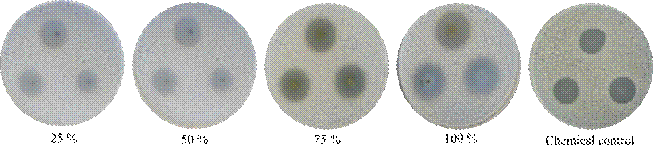
Figure 2 Antibacterial activity of extract 2+ against Ralstonia solanacearum. Clear inhibition zones were observed at different extract concentrations (25, 50, 75, and 100%) compared with the chemical control.
It is important to evaluate Ricinus communis leaf extracts for their antimicrobial activity and medicinal properties, as they have been reported to contain bioactive compounds such as ricinine, flavonoids, phenolic acids, and terpenoids (Martínez-Mora et al., 2023), which are effective in treating skin infections such as leishmaniasis and candidiasis (Ghani et al., 2023; Kebede and Shibeshi, 2022; Suurbaar et al., 2017). Although the present study focused exclusively on activity against bacteria associated with plant diseases (Xanthomonas perforans, Acidovorax citrulli, Clavibacter michiganensis subsp. michiganensis, and Ralstonia solanacearum), previous research has shown that these extracts may also exert insecticidal and antifungal effects on agriculturally important pests (Manzoor et al., 2025; Kebede and Shibeshi, 2022; Sotelo-Leyva et al., 2020).
This study represents an important contribution to the field of phytopathology, as it not only confirms the potential of R. communis as a source of bioactive antimicrobial compounds but also opens the way for the development of alternative, sustainable agricultural bioinputs that reduce dependence on synthetic agrochemicals. Further research is recommended to deepen the characterization of the metabolites responsible for antimicrobial activity, to study their effects under greenhouse or field conditions, and to extend the evaluation to other pathogens and application methods in order to validate their potential for use in integrated pest and disease management, thereby contributing to sustainability in both the agricultural and health sectors.
Conclusions
The methanolic leaf extracts of Ricinus communis evaluated in this study demonstrated significant antimicrobial activity against key agricultural bacteria such as Ralstonia solanacearum, Acidovorax citrulli, and Xanthomonas perforans. Accessions 2+ and 5+ showed the greatest effectiveness, with average inhibition zones of 19.31 mm and 17.92 mm, respectively, highlighting their potential as natural bactericidal agents for the integrated management of these phytopathogenic bacteria. Ricinine quantification by HPTLC revealed variations in the concentration of this alkaloid among accessions; however, the lack of a direct correlation with antibacterial activity suggests the likely involvement of other secondary metabolites in bacterial inhibition, offering a novel perspective on the complexity of the bioactive profile of Ricinus communis.
Acknowledgments
The authors thank Eng. Luis Alfredo Osuna García, M.Sc. Verónica Pérez Rubio, B.Sc. Eduardo Sánchez Valdez, and Eng. Werner Rubio Carrasco for their technical assistance.
REFERENCES
Abd-Ulgadir KS, Suliman SI, Zakria IA and Hassan NEA. 2015. Antimicrobial potential of methanolic extracts of Hibiscus sabdariffa and Ricinus communis. Advancement in Medicinal Plant Research 3:18-22. https://www.netjournals.org/z_AMPR_15_013.html [ Links ]
Abomughaid MM, Teibo JO, Akinfe OA, Adewolu AM, Teibo TKA, et al. 2024. A phytochemical and pharmacological review of Ricinus communis L. Discover Applied Sciences 6, 315. https://doi.org/10.1007/s42452-024-05964-5 [ Links ]
Acosta-Navarrete MS, Tigreros JA, Holgado-Apaza LA, Flores-Balderas JN and Adame JMB. 2023. Morphometric, weight, viability, and germination analysis of castor bean seeds (Ricinus communis) under two temperature and relative humidity conditions. Agro Productividad. https://doi.org/10.32854/agrop.v15i4.2484 [ Links ]
Al-Kuraishy H, Al-weendy S, Al-buhadilly A, Al-bajajy I, Al-gareeb A, et al. 2012. Antibacterial activity of Ricinnus communis: in vitro study. Iraqi Journal of Science 53:524-529. https://doi.org/10.24996/iraqijournalofscience.v53i3.12750 [ Links ]
Cheikhyoussef N and Cheikhyoussef A. 2022. Bioactive Phytochemicals from Castor (Ricinus communis Linneo) Seed Oil Processing By-products. In: Ramadan Hassanien MF (eds). Bioactive Phytochemicals from Vegetable Oil and Oilseed Processing By-products. Springer, Cham. https://doi.org/10.1007/978-3-030-63961-7_33-1 [ Links ]
Elhaj WE, Osman AA and Elawad LME. 2021. Efficacy of Ricinus communis L., Cassia occidentalis L. and Bacillus thuringiensis against Helicoverpa armigera Hübner (Lepidoptera: Noctuidae). Journal of Agronomy Research 3, 46-53 [ Links ]
Ellaithy A, Abdel-khalek A and Mohammed M. 2022. The potency of ricinine biopesticide from Ricinus communis leaves as an alternative host for mass rearing process of Tetranychus urticae and two predatory phytoseiid mites. Egyptian Journal of Chemistry 65: 535-549. https://doi.org/10.21608/ejchem.2021.107114.4922 [ Links ]
Elizalde Jiménez NA, Hernández Morales J, Leyva Mir SG, Nava Díaz C, Sequeira R, et al. 2011. Evaluación del riesgo de Acidovorax avenae Subsp. citrulli asociada a semilla de sandía de importación a México. Revista Mexicana de Fitopatología 29: 133-145 [ Links ]
El-Naggar MH, Elgaml A, Abdel Bar FM and Badria FA. 2018. Antimicrobial and antiquorum-sensing activity of Ricinus communis extracts and ricinine derivatives. Natural Product Research 33: 1556-1562. https://doi.org/10.1080/14786419.2017.1423306 [ Links ]
Ghani JN, Zaman A, and Mohammed K. 2023. Study of effects leaf extract of Ricinus communis in skin disease. Eur Chem Bull 12, 7166-7174 [ Links ]
Gómez-González A, Silos-Espino H, Reyes-Contreras JG, Amante-Orozco A, Pimentel-López J, et al. 2022. Yield and oil content of castor oil plant (Ricinus communis L.) accessions grown with fertigation in a semiarid zone. Agro Productividad https://doi.org/10.32854/agrop.v15i10.2346 [ Links ]
Hussein HJ, Kaizal AF, Al-Khafaji NM, Sadiq ZF and Shahad AS. 2018. Evaluation of antibacterial potential of the crude Phenolic, Alkaloid and Terpenoid extracts of Ricinus communis L. against gram-negative Pathogenic Bacteria. Journal of Global Pharma Technology 10: 384-388. http://dx.doi.org/10.62940/als.v11i2.2403 [ Links ]
Hussein HS, Idriss MH, El-Gayar FH, Mousa HYS and Salem MZ. 2025. Comparative efficacy of plant derived extracts with the insecticide mospilan on two whitefly species Bemisia tabaci biotype B and Trialeurodes ricini. Scientific Reports 15, 1970 [ Links ]
Izidoro Jr A, Silva EJ, Tarini G, Bordin JC, Silva BA, et al. 2021. Aqueous extract of castor bean seed cake for the control of Pratylenchus brachyurus in soybean. Nematropica 51: 1-8. https://journals.flvc.org/nematropica/article/view/128534 [ Links ]
Kaur R and Bhaskar T. 2020. Potential of castor plant (Ricinus communis) for production of biofuels, chemicals, and value-added products. 269-310. In: Bhaskar T, Pandey A, Tsang DCW and Rene ER (eds). Waste biorefinery. Elsevier 733p. https://doi.org/10.1016/B978-0-12-818228-4.00011-3 [ Links ]
Kebede B and Shibeshi W. 2022. In vitro antibacterial and antifungal activities of extracts and fractions of leaves of Ricinus communis Linn against selected pathogens. Veterinary Medicine and Science 8: 1802-1815. https://doi.org/10.1002/vms3.772 [ Links ]
Leal JFV, Cuellar-Nuñez L, Vivanco-Vargas M, Solís-Lozano JA, Díaz-Calzada ME, et al. 2022. Agribusiness potential of castor oil plant (Ricinus communis L.) in Mexico. Agro Productividad. https://doi.org/10.32854/agrop.v15i5.2267 [ Links ]
Longoria-Espinoza RM, Félix-Gastélum R and Cordero-Ramírez JD. 2020. Diversity of endophytic bacteria associated with tomato plants (Solanum lycopersicum). Revista Mexicana de Fitopatología 38: 307-319. http://dx.doi.org/10.18781/R.MEX.FIT.2002-7 [ Links ]
Manzoor S, Akbar R, Hussain A, Ali A, Faheem B, et al. 2025. Toxicity effect of Ricinus communis methanolic extracts against Bactrocera cucurbitae (Diptera: Tephritidae). Plant Protection Science 61, 77 [ Links ]
Martínez-Mora MM, Sardiña-Alfonso G, Rondón-Castillo AJ, Pérez-Rojas A and Pérez-Hernández Y. 2023. Phytochemical composition and antibacterial properties of Ricinus communis L. Pastures and Forages 46:e13. https://www.redalyc.org/journal/2691/269176991013/html/ [ Links ]
Mayanglambam B, Biswal G and Pattanayak S. 2020. In vitro evaluation of different plant oils on growth of Ralstonia solanacearum causing wilt disease in Capsicum annum. Journal of Pharmacognosy and Phytochemistry 9: 312-315 [ Links ]
Nour IH, Alhadead K, Ellmouni FY, Badr R, Saad TI, et al. 2023. Morphological, anatomical and chemical characterization of Ricinus communis L. (Euphorbiaceae). Agronomy 13: 985. https://doi.org/10.3390/agronomy13040985 [ Links ]
Osdaghi E, Jones JB, Sharma A, Goss EM, Abrahamian P, et al. 2021. Centenary for bacterial spot of tomato and pepper. Molecular Plant Pathology 22:1500-1519. https://doi.org/10.1111/mpp.13125 [ Links ]
Ramadass M and Thiagarajan P. 2021. A sustainable castor oil-based agro formulation with cartap hydrochloride for potential control of pathogenic Xanthomonas oryzae in Oryza sativa L. Journal of Environmental Biology 42: 74-81. http://doi.org/10.22438/jeb/42/1/MRN-1424 [ Links ]
Reyes-Tena A, Fernández-Pavía SP and Hernández-Macías B. 2021. Tomate (Solanum lycopersicum) production and bacterial canker management during COVID-19. Revista Mexicana de Fitopatología 39: 351-361. http://dx.doi.org/10.18781/R.MEX.FIT.2021-8 [ Links ]
Saravana Kumar P, Li Y, He M, Yuvaraj P, Balakrishna K, et al. 2022. Rapid isolation of ricinine, a pyridone alkaloid from Ricinus communis (L.) with antifungal properties. Journal of Biologically Active Products from Nature 12: 33-41. https://doi.org/10.1080/22311866.2021.2021985 [ Links ]
Staňková M, Handlos P, Švidrnoch M and Maier V. 2020. Fatal intoxication by intravenous injection of castor bean (Ricinus communis L.) extract a case study. International Journal of Legal Medicine 134: 2133-2141. doi: 10.1007/s00414-020-02340-x [ Links ]
Sotelo-Leyva C, Salinas-Sánchez DO, Peña-Chora G, Trejo-Loyo AG, González-Cortázar M, et al. 2020. Insecticidal compounds in Ricinus communis L. (Euphorbiaceae) to control Melanaphis sacchari Zehntner (Hemiptera: Aphididae). Florida entomologist 103: 91-95 [ Links ]
Soto-Caro A, Vallad GE, Xavier KV, Abrahamian P, Wu F, et al . 2023. Managing Bacterial Spot of Tomato: Do Chemical Controls Pay Off?. Agronomy 13: 972. https://doi.org/10.3390/agronomy13040972 [ Links ]
Suryaningsih L, Gumilar J, Setyadi Putranto W, Wulandari E, None P, et al. 2025. Estudio del marinado de pollos de engorde con ajo sobre la ciudad de retención de agua, la pérdida por cocción, la ternura y el número de bacterias. Revista de Agricultura del Himalaya 6: 1-4. https://doi.org/10.47310/hja.2025.v06i01.001 [ Links ]
Suurbaar J, Mosobil R and Donkor AM. 2017. Antibacterial and antifungal activities and phytochemical profile of leaf extract from different extractants of Ricinus communis against selected pathogens. BMC research notes 10: 1-6. https://doi.org/10.1186/s13104-017-3001-2 [ Links ]
Tapia-de la Barrera LB, Báez-Sañudo MA, García-Estrada RS, Tovar-Pedraza JM and Carrillo-Fasio JA. 2023. Identification of species and physiological races of Xanthomonas isolated from tomato (Solanum lycopersicum) and chili pepper (Capsicum annuum) in Sinaloa, Mexico. Revista Mexicana de Fitopatología 41: 326-342. https://doi.org/10.18781/r.mex.fit.2210-2 [ Links ]
Xhemali B, Giovanardi D, Biondi E and Stefani E. 2024. Tomato and Pepper Seeds as Pathways for the Dissemination of Phytopathogenic Bacteria: A Constant Challenge for the Seed Industry and the Sustainability of Crop Production. Sustainability 16: 1808. https://doi.org/10.3390/su16051808 [ Links ]
Zavala-Gómez CE, Rodríguez-de León E, Bah MM, Feregrino-Pérez AA, Campos-Guillén J, et al. 2021. Effect of salicylic acid in the yield of ricinine in Ricinus communis under greenhouse condition. Plants 10: 1902. https://doi.org/10.3390/plants10091902 [ Links ]
Zheng KX, Liu CH, Wang S, Tzou YM, Chiang CM, et al. 2023. Evaluating the release and metabolism of ricinine from castor cake fertilizer in soils using a LC-QTOF/MS coupled with SIRIUS workflow. Chemosphere 310: 136865. https://doi.org/10.1016/j.chemosphere.2022.136865 [ Links ]
Received: October 16, 2024; Accepted: December 15, 2025
 Este es un artículo publicado en acceso abierto bajo una licencia Creative Commons
