




Servicios Personalizados
Revista
Articulo
 texto en
  Inglés (pdf)
 Artículo en XML
 Referencias del artículo
 Traducción automática
 Enviar artículo por email
Indicadores
-
 Citado por SciELO
 -
 Accesos
Links relacionados
-
 Similares en
SciELO
Similares en
SciELO
Compartir

 Permalink
Revista mexicana de fitopatología
versión On-line ISSN 2007-8080versión impresa ISSN 0185-3309
Rev. mex. fitopatol vol.43 no.spe Texcoco 2025 Epub 01-Dic-2025
https://doi.org/10.18781/r.mex.fit.2024-16
Scientific Article
Sensitivity of Colletotrichum truncatum isolated from Echeveria gibbiflora plants to different biofungicides
1Decanato de Ciencias de la Vida y la Salud, Escuela de Ingeniería en Agronomía, Centro de Investigación en Horticultura y Plantas Nativas, UPAEP University, 21 sur No. 1103, Puebla, Puebla, CP 72410, México.
2Facultad de Matemáticas, Universidad Autónoma de Guerrero, Av. Lázaro Cárdenas S/N, Chilpancingo de los Bravo, Guerrero, CP 39087, México.
3Colegio Superior Agropecuario del Estado de Guerrero, Fitotecnia, Iguala de la Independencia, Guerrero, CP 40000, México.
4Instituto Nacional de Investigaciones Forestales, Agrícolas y Pecuarias, Km 2.5 Carretera Iguala-Tuxpan, Colonia Centro Tuxpan, Iguala de la Independencia, Guerrero, CP 40000, México.
5Laboratorio de Diagnóstico Molecular, UPAEP University, 21 sur No. 1103, Puebla, Puebla, CP 72410, México.
Background/Objetive.
Colletotrichum truncatum is a phytopathogenic fungus that induces the anthracnose disease in the leaves of Echeveria gibbiflora (Echeveria), a native Mexican species with a great ornamental value. The aim was to evaluate the sensitivity of
C. truncatum isolated from E. gibbiflora plants to 11 biofungicides as an alternative for the integrated management of the disease.
Materials and Methods.
Through sensitivity tests, the percentage of fungal growth inhibition was determined in PDA medium modified with each biofungicide at concentrations of 0, 1, 10, 100, 500 and 1000 mg L -1. A completely randomized design with an 11 × 6 factorial arrangement (11 biofungicides × six concentrations) and four replications was used. The effective concentration of an inhibition of 50% (EC50) was determined by logistic regression.
Results.
C. truncatum isolated from E. gibbiflora was the most sensitive to the Melaleuca alternifolia oil (EC50 = 109.23 mg L -1), extracto de Reynoutria sachalinensis (EC50 = 168.76 mg L -1) y Bacillus amyloliquefaciens QST 713 (EC50=61.07 mg L -1) in in vitro conditions. The Laminaria digitata oil (EC50 = 19.95 mg L -1), Thymus vulgaris and Mentha spicata essential oils (EC50 = 112.47 mg L -1) and the extract of Larrea tridentata and Ricinus communis (EC50 = 78.51 mg L -1) inhibited more than 50% of the growth of the fungus.
Conclusion
. The L. digitata oil, T. vulgaris and M. spicata essential oils and the L. tridentata and R. communis extract have an inhibiting effect on the growth of the fungus of over 50%. These results contribute to the knowledge of the integrated management of C. truncatum that causes leaf anthracnose in E. gibbiflora with the application of biofungicides.
Keywords: Biofungicides; Biocontrol; EC50; Sensitivity; Fungi; Echeveria; Phytopathogens
Antecedentes/Objetivo.
Colletotrichum truncatum es un hongo fitopatógeno que induce la enfermedad de antracnosis en hojas de Echeveria gibbiflora (tememetla), una especie nativa de México de gran valor ornamental. El objetivo fue evaluar la sensibilidad de C. truncatum aislado de plantas E. gibbiflora a 11 biofungicidas, como una alternativa para el manejo integrado de la enfermedad.
Materiales y Métodos.
Mediante pruebas de sensibilidad, se determinó el porcentaje de inhibición del crecimiento del hongo en medio PDA modificado con cada biofungicida en concentraciones de 0, 1, 10, 100, 500 y 1000 mg L -1. Se utilizó un diseño completamente aleatorizado en arreglo factorial 11 × 6 (11 biofungicidas × seis concentraciones) y cuatro repeticiones. Se determinó la concentración efectiva para 50 % de inhibición (CE50) mediante regresión logística.
Resultados.
C. truncatum aislado de E. gibbiflora fue más sensible al aceite de Melaleuca alternifolia (CE50 = 109.23 mg L -1), extracto de Reynoutria sachalinensis (CE50 = 168.76 mg L -1) y Bacillus amyloliquefaciens QST 713 (CE50=61.07 mg L -1) en condiciones in vitro. El aceite de Laminaria digitata (CE50 = 19.95 mg L -1), aceites esenciales de Thymus vulgaris y Mentha spicata (CE50 = 112.47 mg L -1) y el extracto de Larrea tridentata y Ricinus communis (CE50 = 78.51 mg L -1) inhibieron más de 50 % el crecimiento del hongo.
Conclusión
. El aceite de L. digitata, aceites esenciales de T. vulgaris y M. spicata y el extracto de L. tridentata y R. communis tienen efecto inhibitorio en el crecimiento del hongo superior a 50 % Estos resultados contribuyen al conocimiento sobre el manejo integrado del C. truncatum causante de antracnosis en hoja de E. gibbiflora con la aplicación de biofungicidas.
Palabras clave: Biofungicidas; Biocontrol; CE50; Sensibilidad; Hongos; Tememetla; Fitopatógenos
Introduction
The Echeveria genus belongs to the Crassulaceae family, which corresponds to a group of plants endemic to the American continent, with succulent leaves and few agricultural requirements. Out of this genus, Mexico has 83% of the diversity of species (Reyes-Santiago et al., 2011a; Reyes-Santiago et al., 2011b; Schoch et al., 2020).
In this genus, Echeveria gibbiflora (tememetla, Echeveria, ornamental succulent) stands out as one of the native Mexican species with great potential in floriculture, due to its ability to thrive in adverse environments, the beauty of its leaves, the size of its inflorescence (1 m in length), number of batches (up to 12 per inflorescence), the attractiveness of its bright pink flowers and the continuous appearance of new buds (Reyes-Santiago et al., 2015). These are characteristics that make it an excellent option for their commercialization, both in pots and also as cutting flowers (Leszczyñska-Borys, 2003).
On the other hand, one of the factors that influence the quality of the Echeveria genus plants is the attack of diverse fungal diseases such as anthracnose induced by Colletotrichum destructivum (Yao et al., 2020), powdery mildew by Erysiphe sp. (Shi et al., 2019), stem rot by Fusarium oxysporum (Yao et al., 2021), vascular wilting by F. oxysporum f. sp. echeveriae (Ortu et al., 2015), fungal leaf spot (Cladosporium tenuissimum) (Jo et al., 2018), white mold (Sclerotinia sclerotiorum) (Terrones et al., 2024) and anthracnose induced by Colletotrichum truncatum (Apáez et al., 2025). It is frequent that, for the management of diseases in urban areas, chemical pesticides are inadequately applied, which implies the release of toxic residues into the environment, making it a risk for human health and the environment (Meftaul et al., 2020), whether directly by bioaccumulation, or indirectly by the food chain (Parra-Arroyo et al., 2022). This leads to a need to generate sustainable strategies for the management of diseases in ornamental plants for urban areas that help reduce the resistance of the pathogens to chemical pesticides and contribute to the reduction of contamination of soils and aquifers (Reyes et al., 2015). Biofungicides based on plant oils, plant extracts and antagonistic microorganisms suggest possible uses in the in vitro biological control of C. truncatum isolated from E. gibbiflora. Due to this, the aim of this study was to evaluate the sensitivity of C. truncatum that induces anthracnose in E. gibbiflora to 11 biofungicides as an alternative for the integrated management of the disease.
Materials and methods
Origin of the isolation. An isolation obtained from E. gibbiflora plants grown in the Research Center in Horticulture and Native Plants of UPAEP University, located in Atlixco, Puebla, Mexico, where symptoms of anthracnose was observed in leaves, with an incidence and severity of 45 and 40%, respectively. The fungus that induced the disease was isolated (isolate CtEg2) and characterized pathogenically, culturally, morphologically, morphometrically and phylogenetically in a previous study and identified as Colletotrichum truncatum (GenBank. ITS: PP406307; TUB2: PP616679; GAPDH: PP616680; ACT: PP616681) (Apáez et al., 2025).
Preparation of modified culture media and planting of C. truncatum . Using the poisoned culture medium method (Barroso et al., 2021; Guerrero et al., 2007), the sensitivity of the C. truncatum isolation was evaluated with 11 biofungicides (Table 1). All biofungicides were tested with six concentrations, 0 (control), 1, 10, 100, 500 and 1000 mg L -1. A potato dextrose agar (PDA) culture medium was used, modified with the biofungicides poured into Petri dishes (100 × 15 mm). Subsequently, a 5 mm PDA disc with an active, seven-day old C. truncatum growth was planted, and the dishes were incubated in the dark at 25 ± 1 °C (Iturbide et al., 2017).
Table 1 Effect of different biofungicides on the sensitivity of C. truncatum isolated from E. gibbiflora.
| Treatment | Brand name | Active ingredient | %y | EC50 (mg L-1) |
|---|---|---|---|---|
| T1 | Timorex® Gold, Syngenta | Melaleuca alternifoliav | 23.8 | 109.23 |
| T2 | REGALIA® MAXX, FMC | Reynoutria sachalinensisw | 20 | 168.76 |
| T3 | Serenade® ASO, Bayer | Bacillus amyloliquefaciens QST 713X | 1.34z | 61.07 |
| T4 | Vacciplant®, Arysta | Laminaria digitatav | 4.5 | 19.95 |
| T5 | Nopath®, Koppert | Thymus vulgaris, Mentha spicatav | 32 | 112.47 |
| T6 | OrgFung®, Gowan | Larrea tridentataw | 4 | 99.47 |
| T7 | FungiBest control, AgriBest | Syzygium aromaticum, Piper nigrum, Ricinus communis, Ruta graveolensw | 10 | 71.55 |
| T8 | Bio Gober Plus®, BioNutra | Larrea tridentata, Ricinus communisw | 82.5 | 78.51 |
| T9 | Bacter F®, BioNutra | Lippia graveolens, Cinnamumun verum, Ricinus communisw | 31.9 | 27.57 |
| T10 | Naturdai MIM®, Idainature | Mimosa tenuiflora, Quercus roburw | 8.3 | 60.15 |
| T11 | Protector Plus®, BioNutra | Potassium saltsw | 41.9 | 295.7 |
V Plant oil; W Plant extract; X Antagonist; Y Concentration of the active ingredient in the formulation of the product; Z 1×10⁹ UFC per gram of product formulated.
Determining the percentage of inhibition. The diameter of the colony was measured
every 24 h for 12 days (time taken for the control Petri dishes to fill with
fungal mycelium) in two perpendicular directions using a digital caliper
(Truper®, Mexico) and using the data obtained, the percentage of
growth inhibition (PGI) was calculated using Abbott’s formula (1925):
PGI= (𝐷𝑐−𝐷𝑡) 𝑥 100 where: PGI: Percentage of growth inhibition; Dc: 𝐷𝑐
Diameter of the control; Dt: Diameter of the treatment (García et al., 2021).
formula (1925):
PGI= (𝐷𝑐−𝐷𝑡) 𝑥 100 where: PGI: Percentage of growth inhibition; Dc: 𝐷𝑐
Diameter of the control; Dt: Diameter of the treatment (García et al., 2021).
Experimental design. It was a factorial experiment, arranged in a totally randomized design, 11 × 6 [11 biofungicides with six concentrations (0, 1, 10, 100, 500 and 1000 mg L -1) each] with 66 treatments, four repetitions and 264 experimental units, each consisting of one Petri dish measuring 100 × 15 mm, and two repetitions of the experiment were performed.
Data analysis. The data obtained underwent normality tests, using the Shapiro-Wilk test. Likewise, the Levene test was used for the variance homogeneity test and the level of significance used was alfa=0.05. A concentration-response analysis was performed to evaluate the biological effectiveness of 11 different biofungicides in terms of percentages of inhibition. The data were adjusted to a log-logistical model to determine the effective concentration for an inhibition of 50% (EC50) for each biofungicide. An analysis of variance was carried out, along with Tukey’s test to carry out multiple comparisons between the percentage of mycelial inhibition of the 11 biofungicides, with a level of significance of 5%. All statistical tests were performed in the program R, version 4.3.2.
Results
The effective concentration for 50% inhibition (EC50) was different for each biofungicide. For the M. alternifolia oil, it was 109.23 mg L -1, whereas for the R. sachalinensis extract, it was 168.76 mg L -1. In the case of B. amyloliquefaciens QST 713, the estimation of EC50 was 61.07 mg L -1 and in the L. digitata oil, EC50 was 19.95 mg L -1. Regarding the T. vulgaris and M. spicata essential oils a EC50 of 112.47 mg L -1 was observed. In the cases of the L. tridentata and R. communis extracts, a EC50 of 78.51 mg L -1 was identified; a EC50 of 71.55 mg L -1 was found for the S. aromaticum, P. nigrum,
R. communis and R. graveolens extracts. The L. tridentata extract obtained a value of
99.47 mg L -1, the EC50 of the L. graveolens, C. verum and R. communis extracts presented a value of 27.57 mg L -1, and the M. tenuiflora and Q. robur extract displayed a EC50 of
60.15 mg L -1. Finally, the EC50 was determined for the fatty-acid-rich potassium salts with a value of 295.70 mg L -1 (Table 1, Figure 1).
The estimated values of the 50% effective concentration (standard error and t and p values) indicated that the estimation is highly significant (p < 0.001) for all biofungicides, except for the T. vulgaris and M. spicata essential oils, as the values suggest that the estimation is significant (p < 0.05) (Table 1).
The analysis of variance displayed significant differences between the percentages of inhibition of the mycelial growth of biofungicides (p-value < 2e-16***). Tukey’s test was used to carry out multiple comparisons between the percentages of inhibition of the mycelial growth of the 11 biofungicides, with a level of significance of 5%. The residual variability is relatively low (MSerror = 3.94), which suggests that the model is well adjusted to the data observed. The coefficient of variation was 3.65%, which indicates that the variability of the data is relatively low in comparison to the mean observed (53.46%); Tukey’s means comparison test displayed statistically different group.
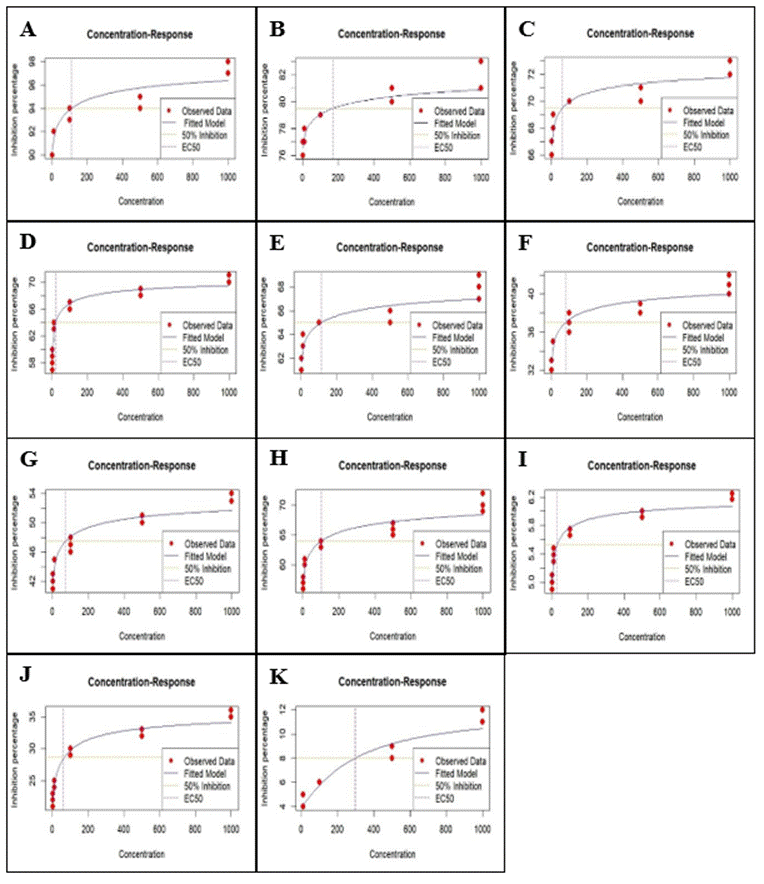
Figure 1 Concentration response and EC50 of 11 biofungicides against C. truncatum isolated from E. gibbiflora. A) e M. alternifolia oil; B) R. sachalinensis extract; C) B. amyloliquefaciens QST 713; D) L. digitata oil; E) ac T. vulgaris and M. spicata essential oils; F) L. tridentata and R. communis extracts; G) cinnamaldehyde, S. aromaticum, P. nigrum, R. communis and R. graveolens extracts; H) L. tridentata extract; I) L. graveolens, C. verum and R. communis extracts; J) M. tenuiflora and Q. robur extract; K) fatty-acid-rich potassium salts.
The treatment based on M. alternifolia oil was significantly different to the rest of the treatments, with the highest percentage of inhibition of the mycelial growth with a value of 93.6%, while the biofungicide made with fatty-acid-rich potassium salts was significantly different to the rest of the treatments, since it presented the lowest percentage of inhibition of the mycelial growth, with a value of 7.63%. The biofungicides composed of R. sachalinensis extract, B. amyloliquefaciens QST 713, L. digitata oil, T. vulgaris and
M. spicata essential oils and the L. tridentata extract displayed percentages of inhibition above 50%, with values of 78.85, 69.5, 65.4, 64.55 and 63.4 %, respectively (Figure 2).
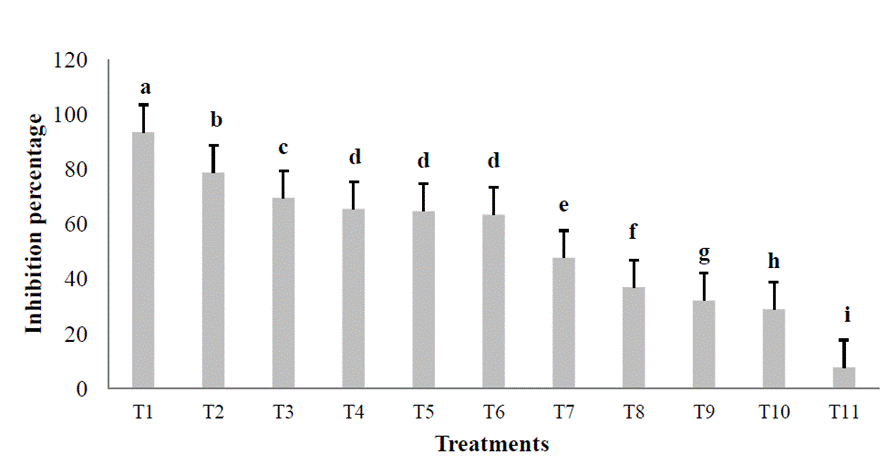
Figure 2 Percentage of inhibition of the mycelial growth of C. truncatum isolated from E. gibbiflora, evaluated in vitro with 11 biofungicides. The mean values followed by the same letters are statistically similar (Tukey α = 0.05) according to Tukey’s honest significant difference test. T1= M. alternifolia oil; T2= R. sachalinensis extract; T3= B. amyloliquefaciens QST 713; T4= L. digitata oil; T5= T. vulgaris and M. spicata essential oils; T6= L. tridentata extract; T7= cinnamaldehyde, S. aromaticum extracts, P. nigrum, R. communis y R. graveolens; T8= L. tridentata and R. communis extracts; T9= L. graveolens, C. verum and R. communis extracts; T10= M. tenuiflora and Q. robur extract; and T11= fatty-acid-rich potassium salts.
The percentage of inhibition of the mycelial growth of C. truncatum was calculated for each one of the six concentrations (0, 1, 10, 100, 500 and 1000 mg L -1) of the 11 biofungicides evaluated. In concentration of 0 mg L -1, the percentage of inhibition was 0% in all biofungicides. When 1 mg L -1 was evaluated, the percentage of inhibition varied from 0.5 to 90.0%; when the concentration of 10 mg L -1 was tested, the percentage of inhibition was maintained in a range of 4.8 to 92.0%, whereas when 100 mg L -1 was tested, a range of 6.0 to 93.8% of inhibition was identified. In the concentration of 500 mg L -1, the percentage of inhibition values found were between 8.3 and 94.8%. Finally, when a concentration of 1000 mg L -1 was used, the percentage of inhibition was found to range between 11.5 and 97.5. In all concentrations used, the fatty-acid-based potassium salt treatment presented the lowest percentage values, whereas the M. alternifolia oil- based treatment displayed the highest values (Table 2). Additionally, in all the biofungicides evaluated, the percentage of inhibition grew as the concentration increased. For example, in the case of M. alternifolia oil, when concentrations of 1, 10, 100, 500 and 1000 mg L -1 were evaluated, percentages of inhibition were identified in the C. truncatum mycelial growth of 90.0, 92.0, 93.8, 94.8 and 97.5 respectively. The biofungicides composed of L. tridentata plant extract, T. vulgaris and M. spicata oils, L. digitata plant oil, B. amyloliquefaciens QST 71 antagonist, R. sachalinensis plant extract and de M. alternifolia oil presented percentages of mycelial growth inhibition higher than 50% (Table 2).
Table 2 Effect of different biofungicides on the percentage of inhibition of the mycelial growth of the C. truncatum isolated from E. gibbiflora.
| Treatment | Brand name | Active ingredient | %y | Concentration (mg L-1) / percentage of inhibition of the mycelial growth | ||||
|---|---|---|---|---|---|---|---|---|
| 1 | 10 | 100 | 500 | 1000 | ||||
| T1 | Timorex® Gold, Syngenta | Melaleuca alternifoliav | 23.8 | 90.0 | 92.0 | 93.8 | 94.8 | 97.5 |
| T2 | REGALIA® MAXX, FMC | Reynoutria sachalinensisw | 20 | 76.3 | 77.8 | 79.0 | 80.3 | 81.0 |
| T3 | Serenade® ASO, Bayer | Bacillus amyloliquefaciens QST 713x | 1.34z | 66.3 | 68.3 | 70.0 | 70.5 | 72.5 |
| T4 | Vacciplant®, Arysta | Laminaria digitatav | 4.5 | 58.5 | 63.8 | 66.3 | 68.3 | 70.3 |
| T5 | Nopath®, Koppert | Thymus vulgaris, Mentha spicatav | 32 | 61.3 | 63.3 | 65.0 | 65.3 | 68.0 |
| T6 | OrgFung®, Gowan | Larrea tridentataw | 4 | 57.0 | 60.5 | 63.3 | 66.0 | 70.3 |
| T7 | FungiBest control, AgriBest | Syzygium aromaticum, Piper nigrum, Ricinus communis, Ruta graveolensw | 10 | 42.0 | 45.0 | 47.0 | 50.3 | 53.3 |
| T8 | Bio Gober Plus®, BioNutra | Larrea tridentata, Ricinus communisw | 82.5 | 32.5 | 32.5 | 37.0 | 38.8 | 40.8 |
| T9 | Bacter F®, BioNutra | Lippia graveolens, Cinnamumun verum, Ricinus communisw | 31.9 | 25.0 | 29.0 | 32.3 | 35.3 | 38.8 |
| T10 | Naturdai MIM®, Idainature | Mimosa tenuiflora, Quercus roburw | 8.3 | 21.8 | 24.8 | 29.5 | 32.3 | 35.5 |
| T11 | Protector Plus®, BioNutra | Potassium saltsw | 41.9 | 0.5 | 4.8 | 6.0 | 8.3 | 11.5 |
V Plant oil; W Plant extract; X Antagonist; Y Concentration of the active ingredient in the formulation of the product; Z 1×10⁹ UFC per gram of product formulated
Discussion
Calculating the EC50 of each product helped identify that seven biofungicides (64%) were effective at concentrations lower than 100 mg L -1 and 4 of them (36%), at concentrations between 101 and 300 mg L -1, whereas the most efficient biofungicides in the control of C. truncatum were the M. alternifolia oil, the R. sachalinensis extract and the B. amyloliquefaciens QST 713, effective in the control at relatively low concentrations of 109.23, 168.76 and 61.07 mg L -1, respectively.
According to Quyen and Quoc (2024), the essential oils of the M. alternifolia extract contain 45 compounds, of which the main compound is terpinen-4-ol (44.55%), associated to antioxidant and antimicrobial activity. Likewise, the action mechanism of this essential oil in Penicillium expansum has been documented to be on the plasmid membrane of the fungus, although whether this is due to the alteration in the structure of the membrane or a change in its permeability is unknown. However, the exposure of the fungus for 4 hours to the vapor phase of the M. alternifolia essential oil caused a loss in DNA, protein and glucose, as well as lipid damage (da Rocha et al., 2019).
Regarding the control of some Colletotrichum species, do Nascimento et al. (2019) found that with a concentration of 25 μL of M. alternifolia essential oil, the germination of spores from Colletotrichum gloeosporioides isolated from bell pepper (Capsicum annuum) plants becomes inhibited by 100%. In turn, da Costa et al. (2023) reported that the EC100 on the mycelial growth of C. musae in in vitro plantations achieved this with a concentration of 2.15 μg mL -1 of M. alternifolia essential oil, whereas treatments with banana fruits with aqueous emulsions of the essential oil reduce the severity of anthracnose induced by C. musae by more than 80% without any phytotoxic effects. These data coincide with the results presented in this investigation, unlike a study by Kiranmayee et al. (2020) that evaluated the effect of eight essential oils on the in vitro growth of C. gloeosporioides isolated from pommegranate (Punica granatum) stems and roots, and showed that M. alternifolia essential oil had a lower effect on concentrations of 0.5, 1.0 and 2.0%, in comparison with thyme (T. vulgaris) and clove (S. aromaticum) oils, which were the most effective biofungicides for the inhibition of mycelial growth, which suggests that, in order to evaluate the fungicidal effect of M. alternifolia, several factors must be taken into account, such as the species of the pathogen, the host from which it was isolated, the concentration of the biofungicide and the environment.
On the other hand, M. alternifolia has been proven to have an effect on the growth of other phytopathogenic fungal species, as indicated in an investigation by Rani and Tripathi (2022), where it was reported that with a dose of 0.02% of M. alternifolia essential oil, inhibited the germination of Botrytis cinerea spores isolated from chili pepper (C. annuum) fruits by 100%. Likewise, the authors indicate that the application of this oil as a fumigant and in submersion treatments for fruits increases the shelf life of the chili pepper. The sensitivity of the Alternaria alternata fungus to the essential oil of M. alternifolia was also evaluated, with 11 concentrations that ranged between 0.0125 and 1.0%, and found that the concentration in which full inhibition was reached was 0.2%. Meanwhile, evaluating in vivo by treatments of the cowpea bean (Vigna unguiculata) seed with the essential oil did not reduce the percentage of incidence of the pathogen (de Figuerêdo et al., 2019), which indicates that, alongside the in vitro tests of sensitivity of
C. truncatum to the M. alternifolia essential oil, it is necessary to carry out in vivo tests on E. gibbiflora plants to determine the optimum dose on the field.
In addition to the antifungal effect, there are reports indicating that M. alternifolia has an inhibiting effect on the pathogenic bacteria of humans and some fungi that produce mycotoxins. Quyen and Quoc (2024) calculated the EC50 of the M. alternifolia essential oils for the inhibition of the growth of Bacillus cereus (ATCC 11778), Staphylococcus aureus (ATCC 25923), Salmonella enterica (ATCC 13076) and Escherichia coli (ATCC 25922) and reported that the 50% inhibition of bacterial growth was at a concentration of 360 mg mL -1. Another similar study, carried out by Zhang et al. (2018) shows that the M. alternifolia essential oil has an antimicrobial effect, not only on the growth of bacteria such as E. coli, S. aureus and Pseudomonas aeruginosa, but also of fungi such as Penicillium italicum and P. digitatum with a EC50 of 48.35 μg mL -1. This is an advantage in the use of the M. alternifolia essential oil since E. gibbiflora is commonly used in plants, where these plants can come into contact with children and pets. Therefore, should there be any contamination of the water or organic residues used for the cultivation of this plant, the oil could contribute to minimizing the risks of contamination, although further study on this is necessary.
The R. sachalinensis extract was the biofungicide with the second highest inhibition in the growth of C. truncatum. According to Margaritopoulou et al. (2020), in a study on the control of powdery mildew induced by Podosphaera xanthii in zucchini, the R. sachalinensis extract works as an elicitor or inducer of the plant defense mechanisms, since it triggers several reactions, such as the formation of callose, the accumulation of hydrogen peroxide and the increase in the production of salicylic, p-coumaric and caffeic acids, which significantly reduced the germination of conidia and the severity of the disease. Santos-Esteban et al. (2021) reported that the R. sachalinensis extract inhibited the growth of Fusarium oxysporum isolated from the bean plant (Phaseolus vulgaris) by 100%, whereas Baysal-Gurel and Bika (2021) reported the foliar applications of this same extract at a concentration of 0.5 mL L -1 reduced the severity of powdery mildew (Podosphaera physocarpi) on the ornamental tree ninebark (Physocarpus opulifolius) grown in a shade house.
On the other hand, B. amyloliquefaciens QST 713 had a significantly greater effect than the rest of the treatments after the M. alternifolia essential oil and the R. sachalinensis extract. B. amyloliquefaciens QST 713 has been reported to have an effect on the regulation of genes related to the activation of transcription factors of the WRKY family and NAC, related to the defense mechanisms against stress factors and LRR-RLK receptors, which intervene in the recognition of the pathogen and the transduction of signals, through transcriptomic studies on peach fruits treated with B. amyloliquefaciens QST 713 for the control of Monilinia fructicola, where it is also pointed out that the biofungicide inhibited the in vitro growth of the fungus in the culture and reduced the severity of the symptoms of the disease (Tsalgatidou et al., 2014). In turn, Pérez-Moreno et al. (2015) found that B. amyloliquefaciens QST 713 inhibited the in vitro culture growth of Sclerotinia minor isolated from symptomatic lettuce (Lactuca sativa) plants with an average radial mycelial growth of 1.9 cm. Another study, carried out by Solano- Báez et al. (2021) indicates that B. amyloliquefaciens QST 713, at a concentration of 6×10⁷ UFC mL -1 reduced by 81.7% the incidence of drowning of zucchini plants produced by a complex made up of Phytophthora capsici, Rhizoctonia solani and F. oxysporum.
Finally, the biopesticides used to control fungal diseases have diverse advantages, since they have multiple action mechanisms due to the amount of phytochemicals they contain, leading them to generate no resistance, being ecological, easy to produce, effective and inexpensive, they produce no waste and have a low toxicity on organisms that are not their target, including humans, making risks on human health reduced (Deresa and Diriba, 2023; Suteu et al., 2020). It is worth mentioning that for the management of plant diseases in gardens, parks and public areas, where E. gibbiflora is appreciated, it is crucial to use fungicides that generate no residuality, are eco-friendly and low-risk for humans and fauna, due to the constant contact of users with this type of environments.
Due to the above, this investigation represents a contribution for the integrated management of diseases in E. gibbiflora in urban areas. However, Lecomte et al. (2016) indicate that once the biofungicide with efficiency in the control of phytopathogens in ornamental plants is identified, it is necessary to standardize the doses, formulation and application method, making it a guideline to continue with research.
Conclusions
C. truncatum, which induces anthracnose in E. gibbiflora leaves is more sensitive to biofungicides composed of M. alternifolia oil (109.23 mg L -1), R. sachalinensis extract (168.76 mg L -1) and B. amyloliquefaciens QST 713 (61.07 mg L -1) in in vitro conditions. E L. digitata oil (19.95 mg L -1), T. vulgaris and M. spicata essential oils (112.47 mg L -1) and the L. tridentata and R. communis extract (78.51 mg L -1) have an inhibiting effect on the growth of the fungus of over 50% (which vary between 63.4 and 93.6%) and represent an alternative for the integrated management of the disease. The logistic regression has a good adjustment and helps model percentages with significant biological predictions, in addition to helping calculate the EC50 of biofungicides.
Limitations
Not applicable.
Conflict of interest
All authors declare having no conflict of interest in relation to this study.
Funding
This investigation was partially financed by the Universidad Popular del Estado de Puebla (UPAEP University).
Contributions by authors
Idea, José Terrones Salgado; conceptualization, José Terrones Salgado and Nicolás Álvarez Acevedo; methodology, José Terrones Salgado, Cesar Flores de los Ángeles, José Francisco Díaz Nájera, Sergio Ayvar Serna; Software, José Terrones Salgado and Carlos David Carretillo Moctezuma; validation, José Terrones Salgado, José Francisco Díaz Nájera, José Luis Arispe Vázquez and César Flores de los Ángeles; formal analysis, José Terrones Salgado, Carlos David Carretillo Moctezuma, José Francisco Díaz Najera and Segio Ayvar Serna; investigation, José Terrones Salgado, Carlos David Carretillo Moctezuma, José Francisco Díaz Nájera, Segio Ayvar Serna, José Luis Arispe Vázquez, César Flores de los Ángeles, Nicolás Álvarez Acevedo; resources, José Terrones Salgado; data collection, José Terrones Salgado, Nicolás Álvarez Acevedo and José Francisco Díaz Nájera; writing (preparation of the original manuscript, revision and editing), José Terrones Salgado, Carlos David Carretillo Moctezuma, José Francisco Díaz Nájera, Sergio Ayvar Serna, José Luis Arispe Vázquez, César Flores de los Ángeles, Nicolás Álvarez Acevedo; visualization, José Terrones Salgado, José Francisco Díaz Nájera and José Luis Arispe Vázquez; supervision, José Terrones Salgado; project administration, José Terrones Salgado; funding acquisition, José Terrones Salgado. All authors have read and accepted the published version of the manuscript.
REFERENCES
Apáez BM Carretillo MCD Terrones SJ Díaz NJF Flores DC Sánchez RFJ Santiago VAG Álvarez AN Tuxpan PMA García SG Mendoza RJA 2025 First report of Colletotrichum truncatum causing anthracnose on Echeveria gibbiflora in Mexico Journal of Plant Pathology https://doi.org/10.1007/s42161-025-01839-9 [ Links ]
Barroso AAC Ochoa FYM Cerna CE Tucuch PMA Olalde PV Robles YL 2021 Manejo in vitro de antracnosis (Colletotrichum acutatum Simmonds) en aguacate mediante el uso de principios activos botánicos Ecosistemas y Recursos Agropecuarios 8 e3038 https://doi.org/10.19136/era.a8n2.3038 [ Links ]
Baysal-Gurel F Bika R 2021 Management of powdery mildew on ninebark using sanitizers, biorational products, and fungicides HortScience 56 532-537 https://doi.org/10.21273/HORTSCI15691-21 [ Links ]
Cuevas DMC Domínguez FAS Toledo ÁM 2012 Monitoreo de suelos contaminados mediante pruebas ecotoxicológicas Tlatemoani: Revista académica de investigación 11 1-18 https://dialnet.unirioja.es/servlet/articulo?codigo=7323794 [ Links ]
da Costa GD Rodrigues RW Gonçalves DC Sessa DV da Silva XA Aparecida OÁ Menini L Costa H 2023 Use of Melaleuca alternifolia essential oil as an efficient strategy to extend the shelf life of banana fruits Biochemical Systematics and Ecology 108 104641 https://doi.org/10.1016/j.bse.2023.104641 [ Links ]
da Rocha NAC Navarro BB Canton L Maraschin M Di PRM 2019 Antifungal activity of palmarosa (Cymbopogon martinii), tea tree (Melaleuca alternifolia) and star anise (Illicium verum) essential oils against Penicillium expansum and their mechanisms of action LWT - Food Science and Technology 105 385-392 https://doi.org/10.1016/j.lwt.2019.02.060 [ Links ]
de Figuerêdo AFM da Silva FKR de Araújo IG da Nóbrega LP dos Santos XAL Lima TS Cardoso TAL 2019 Control of Alternaria alternata using melaleuca essential oil (Melaleuca alternifolia) Journal of Experimental Agriculture International 40 1-10 https://www.researchgate.net/profile/Kevison-Franca/publication/335452433_Control_of_Alternaria_alternataUsing_Melaleuca_Essential_Oil_Melaleuca_alternifolia/links/5d667b74299bf11adf274fcb/Control-of-Alternaria-alternataUsing-Melaleuca-Essential-Oil-Melaleuca-alternifolia.pdf [ Links ]
Deresa EM Diriba TF 2023 Phytochemicals as alternative fungicides for controlling plant diseases: A comprehensive review of their efficacy, commercial representatives, advantages, challenges for adoption, and possible solutions Heliyon e13810 https://www.cell.com/heliyon/fulltext/S2405-8440(23)01017-4 [ Links ]
do Nascimento DM dos Santos PL Kronka AZ 2019 Essential oils inhibit Colletotrichum gloeosporioides spore germination Summa Phytopathologica 45 432-433 https://doi.org/10.1590/0100-5405/207645 [ Links ]
García MMR Acosta RM Rodríguez PE Vásquez SJ Hernández RL 2021 Extractos vegetales para el control de Colletotrichum gloeosporioides in vitro, en periodo de floración y poscosecha del fruto de Carica papaya Polibotánica 51 213-228 https://doi.org/10.18387/polibotanica.51.14 [ Links ]
Ghanghas BS Rohilla AK Chahal PK Malik J Niwas R Mukteshwar R 2023 Good practices adopted by horticulture farmers to minimize residual effects of pesticides for food safety hazard and soil health Journal of Environmental Biology 44 267-274 http://doi.org/10.22438/jeb/44/3/SI-155 [ Links ]
Guerrero RE Solís GS Hernández CFD Flores OA Sandoval LV Jasso CD 2007 Actividad biológica in vitro de extractos deFlourensia cernuaD.C. en patógenos de postcosecha:Alternaria alternata(Fr.:Fr.) Keissl.,Colletotrichum gloeosporioides(Penz.) Penz. y Sacc. yPenicillium digitatum(Pers.:Fr.) Sacc. Revista Mexicana de Fitopatología 25 48-53 https://www.phytojournal.com/archives/2020/vol9issue3/PartA/9-3-162-930.pdf [ Links ]
Iturbide ZAS Colinas LMTB Lozoya SH Medina MSA Ayala AJ 2017 In vitro evaluation of extracts from theLiliumgenus to controlFusarium oxysporum Revista Mexicana de Fitopatología 35 611-622 https://doi.org/10.18781/r.mex.fit.1609-6 [ Links ]
Jo H Jang M Hong JK Park CJ 2018 First report of fungal leaf spot inEcheveriaspp. caused byCladosporium tenuissimumin Korea Plant Disease 102 1450 https://doi.org/10.1094/PDIS-08-17-1277-PDN [ Links ]
Kiranmayee V Mishra JP Prasad R Sekhar JC Reddy VP Kumar S 2020 Isolation and in vitro evaluation of essential oils against anthracnose of pomegranate caused byColletotrichum gloeosporioides(Penz.) Penz. and Sacc. Journal of Pharmacognosy and Phytochemistry 9 37-40 https://www.phytojournal.com/archives/2020/vol9issue3/PartA/9-3-162-930.pdf [ Links ]
Lecomte C Alabouvette C Edel-Hermann V Robert Steinberg C 2016 Biological control of ornamental plant diseases caused byFusarium oxysporum: A review Biological Control 101 17-30 https://doi.org/10.1016/j.biocontrol.2016.06.004 [ Links ]
Leszczyńska-Borys H Borys MW Galván JL 2003 Echeveria gibbifloraDC. - A new ornamental plant from Mexico. I. Vase life Acta Horticulturae 683 271-278 https://doi.org/10.17660/ActaHortic.2005.683.32 [ Links ]
Margaritopoulou T Toufexi E Kizis D Balayiannis G Anagnostopoulos C Theocharis A Markellou E 2020 Reynoutria sachalinensisextract elicits SA-dependent defense responses in courgette genotypes against powdery mildew caused byPodosphaera xanthii Scientific Reports 10 3354 https://doi.org/10.1038/s41598-020-60148-6 [ Links ]
Meftaul IM Venkateswarlu K Dharmarajan R Annamalai P Megharaj M 2020 Pesticides in the urban environment: A potential threat that knocks at the door Science of the Total Environment 711 134612 https://doi.org/10.1016/j.scitotenv.2019.134612 [ Links ]
Molina-Vargas LF Melo-Martínez SE 2010 Importancia del método estadístico para el cálculo de la CE50 y CE95 de algunos isotiocianatos evaluados contraRhizoctonia solaniKühn Agronomía Colombiana 28 235-244 http://www.scielo.org.co/scielo.php?pid=S0120-99652010000200013&script=sci_arttext [ Links ]
Ortu G Bertetti D Gullino ML Garibaldi A 2015 Fusarium oxysporumf. sp.echeveriae, a novel forma specialis causing crown and stem rot ofEcheveria agavoides Phytopathologia Mediterranea 54 64-75 https://doi.org/10.14601/Phytopathol_Mediterr-13533 [ Links ]
Parra-Arroyo L González-González RB Castillo-Zacarías C Martínez EMM Sosa-Hernández JE Bilal M Parra-Saldívar R 2022 Highly hazardous pesticides and related pollutants: Toxicological, regulatory, and analytical aspects Science of the Total Environment 807 151879 https://doi.org/10.1016/j.scitotenv.2021.151879 [ Links ]
Pérez-Moreno L Belmonte-Vargas JR Núñez-Palenius HG Guzmán-Mendoza R Mendoza-Celedón B 2015 In vitro sensitivity of two species ofSclerotiniaspp. andSclerotium cepivorumto agents of biological control and fungicides Revista Mexicana de Fitopatología 33 256-267 https://www.scielo.org.mx/scielo.php?pid=S0185-33092015000200256&script=sci_arttext&tlng=en [ Links ]
Quyen PT Quoc LPT 2024 Chemical composition and biological evaluation of tea tree (Melaleuca alternifoliaL.) leaves essential oils Revista Facultad Nacional de Agronomía Medellín 77 10743-10750 https://doi.org/10.15446/rfnam.v77n2.109468 [ Links ]
Rani A Tripathi P 2022 Antifungal activity of essential oils ofMelaleuca alternifolia,Psidium guajavaandZingiber officinalein the management of grey mould of chilli Research Journal of Agricultural Sciences 13 1201-1205 https://www.researchgate.net/publication/377307092 [ Links ]
Reyes A Ricón G López L Martínez ZE Quiñones E 2015 Lucha entre microbios: una herramienta para el control de enfermedades de plantas Revista Digital Universitaria UNAM 16 2-15 http://www.revista.unam.mx/vol.16/num11/art92/ [ Links ]
Reyes-Santiago JP Islas-Luna MA González-Zorzano O Carrillo RP Vergara SFR Brachet ICP 2011 Echeveria. Manual del perfil diagnóstico del géneroEcheveriaen México Texcoco, México Universidad Autónoma Chapingo 141 [ Links ]
Reyes-Santiago JP Islas-Luna MA González-Zorzano O 2011 Guía práctica de propagación y cultivo de las especies del géneroEcheveria Mexico City, Mexico Editorial Universidad Nacional Autónoma de México 111 [ Links ]
Reyes-Santiago JR Brachet ICP González-Zorzano O Islas-Luna MA López CL 2015 Four new taxa of the genusEcheveriafrom the state of Oaxaca, Mexico Haseltonia 21 80-91 https://doi.org/10.2985/026.021.0112 [ Links ]
Santos-Esteban D Ayvar-Serna S Díaz-Nájera JF Bahena AM 2021 Control orgánico deFusarium oxysporumaislado de frijol (Phaseolus vulgarisL.) Foro de estudios sobre Guerrero 8 227-230 https://revistafesgro.cocytieg.gob.mx/index.php/revista/article/view/103/6 [ Links ]
Schoch CL Ciufo S Domrachev M Hotton CL Kannan S Khovanskaya R Leipe D Karsch-Mizrachi I 2020 NCBI Taxonomy: a comprehensive update on curation, resources and tools Database The Journal of Biological Databases and Curation 2020 1-21 https://doi.org/10.1093/database/baaa062 [ Links ]
Shi QQ Zhou YN Shi X Huang KW Song WW Li MM Liang C 2019 First report ofErysiphesp. causing powdery mildew onEcheveria sunyanin China Plant Disease 104 575-575 https://doi.org/10.1094/PDIS-08-19-1731-PDN [ Links ]
Solano-Báez AR Leyva-Mir SG Núñez-Pastrana R Quezada-Salinas A Márquez-Licona G 2021 Biocontrol del ahogamiento de plántulas de calabacita conBacillus subtilisQST 713 Revista Mexicana de Fitopatología 39 302-313 https://doi.org/10.18781/r.mex.fit.2101-2 [ Links ]
Suteu D Rusu L Zaharia C Badeanu M Daraban GM 2020 Challenge of utilization vegetal extracts as natural plant protection products Applied Sciences 10 8913 https://doi.org/10.3390/app10248913 [ Links ]
Terrones-Salgado J Ortega-Acosta C Sánchez-Ruiz FJ Ortega-Acosta SÁ Alberto FP Acevedo NÁ Argüelles-Hernández E 2024 First report of white mold caused bySclerotinia sclerotiorumonEcheveria giganteain Mexico Plant Disease https://doi.org/10.1094/PDIS-01-24-0196-PDN [ Links ]
Tsalgatidou PC Papageorgiou A Boutsika A Chatzidimopoulos M Delis C Tsitsigiannis DI Zambounis A 2024 Insights into the interaction between the biocontrol agentBacillus amyloliquefaciensQST 713, the pathogenMonilinia fructicolaand peach fruit Agronomy 14 771 https://doi.org/10.3390/agronomy14040771 [ Links ]
Yao J Huang P Chen H Yu D 2021 Fusarium oxysporumis the pathogen responsible for stem rot of the succulent plantEcheveria ‘Perle von Nürnberg’and observation of the infection process European Journal of Plant Pathology 159 555-568 https://doi.org/10.1007/s10658-020-02186-4 [ Links ]
Yao J Huang P Chen H Hou X Yu D 2020 Anthracnose pathogen of the succulent plantEcheveria ‘Perle von Nürnberg’ Australasian Plant Pathology 49 209-212 https://doi.org/10.1007/s13313-020-00693-w [ Links ]
Zhang X Guo Y Guo L Jiang H Ji Q 2018 In vitro evaluation of antioxidant and antimicrobial activities ofMelaleuca alternifoliaessential oil BioMed Research International 2018 1-8 https://doi.org/10.1155/2018/2396109 [ Links ]
Received: November 15, 2024; Accepted: March 20, 2025
 Este es un artículo publicado en acceso abierto bajo una licencia
Creative Commons
Este es un artículo publicado en acceso abierto bajo una licencia
Creative Commons
