

SciELO - Scientific Electronic Library Online

 
vol.69 número1Phase stability, mechanical, electronic, magnetic and thermodynamic properties of the Pd2PrX(X=Cl, F) compounds: An Ab-initio studyStep potential and Ramsauer-Townsend effect in Wigner-Dunkl quantum mechanics índice de autoresíndice de materiabúsqueda de artículos
Home Pagelista alfabética de revistas  

Servicios Personalizados

Revista

Articulo

Indicadores

Links relacionados

  • No hay artículos similaresSimilares en SciELO

Compartir


Revista mexicana de física

versión impresa ISSN 0035-001X

Rev. mex. fis. vol.69 no.1 México ene./feb. 2023  Epub 19-Ago-2024

https://doi.org/10.31349/revmexfis.69.011004 

Material Sciences

Probing the effect of different exchange-correlation functionals on the optoelectronic features of chalcogenide compound Ag2O

H. Mancer1  2 

M. Caid3  4 

H. Rached5  6 

Z. Nakoul7 

D. Rached8 

1 Hassiba Benbouali University of Chlef, Faculty of Exact-Sciences and Informatics, Department of Physics, Chlef, Algeria.

2 Hassiba Benbouali University of Chlef, Faculty of Exact-Sciences and Informatics, Laboratory for Theoretical Physics and Material Physics, Chlef, Algeria.

3 Djillali Liabes University of Sidi Bel Abbès, Faculty of Exact-Sciences, Magnetic Materials Laboratory, Sidi Bel-Abbès, Algeria.

4 Ecole Normale Supérieure de Bou-Saâda, Département des Sciences Exactes, Bou-Saâda, M’sila, Algérie.

5 Hassiba Benbouali University of Chlef, Faculty of Exact-Sciences and Informatics, Department of Physics, Chlef, Algeria.

6 Djillali Liabes University of Sidi Bel Abbès, Faculty of Exact-Sciences, Magnetic Materials Laboratory, Sidi Bel-Abbès, Algeria.

7 Djillali Liabes University of Sidi Bel Abbès, Faculty of Exact-Sciences, Magnetic Materials Laboratory, Sidi Bel-Abbès, Algeria.

8 Djillali Liabes University of Sidi Bel Abbès, Faculty of Exact-Sciences, Magnetic Materials Laboratory, Sidi Bel-Abbès, Algeria.


Abstract

The primary goal of this study is to investigate the effect of different exchange-correlation functionals on the optoelectronic and elastic properties of the Ag2O chalcogenide compound. For the electronic structures and optical spectra, the Tran-Blaha modified Becke-Johnson approach combined with GGA and GGA+U (mBJ-GGA-PBEsol and mBJ-GGA-PBEsol+U, respectively) was used. The available theoretical and experimental data for the bandgap energy were reported to determine whether there is a correlation with our results. The electronic structure revealed that our compound is a direct semiconductor at the R-symmetry point with a bandgap of 1.22 eV, which agrees well with the experimental values for the first time. The elastic constants were also evaluated using the IRelast package, which revealed that the compound was mechanically stable. Finally, the optical response was systematically studied, and it was found that Ag2O exhibited excellent optical efficiency.

Keywords: Chalcogenide compounds; mBJ-GGA-PBEsol+U; electronic structures; optical response; DFT calculations

1. Introduction

Binary silver oxide is an isostructural compound that crystallizes in the Cu2O cuprite structure within the Pn3~m space group (224) [1,2], which is a semiconductor material. Tjeng et al., have experimentally explored the electronic structures of the Ag2O compound and reported a bandgap of 1.3 eV [3]. Silver oxide has been widely studied owing to its many important applications, such as in solar energy converters [4], battery technology [5-8], antibacterial applications [9-11], and molecular sensor technology [4], for example, as an enzyme-free glucose sensor with Cu [4,12]. It has also been reported that Ag2O can be employed in water splitting [13], optical memory [14], photography [15], organic catalysis, such as transmetalation [16], and the oxidation of aldehydes by molecular oxygen [17]. The remarkable properties of Ag2O which have important roles in fast-ion-conducting glasses of AgI-Ag2O-B2O3, AgI-Ag2O-V2O3, and AgI-Ag2O-P2O5 are the negative thermal expansion behavior of the cuprite Ag2O and the structural phase transition that occurs at 35 K [18-23].

In the literature, many theoretical methods within different approximations have been employed to accurately describe the different properties of this material. F. Pei et al., [24], used the plane-wave-pseudopotential method as incorporated in the CASTEP code to study the structural, electronic, and optical properties of Ag2O with cubic cuprite structure. Jeremy P. Allen et al., [25], have described the electronic structure of Ag2O using various calculation methods. The structural, electronic, elastic, thermal, and optical properties of Ag2O were also investigated using the Wien2k code with different approximations (LDA, GGA, Engel-Vosko-GGA, and modified-Becke-Johnson-GGA) by Haleem Din and A. H. Reshak [26]. Using the projector-augmented-wave pseudopotentials as incorporated in the VASP code within LDA and LDA+U approximations, Naoto Umezawa et al. [27], have studied the electronic structures of Ag2O compound. As presented previously, numerous theoretical calculations of the electronic structures have been reported for this material but, none of them has exact bandgap energy compared to the experimental ones. To resolve this discrepancy, we used a new exchange-correlation functional for the mBJ potential coupled with Hubbard correction in the framework of the DFT-theory. The main objective of this study is to provide a better description of the electronic structure and optical spectra of the chalcogenide compound Ag2O.

2. Calculation method

In all our calculations, we used the FP-LAPW method [28,29], based upon the DFT-theory [30,31], and executed in the Wien2k code [32]. The muffin-tin sphere radii (R MT ) for Ag and O are 1.96 and 1.69 (a.u), respectively. The input parameters such as R MT × K max, G max, and cut-off energy are respectively 7, 12 Ry1/2, and -7 Ry, where K max is the maximum modulus for the reciprocal lattice vector, R MT is the smallest atomic sphere radius, cut-off energy is the separation energy between the valence and core states, and G max defines the magnitude of the largest vector in the charge density Fourier expansion. The Monkhorst-Pack method in the first Brillouin zone (BZ) was performed using 1000 k-points. Regarding the atomic positions, the Ag2O contains two atoms, where the Ag and O atoms occupy (0,0,0) and (1/4,1/4,1/4), respectively, as shown in Fig. 1.
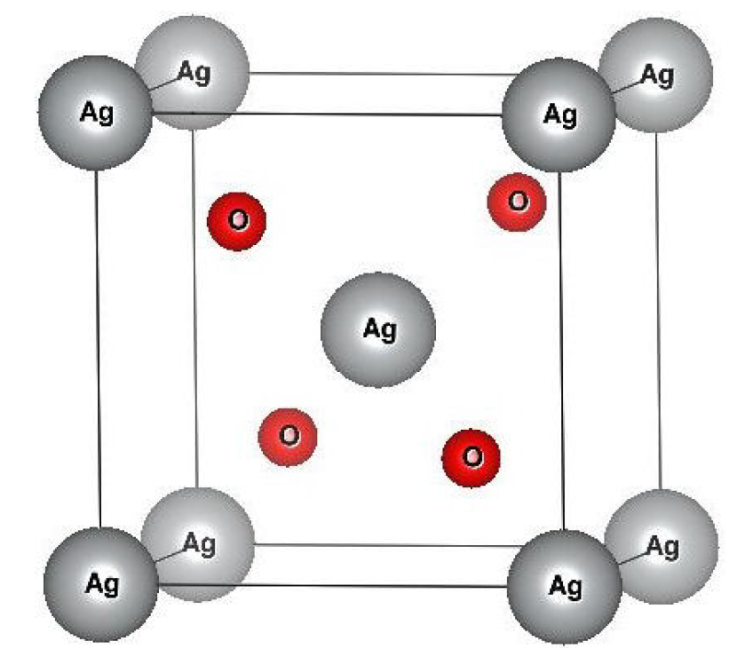
Figure 1 The Ag2O compound with cuprite structure. 

GGA-PBEsol-mBJ and GGA-PBEsol-mBJ+U were used to determine the optoelectronic properties. The U values were taken as U1=5.8 eV [3], and U2=11.2 eV [33] for Ag-4d. The elastic properties of the Ag2O compound were studied using the IRelast package [34,35] within the GGA-PBEsol approach.

3. Results and discussion

3.1. Equilibrium ground-state and electronic structures

The equilibrium lattice constant a 0, bulk modulus B 0, and its pressure derivatives, were obtained by fitting the total energy as a function of the unit-cell volume using Murnaghan’s equation of state [36]. In this way, the volume optimization is carried out by minimization of the total energy versus volume. The obtained results of a 0(Å) and B 0(GPa) are given in Table I with some other available theoretical and experimental results for comparison. This table shows that the a 0 and B 0 for Ag2O are consistent with the available theoretical and experimental results.

Table I The calculated lattice constant a0(Å) and bulk modulus B0(in GPa) for the Ag2O compound. 

Compound a 0(Å) B 0 (GaP)
This work Exp. Theor. This work Exp. Theor.
Ag2O 4.714 4.74 [37] 4.73 [26] 90.81 - 86.73 [26]
4.718 [33] 4.81 [24] 74.0 [24]
4.83 [37]

To explore the electronic behavior of the studied compound, we calculated the density of state DOS and electronic band-structure BS along with the principal symmetry points in the BZ for the cuprite structure (X-R-M-Γ-R) using the GGA-PBEsol-mBJ and GGA-PBEsol-mBJ+U for the exchange-correlation functional (see Fig. 2). The result of BS reveals the semiconductor nature with a direct bandgap at the R-symmetry point. The distinct features noticed within GGA-PBEsol-mBJ compared to GGA-PBEsol-mBJ+U shifts the conduction band upward and increase the bandgap.
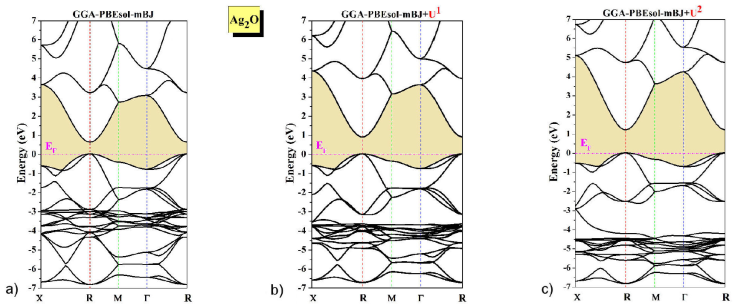
Figure 2 The calculated band structure of Ag2O compound using: a) mBJ-GGA-PBEsol, b) mBJ-GGA-PBEsol+U 1, and c) mBJ-GGA-PBEsol+U 2 approaches. 

The overall bandgap result of GGA-PBEsol-mBJ is better than that of other theoretically calculated bandgaps (LDA, GGA, EV-GGA, and LDA+U) [26,27], but significantly underestimated the bandgap from the experimental values as shown in Table II. Whereas, to resolve this discrepancy of bandgap and provide a value almost comparable to the experimental data, we used the GGA-PBEsol-mBJ+U. It should be noted that the obtained value is consistent with the experimental values for the first time. Furthermore, the conduction-band-minimum CBM shifts towards higher energy compared to the GGA-PBEsol-mBJ position, but the position of the valence-band-maximum VBM remained fixed.

Table II The Calculated bandgap (in eV) of Ag2O compound. 

Compound The bandgap (eV)
This work Exp. Theor.
1.22 1.24 [33] 0.63 (mBJ) [26]
Ag2O 1.30 [3] 0.41 (EV-GGA) [26]
1.40 [38] 0.176 (GGA) [26]
0.155 (LDA) [26]
0.17 (LDA+U) [27]

Total and partial DOS (TDOS and PDOS, respectively) calculated using GGA-PBEsol-mBJ+U 2 are shown in Fig. 3. The DOS spectra are divided into four regions. The First region, situated between (-6.7 and -5.8 eV) is a result of mixed Ag-4d and O-2p states. The lower limit of this region also includes a small amount of Ag-5s states. The second one located between (-5.8 eV and -2.7 eV) is dominated principally by Ag-4d states, with a minority of O-2p states. The third region below the Fermi level (E F ) consists of mixed Ag-4d and O-2p states, with a small contribution from Ag-5s. The bottom of the conduction band is mainly composed of Ag-(5s,5p) and O-(2s,2p) states.
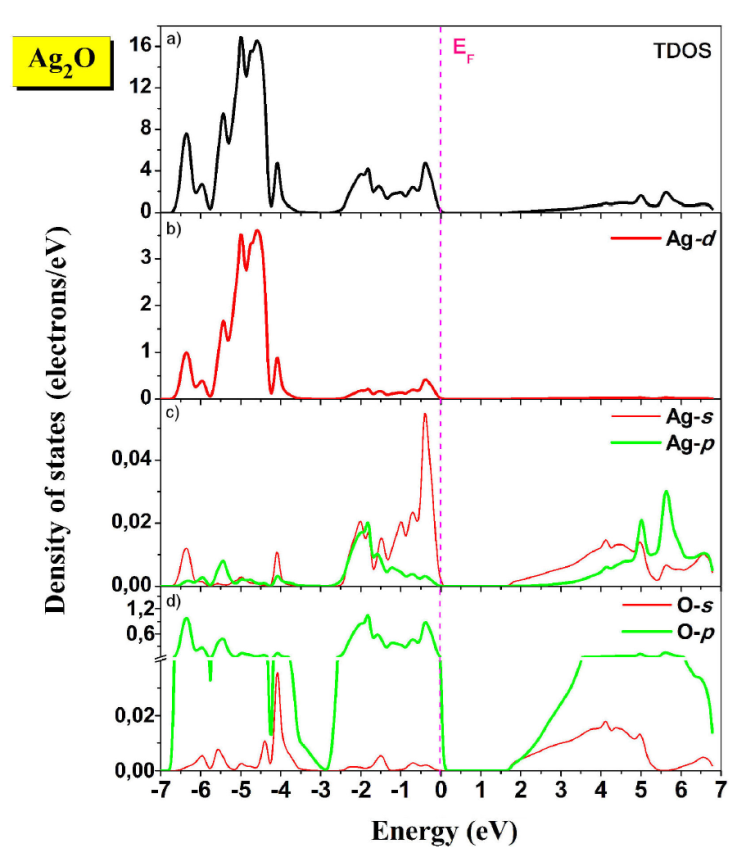
Figure 3 The calculated total and partial density of states for Ag2O compound using the mBJ-GGA-PBEsol+ U 2 approach. 

3.2. Elastic properties

The calculation of elastic properties is important to obtain more information about the compound, such as mechanical stability, anisotropic binding character, bonding forces, and brittle or ductile nature. For cubic Ag2O, the number of elastic constants is reduced to only three independent elastic parameters: C 11, C 12, and C 44 (cubic crystals). The estimated values of these constants are useful for obtaining information about mechanical behavior. The calculated elastic constants are listed in Table III. We can see clearly that the obtained

Table III The Calculated elastic constants Cij(C11,C12,C44), Bulk modulus (B), shear modulus (G), Young’s modulus (E) (in GPa), Pugh’s ratio (B/G), Poisson’s ratio (v) and anisotropy factor (A) of Ag2O compound 

Compound C 11 C 12 C 44 B G E B/G A v
Ag2O This work 106.69 84.54 51.14 90.81 30.04 81.16 3.02 4.61 0.35
Theor. [26] 132.36 70.94 56.18 86.73 44.093 113.11 1.967 1.829 0.282

C ij satisfies the three well-known Born-Huang stability criteria for the cubic system [39], which means our material is mechanically stable. It is well-known that the anisotropy factor (A) is an important mechanical parameter for technological and engineering applications and for detecting micro-cracks in materials. If the anisotropy factor is equal to unity, the material is isotropic and for any value different from unity the material is anisotropic.

The anisotropy factor value is found to be 4.61 which indicates that the compound is an anisotropic material. For more information about the compound such as stiffness, type of bounds, hardness, and ductility (brittle), we have estimated the macroscopic mechanical moduli such as Young’s modulus (E), Shear modulus (G), Pugh’s ratio (B/G) and Poisson’s ratio (v). For that, we have applied the Voigt-Reuss-Hill approximation [40,41].

The calculated G v , G R , and G are 35.11, 24.98, and 30.04 GPa, respectively. Young’s modulus (E) provides information about the stiffness of materials. For the higher value of E = 81.16 GPa, the material shows high stiffness. In addition, Poisson’s ratio (v) provides information about the bonding forces [42]. The central forces in the solid are trapped between 0.25 and 0.5, for the studied compound, we found v = 0.35. Due to this value, we can state that this compound is characterized by a metallic bonding. The two traditional parameters, Pugh’s ratio of ductility and Poisson’s ratio [43,44], are responsible for the brittle or ductile of a material. The calculated B/G and v are 3.02 and 0.35, respectively. We can classify from these calculated values the investigated compound as ductile material. Table III displays our results of elastic constants and elastic moduli with other reported theoretical results. We can observe a significant deviation compared to our results, which is mainly due to the difference in the employed approximation.

3.3. Optical properties

To obtain more information about the electronic structure, we calculated the complex dielectric function 𝜖(ω). More descriptions of the optical calculation can be found in [45]. In this study, we computed the optical spectra of 𝜖(ω) with 50000 k-points in the IBZ. The variations in the real and imaginary parts (𝜖1(ω), 𝜖2(ω)) of the dielectric function in the energy range of 0-12 eV are plotted in Fig. 4a) and Fig. 4b) respectively. At zero frequency, the static dielectric constant 𝜖1(0) is 3.20. The real part of the 𝜖1(ω) spectrum grows with increasing energy until reaching a maximum value of 5.68 at 3.73 eV. After the peak, the 𝜖1(ω) decreases with an increase in energy, becomes negative at 5.97 eV, and then increases at higher energy. The negative values of the 𝜖1(ω) idealize the total reflection of the incident photons [46].
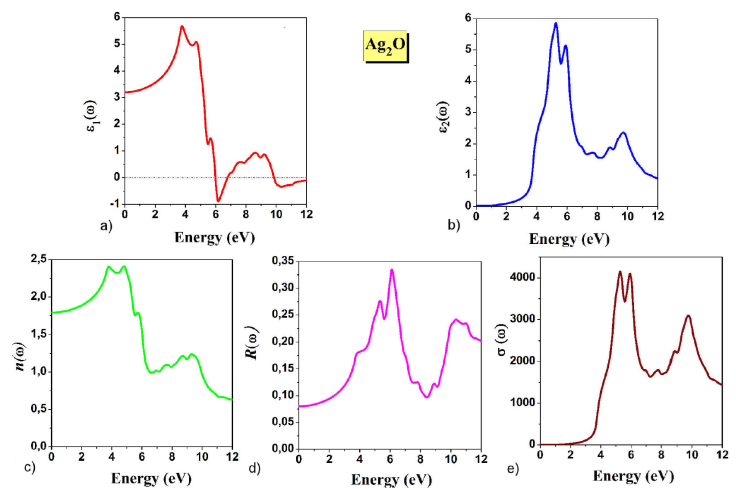
Figure 4 a) Real part of the dielectric function 𝜖1(ω). b) Imaginary part of the dielectric function 𝜖2(ω). c) The refractive index n(ω). d) The reflectivity R(ω). e) The optical conductivity σ(ω). 

It can be seen in Fig. 4b) that the imaginary part has threshold energy at 1.22 eV, which represents the optical transition between VBM and CBM. We can also notice that the maximum absorption is located in the energy range from 4.19 to 6.47 eV, the highest peak intensity of 𝜖2(ω) is 5.86 at 5.26 eV. After this point, the 𝜖2(ω) spectrum increases.

The refractive index n(ω) of the Ag2O compound versus photon energy is shown in Fig. 4c), the static refractive index n(0) is 1.78, which satisfies the relation n(0)=(ϵ1(0))1/2. We remark that the n(ω) spectra that reach a maximum peak value of 2.42 at 4.81 eV. Beyond the maximum value, n(ω) decreases with increasing energy.

The variation in the reflectivity R(ω) is shown in Fig. 4d), at zero frequency, the reflectivity R(0) is 8.10%, and it is obvious that R(ω) takes the maximum value (33.60%) at 6.12 eV.

As shown in Fig. 4e), we calculate the optical conductivity σ(ω). In the low-energy range, we can see a drastic decrease owing to the Drude interaction mechanism of light waves with conduction electrons. The maximum value of σ(ω) is 4165.58 Ω-1 cm-1 at 5.27 eV.

4. Conclusion

Herein, we have used the FP-LAPW method based on the DFT-theory to study the effect of different exchange-correlation functionals on the optoelectronic properties of the chalcogenide compound Ag2O. From the calculated electronic band structure, it was observed that the Ag2O compound exhibited a direct semiconductor nature with an energy bandgap of 1.22 eV, which agrees with the experimental values for the first time. The study of mechanical stability showed that the compound was stable against elastic deformation. From the obtained elastic moduli, we conclude that our compound is an anisotropic ductile material. The 𝜖1(ω) and 𝜖2(ω) parts of dielectric functions were estimated to identify optical transitions. n(ω), R(ω), and σ(ω) were also obtained and analyzed up to 12 eV. Finally, Ag2O was found to be useful for optoelectronic applications.

Acknowledgements

The study was supported by grant B00L02UN220120190002 from the DGRSDT (The general directorate for scientific research and technological development).

References

1. A. Kirfel and K. Eichhorn, Accurate structure analysis with synchrotron radiation. The electron density in Al2O3 and Cu2O, Acta Crystallographica Section A: Foundations and Advances 46 (1990) 271, https://doi.org/10.1107/S0108767389012596. [ Links ]

2. A. Gordienko, Y. N. Zhuravlev, and D. Fedorov, Band structure and chemical bonding in Cu2O and Ag2O oxides, Physics of the Solid State 49 (2007) 223, https://doi.org/10.1134/S1063783407020072. [ Links ]

3. L.-H. Tjeng, et al., Electronic structure of Ag2O, Physical Review B 41 (1990) 3190, https://doi.org/10.1103/PhysRevB.41.3190. [ Links ]

4. J. Tominaga, The application of silver oxide thin films to plasmon photonic devices, Journal of Physics: Condensed Matter 15 (2003) R1101, https://doi.org/10.1088/0953-8984/15/25/201. [ Links ]

5. D. F. Smith and J. A. Gucinski, Synthetic silver oxide and mercury-free zinc electrodes for silver-zinc reserve batteries, Journal of power sources 80 (1999) 66, https://doi.org/10.1016/S0378-7753(98)00251-1. [ Links ]

6. D. F. Smith and C. Brown, Aging in chemically prepared divalent silver oxide electrodes for silver/zinc reserve batteries, Journal of power sources 96 (2001) 121, https://doi.org/10.1016/S0378-7753(00)00679-0. [ Links ]

7. J. Pan, et al., Nano silver oxide (AgO) as a super high charge/discharge rate cathode material for rechargeable alkaline batteries, Journal of Materials Chemistry 17 (2007) 4820, https://doi.org/10.1039/B711373K. [ Links ]

8. H. Li, et al., A novel rechargeable Li-AgO battery with hybrid electrolytes, Chemical communications 46 (2010) 2055, https://doi.org/10.1039/B923706B. [ Links ]

9. D. Dellasega, et al., Nanostructured Ag4O4 films with enhanced antibacterial activity, Nanotechnology 19 (2008) 475602, https://doi.org/10.1088/0957-4484/19/47/475602. [ Links ]

10. D. Dellasega, et al., Nanostructured high valence silver oxide produced by pulsed laser deposition, Applied surface science 255 (2009) 5248, https://doi.org/10.1016/j.apsusc.2008.07.170. [ Links ]

11. X. Wang, et al., Shape-dependent antibacterial activities of Ag2O polyhedral particles, Langmuir 26 (2010) 2774, https://doi.org/10.1021/la9028172. [ Links ]

12. B. Fang, et al., Silver oxide nanowalls grown on Cu substrate as an enzymeless glucose sensor, ACS applied materials & interfaces 1 (2009) 2829, https://doi.org/10.1021/am900576z. [ Links ]

13. W. Wang, et al., A novel silver oxides oxygen evolving catalyst for water splitting, International journal of hydrogen energy 36 (2011) 7374, https://doi.org/10.1016/j.ijhydene.2011.03.096. [ Links ]

14. M. Fujimaki, et al., Surface-enhanced Raman scattering from Ag nanoparticles formed by visible laser irradiation of thermally annealed AgOx thin films, Journal of applied physics 100 (2006) 074303, https://doi.org/10.1063/1. 2354329. [ Links ]

15. T. Rollins and F. Weichman, Changes in Ag2O Films, physica status solidi (b) 15 (1966) 233, https://doi.org/10.1002/pssb.19660150122. [ Links ]

16. R. H. Crabtree, NHC ligands versus cyclopentadienyls and phosphines as spectator ligands in organometallic catalysis, Journal of organometallic chemistry 690 (2005) 5451, https://doi.org/10.1016/j.jorganchem. 2005.07.099. [ Links ]

17. Q. Tian, D. Shi, and Y. Sha, CuO and Ag2O/CuO catalyzed oxidation of aldehydes to the corresponding carboxylic acids by molecular oxygen, Molecules 13 (2008) 948, https://doi.org/10.3390/molecules13040948. [ Links ]

18. S. a Beccara, et al., Local thermal expansion in a cuprite structure: The case of Ag2O, Physical review letters 89 (2002) 025503, https://doi.org/10.1103/PhysRevLett.89.025503. [ Links ]

19. A. Sanson, et al., Negative thermal expansion and local dynamics in Cu2O and Ag2O, Physical Review B 73 (2006) 214305, https://doi.org/10.1103/PhysRevB.73. 214305. [ Links ]

20. B. J Kennedy, Y. Kubota, and K. Kato, Negative thermal expansion and phase transition behaviour in Ag2O, Solid state communications 136 (2005) 177, https://doi.org/10.1016/j.ssc.2005.05.043. [ Links ]

21. A. Sanson, A first-principles study of vibrational modes in Cu2O and Ag2O crystals, Solid state communications 151 (2011) 1452, https://doi.org/10.1016/j.ssc.2011.07.006. [ Links ]

22. K. S. Pitzerr, et al., Transitions and thermal anomalies in silver oxide, Pure and Applied Chemistry 2 (1961) 211, https://doi.org/10.1351/pac196102010211. [ Links ]

23. Z. Wiśniewski, R. Wiśniewski, and J. Nowiński, Compressibility investigations of AgI-Ag2O-P2O5 superionic materials, Solid State Ionics 157 (2003) 275, https://doi.org/10.1016/S0167-2738(02)00221-7. [ Links ]

24. F. Pei, et al., Electronic and optical properties of noble metal oxides M2O (M= Cu, Ag and Au): First-principles study, Journal of the Korean Physical Society 55 (2009) 1243, https://doi.org/10.3938/jkps.55.1243. [ Links ]

25. J. P. Allen, D. O. Scanlon, and G. W. Watson, Electronic structures of silver oxides, Physical Review B 84 (2011) 115141, https://doi.org/10.1103/PhysRevB.84.115141. [ Links ]

26. H. U Din and A. Reshak, Structural, elastic, thermal, electronic and optical properties of Ag2O under pressure, Computational materials science 83 (2014) 474, https://doi.org/10.1016/j.commatsci.2013.11.021. [ Links ]

27. N. Umezawa, O. Shuxin, and J. Ye, Theoretical study of high photocatalytic performance of Ag3PO4, Physical Review B 83 (2011) 035202, https://doi.org/10.1103/PhysRevB.83.035202. [ Links ]

28. E. Sjöstedt, L. Nordström, and D. Singh, An alternative way of linearizing the augmented plane-wave method, Solid state communications 114 (2000) 15, https://doi.org/10.1016/S0038-1098(99)00577-3. [ Links ]

29. G. K. Madsen, et al., Efficient linearization of the augmented plane-wave method, Physical Review B 64 (2001) 195134, https://doi.org/10.1103/PhysRevB.64.195134. [ Links ]

30. P. Hohenberg and W. Kohn, Inhomogeneous electron gas, Physical review 136 (1964) B864, https://doi.org/10.1103/PhysRev.136.B864. [ Links ]

31. W. Kohn and L. J. Sham, Self-consistent equations including exchange and correlation effects, Physical review 140 (1965) A1133, https://doi.org/10.1103/PhysRev.140.A1133. [ Links ]

32. P. Blaha, et al., WIEN2k: An APW+ lo program for calculating the properties of solids, The Journal of Chemical Physics 152 (2020) 074101, https://doi.org/10.1063/1.5143061. [ Links ]

33. W. Jiang, et al., Systematic research on Ag2X (X= O, S, Se, Te) as visible and near-infrared light driven photocatalysts and effects of their electronic structures, Applied Surface Science 427 (2018) 1202, https://doi.org/10.1016/j.apsusc.2017.08.053. [ Links ]

34. M. Jamal, et al., Elastic constants of cubic crystals, Computational Materials Science 95 (2014) 592, https://doi.org/10.1016/j.commatsci.2014.08.027. [ Links ]

35. M. Jamal, et al., IRelast package, Journal of Alloys and Compounds 735 (2018) 569, https://doi.org/10.1016/j.jallcom.2017.10.139. [ Links ]

36. F. Murnaghan, On the theory of the tension of an elastic cylinder, Proceedings of the National Academy of Sciences of the United States of America 30 (1944) 382, https://doi.org/10.1073/pnas.30.12.382. [ Links ]

37. R. G. Wyckoff, Crystal Structures (1965). [ Links ]

38. K. Z. Yahia, Study Optoelectronic Properties of Ag2O Heterojunction Prepered by Thermal Oxidation Technique, Engineering and Technology Journal 26 (2008) 570. [ Links ]

39. M. H. Elahmar, H. Rached, and D. Rached, The half metallic feature at high temperature of the novel half- Heusler alloys and their [100] oriented layered superlattices: A DFT investigations, Materials Chemistry and Physics 267 (2021) 124712, https://doi.org/10.1016/j. matchemphys.2021.124712. [ Links ]

40. H. Rached et al., First-principles study of structural stabilities, elastic and electronic properties of transition metal monocarbides (TMCs) and mononitrides (TMNs), Materials Chemistry and Physics 143 (2013) 93, https://doi.org/10.1016/j.matchemphys.2013.08.020. [ Links ]

41. I. Bourachid, et al., Insight into the structural, electronic, mechanical and optical properties of inorganic lead bromide perovskite APbBr3 (A= Li, Na, K, Rb, and Cs), Computational Condensed Matter 24 (2020) e00478, https://doi.org/10.1016/j.cocom.2020.e00478. [ Links ]

42. A. Azzouz-Rached, et al., Prediction of a new Sn-based MAX phases for nuclear industry applications: DFT calculations, Materials Today Communications 27 (2021) 102233, https://doi.org/10.1016/j.mtcomm.2021.102233. [ Links ]

43. A. Azzouz-Rached, et al., Prediction of double transition metal (Cr 1-x Zrx) 2 AlC MAX phases as thermal barrier coatings: Insight from density functional theory, International Journal of Quantum Chemistry 121 (2021) e26770, https://doi.org/10.1002/qua.26770. [ Links ]

44. A. Azzouz-Rached, et al., Pressure effects on the structural, elastic, magnetic and thermodynamic properties of Mn2AlC andMn2SiC MAX phases, Journal of Alloys and Compounds 885 (2021) 160998, https://doi.org/10.1016/j. jallcom.2021.160998. [ Links ]

45. C. Ambrosch-Draxl and J. O. Sofo, Linear optical properties of solids within the full-potential linearized augmented planewave method, Computer physics communications 175 (2006) 1, https://doi.org/10.1016/j.cpc.2006.03.005. [ Links ]

46. M. Caid, et al., High-throughput study of the structural, electronic, and optical properties of short-period (BeSe)m/(ZnSe)n superlattices based on DFT calculations, Computational Condensed Matter 29 (2021) e00598, https://doi.org/10.1016/j.cocom.2021.e00598. [ Links ]

Received: April 07, 2022; Accepted: June 20, 2022

Creative Commons License This is an open-access article distributed under the terms of the Creative Commons Attribution License