Revisión
Effect of energy drinks on the mental health of adolescents and young people: Systematic review
Efeito das bebidas energéticas na saúde mental de adolescentes e jovens: revisão sistemática
Fuentealba-Garrido, Javiera1
 http://orcid.org/0000-0002-9768-5784
Momberg-Villanueva, Daniela1
http://orcid.org/0000-0002-7173-0049
Rezende-Brito de Oliveira, Thayná1
http://orcid.org/0000-0003-2535-2195
Riquelme-Pedraza, Marlette1
http://orcid.org/0000-0001-8544-613X
Valeria-González, Javiera1
http://orcid.org/0000-0002-3416-4199
Aguayo-Verdugo, Natalia2*
http://orcid.org/0000-0001-8383-1093
http://orcid.org/0000-0002-9768-5784Momberg-Villanueva, Daniela1
http://orcid.org/0000-0002-7173-0049Rezende-Brito de Oliveira, Thayná1
http://orcid.org/0000-0003-2535-2195Riquelme-Pedraza, Marlette1
http://orcid.org/0000-0001-8544-613XValeria-González, Javiera1
http://orcid.org/0000-0002-3416-4199Aguayo-Verdugo, Natalia2*
http://orcid.org/0000-0001-8383-1093
-
Publication dates-
May 09, 2024
Jan-Dec , 2024
- Article in PDF
- Article in XML
- Automatic translation
- Send this article by e-mail
- Share this article +
Abstract
Introduction:
The nursing area should perform a comprehensive assessment of adolescents and young people to be able to have an early intervention in the risk habits of this part of the population.
Objective:
Know how the consumption of energy drinks affects the mental health of adolescents and young adults.
Methodology:
Systematic review using selected reports for systematic reviews and PRISMA meta-analysis, searching Web Of Science, Medline, Scopus and Pubmed databases with descriptors such as energy drinks, mental health, young adult and adolescent. The inclusion criteria included articles published between 2017 and 2022, in Spanish, English or Portuguese, in the population aged 13 to 25, excluding secondary research, editorials, letters to the editor and expert opinions, not available in full text. Identifying 372 articles, leaving a sample of 10 for analysis and methodological evaluation using CASPe guidelines. Data used were duly referenced, respecting and identifying their authors.
Results:
The majority were studies using cross-sectional design. Frequent consumption of energy drinks increased levels of anxiety, depression, aggression and suicidal risk, with male adolescents being more affected.
Conclusions:
Although there was evidence of a relationship between energy drink consumption and mental health risks, most of the research used cross-sectional designs, so it was not possible to determine causality or direction of effect. In order to study the effect of energy drink consumption in depth, longitudinal studies and interventions are required since consumption is frequent and mental health problems are on the rise.
Key words::
Energy drinks, mental health, adolescent, young adult, nursing (DeCS)
Introduction
In the country of Thailand, the first energy drink began to be marketed in 1976, and due to its sales success, this type of drink is currently sold by several brands 1. Its components are mainly based on caffeine and sugars, which generates a state of alertness and excessive energy; such state helps during study or recreational situations attracting mainly young people 2. At a global level, some studies indicated that consumption of energy drinks in adolescents has increased from 10% to between 20% and 50% in the last ten years 3,4. It is estimated that a high percentage of this sector of the population consumes these beverages to positively increase their effects on mental agility, to be able to stay awake longer and have more energy; however, not many know the adverse effects they cause such as insomnia, poor academic performance, and irritability, among others 5.
-
1affeinated energy drink consumption among adolescents and potential health consequences associated with their use: a significant public health hazardActa Bio Medica, 2017
-
2Bebidas cafeinadas energizantes: efectos neurológicos y cardiovascularesIATREIA, 2018
-
3Impact of energy drinks on health and well-beingCurr Nutr Rep, 2018
-
4Taurine, caffeine, and energy drinks: Reviewing the risks to the adolescent brainBirth Defects Res, 2017
-
5Knowledge and prevalence of energy drinks consumption in Shanghai, China: a cross-sectional survey of adolescentsGeneral Psychiatry, 2021
The aforementioned adverse effects could affect the mental health of young population, since it is estimated that around 58 million children and adolescents experience anxiety and around 23 million experience depression 6. In view of these figures, it is essential to know which factors are associated with the development of these problems, especially if they are attributable to the lifestyle of this sector of the population 7.
-
6Trastornos mentales, 2022
-
7Análisis de la relación entre depresión y estilo de vida en adolescentesPsicología Iztacala, 2018
Nursing plays a key role in meeting the mental health needs of adolescents and young adults, including nursing care such as health education, groups, cognitive-behavioral therapy, interpersonal relationships and activities involving the adolescent, family, peers and the school environment 8. Since there is no school nurse in Chile, despite its recognized importance in health care and education 9, the nursing professional only has access to the child and adolescent population at specific times, which makes continuity of care difficult, so in order to intervene early in the risks detected, an adequate assessment of the needs of the adolescent or young adult must be made, not only in the physical area, but also in the mental area.
-
8Mental health needs of adolescents and the nursing cares: integrative reviewTexto Contexto Enferm, 2020
-
9Importancia de la enfermera escolar según la percepción de funcionaros de colegios básicos de una provincia de ChileCienc. enferm, 2020
Therefore, the question was defined according to Patient, Intervention, Comparison, Outcome or results 10 based on the acronym PICO, leaving the question: How does the consumption of energy drinks affect the mental health of adolescents and young adults? Hence, the objective set was to determine how the consumption of energy drinks affects the mental health of adolescents and young adults.
-
10The PICO strategy for the research question construction and evidence searchRevista Latino-Americana de Enfermagem, 2007
Methodology
Systematic review using Preferred Reporting Items Method for Systematic Reviews and Meta-Analyses (PRISMA) defined as a research publication guideline, created to improve the integrity and quality of systematic reviews 11. To carry it out, searches were carried out in electronic databases Web Of Science, Medline, Scopus and Pubmed applying filters of language, Spanish, English and Portuguese, and year of publication (last five years). The key words were retrieved from the Medical Subject Headings (MeSH) 12, finally using: energy drinks, mental health, young adult, adolescent, using the following search equation: (Adolescent) OR (young adult) AND (mental health) AND (Energy drink). The inclusion criteria were defined as: articles published from 2017 to 2022, in Spanish, English or Portuguese and whose population was adolescents and/or young adults (age range 13 to 25 years), and as exclusion criteria: articles that were systematic reviews, editorials, letters to the editor or expert opinions, that studied mental health disorders associated with hereditary factors, studies that exclusively related caffeine and mental health, articles not available in full text for free or through databases of university students.
-
11Pautas de chequeo, parte II: Quorum y prismaRev Chil Cir, 2015
-
12La importancia de no menospreciar las palabras claveRev Pediatr Aten Primaria, 2019
In the databases used, a total of 372 articles were identified, and after applying filters (year of publication 2017 to 2022 and languages Spanish, English and Portuguese), 210 studies remained. 163 articles were excluded due to reading the title and/or abstract, leaving 47 articles for complete review; however, 3 of them could not be recovered in full text. Consequently, of the 44 articles that were recovered, 17 of them were not included because they met some exclusion criteria and, likewise, 17 articles were eliminated because they were duplicates, leaving a total of 10 articles for the evaluation of methodological quality, which was carried out through the application of guidelines Critical Appraissal Skills Program Spanish (CASPe), a non-profit association that teaches critical reading of clinical evidence to people in the health area. This tool is accessible online and has eight templates made up of questions, in order to provide the reader with help to understand and analyze the research 13.
-
13¿Quiénes somos?Critical Appraisal Skills Programme Español, 2017
The 10 studies met the minimum methodological quality, being classified as “satisfactory”, which is why they were included in the present review, this is evident in the following PRISMA flowchart 14, (Figure 1).
-
14The PRISMA 2020 statement: an updated guideline for reporting systematic reviewsBMJ, 2021
Thumbnail
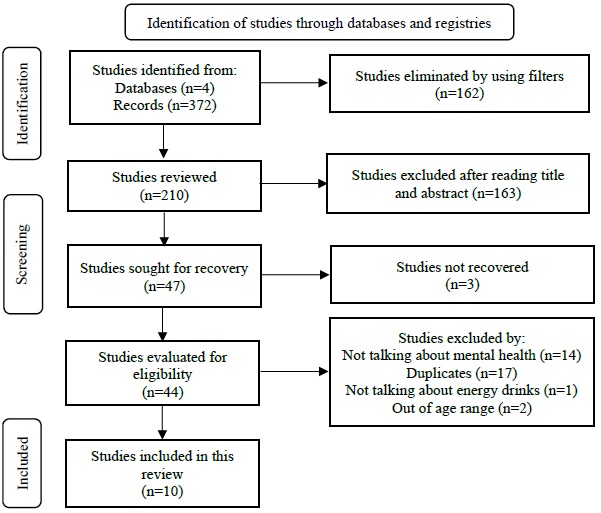 Source: Self-development.
Figure 1:
PRISMA Flowchart, 2022
PRISMA Flowchart, 2022
Since this is a systematic review, there is no contact with people, so it is considered a risk-free research 15. The information collected from each article included title, year, country, sample, and main findings. The references of the data used were duly included, i.e., their authors were respected and identified.
-
15Formas de revisión ética de proyectos de investigación biomédicaRev. méd. Chile, 2017
Results
The studies analyzed were 30% each from Asia and Europe, and 20% each from North America and Oceania simultaneously, finding that 90 % 16,19-25 had a cross-sectional design and only 10 % was cohort 17, (Table 1).
-
16Energy drink consumption, psychological distress, and suicidality among middle and high school studentsJournal of Affective Disorders, 2020
-
19Energy drink consumption among New Zealand adolescents: Associations with mental health, health risk behaviours and body sizeJournal of Paediatrics and Child Health, 2017
-
25Energy drinks consumption associated with emotional and behavioural problems via lack of sleep and skipped breakfast among adolescentsInternational Journal of Environmental Research and Public Health, 2021
-
17Consumption of energy drinks is associated with depression, anxiety, and stress in young adult males: Evidence from a longitudinal cohort studyDepression and Anxiety, 2020
Table 1
Publications included, year and country, 2022, (n=10)
Publications included, year and country, 2022, (n=10)
| Publications included (Number/title/reference) | Year | Country |
| 1. Energy drink consumption, psychological distress, and suicidality among middle and high school students (16) | 2020 | United States |
| 2. Consumption of energy drinks is associated with depression, anxiety, and stress in young adult males: Evidence from a longitudinal cohort study (17) | 2020 | Australia |
| 3. Mental and physical effects of energy drinks consumption in an Italian young people group: a pilot study (18) | 2018 | Italy |
| 4. Energy drink consumption among New Zealand adolescents: Associations with mental health, health risk behaviors and body size (19) | 2017 | New Zeland |
| 5. High stress, lack of sleep, low school performance, and suicide attempts are associated with high energy drink intake in adolescents (20) | 2017 | Korea |
| 6. Does Caffeine Intake Influence Mental Health of Medical Students? (21) | 2021 | Malaysia |
| 7. Energy drink use in U.S. service members after deployment: associations with mental health problems, aggression, and fatigue (22) | 2018 | United States |
| 8. Energy drink consumption, depression, and salutogenic sense of coherence among adolescents and young adults (23) | 2020 | Hungary |
| 9. Intake of caffeine and its association with physical and mental health status among university students in Bahrain (24) | 2020 | Bahrain |
| 10. Energy drinks consumption associated with emotional and behavioral problems via lack of sleep and skipped breakfast among adolescents (25) | 2021 | Slovakia |
-
17Consumption of energy drinks is associated with depression, anxiety, and stress in young adult males: Evidence from a longitudinal cohort studyDepression and Anxiety, 2020
-
18Mental and physical effects of energy drinks consumption in an Italian young people group: a pilot studyJournal of Preventive Medicine and Hygiene, 2018
-
19Energy drink consumption among New Zealand adolescents: Associations with mental health, health risk behaviours and body sizeJournal of Paediatrics and Child Health, 2017
-
20High stress, lack of sleep, low school performance, and suicide attempts are associated with high energy drink intake in adolescentsPLOS ONE, 2017
-
21Does caffeine intake influence mental health of medical students?Malaysian Journal of Public Health Medicine, 2021
-
22Energy drink use in U.S. service members after deployment: associations with mental health problems, aggression, and fatigueMilitary Medicine, 2018
-
23Energy drink consumption, depression, and salutogenic sense of coherence among adolescents and young adultsInternational Journal of Environmental Research and Public Health, 2020
-
24Intake of caffeine and its association with physical and mental health status among university students in BahrainFoods, 2020
-
25Energy drinks consumption associated with emotional and behavioural problems via lack of sleep and skipped breakfast among adolescentsInternational Journal of Environmental Research and Public Health, 2021
The minimum population under study was 10 people 18 and the maximum 121,106 20, keeping an age range from 11 to 27 years 18,25. The results indicate that the consumption of energy drinks increased the levels of anxiety, stress and depression 17-19,24, mainly, even the correlation between high consumption of energy drinks and suicide attempts is mentioned 16,20. Relationship between consumption of energy drinks and aggressive behavior, fatigue and poor academic performance was also observed 22,23,25. However, in some studies authors established the need for further research in order to obtain a better correlation 18,24, (Table 2).
-
18Mental and physical effects of energy drinks consumption in an Italian young people group: a pilot studyJournal of Preventive Medicine and Hygiene, 2018
-
20High stress, lack of sleep, low school performance, and suicide attempts are associated with high energy drink intake in adolescentsPLOS ONE, 2017
-
18Mental and physical effects of energy drinks consumption in an Italian young people group: a pilot studyJournal of Preventive Medicine and Hygiene, 2018
-
25Energy drinks consumption associated with emotional and behavioural problems via lack of sleep and skipped breakfast among adolescentsInternational Journal of Environmental Research and Public Health, 2021
-
17Consumption of energy drinks is associated with depression, anxiety, and stress in young adult males: Evidence from a longitudinal cohort studyDepression and Anxiety, 2020
-
19Energy drink consumption among New Zealand adolescents: Associations with mental health, health risk behaviours and body sizeJournal of Paediatrics and Child Health, 2017
-
24Intake of caffeine and its association with physical and mental health status among university students in BahrainFoods, 2020
-
16Energy drink consumption, psychological distress, and suicidality among middle and high school studentsJournal of Affective Disorders, 2020
-
20High stress, lack of sleep, low school performance, and suicide attempts are associated with high energy drink intake in adolescentsPLOS ONE, 2017
-
22Energy drink use in U.S. service members after deployment: associations with mental health problems, aggression, and fatigueMilitary Medicine, 2018
-
23Energy drink consumption, depression, and salutogenic sense of coherence among adolescents and young adultsInternational Journal of Environmental Research and Public Health, 2020
-
25Energy drinks consumption associated with emotional and behavioural problems via lack of sleep and skipped breakfast among adolescentsInternational Journal of Environmental Research and Public Health, 2021
-
18Mental and physical effects of energy drinks consumption in an Italian young people group: a pilot studyJournal of Preventive Medicine and Hygiene, 2018
-
24Intake of caffeine and its association with physical and mental health status among university students in BahrainFoods, 2020
Table 2
Publications included, sample and main findings, 2022 (n=10)
Publications included, sample and main findings, 2022 (n=10)
| Publications (Reference) | Sample | Main findings |
| 16 | 5,538 students between 13 and 18 years | Energy drink consumption was associated with increased risk from moderate to severe (IRR 1.2, 95% CI=1.0-1.4) and severe levels of psychological distress (IRR: 1.5, 95% CI=1.1-1.9), suicidal thoughts (IRR: 1.9, 95% CI=1.6-2.4) and suicide attempts (IRR: 3.7, 95% CI: 2.3-5.9). Association between energy drinks consumption and mental health was much stronger in high school male students. |
| 17 | 429 people between 20 and 22 years old | Participants who switched from energy drinks non-consumers to consumers had a mean increase in stress scores of 2.3 (95% CI=0.04, 4.6) over the 2-year follow-up. Men, but not women, who switched from being non-users to users had average increases in depression, anxiety, and stress scores of 6.1 (95% CI=3.4, 8.8), 3.8 (95% CI=1.8, 5.7) and 3.2 (95% CI=0.5, 5.9) respectively. |
| 18 | 10 people between 18 and 27 years old | Anxiety and depression tests showed that before the energy drinks consumption, subjects were in the minimum range of anxiety (10th and 60th percentiles) and reported no level of depression. After the consumption of energy drinks, mild anxiety was recorded, the depression instrument showed a case with a pathological profile. |
| 19 | 8500 high school students | 35 % of participants consumed energy drinks and 12 % consumed energy drinks four or more times in the past week. Students in the high frequency group of energy drink consumption reported greater depressive symptoms (P<0.001), greater emotional difficulties (P<0.001), and lower levels of well-being (P<0.001) than students who did not consume energy drinks. |
| 20 | 121,106 adolescents between 13 and 18 years old | High level of stress, abnormal sleep time and poor school performance were proportionally related to higher energy drinks intake (P<0.001). Frequent energy drink intake was significantly associated with suicide attempts in multiple logistic regression analyzes (adjusted OR for frequency of energy intake ≥3 times a week =3.03, 95% CI=2.6-3.5, P < 0.001). |
| 21 | 262 medical students | The prevalence of caffeine intake among medical students was 98.5 %, the mean concentration of caffeine intake among consumers was 67.9 (25th, 75th percentile: 24.8, 139.7) mg/day. Depressed respondents according to the DASS-21 score consumed more caffeine per day at a mean of 87.7 mg/day compared to those not depressed at 66.1 mg/day. However, the difference in caffeine consumption between those who were depressed and those who were not depressed was not significant (p=0.2). Respondents with anxiety consumed slightly more, 70.0 mg/day, than those without anxiety, who consumed 67.4 mg/day, the difference was not significant (p=0.9). Non-stressed respondents consumed caffeine per day at a rate of 68.2 mg/day than those stressed (11.1 mg/day), the difference was not significant (p=0.2). |
| 22 | 627 infantry male soldiers | Last month, the energy drinks used was 75.7 % of soldiers, where 16.1 % consuming high levels (2+ energy drinks/day). Energy drinks use was associated with mental health problems (adjusted OR 2.0 to 2.7), aggressive behaviors (adjusted OR 2.3 to 3.5), and fatigue (p=<0.001) relative to those who drank none or less than one per week. |
| 23 | 631 high school and college students | A total of 31.1 % (95 % IC=64.7-77.3) of respondents consumed energy drinks, 24.0 % of those affected consumed energy drinks with alcohol, 71.4 % (95% CI=64.7-77.3) experienced adverse effects after energy drinks consumption and 10.2 % (95 % CI=6.7-15.2) experienced at least four symptoms simultaneously. The sense of coherence and tendency to depression had a significant influence on the respondents' probabilities of addiction. A tendency toward depression increased the chances of addiction, while a strong sense of coherence decreased the effects of depression. |
| 24 | 727 university students from Bahrain | Participants who consumed 400 mg/day or more showed statistically significant differences in the following five symptoms: headaches (p=0.02, 95% CI=1.1-3.0), terror or panic episodes (p=0.001, 95% CI=1.2 -2.8), feeling trapped (p=0.001, 95% CI=1.3-3.2), worrying too much about things (p= 0.01, 95% CI=1.2–2.5), feelings of worthlessness (p= 0.03 , IC 95 %=1.1-1.1), anxiety score (p=0.001, 95% CI=1.2-2.6) and psychological distress (p=0.001, 95% CI=1.2-2.7). |
| 25 | 8,405 adolescents from 11 to 15 years old | Energy drinks consumption was significantly associated with emotional problems (p<0.001) and behavioral problems (p<0.001), greater energy drinks consumption led to more emotional and behavioral problems. |
The quality assessment of articles using the CASPe checklist for cross-sectional studies showed a satisfactory impression in all articles (16-25), (Table 3).
Table 3:
Assessment of data quality obtained from cross-sectional studies, 2022 (n=9)
Assessment of data quality obtained from cross-sectional studies, 2022 (n=9)
| Publications (Reference) | 1 | 2 | 3 | 4 | 5 | 6 | 7 | 8 | 9 | 10 | 11 | Final print |
| 16 | Y | Y | Y | Y | Y | Y | It was found that energy drinks consumption was associated with mental health problems among adolescents, who were shown to be at higher risk of severe levels of psychological distress. | Y | Y | Y | Consuming energy drinks increased the risk of psychological distress and suicidality (risk to commit suicide) among high school students; it is important to be aware of the negative effects of drinking energy drinks. | SAT |
| 18 | Y | Y | Y | Y | Y | N | Initially participants were considered to have a minimal level of anxiety, after consuming energy drinks it rose to a mild level. | Y | Y | Y | Energy drinks can be a public health problem due to their positive effects in the short term, however, at high doses or in the long term they can negatively affect adolescents. | SAT |
| 19 | Y | Y | Y | Y | Y | Y | The consumption of energy drinks was associated with risk behaviors, greater depressive symptoms, lower well-being, and emotional difficulties were reported. | Y | Y | Y | Health professionals should consider consumption of energy drinks as a marker that increases the risk of presenting harmful behaviors to mental health. | SAT |
| 20 | Y | Y | Y | Y | Y | Y | Subjective stress level, sleep time and school performance showed significant associations with consumption of energy drinks, the population showed an association between this practice and risk of suicide. | Y | Y | Y | Suicide attempts increased with frequent intake of energy drinks, which represents a public health problem. | SAT |
| 21 | Y | Y | Y | Y | Y | Y | The most depressed respondents did not show a major difference with energy drinks consumption. There was a slight increase in predisposition to suffer anxiety, stress, or depressive episodes in people who consumed energy drinks, without significant differences. | Y | Y | Y | Researchers conclude that the study did not obtain significant data compared to other studies on the subject and they comment that this is probably because of the small population interviewed. | SAT |
| 22 | Y | Y | Y | Y | Y | Y | Results show that 16.1% of soldiers who excessively consumed energy drinks presented more fatigue, aggressive behaviors, and mental health problems in relation to non-consumers. | Y | Y | Y | Researchers conclude that results are alarming, therefore there is a need to include the energy drink as a product that represents a risk to mental health. | SAT |
| 23 | Y | Y | Y | Y | Y | Y | There was a high energy drinks consumption rate among young people, this was associated with the occurrence of symptoms such as tremors, insomnia, and tachycardia. | Y | Y | Y | Population (especially parents) should receive proper education to prevent the use of energy drinks due to their negative adverse effects. | SAT |
| 24 | Y | Y | Y | Y | Y | Y | High caffeine consumption was associated with headache, anxiety, and psychological distress. | Y | Y | Y | Although causality between excessive consumption and symptoms of mental health problems could not be demonstrated, an association was made that will allow other researchers to study this topic in more depth. | SAT |
| 25 | Y | Y | Y | Y | Y | Y | Energy drinks consumption was indirectly associated with emotional and behavioral problems, due to less sleep and breakfast consumption. | Y | Y | Y | It was concluded that adolescents with greater energy drinks consumption present less sleep hours, emotional and behavioral problems. | SAT |
For the cohort study (17), the quality assessment according to the applied guideline was classified as satisfactory (Table 4).
Table 4:
Evaluation of data quality obtained from cohort studies (n=1).
Evaluation of data quality obtained from cohort studies (n=1).
| Publications (Reference) | 1 | 2 | 3 | 4 | 5 | 6 | 7 | 8 | 9 | 10 | 11 | Final print |
| 17 | Y | Y | Y | Y | Y | The first control showed that people who went from non- consumers to consumers of energy drinks increased their stress scores. In the second control, men increased their depression, anxiety and stress levels, but women did not. | 95% | S | S | S | N | SAT |
Discussion
Based on the objective of knowing how the consumption of energy drinks affects the mental health of adolescents and young adults, it was possible to identify that in general, the studies reviewed show that being a frequent consumer, or after consuming energy drinks, anxiety levels, depression 17-19,21,24 and, to a lesser extent, aggression 20,22,23,25 and suicidal risk 16,20 increased compared to those who did not consume energy drinks. The results of the studies show a relationship between the consumption of energy drinks and psychological discomfort in different ways, evidencing how cessation or reduction of this consumption reduces stress and anxiety levels 18. This can be influenced by gender and age, with male adolescents being more affected 17.
-
17Consumption of energy drinks is associated with depression, anxiety, and stress in young adult males: Evidence from a longitudinal cohort studyDepression and Anxiety, 2020
-
19Energy drink consumption among New Zealand adolescents: Associations with mental health, health risk behaviours and body sizeJournal of Paediatrics and Child Health, 2017
-
21Does caffeine intake influence mental health of medical students?Malaysian Journal of Public Health Medicine, 2021
-
24Intake of caffeine and its association with physical and mental health status among university students in BahrainFoods, 2020
-
20High stress, lack of sleep, low school performance, and suicide attempts are associated with high energy drink intake in adolescentsPLOS ONE, 2017
-
22Energy drink use in U.S. service members after deployment: associations with mental health problems, aggression, and fatigueMilitary Medicine, 2018
-
23Energy drink consumption, depression, and salutogenic sense of coherence among adolescents and young adultsInternational Journal of Environmental Research and Public Health, 2020
-
25Energy drinks consumption associated with emotional and behavioural problems via lack of sleep and skipped breakfast among adolescentsInternational Journal of Environmental Research and Public Health, 2021
-
16Energy drink consumption, psychological distress, and suicidality among middle and high school studentsJournal of Affective Disorders, 2020
-
20High stress, lack of sleep, low school performance, and suicide attempts are associated with high energy drink intake in adolescentsPLOS ONE, 2017
-
18Mental and physical effects of energy drinks consumption in an Italian young people group: a pilot studyJournal of Preventive Medicine and Hygiene, 2018
-
17Consumption of energy drinks is associated with depression, anxiety, and stress in young adult males: Evidence from a longitudinal cohort studyDepression and Anxiety, 2020
Added to these mental health alterations, the effects on physical health stand out, which should be a concern for nursing professionals, since it is estimated that almost half of university students consume energy drinks 27. As mentioned at the beginning, the main component of energy drinks is caffeine and, according to scientific evidence, one of its actions is on the cardiovascular system, generating, for example, elevations in blood pressure and heart rate, which could be a risk factor for developing cardiovascular diseases in the future 28,29. In addition to this, some studies also mention that energy drink consumers have a greater tendency to use multiple substances, including alcohol, tobacco and soft and hard drugs, developing deterioration of perception, weakness, headache, increased violent behavior and risk 30,31. In addition to the above, frequent consumers of energy drinks are more likely to have poor eating habits, including the consumption of sugary drinks and junk food 31.
-
27Consumption patterns of energy drinks in university students: A systematic review and meta-analysisNutrition, 2022
-
28Taurine, caffeine, and energy drinks: Reviewing the risks to the adolescent brainBirth Defects Research, 2017
-
29Efectos del café en la salud: una perspectiva desde la niñez hasta la adultezRevista Neuronum, 2021
-
30Coffee and energy drink use patterns in college freshmen: associations with adverse health behaviors and risk factorsBMC Public Health, 2022
-
31Risky behaviors, substance use, and other lifestyle correlates of energy drink consumption in children and adolescents: a systematic reviewEur J Pediatr, 2022
-
31Risky behaviors, substance use, and other lifestyle correlates of energy drink consumption in children and adolescents: a systematic reviewEur J Pediatr, 2022
The main reasons for its consumption must be considered when carrying out interventions to prevent excessive consumption. Participation in studies, projects or exams, staying awake or alert, and participation in physical/sports activities have been identified as the main reasons for use of energy drinks 27. There is no solid scientific evidence that supports the use of energy drinks as therapeutic agents in the promoted conditions, such as those mentioned above; on the contrary, there are multiple case reports in which the consumption of energy drinks is associated with adverse effects, affecting a wide variety of human body organs and systems 32.
-
27Consumption patterns of energy drinks in university students: A systematic review and meta-analysisNutrition, 2022
-
32Bebidas energizantes: efectos benéficos y perjudiciales para la saludPerspect Nutr Humana, 2015
Nurses should associate with other professionals, such as nutritionists and psychologists, to focus their interventions, not only to warn about the possible risks of excessive consumption, previously exposed, but also to educate about healthier alternatives to obtain the same results, such as effective time management, workshops on study habits 33,34, mindfulness to improve memory and attention 35,36, and healthy eating interventions 37, among others.
-
33Hábitos de estudio: factor crucial para el buen rendimiento académicoRevista Innova Educación, 2020
-
34Hábitos de estudio y aprendizaje autorregulado en estudiantes universitariosEduca UMCH, 2021
-
35Mejora de los niveles de atención y estrés en los estudiantes a través de un programa de intervención mindfulnessRevista de Psicodidáctica, 2021
-
36Mindfulness y promoción de la salud mental en adolescentes: efectos de una intervención en el contexto educativoRev. méd. Chile, 2017
-
37Estrategias para la disminución del consumo de bebidas endulzadasRev Esp Nutr Hum Diet, 2018
As a limitation, it can be mentioned that some articles were not accessible because it was a paid service, in addition to the fact that the number of studies answering the research question was low. It is also worth highlighting the important difference in the sample sizes and the research design type, which, although they relate the consumption of energy drinks with mental health risks, the majority of research examined used cross-sectional designs, therefore, it was not possible to determine causality or direction of the effect 38. For this reason, longitudinal and intervention studies are required to increase understanding of the nature of the relationships that were observed.
-
38Estudios transversalesRev. Fac. Med. Hum, 2021
Due to the aforementioned, it is important to study the issue raised in greater depth since the consumption of energy drinks is common, and mental health problems are increasing. It is imperative that there are more studies on this matter so that it can be considered as an issue to be discussed when talking about health promotion and prevention 39,40.
-
39Modelos teóricos de promoción de la salud en la práctica habitual en atención primaria de saludGac Sanit, 2021
-
40La salud y sus determinantes, promoción de la salud y educación sanitariaJONNPR, 2020
Conclusions
The consumption of energy drinks affects the mental health of adolescents and young adults, producing mental health disorders such as anxiety, stress and/or depression, even leading to suicidal ideation, as well as behavioral changes such as aggression, poor academic performance and sleeping disorders. Nursing professionals play a fundamental role in promoting mental health throughout the life cycle, being of greatest relevance in such a fragile stage as adolescence and young adulthood. It is through knowledge of risk factors that population can be educated to avoid the risky consumption of energy drinks.
This study does not seek to impose a complete veto on the sale and consumption of energy drinks, but rather to raise awareness among consumers and health professionals, highlighting that, as with all foods and activities, excess is not recommended, since in addition to the effects on physical health, there is a risk of alterations in mental health.
Conflict of interests
The authors declare that there is no conflict of interest.
Financing
The authors declare that there was no type of financing.
Referencias bibliográficas
-
1De Sanctis V, Soliman N, Soliman AT, Elsedfy H, Maio SD, Kholy ME, et al. Caffeinated energy drink consumption among adolescents and potential health consequences associated with their use: a significant public health hazard. Acta Bio Medica [Internet]. 2017 [citado 15 nov 2022];88(2):222-231. Disponible en: https://doi.org/10.23750/abm.v88i2.6664 Links
-
2Manrique C, Arroyave-Hoyos C, Galvis-Pareja D. Bebidas cafeinadas energizantes: efectos neurológicos y cardiovasculares. IATREIA [Internet]. 2018 [citado 15 nov 2022];31(1):65-75. Disponible en: https://doi.org/10.17533/udea.iatreia.v31n1a06 Links
-
3Sankararaman S, Syed W, Medici V, Sferra TJ. Impact of energy drinks on health and well-being. Curr Nutr Rep [Internet]. 2018 [citado 21 ago 2023];7(3):121-130. Disponible en: https://doi.org/10.1007/s13668-018-0231-4 Links
-
4Curran CP, Marczinski CA. Taurine, caffeine, and energy drinks: Reviewing the risks to the adolescent brain. Birth Defects Res [Internet]. 2017 [citado 21 ago 2023];109(20):1640-1648. Disponible en: https://doi.org/10.1002/bdr2.1177 Links
-
5Luo R, Fu R, Dong L, Du Z, Sun W, Zhao M, et al. Knowledge and prevalence of energy drinks consumption in Shanghai, China: a cross-sectional survey of adolescents. General Psychiatry [Internet]. 2021 [citado 15 nov 2022];34(3):e100389. Disponible en: https://doi.org/10.1136/gpsych-2020-100389 Links
-
6Organización Mundial de la Salud. Trastornos mentales [Internet]. Suiza: OMS; 2022 [citado 30 dic 2022]. Disponible en: Disponible en: https://www.who.int/es/news-room/fact-sheets/detail/mental-disorders Links
-
7Bazán G, Ramírez D, Osorio M, Torres L. Análisis de la relación entre depresión y estilo de vida en adolescentes. Psicología Iztacala [Internet]. 2018 [citado 30 dic 2022];21(3):1253-1266. Disponible en: Disponible en: https://www.revistas.unam.mx/index.php/repi/article/view/67317 Links
-
8Teixeira LA, Freitas RJM, Moura NA, Monteiro ARM. Mental health needs of adolescents and the nursing cares: integrative review. Texto Contexto Enferm [Internet]. 2020 [citado 30 de dic 2022];29:e20180424. Disponible en: https://doi.org/10.1590/1980-265X-TCE-2018-0424 Links
-
9Ceballo B, Fonseca D, Fuenzalida N, Morales L, Parada D, Morales I. Importancia de la enfermera escolar según la percepción de funcionaros de colegios básicos de una provincia de Chile. Cienc. enferm [Internet]. 2020 [citado 30 dic 2022 ]; 26(5):1-9. Disponible en: http://dx.doi.org/10.4067/s0717-95532020000100204 Links
-
10Santos C, Pimenta C, Nobre M. The PICO strategy for the research question construction and evidence search. Revista Latino-Americana de Enfermagem [Internet]. 2007 [citado 30 dic 2022];15(3):508-511. Disponible en: https://doi.org/10.1590/S0104-11692007000300023 Links
-
11Moraga J, Cartes-Velásquez R. Pautas de chequeo, parte II: Quorum y prisma. Rev Chil Cir [Internet]. 2015 [citado 30 dic 2022];67(3):325-330 Disponible en: http://dx.doi.org/10.4067/S0718-40262015000300015 Links
-
12Molina M. La importancia de no menospreciar las palabras clave. Rev Pediatr Aten Primaria [Internet]. 2019 [citado 30 dic 2022];21(83):313-318. Disponible en: Disponible en: http://scielo.isciii.es/scielo.php?script=sci_arttext&pid=S1139-76322019000300024&lng=es Links
-
13Critical Appraisal Skills Programme Español. ¿Quiénes somos? [Internet]. España; 2017 [citado 30 dic 2022]. Disponible en: Disponible en: http://www.redcaspe.org/sobrenosotros/que-hacemos Links
-
14Page MJ, McKenzie JE, Bossuyt PM, Boutron I, Hoffmann TC, Mulrow CD, et al. The PRISMA 2020 statement: an updated guideline for reporting systematic reviews. BMJ [Internet]. 2021 [citado 30 dic 2022];372(71). Disponible en: https://doi.org/10.1136/bmj.n71 Links
-
15Portales MB, Michaud P, Salas S, Beca JP. Formas de revisión ética de proyectos de investigación biomédica. Rev. méd. Chile [Internet]. 2017 [citado 30 dic 2022];145(3):386-392. Disponible en: http://dx.doi.org/10.4067/S0034-98872017000300014 Links
-
16Masengo L, Sampasa-Kanyinga H, Chaput JP, Hamilton HA, Colman I. Energy drink consumption, psychological distress, and suicidality among middle and high school students. Journal of Affective Disorders [Internet]. 2020 [citado 30 dic 2022];268:102-108. Disponible en: https://doi.org/10.1016/j.jad.2020.03.004 Links
-
17Kaur S, Christian H, Cooper MN, Francis J, Allen K, Trapp G. Consumption of energy drinks is associated with depression, anxiety, and stress in young adult males: Evidence from a longitudinal cohort study. Depression and Anxiety [Internet]. 2020 [citado 30 dic 2022];37:1089-1098. Disponible en: https://doi.org/10.1002/da.23090 Links
-
18Petrelli F, Grappasonni I, Evangelista D, Pompei P, Broglia G, Cioffi P, et al. Mental and physical effects of energy drinks consumption in an Italian young people group: a pilot study. Journal of Preventive Medicine and Hygiene [Internet]. 2018 [citado 30 dic 2022];59(1):E80. Disponible en: https://doi.org/10.15167/2421-4248/jpmh2018.59.1.900 Links
-
19Utter J, Denny S, Teevale T, Sheridan J. Energy drink consumption among New Zealand adolescents: Associations with mental health, health risk behaviours and body size. Journal of Paediatrics and Child Health [Internet]. 2017 [citado 30 dic 2022];54(3):279-283. Disponible en: https://doi.org/10.1111/jpc.13708 Links
-
20Kim SY, Sim S, Choi HG. High stress, lack of sleep, low school performance, and suicide attempts are associated with high energy drink intake in adolescents. PLOS ONE [Internet]. 2017 [citado 30 dic 2022];12(11):e0187759. Disponible en: https://doi.org/10.1371/journal.pone.0187759 Links
-
21Md Isa Z, Anuar AA, Danial Azmi A, Sanjeevaraj TS, Hisham NS, Yong ZQ. Does caffeine intake influence mental health of medical students? Malaysian Journal of Public Health Medicine [Internet]. 2021 [citado 30 dic 2022];21(2):22-28. Disponible en: https://doi.org/10.37268/mjphm/vol.21/no.2/art.626 Links
-
22Toblin RL, Adrian AL, Hoge CW, Adler AB. Energy drink use in U.S. service members after deployment: associations with mental health problems, aggression, and fatigue. Military Medicine [Internet]. 2018 [citado 30 dic 2022];183(11-12):e364-370. Disponible en: https://doi.org/10.1093/milmed/usy205 Links
-
23Tóth Á, Soós R, Szovák EM. Najbauer N, Tényi D, Csábí G, et al. Energy drink consumption, depression, and salutogenic sense of coherence among adolescents and young adults. International Journal of Environmental Research and Public Health [Internet]. 2020 [citado 30 dic 2022];17(4):1290-1302. Disponible en: https://doi.org/10.3390/ijerph17041290 Links
-
24Jahrami H, Al-Mutarid M, Penson PE, Al-Islam Faris M, Saif Z, Hammad L. Intake of caffeine and its association with physical and mental health status among university students in Bahrain. Foods [Internet]. 2020 [citado 30 dic 2022];9(4):473-485. Disponible en: https://doi.org/10.3390/foods9040473 Links
-
25Veselska ZD, Husarova D, Kosticova M. Energy drinks consumption associated with emotional and behavioural problems via lack of sleep and skipped breakfast among adolescents. International Journal of Environmental Research and Public Health [Internet]. 2021 [citado 30 dic 2022];18(11):6055-6065. Disponible en: https://doi.org/10.3390/ijerph18116055 Links
-
26Silva-Maldonado P, Arias-Rico J, Romero-Palencia A, Román-Gutiérrez AD, Ojeda-Ramírez D, Ramírez-Moreno E. Consumption patterns of energy drinks in adolescents and their effects on behavior and mental health: A systematic review. J Psychosoc Nurs Ment Health Serv [Internet]. 2022 [citado 30 dic 2022];60(2):4-47. Disponible en: https://doi.org/10.3928/02793695-20210818-04 Links
-
27Protano C, Valeriani F, De Giorgi A, Marotta D, Ubaldi F, Napoli C, et al. Consumption patterns of energy drinks in university students: A systematic review and meta-analysis. Nutrition [Internet]. 2022 [citado 30 dic 2022];107:111904. Disponible en: https://doi.org/10.1016/j.nut.2022.111904 Links
-
28Curran CP, Marczinski CA. Taurine, caffeine, and energy drinks: Reviewing the risks to the adolescent brain. Birth Defects Research [Internet]. 2017 [citado 30 dic 2022];109(20):1640-1648. Disponible en: https://doi.org/10.1002/bdr2.1177 Links
-
29Arboleda D, Alzate H, Ortiz L, Uribe L, Puchana ME. Efectos del café en la salud: una perspectiva desde la niñez hasta la adultez. Revista Neuronum [Internet]. 2021 [citado 30 dic 2022];7(1):84105. Disponible en: Disponible en: http://eduneuro.com/revista/index.php/revistaneuronum/article/view/308 Links
-
30Svikis DS, Dillon PM, Meredith SE, Thacker LR, Polak K, Edwards AC, et al. Coffee and energy drink use patterns in college freshmen: associations with adverse health behaviors and risk factors. BMC Public Health [Internet]. 2022 [citado 30 dic 2022];22(1):594-604 Disponible en: https://doi.org/10.1186/s12889-022-13012-3 Links
-
31Marinoni M, Parpinel M, Gasparini A, Ferranoni M, Edefonti V. Risky behaviors, substance use, and other lifestyle correlates of energy drink consumption in children and adolescents: a systematic review. Eur J Pediatr [Internet]. 2022 [citado 30 dic 2022];181:1307-1319. Disponible en: https://doi.org/10.1007/s00431-021-04322-6 Links
-
32Sánchez JC, Romero CR, Arroyave CD, García AM, Giraldo FD, Sánchez LV. Bebidas energizantes: efectos benéficos y perjudiciales para la salud. Perspect Nutr Humana [Internet]. 2015 [citado 21 ago 2023];17:79-91. Disponible en: https://doi.org/10.17533/udea.penh.v17n1a07 Links
-
33Soto W, Rocha N. Hábitos de estudio: factor crucial para el buen rendimiento académico. Revista Innova Educación [Internet] 2020 [citado 21 ago 2023];2(3):431-445. Disponible en: https://doi.org/10.35622/j.rie.2020.03.004 Links
-
34Terry SG, Tucto SD. Hábitos de estudio y aprendizaje autorregulado en estudiantes universitarios. Educa UMCH [Internet]. 2021 [citado 21 ago 2023];(17):121-33. Disponible en: https://doi.org/10.35756/educaumch.202117.167 Links
-
35Baena-Extremera A, Ortiz-Camacho M, Marfil AM, Granero-Gallegos A. Mejora de los niveles de atención y estrés en los estudiantes a través de un programa de intervención mindfulness. Revista de Psicodidáctica [Internet]. 2021 [citado 22 ago 2023];26(2):132-142. Disponible en: https://doi.org/10.1016/j.psicod.2020.12.002 Links
-
36Langer A, Schmidt C, Aguilar-Parra J, Cid C, Magni A. Mindfulness y promoción de la salud mental en adolescentes: efectos de una intervención en el contexto educativo. Rev. méd. Chile [Internet]. 2017 [citado 22 ago 2023];145(4):476-482. Disponible en: http://dx.doi.org/10.4067/S0034-98872017000400008 Links
-
37García-Flores C, López-Espinoza A, Martínez A, Beltrán C, Zepeda-Salvador A. Estrategias para la disminución del consumo de bebidas endulzadas. Rev Esp Nutr Hum Diet [Internet]. 2018 [citado 22 ago 2023];22(2):169-179. Disponible en: https://dx.doi.org/10.14306/renhyd.22.2.426 Links
-
38Cvetkovic-Vega A, Maguiña J, Soto A, Lama-Valdivia J, Correa-López L. Estudios transversales. Rev. Fac. Med. Hum [Internet]. 2021 [citado 30 dic 2022];21(1):164-170. Disponible en: https://doi.org/10.25176/RFMH.v21i1.3069 Links
-
39Gil-Girbau M, Pons-Vigués M, Rubio-Valera M, Murrugarra G, Masluk B, Rodríguez-Martín B, et al. Modelos teóricos de promoción de la salud en la práctica habitual en atención primaria de salud. Gac Sanit [Internet]. 2021 [citado 30 dic 2022];35(1):48-59. Disponible en: https://doi.org/10.1016/j.gaceta.2019.06.011 Links
-
40De la Guardia MA, Ruvalcaba JC. La salud y sus determinantes, promoción de la salud y educación sanitaria. JONNPR [Internet]. 2020 [citado 30 dic 2022];5(1):8-90. Disponible en: https://dx.doi.org/10.19230/jonnpr.3215 Links