Ensayo
Background for the Professionalization of Conservation in Mexico: Cultural Diplomacy and Heritage Policies


-
Publication dates-
October 17, 2022
Jan-Jul , 2020
- Article in PDF
- Article in XML
- Automatic translation
- Send this article by e-mail
- Share this article +
Abstract
In 1966, the United Nations Educational, Scientific, and Cultural Organization (UNESCO) decreed the foundation of the Laboratorio Regional y Centro de Formación para la Conservación de los Bienes Culturales en México (English: Regional Laboratory and Training Center for the Conservation of Cultural Heritage). This decision, which ruled out the candidacy of other Latin American headquarters, was the result of a policy by the Mexican State to present itself as the “big brother of Latin America.” Thus, it set itself up as a regional leader and intermediary in the necessary negotiations that took place during the political-economic readjustments of the period immediately following World War II.
The field chosen to consolidate the public image of Mexico was culture and art. In order to strengthen the national identity inside and outside the country, a far-reaching campaign was carried out to promote the professionalization of disciplines directly related to the discovery, safeguarding, conservation, and exhibition of heritage of an identitary nature, mainly archeology, anthropology, history, and restoration. This paper addresses some of the methods instrumented in such a successful institutional practice.
Keywords::
cultural diplomacy, heritage politics, Torres Bodet, Castillo Negrete, Paul Coremans
Cultural nationalism was the ideological foundation of the regime that governed the Mexican Republic through most of the 20th century1. This paper maintains that it was also the conceptual basis of the heritage policies that gave rise to the institutions responsible for training professionals whose occupation is the rescue, conservation, restoration, and enhancement of moveable or built inherited material goods.
Nevertheless, the “public education” section of the First Government Report of President Adolfo López Mateos in 1959 recognizes that “the government cannot absorb all necessities” (López, 1959), which gave rise to the search for strategic alliances for educational progress in all sectors and levels. Consequently, an enormous variety of official practices were implemented to promote Mexico on the international stage and make it “eligible” to settle educational and specialized consulting agreements in different heritage areas.
-
López Mateos in 1959Primer Informe de Gobierno, 1959
-
(López, 1959)Primer Informe de Gobierno, 1959
Behind this political program was the developmental theory that promoted state interference to solve problems of all kinds: the aim was
to reach sustained economic growth rates and modernize their economies […] The two proposed ways to materialize this public push were, on the one hand, through State intervention in the industrial investment process […] And, on the other hand, through international cooperation, either by way of preferences in international commerce […] or direct financial assistance […] (De la Cruz, 2017, pp. 25-26).2
It is this framework that explains the involvement of the United Nations Educational, Science, and Culture Organization (UNESCO) with the creation of the Laboratorio Regional y Centro de Estudios para la Conservación de Bienes Culturales “Paul Coremans”3 in 1966, through an international agreement for the training of restoration specialists4. The fact that Mexico was the country chosen by the international organization-and not any other in Latin America- was the result of a diplomatic-cultural policy5 operated by the self-appointed post-revolutionary governments, a program implemented at least since 1940.
This article is the product of a long-standing project of which, due to space, only the background will be discussed. Much of what is stated is the result of lines of research undertaken for several years, and that will eventually converge in a critical account of the historical process that gave life to the Escuela Nacional de Conservación, Restauración y Museografía (ENCRyM) of the Instituto Nacional de Antropología e Historia (INAH) toward the end of the 1960s. The purpose is to understand the synergies that came together for its foundation.
I. Cold war and conservation
The regime used four main devices to position the official image of Mexico concerning its heritage: 1) active participation in all multinational institutions of a political-cultural nature founded at the time; 2) a series of itinerant exhibitions held at every fair or international activity; 3) coordination of temporary exhibitions in prestigious museums in Europe and the United States; 4) implementation of a permanent campaign to promote and advertise a compendium of pieces elevated to the status of an emblem of art and national heritage, for which premises were built. Of course, in order to provide museums and exhibitions with innovative pieces, archeological excavations continued, for which it was essential to update, standardize, and institutionalize disciplines closely related to heritage, mainly archeology, anthropology, and restoration.
In the first stages of the Cold War, universal institutions were founded with the aspiration of ensuring peace and fostering reconciliation among nations based on the search for shared strategies to address problems that affected everyone. In 1945, the United Nations (UN) created UNESCO (Latapí, 2006) 6, and, the following year, the International Council of Museums (ICOM)7. One fact illustrates the desire for international visibility of government policy: in 1965, twenty-five countries attended the constituent assembly of the International Council on Monuments and Sites (ICOMOS) in Warsaw, with only two from Latin America-Brazil and Mexico.
-
(Latapí, 2006)60 años de la UNESCO: un aniversario en el que México tiene mucho que celebrarPerfiles Educativos, 2006
Moreover, for Mexican foreign policy, it was not only an obligation to be a founding member of all these institutions but also to forge an outstanding profile through proactive participation, with permanent lobbying and consensus building for their projects. The effort consisted of building a differentiated and exclusive image of itself to thus become part of the elite and small group of nations with leadership and power. Its strength lay in representing the nonconsolidated countries in economic and educational terms or, as they were optimistically classified at the time, “developing countries”8 (Figure 2). In the speech by the Mexican representative during the session on the creation of UNESCO, fundamental questions were raised on both the new political order and educational-cultural issues:
The peace sought for years has been established by armies. All men who call themselves […] men of action […] are ready to organize this peace in the political and economic sphere.
The world is waiting for more than an arrangement of boundaries and areas of influence, for more than a network of agreements for the exploitation and trade of its products, for more than a system of transitional security. That […] is a new treaty among nations and men […]
What are the more affluent and technically prepared countries willing to do to help others raise the educational level of their inhabitants? How will such help be reconciled with the duty to respect the freedom of each nation to choose its internal methods of organizing education in its territory? […] (Torres, 1995, pp. 970-971, and 974) 9.
Everything indicates that there was some consensus that the solutions to national issues-internal, but shared with multiple nations devastated by the war or in endemic precarious situations- could be found in supranational organizations. Therefore, in the face of the new internationalist order about to be established, the Mexican political class saw it as a State commitment to be present in a leading role. Aware of its economic-administrative weakness, it used culture as an instrument of compensation and self-definition, with cultural distinction as the goal. In short, to position Mexico in the concert of nations was a State practice10, where the artistic-cultural territory was the arena for such political-ideological battles.
To this end, the surreptitious recycling of the old concept of “mother cultures” took place, where Mexico-because of its belonging to Mesoamerica-shared a privileged place with Greece, Rome, Egypt, China, India, and Mesopotamia (today Iraq and part of Syria). It is of note that the only American competitor, the Inca zone, did not manage to structure a universal positioning policy because it is a region that encompasses three different countries (Bolivia, Ecuador, and Peru) with territorial conflicts among them. The inclusion strategy also foresaw adaptations, and, in this case, the artistic-cultural insertion was done with prestigious and once-powerful Central European nations: “It is not a provincial boast to say that Mexican plastic art, in all its splendid tradition, is one of the most remarkable universal expressions […] It is only comparable, for its magnificence, to that of the three great European cultures, of Italy, France, and Spain” (INBA, 1950, p. 68).
-
(INBA, 1950, p. 68)Ley Orgánica del Instituto Nacional de Bellas Artes y LiteraturaDos años y medio del INBA, 1950
This notion was complemented by the Mexican notion of “artistic-cultural continuity,” which emphasized the validity of the Mesoamerican element as a source of inspiration for modern art and as the detonating nucleus of popular art. Thus, Mexico presented itself as a nation of ancient culture enriched in each historical period, without ruptures, until triumphantly reaching “modernity.”
The art of Mexico is Mexican and adult. It acquires its own forms and tells its own message. It has exceptional prominence and singularity […] The development of Mexican art, from antiquity to present day, indicates the constant presence of an artistic genius that is always alive and dynamic […] the roots of modern Mexican art come from the trunk of its classic, millennial pre-Columbian past […] Making Mexican artistic culture known on a universal scale has the dual importance of affirming its contribution to universal culture and duly positioning Mexico within the group of educated nations (Chávez, 2014, p. 79).11
In this way, the temporary exhibitions mounted during the period for national and international consumption had as their conceptual triad the notions of “originality,” “continuity,” and “artistic-cultural modernity.” This exhibition archetype, which officially began in 1940, was strategically deployed within the framework of every international treaty, meeting, and convention of a financial, commercial, or political-diplomatic nature, at every universal exhibition, and in many museums, preferably European.12
Every curatorial program emphasized the absolute insularity of Mesoamerican culture and glorified its antiquity. Consequently, the most abundant nucleus was always the pre-Hispanic one. The baroque altarpieces, paintings, and polychrome sculptures (not mannerist or neoclassical) were selected from the viceregal period not as hybrid products but as “original creations,” based on a philosophical and poetic construction of the Baroque as a form of identity generated in times of colonial submission. The rather small nineteenth-century selection included provincial costumbrismo paintings and the emblematic landscapes of José María Velasco; in other words, post-colonial works. By the mid-20th century, the then called Mexican School of Painting was the apex of national art and constituted a fundamental block since the work of the so-called four greats, José Clemente Orozco, Diego Rivera, David Alfaro Siqueiros, and Rufino Tamayo represented the post-revolutionary period. Each exhibition was topped off with a large section of popular art.13
Although the plan was to position modern Mexican art, what visitors accentuated was the “exoticism” of the Mesoamerican element.14 For example, in the written interviews sent to European art critics and intellectuals in the context of the 1952 exhibition at the Musée National d’Art Moderne in Paris, all the questions focused on the reception of modern art, and most of the answers declared their admiration for Mesoamerica.15 This and many other traveling exhibitions, such as the one that toured Europe and the United States from 1958 to 1962, paved the way to place archeological heritage as a symbol of what is Mexican.16
The building and the lavish inauguration of the Museo Nacional de Antropología17 (MNA), in 1964, the crown jewel of Mexican museums, as well as of other less iconic venues, although also founded at the end of the six-year presidential term of Adolfo López Mateos, consolidated the image of Mexico as a culturally responsible country. This image was that of a country concerned with the research, exhibition, rescue, and conservation of its heritage, as well as fundamentally interested in signing international agreements to update, unify, and transfer technology in the archeological and artistic fields18 (Figure 1).
Thumbnail
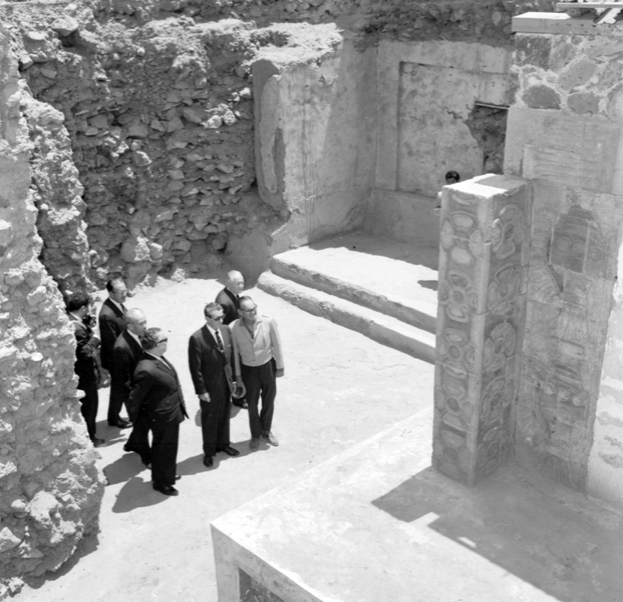 (Photograph: Gustavo Casasola Salamanca; Source: Casasola Archive Collection; courtesy: Fototeca Nacional [English: National Photo Library] INAH, 1963).
Figure 1
Adolfo López Mateos, Jaime Torres Bodet, Alfonso Caso, and high officials of the Secretary of Public Education at the archeological zone of Teotihuacán
Adolfo López Mateos, Jaime Torres Bodet, Alfonso Caso, and high officials of the Secretary of Public Education at the archeological zone of Teotihuacán
II. International positioning
As a consequence of the military destruction caused by World War II, which affected the European continent first and foremost,19 cultural agents acting in positions of power within the newly created transnational institutions prioritized ensuring the restoration of heritage. Their conceptual basis was modernization theory, a purely Western project20 that saw the development of social sciences and humanities, based on rationalization processes, as the only option. Thus, they systematized and standardized the disciplines related to the excavation, conservation, and intervention of heritage. Moreover, the professionalization of experts and the creation of institutions specialized in the production of knowledge were coupled with strategies of scientific communicability and technology transfer.21
In other words, devastated Europe engaged in the task of preserving some of its former power, that is, in the cultural sphere. One of the formulas used to confront triumphant American imperialism was by assuming leadership within the nascent supranational institutions, such as UNESCO, ICOM, and, subsequently, ICOMOS. The three institutions were not centralized in Paris just by chance, and, to cite one case, of a dozen leaders that ICOM has had, eight of them have been Europeans, with France being the only nation to have placed three presidents.
In its Cold War Eurocentrism, Western Europe relied on a long process of appropriation, study, and experimentation on the universal heritage that it accumulated and exhibited in its old, imperialist encyclopedic museums.22 The aim was to use its experience to lead the organizational, conceptual, and methodological rationales of the disciplines related to heritage. This meant the restoration of moveable and built property. The self-defensive tactic of some European nations was to remember their historical focus, guarantee control in the conservation of all those objects that documented their glorious past and extend their protectorate over their colonies and peripheral nations. They had lost economic and political power, but not the symbolic capacity for cultural representation.
At the same time, Mexican Eurocentrism, inherited from the 19th century and reactivated in different stages of the last century, experienced a revival in the first years of the Cold War. This revival was in great measure due to the governmental tactic of seeking sponsorship from outside the omnipresent and all too close U.S. imperialism. The pursuit of European consultancy in the field of culture had a long tradition. Local artists and intellectuals used to carry out the last stage of their training in European schools, and many of them focused their professional practice on heritage restoration, either in museums and public institutions or in the private sphere.23
Concerning the territory of macro-politics, the purpose was to find a loophole through which to escape the political-economic control of the United States. This was the reason for the symbolic rapprochement with Europe, no longer a continent that challenged Mexican political or economic security, but rather one with an indisputable cultural link. Some nostalgia is also evident in this search for the protection that the former European empires could provide in the face of the growing danger of U.S. imperialism.
These were times when Mexican diplomacy strove to present itself as a Latin American older brother, as an intermediary between the north and the south of the new continent, and as an authorized interlocutor before old Europe. The antiquity and richness of the original cultures was the crucial argument. For example, it was natural that Mexico-by proclaiming itself a leading, neutral, democratic, and diplomatically independent country-did not agree to break official relationships with the Cuban Revolution in 1964, as all Latin American republics did under pressure from the United States. Logically, to avoid negotiating with those who wanted to set themselves up as a counter-power, the northern neighbor did not encourage the construction of Mexican regional leadership.
In that tumultuous political environment, the intellectual and political elite of Mexico waged, in apparent complicity, innumerable battles for cultural recognition and prestige, which would guarantee access to economic resources-either through the establishment of regional professionalization programs of foreign financing or through the desired influx of tourism. This not inconsiderable economic lever was part of the developmental logic of the time (Figure 2). There was a complete agreement with the international provisions on the subject. For example, the Quito Regulations read:
Intrinsic cultural values are neither weakened nor compromised by association with tourist interests; on the contrary, the increased attraction of the cultural properties and the growing number of outside admirers confirm awareness of their importance and national significance. A properly restored monument, an urban complex that has regained its original values, are not only living lessons of history, but legitimate reasons for national pride. (ICOMOS, 1967) 24.
Thumbnail
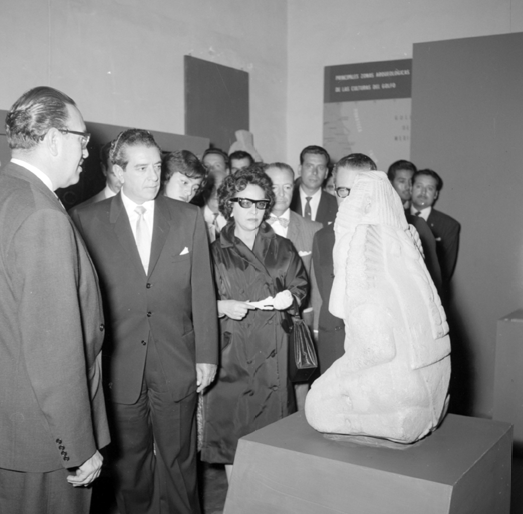 (Photograph: Gustavo Casasola Salamanca; source: Casasola Archive Collection; courtesy: Fototeca Nacional [English: National Photo Library] INAH, 1964).
Figure 2
Adolfo López Mateos and Jaime Torres Bodet visit the facilities of the National Museum of Anthropology during its inauguration
Adolfo López Mateos and Jaime Torres Bodet visit the facilities of the National Museum of Anthropology during its inauguration
Turning Mexico into one of the ten tourist destinations was an indisputable benefit of the governmental practice of the country,25 a reasonable political maneuver to promote the national economy. The key is how. Thus, the underdeveloped local industrial policy, limited mainly to the assembly of international products, focused on non-polluting industries.26 Promoting tourism was an official operation so successful that even until 2011, Mexico was, according to the World Tourism Organization (UNWTO), in the top ten in terms of international visitors.27 Additionally, with 35 sites registered on the UNESCO heritage list, in 2019, it ranked seventh, behind Italy (55), China (55), Spain (48), Germany (46), France (45), and India (38).28
These were also years of optimism, thanks to the concerted action of apparently well-intentioned multinational programs that, in retrospect, were naive. There was the illusion of being able to avert any damage to heritage with scientific and technological advances and multinational collaboration. There is, for example, the case of the relocation of the Abu Simbel Temple, from 1960 to 1964, threatened by the construction of the Aswan Dam in Egypt, one of the first megaprojects of UNESCO.29 The equalization between developed and “developing” countries was seen as possible by achieving the conservation parameters defined within these international bodies.
III. Torres Bodet, international cultural manager
The role assigned to the management of a leader who builds their public personality in the political and intellectual sphere was nodal at the time. He was conceived as the focal point of the new educational-cultural policies of the world that emerged during the post-war reconstruction. Hence the focus and prominence given to characters such as Jaime Torres Bodet, with a mixed profile of politician, public official, creator, intellectual, and cultural manager in the field of decision-making with national and international impact.
There is more to intellectual cooperation than a simple exchange of knowledge and ideas, teachers and journals, laboratories, and museum collections. There is something more important than all of that at the very basis of intellectual cooperation. It is the cooperation of intellectuals, the organized force of the world of ideas to prevent the monstrous deviations that led peoples to solve their crisis through violence (Torres, 1995, p. 976).30
Many generations of Mexican intellectuals and public officials focused on their inclusion within the organizations being forged. Politics, in this case diplomatic-cultural politics, has a name and face. For example, one of the executives who not only implemented State political practices but also contributed to their design and conception, Jaime Torres Bodet, was active in all the processes so far outlined as a diplomat and ambassador of Mexico in Spain, Argentina, the Netherlands, Belgium, and his beloved France. He led the Secretaría de Educación Pública (SEP), on two occasions (1943-1946 and 1958-1964), and the Secretaría de Relaciones Exteriores (SRE) (1946-1948).
It is necessary to emphasize his performance, between 1948 and 1952, as the second director-general of UNESCO, during the first stage of the post-war period. He has been the only Latin American to hold such a high position within the organization that until 2020 has been presided over-with geopolitical criteria-by an American, an Asian, an African, and five Europeans, with France being the only country to have managed to impose two leaders.31 In 1966, with the decree to create the Regional Center in Mexico, Torres Bodet had undoubtedly coordinated the lobbying, as he was the head of the SEP (Figure 3).
Thumbnail
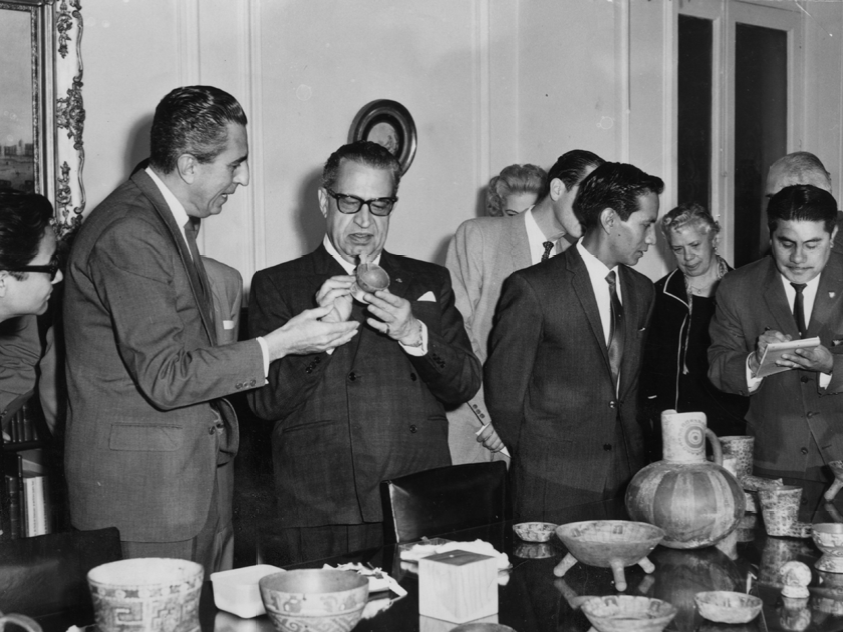 (Photograph: Gustavo Casasola Salamanca; Source: Casasola Archive Collection; courtesy: Fototeca Nacional [English: National Photo Library], ca. 1958).
Figure 3
Jaime Torres Bodet at the facilities of INAH
Jaime Torres Bodet at the facilities of INAH
With extensive experience in diplomacy, particularly French-European diplomacy, and with a deeply nationalist ideology, his aim was for Mexico to serve as a mediator, to the extent possible, in the face of the threatening imperialism of the United States, at least within the American subcontinent. First as a minister of SEP and then SRE, he participated in the constituent assembly of UNESCO and obtained for Mexico the seat of the Inter-American Conference on Problems of War and Peace (1945). He also won the right for Mexico to hold the second General Assembly of UNESCO, celebrated from November 6 to December 3, 1947,32 resulting in the hasty refurbishments of the museums of History, Anthropology-then located at Moneda 13, Historical Center of the City of Mexico-,33 and the Museo Nacional de Artes Plásticas34 located in the Palacio de Bellas Artes. Additionally, he headed the Mexican delegation that, in 1948, attended the official creation of the Organization of American States (OAS) in Bogotá.
In 1949, during his mandate at UNESCO, he worked to lay the conceptual foundations within the Rome Center ICCROM -now the International Center for the Study of the Preservation and Restoration of Cultural Property-, although the creation decree was not issued until 1956 and it did not materialize until three years later.35 At the 1950 General Assembly, archeologist Alfonso Caso led the Mexican commission and presented a project to regulate “the protection of historical monuments and art treasures.” Although it was not adopted, it is a precedent to the convention signed in 1972.
According to his version, Torres Bodet renounced his appointment to lead UNESCO in 1952 due to a severe budget reduction. Nevertheless, he continued to be politically active until 1971, when his last period as ambassador to France ended. It was because of his long and close relationship with France that, in 1961, during his second term at SEP, he contributed to the foundation of a French institution focused on the development of scientific research on national territory, the French Archeological and Ethnological Mission, known today as the Centro de Estudios Mexicanos y Centroamericanos, (CEMCA).36
The above is a minor detail of the biography of Torres Bodet; however, it indicates that his professional profile should be studied with great care to clearly define the scope of his participation in positioning the official image of Mexico in the field of art and culture. Furthermore, one of the more illustrious consequences of this participation was the foundation of an organization that today includes the Coordinación Nacional de Conservación del Patrimonio Cultural37 (CNCPC), and the Escuela Nacional de Conservación, Restauración y Museografía38 (ENCRyM), both part of the INAH, complementary peers that share their origin and development. Their foundation was one of the most fruitful wagers of the Cold War.
IV. Mayans
In 1946, the world learned that there were still surprises in the vast and remote Mayan universe. This came about with the discovery in a city known as Bonampak, in the Lacandon jungle (current state of Chiapas), of some well-preserved important murals, which represent a watershed in Mexican archeological history due to the information they provide on Mayan rituals of the classic period, their enormous size, the excellent state of conservation in which they were found-which made a complete reading of their images possible-, as well as the magnificent quality of their manufacture and plastic values. The story of their discovery is well known.
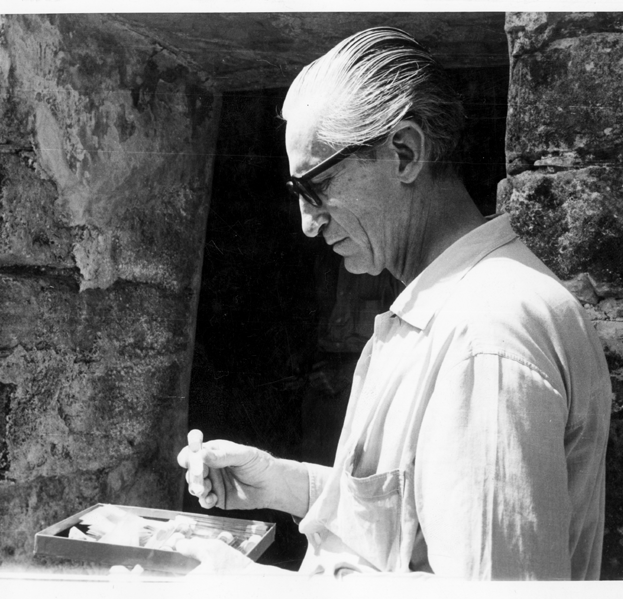
Of note is that the director of the modest INAH Department of Catalogue and Restoration of Artistic Heritage, then located in the former monastery of El Carmen,39 was commissioned, in 1964, to accompany the Belgian restorer Paul B. Coremans (1906-1965) to examine the murals of Building 1, that is, the Temple of Paintings. It was not the first international expedition in which UNESCO participated after the discovery; however, Manuel del Castillo Negrete made good use of the opportunity to lay the foundations of a possible official collaboration that would provide technical advice, not only to safeguard and preserve the murals mentioned but also to create a platform that would provide specialized training to INAH employees already dedicated to preservation issues (Figure 4)
Thumbnail
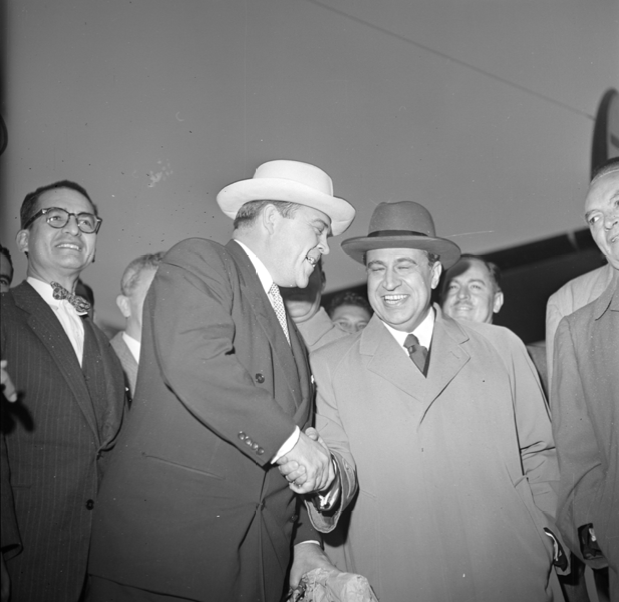 (Photograph: Casasola Archive Collection; courtesy: Fototeca Nacional [English: National Photo Library] INAH, 1953).
Figure 4
Greeting between the director-general of unesco, Luther H. Evans, and Torres Bodet
Greeting between the director-general of unesco, Luther H. Evans, and Torres Bodet
That was the original intention. With the negotiations, the plan became much more ambitious and acquired a supranational dimension. The political elite was aware of the urgent need to professionalize the field of restoration since, precisely in 1964, the year when Coremans visited, there was an extraordinary reform to the museum system that principally affected the center of the Republic and whose most visible result was the foundation of new venues: the Antropología and of the Virreinato, the Pinacoteca Virreinal, the museums of Arte Moderno and of Arte de Ciudad Juárez40. Consequently, it was made clear that one of the basic requirements of any recently created space was to present its collections in the best possible conditions.
Due to the above, the Mexican project coincided with the UNESCO ordinance to implement a school of subcontinental scope for those interested in learning cutting-edge methodologies that would give them a better chance of success in tackling the various regional heritage problems. The organization sought a country that, with enormous cultural richness as a base, had demonstrated itself to be culturally responsible and be fully aware of the need to preserve heritage in order to strengthen its national mythology and history. In Latin America, in the mid-1960s, that country was Mexico.
INAH, the cultural institution that centralizes the cultural heritage of the country (a metaphor for political centralism), was not comparable to any other in the subcontinent. It had the organizational capacity, experience, and interest to take charge of the organization prefigured by UNESCO. Coremans, founder and first director of the Royal Institute for Cultural Heritage in Belgium, delivered a report in which he gave specific recommendations and opinions for the conservation and restoration of the murals of Bonampak. Furthermore, he proposed that Mexico be the country to house the multifunctional research and education center being prepared by UNESCO. This recommendation caused Mexico to supersede other candidates that had hitherto been considered.
The question is, what convinced Coremans? Did living in Mexico make him a fervent supporter of the Mexican candidacy? I argue that the likely reason was the paintings, practically complete, that covered the four walls of the three rooms that comprise Structure 1 of a city that the American archeologist Sylvanus G. Morley named “painted walls” or Bonampak. Additionally, who are the Mayans? “The Greeks of America,” that is, at least according to the official imaged created for them since the 19th century. They are the prototype of a wise, cultured, and civilized community, ecologically responsible and concerned to expand the knowledge of areas such as astronomy, mathematics, and art. Therefore, even specialists present them as “a humanist people par excellence.”41 Today, it is known that this sanitized image does not correspond to the historical truth.
In terms of the collective imagination, primarily the result of official policy, although the Mayan territory includes regions now located in countries such as Guatemala, Honduras, Belize, El Salvador, and Costa Rica, the Mayans are Mexican. It is a fact that part of the media and tourist notoriety of the art of that region lies in the fact that its characteristics make it close, in its formal and plastic values, to the Western viewpoint, which continues to be the parameter of artistic manifestations from the peripheries. For that reason, conceptual comparisons of this type are frequent: the murals of Bonampak are “the Sistine Chapel of Mexico” (Figure 5).
Thumbnail
 (Photograph: Casasola Archive Collection; courtesy: Fototeca Nacional [English: National Photo Library], 1964).
Figure 5
Castillo Negrete at the Temple of the murals, Bonampak
Castillo Negrete at the Temple of the murals, Bonampak
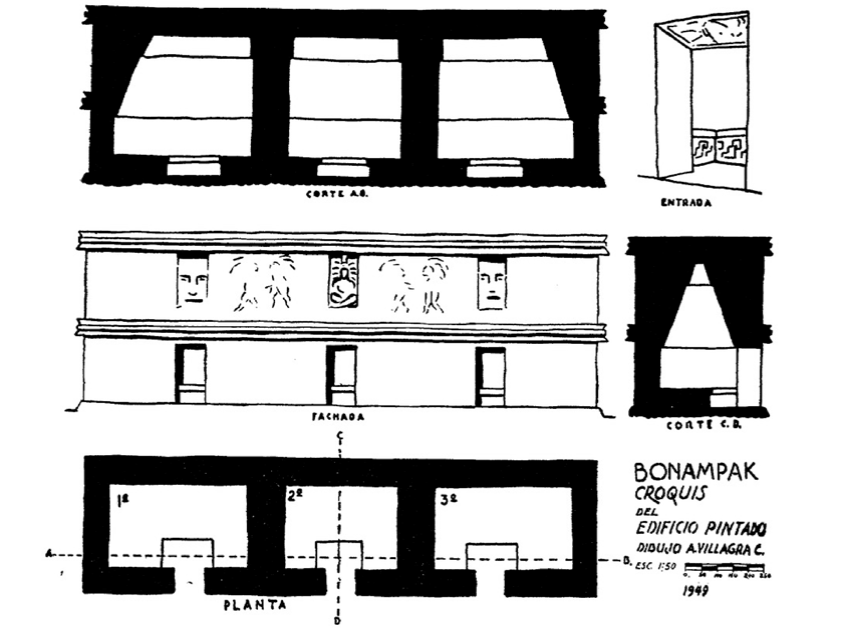
Hence, it was precisely a visit to such emblematic paintings that triggered the beginning of an international tutelage project on the topic of conservation and restoration.42 The fact that replicas of these murals, painted by Agustín Villagra Caleti, were on display for decades in the traveling exhibitions that took place throughout Europe and the United States during the Cold War, contributed significantly to their international prestige (Figure 6). They were copies made with international funding, in this case from the United Fruit Company,43 which sponsored two expeditions, in 1947 and 1948, consisting of six weeks of work each (Villagra, 1949).
-
(Villagra, 1949)Bonampak. La ciudad de los muros pintados. Estudio y copia de los muralesAnales del Instituto Nacional de Antropología e Historia, 1949
Thumbnail
 (Drawing: Agustín Villagra Caleti; source: Villagra (1949, p. 14).
Figure 6
Diagram of the Painted Building of Bonampak
Diagram of the Painted Building of Bonampak
In this way, the long-term strategy of Mexican cultural diplomacy succeeded with the foundation of the Laboratorio Regional y Centro de Estudios para la Conservación de Bienes Culturales “Paul Coremans”.44 UNESCO decreed its establishment at its General Conference held in Paris in 1966. There, due to the early death of the person who supported the project, Paul Coremans, it was agreed that the institution would be under the responsibility of the current ICCROM, based in Rome.45 This is how even the ancient Mayans contributed to the foundation of an establishment to educate and professionalize Latin American restorers.
Acknowledgments
Thank you for the review and critical comments made to this text by Liliana Giorguli and Peter Krieger, with whom I have shared a personal and academic dialogue for more than two decades, strengthening my professional performance.
Referencias
- Ariño, A. (2007). La invención del patrimonio cultural y la sociedad del riesgo. En A. Rodríguez (Ed.), La sociedad de la cultura (pp. 71-88), Barcelona: Ariel. Links
- Calandra, B. y Franco, M. (Eds.). (2012). La Guerra Fría cultural en América Latina. Desafíos y límites para una nueva mirada de las relaciones interamericanas. Buenos Aires: Biblos. Links
- Caraballo, C. (2011, 10 de junio). El papel de la UNESCO en la protección del patrimonio cultural mexicano [Conferencia]. Taller de Restauración FAHHO, Oaxaca, México. Recuperado de https://bit.ly/31dVLba Links
- Cardoso, F. H. y Faletto, E. (1969). Dependencia y desarrollo en América Latina. Ensayo de interpretación histórica. México: Siglo XX. Links
- Carriedo Castro, P. (2007). Guerra Fría y cultura: un panorama sobre la libertad y el compromiso del escritor en la mitad del siglo XX. Nómadas. Revista Crítica de Ciencias Sociales y Jurídicas, 15(1). Links
- Castellanos, M. F. (2010). Presentación. En E. Montiel, Diplomacia cultural: un enfoque estratégico de política exterior para la era intercultural (p. 3). Guatemala: UNESCO. Recuperado de https://bit.ly/32cy3eo Links
- Chávez, C. (2014). Arte mexicano en París. En Obras (Vol. 3). México: El Colegio de México. Links
- Coelho, T. (2000). Diccionario crítico de política cultural: cultura e imaginario. Guadalajara: Conaculta/ITESO/Secretaría de Cultura del Gobierno de Jalisco. Links
- Cruz, D., Garay, C. y Velázquez, M. (Eds.). (2016). Recuperación de la memoria histórica de exposiciones de arte mexicano, 1930-1950, México: Fundación BBVA Bancomer/Fonca/UNAM Posgrado. Links
- De la Cruz, F. (2017). Estados desarrollistas en el siglo XXI (tesis doctoral). Escuela Internacional de Doctorado, Madrid. Recuperado de https://bit.ly/326hIYF Links
- Galindo, S. (2012). México en dos exposiciones internacionales: París 1952 y Osaka 1970 (tesis de maestría). Escuela Nacional de Conservación, Restauración y Museografía, México. Links
- Garduño, A. (2001). México en Hannover 2000. Nuestra herencia es herencia de arte. Curare, 17, enero-junio, 19-29. Links
- Garduño, A. (2009). Fernando Gamboa, el curador de la Guerra Fría. En Fernando Gamboa, el arte del riesgo [Catálogo de exposición] (pp. 17-65). México: Conaculta-Museo Mural Diego Rivera-INBA. Links
- Garduño, A. (2018). Mexico’s Museo de Artes Plásticas. The Divergent Discourses of 1934 and 1947. Art Museums of Latin America: Structuring Representation (pp. 32-44). Nueva York: Routledge. Links
- Garduño, A. (2019). Forjando museos. Políticas públicas de institucionalización artística. Estudios culturales del Occidente de México. CECOM. 100 años de investigación en los museos (pp. 11-31). Guadalajara: INAH. Links
- Giddens, A. (1990). The Consequences of Modernity. Cambridge: Polity Press. Links
- Instituto Nacional de Bellas Artes (1940). Veinte siglos de arte mexicano. Nueva York/México: MOMA/INAH. Links
- Instituto Nacional de Bellas Artes (1950). Ley Orgánica del Instituto Nacional de Bellas Artes y Literatura. En Dos años y medio del INBA. México: INBA. Links
- Instituto Nacional de Bellas Artes (1952). Arte mexicano. De lo precolombino a nuestros días. París: INBA. Links
- Instituto Nacional de Bellas Artes (1955). Mekishiko bijutsu-ten. Tokio: Yomiuri-INBA. Links
- Instituto Nacional de Antropología e Historia (2014). Museo Nacional de Antropología. 50 aniversario. México: inah. Links
- International Council on Monuments and Sites (1967). Normas de Quito. Informe final de la reunión sobre conservación y utilización de monumentos y lugares de interés histórico y artístico. Recuperado de https://bit.ly/3aN9FE7 Links
- Inversión Turística (28 de mayo de 2019). Cae México a la séptima posición del ranking mundial de turismo según la OMT. En Inversión Turística. Recuperado de https://bit.ly/326AKhH Links
- IPS Agencia de Noticias (1999). México: Veinte siglos de cultura maya a disposición del público. Recuperado de https://bit.ly/31bktZp Links
- Jokilehto, J. (2011). ICCROM and the Conservation of Cultural Heritage: A History of the Organization’s First 50 Years, 1959-2009 (Vol. 11). Roma: ICCROM. Links
- Lander, E. (2000). Ciencias sociales: saberes coloniales y eurocéntricos. En La colonialidad del saber: eurocentrismo y ciencias sociales (pp. 11-40). Buenos Aires: CLACSO. Links
- Latapí, P. (2006). 60 años de la UNESCO: un aniversario en el que México tiene mucho que celebrar. Perfiles Educativos, XXVIII(111), 112-123. Links
- López, A. (1959). Primer Informe de Gobierno. Recuperado de https://bit.ly/34gAi3d Links
- López, A. (1964). Sexto Informe de Gobierno. Recuperado de https://bit.ly/2YhQ6yV Links
- Marquina, I. (1994). Memorias. México: INAH. Links
- Martínez, M. (2016). México en los orígenes de la UNESCO. México: El Colegio Nacional. Links
- Niño, A. y Montero, J. A. (Eds.). (2012). Guerra Fría y propaganda. Estados Unidos y su cruzada cultural en Europa y América Latina. Madrid: Biblioteca Nueva. Links
- Pernaut, C. (2002). La formación para la conservación del patrimonio cultural en América Latina. En Estrategias relativas al patrimonio cultural mundial. La salvaguarda en un mundo globalizado. Principios, prácticas y perspectivas. Actas de la treceava Asamblea General y Simposio Científico del ICOMOS. Madrid, España: ICOMOS (pp. 287-289). Recuperado de https://bit.ly/326i9Ch Links
- Reyes, F. (1994). Polos culturales y escuelas nacionales: el experimento mexicano, 1940-1953. En G. Curiel, R. González y J. Gutiérrez (Eds.), Arte, historia e identidades en América. Visiones comparativas. XVII Coloquio Internacional de Historia del Arte (Vol. 3) (pp. 821-828). México: UNAM-IIE . Links
- Rodríguez, A. (2007). La perspectiva de la sociedad de la cultura. En A. Rodríguez (Ed.), La sociedad de la cultura (pp. 11-51). Barcelona: Ariel . Links
- Sánz, N. y Tejeda, C. (2016). México y la UNESCO, la UNESCO y México: historia de una relación. México: UNESCO. Links
- Soto, M. (2013). El orden del discurso patrimonial: la normalización de las prácticas de conservación en la protección de monumentos, bienes y paisajes culturales. Revista Cátedra de Artes, 14 (segundo semestre, diciembre), 15-43. Links
- Stonor-Saunders, F. (2001). The CIA and the World of Arts and Letters. Nueva York: The New Press. Links
- Torres, J. (1995). Obras escogidas. México: Fondo de Cultura Económica. Links
- Torres, J. (2017). Memorias I y II. México: Fondo de Cultura Económica . Links
- UNESCO (2019). Patrimonio Mundial [página web]. Recuperado de https://bit.ly/2QbpgnC Links
- Valderrama, F. (1995). Historia de la UNESCO (2ª ed.). París: UNESCO. Links
- Vidargas, F. (2015). México en su patrimonio.Hereditas (23-24), 96-99. Links
- Villagra, A. (1949). Bonampak. La ciudad de los muros pintados. Estudio y copia de los murales. Anales del Instituto Nacional de Antropología e Historia, 6(3), 7a-43a Links