Artículos de revisión
Fortified Maize Tortilla: from the traditional Mesoamerican diet to functional food
Tortilla Fortificada: de la dieta tradicional mesoamericana a la alimentación funcional
Rojo-Gutiérrez, E.1
López-Martínez, L.X.2
 http://orcid.org/0000-0002-5572-5434
Tirado-Gallegos, J.M.3
http://orcid.org/0000-0001-9962-921X
Buenrostro-Figueroa, J.J.1
http://orcid.org/0000-0002-5314-9824
García, Hugo S.4
http://orcid.org/0000-0001-5805-0201
Baeza-Jiménez, R.1*
http://orcid.org/0000-0003-1706-5014
López-Martínez, L.X.2
http://orcid.org/0000-0002-5572-5434Tirado-Gallegos, J.M.3
http://orcid.org/0000-0001-9962-921XBuenrostro-Figueroa, J.J.1
http://orcid.org/0000-0002-5314-9824García, Hugo S.4
http://orcid.org/0000-0001-5805-0201Baeza-Jiménez, R.1*
http://orcid.org/0000-0003-1706-5014
Abstract
Maize is an ancient crop whose domestication dates from six to ten thousand years ago in southwestern Mexico. It is one of the most important crops, with a global production volume of 1, 217 billion tons during the 2021 - 2022 cycle. In Mexico, maize has economic and commercial importance, and its uses are ancestral and versatile to obtain a wide variety of products, including oil, popcorn, syrup, corn, tamales, atole, and the most recognized tortillas. Tortilla is one of the main staple foods in our diet, with a consumption of up to 75 kg/per capita per year, contributing with 38.8 and 49.1 % of protein and calcium, respectively, and 45.2 % of the daily calorie intake. Due to its high consumption, it is an excellent vehicle for the development of innovative products by the addition of functional ingredients that increase the nutritional quality (for instance, mineral or vitamin deficiencies) of our diet and confer benefits to consumer’s health, being of particular interest the so-called underutilised species such as ayocote beans and quelites. The review aims to explore fortifying maize products (tortillas), with underutilised ingredients to enhance nutrition, address deficiencies, promote health benefits, and agricultural diversification.
Keywords::
Fortification, bioactive compounds, diet, health, underutilised species
Introduction
Nixtamalized maize tortilla is a primordially staple food for millions of people, particularly in many African, Latin America, and Asian countries (KSILLP, 2022). Tortillas have become a substantial source of calories, carbohydrates, protein, and vitamins for the population. In rural areas of some nations, Mexico included, the caloric and protein intake from maize tortilla can reach up to 70 and 50% of the consumers daily diet, respectively (Hernández-Chávez et al., 2018). The United States and Europe register an annual consumption of 6 and 0.3 kg per capita, respectively (Artavia et al., 2022). However, the main drawback of the nutritional composition of maize tortilla is the low quality of proteins attributed to its reduced lysin and tryptophan amino acids concentrations (Luna et al., 2021). Due to the advances in food technology, fortification can be implemented to address the nutrient deficiencies of maize tortilla and improve their overall nutritional value and bio functional properties, as a safe and cost-effective strategy (Olson et al., 2021).
-
KSILLP, 2022Global corn tortilla market - forecasts from 2022 to 2027, 2022
-
Hernández-Chávez et al., 2018Effect of soybean bagasse addition on texture, sensory properties and protein quality of maize tortillasCereal Chem., 2018
-
Artavia et al., 2022Physicochemical and sensory assessment of partial corn substitutions with carotenoid-containing non-traditional flours during tortilla preparationCogent Food Agric., 2022
-
Olson et al., 2021Food fortification: The advantages, disadvantages and lessons from sight and life programsNutrients, 2021
The high popularity and versality nature of tortillas, turns them into a potential vehicle to deliver bioactive and high nutritional ingredients which may not only contribute to combat hunger and malnutrition, but also improve public health. This has driven the exploration and use of natural sources (plant and/or animal) as ingredients to extract bioactive compounds of interest, which could offer potential health benefits beyond basic nutrition. Since the main limitation of maize tortilla is its protein quality, several studies have focused on their fortification, employing non-conventional flours rich in protein content (grasshopper, soybean, Andean crops) and protein concentrates (sardine, ayocote beans) (López-Alarcón et al., 2018; Salazar et al., 2020; Pérez-Alva et al., 2022). Technical literature also report studies that focus on the promotion of the functional properties of maize tortilla to prevent or treat diseases such as diabetes or hypertension (Acevedo-Martinez and Gonzalez de Mejia, 2021; Bon-Padilla et al., 2022).
-
López-Alarcón et al., 2018Nixtamalized maize supplementation with a sardine protein concentrate to improve the biological value of tortillasGac. Med. Mex., 2018
-
Salazar et al., 2020Production of tortillas from nixtamalized corn flour enriched with Andean crops flour: Faba-bean (Vicia faba) and white-bean (Phaseolus vulgaris)Emir. J. Food Agric., 2020
-
Acevedo-Martinez and Gonzalez de Mejia, 2021Fortification of maize tortilla with an optimized chickpea hydrolysate and its effect on DPPIV inhibition capacity and physicochemical characteristicsFoods, 2021
This review details the most recent studies related to the partial substitution of maize tortilla with vegetable and non-vegetable flours, to improve the nutritional and functional properties of conventional tortilla. Furthermore, the effects of the incorporation of different ingredients on the chemical composition and bioactive activities in the development of fortified tortillas is also described.
I. Maize
Maize is the world’s most important and cultivated cereal since its production reached 1.217 billion tons in 2021/22. The biggest worldwide producer is the United States, contributing with approximately one third of the global production (382.89 million tons), followed by China and Brazil with productions of 272.55 and 116 million tons, respectively. During this period, Mexico was the seventh producer, with 26.76 million tons (WASDE, 2022), whereas in terms of consumption, it is listed in the fifth place.
With respect to nutritional contribution, maize, as well as wheat and rice, accounts for more than 42 % of the world’s food calories and 37 % of the protein intake (FAO, 2016). It is important to mention that maize itself can exceed 50 % of the diet calories consumed by more than 1 billion people, where it represents one of the most important staple foods (Poole et al., 2021).
-
FAO, 2016Save and Grow in practice: maize, rice, wheat - A guide to sustainable cereal production, 2016
-
Poole et al., 2021Viewpoint: Agri-nutrition research: Revisiting the contribution of maize and wheat to human nutrition and healthFood Policy, 2021
1.1 Maize varieties
White and yellow maize are the main varieties used in developing countries to obtain different products, namely, meals, flour, and bran, for both human consumption and animal fed. Mexico possesses a wide genetic diversity of maize, which differ in shapes and sizes, as well as, in textures and colours of the grains. Around 220 maize species have been identified in America; among them, 64 native species are in Mexico. The colour range includes red, black, and blue varieties; however, in developing countries, the largest production corresponds to white and yellow maize. In Mexico, according to data reported by Servicio de Información Agrolimentaria y Pesquera (SIAP, 2024), 6, 941, 031.12 tons/ha and 27, 549, 917.53 tons of cultivated area and production, respectively, were registered for the 2022/2023 cycle. White maize contributes with 86 % of the production value, while yellow and the other colours with 7 % each. The main national pigmented maize producers comprise a total cultivation area of 31, 984 ha, as shown in Table 1 (SAGARPA-SIAP, 2018). Despite pigmented maize varieties are less consumed and are more common in rural communities, their popularity has increased in recent years due to their nutritional and functional properties. Pigmentation of maize is mainly related to the presence of anthocyanins in the pericarp and aleuronic layer, bioactive compounds with antioxidant capacity (Sánchez-Nuño et al., 2024).
-
SIAP, 2024Anuario estadístico de la producción agrícola, 2024
-
SAGARPA-SIAP, 2018Atlas Agrolimentario 2018, 2018
-
Sánchez-Nuño et al., 2024Bioactive compounds from pigmented corn (Zea mays L.) and their effect on healthBiomolecules, 2024
Table 1
Main producer states of pigmented maize in Mexico.
Main producer states of pigmented maize in Mexico.
Tabla 1
Principales estados productores de maíz pigmentado en México.
Principales estados productores de maíz pigmentado en México.
| Producing state | Cultivation area (ha) |
| Mexico | 11, 086 |
| Chiapas | 8, 019 |
| Chihuahua | 6, 855 |
| Jalisco | 2, 020 |
| Puebla | 1, 936 |
| Guerrero | 1, 076 |
| Michoacan | 992 |
| Total | 31, 984 |
-
SAGARPA-SIAP (2018)Atlas Agrolimentario 2018, 2018
1.2 Maize-based products
Maize could be considered the most versatile multipurpose cereal, given the large number of products that can be prepared. According to the FAOStat (2021) data base, most of the worldwide produced maize is primarily used for animal feed (see Figure 1), followed in lower amounts as staple for food preparation and non-food uses such as biofuel production. Africa, Latin America, and some countries of Asia are large maize consumers, since is one of their main sources of energy and nutrition. Particularly Latin America allocate a 21.1 % of the maize domestic supply for food, and 63.6 and 2.2 % for feed and non-food uses, respectively. As it can be seen in Figure 1, Africa, in contrast to the rest of the continents where maize is mostly used for profit from feed, fuel, and other raw materials for industry, maize is primarily utilized for human consumption. Maize is the primary staple food for over 300 million Africans that contributes significantly to poverty reduction and food security for low-income families (Galani et al., 2020). This can also be observed in developing countries, where maize is mainly consumed by humans, while in affluent nations, maize destined for human consumption is minimum in comparison to the other applications (Figure 2) (FAOStat, 2021). Table 2 shows some of the most common maize-based products obtained in the different applications areas (food, non-food, animal feed). There is a wide variety of traditional dishes obtained from maize (Figure 3) such as tamales, arepas, indio viejo, humitas, locro (Mexico, Colombia, Nicaragua, Chile, and Argentina, respectively) among others (Tanumihardjo et al., 2020).
-
FAOStat (2021)FAO Stat. FAO, 2021
-
Galani et al., 2020A review of micronutrient deficiencies and analysis of maize contribution to nutrient requirements of women and children in Eastern and Southern AfricaCritical Reviews in Food Science and Nutrition, 2020
-
FAOStat, 2021FAO Stat. FAO, 2021
-
Tanumihardjo et al., 2020Maize agro-food systems to ensure food and nutrition security in reference to the sustainable development goalsGlobal Food Security, 2020
Thumbnail
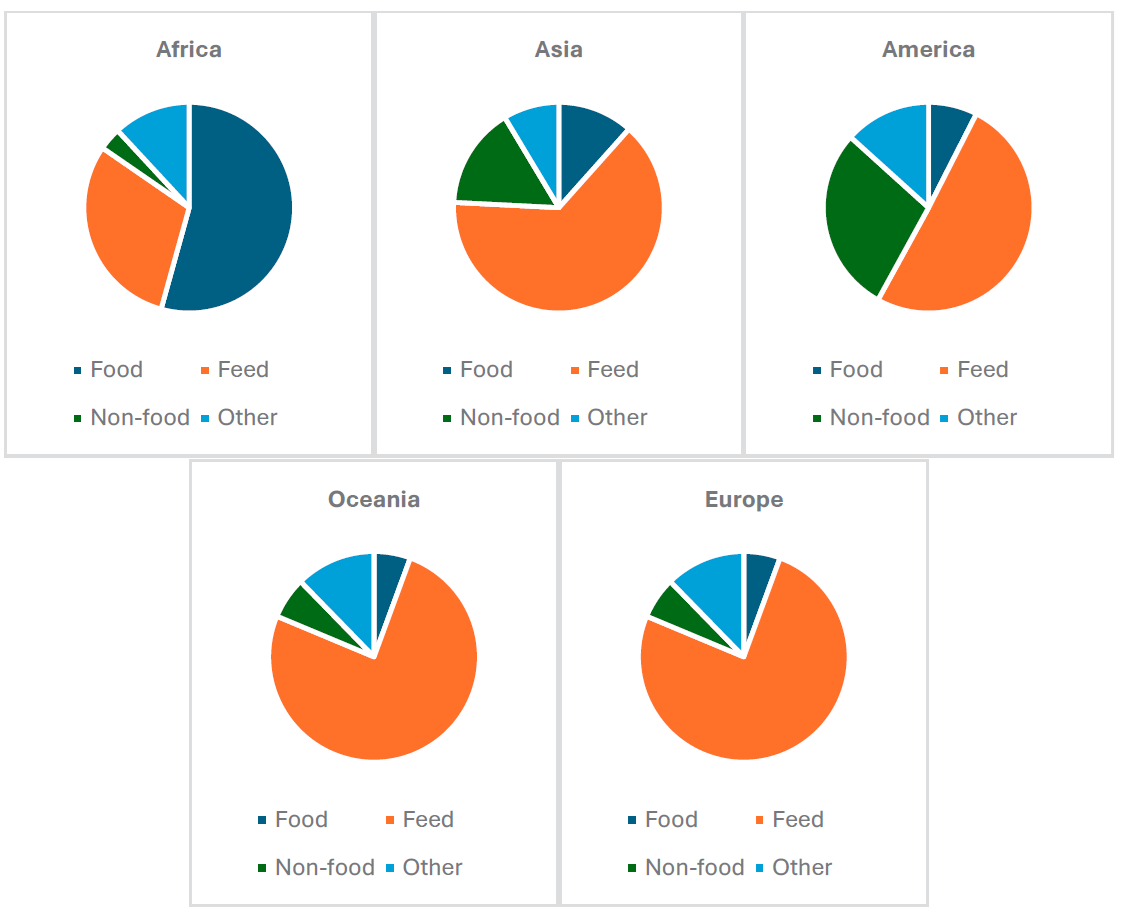
Figure 1
Average maize utilization per continent (2014-2018).
Average maize utilization per continent (2014-2018).
Thumbnail
Figura 1
Utilizacion promedio del maiz por continente (2014-2018).
Utilizacion promedio del maiz por continente (2014-2018).
Thumbnail
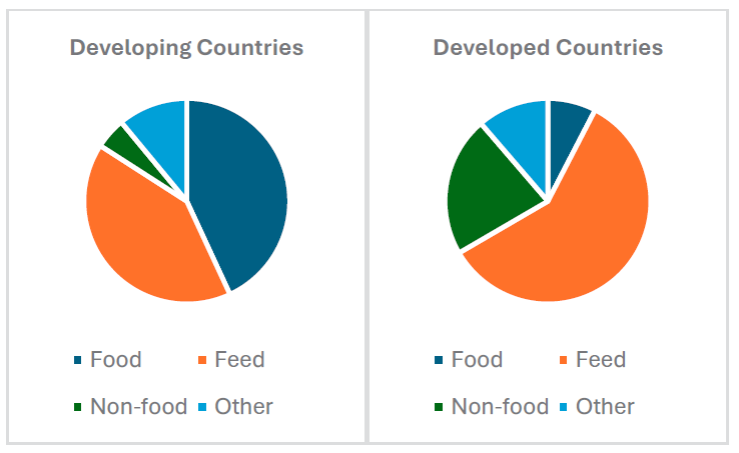
Figure 2
High- and low-income countries average maize utilization (2014-2018).
High- and low-income countries average maize utilization (2014-2018).
Thumbnail
Figura 2
Utilización promedio de maíz en países de ingresos altos y bajos (2014-2018).
Utilización promedio de maíz en países de ingresos altos y bajos (2014-2018).
Table 2
Applications of maize-based products.
Applications of maize-based products.
Tabla 2
Aplicaciones de productos a base de maíz.
Aplicaciones de productos a base de maíz.
| Application | Maize-based products |
|---|---|
| Food | Tortilla, maize flour, chips, cornflakes, popcorn, thickness pastes, grits, soft drinks, beer, whisky, oil, syrup, additive |
| Non-food | Bioethanol, biogas, biodegradable plastic, starch, slab aggregate, excipient of tablets |
| Animal feed | Silage, fodder |
-
Tedeschi et al. (2022)Is the potential for multi-functional use of industrial hemp greater than maize under saline conditions?Sustainability, 2022
-
Kaushal et al. (2023)Maize: an underexploited golden cereal cropCereal Research Communications, 2023
Thumbnail
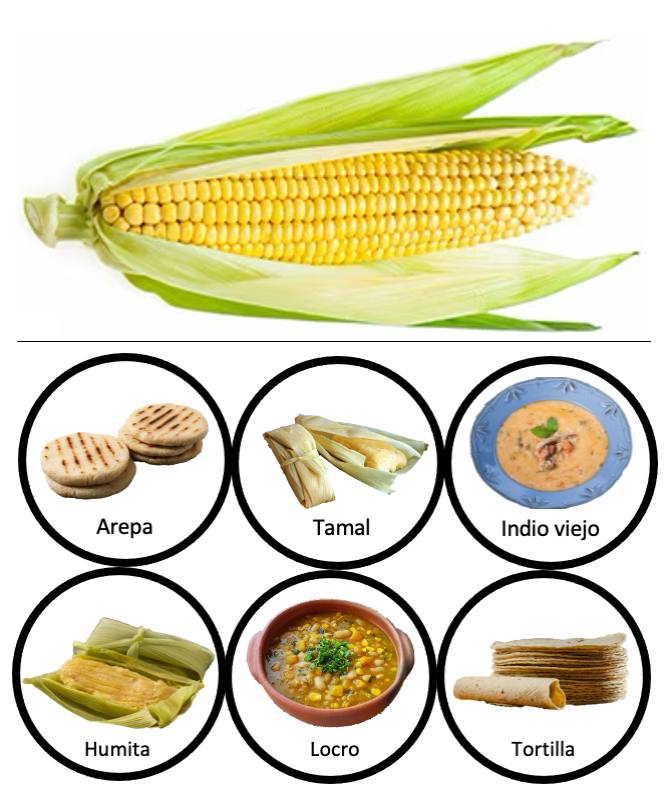
Figure 3
Traditional dishes prepared from maize.
Traditional dishes prepared from maize.
Thumbnail
Figura 3
Platillos tradicionales preparados a base de maíz.
Platillos tradicionales preparados a base de maíz.
Due to maize importance as staple food, its processing into food products has been thoroughly researched. Nixtamalization is a traditional cooking process of relevance. Maize is cooked with an alkalizing substrate (lime), and then allowed to rest for several hours. This allows the grains to soften so they can be hulled. Finally, the nixtamal is milled to obtain a dough that is commonly employed in the production of tortillas, tamales, among other dishes. This procedure alters the chemical composition of the endosperm, improving the bioavailability of vitamin B3 (niacin), amino acids, and iron, increases the resistant starch content and calcium intake, as well as the enhancement of shelf life and sensorial attributes (flavour and aroma) (Hassan et al., 2023).
-
Hassan et al., 2023Effect of nixtamalization on the nutritional, anti-nutritional, functional, physicochemical and mineral properties of maize (Zea mays) tortillasJ Food Chem Nanotechnol, 2023
From the different products that can be obtained by the processing and nixtamalization of maize, tortillas are one of the most consumed. Global maize tortilla market is forecasted to reach a value of 24.91 billion USD by the year 2030. Table 3 shows the tortilla market distribution all over the world.
Table 3
Tortilla market worldwide distribution.
Tortilla market worldwide distribution.
Tabla 3
Distribución mundial del mercado de las tortillas.
Distribución mundial del mercado de las tortillas.
| North America (38 %) | United States, Canada |
| Europe (23 %) | Germany, France, United Kingdom, Italy, Spain, Sweden, Netherland, Turkey, Switzerland, Belgium |
| Pacific Asia (22 %) | South Korea, Japan, China, India, Philippines, Singapore, Malaysia, Thailand, Indonesia, Taiwan |
| Latin America (10 %) | Mexico, Colombia, Brazil, Argentina, Peru |
| Middle East and Africa (7 %) | Saudi Arabia, United Arab Emirates, Egypt, South Africa |
II. Tortilla
Maize tortillas are considered a diet-basic constituent for their nutritional composition (see Table 4), being carbohydrates the main compounds. Maize tortilla contains nutritional fibre which is mainly constituted by dietary fibre and resistant starch (Mantilla et al., 2014). The latter is considered a functional ingredient, since literature has strongly related resistant starch with the prevention of important chronic diseases such as diabetes, obesity, colon cancer, among others (Rojas-Molina et al., 2020). Tortilla also present high ash content since its known that the nixtamalization process increase minerals concentration such as calcium and iron. Furthermore maize tortilla presents reasonable amounts of protein content, it is considered to lack of quality. This is because the protein of kernel corn is mainly constituted (50 - 60%) by zein, a prolamin poorly digested by humans (Sánchez et al., 2007). Furthermore nixtamalization improves protein quality of the tortilla by increasing protein digestibility, the process leads to protein losses and the product exhibit deficiencies in essential amino acids such as lysine and tryptophan (see Table 5) (Cuevas-Martínez et al., 2010). However, its sulphur amino acids content can be appreciable.
-
Mantilla et al., 2014Un modelo econométrico de la demanda de tortilla de maíz en México, 1996-2008Estudios sociales (Hermosillo, Son.), 2014
-
Rojas-Molina et al., 2020Physicochemical properties and resistant starch content of corn tortilla flours refrigerated at different storage timesFoods, 2020
-
Sánchez et al., 2007Efecto de las prolaminas del grano de maiz (Zea mays L.) sobre la textura de la tortillaArch. Latinoam. Nutr., 2007
-
Cuevas-Martínez et al., 2010Evaluación nutricional y textural de tortillas de maíz-frijol blanco nixtamalizadasInterciencia, 2010
Table 4
Nutritional composition of conventional maize tortilla.
Nutritional composition of conventional maize tortilla.
Tabla 4
Composición nutrimental de la tortilla de maíz convencional.
Composición nutrimental de la tortilla de maíz convencional.
| USDA (2020) | Colín-Chávez et al., (2020) | Sánchez-Villa et al., (2020) | Hernandez-Chavez et al., (2019) | Escalante-Aburto et al., (2019) | |
| Energy supply (kcal/ 100 g) | 218 | 228.42* | 201.3* | 270.18* | 233.12-265.09* |
| Moisture (%) | 45.89 | 45.9 | 51.03 | 33.07 | 28.04-33.72 |
| Protein (%) | 5.7 | 8.66 | 12.4 | 9.60 | 9.7-11 |
| Fat (%) | 2.85 | 3.42 | 2.5 | 4.5 | 2-4.65 |
| Carbohydrates (%) | 44.64 | 40.75 | 32.3 | 47.82 | 44.08-44.81 |
| Ash (%) | 0.92 | 1.27 | 1.77 | 1.17 | 10.5-11.5 |
| Total fibre (%) | 6.3 | 11.63 | - | - | 4.76-15.22 |
| Crude fibre (%) | - | - | 14.33 | 1.5 | - |
-
USDA (2020)FoodData Central Search Results. Tortilla, corn, 2020
-
Colín-Chávez et al., (2020)Comparison of nutritional properties and bioactive compounds between industrial and artisan fresh tortillas from maize landracesCurr. Res. Nutr. Food Sci, 2020
-
Sánchez-Villa et al., (2020)Nixtamalized tortillas supplemented with proteins isolated from Phaseolus coccineus and huauzontle (Chenopodium berlandieri subsp. nuttalliae) flour: rheological, textural, and sensorial propertiesInternational Journal of Gastronomy and Food Science, 2020
Table 5
Essential amino acids profile of maize tortilla.
Essential amino acids profile of maize tortilla.
Tabla 5
Perfil de aminoácidos esenciales en la tortilla de maíz.
Perfil de aminoácidos esenciales en la tortilla de maíz.
| Amino acids (g/16 g N) | Caire-Juvera et al., (2013) | Ezzeldeen et al., (2019) | Ortega et al., (1986) |
| Lys | 2.79 | 2.6 | 2.5 |
| Ile | 2.47 | 3.09 | 3.5 |
| Leu | 10.52 | 9.04 | 12.9 |
| Val | 3.24 | 4.33 | 4.7 |
| Thr | 2.62 | 3.09 | 3.7 |
| Trp | 0.62 | 0.69 | 0.5 |
| Met + Cys | 2.72 | 4.85 | 3.6 |
| Phe + Tyr | 8.02 | 7.75 | 8.8 |
| Total | 33.15 | 35.44 | 40.2 |
-
Caire-Juvera et al., (2013)Amino acid composition, score and in vitro protein digestibility of foods commonly consumed in the northwest MexicoNutrición Hospitalaria, 2013
Other chemical components present in tortilla include minerals (calcium, magnesium, phosphorous, potassium), essential vitamins (thiamine, niacin, folate), as well as bioactive compounds (phenolics, anthocyanins, carotenoids, and fatty acids), which play beneficial roles in both human health and nutrition (see Table 6). It is worth noting that the tortilla is considered a rich source of calcium, magnesium, iron, phosphorous, vitamin B6, niacin, manganese, and zinc.
Table 6
Chemical and functional composition of maize tortilla.
Chemical and functional composition of maize tortilla.
Tabla 6
Composición química y funcional de la tortilla de maíz.
Composición química y funcional de la tortilla de maíz.
| Minerals (mg) | |
| Calcium | 81 |
| Iron | 1.23 |
| Magnesium | 72 |
| Phosphorus | 314 |
| Potassium | 186 |
| Sodium | 45 |
| Zinc | 1.31 |
| Copper | 0.154 |
| Selenium | 6.1 |
| Vitamins (mg) | |
| Thiamine | 0.094 |
| Riboflavin | 0.065 |
| Niacin | 1.498 |
| Vitamin B6 | 0.219 |
| Vitamin E | 0.28 |
| Folate | 0.005 |
| Choline | 13.3 |
| Phenolic compounds (µg*) | |
| Ferulic | 1, 127 |
| p-coumaric | 789 |
| Caffeic | 521 |
| Syringic | 111 |
| 4-hydroxybenzoic | 1, 770 |
| Total phenolic acid | 4, 318 |
| Total phenolic compounds | 38, 400 |
| Anthocyanin (g) | |
| Total anthocyanins | 0.79 |
| Carotenoids (µg) | |
| β-carotene | 1 |
| β-cryptoxanthin | 1 |
| Lutein + zeaxanthin | 3 |
| Fatty acids (g) | |
| TSFA | 0.453 |
| TMFA | 0.692 |
| TPFA | 1.419 |
-
USDA (2020)FoodData Central Search Results. Tortilla, corn, 2020
-
Colín-Chavez et al. (2020)Comparison of nutritional properties and bioactive compounds between industrial and artisan fresh tortillas from maize landracesCurr. Res. Nutr. Food Sci, 2020
In Mexico, maize tortillas provide an intake of 38.8 % protein, 45.2 % calories, and 49.1 % calcium of its population’s daily diet, and in rural areas up to a 70 and 50 % of total calories and protein, respectively (Ramírez-Jiménez et al., 2023).
-
Ramírez-Jiménez et al., 2023Sustainable process for tortilla production using ohmic heating with minimal impact on the nutritional value, protein, and calcium performanceFoods, 2023
An alternative to address nutrient deficiencies of food, or improve its overall quality, is by food fortification. Food fortification emerged as a strategy to combat nutritional deficiencies and replace nutrients loss due to food processing. It consists on the addition of essential nutrients to food products to improve their nutritional quality (Poniedziałek et al., 2020). Several studies employing food fortification to foods that are extensively popular can be found in technical literature (Sánchez-Villa et al., 2020; Olson et al., 2021; Kancherla et al., 2022; Patel et al., 2022; Dehnad et al., 2023). Tortillas, as previously mentioned, are quite popular and considered to have an excellent potential as vehicle of ingredients rich in nutrients and bioactive compounds (León-Murillo et al., 2021). Nowadays, food ingredients with high nutritional quality and bioactive properties, as well as vegetable proteins, have become more popular and decisive when consumers are going to acquire a product (Schierhorn, 2020).
-
Poniedziałek et al., 2020Food fortification: What’s in it for the malnourished world?Vitamins and minerals biofortification of edible plants, 2020
-
Sánchez-Villa et al., 2020Nixtamalized tortillas supplemented with proteins isolated from Phaseolus coccineus and huauzontle (Chenopodium berlandieri subsp. nuttalliae) flour: rheological, textural, and sensorial propertiesInternational Journal of Gastronomy and Food Science, 2020
-
Olson et al., 2021Food fortification: The advantages, disadvantages and lessons from sight and life programsNutrients, 2021
-
Kancherla et al., 2022Preventing birth defects, saving lives, and promoting health equity: an urgent call to action for universal mandatory food fortification with folic acidThe Lancet Global Health, 2022
-
Patel et al., 2022Futuristic food fortification with a balanced ratio of dietary ω-3/ω-6 omega fatty acids for the prevention of lifestyle diseasesTrends in Food Science & Technology, 2022
-
León-Murillo et al., 2021Tortillas made with extruded flours of blue maize and chía seeds as a nutritious and nutraceutical food optionAgrociencia, 2021
-
Schierhorn, 2020Cold Snacks Heat upFood Technol., 2020
2.1 Tortilla fortification
Maize tortilla constitutes a potential vehicle to improve the nutritional quality of consumer´s diet, due to its high popularity in America and increasing consumption in the rest of the world, as well as its low cost. Maize tortillas can be combined with other foods which supply its deficiencies to attend malnutrition. Food fortification has become an innovative technology to enhance the nutritional quality and functional properties of the final product, by means of the incorporation of bioactive ingredients. Fortification can be achieved by adding micronutrients (vitamins, minerals), macronutrients (proteins) or by conducting a food-to-food fortification. The latter could be defined as a food strategy which consists in the addition of micronutrient-dense foods to increase the number of bioavailable micronutrients in foods (Kruger et al., 2020). Table 7 shows the chemical composition of different fortified maize tortillas reported in the current technical literature, supplemented with a wide variety of vegetable and non-vegetable ingredients. Table 7 was elaborated with the lowest and highest fortifying levels indicated in the studies listed, and it can be clearly seen the effect of the partial substitution on the chemical content.
Tabla 7
Análisis químico de tortillas de maíz fortificadas con diferentes materias primas de origen vegetal y no vegertal (g/100 g materia seca).
Análisis químico de tortillas de maíz fortificadas con diferentes materias primas de origen vegetal y no vegertal (g/100 g materia seca).
| Flour | Flour substitution (%) | Protein | Fat | Carbohydrate | Ash | Fibre | Reference |
|---|---|---|---|---|---|---|---|
| Bambara groundnut | 0a | 3.14 | 1.73 | 77.07 | 1.04 | 2.09 | Mashau et al. (2020) |
| 5 | 4.6 | 1.78 | 69.46 | 1.33 | 2.24 | ||
| 20 | 6.33 | 2.93 | 55.22 | 1.63 | 4.03 | ||
| Rice bran protein concentrate | 0a | 8.08 | 2.87 | 86.07 | 1.99 | 0.99 | Ezzelden et al. (2019) |
| 2.5 | 9.96 | 2.77 | 84.12 | 2.21 | 0.94 | ||
| 10 | 15.61 | 2.54 | 78.69 | 2.36 | 0.8 | ||
| Brown algae | 0a | 8 | 0.63 | 87.37 | 3.86 | 13.96 | Pérez-Alva et al. (2021) |
| 3 | 8.00 | 0.63 | 87.37 | 3.86 | 13.96 | ||
| 9 | 7.99 | 0.59 | 84.26 | 7.24 | 16.72 | ||
| Faba-bean (F)/ White-bean (W) | 0a | 10.83 | 2.52 | 86.65 | 0.56 | 2.76 | Salazar et al. (2020) |
| 25 W | 15.70 | 2.34 | 81.96 | 0.75 | 4.54 | ||
| 75 W | 25.17 | 1.98 | 72.85 | 1.17 | 6.96 | ||
| 25 F | 16.89 | 1.68 | 81.42 | 0.97 | 2.67 | ||
| 75 F | 21.50 | 1.34 | 77.16 | 1.23 | 2.59 | ||
| Sprouted Soybean | 0a | 9.26 | 4.51 | 82.71 | 1.38 | 2.14 | lnyang et al. (2019) |
| 10 | 12.08 | 6.03 | 78.18 | 1.52 | 2.19 | ||
| 40 | 22.57 | 10.53 | 62.45 | 2.06 | 2.39 |
-
Mashau et al. (2020Evaluation of the content of polyphenols, antioxidant activity and physicochemical properties of tortillas added with bambara groundnut flourMolecules, 2020
-
Ezzelden et al. (2019Quality characteristics of corn tortilla prepared with different levels of rice bran protein concentrateMenoufia J. Food & Dairy Sci., 2019
-
Salazar et al. (2020Production of tortillas from nixtamalized corn flour enriched with Andean crops flour: Faba-bean (Vicia faba) and white-bean (Phaseolus vulgaris)Emir. J. Food Agric., 2020
2.2 Fortification of conventional maize tortilla with vegetable feedstocks
Adding or partially substituting other vegetable flours for tortilla production can increase its nutritional value and functional properties, as it diversifies the variety of available gluten-free foods. The fortification of maize tortilla has also become a great opportunity to increase the economic value of vegetables, especially underutilised species (Hosseini et al., 2018; Syarifah and Amrih, 2021). Thus, efforts have been made to fortify tortillas with nixtamalized maize.
-
Hosseini et al., 2018Gluten-free products in celiac disease: Nutritional and technological challenges and solutionsJ. Res. Med. Sci, 2018
-
Syarifah and Amrih, 2021The study of addition variety of vegetable flour on physical characteristics of tortilla chipsJ. Phys.: Conf. Ser., 2021
Chickpea hydrolysates (5, 10 and 15 % w/w) were used to fortify white and blue maize tortillas. A partial substitution of 5% allowed to increase soluble proteins up to 105 % (8 g/100 g tortilla). The highest fortification level increased the bioactivity towards diabetes Type 2 (dipeptidyl peptidase activity inhibition) from 11 and 26 %, to 91 and 95 %, of white and blue maize tortilla, respectively (Acevedo-Martinez and Gonzalez de Mejia, 2021). Brown seaweed (Macrocystis pyrifera) was incorporated (10, 20, and 30 %, w/w) into the maize flour for tortilla production. Moisture and lipid content were inversely proportional to the amount of maize flour substituted with brown seaweed. Conversely, as the concentration of seaweed increased, protein, fibre and ash contents were higher. It is worth noting that a significant increase of sodium, potassium, magnesium, and phosphorous content was observed. Total phenolic content, FRAP, and ABTS values also increased linearly when higher concentrations of seaweed were employed. The highest ABTS value (86 %) was achieved by the formulation with the highest content of seaweed (20 %). Adhesiveness and hardness of all masa and tortilla formulas were higher in comparison to their control samples (Pérez-Alva et al., 2022).
-
Acevedo-Martinez and Gonzalez de Mejia, 2021Fortification of maize tortilla with an optimized chickpea hydrolysate and its effect on DPPIV inhibition capacity and physicochemical characteristicsFoods, 2021
Different soybean products have been employed to enrich or fortify nixtamalized maize tortillas with vitamin/minerals and protein. Hernández and Serna-Saldivar (2019) realized a review of several literature works related to the effects of soybean fortification of tortillas in rats and humans. They concluded that both animal and human studies demonstrated that very similar benefits were obtained from the consumption of tortilla fortified with soybean ingredients (full-fat meal, defatted flour, protein concentrates and isolates, soymilk) since data showed that growth, reproductive performance, brain development, and memory performance were improved. These favourable effects were attributed to the increase in the quality and concentration of protein in fortified tortillas. Higher concentrations of essential amino acids were detected, especially lysine and tryptophan. Mineral content and functional compounds also increased such as vitamin B12 and iron, respectively. Soybean bagasse has also been used for maize tortilla fortification.
The addition of 5 % soybean bagasse to nixtamalized maize tortillas improved their overall acceptance and textural shelf life. It also resulted in four times more soluble dietary fibre content, 10 % less starch, and higher levels of lysine and tryptophan essential amino acids (Hernández-Reyes et al., 2018). Sprouted soybean has also been used to supplement nixtamalized maize tortillas. Inyang et al. (2019) developed four maize flour formulas containing 10, 20, 30 and 40 % sprouted soybean flour. Protein, fat, ash, and crude fibre values significantly increased as more maize flour was replaced with sprout soybean. Protein and ash content increased more than double and 49 %, respectively, compared to their control. The increase in ash content was attributed to the detection of higher amounts of potassium, calcium, magnesium, and zinc. The quality of protein was also improved since tortillas with the highest level of supplementation presented 25 % more essential amino acids than its control sample, achieving up to 30 and 42 % more lysine and tryptophan concentrations.
-
Hernández-Reyes et al., 2018Effect of soybean bagasse addition on texture, sensory properties and protein quality of maize tortillasCereal Chem., 2018
-
Inyang et al. (2019)Nutrient composition, amino acid profile and anti-nutritional factors of nixtamalized maize flour supplemented with sprouted soybean flourEuropean J. Nutr. Food Saf, 2019
Mashau et al. (2020) developed four formulas (100:0, 95:5, 90:10, 85:15 and 80:20) of maize tortillas with bambara groundnut flour (BGF). An improvement on the proximate composition of the fortified tortillas was observed except for the carbohydrate content, which significantly decreased with the addition of BGF in blends from 77.07 to 55.22 %. Higher values of polyphenolic compounds and antioxidant activities in comparison to the control sample were also observed. Textural properties (hardness, springiness, cohesiveness, gumminess, chewiness) of control tortillas were higher than that of formula tortillas. Degree of puffing and rollability of fortified tortillas increased with the incorporation BGF.
-
Mashau et al. (2020)Evaluation of the content of polyphenols, antioxidant activity and physicochemical properties of tortillas added with bambara groundnut flourMolecules, 2020
Ezzelden et al. (2019) explored rice bran protein concentrate (RBPC) as an ingredient for the partial replacement of maize to prepare tortillas. Partial substitutions of conventional maize flour (yellow) from 2.5 up to 10 % were conducted to obtain the different tortillas formulations. By increasing the RBPC concentration in the formulas, protein and total ash contents of tortillas increased significantly. In contrast, a decreasing trend of total carbohydrates, crude fat and crude fibre was observed. At a 7.5 % substitution value, the in-vitro protein digestibility of tortilla significantly increased. With respect to the acceptability of the tortillas, a sensory evaluation demonstrated that adding 7.5 % of RBPC did not affect its sensory properties, presenting an overall acceptability.
-
Ezzelden et al. (2019)Quality characteristics of corn tortilla prepared with different levels of rice bran protein concentrateMenoufia J. Food & Dairy Sci., 2019
Alvarez-Poblano et al. (2020) added different amounts of muicle (Justicia spicigera Schechtendal) extract (0.7, 1.7 and 2.7 g/100 g, dry basis[d.b.]) to white flour maize. The tortillas obtained exhibited a higher antioxidant activity under gastrointestinal conditions by DPPH, ABTS and FRAP methods. They also observed that the release of polyphenols and their bioavailability increased under the same conditions. Salazar et al. (2020) produced corn nixtamalized tortillas fortified with fava-bean (Vicia fava) and white-bean (Phaseolus vulgaris) flours (25 %, 50 %, 75 %, w/w). Formulations with 75 % of fava- and white-bean exhibited 20.17 and 17.18 % of protein content, more than the double of the registered value from their control sample (8.12 %).
-
Alvarez-Poblano et al. (2020)Exogenous addition of muicle (Justicia spicigera Schechtendal) extract to white maize tortillas affects the antioxidant activity, texture, color, and in vitro starch digestibilityLWT, 2020
-
Salazar et al. (2020)Production of tortillas from nixtamalized corn flour enriched with Andean crops flour: Faba-bean (Vicia faba) and white-bean (Phaseolus vulgaris)Emir. J. Food Agric., 2020
The addition of bean crops decreased lipid content, but increased ash and dietary fibre concentrations. According to the sensorial analysis results, the formulation with the highest acceptability was the blend of 25 % corn flour with 75 % white-bean flour. Sánchez-Villa et al. (2020) also worked with a bean from Phaseolus gender, using proteins isolated from scarlet runner bean (Phaseolus coccineus) with the incorporation of huauzontle (Chenopodium berlandieri) in their study. However, their supplementation values were much lower. Their formulations for the fortification of tortillas ranged from 0 - 10 % content of different huauzontle and bean combinations, or separately. It was possible to obtain a tortilla with 37 % more protein than that of its control when a 10% of protein isolated from bean was incorporated, without affecting the textural properties of the tortilla. The formulation with 2.5 % of protein was the most accepted (“I like it a lot”) by the sensory analysis, with similar score to that obtained by conventional maize tortilla. Moringa oleifera is another alternative for tortilla fortification. Páramo-Calderón et al. (2019) prepared three different maize flour formulas with 1, 3 and 5 % (w/w, d.b.) of moringa. Despite the chemical composition showed a higher protein content in formulations with 3 and 5 % of moringa, it did not show statistical difference compared to the control sample value. Only fat content significantly increased up to a 50 % with the highest level of fortification. This could be explained by the fact that moringa leaves contain high amounts of lipids. A fatty acid profile demonstrated that an important increase (six-fold) of α-linolenic acid resulted from adding 5 % of moringa, obtaining 6.27 mg/g of tortilla (d.b.). The total phenolic content (TPC) significantly increased compared to the control tortilla. Reported results showed 107.96, 205.30, and 264 of TPC (mg EAG/100 g) adding 1, 3, and 5 % of moringa, respectively, whereas control sample presented 49.29 mg EAG/100 g. In that sense, the antioxidant activity (DPPH) of the control sample (60.07 mg ET/100 g) significantly increased with a 3 % moringa supplementation (111.99 mg ET/100 g) and remained constant since no further effect was observed with a higher level of supplementation (5%).
-
Sánchez-Villa et al. (2020)Nixtamalized tortillas supplemented with proteins isolated from Phaseolus coccineus and huauzontle (Chenopodium berlandieri subsp. nuttalliae) flour: rheological, textural, and sensorial propertiesInternational Journal of Gastronomy and Food Science, 2020
-
Páramo-Calderón et al. (2019)Tortilla added with Moringa oleífera flour: Physicochemical, texture properties and antioxidant capacityLWT, 2019
Rodiles-López et al. (2019) prepared a tortilla from a maize dough containing 2.5 g of nopal flour and 2.5 g of lyophilized avocado. Their objective was to analyse the functional effects of the supplemented tortilla against cholesterol, triglyceride, and glucose levels in male Wistar rats. The addition of nopal and avocado flours increased by 60.74, 25.51, 14.08, and 11.72 %, the ash, lipid, protein, and dietary fibre contents, respectively, in relation to the control tortilla. The functional tortilla also effectively reduces the concentrations of cholesterol (LDL-), triglycerides and glucose by 25.8, 30.8 and 72.9 %, respectively, in rats. Argüello-García et al. (2017) fortified maize doughs with 0, 5, 10, 15 and 20 % non-toxic Jatropha curcas flour. All proximal parameters were significantly enhanced as the addition of jatropha flour amount increased. The formulation with 20 % of jatropha exhibited the highest values, 2.5-folding and 3-folding the protein (20.80 g/100 g d. b.) and ash (3.99 g/100 g d.b.) content, respectively, of their control treatment (8.31 and 1.25 g/100 g d.b., respectively). The higher values of supplementation (15 and 20 %) modified the hardness on rollability of the tortillas, presenting less hardness and rollability. Nevertheless, when the fortified tortillas were submitted to a sensorial analysis, they reported a 91 % of consumer acceptance overall.
-
Rodiles-López et al. (2019)Desarrollo de una tortilla adicionada con harinas de aguacate y nopal y su efecto en la reducción de colesterol, triglicéridos y glucosa en ratasBiotecnia, 2019
-
Argüello-García et al. (2017)Textural, chemical and sensorial properties of maize tortillas fortified with nontoxic Jatropha curcas L. flourCyTA - J. of Food, 2017
2.3 Fortification of conventional maize tortilla with non-vegetable feedstocks
Jiménez et al. (2020) evaluated the effect of the maize tortilla fortification with grasshopper (Sphenarium purpuracens) on its physicochemical, textural, and sensorial properties. They prepared three formulations with different concentration levels of grasshopper flour (2, 6, and 10 % w/w) blended with conventional maize. Despite they do not report the chemical composition of the final product, they do show the results of the proximal composition of the different formulations obtained. At the highest fortification level (10 %), protein (13.5 g/100 g) and fat (5.39 g/100 g) increased significantly at 71 and 18 %, respectively, in comparison to their control (conventional maize). Conversely, the ash and carbohydrate content decreased 3 and 8 %, respectively. Tortilla texture was affected by the addition of grasshopper, significantly lowering their tension, and cutting force. An acceptability test of a 9-hedonic scale was conducted as sensorial analysis of the fortified tortillas. Their results indicated that the maximum concentration of grasshopper accepted by the consumers in the tortillas was 6 %, with more than 50 % of the panellist expressing the global acceptability choosing from “like it slightly” to “like it a lot”.
López-Alarcón et al. (2018) used a sardine protein concentrate to supplement maize tortillas with the purpose of complement the vegetable proteins that are typically found in conventional maize tortillas. They prepared dough mixtures at different ratios ranging from 99.37:0.63 (maize tortilla:sardine protein) to 92.5:7.5, for the production of tortillas. With the addition of 7.5% sardine concentrate, protein, ash, and fat increased from 8.4, 1.96, and 2.14 g/100 g (d.b.) to 19.42, 2.34, and 2.58 g/100 g (d.b.), respectively. However, as the supplementation with sardine protein was higher, their sensorial attributes were more affected. In that matter, the two formulations with the highest concentrations of sardine protein (7.5 and 5%) were not sensorially accepted. Nevertheless, lower concentrations of sardine in the formulas like 3.75% or less, obtained a regular or remarkable acceptability. With the addition of 3.75 % of sardine protein they still manage to achieve 14.28 g/100 g (d.b.); a 70 % higher content than its control sample.
-
López-Alarcón et al. (2018)Nixtamalized maize supplementation with a sardine protein concentrate to improve the biological value of tortillasGac. Med. Mex., 2018
Heredia-Sandoval et al. (2021) produced two formulations of maize tortillas supplemented with jumbo squid muscle flour (SF, 2.5 and 5 %) to enhance their nutritional quality. Their results showed that both formulations could improve significantly 19 and 48 % versus their control (14.6 g/100 g d. b.). With respect to ash content, only the tortilla supplemented with 5 % SF presented a higher value than the control (2.92 vs 2.04 g/100 g d. b.). The addition of SF did not significantly modify either their overall sensorial attributes or texture of the tortillas. Narvaez et al. (2023) focused in developing a more suitable maize tortilla for type 2 diabetes patients. For that purpose, they employed cabbage (Brassica oleracea) flour (5, 10, and 15 %, w/w) to supplement maize tortillas, and evaluated their nutritional value, biological activity, and sensorial analysis. They reported proximal results shows that the addition of cabbage flour increased moisture and fibre content (74 and 31 %, respectively) with respect to the control sample, while fat and the energy intake decreased (38 and 67 %, respectively). They also detected significantly higher K, Na, and Mg concentrations. Moreover, the total phenolic compounds and flavonoid content achieved by their study were 13 and 380 higher compared to their control sample, being able to inhibit DPPH, ABTS, α-amylase, and α-glucosidase radicals. No significantly differences were observed between treatments and control tortilla according to their sensorial analysis results.
-
Heredia-Sandoval et al. (2021)Supplementation of corn tortilla with freeze-dried jumbo squid muscle flour: physicochemical properties and microbiological stability during storageBiotecnia, 2021
-
Narvaez et al. (2023)Nutritional and functional properties of corn tortillas added with cabbage as an option for diabetes managementInt. J. Gastron Food Sci., 2023
Calzada-Luna et al. (2023) used cricket protein hydrolysates (CH) as ingredient to obtain a fortified maize tortilla. The latter was formulated with 20 % of cricket protein hydrolysates produced from Alcalase and Flavourzyme proteases, with three different degrees of hydrolysis each (low, medium, and high). Supplemented tortillas in general, presented lower moisture content than the control. Tortillas with cricket protein hydrolysates produced from Flavourzyme (FCHT) presented higher ash contents (up to 5.7 g/100 g d.b.) in comparison to the rest of treatments and control tortilla (2.0 g/100 g d.b.). The reported values of fat content demonstrated that the highest value was exhibited by the tortilla containing CH produced from Alcalase (ACHT, 2.7 g/100 g d.b.) and with high degree of hydrolysis. All FCHT treatments did not present any significantly difference versus their control (0.3 g/100 g d.b.). In average, all tortillas fortified with CH increased in average ≥2.4 times than control value (7.7 g/100 g d.b.). Essential amino acids content was also increased by the addition of CH, increasing an average of 5 times the lysine content (40 % of the daily requirements of lysine). Finally, they reported that FCHT did not showed textural differences versus control sample, and the overall incorporation of 20 % of CH did not modify the sensorial attributes of the functional tortilla.
Artavia et al. (2022) used sweet potato, cassava, and peach palm flour as source of carotenoids for the fortification of maize tortilla. Two formulations were obtained for each flour, prepared by partially substitute 10 and 25 % (w/w) of maize flour during the elaboration of tortilla. They observed that the partial substitution of maize affected the cooking process of the tortillas since only with sweet potato and 10 % of cassava flours, occurred the typical puffing of conventional tortillas. Functional tortillas exhibited higher amounts of resistant starch (0.945 and 1.336 g/100 g) than the control (0.814 g/100 g). Peach palm and cassava tortillas tended to degrade more in storage (15 days at 4°C), while sweet potato tortillas demonstrated to withstand better the degradation storage since their rollability property conserved even better than the control tortilla and presented higher induced period (ca. 45 h) as well as calculated shelf life (ca. 5 h). Overall, functional tortillas obtained the same sensorial score than control sample (no statistical differences), except for 25 % sweet potato tortillas, presenting the lowest acceptability score.
-
Artavia et al. (2022)Physicochemical and sensory assessment of partial corn substitutions with carotenoid-containing non-traditional flours during tortilla preparationCogent Food Agric., 2022
2.4 Fortification of pigmented maize tortilla
Pigmented maize is a rich source of secondary metabolites such as phenolic compounds, anthocyanins, carotenoids, among others. These bioactive compounds present high interest since they are strongly related with antioxidant properties that can exhibit a key role in the prevention of several human diseases (diabetes, cancer, cardiovascular diseases) (Suriano et al., 2021).
-
Suriano et al., 2021Comparison of total polyphenols, profile anthocyanins, color analysis, carotenoids and tocols in pigmented maizeLWT, 2021
Blue maize tortilla was fortified with a traditional maguey mushroom Pleurotus agaves (9 %); the equivalent to 3 % of β-glucans supplementing. The addition of the mushroom resulted in tortillas with a greater content of bioactive compounds and antioxidant activity (495.08 µmol ET per g d.b., ORAC) than that of the control (306.26 µmol ET per g d.b.). However, it decreased their carbohydrate content and affected their sensory properties (García-Rojas et al., 2020). Gámez-Valdez et al. (2021) added 30 % of extruded amaranth to extruded creole blue maize flour. The functional tortillas obtained presented more protein (≈ 45 %) and dietary fibre ( 26 %) than control tortilla (blue MASECA®), observing as well higher levels of tryptophan (63 %) and lysine (85 %). Consequently, the protein quality of the fortified tortillas (analysed in terms of calculated protein efficiency ratio) was higher to the obtained value of the control blue tortilla; the tortillas containing amaranth also enhanced the in vitro protein digestibility by 3 %. With respect to the functional properties of the fortified tortillas, their results demonstrated a significantly higher antioxidant activity (ORAC: 13, 187 µmol Trolox equivalents/100 g) than the blue MASECA® sample (12, 031 µmol Trolox equivalents/100 g), but lower antihypertensive and hypoglycaemic potential. Despite the functional tortilla showed a lower sensorial global acceptability than blue MASECA® tortilla, it still resulted to be overall sensorially accepted.
-
García-Rojas et al., 2020Effect of Pleurotus agaves mushroom addition on the physicochemical and sensory properties of blue maize tortillas produced with traditional and ecological nixtamalizationFood & Function, 2020
-
Gámez-Valdez et al. (2021)Effect of the extruded amaranth flour addition on the nutritional, nutraceutical and sensory quality of tortillas produced from extruded creole blue maize flourBiotecnia, 2021
A similar work but using chia seeds (extruded defatted chia flour) was conducted by León-Murillo et al. (2021). Same response variables were studied (protein, fibre, in vitro digestibility, essential amino acids, protein quality, antioxidant activity) to analyse the effect of the incorporation of chia to tortillas on its nutritional composition and functional properties. The tortilla formulation consisted of 75 % extruded blue maize flour and 25 % extruded defatted chia flour. They reported an increase of 90, 61, 69, 147 % in protein, lipid, ash and total dietary fibre content, respectively, in comparison to blue MASECA® tortillas. The lysine (4.72 g/100 g) and tryptophan (1.6 g/100 g) content in the tortillas elaborated with extruded blue maize and defatted chia seed were higher than that obtained in blue MASECA® tortillas (2.96 and 0.51 g/100 g, respectively). The extrusion and addition of chia seeds also significantly improved the antioxidant activity of the tortilla (18,006 µmol Trolox equivalents/100 g) but decreased its antihypertensive and hypoglycaemic potential. Their sensorial trails showed that the developed tortillas presented same global acceptability that control samples.
-
León-Murillo et al. (2021)Tortillas made with extruded flours of blue maize and chía seeds as a nutritious and nutraceutical food optionAgrociencia, 2021
For the above-mentioned, the fortification of maize tortillas addresses several nutritional deficiencies found in traditional tortillas. By adding plant-based proteins like ayocote beans or soy, the essential amino acid profile is improved, which is crucial for muscle growth and cognitive development. Besides, the inclusion of fibre, such as that from soy pulp or moringa, helps improve metabolic health by reducing blood glucose spikes and LDL cholesterol, contributing to the prevention of chronic diseases like type 2 diabetes and cardiovascular conditions. Other remarkable aspect of the use of pigmented maize is the potential increased content of antioxidant compounds, which protect against oxidative stress related to chronic diseases. Fortification with minerals like iron and zinc also enhances nutrition in vulnerable populations.
Concluding remarks
The fortification of maize tortillas is a novel strategy to beat hunger and nutritional deficits, in the rural areas of developing countries, where low-income households have limited access to proteins, minerals and vitamins derived from animal sources.
Research related to partial substitution of maize flour with key ingredients such as underutilised vegetables species, is needed to obtain functional and nutritionally foods, tortillas included. This type of studies will demonstrate the chemical and bioactive properties of the new prepared foods, as well as they allow the development of novel analytical protocols to evaluate their bioactivities, their sensory attributes, and textural properties.
Two relevant aspects to highlight in the fortification of these novel foods are: a) the preservation and promotion of underutilised vegetables species for food security and sovereignty, and b) the use of agroindustry residues as an alternative source of bioactive compounds.
Acknowledgments
To CONAHCYT for the postdoctoral fellowship and to CIAD Delicias to facilitate the infrastructure to conduct the postdoctoral research.
References
- Acevedo-Martinez, K.A. and Gonzalez de Mejia, E. 2021. Fortification of maize tortilla with an optimized chickpea hydrolysate and its effect on DPPIV inhibition capacity and physicochemical characteristics. Foods, 10(8), 1835. Links
- Alvarez-Poblano, L., Roman-Guerrero, A., Vernon-Carter, E.J. and Alvarez-Ramirez, J. 2020. Exogenous addition of muicle (Justicia spicigera Schechtendal) extract to white maize tortillas affects the antioxidant activity, texture, color, and in vitro starch digestibility. LWT, 133, 110120. https://doi.org/10.1016/j.lwt.2020.110120. Links
- Argüello-García, E., Martínez-Herrera, J., Córdova-Téllez, L., Sánchez-Sánchez, O. and Corona-Torres, T. 2017. Textural, chemical and sensorial properties of maize tortillas fortified with nontoxic Jatropha curcas L. flour. CyTA - J. of Food, 15(2), 301-306. https://doi.org/10.1080/19476337.2016.1255915. Links
- Artavia, G., Arias-Álvarez, C., Cortés-Herrera, C. and Granados-Chinchilla, F. 2022. Physicochemical and sensory assessment of partial corn substitutions with carotenoid-containing non-traditional flours during tortilla preparation. Cogent Food Agric., 8, 2122273. https://doi.org/10.1080/23311932.2022.2122273. Links
- Caire-Juvera, G., Vázquez-Ortiz, F.A. and Grijalva-Haro, M.I. 2013. Amino acid composition, score and in vitro protein digestibility of foods commonly consumed in the northwest Mexico. Nutrición Hospitalaria, 28(2), 365-371. https://doi.org/10.3305/nh.2013.28.2.6219. Links
- Chuck Hernández, C.E. and Serna-Saldivar, S.O. 2019. Soybean-fortified nixtamalized corn tortillas and related products. In Preedy, V. R. & Watson, R. R (Eds.), Flour and Breads and Their Fortification in Health and Disease Prevention (pps. 319-332). Academic Press. http://doi.org/10.1016/b978-0-12-814639-2.00025-3. Links
- Codex Alimentarius. 1987. General principles for the addition of essential nutrients to foods. Available at https://www.fao.org/fao-who-codexalimentarius/sh-proxy/en/?lnk=1&url=https%253A%252F%252Fworkspace.fao.org%252Fsites%252Fcodex%252FStandards%252FCXG%2B9-1987%252FCXG_009e_2015.pdf. Links
- Colín-Chávez, C., Virgen-Ortiz, J.J., Serrano-Rubio, L.E., Martínez-Tellez, M.A. and Astier, M. 2020. Comparison of nutritional properties and bioactive compounds between industrial and artisan fresh tortillas from maize landraces. Curr. Res. Nutr. Food Sci., 3, 189-194. https://doi.org/10.1016/j.crfs.2020.05.004. Links
- Contreras Jiménez, B., Oseguera Toledo, M.E., Garcia Mier, L., Martínez Bravo, R., González Gutiérrez, C.A., Curiel Ayala, F. and Rodriguez-Garcia, M.E. 2020. Physicochemical study of nixtamalized corn masa and tortillas fortified with “chapulin” (grasshopper, Sphenarium purpurascens) flour. CyTA - J. Food, 18(1), 527-534. https://doi.org/10.1080/19476337.2020.1794980. Links
- Cuevas-Martínez, D., Moreno-Ramos, C., Martínez-Manrique, E., Moreno-Martínez, E. and Méndez-Albores, A. 2010. Evaluación nutricional y textural de tortillas de maíz-frijol blanco nixtamalizadas. Interciencia, 35(11), 828-832. Recuperado en 26 de mayo de 2023, de https://www.interciencia.net/wp-content/uploads/2018/01/828-c-ALBORES-5.pdf. Links
- Dehnad, D., Ghorani, B., Emadzadeh, B., Emadzadeh, M., Assadpour, E., Rajabzadeh, G. and Jafari, S. M. Recent advances in iron encapsulation and its application in food fortification. Critical Reviews in Food Science and Nutrition, 1-17. Links
- Enrique, E.I., Villegas, E. and Vasal, S. 1984. A comparative study of protein changes in normal and quality protein maize during tortilla making. Cereal Chem., 63(5), 446-451. Links
- Erenstein, O., Jaleta, M., Sonder, K., Mottaleb, K. and Prasanna, B.M. 2022 . Global maize production, consumption and trade: trends and R&D implications. Food Sec., 14, 1295-1319. https://doi.org/10.1007/s12571-022-01288-7. Links
- Ezzelden, A.M., Mansour, E.H., Ali, M.M., Hassan, A.A. and El-Bedawey, A.A. 2019. Quality characteristics of corn tortilla prepared with different levels of rice bran protein concentrate. Menoufia J. Food & Dairy Sci., 4, 141-151. http://dx.doi.org/10.21608/mjfds.2019.174898. Links
- FAO. 2016. Save and Grow in practice: maize, rice, wheat - A guide to sustainable cereal production. Links
- FAOStat. 2021. FAO Stat. FAO, Rome. http://www.fao.org/faostat. Links
- Galani, Y.J.H., Orfila, C. and Gong, Y.Y. 2020. A review of micronutrient deficiencies and analysis of maize contribution to nutrient requirements of women and children in Eastern and Southern Africa. Critical Reviews in Food Science and Nutrition , 1-24. https://doi.org/10.1080/10408398.2020.1844636. Links
- Gámez-Valdez, L.C., Gutiérrez-Dorado, R., Gómez-Aldapa, C.A., Perales-Sánchez, J.X.K., Milán-Carrillo, J., Cuevas-Rodríguez, E.O., Mora-Rochín, S. and Reyes-Moreno, C. 2021. Effect of the extruded amaranth flour addition on the nutritional, nutraceutical and sensory quality of tortillas produced from extruded creole blue maize flour. Biotecnia, 23(2), 103-112. https://doi.org/10.18633/biotecnia.v23i2.1385. Links
- García-Rojas, D.A., Meneses, M.E., Martínez-Carrera, D., Figueroa-Cárdenas, J.D., Sánchez-Medina, M.A., Bonilla-Quintero, M., Petlacalco-Sánchez, B., Martínez-Gutiérrez, G.A. and Pérez-Herrera, A. 2020. Effect of Pleurotus agaves mushroom addition on the physicochemical and sensory properties of blue maize tortillas produced with traditional and ecological nixtamalization. Food & Function, 11(10), 8768-8779. https://doi.org/10.1039/d0fo01018a. Links
- Gutiérrez-Uribe, J.A., Rojas-García, C., García-Lara, S. and Serna-Saldivar, S.O. 2014. Effects of lime-cooking on carotenoids present in masa and tortillas produced from different types of maize. Cereal Chem. , 91(5), 508-512. http://dx.doi.org/10.1094/CCHEM-07-13-0145-R. Links
- Hassan, S., Forsido, S., Tola, Y., Bikila, A. and Ahmed, Z. 2023. Effect of nixtamalization on the nutritional, anti-nutritional, functional, physicochemical and mineral properties of maize (Zea mays) tortillas. J Food Chem Nanotechnol, 9, 132-140. Links
- Heredia-Sandoval, N.G., Santiaguin-Padilla, A.J., Granados-Nevarez, M.C., Scheuren-Acevedo, S.M., Islas-Rubio, A.R., Mazorra-Manzano, M.A., García-Sánchez, G. and Ramírez-Suarez, J.C. 2021. Supplementation of corn tortilla with freeze-dried jumbo squid muscle flour: physicochemical properties and microbiological stability during storage. Biotecnia , 23(2), 134-140. https://doi.org/10.18633/biotecnia.v23i2.1420. Links
- Hernández-Reyes, K.E., Montemayor-Mora, G., Pérez-Carrillo, E., De la Rosa-Millán, J., García-Villanueva, C. and Serna-Saldívar, S.O. 2018. Effect of soybean bagasse addition on texture, sensory properties and protein quality of maize tortillas. Cereal Chem. , 96(2), 283-291. https://doi.org/10.1002/cche.10120. Links
- Hosseini, S.M., Soltanizadeh, N., Mirmoghtadaee, P., Banavand, P., Mirmoghtadaie, L. and Shojaee-Aliabadi, S. 2018. Gluten-free products in celiac disease: Nutritional and technological challenges and solutions. J. Res. Med. Sci, 23(1), 109. 10.4103/jrms.JRMS_666_18.eCollection.2018. Links
- Industry ARC. 2021. Tortilla Market Forecast (2021-2026). Available from https://www.industryarc.com/Report/17779/tortilla-market.html. Accessed 10 Sep, 2024. Links
- Inyang, U.E., Akindolu, B.E. and Elijah, A.I. 2019. Nutrient composition, amino acid profile and anti-nutritional factors of nixtamalized maize flour supplemented with sprouted soybean flour. European J. Nutr. Food Saf., 9(1), 41-51. https://doi.org/10.9734/EJNFS/2019/46150. Links
- Kancherla, V., Botto, L.D., Rowe, L.A., Shlobin, N.A., Caceres, A., Arynchyna-Smith, A., Zimmerman, K., Blount, J., Kibruyisfaw, Z., Ghotme, K.A., Karmarkar, S., Fieggen, G., Roozen, S., Oakley, G.P. Jr., Rosseau, G. and Berry, R.J. 2022. Preventing birth defects, saving lives, and promoting health equity: an urgent call to action for universal mandatory food fortification with folic acid. The Lancet Global Health, 10, e1053-e1057. Links
- Kaushal, M., Sharma, R., Vaidya, D., Gupta, A., Saini, H.K., Anand, A., Thakur, M., Verma, A., Thakur, M. and Piryanka & Dileep, K.C. 2023. Maize: an underexploited golden cereal crop. Cereal Research Communications, 5, 13-14. https://doi.org/10.1007/s42976-022-00280-3. Links
- Knowledge Sourcing Intelligence LLP (KSILLP). (2022). Global corn tortilla market - forecasts from 2022 to 2027. Links
- Kuger, J., Taylor, J.R.N., Ferruzi, M.G. and Debelo, H. 2020. What is food-to-food fortification? A working definition and framework for evaluation of efficiency and implementation of best practices. Compr. Rev. Food Sci. Food Saf., 19(6), 3618-3658. https://doi.org/10.1111/1541-4337.12624. Links
- León-Murillo, J.R., Gutiérrez-Dorado, R., Reynoso-Camacho, R., Milán-Carrillo, J., Perales-Sánchez, J.X.K., Cuevas-Rodríguez, E.O. and Reyes-Moreno, C. 2021. Tortillas made with extruded flours of blue maize and chía seeds as a nutritious and nutraceutical food option. Agrociencia, 55(6), 487-506. https://doi.org/10.47163/agrociencia.v55i6.2555. Links
- López-Alarcón, M., Montalvo-Velarde, I., Bernal-Gracida, L. and Barbosa-Cortés, M.L. 2018. Nixtamalized maize supplementation with a sardine protein concentrate to improve the biological value of tortillas. Gac. Med. Mex., 154(3), 327-334. https://doi.org/10.24875/GMM.17003373. Links
- Lopez-Martinez, L.X., Parkin, K.L. and Garcia, H.S. 2011. Phase II-inducing, polyphenols content and antioxidant capacity of corn (Zea mays L.) from phenotypes of white, blue, red and purple colors processed into masa and tortillas. Plant Foods for Human Nutrition, 66(1), 41-47. doi:10.1007/s11130-011-0210-z. Links
- Luna, G.L., Martin-Gonzalez, F., Mauer, L.J. and Liceaga, A.M. 2020. Cricket (Acheta domesticus) protein hydrolysates’ impact on the physicochemical, structural, and sensory properties of tortillas and tortilla chips. J. Insects as Food Feed, 7(1), 109-120. https://doi.org/10.3920/JIFF2020.0010. Links
- Mashau, M.E., Mabodze, T., Tshiakhatho, O.J., Silungwe, H. and Ramashia, S.E. 2020 Evaluation of the content of polyphenols, antioxidant activity and physicochemical properties of tortillas added with bambara groundnut flour. Molecules, 25(30), 3035. https://doi.org/10.3390/molecules25133035. Links
- Narvaez, J.J.U., Medina, U.U. and Rodríguez, D.M. 2023. Nutritional and functional properties of corn tortillas added with cabbage as an option for diabetes management. Int. J. Gastron Food Sci., 32, 10076. https://doi.org/10.1016/j.ijgfs.2023.100706. Links
- Olson, R., Gavin-Smith, B., Ferraboschi, C. and Kraemer, K. 2021. Food fortification: The advantages, disadvantages and lessons from sight and life programs. Nutrients, 13(4), 1118. https://doi.org/10.3390/nu13041118. Links
- Páramo-Calderón, D.E., Aparicio-Saguilán, A., Aguirre-Cruz, A., Carrillo-Ahumada, J., Hernández-Uribe, J.P., Acevedo-Tello, S. and Torruco-Uco, J.G. 2019. Tortilla added with Moringa oleífera flour: Physicochemical, texture properties and antioxidant capacity. LWT , 100, 409-415. Links
- Patel, A., Desai, S.S., Mane, V.K., Enman, J., Rova, U., Christakopoulos, P. and Matsakas, L. 2022. Futuristic food fortification with a balanced ratio of dietary ω-3/ω-6 omega fatty acids for the prevention of lifestyle diseases. Trends in Food Science & Technology, 120, 140-153.Pérez-Alva, A., Baigts-Allende, D.K., Ramírez-Rodrigues, M.M. (2021). White maize tortillas fortified with brown algae Macroystis pyrifera. In L. Ricardo-Hernández & M. A. Serrano-Meneses (Eds.), Technology, science and culture: a global vision, volume IV (pp. 315-328). IntechOpen. http://dx.doi.org/10.5772/intechopen.105162. Links
- Poole, N., Donovan, J. and Erenstein, O. 2021.Viewpoint: Agri-nutrition research: Revisiting the contribution of maize and wheat to human nutrition and health. Food Policy, 100, 101976. https://doi.org/10.1016/j.foodpol.2020.101976. Links
- Poniedziałek, B., Perkowska, K. and Rzymski, P. 2020. Food fortification: What’s in it for the malnourished world? Vitamins and minerals biofortification of edible plants, 27-44. https://doi.org/10.1002/9781119511144.ch2. Links
- Quintero-Herrera, S., Avellaneda, J.F.R., Zwolinski, P., Evrad, D. and Rivas-García, P. 2023. Towards a cleaner mexican tortilla industry: a prospective life cycle assessment approach. Procedia CIRP, 116, 504-509. https://doi.org/10.1016/j.procir.2023.02.085. Links
- Ramírez-Jiménez, A.K., Cota-López, R., Morales-Sánchez, E., Gaytán-Martínez, M., Martinez-Flores, H.E., Reyes-Vega, M.D.L.L. and Figueroa-Cárdenas, J.D.D. 2023. Sustainable process for tortilla production using ohmic heating with minimal impact on the nutritional value, protein, and calcium performance. Foods, 12, 3327. Links
- Retes-Mantilla, R.G., Torres-Sanabria, G. and Garrido-Roldán, S. 2014. Un modelo econométrico de la demanda de tortilla de maíz en México, 1996-2008. Estudios sociales (Hermosillo, Son.), 22(43), 37-59. Recuperado en 26 de mayo de 2023, de http://www.scielo.org.mx/scielo.php?script=sci_arttext&pid=S0188-45572014000100002&lng=es&tlng=es. Links
- Rodiles-López, J.O., Arriaga-Martínez, L.P., Martínez-Flores, H.E., Zamora-Vega, R. and García-Martínez, R.M. 2019. Desarrollo de una tortilla adicionada con harinas de aguacate y nopal y su efecto en la reducción de colesterol, triglicéridos y glucosa en ratas. Biotecnia , 21(2), 71-77. https://doi.org/10.18633/biotecnia.v21i2.909. Links
- Rojas-Molina, I., Mendoza-Avila, M., Cornejo-Villegas, M.L.Á., Real-López, A.D., Rivera-Muñoz, E., Rodríguez-García, M. and Gutiérrez-Cortez, E. 2020. Physicochemical properties and resistant starch content of corn tortilla flours refrigerated at different storage times. Foods, 9(4), 469. https://doi.org/10.3390%2Ffoods9040469. Links
- Rouf Shah, T., Prasad, K. and Kumar, P. 2016. Maize-A potential source of human nutrition and health: A review. Cogent Food Agric. 2, 1166995. https://doi.org/10.1080/23311932.2016.1166995. Links
- SAGARPA-SIAP. Atlas Agrolimentario 2018. (2018). Available from https://nube.siap.gob.mx/gobmx_publicaciones_siap/pag/2018/Atlas-Agroalimentario-2018. Accessed 28 May, 2023. Links
- Salazar, D., Rodas, M. and Arancibia, M. 2020. Production of tortillas from nixtamalized corn flour enriched with Andean crops flour: Faba-bean (Vicia faba) and white-bean (Phaseolus vulgaris). Emir. J. Food Agric., 32(10), 731-738. https://doi.org/10.9755/ejfa.2020.v32.i10.2179. Links
- Sánchez-Nuño, Y.A., Zermeño-Ruiz, M., Vázquez-Paulino, O.D., Nuño, K. and Villarruel-López, A. 2024. Bioactive compounds from pigmented corn (Zea mays L.) and their effect on health. Biomolecules, 14, 338. Links
- Sánchez-Villa, C.E., Zepeda-Bautista, R., Ramírez-Ortiz, M.E. and Corzo-Ríos, L.J. 2020. Nixtamalized tortillas supplemented with proteins isolated from Phaseolus coccineus and huauzontle (Chenopodium berlandieri subsp. nuttalliae) flour: rheological, textural, and sensorial properties. International Journal of Gastronomy and Food Science, 100274. https://doi.org/10.1016/j.ijgfs.2020.100274. Links
- Sánchez, F., Salinas, M.Y., Vazquez, C., Veláquez, C. and Aguilar, G. 2007. Efecto de las prolaminas del grano de maiz (Zea mays L.) sobre la textura de la tortilla. Arch. Latinoam. Nutr., 57, 295-301. https://doi.org/10.5154/r.inagbi.2010.08.009. Links
- Schierhorn, C. 2020. Cold Snacks Heat up. Food Technol., 74, 27-38. Links
- SIAP. Servicio de Información Agrolimentaria y Pesquera. Anuario estadístico de la producción agrícola. 2024. Available from https://nube.siap.gob.mx/cierreagricola/. Accessed 09 Sep, 2024. Links
- Suriano, S., Balconi, C., Valoti, P. and Redaelli, R. 2021. Comparison of total polyphenols, profile anthocyanins, color analysis, carotenoids and tocols in pigmented maize. LWT , 144, 111257. https://doi.org/10.1016/j.lwt.2021.111257. Links
- Syarifah, A.N. and Amrih, D. 2021. The study of addition variety of vegetable flour on physical characteristics of tortilla chips. J. Phys.: Conf. Ser., 1823, 012033. doi:10.1088/1742-6596/1823/1/012033. Links
- Tanumihardjo, S.A., McGulley, L., Roh, R., Lopez-Ridaura, S., Palacios-Rojas, N. and Gunaratna, N.S. 2020. Maize agro-food systems to ensure food and nutrition security in reference to the sustainable development goals. Global Food Security, 25, 100327. https://doi.org/10.1016/j.gfs.2019.100327. Links
- Tedeschi, A., Cerrato, D. and Meneti, M. 2022. Is the potential for multi-functional use of industrial hemp greater than maize under saline conditions? Sustainability, 14(23), 15646. https://doi.org/10.3390/su142315646. Links
- USDA. FoodData Central Search Results. Tortilla, corn. 2020. Available from https://fdc.nal.usda.gov/fdc-app.html#/food-details/1100857/nutrients. Accessed 18 May, 2023. Links
- Yaqoob, S., Cai, D., Liu, M., Zheng, M., Zhao, C.B. and Liu, J.S. 2019. Characterization of microstructure, physicochemical and functional properties of corn varieties using different analytical techniques. Int. J. Food Prop. 22, 572-582. https://doi.org/10.1080/10942912.2019.1596124. Links