Artículos
Characterization, antioxidant capacity and erythroprotective effect of Zaya ( Amoreuxia palmatifida) extracts
Caracterización, capacidad antioxidante y efecto eritroprotector de extractos de Zaya (Amoreuxia palmatifida)
Rodríguez-Vélez, Alejandro1
 http://orcid.org/0009-0002-4782-5088
Celaya-Michel, Hernán2*
http://orcid.org/0000-0003-3814-3894
González-Vega, Ricardo Iván3
http://orcid.org/0000-0002-4002-5902
Robles-García, Miguel Ángel4
http://orcid.org/0000-0002-6379-5088
Ruiz-Cruz, Saúl5
http://orcid.org/0000-0002-7125-8952
Bernal-Mercado, Ariadna Thalía5
http://orcid.org/0000-0002-7045-8637
Cornejo-Ramírez, Yaeel Isbeth5
http://orcid.org/0000-0002-6865-0531
Toro-Sánchez, Carmen Lizette Del5*
http://orcid.org/0000-0001-7029-7741
http://orcid.org/0009-0002-4782-5088Celaya-Michel, Hernán2*
http://orcid.org/0000-0003-3814-3894González-Vega, Ricardo Iván3
http://orcid.org/0000-0002-4002-5902Robles-García, Miguel Ángel4
http://orcid.org/0000-0002-6379-5088Ruiz-Cruz, Saúl5
http://orcid.org/0000-0002-7125-8952Bernal-Mercado, Ariadna Thalía5
http://orcid.org/0000-0002-7045-8637Cornejo-Ramírez, Yaeel Isbeth5
http://orcid.org/0000-0002-6865-0531Toro-Sánchez, Carmen Lizette Del5*
http://orcid.org/0000-0001-7029-7741
-
Publication dates-
August 25, 2025
Jan-Dec , 2025
- Article in PDF
- Article in XML
- Automatic translation
- Send this article by e-mail
- Share this article +
Abstract
Zaya (Amoreuxia palmatifida) is a herbaceous plant found in northwest Mexico, particularly in the state of Sonora, where it has been historically consumed by its first settlers due to its nutritional and medicinal properties. Despite its importance, there is little information about the phytochemical compounds present in Zaya, its antioxidant activity and erythroprotective effect. Therefore, this study aimed to identify and quantify some of the compounds of interest related to the antioxidant capacity and erythroprotective effect of the plant. The results show that ethanolic extracts of zaya leaf (LE), root (RE) and stem (SE) contain the highest amount of phenols, tannins, flavonoids, chlorophylls and carotenoids, compared to extracts with leaf ethyl acetate (LEA), root (REA), and stem (SEA). Antioxidant activity was highest in LE by DPPH (61.27 ± 1.03 % of inhibition), ABTS (58.21 ± 0.48 % of inhibition) and FRAP (132.44 ± 5.23). All Zaya extracts had erythroprotective effect on O+ (80 to 87 %), followed by B+ (22 - 85 %) and then with A+ (38 - 60 %). In the cytotoxic assay, the highest percentage of hemolysis (41 - 50 %) occurred in blood type B+ with REA, RE, LEA and LE, while the lowest was in blood type O+. Therefore, LE contains the best secondary metabolites that confer greater antioxidant and erythroprocteric capacity without causing toxicity.
Keywords::
antioxidants, secondary metabolites, erythrocytes
Introduction
Zaya (Amoreuxia palmatifida), also known as Saya, is an herbaceous plant that reaches a maximum height of 50 centimeters. It has yellow-orange petals measuring 5-7 cm in diameter, a capsule fruit, tuberous and elongated roots, and green palm-shaped leaves (Poppendieck, 1981; Michel et al., 2023). All parts of the Zaya plant are edible, including the root, stem, leaf, petals, and fruits (Hodgson, 1993), with the root being the most consumed part and having various preparation techniques, such as cooking methods and soaking to avoid a bitter taste. This species is particularly mentioned for its use in treating spider bites and as a potential treatment for diabetes (Castro-Montoya et al., 2012; Michel et al., 2023). Currently, Amoreuxia palmatifida is classified as “Subject to Special Protection” according to the NOM 059 (SEMARNAT, 2010), highlighting the importance of studying it in the field of agriculture for reproduction purposes and exploring bioactive compounds of interest in the areas of food and pharmaceuticals for consumption.
-
Poppendieck, 1981CochlospermaceaeFlora Neotropica, 1981
-
Michel et al., 2023Perspectivas del cultivo de la saya (Amoreuxia spp.) en el noroeste de México como nuevo producto agronómicoAgricultura, Sociedad y Desarrollo, 2023
-
Hodgson, 1993Bixaceae, lipstick tree familyJournal of the Arizona-Nevada Academy of Science, 1993
-
Castro-Montoya et al., 2012El consumo de la zaya (Amoreuxia spp) una tradición cultural de la región del Évora en el estado de Sinaloa, MéxicoRevista Mexicana de Agronegocios, 2012
-
Michel et al., 2023Perspectivas del cultivo de la saya (Amoreuxia spp.) en el noroeste de México como nuevo producto agronómicoAgricultura, Sociedad y Desarrollo, 2023
-
SEMARNAT, 2010Norma Oficial Mexicana NOM-059-SEMARNAT-2010, Protección ambiental - Especies nativas de México de flora y fauna silvestres - Categorías de riesgo y especificaciones para su inclusión, exclusión o cambio - Lista de especies en riesgo, 2010
Phytochemical compounds can be understood as chemical substances naturally produced by plants. Not all of them are considered beneficial for human metabolism, but some, such as flavonoids, carotenoids, chlorophylls, and phenols, are associated to antioxidant or anti-inflammatory properties (González-Gallego et al., 2010; Pandey and Rizvi, 2009; Tiwari et al., 2015). The use of bioactive compounds from plants has increased for various purposes, including pharmacological and nutraceutical applications (Cameron et al., 2005), being the antioxidant activity one of the most studied properties in this field.
-
González-Gallego et al., 2010Fruit polyphenols, immunity and inflammationBritish Journal of Nutrition, 2010
-
Pandey and Rizvi, 2009Plant polyphenols as dietary antioxidants in human health and diseaseOxidative Medicine and Cellular Longevity, 2009
-
Tiwari et al., 2015Handbook of plant food phytochemicals, 2015
-
Cameron et al., 2005Linking medicinal/nutraceutical products research with commercializationPharmaceutical Biology, 2005
Antioxidant activity is an area of interest in plants for the prevention of cellular damage caused by free radicals. This activity is important for the integrity of vital biomolecules such as DNA, proteins, and lipids (Lobo et al., 2010). The detrimental effects of free radicals in the body have driven the search for compounds with antioxidant properties as potential therapeutic treatments. Given the increasing concern about the potential toxic effects of synthetic antioxidants used in food preservation, there is a need to develop safer and more versatile antioxidants for application in the food and pharmaceutical industries (Barlow, 1990). However, one of the current challenges in the field of nutrition and medicine is understanding the mechanisms followed by antioxidant compounds in different blood types.
-
Lobo et al., 2010Free radicals, antioxidants and functional foods: Impact on human healthPharmacognosy Reviews, 2010
-
Barlow, 1990Toxicological aspects of antioxidants used as food additivesFood antioxidants, 1990
In recent years, research has focused on ABO antigens to describe their role in various diseases and the mechanisms involved (Cooling, 2015; González-Vega et al., 2023). Since antigens are proteins and carbohydrates bound to other proteins or lipids found in different organs such as the kidney, intestine, or heart, it is important to analyze whether the Zaya plant can affect these mechanisms to predict whether it may have beneficial or detrimental effects on specific blood types.
-
Cooling, 2015Blood groups in infection and host susceptibilityClinical Microbiology Reviews, 2015
Therefore, the objective of this study was to analyze phytochemical compounds of Zaya, including quantification of phenols, flavonoids, carotenoids, and chlorophylls, as well as qualitatively analyze the presence of saponins, tannins, and coumarins. Additionally, the study aimed to gain an initial understanding of the plant’s antioxidant capacity through three assays: FRAP, ABTS, and DPPH. The erythroprotective effect of Zaya was done on three blood types, A+, B+, and O+. Furthermore, the cytotoxicity of the plant was also investigated.
Material and methods
Vegetal material and extract obtention
Zaya (Amoreuxia palmatifida) was obtained from the Department of Agriculture and Livestock at the University of Sonora (29.01451° N, 111.13378° W). The climate was characterized as very dry and warm, with a mean annual temperature of 25.4°C. Maximum temperatures are recorded in June, while the lowest temperatures occur in February. Annual precipitation averages 399.4 mm (data from 1986 to 2022), predominantly during the summer monsoon season between July and August, with occasional winter rainfall (INEGI, 2022). The soil at the site is classified as sandy loam, with a bulk density of approximately 1.50 g/cm³ (WRB, 2022). The plant was cultivated outdoors in agricultural soil under drip irrigation. A weekly irrigation rate of 1.0 cm was applied, though irrigation was suspended during weeks with rainfall exceeding 20 millimeters. Growth occurred during summer under warm, full-sun conditions without shading. Stems, leaves and roots were extracted from one-year-old plants. Samples were washed with water, and left to dry for two weeks in darkness at room temperature.
-
INEGI, 2022Anuario estadístico y geográfico de Sonora 2014, 2022
-
WRB, 2022World Reference Base for Soil Resources 2014World Soil Resources Reports, 2022
Roots, leaves and stems were grinded with a mortar and pestle, and also a grinder machine Hamilton Beach® was used for thirty seconds. A 50-mesh sieve was used to homogenize the remaining part. One gram of sample was weighed and added to a 50 mL Falcon® tube. Two different solvents were used for extraction, ethyl acetate and ethanol. Ten milliliters of ethyl acetate were poured into three different tubes with the pulverized samples of roots, leaves and stems. The same process was done with 10 mL of ethanol. A vortex was used to homogenize and samples were sonicated for thirty minutes at 27 °C. Extracts were filtered and the volume was adjusted at 35 mL with both ethyl acetate and ethanol. Samples of zaya were named as follows: ethyl acetate extracts from roots (REA), leaves (LEA) and stem (SEA) and ethanolic extracts from roots (RE), leaves (LE) and stems (SE). A phytochemical profile was carried out as follows: saponins, coumarins and tannins were determined qualitatively, whilst phenols, flavonoids, chlorophyll and carotenoids, quantitatively.
Phytochemical profile
Saponins
Nine mL of distilled water were added to 1 mL of extract in a test tube (13 x100), shaken vigorously for 30 seconds by hand, and samples were left to rest for 10 minutes. The amount of foam per millimeter suggests a higher amount of saponins: less than 5 mm indicates their absence, between 5 and 10 mm a moderate content, and more than 15 mm high amount (Galindo et al., 1989; Guajardo-Flores et al., 2012, García et al., 2009).
-
Galindo et al., 1989Sustancias antinutricionales en las hojas de guamo, nacedero y matarratónLivestock Research for Rural Development, 1989
-
Guajardo-Flores et al., 2012Characterization and quantification of saponins and flavonoids in sprouts, seed coats and cotyledons of germinated black beansFood Chemistry, 2012
-
García et al., 2009Metabolitos secundarios en los extractos secos de Passiflora Incarnata L, Matricaria recutita L. y Morinda citrifolia LRevista Cubana de Plantas Medicinales, 2009
Coumarins
A volume of 2 mL of extract was added to each test tube (13x100). Five milliliters of NaOH dissolution (1.5 M) were prepared and added with 5mL distilled water. Filter paper was cut off at a length of 5 cm and a width of 1 cm, and placed between the glass tube and the thread without touching the extract. The tubes were heated with a Fischer burner until gases finally evaporated. Subsequently, the filters were exposed to UV (UVP® 95-0279-01 Model UVLS-26 EL Series 2UV) at 254 and 365 nm to observe the possible fluorescent dots indicating the presence of coumarins (García et al., 2009).
-
García et al., 2009Metabolitos secundarios en los extractos secos de Passiflora Incarnata L, Matricaria recutita L. y Morinda citrifolia LRevista Cubana de Plantas Medicinales, 2009
Tannins
In a Falcon tube, 0.02 mL of extract and 5 mL of K₄[Fe(CN)₆] (4mM) were mixed in the absence of light and centrifuged at 100 rpm for 15 minutes. A volume of 1 mL of FeCl3 (8 mM) was added to the test tube. Dark green pigment indicates presence of condensed tannins, blue color suggests hydrolyzable tannins (Alcaráz-López, 2009; García et al., 2009; Sánchez et al., 2010).
-
Alcaráz-López, 2009Determinación de la actividad antioxidante y antiinflamatoria in vitro de las plantas medicinales Heterotheca inuloides, Calea urticifolia, Buddleia spp. y Sambucus spp. usadas en el estado de Jalisco, 2009
-
García et al., 2009Metabolitos secundarios en los extractos secos de Passiflora Incarnata L, Matricaria recutita L. y Morinda citrifolia LRevista Cubana de Plantas Medicinales, 2009
-
Sánchez et al., 2010Tamizaje fitoquímico de los extractos alcohólico, etéreo y acuoso de las hojas, tallos y flores de Helychrysum bracteatumRevista Química Viva, 2010
Phenols and flavonoids quantification
For phenol quantification, a 10 µL aliquot of distilled water was mixed with 25 µL of Na2CO3 (1.89 M) in a microplate. A mix of 25 µL Folin-Ciocalteu (1 N) reactive and 10 µL of each sample extract were put in the same recipient. After 30 minutes, the samples were read on a spectrophotometer at 760 nm (García et al., 2009). A gallic acid curve (0- 1 mg/mL) was performed. Data was reported as milligrams of gallic acid equivalents per gram of sample (mg GAE/g).
-
García et al., 2009Metabolitos secundarios en los extractos secos de Passiflora Incarnata L, Matricaria recutita L. y Morinda citrifolia LRevista Cubana de Plantas Medicinales, 2009
Quantification of flavonoids was carried out by adding 80 µL of each sample to 80 µL of AlCl3 ethanolic solution (20 g/L). After an hour without light, the samples were read on a spectrophotometer at 415 nm (García et al., 2009). A quercetin curve (1 mg/mL) was performed, and the results were reported as milligrams of quercetin equivalents per gram of sample (mg QE/g).
-
García et al., 2009Metabolitos secundarios en los extractos secos de Passiflora Incarnata L, Matricaria recutita L. y Morinda citrifolia LRevista Cubana de Plantas Medicinales, 2009
Chlorophyll and carotenoids
Using leaf ethanolic extracts, chlorophyll a (Ca), chlorophyll b (Cb) and total carotenoids (CX-C) were quantified (µg/mL) with the Jeffrey and Humphrey (1975) methodology, using the following equations:
-
Jeffrey and Humphrey (1975)New spectrophotometric equations for determining chlorophylls a, b c1 and c2 in higher plants, algae and natural phytoplanktonBiochemie und Physiologie der Pflanzen, 1975
e1
C
a
=
15.65
A
666
-
7.34
A
653
Equation 1
e2
C
b
=
27.05
A
653
-
11.21
A
666
Equation 2
e3
C
x
-
c
=
1000
A
470
-
2.86
C
a
-
129.2
C
b
221
Equation 3
Where A is the absorbance.
Antioxidant capacity
An antioxidant capacity assay was carried out in ethanolic and ethyl acetate extracts of zaya. The evaluated tests were 2,2-azinobis-(3-ethylbenzothiazoline-6-sulfonate) (ABTS), 1,1-diphenyl-2picrylhydrazil (DPPH) and Ferric Reducing Antioxidant Power (FRAP).
ABTS
An ABTS solution was prepared (7.04 mM) and mixed with sodium persulfate (2.75 mM). The solution was left to rest for 24 h in darkness at room temperature. The absorbance was read at 734 nm (Re et al., 1999). One mL of the cationic radical was taken and approximately 88 mL of ethanol were added. This should be adjusted to 0.7 ± 0.02 of absorbance at 734 nm. An amount of 270 µL of the adjusted cationic radical solution was taken and 20 µL of samples were added. After 30 min of rest, the samples were read at 734. Results were expressed as % of inhibition following the next equation:
-
Re et al., 1999Antioxidant activity applying an improved ABTS radical cation decolorization assayFree Radical Biology and Medicine, 1999
e4
%
o
f
i
n
h
i
b
i
t
i
o
n
=
A
i
n
t
i
a
l
-
A
f
i
n
a
l
A
i
n
i
t
i
a
l
x
100
Equation 4
Where A is the absorbance.
DPPH
One milligram of DPPH free radical was dissolved in 15 mL of methanol, resulting in a concentration of 1.69×10⁻⁴ M. Samples (20 μL) were added to 200 μL of the DPPH solution and incubated in the dark for 30 minutes. Absorbance was then measured at 515 nm (Brand-Williams et al., 1995). Results were expressed as a percentage of inhibition using the ABTS equation.
-
Brand-Williams et al., 1995Use of a free radical method to evaluate antioxidant activityLWT-Food Science nd Technology, 1995
FRAP
FRAP was prepared with acetate buffer (300 mM, pH 3.6), FeCl3 (20 mM) and 2,4,6-tripyridyl-s-triazine (TPTZ, 10 mM) with HCl (40 mM). FRAP solution was made in a 10:1:1 proportion. A volume of 280 μL of FRAP was placed in a microplate reader with the 20 µL of the sample. Absorbance was read at 638 nm after 30 minutes in darkness (Benzie and Strain, 1996). A Trolox curve was prepared (0-1 mg/mL) and the results were expressed as micromole of Trolox equivalent per gram of sample (µmol TE/g).
-
Benzie and Strain, 1996The ferric reducing ability of plasma (FRAP) as a measure of “antioxidant power”: The FRAP assayAnalytical Biochemistry, 1996
Erythroprotective effect on ABO-Rh positive types groups
Red blood cells (RBC) to obtain A, B and O groups with Rh positive, were obtained by venipuncture from healthy adults of 21-45 years (with the informed consent of the participants). Ethical approval for the study was obtained (CI 2023-47). Samples were collected using sterile materials and tubes containing EDTA as anticoagulant. The RBC concentration was quantified using an automated hematology analyzer (BC-6000, Mindray), and the samples were adjusted to a concentration range of 4.7 to 6.1 × 10⁶ cells/μL. A 10% erythrocytes suspension was prepared by washing three times with PBS (phosphate-buffered saline; 0.15 M; pH 7.4), removing the total plasma by centrifugation (2000 × g for 10 min) and recovering the globular package. Samples were prepared at a 1:9 proportion of DMSO/PBS to prevent erythrocyte hemolysis. The erythroprotective effect was determined by an inhibition hemolysis assay (Lu et al., 2010) with some modifications. AAPH (2,2 -azobis-[2-methylpropionam idine]) was used in this assay to induce a free radical in membrane erythrocytes. The reaction system was carried out as follows: 100 μL of AAPH + 100 μL of erythrocyte suspension + 100 μL of blood suspension. Also, a negative and positive control were prepared by using 200 μL of physiologic buffered saline solution and Triton X-100 1%, respectively, plus 100 μL of blood suspension. Results were expressed as percentages of hemolysis inhibition and were calculated using the following
-
Lu et al., 2010Flavonoids from the leaves of Actinidia kolomiktaChemistry of Natural Compounds, 2010
e5
%
h
e
m
o
l
y
s
i
s
i
n
h
i
b
i
t
i
o
n
=
A
A
P
H
-
H
S
A
A
P
H
x
100
Equation 5
where AAPH represents the optical density of hemolysis induced by AAPH, and HS represents the optical density of hemolysis inhibition. The optical density was measured using a microplate reader at a wavelength of 540 nm, which is commonly used for hemoglobin release assays.
Cytotoxicity assay
This methodology was carried out as described by Agarwal et al. (2019) with some modifications. In Falcon tubes, 100 μL of each Zaya sample (LE, LEA, RE, REA, SE, SEA) + 100 μL of physiological solution + 100 μL of each blood sample (A, B, and O Rh +) were added. Concentrations of 10 mg/mL and 5 mg/mL were used for Zaya extract samples in different tubes. They were incubated for 2 h at 37 °C, with agitation (45 rpm). Then, 1 mL of physiological solution was added. Samples were centrifuged for 10 minutes at 3200 x g and 300 μL were read at 560 nm on a microplate. Also, a negative and positive control were prepared by using 200 μL of physiological buffered saline solution and Triton X-100 1%, respectively, + 100 μL of blood suspension. Results were reported as % of hemolysis according to the next equation:
-
Agarwal et al. (2019)Anti-inflammatory activity screening of Kalanchoe pinnata methanol extract and its validation using a computational simulation approachInformatics in Medicine Unlocked, 2019
e6
%
o
f
h
e
m
o
l
y
s
i
s
=
A
s
a
m
p
l
e
-
A
P
B
S
A
T
r
i
t
o
n
-
A
P
B
S
x
100
Equation 6
Where: Asample: Absorbance of the sample containing treated red blood cells. APBS: Absorbance of the negative control (PBS). ATriton: Absorbance of the positive control (Triton X-100).
IC50
The half-maximal inhibitory concentration (IC₅₀) was calculated from the dose-response curves generated in the DPPH and ABTS assays. In the first one, a linear regression model was applied due to the linear relationship between concentration and radical inhibition within the studied range (2-10 mg/mL). For ABTS, a non-linear regression model was used to estimate the IC₅₀, as the data distribution and absence of intermediate points between 2 and 10 mg/mL indicated a non-linear trend. The IC₅₀ values represent the extract concentration required to inhibit 50% of the radical activity.
Statistical analysis
Tukey model was used for comparing means (with p < 0.05) to carry out the statistical analysis with analysis of variance (ANOVA). Standard deviation of the results is also presented. All data were analyzed using the statistical program JMP software v16. The study was carried out under controlled conditions with a minimum of three repetitions (n ≥ 3) for each analysis.
Results and discussion
Qualitative phytochemical profile
In the qualitative phytochemical profile, secondary metabolites such as tannins, flavonoids, phenols, and carotenoids were found in the leaves, stem, and roots (Table 1). In the case of leaves, chlorophylls ‘a’ and ‘b’ were detected in both ethanol and ethyl acetate solvents. Since chlorophyll ‘b’ is more polar than chlorophyll ‘a’, ethyl acetate -a less polar solvent- showed higher efficiency in extracting chlorophyll ‘a’ from leaves. In roots and stem samples, it was not possible to detect chlorophyll. In roots, the absence of this compound is normal, since it is a part of the plant that is completely absent of light, therefore it lacks chloroplasts (organelles where chlorophyll is located). On the other hand, chlorophyll could be found in the stem, however, when the zaya stems were dried, they had a brownish color, which means the chlorophyll could have been oxidized and it was not possible to be detected (Hörtensteiner, 2006). No saponins or coumarins were found in any of the samples studied or with any of the solvents used. Saponins are generally considered toxic, so it is an advantage that this plant does not contain them. Flavonoid-type phenols are found in greater abundance than tannins (hydrolyzable type) in leaves. According to the results, phenols are catechol-type (excellent antioxidants). Carotenoids were found in greater amounts in ethyl acetate since they are generally considered non-polar type structures. The reason for finding or not finding certain secondary metabolites, as well as their amount in plants, may be due to different causes such as soil conditions, interchange of CO2, temperature, ozone, light, and UV stress among others (Pant, 1990; Pant et at., 2021). In the present study, the Zaya sample was approximately one year old and cultivated under controlled irrigation conditions. As previously described, the plants were grown outdoors in sandy loam soil with a weekly drip irrigation rate of 1.0 cm, adjusted based on rainfall (suspended during weeks with precipitation exceeding 20 mm). The age of the plant and its cultivation conditions (e.g., irrigation, soil type, and environmental factors) can significantly influence the production and composition of secondary metabolites (Sui et al., 2012).
-
Hörtensteiner, 2006Chlorophyll degradation during senescenceAnnual Review of Plant Biology, 2006
-
Pant et at., 2021The influence of environmental conditions on secondary metabolites in medicinal plants: A literature reviewChemistry & Biodiversity, 2021
-
Sui et al., 2012Effect of low light on the characteristics of photosynthesis and chlorophyll a fluorescence during leaf development of sweet pepperJournal of Integrative Agriculture, 2012
Table 1
Identification of secondary metabolites in ethanolic and ethyl acetate extracts from leaf, stem, and root of zaya (Amoreuxia palmatifida)
Identification of secondary metabolites in ethanolic and ethyl acetate extracts from leaf, stem, and root of zaya (Amoreuxia palmatifida)
Tabla 1.
Identificación de metabolitos secundarios en extractos etanólicos y de acetato de etilo de hoja, tallo y raíz de zaya (Amoreuxia palmatifida)
Identificación de metabolitos secundarios en extractos etanólicos y de acetato de etilo de hoja, tallo y raíz de zaya (Amoreuxia palmatifida)
| Metabolite | LE | LEA | RE | REA | SE | SEA |
| Tannins | + | + | + | + | + | + |
| Saponins | - | - | - | - | - | - |
| Coumarins | - | - | - | - | - | - |
| Flavonoids | +++ | ++ | + | + | + | + |
| Phenols | +++ | + | + | + | ++ | + |
| Carotenoids | ++ | +++ | + | + | + | + |
| Chlorophyll a | +++ | ++ | - | - | - | - |
| Chlorophyll b | ++ | + | - | - | - | - |
Quantitative phytochemical profile
Phenols
According to the results (Figure 1), LE and SE showed higher amounts of phenols than the rest of the samples. The literature is scarce regarding the phytochemical profile of zaya, however, the genus Amoreuxia to which the zaya belongs, is similar to the genus Cochlospermum, both belonging to the Cochlospermaceae family; studies such as that by Ahmad et al. (2021) have identified phenols in ethanolic extracts, which aligns with our findings through the use of the same solvent (ethanol) for extraction. The qualitative identification of catechol-type phenols could indicate that these compounds could be present in the ethanol solvent due to polarity. However, further studies related with their identification (e.g. High-performance liquid chromatography) on these metabolites in Zaya are needed.
-
Ahmad et al. (2021)Traditional uses, phytochemistry, and pharmacological activities of Cochlospermum tinctorium A. Rich (Cochlospermaceae): a reviewFuture Journal of Pharmaceutical Sciences, 2021
Thumbnail
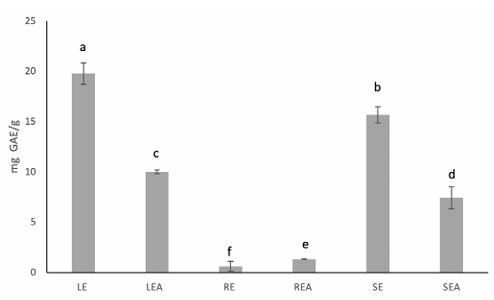
Figure 1
Quantification of total phenols in milligrams equivalent to gallic acid per gram of sample (mg GAE/g). LE: Leaf ethanolic extract, LEA: Leaf ethyl acetate extract, RE: Root ethanolic extract, REA: Root ethyl acetate extract, SE: Stem ethanolic extract, SEA: Stem ethyl acetate extract. One-way analysis of variance (ANOVA) with post-hoc analysis (Tukey’s test) was performed. Different letters indicate significant differences between samples (p<0.05).
Quantification of total phenols in milligrams equivalent to gallic acid per gram of sample (mg GAE/g). LE: Leaf ethanolic extract, LEA: Leaf ethyl acetate extract, RE: Root ethanolic extract, REA: Root ethyl acetate extract, SE: Stem ethanolic extract, SEA: Stem ethyl acetate extract. One-way analysis of variance (ANOVA) with post-hoc analysis (Tukey’s test) was performed. Different letters indicate significant differences between samples (p<0.05).
Thumbnail
Figura 1.
Cuantificción de fenoles totales en miligramos de equivalentes de ácido gálico por gramo de muestra (mg GAE/g). LE: extracto etanólico de hoja, LEA: extracto de acetato de etilo de hoja, RE: extracto etanólico de raíz, REA: extracto de acetato de etilo de raíz, SE: extracto etanólico de tallo, SEA: extracto de acetato de etilo de tallo. Se realizó análisis de varianza de una vía (ANOVA) con análisis post-hoc (Tukey’s test). Letras diferentes indican diferencias significativas entre las muestras (p<0.05).
Cuantificción de fenoles totales en miligramos de equivalentes de ácido gálico por gramo de muestra (mg GAE/g). LE: extracto etanólico de hoja, LEA: extracto de acetato de etilo de hoja, RE: extracto etanólico de raíz, REA: extracto de acetato de etilo de raíz, SE: extracto etanólico de tallo, SEA: extracto de acetato de etilo de tallo. Se realizó análisis de varianza de una vía (ANOVA) con análisis post-hoc (Tukey’s test). Letras diferentes indican diferencias significativas entre las muestras (p<0.05).
Phenols play a series of different functions in the plant such as: metabolic, growth, reproduction and protection against pathogenic organisms, predators, and environmental conditions. That is why they are almost always found in greater quantities in the leaves, as demonstrated in our research. The antioxidant activity observed in our extracts could be attributed to the presence of phenolic compounds, which have been previously characterized in Cochlospermum species. For example, ethanolic extracts of C. planchonii showed a strong correlation between their high phenol content (476 mg GAE/g) and their ability to neutralize free radicals and chelate metals, effects mediated by hydroxyl groups in their structure (Oumar et al., 2014). These findings support the potential of the phenols identified in our study to modulate oxidative stress associated with chronic pathologies.
-
Oumar et al., 2014In vitro antioxidant activity of extracts of the root Cochlospermum planchonii Hook. f. ex. Planch (Cochlospermaceae)Journal of Pharmacognosy and Phytochemistry, 2014
Flavonoids
The presence of flavonoids was found in both ethanolic and ethyl acetate extracts. Higher amounts of these metabolites are in Zaya’s leaf in ethanolic extract (Figure 2). These compounds are characterized by one or more aromatic or benzene rings with hydroxyl groups, which confer antioxidant properties. As a result, phenols can help prevent oxidative damage, which is closely linked to the development of various diseases, particularly chronic degenerative conditions. Among phenolic compounds, flavonoids are one of the most common and diverse groups, playing key roles in plant defense and adaptation. Therefore, their quantification is essential for understanding their contribution to plant physiology and potential health benefits (Zhang et al., 2022). LE has approximately three times the amount of flavonoids than LEA. There is limited information available on flavonoids in Zaya, but in species from the same family, such as Cochlospermum planchonii, flavonoids have been found in the roots (Oumar et al., 2014). However, in our results, the amount of flavonoids in roots (RE and REA) and stems (SE and SEA) was significantly lower compared to leaves.
-
Zhang et al., 2022A brief review of phenolic compounds identified from plants: Their extraction, analysis, and biological activityNatural Product Communications, 2022
-
Oumar et al., 2014In vitro antioxidant activity of extracts of the root Cochlospermum planchonii Hook. f. ex. Planch (Cochlospermaceae)Journal of Pharmacognosy and Phytochemistry, 2014
Thumbnail
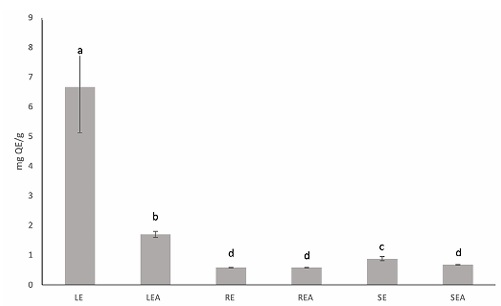
Figure 2
Quantification of flavonoids in milligrams equivalent to quercetin per gram of sample (mg GAE/g). LE: Leaf ethanolic extract, LEA: Leaf ethyl acetate extract, RE: Root ethanolic extract, REA: Root ethyl acetate extract, SE: Stem ethanolic extract, SEA: Stem ethyl acetate extract. One-way analysis of variance (ANOVA) with post-hoc analysis (Tukey’s test) were performed. Different letters indicate significant differences between samples (p<0.05).
Quantification of flavonoids in milligrams equivalent to quercetin per gram of sample (mg GAE/g). LE: Leaf ethanolic extract, LEA: Leaf ethyl acetate extract, RE: Root ethanolic extract, REA: Root ethyl acetate extract, SE: Stem ethanolic extract, SEA: Stem ethyl acetate extract. One-way analysis of variance (ANOVA) with post-hoc analysis (Tukey’s test) were performed. Different letters indicate significant differences between samples (p<0.05).
Thumbnail
Figura 2.
Cuantificción de flavonoides en miligramos de equivalentes de quercetina por gramo de muestra (mg GAE/g). LE: extracto etanólico de hoja, LEA: extracto de acetato de etilo de hoja, RE: extracto etanólico de raíz, REA: extracto de acetato de etilo de raíz, SE: extracto etanólico de tallo, SEA: extracto de acetato de etilo de tallo. Se realizó análisis de varianza de una vía (ANOVA) con análisis post-hoc (Tukey’s test). Letras diferentes indican diferencias significativas entre las muestras (p<0.05).
Cuantificción de flavonoides en miligramos de equivalentes de quercetina por gramo de muestra (mg GAE/g). LE: extracto etanólico de hoja, LEA: extracto de acetato de etilo de hoja, RE: extracto etanólico de raíz, REA: extracto de acetato de etilo de raíz, SE: extracto etanólico de tallo, SEA: extracto de acetato de etilo de tallo. Se realizó análisis de varianza de una vía (ANOVA) con análisis post-hoc (Tukey’s test). Letras diferentes indican diferencias significativas entre las muestras (p<0.05).
Chlorophyll
The quantification of chlorophyll could only be determined in the leaf extracts, since they were undetectable in the stems, perhaps because they could have been oxidized during the drying of the plant, as mentioned in the qualitative determination part. Leaf in ethanolic extract (LE) shows better type “a” chlorophyll content (Figure 3). The higher content of chlorophylls in polar solvents may be due to coordination bonds in -OH groups (Lee et al., 2021). Currently, information about chlorophyll in this genus or species is scarce. In plants, chlorophyll “a” is the main pigment that transforms light energy into chemical energy, while chlorophyll “b” transfers absorbed light to chlorophyll “a”. For this reason, these compounds are substances that have antioxidant properties and can impact the prevention of oxidative damage, closely related to the onset of various diseases, principally degenerative chronic diseases (Martins et al., 2023).
-
Lee et al., 2021Green solvent-based extraction of chlorophyll a from Nannochloropsis sp. Using 2, 3-butanedioSeparation and Purification Technology, 2021
-
Martins et al., 2023Enhancing health benefits through chlorophylls and chlorophyll-rich agro-food: A comprehensive reviewMolecules, 2023
Thumbnail
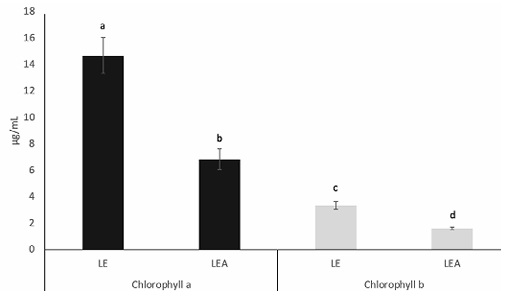
Figure 3
Quantification of chlorophyll type “a” and “b”. LE: Leaf ethanolic extract, LEA: Leaf ethyl acetate extract, RE: Root ethanolic extract, REA: Root ethyl acetate extract, SE: Stem ethanolic extract, SEA: Stem ethyl acetate extract. One-way analysis of variance (ANOVA) with post-hoc analysis (Tukey’s test) were performed. Different letters indicate significant differences between samples (p<0.05).
Quantification of chlorophyll type “a” and “b”. LE: Leaf ethanolic extract, LEA: Leaf ethyl acetate extract, RE: Root ethanolic extract, REA: Root ethyl acetate extract, SE: Stem ethanolic extract, SEA: Stem ethyl acetate extract. One-way analysis of variance (ANOVA) with post-hoc analysis (Tukey’s test) were performed. Different letters indicate significant differences between samples (p<0.05).
Thumbnail
Figura 3.
Cuantificción de clorofila “a” y “b”. LE: extracto etanólico de hoja, LEA: extracto de acetato de etilo de hoja, RE: extracto etanólico de raíz, REA: extracto de acetato de etilo de raíz, SE: extracto etanólico de tallo, SEA: extracto de acetato de etilo de tallo. Se realizó análisis de varianza de una vía (ANOVA) con análisis post-hoc (Tukey’s test). Letras diferentes indican diferencias significativas entre las muestras (p<0.05).
Cuantificción de clorofila “a” y “b”. LE: extracto etanólico de hoja, LEA: extracto de acetato de etilo de hoja, RE: extracto etanólico de raíz, REA: extracto de acetato de etilo de raíz, SE: extracto etanólico de tallo, SEA: extracto de acetato de etilo de tallo. Se realizó análisis de varianza de una vía (ANOVA) con análisis post-hoc (Tukey’s test). Letras diferentes indican diferencias significativas entre las muestras (p<0.05).
Carotenoids
Carotenoids are natural yellow, orange or red pigments. LEA shows more carotenoid content (Figure 4). Carotenoids are considered non polar compounds, which means ethyl acetate is less polar than ethanol. For this reason LEA presented higher amounts of these compounds. However, leaves contain more carotenoids in zaya, obtained with both solvents. The rest of the samples showed very low carotenoid content. There is limited information available on the amount of carotenoids found in the genus Amoreuxia or the Cochlospermaceae family. However, literature mentions that carotenoids are found in the photosynthetic parts of plants, alongside chlorophyll, in this case, the leaf (Swapnil et al., 2021). The quantity of these carotenoids depends on the conditions to which the plant is exposed, particularly solar exposure (Isaksson, 2009). Carotenoids are a group of bioactive compounds known for their dual role as antioxidants and provitamins. Notably, certain carotenoids, such as beta-carotene, are converted into vitamin A within the body, playing a critical role in maintaining vision, immune function, and cellular health. Studies suggest that their antioxidant activity may help mitigate oxidative stress, a key factor in the development of chronic diseases, including cancer. This dual functionality -acting as both antioxidants and precursors to essential nutrients- makes carotenoids a compelling subject for further investigation, particularly in the context of disease prevention and health promotion (Kabir et al., 2022; Thirunavukarasu et al., 2022; Bohn et al., 2021).
-
Swapnil et al., 2021Vital roles of carotenoids in plants and humans to deteriorate stress with its structure, biosynthesis, metabolic engineering and functional aspectsCurrent Plant Biology, 2021
-
Isaksson, 2009The chemical pathway of carotenoids: from plants to birdsArdea, 2009
-
Kabir et al., 2022Therapeutic promise of carotenoids as antioxidants and anti-inflammatory agents in neurodegenerative disordersBiomedicine & Pharmacotherapy, 2022
-
Thirunavukarasu et al., 2022Vitamin A, systemic T-cells, and the eye: Focus on degenerative retinal diseaseFrontiers in Nutrition, 2022
-
Bohn et al., 2021Mechanistic aspects of carotenoid health benefits-where are we now?Nutrition Research Reviews, 2021
Thumbnail
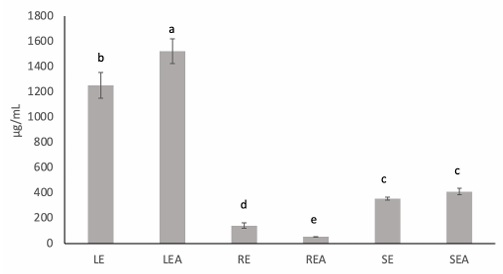
Figure 4
Carotenoids quantification in zaya. LE: Leaf ethanolic extract, LEA: Leaf ethyl acetate extract, RE: Root ethanolic extract, REA: Root ethyl acetate extract, SE: Stem ethanolic extract, SEA: Stem ethyl acetate extract. One-way analysis of variance (ANOVA) with post-hoc analysis (Tukey’s test) were performed. Different letters indicate significant differences between samples (p<0.05).
Carotenoids quantification in zaya. LE: Leaf ethanolic extract, LEA: Leaf ethyl acetate extract, RE: Root ethanolic extract, REA: Root ethyl acetate extract, SE: Stem ethanolic extract, SEA: Stem ethyl acetate extract. One-way analysis of variance (ANOVA) with post-hoc analysis (Tukey’s test) were performed. Different letters indicate significant differences between samples (p<0.05).
Thumbnail
Figura 4.
Cuantificción de carotenoides en zaya. LE: extracto etanólico de hoja, LEA: extracto de acetato de etilo de hoja, RE: extracto etanólico de raíz, REA: extracto de acetato de etilo de raíz, SE: extracto etanólico de tallo, SEA: extracto de acetato de etilo de tallo. Se realizó análisis de varianza de una vía (ANOVA) con análisis post-hoc (Tukey’s test). Letras diferentes indican diferencias significativas entre las muestras (p<0.05).
Cuantificción de carotenoides en zaya. LE: extracto etanólico de hoja, LEA: extracto de acetato de etilo de hoja, RE: extracto etanólico de raíz, REA: extracto de acetato de etilo de raíz, SE: extracto etanólico de tallo, SEA: extracto de acetato de etilo de tallo. Se realizó análisis de varianza de una vía (ANOVA) con análisis post-hoc (Tukey’s test). Letras diferentes indican diferencias significativas entre las muestras (p<0.05).
Antioxidant capacity
The antioxidant activity of Zaya (Table 2) shows better results in the ethanolic extracts. LE presented higher antioxidant capacity with DPPH, FRAP, and ABTS. The IC50 was calculated in DPPH and ABTS, at 8.011 mg/mL (Figure 5) and 8.2465 mg/mL (Figure 6), respectively. The absence of intermediate data points in the ABTS assay (between 2 and 10 mg/mL) may introduce uncertainty in the IC₅₀ estimation. However, the non-linear model provided a robust approximation under these constraints. The higher antioxidant activity may be due to the high content of chlorophylls, carotenoids, phenols and flavonoids in Zaya. It has been demonstrated that these compounds can exert this function. Due to their chemical structure, these compounds can donate electrons to stabilize the free radicals (Roshanak et al., 2016).
-
Roshanak et al., 2016Evaluation of seven different drying treatments in respect to total flavonoid, phenolic, vitamin C content, chlorophyll, antioxidant activity and color of green tea (Camellia sinensis or C. assamica) leavesJournal of Food Science and Technology, 2016
Table 2
Antioxidant activity of Zaya extracts from leaves, roots and stems in ethanol and ethyl acetate.
Antioxidant activity of Zaya extracts from leaves, roots and stems in ethanol and ethyl acetate.
Tabla 2.
Actividad antioxidante de extractos de Zaya de hojas, raíces y tallos en etanol y acetate de etilo.
Actividad antioxidante de extractos de Zaya de hojas, raíces y tallos en etanol y acetate de etilo.
| DPPH | ABTS | FRAP | ||
| Inhibition (%) | µmol ET/g | |||
| LE | 61.27 ± 1.03 | 58.21 ± 0.48 | 132.44 ±5.23 | |
| LEA | 5.23 ± 0.21 | 32.09 ± 3.96 | 33.70 ±0.33 | |
| RE | 10.03 ± 5.95 | 11.83 ± 0.21 | 37.08 ±0.56 | |
| REA | 3.92 ± 5.50 | 6.78 ± 0.10 | 32.89 ±0.06 | |
| SE | 25.41 ± 3.58 | 46.17 ± 3.61 | 42.53 ±0.96 | |
| SEA | 5.54 ± 3.43 | 0.57 ± 0.87 | 32.92 ±0.45 | |
Thumbnail
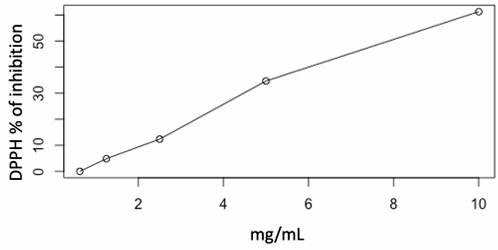
Figure 5
Comparision of different concentrations in mg/mL of ethanolic leaf extract of Zaya with DPPH assay. IC50= 8.011 mg/mL.
Comparision of different concentrations in mg/mL of ethanolic leaf extract of Zaya with DPPH assay. IC50= 8.011 mg/mL.
Thumbnail
Figura 5.
Comparación de diferentes concentraciones en mg/mL de extracto etanólico de hoja de Zaya con el ensayo de DPPH. IC50= 8.011 mg/mL.
Comparación de diferentes concentraciones en mg/mL de extracto etanólico de hoja de Zaya con el ensayo de DPPH. IC50= 8.011 mg/mL.
Thumbnail
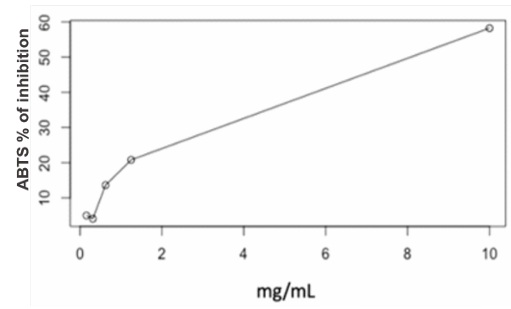
Figure 6
Comparision of different concentrations in mg/mL of ethanolic leaf extract of Zaya with ABTS assay. IC50= 8.2465 mg/mL.
Comparision of different concentrations in mg/mL of ethanolic leaf extract of Zaya with ABTS assay. IC50= 8.2465 mg/mL.
Thumbnail
Figura 6.
Comparación de diferentes concentraciones en mg/mL de extracto etanólico de hoja de Zaya con el ensayo de ABTS. IC50= 8.2465 mg/mL.
Comparación de diferentes concentraciones en mg/mL de extracto etanólico de hoja de Zaya con el ensayo de ABTS. IC50= 8.2465 mg/mL.
In the case of FRAP, an equivalent of 132.44 ±5.23 µmol ET/g was obtained. The difference between DPPH and ABTS could be explained by the selectivity of the former with free radicals containing hydroxyl groups, while the second one, can interact with a wider variety of antioxidant compounds, even those that do not contain the hydroxyl functional group (Parcheta et al., 2021). Leaf demonstrate significant amounts of phenols compared with root and stem, so we can attribute the high percentage of inhibition in DPPH to these compounds and others not studied, such as ascorbic acid. As for ABTS, the percentage of inhibition is slightly lower, even though it is an assay where the range of antioxidants that can neutralize this radical is greater, but it is possible that carotenoids are more effective in ABTS than in DPPH, as Müller et al. (2011) mention. The FRAP method works by reducing the ferric ion to ferrous, indicating the reducing potential although it is not able to measure the antioxidant activity of compounds that act through different mechanisms (Benzie and Strain, 1996), and the higher amount of phenols and flavonoids could explain the high result compared to the other parts of the plant.
-
Parcheta et al., 2021Recent developments in effective antioxidants: The structure and antioxidant propertiesMaterials, 2021
-
Müller et al. (2011)Comparative antioxidant activities of carotenoids measured by ferric reducing antioxidant power (FRAP), ABTS bleaching assay (αTEAC), DPPH assay and peroxyl radical scavenging assayFood Chemistry, 2011
-
Benzie and Strain, 1996The ferric reducing ability of plasma (FRAP) as a measure of “antioxidant power”: The FRAP assayAnalytical Biochemistry, 1996
Erythroprotective effect of Zaya extracts on ABO-positive types of groups
The erythroprotective effect was determined by an inhibition hemolysis assay (Figure 7). Zaya is a plant where all its parts are commonly consumed, according to Celaya-Michel et al. (2017), however, there is limited information about its health effects. Once Zaya is digested, the compounds it contains are metabolized and sent to the bloodstream. In this process, there could be an interaction with antigens depending on the blood type. For this reason, it’s interesting to study the selectivity of the Zaya extracts with these antigens to know if the erythroprotective effect is influenced by some of them. That’s why the percentage inhibition of hemolysis was evaluated when interacting with different extracts of Amoreuxia Palmatifida. In these results, all extracts had erythroprotective effect on O+ (80 - 87 %), followed by B+ (22 - 85 %) and then with A+ (38 - 60 %). The presence of antioxidant compounds in Zaya samples (tannins, phenols, flavonoids, carotenoids, and chlorophylls) protected the erythrocyte from cellular damage, as these structures have the ability to neutralize free radicals through either the transfer of electrons (-OH groups) or protons (NH2 groups) (Parcheta et al., 2021).
-
Celaya-Michel et al. (2017)Germinación y crecimiento en vivero y en campo de zaya (Amoreuxia palmatifida DC.), una especie nativa amenazada en MéxicoEuropean Scientific Journal, 2017
-
Parcheta et al., 2021Recent developments in effective antioxidants: The structure and antioxidant propertiesMaterials, 2021
Thumbnail
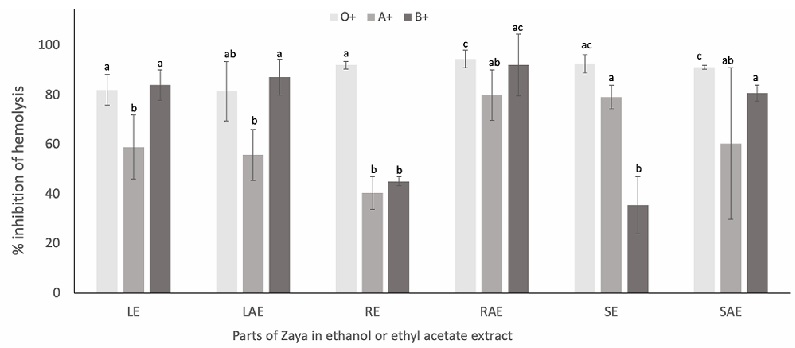
Figure 7
Effect of erythroprotective activity against oxidative damage of Zaya (HE = Leaf with ethanol; HEA = Leaf with ethyl acetate; RE = Root with ethanol; REA = Root with ethyl acetate; TA = Stem with ethanol; TEA = Stem with ethyl acetate). One-way analysis of variance (ANOVA) with post-hoc analysis (Tukey’s test) were performed. Different letters indicate significant differences between samples (p<0.05).
Effect of erythroprotective activity against oxidative damage of Zaya (HE = Leaf with ethanol; HEA = Leaf with ethyl acetate; RE = Root with ethanol; REA = Root with ethyl acetate; TA = Stem with ethanol; TEA = Stem with ethyl acetate). One-way analysis of variance (ANOVA) with post-hoc analysis (Tukey’s test) were performed. Different letters indicate significant differences between samples (p<0.05).
Thumbnail
Figura 7.
Efecto de la actividad eritroprotectora contra el daño oxidataivo de Zaya. HE = Hoja con etanol,; HEA = Hoja con etil acetato; RE = Raíz con etanol; REA = Raíz con etil acetato; TA = Tallo con etanol; TEA = Tallo con etil acetato. Se realizó análisis de varianza de una vía (ANOVA) con análisis post-hoc (Tukey’s test). Letras diferentes indican diferencias significativas entre las muestras (p<0.05).
Efecto de la actividad eritroprotectora contra el daño oxidataivo de Zaya. HE = Hoja con etanol,; HEA = Hoja con etil acetato; RE = Raíz con etanol; REA = Raíz con etil acetato; TA = Tallo con etanol; TEA = Tallo con etil acetato. Se realizó análisis de varianza de una vía (ANOVA) con análisis post-hoc (Tukey’s test). Letras diferentes indican diferencias significativas entre las muestras (p<0.05).
Cytoxicity effect of Zaya extracts on ABO-positive blood types
The cytotoxicity effect is presented in figure 8 where 5 mg/mL (Figure 8A) and 10 mg/mL (Figure 8B) of Zaya extracts were studied. The highest percentage of hemolysis (41 - 50 %) occurred in blood type B+ with REA, RE, LEA and LE, while the lowest was in blood type O+. This is in accordance with the results of the erythroprotective effect. Generally, in blood type O+, there is not as much cell damage compared to other blood types, and at the highest concentration in the polar leaf extract, it is not affected, while it slightly increases in the non-polar extract (Figure 8B). However, with only two concentrations tested, the results are not extensive. It is possible that at lower concentrations, certain parts of the Zaya, such as the stem, may have a lesser effect on blood types like B+, as seen in the significant reduction of hemolysis in SEA. Further research is needed to explore the effects on a wider range of blood types, including Rh negative and less common groups, as well as on different cell types. Additionally, studying other parts of Zaya, such as its seeds or flowers, could provide valuable insights.
Thumbnail
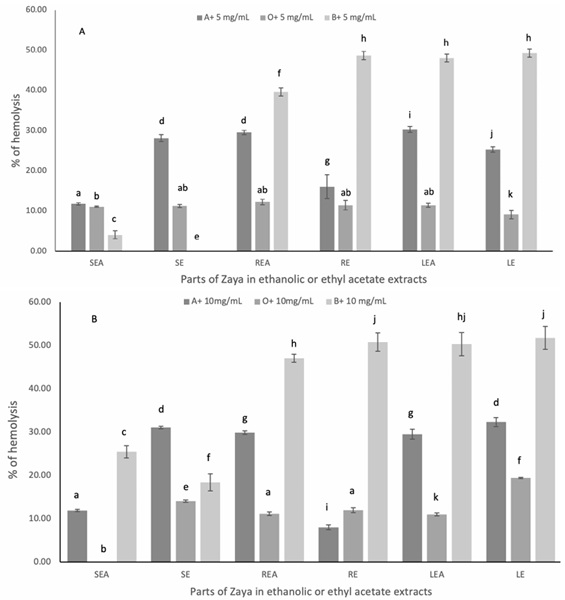
Figure 8
Cytotoxicity of Zaya samples at 5 mg/mL (A) and 10 mg/mL (B) represented by percentage of hemolysis of blood types A+, B+, and O+. HE = Leaf with ethanol; HEA = Leaf with ethyl acetate; RE = Root with ethanol; REA = Root with ethyl acetate; TA = Stem with ethanol; TEA = Stem with ethyl acetate. One-way analysis of variance (ANOVA) with post-hoc analysis (Tukey’s test) were performed. Different letters indicate significant differences between samples (p<0.05).
Cytotoxicity of Zaya samples at 5 mg/mL (A) and 10 mg/mL (B) represented by percentage of hemolysis of blood types A+, B+, and O+. HE = Leaf with ethanol; HEA = Leaf with ethyl acetate; RE = Root with ethanol; REA = Root with ethyl acetate; TA = Stem with ethanol; TEA = Stem with ethyl acetate. One-way analysis of variance (ANOVA) with post-hoc analysis (Tukey’s test) were performed. Different letters indicate significant differences between samples (p<0.05).
Thumbnail
Figura 8.
Citotoxicidad de muestras de Zaya a 5 mg/mL (A) y 10 mg/mL (B) representado por el porcentaje de hemólisis de sangre del tipo A+, B+, and O+. HE = Hoja con etanol,; HEA = Hoja con etil acetato; RE = Raíz con etanol; REA = Raíz con etil acetato; TA = Tallo con etanol; TEA = Tallo con etil acetato. Se realizó análisis de varianza de una vía (ANOVA) con análisis post-hoc (Tukey’s test). Letras diferentes indican diferencias significativas entre las muestras (p<0.05).
Citotoxicidad de muestras de Zaya a 5 mg/mL (A) y 10 mg/mL (B) representado por el porcentaje de hemólisis de sangre del tipo A+, B+, and O+. HE = Hoja con etanol,; HEA = Hoja con etil acetato; RE = Raíz con etanol; REA = Raíz con etil acetato; TA = Tallo con etanol; TEA = Tallo con etil acetato. Se realizó análisis de varianza de una vía (ANOVA) con análisis post-hoc (Tukey’s test). Letras diferentes indican diferencias significativas entre las muestras (p<0.05).
Conclusions
Polar compounds of Zaya, particularly in leaves, showed better results in antioxidant activity. This could be attributed in part to the presence of chlorophylls, phenols, flavonoids, and carotenoids. This specific part of the plant appears to have greater potential for further investigation. Further extensive studies are needed to assess the erythroprotective effect and cytotoxicity of Zaya, involving a wider range of blood types and samples. This will provide a more comprehensive biological evaluation of the effects of Zaya. This study represents a preliminary approach to Zaya, a plant that has received limited research despite being consumed for years. It is expected that further investigation will be conducted in the future to understand its potential effects on health, as well as to obtain a more comprehensive phytochemical profile.
Conflicts of interest
The authors declare that there is no conflict of interest.
References
- Agarwal, H. and Shanmugam, V.K. 2019. Anti-inflammatory activity screening of Kalanchoe pinnata methanol extract and its validation using a computational simulation approach. Informatics in Medicine Unlocked. 14: 6-14. Links
- Ahmad, M.H., Jatau, A.I., Khalid, G.M. and Alshargi, O.Y. 2021. Traditional uses, phytochemistry, and pharmacological activities of Cochlospermum tinctorium A. Rich (Cochlospermaceae): a review. Future Journal of Pharmaceutical Sciences. 7: 1-13. Links
- Alcaráz-López, O.A. 2009. Determinación de la actividad antioxidante y antiinflamatoria in vitro de las plantas medicinales Heterotheca inuloides, Calea urticifolia, Buddleia spp. y Sambucus spp. usadas en el estado de Jalisco. Tesis de Maestría. Universidad de Guadalajara. Guadalajara, México. Links
- Barlow, S.M. 1990. Toxicological aspects of antioxidants used as food additives. En: Food antioxidants. pp 253-307. Springer. Dordrecht. Links
- Benzie, I. and Strain, J. 1996. The ferric reducing ability of plasma (FRAP) as a measure of “antioxidant power”: The FRAP assay. Analytical Biochemistry. 239: 70-76. Links
- Bohn, T., Bonet, M.L., Borel, P., Keijer, J., Landrier, J.F., Milisav, I., et al. 2021. Mechanistic aspects of carotenoid health benefits-where are we now?. Nutrition Research Reviews. 34(2): 276-302. Links
- Brand-Williams, W., Cuvelier, M. and Berset, C. 1995. Use of a free radical method to evaluate antioxidant activity. LWT-Food Science nd Technology. 28: 25-30. Links
- Cameron, S.I., Smith, R.F. and Kierstead, K.E. 2005. Linking medicinal/nutraceutical products research with commercialization. Pharmaceutical Biology. 43(5): 425-433. Links
- Castro Montoya, J.A., Zayas Barreras, R.A., Saiz Aguilar, P., Romero Lozoya, M., Bojorquez Camacho, F.R. and Bojorquez Camacho, O. 2012. El consumo de la zaya (Amoreuxia spp) una tradición cultural de la región del Évora en el estado de Sinaloa, México. Revista Mexicana de Agronegocios. 30: 898-907. Links
- Celaya-Michel, H., Ochoa-Meza, A., López-Elías, J. and Barrera-Silva, M Á.. 2017. Germinación y crecimiento en vivero y en campo de zaya (Amoreuxia palmatifida DC.), una especie nativa amenazada en México. European Scientific Journal. 13: 66-78. Links
- Cooling, L. 2015. Blood groups in infection and host susceptibility. Clinical Microbiology Reviews. 28(3): 801-870. Links
- García, C.M., Kim, P., Bich, N.B., Tillan, N.T., Romero, J.C., Dario, J.A. and Fuste, V.M. 2009. Metabolitos secundarios en los extractos secos de Passiflora Incarnata L, Matricaria recutita L. y Morinda citrifolia L. Revista Cubana de Plantas Medicinales. 14(2): 1-5. Links
- Galindo, W.F., Rosales, M., Murgueitio, E. and Larrahondo, J. 1989. Sustancias antinutricionales en las hojas de guamo, nacedero y matarratón. Livestock Research for Rural Development. 1(1): 36-47. Links
- González-Gallego, J., García-Mediavilla, M.V., Sánchez-Campos, S. and Tuñón, M.J. 2010. Fruit polyphenols, immunity and inflammation. British Journal of Nutrition. 104(S3): S15-S27. Links
- Guajardo-Flores, D., García-Patiño, M., Serna-Guerrero, D., Gutiérrez-Uribe, J.A. and Serna-Saldívar, S.O. 2012. Characterization and quantification of saponins and flavonoids in sprouts, seed coats and cotyledons of germinated black beans. Food Chemistry. 134(3): 1312-1319. Links
- Hörtensteiner, S. 2006. Chlorophyll degradation during senescence. Annual Review of Plant Biology. 57: 55-77. Links
- Hodgson, W. 1993. Bixaceae, lipstick tree family. Journal of the Arizona-Nevada Academy of Science. 27: 188-189. Links
- INEGI. 2022. Anuario estadístico y geográfico de Sonora 2014. Instituto Nacional de Estadística y Geografía. México. Links
- Isaksson, C. 2009. The chemical pathway of carotenoids: from plants to birds. Ardea. 97(1): 125-128. Links
- Jeffrey, S.W. and Humphrey, G.F. 1975. New spectrophotometric equations for determining chlorophylls a, b c1 and c2 in higher plants, algae and natural phytoplankton. Biochemie und Physiologie der Pflanzen. 167: 191-194. Links
- Kabir, M.T., Rahman, M.H., Shah, M., Jamiruddin, M.R., Basak, D., Al-Harrasi, A., et al. 2022. Therapeutic promise of carotenoids as antioxidants and anti-inflammatory agents in neurodegenerative disorders. Biomedicine & Pharmacotherapy. 146: 112610. Links
- Lee, J., Kwak, M., Chang, Y.K. and Kim, D. 2021. Green solvent-based extraction of chlorophyll a from Nannochloropsis sp. Using 2, 3-butanediol. Separation and Purification Technology. 276: 119248. Links
- Lu, J., Papp, L.V., Fang, J., Rodriguez-Nieto, S., Zhivotovsky, B. and Holmgren, A. 2010. Flavonoids from the leaves of Actinidia kolomikta. Chemistry of Natural Compounds. 46: 205-208. Links
- Lobo, V., Patil, A., Phatak, A. and Chandra, N. 2010. Free radicals, antioxidants and functional foods: Impact on human health. Pharmacognosy Reviews. 4(8): 118-126. Links
- Martins, T., Barros, A.N., Rosa, E. and Antunes, L. 2023. Enhancing health benefits through chlorophylls and chlorophyll-rich agro-food: A comprehensive review. Molecules. 28(14): 5344. Links
- Michel, H.C., Islas, J.D.R.R., Hinojo, C.H., Rosas, M.C. and Silva, M.B. 2023. Perspectivas del cultivo de la saya (Amoreuxia spp.) en el noroeste de México como nuevo producto agronómico. Agricultura, Sociedad y Desarrollo. 20(2): 4-13. Links
- Müller, L., Fröhlich, K. and Böhm, V. 2011. Comparative antioxidant activities of carotenoids measured by ferric reducing antioxidant power (FRAP), ABTS bleaching assay (αTEAC), DPPH assay and peroxyl radical scavenging assay. Food Chemistry. 129(1): 139-148. Links
- Oumar, Y.S., Nathalie, G.K., Karamoko, O., Alexis, B.G. and Adama, C . 2014. In vitro antioxidant activity of extracts of the root Cochlospermum planchonii Hook. f. ex. Planch (Cochlospermaceae). Journal of Pharmacognosy and Phytochemistry. 3(4): 164-170. Links
- Palta, J.P. 1990. Leaf chlorophyll content. Remote Sensing Reviews. 5(1): 207-213. Links
- Parcheta, M., Świsłocka, R., Orzechowska, S., Akimowicz, M., Choińska, R. and Lewandowski, W. 2021. Recent developments in effective antioxidants: The structure and antioxidant properties. Materials. 14(8): 1984. Links
- Pandey, K.B. and Rizvi, S.I. 2009. Plant polyphenols as dietary antioxidants in human health and disease. Oxidative Medicine and Cellular Longevity. 2: 270-278. Links
- Pant, P., Pandey, S. and Dall’Acqua, S. 2021. The influence of environmental conditions on secondary metabolites in medicinal plants: A literature review. Chemistry & Biodiversity. 18(11): e2100345. Links
- Poppendieck, H.H. 1981. Cochlospermaceae. Flora Neotropica. 27: 1-33. Links
- Re, R., Pellegrini, N., Proteggente, A., Pannala, A., Yang, M. and Rice-Evans, C. 1999. Antioxidant activity applying an improved ABTS radical cation decolorization assay. Free Radical Biology and Medicine. 10: 1231-1237. Links
- Roshanak, S., Rahimmalek, M. and Goli, S.A.H. 2016. Evaluation of seven different drying treatments in respect to total flavonoid, phenolic, vitamin C content, chlorophyll, antioxidant activity and color of green tea (Camellia sinensis or C. assamica) leaves. Journal of Food Science and Technology. 53: 721-729. Links
- Sánchez, Y.G., Rondón, L.A., Hermosilla, R.E. and Almeida, M.S. 2010. Tamizaje fitoquímico de los extractos alcohólico, etéreo y acuoso de las hojas, tallos y flores de Helychrysum bracteatum. Revista Química Viva. 1: 40-45. Links
- Secretaría de Medio Ambiente y Recursos Naturales (SEMARNAT). 2010. Norma Oficial Mexicana NOM-059-SEMARNAT-2010, Protección ambiental - Especies nativas de México de flora y fauna silvestres - Categorías de riesgo y especificaciones para su inclusión, exclusión o cambio - Lista de especies en riesgo. Ciudad de México: SEMARNAT. Links
- Sui, X.L., Mao, S.L., Wang, L.H., Zhang, B.X. and Zhang, Z.X. 2012. Effect of low light on the characteristics of photosynthesis and chlorophyll a fluorescence during leaf development of sweet pepper. Journal of Integrative Agriculture. 11(10): 1633-1643. Links
- Swapnil, P., Meena, M., Singh, S.K., Dhuldhaj, U.P. and Marwal, A. 2021. Vital roles of carotenoids in plants and humans to deteriorate stress with its structure, biosynthesis, metabolic engineering and functional aspects. Current Plant Biology. 26: 100203. Links
- Tiwari, B.K., Brunton, N. and Brennan, C.S. 2015. Handbook of plant food phytochemicals. Wiley-Blackwell. Oxford, UK Links
- Thirunavukarasu, A.J., Ross, A.C. and Gilbert, R.M. 2022. Vitamin A, systemic T-cells, and the eye: Focus on degenerative retinal disease. Frontiers in Nutrition. 9: 914457. Links
- WRB. 2022. World Reference Base for Soil Resources 2014, Update 2022. World Soil Resources Reports No. 106. FAO, Roma, Italia. Links
- Zhang, Y., Cai, P., Cheng, G. and Zhang, Y. 2022. A brief review of phenolic compounds identified from plants: Their extraction, analysis, and biological activity. Natural Product Communications. 17(1): 1934578X211069721. Links