Artículos
Overview of Mining Violence Against Indigenous Peoples in the Americas
Gómez-Liendo, Marx José1
 http://orcid.org/0000-0003-3228-352X
Olmedo Neri, Raul Anthony2
http://orcid.org/0000-0001-5318-0170
Serrano Sánchez, Ángel3
http://orcid.org/0000-0002-6584-3354
http://orcid.org/0000-0003-3228-352XOlmedo Neri, Raul Anthony2
http://orcid.org/0000-0001-5318-0170Serrano Sánchez, Ángel3
http://orcid.org/0000-0002-6584-3354
-
Publication dates-
February 28, 2025
, 2024
- Article in PDF
- Article in XML
- Automatic translation
- Send this article by e-mail
- Share this article +
Abstract:
This paper examines the violence associated with socio-environmental conflicts in the context of large-scale mining across the Americas. Through a quantitative and qualitative analysis of secondary sources, we identified 372 conflicts throughout the continent, representing 65% of global mining conflicts. Moreover, 90% of the documented cases on the continent occur in Latin America and the Caribbean. Our findings reveal a statistically significant association, with 99% confidence, between the presence of Indigenous peoples resisting mega-mining projects and a higher incidence of criminalization, repression, and assassinations. This highlights how mega-mining primarily threatens rural territories. This study contributes to the understanding of power dynamics in socio-environmental conflicts, emphasizing the urgency of reimagining our societies towards models that prioritize social and environmental justice.
Key words::
mega-mining, violence, indigenous peoples, political ecology, Latin America
Introduction
The American continent, particularly the Latin American and Caribbean region, stands out as an area abundant in strategic resources. This is especially evident in mining, where this region has become one of the epicenters of socio-environmental conflicts (Olmedo Neri & Gómez Liendo, 2020) . These tensions are a characteristic feature of how global capitalism has subsumed nature under its market and production logic. Under such conditions, the study of socio-environmental conflict is essential to understanding and disentangling the metabolic relationships through which capital deploys itself over various ecosystems, resources, and territories (Pineda, 2018) . In this way, a heterogeneous network of actors involved in the mining extractivist model transforms the environment directly or indirectly and on multiple scales, reshaping the social and political relations in the localities where it operates (Svampa, 2019) . Conflict surrounding mining projects is not only related to resource extraction but also represents a continuous phenomenon that disrupts community dynamics and ways of life.
-
(Olmedo Neri & Gómez Liendo, 2020) Conflictividad socioambiental en América Latina y el Caribe: un análisis del panorama desde la Ecología PolíticaIberoamérica Social. Revista-Red de Estudios Sociales, 2020
-
(Pineda, 2018) El despliegue del capital sobre la naturalezaAmérica Latina: expansión, capitalismo, conflictos sociales y ecológicos, 2018
-
(Svampa, 2019) Las fronteras del neoextractivismo en América Latina. Conflictos socioambientales, giro ecoterritorial y nuevas dependencias, 2019
The intensification of socio-environmental conflicts, particularly those linked to the mining industry, is a response to the complexity of interests involved across environmental, social, economic, and political aspects (Gómez Liendo, 2017) . Violence associated with mining has emerged as a critical area of analysis, revealing the inherent tensions surrounding access, use, and management of resources in communities marked by deep socio-territorial inequalities (Betancourt, 2016) . These tensions have led to the criminalization and assassination of environmental activists in various countries of the region, while in others, confrontations escalate due to the reactive, inefficient, and uncoordinated actions of state actors (Muñoz Muñoz & Mercado García, 2023) . In these cases, mining is not merely an industrial process; it becomes a socio-environmental battleground where demands for popular sovereignty, economic autonomy, human rights, and social, environmental, and cognitive justice intersect.
-
(Gómez Liendo, 2017) Ciencia posnormal para un mundo posnatural. El problema del Arco Minero del OrinocoIberoamérica Social. Revista-Red de Estudios Sociales, 2017
-
(Betancourt, 2016) Minería, violencia y criminalización en América Latina. Dinámicas y tendencias, 2016
-
(Muñoz Muñoz & Mercado García, 2023) Intervención del Estado en los conflictos socioambientales en el PerúVox Juris, 2023
Various studies have mapped mining conflicts, allowing for a detailed understanding of the underlying issues, the actors involved, and the agendas at odds in each case (Rodríguez-Labajos & Özkaynak, 2014; van Teijlingen, 2019; Scheidel et al., 2020; Vargas & Hidalgo, 2022; Walter, Deniau & Herrera, 2023) . The findings provided by these studies enable systematic and comparative analysis not only of the causes underlying each socio-environmental conflict but also of the intensity of the conflict or its outcomes, whether these are positive (scenarios of environmental justice) or negative (various forms of violence).
-
(Rodríguez-Labajos & Özkaynak, 2014Hacia una interpretación analítica de los logros para la justicia ambiental en casos de resistencia anti-mineraEcología Política, 2014
-
van Teijlingen, 2019Minería a gran escala, pluralismo territorial y contención: Un mapeo de encuentros y desencuentros en la amazonía ecuatorianaEstudios atacameños, 2019
-
Scheidel et al., 2020Environmental conflicts and defenders: A global overviewGlobal Environmental Change, 2020
-
Vargas & Hidalgo, 2022Mapeo de Procesos de Resistencia Civil Indígenas ante Proyectos Extractivistas en la Zona Sur de los Andes (1990-2020)Historia Ambiental Latinoamericana y Caribeña (HALAC), 2022
-
Walter, Deniau & Herrera, 2023) “Mapeo colaborativo de resistencias a los impactos y discursos de la minería para la transición energética en las AméricasEcología Política, 2023
Scheidel et al. (2020) , drawing on data from 2,743 conflicts recorded in the Environmental Justice Atlas (EJAtlas), analysed the characteristics of these conflicts and the role of environmental defenders in each. The authors identified that, by combining different strategies (mobilizations, protests, litigation, among others), successful cases of environmental justice (project halts) accounted for 27% of the cases. However, they also found that, globally, environmental defenders face high rates of criminalization (20%), physical violence (18%), and assassinations (13%), a situation that worsens significantly when Indigenous peoples are involved. Although the findings of this important work are crucial for designing specific actions and plans to ensure more successful mobilizations and support networks for environmental defenders, particularly Indigenous ones, the global scale of analysis does not show in sufficient detail the complexities of different areas of the world, such as the American continent and, especially, the Latin American and Caribbean (LAC) region.
-
Scheidel et al. (2020) Environmental conflicts and defenders: A global overviewGlobal Environmental Change, 2020
For example, other studies that have also used data from the EJAtlas have found that over a quarter (29%) of the recorded socio-environmental conflicts globally occur in LAC. Additionally, mining conflicts in this region represent 10% of total global socio-environmental struggles (Olmedo Neri & Gómez Liendo, 2020) . Therefore, in this paper, we aim to provide an overview of the violence associated with socio-environmental conflicts generated by mega-mining in the American continent, with the purpose of characterizing the territories where it occurs, and the coercive mechanisms deployed against social actors who collectively defend their territories. It is important to clarify that we have decided not to exclude the United States and Canada from our study because, although mining conflicts in these countries appear to occur less frequently than in the rest of the continent, they take place in localities inhabited by Indigenous peoples, who face ongoing systematic violence due to their subordination, a reality that aligns with the situation in LAC.
-
(Olmedo Neri & Gómez Liendo, 2020) Conflictividad socioambiental en América Latina y el Caribe: un análisis del panorama desde la Ecología PolíticaIberoamérica Social. Revista-Red de Estudios Sociales, 2020
The paper is structured into four sections. First, we provide a framework of theoretical reflections grounded in Latin American political ecology to analyze the various power dynamics surrounding mining and mega-mining, as well as the relationship of this extractive activity with violence against environmental defenders and the violation of their fundamental rights and access to justice. Second, we describe the methodological strategy used and some of the limitations of working with secondary sources, highlighting, however, the importance of eco-political analyses from a descriptive statistical perspective. Third, we present and discuss the main findings of this work regarding the number of conflicts per country and type of population, the presence or absence of Indigenous peoples, conflict intensity, and rates of criminalization, repression, and assassinations. Finally, we conclude by noting the imperative to review, redesign, and implement regulatory frameworks that ensure the recognition and dignity of environmental defenders' lives, especially those belonging to Indigenous communities.
Theoretical Framework
Political ecology is an interdisciplinary perspective that emerged in the 1970s, focused on analyzing the ecological-distributive issues that arise when a megaproject seeks to impose itself and operate within a territory (Martínez Alier, 2015; Delgado Ramos, 2013) . Since then, this field has evolved globally, giving rise to regional variations that prioritize certain strategic factors relevant to their specific contexts, allowing us to speak of “political ecologies” in plural (Gudynas, 2014; Martín & Larsimont, 2016). For this study, Latin American Political Ecology (LAPE) is particularly relevant due to several factors: (1) it prioritizes the ontologies of Indigenous peoples and their disruption of the modern-colonial logic of the West; (2) it highlights the historical contradictions in the region that obstruct the realization of socio-environmental justice; (3) it recognizes the geopolitical importance of Latin America and the Caribbean (LAC) due to its natural, mineral, and ecological wealth, making it socially vulnerable yet economically lucrative for overexploitation; and (4) it reveals that LAC states and governments, through public-private partnerships with multinational corporations, intervene directly and indirectly in socio-environmental conflict by legitimizing neoextractivism1 as a model for progress and development (Alimonda, 2016; Berman, 2011; Betancourt & Porto-Gonçalves, 2017; Leff, 2019; Machado Aráoz, 2017; Svampa, 2019) .
-
(Martínez Alier, 2015Ecología política del extractivismo y justicia socioambientalInterdisciplina, 2015
-
Delgado
Ramos, 2013) “¿Por qué es importante la ecología política?”Nueva Sociedad, 2013
-
(Gudynas, 2014Ecologías políticas. Ideas preliminares sobre concepciones, tendencias, renovaciones y opciones latinoamericanas, 2014
-
Martín & Larsimont, 2016)“¿Es posible una ecología cosmo-política? Notas hacia la desregionalización de las ecologías políticasPolis, 2016
-
(Alimonda,
2016Notas sobre la ecología política latinoamericana. Arraigo, herencias, diálogosEcología Política, 2016
-
Berman, 2011Todo lo sólido se desvanece en el aire, 2011
-
Betancourt & Porto-Gonçalves, 2017Cuestiones críticas sobre extractivismo y productivismo: un análisis desde el pensamiento crítico, la ecología política y las prácticas políticas de los grupos subalternizadosEcología Política Latinoamericana, 2017
-
Leff, 2019Ecología Política. De la deconstrucción del capital a la territorialización de la vida, 2019
-
Machado Aráoz, 2017América Latina y la Ecología Política del Sur. Luchas de re-existencia, revolución epistémica y migración civilizatoriaEcología Política Latinoamericana, 2017
-
Svampa, 2019) Las fronteras del neoextractivismo en América Latina. Conflictos socioambientales, giro ecoterritorial y nuevas dependencias, 2019
Thus, LAPE examines the interplay between socio-environmental conflict and extractivism in the region, as asymmetrical power relations at local and subnational levels lie behind the distributive inequalities that megaprojects generate and/or exploit. This perspective scrutinizes how the operation of energy, mining, agro-industrial, and transport megaprojects is grounded in resource plundering, land concentration, criminalization of territorial defense, and institutionalization of socio-environmental injustice (Calderón-Contreras, 2013; Machado Aráoz, 2017; Olmedo Neri & Gómez Liendo, 2020; Pineda, 2018) . Therefore, LAPE not only analyzes the transgressions committed by capital on the society-nature relationship in a given territory but also questions mechanistic arguments based on the commodification of resources, acknowledges the ontological dispute between different ways of understanding and inhabiting territory, and examines forms of situated re-existence (Merlinsky, 2017; Svampa & Slipak, 2017) .
-
(Calderón-Contreras, 2013Economía política: hacia un mejor entendimiento de los problemas socioterritorialesEconomía, Sociedad y Territorio, 2013
-
Machado Aráoz, 2017América Latina y la Ecología Política del Sur. Luchas de re-existencia, revolución epistémica y migración civilizatoriaEcología Política Latinoamericana, 2017
-
Olmedo Neri & Gómez Liendo, 2020Conflictividad socioambiental en América Latina y el Caribe: un análisis del panorama desde la Ecología PolíticaIberoamérica Social. Revista-Red de Estudios Sociales, 2020
-
Pineda, 2018) El despliegue del capital sobre la naturalezaAmérica Latina: expansión, capitalismo, conflictos sociales y ecológicos, 2018
-
(Merlinsky, 2017Los movimientos de justicia ambiental y la defensa de lo común en América Latina. Cinco tesis en elaboraciónEcología Política Latinoamericana, 2017
-
Svampa & Slipak, 2017) China en América Latina: del Consenso de los Commodities al Consenso de BeijingEcología Política Latinoamericana, 2017
Moreover, recent research has proposed a second, deeper theoretical-conceptual level, where political ecology is disaggregated according to the type of megaproject or issue being studied. This approach includes frameworks such as the political ecology of mining, water, agro-exportation, energy megaprojects, and agriculture, among others (Delgado Ramos, 2010 a ; Boelens et al., 2015; Giraldo, 2018; Olmedo Neri, 2023) . Each framework represents a theoretical-analytical effort to address the specific ecological-distributive issues arising from each type of conflict, depending on the resources involved, the ways socio-territorial inequalities manifest, and the ontological tensions expressed through contested territorialities.
-
(Delgado Ramos, 2010 a La gran minería en América LatinaActa Sociológica, 2010
-
Boelens et al., 2015Despojo del agua en Latinoamérica: introducción a la ecología política del agua en los agronegocios, la minería y las hidroeléctricasAgua y Ecología Política. El extractivismo en la agroexportación, la minería y las hidroeléctricas en Latinoamérica, 2015
-
Giraldo, 2018Ecología Política de la Agricultura: Agroecología y posdesarrollo, 2018
-
Olmedo Neri, 2023) Cosechar el sol y el aire. Las energías renovables y la reforma energética de MéxicoArgumentos. Estudios Críticos de la Sociedad, 2023
For the purposes of this study, the contributions of the political ecology of mining are particularly pertinent. This perspective allows us to understand that mining has a long-standing presence on the American continent, a presence intensified during the colonial period, which oriented it toward exploitation dynamics and accumulation processes for export (Delgado Ramos, 2010 b & 2013; Olmedo Neri, 2022) . Following independence movements, mining underwent technological innovations that refined its production methods to increase profit margins, transforming it into a competitive sector aimed at meeting global mineral demand. This technological and productive transformation is what defines it as mega-mining (Guzmán López et al., 2020; Olmedo Neri, 2022; Svampa, 2012) .
-
(Delgado Ramos, 2010 b La gran minería en América LatinaActa Sociológica, 2010
-
& 2013“¿Por qué es importante la ecología política?”Nueva Sociedad, 2013
-
Olmedo Neri, 2022) El impacto social de la megaminería en Mazapil, ZacatecasContextualizaciones Latinoamericanas, 2022
-
(Guzmán López et al., 2020Megaminería y los derechos humanos en el México contemporáneo 1998-2018Revista de Geografía Agrícola, 2020
-
Olmedo Neri, 2022;El impacto social de la megaminería en Mazapil, ZacatecasContextualizaciones Latinoamericanas, 2022
-
Svampa, 2012) Consenso de los commodities y megaminería en América LatinaAmérica Latina en movimiento, 2012
On a spatial level, mega-mining in the region is closely linked to territorial transformations, particularly in terms of design, organization, and interpretation of the land. Alterations to the landscape, the sale or expropriation of land, changes in land use, and the potential privatization of culturally significant areas for residents are all manifestations of this spatial and territorial reconversion (Antonelli, 2011; Machado Aráoz, 2014; Vila, 2021) . Additionally, these changes are not separate from the daily lives of the inhabitants, meaning that these impacts progressively intertwine with the social and economic processes of the area.
-
(Antonelli, 2011Megaminería, desterritorialización del Estado y biopolíticaAstrolabio, 2011
-
Machado Aráoz, 2014Territorios y cuerpos en disputa: extractivismo minero y ecología política de las emocionesIntersticios. Revista Sociológica de Pensamiento Crítico, 2014
-
Vila, 2021) Extractivismo y territorio: el ordenamiento territorial como herramienta para la gestión de conflictos socialesLimaq, 2021
On a social level, territorial transformations foster a sense of alienation in the relationship between individuals and their land, intensifying the perceived loss of control over the space through which they experience and engage with the world. Consequently, changes in territory create an ontological fracture for those whose everyday lives are subjected to the logic of mega-mining projects (Machado Aráoz, 2014; Olmedo Neri, 2022) . This disruption of daily life can prompt those most affected to organize collectively, not only to defend the territory they inhabit but also to preserve the life they sustain, both spatially and temporally. However, this reaction is neither automatic nor homogeneous; it shaped by cultural, political, and socio-economic factors that influence the capacity of communities to mobilize resistance. Defending life, beyond mere territorial concerns, represents a conceptual shift reflecting a complex ontological dispute over the possible worlds constructed within a particular place and time, even though the ways of understanding and responding to this dispute vary according to the experiences and perspectives of those involved (Escobar, 2014; Svampa, 2019) .
-
(Machado Aráoz, 2014Territorios y cuerpos en disputa: extractivismo minero y ecología política de las emocionesIntersticios. Revista Sociológica de Pensamiento Crítico, 2014
-
Olmedo Neri, 2022) El impacto social de la megaminería en Mazapil, ZacatecasContextualizaciones Latinoamericanas, 2022
-
(Escobar, 2014Sentipensar con la tierra. Nuevas lecturas sobre desarrollo, territorio y diferencia, 2014
-
Svampa, 2019) Las fronteras del neoextractivismo en América Latina. Conflictos socioambientales, giro ecoterritorial y nuevas dependencias, 2019
Through mega-mining, the defense of territory has acquired a complex dimension as the continent’s structural socio-ecological diversity amplifies the extractivist impacts on specific regions and groups. For instance, mega-mining on the continent has two specific ontological characteristics. The first is that territories most vulnerable to mega-mining are rural or natural areas, regardless of whether they have governmental protection or not (Olmedo Neri, 2022) . This territorial selection is not due to inherent conflict but rather to the abundance of subsurface resources. These mineral resources are typically located in areas adjacent to protected natural spaces or rural communities that have not yet exploited the resources within their territories.
-
(Olmedo Neri, 2022) El impacto social de la megaminería en Mazapil, ZacatecasContextualizaciones Latinoamericanas, 2022
The second characteristic pertains to identity, as Indigenous communities in the Americas are not only among the most active groups defending their territories, but their unique worldviews enable them to present counter-hegemonic perspectives that challenge the destructive-constructive logic of Western developmental models (Blaser, 2013) . However, it is essential to recognize that Indigenous communities are not monolithic entities; diverse streams of thought and experiences run through them (Zapata Silva, 2007) . Some organize to defend their territories, while others negotiate with companies or adopt a passive stance toward territorial degradation. Therefore, it is crucial to avoid essentializing Indigenous communities as “ecological natives” (Ulloa, 2004) . The historical subordination that these communities have experienced in relation to the State and dominant power structures often relegates them to the category of groups to be integrated within a national framework rather than being politically recognized as legitimate actors with autonomous worldviews and lifestyles. This reflects an ongoing tension between attempts at inclusion and demands for profound recognition, as well as internal divisions within these communities, which call for a move beyond superficial integration to genuinely engage with Indigenous ways of life and epistemologies as viable and valuable alternatives to the dominant paradigm.
-
(Blaser, 2013) Notes toward a political ontology of environmental conflictsContested ecologies: Dialogues in the South on Nature and Knowledge, 2013
-
(Zapata Silva, 2007) Intelectuales indígenas piensan América Latina, 2007
-
(Ulloa, 2004) La construcción del nativo ecológico: complejidades, paradojas y dilemas de la relación entre los movimientos indígenas y el ambientalismo en Colombia, 2004
In this context, megaprojects, particularly mega-mining, embed themselves within territories where the balance of power favors capital. The territorial dispersion of populations, coupled with their vulnerability and living conditions, are factors that mega-mining exploits to legitimize itself as a development engine capable of transforming these communities’ ways of life. Through this discourse, mining has been legitimized in the eyes of public opinion and the State, seen as a productive sector that provides competitive advantages to countries. Consequently, with the influx of foreign direct investment, governments institutionalize extractivism as a model of development and progress and justify violence against both empirical and ideological opponents (Svampa, 2019) .
-
(Svampa, 2019) Las fronteras del neoextractivismo en América Latina. Conflictos socioambientales, giro ecoterritorial y nuevas dependencias, 2019
This balance of power for the population promotes the formalization of socio-environmental injustices, which can be understood as the creation or intensification of power asymmetries rooted in and expressed through territory, resulting from the prioritization of commercial interests over the society-nature relationship. These injustices not only generate but also exploit and deepen socio-territorial inequalities within a given space, reproducing the status quo and legitimizing structural inequities. Consequently, the violence of mega-mining is not only evident through its extractivist mode of production but is also intensified in the American context, given the structural conditions of inequality and the social inequities this generates.
From an economic perspective, certain productive activities within a territory are displaced by mega-mining, with land concentration and privatization manifesting as expressions of accumulation by dispossession (Pineda, 2018) . Concurrently, local economies become subordinated to the logic of mega-mining, to the extent that they are subsumed by this productive sector (Vila, 2021) . As such, when a mega-mining project is successfully established, it ceases to be a peripheral activity and becomes the economic core upon which affected localities depend. This logic of mono-ontological change and occupation prioritizes socio-environmental injustices, as the dominance of this activity subordinates the society-nature relationship to its own aims, actively eliminating other forms of productivity, temporality, knowledge, recognition, and ways of inhabiting the territory (Escobar, 2014) . Mega-mining creates issues not only by concentrating profit rates among private national or foreign capital firms but also due to the actions or inaction of States in regulating and mitigating the socio-environmental impacts resulting from mineral exploration and extraction on the territory (Delgado Ramos, 2010 a ; Gudynas, 2012) .
-
(Pineda, 2018) El despliegue del capital sobre la naturalezaAmérica Latina: expansión, capitalismo, conflictos sociales y ecológicos, 2018
-
(Vila, 2021) Extractivismo y territorio: el ordenamiento territorial como herramienta para la gestión de conflictos socialesLimaq, 2021
-
(Escobar, 2014) Sentipensar con la tierra. Nuevas lecturas sobre desarrollo, territorio y diferencia, 2014
-
(Delgado Ramos, 2010 a La gran minería en América LatinaActa Sociológica, 2010
-
Gudynas, 2012) Estado compensador y nuevos extractivismos. Las ambivalencias del progresismo latinoamericanoNueva Sociedad, 2012
Within this structurally asymmetric, unequal, and hostile context, individuals and communities organize and mobilize to defend life through an ethic of care, reclaiming their right to construct an autonomous future (Bolados García et al., 2017) . An environmental defender is any person who undertakes specific actions to protect their territory. These individuals promote and safeguard collective rights to access water, air, fauna, flora, and other goods provided by the territory and ecosystems (Global Witness, 2020). Typically, environmental defenders are members of rural and/or Indigenous communities residing in the territories they seek to protect. Their actions can be both individual and collective. Additional actors who are part of this group of environmental defenders include journalists, lawyers, engineers, social and natural scientists, specialized environmental activists, and non-governmental organizations (Leyva et al., 2017).
-
(Bolados García et al., 2017) Ecofeminizar el territorio. La ética del cuidado como estrategia frente a la violencia extractivista entre las Mujeres de Zonas de Sacrificio en Resistencia (Zona Central, Chile)Ecología Política, 2017
-
(Global Witness, 2020)Defender el mañana. Crisis Climática y amenazas contra las personas defensoras de la tierra y el medio ambiente., 2020
-
(Leyva et al., 2017)Informe sobre la situación de las personas defensoras de los derechos humanos ambientales en México 2016, 2017
The community leadership roles often assumed by environmental defenders place them in vulnerable positions, as they are systematically subjected to threats against themselves, their families, and their communities. These threats range from judicial harassment, illegal surveillance, the use of force in peaceful protests, death threats, blackmail, and even extend to sexual harassment, criminalization, violent attacks, forced disappearances, and assassination. The primary driver of these aggressions is the active opposition of these individuals to the imposition of extractive projects. Sectors frequently linked to violence and murders of activists include mining, agribusiness, logging and deforestation, hydroelectric dams, and illegal hunting, among others (Global Witness, 2019).
-
(Global Witness, 2019)¿Enemigos del Estado? De cómo los gobiernos y las empresas silencian a las personas defensoras de la tierra y del medio ambiente, 2019
The vulnerability and violence faced by female defenders and Indigenous groups are even more severe. Due to the widespread presence of gender-based violence, women are often victims of different types of aggression compared to male defenders, including sexual violence (Carvajal, 2016) . Regarding Indigenous peoples, the number of attacks against this population group has been observed to increase each year (Global Witness, 2020).
-
(Carvajal, 2016) Extractivismo en América Latina. Impacto en la vida de las mujeres y propuestas de defensa del territorio, 2016
-
(Global Witness, 2020)Defender el mañana. Crisis Climática y amenazas contra las personas defensoras de la tierra y el medio ambiente., 2020
Violence against environmental defenders on a global scale appears to have intensified in recent years, with 2020 marking the highest recorded number of activist homicides, totaling 227 victims (Global Witness, 2021). Within the Americas, Latin America and the Caribbean (LAC) stands out as one of the most dangerous regions for territory and environmental defense. By 2022, 88% of activist murders occurred in LAC, positioning the region as the most dangerous globally for environmental and territorial rights defenders (Global Witness, 2023). In recent years, Colombia, Brazil, and Peru have been the deadliest countries for environmental defense (Global Witness, 2023).
-
(Global Witness, 2021)Última línea de defensa, 2021
-
(Global Witness, 2023)Land and environmental defenders protect our planet- but they cannot halt climate change without access to justice, 2023
-
(Global Witness, 2023)Land and environmental defenders protect our planet- but they cannot halt climate change without access to justice, 2023
Amid this widespread violence in the region, the Regional Agreement on Access to Information, Public Participation, and Justice in Environmental Matters, also known as the Escazú Agreement, was approved by 22 countries in March 2018. This document is the first of its kind in LAC and worldwide, establishing an obligation for States to protect environmental defenders. The agreement entered into force in April 2021, aiming to strengthen protection mechanisms for activists in LAC. However, it may be too early to evaluate the impact of its implementation, as murders and violence against environmental defenders continue (Muñoz Ríos, 2023) .
-
(Muñoz Ríos, 2023) El acuerdo de Escazú en México, a un año de su implementaciónInterNaciones, 2023
These contextual elements are crucial, as they not only underscore the relevance of investigating the implications of mega-mining on the continent but also highlight the need to identify the opportunities and challenges faced by social actors embroiled in socio-environmental conflict. This is essential for explaining the unfavorable conditions presented to the region's inhabitants.
Methodology
This study characterized the territories affected by the socio-environmental conflict of mega-mining through both descriptive quantitative and qualitative analyses, and identifying associations among various variables manifesting in these territories. To this end, a database was created using the records of socio-environmental conflicts related to mega-mining in the EJAtlas (https://ejatlas.org/), a global map of socio-environmental conflicts that is continuously and collectively updated by organizations, educational institutions, research centers, activists, and other institutions worldwide. The EJAtlas provides detailed information on each case, including its location, type and intensity of conflict, actors involved, description of disputes, and main outcomes, among other variables.
For each conflict, we retrieved the following variables: year of emergence, type of locality, conflict intensity, presence or absence of Indigenous populations, criminalization, repression, and killing of activists. These variables were analyzed to characterize the territories where these conflicts occur and to estimate the association between territorial defenders and the repressive mechanisms employed against them. Our working hypothesis, based on a review of the literature on the topic, was that if an Indigenous community participates (resists) in a mining conflict, there is a higher probability that various forms of violence will be exerted against them.
It is essential to acknowledge that working with platforms like EJAtlas involves certain limitations. For instance, some regions or countries may appear to register “fewer” conflicts, which may be linked to limited data availability and verifiable information rather than genuinely more favorable contexts for environmental justice. Although EJAtlas data cover conflicts in different parts of the world, they are not statistically representative of the entire scope of the issue. Organizations such as Global Witness (2021) suggest that it is common globally for acts of violence against environmental defenders to go unreported, remain unknown to the public, or fail to reach beyond the local level. This underreporting can stem from defenders’ distrust of governments and other external agents to their communities, as well as fears that reporting incidents might exacerbate violence against them (Leyva et al., 2021). Despite these limitations, the EJAtlas remains the most extensive global sample of socio-environmental conflicts available to date (Scheidel et al., 2020) . For this reason, we selected it as an information source for this study. Although other collaborative mapping platforms exist on the continent, they do not contain the same volume of records and systematic information.
-
(Leyva et al., 2021)Informe sobre la situación de las personas defensoras de los derechos humanos ambientales en México, 2021
-
(Scheidel et al., 2020) Environmental conflicts and defenders: A global overviewGlobal Environmental Change, 2020
In this study, we adopted the EJAtlas definition of mining conflict, encompassing all confrontations among civil society, the State, and companies around extraction, transportation, disposal of waste materials, and raw processing activities inherent in mining. Additionally, conflict intensity is associated with the degree of visibility and mobilization of actors in the territory and beyond.he EJAtlas defines four levels of conflict intensity: latent (with no visible organization at the time of recording), low (some organization at the local level), medium (more visible protests and mobilizations), and high (mass mobilizations, violence, and/or arrests). In any of these situations, environmental defenders may encounter criminalization, repression, or assassination. Criminalization includeencompasses all forms of legal action against individuals and violations of their fundamental civil and human rights, aiming to dismantle, demoralize, and discourage social protest.
Repression refers to acts of institutional or physical subjugation carried out by government bodies, public or private security forces, aimed at suppressing any dissent. The ultimate expression of these repressive actions is the murder of environmental defenders. Methodologically, the variable “murder” refers to the death of one or more protesters, without accounting the precise number of fatalities. This variable, like the other two (criminalization and repression), is dichotomous, indicating only the occurrence or absence of these incidents rather than quantifying the number of victims.
In terms of spatial and temporal boundaries, we focused on the American continent due to its mineral wealth, its geopolitical importance in the international division of labor and nature, and the prevalent social vulnerability across the region. Although there are studies that analyze violence related to environmental conflicts on a global scale, the broad scope of analysis dilutes the specific characteristics of other areas (Scheidel et al., 2020) . For the temporal scope, this work aims to highlight the particularities of conflict associated with mega-mining from the early decades of the 20th century, through the rise of development discourse in the mid-20th century, to the first two decades of the 21st century, marked by political and ideological reconfiguration in governments and shifting power dynamics among social, governmental, and private actors within and beyond the continent (Svampa, 2019) .
-
(Scheidel et al., 2020) Environmental conflicts and defenders: A global overviewGlobal Environmental Change, 2020
-
(Svampa, 2019) Las fronteras del neoextractivismo en América Latina. Conflictos socioambientales, giro ecoterritorial y nuevas dependencias, 2019
Finally, a descriptive statistical analysis was performed on the dataset of mining conflicts in the continent recorded in the EJAtlas as of April 1, 2021 (n = 372). We analyzed the number of conflicts by country and population type, the presence or absence of Indigenous communities, conflict intensity, and rates of criminalization, repression, and assassinations. Additionally, the Chi-square statistical test, with a significance level of 0.01, was used to examine the association between two categorical variables: the presence or absence of Indigenous communities and criminalization, repression, or assassination.
This analysis was further complemented by calculating Cramér’s V to assess the strength of association. In Cramér’s V, which ranges from 0 to 1, values closer to 1 indicating a strong association, while values closer to 0 suggest a weak or minor relationship. The utility of these statistical techniques in the context of this research enhances the understanding of the complex dynamics and consequences of mining conflicts on the continent, particularly concerning Indigenous peoples, providing empirical evidence that supports the need for public policies and specific actions aimed at protecting these communities.
Results and Discussion
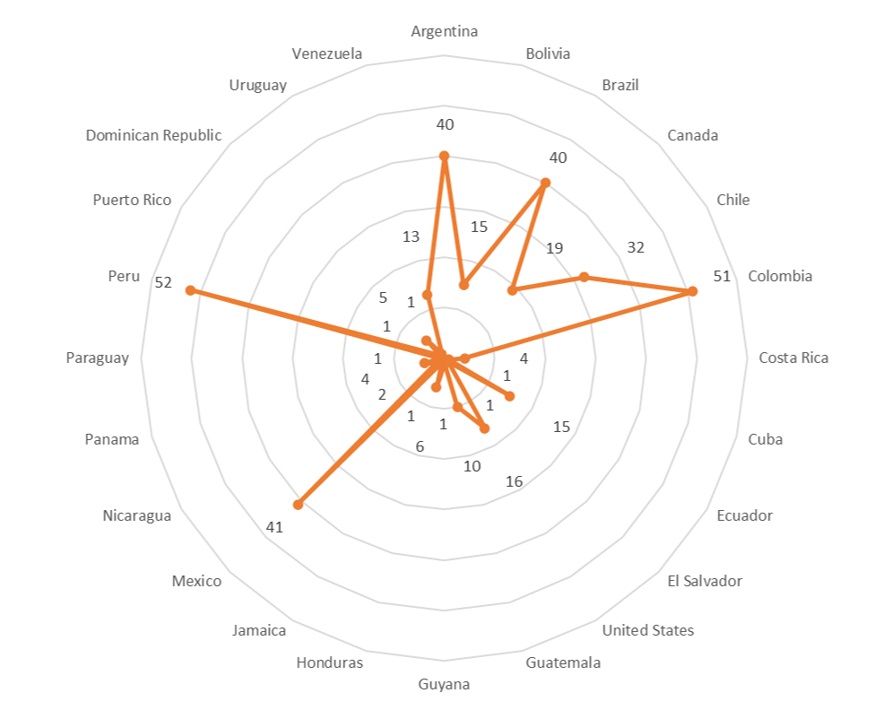
In general, 372 mining conflicts were recorded in the Americas. This finding indicates that the American continent is a key area for the development of this economic activity, whether for conventional mineral extraction or for the so-called strategic minerals essential to the energy transition (Bruckmann, 2012; Deniau et al., 2021) . Given that mega-mining is driven by the economic profitability of its production model and the abundance of mineral resources, it becomes clear that certain countries have a higher presence of this activity due to their historical development, while in others, it is emerging as a result of changes in the global mineral market (Figure 1) 2.
-
(Bruckmann, 2012Recursos naturales y la geopolítica de la integración sudamericana, 2012
-
Deniau et
al., 2021) Mapping community resistance to the impacts and discourses of mining for the energy transition in The Americas, 2021
Countries with a longstanding mining tradition, such as Peru, Colombia, and Mexico, where the extraction of gold, silver, and bronze has deep roots, also have the highest number of conflicts. However, reflecting the global reconfiguration around mineral demand, Argentina, Bolivia, and Chile also stand out as they form the current lithium triangle. The demand for new strategic minerals is fostering emerging markets still in the process of definition, so countries with clear reserves in this area are likely to become territories of contention in the near future (Fornillo, 2019) .
-
(Fornillo, 2019) Litio en Sudamérica. Geopolítica, energía, transicione, 2019
The cases of Canada and the United States are particularly significant in this analysis because, despite the "low" coverage of mining conflicts in these countries (19 and 16 conflicts, respectively), these often occur in Indigenous territories with varying degrees of mobilization and resistance to socio-environmental risks and dangers (Ali, 2009; O'Faircheallaigh, 2023; Horowitz et al., 2024) . Beyond the fact that the global system's current capital relocation allows companies from these countries to exploit resources elsewhere to preserve their reserves, extractive activities have not ceased within these nations. As highlighted by the decolonial branch of Latin American Political Ecology (LAPE), the most marginalized individuals and groupsdisproportionately endure the violence inherent in the modern-colonial world. In other words, while the United States and Canada are perceived as part of the so-called Global North, systemic racism operates within their borders with equal clarity and severity (Grosfoguel, 2016) .
-
(Ali, 2009Mining, the Environment, and Indigenous Development Conflicts, 2009
-
O'Faircheallaigh, 2023Indigenous peoples and mining: A global perspective, 2023
-
Horowitz et al., 2024) Indigenous peoples' relationships to large-scale mining in post/colonial contexts: Toward multidisciplinary comparative perspectivesMining and indigenous livelihoods: Sovereignties, subjectivities, and struggles, 2024
-
(Grosfoguel, 2016) What is Racism?Journal of World-Systems Research, 2016
Indigenous peoples are continuously exposed to heightened violence and dispossession. Recent adjustments in the global production model transform old forms of colonization while generating new ones, without significantly improving the living conditions of marginalized individuals and communities. A recent example of this shift is what some authors refer to as the transition from the “commodities consensus” to the “decarbonization consensus” (Bringel & Svampa, 2023; Lander, 2023) .
-
(Bringel & Svampa, 2023“Del ‘Consenso de los Commodities’ al ‘Consenso de la Descarbonización’”Nueva Sociedad, 2023
-
Lander, 2023) La transición energética corporativa-colonialTransiciones justas. Una agenda de cambios para América Latina y el Caribe, 2023
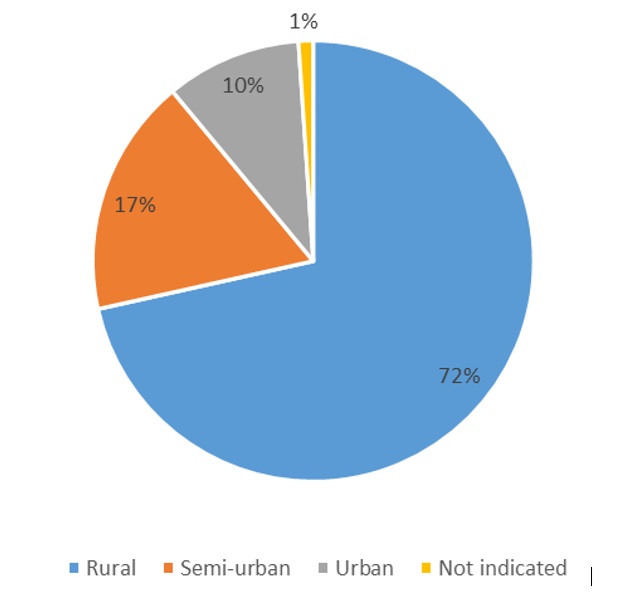
In terms of territorial impact, our findings indicate that the types of territories and populations most directly affected by the mono-ontological occupation promoted by mega-mining are small, dispersed rural areas (Figure 2) 3. This is due to rural areas' historically closer relationship with the land and territory. Mega-mining requires large tracts of land, making rural areas ideal due to their low population density and limited infrastructure (Olmedo Neri, 2022) . The socio-territorial inequality inherent in the rural-urban dichotomy is exploited to legitimize the project as a development pole through dispossession. This implies an erosion of the productive and socio-cultural dynamics that shape the territory, with these mega-projects not only displacing traditional activities like agriculture but also redistributing land ownership toward those with economic power, dispossessing rural farmers (Svampa, 2019; Muñoz-Duque et al., 2020) . This ultimately creates issues for local development as the loss of autonomy ensues, with the mining project expanding its influence in the territory until it submits it to its productive logic (Vila, 2021) .
-
(Olmedo Neri, 2022) El impacto social de la megaminería en Mazapil, ZacatecasContextualizaciones Latinoamericanas, 2022
-
(Svampa,
2019Las fronteras del neoextractivismo en América Latina. Conflictos socioambientales, giro ecoterritorial y nuevas dependencias, 2019
-
Muñoz-Duque et al., 2020) Despojo, conflictos socioambientales y violación de derechos humanos. Implicaciones de la gran minería en América LatinaRevista U.D.C.A., 2020
-
(Vila,
2021) Extractivismo y territorio: el ordenamiento territorial como herramienta para la gestión de conflictos socialesLimaq, 2021
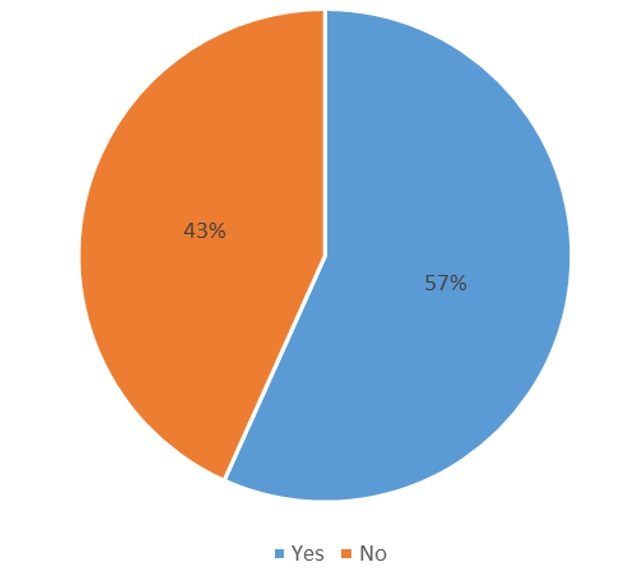
In addition, the cultural and identity roles of the inhabitants become crucial. Indigenous populations, historically marginalized, are mainly located in rural areas. In this regard, our findings reveal that Indigenous communities are present in 57% of the recorded cases (Figure 3) . These communities are not only key players in defending their territories but also, unfortunately, the primary victims of private capital's encroachment on their lands. Indigenous populations' presence in rural areas also reflects their historical displacement from power centers to the peripheries as part of the colonial and segregationist logic that has prevailed since the colonial period.
This is a key factor for understanding the contextual and material conditions that may explain conflict intensity. Here, the intersection of variables proves useful for studying dynamics of resistance and confrontation with mega-mining, and the outcomes arising from scenarios of latent, low, medium, or high intensity. The involvement of actors in environmental defense is another fundamental finding of this study, as we found a significant association (with 99% confidence) between the presence of Indigenous communities and incidents of criminalization (Pearson's χ² test = 8.62; p-value < 0.00001), repression (Pearson's χ² test = 7.40; p-value < 0.00001), and murder in mining conflicts (Pearson's χ² test = 7.97; p-value < 0.00001).
To assess the strength of the association between these variables, Cramér’s V was calculated, yielding values of V = 0.15 for criminalization and V = 0.14 for both repression and murder, indicating that the association's magnitude is small. In the context of studies on mining conflict and structural violence against Indigenous peoples, these results are relevant but should be interpreted with caution. The statistical significance confirmed by the chi-square test suggests that the presence of Indigenous communities is associated with higher levels of criminalization, repression, and murder in mining conflicts. However, the low Cramér’s V values (0.15 and 0.14) imply that, while this relationship is consistent and not random, the strength of the association is not particularly high. This may indicate that while Indigenous peoples are targets of these forms of violence, other structural or contextual factors (such as geopolitical location, type of mining, presence of transnational companies, state actions or omissions, etc.) may also play an important role in conflict dynamics.
Additionally, it is important to consider that sample size may be affecting the association’s magnitude. In this case, the low Cramér’s V values could be related to the fact that, although the results are statistically significant, the sample size may not be large enough to detect stronger associations. In studies with larger samples, higher Cramér’s V values might be observed, indicating a more robust relationship between Indigenous presence and violence in mining conflicts.
In other words, the Cramér’s V results do not undermine the significance of the association; rather, they add an important nuance: violence against Indigenous peoples is a relevant factor, but mining conflict is a more complex phenomenon involving a multitude of factors. Results may vary with a larger sample size, which should be considered in future studies.
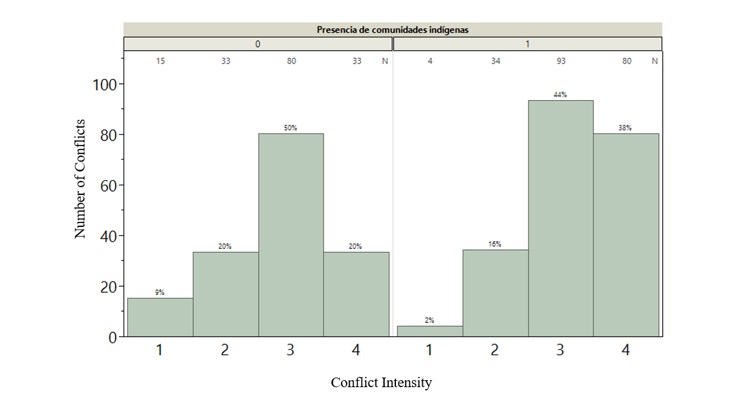
The proportion of high-intensity conflicts (mass mobilizations, violence, and/or arrests) doubles when Indigenous communities are present. Out of the 372 recorded mining conflicts, Indigenous communities were involved in 211 cases. Although medium- and high-intensity scenarios represent more than 70% of cases in both situations (with or without Indigenous communities), in absolute terms, there is a noticeable difference: 173 of the recorded conflicts involving Indigenous communities are of medium or high intensity. In contrast, the figure decreases to 113 cases when no Indigenous communities are involved, representing a difference of 35 percentage points (Figure 4) 4.
The association we have identified suggests that in conflicts involving Indigenous communities, there is a higher incidence of criminalization, repression, and murder. In more than 90% of cases where one of these three situations occurs, Indigenous communities are present (Figure 5). This finding provides quantitative-descriptive support that can serve as a broad context for studies on the complex intersection between mega-mining, socio-environmental conflict, and the rights and integrity of Indigenous peoples in the Americas.
Conclusion
This study has examined the landscape of violence associated with the socio-environmental conflict generated by mega-mining in the Americas. We have shown that just over 90% of the cases occur in the Latin American and Caribbean region. In addition to this finding, the cases identified in Canada and the United States underscore a structural issue across the continent: mega-mining serves as an epicenter of tensions, exacerbating existing inequalities and systematically trigger various forms of violence against environmental defenders.
We demonstrated a statistically significant correlation, with 99% confidence, between Indigenous communities' involvement in resisting mega-mining projects and the occurrences of criminalization, repression, and murder. This correlation is further supported by the finding that in 72% of cases, mega-mining activities threaten rural territories. This is likely due to the vast stretches of land, low population density, and lack of discursive prominence within the contemporary urban-global modernization agenda.
Recognizing the characteristics of territories impacted by mega-mining thus provides insight not only into the struggle to protect the way these communities realize their relationship with nature but also into the worldview they embody. It is this worldview, developed from the place through which they see and engage with the world, that reveals an ideological and ontological battle over the society-environment relationship. Although rural perspectives contrast with urban ones, this becomes more pronounced when the affected population comprises Indigenous peoples. In some cases, their diverse ways of being, existing, and inhabiting the world challenge the dominant extractivist ideology. The role of Indigenous communities on the continent is twofold: they not only defend a territory imbued with historical meaning but also embody an ontological alternative for reimagining the world and humanity’s relationship with it.
Thus, conflict intensity can be explained not only by the nature of the territory but also by the actors at risk and the worldview they represent. This insight does not necessarily stem from data collected in the EJAtlas but is evident in studies dedicated to analyzing media coverage of socio-environmental conflicts (Rivero Corona et al., 2020) . The high rates of criminalization, repression, and murder of Indigenous environmental defenders reflect not only territorial issues but also possible ontological tensions, as they promote counter-hegemonic ways of inhabiting the land and managing natural resources. In conclusion, despite the nuances and internal divisions analyzed in the literature on this topic, Indigenous environmental defenders face different forms of violence for at least two key reasons: their opposition to the modern-colonial extractivist production model and their embodiment, in some cases, of worldviews that challenge the dominance of the prevailing ideology underpinning this development model.
-
(Rivero Corona et al., 2020) Los mass-media en las disputas sobre la naturaleza. Diseño teórico-metodológico para el estudio de la conflictividad socioambiental en fuentes hemerográficas digitalesIberoamérica Social: Revista-Red de Estudios Sociales, 2020
The relevance of this study lies in its contribution to a more holistic understanding of the power dynamics underlying socio-environmental conflicts. By integrating perspectives from Latin American Political Ecology (LAPE), we have examined not only the structures of inequality and exploitation but also provided a baseline for future studies to identify action areas for policymakers, researchers, and activists. This work emphasizes the need for approaches that reimagine and reshape our societies to prioritize substantive social and environmental justice over short-term economic gains.
Referencias
- Acosta, Alberto (2010), “Extractivismo y neoextractivismo: Dos caras de la misma maldición”, en Lang, Miriam y Mokrani, Dunia [ comps.] , Más allá del desarrollo, Ecuador: Ediciones Abya Yala. Links
- Ali, Saleem (2009), Mining, the Environment, and Indigenous Development Conflicts, Estados Unidos: The Arizona University Press. Links
- Alimonda, Héctor (2016), “Notas sobre la ecología política latinoamericana. Arraigo, herencias, diálogos”, en Ecología Política, núm. 51, España: Fundació ENT. Links
- Antonelli, Mirta Alejandra (2011), “Megaminería, desterritorialización del Estado y biopolítica”, en Astrolabio, núm. 7, Argentina: Universidad Nacional de Córdoba. Links
- Berman, Marshall (2011), Todo lo sólido se desvanece en el aire, España: Siglo XXI. Links
- Betancourt, Milson (2016), Minería, violencia y criminalización en América Latina. Dinámicas y tendencias, Colombia: Observatorio de Conflictos Mineros de América Latina y Asociación Centro Nacional Salud, Ambiente y Trabajo. Links
- Betancourt, Milson y Porto-Gonçalves, Carlos Walter (2017), “Cuestiones críticas sobre extractivismo y productivismo: un análisis desde el pensamiento crítico, la ecología política y las prácticas políticas de los grupos subalternizados”, en Alimonda, Héctor, Toro Pérez, Catalina y Martín, Facundo [ coords.] , Ecología Política Latinoamericana, vol. II, Argentina: Consejo Latinoamericano de Ciencias Sociales. Links
- Blaser, Mario (2013), “Notes toward a political ontology of environmental conflicts”, en Green, Lesley [ ed.] , Contested ecologies: Dialogues in the South on Nature and Knowledge, Sudáfrica: Human Sciences Research Council Press. Links
- Boelens, Rutgerd et al. (2015), “Despojo del agua en Latinoamérica: introducción a la ecología política del agua en los agronegocios, la minería y las hidroeléctricas”, en Yacoub, Cristina, Duarte, Bibiana y Boelens, Rutgerd [ eds.] , Agua y Ecología Política. El extractivismo en la agroexportación, la minería y las hidroeléctricas en Latinoamérica, Ecuador: Abya Yala. Links
- Bolados García, Paola et al. (2017), “Ecofeminizar el territorio. La ética del cuidado como estrategia frente a la violencia extractivista entre las Mujeres de Zonas de Sacrificio en Resistencia (Zona Central, Chile)”, en Ecología Política, núm. 54, España: Fundació ENT , Icaria Editorial y Consejo Latinoamericano de Ciencias Sociales . Links
- Bringel, Breno y Svampa, Maristella (2023), “Del ‘Consenso de los Commodities’ al ‘Consenso de la Descarbonización’”, en Nueva Sociedad, núm. 306, Argentina: Friedrich Ebert Stiftung. Links
- Bruckmann, Mónica (2012), Recursos naturales y la geopolítica de la integración sudamericana, Perú: Fondo Editorial José Carlos Mariátegui. Links
- Calderón-Contreras, Rafael (2013), “Economía política: hacia un mejor entendimiento de los problemas socioterritoriales”, en Economía, Sociedad y Territorio, vol. 13, núm. 42, México: El Colegio Mexiquense. Links
- Carvajal, Laura María (2016), Extractivismo en América Latina. Impacto en la vida de las mujeres y propuestas de defensa del territorio, Colombia: Fondo de Acción Urgente de América Latina y el Caribe. Links
- Delgado Ramos, Gian Carlo (2013), “¿Por qué es importante la ecología política?”, en Nueva Sociedad, núm. 244, Argentina: Friedrich Ebert Stiftung . Links
- Delgado Ramos, Gian Carlo (2010a), “América Latina y el Caribe como reservas estratégicas de minerales”, en Delgado Ramos, Gian Carlo [ coord.] , Ecología Política de la minería en América Latina. Aspectos socioeconómicos, legales y ambientales de la megaminería, México: Universidad Nacional Autónoma de México. Links
- Delgado Ramos, Gian Carlo (2010b), “La gran minería en América Latina”, en Acta Sociológica, núm. 54, México: Universidad Nacional Autónoma de México . Links
- Deniau, Yannick et al. (2021), Mapping community resistance to the impacts and discourses of mining for the energy transition in The Americas, Canadá: EJAtlas-Mining Watch Canada. Links
- EJAtlas (2021), Global Atlas of Environmental Justice. Disponible en: Disponible en: https://ejatlas.org/ [ 1 de abril de 2021] . Links
- Escobar, Arturo (2014), Sentipensar con la tierra. Nuevas lecturas sobre desarrollo, territorio y diferencia, Colombia: Ediciones Universidad Autónoma Latinoamericana. Links
- Fornillo, Bruno (2019), Litio en Sudamérica. Geopolítica, energía, transiciones, Argentina: El Colectivo y Consejo Latinoamericano de Ciencias Sociales. Links
- Giraldo, Omar Felipe (2018), Ecología Política de la Agricultura: Agroecología y posdesarrollo, México: El Colegio de la Frontera Sur. Links
- Global Witness (2023), Land and environmental defenders protect our planet- but they cannot halt climate change without access to justice. Disponible en: Disponible en: https://www.globalwitness.org/en/blog/land-and-environmental-defenders-protect-our-planet-but-they-cannot-halt-climate-change-without-access-to-justice/ [ 11 de diciembre de 2023] . Links
- Global Witness (2021), Última línea de defensa. Disponible en: Disponible en: https://www.globalwitness.org/es/last-line-defence-es/ [ 13 de septiembre de 2021] . Links
- Global Witness (2020), Defender el mañana. Crisis Climática y amenazas contra las personas defensoras de la tierra y el medio ambiente. Disponible en: Disponible en: https://www.globalwitness.org/es/defending-tomorrow-es/ [ 29 de julio de 2020] . Links
- Global Witness (2019), ¿Enemigos del Estado? De cómo los gobiernos y las empresas silencian a las personas defensoras de la tierra y del medio ambiente. Disponible en: Disponible en: https://www.globalwitness.org/en/campaigns/environmental-activists/enemigos-del-estado/ [ 30 de julio de 2019] . Links
- Gómez Liendo, Marx José (2017), “Ciencia posnormal para un mundo posnatural. El problema del Arco Minero del Orinoco”, en Iberoamérica Social. Revista-Red de Estudios Sociales, vol. 4, núm. 7, España: Asociación Reconocer. Links
- Grosfoguel, Ramón (2016), “What is Racism?”, en Journal of World-Systems Research, vol. 22, núm. 1, Estados Unidos: California Institute of Integral Studies. Links
- Gudynas, Eduardo (2014), Ecologías políticas. Ideas preliminares sobre concepciones, tendencias, renovaciones y opciones latinoamericanas, Uruguay: Centro Latino Americano de Ecología Social (CLAES). Links
- Gudynas, Eduardo (2012), “Estado compensador y nuevos extractivismos. Las ambivalencias del progresismo latinoamericano”, en Nueva Sociedad, núm. 237, Argentina: Friedrich Ebert Stiftung . Links
- Guzmán López, Federico et al. (2020), “Megaminería y los derechos humanos en el México contemporáneo 1998-2018”, en Revista de Geografía Agrícola, núm. 64, México: Universidad Autónoma de Chapingo. Links
- Horowitz, Leah et al. (2024), “Indigenous peoples' relationships to large-scale mining in post/colonial contexts: Toward multidisciplinary comparative perspectives”, en T. Rodon, Thierry y Thériault, Sophie [ eds.] , Mining and indigenous livelihoods: Sovereignties, subjectivities, and struggles, Inglaterra: Taylor & Francis. Links
- Lander, Edgardo (2023), “La transición energética corporativa-colonial”, en García Parra, Gloria et al., Transiciones justas. Una agenda de cambios para América Latina y el Caribe, Argentina: Consejo Latinoamericano de Ciencias Sociales y OXFAM. Links
- Leff, Enrique (2019), Ecología Política. De la deconstrucción del capital a la territorialización de la vida, México: Siglo XXI Editores. Links
- Leyva Hernández, Alejandra et al. (2021), Informe sobre la situación de las personas defensoras de los derechos humanos ambientales en México , 2020, México: Centro Mexicano de Derecho Ambiental. Links
- Leyva Hernández, Alejandra et al. (2017), Informe sobre la situación de las personas defensoras de los derechos humanos ambientales en México 2016, México: Centro Mexicano de Derecho Ambiental . Links
- Machado Aráoz, Horacio (2017), “América Latina y la Ecología Política del Sur. Luchas de re-existencia, revolución epistémica y migración civilizatoria”, en Alimonda, Héctor, Toro Pérez, Catalina y Martín, Facundo [ coords.] , Ecología Política Latinoamericana, vol. II, Argentina: Consejo Latinoamericano de Ciencias Sociales . Links
- Machado Aráoz, Horacio (2014), “Territorios y cuerpos en disputa: extractivismo minero y ecología política de las emociones”, en Intersticios. Revista Sociológica de Pensamiento Crítico, vol. 8, núm. 1, España: Universidad Complutense de Madrid. Links
- Martín, Facundo y Larsimont, Robin (2016), “¿Es posible una ecología cosmo-política? Notas hacia la desregionalización de las ecologías políticas”, en Polis, núm. 46, Chile: Universidad de Los Lagos. Links
- Martínez Alier, Joan (2015), “Ecología política del extractivismo y justicia socioambiental”, en Interdisciplina, vol. 3, núm. 7, México: Universidad Nacional Autónoma de México . Links
- Merlinsky, Gabriela (2017), “Los movimientos de justicia ambiental y la defensa de lo común en América Latina. Cinco tesis en elaboración”, en Alimonda, Héctor, Toro Pérez, Catalina y Martín, Facundo [ coords.] , Ecología Política Latinoamericana, vol. II, Argentina: Consejo Latinoamericano de Ciencias Sociales . Links
- Muñoz Duque, Luz Adriana et al. (2020), “Despojo, conflictos socioambientales y violación de derechos humanos. Implicaciones de la gran minería en América Latina”, en Revista U.D.C.A., vol. 23, núm. 1, Colombia: Universidad de Ciencias Aplicadas y Ambientales. Links
- Muñoz Muñoz, Delia y Mercado García, Yan Carlo (2023), “Intervención del Estado en los conflictos socioambientales en el Perú”, en Vox Juris, vol. 41, núm. 2, Perú: Universidad de San Martín de Porres. Links
- Muñoz Ríos, Mario Daniel (2023), “El acuerdo de Escazú en México, a un año de su implementación, en InterNaciones, núm. 24, México: Universidad de Guadalajara. Links
- O'Faircheallaigh, Ciaran (2023), Indigenous peoples and mining: A global perspective, Inglaterra: Oxford University Press. Links
- Olmedo Neri, Raul Anthony (2023), “Cosechar el sol y el aire. Las energías renovables y la reforma energética de México”, en Argumentos. Estudios Críticos de la Sociedad, núm. 101, México: Universidad Autónoma Metropolitana. Links
- Olmedo Neri, Raul Anthony (2022), “El impacto social de la megaminería en Mazapil, Zacatecas”, en Contextualizaciones Latinoamericanas, vol. 2, núm. 27, México: Universidad de Guadalajara . Links
- Olmedo Neri, Raul Anthony y Gómez Liendo, Marx José (2020), “Conflictividad socioambiental en América Latina y el Caribe: un análisis del panorama desde la Ecología Política”, en Iberoamérica Social. Revista-Red de Estudios Sociales, vol. 8, núm. 15, España: Asociación Reconocer . Links
- Pineda, César Enrique (2018), “El despliegue del capital sobre la naturaleza”, en Cuevas Valenzuela, Hernán, Julián Véjar, Dasten y Rojas Hernández, Jorge [ coords.] , América Latina: expansión, capitalismo, conflictos sociales y ecológicos, Chile: RIL editores. Links
- Rivero Corona, Marhylda, et al. (2020), “Los mass-media en las disputas sobre la naturaleza. Diseño teórico-metodológico para el estudio de la conflictividad socioambiental en fuentes hemerográficas digitales”, en Iberoamérica Social: Revista-Red de Estudios Sociales, núm. 15, España: Asociación Reconocer . Links
- Rodríguez-Labajos, Beatriz y Özkaynak, Begum (2014), “Hacia una interpretación analítica de los logros para la justicia ambiental en casos de resistencia anti-minera”, en Ecología Política, núm. 48, España: Fundació ENT , Icaria Editorial y Consejo Latinoamericano de Ciencias Sociales . Links
- Scheidel, Arnim et al. (2020), “Environmental conflicts and defenders: A global overview”, in Global Environmental Change, núm. 63, Países Bajos: Elsevier. Links
- Svampa, Maristella (2019), Las fronteras del neoextractivismo en América Latina. Conflictos socioambientales, giro ecoterritorial y nuevas dependencias, Alemania: Bielefeld University Press. Links
- Svampa, Maristella y Slipak, Ariel (2017), “China en América Latina: del Consenso de los Commodities al Consenso de Beijing”, en Alimonda, Héctor, Toro Pérez, Catalina y Martín, Facundo [ coords.] , Ecología Política Latinoamericana, vol. II, Argentina: Consejo Latinoamericano de Ciencias Sociales . Links
- Svampa, Maristella (2012), “Consenso de los commodities y megaminería en América Latina”, en América Latina en movimiento, núm. 473, Ecuador: Agencia Latinoamericana de Información. Links
- Ulloa, Astrid (2004), La construcción del nativo ecológico: complejidades, paradojas y dilemas de la relación entre los movimientos indígenas y el ambientalismo en Colombia, Colombia: Instituto Colombiano de Antropología e Historia (ICANH). Links
- Van Teijlingen, Karolien (2019), “Minería a gran escala, pluralismo territorial y contención: Un mapeo de encuentros y desencuentros en la amazonía ecuatoriana”, en Estudios atacameños, núm. 63, Chile: Universidad Católica del Norte. Links
- Vargas, María Francesca e Hidalgo, Diego (2022), “Mapeo de Procesos de Resistencia Civil Indígenas ante Proyectos Extractivistas en la Zona Sur de los Andes (1990-2020)”, en Historia Ambiental Latinoamericana y Caribeña (HALAC), núm. 12, vol. 1, Brasil: Sociedad Latinoamericana y Caribeña de Historia Ambiental. Links
- Vila, Flavio (2021), “Extractivismo y territorio: el ordenamiento territorial como herramienta para la gestión de conflictos sociales”, en Limaq, núm. 8, Perú: Universidad de Lima. Links
- Walter, Mariana et al. (2023), “Mapeo colaborativo de resistencias a los impactos y discursos de la minería para la transición energética en las Américas”, en Ecología Política, núm. 65, España: Fundación ENT, Icaria Editorial y Consejo Latinoamericano de Ciencias Sociales. Links
- Zapata Silva, Claudia (comp.) (2007), Intelectuales indígenas piensan América Latina, Ecuador: Abya Yala . Links
Annex
Thumbnail
 Source: Own elaboration with data from the EJAtlas (2021).
Figure 1:
Mining Conflicts by Country
Mining Conflicts by Country
Thumbnail
 Source: Own elaboration with data from the EJAtlas (2021).
Figure 2:
Mining Conflicts by Population Type
Mining Conflicts by Population Type
Thumbnail
 Source: Own elaboration with data from the EJAtlas (2021).
Figure 3:
Presence of Indigenous Peoples in Mining Conflicts
Presence of Indigenous Peoples in Mining Conflicts
Thumbnail
 Source: Own elaboration with data from the EJAtlas (2021).
Figure 4:
Relationship Between the Presence of Indigenous Communities and Mining Conflict Intensity
Relationship Between the Presence of Indigenous Communities and Mining Conflict Intensity
Thumbnail
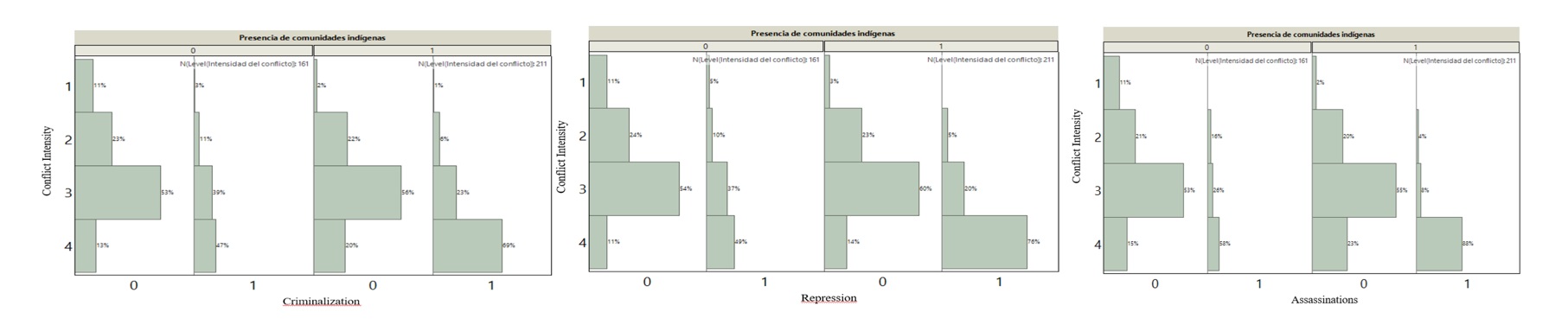 Source: Own elaboration with data from the EJAtlas (2021).
Figure 5:
Relationship Between the Presence of Indigenous Communities and the Occurrence of Criminalization, Repression, and Assassinations
Relationship Between the Presence of Indigenous Communities and the Occurrence of Criminalization, Repression, and Assassinations