Ensayos
Goldenberry L.: phytochemicals and applications in human health

-
Publication dates-
October 27, 2025
Jul-Aug , 2025
- Article in PDF
- Article in XML
- Automatic translation
- Send this article by e-mail
- Share this article +
Abstract
Goldenberry is a species of great socioeconomic importance in different countries of Latin America and Africa. At the phytochemical level, this species presents a variety of biologically important phytochemicals. Therefore, this paper aims to provide an exhaustive summary of Physalis peruviana goldenberry, focusing on its phytochemicals and applications in human health. This work was conducted in 2024; it indicates that, at the level of its fruits, there are terpenes, phenolic compounds, alcohols, steroids, withanolides, highlighting carotenoids and flavonoids, reduced levels of fat, high water content and vitamins A, B3, B6, C and E, as well as the minerals calcium, potassium, phosphorus and magnesium. This richness in phytochemicals and nutrients of goldenberry translates into significant health benefits thanks to its antioxidant, antibacterial and antiproliferative properties. In particular, goldenberry calyxes and leaf extracts have demonstrated antihepatotoxic, antifibrotic and antidiabetic activity. In summary, the goldenberry has an optimal nutritional content and it is necessary to optimize the bioavailability of its components to fully take advantage of its benefits. Due to its potential as a promising component in functional foods and phytomedicine, there is a need for more in-depth evaluations of its impact on the well-being of humanity.
Keywords::
Physalis peruviana, health benefits, nutrition, phytomedicine
The species Physalis peruviana L., known as aguaymanto in Peru, uchuva in Colombia, uvilla in Ecuador and goldenberry or cape gooseberry in the United States of America, is native to the Andes in South America (Kasali et al., 2021), where it grows wild at altitudes of 1 500 to 3 000 m (Yıldız et al., 2015; Ramos et al., 2022). Currently, Colombia and South Africa are the world’s leading producers, with Zimbabwe, Ecuador and Peru standing out (Majcher et al., 2020).
-
Kasali et al., 2021Ethnotherapeutic uses and phytochemical composition of Physalis peruviana L.: an overviewThe Scientific World Journal, 2021
-
Yıldız
et al., 2015Physical and chemical characteristics of goldenberry fruit (Physalis peruviana L.)Journal of Food Science and Technology, 2015
-
Ramos
et al., 2022Efecto de diferentes dosis de N, P y K sobre el contenido de proteínas solubles totales en hojas de ‘aguaymanto’ Physalis peruviana L. (Solanaceae)Arnaldoa, 2022
-
Majcher et al.,
2020Identification of active odor compounds in Physalis peruviana L.Molecules, 2020
The properties of the active compounds present in P. peruviana have been recognized and used over the centuries for the benefit of health. More recently, various nutritional and bioactive properties have been demonstrated, including anti-asthmatic, diuretic, antiseptic, anti-inflammatory, antiproliferative, sedative, analgesic and antidiabetic effects (Yıldız et al., 2015; Singh et al., 2019), which are linked to its phytochemical content (Muñoz et al., 2021). These compounds include physalins, alkaloids, flavonoids, carotenoids, vitamins and polysaccharides, which are present in optimal amounts in various organs (Bazalar et al., 2019), which has generated a growing interest in knowing the mechanisms of action of these and other bioactive metabolites present in P. peruviana. For this reason, it is essential to provide an exhaustive summary of Physalis peruviana goldenberry, focusing on its phytochemicals and its applications in human health.
-
Yıldız et al., 2015Physical and chemical characteristics of goldenberry fruit (Physalis peruviana L.)Journal of Food Science and Technology, 2015
-
Singh et al., 2019An updated review on Physalis peruviana fruit: cultivational, nutraceutical and pharmaceutical aspectsNIScPR Online Periodicals Repository, 2019
-
Muñoz
et al., 2021Chemical characterization, nutritional and bioactive properties of Physalis peruviana fruit from high areas of the Atacama DesertFoods, 2021
-
Bazalar
et al., 2019Nutritional and antioxidant properties of Physalis peruviana l. fruits from the Argentinean northern Andean regionPlant Foods for Human Nutrition, 2019
Phytochemicals identified in different parts of Physalis peruviana L.
Figure 1 presents a summary of the phytochemicals identified and characterized in the different organs of P. peruviana. The search carried out demonstrated the presence of various classes of phytochemicals, including terpenes (monoterpenes, sesquiterpenes, diterpenes, triterpenes and carotenoids), phenolic compounds (phenolic acids, phenolic esters, phenolic aldehydes, chalcones, coumarins, cinnamic acid derivatives, flavonoids and glycosides), alcohols, aldehydes, ketones, carboxylic acids, lactones, steroids and withanolides, alkaloids, sucrose esters, glycosides, siloxanes, vitamins, phytoprostanes, derivatives of phytol and enols.
Thumbnail
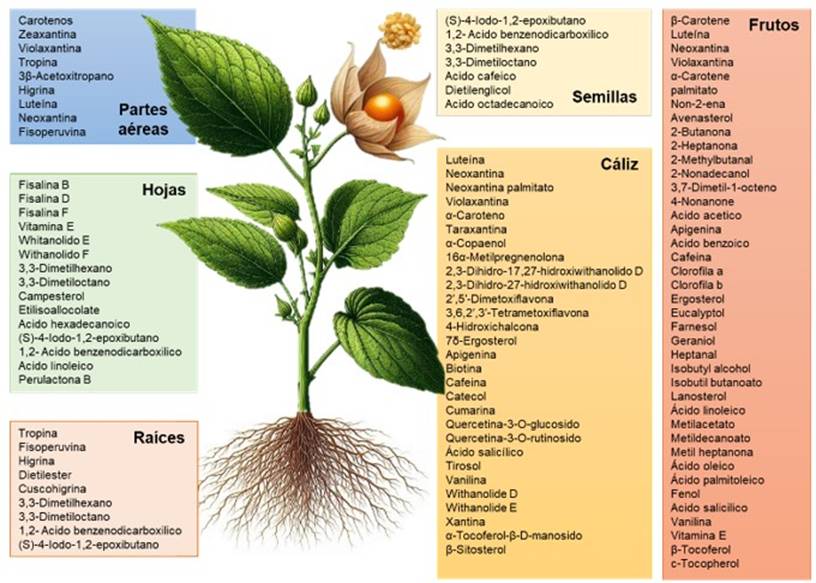
Figure 1
Phytochemicals identified in different parts of Physalis peruviana L.
Phytochemicals identified in different parts of Physalis peruviana L.
Various parts of P. peruviana contain a rich variety of phytochemicals, among which terpenes and polyphenols stand out, which account for 26.09% and 14.94%, respectively. In the terpene category, carotenoids stand out as the most representative (11.15%), followed by monoterpenes (8.76%), sesquiterpenes (5.57%), and diterpenes (3.18%).
Regarding phenolic compounds, flavonoids are the most prevalent (5.17%), followed by cinnamic acid derivatives (3.98%), monophenolic compounds (1.79%), phenolic acids (1.39%), coumarins (0.79%), phenolic esters (0.79%), chalcones (0.39%), phenolic aldehydes (0.39%), and stilbenes (0.19%) (Medina et al., 2019). These compounds are synthesized and accumulated in all plant tissue; however, their concentration varies between different parts. Phenolic acids and flavonoids are the subject of extensive research due to their pharmacological properties and medical applications related to cellular detoxification (Zhang et al., 2005).
-
Medina et al., 2019Potential of Physalis peruviana calyces as a low-cost valuable resource of phytoprostanes and phenolic compoundsJournal of the Science of Food and Agriculture, 2019
-
Zhang et al., 2005Simultaneous determination of quercetin, kaempferol, and isorhamnetin in phytopharmaceuticals of Hippophae rhamnoides L. by high-performance liquid chromatography with chemiluminescence detectionJournal of Separation Science, 2005
The results also indicate the finding of phytol at the level of the calyx and leaves of P. peruviana. In addition, phytoene is a 40-carbon alkene that acts as an intermediary in the synthesis of carotenoids, compounds abundant in the genus Physalis, used in the food industry as dyes for fats, oils and that act as precursors of violaxanthin (Yu et al., 2019). At the level of its seeds, P. peruviana can contain up to 30% fatty acids, with hexadecanoic acid (palmitic acid), decanoic acid, linoleic acid, and octadecanoic acid standing out (Asilbekova et al., 2016). Hexadecanoic acid is the most common saturated fatty acid, whereas linoleic acid is essential in plant lipids and crucial in human and animal diets (Rustan et al., 2005).
-
Yu et al., 2019Metabolomic profiling of carotenoid constituents in Physalis peruviana during different growth stages by LC-MS/MS TechnologyJournal of Food Science, 2019
-
Asilbekova
et al., 2016Lipids from Physalis alkekengiChemistry of Natural Compounds, 2016
-
Rustan
et al., 2005Fatty Acids: structures and propertiesEncyclopedia of Life Sciences, 2005
The family Solanaceae is the main producer of withanolides, with more than 350 withanolides having been identified in the genus Physalis, with P. peruviana and P. angulata standing out as the main sources (Huang et al., 2020). In particular, in P. peruviana, the presence of dihydrowithaferins, perulactones, withaferins, and hydroxywithanolides stands out (Kasali et al., 2021). Among other steroids, physalins stand out for their biological activity (Ballesteros-Vivas et al., 2019).
-
Huang et
al., 2020Whitanolides from the genus Physalis: a review on their phytochemical and pharmacological aspectsThe Journal of Pharmacy and Pharmacology, 2020
-
Kasali et al., 2021Ethnotherapeutic uses and phytochemical composition of Physalis peruviana L.: an overviewThe Scientific World Journal, 2021
-
Ballesteros-Vivas et al., 2019A multi-analytical platform based on pressurized-liquid extraction, in vitro assays and liquid chromatography/gas chromatography coupled to high resolution mass spectrometry for food by-products valorisation. Part 1: whitanolides-rich fractions from goldenberry (Physalis peruviana L.) calyces obtained after extraction optimization as case studyJournal of Chromatography A., 2019
Therefore, P. peruviana is a species of great phytochemical interest due to its richness in bioactive compounds, including terpenes (monoterpenes, sesquiterpenes, diterpenes, triterpenes, and carotenoids), phenolic compounds (phenolic acids, phenolic esters, phenolic aldehydes, chalcones, coumarins, and flavonoids), fatty acids, steroids, withanolides, vitamins, phytol derivatives and enols. These compounds, identified and characterized in different parts of the plant, hold promise for the development of pharmaceuticals and functional foods.
Nutritional value of Physalis peruviana L.
Table 1 presents the approximate composition of the nutritional value of P. peruviana. The low content of fat in the fruit stands out, which does not exceed 1% of the total weight on average, a situation that contrasts with the high content of water of the fruit (77.3% to 85.5%). The high level of water and high concentration of carbohydrates provide the fruit with greater protection in structural terms (Cortés-Díaz et al., 2015; Bazalar et al., 2019). In contrast, the protein content is relatively low (1.4-1.7%), with an acidic pH (3.9-6.1) that ensures vitamin C activity. Regarding the amount of ash, there are differences (0.8-3%), probably due to variations between different growing regions since climatic conditions, soil characteristics, and other multiple factors directly intervene in the qualities of the fruit (Cortés-Díaz et al., 2015).
-
Cortés-Díaz et al.,
2015Bromatological and physicochemical characterization of Physalis peruviana L., and its potential as a nutraceutic foodCiencia en Desarrollo, 2015
-
Bazalar et al.,
2019Nutritional and antioxidant properties of Physalis peruviana l. fruits from the Argentinean northern Andean regionPlant Foods for Human Nutrition, 2019
-
Cortés-Díaz et
al., 2015Bromatological and physicochemical characterization of Physalis peruviana L., and its potential as a nutraceutic foodCiencia en Desarrollo, 2015
Table 1
Composition of the fruit of Physalis peruviana L.
Composition of the fruit of Physalis peruviana L.
| Component | Yıldız et al. (2015) | Cortés-Díaz et al. (2015) | Bazalar et al. (2019) |
|---|---|---|---|
| Water (%) | - | 85.5 | 79.1 |
| Ash (%) | 3 | 0.8 | 0.8 |
| Protein (%) | 1.7 | 1.5 | 1.4 |
| Fat (%) | 0.2 | 0.5 | 0.4 |
| Carbohydrates (%) | 13.9 | 11.9 | 14.2 |
| pH | 6.1 | - | 3.9 |
| Total energy (kcal 100 g-1) | - | 58 | - |
-
Yıldız et
al.
(2015Physical and chemical characteristics of goldenberry fruit (Physalis peruviana L.)Journal of Food Science and Technology, 2015
-
Cortés-Díaz et
al.
(2015Bromatological and physicochemical characterization of Physalis peruviana L., and its potential as a nutraceutic foodCiencia en Desarrollo, 2015
-
Bazalar et
al.
(2019Nutritional and antioxidant properties of Physalis peruviana l. fruits from the Argentinean northern Andean regionPlant Foods for Human Nutrition, 2019
The fatty acid content of P. peruviana comes mainly from its seeds and is mainly composed of saturated and polyunsaturated fatty acids, among which palmitic acid and linoleic acid stand out, these being the most prominent as shown in Table 2 (Chasquibol et al., 2015; Morillo et al., 2017). In addition, linolenic acid is a bioactive compound capable of affecting proliferation and invasion by inhibiting the enzyme Fatty Acid Synthase and promoting apoptosis of cancer cells (Fan et al., 2022). Other compounds detected were hexadecene epoxide and phytol, which could be used as precursors for the manufacture of synthetic forms of vitamins E and K (Morillo et al., 2017).
-
Chasquibol et al., 2015Composición fitoquímica del aceite de las semillas del fruto del ‘aguaymanto’, Physalis peruviana L.Revista de la Sociedad Química del Perú, 2015
-
Morillo et al.,
2017Estudio de la composición química del aceite esencial de hojas y tallos de Physalis peruviana L.Revista Academia, 2017
-
Fan et al., 2022α-Linolenic acid suppresses proliferation and invasion in osteosarcoma cells via inhibiting fatty acid synthaseMolecules, 2022
-
Morillo et al., 2017Estudio de la composición química del aceite esencial de hojas y tallos de Physalis peruviana L.Revista Academia, 2017
Table 2
Fatty acid composition in leaves and seeds of Physalis peruviana L.
Fatty acid composition in leaves and seeds of Physalis peruviana L.
| Fatty acid (g kg-1) | Leaves (Morillo et al., 2017) | Seeds (Chasquibol et al., 2015) |
|---|---|---|
| Myristic acid (C14:0) | 4 | 10 |
| Palmitic acid (C16:0) | 428 | 72.9 |
| Palmitoleic acid (C16:1 ω-7) | - | 5.2 |
| Stearic acid (C18:0) | 7 | 31 |
| Oleic acid (C18:1 ω-9) | 20 | 117 |
| Linoleic acid (C18:2 ω-6) | 10 | 767 |
| Linolenic acid (C18:3 ω-3) | - | 3 |
| Arachidic acid (C20:0) | - | 4 |
| Total saturated fatty acids | - | 113 |
| Total unsaturated fatty acids | - | 890 |
-
Morillo
et al., 2017Estudio de la composición química del aceite esencial de hojas y tallos de Physalis peruviana L.Revista Academia, 2017
-
Chasquibol
et al., 2015Composición fitoquímica del aceite de las semillas del fruto del ‘aguaymanto’, Physalis peruviana L.Revista de la Sociedad Química del Perú, 2015
The fruit of P. peruviana is a significant source of vitamins, such as vitamin A (retinol), provitamin A (β-carotenes), vitamins B3, B6, and vitamin C (ascorbic acid) according to Table 3. Vitamin A, fat-soluble and antioxidant, plays crucial roles in vision, reproduction, embryogenesis and integrity of membranous structures. At the fruit level, β-carotene acts as a precursor of vitamin A, which provides antioxidant properties and the characteristic orange coloration to P. peruviana (Carazo et al., 2021). In the lipid fraction of different goldenberry organs, vitamin E (α-tocopherol) is also found. This compound plays a crucial role as a lipid antioxidant, breaking chain reactions by interacting with peroxide radical in polyunsaturated fatty acids (Table 3), thus exerting a protective role against oxidation and reducing the production of reactive oxygen and nitrogen species (Xiong et al., 2023).
-
Carazo et
al., 2021Vitamin A update: forms, sources, kinetics, detection, function, deficiency, therapeutic use and toxicityNutrients, 2021
-
Xiong et al., 2023Vitamin E and multiple health outcomes: an umbrella review of meta-analysesNutrients, 2023
Table 3
Vitamin content in the fruit of Physalis peruviana L.
Vitamin content in the fruit of Physalis peruviana L.
| Vitamins (mg per 100 g of fruit) | Cortés-Díaz et al. (2015) | Vega-Gálvez et al. (2016) | Llano et al. (2018) |
|---|---|---|---|
| Carotenes | - | 1.2 | 0.7 |
| Thiamine B1 | 0.01 | - | - |
| Riboflavin B2 | 0.17 | - | - |
| Niacin B3 | 0.8 | 26.6 | - |
| Pyridoxine B6 | - | 24.8 | - |
| Retinol A | 0.52 | 103.3 | |
| Ascorbic acid C | 20 | 16.5 | 33.3 |
| Tocopherol | - | - | 21 |
-
Cortés-Díaz et
al.
(2015Bromatological and physicochemical characterization of Physalis peruviana L., and its potential as a nutraceutic foodCiencia en Desarrollo, 2015
-
Vega-Gálvez et
al.
(2016Assessment of quality parameters and microbial characteristics of Cape gooseberry pulp (Physalis peruviana L.) subjected to high hydrostatic pressure treatmentFood and Bioproducts Processing, 2016
-
Llano et
al.
(2018Untargeted metabolomics reveals specific whitanolides and fatty acyl glycoside as tentative metabolites to differentiate organic and conventional Physalis peruviana fruitsFood Chemistry, 2018
As for the vitamin B complex, present in notable quantities, B3 participates in the production of cellular energy and acts as an immune modulator and antioxidant, whereas B6 is essential in the synthesis of neurotransmitters, influencing immune function and gene expression. Vitamin C, essential in the synthesis of collagen and neurotransmitters, also stands out for its immunomodulatory and antioxidant properties (Cortés-Díaz et al., 2015; Vega-Gálvez et al., 2016; Llano et al., 2018).
-
Cortés-Díaz et al., 2015Bromatological and physicochemical characterization of Physalis peruviana L., and its potential as a nutraceutic foodCiencia en Desarrollo, 2015
-
Vega-Gálvez et al., 2016Assessment of quality parameters and microbial characteristics of Cape gooseberry pulp (Physalis peruviana L.) subjected to high hydrostatic pressure treatmentFood and Bioproducts Processing, 2016
-
Llano et al., 2018Untargeted metabolomics reveals specific whitanolides and fatty acyl glycoside as tentative metabolites to differentiate organic and conventional Physalis peruviana fruitsFood Chemistry, 2018
The minerals present in the fruit of P. peruviana are shown in Table 4. At the pulp level, the high contents of potassium, magnesium, calcium, sodium and phosphorus stands out, which are essential for proper metabolism. Potassium is a vital element for maintaining cellular function at the level of muscles and nerves. In addition, its consumption has health benefits including reduced blood pressure, reduced risk of stroke and a potential beneficial effect on bone health and insulin sensitivity (Lee et al., 2020). Calcium is another essential mineral with critical functions in the skeletal, cardiovascular, endocrine, and neurological systems. Its relatively low level in goldenberry fruits could contribute to blood pressure regulation and weight control. In addition, it allows avoiding the harmful effects of this element since, in inadequate amounts, calcium has been linked to complications during pregnancy, various types of cancer, and cardiovascular disease (Shlisky et al., 2022). Phosphorus is used to regulate acid-base balance and enzymatic and hormonal activity. Finally, magnesium stabilizes the nervous system and activates alkaline phosphatase, with studies suggesting potential benefits in cardiovascular disease, osteoporosis and diabetes (Eken et al., 2016).
-
Lee et al.,
2020Potassium intake, skeletal muscle mass, and effect modification by sex: data from the 2008-2011 knhanesNutrition Journal, 2020
-
Shlisky et al.,
2022Calcium deficiency worldwide: prevalence of inadequate intakes and associated health outcomesAnnals of the New York Academy of Sciences, 2022
-
Eken et al., 2016Antioxidant capacity and metal content of Physalis peruviana L. fruit sold in marketsJournal of Clinical and Analytical Medicine, 2016
Table 4
Mineral content in the fruit of Physalis peruviana L.
Mineral content in the fruit of Physalis peruviana L.
| Minerals (mg per 100 g of fruit) | Eken et al. (2016) | Bazalar et al. (2019) |
|---|---|---|
| Potassium | - | 373.3 |
| Magnesium | 145 | 48.7 |
| Calcium | 19.1 | 11.2 |
| Sodium | 1.7 | 8.8 |
| Copper | - | 0.4 |
-
Eken et
al.
(2016Antioxidant capacity and metal content of Physalis peruviana L. fruit sold in marketsJournal of Clinical and Analytical Medicine, 2016
-
Bazalar et
al.
(2019Nutritional and antioxidant properties of Physalis peruviana l. fruits from the Argentinean northern Andean regionPlant Foods for Human Nutrition, 2019
Health benefits
Figure 2 shows the main biological effects of P. peruviana calyxes that have been documented in the literature, which have been classified as antiproliferative, anti-inflammatory, antioxidant, anti-aging, antihepatotoxic, antifibrotic, antidiabetic and antibacterial effects, as described in the following paragraphs. These effects have been evaluated mainly using extracts of goldenberry calyxes, which mainly contain phytochemicals, such as withanolides, flavonoids, phenols, saponins, and peruvioses, which probably act in a combined and synergistic way promoting beneficial effects on health (Figure 2).
Thumbnail
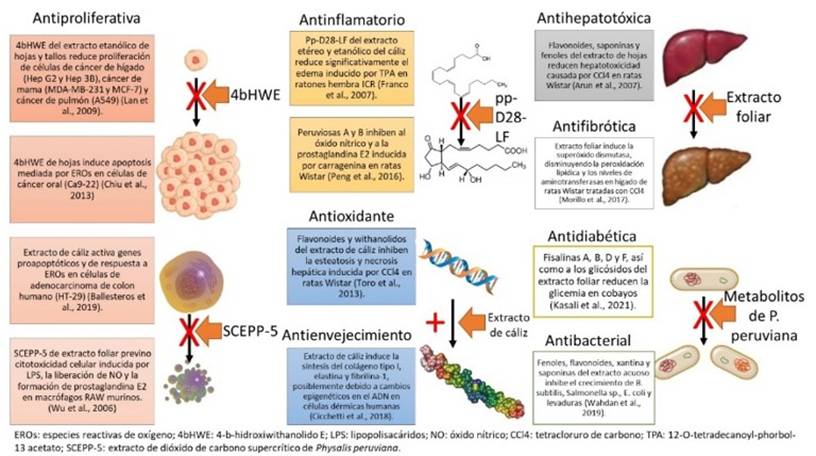
Figure 2
Biological effects of phytochemicals found in Physalis peruviana L.
Biological effects of phytochemicals found in Physalis peruviana L.
P. peruviana leaf extract exhibits antiproliferative, antihepatotoxic, antifibrotic, antidiabetic, and antibacterial properties. Thus, since ancient times, goldenberry leaves have been used in folk medicine for the preparation of infusions and the treatment of jaundice, ulcers, fever, skin conditions, and as an antiseptic in tribal communities in southern India (Sharmila et al., 2014). On the other hand, in another study carried out in the same country, the use of goldenberry leaves in the treatment of vomiting episodes has also been reported (Sathyavathi and Janardhanan, 2014).
-
Sharmila et al., 2014Studies on the folklore medicinal uses of some indigenous the tribes of Thiashola, Manjoor, Nilgiris south division, Western ghatsInternational Journal of Plant, Animal and Environmental Sciences, 2014
-
Sathyavathi and Janardhanan,
2014Wild edible fruits used by Badagas of Nilgiri district, Western Ghats, Tamilnadu, IndiaJournal of Medicinal Plants Research, 2014
In a study using cell lines, Lan et al. (2009) found that 4bHWE from ethanolic extract of leaves and stems reduces proliferation of cells of liver cancer (Hep G2 and Hep 3B), breast cancer (MDA-MB-231 and MCF-7), and lung cancer (A549). In the same vein, Ballesteros et al. (2019) demonstrated that calyx extract activates pro-apoptotic and ROS-response genes in human colon adenocarcinoma cells (HT-29). The response to ROS had previously been demonstrated by Chiu et al. (2013), who observed that leaf 4bHWE induces ROS-mediated apoptosis in oral cancer cells (Ca9-22).
-
Lan et
al. (2009New cytotoxic whitanolides from Physalis peruvianaFood Chemistry, 2009
-
Ballesteros et al.
(2019)A multi-analytical platform based on pressurized-liquid extraction, in vitro assays and liquid chromatography/gas chromatography coupled to high resolution mass spectrometry for food by-products valorisation. Part 1: whitanolides-rich fractions from goldenberry (Physalis peruviana L.) calyces obtained after extraction optimization as case studyJournal of Chromatography A., 2019
-
Chiu
et al. (2013Golden berry-derived 4⊎-hydroxy whitanolide E for selectively killing oral cancer cells by generating ROS, DNA damage, and apoptotic pathwaysPLoS One, 2013
The anti-inflammatory action of these compounds has been demonstrated through different studies. For example, Wu et al. (2006) found that SCEPP-5 from leaf extract prevented LPS-induced cellular cytotoxicity, NO release, and prostaglandin E2 formation in murine RAW macrophages. In addition, Franco et al. (2007) found that Pp-D28-LF from the ethereal and ethanolic extract of the calyx significantly reduces TPA-induced edema in female ICR mice. Later, Peng et al. (2016) observed that peruvioses A and B inhibit nitric oxide and carrageenan-induced prostaglandin E2 in Wistar rats, exerting a potent anti-inflammatory effect.
-
Wu et
al. (2006Supercritical carbon dioxide extract exhibits enhanced antioxidant and anti-inflammatory activities of Physalis peruvianaJournal of Ethnopharmacology, 2006
-
Franco et al. (2007Actividad antinflamatoria de extractos y fracciones obtenidas de cálices de Physalis peruviana L.Biomedica, 2007
-
Peng et al. (2016The roles of 4β-Hydroxywithanolide E from Physalis peruviana on the Nrf2-antioxidant system and the cell cycle in breast cancer cellsThe American journal of Chinese medicine, 2016
At the liver level, Toro et al. (2013) used flavonoids and withanolides from calyx extract, inhibiting CCl4-induced steatosis and hepatic necrosis in Wistar rats. In a similar study, Arun et al. (2007) had succeeded in reducing the hepatotoxicity caused by CCl4 in Wistar rats by applying the flavonoid, saponin, and phenol fraction of the leaf extract. The explanation for these effects could lie in enzymatic activation, as demonstrated by Morillo et al. (2017) by using the leaf extract of this species to induce the enzyme superoxide dismutase, decreasing lipid peroxidation and aminotransferase levels in the liver of Wistar rats treated with CCl4. Varied effects of phytochemicals present in P. peruviana have also been demonstrated.
-
Toro et al.
(2013Hepatoprotective effect of calyces extract of Physalis peruviana on hepatotoxicity induced by CCl4 in wistar ratsVitae, 2013
-
Arun et al.
(2007Preliminary studies on antihepatotoxic effect of Physalis peruviana Linn. (Solanaceae) against carbon tetrachloride induced acute liver injury in ratsJ. Ethnopharmacol., 2007
-
Morillo et al.
(2017Estudio de la composición química del aceite esencial de hojas y tallos de Physalis peruviana L.Revista Academia, 2017
For example, as an antioxidant, Wahdan et al. (2019) used phenols, flavonoids, xanthine, and saponins from the aqueous extract, which inhibits the growth of B. subtilis, Salmonella sp., E. coli, and yeasts. The effect on chromatin has also been evaluated in the study by Cicchetti et al. (2018), who found that calyx extract induces the synthesis of type I collagen, elastin and fibrillin 1, possibly due to epigenetic changes in DNA in human dermal cells. Finally, there is the hypoglycemic effect induced by physalins A, B, D and F, as well as glycosides of the leaf extract, observed in guinea pigs by Kasali et al. (2021).
-
Wahdan et
al. (2019Phytochemical analysis, antibacterial and anticancer activities of the Physalis peruviana calyces growing in EgyptFood and Nutrition Journal, 2019
-
Cicchetti et al.
(2018Upregulation of skinaging biomarkers in aged NHDF cells by a sucrose ester extract from the agroindustrial waste of Physalis peruviana calycesJournal of Natural Products, 2018
-
Kasali et al.
(2021Ethnotherapeutic uses and phytochemical composition of Physalis peruviana L.: an overviewThe Scientific World Journal, 2021
Conclusions
Exhaustive research on Physalis peruviana goldenberry has allowed us to have a complete profile of the phytochemicals present in different organs of this plant, which include vitamins, minerals, essential fatty acids, and antioxidants, as well as secondary metabolites, such as withanolides, flavonoids, phenols, saponins and peruvioses, distributed at the level of different organs of the plant.
The phytochemicals present in Physalis peruviana provide exceptional nutritional value with antiproliferative, antihepatotoxic, antifibrotic, antidiabetic and antibacterial properties, which positions this plant and its derivatives as a valuable component in healthy eating with applications in the phytomedicine as an adjuvant for the treatment of diseases, such as cancer, hypertension, diabetes, oxidative stress and metabolic syndrome.
Bibliografía
- Arun, M. and Asha, V. V. 2007. Preliminary studies on antihepatotoxic effect of Physalis peruviana Linn. (Solanaceae) against carbon tetrachloride induced acute liver injury in rats. J. Ethnopharmacol. 111(1):110-114. Doi:10.1016/j.jep.2006.10.038. Links
- Asilbekova, D. T.; Ul’chenko, N. T. and Glushenkova, A. I. 2016. Lipids from Physalis alkekengi. Chemistry of Natural Compounds. 52(1):96-97. Doi:10.1007/s10600-016-1556-0. Links
- Ballesteros-Vivas, D.; Alvarez-Rivera, A.; Sánchez, C. A.; Ibañez, E.; Parada-Alfonso, F. and Cifuentes, A. 2019. A multi-analytical platform based on pressurized-liquid extraction, in vitro assays and liquid chromatography/gas chromatography coupled to high resolution mass spectrometry for food by-products valorisation. Part 1: whitanolides-rich fractions from goldenberry (Physalis peruviana L.) calyces obtained after extraction optimization as case study. Journal of Chromatography A. 1584(1):155-164. Doi:10.1016/j.chroma.2018.11.055. Links
- Bazalar, M. S.; Nazareno, M. A. and Viturro, C. I. 2019. Nutritional and antioxidant properties of Physalis peruviana l. fruits from the Argentinean northern Andean region. Plant Foods for Human Nutrition. 74(1):68-75. Doi:10.1007/s11130-018-0702-1. Links
- Carazo, A.; Macáková, K.; Matoušová, K.; Krčmová, L. K.; Protti, M. and Mladěnka, P. 2021. Vitamin A update: forms, sources, kinetics, detection, function, deficiency, therapeutic use and toxicity. Nutrients. 13(5):1703-1739. Doi: 10.3390/nu13051703. Links
- Chasquibol, N. A. and Yácono, J. C. 2015. Composición fitoquímica del aceite de las semillas del fruto del ‘aguaymanto’, Physalis peruviana L. Revista de la Sociedad Química del Perú. 81(1):311-318. http://www.scielo.org.pe/pdf/rsqp/v81n4/a03v81n4.pdf. Links
- Chiu, C. C.; Haung, J. W.; Chang, F. R.; Huang, K. J. and Huang, H. M. 2013. Golden berry-derived 4⊎-hydroxy whitanolide E for selectively killing oral cancer cells by generating ROS, DNA damage, and apoptotic pathways. PLoS One. 8(5):e64729. Doi:10.1371/journal.pone.0064739. Links
- Cicchetti, E.; Duroure, L.; Borgne, E. and Laville, R. 2018. Upregulation of skinaging biomarkers in aged NHDF cells by a sucrose ester extract from the agroindustrial waste of Physalis peruviana calyces. Journal of Natural Products. 81(1):1946-1955. Doi:10.1021/acs.jnatprod.7b01069. Links
- Cortés-Díaz, G.; Prieto, G. A. and Rozo, W. E. 2015. Bromatological and physicochemical characterization of Physalis peruviana L., and its potential as a nutraceutic food. Ciencia en Desarrollo. 20(1):87-97. Doi:10.19053/01217488.3653. Links
- Eken, A.; Ünlü-Endirlik, B.; Baldemir, A.; İlgün, S.; Soykut, B. and Erdem, O. 2016. Antioxidant capacity and metal content of Physalis peruviana L. fruit sold in markets. Journal of Clinical and Analytical Medicine. 7(3):291-294. Doi:10.4328/jcam.2709. Links
- Fan, H.; Huang, W.; Guo, Y.; Ma, X. and Yang, J. 2022. α-Linolenic acid suppresses proliferation and invasion in osteosarcoma cells via inhibiting fatty acid synthase. Molecules. 27(9):2741-2754. Doi:10.3390/molecules27092741. Links
- Franco, L. A.; Matiz, G. E.; Calle, J.; Pinzón, R. and Ospina, L. F. 2007. Actividad antinflamatoria de extractos y fracciones obtenidas de cálices de Physalis peruviana L. Biomedica. 27(1):110-115. Doi: https://doi.org/10.7705/biomedica.v27i1.237. Links
- Huang, M.; He, J. X.; Hu, H. X.; Zhang, K.; Wang, X. N.; Zhao, B. B. and Shen, T. 2020. Whitanolides from the genus Physalis: a review on their phytochemical and pharmacological aspects. The Journal of Pharmacy and Pharmacology. 72(5):649-669. Doi: https://doi.org/10.1111/jphp.13209. Links
- Kasali, F. M.; Tusiimire, J.; Kadima, J. N.; Tolo, C. U.; Weisheit, A. and Agaba, A. G. 2021. Ethnotherapeutic uses and phytochemical composition of Physalis peruviana L.: an overview. The Scientific World Journal. 1:1-22. Doi:10.1155/2021/5212348. Links
- Lan, Y. H.; Chang, F. R.; Pan, M. J.; Wu, C. C. Wu, S. J. and Chen, S. L. 2009. New cytotoxic whitanolides from Physalis peruviana. Food Chemistry. 116(1):462-469. 10.1016/j.foodchem.2009.02.061. Links
- Lee, Y. J.; Lee, M.; Wi, Y. M.; Cho, S. and Kim, S. R. 2020. Potassium intake, skeletal muscle mass, and effect modification by sex: data from the 2008-2011 knhanes. Nutrition Journal. 19(1):93-102. Doi:10.1186/s12937-020-00614-z. Links
- Llano, S. M.; Muñoz-Jiménez, A. M.; Jiménez-Cartagena, C.; Londoño-Londoño, J. and Medina, S. 2018. Untargeted metabolomics reveals specific whitanolides and fatty acyl glycoside as tentative metabolites to differentiate organic and conventional Physalis peruviana fruits. Food Chemistry. 244(1):120-127. Doi:10.1016/j.foodchem.2017.10.026. Links
- Majcher, M. A.; Scheibe, M. and Jelen, H. H. 2020. Identification of active odor compounds in Physalis peruviana L. Molecules. 25(2):245-254. Doi: 10.3390/molecules25020245. Links
- Medina, S.; Collado-González, J. and Ferreres, F. 2019. Potential of Physalis peruviana calyces as a low-cost valuable resource of phytoprostanes and phenolic compounds. Journal of the Science of Food and Agriculture. 99(5):2194-2204. Doi: 10.1002/jsfa.9413. Links
- Morillo, M.; Marquina, V.; Rojas-Fermín, L.; Aparicio, R.; Carmona, J. and Usubillaga, A. 2017. Estudio de la composición química del aceite esencial de hojas y tallos de Physalis peruviana L. Revista Academia. 16(1):85-93. http://erevistas.saber.ula.ve/index.php/academia/article/view/10717. Links
- Muñoz, P.; Parra, F.; Simirgiotis, M.; Sepúlveda, G. and Parra, C. 2021. Chemical characterization, nutritional and bioactive properties of Physalis peruviana fruit from high areas of the Atacama Desert. Foods. 10(11):2699-2712. Doi: https://doi.org/10.3390/foods10112699. Links
- Peng, C. Y.; You, B. J.; Lee, C. L.; Wu, Y. C.; Lin, W. H. Lu, T. L. and Lee, H. Z. 2016. The roles of 4β-Hydroxywithanolide E from Physalis peruviana on the Nrf2-antioxidant system and the cell cycle in breast cancer cells. The American journal of Chinese medicine. 44(1):617-636. Doi: 10.1142/S0192415X16500348. Links
- Ramos, O. C. C.; Hidalgo, R. J. E. M.; Lezama, A. P. B. and Chaman, M. E. 2022. Efecto de diferentes dosis de N, P y K sobre el contenido de proteínas solubles totales en hojas de ‘aguaymanto’ Physalis peruviana L. (Solanaceae). Arnaldoa. 29(3):415-426. Doi: http://dx.doi.org/10.22497/arnaldoa.293.29303. Links
- Rustan, A. C. and Drevon, C. A. 2005. Fatty Acids: structures and properties. Encyclopedia of Life Sciences. 1(1):1-7. Doi:10.1038/npg.els.0003894. Links
- Sathyavathi, R. and Janardhanan, R. 2014. Wild edible fruits used by Badagas of Nilgiri district, Western Ghats, Tamilnadu, India. Journal of Medicinal Plants Research. 8(1):128-132. Doi: 10.5897/jmpr11.445. Links
- Sharmila, S.; Kalaichelvi, K.; Rajeswari, M. and Anjanadevi, N. 2014. Studies on the folklore medicinal uses of some indigenous the tribes of Thiashola, Manjoor, Nilgiris south division, Western ghats. International Journal of Plant, Animal and Environmental Sciences. 4(1):14-22. https://www.rroij.com/open-access/studies-on-the-folklore-medicinal-uses-of-some-indigenous-plantsamongthetribesofthiashola-manjoor-nilgiris-south-division-wes-.php?aid=39672. Links
- Shlisky, J.; Mandlik, R.; Askari, S.; Abrams, S.; Belizan, J. M.; Bourassa, M. W.; Cormick, G.; Driller-Colangelo, A.; Gomes, F.; Khadilkar, A.; Owino, V. Pettifor, J. M. Rana, Z. H. Roth, D. E. and Weaver, C. 2022. Calcium deficiency worldwide: prevalence of inadequate intakes and associated health outcomes. Annals of the New York Academy of Sciences. 1512(1):10-28. Doi:10.1111/nyas.14758. Links
- Singh, N.; Singh, S.; Maurya, P.; Arya, M.; Khan, F.; Dwivedi, D.H. and Saraf, S. A. 2019. An updated review on Physalis peruviana fruit: cultivational, nutraceutical and pharmaceutical aspects. NIScPR Online Periodicals Repository. 10(2):97-110. https://core.ac.uk/download/pdf/276541668.pdf. Links
- Toro, R. M.; Aragón, D. M. and Ospina, L. F. 2013. Hepatoprotective effect of calyces extract of Physalis peruviana on hepatotoxicity induced by CCl4 in wistar rats. Vitae. 20(1):125-132. https://www.redalyc.org/pdf/1698/169829161006.pdf. Links
- Vega-Gálvez, A.; Díaz, R.; López, J.; Galotto, M. J.; Reyes, J. E.; Perez-Won, M. and Di Scala, K. 2016. Assessment of quality parameters and microbial characteristics of Cape gooseberry pulp (Physalis peruviana L.) subjected to high hydrostatic pressure treatment. Food and Bioproducts Processing. 97(1):30-40. Doi: https://doi.org/10.1016/j.fbp.2015.09.008. Links
- Wahdan, O. A.; Aly, S. E. S. and Abdelfattah, M. S. 2019. Phytochemical analysis, antibacterial and anticancer activities of the Physalis peruviana calyces growing in Egypt. Food and Nutrition Journal. 4(1):1-6. Doi:https://doi.org/10.1155/2021/6675436. Links
- Wu, S. J.; Tsai, J. Y.; Chang, P. P.; Lin, D. L.; Wang, S. S. and Huang, S. N. 2006. Supercritical carbon dioxide extract exhibits enhanced antioxidant and anti-inflammatory activities of Physalis peruviana. Journal of Ethnopharmacology. 108(1):407-413. Doi: 10.1016/j.jep.2006.05.027. Links
- Xiong, Z.; Liu, L.; Jian, Z.; Ma, Y.; Li, H.; Jin, X.; Liao, B. and Wang, K. 2023. Vitamin E and multiple health outcomes: an umbrella review of meta-analyses. Nutrients. 15(15):3301-3318. Doi:10.3390/nu15153301. Links
- Yıldız, G.; İzli, N.; Ünal, H. and Uylaşer, V. 2015. Physical and chemical characteristics of goldenberry fruit (Physalis peruviana L.). Journal of Food Science and Technology. 52(4):2320-2327. Doi: 10.1007/s13197-014-1280-3. Links
- Yu, Y.; Chen, X. and Zheng, Q. 2019. Metabolomic profiling of carotenoid constituents in Physalis peruviana during different growth stages by LC-MS/MS Technology. Journal of Food Science. 84(12):3608-3613. Doi:10.1111/1750-3841.14916. Links
- Zhang, Q. and Cui, H. 2005. Simultaneous determination of quercetin, kaempferol, and isorhamnetin in phytopharmaceuticals of Hippophae rhamnoides L. by high-performance liquid chromatography with chemiluminescence detection. Journal of Separation Science. 28(11):1171-1178. Doi:10.1002/jssc.200500055. Links