<?xml version="1.0" encoding="ISO-8859-1"?><article xmlns:mml="http://www.w3.org/1998/Math/MathML" xmlns:xlink="http://www.w3.org/1999/xlink" xmlns:xsi="http://www.w3.org/2001/XMLSchema-instance">
<front>
<journal-meta>
<journal-id>1870-3453</journal-id>
<journal-title><![CDATA[Revista mexicana de biodiversidad]]></journal-title>
<abbrev-journal-title><![CDATA[Rev. Mex. Biodiv.]]></abbrev-journal-title>
<issn>1870-3453</issn>
<publisher>
<publisher-name><![CDATA[Instituto de Biología]]></publisher-name>
</publisher>
</journal-meta>
<article-meta>
<article-id>S1870-34532010000100009</article-id>
<title-group>
<article-title xml:lang="en"><![CDATA[Parasitism of Cuterebra sp. (Diptera: Oestridae s.l.) on rodents of Central Panama]]></article-title>
<article-title xml:lang="es"><![CDATA[Parasitismo de Cuterebra sp. (Diptera: Oestridae s.l.) en roedores de Panamá Central]]></article-title>
</title-group>
<contrib-group>
<contrib contrib-type="author">
<name>
<surname><![CDATA[Bermúdez C.]]></surname>
<given-names><![CDATA[Sergio E.]]></given-names>
</name>
<xref ref-type="aff" rid="A01"/>
</contrib>
<contrib contrib-type="author">
<name>
<surname><![CDATA[González]]></surname>
<given-names><![CDATA[Publio]]></given-names>
</name>
<xref ref-type="aff" rid="A02"/>
</contrib>
<contrib contrib-type="author">
<name>
<surname><![CDATA[Ávila]]></surname>
<given-names><![CDATA[Mario]]></given-names>
</name>
<xref ref-type="aff" rid="A03"/>
</contrib>
<contrib contrib-type="author">
<name>
<surname><![CDATA[Miranda]]></surname>
<given-names><![CDATA[Roberto]]></given-names>
</name>
<xref ref-type="aff" rid="A01"/>
</contrib>
<contrib contrib-type="author">
<name>
<surname><![CDATA[Armién]]></surname>
<given-names><![CDATA[Aníbal]]></given-names>
</name>
<xref ref-type="aff" rid="A04"/>
</contrib>
<contrib contrib-type="author">
<name>
<surname><![CDATA[Armién]]></surname>
<given-names><![CDATA[Blas]]></given-names>
</name>
<xref ref-type="aff" rid="A05"/>
</contrib>
</contrib-group>
<aff id="A01">
<institution><![CDATA[,Instituto Conmemorativo Gorgas de Estudios de la Salud Entomología Médica ]]></institution>
<addr-line><![CDATA[Panamá ]]></addr-line>
<country>Panamá</country>
</aff>
<aff id="A02">
<institution><![CDATA[,Instituto Conmemorativo Gorgas de Estudios de la Salud Proyecto Hantavirus ]]></institution>
<addr-line><![CDATA[Panamá ]]></addr-line>
<country>Panamá</country>
</aff>
<aff id="A03">
<institution><![CDATA[,Ministerio de Salud Departamento de Control de Vectores ]]></institution>
<addr-line><![CDATA[ ]]></addr-line>
</aff>
<aff id="A04">
<institution><![CDATA[,University of Minnesota Department of Veterinary Medicine ]]></institution>
<addr-line><![CDATA[St. Paul ]]></addr-line>
<country>USA</country>
</aff>
<aff id="A05">
<institution><![CDATA[,Instituto Conmemorativo Gorgas de Estudios de la Salud Genómica y Proteómica ]]></institution>
<addr-line><![CDATA[ ]]></addr-line>
</aff>
<pub-date pub-type="pub">
<day>00</day>
<month>04</month>
<year>2010</year>
</pub-date>
<pub-date pub-type="epub">
<day>00</day>
<month>04</month>
<year>2010</year>
</pub-date>
<volume>81</volume>
<numero>1</numero>
<fpage>57</fpage>
<lpage>60</lpage>
<copyright-statement/>
<copyright-year/>
<self-uri xlink:href="http://www.scielo.org.mx/scielo.php?script=sci_arttext&amp;pid=S1870-34532010000100009&amp;lng=en&amp;nrm=iso"></self-uri><self-uri xlink:href="http://www.scielo.org.mx/scielo.php?script=sci_abstract&amp;pid=S1870-34532010000100009&amp;lng=en&amp;nrm=iso"></self-uri><self-uri xlink:href="http://www.scielo.org.mx/scielo.php?script=sci_pdf&amp;pid=S1870-34532010000100009&amp;lng=en&amp;nrm=iso"></self-uri><abstract abstract-type="short" xml:lang="en"><p><![CDATA[In this study, which we carried out between January 2007 and July 2008 on populations of 3 species of wild mammals in Tonosí, Los Santos province, Panama, we report the presence of larvae of Cuterebra sp. parasitizing Zygodontomys brevicauda, Liomys adspersus, and Oligoryzomys fulvescens; the prevalence values recorded in these rodent species were 1.77, 2.15, and 1.17, respectively. This is the first record of Cuterebra sp. as parasite of rodents in Panama, and L. adspersus represents a new host record.]]></p></abstract>
<abstract abstract-type="short" xml:lang="es"><p><![CDATA[Entre enero 2007 y julio 2008 se desarrolló una investigación en las poblaciones de roedores silvestres de la localidad de Tonosí (Los Santos, Panamá central), encontrándose larvas de Cuterebra spp. parasitando a los roedores Zygodontomys brevicauda, Liomys adspersus y Oligoryzomys fulvescens, con una prevalencia de 1.77%, 2.15% y 1.71%, respectivamente. Este es el primer reporte de Cuterebra sp., parasitando roedores en Panamá, y el primero en presentar a L. adspersus como hospedero.]]></p></abstract>
<kwd-group>
<kwd lng="en"><![CDATA[myiasis]]></kwd>
<kwd lng="en"><![CDATA[Cuterebra]]></kwd>
<kwd lng="en"><![CDATA[rodents]]></kwd>
<kwd lng="en"><![CDATA[Panama]]></kwd>
<kwd lng="es"><![CDATA[miasis]]></kwd>
<kwd lng="es"><![CDATA[Cuterebra]]></kwd>
<kwd lng="es"><![CDATA[roedores]]></kwd>
<kwd lng="es"><![CDATA[Panamá]]></kwd>
</kwd-group>
</article-meta>
</front><body><![CDATA[  				    <p align="justify"><font face="verdana" size="4">Taxonom&iacute;a y sistem&aacute;tica</font></p> 				    <p align="center"><font face="verdana" size="2">&nbsp;</font></p> 				    <p align="center"><font face="verdana" size="4"><b>Parasitism of <i>Cuterebra</i> sp. (Diptera: Oestridae s.l.) on rodents of Central Panama</b></font></p> 				    <p align="center"><font face="verdana" size="2">&nbsp;</font></p> 				    <p align="center"><font face="verdana" size="3"><b>Parasitismo de <i>Cuterebra</i> sp. (Diptera: Oestridae s.l.) en roedores de Panam&aacute; Central</b></font></p> 				    <p align="center"><font face="verdana" size="2">&nbsp;</font></p> 				    <p align="center"><font face="verdana" size="2"><b>Sergio E. Berm&uacute;dez C.<sup>1 *</sup>, Publio Gonz&aacute;lez<sup>2</sup>, Mario &Aacute;vila<sup>2, 3</sup>, Roberto Miranda<sup>1</sup>, An&iacute;bal Armi&eacute;n<sup>4</sup> and Blas Armi&eacute;n<sup>2, 5</sup></b></font></p> 				    <p align="justify"><font face="verdana" size="2">&nbsp;</font></p> 				    <p align="justify"><font face="verdana" size="2"><i><sup>1</sup> Entomolog&iacute;a M&eacute;dica, Instituto Conmemorativo Gorgas de Estudios de la Salud, Apartado postal 0816&#150;02593, Panam&aacute;, Panam&aacute;.</i></font></p> 				    ]]></body>
<body><![CDATA[<p align="justify"><font face="verdana" size="2"><i><sup>2 </sup>Proyecto Hantavirus, Instituto Conmemorativo Gorgas de Estudios de la Salud, Apartado postal 0816&#150;02593, Panam&aacute;, Panam&aacute;.</i></font></p> 				    <p align="justify"><font face="verdana" size="2"><i><sup>3 </sup>Departamento de Control de Vectores, Ministerio de Salud.</i></font></p> 				    <p align="justify"><font face="verdana" size="2"><i><sup>4</sup> Department of Veterinary Medicine, Gortner Ave., St. Paul, University of Minnesota. 55108 USA.</i></font></p> 				    <p align="justify"><font face="verdana" size="2"><i><sup>5 </sup>Gen&oacute;mica y Prote&oacute;mica, Instituto Conmemorativo Gorgas de Estudios de la Salud, Apartado postal 0816&#150;02593, Panam&aacute;, Panam&aacute;.</i></font></p> 				    <p align="justify"><font face="verdana" size="2">&nbsp;</font></p> 				    <p align="justify"><font face="verdana" size="2"><b><sup>*</sup>Correspondent:</b>    <br> 		        <a href="mailto:bermudezsec@gmail.com">bermudezsec@gmail.com</a>; <a href="mailto:sbermudez@gorgas.gob.pa">sbermudez@gorgas.gob.pa</a></font></p> 				    <p align="justify"><font face="verdana" size="2">&nbsp;</font></p> 				    <p align="justify"><font face="verdana" size="2">Recibido: 06 febrero 2009    <br> 				  Aceptado: 07 agosto 2009 			    </font></p> 				    ]]></body>
<body><![CDATA[<p align="justify"><font face="verdana" size="2">&nbsp;</font></p> 				    <p align="justify"><font face="verdana" size="2"><b>Abstract</b></font></p> 				    <p align="justify"><font face="verdana" size="2">In this study, which we carried out between January 2007 and July 2008 on populations of 3 species of wild mammals in Tonos&iacute;, Los Santos province, Panama, we report the presence of larvae of <i>Cuterebra</i> sp. parasitizing <i>Zygodontomys brevicauda, Liomys adspersus</i>, and <i>Oligoryzomys fulvescens</i>; the prevalence values recorded in these rodent species were 1.77, 2.15, and 1.17, respectively. This is the first record of <i>Cuterebra</i> sp. as parasite of rodents in Panama, and <i>L. adspersus</i> represents a new host record.</font></p> 				    <p align="justify"><font face="verdana" size="2"><b>Key words:</b> myiasis, <i>Cuterebra</i>, rodents, Panama.</font></p> 				    <p align="justify"><font face="verdana" size="2">&nbsp;</font></p> 				    <p align="justify"><font face="verdana" size="2"><b>Resumen</b></font></p> 				    <p align="justify"><font face="verdana" size="2">Entre enero 2007 y julio 2008 se desarroll&oacute; una investigaci&oacute;n en las poblaciones de roedores silvestres de la localidad de Tonos&iacute; (Los Santos, Panam&aacute; central), encontr&aacute;ndose larvas de <i>Cuterebra</i> spp. parasitando a los roedores <i>Zygodontomys brevicauda, Liomys adspersus y Oligoryzomys fulvescens</i>, con una prevalencia de 1.77%, 2.15% y 1.71%, respectivamente. Este es el primer reporte de <i>Cuterebra</i> sp., parasitando roedores en Panam&aacute;, y el primero en presentar a <i>L. adspersus</i> como hospedero.</font></p> 				    <p align="justify"><font face="verdana" size="2"><b>Palabras clave:</b> miasis, <i>Cuterebra</i>, roedores, Panam&aacute;.</font></p> 				    <p align="justify"><font face="verdana" size="2">&nbsp;</font></p> 				    <p align="justify"><font face="verdana" size="2"><b>Introduction</b></font></p> 				    ]]></body>
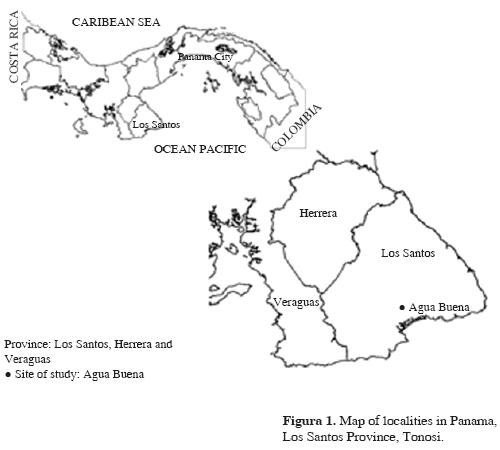
<body><![CDATA[<p align="justify"><font face="verdana" size="2">The genus <i>Cuterebra</i> s.s. includes obligate dermal parasites of New World mammals, especially lagomorphs and rodents (Wood, 1987; Pape 2001), as well as raccoons (Slansky and Huckabee, 2006), cats (Slansky, 2007), and humans (Cornet et al. 2003; Plotinsky, et al. 2007). According to Catts (1982) and Wood (1987), this genus comprises 60 species, which mainly have been studied in the Nearctic.</font></p> 				    <p align="justify"><font face="verdana" size="2">As in other species of Oestridae, myiasis is very complicated; females do not directly oviposit eggs onto the hosts. Instead, the females place the eggs on grass, shrubs, stones or soil near rodent burrows. These eggs then become attached to the rodents when they walk over the sites (Catts, 1982; Baird, 1997). Hatching is stimulated by body heat and enter the host through openings (mouth, nose, eyes or anus) (Hunter and Webster, 1973; Gringrich, 1981; Catts, 1982; Slansky, 2006). When the maggots complete their development in the host, the larvae exit through the skin and continue the pupal stage in the soil (Catts, 1982; Wood, 1987). </font></p> 				    <p align="justify"><font face="verdana" size="2">In the Neotropics, there is little known about <i>Cuterebra</i> species, specifically about their principal host or their impact on rodent population dynamics. The aim of this work is to provide more information on the behavior and host for this genus in Panama.</font></p> 				    <p align="justify"><font face="verdana" size="2">&nbsp;</font></p> 				    <p align="justify"><font face="verdana" size="2"><b>Materials and methods</b></font></p> 				    <p align="justify"><font face="verdana" size="2">This study was carried out in January 2007 and July 2008, as part of field activities of a project dealing with hantavirus in several sites in Central Panama. We selected 6 sample sites in Tonos&iacute; County (Los Santos Province, Panama) (<a href="#f1">Fig. 1</a>). These sites contained various seasonal crops (rice, corn, Cucurbitaceae), as well as secondary forest, pastures, stubble fields, and nearby towns. Samples were taken monthly in 4 day periods, using 600 Sherman traps and bait of corn, rice, sorghum, honey and peanut butter. Traps were placed in lines of 10, each one separated by 10 meters; collecting sites included towns, fields and forest.</font></p> 				    <p align="center"><font face="verdana" size="2"><a name="f1"></a></font></p> 				    <p align="center"><font face="verdana" size="2"><img src="/img/revistas/rmbiodiv/v81n1/a9f1.jpg"></font></p> 				    <p align="justify"><font face="verdana" size="2">Traps were placed between 15:00 hrs. to 07:00 hrs. Identification of captured rodents followed Reid (1997), and reproductive age was determined. Larvae were extracted and placed in containers of 75% alcohol. In addition, 3 bots from <i>Z. brevicauda</i> were bred in the laboratory. These bots were placed in a terrarium (15 cm wide &times; 22 cm large and 18 cm high) with soil. The warble and the fly were identified with the key of Wood (1987).</font></p> 				    <p align="justify"><font face="verdana" size="2">&nbsp;</font></p> 				    ]]></body>
<body><![CDATA[<p align="justify"><font face="verdana" size="2"><b>Results</b></font></p> 				    <p align="justify"><font face="verdana" size="2">A total of 2 699 rodents were caught, representing 5 species and 2 families (Muridae and Heteromyidae). <i>Zygodontomys brevicauda</i> was the most abundant species with 2 084 individuals (77.2% of total). We recovered 48 bots that infested 43 rodents. Only 3 species of rodents were infested by <i>Cuterebra</i> sp: <i>Z. brevicauda, Oligoryzomys fulvescens</i> and <i>Liomys aspersus</i>, with a prevalence of 1.77%, 1.71% and 2.15%, respectively (<a href="#t1">Table 1</a>). In addition, 97% of the infested rodents were parasitized with 1 larva, usually in the neck, scapular area, lower abdomen or hind legs. No warbles were found on Sigmodon hispidus and Oryzomys concolor.</font></p> 				    <p align="center"><font face="verdana" size="2"><a name="t1"></a></font></p> 				    <p align="center"><font face="verdana" size="2"><img src="/img/revistas/rmbiodiv/v81n1/a9t1.jpg"></font></p> 				    <p align="justify"><font face="verdana" size="2">Fifty&#150;eight percent of the parasitized rodents were males. All infested rodents were captured during the rainy season (May&#150;December). One of the 3 bred larvae completed its development after 24 days in the pupal stage.</font></p> 				    <p align="justify"><font face="verdana" size="2">&nbsp;</font></p> 				    <p align="justify"><font face="verdana" size="2"><b>Discussion</b></font></p> 				    <p align="justify"><font face="verdana" size="2">Specimens collected in this study were similar to <i>C. austeni</i>; nevertheless, to the best of our knowledge there are no keys for identifying adults or larvae of Neotropical <i>Cuterebra</i>, and we prefer do not assign it to species.</font></p> 				    <p align="justify"><font face="verdana" size="2">We report infestations of <i>Cuterebra</i> on 3 species of rodents and the first record of <i>L. adspersus</i> as host of a <i>Cuterebra</i> warble. It is possible that <i>L. adspersus</i> also acts as a natural host for botflies. However, there is no evidence of this due to the limited research on rodents in Panama and to the restricted distribution of this rodent (Gonzalez et al., 2004). Other <i>Liomys</i> species (<i>L. irroratus</i>) has been reported as a host of <i>Cuterebra</i> fontinella in United States (Parker and Chaney, 1979). With regard to <i>Z. brevicauda</i>, previous reports implicate <i>Cuterebra</i> apicalis as parasitizing this species in Trinidad (Everad and Aitken, 1972).</font></p> 				    <p align="justify"><font face="verdana" size="2">The low prevalence of parasitism in the rodents studied is consistent with previous studies. In a study conducted in New Mexico, Wilson et al. (1997) found 3.1% <i>C. austeni</i> parasitism on <i>Peromyscus truei</i> and 1% on <i>P. leucopus</i>, while Bowman (2000) determined a 2.3% of infestation on <i>P. maniculatus</i> and 5.4% on <i>Clethirionomys gapperi</i> in Canada.</font></p> 				    ]]></body>
<body><![CDATA[<p align="justify"><font face="verdana" size="2">Although the climate and species of flies and hosts in the Neotropics are very different from those in the Nearctic, levels of parasitism are similar. Low levels have been reported by Disney (1969) in Belize (1.4% of <i>C. chiquibulensis</i> in <i>Ototylomys phyllotis</i> and 2.1% of <i>C. flaviventris</i> in <i>Sigmodon hispidus</i>), by Manrique&#150;Saide et al. (2000) in southern Mexico (13.1% for <i>Cuterebra</i> sp. in <i>O. phyllotis</i>), and recently by Adler et al. (2003) in Panama (4.6% for <i>Cuterebra</i> sp infesting <i>Proechymis semispinosus</i>).</font></p> 				    <p align="justify"><font face="verdana" size="2">In contrast, studies on populations of <i>P. leucopus</i> from Tennessee and Kentucky islands reported high levels of infestations varying from 0&#150;82% (Kollar, 1995). Likewise, in South America, Brigada et al. (1992) reported prevalences of 2.8&#150;25% in <i>Akodon molinae</i> infested by <i>Rogenhofera bonaerensis</i>, while Vieira (1993), determined values of 11% for this fly in <i>Thalpomys cerradensis</i> and <i>Bolomys lastrurus</i>, and 7% in <i>Oryzomys subflavus</i> by <i>Metacuterebra</i> (=<i>Cuterebra</i>) apicalis from Brazil. Mid&#150;level infestation (25.7%) was found in <i>Oryzomys russatus</i> caused by <i>Metacuterebra</i> (=<i>Cuterebra</i>) apicalis from Brazil (Bergallo et al., 2000).</font></p> 				    <p align="justify"><font face="verdana" size="2">Previous records suggest an evolutionary tension between fly population levels and the impact on host populations. The number of parasitized rodents increased relative to the number of captures (and vice versa); this could suggest that the response of flies is density depended on the host population. Nevertheless, more studies are necessary to conclude this point. On the other hand, even though the larvae can kill some rodents, the effect on the population is low because of the low level of prevalence and mortality. This is best understood by considering that the bots need live animals for their development, at least until the end of their third stage (Wood, 1987; Slansky, 2007).</font></p> 				    <p align="justify"><font face="verdana" size="2">Information about the effects of parasites on rodents is scarce; nevertheless, rodent mortality attributed to botflies is not very common (Catts, 1982; Wood, 1987). Death occurs due to tissue and muscle damage, especially in young animals. Botflies can also cause behavioral effects; diminished mobility increases starvation and the ability to obtain food. Smith (1978), who found traces of <i>Cuterebra</i> tissues in owl pellets and fox scats, explained that there are various behavioral implications associated with this phenomenon.</font></p> 				    <p align="justify"><font face="verdana" size="2">The highest number of parasitized rodents captured occurred during the wet season, in contrast to Adler et al. (2003), who captured parasitized rodents throughout the whole year, but with increases during the dry season. Such differences could be attributed to the anthropogenic influences observed in our sampling sites, where agricultural activities associated with rain determine the increase of resources, which promote a rise in the rodent population, and consequently, in the <i>Cuterebra</i> population. However, the lack of information about the duration of each stage, preclude establishing the recruitment period, and we cannot determine if infestation was during the last weeks of the dry season or during the beginning of wet season.</font></p> 				    <p align="justify"><font face="verdana" size="2">&nbsp;</font></p> 				    <p align="justify"><font face="verdana" size="2"><b>Acknowledgments</b></font></p> 				    <p align="justify"><font face="verdana" size="2">We are grateful for the support of the Ministry of Health (MINSA), Gorgas Memorial Institute of Studies for Health and National Environment Authority (ANAM). To the Financial support in the International Centers for Infectious Diseases Research, number U&#150;19&#150;AI 45452. A large number of individuals from the communities and several state organization provided support during fieldwork. We thank the rodent ecology team of MINSA and Hantavirus Project and especially to Sr. Daniel Gonzalez, Ricardo Rodriguez, Miguel Vergara, Santiago Bosch, Carlos Falconett, Augusto Robles, Jos&eacute; Montenegro and Juan Navarro. Additionally, we thanks to Maria Zambrano and R. Philip Scheibel for the corrections in English, and Thomas Pape and Frank Slansky to provide papers.</font></p> 				    <p align="justify"><font face="verdana" size="2">&nbsp;</font></p> 				    <p align="justify"><font face="verdana" size="2"><b>Literature cited</b></font></p> 				    ]]></body>
<body><![CDATA[<!-- ref --><p align="justify"><font face="verdana" size="2">Adler, G., D. Shannon and A. Carvajal. 2003. Bots (Diptera: Oestridae) infesting a Neotropical forest rodents <i>Proechimys semispinosus</i> (Rodentia: Echimyidae) in Panama. Journal of Parasitology 89:693&#150;697.</font>&nbsp;&nbsp;&nbsp;&nbsp;&nbsp;&nbsp;&nbsp;&nbsp;[&#160;<a href="javascript:void(0);" onclick="javascript: window.open('/scielo.php?script=sci_nlinks&ref=7561174&pid=S1870-3453201000010000900001&lng=','','width=640,height=500,resizable=yes,scrollbars=1,menubar=yes,');">Links</a>&#160;]<!-- end-ref --> 				    <!-- ref --><p align="justify"><font face="verdana" size="2">Baird, C. 1997. Bionomics of <i>Cuterebra austeni</i> (Diptera: Cuterebridae) and its association with <i>Neotoma albigula</i> (Rodentia: Cricetidae) in the southwestern United States. Journal of Medical Entomology 34:690&#150;95</font>&nbsp;&nbsp;&nbsp;&nbsp;&nbsp;&nbsp;&nbsp;&nbsp;[&#160;<a href="javascript:void(0);" onclick="javascript: window.open('/scielo.php?script=sci_nlinks&ref=7561176&pid=S1870-3453201000010000900002&lng=','','width=640,height=500,resizable=yes,scrollbars=1,menubar=yes,');">Links</a>&#160;]<!-- end-ref --> 				    <!-- ref --><p align="justify"><font face="verdana" size="2">Bergallo, H., F. Martins&#150;Hatano, J. Juca and D. Gettinger D. 2000. The effect if botfly parasitism of <i>Metacuterebra apicalis</i> (Diptera) on reproduction, survival and general health of <i>Oryzomys russatus</i> (Rodentia) in southeastern Brazil. Mammalia 64:439&#150;446.</font>&nbsp;&nbsp;&nbsp;&nbsp;&nbsp;&nbsp;&nbsp;&nbsp;[&#160;<a href="javascript:void(0);" onclick="javascript: window.open('/scielo.php?script=sci_nlinks&ref=7561178&pid=S1870-3453201000010000900003&lng=','','width=640,height=500,resizable=yes,scrollbars=1,menubar=yes,');">Links</a>&#160;]<!-- end-ref --> 				    <!-- ref --><p align="justify"><font face="verdana" size="2">Brigada, A., E. Tripole and A. Zuleta. 1992. Cuterebrid parasitism (<i>Rogenhofera bonaerensis</i>) on the shrub land mouse (<i>Akodon molinae</i>), in Argentina. Journal of Wildlife Diseases 28:646&#150;650.</font>&nbsp;&nbsp;&nbsp;&nbsp;&nbsp;&nbsp;&nbsp;&nbsp;[&#160;<a href="javascript:void(0);" onclick="javascript: window.open('/scielo.php?script=sci_nlinks&ref=7561180&pid=S1870-3453201000010000900004&lng=','','width=640,height=500,resizable=yes,scrollbars=1,menubar=yes,');">Links</a>&#160;]<!-- end-ref --> 				    <!-- ref --><p align="justify"><font face="verdana" size="2">Bowman, J. 2000. Forest components associated with parasitism of small mammals by botflies (<i>Cuterebra</i>). Mammalia 64:243&#150;247.</font>&nbsp;&nbsp;&nbsp;&nbsp;&nbsp;&nbsp;&nbsp;&nbsp;[&#160;<a href="javascript:void(0);" onclick="javascript: window.open('/scielo.php?script=sci_nlinks&ref=7561182&pid=S1870-3453201000010000900005&lng=','','width=640,height=500,resizable=yes,scrollbars=1,menubar=yes,');">Links</a>&#160;]<!-- end-ref --> 				    ]]></body>
<body><![CDATA[<!-- ref --><p align="justify"><font face="verdana" size="2">Catts, E. 1982. Biology of NewWorld bot flies: Cuterebridae. Annual Review Entomology 27:313&#150;38.</font>&nbsp;&nbsp;&nbsp;&nbsp;&nbsp;&nbsp;&nbsp;&nbsp;[&#160;<a href="javascript:void(0);" onclick="javascript: window.open('/scielo.php?script=sci_nlinks&ref=7561184&pid=S1870-3453201000010000900006&lng=','','width=640,height=500,resizable=yes,scrollbars=1,menubar=yes,');">Links</a>&#160;]<!-- end-ref --> 				    <!-- ref --><p align="justify"><font face="verdana" size="2">Cornet, M; M. Florent, A. Lefebvre, C. Wertheimer, C. Perez&#150;Eid, M. Bangs and A. Bouvet. 2003. Tracheopulmonary myiais caused by mature third&#150;instar <i>Cuterebra</i> larva: case report and review. Journal Clinical of Microbiology 41:5810&#150;5812.</font>&nbsp;&nbsp;&nbsp;&nbsp;&nbsp;&nbsp;&nbsp;&nbsp;[&#160;<a href="javascript:void(0);" onclick="javascript: window.open('/scielo.php?script=sci_nlinks&ref=7561186&pid=S1870-3453201000010000900007&lng=','','width=640,height=500,resizable=yes,scrollbars=1,menubar=yes,');">Links</a>&#160;]<!-- end-ref --> 				    <!-- ref --><p align="justify"><font face="verdana" size="2">Disney, H. 1969. Notes on rodent warble&#150;flies from British Honduras including the description of a new species of <i>Cuterebra</i> Clark (Dipt., Cuterebridae). Entomologist's Monthly Magazine 104:189&#150;197.</font>&nbsp;&nbsp;&nbsp;&nbsp;&nbsp;&nbsp;&nbsp;&nbsp;[&#160;<a href="javascript:void(0);" onclick="javascript: window.open('/scielo.php?script=sci_nlinks&ref=7561188&pid=S1870-3453201000010000900008&lng=','','width=640,height=500,resizable=yes,scrollbars=1,menubar=yes,');">Links</a>&#160;]<!-- end-ref --> 				    <!-- ref --><p align="justify"><font face="verdana" size="2">Everard, C. and T. Aitken. 1972. Cuterebrid flies from small mammals in Trinidad. Journal of Parasitology 58:189&#150;190.</font>&nbsp;&nbsp;&nbsp;&nbsp;&nbsp;&nbsp;&nbsp;&nbsp;[&#160;<a href="javascript:void(0);" onclick="javascript: window.open('/scielo.php?script=sci_nlinks&ref=7561190&pid=S1870-3453201000010000900009&lng=','','width=640,height=500,resizable=yes,scrollbars=1,menubar=yes,');">Links</a>&#160;]<!-- end-ref --> 				    <!-- ref --><p align="justify"><font face="verdana" size="2">Gingrich, R. 1981. Migratory kinetics of <i>Cuterebra fontinella</i> (Diptera: Cuterebridae) in the white&#150;footed mouse, <i>Peromyscus leucopus</i>. Journal of Parasitology 67:398&#150;402.</font>&nbsp;&nbsp;&nbsp;&nbsp;&nbsp;&nbsp;&nbsp;&nbsp;[&#160;<a href="javascript:void(0);" onclick="javascript: window.open('/scielo.php?script=sci_nlinks&ref=7561192&pid=S1870-3453201000010000900010&lng=','','width=640,height=500,resizable=yes,scrollbars=1,menubar=yes,');">Links</a>&#160;]<!-- end-ref --> 				    ]]></body>
<body><![CDATA[<!-- ref --><p align="justify"><font face="verdana" size="2">Gonz&aacute;lez, M, B. Armien, A. Armien and J. Salazar&#150;Bravo. 2004. <i>Liomys adspersus</i>. Mammalian Species 159:1&#150;3.</font>&nbsp;&nbsp;&nbsp;&nbsp;&nbsp;&nbsp;&nbsp;&nbsp;[&#160;<a href="javascript:void(0);" onclick="javascript: window.open('/scielo.php?script=sci_nlinks&ref=7561194&pid=S1870-3453201000010000900011&lng=','','width=640,height=500,resizable=yes,scrollbars=1,menubar=yes,');">Links</a>&#160;]<!-- end-ref --> 				    <!-- ref --><p align="justify"><font face="verdana" size="2">Hunter, D. and J. Webster. 1973. Determination of the migratory route of botfly larvae, <i>Cuterebra grisea</i> (Diptera: Cuterebridae) in deermice. International Journal of Parasitology 3:311&#150;16.</font>&nbsp;&nbsp;&nbsp;&nbsp;&nbsp;&nbsp;&nbsp;&nbsp;[&#160;<a href="javascript:void(0);" onclick="javascript: window.open('/scielo.php?script=sci_nlinks&ref=7561196&pid=S1870-3453201000010000900012&lng=','','width=640,height=500,resizable=yes,scrollbars=1,menubar=yes,');">Links</a>&#160;]<!-- end-ref --> 				    <!-- ref --><p align="justify"><font face="verdana" size="2">Kollar, T. 1995. Factors affecting distribution of Botflies (Diptera: Oestroidea) on islands in Lake Barkley, Kentucky and Tennessee. Journal of Entomology Science 30:513&#150;518.</font>&nbsp;&nbsp;&nbsp;&nbsp;&nbsp;&nbsp;&nbsp;&nbsp;[&#160;<a href="javascript:void(0);" onclick="javascript: window.open('/scielo.php?script=sci_nlinks&ref=7561198&pid=S1870-3453201000010000900013&lng=','','width=640,height=500,resizable=yes,scrollbars=1,menubar=yes,');">Links</a>&#160;]<!-- end-ref --> 				    <!-- ref --><p align="justify"><font face="verdana" size="2">Manrique&#150;Saide, P., S. Hern&aacute;ndez&#150;Bethancourt and M. Quintero. 2000. First record of <i>Cuterebra</i> sp. (Diptera: Cuterebridae) infection in <i>Ototylomys phyllotis</i> (Rodentia: Muridae). Florida Entomology 83:487&#150;488.</font>&nbsp;&nbsp;&nbsp;&nbsp;&nbsp;&nbsp;&nbsp;&nbsp;[&#160;<a href="javascript:void(0);" onclick="javascript: window.open('/scielo.php?script=sci_nlinks&ref=7561200&pid=S1870-3453201000010000900014&lng=','','width=640,height=500,resizable=yes,scrollbars=1,menubar=yes,');">Links</a>&#160;]<!-- end-ref --> 				    <!-- ref --><p align="justify"><font face="verdana" size="2">Pape T. 2001. Phylogeny of Oestridae (Insecta: Diptera). Systematic Entomology 26:133&#150;171.</font>&nbsp;&nbsp;&nbsp;&nbsp;&nbsp;&nbsp;&nbsp;&nbsp;[&#160;<a href="javascript:void(0);" onclick="javascript: window.open('/scielo.php?script=sci_nlinks&ref=7561202&pid=S1870-3453201000010000900015&lng=','','width=640,height=500,resizable=yes,scrollbars=1,menubar=yes,');">Links</a>&#160;]<!-- end-ref --> 				    ]]></body>
<body><![CDATA[<!-- ref --><p align="justify"><font face="verdana" size="2">Parker, O. and A. Chaney. 1979. <i>Liomys irroratus</i> (Rodentia: Heteromyiidae), a new host for <i>Cuterebra fontinella</i> (Diptera: Cuterebridae). Journal of Medical Entomology 15:573.</font>&nbsp;&nbsp;&nbsp;&nbsp;&nbsp;&nbsp;&nbsp;&nbsp;[&#160;<a href="javascript:void(0);" onclick="javascript: window.open('/scielo.php?script=sci_nlinks&ref=7561204&pid=S1870-3453201000010000900016&lng=','','width=640,height=500,resizable=yes,scrollbars=1,menubar=yes,');">Links</a>&#160;]<!-- end-ref --> 				    <!-- ref --><p align="justify"><font face="verdana" size="2">Plotinsky, R., E. Talbot and H. Davis. 2007. <i>Cuterebra</i> cutaneous myiasis, New Hampshire, 2004. American Journal of Tropical Medicine and Hygiene 76:596&#150;597.</font>&nbsp;&nbsp;&nbsp;&nbsp;&nbsp;&nbsp;&nbsp;&nbsp;[&#160;<a href="javascript:void(0);" onclick="javascript: window.open('/scielo.php?script=sci_nlinks&ref=7561206&pid=S1870-3453201000010000900017&lng=','','width=640,height=500,resizable=yes,scrollbars=1,menubar=yes,');">Links</a>&#160;]<!-- end-ref --> 				    <!-- ref --><p align="justify"><font face="verdana" size="2">Reid, F. 1997. A field guide to the Mammals of Central America and Southeast Mexico. Oxford University Press, London. 334 p.</font>&nbsp;&nbsp;&nbsp;&nbsp;&nbsp;&nbsp;&nbsp;&nbsp;[&#160;<a href="javascript:void(0);" onclick="javascript: window.open('/scielo.php?script=sci_nlinks&ref=7561208&pid=S1870-3453201000010000900018&lng=','','width=640,height=500,resizable=yes,scrollbars=1,menubar=yes,');">Links</a>&#160;]<!-- end-ref --> 				    <!-- ref --><p align="justify"><font face="verdana" size="2">Slansky, F. 2006. <i>Cuterebra</i> Bot fly (Diptera: Oestroidea) and their host indigenous host and potential host in Florida. Florida Entomology 89:152&#150;150</font>&nbsp;&nbsp;&nbsp;&nbsp;&nbsp;&nbsp;&nbsp;&nbsp;[&#160;<a href="javascript:void(0);" onclick="javascript: window.open('/scielo.php?script=sci_nlinks&ref=7561210&pid=S1870-3453201000010000900019&lng=','','width=640,height=500,resizable=yes,scrollbars=1,menubar=yes,');">Links</a>&#160;]<!-- end-ref --> 				    <!-- ref --><p align="justify"><font face="verdana" size="2">Slansky, F. 2007. Insect/Mammal associations: effects of Cuterebrid Bot fly parasites on their host. Annual Review Entomology 52:17&#150;36.</font>&nbsp;&nbsp;&nbsp;&nbsp;&nbsp;&nbsp;&nbsp;&nbsp;[&#160;<a href="javascript:void(0);" onclick="javascript: window.open('/scielo.php?script=sci_nlinks&ref=7561212&pid=S1870-3453201000010000900020&lng=','','width=640,height=500,resizable=yes,scrollbars=1,menubar=yes,');">Links</a>&#160;]<!-- end-ref --> 				    ]]></body>
<body><![CDATA[<!-- ref --><p align="justify"><font face="verdana" size="2">Slansky, F. and J. Huckabee. 2006. First records of rodents&#150;infesting <i>Cuterebra</i> bot flies parasitizing raccoons (<i>Procyon lotor</i>) in North America. Journal of Parasitology 92:1364&#150;1373.</font>&nbsp;&nbsp;&nbsp;&nbsp;&nbsp;&nbsp;&nbsp;&nbsp;[&#160;<a href="javascript:void(0);" onclick="javascript: window.open('/scielo.php?script=sci_nlinks&ref=7561214&pid=S1870-3453201000010000900021&lng=','','width=640,height=500,resizable=yes,scrollbars=1,menubar=yes,');">Links</a>&#160;]<!-- end-ref --> 				    <!-- ref --><p align="justify"><font face="verdana" size="2">Smith, D. 1978. Vulnerability of bot fly (<i>Cuterebra</i>) infected <i>Peromyscus maniculatus</i> to shorttail weasel predation in the laboratory. Journal of Wildlife Diseases 14:40&#150;51</font>&nbsp;&nbsp;&nbsp;&nbsp;&nbsp;&nbsp;&nbsp;&nbsp;[&#160;<a href="javascript:void(0);" onclick="javascript: window.open('/scielo.php?script=sci_nlinks&ref=7561216&pid=S1870-3453201000010000900022&lng=','','width=640,height=500,resizable=yes,scrollbars=1,menubar=yes,');">Links</a>&#160;]<!-- end-ref --> 				    <!-- ref --><p align="justify"><font face="verdana" size="2">Vieira, E. 1993. Occurrence and prevalence of Botflies, <i>Metacuterebra apicalis</i> (Diptera: Cuterebridae) in Rodents of Cerrado from Central Brazil. Journal of Parasitology 79:792&#150;795.</font>&nbsp;&nbsp;&nbsp;&nbsp;&nbsp;&nbsp;&nbsp;&nbsp;[&#160;<a href="javascript:void(0);" onclick="javascript: window.open('/scielo.php?script=sci_nlinks&ref=7561218&pid=S1870-3453201000010000900023&lng=','','width=640,height=500,resizable=yes,scrollbars=1,menubar=yes,');">Links</a>&#160;]<!-- end-ref --> 				    <!-- ref --><p align="justify"><font face="verdana" size="2">Wilson, W, J. Hnida and D. Duszynski. 1997. Parasites of mammals on the Sevilleta National Refuge, Socorro, New Mexico: <i>Cuterebra austeni</i> and <i>C. neomexicana</i> (Diptera: Oestridae) from <i>Neotoma</i> and <i>Peromyscus</i> (Rodentia: Muridae), 1991&#150;1994. Journal of Medical Entomology 34:359&#150;367.</font>&nbsp;&nbsp;&nbsp;&nbsp;&nbsp;&nbsp;&nbsp;&nbsp;[&#160;<a href="javascript:void(0);" onclick="javascript: window.open('/scielo.php?script=sci_nlinks&ref=7561220&pid=S1870-3453201000010000900024&lng=','','width=640,height=500,resizable=yes,scrollbars=1,menubar=yes,');">Links</a>&#160;]<!-- end-ref --> 				    <!-- ref --><p align="justify"><font face="verdana" size="2">Wood, D. M. 1987. Oestridae. <i>In</i> Manual of Nearctic Diptera. Vol .2, J. F. McAlpine (edit.). Ottawa. p. 1147&#150;1158.</font>&nbsp;&nbsp;&nbsp;&nbsp;&nbsp;&nbsp;&nbsp;&nbsp;[&#160;<a href="javascript:void(0);" onclick="javascript: window.open('/scielo.php?script=sci_nlinks&ref=7561222&pid=S1870-3453201000010000900025&lng=','','width=640,height=500,resizable=yes,scrollbars=1,menubar=yes,');">Links</a>&#160;]<!-- end-ref --> 	    ]]></body>
<body><![CDATA[ ]]></body><back>
<ref-list>
<ref id="B1">
<nlm-citation citation-type="journal">
<person-group person-group-type="author">
<name>
<surname><![CDATA[Adler]]></surname>
<given-names><![CDATA[G.]]></given-names>
</name>
<name>
<surname><![CDATA[Shannon]]></surname>
<given-names><![CDATA[D.]]></given-names>
</name>
<name>
<surname><![CDATA[Carvajal]]></surname>
<given-names><![CDATA[A.]]></given-names>
</name>
</person-group>
<article-title xml:lang="en"><![CDATA[Bots (Diptera: Oestridae) infesting a Neotropical forest rodents Proechimys semispinosus (Rodentia: Echimyidae) in Panama]]></article-title>
<source><![CDATA[Journal of Parasitology]]></source>
<year>2003</year>
<volume>89</volume>
<page-range>693-697</page-range></nlm-citation>
</ref>
<ref id="B2">
<nlm-citation citation-type="journal">
<person-group person-group-type="author">
<name>
<surname><![CDATA[Baird]]></surname>
<given-names><![CDATA[C.]]></given-names>
</name>
</person-group>
<article-title xml:lang="en"><![CDATA[Bionomics of Cuterebra austeni (Diptera: Cuterebridae) and its association with Neotoma albigula (Rodentia: Cricetidae) in the southwestern United States]]></article-title>
<source><![CDATA[Journal of Medical Entomology]]></source>
<year>1997</year>
<volume>34</volume>
<page-range>690-95</page-range></nlm-citation>
</ref>
<ref id="B3">
<nlm-citation citation-type="journal">
<person-group person-group-type="author">
<name>
<surname><![CDATA[Bergallo]]></surname>
<given-names><![CDATA[H]]></given-names>
</name>
<name>
<surname><![CDATA[Martins-Hatano]]></surname>
<given-names><![CDATA[F.]]></given-names>
</name>
<name>
<surname><![CDATA[Juca]]></surname>
<given-names><![CDATA[J.]]></given-names>
</name>
<name>
<surname><![CDATA[Gettinger D]]></surname>
<given-names><![CDATA[D.]]></given-names>
</name>
</person-group>
<article-title xml:lang="en"><![CDATA[The effect if botfly parasitism of Metacuterebra apicalis (Diptera) on reproduction, survival and general health of Oryzomys russatus (Rodentia) in southeastern Brazil]]></article-title>
<source><![CDATA[Mammalia]]></source>
<year>2000</year>
<volume>64</volume>
<page-range>439-446</page-range></nlm-citation>
</ref>
<ref id="B4">
<nlm-citation citation-type="journal">
<person-group person-group-type="author">
<name>
<surname><![CDATA[Brigada]]></surname>
<given-names><![CDATA[A]]></given-names>
</name>
<name>
<surname><![CDATA[Tripole]]></surname>
<given-names><![CDATA[E.]]></given-names>
</name>
<name>
<surname><![CDATA[Zuleta]]></surname>
<given-names><![CDATA[A.]]></given-names>
</name>
</person-group>
<article-title xml:lang="en"><![CDATA[Cuterebrid parasitism (Rogenhofera bonaerensis) on the shrub land mouse (Akodon molinae), in Argentina]]></article-title>
<source><![CDATA[Journal of Wildlife Diseases]]></source>
<year>1992</year>
<volume>28</volume>
<page-range>646-650</page-range></nlm-citation>
</ref>
<ref id="B5">
<nlm-citation citation-type="journal">
<person-group person-group-type="author">
<name>
<surname><![CDATA[Bowman]]></surname>
<given-names><![CDATA[J.]]></given-names>
</name>
</person-group>
<article-title xml:lang="en"><![CDATA[Forest components associated with parasitism of small mammals by botflies (Cuterebra)]]></article-title>
<source><![CDATA[Mammalia]]></source>
<year>2000</year>
<volume>64</volume>
<page-range>243-247</page-range></nlm-citation>
</ref>
<ref id="B6">
<nlm-citation citation-type="journal">
<person-group person-group-type="author">
<name>
<surname><![CDATA[Catts]]></surname>
<given-names><![CDATA[E.]]></given-names>
</name>
</person-group>
<article-title xml:lang="en"><![CDATA[Biology of NewWorld bot flies: Cuterebridae]]></article-title>
<source><![CDATA[Annual Review Entomology]]></source>
<year>1982</year>
<volume>27</volume>
<page-range>313-38</page-range></nlm-citation>
</ref>
<ref id="B7">
<nlm-citation citation-type="journal">
<person-group person-group-type="author">
<name>
<surname><![CDATA[Cornet]]></surname>
<given-names><![CDATA[M]]></given-names>
</name>
<name>
<surname><![CDATA[Florent]]></surname>
<given-names><![CDATA[M.]]></given-names>
</name>
<name>
<surname><![CDATA[Lefebvre]]></surname>
<given-names><![CDATA[A.]]></given-names>
</name>
<name>
<surname><![CDATA[Wertheimer]]></surname>
<given-names><![CDATA[C.]]></given-names>
</name>
<name>
<surname><![CDATA[Perez-Eid]]></surname>
<given-names><![CDATA[C.]]></given-names>
</name>
<name>
<surname><![CDATA[Bangs]]></surname>
<given-names><![CDATA[M.]]></given-names>
</name>
<name>
<surname><![CDATA[Bouvet]]></surname>
<given-names><![CDATA[A.]]></given-names>
</name>
</person-group>
<article-title xml:lang="en"><![CDATA[Tracheopulmonary myiais caused by mature third-instar Cuterebra larva: case report and review]]></article-title>
<source><![CDATA[Journal Clinical of Microbiology]]></source>
<year>2003</year>
<volume>41</volume>
<page-range>5810-5812</page-range></nlm-citation>
</ref>
<ref id="B8">
<nlm-citation citation-type="journal">
<person-group person-group-type="author">
<name>
<surname><![CDATA[Disney]]></surname>
<given-names><![CDATA[H.]]></given-names>
</name>
</person-group>
<article-title xml:lang="en"><![CDATA[Notes on rodent warble-flies from British Honduras including the description of a new species of Cuterebra Clark (Dipt., Cuterebridae)]]></article-title>
<source><![CDATA[Entomologist's Monthly Magazine]]></source>
<year>1969</year>
<volume>104</volume>
<page-range>189-197</page-range></nlm-citation>
</ref>
<ref id="B9">
<nlm-citation citation-type="journal">
<person-group person-group-type="author">
<name>
<surname><![CDATA[Everard]]></surname>
<given-names><![CDATA[C.]]></given-names>
</name>
<name>
<surname><![CDATA[Aitken]]></surname>
<given-names><![CDATA[T.]]></given-names>
</name>
</person-group>
<article-title xml:lang="en"><![CDATA[Cuterebrid flies from small mammals in Trinidad]]></article-title>
<source><![CDATA[Journal of Parasitology]]></source>
<year>1972</year>
<volume>58</volume>
<page-range>189-190</page-range></nlm-citation>
</ref>
<ref id="B10">
<nlm-citation citation-type="journal">
<person-group person-group-type="author">
<name>
<surname><![CDATA[Gingrich]]></surname>
<given-names><![CDATA[R.]]></given-names>
</name>
</person-group>
<article-title xml:lang="en"><![CDATA[Migratory kinetics of Cuterebra fontinella (Diptera: Cuterebridae) in the white-footed mouse, Peromyscus leucopus]]></article-title>
<source><![CDATA[Journal of Parasitology]]></source>
<year>1981</year>
<volume>67</volume>
<page-range>398-402</page-range></nlm-citation>
</ref>
<ref id="B11">
<nlm-citation citation-type="journal">
<person-group person-group-type="author">
<name>
<surname><![CDATA[González]]></surname>
<given-names><![CDATA[M]]></given-names>
</name>
<name>
<surname><![CDATA[Armien]]></surname>
<given-names><![CDATA[B.]]></given-names>
</name>
<name>
<surname><![CDATA[Armien]]></surname>
<given-names><![CDATA[A.]]></given-names>
</name>
<name>
<surname><![CDATA[Salazar-Bravo]]></surname>
<given-names><![CDATA[J.]]></given-names>
</name>
</person-group>
<article-title xml:lang="en"><![CDATA[Liomys adspersus]]></article-title>
<source><![CDATA[Mammalian Species]]></source>
<year>2004</year>
<volume>159</volume>
<page-range>1-3</page-range></nlm-citation>
</ref>
<ref id="B12">
<nlm-citation citation-type="journal">
<person-group person-group-type="author">
<name>
<surname><![CDATA[Hunter]]></surname>
<given-names><![CDATA[D.]]></given-names>
</name>
<name>
<surname><![CDATA[Webster]]></surname>
<given-names><![CDATA[J.]]></given-names>
</name>
</person-group>
<article-title xml:lang="en"><![CDATA[Determination of the migratory route of botfly larvae, Cuterebra grisea (Diptera: Cuterebridae) in deermice]]></article-title>
<source><![CDATA[International Journal of Parasitology]]></source>
<year>1973</year>
<volume>3</volume>
<page-range>311-16</page-range></nlm-citation>
</ref>
<ref id="B13">
<nlm-citation citation-type="journal">
<person-group person-group-type="author">
<name>
<surname><![CDATA[Kollar]]></surname>
<given-names><![CDATA[T.]]></given-names>
</name>
</person-group>
<article-title xml:lang="en"><![CDATA[Factors affecting distribution of Botflies (Diptera: Oestroidea) on islands in Lake Barkley, Kentucky and Tennessee]]></article-title>
<source><![CDATA[Journal of Entomology Science]]></source>
<year>1995</year>
<volume>30</volume>
<page-range>513-518</page-range></nlm-citation>
</ref>
<ref id="B14">
<nlm-citation citation-type="journal">
<person-group person-group-type="author">
<name>
<surname><![CDATA[Manrique-Saide]]></surname>
<given-names><![CDATA[P.]]></given-names>
</name>
<name>
<surname><![CDATA[Hernández-Bethancourt]]></surname>
<given-names><![CDATA[S.]]></given-names>
</name>
<name>
<surname><![CDATA[Quintero]]></surname>
<given-names><![CDATA[M.]]></given-names>
</name>
</person-group>
<article-title xml:lang="en"><![CDATA[First record of Cuterebra sp. (Diptera: Cuterebridae) infection in Ototylomys phyllotis (Rodentia: Muridae)]]></article-title>
<source><![CDATA[Florida Entomology]]></source>
<year>2000</year>
<volume>83</volume>
<page-range>487-488</page-range></nlm-citation>
</ref>
<ref id="B15">
<nlm-citation citation-type="journal">
<person-group person-group-type="author">
<name>
<surname><![CDATA[Pape]]></surname>
<given-names><![CDATA[T]]></given-names>
</name>
</person-group>
<article-title xml:lang="en"><![CDATA[Phylogeny of Oestridae (Insecta: Diptera)]]></article-title>
<source><![CDATA[Systematic Entomology]]></source>
<year>2001</year>
<volume>26</volume>
<page-range>133-171</page-range></nlm-citation>
</ref>
<ref id="B16">
<nlm-citation citation-type="journal">
<person-group person-group-type="author">
<name>
<surname><![CDATA[Parker]]></surname>
<given-names><![CDATA[O.]]></given-names>
</name>
<name>
<surname><![CDATA[Chaney]]></surname>
<given-names><![CDATA[A.]]></given-names>
</name>
</person-group>
<article-title xml:lang="en"><![CDATA[Liomys irroratus (Rodentia: Heteromyiidae), a new host for Cuterebra fontinella (Diptera: Cuterebridae)]]></article-title>
<source><![CDATA[Journal of Medical Entomology]]></source>
<year>1979</year>
<volume>15</volume>
<page-range>573</page-range></nlm-citation>
</ref>
<ref id="B17">
<nlm-citation citation-type="journal">
<person-group person-group-type="author">
<name>
<surname><![CDATA[Plotinsky]]></surname>
<given-names><![CDATA[R]]></given-names>
</name>
<name>
<surname><![CDATA[Talbot]]></surname>
<given-names><![CDATA[E.]]></given-names>
</name>
<name>
<surname><![CDATA[Davis]]></surname>
<given-names><![CDATA[H.]]></given-names>
</name>
</person-group>
<article-title xml:lang="en"><![CDATA[Cuterebra cutaneous myiasis, New Hampshire, 2004]]></article-title>
<source><![CDATA[American Journal of Tropical Medicine and Hygiene]]></source>
<year>2007</year>
<volume>76</volume>
<page-range>596-597</page-range></nlm-citation>
</ref>
<ref id="B18">
<nlm-citation citation-type="book">
<person-group person-group-type="author">
<name>
<surname><![CDATA[Reid]]></surname>
<given-names><![CDATA[F.]]></given-names>
</name>
</person-group>
<source><![CDATA[A field guide to the Mammals of Central America and Southeast Mexico]]></source>
<year>1997</year>
<page-range>334</page-range><publisher-loc><![CDATA[London ]]></publisher-loc>
<publisher-name><![CDATA[Oxford University Press]]></publisher-name>
</nlm-citation>
</ref>
<ref id="B19">
<nlm-citation citation-type="journal">
<person-group person-group-type="author">
<name>
<surname><![CDATA[Slansky]]></surname>
<given-names><![CDATA[F.]]></given-names>
</name>
</person-group>
<article-title xml:lang="en"><![CDATA[Cuterebra Bot fly (Diptera: Oestroidea) and their host indigenous host and potential host in Florida]]></article-title>
<source><![CDATA[Florida Entomology]]></source>
<year>2006</year>
<volume>89</volume>
<page-range>152-150</page-range></nlm-citation>
</ref>
<ref id="B20">
<nlm-citation citation-type="journal">
<person-group person-group-type="author">
<name>
<surname><![CDATA[Slansky]]></surname>
<given-names><![CDATA[F.]]></given-names>
</name>
</person-group>
<article-title xml:lang="en"><![CDATA[Insect/Mammal associations: effects of Cuterebrid Bot fly parasites on their host]]></article-title>
<source><![CDATA[Annual Review Entomology]]></source>
<year>2007</year>
<volume>52</volume>
<page-range>17-36</page-range></nlm-citation>
</ref>
<ref id="B21">
<nlm-citation citation-type="journal">
<person-group person-group-type="author">
<name>
<surname><![CDATA[Slansky]]></surname>
<given-names><![CDATA[F.]]></given-names>
</name>
<name>
<surname><![CDATA[Huckabee]]></surname>
<given-names><![CDATA[J.]]></given-names>
</name>
</person-group>
<article-title xml:lang="en"><![CDATA[First records of rodents-infesting Cuterebra bot flies parasitizing raccoons (Procyon lotor) in North America]]></article-title>
<source><![CDATA[Journal of Parasitology]]></source>
<year>2006</year>
<volume>92</volume>
<page-range>1364-1373</page-range></nlm-citation>
</ref>
<ref id="B22">
<nlm-citation citation-type="journal">
<person-group person-group-type="author">
<name>
<surname><![CDATA[Smith]]></surname>
<given-names><![CDATA[D.]]></given-names>
</name>
</person-group>
<article-title xml:lang="en"><![CDATA[Vulnerability of bot fly (Cuterebra) infected Peromyscus maniculatus to shorttail weasel predation in the laboratory]]></article-title>
<source><![CDATA[Journal of Wildlife Diseases]]></source>
<year>1978</year>
<volume>14</volume>
<page-range>40-51</page-range></nlm-citation>
</ref>
<ref id="B23">
<nlm-citation citation-type="journal">
<person-group person-group-type="author">
<name>
<surname><![CDATA[Vieira]]></surname>
<given-names><![CDATA[E.]]></given-names>
</name>
</person-group>
<article-title xml:lang="en"><![CDATA[Occurrence and prevalence of Botflies, Metacuterebra apicalis (Diptera: Cuterebridae) in Rodents of Cerrado from Central Brazil]]></article-title>
<source><![CDATA[Journal of Parasitology]]></source>
<year>1993</year>
<volume>79</volume>
<page-range>792-795</page-range></nlm-citation>
</ref>
<ref id="B24">
<nlm-citation citation-type="journal">
<person-group person-group-type="author">
<name>
<surname><![CDATA[Wilson]]></surname>
<given-names><![CDATA[W]]></given-names>
</name>
<name>
<surname><![CDATA[Hnida]]></surname>
<given-names><![CDATA[J.]]></given-names>
</name>
<name>
<surname><![CDATA[Duszynski]]></surname>
<given-names><![CDATA[D.]]></given-names>
</name>
</person-group>
<article-title xml:lang="en"><![CDATA[Parasites of mammals on the Sevilleta National Refuge, Socorro, New Mexico: Cuterebra austeni and C. neomexicana (Diptera: Oestridae) from Neotoma and Peromyscus (Rodentia: Muridae), 1991-1994]]></article-title>
<source><![CDATA[Journal of Medical Entomology]]></source>
<year>1997</year>
<volume>34</volume>
<page-range>359-367</page-range></nlm-citation>
</ref>
<ref id="B25">
<nlm-citation citation-type="">
<person-group person-group-type="author">
<name>
<surname><![CDATA[Wood]]></surname>
<given-names><![CDATA[D. M.]]></given-names>
</name>
</person-group>
<article-title xml:lang="en"><![CDATA[Oestridae]]></article-title>
<person-group person-group-type="editor">
<name>
<surname><![CDATA[McAlpine]]></surname>
<given-names><![CDATA[J. F.]]></given-names>
</name>
</person-group>
<source><![CDATA[Manual of Nearctic Diptera]]></source>
<year>1987</year>
<volume>2</volume>
<page-range>1147-1158</page-range><publisher-loc><![CDATA[Ottawa ]]></publisher-loc>
</nlm-citation>
</ref>
</ref-list>
</back>
</article>
