<?xml version="1.0" encoding="ISO-8859-1"?><article xmlns:mml="http://www.w3.org/1998/Math/MathML" xmlns:xlink="http://www.w3.org/1999/xlink" xmlns:xsi="http://www.w3.org/2001/XMLSchema-instance">
<front>
<journal-meta>
<journal-id>1405-5546</journal-id>
<journal-title><![CDATA[Computación y Sistemas]]></journal-title>
<abbrev-journal-title><![CDATA[Comp. y Sist.]]></abbrev-journal-title>
<issn>1405-5546</issn>
<publisher>
<publisher-name><![CDATA[Instituto Politécnico Nacional, Centro de Investigación en Computación]]></publisher-name>
</publisher>
</journal-meta>
<article-meta>
<article-id>S1405-55462005000100007</article-id>
<title-group>
<article-title xml:lang="es"><![CDATA[Metodología Semicualitativa para Razonar sobre Sistemas Dinámicos]]></article-title>
<article-title xml:lang="en"><![CDATA[Semiqualitative Methodology to Reasoning about Dynamic Systems]]></article-title>
</title-group>
<contrib-group>
<contrib contrib-type="author">
<name>
<surname><![CDATA[Ortega]]></surname>
<given-names><![CDATA[J. A.]]></given-names>
</name>
<xref ref-type="aff" rid="A01"/>
</contrib>
<contrib contrib-type="author">
<name>
<surname><![CDATA[Gasca]]></surname>
<given-names><![CDATA[R. M.]]></given-names>
</name>
<xref ref-type="aff" rid="A01"/>
</contrib>
<contrib contrib-type="author">
<name>
<surname><![CDATA[Torres]]></surname>
<given-names><![CDATA[J]]></given-names>
</name>
<xref ref-type="aff" rid="A01"/>
</contrib>
<contrib contrib-type="author">
<name>
<surname><![CDATA[Toro]]></surname>
<given-names><![CDATA[M]]></given-names>
</name>
<xref ref-type="aff" rid="A01"/>
</contrib>
<contrib contrib-type="author">
<name>
<surname><![CDATA[González]]></surname>
<given-names><![CDATA[L]]></given-names>
</name>
<xref ref-type="aff" rid="A01"/>
</contrib>
<contrib contrib-type="author">
<name>
<surname><![CDATA[Velasco]]></surname>
<given-names><![CDATA[F]]></given-names>
</name>
<xref ref-type="aff" rid="A01"/>
</contrib>
<contrib contrib-type="author">
<name>
<surname><![CDATA[Angulo]]></surname>
<given-names><![CDATA[C]]></given-names>
</name>
<xref ref-type="aff" rid="A01"/>
</contrib>
</contrib-group>
<aff id="A01">
<institution><![CDATA[,Universidad de Sevilla  ]]></institution>
<addr-line><![CDATA[Sevilla ]]></addr-line>
<country>Spain</country>
</aff>
<aff id="A02">
<institution><![CDATA[,Universidad Politécnica de Cataluña  ]]></institution>
<addr-line><![CDATA[ ]]></addr-line>
</aff>
<pub-date pub-type="pub">
<day>00</day>
<month>03</month>
<year>2005</year>
</pub-date>
<pub-date pub-type="epub">
<day>00</day>
<month>03</month>
<year>2005</year>
</pub-date>
<volume>8</volume>
<numero>3</numero>
<fpage>231</fpage>
<lpage>251</lpage>
<copyright-statement/>
<copyright-year/>
<self-uri xlink:href="http://www.scielo.org.mx/scielo.php?script=sci_arttext&amp;pid=S1405-55462005000100007&amp;lng=en&amp;nrm=iso"></self-uri><self-uri xlink:href="http://www.scielo.org.mx/scielo.php?script=sci_abstract&amp;pid=S1405-55462005000100007&amp;lng=en&amp;nrm=iso"></self-uri><self-uri xlink:href="http://www.scielo.org.mx/scielo.php?script=sci_pdf&amp;pid=S1405-55462005000100007&amp;lng=en&amp;nrm=iso"></self-uri><abstract abstract-type="short" xml:lang="es"><p><![CDATA[En este artículo se propone una metodología para razonar sobre los modelos semicualitativos construidos para sistemas dinámicos con conocimiento cualitativo y cuantitativo. La información cualitativa de estos sistemas puede componerse de: operadores cualitativos, etiquetas cualitativas, funciones de bandas y funciones continuas cualitativas. Se presenta un formalismo para incorporar esta información a los modelos. La metodología propuesta permite estudiar no sólo del régimen estacionario, ampliamente estudiado en la literatura, sino que además posibilita realizar un estudio del régimen transitorio de los sistemas. Se presenta también un estudio teórico sobre la validez de las conclusiones obtenidas la metodología. Los comportamientos del sistema se pueden obtener automáticamente aplicando algoritmos de clustering y se expresan mediante un conjunto de reglas jerárquicas obtenidas mediante algoritmos genéticos. La metodología se ha aplicado a un par de modelos, siendo uno el modelo de dos estanques interconectados y otro un modelo de crecimiento logístico donde se ha incorporado un retraso en el bucle de realimentación.]]></p></abstract>
<abstract abstract-type="short" xml:lang="en"><p><![CDATA[In this article a methodology to reason over semiqualitative models built for dinamic systems with qualitative and quantitative knowledge is proposed. The qualitative information of these systems can be composed of: qualitative operators, qualitative labels, bands functions and qualitative continuous functions. A formalism to incorporate this information to the models is presented. The proposed methodology allows to study not just about the stationary regime, widely studied in the literature, but also it makes possible to carry out a study of the transitory regime of the systems. It also presents a theoretical study about the validity of the conclusions obtained in the methodology. The behaviours of the system can be obtained automatically applying clustering algorithms and are expressed through a set of hierarchical rules obtained from genetics algorithms. The methodology has been applied to a couple of models, one of them is the interconnected pools model and the other a logistical growing model where a delay in the feedback curls has been incorporated.]]></p></abstract>
<kwd-group>
<kwd lng="es"><![CDATA[Modelos semicualitativos]]></kwd>
<kwd lng="es"><![CDATA[Representación del conocimiento]]></kwd>
<kwd lng="es"><![CDATA[Razonamiento cualitativo]]></kwd>
<kwd lng="en"><![CDATA[Semiqualitative models]]></kwd>
<kwd lng="en"><![CDATA[Knowledge representation]]></kwd>
<kwd lng="en"><![CDATA[Qualitative reasoning]]></kwd>
</kwd-group>
</article-meta>
</front><body><![CDATA[ <p align="center"><font face="verdana" size="4"><b>Metodolog&iacute;a Semicualitativa para Razonar sobre Sistemas Din&aacute;micos</b></font></p>     <p align="center"><font face="verdana" size="2">&nbsp;</font></p>     <p align="center"><font face="verdana" size="3"><b><i>Semiqualitative Methodology to Reasoning about Dynamic Systems</i></b></font></p>     <p align="center"><font face="verdana" size="2">&nbsp;</font></p>     <p align="center"><font face="verdana" size="2"><b>J. A. Ortega<sup>1</sup>, R. M. Gasca<sup>1</sup>, J. Torres<sup>1</sup>, M. Toro<sup>1</sup>, L. Gonz&aacute;lez<sup>1</sup>, F. Velasco<sup>1</sup>, C. Angulo<sup>2</sup></b></font></p>     <p align="justify"><font face="verdana" size="2">&nbsp;</font></p>     <p align="justify"><font face="verdana" size="2"><i><sup>1 </sup>Universidad de Sevilla. Av. Reina Mercedes s/n 41012 &#150; Sevilla (Spain) e&#150;mail: <a href="mailto:ortega@lsi.us.es">ortega@lsi.us.es</a></i></font></p>     <p align="justify"><font face="verdana" size="2"><i><sup>2</sup> Universidad Polit&eacute;cnica de Catalu&ntilde;a</i>.</font></p>     <p align="justify"><font face="verdana" size="2">&nbsp;</font></p>     <p align="justify"><font face="verdana" size="2">Art&iacute;culo recibido en enero 25, 2000    ]]></body>
<body><![CDATA[<br> Aceptado en noviembre 05, 2004 </font></p>     <p align="justify"><font face="verdana" size="2">&nbsp;</font></p>     <p align="justify"><font face="verdana" size="2"><b>Resumen</b></font></p>     <p align="justify"><font face="verdana" size="2">En este art&iacute;culo se propone una metodolog&iacute;a para razonar sobre los modelos semicualitativos construidos para sistemas din&aacute;micos con conocimiento cualitativo y cuantitativo. La informaci&oacute;n cualitativa de estos sistemas puede componerse de: operadores cualitativos, etiquetas cualitativas, funciones de bandas y funciones continuas cualitativas. Se presenta un formalismo para incorporar esta informaci&oacute;n a los modelos. La metodolog&iacute;a propuesta permite estudiar no s&oacute;lo del r&eacute;gimen estacionario, ampliamente estudiado en la literatura, sino que adem&aacute;s posibilita realizar un estudio del r&eacute;gimen transitorio de los sistemas. Se presenta tambi&eacute;n un estudio te&oacute;rico sobre la validez de las conclusiones obtenidas la metodolog&iacute;a. Los comportamientos del sistema se pueden obtener autom&aacute;ticamente aplicando algoritmos de clustering y se expresan mediante un conjunto de reglas jer&aacute;rquicas obtenidas mediante algoritmos gen&eacute;ticos. La metodolog&iacute;a se ha aplicado a un par de modelos, siendo uno el modelo de dos estanques interconectados y otro un modelo de crecimiento log&iacute;stico donde se ha incorporado un retraso en el bucle de realimentaci&oacute;n. </font></p>     <p align="justify"><font face="verdana" size="2"><b>Palabras clave: </b>Modelos semicualitativos, Representaci&oacute;n del conocimiento, Razonamiento cualitativo.</font></p>     <p align="justify"><font face="verdana" size="2">&nbsp;</font></p>     <p align="justify"><font face="verdana" size="2"><b>Abstract</b></font></p>     <p align="justify"><font face="verdana" size="2">In this article a methodology to reason over semiqualitative models built for dinamic systems with qualitative and quantitative knowledge is proposed. The qualitative information of these systems can be composed of: qualitative operators, qualitative labels, bands functions and qualitative continuous functions. A formalism to incorporate this information to the models is presented. The proposed methodology allows to study not just about the stationary regime, widely studied in the literature, but also it makes possible to carry out a study of the transitory regime of the systems. It also presents a theoretical study about the validity of the conclusions obtained in the methodology. The behaviours of the system can be obtained automatically applying clustering algorithms and are expressed through a set of hierarchical rules obtained from genetics algorithms. The methodology has been applied to a couple of models, one of them is the interconnected pools model and the other a logistical growing model where a delay in the feedback curls has been incorporated. </font></p>     <p align="justify"><font face="verdana" size="2"><b>Keywords: </b>Semiqualitative models, Knowledge representation, Qualitative reasoning.</font></p>     <p align="justify"><font face="verdana" size="2">&nbsp;</font></p>     ]]></body>
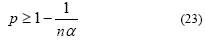
<body><![CDATA[<p align="justify"><font face="verdana" size="2"><a href="/pdf/cys/v8n3/v8n3a7.pdf" target="_blank">DESCARGAR ART&Iacute;CULO EN FORMATO PDF</a></font></p>     <p align="justify"><font face="verdana" size="2">&nbsp;</font></p>     <p align="justify"><font face="verdana" size="2"><b>Ap&eacute;ndice A</b></font></p>     <p align="justify"><font face="verdana" size="2">En este ap&eacute;ndice se demuestra el siguiente teorema:</font></p>     <p align="justify"><font face="verdana" size="2"><b>Teorema: </b>Sea <i>p</i> la probabilidad de que una trayectoria <i>r </i>verifique una propiedad <i>Q, </i>el n&uacute;mero de trayectorias, y &alpha; el grado de confianza. La probabilidad p verifica que:</font></p>     <p align="center"><font face="verdana" size="2"><img src="/img/revistas/cys/v8n3/a7s1.jpg"></font></p>     <p align="justify"><font face="verdana" size="2"><b>Demostraci&oacute;n:</b></font></p>     <p align="justify"><font face="verdana" size="2">La esperanza matem&aacute;tica <i>E</i>&#91;<i>x</i>&#93; de una variable aleatoria <i>x</i> se define como</font></p>     <p align="center"><font face="verdana" size="2"><img src="/img/revistas/cys/v8n3/a7s2.jpg"></font></p>     <p align="justify"><font face="verdana" size="2">Realizando manipulaci&oacute;n simb&oacute;lica y sustituyendo la suma geom&eacute;trica por su valor se obtiene</font></p>     ]]></body>
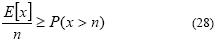
<body><![CDATA[<p align="center"><font face="verdana" size="2"><img src="/img/revistas/cys/v8n3/a7s3.jpg"></font></p>     <p align="justify"><font face="verdana" size="2">Por otro lado, y aplicando la desigualdad de Chevyshev</font></p>     <p align="center"><font face="verdana" size="2"><img src="/img/revistas/cys/v8n3/a7s4.jpg"></font></p>     <p align="justify"><font face="verdana" size="2">sustituyendo el sumatorio por su valor</font></p>     <p align="center"><font face="verdana" size="2"><img src="/img/revistas/cys/v8n3/a7s5.jpg"></font></p>     <p align="justify"><font face="verdana" size="2">por lo tanto se obtiene que</font></p>     <p align="center"><font face="verdana" size="2"><img src="/img/revistas/cys/v8n3/a7s6.jpg"></font></p>     <p align="justify"><font face="verdana" size="2">sustituyendo <i>E</i>&#91;<i>x</i>&#93; por su valor obtenido en (26), y si se aplica (14),</font></p>     <p align="center"><font face="verdana" size="2"><img src="/img/revistas/cys/v8n3/a7s7.jpg"></font></p>     <p align="justify"><font face="verdana" size="2">operando de manera simb&oacute;lica, se demuestra el teorema</font></p>     ]]></body>
<body><![CDATA[<p align="center"><font face="verdana" size="2"><img src="/img/revistas/cys/v8n3/a7s8.jpg"></font></p>     <p align="justify"><font face="verdana" size="2">En la bibliograf&iacute;a existen otras aproximaciones para intentar justificar la idoneidad de aplicar el m&eacute;todo de Monte Carlo a la hora de simular un conjunto de sistemas que evolucionan en el tiempo. En (Lagoa y Barmish, 2001) se realiza una aproximaci&oacute;n intentando demostrar la selecci&oacute;n que se hace, sin embargo, focaliz&aacute;ndolo en consideraciones sobre la robustez de la distribuci&oacute;n de Monte Carlo que se selecciona. En nuestro caso, demostramos que nuestra aproximaci&oacute;n es independiente del modelo de selecci&oacute;n que se haya elegido para aplicar el m&eacute;todo de selecci&oacute;n de valores, esto es, la distribuci&oacute;n particular elegida.</font></p>     <p align="justify"><font face="verdana" size="2">&nbsp;</font></p>     <p align="justify"><font face="verdana" size="2"><b>Referencias</b></font></p>     <!-- ref --><p align="justify"><font face="verdana" size="2">1. <b>Adriaans P., y Zantinge D., </b>"Data Mining" <i>Addison Wesley Longman, </i>1996.</font>&nbsp;&nbsp;&nbsp;&nbsp;&nbsp;&nbsp;&nbsp;&nbsp;[&#160;<a href="javascript:void(0);" onclick="javascript: window.open('/scielo.php?script=sci_nlinks&ref=2038306&pid=S1405-5546200500010000700001&lng=','','width=640,height=500,resizable=yes,scrollbars=1,menubar=yes,');">Links</a>&#160;]<!-- end-ref --><!-- ref --><p align="justify"><font face="verdana" size="2">2. <b>Agell N., Prats F., S&aacute;nchez M., Trav&eacute;&#150;Massuy&egrave;s L., </b>"A gateway from absolute to relative order of magnitude", <i>The 14<sup>th </sup>International Workshop on Qualitative Reasoning, </i>2000, Morelia (M&eacute;xico).</font>&nbsp;&nbsp;&nbsp;&nbsp;&nbsp;&nbsp;&nbsp;&nbsp;[&#160;<a href="javascript:void(0);" onclick="javascript: window.open('/scielo.php?script=sci_nlinks&ref=2038307&pid=S1405-5546200500010000700002&lng=','','width=640,height=500,resizable=yes,scrollbars=1,menubar=yes,');">Links</a>&#160;]<!-- end-ref --><!-- ref --><p align="justify"><font face="verdana" size="2">3. <b>Aguilar J., Riquelme J., y Toro M., </b>"Decision queue classifier for supervised learning using rotated hyperboxes", en <i>Lecture Notes in Artificial Intelligence </i>n&deg; 1484, 1998, pp. 326&#150;336.</font>&nbsp;&nbsp;&nbsp;&nbsp;&nbsp;&nbsp;&nbsp;&nbsp;[&#160;<a href="javascript:void(0);" onclick="javascript: window.open('/scielo.php?script=sci_nlinks&ref=2038308&pid=S1405-5546200500010000700003&lng=','','width=640,height=500,resizable=yes,scrollbars=1,menubar=yes,');">Links</a>&#160;]<!-- end-ref --><!-- ref --><p align="justify"><font face="verdana" size="2">4. <b>Agrawal R., Lin K.I., Sawhney H.S., y Shim K., </b>"Fast similarity search in presence of noise, scaling, and translation in time series databases", en <i>The 21<sup>th</sup> VLDB Conference, </i>1995, Zurich (Switzerland).</font>&nbsp;&nbsp;&nbsp;&nbsp;&nbsp;&nbsp;&nbsp;&nbsp;[&#160;<a href="javascript:void(0);" onclick="javascript: window.open('/scielo.php?script=sci_nlinks&ref=2038309&pid=S1405-5546200500010000700004&lng=','','width=640,height=500,resizable=yes,scrollbars=1,menubar=yes,');">Links</a>&#160;]<!-- end-ref --><!-- ref --><p align="justify"><font face="verdana" size="2">5. <b>Alefeld G. y Herzberger J., </b>"Introduction to Interval Computations", <i>Academic Press, </i>New York. 1983.</font>&nbsp;&nbsp;&nbsp;&nbsp;&nbsp;&nbsp;&nbsp;&nbsp;[&#160;<a href="javascript:void(0);" onclick="javascript: window.open('/scielo.php?script=sci_nlinks&ref=2038310&pid=S1405-5546200500010000700005&lng=','','width=640,height=500,resizable=yes,scrollbars=1,menubar=yes,');">Links</a>&#160;]<!-- end-ref --><!-- ref --><p align="justify"><font face="verdana" size="2">6. <b>Aracil J., Ponce E., Pizarro L., </b>"Behavior patterns of logistic models with a delay", <i>en Mathematics and computer in simulation </i>44, 1997, pp. 123&#150;141.</font>&nbsp;&nbsp;&nbsp;&nbsp;&nbsp;&nbsp;&nbsp;&nbsp;[&#160;<a href="javascript:void(0);" onclick="javascript: window.open('/scielo.php?script=sci_nlinks&ref=2038311&pid=S1405-5546200500010000700006&lng=','','width=640,height=500,resizable=yes,scrollbars=1,menubar=yes,');">Links</a>&#160;]<!-- end-ref --><!-- ref --><p align="justify"><font face="verdana" size="2">7. <b>Berleant D. y Kuipers B.J., </b>"Qualitative and quantitative simulation: bridging the gap" <i>en Artificial Intelligence </i>95, 1997, pp. 215&#150;255.</font>&nbsp;&nbsp;&nbsp;&nbsp;&nbsp;&nbsp;&nbsp;&nbsp;[&#160;<a href="javascript:void(0);" onclick="javascript: window.open('/scielo.php?script=sci_nlinks&ref=2038312&pid=S1405-5546200500010000700007&lng=','','width=640,height=500,resizable=yes,scrollbars=1,menubar=yes,');">Links</a>&#160;]<!-- end-ref --><!-- ref --><p align="justify"><font face="verdana" size="2">8. <b>Bonarini A. y G. Bontempi G., </b>"Qua.SI.: Qualitative Simulation approach for fuzzy models", en <i>Proceedings of ESM'94, </i>Barcelona (Espa&ntilde;a) 1994, pp. 420&#150;424.</font>&nbsp;&nbsp;&nbsp;&nbsp;&nbsp;&nbsp;&nbsp;&nbsp;[&#160;<a href="javascript:void(0);" onclick="javascript: window.open('/scielo.php?script=sci_nlinks&ref=2038313&pid=S1405-5546200500010000700008&lng=','','width=640,height=500,resizable=yes,scrollbars=1,menubar=yes,');">Links</a>&#160;]<!-- end-ref --><!-- ref --><p align="justify"><font face="verdana" size="2">9. <b>Bousson K. y Trav&eacute;&#150;Massuy&egrave;s L., </b>"Putting more numbers in the qualitative simulator CA&#150;EN", en <i>Proceedings of the 2<sup>nd </sup>International Conference on Intelligent Systems Engineering, </i>1994.</font>&nbsp;&nbsp;&nbsp;&nbsp;&nbsp;&nbsp;&nbsp;&nbsp;[&#160;<a href="javascript:void(0);" onclick="javascript: window.open('/scielo.php?script=sci_nlinks&ref=2038314&pid=S1405-5546200500010000700009&lng=','','width=640,height=500,resizable=yes,scrollbars=1,menubar=yes,');">Links</a>&#160;]<!-- end-ref --><!-- ref --><p align="justify"><font face="verdana" size="2">10. <b>Corliss G.F., </b>"Guaranteed error bounds for ordinary differential equations", en <i>Theory of Numerics in Ordinary and Partial Differential Equations. </i>Oxford University Press. 1995.</font>&nbsp;&nbsp;&nbsp;&nbsp;&nbsp;&nbsp;&nbsp;&nbsp;[&#160;<a href="javascript:void(0);" onclick="javascript: window.open('/scielo.php?script=sci_nlinks&ref=2038315&pid=S1405-5546200500010000700010&lng=','','width=640,height=500,resizable=yes,scrollbars=1,menubar=yes,');">Links</a>&#160;]<!-- end-ref --><!-- ref --><p align="justify"><font face="verdana" size="2">11. <b>Ester M., Kriegel H.&#150;P., Sander J., y Xu X., </b>"A density&#150;based algorithm for discovering clusters in large spatial database with noise", en <i>International Conference on Knowledge Discovery in Databases and Data Mining </i>(KDD&#150;96), Portland (USA), 1996, pp. 226&#150;231.</font>&nbsp;&nbsp;&nbsp;&nbsp;&nbsp;&nbsp;&nbsp;&nbsp;[&#160;<a href="javascript:void(0);" onclick="javascript: window.open('/scielo.php?script=sci_nlinks&ref=2038316&pid=S1405-5546200500010000700011&lng=','','width=640,height=500,resizable=yes,scrollbars=1,menubar=yes,');">Links</a>&#160;]<!-- end-ref --><!-- ref --><p align="justify"><font face="verdana" size="2">12. <b>Fayyad U., Piatetsky&#150;Shapiro G., y Smyth P. </b>"The KDD process for extrating useful knowledge from volumes of data", en <i>Communications of the ACM Vol </i>39 n&deg; 11, 1996, pp. 27&#150;34.</font>&nbsp;&nbsp;&nbsp;&nbsp;&nbsp;&nbsp;&nbsp;&nbsp;[&#160;<a href="javascript:void(0);" onclick="javascript: window.open('/scielo.php?script=sci_nlinks&ref=2038317&pid=S1405-5546200500010000700012&lng=','','width=640,height=500,resizable=yes,scrollbars=1,menubar=yes,');">Links</a>&#160;]<!-- end-ref --><!-- ref --><p align="justify"><font face="verdana" size="2">13. <b>Gasca R.M., Toro M., Ortega J.A. </b>"Propagaci&oacute;n de restricciones integrando conocimiento cualitativo y cuantitativo", <i>en Bolet&iacute;n de AEPIA </i>n&uacute;m 6, 1996, pp. 23&#150;30.</font>&nbsp;&nbsp;&nbsp;&nbsp;&nbsp;&nbsp;&nbsp;&nbsp;[&#160;<a href="javascript:void(0);" onclick="javascript: window.open('/scielo.php?script=sci_nlinks&ref=2038318&pid=S1405-5546200500010000700013&lng=','','width=640,height=500,resizable=yes,scrollbars=1,menubar=yes,');">Links</a>&#160;]<!-- end-ref --><!-- ref --><p align="justify"><font face="verdana" size="2">14. <b>Gasca R.M. </b>"Razonamiento y Simulaci&oacute;n en Sistemas que integran conocimiento cualitativo y cuantitativo". <i>Ph.D. Thesis, </i>Universidad de Sevilla (Espa&ntilde;a), 1998.</font>&nbsp;&nbsp;&nbsp;&nbsp;&nbsp;&nbsp;&nbsp;&nbsp;[&#160;<a href="javascript:void(0);" onclick="javascript: window.open('/scielo.php?script=sci_nlinks&ref=2038319&pid=S1405-5546200500010000700014&lng=','','width=640,height=500,resizable=yes,scrollbars=1,menubar=yes,');">Links</a>&#160;]<!-- end-ref --><!-- ref --><p align="justify"><font face="verdana" size="2">15. <b>Guha S., Rastogi R., y Shim K., </b>"CURE: And efficient clustering algorithm for large databases", en <i>Proceedings ACMSIGMOD International Conference Management of Data </i>New York (USA), 1998, pp. 73&#150;84.</font>&nbsp;&nbsp;&nbsp;&nbsp;&nbsp;&nbsp;&nbsp;&nbsp;[&#160;<a href="javascript:void(0);" onclick="javascript: window.open('/scielo.php?script=sci_nlinks&ref=2038320&pid=S1405-5546200500010000700015&lng=','','width=640,height=500,resizable=yes,scrollbars=1,menubar=yes,');">Links</a>&#160;]<!-- end-ref --><!-- ref --><p align="justify"><font face="verdana" size="2">16. <b>Hickey T.J., </b>"CLP(F) and Constrained ODEs". <i>Technical Report </i>1994.</font>&nbsp;&nbsp;&nbsp;&nbsp;&nbsp;&nbsp;&nbsp;&nbsp;[&#160;<a href="javascript:void(0);" onclick="javascript: window.open('/scielo.php?script=sci_nlinks&ref=2038321&pid=S1405-5546200500010000700016&lng=','','width=640,height=500,resizable=yes,scrollbars=1,menubar=yes,');">Links</a>&#160;]<!-- end-ref --><!-- ref --><p align="justify"><font face="verdana" size="2">17. <b>Karsky M., Dore J.&#150;C., </b>y<b> Gueneau P., </b>"Da la possibilit&eacute; d'apparition de catastrophes diff&eacute;r&egrave;s", en<i> Ecodecision n&deg; 6, </i>1992.</font>&nbsp;&nbsp;&nbsp;&nbsp;&nbsp;&nbsp;&nbsp;&nbsp;[&#160;<a href="javascript:void(0);" onclick="javascript: window.open('/scielo.php?script=sci_nlinks&ref=2038322&pid=S1405-5546200500010000700017&lng=','','width=640,height=500,resizable=yes,scrollbars=1,menubar=yes,');">Links</a>&#160;]<!-- end-ref --><!-- ref --><p align="justify"><font face="verdana" size="2">18. <b>Karypis G.; Han E.&#150;H.; </b>y<b> Kumar V., </b>"Chameleon: Hierarchical clustering using dynamic modeling" </font><font face="verdana" size="2"><i>Computer </i>n&deg; 32 (8), pp. 68&#150;75, 1999.</font>&nbsp;&nbsp;&nbsp;&nbsp;&nbsp;&nbsp;&nbsp;&nbsp;[&#160;<a href="javascript:void(0);" onclick="javascript: window.open('/scielo.php?script=sci_nlinks&ref=2038323&pid=S1405-5546200500010000700018&lng=','','width=640,height=500,resizable=yes,scrollbars=1,menubar=yes,');">Links</a>&#160;]<!-- end-ref --><!-- ref --><p align="justify"><font face="verdana" size="2">19. <b>Kay H.</b>, "Refining imprecise models and their behaviors". <i>Ph.D. Thesis </i>University of Texas (USA), 1996.</font>&nbsp;&nbsp;&nbsp;&nbsp;&nbsp;&nbsp;&nbsp;&nbsp;[&#160;<a href="javascript:void(0);" onclick="javascript: window.open('/scielo.php?script=sci_nlinks&ref=2038324&pid=S1405-5546200500010000700019&lng=','','width=640,height=500,resizable=yes,scrollbars=1,menubar=yes,');">Links</a>&#160;]<!-- end-ref --><!-- ref --><p align="justify"><font face="verdana" size="2">20. <b>Kuipers B.J., </b>"Qualitative reasoning. Modeling and simulation with incomplete knowledge". <i>The MIT Press, </i>Cambridge, Massachussetts, 1994.</font>&nbsp;&nbsp;&nbsp;&nbsp;&nbsp;&nbsp;&nbsp;&nbsp;[&#160;<a href="javascript:void(0);" onclick="javascript: window.open('/scielo.php?script=sci_nlinks&ref=2038325&pid=S1405-5546200500010000700020&lng=','','width=640,height=500,resizable=yes,scrollbars=1,menubar=yes,');">Links</a>&#160;]<!-- end-ref --><!-- ref --><p align="justify"><font face="verdana" size="2">21. <b>Lagoa C.M y Barmish B.R. </b>"Distributionally Robust Monte Carlo Simulation: A Tutorial Survey" Technical Report EECS 01&#150;01 Electrical Engineering and Computer Science Department Case Western Reserve University, 2001.</font>&nbsp;&nbsp;&nbsp;&nbsp;&nbsp;&nbsp;&nbsp;&nbsp;[&#160;<a href="javascript:void(0);" onclick="javascript: window.open('/scielo.php?script=sci_nlinks&ref=2038326&pid=S1405-5546200500010000700021&lng=','','width=640,height=500,resizable=yes,scrollbars=1,menubar=yes,');">Links</a>&#160;]<!-- end-ref --><!-- ref --><p align="justify"><font face="verdana" size="2">22. <b>Mavrovouniotis M.L. y Stephanopoulos G., </b>"Formal order&#150;of&#150;magnitude reasoning", en <i>Readings in Qualitative Reasoning about Physical Systems, </i>1990, pp. 323&#150;336.</font>&nbsp;&nbsp;&nbsp;&nbsp;&nbsp;&nbsp;&nbsp;&nbsp;[&#160;<a href="javascript:void(0);" onclick="javascript: window.open('/scielo.php?script=sci_nlinks&ref=2038327&pid=S1405-5546200500010000700022&lng=','','width=640,height=500,resizable=yes,scrollbars=1,menubar=yes,');">Links</a>&#160;]<!-- end-ref --><!-- ref --><p align="justify"><font face="verdana" size="2">23. <b>Moore R.E., </b>"Methods and Applications of Interval Analysis" <i>SIAM Studies in Applied Mathematics Philadelphia, (PA) </i>1979.</font>&nbsp;&nbsp;&nbsp;&nbsp;&nbsp;&nbsp;&nbsp;&nbsp;[&#160;<a href="javascript:void(0);" onclick="javascript: window.open('/scielo.php?script=sci_nlinks&ref=2038328&pid=S1405-5546200500010000700023&lng=','','width=640,height=500,resizable=yes,scrollbars=1,menubar=yes,');">Links</a>&#160;]<!-- end-ref --><!-- ref --><p align="justify"><font face="verdana" size="2">24. <b>Ortega J.A., Gasca R.M. y Toro M., </b>"Automatizaci&oacute;n del an&aacute;lisis y simulaci&oacute;n de modelos cualitativos mediante restricciones". <i>Actas de la VII Conferencia Asociaci&oacute;n Espa&ntilde;ola para Inteligencia Artificial, </i>pp. 85&#150;94, M&aacute;laga (Espa&ntilde;a), 1997.</font>&nbsp;&nbsp;&nbsp;&nbsp;&nbsp;&nbsp;&nbsp;&nbsp;[&#160;<a href="javascript:void(0);" onclick="javascript: window.open('/scielo.php?script=sci_nlinks&ref=2038329&pid=S1405-5546200500010000700024&lng=','','width=640,height=500,resizable=yes,scrollbars=1,menubar=yes,');">Links</a>&#160;]<!-- end-ref --><!-- ref --><p align="justify"><font face="verdana" size="2">25. <b>Ortega J.A., Gasca R.M. y Toro M., </b>"Including qualitative knowledge in semiqualitative dynamical systems", <i>en Lecture Notes in Artificial Intelligence </i>1415, 1998, pp. 329&#150;335.</font>&nbsp;&nbsp;&nbsp;&nbsp;&nbsp;&nbsp;&nbsp;&nbsp;[&#160;<a href="javascript:void(0);" onclick="javascript: window.open('/scielo.php?script=sci_nlinks&ref=2038330&pid=S1405-5546200500010000700025&lng=','','width=640,height=500,resizable=yes,scrollbars=1,menubar=yes,');">Links</a>&#160;]<!-- end-ref --><!-- ref --><p align="justify"><font face="verdana" size="2">26. <b>Ortega J.A., Gasca R.M. y Toro M. </b>"Obtaining semi&#150;qualitative behaviors of dynamic systems by means of quantitative simulations".  <i>Workshop Model based systems and qualitative reasoning of the Thirtieth European Conference on Artificial Intelligence, </i>Brigthon (UK), pp. 21&#150;26, 1998.</font>&nbsp;&nbsp;&nbsp;&nbsp;&nbsp;&nbsp;&nbsp;&nbsp;[&#160;<a href="javascript:void(0);" onclick="javascript: window.open('/scielo.php?script=sci_nlinks&ref=2038331&pid=S1405-5546200500010000700026&lng=','','width=640,height=500,resizable=yes,scrollbars=1,menubar=yes,');">Links</a>&#160;]<!-- end-ref --><!-- ref --><p align="justify"><font face="verdana" size="2">27. <b>Ortega J.A., Gasca R.M. y Toro M., </b>"A semiqualitative methodology for reasoning about dynamic systems". <i>The 13<sup>th </sup>International Workshop on Qualitative</i>. </font><font face="verdana" size="2"><i>Reasoning </i>Loch Awe (Scotland), pp. 169&#150;177,1999a.</font>&nbsp;&nbsp;&nbsp;&nbsp;&nbsp;&nbsp;&nbsp;&nbsp;[&#160;<a href="javascript:void(0);" onclick="javascript: window.open('/scielo.php?script=sci_nlinks&ref=2038332&pid=S1405-5546200500010000700027&lng=','','width=640,height=500,resizable=yes,scrollbars=1,menubar=yes,');">Links</a>&#160;]<!-- end-ref --><!-- ref --><p align="justify"><font face="verdana" size="2">28. <b>Ortega J.A., Gasca R.M. y Toro M., </b>"A new methodology for reasoning about semiqualitative dynamical systems". <i>The 3<sup>rd </sup>IMACS / IEEE International Multiconference on: Circuits, Systems, Communications and Computers &#150; Software and hardware for the 21th Century </i>Athens (Greece), pp. 33&#150;38, 1999b.</font>&nbsp;&nbsp;&nbsp;&nbsp;&nbsp;&nbsp;&nbsp;&nbsp;[&#160;<a href="javascript:void(0);" onclick="javascript: window.open('/scielo.php?script=sci_nlinks&ref=2038333&pid=S1405-5546200500010000700028&lng=','','width=640,height=500,resizable=yes,scrollbars=1,menubar=yes,');">Links</a>&#160;]<!-- end-ref --><!-- ref --><p align="justify"><font face="verdana" size="2">29.<b> Ortega J.A., Gasca R.M. y Toro M., </b>"Behavior patterns of semiqualitative dynamic systems by means of quantitative simulations", en <i>The 16<sup>th</sup> International Joint Conference on Artificial Intelligence. </i>Qualitative and model based reasoning for complex systems and their control, Estocolmo (Suecia), 1999, pp. 42&#150;48.</font>&nbsp;&nbsp;&nbsp;&nbsp;&nbsp;&nbsp;&nbsp;&nbsp;[&#160;<a href="javascript:void(0);" onclick="javascript: window.open('/scielo.php?script=sci_nlinks&ref=2038334&pid=S1405-5546200500010000700029&lng=','','width=640,height=500,resizable=yes,scrollbars=1,menubar=yes,');">Links</a>&#160;]<!-- end-ref --><!-- ref --><p align="justify"><font face="verdana" size="2">30. <b>Ortega  J.A.,   </b>"Patrones   de   comportamiento  temporal  en  modelos   semicualitativos  con  restricciones".   <i>Tesis  doctoral, </i>Departamento de Lenguajes y Sistemas Inform&aacute;ticos, Universidad de Sevilla, 2000.</font>&nbsp;&nbsp;&nbsp;&nbsp;&nbsp;&nbsp;&nbsp;&nbsp;[&#160;<a href="javascript:void(0);" onclick="javascript: window.open('/scielo.php?script=sci_nlinks&ref=2038335&pid=S1405-5546200500010000700030&lng=','','width=640,height=500,resizable=yes,scrollbars=1,menubar=yes,');">Links</a>&#160;]<!-- end-ref --><!-- ref --><p align="justify"><font face="verdana" size="2">31. <b>Trav&eacute;&#150;Massuy&egrave;s, Dague Ph. y Guerrin F., </b>"Le raisonement qualitativ pour les sciences de l'ing&egrave;nieur". <i>Hermes Ed. </i>Paris 1997.</font>&nbsp;&nbsp;&nbsp;&nbsp;&nbsp;&nbsp;&nbsp;&nbsp;[&#160;<a href="javascript:void(0);" onclick="javascript: window.open('/scielo.php?script=sci_nlinks&ref=2038336&pid=S1405-5546200500010000700031&lng=','','width=640,height=500,resizable=yes,scrollbars=1,menubar=yes,');">Links</a>&#160;]<!-- end-ref --><!-- ref --><p align="justify"><font face="verdana" size="2">32. <b>Vescovi M, Farquhar A., e Iwasaki Y. </b>"Numerical interval simulation: combined qualitative and quantitative simulation to bound behaviors of non&#150;monotonic systems" <i>en Proceedings 14<sup>th</sup> International Joint Conference on Artificial Intelligence, </i>1995, pp. 1806&#150;1812.</font>&nbsp;&nbsp;&nbsp;&nbsp;&nbsp;&nbsp;&nbsp;&nbsp;[&#160;<a href="javascript:void(0);" onclick="javascript: window.open('/scielo.php?script=sci_nlinks&ref=2038337&pid=S1405-5546200500010000700032&lng=','','width=640,height=500,resizable=yes,scrollbars=1,menubar=yes,');">Links</a>&#160;]<!-- end-ref --> ]]></body><back>
<ref-list>
<ref id="B1">
<label>1</label><nlm-citation citation-type="book">
<person-group person-group-type="author">
<name>
<surname><![CDATA[Adriaans]]></surname>
<given-names><![CDATA[P]]></given-names>
</name>
<name>
<surname><![CDATA[Zantinge]]></surname>
<given-names><![CDATA[D]]></given-names>
</name>
</person-group>
<source><![CDATA["Data Mining"]]></source>
<year>1996</year>
<publisher-name><![CDATA[Addison Wesley Longman]]></publisher-name>
</nlm-citation>
</ref>
<ref id="B2">
<label>2</label><nlm-citation citation-type="confpro">
<person-group person-group-type="author">
<name>
<surname><![CDATA[Agell]]></surname>
<given-names><![CDATA[N]]></given-names>
</name>
<name>
<surname><![CDATA[Prats]]></surname>
<given-names><![CDATA[F]]></given-names>
</name>
<name>
<surname><![CDATA[Sánchez]]></surname>
<given-names><![CDATA[M]]></given-names>
</name>
<name>
<surname><![CDATA[Travé-Massuyès]]></surname>
<given-names><![CDATA[L]]></given-names>
</name>
</person-group>
<source><![CDATA["A gateway from absolute to relative order of magnitude"]]></source>
<year></year>
<conf-name><![CDATA[14 International Workshop on Qualitative Reasoning]]></conf-name>
<conf-date>2000</conf-date>
<conf-loc>Morelia Morelia</conf-loc>
</nlm-citation>
</ref>
<ref id="B3">
<label>3</label><nlm-citation citation-type="">
<person-group person-group-type="author">
<name>
<surname><![CDATA[Aguilar]]></surname>
<given-names><![CDATA[J]]></given-names>
</name>
<name>
<surname><![CDATA[Riquelme]]></surname>
<given-names><![CDATA[J]]></given-names>
</name>
<name>
<surname><![CDATA[Toro]]></surname>
<given-names><![CDATA[M]]></given-names>
</name>
</person-group>
<article-title xml:lang="en"><![CDATA["Decision queue classifier for supervised learning using rotated hyperboxes"]]></article-title>
<source><![CDATA[]]></source>
<year>1998</year>
<volume>1484</volume>
<page-range>326-336</page-range></nlm-citation>
</ref>
<ref id="B4">
<label>4</label><nlm-citation citation-type="confpro">
<person-group person-group-type="author">
<name>
<surname><![CDATA[Agrawal]]></surname>
<given-names><![CDATA[R]]></given-names>
</name>
<name>
<surname><![CDATA[Lin]]></surname>
<given-names><![CDATA[K.I.]]></given-names>
</name>
<name>
<surname><![CDATA[Sawhney]]></surname>
<given-names><![CDATA[H.S.]]></given-names>
</name>
<name>
<surname><![CDATA[Shim]]></surname>
<given-names><![CDATA[K]]></given-names>
</name>
</person-group>
<article-title xml:lang="en"><![CDATA["Fast similarity search in presence of noise, scaling, and translation in time series databases"]]></article-title>
<source><![CDATA[]]></source>
<year></year>
<conf-name><![CDATA[21 VLDB Conference]]></conf-name>
<conf-date>1995</conf-date>
<conf-loc>Zurich Zurich</conf-loc>
</nlm-citation>
</ref>
<ref id="B5">
<label>5</label><nlm-citation citation-type="book">
<person-group person-group-type="author">
<name>
<surname><![CDATA[Alefeld]]></surname>
<given-names><![CDATA[G]]></given-names>
</name>
<name>
<surname><![CDATA[Herzberger]]></surname>
<given-names><![CDATA[J]]></given-names>
</name>
</person-group>
<source><![CDATA["Introduction to Interval Computations"]]></source>
<year>1983</year>
<publisher-loc><![CDATA[^eNew York New York]]></publisher-loc>
<publisher-name><![CDATA[Academic Press]]></publisher-name>
</nlm-citation>
</ref>
<ref id="B6">
<label>6</label><nlm-citation citation-type="journal">
<person-group person-group-type="author">
<name>
<surname><![CDATA[Aracil]]></surname>
<given-names><![CDATA[J]]></given-names>
</name>
<name>
<surname><![CDATA[Ponce]]></surname>
<given-names><![CDATA[E]]></given-names>
</name>
<name>
<surname><![CDATA[Pizarro]]></surname>
<given-names><![CDATA[L]]></given-names>
</name>
</person-group>
<article-title xml:lang="en"><![CDATA["Behavior patterns of logistic models with a delay"]]></article-title>
<source><![CDATA[Mathematics and computer in simulation]]></source>
<year>1997</year>
<volume>44</volume>
<page-range>123-141</page-range></nlm-citation>
</ref>
<ref id="B7">
<label>7</label><nlm-citation citation-type="journal">
<person-group person-group-type="author">
<name>
<surname><![CDATA[Berleant]]></surname>
<given-names><![CDATA[D]]></given-names>
</name>
<name>
<surname><![CDATA[Kuipers]]></surname>
<given-names><![CDATA[B.J.]]></given-names>
</name>
</person-group>
<article-title xml:lang="en"><![CDATA["Qualitative and quantitative simulation: bridging the gap"]]></article-title>
<source><![CDATA[Artificial Intelligence]]></source>
<year>1997</year>
<volume>95</volume>
<page-range>215-255</page-range></nlm-citation>
</ref>
<ref id="B8">
<label>8</label><nlm-citation citation-type="confpro">
<person-group person-group-type="author">
<name>
<surname><![CDATA[Bonarini]]></surname>
<given-names><![CDATA[A]]></given-names>
</name>
<name>
<surname><![CDATA[Bontempi G.]]></surname>
<given-names><![CDATA[G]]></given-names>
</name>
</person-group>
<article-title xml:lang="en"><![CDATA["Qua.SI.: Qualitative Simulation approach for fuzzy models"]]></article-title>
<source><![CDATA[]]></source>
<year></year>
<conf-name><![CDATA[ Proceedings of ESM'94]]></conf-name>
<conf-date>1994</conf-date>
<conf-loc>Barcelona </conf-loc>
<page-range>420-424</page-range></nlm-citation>
</ref>
<ref id="B9">
<label>9</label><nlm-citation citation-type="confpro">
<person-group person-group-type="author">
<name>
<surname><![CDATA[Bousson]]></surname>
<given-names><![CDATA[K]]></given-names>
</name>
<name>
<surname><![CDATA[Travé-Massuyès]]></surname>
<given-names><![CDATA[L]]></given-names>
</name>
</person-group>
<article-title xml:lang="en"><![CDATA["Putting more numbers in the qualitative simulator CA-EN"]]></article-title>
<source><![CDATA[]]></source>
<year></year>
<conf-name><![CDATA[2 International Conference on Intelligent Systems Engineering]]></conf-name>
<conf-date>1994</conf-date>
<conf-loc> </conf-loc>
</nlm-citation>
</ref>
<ref id="B10">
<label>10</label><nlm-citation citation-type="book">
<person-group person-group-type="author">
<name>
<surname><![CDATA[Corliss]]></surname>
<given-names><![CDATA[G.F.]]></given-names>
</name>
</person-group>
<article-title xml:lang="en"><![CDATA["Guaranteed error bounds for ordinary differential equations"]]></article-title>
<source><![CDATA[Theory of Numerics in Ordinary and Partial Differential Equations]]></source>
<year>1995</year>
<publisher-name><![CDATA[Oxford University Press]]></publisher-name>
</nlm-citation>
</ref>
<ref id="B11">
<label>11</label><nlm-citation citation-type="confpro">
<person-group person-group-type="author">
<name>
<surname><![CDATA[Ester]]></surname>
<given-names><![CDATA[M]]></given-names>
</name>
<name>
<surname><![CDATA[Kriegel]]></surname>
<given-names><![CDATA[H.-P.]]></given-names>
</name>
<name>
<surname><![CDATA[Sander]]></surname>
<given-names><![CDATA[J]]></given-names>
</name>
<name>
<surname><![CDATA[Xu]]></surname>
<given-names><![CDATA[X]]></given-names>
</name>
</person-group>
<article-title xml:lang="en"><![CDATA["A density-based algorithm for discovering clusters in large spatial database with noise"]]></article-title>
<source><![CDATA[]]></source>
<year></year>
<conf-name><![CDATA[ International Conference on Knowledge Discovery in Databases and Data Mining (KDD-96)]]></conf-name>
<conf-loc>Portland </conf-loc>
<page-range>226-231</page-range></nlm-citation>
</ref>
<ref id="B12">
<label>12</label><nlm-citation citation-type="journal">
<person-group person-group-type="author">
<name>
<surname><![CDATA[Fayyad]]></surname>
<given-names><![CDATA[U]]></given-names>
</name>
<name>
<surname><![CDATA[Piatetsky-Shapiro]]></surname>
<given-names><![CDATA[G]]></given-names>
</name>
<name>
<surname><![CDATA[Smyth]]></surname>
<given-names><![CDATA[P]]></given-names>
</name>
</person-group>
<article-title xml:lang="en"><![CDATA["The KDD process for extrating useful knowledge from volumes of data"]]></article-title>
<source><![CDATA[Communications of the ACM]]></source>
<year>1996</year>
<volume>39</volume>
<numero>11</numero>
<issue>11</issue>
<page-range>27-34</page-range></nlm-citation>
</ref>
<ref id="B13">
<label>13</label><nlm-citation citation-type="journal">
<person-group person-group-type="author">
<name>
<surname><![CDATA[Gasca]]></surname>
<given-names><![CDATA[R.M.]]></given-names>
</name>
<name>
<surname><![CDATA[Toro]]></surname>
<given-names><![CDATA[M]]></given-names>
</name>
<name>
<surname><![CDATA[Ortega]]></surname>
<given-names><![CDATA[J.A.]]></given-names>
</name>
</person-group>
<article-title xml:lang="es"><![CDATA["Propagación de restricciones integrando conocimiento cualitativo y cuantitativo"]]></article-title>
<source><![CDATA[Boletín de AEPIA]]></source>
<year>1996</year>
<numero>6</numero>
<issue>6</issue>
<page-range>23-30</page-range></nlm-citation>
</ref>
<ref id="B14">
<label>14</label><nlm-citation citation-type="">
<person-group person-group-type="author">
<name>
<surname><![CDATA[Gasca]]></surname>
<given-names><![CDATA[R.M.]]></given-names>
</name>
</person-group>
<source><![CDATA["Razonamiento y Simulación en Sistemas que integran conocimiento cualitativo y cuantitativo"]]></source>
<year></year>
</nlm-citation>
</ref>
<ref id="B15">
<label>15</label><nlm-citation citation-type="confpro">
<person-group person-group-type="author">
<name>
<surname><![CDATA[Guha]]></surname>
<given-names><![CDATA[S]]></given-names>
</name>
<name>
<surname><![CDATA[Rastogi]]></surname>
<given-names><![CDATA[R]]></given-names>
</name>
<name>
<surname><![CDATA[Shim]]></surname>
<given-names><![CDATA[K]]></given-names>
</name>
</person-group>
<article-title xml:lang="en"><![CDATA["CURE: And efficient clustering algorithm for large databases"]]></article-title>
<source><![CDATA[]]></source>
<year></year>
<conf-name><![CDATA[ Proceedings ACMSIGMOD International Conference Management of Data]]></conf-name>
<conf-date>1998</conf-date>
<conf-loc>New York New York</conf-loc>
<page-range>73-84</page-range></nlm-citation>
</ref>
<ref id="B16">
<nlm-citation citation-type="">
<person-group person-group-type="author">
<name>
<surname><![CDATA[Hickey]]></surname>
<given-names><![CDATA[T.J.]]></given-names>
</name>
</person-group>
<source><![CDATA["CLP(F) and Constrained ODEs"]]></source>
<year>1994</year>
</nlm-citation>
</ref>
<ref id="B17">
<label>17</label><nlm-citation citation-type="journal">
<person-group person-group-type="author">
<name>
<surname><![CDATA[Karsky]]></surname>
<given-names><![CDATA[M]]></given-names>
</name>
<name>
<surname><![CDATA[Dore]]></surname>
<given-names><![CDATA[J.-C.]]></given-names>
</name>
<name>
<surname><![CDATA[Gueneau]]></surname>
<given-names><![CDATA[P]]></given-names>
</name>
</person-group>
<article-title xml:lang="fr"><![CDATA["Da la possibilité d'apparition de catastrophes différès"]]></article-title>
<source><![CDATA[Ecodecision]]></source>
<year>1992</year>
<numero>6</numero>
<issue>6</issue>
</nlm-citation>
</ref>
<ref id="B18">
<label>18</label><nlm-citation citation-type="journal">
<person-group person-group-type="author">
<name>
<surname><![CDATA[Karypis]]></surname>
<given-names><![CDATA[G]]></given-names>
</name>
<name>
<surname><![CDATA[Han]]></surname>
<given-names><![CDATA[E.-H.]]></given-names>
</name>
<name>
<surname><![CDATA[Kumar]]></surname>
<given-names><![CDATA[V]]></given-names>
</name>
</person-group>
<article-title xml:lang="en"><![CDATA["Chameleon: Hierarchical clustering using dynamic modeling"]]></article-title>
<source><![CDATA[Computer]]></source>
<year>1999</year>
<volume>8</volume>
<numero>32</numero>
<issue>32</issue>
<page-range>68-75</page-range></nlm-citation>
</ref>
<ref id="B19">
<label>19</label><nlm-citation citation-type="">
<person-group person-group-type="author">
<name>
<surname><![CDATA[Kay]]></surname>
<given-names><![CDATA[H]]></given-names>
</name>
</person-group>
<source><![CDATA["Refining imprecise models and their behaviors"]]></source>
<year></year>
</nlm-citation>
</ref>
<ref id="B20">
<label>20</label><nlm-citation citation-type="book">
<person-group person-group-type="author">
<name>
<surname><![CDATA[Kuipers]]></surname>
<given-names><![CDATA[B.J.]]></given-names>
</name>
</person-group>
<source><![CDATA["Qualitative reasoning: Modeling and simulation with incomplete knowledge"]]></source>
<year>1994</year>
<publisher-loc><![CDATA[Cambridge^eMassachussetts Massachussetts]]></publisher-loc>
<publisher-name><![CDATA[The MIT Press]]></publisher-name>
</nlm-citation>
</ref>
<ref id="B21">
<label>21</label><nlm-citation citation-type="book">
<person-group person-group-type="author">
<name>
<surname><![CDATA[Lagoa]]></surname>
<given-names><![CDATA[C.M]]></given-names>
</name>
<name>
<surname><![CDATA[Barmish]]></surname>
<given-names><![CDATA[B.R.]]></given-names>
</name>
</person-group>
<source><![CDATA["Distributionally Robust Monte Carlo Simulation: A Tutorial Survey"]]></source>
<year>2001</year>
<publisher-name><![CDATA[Electrical Engineering and Computer Science Department Case Western Reserve University]]></publisher-name>
</nlm-citation>
</ref>
<ref id="B22">
<label>22</label><nlm-citation citation-type="">
<person-group person-group-type="author">
<name>
<surname><![CDATA[Mavrovouniotis]]></surname>
<given-names><![CDATA[M.L.]]></given-names>
</name>
<name>
<surname><![CDATA[Stephanopoulos]]></surname>
<given-names><![CDATA[G]]></given-names>
</name>
</person-group>
<article-title xml:lang="en"><![CDATA["Formal order-of-magnitude reasoning"]]></article-title>
<source><![CDATA[Readings in Qualitative Reasoning about Physical Systems]]></source>
<year>1990</year>
<page-range>323-336</page-range></nlm-citation>
</ref>
<ref id="B23">
<label>23</label><nlm-citation citation-type="book">
<person-group person-group-type="author">
<name>
<surname><![CDATA[Moore]]></surname>
<given-names><![CDATA[R.E.]]></given-names>
</name>
</person-group>
<source><![CDATA["Methods and Applications of Interval Analysis"]]></source>
<year>1979</year>
<publisher-loc><![CDATA[^ePA PA]]></publisher-loc>
<publisher-name><![CDATA[SIAM Studies in Applied Mathematics Philadelphia]]></publisher-name>
</nlm-citation>
</ref>
<ref id="B24">
<label>24</label><nlm-citation citation-type="confpro">
<person-group person-group-type="author">
<name>
<surname><![CDATA[Ortega]]></surname>
<given-names><![CDATA[J.A.]]></given-names>
</name>
<name>
<surname><![CDATA[Gasca]]></surname>
<given-names><![CDATA[R.M.]]></given-names>
</name>
<name>
<surname><![CDATA[Toro]]></surname>
<given-names><![CDATA[M]]></given-names>
</name>
</person-group>
<source><![CDATA["Automatización del análisis y simulación de modelos cualitativos mediante restricciones"]]></source>
<year>1997</year>
<conf-name><![CDATA[ Actas de la VII Conferencia Asociación Española para Inteligencia Artificial]]></conf-name>
<conf-loc> </conf-loc>
<page-range>85-94</page-range><publisher-loc><![CDATA[Málaga ]]></publisher-loc>
</nlm-citation>
</ref>
<ref id="B25">
<label>25</label><nlm-citation citation-type="">
<person-group person-group-type="author">
<name>
<surname><![CDATA[Ortega]]></surname>
<given-names><![CDATA[J.A.]]></given-names>
</name>
<name>
<surname><![CDATA[Gasca]]></surname>
<given-names><![CDATA[R.M.]]></given-names>
</name>
<name>
<surname><![CDATA[Toro]]></surname>
<given-names><![CDATA[M]]></given-names>
</name>
</person-group>
<article-title xml:lang="en"><![CDATA["Including qualitative knowledge in semiqualitative dynamical systems"]]></article-title>
<source><![CDATA[]]></source>
<year>1998</year>
<volume>1415</volume>
<page-range>329-335</page-range></nlm-citation>
</ref>
<ref id="B26">
<label>26</label><nlm-citation citation-type="confpro">
<person-group person-group-type="author">
<name>
<surname><![CDATA[Ortega]]></surname>
<given-names><![CDATA[J.A.]]></given-names>
</name>
<name>
<surname><![CDATA[Gasca]]></surname>
<given-names><![CDATA[R.M.]]></given-names>
</name>
<name>
<surname><![CDATA[Toro]]></surname>
<given-names><![CDATA[M]]></given-names>
</name>
</person-group>
<source><![CDATA["Obtaining semi-qualitative behaviors of dynamic systems by means of quantitative simulations"]]></source>
<year>1998</year>
<conf-name><![CDATA[ Workshop Model based systems and qualitative reasoning of the Thirtieth European Conference on Artificial Intelligence]]></conf-name>
<conf-loc>Brigthon </conf-loc>
<page-range>21-26</page-range></nlm-citation>
</ref>
<ref id="B27">
<label>27</label><nlm-citation citation-type="confpro">
<person-group person-group-type="author">
<name>
<surname><![CDATA[Ortega]]></surname>
<given-names><![CDATA[J.A.]]></given-names>
</name>
<name>
<surname><![CDATA[Gasca]]></surname>
<given-names><![CDATA[R.M.]]></given-names>
</name>
<name>
<surname><![CDATA[Toro]]></surname>
<given-names><![CDATA[M]]></given-names>
</name>
</person-group>
<source><![CDATA["A semiqualitative methodology for reasoning about dynamic systems"]]></source>
<year>1999</year>
<month>a</month>
<conf-name><![CDATA[13 International Workshop on Qualitative. Reasoning]]></conf-name>
<conf-loc>Loch Awe </conf-loc>
<page-range>169-177</page-range></nlm-citation>
</ref>
<ref id="B28">
<label>28</label><nlm-citation citation-type="confpro">
<person-group person-group-type="author">
<name>
<surname><![CDATA[Ortega]]></surname>
<given-names><![CDATA[J.A.]]></given-names>
</name>
<name>
<surname><![CDATA[Gasca]]></surname>
<given-names><![CDATA[R.M.]]></given-names>
</name>
<name>
<surname><![CDATA[Toro]]></surname>
<given-names><![CDATA[M]]></given-names>
</name>
</person-group>
<source><![CDATA["A new methodology for reasoning about semiqualitative dynamical systems"]]></source>
<year>1999</year>
<month>b</month>
<conf-name><![CDATA[3 IMACS / IEEE International Multiconference on: Circuits, Systems, Communications and Computers - Software and hardware for the 21th Century]]></conf-name>
<conf-loc>Athens Athens</conf-loc>
<page-range>33-38</page-range></nlm-citation>
</ref>
<ref id="B29">
<label>29</label><nlm-citation citation-type="confpro">
<person-group person-group-type="author">
<name>
<surname><![CDATA[Ortega]]></surname>
<given-names><![CDATA[J.A.]]></given-names>
</name>
<name>
<surname><![CDATA[Gasca]]></surname>
<given-names><![CDATA[R.M.]]></given-names>
</name>
<name>
<surname><![CDATA[Toro]]></surname>
<given-names><![CDATA[M]]></given-names>
</name>
</person-group>
<article-title xml:lang="en"><![CDATA["Behavior patterns of semiqualitative dynamic systems by means of quantitative simulations"]]></article-title>
<source><![CDATA[]]></source>
<year></year>
<conf-name><![CDATA[16 International Joint Conference on Artificial Intelligence. Qualitative and model based reasoning for complex systems and their control,]]></conf-name>
<conf-date>1999</conf-date>
<conf-loc>Estocolmo Estocolmo</conf-loc>
<page-range>42-48</page-range></nlm-citation>
</ref>
<ref id="B30">
<label>30</label><nlm-citation citation-type="">
<person-group person-group-type="author">
<name>
<surname><![CDATA[Ortega]]></surname>
<given-names><![CDATA[J.A.]]></given-names>
</name>
</person-group>
<source><![CDATA["Patrones de comportamiento temporal en modelos semicualitativos con restricciones"]]></source>
<year></year>
</nlm-citation>
</ref>
<ref id="B31">
<label>31</label><nlm-citation citation-type="book">
<person-group person-group-type="author">
<name>
<surname><![CDATA[Travé-Massuyès]]></surname>
<given-names><![CDATA[Dague]]></given-names>
</name>
<name>
<surname><![CDATA[Guerrin]]></surname>
<given-names><![CDATA[F]]></given-names>
</name>
</person-group>
<source><![CDATA["Le raisonement qualitativ pour les sciences de l'ingènieur"]]></source>
<year>1997</year>
<publisher-loc><![CDATA[^eParis Paris]]></publisher-loc>
<publisher-name><![CDATA[Hermes]]></publisher-name>
</nlm-citation>
</ref>
<ref id="B32">
<label>32</label><nlm-citation citation-type="confpro">
<person-group person-group-type="author">
<name>
<surname><![CDATA[Vescovi]]></surname>
<given-names><![CDATA[M]]></given-names>
</name>
<name>
<surname><![CDATA[Farquhar]]></surname>
<given-names><![CDATA[A]]></given-names>
</name>
<name>
<surname><![CDATA[Iwasaki]]></surname>
<given-names><![CDATA[Y]]></given-names>
</name>
</person-group>
<article-title xml:lang="en"><![CDATA["Numerical interval simulation: combined qualitative and quantitative simulation to bound behaviors of non-monotonic systems]]></article-title>
<source><![CDATA[]]></source>
<year></year>
<conf-name><![CDATA[14 International Joint Conference on Artificial Intelligence]]></conf-name>
<conf-date>1995</conf-date>
<conf-loc> </conf-loc>
<page-range>1806-1812</page-range></nlm-citation>
</ref>
</ref-list>
</back>
</article>