<?xml version="1.0" encoding="ISO-8859-1"?><article xmlns:mml="http://www.w3.org/1998/Math/MathML" xmlns:xlink="http://www.w3.org/1999/xlink" xmlns:xsi="http://www.w3.org/2001/XMLSchema-instance">
<front>
<journal-meta>
<journal-id>0187-7380</journal-id>
<journal-title><![CDATA[Revista fitotecnia mexicana]]></journal-title>
<abbrev-journal-title><![CDATA[Rev. fitotec. mex]]></abbrev-journal-title>
<issn>0187-7380</issn>
<publisher>
<publisher-name><![CDATA[Sociedad Mexicana de Fitogenética A.C.]]></publisher-name>
</publisher>
</journal-meta>
<article-meta>
<article-id>S0187-73802011000400004</article-id>
<title-group>
<article-title xml:lang="en"><![CDATA[Genetic diversity and differentiation of Pseudotsuga menziesii (Mirb.) Franco populations in México]]></article-title>
<article-title xml:lang="es"><![CDATA[Diversidad genética y diferenciación de las poblaciones de Pseudotsuga menziesii (Mirb.) Franco en México]]></article-title>
</title-group>
<contrib-group>
<contrib contrib-type="author">
<name>
<surname><![CDATA[Cruz-Nicolás]]></surname>
<given-names><![CDATA[Jorge]]></given-names>
</name>
<xref ref-type="aff" rid="A01"/>
</contrib>
<contrib contrib-type="author">
<name>
<surname><![CDATA[Vargas-Hernández]]></surname>
<given-names><![CDATA[J. Jesús]]></given-names>
</name>
<xref ref-type="aff" rid="A01"/>
</contrib>
<contrib contrib-type="author">
<name>
<surname><![CDATA[Ramírez-Vallejo]]></surname>
<given-names><![CDATA[Porfirio]]></given-names>
</name>
<xref ref-type="aff" rid="A01"/>
</contrib>
<contrib contrib-type="author">
<name>
<surname><![CDATA[López-Upton]]></surname>
<given-names><![CDATA[Javier]]></given-names>
</name>
<xref ref-type="aff" rid="A01"/>
</contrib>
</contrib-group>
<aff id="A01">
<institution><![CDATA[,Colegio de Postgraduados  ]]></institution>
<addr-line><![CDATA[Texcoco Estado de México]]></addr-line>
<country>México</country>
</aff>
<pub-date pub-type="pub">
<day>00</day>
<month>12</month>
<year>2011</year>
</pub-date>
<pub-date pub-type="epub">
<day>00</day>
<month>12</month>
<year>2011</year>
</pub-date>
<volume>34</volume>
<numero>4</numero>
<fpage>233</fpage>
<lpage>240</lpage>
<copyright-statement/>
<copyright-year/>
<self-uri xlink:href="http://www.scielo.org.mx/scielo.php?script=sci_arttext&amp;pid=S0187-73802011000400004&amp;lng=en&amp;nrm=iso"></self-uri><self-uri xlink:href="http://www.scielo.org.mx/scielo.php?script=sci_abstract&amp;pid=S0187-73802011000400004&amp;lng=en&amp;nrm=iso"></self-uri><self-uri xlink:href="http://www.scielo.org.mx/scielo.php?script=sci_pdf&amp;pid=S0187-73802011000400004&amp;lng=en&amp;nrm=iso"></self-uri><abstract abstract-type="short" xml:lang="en"><p><![CDATA[Mexican populations of Douglas-fir [Pseudotsuga menziesii (Mirb.) Franco] constitute valuable gene pools for conservation and breeding programs of this species. Genetic diversity and population divergence were estimated using 18 isozyme loci and samples from 11 natural Douglas-fir populations in México. Genetic diversity was high at the species level (83.3 % polymorphic loci and 2.9 alleles per locus), but low at the population level (28.3 % polymorphic loci and 1.52 alleles per locus), particularly for populations from central México. A high level of population differentiation was found (Fst = 0.298), indicating that each population shares only a small fraction of the genetic diversity within the species and that genetic drift might have an important role in shaping the structure of genetic diversity in these populations. Genetic distances among populations in the Sierra Madre Oriental were positively correlated with geographic distances (r = 0.849), but the association was not significant according to the Mantel test. Populations from northeastern México separated from all others, whereas population Mohinora from northwestern México, joined those from central México. These results emphasize the priority for in situ conservation of Douglas-fir populations in central México.]]></p></abstract>
<abstract abstract-type="short" xml:lang="es"><p><![CDATA[Las poblaciones mexicanas de Pseudotsuga menziesii (Mirb.) Franco contienen acervos génicos valiosos para los programas de conservación y mejoramiento genético. Se estimó la diversidad genética y la divergencia de poblaciones utilizando 18 loci isoenzimáticos en muestras de 11 poblaciones naturales de P. menziesii en México. Se encontró una amplia diversidad genética a nivel de la especie (83.3 % loci polimóricos y 2.9 alelos por locus), pero reducida a nivel de población (28.3 % loci polimórficos y 1.52 alelos por locus), especialmente en las poblaciones de la región central de México. Se encontró una alta diferenciación genética entre las poblaciones (Fst = 0.298), lo que indica que cada población representa una pequeña fracción de la diversidad genética de la especie y que la deriva genética podría tener un papel importante en moldear la estructura de la diversidad genética en estas poblaciones. Las distancias genéticas entre las poblaciones de la Sierra Madre Oriental se correlacionaron positivamente (r = 0.849) con las distancias geográficas entre ellas, pero la asociación no fue significativa de acuerdo con la prueba de Mantel. Las poblaciones del noreste de México se diferenciaron del resto, mientras que la población de Mohinora en el Noroeste de México se agrupó con las del centro del país. Estos resultados enfatizan la prioridad de la conservación in situ de las poblaciones en el centro de México.]]></p></abstract>
<kwd-group>
<kwd lng="en"><![CDATA[Pseudotsuga menziessii]]></kwd>
<kwd lng="en"><![CDATA[fragmentation]]></kwd>
<kwd lng="en"><![CDATA[genetic drift]]></kwd>
<kwd lng="en"><![CDATA[genetic structure]]></kwd>
<kwd lng="en"><![CDATA[in situ conservation]]></kwd>
<kwd lng="en"><![CDATA[population differentiation]]></kwd>
<kwd lng="es"><![CDATA[Pseudotsuga menziesii]]></kwd>
<kwd lng="es"><![CDATA[fragmentación, deriva genética]]></kwd>
<kwd lng="es"><![CDATA[estructura genética]]></kwd>
<kwd lng="es"><![CDATA[conservación in situ]]></kwd>
<kwd lng="es"><![CDATA[diferenciación de poblaciones]]></kwd>
</kwd-group>
</article-meta>
</front><body><![CDATA[  	    <p align="justify"><font face="verdana" size="4">Art&iacute;culos cient&iacute;ficos</font></p>  	    <p align="justify"><font face="verdana" size="2">&nbsp;</font></p>  	    <p align="center"><font face="verdana" size="4"><b>Genetic diversity and differentiation of <i>Pseudotsuga menziesii</i> (Mirb.) Franco populations in M&eacute;xico</b></font></p>     <p align="center"><font face="verdana" size="2">&nbsp;</font></p>     <p align="center"><font face="verdana" size="3"><b>Diversidad gen&eacute;tica y diferenciaci&oacute;n de las poblaciones de <i>Pseudotsuga menziesii</i> (Mirb.) Franco en M&eacute;xico</b></font></p>     <p align="center"><font face="verdana" size="2">&nbsp;</font></p>     <p align="center"><font face="verdana" size="2"><b>Jorge Cruz&#45;Nicol&aacute;s, J. Jes&uacute;s Vargas&#45;Hern&aacute;ndez *, Porfirio Ram&iacute;rez&#45;Vallejo and Javier L&oacute;pez&#45;Upton</b></font></p>      <p align="justify"><font face="verdana" size="2">&nbsp;</font></p>     <p align="justify"><font face="verdana" size="2"><i>Colegio de Postgraduados&#45;Campus Montecillo. Km. 36.5 Carretera M&eacute;xico&#45;Texcoco. 56230, Montecillo, Texcoco, Estado de M&eacute;xico, M&eacute;xico.*Author for correspondence</i> (<a href="mailto:vargashj@colpos.mx">vargashj@colpos.mx</a>)</font></p>     ]]></body>
<body><![CDATA[<p align="justify"><font face="verdana" size="2">&nbsp;</font></p>     <p align="justify"><font face="verdana" size="2">Recibido: 23 de Abril del 2010.    <br> Aceptado: 03 de Noviembre del 2011.</font></p>     <p align="justify"><font face="verdana" size="2">&nbsp;</font></p>     <p align="justify"><font face="verdana" size="2"><b>Abstract</b></font></p>      <p align="justify"><font face="verdana" size="2">Mexican populations of Douglas&#45;fir <i>&#91;Pseudotsuga menziesii</i> (Mirb.) Franco&#93; constitute valuable gene pools for conservation and breeding programs of this species. Genetic diversity and population divergence were estimated using 18 isozyme loci and samples from 11 natural Douglas&#45;fir populations in M&eacute;xico. Genetic diversity was high at the species level (83.3 % polymorphic loci and 2.9 alleles per locus), but low at the population level (28.3 % polymorphic loci and 1.52 alleles per locus), particularly for populations from central M&eacute;xico. A high level of population differentiation was found (F<sub>st</sub> = 0.298), indicating that each population shares only a small fraction of the genetic diversity within the species and that genetic drift might have an important role in shaping the structure of genetic diversity in these populations. Genetic distances among populations in the Sierra Madre Oriental were positively correlated with geographic distances (r = 0.849), but the association was not significant according to the Mantel test. Populations from northeastern M&eacute;xico separated from all others, whereas population Mohinora from northwestern M&eacute;xico, joined those from central M&eacute;xico. These results emphasize the priority for <i>in situ</i> conservation of Douglas&#45;fir populations in central M&eacute;xico.</font></p>  	    <p align="justify"><font face="verdana" size="2"><b>Key words:</b> <i>Pseudotsuga menziessii,</i> fragmentation, genetic drift, genetic structure, <i>in situ</i> conservation, population differentiation.</font></p>  	    <p align="justify"><font face="verdana" size="2">&nbsp;</font></p> 	    <p align="justify"><font face="verdana" size="2"><b>Resumen</b></font></p>      <p align="justify"><font face="verdana" size="2">Las poblaciones mexicanas de <i>Pseudotsuga menziesii</i> (Mirb.) Franco contienen acervos g&eacute;nicos valiosos para los programas de conservaci&oacute;n y mejoramiento gen&eacute;tico. Se estim&oacute; la diversidad gen&eacute;tica y la divergencia de poblaciones utilizando 18 loci isoenzim&aacute;ticos en muestras de 11 poblaciones naturales de <i>P. menziesii</i> en M&eacute;xico. Se encontr&oacute; una amplia diversidad gen&eacute;tica a nivel de la especie (83.3 % loci polim&oacute;ricos y 2.9 alelos por locus), pero reducida a nivel de poblaci&oacute;n (28.3 % loci polim&oacute;rficos y 1.52 alelos por locus), especialmente en las poblaciones de la regi&oacute;n central de M&eacute;xico. Se encontr&oacute; una alta diferenciaci&oacute;n gen&eacute;tica entre las poblaciones (F<sub>st</sub> = 0.298), lo que indica que cada poblaci&oacute;n representa una peque&ntilde;a fracci&oacute;n de la diversidad gen&eacute;tica de la especie y que la deriva gen&eacute;tica podr&iacute;a tener un papel importante en moldear la estructura de la diversidad gen&eacute;tica en estas poblaciones. Las distancias gen&eacute;ticas entre las poblaciones de la Sierra Madre Oriental se correlacionaron positivamente (r = 0.849) con las distancias geogr&aacute;ficas entre ellas, pero la asociaci&oacute;n no fue significativa de acuerdo con la prueba de Mantel. Las poblaciones del noreste de M&eacute;xico se diferenciaron del resto, mientras que la poblaci&oacute;n de Mohinora en el Noroeste de M&eacute;xico se agrup&oacute; con las del centro del pa&iacute;s. Estos resultados enfatizan la prioridad de la conservaci&oacute;n <i>in situ</i> de las poblaciones en el centro de M&eacute;xico.</font></p>     ]]></body>
<body><![CDATA[<p align="justify"><font face="verdana" size="2"><b>Palabras clave:</b> <i>Pseudotsuga menziesii,</i> fragmentaci&oacute;n, deriva gen&eacute;tica, estructura gen&eacute;tica, conservaci&oacute;n <i>in situ,</i> diferenciaci&oacute;n de poblaciones.</font></p>  	    <p align="justify"><font face="verdana" size="2">&nbsp;</font></p> 	    <p align="justify"><font face="verdana" size="2"><b>INTRODUCTION</b></font></p>      <p align="justify"><font face="verdana" size="2">Douglas&#45;fir <i>&#91;Pseudotsuga menziesii</i> (Mirb.) Franco&#93; is one of the most economically important timber species in the world (Hermann and Lavender, 1999). Because of its economical and ecological value in North America, this species has been thoroughly studied in United States and Canada, where it has been the focus of several domestication programs for the last 50 years (Howe <i>et al.,</i> 2006). The natural range of Douglas&#45;fir spreads down into M&eacute;xico, where it is a component of the mosaic of forest ecosystems found across the mountainous landscapes. Even though locally this species is not economically important for timber production, the genes residing in these populations might become important for domestication programs elsewhere and for long&#45;term conservation of genetic resources, particularly in the face of climate change. They constitute an unique component of biodiversity in M&eacute;xico, particularly within the temperate forest communities (Dom&iacute;nguez, 1994), so maintaining its habitat is also crucial for conserving all the associated species.</font></p>  	    <p align="justify"><font face="verdana" size="2">Douglas&#45;fir is distributed along three mountain ranges in M&eacute;xico (Mart&iacute;nez, 1963; Debreczy and Racz, 1995): Sierra Madre Occidental in the northwest, Sierra Madre Oriental in the northeast and central M&eacute;xico, and Sierra Madre del Sur in the south. In contrast with its continuous distribution in Canada and United States, natural populations of Douglas&#45;fir in M&eacute;xico are small and isolated, commonly mixed with other conifer and hardwood species (Dom&iacute;nguez, 1994), thus having an extremely fragmented and discontinuous distribution. In the past, a controversy about the number of <i>Pseudotsuga</i> species growing in M&eacute;xico was raised (Mart&iacute;nez, 1963; Little, 1979), but recent studies suggest that all Mexican Douglas&#45;fir populations belong to the taxon <i>Pseudotsuga menziesii</i> (Debreczy and Racz, 1995; Gernandt and Liston, 1999). The existence of a broad phenotypic variation among populations has been reported for morphological traits (Reyes&#45;Hern&aacute;ndez <i>et al.,</i> 2006), shoot phenology (Acevedo&#45;Rodr&iacute;guez <i>et al.,</i> 2006) and seedlings growth traits (Ju&aacute;rez&#45;Agis <i>et al.,</i> 2006). Despite the importance of these populations as valuable pools of genetic resources for breeding programs, their genetic structure and level of diversity are still unknown.</font></p>     <p align="justify"><font face="verdana" size="2">Determining the genetic diversity within a species and its distribution pattern among and within populations is important for the conservation and management of genetic resources. This information allows establishing priorities for conservation and, at the same time, setting up the most appropriate sampling strategy for using and maintaining this genetic diversity. When most genetic diversity resides within populations and there is no significant differentiation, conserving a few of them would be enough to save the gene pool within the species (Brown and Hardner, 2000); however, when the genetic diversity has a more complex structure and populations become differentiated, the conservation strategy becomes more complicated.</font></p>  	    <p align="justify"><font face="verdana" size="2">In this study, data on the level and structure of genetic diversity in populations of Mexican Douglas&#45;fir are presented. This information could be useful to set up appropriate measures for conservation of the genetic resources in these populations, particularly those from central M&eacute;xico which are under strong human and environmental pressures. The specific objectives of the study were a) to determine the magnitude and structure of genetic diversity in the Mexican populations of Douglas&#45;fir, focusing on the level of differentiation within the central region of M&eacute;xico; and b) to evaluate whether the genetic differentiation among populations follows a particular geographic pattern.</font></p>     <p align="justify"><font face="verdana" size="2">&nbsp;</font></p>     <p align="justify"><font face="verdana" size="2"><b>MATERIALS AND METHODS</b></font></p>      <p align="justify"><font face="verdana" size="2"><b>Populations sampled</b></font></p>  	    ]]></body>
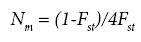
<body><![CDATA[<p align="justify"><font face="verdana" size="2">Seed samples from a total of 170 mother trees from 11 natural populations of Douglas&#45;fir distributed throughout its natural range in M&eacute;xico (<a href="/img/revistas/rfm/v34n4/a4f1.jpg" target="_blank">Figure 1</a>) were included in the study. The geographic coordinates and number of trees sampled for each population are given in <a href="/img/revistas/rfm/v34n4/a4t1.jpg" target="_blank">Table 1</a>. A minimum distance of 50 m among mother trees was maintained to reduce the possibility of relatedness; seed lots were kept separated and identified by mother tree. Number of sampled trees per population varied because of differences in population size, seed availability and germination capacity (M&aacute;pula&#45;Larreta <i>et al.,</i> 2007).</font></p>  	    <p align="justify"><font face="verdana" size="2">&nbsp;</font></p>     <p align="justify"><font face="verdana" size="2"><b>Tissue extraction and electrophoresis procedure</b></font></p>  	    <p align="justify"><font face="verdana" size="2">Seed was first imbibed in a 1% H<sub>2</sub>O<sub>2</sub> solution during 24 h, stratified at 4 &deg;C for 50 d (M&aacute;pula&#45;Larreta <i>et al.,</i> 2008), and then germinated in Petri dishes with humid paper towels within a germination chamber at 24 &deg;C. The haploid mega&#45;gametophyte tissue was extracted from each seed when the radicle was about 5 mm long, and macerated in an Eppendorf tube, adding 100 (iL of extraction buffer (USDA Forest Service, 2003). A sample of six to seven seeds per tree was used to infer on the genotype of mother trees.</font></p>  	    <p align="justify"><font face="verdana" size="2">Electrophoresis runs followed the protocols of the National Forest Genetics Electrophoresis Laboratory (NFGEL) of the USDA Forest Service (USDA Forest Service, 2003). Eleven isozyme systems for which polymorphism had already been shown for Douglas&#45;fir in previous studies (Li and Adams, 1989; Adams <i>et al.,</i> 1990) were evaluated, including diaphorase (DIA), esterase (EST), glutamate dehydrogenase (GDH), glutamate oxaloacetate&#45;transaminase (GOT), isocitrate dehydrogenase (IDH), leucine amino peptidase (LAP), malate dehydrogenase (MDH), malic enzyme (ME), phosphoglucose isomerase (PGI), phosphoglucomutase (PGM), and 6&#45;phosphogluconate dehydrogenase (6&#45;PGD). For DIA and GOT, the staining procedure of Stuber <i>et al.</i> (1988) was used.</font></p>  	    <p align="justify"><font face="verdana" size="2">A total of 18 loci were scored; samples of mega&#45;gametophyte tissue from <i>Pinus resinosa</i> Ait., a species completely monomorphic for these loci, were included as control in each gel. For those enzymes in which several activity zones were detected, loci were identified with the same enzyme code followed by successive numerals, starting by the fastest migrating zone. Allele designation was done considering for each locus the most frequent allele in the whole sample as number 1, and those less frequent were numbered successively according to their relative distance from the origin.</font></p>  	    <p align="justify"><font face="verdana" size="2"><b>Estimation of genetic diversity and genetic structure parameters</b></font></p>     <p align="justify"><font face="verdana" size="2">Parameters of genetic diversity, including gene frequency, number of alleles per locus and percentage of polymorphic loci (frequency of most common allele <u>&lt;</u> 0.95) were calculated for each population, following the procedures of Brown and Weir (1983); in addition, observed <i>(H<sub>o</sub>)</i> and expected <i>(H<sub>e</sub>)</i> heterozygosity were estimated according to Nei (1978), corrected for small samples. To determine the genetic structure and extent of population differentiation, the F&#45;statistics <i>(F<sub>it</sub>, F<sub>is</sub>,</i> and <i>F<sub>st</sub>)</i> were estimated using BIOSYS&#45;1 (Swofford and Selander, 1989). <i>F<sub>&iexcl;t</sub></i> and F represent the deviations from expected heterozigosity in overall and within populations, respectively, with positive values indicating a deficiency of heterozygotes, and negative values an excess; <i>F<sub>st</sub></i> indicates the degree of genetic differentiation among populations. Genetic flow was estimated as the number of migrants per generation <i>(N<sub>m</sub>)</i> with the procedure described by Slatkin and Barton (1989), using the following equation:</font></p>     <p align="center"><font face="verdana" size="2"><img src="/img/revistas/rfm/v34n4/a4e1.jpg"></font></p>      <p align="justify"><font face="verdana" size="2">Genetic distances between populations were estimated according to Nei (1978), and geographic distances were calculated based on the geographic coordinates of populations (Byers, 1997) obtained with a GPS instrument during the field sampling. The significance of the correlation between genetic and geographic distances was tested with the Mantel test (J&oslash;rgensen <i>et al.,</i> 2002). The genetic distances matrix was also used for grouping populations with the UPGMA method, using PHYLIP 3.6 (Felsenstein, 1995); to test the consistency of grouping, 500 bootstrap samples of gene frequencies for 15 polymorphic loci were generated using the same software.</font></p>     ]]></body>
<body><![CDATA[<p align="justify"><font face="verdana" size="2">All genetic analyses were done first including all 11 populations sampled and then repeated after excluding those populations (4) with a limited number of mother trees sampled. However, since there were no major differences between the results of both analyses, the interpretation was based primarily on the whole data set.</font></p>  	    <p align="justify"><font face="verdana" size="2">&nbsp;</font></p> 	    <p align="justify"><font face="verdana" size="2"><b>RESULTS AND DISCUSSION</b></font></p>      <p align="justify"><font face="verdana" size="2"><b>Genetic diversity in Mexican Douglas&#45;fir populations</b></font></p>  	    <p align="justify"><font face="verdana" size="2">Overall, 22 loci were resolved for the 11 isozyme systems assayed; but four of them (PGI&#45;1, MDH&#45;3, DIA&#45;1 and 6&#45;PGD1) were excluded from further analysis because they were inconsistently stained; three of the remaining 18 loci were completely fixed across populations, and 15 were polymorphic in at least one population, so 83.3% of the loci were polymorphic at the species level. A total of 44 alleles were identified in the 15 polymorphic loci, for an average of about three alleles per locus; thus, Mexican Douglas&#45;fir is genetically diverse globally, as most coniferous species elsewhere (Hamrick and Godt, 1989). At the population level the genetic diversity was much lower, with an average of 1.5 alleles per locus and only 28.3 % of polymorphic loci. Moreover, a wide variation was found among populations for these genetic parameters (<a href="/img/revistas/rfm/v34n4/a4t2.jpg" target="_blank">Table 2</a>). On average, genetic diversity in these Mexican Douglas&#45;fir populations seems to be lower than in populations from other regions in North America (Merkle and Adams, 1987; Li and Adams, 1989; El&#45;Kassaby and Ritland, 1996).</font></p>  	    <p align="justify"><font face="verdana" size="2">Populations from northern M&eacute;xico showed higher polymorphism than those from central M&eacute;xico (<a href="/img/revistas/rfm/v34n4/a4t2.jpg" target="_blank">Table 2</a>), which are located at the margins of the species distribution and have a higher degree of isolation and fragmentation (Dom&iacute;nguez, 1994; Mapula&#45;Larreta <i>et al.,</i> 2007). The level of polymorphic loci found in the central Douglas&#45;fir populations are similar to those reported for <i>Picea chihuahuana</i> Mart. (Ledig <i>et al.,</i> 1997), <i>Pinus maximartinezii</i> Rzedowski (Ledig <i>et al.,</i> 1999), <i>P. pinceana</i> Gordon (Ledig <i>et al.,</i> 2001) and <i>P. greggii</i> Engelm. in M&eacute;xico (Ram&iacute;rez <i>et al.,</i> 1997; Parraguirre <i>et al.,</i> 2002), or <i>Picea breweriana</i> S. Wats. in California and Oregon (Ledig <i>et al.,</i> 2005), which also show some extent of geographic isolation, fragmentation and reduced population sizes.</font></p>     <p align="justify"><font face="verdana" size="2">Mean expected heterozygosity <i>(H<sub>e</sub>)</i> per population was relatively low (0.077; <a href="/img/revistas/rfm/v34n4/a4t2.jpg" target="_blank">Table 2</a>) as compared to genetic diversity values found for Douglas&#45;fir populations in USA and Canada (0.178 in Merkle and Adams, 1987; 0.137 in Li and Adams, 1989). In pine species with reproductive systems similar to that of Douglas&#45;fir, the average <i>H<sub>e</sub></i> reported is 0.154 (Hamrick and Godt, 1996); thus, genetic diversity for these Douglas&#45;fir populations seems to be rather low, even lower than that found in other Mexican conifers as <i>Picea chihuahuana</i> (Ledig <i>et al.,</i> 1997) and <i>Abies religiosa</i> (H.B.K.) Schl. et Cham. (Aguirre <i>et al.,</i> 2000). Surprisingly, no significant differences between <i>H<sub>e</sub></i> and <i>H<sub>o</sub></i> were detected in any Douglas&#45;fir population (<a href="/img/revistas/rfm/v34n4/a4t2.jpg" target="_blank">Table 2</a>), so there are no indications of heterozygotes deficiency within them, and they appear to be in a mating system equilibrium (see discussion below on the structure of genetic diversity within and among populations).</font></p>  	    <p align="justify"><font face="verdana" size="2">Northern populations showed H<sub>e</sub> values almost threefold those from central M&eacute;xico (<a href="/img/revistas/rfm/v34n4/a4t2.jpg" target="_blank">Table 2</a>). Jam&eacute; and Puerto Palomo in the North had the highest <i>H<sub>e</sub></i> values (0.175), whereas Tlaxco and San Jos&eacute; Capulines in the central region showed the lowest <i>(H</i> <u>&lt;</u> 0.036). Ejido Zapata was completely monomorphic for all loci scored; however, since the sample size was quite low (only 5 mother trees), this might change with a larger number of genotypes.</font></p>     <p align="justify"><font face="verdana" size="2">&nbsp;</font></p>     <p align="justify"><font face="verdana" size="2"><b>Genetic structure</b></font></p>      ]]></body>
<body><![CDATA[<p align="justify"><font face="verdana" size="2">Except for locus EST&#45;1, a negative value of <i>F.<sub>s</sub></i> was found for all loci, with an average value of &#45;0.068 (<a href="#t3">Table 3</a>). Thus, under the assumption of random mating, at the sub&#45;population level there is a slight excess of heterozygotes and no inbreeding. In other coniferous species having small and isolated populations it is common to find a dei ciency of heterozygotes, and at least moderate levels of inbreeding, as in the case of <i>P. pinceana</i> (Ledig <i>et al.,</i> 2001) and <i>Picea breweriana</i> (Ledig <i>et al.,</i> 2005). In that sense, our results are unexpected. Since we used germinated seed only, selection against recessive homozygotes during the early stages of embryo development as proposed in other coniferous species (Desponts and Simon, 1987; Rajora <i>et al.,</i> 1998) could account for the heterozygous excess. M&aacute;pula&#45;Larreta <i>et al.</i> (2007) found a high proportion of empty seeds in these populations of Douglas&#45;fir, and it was partially attributed to embryo abortion associated to self&#45;pollination in small populations.</font></p>     <p align="center"><font face="verdana" size="2"><a name="t3"></a></font></p>     <p align="center"><font face="verdana" size="2"><img src="/img/revistas/rfm/v34n4/a4t3.jpg"></font></p>     <p align="justify"><font face="verdana" size="2">The average <i>F<sub>it</sub></i> value was 0.251 (<a href="#t3">Table 3</a>) indicating that at the whole population level there is a clear deficiency of heterozygous, with a strong trend towards allele fixation at each sub&#45;population. This effect is distinctive of genetic drift acting in small populations as differentiation keeps progressing (Falconer and Mackay, 1996). Average value of the fixation index <i>(F<sub>st</sub>)</i> was 0.298 (<a href="#t3">Table 3</a>), showing that almost one third of the estimated genetic diversity is located among populations. In out&#45;breeding and wind pollinated tree species it is common to find over 85 % of genetic diversity residing within populations (Hamrick and Godt, 1989; Ledig, 1998), so the distribution of genetic diversity in these Douglas&#45;fir populations deviates strongly from this pattern. In fact, the <i>F<sub>st</sub></i> value for these populations is about ive times higher than that estimated for Douglas&#45;fir in other regions (El&#45;Kassaby and Ritland, 1996).</font></p>  	    <p align="justify"><font face="verdana" size="2">An <i>F<sub>st</sub></i> value above 0.25, as in the present study, indicates that a strong differentiation process among populations is taking place, either from genetic drift or natural selection, in combination with genetic isolation. Similar results have been found in other Mexican conifers with restricted or fragmented natural distribution (Ledig <i>et al.,</i> 1997; Aguirre <i>et al.,</i> 2000; Parraguirre <i>et al.,</i> 2002), so it is no surprising to find this pattern for Mexican Douglas&#45;fir. On average of the 15 loci, the estimated number of migrants per generation ( <i>N<sub>m</sub>)</i> was 0.589 (<a href="#t3">Table 3</a>). Even though it varied up to 7.1 for some loci, the mean value is much lower than that reported for other Douglas&#45;fir populations (El&#45;Kassaby and Ritland, 1996), suggesting that genetic exchange might be strongly limited between populations and genetic drift is likely operating in these small populations.</font></p>  	    <p align="justify"><font face="verdana" size="2"><b>Geographic pattern of genetic diversity</b></font></p>     <p align="justify"><font face="verdana" size="2">The average genetic distance between populations was 0.035, but it varied from 0.001 up to 0.125. The highest genetic distances were between populations from the northeast (Jam&eacute; or Puerto Palomo) and those from central M&eacute;xico. The correlation coefficient between genetic and geographic distances was positive (r = 0.310), and it increased drastically (r = 0.849) when the Mohinora population was excluded from the analysis, leaving only the populations along the Sierra Madre Oriental (<a href="/img/revistas/rfm/v34n4/a4f2.jpg" target="_blank">Figure 2</a>); however, the Mantel test showed that the association between genetic and geographic distances was not significant in any case. When only the populations from central M&eacute;xico were considered, the correlation became negative (r = &#45;0.216); thus, genetic differentiation among these populations seems to be random with respect to their geographic distribution, suggesting again the role of genetic drift in shaping the structure of genetic diversity among them.</font></p>     <p align="justify"><font face="verdana" size="2">Grouping of populations agreed with the geographic trend observed in the correlation analysis (<a href="/img/revistas/rfm/v34n4/a4f3.jpg" target="_blank">Figure 3a</a>). The two northeastern populations in the Sierra Madre Oriental (Jam&eacute; and Puerto Palomo) separated from all others, with high consensus values, whereas those from central M&eacute;xico grouped together but with lower consensus values in the subgroups. The Mohinora population joined one of the subgroups from central M&eacute;xico with a rather high consensus value; these populations shared similar allele frequencies for most common alleles in 9 of the 15 polymorphic loci surveyed, including three of them fixed (data not shown). The general grouping pattern was not modified when the populations with small sample size were excluded from the analysis, except that the consensus value in the subgroups from central M&eacute;xico was higher (<a href="/img/revistas/rfm/v34n4/a4f3.jpg" target="_blank">Figure 3b</a>).</font></p>  	    <p align="justify"><font face="verdana" size="2">This grouping pattern is similar to that found using morphological traits in a larger number of populations from the same geographic regions (Reyes&#45;Hern&aacute;ndez <i>et al.,</i> 2006), except for the Mohinora population. In the Reyes&#45;Hern&aacute;ndez <i>et al.</i> (2006) study, as well as in others using shoot phenology traits (Acevedo&#45;Rodr&iacute;guez <i>et al.,</i> 2006), Mohinora was closer to the northeastern populations than to those from central M&eacute;xico. The different grouping of the Mohinora population based on morphology and shoot phenology traits as compared with isozyme markers might be due to differences in adaptive value of traits, reflecting the effect of different evolution forces. It is well known that quantitative traits, such as morphology and phenology traits, are commonly subject to natural selection forces whereas isozyme markers are mostly neutral to selection (Lynch <i>et al.,</i> 1999; Gonz&aacute;lez&#45;Mart&iacute;nez <i>et al.,</i> 2002).</font></p>  	    <p align="justify"><font face="verdana" size="2">&nbsp;</font></p> 	    ]]></body>
<body><![CDATA[<p align="justify"><font face="verdana" size="2"><b>CONCLUSIONS</b></font></p>      <p align="justify"><font face="verdana" size="2">Results of this study show that Mexican Douglas&#45;fir has a high level of genetic diversity and that populations from central M&eacute;xico are genetically differentiated from those in the northeast. Since Mexican populations might become an important source of genetic resources for domestication programs of this species, conservation strategies should be delineated to ensure their long&#45;term survival. The marginal distribution of populations in central M&eacute;xico, their high degree of differentiation, their highest risk of genetic erosion from fragmentation or climatic change, and their potential value for adaptation to warmer and drier environments, gives them the highest priority for conservation of Douglas&#45;fir within M&eacute;xico. Conservation strategies for them, however, should consider the limited production of sound seed and low recruitment capacity of new seedlings, in addition to other biological and environmental pressures that jeopardize <i>in situ</i> conservation in central M&eacute;xico.</font></p>  	    <p align="justify"><font face="verdana" size="2">&nbsp;</font></p>     <p align="justify"><font face="verdana" size="2"><b>ACKNOWLEDGEMENTS</b></font></p>      <p align="justify"><font face="verdana" size="2">The study was supported by the National Council of Science and Technology (CONACYT) of M&eacute;xico through projects 33617&#45;B <i>(Genetic diversity and conservation of Pseudotsuga in M&eacute;xico)</i> and 2002&#45;COI&#45;6416 of the CONAFOR&#45;CONACYT Fund <i>(Conservation and genetic improvement of Pseudotsuga spp. in Tlaxcala and the central region of M&eacute;xico);</i> the study is part of a task undertaken by the Forest Genetic Resources Working Group (FGRWG) of the North American Forestry Commission. We are grateful to the Genetic Marker Lab staff at the Colegio de Postgraduados for helping us to run the samples, particularly to Juan Carlos Zaragoza. We also thank Jean Beaulieu, Natural Resources Canada, for his thorough review and insightful comments to an earlier drat of this paper.</font></p>     <p align="justify"><font face="verdana" size="2">&nbsp;</font></p>     <p align="justify"><font face="verdana" size="2"><b>BIBLIOGRAPHY</b></font></p>      <!-- ref --><p align="justify"><font face="verdana" size="2"><b>Acevedo&#45;Rodr&iacute;guez R, J J Vargas&#45;Hern&aacute;ndez, J L&oacute;pez&#45;Upton, J Vel&aacute;zquez&#45;Mendoza (2006)</b> Efecto de la procedencia geogr&aacute;fica y de la fertilizaci&oacute;n en la fenolog&iacute;a del brote terminal en pl&aacute;ntulas de <i>Pseudotsuga</i> sp. Agrociencia 40:125&#45;137.    &nbsp;&nbsp;&nbsp;&nbsp;&nbsp;&nbsp;&nbsp;&nbsp;[&#160;<a href="javascript:void(0);" onclick="javascript: window.open('/scielo.php?script=sci_nlinks&ref=7078411&pid=S0187-7380201100040000400001&lng=','','width=640,height=500,resizable=yes,scrollbars=1,menubar=yes,');">Links</a>&#160;]<!-- end-ref --> </font></p>     <!-- ref --><p align="justify"><font face="verdana" size="2"><b>Adams W T, D B Neale, A H Doerksen, D B Smith (1990)</b> Inheritance and linkage of isozyme variants from seed and vegetative bud tissues in coastal Douglas&#45;fir <i>(Pseudostuga menziesii</i> var. <i>menziesii </i>(Mirb.) Franco). Silvae Genet. 39:153&#45;167.    &nbsp;&nbsp;&nbsp;&nbsp;&nbsp;&nbsp;&nbsp;&nbsp;[&#160;<a href="javascript:void(0);" onclick="javascript: window.open('/scielo.php?script=sci_nlinks&ref=7078413&pid=S0187-7380201100040000400002&lng=','','width=640,height=500,resizable=yes,scrollbars=1,menubar=yes,');">Links</a>&#160;]<!-- end-ref --></font></p>     <!-- ref --><p align="justify"><font face="verdana" size="2"><b>Aguirre P E, G R Furnier, L E Eguiarte (2000)</b> Low levels of genetic variation within and high levels of genetic differentiation among populations of species of <i>Abies</i> from southern Mexico and Guatemala. Amer. J. Bot. 87:362&#45;371.    &nbsp;&nbsp;&nbsp;&nbsp;&nbsp;&nbsp;&nbsp;&nbsp;[&#160;<a href="javascript:void(0);" onclick="javascript: window.open('/scielo.php?script=sci_nlinks&ref=7078415&pid=S0187-7380201100040000400003&lng=','','width=640,height=500,resizable=yes,scrollbars=1,menubar=yes,');">Links</a>&#160;]<!-- end-ref --></font></p>     <!-- ref --><p align="justify"><font face="verdana" size="2"><b>Brown A H D, B S Weir (1983)</b> Measuring genetic variability in plant population: <i>In:</i> Isozymes in Plant Genetics and Breeding. Part "A". S D Tanksley, T J Orton (eds). Elservier, Amsterdan, Holland. pp:219&#45;239.    &nbsp;&nbsp;&nbsp;&nbsp;&nbsp;&nbsp;&nbsp;&nbsp;[&#160;<a href="javascript:void(0);" onclick="javascript: window.open('/scielo.php?script=sci_nlinks&ref=7078417&pid=S0187-7380201100040000400004&lng=','','width=640,height=500,resizable=yes,scrollbars=1,menubar=yes,');">Links</a>&#160;]<!-- end-ref --></font></p>     <!-- ref --><p align="justify"><font face="verdana" size="2"><b>Brown A H D, C M Hardner (2000)</b> Sampling the gene pools of forest trees for <i>ex situ</i> conservation. <i>In:</i> Forest Conservation Genetics: Principles and Practice. A Young, D Boshier, T Boyle (eds). CSIRO Publishing, Australia. pp:185&#45;196.    &nbsp;&nbsp;&nbsp;&nbsp;&nbsp;&nbsp;&nbsp;&nbsp;[&#160;<a href="javascript:void(0);" onclick="javascript: window.open('/scielo.php?script=sci_nlinks&ref=7078419&pid=S0187-7380201100040000400005&lng=','','width=640,height=500,resizable=yes,scrollbars=1,menubar=yes,');">Links</a>&#160;]<!-- end-ref --> </font></p>     <!-- ref --><p align="justify"><font face="verdana" size="2"><b>Byers J A (1997)</b> Surface distance between two points of latitude and longitude. Computer program available at web site: <a href="http://www.wcrl.ars.usda.gov/cec/java/lat-long.htm" target="_blank">http://www.wcrl.ars.usda.gov/cec/java/lat&#45;long.htm</a>.    &nbsp;&nbsp;&nbsp;&nbsp;&nbsp;&nbsp;&nbsp;&nbsp;[&#160;<a href="javascript:void(0);" onclick="javascript: window.open('/scielo.php?script=sci_nlinks&ref=7078421&pid=S0187-7380201100040000400006&lng=','','width=640,height=500,resizable=yes,scrollbars=1,menubar=yes,');">Links</a>&#160;]<!-- end-ref --> </font></p>     <!-- ref --><p align="justify"><font face="verdana" size="2"><b>Debreczy Z, I Racz (1995)</b> New species and varieties of conifers from Mexico. Phytologia 78:217&#45;243.    &nbsp;&nbsp;&nbsp;&nbsp;&nbsp;&nbsp;&nbsp;&nbsp;[&#160;<a href="javascript:void(0);" onclick="javascript: window.open('/scielo.php?script=sci_nlinks&ref=7078423&pid=S0187-7380201100040000400007&lng=','','width=640,height=500,resizable=yes,scrollbars=1,menubar=yes,');">Links</a>&#160;]<!-- end-ref --></font></p>     <!-- ref --><p align="justify"><font face="verdana" size="2"><b>Desponts M, J P Simon (1987)</b> Structure et variabilit&eacute; g&eacute;n&eacute;tique de populations d'&eacute;pinette noire <i>(Picea mariana</i> (Mill.) B. S. P.) dans la zone h&eacute;miartique du Nouveau&#45;Qu&eacute;bec. Can. J. For. Res. 17:1006&#45;1012.    &nbsp;&nbsp;&nbsp;&nbsp;&nbsp;&nbsp;&nbsp;&nbsp;[&#160;<a href="javascript:void(0);" onclick="javascript: window.open('/scielo.php?script=sci_nlinks&ref=7078425&pid=S0187-7380201100040000400008&lng=','','width=640,height=500,resizable=yes,scrollbars=1,menubar=yes,');">Links</a>&#160;]<!-- end-ref --></font></p>      <!-- ref --><p align="justify"><font face="verdana" size="2"><b>Dom&iacute;nguez A F A (1994)</b> An&aacute;lisis hist&oacute;rico&#45;ecol&oacute;gico de los bosques de <i>Pseudotsuga</i> en M&eacute;xico. INIFAP&#45;CIR Golfo Centro. Folleto T&eacute;cnico No. 23. M&eacute;xico. 43 p.    &nbsp;&nbsp;&nbsp;&nbsp;&nbsp;&nbsp;&nbsp;&nbsp;[&#160;<a href="javascript:void(0);" onclick="javascript: window.open('/scielo.php?script=sci_nlinks&ref=7078427&pid=S0187-7380201100040000400009&lng=','','width=640,height=500,resizable=yes,scrollbars=1,menubar=yes,');">Links</a>&#160;]<!-- end-ref --> </font></p>     <!-- ref --><p align="justify"><font face="verdana" size="2"><b>El&#45;Kassaby YA, K Ritland (1996)</b> Genetic variation in low elevation Douglas&#45;fir of British Columbia and its relevance to gene conservation. Biodiv. Conserv. 5:779&#45;794.    &nbsp;&nbsp;&nbsp;&nbsp;&nbsp;&nbsp;&nbsp;&nbsp;[&#160;<a href="javascript:void(0);" onclick="javascript: window.open('/scielo.php?script=sci_nlinks&ref=7078429&pid=S0187-7380201100040000400010&lng=','','width=640,height=500,resizable=yes,scrollbars=1,menubar=yes,');">Links</a>&#160;]<!-- end-ref --> </font></p>     <!-- ref --><p align="justify"><font face="verdana" size="2"><b>Falconer D S, T F C Mackay (1996)</b> Introduction to Quantitative Genetics, 4th ed. Longman, New York, USA. 463 p.    &nbsp;&nbsp;&nbsp;&nbsp;&nbsp;&nbsp;&nbsp;&nbsp;[&#160;<a href="javascript:void(0);" onclick="javascript: window.open('/scielo.php?script=sci_nlinks&ref=7078431&pid=S0187-7380201100040000400011&lng=','','width=640,height=500,resizable=yes,scrollbars=1,menubar=yes,');">Links</a>&#160;]<!-- end-ref --> </font></p>     <!-- ref --><p align="justify"><font face="verdana" size="2"><b>Felsenstein J (1995)</b> PHYLIP: a phylogeny inference package, version 3.6. Computer program available at website: <a href="http://evolution.genetics.washington.edu/phylip/sotware.html" target="_blank">http://evolution.genetics.washington.edu/phylip/sotware.html</a>.    &nbsp;&nbsp;&nbsp;&nbsp;&nbsp;&nbsp;&nbsp;&nbsp;[&#160;<a href="javascript:void(0);" onclick="javascript: window.open('/scielo.php?script=sci_nlinks&ref=7078433&pid=S0187-7380201100040000400012&lng=','','width=640,height=500,resizable=yes,scrollbars=1,menubar=yes,');">Links</a>&#160;]<!-- end-ref --> </font></p>     <!-- ref --><p align="justify"><font face="verdana" size="2"><b>Gernandt D S, A Liston (1999)</b> Internal transcribed spacer region evolution in <i>Larix</i> and <i>Pseudotsuga</i> (Pinaceae). Amer. J. Bot. 86:711&#45;723.    &nbsp;&nbsp;&nbsp;&nbsp;&nbsp;&nbsp;&nbsp;&nbsp;[&#160;<a href="javascript:void(0);" onclick="javascript: window.open('/scielo.php?script=sci_nlinks&ref=7078435&pid=S0187-7380201100040000400013&lng=','','width=640,height=500,resizable=yes,scrollbars=1,menubar=yes,');">Links</a>&#160;]<!-- end-ref --></font></p>     <!-- ref --><p align="justify"><font face="verdana" size="2"><b>Gonz&aacute;lez&#45;Mart&iacute;nez S C, R Alia, L Gil (2002)</b> Population genetic structure in a Mediterranean pine <i>(Pinus pinaster</i> Ait.): a comparison of allozyme markers and quantitative traits. Heredity 89:199&#45;206.    &nbsp;&nbsp;&nbsp;&nbsp;&nbsp;&nbsp;&nbsp;&nbsp;[&#160;<a href="javascript:void(0);" onclick="javascript: window.open('/scielo.php?script=sci_nlinks&ref=7078437&pid=S0187-7380201100040000400014&lng=','','width=640,height=500,resizable=yes,scrollbars=1,menubar=yes,');">Links</a>&#160;]<!-- end-ref --> </font></p>     <!-- ref --><p align="justify"><font face="verdana" size="2"><b>Hamrick J L, M J W Godt (1989)</b> Allozyme diversity in plant species. <i>In:</i> Plant Population Genetics, Breeding and Genetic Resources. A H D Brown, M T Clegg, A L Kahler, B S Weir (eds). Sinauer Associates, Sunderland, MA. pp:43&#45;63.    &nbsp;&nbsp;&nbsp;&nbsp;&nbsp;&nbsp;&nbsp;&nbsp;[&#160;<a href="javascript:void(0);" onclick="javascript: window.open('/scielo.php?script=sci_nlinks&ref=7078439&pid=S0187-7380201100040000400015&lng=','','width=640,height=500,resizable=yes,scrollbars=1,menubar=yes,');">Links</a>&#160;]<!-- end-ref --> </font></p>     <!-- ref --><p align="justify"><font face="verdana" size="2"><b>Hamrick J L, M J W Godt (1996)</b> Conservation genetics of endemic plant species. <i>In:</i> Conservation Genetics: Case Histories from Nature. J C Avise, J L Hamrick (eds). Chapman and Hall, New York. pp:281&#45;304.    &nbsp;&nbsp;&nbsp;&nbsp;&nbsp;&nbsp;&nbsp;&nbsp;[&#160;<a href="javascript:void(0);" onclick="javascript: window.open('/scielo.php?script=sci_nlinks&ref=7078441&pid=S0187-7380201100040000400016&lng=','','width=640,height=500,resizable=yes,scrollbars=1,menubar=yes,');">Links</a>&#160;]<!-- end-ref --></font></p>     <!-- ref --><p align="justify"><font face="verdana" size="2"><b>Hermann R K, D P Lavender (1999)</b> Douglas&#45;Fir planted forests. New For. 17:53&#45;70.    &nbsp;&nbsp;&nbsp;&nbsp;&nbsp;&nbsp;&nbsp;&nbsp;[&#160;<a href="javascript:void(0);" onclick="javascript: window.open('/scielo.php?script=sci_nlinks&ref=7078443&pid=S0187-7380201100040000400017&lng=','','width=640,height=500,resizable=yes,scrollbars=1,menubar=yes,');">Links</a>&#160;]<!-- end-ref --></font></p>     <!-- ref --><p align="justify"><font face="verdana" size="2"><b>Howe G T, K Jayawickrama, M Cherry, G R Johnson, N C Wheeler (2006)</b> Breeding Douglas&#45;fir. In: Plant Breeding Reviews, Volume 27. J Janick (ed). John Wiley &amp; Sons Inc., New York. pp:245&#45;353.    &nbsp;&nbsp;&nbsp;&nbsp;&nbsp;&nbsp;&nbsp;&nbsp;[&#160;<a href="javascript:void(0);" onclick="javascript: window.open('/scielo.php?script=sci_nlinks&ref=7078445&pid=S0187-7380201100040000400018&lng=','','width=640,height=500,resizable=yes,scrollbars=1,menubar=yes,');">Links</a>&#160;]<!-- end-ref --> </font></p>     <!-- ref --><p align="justify"><font face="verdana" size="2"><b>J&oslash;rgensen S, J Hamrick, P V Wells (2002)</b> Regional patterns of genetic diversity in <i>Pinusflexilis</i> (Pinaceae) reveal complex species history. Amer. J. Bot. 89:792&#45;800.    &nbsp;&nbsp;&nbsp;&nbsp;&nbsp;&nbsp;&nbsp;&nbsp;[&#160;<a href="javascript:void(0);" onclick="javascript: window.open('/scielo.php?script=sci_nlinks&ref=7078447&pid=S0187-7380201100040000400019&lng=','','width=640,height=500,resizable=yes,scrollbars=1,menubar=yes,');">Links</a>&#160;]<!-- end-ref --></font></p>     <!-- ref --><p align="justify"><font face="verdana" size="2"><b>Ju&aacute;rez&#45;Agis A, J L&oacute;pez&#45;Upton, J J Vargas&#45;Hern&aacute;ndez, C S&aacute;enz&#45;Romero (2006)</b> Variaci&oacute;n geogr&aacute;fica en la germinaci&oacute;n y crecimiento inicial de pl&aacute;ntulas de <i>Pseudotsuga menziesii</i> de M&eacute;xico. Agrociencia 40:783&#45;792.    &nbsp;&nbsp;&nbsp;&nbsp;&nbsp;&nbsp;&nbsp;&nbsp;[&#160;<a href="javascript:void(0);" onclick="javascript: window.open('/scielo.php?script=sci_nlinks&ref=7078449&pid=S0187-7380201100040000400020&lng=','','width=640,height=500,resizable=yes,scrollbars=1,menubar=yes,');">Links</a>&#160;]<!-- end-ref --></font></p>     <!-- ref --><p align="justify"><font face="verdana" size="2"><b>Ledig F T (1998)</b> Genetic variation in <i>Pinus. In:</i> Ecology and Biogeography of <i>Pinus.</i> D M Richardson (ed). Cambridge University Press, Cambridge. pp:251&#45;280.    &nbsp;&nbsp;&nbsp;&nbsp;&nbsp;&nbsp;&nbsp;&nbsp;[&#160;<a href="javascript:void(0);" onclick="javascript: window.open('/scielo.php?script=sci_nlinks&ref=7078451&pid=S0187-7380201100040000400021&lng=','','width=640,height=500,resizable=yes,scrollbars=1,menubar=yes,');">Links</a>&#160;]<!-- end-ref --> </font></p>     <!-- ref --><p align="justify"><font face="verdana" size="2"><b>Ledig F T, V Jacob C, P D Hodgskisss, T Eguiluz P (1997)</b> Evolution and divergence among populations of a rare Mexican endemic, Chihuahua spruce, following Holocene warming. Evolution 51:1815&#45;1827.    &nbsp;&nbsp;&nbsp;&nbsp;&nbsp;&nbsp;&nbsp;&nbsp;[&#160;<a href="javascript:void(0);" onclick="javascript: window.open('/scielo.php?script=sci_nlinks&ref=7078453&pid=S0187-7380201100040000400022&lng=','','width=640,height=500,resizable=yes,scrollbars=1,menubar=yes,');">Links</a>&#160;]<!-- end-ref --></font></p>     <!-- ref --><p align="justify"><font face="verdana" size="2"><b>Ledig F T, M T Conkle, B Bermejo V, T Eguiluz P, P D Hodgskiss, D R Johnson, W S Dvorak (1999)</b> Evidence for an extreme bottleneck in a rare Mexican pinyon: genetic diversity, disequilibrium, and the mating system in <i>Pinus maximartinezii.</i> Evolution 53:91&#45;99.    &nbsp;&nbsp;&nbsp;&nbsp;&nbsp;&nbsp;&nbsp;&nbsp;[&#160;<a href="javascript:void(0);" onclick="javascript: window.open('/scielo.php?script=sci_nlinks&ref=7078455&pid=S0187-7380201100040000400023&lng=','','width=640,height=500,resizable=yes,scrollbars=1,menubar=yes,');">Links</a>&#160;]<!-- end-ref --></font></p>  	    <!-- ref --><p align="justify"><font face="verdana" size="2"><b>Ledig F T, M A Cap&oacute; A, P D Hodgskiss, H Sbay, C Flores L, M C Thompson, B Bermejo V (2001)</b> Genetic diversity and the mating system of a rare Mexican pi&ntilde;on, <i>Pinuspinceana,</i> and a comparison with <i>Pinus maximartinezii</i> (Pinaceae). Amer. J. Bot. 88:1977&#45;1987.    &nbsp;&nbsp;&nbsp;&nbsp;&nbsp;&nbsp;&nbsp;&nbsp;[&#160;<a href="javascript:void(0);" onclick="javascript: window.open('/scielo.php?script=sci_nlinks&ref=7078457&pid=S0187-7380201100040000400024&lng=','','width=640,height=500,resizable=yes,scrollbars=1,menubar=yes,');">Links</a>&#160;]<!-- end-ref --></font></p>     <!-- ref --><p align="justify"><font face="verdana" size="2"><b>Ledig F T, P D Hodgskiss, D R Johnson (2005)</b> Genetic diversity, genetic structure, and mating system of brewer spruce (Pinaceae), a relict of the arcto&#45;tertiary forest. Amer. J. Bot. 92:1975&#45;1986.    &nbsp;&nbsp;&nbsp;&nbsp;&nbsp;&nbsp;&nbsp;&nbsp;[&#160;<a href="javascript:void(0);" onclick="javascript: window.open('/scielo.php?script=sci_nlinks&ref=7078459&pid=S0187-7380201100040000400025&lng=','','width=640,height=500,resizable=yes,scrollbars=1,menubar=yes,');">Links</a>&#160;]<!-- end-ref --></font></p>  	    <!-- ref --><p align="justify"><font face="verdana" size="2"><b>Li P, W T Adams (1989)</b> Range&#45;wide patterns of allozyme variation in Douglas&#45;fir <i>(Pseudotsuga menziesii).</i> Can. J. For. Res. 19:149&#45;161.    &nbsp;&nbsp;&nbsp;&nbsp;&nbsp;&nbsp;&nbsp;&nbsp;[&#160;<a href="javascript:void(0);" onclick="javascript: window.open('/scielo.php?script=sci_nlinks&ref=7078461&pid=S0187-7380201100040000400026&lng=','','width=640,height=500,resizable=yes,scrollbars=1,menubar=yes,');">Links</a>&#160;]<!-- end-ref --></font></p>  	    <!-- ref --><p align="justify"><font face="verdana" size="2"><b>Little E L Jr (1979)</b> Checklist of United States Trees (native and naturalized). USDA Forest Service. Agricultural Handbook No. 541. 375 p.    &nbsp;&nbsp;&nbsp;&nbsp;&nbsp;&nbsp;&nbsp;&nbsp;[&#160;<a href="javascript:void(0);" onclick="javascript: window.open('/scielo.php?script=sci_nlinks&ref=7078463&pid=S0187-7380201100040000400027&lng=','','width=640,height=500,resizable=yes,scrollbars=1,menubar=yes,');">Links</a>&#160;]<!-- end-ref --></font></p>  	    <!-- ref --><p align="justify"><font face="verdana" size="2"><b>Lynch M, M Pfrender, K Spitze, N Lehman, J Hicks, D Allen (1999)</b> The quantitative and molecular genetic architecture of a subdivided species. Evolution 53:100&#45;110.    &nbsp;&nbsp;&nbsp;&nbsp;&nbsp;&nbsp;&nbsp;&nbsp;[&#160;<a href="javascript:void(0);" onclick="javascript: window.open('/scielo.php?script=sci_nlinks&ref=7078465&pid=S0187-7380201100040000400028&lng=','','width=640,height=500,resizable=yes,scrollbars=1,menubar=yes,');">Links</a>&#160;]<!-- end-ref --></font></p>     <!-- ref --><p align="justify"><font face="verdana" size="2"><b>M&aacute;pula&#45;Larreta M, J L&oacute;pez&#45;Upton, J J Vargas&#45;Hern&aacute;ndez, A Hern&aacute;ndez&#45;Livera (2007)</b> Reproductive indicators in natural populations of Douglas&#45;fir in Mexico. Biodiv. Conserv. 16:727&#45;742.    &nbsp;&nbsp;&nbsp;&nbsp;&nbsp;&nbsp;&nbsp;&nbsp;[&#160;<a href="javascript:void(0);" onclick="javascript: window.open('/scielo.php?script=sci_nlinks&ref=7078467&pid=S0187-7380201100040000400029&lng=','','width=640,height=500,resizable=yes,scrollbars=1,menubar=yes,');">Links</a>&#160;]<!-- end-ref --></font></p>  	    <!-- ref --><p align="justify"><font face="verdana" size="2"><b>M&aacute;pula&#45;Larreta M, J L&oacute;pez&#45;Upton, J J Vargas&#45;Hern&aacute;ndez, A Hern&aacute;ndez&#45;Livera (2008)</b> Germinaci&oacute;n y vigor de semillas en <i>Pseudotsuga menziesii</i> de M&eacute;xico. Ra Ximhai 4:119&#45;134.    &nbsp;&nbsp;&nbsp;&nbsp;&nbsp;&nbsp;&nbsp;&nbsp;[&#160;<a href="javascript:void(0);" onclick="javascript: window.open('/scielo.php?script=sci_nlinks&ref=7078469&pid=S0187-7380201100040000400030&lng=','','width=640,height=500,resizable=yes,scrollbars=1,menubar=yes,');">Links</a>&#160;]<!-- end-ref --></font></p>  	    <!-- ref --><p align="justify"><font face="verdana" size="2"><b>Martinez M (1963)</b> Las Pin&aacute;ceas Mexicanas. UNAM. 3ra ed. M&eacute;xico, D.F. pp:27&#45;74.    &nbsp;&nbsp;&nbsp;&nbsp;&nbsp;&nbsp;&nbsp;&nbsp;[&#160;<a href="javascript:void(0);" onclick="javascript: window.open('/scielo.php?script=sci_nlinks&ref=7078471&pid=S0187-7380201100040000400031&lng=','','width=640,height=500,resizable=yes,scrollbars=1,menubar=yes,');">Links</a>&#160;]<!-- end-ref --></font></p>     <!-- ref --><p align="justify"><font face="verdana" size="2"><b>Merkle S A, W T Adams (1987)</b> Patterns of allozyme variation within and among Douglas&#45;fir breeding zones in Southwest Oregon. Can. J. For. Res. 17:402&#45;407.    &nbsp;&nbsp;&nbsp;&nbsp;&nbsp;&nbsp;&nbsp;&nbsp;[&#160;<a href="javascript:void(0);" onclick="javascript: window.open('/scielo.php?script=sci_nlinks&ref=7078473&pid=S0187-7380201100040000400032&lng=','','width=640,height=500,resizable=yes,scrollbars=1,menubar=yes,');">Links</a>&#160;]<!-- end-ref --></font></p>  	    <!-- ref --><p align="justify"><font face="verdana" size="2"><b>Nei M (1978)</b> Estimation of average heterozygosity and genetic distance from a small number of individuals. Genetics 89:583&#45;590.    &nbsp;&nbsp;&nbsp;&nbsp;&nbsp;&nbsp;&nbsp;&nbsp;[&#160;<a href="javascript:void(0);" onclick="javascript: window.open('/scielo.php?script=sci_nlinks&ref=7078475&pid=S0187-7380201100040000400033&lng=','','width=640,height=500,resizable=yes,scrollbars=1,menubar=yes,');">Links</a>&#160;]<!-- end-ref --></font></p>  	    <!-- ref --><p align="justify"><font face="verdana" size="2"><b>Parraguirre L C, J J Vargas H, P Ram&iacute;rez V, H S Aspiroz R, J Jasso M (2002)</b> Estructura de la diversidad gen&eacute;tica en poblaciones naturales de <i>Pinus greggii</i> Engelm. Rev. Fitotec. Mex. 25:279&#45;287.    &nbsp;&nbsp;&nbsp;&nbsp;&nbsp;&nbsp;&nbsp;&nbsp;[&#160;<a href="javascript:void(0);" onclick="javascript: window.open('/scielo.php?script=sci_nlinks&ref=7078477&pid=S0187-7380201100040000400034&lng=','','width=640,height=500,resizable=yes,scrollbars=1,menubar=yes,');">Links</a>&#160;]<!-- end-ref --></font></p>  	    <!-- ref --><p align="justify"><font face="verdana" size="2"><b>Rajora O P, L De verno, A Mosseler, D J Innes (1998)</b> Genetic diversity and population of disjunct Newfoundland and central Ontario populations of eastern white pine <i>(Pinus strobus).</i> Can. J. Bot. 76:500&#45;508.    &nbsp;&nbsp;&nbsp;&nbsp;&nbsp;&nbsp;&nbsp;&nbsp;[&#160;<a href="javascript:void(0);" onclick="javascript: window.open('/scielo.php?script=sci_nlinks&ref=7078479&pid=S0187-7380201100040000400035&lng=','','width=640,height=500,resizable=yes,scrollbars=1,menubar=yes,');">Links</a>&#160;]<!-- end-ref --></font></p>     <!-- ref --><p align="justify"><font face="verdana" size="2"><b>Ram&iacute;rez H C, J J Vargas H, J Jasso M, G Carrillo C, H Guill&eacute;n A (1997) </b>Variaci&oacute;n isoenzim&aacute;tica en diez poblaciones de <i>Pinus greggii</i> Engelm. Agrociencia 31:223&#45;230.    &nbsp;&nbsp;&nbsp;&nbsp;&nbsp;&nbsp;&nbsp;&nbsp;[&#160;<a href="javascript:void(0);" onclick="javascript: window.open('/scielo.php?script=sci_nlinks&ref=7078481&pid=S0187-7380201100040000400036&lng=','','width=640,height=500,resizable=yes,scrollbars=1,menubar=yes,');">Links</a>&#160;]<!-- end-ref --></font></p>     <!-- ref --><p align="justify"><font face="verdana" size="2"><b>Reyes&#45;Hern&aacute;ndez V J, J J Vargas&#45;Hern&aacute;ndez, J L&oacute;pez&#45;Upton, H Vaquera&#45;Huerta (2006)</b> Similitud fenot&iacute;pica de poblaciones mexicanas de <i>Pseudotsuga</i> Carr. Agrociencia 40:545&#45;556.    &nbsp;&nbsp;&nbsp;&nbsp;&nbsp;&nbsp;&nbsp;&nbsp;[&#160;<a href="javascript:void(0);" onclick="javascript: window.open('/scielo.php?script=sci_nlinks&ref=7078483&pid=S0187-7380201100040000400037&lng=','','width=640,height=500,resizable=yes,scrollbars=1,menubar=yes,');">Links</a>&#160;]<!-- end-ref --></font></p>  	    <!-- ref --><p align="justify"><font face="verdana" size="2"><b>Slatkin M, N H Barton (1989)</b> A comparison of three indirect methods for estimating average levels of gene flow. Evolution 43:1349&#45;1368.    &nbsp;&nbsp;&nbsp;&nbsp;&nbsp;&nbsp;&nbsp;&nbsp;[&#160;<a href="javascript:void(0);" onclick="javascript: window.open('/scielo.php?script=sci_nlinks&ref=7078485&pid=S0187-7380201100040000400038&lng=','','width=640,height=500,resizable=yes,scrollbars=1,menubar=yes,');">Links</a>&#160;]<!-- end-ref --></font></p>  	    <!-- ref --><p align="justify"><font face="verdana" size="2"><b>Stuber C W, J F Wendel, M M Goodman, J S C Smith (1988)</b> Techniques and scoring procedures for starch gel electrophoresis of enzymes from maize (Zea <i>mays</i> L.). North Carolina Agricultural Research Service. North Carolina State University. Raleigh, N.C., U.S.A. Tech. Bull. 286. 87 p.    &nbsp;&nbsp;&nbsp;&nbsp;&nbsp;&nbsp;&nbsp;&nbsp;[&#160;<a href="javascript:void(0);" onclick="javascript: window.open('/scielo.php?script=sci_nlinks&ref=7078487&pid=S0187-7380201100040000400039&lng=','','width=640,height=500,resizable=yes,scrollbars=1,menubar=yes,');">Links</a>&#160;]<!-- end-ref --></font></p>     <!-- ref --><p align="justify"><font face="verdana" size="2"><b>Swofford D L, R B Selander (1989)</b> BIOSYS&#45;1: a computer program for analysis of allelic variation in population genetics and biochemical systematics, release 1.7. Illinois Natural History Survey, Champaign, Ill. U.S.A. 65 p.    &nbsp;&nbsp;&nbsp;&nbsp;&nbsp;&nbsp;&nbsp;&nbsp;[&#160;<a href="javascript:void(0);" onclick="javascript: window.open('/scielo.php?script=sci_nlinks&ref=7078489&pid=S0187-7380201100040000400040&lng=','','width=640,height=500,resizable=yes,scrollbars=1,menubar=yes,');">Links</a>&#160;]<!-- end-ref --></font></p>  	    <!-- ref --><p align="justify"><font face="verdana" size="2"><b>USDA Forest Service (2003)</b> The National Forest Genetics Laboratory (NFGEL) Standard Operating Procedures. Pacific Southwest Research Station. Placerville, CA. 90 p.    &nbsp;&nbsp;&nbsp;&nbsp;&nbsp;&nbsp;&nbsp;&nbsp;[&#160;<a href="javascript:void(0);" onclick="javascript: window.open('/scielo.php?script=sci_nlinks&ref=7078491&pid=S0187-7380201100040000400041&lng=','','width=640,height=500,resizable=yes,scrollbars=1,menubar=yes,');">Links</a>&#160;]<!-- end-ref --></font></p>  	    <!-- ref --><p align="justify"><font face="verdana" size="2"><b>Wright S (1965)</b> The interpretation of population structure by F&#45;statistics with special regard to systems of mating. Evolution 19:395&#45;420</font>&nbsp;&nbsp;&nbsp;&nbsp;&nbsp;&nbsp;&nbsp;&nbsp;[&#160;<a href="javascript:void(0);" onclick="javascript: window.open('/scielo.php?script=sci_nlinks&ref=7078493&pid=S0187-7380201100040000400042&lng=','','width=640,height=500,resizable=yes,scrollbars=1,menubar=yes,');">Links</a>&#160;]<!-- end-ref --> ]]></body><back>
<ref-list>
<ref id="B1">
<nlm-citation citation-type="journal">
<person-group person-group-type="author">
<name>
<surname><![CDATA[Acevedo-Rodríguez]]></surname>
<given-names><![CDATA[R]]></given-names>
</name>
<name>
<surname><![CDATA[Vargas-Hernández]]></surname>
<given-names><![CDATA[J J]]></given-names>
</name>
<name>
<surname><![CDATA[López-Upton]]></surname>
<given-names><![CDATA[J]]></given-names>
</name>
<name>
<surname><![CDATA[Velázquez-Mendoza]]></surname>
<given-names><![CDATA[J]]></given-names>
</name>
</person-group>
<article-title xml:lang="es"><![CDATA[Efecto de la procedencia geográfica y de la fertilización en la fenología del brote terminal en plántulas de Pseudotsuga sp]]></article-title>
<source><![CDATA[Agrociencia]]></source>
<year>2006</year>
<volume>40</volume>
<page-range>125-137</page-range></nlm-citation>
</ref>
<ref id="B2">
<nlm-citation citation-type="journal">
<person-group person-group-type="author">
<name>
<surname><![CDATA[Adams]]></surname>
<given-names><![CDATA[W T]]></given-names>
</name>
<name>
<surname><![CDATA[Neale]]></surname>
<given-names><![CDATA[D B]]></given-names>
</name>
<name>
<surname><![CDATA[Doerksen]]></surname>
<given-names><![CDATA[A H]]></given-names>
</name>
<name>
<surname><![CDATA[Smith]]></surname>
<given-names><![CDATA[D B]]></given-names>
</name>
</person-group>
<article-title xml:lang="en"><![CDATA[Inheritance and linkage of isozyme variants from seed and vegetative bud tissues in coastal Douglas-fir (Pseudostuga menziesii var. menziesii (Mirb.) Franco)]]></article-title>
<source><![CDATA[Silvae Genet.]]></source>
<year>1990</year>
<volume>39</volume>
<page-range>153-167</page-range></nlm-citation>
</ref>
<ref id="B3">
<nlm-citation citation-type="journal">
<person-group person-group-type="author">
<name>
<surname><![CDATA[Aguirre]]></surname>
<given-names><![CDATA[P E]]></given-names>
</name>
<name>
<surname><![CDATA[Furnier]]></surname>
<given-names><![CDATA[G R]]></given-names>
</name>
<name>
<surname><![CDATA[Eguiarte]]></surname>
<given-names><![CDATA[L E]]></given-names>
</name>
</person-group>
<article-title xml:lang="en"><![CDATA[Low levels of genetic variation within and high levels of genetic differentiation among populations of species of Abies from southern Mexico and Guatemala]]></article-title>
<source><![CDATA[Amer. J. Bot.]]></source>
<year>2000</year>
<volume>87</volume>
<page-range>362-371</page-range></nlm-citation>
</ref>
<ref id="B4">
<nlm-citation citation-type="book">
<person-group person-group-type="author">
<name>
<surname><![CDATA[Brown]]></surname>
<given-names><![CDATA[A H D]]></given-names>
</name>
<name>
<surname><![CDATA[Weir]]></surname>
<given-names><![CDATA[B S]]></given-names>
</name>
<name>
<surname><![CDATA[Tanksley]]></surname>
<given-names><![CDATA[S D]]></given-names>
</name>
<name>
<surname><![CDATA[Orton]]></surname>
<given-names><![CDATA[T J]]></given-names>
</name>
</person-group>
<source><![CDATA[Measuring genetic variability in plant population: In: Isozymes in Plant Genetics and Breeding. Part "A".]]></source>
<year>1983</year>
<page-range>219-239</page-range><publisher-loc><![CDATA[Amsterdan ]]></publisher-loc>
<publisher-name><![CDATA[Elservier]]></publisher-name>
</nlm-citation>
</ref>
<ref id="B5">
<nlm-citation citation-type="book">
<person-group person-group-type="author">
<name>
<surname><![CDATA[Brown]]></surname>
<given-names><![CDATA[A H D]]></given-names>
</name>
<name>
<surname><![CDATA[Hardner]]></surname>
<given-names><![CDATA[C M]]></given-names>
</name>
</person-group>
<article-title xml:lang="en"><![CDATA[Sampling the gene pools of forest trees for ex situ conservation]]></article-title>
<person-group person-group-type="editor">
<name>
<surname><![CDATA[Young]]></surname>
<given-names><![CDATA[A]]></given-names>
</name>
<name>
<surname><![CDATA[Boshier]]></surname>
<given-names><![CDATA[D]]></given-names>
</name>
<name>
<surname><![CDATA[Boyle]]></surname>
<given-names><![CDATA[T]]></given-names>
</name>
</person-group>
<source><![CDATA[Forest Conservation Genetics: Principles and Practice]]></source>
<year>2000</year>
<page-range>185-196</page-range><publisher-name><![CDATA[CSIRO Publishing]]></publisher-name>
</nlm-citation>
</ref>
<ref id="B6">
<nlm-citation citation-type="">
<person-group person-group-type="author">
<name>
<surname><![CDATA[Byers]]></surname>
<given-names><![CDATA[J A]]></given-names>
</name>
</person-group>
<source><![CDATA[Surface distance between two points of latitude and longitude]]></source>
<year>1997</year>
</nlm-citation>
</ref>
<ref id="B7">
<nlm-citation citation-type="journal">
<person-group person-group-type="author">
<name>
<surname><![CDATA[Debreczy]]></surname>
<given-names><![CDATA[Z]]></given-names>
</name>
<name>
<surname><![CDATA[Racz]]></surname>
<given-names><![CDATA[I]]></given-names>
</name>
</person-group>
<article-title xml:lang="en"><![CDATA[New species and varieties of conifers from Mexico]]></article-title>
<source><![CDATA[Phytologia]]></source>
<year>1995</year>
<volume>78</volume>
<page-range>217-243</page-range></nlm-citation>
</ref>
<ref id="B8">
<nlm-citation citation-type="journal">
<person-group person-group-type="author">
<name>
<surname><![CDATA[Desponts]]></surname>
<given-names><![CDATA[M]]></given-names>
</name>
<name>
<surname><![CDATA[Simon]]></surname>
<given-names><![CDATA[J P]]></given-names>
</name>
</person-group>
<article-title xml:lang="en"><![CDATA[Structure et variabilité génétique de populations d'épinette noire (Picea mariana (Mill.) B. S. P.) dans la zone hémiartique du Nouveau-Québec]]></article-title>
<source><![CDATA[Can. J. For. Res.]]></source>
<year>1987</year>
<volume>17</volume>
<page-range>1006-1012</page-range></nlm-citation>
</ref>
<ref id="B9">
<nlm-citation citation-type="book">
<person-group person-group-type="author">
<name>
<surname><![CDATA[Domínguez]]></surname>
<given-names><![CDATA[A F A]]></given-names>
</name>
</person-group>
<source><![CDATA[Análisis histórico-ecológico de los bosques de Pseudotsuga en México]]></source>
<year>1994</year>
<volume>23</volume>
<page-range>43</page-range><publisher-name><![CDATA[INIFAPCIR Golfo Centro]]></publisher-name>
</nlm-citation>
</ref>
<ref id="B10">
<nlm-citation citation-type="journal">
<person-group person-group-type="author">
<name>
<surname><![CDATA[El-Kassaby]]></surname>
<given-names><![CDATA[YA]]></given-names>
</name>
<name>
<surname><![CDATA[Ritland]]></surname>
<given-names><![CDATA[K]]></given-names>
</name>
</person-group>
<article-title xml:lang="en"><![CDATA[Genetic variation in low elevation Douglas-fir of British Columbia and its relevance to gene conservation]]></article-title>
<source><![CDATA[Biodiv. Conserv.]]></source>
<year>1996</year>
<volume>5</volume>
<page-range>779-794</page-range></nlm-citation>
</ref>
<ref id="B11">
<nlm-citation citation-type="book">
<person-group person-group-type="author">
<name>
<surname><![CDATA[Falconer]]></surname>
<given-names><![CDATA[D S]]></given-names>
</name>
<name>
<surname><![CDATA[Mackay]]></surname>
<given-names><![CDATA[T F C]]></given-names>
</name>
</person-group>
<source><![CDATA[Introduction to Quantitative Genetics]]></source>
<year>1996</year>
<edition>4</edition>
<page-range>463</page-range><publisher-loc><![CDATA[New York ]]></publisher-loc>
<publisher-name><![CDATA[Longman]]></publisher-name>
</nlm-citation>
</ref>
<ref id="B12">
<nlm-citation citation-type="">
<person-group person-group-type="author">
<name>
<surname><![CDATA[Felsenstein]]></surname>
<given-names><![CDATA[J]]></given-names>
</name>
</person-group>
<source><![CDATA[PHYLIP: a phylogeny inference package, version 3.6.]]></source>
<year>1995</year>
</nlm-citation>
</ref>
<ref id="B13">
<nlm-citation citation-type="journal">
<person-group person-group-type="author">
<name>
<surname><![CDATA[Gernandt]]></surname>
<given-names><![CDATA[D S]]></given-names>
</name>
<name>
<surname><![CDATA[Liston]]></surname>
<given-names><![CDATA[A]]></given-names>
</name>
</person-group>
<article-title xml:lang="en"><![CDATA[Internal transcribed spacer region evolution in Larix and Pseudotsuga (Pinaceae)]]></article-title>
<source><![CDATA[Amer. J. Bot.]]></source>
<year>1999</year>
<volume>86</volume>
<page-range>711-723</page-range></nlm-citation>
</ref>
<ref id="B14">
<nlm-citation citation-type="journal">
<person-group person-group-type="author">
<name>
<surname><![CDATA[González-Martínez]]></surname>
<given-names><![CDATA[S C]]></given-names>
</name>
<name>
<surname><![CDATA[Alia]]></surname>
<given-names><![CDATA[R]]></given-names>
</name>
<name>
<surname><![CDATA[Gil]]></surname>
<given-names><![CDATA[L]]></given-names>
</name>
</person-group>
<article-title xml:lang="en"><![CDATA[Population genetic structure in a Mediterranean pine (Pinus pinaster Ait.): a comparison of allozyme markers and quantitative traits]]></article-title>
<source><![CDATA[Heredity]]></source>
<year>2002</year>
<volume>89</volume>
<page-range>199-206</page-range></nlm-citation>
</ref>
<ref id="B15">
<nlm-citation citation-type="book">
<person-group person-group-type="author">
<name>
<surname><![CDATA[Hamrick]]></surname>
<given-names><![CDATA[J L]]></given-names>
</name>
<name>
<surname><![CDATA[Godt]]></surname>
<given-names><![CDATA[M J W]]></given-names>
</name>
</person-group>
<article-title xml:lang="en"><![CDATA[Allozyme diversity in plant species]]></article-title>
<person-group person-group-type="editor">
<name>
<surname><![CDATA[Brown]]></surname>
<given-names><![CDATA[A H D]]></given-names>
</name>
<name>
<surname><![CDATA[Clegg]]></surname>
<given-names><![CDATA[M T]]></given-names>
</name>
<name>
<surname><![CDATA[Kahler]]></surname>
<given-names><![CDATA[A L]]></given-names>
</name>
<name>
<surname><![CDATA[Weir]]></surname>
<given-names><![CDATA[B S]]></given-names>
</name>
</person-group>
<source><![CDATA[Plant Population Genetics, Breeding and Genetic Resources]]></source>
<year>1989</year>
<page-range>43-63</page-range><publisher-loc><![CDATA[Sunderland^eMA MA]]></publisher-loc>
<publisher-name><![CDATA[Sinauer Associates]]></publisher-name>
</nlm-citation>
</ref>
<ref id="B16">
<nlm-citation citation-type="book">
<person-group person-group-type="author">
<name>
<surname><![CDATA[Hamrick]]></surname>
<given-names><![CDATA[J L]]></given-names>
</name>
<name>
<surname><![CDATA[Godt]]></surname>
<given-names><![CDATA[M J W]]></given-names>
</name>
</person-group>
<article-title xml:lang="en"><![CDATA[Conservation genetics of endemic plant species]]></article-title>
<person-group person-group-type="editor">
<name>
<surname><![CDATA[Avise]]></surname>
<given-names><![CDATA[J C]]></given-names>
</name>
<name>
<surname><![CDATA[Hamrick]]></surname>
<given-names><![CDATA[J L]]></given-names>
</name>
</person-group>
<source><![CDATA[Conservation Genetics: Case Histories from Nature]]></source>
<year>1996</year>
<page-range>281-304</page-range><publisher-loc><![CDATA[New York ]]></publisher-loc>
<publisher-name><![CDATA[Chapman and Hall]]></publisher-name>
</nlm-citation>
</ref>
<ref id="B17">
<nlm-citation citation-type="journal">
<person-group person-group-type="author">
<name>
<surname><![CDATA[Hermann]]></surname>
<given-names><![CDATA[R K]]></given-names>
</name>
<name>
<surname><![CDATA[Lavender]]></surname>
<given-names><![CDATA[D P]]></given-names>
</name>
</person-group>
<article-title xml:lang="en"><![CDATA[Douglas-Fir planted forests]]></article-title>
<source><![CDATA[New For.]]></source>
<year>1999</year>
<volume>17</volume>
<page-range>53-70</page-range></nlm-citation>
</ref>
<ref id="B18">
<nlm-citation citation-type="book">
<person-group person-group-type="author">
<name>
<surname><![CDATA[Howe]]></surname>
<given-names><![CDATA[G T]]></given-names>
</name>
<name>
<surname><![CDATA[Jayawickrama]]></surname>
<given-names><![CDATA[K]]></given-names>
</name>
<name>
<surname><![CDATA[Cherry]]></surname>
<given-names><![CDATA[M]]></given-names>
</name>
<name>
<surname><![CDATA[Johnson]]></surname>
<given-names><![CDATA[G R]]></given-names>
</name>
<name>
<surname><![CDATA[Wheeler]]></surname>
<given-names><![CDATA[N C]]></given-names>
</name>
</person-group>
<article-title xml:lang="en"><![CDATA[Breeding Douglas-fir]]></article-title>
<person-group person-group-type="editor">
<name>
<surname><![CDATA[Janick]]></surname>
<given-names><![CDATA[J]]></given-names>
</name>
</person-group>
<source><![CDATA[Plant Breeding Reviews]]></source>
<year>2006</year>
<volume>27</volume>
<page-range>245-353</page-range><publisher-loc><![CDATA[New York ]]></publisher-loc>
<publisher-name><![CDATA[John Wiley & Sons Inc]]></publisher-name>
</nlm-citation>
</ref>
<ref id="B19">
<nlm-citation citation-type="journal">
<person-group person-group-type="author">
<name>
<surname><![CDATA[Jørgensen]]></surname>
<given-names><![CDATA[S]]></given-names>
</name>
<name>
<surname><![CDATA[Hamrick]]></surname>
<given-names><![CDATA[J]]></given-names>
</name>
<name>
<surname><![CDATA[Wells]]></surname>
<given-names><![CDATA[P V]]></given-names>
</name>
</person-group>
<article-title xml:lang="en"><![CDATA[Regional patterns of genetic diversity in Pinusflexilis (Pinaceae) reveal complex species history]]></article-title>
<source><![CDATA[Amer. J. Bot.]]></source>
<year>2002</year>
<volume>89</volume>
<page-range>792-800</page-range></nlm-citation>
</ref>
<ref id="B20">
<nlm-citation citation-type="journal">
<person-group person-group-type="author">
<name>
<surname><![CDATA[Juárez-Agis]]></surname>
<given-names><![CDATA[A]]></given-names>
</name>
<name>
<surname><![CDATA[López-Upton]]></surname>
<given-names><![CDATA[J]]></given-names>
</name>
<name>
<surname><![CDATA[Vargas-Hernández]]></surname>
<given-names><![CDATA[J J]]></given-names>
</name>
<name>
<surname><![CDATA[Sáenz-Romero]]></surname>
<given-names><![CDATA[C]]></given-names>
</name>
</person-group>
<article-title xml:lang="es"><![CDATA[Variación geográfica en la germinación y crecimiento inicial de plántulas de Pseudotsuga menziesii de México]]></article-title>
<source><![CDATA[Agrociencia]]></source>
<year>2006</year>
<volume>40</volume>
<page-range>783-792</page-range></nlm-citation>
</ref>
<ref id="B21">
<nlm-citation citation-type="book">
<person-group person-group-type="author">
<name>
<surname><![CDATA[Ledig]]></surname>
<given-names><![CDATA[F T]]></given-names>
</name>
</person-group>
<article-title xml:lang="en"><![CDATA[Genetic variation in Pinus]]></article-title>
<person-group person-group-type="editor">
<name>
<surname><![CDATA[Richardson]]></surname>
<given-names><![CDATA[D M]]></given-names>
</name>
</person-group>
<source><![CDATA[Ecology and Biogeography of Pinus]]></source>
<year>1998</year>
<page-range>251-280</page-range><publisher-loc><![CDATA[Cambridge ]]></publisher-loc>
<publisher-name><![CDATA[Cambridge University Press]]></publisher-name>
</nlm-citation>
</ref>
<ref id="B22">
<nlm-citation citation-type="journal">
<person-group person-group-type="author">
<name>
<surname><![CDATA[Ledig]]></surname>
<given-names><![CDATA[F T]]></given-names>
</name>
<name>
<surname><![CDATA[Jacob C]]></surname>
<given-names><![CDATA[V]]></given-names>
</name>
<name>
<surname><![CDATA[Hodgskisss]]></surname>
<given-names><![CDATA[P D]]></given-names>
</name>
<name>
<surname><![CDATA[Eguiluz P]]></surname>
<given-names><![CDATA[T]]></given-names>
</name>
</person-group>
<article-title xml:lang="en"><![CDATA[Evolution and divergence among populations of a rare Mexican endemic, Chihuahua spruce, following Holocene warming]]></article-title>
<source><![CDATA[Evolution]]></source>
<year>1997</year>
<volume>51</volume>
<page-range>1815-1827</page-range></nlm-citation>
</ref>
<ref id="B23">
<nlm-citation citation-type="journal">
<person-group person-group-type="author">
<name>
<surname><![CDATA[Ledig]]></surname>
<given-names><![CDATA[F T]]></given-names>
</name>
<name>
<surname><![CDATA[Conkle]]></surname>
<given-names><![CDATA[M T]]></given-names>
</name>
<name>
<surname><![CDATA[Bermejo V]]></surname>
<given-names><![CDATA[B]]></given-names>
</name>
<name>
<surname><![CDATA[Eguiluz P]]></surname>
<given-names><![CDATA[T]]></given-names>
</name>
<name>
<surname><![CDATA[Hodgskiss]]></surname>
<given-names><![CDATA[P D]]></given-names>
</name>
<name>
<surname><![CDATA[Johnson]]></surname>
<given-names><![CDATA[D R]]></given-names>
</name>
<name>
<surname><![CDATA[Dvorak]]></surname>
<given-names><![CDATA[W S]]></given-names>
</name>
</person-group>
<article-title xml:lang="en"><![CDATA[Evidence for an extreme bottleneck in a rare Mexican pinyon: genetic diversity, disequilibrium, and the mating system in Pinus maximartinezii]]></article-title>
<source><![CDATA[Evolution]]></source>
<year>1999</year>
<volume>53</volume>
<page-range>91-99</page-range></nlm-citation>
</ref>
<ref id="B24">
<nlm-citation citation-type="journal">
<person-group person-group-type="author">
<name>
<surname><![CDATA[Ledig]]></surname>
<given-names><![CDATA[F T]]></given-names>
</name>
<name>
<surname><![CDATA[Capó A]]></surname>
<given-names><![CDATA[M A]]></given-names>
</name>
<name>
<surname><![CDATA[Hodgskiss]]></surname>
<given-names><![CDATA[P D]]></given-names>
</name>
<name>
<surname><![CDATA[Sbay]]></surname>
<given-names><![CDATA[H]]></given-names>
</name>
<name>
<surname><![CDATA[Flores L]]></surname>
<given-names><![CDATA[C]]></given-names>
</name>
<name>
<surname><![CDATA[Thompson]]></surname>
<given-names><![CDATA[M C]]></given-names>
</name>
<name>
<surname><![CDATA[Bermejo V]]></surname>
<given-names><![CDATA[B]]></given-names>
</name>
</person-group>
<article-title xml:lang="en"><![CDATA[Genetic diversity and the mating system of a rare Mexican piñon, Pinuspinceana, and a comparison with Pinus maximartinezii (Pinaceae)]]></article-title>
<source><![CDATA[Amer. J. Bot.]]></source>
<year>2001</year>
<volume>88</volume>
<page-range>1977-1987</page-range></nlm-citation>
</ref>
<ref id="B25">
<nlm-citation citation-type="journal">
<person-group person-group-type="author">
<name>
<surname><![CDATA[Ledig]]></surname>
<given-names><![CDATA[F T]]></given-names>
</name>
<name>
<surname><![CDATA[Hodgskiss]]></surname>
<given-names><![CDATA[P D]]></given-names>
</name>
<name>
<surname><![CDATA[Johnson]]></surname>
<given-names><![CDATA[D R]]></given-names>
</name>
</person-group>
<article-title xml:lang="en"><![CDATA[Genetic diversity, genetic structure, and mating system of brewer spruce (Pinaceae), a relict of the arcto-tertiary forest]]></article-title>
<source><![CDATA[Amer. J. Bot.]]></source>
<year>2005</year>
<volume>92</volume>
<page-range>1975-1986</page-range></nlm-citation>
</ref>
<ref id="B26">
<nlm-citation citation-type="journal">
<person-group person-group-type="author">
<name>
<surname><![CDATA[Li]]></surname>
<given-names><![CDATA[P]]></given-names>
</name>
<name>
<surname><![CDATA[Adams]]></surname>
<given-names><![CDATA[W T]]></given-names>
</name>
</person-group>
<article-title xml:lang="en"><![CDATA[Range-wide patterns of allozyme variation in Douglas-fir (Pseudotsuga menziesii)]]></article-title>
<source><![CDATA[Can. J. For. Res.]]></source>
<year>1989</year>
<volume>19</volume>
<page-range>149-161</page-range></nlm-citation>
</ref>
<ref id="B27">
<nlm-citation citation-type="book">
<person-group person-group-type="author">
<name>
<surname><![CDATA[Little]]></surname>
<given-names><![CDATA[E L Jr]]></given-names>
</name>
</person-group>
<source><![CDATA[Checklist of United States Trees (native and naturalized)]]></source>
<year>1979</year>
<volume>541</volume>
<page-range>375</page-range><publisher-name><![CDATA[USDA Forest Service]]></publisher-name>
</nlm-citation>
</ref>
<ref id="B28">
<nlm-citation citation-type="journal">
<person-group person-group-type="author">
<name>
<surname><![CDATA[Lynch]]></surname>
<given-names><![CDATA[M]]></given-names>
</name>
<name>
<surname><![CDATA[Pfrender]]></surname>
<given-names><![CDATA[M]]></given-names>
</name>
<name>
<surname><![CDATA[Spitze]]></surname>
<given-names><![CDATA[K]]></given-names>
</name>
<name>
<surname><![CDATA[Lehman]]></surname>
<given-names><![CDATA[N]]></given-names>
</name>
<name>
<surname><![CDATA[Hicks]]></surname>
<given-names><![CDATA[J]]></given-names>
</name>
<name>
<surname><![CDATA[Allen]]></surname>
<given-names><![CDATA[D]]></given-names>
</name>
</person-group>
<article-title xml:lang="en"><![CDATA[The quantitative and molecular genetic architecture of a subdivided species]]></article-title>
<source><![CDATA[Evolution]]></source>
<year>1999</year>
<volume>53</volume>
<page-range>100-110</page-range></nlm-citation>
</ref>
<ref id="B29">
<nlm-citation citation-type="journal">
<person-group person-group-type="author">
<name>
<surname><![CDATA[Mápula-Larreta]]></surname>
<given-names><![CDATA[M]]></given-names>
</name>
<name>
<surname><![CDATA[López-Upton]]></surname>
<given-names><![CDATA[J]]></given-names>
</name>
<name>
<surname><![CDATA[Vargas-Hernández]]></surname>
<given-names><![CDATA[J J]]></given-names>
</name>
<name>
<surname><![CDATA[Hernández-Livera]]></surname>
<given-names><![CDATA[A]]></given-names>
</name>
</person-group>
<article-title xml:lang="en"><![CDATA[Reproductive indicators in natural populations of Douglas-fir in Mexico]]></article-title>
<source><![CDATA[Biodiv. Conserv.]]></source>
<year>2007</year>
<volume>16</volume>
<page-range>727-742</page-range></nlm-citation>
</ref>
<ref id="B30">
<nlm-citation citation-type="journal">
<person-group person-group-type="author">
<name>
<surname><![CDATA[Mápula-Larreta]]></surname>
<given-names><![CDATA[M]]></given-names>
</name>
<name>
<surname><![CDATA[López-Upton]]></surname>
<given-names><![CDATA[J]]></given-names>
</name>
<name>
<surname><![CDATA[Vargas-Hernández]]></surname>
<given-names><![CDATA[J J]]></given-names>
</name>
<name>
<surname><![CDATA[Hernández-Livera]]></surname>
<given-names><![CDATA[A]]></given-names>
</name>
</person-group>
<article-title xml:lang="es"><![CDATA[Germinación y vigor de semillas en Pseudotsuga menziesii de México]]></article-title>
<source><![CDATA[Ra Ximhai]]></source>
<year>2008</year>
<volume>4</volume>
<page-range>119-134</page-range></nlm-citation>
</ref>
<ref id="B31">
<nlm-citation citation-type="book">
<person-group person-group-type="author">
<name>
<surname><![CDATA[Martinez]]></surname>
<given-names><![CDATA[M]]></given-names>
</name>
</person-group>
<source><![CDATA[Las Pináceas Mexicanas]]></source>
<year>1963</year>
<edition>3</edition>
<page-range>27-74</page-range><publisher-loc><![CDATA[México^eD.F. D.F.]]></publisher-loc>
<publisher-name><![CDATA[UNAM]]></publisher-name>
</nlm-citation>
</ref>
<ref id="B32">
<nlm-citation citation-type="journal">
<person-group person-group-type="author">
<name>
<surname><![CDATA[Merkle]]></surname>
<given-names><![CDATA[S A]]></given-names>
</name>
<name>
<surname><![CDATA[Adams]]></surname>
<given-names><![CDATA[W T]]></given-names>
</name>
</person-group>
<article-title xml:lang="en"><![CDATA[Patterns of allozyme variation within and among Douglas-fir breeding zones in Southwest Oregon]]></article-title>
<source><![CDATA[Can. J. For. Res.]]></source>
<year>1987</year>
<volume>17</volume>
<page-range>402-407</page-range></nlm-citation>
</ref>
<ref id="B33">
<nlm-citation citation-type="journal">
<person-group person-group-type="author">
<name>
<surname><![CDATA[Nei]]></surname>
<given-names><![CDATA[M]]></given-names>
</name>
</person-group>
<article-title xml:lang="en"><![CDATA[Estimation of average heterozygosity and genetic distance from a small number of individuals]]></article-title>
<source><![CDATA[Genetics]]></source>
<year>1978</year>
<volume>89</volume>
<page-range>583-590</page-range></nlm-citation>
</ref>
<ref id="B34">
<nlm-citation citation-type="journal">
<person-group person-group-type="author">
<name>
<surname><![CDATA[Parraguirre]]></surname>
<given-names><![CDATA[L C]]></given-names>
</name>
<name>
<surname><![CDATA[Vargas H]]></surname>
<given-names><![CDATA[J J]]></given-names>
</name>
<name>
<surname><![CDATA[Ramírez V]]></surname>
<given-names><![CDATA[P]]></given-names>
</name>
<name>
<surname><![CDATA[Aspiroz R]]></surname>
<given-names><![CDATA[H S]]></given-names>
</name>
<name>
<surname><![CDATA[Jasso M]]></surname>
<given-names><![CDATA[J]]></given-names>
</name>
</person-group>
<article-title xml:lang="es"><![CDATA[Estructura de la diversidad genética en poblaciones naturales de Pinus greggii Engelm]]></article-title>
<source><![CDATA[Rev. Fitotec. Mex.]]></source>
<year>2002</year>
<volume>25</volume>
<page-range>279-287</page-range></nlm-citation>
</ref>
<ref id="B35">
<nlm-citation citation-type="journal">
<person-group person-group-type="author">
<name>
<surname><![CDATA[Rajora]]></surname>
<given-names><![CDATA[O P]]></given-names>
</name>
<name>
<surname><![CDATA[De verno]]></surname>
<given-names><![CDATA[L]]></given-names>
</name>
<name>
<surname><![CDATA[Mosseler]]></surname>
<given-names><![CDATA[A]]></given-names>
</name>
<name>
<surname><![CDATA[Innes]]></surname>
<given-names><![CDATA[D J]]></given-names>
</name>
</person-group>
<article-title xml:lang="en"><![CDATA[Genetic diversity and population of disjunct Newfoundland and central Ontario populations of eastern white pine (Pinus strobus)]]></article-title>
<source><![CDATA[Can. J. Bot.]]></source>
<year>1998</year>
<volume>76</volume>
<page-range>500-508</page-range></nlm-citation>
</ref>
<ref id="B36">
<nlm-citation citation-type="journal">
<person-group person-group-type="author">
<name>
<surname><![CDATA[Ramírez]]></surname>
<given-names><![CDATA[H C]]></given-names>
</name>
<name>
<surname><![CDATA[Vargas H]]></surname>
<given-names><![CDATA[J J]]></given-names>
</name>
<name>
<surname><![CDATA[Jasso M]]></surname>
<given-names><![CDATA[J]]></given-names>
</name>
<name>
<surname><![CDATA[Carrillo C]]></surname>
<given-names><![CDATA[G]]></given-names>
</name>
<name>
<surname><![CDATA[Guillén A]]></surname>
<given-names><![CDATA[H]]></given-names>
</name>
</person-group>
<article-title xml:lang="es"><![CDATA[Variación isoenzimática en diez poblaciones de Pinus greggii Engelm]]></article-title>
<source><![CDATA[Agrociencia]]></source>
<year>1997</year>
<volume>31</volume>
<page-range>223-230</page-range></nlm-citation>
</ref>
<ref id="B37">
<nlm-citation citation-type="journal">
<person-group person-group-type="author">
<name>
<surname><![CDATA[Reyes-Hernández]]></surname>
<given-names><![CDATA[V J]]></given-names>
</name>
<name>
<surname><![CDATA[Vargas-Hernández]]></surname>
<given-names><![CDATA[J J]]></given-names>
</name>
<name>
<surname><![CDATA[López-Upton]]></surname>
<given-names><![CDATA[J]]></given-names>
</name>
<name>
<surname><![CDATA[Vaquera-Huerta]]></surname>
<given-names><![CDATA[H]]></given-names>
</name>
</person-group>
<article-title xml:lang="es"><![CDATA[Similitud fenotípica de poblaciones mexicanas de Pseudotsuga Carr]]></article-title>
<source><![CDATA[Agrociencia]]></source>
<year>2006</year>
<volume>40</volume>
<page-range>545-556</page-range></nlm-citation>
</ref>
<ref id="B38">
<nlm-citation citation-type="journal">
<person-group person-group-type="author">
<name>
<surname><![CDATA[Slatkin]]></surname>
<given-names><![CDATA[M]]></given-names>
</name>
<name>
<surname><![CDATA[Barton]]></surname>
<given-names><![CDATA[N H]]></given-names>
</name>
</person-group>
<article-title xml:lang="en"><![CDATA[A comparison of three indirect methods for estimating average levels of gene flow]]></article-title>
<source><![CDATA[Evolution]]></source>
<year>1989</year>
<volume>43</volume>
<page-range>1349-1368</page-range></nlm-citation>
</ref>
<ref id="B39">
<nlm-citation citation-type="book">
<person-group person-group-type="author">
<name>
<surname><![CDATA[Stuber]]></surname>
<given-names><![CDATA[C W]]></given-names>
</name>
<name>
<surname><![CDATA[Wendel]]></surname>
<given-names><![CDATA[J F]]></given-names>
</name>
<name>
<surname><![CDATA[Goodman]]></surname>
<given-names><![CDATA[M M]]></given-names>
</name>
<name>
<surname><![CDATA[Smith]]></surname>
<given-names><![CDATA[J S C]]></given-names>
</name>
</person-group>
<source><![CDATA[Techniques and scoring procedures for starch gel electrophoresis of enzymes from maize (Zea mays L.)]]></source>
<year>1988</year>
<volume>286</volume>
<page-range>87</page-range><publisher-loc><![CDATA[Raleigh^eN.C. N.C.]]></publisher-loc>
<publisher-name><![CDATA[North Carolina Agricultural Research ServiceNorth Carolina State University]]></publisher-name>
</nlm-citation>
</ref>
<ref id="B40">
<nlm-citation citation-type="book">
<person-group person-group-type="author">
<name>
<surname><![CDATA[Swofford]]></surname>
<given-names><![CDATA[D L]]></given-names>
</name>
<name>
<surname><![CDATA[Selander]]></surname>
<given-names><![CDATA[R B]]></given-names>
</name>
</person-group>
<source><![CDATA[BIOSYS-1: a computer program for analysis of allelic variation in population genetics and biochemical systematics, release 1.7]]></source>
<year>1989</year>
<page-range>65</page-range><publisher-loc><![CDATA[Champaign^eIll Ill]]></publisher-loc>
<publisher-name><![CDATA[Illinois Natural History Survey]]></publisher-name>
</nlm-citation>
</ref>
<ref id="B41">
<nlm-citation citation-type="book">
<collab>USDA Forest Service</collab>
<source><![CDATA[The National Forest Genetics Laboratory (NFGEL) Standard Operating Procedures]]></source>
<year>2003</year>
<page-range>90</page-range><publisher-loc><![CDATA[Placerville^eCA CA]]></publisher-loc>
<publisher-name><![CDATA[Pacific Southwest Research Station]]></publisher-name>
</nlm-citation>
</ref>
<ref id="B42">
<nlm-citation citation-type="journal">
<person-group person-group-type="author">
<name>
<surname><![CDATA[Wright]]></surname>
<given-names><![CDATA[S]]></given-names>
</name>
</person-group>
<article-title xml:lang="en"><![CDATA[The interpretation of population structure by F-statistics with special regard to systems of mating]]></article-title>
<source><![CDATA[Evolution]]></source>
<year>1965</year>
<volume>19</volume>
<page-range>395-420</page-range></nlm-citation>
</ref>
</ref-list>
</back>
</article>
