<?xml version="1.0" encoding="ISO-8859-1"?><article xmlns:mml="http://www.w3.org/1998/Math/MathML" xmlns:xlink="http://www.w3.org/1999/xlink" xmlns:xsi="http://www.w3.org/2001/XMLSchema-instance">
<front>
<journal-meta>
<journal-id>0187-7372</journal-id>
<journal-title><![CDATA[Frontera norte]]></journal-title>
<abbrev-journal-title><![CDATA[Frontera norte]]></abbrev-journal-title>
<issn>0187-7372</issn>
<publisher>
<publisher-name><![CDATA[El Colegio de la Frontera Norte A.C.]]></publisher-name>
</publisher>
</journal-meta>
<article-meta>
<article-id>S0187-73722014000100001</article-id>
<title-group>
<article-title xml:lang="en"><![CDATA[Indigenous People and Nation-State Building, 1840-1870]]></article-title>
<article-title xml:lang="es"><![CDATA[Indígenas y construcción del Estado-nación, 1840-1870]]></article-title>
</title-group>
<contrib-group>
<contrib contrib-type="author">
<name>
<surname><![CDATA[Trejo Contreras]]></surname>
<given-names><![CDATA[Zulema]]></given-names>
</name>
<xref ref-type="aff" rid="A01"/>
</contrib>
</contrib-group>
<aff id="A01">
<institution><![CDATA[,El Colegio de Sonora  ]]></institution>
<addr-line><![CDATA[ ]]></addr-line>
</aff>
<pub-date pub-type="pub">
<day>00</day>
<month>06</month>
<year>2014</year>
</pub-date>
<pub-date pub-type="epub">
<day>00</day>
<month>06</month>
<year>2014</year>
</pub-date>
<volume>26</volume>
<numero>51</numero>
<fpage>5</fpage>
<lpage>24</lpage>
<copyright-statement/>
<copyright-year/>
<self-uri xlink:href="http://www.scielo.org.mx/scielo.php?script=sci_arttext&amp;pid=S0187-73722014000100001&amp;lng=en&amp;nrm=iso"></self-uri><self-uri xlink:href="http://www.scielo.org.mx/scielo.php?script=sci_abstract&amp;pid=S0187-73722014000100001&amp;lng=en&amp;nrm=iso"></self-uri><self-uri xlink:href="http://www.scielo.org.mx/scielo.php?script=sci_pdf&amp;pid=S0187-73722014000100001&amp;lng=en&amp;nrm=iso"></self-uri><abstract abstract-type="short" xml:lang="en"><p><![CDATA[The article analyzes the role of the indigenous societies of Sonora in the construction of the Mexican nation-state in the 19th century. On the basis of three analytical axes (land, war and citizenship), it discusses the main perspectives -both theoretical and analytical- under which indigenous people have been presented as coadjuvant agents or obstacles in the establishment of the institutions comprising the Mexican nation-state. By way of a conclusion, the author suggests the need to rethink the impositions placed on these societies and the specific reactions of the latter.]]></p></abstract>
<abstract abstract-type="short" xml:lang="es"><p><![CDATA[En el presente artículo se analiza la participación de las sociedades indígenas de Sonora en el proceso de construcción del Estado-nación mexicano durante el siglo XIX. Partiendo de tres ejes analíticos (la tierra, la guerra y la ciudadanía) se presentan y discuten las principales perspectivas teóricas y analíticas a través de las cuales se ha analizado el rol de los indígenas como agentes coadyuvantes u obstaculizadores para el establecimiento de las instituciones constitutivas del Estado-nación mexicano. Se presenta como conclusión la necesidad de repensar tanto las imposiciones hechas a estas sociedades como las reacciones específicas de cada una ante las mismas.]]></p></abstract>
<kwd-group>
<kwd lng="en"><![CDATA[indigenous]]></kwd>
<kwd lng="en"><![CDATA[ethnical minority]]></kwd>
<kwd lng="en"><![CDATA[nation-state]]></kwd>
<kwd lng="en"><![CDATA[political history]]></kwd>
<kwd lng="en"><![CDATA[Mexico]]></kwd>
<kwd lng="es"><![CDATA[indígenas]]></kwd>
<kwd lng="es"><![CDATA[minoría étnica]]></kwd>
<kwd lng="es"><![CDATA[Estado-nación]]></kwd>
<kwd lng="es"><![CDATA[historia política]]></kwd>
<kwd lng="es"><![CDATA[México]]></kwd>
</kwd-group>
</article-meta>
</front><body><![CDATA[  	    <p align="justify"><font face="verdana" size="4">Art&iacute;culos</font></p>     <p align="justify">&nbsp;</p> 	    <p align="center"><font face="verdana" size="4"><b>Indigenous People and Nation&#45;State Building, 1840&#45;1870</b></font></p>     <p align="center">&nbsp;</p>     <p align="center"><font face="verdana" size="3"><b>Ind&iacute;genas y construcci&oacute;n del Estado&#45;naci&oacute;n, 1840&#45;1870</b></font></p>     <p align="center">&nbsp;</p>  	    <p align="center"><font face="verdana" size="2"><b>Zulema Trejo Contreras</b></font></p>     <p align="center">&nbsp;</p> 	    <p align="justify"><font face="verdana" size="2"><i>El Colegio de Sonora</i> <a href="mailto:ztrejo@colson.edu.mx">ztrejo@colson.edu.mx</a></font></p> 	    ]]></body>
<body><![CDATA[<p align="justify">&nbsp;</p> 	    <p align="justify"><font face="verdana" size="2">Fecha de recepci&oacute;n: 7 de marzo de 2013.     <br>     Fecha de aceptaci&oacute;n: 12 de julio de 2013.</font></p>     <p align="justify">&nbsp;</p>      <p align="justify"><font face="verdana" size="2"><b>Abstract</b></font></p>  	    <p align="justify"><font face="verdana" size="2">The article analyzes the role of the indigenous societies of Sonora in the construction of the Mexican nation&#45;state in the 19th century. On the basis of three analytical axes (land, war and citizenship), it discusses the main perspectives &#151;both theoretical and analytical&#151; under which indigenous people have been presented as coadjuvant agents or obstacles in the establishment of the institutions comprising the Mexican nation&#45;state. By way of a conclusion, the author suggests the need to rethink the impositions placed on these societies and the specific reactions of the latter.</font></p>  	    <p align="justify"><font face="verdana" size="2"><b>Keywords:</b>  indigenous,  ethnical minority,  nation&#45;state,  political history,  Mexico.</font></p>     <p align="justify">&nbsp;</p>      <p align="justify"><font face="verdana" size="2"><b>Resumen</b></font></p>  	    <p align="justify"><font face="verdana" size="2">En el presente art&iacute;culo se analiza la participaci&oacute;n de las sociedades ind&iacute;genas de Sonora en el proceso de construcci&oacute;n del Estado&#45;naci&oacute;n mexicano durante el siglo XIX. Partiendo de tres ejes anal&iacute;ticos (la tierra, la guerra y la ciudadan&iacute;a) se presentan y discuten las principales perspectivas te&oacute;ricas y anal&iacute;ticas a trav&eacute;s de las cuales se ha analizado el rol de los ind&iacute;genas como agentes coadyuvantes u obstaculizadores para el establecimiento de las instituciones constitutivas del Estado&#45;naci&oacute;n mexicano. Se presenta como conclusi&oacute;n la necesidad de repensar tanto las imposiciones hechas a estas sociedades como las reacciones espec&iacute;ficas de cada una ante las mismas.</font></p>  	    ]]></body>
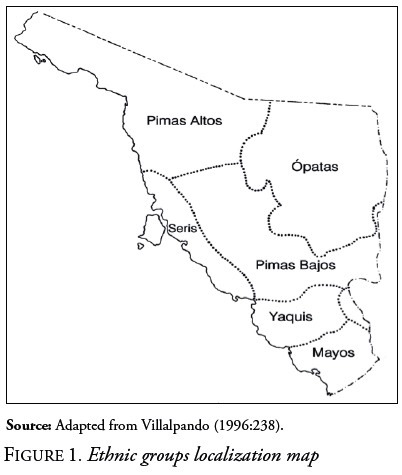
<body><![CDATA[<p align="justify"><font face="verdana" size="2"><b>Palabras clave:</b>  ind&iacute;genas,  minor&iacute;a &eacute;tnica,  Estado&#45;naci&oacute;n,  historia pol&iacute;tica,  M&eacute;xico.</font></p>  	    <p align="justify">&nbsp;</p>     <p align="justify"><font face="verdana" size="2"><i><b>INTRODUCTION</b></i></font></p>  	    <p align="justify"><font face="verdana" size="2">Nation&#45;state building<sup><a href="#notas">1</a></sup> in Latin America is a process that has only relatively recently attracted the attention of historians, since although more specific phases or events of this process have been researched,<sup><a href="#notas">2</a></sup> a comprehensive study of this process had yet to be carried out because of its complexity. Thanks to works such as <i>Ciudadan&iacute;a pol&iacute;tica y formaci&oacute;n de las naciones. Perspectivas hist&oacute;ricas de Am&eacute;rica Latina</i> (Sabato, 1999); <i>Federalismos Latinoamericanos: M&eacute;xico/Brasil/Argentina</i> (Carmagnani, 1996); <i>La integraci&oacute;n del territorio en una idea de Estado, M&eacute;xico y Brasil, 1821&#45;1946</i> (Ribera, Mendoza and Sunyer, 2007) and <i>Convergencias y divergencias: M&eacute;xico y Per&uacute;, siglos</i> <i>XVI&#45;XIX</i> (Oliver S&aacute;nchez, 2006), to name just a few, gradual progress has been made in learning how nation&#45;state building took place in each country, going beyond the biographies of great men and monographs on military exploits in conflicts regarded as crucial in each national history, such as the Reform War in Mexico, the War of the Supreme in Colombia and the Desert Campaign in Argentina.</font></p>  	    <p align="justify"><font face="verdana" size="2">In the case of Mexico, the historiography related to the process of nation&#45;state building has been constantly present since the 1960s. These early works include <i>El liberalismo mexicano</i> (Reyes Heroles, 1974); <i>La supervivencia pol&iacute;tica novo&#45;hispana, monarqu&iacute;a o rep&uacute;blica</i> (O'Gorman, 1986); <i>El liberalismo mexicano en la &eacute;poca de Mora 1821&#45;1853</i> (Hale, 1978) and <i>La Transformaci&oacute;n del liberalismo en Mexico a fines del siglo</i> <i>XIX</i> (Hale, 2002);<sup><a href="#notas">3</a></sup> these early works are general studies in which the establishment and consolidation of the liberal project are linked to the establishment of Mexico as a nation and state. It is only recently that works specifically related to the construction of the Mexican nation&#45;state have been published, such as <i>La definici&oacute;n del Estado mexicano 1857&#45;1867</i> (Galeana, 1999); <i>Estado&#45;Naci&oacute;n en Mexico: independencia y revoluci&oacute;n</i> (M&aacute;rquez, Araujo and Ortiz, 2011) y <i>Poder y legitimidad en Mexico en el siglo</i> <i>XIX</i> (Connaughton, 2003). These works are compilations of articles covering a range of topics, revolving around the process of nation&#45;state building in Mexico. This process is viewed from the various regions comprising the country and from a series of specific events that catalyzed and/or delayed it. A one&#45;way vision predominates in this work because it basically takes into account the participation of white&#45;mestizo society, ignoring the contribution of indigenous groups, except when their participation is regarded as part of the armies that fought in the struggles characteristic of the political environment of the 19th century.</font></p>  	    <p align="justify"><font face="verdana" size="2">Given the above, the following article undertakes a preliminary analysis of the participation of indigenous societies in the process of constructing the Mexican nation&#45;state. This initial approach is limited to the case of indigenous groups in Sonora, particularly the &Oacute;patas, Yaquis and Mayos. While it is true that the construction of the nation&#45;state is a general process involving a wide range of actors, the case study described below is important, since the focus of analysis is on the participation of indigenous societies in this process, thereby contributing to increasing the complexity of the one&#45;way perspective that has prevailed to date, in other words, one that considers the construction of nation&#45;states as an almost exclusive process of white&#45;mestizo society, in order to make it more inclusive. The analysis of the participation of the ethnic groups of Sonora in the establishment and consolidation of the Mexican nation&#45;state is inserted into the framework of national issues, so that the contributions of Sonoran indigenous societies to this process are not seen as an isolated or exceptional element. Just as the participation of white&#45;mestizo society in the process of constructing national states has multiple facets, that of indigenous societies is also multidimensional. This paper focuses on three of these dimensions, namely territory, war and citizenship in Yaqui, &Oacute;pata and Mayo societies, in order to contrast them to determine the differences or similarities between each case. This comparison is designed to show that the participation of indigenous societies in the construction of the nation&#45;state has as many nuances and aspects as that of white&#45;mestizo society. It is also intended to show that examining the construction of national states from an indigenous perspective is not a divergent approach, but rather a complementary one to those that exist at present.</font></p>  	    <p align="justify">&nbsp;</p>     <p align="justify"><font face="verdana" size="2"><i><b>&Oacute;PATAS, MAYOS AND YAQUIS</b></i></font></p>  	    <p align="justify"><font face="verdana" size="2">According to Yetman, among the indigenous people living in the territory known as <i>Opater&iacute;a,</i> from the time of contact with Spanish society, "There were probably &#91;three&#93; or more distinct groups: the group that became to be called Teguimas and subsequently &Oacute;patas, the Eudeves, and the Jovas &#91;...&#93;" (Yetman, 2010:15). As for their habitat, the author declares: "&#91;the&#93; &Oacute;patas lived in narrowish valleys of desert rivers &#151;the Bavispe, the M&aacute;tape, the Moctezuma, the San Miguel and the Sonora &#91;...&#93;" (Yetman, 2010:20).</font></p>  	    <p align="justify"><font face="verdana" size="2">Historiography has characterized the &Oacute;patas as the most docile ethnic group and the one most willing to relate to white&#45;mestizo society. A prime example of this willingness to coexist with the Spanish first and then the mestizos is the incorporation of these Indians initially into the military forces of the colony and subsequently as national forces as assistant companies to the Crown and the national army respectively. During the19th century, the process of cultural exchange taking place between &Oacute;patas and non&#45;indigenous people, reflected in matters such as the use of Spanish and clothing worn by non&#45;indigenous people, was consistently documented.</font></p> 	    ]]></body>
<body><![CDATA[<p align="center"><img src="/img/revistas/fn/v26n51/a1f1.jpg"></p>     <p align="justify"><font face="verdana" size="2">The Mayo continue to live in southern Sonora. Their original settlement was located on the Mayo river banks, after which they were named, but as the indigenous groups inhabiting the sierra and northern zone of the current state of Sinaloa (Moctezuma and L&oacute;pez, 2007:6) became extinct, the Mayos expanded the boundaries of their territory to these areas.</font></p>  	    <p align="justify"><font face="verdana" size="2">The relationship between Mayos and white&#45;mestizo society during the 19th century was midway between the conciliatory attitude of the &Oacute;patas and the open rebellion of the Yaquis. This is borne out by the fact that the expansion of private ownership of land in the Mayo Valley occurred at a faster rate than in the case of the Yaquis. This does not mean that the Mayos had been permanently at peace, although their uprisings have barely been studied, except for the last one, which revolved around Teresa Urrea, better known as the Saint of Cabora. Primary sources contain considerable information, which shows them leading armed conflicts, as in the case of the rebellion led by Miguel Esteban in the 1840s.<sup><a href="#notas">4</a></sup> The Yaquis currently inhabit the south&#45;central region of the state of Sonora in their eight traditional villages: C&oacute;corit, B&aacute;cum, T&oacute;rim, V&iacute;cam, P&oacute;tam, Hu&iacute;rivis, R&aacute;hum and Belem. Due to the diaspora caused by deportation, a number of Yaqui groups settled in Hermosillo and others in Arizona (Padilla and Trejo, 2012:195 and 201). During the 19th century, Yaqui towns were basically indigenous with few or no white&#45;mestizo inhabitants, depending on the town involved. For example, C&oacute;corit and B&aacute;cum used to be inhabited by nonindigenous groups. This information came to light during uprisings, since these people were the first to be targeted by rebellious indigenous groups.</font></p>  	    <p align="justify"><font face="verdana" size="2">Like the &Oacute;patas and the Mayos, Yaquis were engaged in subsistence agriculture. They used to be employed on farms, mines, fished and exploited the salt mines within their territory. Unlike the ethnic groups mentioned above, the Yaquis engaged and continue to engage in a constant struggle for possession of the Yaqui Valley; this fight has had several variants ranging from armed conflict to negotiation with equally disparate results: wins, losses, mass shootings, massacres and deportation.</font></p>  	    <p align="justify"><font face="verdana" size="2">As shown in the preceding paragraphs, among the indigenous societies that are the subject of this article, there were similarities and differences reflected in the ways they reacted to the process of the construction of the nation&#45;state. As will be discussed in the following pages, these discriminating factors will serve to contrast the way the axes of earth, war and citizenship were used by each of the indigenous groups mentioned in the preceding paragraphs to help or hinder the establishment and consolidation of the Mexican nation&#45;state.</font></p>     <p align="justify">&nbsp;</p>      <p align="justify"><font face="verdana" size="2"><i><b>THE CONSTRUCTION OF THE NATION&#45;STATE FROM THE PERSPECTIVE OF INDIGENOUS PARTICIPATION</b></i></font></p>  	    <p align="justify"><font face="verdana" size="2">The participation of indigenous societies in the construction of nation states is a topic that is practically absent in the historiography of Latin American countries, which is understandable given the complexity of this process comprising a wide variety of facets and actors. Now that research from previous years has cleared the way and clarified the big picture, it is possible to advance knowledge on the contribution of ethnic groups to this crucial process for the historical development of current Latin American nations. In Sonora, indigenous participation in the process of constructing the nation&#45;state occurred on the basis of three axes: territory, war and citizenship. To date, the first two axes have attracted the most attention; the third is only beginning to be studied.</font></p>     <p align="justify">&nbsp;</p>      <p align="justify"><font face="verdana" size="2"><i><b>Land: Common bond and bone of contention</b></i></font></p>  	    ]]></body>
<body><![CDATA[<p align="justify"><font face="verdana" size="2">Land ownership is an element that cannot be ignored when analyzing 19th century societies, since for Indians, Creoles and mestizos, owning land was crucial to survival, the accumulation of wealth and the acquisition of social prestige (Moreno, 1994:259). Moreover, several 19th century laws and conflicts of the nineteenth century were woven around this element.<sup><a href="#notas">5</a></sup> Given these premises, land ownership should be considered a central element in the construction of the nation&#45;state, especially when analyzed from the perspective of indigenous societies, since for them their relationship with the land goes beyond the fact of possessing it, in the sense of being its owners, since they consider it part of themselves, of their indigenous self,<sup><a href="#notas">6</a></sup> at least in the case of ethnic Yaquis (Garc&iacute;a Wikit, 2003:11&#45;13) and other indigenous groups in Sonora. Since they regard the earth as part of themselves, the grievances suffered by indigenous societies due to 19th century government measures designed to expropriate them, or modify the way they possessed them, was expressed in a series of rebellions, alliances or legal measures that formed and lent shape to the construction of the Mexican nation&#45;state.</font></p>  	    <p align="justify"><font face="verdana" size="2">In the case of Sonora, land and indigenous people should be discussed from two points of view: One is the armed struggle in defense of their territories; the other is the possession of the land as the basis of alliances between whites/mestizos and indigenous peoples; these two aspects constitute the first of the three axes raised above. It is worth remembering that the following analysis will be guided by the axes mentioned in the introduction rather than on indigenous societies. These will be included in the analysis based on the way they responded to the measures described in the aforementioned analytical axes.</font></p>     <p align="justify">&nbsp;</p>      <p align="justify"><font face="verdana" size="2"><i><b>Core Issues</b></i></font></p>  	    <p align="justify"><font face="verdana" size="2">The latest historiography from Sonora<sup><a href="#notas">7</a></sup> shows that the armed opposition of indigenous groups in defense of their territory was linked, on several occasions, to colonization projects that the Sonoran government attempted to implement. The clearest example was what happened in the Yaqui and Mayo valleys; in these areas the government, headed by Ignacio Pesqueira,<sup><a href="#notas">8</a></sup> attempted to establish colonies in order for the fertile lands in these valleys to be cultivated intensively. However, his plans met with opposition from the Yaquis and Mayos. The best documented conflicts are those in which the Yaquis are involved;<sup><a href="#notas">9</a></sup> little if anything has been written about the Mayos specifically regarding this topic.<sup><a href="#notas">10</a></sup></font></p>  	    <p align="justify"><font face="verdana" size="2">Regarding the Yaqui Valley, the most emblematic case is the conflict caused by the possession of the land of Aguacaliente, begun in 1854 and ended over a decade later. This event involved the Yaquis and one of the leading families in the state, the &Iacute;&ntilde;igo. In 1854, Fernando I&ntilde;igo denounced these lands, which were awarded to him. However, the Yaquis protested to Governor Manuel Mar&iacute;a G&aacute;ndara, who ordered a halt to the process of allocating land to &Iacute;&ntilde;igo. The Yaquis continued to possess Aguacaliente until 1868, the year that President Benito Ju&aacute;rez granted them to Colonel Jes&uacute;s Garc&iacute;a Morales, the Republican hero of the struggle against the Second Empire, who denounced them as vacant land in the late 1850s (Revilla, 2012).</font></p>  	    <p align="justify"><font face="verdana" size="2">In the case of the Mayos, there is no conflict as clear as that narrated in the preceding paragraph. During the period analyzed in this paper, several rebellions by this ethnic group were recorded but none has been unequivocally linked to the struggle for possession of Mayo Valley. The documentation on these uprisings does not specify the reasons that led to them. For example, in 1859, when the establishment of the "Pesqueira" neighborhood was decreed in Mayo Valley, there are no records of an armed confrontation, nor have instances been located of protest by this ethnic group directed at the governor or the prefect of the district of &Aacute;lamos, the authority with jurisdiction over the lands where the colony was established. Moreover, records of protests (whether peaceful or violent) by the Mayos closest to 1859 are those that occurred in 1861 and 1862, which are related to state political events such as the signing of acts of accession or the repudiation of any of the factions of notable figures engaged in war at the time.</font></p>  	    <p align="justify"><font face="verdana" size="2">The events mentioned in the previous paragraph show that no reliable proof has been found to date that in the case of the Mayos, their rebellions were closely linked to the defense of their territory. It is extremely likely that this was so, however, since the years studied in this paper were characterized by continuous outbreaks of violence in Mayo Valley. In fact, the &Aacute;lamos National Guard was engaged in an almost permanent campaign against this ethnic group, and it is no coincidence that precisely at this time, the first stage of colonization by the leaders of &Aacute;lamos was taking place.<sup><a href="#notas">11</a></sup></font></p>  	    <p align="justify"><font face="verdana" size="2">Contrary to what happened south of the state, in the northwest and northeast, the &Oacute;pata did not offer armed opposition to the loss of their territory, although they did protest to the state and national government through representatives (Radding, 1995; Trejo 2010).<sup><a href="#notas">12</a></sup> The peaceful protest by the &Oacute;patas and lower Pimas<sup><a href="#notas">13</a></sup> is proof of their insertion in the process of creating the nation&#45;state, since they appealed to the liberal laws, which, although they did not favor them as regards their right to the corporate ownership of lands inherited from missions, they did establish the distribution of individual plots of land which the &Oacute;pata defended continuously at least until the beginning of the 1870s.</font></p>  	    <p align="justify"><font face="verdana" size="2">In Sonora, the land became a link between the Yaquis/Mayos and a select group whose contemporaries called them Gandaristas. The Indian&#45;Gandarista dyad has been regarded by the historiography of Sonora as an obstacle to the liberal project, symbolized in the figure of Governor Ignacio Pesqueira and his allies (Ruibal, 1985; Villa, 1984), since the indigenous people used their alliance with General Manuel Mar&iacute;a G&aacute;ndara to offer both armed and peaceful resistance to the projects for setting up colonies in their valleys (Revilla, 2009).</font></p>  	    ]]></body>
<body><![CDATA[<p align="justify"><font face="verdana" size="2">From this perspective, the opposition between the Mayos and the Yaquis constituted an obstacle in the implementation of the liberal project, which at the same time, slowed down the process of the national state, since by preserving their valleys, these two indigenous groups in Sonora continued to preserve their own forms of government, military structure and recreated religious practices, all of which went against the homogenization demanded by the construction of a nation&#45;state in which the citizen rather than the corporation and individual rather than communal ownership of the land should become the center of the modern society which attempts were being made to create.</font></p>     <p align="justify"><font face="verdana" size="2">The perception of the Indigenous&#45;Gandarista alliance has a second dimension that is usually ignored, in other words, Manuel Mar&iacute;a G&aacute;ndara's attempts at colonizing the Yaqui Valley. Like his opponents, G&aacute;ndara designed a project to colonize the Yaquis, except that he did not feel it was necessary to dismantle communal property or evict indigenous groups to implement it (Trejo, 2011). G&aacute;ndara's proposal involved securing the Yaquis' approval to loan part of their lands to a group of settlers. If this project had been implemented, it would have had a significant influence on the creation of the Mexican nation&#45;state, since it would have great possibilities of continuing to pacify the Yaquis and ensuring that their lands produced a surplus for commercialization, which, in the last analysis, was the aim of Sonora notables, since they based their hopes of progress on it,<sup><a href="#notas">14</a></sup> since activities such as mining and livestock raising were virtually paralyzed due to the Apache raids (Velasco, 1985).</font></p>  	    <p align="justify"><font face="verdana" size="2">Land as the basis of the alliance between indigenous groups and the elders is an issue that has barely been explored in Sonoran historiography. Until recently, the opposite view was held, namely that land constituted the element of greatest conflict between Indians and whites. This statement must be qualified because although a fraction of Sonoran notables fought over the earth inhabited by Yaquis and Mayos using weapons, others found that communal land ownership by indigenous peoples served as the basis for building alliances to enable them to face a common enemy (Trejo, 2011; Padilla and Trejo, 2012). The Gandarista&#45;Yaqui alliance, referred to earlier, can only be fully understood by taking into account the importance of the possession of land for both groups.<sup><a href="#notas">15</a></sup></font></p>  	    <p align="justify"><font face="verdana" size="2">Members of the Gandarista faction, starting with their leader Manuel Mar&iacute;a G&aacute;ndara, owned some of the largest, most productive farms in Sonora, all located in the center of the state (Trejo, 2008). Many rural properties of the Gandaristas were collective properties, in other words, they belonged to several members of the same family at best, or to several partners who may or may not have been linked to each other by ties of kinship. As a result, the main Sonoran haciendas were collectively exploited, as were the Yaqui and Mayo valleys. Thus, this faction of notables always showed respect for the rights of possession of the Yaquis and Mayos over their respective valleys.</font></p>  	    <p align="justify"><font face="verdana" size="2">The question one must now ask is whether this implicit agreement over the form of land ownership facilitated or hindered the process of creation of the nation state. If one understands nation&#45;state to be a strictly liberal state, then it certainly hindered it, since the creation of citizens and individual landowners premises was a liberal project, as envisaged in the early 19th century by Benjamin Constant (2000). However, if the corporate ownership of the valleys of southern Sonora had been respected by implementing colonization projects as proposed by Manuel Mar&iacute;a G&aacute;ndara in the late 1840s, the Yaqui secular war might have been a shorter, less violent process, and would not have ended with the deportation of Yaquis to Yucat&aacute;n and National Valley.</font></p>  	    <p align="justify"><font face="verdana" size="2">Since the land issue was one of the axes around which crucial measures in the liberal project revolved, such as the laws of confiscation and nationalization of property and various colonization projects (Hale, 1978; Gonz&aacute;lez, 2000), it is logical to suggest that the response by indigenous societies to this was a key element in the process of constructing the Mexican nation&#45;state, regardless of whether ethnic groups' reaction to the possibility of being colonized and/or having their territory expropriated by whites and mestizos was positive or negative.</font></p>     <p align="justify">&nbsp;</p>      <p align="justify"><font face="verdana" size="2"><i><b>The War</b></i></font></p>  	    <p align="justify"><font face="verdana" size="2">The territories known as Sonora from the time of the first contact with the Spanish to the present have had a number of features that differentiate them while assimilating other regions of Mexico and Latin America. The intermittent warfare that took place in this territory is one of them. According to traditional Sonoran historiography, the war against the Apache, Seri, Mayo, Yaqui and Pima groups (the latter in colonial times) is an element that made Sonora a completely different territory from the rest of the regions comprising Mexico.<sup><a href="#notas">16</a></sup> The emergence of an armed white society, accustomed to fighting against Indians, filibusters and among itself is certainly a distinctive, important feature of the history of Sonora, which rather than radically differentiating the state from other regions, makes it similar to them.</font></p>  	    <p align="justify"><font face="verdana" size="2">Beyond the struggle between the notables, or the defense of the territory from filibuster attacks, the war in 19th century Sonora was linked to the conflict between Indians and whites. This relationship has been documented by historiography from two perspectives: the military alliance for dealing with a common enemy, and the armed confrontation between whites/mestizos and Indians. The first approach is rooted in the colonial era, when the Spanish used the &Oacute;patas' and Pimas' skills to deal with the indigenous people who continued to oppose control by the Spanish Crown (Borrero, 2009). The importance of the military aid of the &Oacute;patas was reflected in the creation in the late 18 th century of two Presidios composed exclusively of members of this ethnic group, which were given the status of auxiliary troops. Once independence had been achieved, the &Oacute;pata auxiliary troops became auxiliary forces of the national government.</font></p>  	    ]]></body>
<body><![CDATA[<p align="justify"><font face="verdana" size="2">The status of the &Oacute;patas as national government auxiliaries enabled them to preserve the military structure acquired in colonial times, which in turn allowed them to participate actively on the Sonoran political scene, either by supporting or opposing successive governments. Their status as Indian friends, acquired during the time of the Spanish monarchy, allowed them to approach the Sonoran authorities who had no other indigenous groups, as demonstrated by recent work on political representation among the &Oacute;patas.</font></p>  	    <p align="justify"><font face="verdana" size="2">Apart from the &Oacute;patas' collaboration first with the colonial and subsequently with the Mexican authorities, cooperation between Yaqui and Sonora authorities existed for dealing with a common enemy. In this case it was a momentary alliance between government department troops (at that time, the centralist Republic ruled the country), and the Yaquis to cope with the Mayo rebellion led by Captain General Miguel Esteban. At this point, it is worth noting that once Miguel Esteban had been defeated, Captain General of the Yaquis Mateo Marqu&iacute;n extended his jurisdiction to the Mayos, as the department authorities named him captain general of both valleys, an appointment that was opposed by the Mayos, who six years later continued to complain to the authorities about this appointment (AGES, 1846).</font></p>  	    <p align="justify"><font face="verdana" size="2">In the case of the &Oacute;patas and the Pimas, their contribution to the construction of the nation state is due to the fact that they adapted more successfully than other indigenous societies to white/mestizo society and its institutions, including the military structure of both the Novo&#45;Hispanic and Mexican authorities. This adaptation enabled them to achieve the social integration desired by the liberal project in order to homogenize the country's inhabitants, making them citizens with equal rights and obligations, without major confrontations.</font></p>  	    <p align="justify"><font face="verdana" size="2">The armed conflict with indigenous groups that might have had some influence on the formation of the nation&#45;state is the one waged by the authorities with the Yaqui ethnic group for decades. This lengthy conflict is known as the Yaqui secular war.<sup><a href="#notas">17</a></sup> The Yaqui secular war has many aspects, whose common thread is the defense of Yaqui territory. For the Yaquis, territory was and is to this day rather more than the countries that comprise it. It has a crucial symbolic dimension that begins with the origin of their possession, which, according to a legend recorded by Spicer (1994), was granted to the Yaquis by angels and prophets, as a result of which they used every means at their disposal to defend it. One of these means was the alliance with notables and/or groups of notables who could help them retain possession of their territory.</font></p>  	    <p align="justify"><font face="verdana" size="2">The Yaquis, unlike the &Oacute;patas, did not have a military structure recognized by the authorities, whether colonial or national. However, since at the time of Spanish rule, they were compelled, like other Indians grouped together in military aid missions, to provide military assistance for Spanish captains when they required it, the figure of the captain&#45;general<sup><a href="#notas">18</a></sup> became the authority around which Yaqui military organization was structured, whose base was its eight traditional villages.<sup><a href="#notas">19</a></sup></font></p>  	    <p align="justify"><font face="verdana" size="2">From about 1846 to 1866, the Yaquis were continuously involved in conflicts that divided the Sonoran notables. As mentioned earlier, the Yaqui&#45;G&aacute;ndara dyad was regarded by the Sonoran liberals as an obstacle to the progress of the state, as their continuous rebellions against the state government destabilized the state. However, these same transgressions allowed the National Guard, a body of armed citizens at the service of the state government, to serve as a school for training officers who subsequently made a career in the federal army. In short, the National Guard and its constant battles against the Gandarista&#45;Yaquis and Yaquis from 1867 to the first decade of the 20th century, served both to train fighters and to perfect war tactics, which, during the 1910 revolution, helped the Sonora group to occupy the highest positions of power at the national level (Padilla and Trejo, 2012b). From these positions, the Sonorans promoted a national state project, whose origins date from the Yaqui secular war and the Yaquis who, together with the Mayos, actively participated in the revolutionary armies.</font></p>     <p align="justify">&nbsp;</p>      <p align="justify"><font face="verdana" size="2"><i><b>Indigenous Citizen</b></i></font></p>  	    <p align="justify"><font face="verdana" size="2">A key aspect of the liberal project is political representation, coupled with the emergence of the modern citizen,<sup><a href="#notas">20</a></sup> in other words, an individual citizen with the right to vote and be elected. Among the countries that had recently achieved their independence from the Spanish Crown, one of the main objectives was the dismantling of corporate society, since organization into corps, an essential characteristic of <i>L'Ancien R&eacute;gime,</i> posed an obstacle to the implementation of measures derived from the liberal project, which would converge into the constitution of Latin American nation&#45;states over the years.</font></p>  	    <p align="justify"><font face="verdana" size="2">Within this homogenizing framework, indigenous groups were the most reluctant to join liberal society and the institutions being created, since the attempts to dismantle their community organization not only jeopardized the corporate ownership of their land, an aspect that has been highlighted in historiography<sup><a href="#notas">21</a></sup> but meant that they risked losing their indigenous self,<sup><a href="#notas">22</a></sup> which enabled them to identify themselves as such in the eyes of others, whether these others belonged to white/mestizo society or to other indigenous groups.</font></p>  	    ]]></body>
<body><![CDATA[<p align="justify"><font face="verdana" size="2">In Sonora, researchers have only just begun to explore the reaction of ethnic groups to the liberal project. Research conducted to date has focused on two aspects: their participation in electoral process and the opposition to or acceptance of the liberal laws affecting their lifestyle. In this respect, the most widely documented aspect is the participation of the &Oacute;patas as citizens in 19th century Sonora. On the other indigenous groups, there is no specific work to address this issue, although there is some scattered evidence in the sources. In the case of the Yaquis, they are known to have participated in the electoral processes of the early and mid&#45;1850s. So far, no documentation has been found on the Mayos mentioning their participation in elections or occupying a government position, apart from those they held in their own towns. Regarding the Pimas, given their subjection to the &Oacute;pata authorities, at least since the early 1840s, it is extremely difficult to determine the extent to which did or did not share the &Oacute;patas' position regarding the liberal laws that affected them.</font></p>  	    <p align="justify"><font face="verdana" size="2">Jos&eacute; M. Medina Bustos has documented the participation of the &Oacute;patas in their shift from Indians to citizens. One of these studies concerns the enactment of the 89 Law, which decreed the distribution of individual plots of land in the villages inhabited by these indigenous peoples (Medina, 2009 and 2010). Contrary to what one might expect, not all &Oacute;patas opposed the division of their lands, or being regarded as citizens. A survey ordered by the incumbent governor of the &Oacute;pata peoples revealed the divisions between them, because while some of them agreed to be considered citizens, others refused and requested to be allowed to continue governing themselves according to their traditional laws.</font></p>  	    <p align="justify"><font face="verdana" size="2">Citizenship involved the loss of privileges for &Oacute;pata society, but also guaranteed them the possession of their lands, since as citizens, they were not only entitled to demand the provision of lands that would enable them to support their families but also to request the measurement and provision of property deeds for the ejidos in their towns. What did the &Oacute;pata gain or preserve from refusing to be citizens? On the basis of studies currently being undertaken on this issues, the advantage for the &Oacute;patas of refusing citizenship was that it enabled them to preserve their indigenous self (Trejo, 2010).</font></p>  	    <p align="justify"><font face="verdana" size="2">When they became citizens, the &Oacute;patas were assimilated into the emerging liberal society. Being citizens implied that they would not only have to accept the laws that favored them but all those passed by local and national governments, regardless of whether or not they respected their political, military and religious traditions. Members of the ethnic group who chose to be regarded as citizens make a small contribution to the process of constructing the Mexican nation&#45;state, since they complied with one of the most important liberal precepts, joining the rest of society and abandoning several features of <i>L'Ancien R&eacute;gime,</i> such as communal land possession, privileges such as tax exemption and special authorities, among others.</font></p>     <p align="justify"><font face="verdana" size="2">According to the historiography of the &Oacute;patas, they were, of all the Sonoran ethnic groups, the ones that was most quickly assimilated into white&#45;mestizo society by adopting their language, customs and political organization. Medina Bustos' work shows that some of the &Oacute;patas participated in elections, comprised the town halls that governed their towns which were no longer exclusively theirs, since they shared them with whites and mestizos, and accepted the distribution of individual plots of land, in other words, they became citizens. At the same time, the work of Trejo Contreras shows that another group of &Oacute;patas continued to preserve their traditional authorities, captains generals and governors, formed an alliance with the opponents of liberal governments, maintained their military structure and demanded respect for their customs in the political and fiscal spheres, in other words, they did everything possible to remain outside the homogenizing liberal process that sought to insert them in an incipient nation&#45;state, into which they ended up being dissolved in the mid&#45;1870s, eventually disappearing in the early 20th century.</font></p>  	    <p align="justify"><font face="verdana" size="2">The Yaquis' peaceful participation in the 19th century political scene has not been studied. Researchers' interest regarding this group has focused on their long struggle of resistance, which has been understood exclusively as an armed struggle. There is therefore no research regarding their participation in processes such as elections, although some indications in this regard have been found in primary sources. Because of their military triumphs and partnership with powerful groups of notables such as the Gandaristas, the Yaquis prevented liberal institutions such as constitutional town halls, tax payment and their integration into the Sonoran national guard from being established in their territory. Until the peaceful facet of Yaqui participation in the 19th century Sonoran political sphere is studied, their participation in this and therefore in the construction of the Mexican nation&#45;state, will have to be seen from a military perspective, analyzed in the section on the war axis.</font></p>     <p align="justify">&nbsp;</p>      <p align="justify"><font face="verdana" size="2"><i><b>CONCLUSIONS</b></i></font></p>  	    <p align="justify"><font face="verdana" size="2">Describing and analyzing the participation of indigenous groups in the construction of national states is a challenge that undermines the work of writing history, not only because it involves focusing on actors who occupy a secondary position in historical narratives, but also because the traces left by their participation in this long, contentious process are largely indirect. In other words, historians have to read about indigenous people's reaction to everything involving the construction of national states through the testimony of others, namely whites.</font></p>  	    <p align="justify"><font face="verdana" size="2">This article focuses on analyzing how Sonoran ethnicities participated in the construction of the nation&#45;state, for which three areas were chosen to observe this participation: land, war, and citizenship. Analysis of these aspects shows that the participation of Sonoran Indians in a process that was imposed in the same way as Spanish domination, was composed of a series of responses to specific measures affecting their indigenous self in one way or another.</font></p>  	    ]]></body>
<body><![CDATA[<p align="justify"><font face="verdana" size="2">It has also been pointed out that not all Sonoran Indians responded in the same way to the same measures. Even within the same ethnic group, the reaction to certain laws was not unanimous as evinced in the case of the &Oacute;patas. At the same time, this initial approach to indigenous groups' participation in the construction of the nation&#45;state raises a number of doubts but one thing is certain: Sonoran historiography has a long way to go towards understanding how the ethnic groups settled in Sonora participated in this process, since their behavior was as complex, diverse and difficult to grasp as that of white society.</font></p>     <p align="justify">&nbsp;</p>      <p align="justify"><font face="verdana" size="2"><i><b>REFERENCES</b></i></font></p>  	    <!-- ref --><p align="justify"><font face="verdana" size="2">Archivo General del Estado de Sonora (AGES), 1846, Hermosillo, Sonora, Fondo Ejecutivo, vol. 160.    &nbsp;&nbsp;&nbsp;&nbsp;&nbsp;&nbsp;&nbsp;&nbsp;[&#160;<a href="javascript:void(0);" onclick="javascript: window.open('/scielo.php?script=sci_nlinks&ref=3796858&pid=S0187-7372201400010000100001&lng=','','width=640,height=500,resizable=yes,scrollbars=1,menubar=yes,');">Links</a>&#160;]<!-- end-ref --> </font></p>     <!-- ref --><p align="justify"><font face="verdana" size="2">&#45;&#45;&#45;&#45;&#45;&#45;&#45;&#45;&#45;&#45;, 1848a, "Carta de Juan Jos&eacute; Armenta a Manuel Mar&iacute;a G&aacute;ndara", Hermosillo, Sonora, Fondo Ejecutivo, vol. 199, February 2.    &nbsp;&nbsp;&nbsp;&nbsp;&nbsp;&nbsp;&nbsp;&nbsp;[&#160;<a href="javascript:void(0);" onclick="javascript: window.open('/scielo.php?script=sci_nlinks&ref=3796860&pid=S0187-7372201400010000100002&lng=','','width=640,height=500,resizable=yes,scrollbars=1,menubar=yes,');">Links</a>&#160;]<!-- end-ref --></font></p>  	    <!-- ref --><p align="justify"><font face="verdana" size="2">&#45;&#45;&#45;&#45;&#45;&#45;&#45;&#45;&#45;&#45;, 1848b, "Instancia de los ind&iacute;genas de Y&eacute;cora al gobernado Manuel Mar&iacute;a G&aacute;ndara", Hermosillo, Sonora, Fondo Ejecutivo, vol. 199, February 18.    &nbsp;&nbsp;&nbsp;&nbsp;&nbsp;&nbsp;&nbsp;&nbsp;[&#160;<a href="javascript:void(0);" onclick="javascript: window.open('/scielo.php?script=sci_nlinks&ref=3796862&pid=S0187-7372201400010000100003&lng=','','width=640,height=500,resizable=yes,scrollbars=1,menubar=yes,');">Links</a>&#160;]<!-- end-ref --> </font></p> 	    <!-- ref --><p align="justify"><font face="verdana" size="2">Aguilar Zeleny, Alejandro <i>et al.,</i> 2009, <i>Caminando por la Pimer&iacute;a Baja. O'ob pajlobguin. Territorio e identidad,</i> Hermosillo, Gobierno del Estado de Sonora.    &nbsp;&nbsp;&nbsp;&nbsp;&nbsp;&nbsp;&nbsp;&nbsp;[&#160;<a href="javascript:void(0);" onclick="javascript: window.open('/scielo.php?script=sci_nlinks&ref=3796864&pid=S0187-7372201400010000100004&lng=','','width=640,height=500,resizable=yes,scrollbars=1,menubar=yes,');">Links</a>&#160;]<!-- end-ref --></font></p>  	    <!-- ref --><p align="justify"><font face="verdana" size="2">Borrero Silva, Mar&iacute;a del Valle, 2009, "Los ind&iacute;genas y su participaci&oacute;n como soldados aliados y auxiliares en la provincia de Sonora en el siglo XVIII", in Raquel Padilla Ramos, coord., <i>Conflicto y armon&iacute;a. Etnias y poder civil, militar y religioso en Sonora,</i> Hermosillo, INAH/Conaculta.    &nbsp;&nbsp;&nbsp;&nbsp;&nbsp;&nbsp;&nbsp;&nbsp;[&#160;<a href="javascript:void(0);" onclick="javascript: window.open('/scielo.php?script=sci_nlinks&ref=3796866&pid=S0187-7372201400010000100005&lng=','','width=640,height=500,resizable=yes,scrollbars=1,menubar=yes,');">Links</a>&#160;]<!-- end-ref --></font></p>  	    <!-- ref --><p align="justify"><font face="verdana" size="2">Carmagnani, Marcello, coord., 1996, <i>Federalismos latinoamericanos: M&eacute;xico/ Brasil/Argentina,</i> M&eacute;xico, Fondo de Cultura Econ&oacute;mica/El Colegio de M&eacute;xico.    &nbsp;&nbsp;&nbsp;&nbsp;&nbsp;&nbsp;&nbsp;&nbsp;[&#160;<a href="javascript:void(0);" onclick="javascript: window.open('/scielo.php?script=sci_nlinks&ref=3796868&pid=S0187-7372201400010000100006&lng=','','width=640,height=500,resizable=yes,scrollbars=1,menubar=yes,');">Links</a>&#160;]<!-- end-ref --></font></p>     <!-- ref --><p align="justify"><font face="verdana" size="2">Castoriadis, Cornelius, 1997, "El imaginario social instituyente", <i>Zona er&oacute;gena,</i> Buenos Aires, no. 35.    &nbsp;&nbsp;&nbsp;&nbsp;&nbsp;&nbsp;&nbsp;&nbsp;[&#160;<a href="javascript:void(0);" onclick="javascript: window.open('/scielo.php?script=sci_nlinks&ref=3796870&pid=S0187-7372201400010000100007&lng=','','width=640,height=500,resizable=yes,scrollbars=1,menubar=yes,');">Links</a>&#160;]<!-- end-ref --></font></p>  	    <!-- ref --><p align="justify"><font face="verdana" size="2">Connaughton, Brian, coord., 2003, <i>Poder y legitimidad en M&eacute;xico en el siglo</i> <i>XIX,</i> M&eacute;xico, UAM/Conacyt/Miguel &Aacute;ngel Porr&uacute;a.    &nbsp;&nbsp;&nbsp;&nbsp;&nbsp;&nbsp;&nbsp;&nbsp;[&#160;<a href="javascript:void(0);" onclick="javascript: window.open('/scielo.php?script=sci_nlinks&ref=3796872&pid=S0187-7372201400010000100008&lng=','','width=640,height=500,resizable=yes,scrollbars=1,menubar=yes,');">Links</a>&#160;]<!-- end-ref --></font></p>  	    <!-- ref --><p align="justify"><font face="verdana" size="2">Constant, Bejamin, 2000, <i>Principios de pol&iacute;tica,</i> M&eacute;xico, Gernika.    &nbsp;&nbsp;&nbsp;&nbsp;&nbsp;&nbsp;&nbsp;&nbsp;[&#160;<a href="javascript:void(0);" onclick="javascript: window.open('/scielo.php?script=sci_nlinks&ref=3796874&pid=S0187-7372201400010000100009&lng=','','width=640,height=500,resizable=yes,scrollbars=1,menubar=yes,');">Links</a>&#160;]<!-- end-ref --></font></p>  	    <!-- ref --><p align="justify"><font face="verdana" size="2">Fran&ccedil;ais, Ariel, 2000, "El crep&uacute;sculo del Estado&#45;naci&oacute;n. Una interpretaci&oacute;n hist&oacute;rica en el contexto de la globalizaci&oacute;n", <i>Documentos de debate,</i> UNESCO, no. 47, available at &lt;<a href="http://www.unesco.org/most/ffrancais.htm" target="_blank">http://www.unesco.org/most/ffrancais.htm</a>&gt;, last accesed on January 19, 2013.    &nbsp;&nbsp;&nbsp;&nbsp;&nbsp;&nbsp;&nbsp;&nbsp;[&#160;<a href="javascript:void(0);" onclick="javascript: window.open('/scielo.php?script=sci_nlinks&ref=3796876&pid=S0187-7372201400010000100010&lng=','','width=640,height=500,resizable=yes,scrollbars=1,menubar=yes,');">Links</a>&#160;]<!-- end-ref --></font></p>  	    <!-- ref --><p align="justify"><font face="verdana" size="2">Galeana, Patricia, comp., 1999, La definici&oacute;n del Estado mexicano, 1857&#45;1867, M&eacute;xico, Archivo General de la Naci&oacute;n.    &nbsp;&nbsp;&nbsp;&nbsp;&nbsp;&nbsp;&nbsp;&nbsp;[&#160;<a href="javascript:void(0);" onclick="javascript: window.open('/scielo.php?script=sci_nlinks&ref=3796878&pid=S0187-7372201400010000100011&lng=','','width=640,height=500,resizable=yes,scrollbars=1,menubar=yes,');">Links</a>&#160;]<!-- end-ref --> </font></p> 	    <!-- ref --><p align="justify"><font face="verdana" size="2">Garc&iacute;a Wikit, Santos, 2003, <i>Naci&oacute;n Yaki,</i> Ciudad Obreg&oacute;n, Impresiones Morales.    &nbsp;&nbsp;&nbsp;&nbsp;&nbsp;&nbsp;&nbsp;&nbsp;[&#160;<a href="javascript:void(0);" onclick="javascript: window.open('/scielo.php?script=sci_nlinks&ref=3796880&pid=S0187-7372201400010000100012&lng=','','width=640,height=500,resizable=yes,scrollbars=1,menubar=yes,');">Links</a>&#160;]<!-- end-ref --> </font></p> 	    <!-- ref --><p align="justify"><font face="verdana" size="2">Gonz&aacute;lez, Luis, 2000, "El liberalismo triunfante", in Daniel Coss&iacute;o Villegas <i>et al., Historia General del M&eacute;xico,</i> M&eacute;xico, El Colegio de M&eacute;xico.    &nbsp;&nbsp;&nbsp;&nbsp;&nbsp;&nbsp;&nbsp;&nbsp;[&#160;<a href="javascript:void(0);" onclick="javascript: window.open('/scielo.php?script=sci_nlinks&ref=3796882&pid=S0187-7372201400010000100013&lng=','','width=640,height=500,resizable=yes,scrollbars=1,menubar=yes,');">Links</a>&#160;]<!-- end-ref --> </font></p> 	    <!-- ref --><p align="justify"><font face="verdana" size="2">Hale, Charles, 1978, <i>El liberalismo mexicano en la &eacute;poca de Mora. 1821&#45;1853,</i> M&eacute;xico, Siglo XXI Editores.    &nbsp;&nbsp;&nbsp;&nbsp;&nbsp;&nbsp;&nbsp;&nbsp;[&#160;<a href="javascript:void(0);" onclick="javascript: window.open('/scielo.php?script=sci_nlinks&ref=3796884&pid=S0187-7372201400010000100014&lng=','','width=640,height=500,resizable=yes,scrollbars=1,menubar=yes,');">Links</a>&#160;]<!-- end-ref --> </font></p>     <!-- ref --><p align="justify"><font face="verdana" size="2">&#45;&#45;&#45;&#45;&#45;&#45;&#45;&#45;&#45;&#45;, 2002, <i>La transformaci&oacute;n del liberalismo en M&eacute;xico a fines del siglo XIX,</i> M&eacute;xico, Fondo de Cultura Econ&oacute;mica.    &nbsp;&nbsp;&nbsp;&nbsp;&nbsp;&nbsp;&nbsp;&nbsp;[&#160;<a href="javascript:void(0);" onclick="javascript: window.open('/scielo.php?script=sci_nlinks&ref=3796886&pid=S0187-7372201400010000100015&lng=','','width=640,height=500,resizable=yes,scrollbars=1,menubar=yes,');">Links</a>&#160;]<!-- end-ref --> </font></p>     <!-- ref --><p align="justify"><font face="verdana" size="2">M&aacute;rquez, Esa&uacute;; Rafael Araujo, and Roc&iacute;o Ortiz, coords., 2011, <i>Estado&#45;Naci&oacute;n en M&eacute;xico: Independencia y Revoluci&oacute;n,</i> Tuxtla Guti&eacute;rrez, Universidad de Ciencias y Artes de Chiapas.    &nbsp;&nbsp;&nbsp;&nbsp;&nbsp;&nbsp;&nbsp;&nbsp;[&#160;<a href="javascript:void(0);" onclick="javascript: window.open('/scielo.php?script=sci_nlinks&ref=3796888&pid=S0187-7372201400010000100016&lng=','','width=640,height=500,resizable=yes,scrollbars=1,menubar=yes,');">Links</a>&#160;]<!-- end-ref --> </font></p> 	    <!-- ref --><p align="justify"><font face="verdana" size="2">Medina Bustos, Jos&eacute; Marcos, 2010, "&iquest;'Hijos del pueblo' o 'vecinos'? La representaci&oacute;n pol&iacute;tica de antiguo r&eacute;gimen en los pueblos mixtos de Sonora, 1767&#45;1810", <i>Humanitas,</i> vol. 4, no. 37, pp. 275&#45;299.    &nbsp;&nbsp;&nbsp;&nbsp;&nbsp;&nbsp;&nbsp;&nbsp;[&#160;<a href="javascript:void(0);" onclick="javascript: window.open('/scielo.php?script=sci_nlinks&ref=3796890&pid=S0187-7372201400010000100017&lng=','','width=640,height=500,resizable=yes,scrollbars=1,menubar=yes,');">Links</a>&#160;]<!-- end-ref --> </font></p>     <!-- ref --><p align="justify"><font face="verdana" size="2">&#45;&#45;&#45;&#45;&#45;&#45;&#45;&#45;&#45;&#45;, 2009, "De las elecciones a la rebeli&oacute;n. Respuestas de los ind&iacute;genas de Sonora al liberalismo, 1812&#45;1836", en <i>Memorias del 53 Congreso Internacional de Americanistas,</i> M&eacute;xico, Universidad Iberoamericana.    &nbsp;&nbsp;&nbsp;&nbsp;&nbsp;&nbsp;&nbsp;&nbsp;[&#160;<a href="javascript:void(0);" onclick="javascript: window.open('/scielo.php?script=sci_nlinks&ref=3796892&pid=S0187-7372201400010000100018&lng=','','width=640,height=500,resizable=yes,scrollbars=1,menubar=yes,');">Links</a>&#160;]<!-- end-ref --> </font></p>     <!-- ref --><p align="justify"><font face="verdana" size="2">Menegus, Margarita, 2006, <i>Los indios en la historia de M&eacute;xico,</i> M&eacute;xico, CIDE/ Fondo de Cultura Econ&oacute;mica.    &nbsp;&nbsp;&nbsp;&nbsp;&nbsp;&nbsp;&nbsp;&nbsp;[&#160;<a href="javascript:void(0);" onclick="javascript: window.open('/scielo.php?script=sci_nlinks&ref=3796894&pid=S0187-7372201400010000100019&lng=','','width=640,height=500,resizable=yes,scrollbars=1,menubar=yes,');">Links</a>&#160;]<!-- end-ref --> </font></p>     <!-- ref --><p align="justify"><font face="verdana" size="2">Moctezuma Zamarr&oacute;n, Jos&eacute; Luis and Hugo L&oacute;pez Aceves, 2007, <i>Mayos,</i> M&eacute;xico, CDI.    &nbsp;&nbsp;&nbsp;&nbsp;&nbsp;&nbsp;&nbsp;&nbsp;[&#160;<a href="javascript:void(0);" onclick="javascript: window.open('/scielo.php?script=sci_nlinks&ref=3796896&pid=S0187-7372201400010000100020&lng=','','width=640,height=500,resizable=yes,scrollbars=1,menubar=yes,');">Links</a>&#160;]<!-- end-ref --></font></p>  	    <!-- ref --><p align="justify"><font face="verdana" size="2">Moreno, Heriberto, 1994, "Compradores y vendedores de tierras. Ranchos y haciendas en El Baj&iacute;o michoacano guanajuatense, 1830&#45;1910", in Beatriz Rojas, coord., <i>El poder y el dinero. Grupos y regiones mexicanos en el siglo</i> <i>XIX,</i> M&eacute;xico, Instituto de Investigaciones Dr. Jos&eacute; Mar&iacute;a Luis Mora.    &nbsp;&nbsp;&nbsp;&nbsp;&nbsp;&nbsp;&nbsp;&nbsp;[&#160;<a href="javascript:void(0);" onclick="javascript: window.open('/scielo.php?script=sci_nlinks&ref=3796898&pid=S0187-7372201400010000100021&lng=','','width=640,height=500,resizable=yes,scrollbars=1,menubar=yes,');">Links</a>&#160;]<!-- end-ref --></font></p>     <!-- ref --><p align="justify"><font face="verdana" size="2">O'Gorman, Edmundo, 1986, <i>La supervivencia pol&iacute;tica novo&#45;hispana: Monarqu&iacute;a o Rep&uacute;blica,</i> M&eacute;xico, Universidad Iberoamericana.    &nbsp;&nbsp;&nbsp;&nbsp;&nbsp;&nbsp;&nbsp;&nbsp;[&#160;<a href="javascript:void(0);" onclick="javascript: window.open('/scielo.php?script=sci_nlinks&ref=3796900&pid=S0187-7372201400010000100022&lng=','','width=640,height=500,resizable=yes,scrollbars=1,menubar=yes,');">Links</a>&#160;]<!-- end-ref --> </font></p>     <!-- ref --><p align="justify"><font face="verdana" size="2">Oliver S&aacute;nchez, Lilia, coord., 2006, <i>Convergencias y divergencias: M&eacute;xico y Per&uacute;, siglos</i> <i>XVI&#45;XIX,</i> M&eacute;xico, Universidad de Guadalajara/El Colegio de Michoac&aacute;n.    &nbsp;&nbsp;&nbsp;&nbsp;&nbsp;&nbsp;&nbsp;&nbsp;[&#160;<a href="javascript:void(0);" onclick="javascript: window.open('/scielo.php?script=sci_nlinks&ref=3796902&pid=S0187-7372201400010000100023&lng=','','width=640,height=500,resizable=yes,scrollbars=1,menubar=yes,');">Links</a>&#160;]<!-- end-ref --> </font></p>     <!-- ref --><p align="justify"><font face="verdana" size="2">Padilla Ramos, Raquel, 2006, <i>Progreso y libertad. Los yaquis en la v&iacute;spera de la repatriaci&oacute;n,</i> Hermosillo, Instituto Sonorense de Cultura.    &nbsp;&nbsp;&nbsp;&nbsp;&nbsp;&nbsp;&nbsp;&nbsp;[&#160;<a href="javascript:void(0);" onclick="javascript: window.open('/scielo.php?script=sci_nlinks&ref=3796904&pid=S0187-7372201400010000100024&lng=','','width=640,height=500,resizable=yes,scrollbars=1,menubar=yes,');">Links</a>&#160;]<!-- end-ref --> </font></p>     <!-- ref --><p align="justify"><font face="verdana" size="2">&#45;&#45;&#45;&#45;&#45;&#45;&#45;&#45;&#45;&#45; and Emanuel Meraz Yepiz &#91;paper&#93; 2011, "Revisitando la rebeld&iacute;a &oacute;pata, 1819&#45;1820", Seminar on "Nuevas miradas sobre los &oacute;patas", Hermosillo, Sonora, Centro INAH/Universidad de Sonora.    &nbsp;&nbsp;&nbsp;&nbsp;&nbsp;&nbsp;&nbsp;&nbsp;[&#160;<a href="javascript:void(0);" onclick="javascript: window.open('/scielo.php?script=sci_nlinks&ref=3796906&pid=S0187-7372201400010000100025&lng=','','width=640,height=500,resizable=yes,scrollbars=1,menubar=yes,');">Links</a>&#160;]<!-- end-ref --> </font></p> 	    <!-- ref --><p align="justify"><font face="verdana" size="2">&#45;&#45;&#45;&#45;&#45;&#45;&#45;&#45;&#45;&#45; and Zulema Trejo Contreras, 2012a, "Guerra secular del Yaqui y significaciones imaginario sociales", <i>Historia Mexicana,</i> vol. 62, no. 1, pp. 59&#45;103.    &nbsp;&nbsp;&nbsp;&nbsp;&nbsp;&nbsp;&nbsp;&nbsp;[&#160;<a href="javascript:void(0);" onclick="javascript: window.open('/scielo.php?script=sci_nlinks&ref=3796908&pid=S0187-7372201400010000100026&lng=','','width=640,height=500,resizable=yes,scrollbars=1,menubar=yes,');">Links</a>&#160;]<!-- end-ref --></font></p>  	    <!-- ref --><p align="justify"><font face="verdana" size="2">&#45;&#45;&#45;&#45;&#45;&#45;&#45;&#45;&#45;&#45; and Zulema Trejo Contreras &#91;paper&#93; 2012b, "Tierra y Paz. Yaquis y &oacute;patas en el triunvirato", International Seminar on "La reelaboraci&oacute;n de los arreglos institucionales sobre los recursos naturales, 1890&#45;1940. Proyectos nacionales y recomposici&oacute;n de los poderes locales", San Luis Potos&iacute;, El Colegio de San Luis/CIESAS.    &nbsp;&nbsp;&nbsp;&nbsp;&nbsp;&nbsp;&nbsp;&nbsp;[&#160;<a href="javascript:void(0);" onclick="javascript: window.open('/scielo.php?script=sci_nlinks&ref=3796910&pid=S0187-7372201400010000100027&lng=','','width=640,height=500,resizable=yes,scrollbars=1,menubar=yes,');">Links</a>&#160;]<!-- end-ref --></font></p>  	    <!-- ref --><p align="justify"><font face="verdana" size="2">Radding, Cynthia, 2005, <i>Paisajes de poder e identidad: fronteras imperiales en el (desierto de Sonora y bosques de la Amazonia,</i> M&eacute;xico, CIESAS/El Colegio de Sonora/Universidad Aut&oacute;noma Metropolitana.    &nbsp;&nbsp;&nbsp;&nbsp;&nbsp;&nbsp;&nbsp;&nbsp;[&#160;<a href="javascript:void(0);" onclick="javascript: window.open('/scielo.php?script=sci_nlinks&ref=3796912&pid=S0187-7372201400010000100028&lng=','','width=640,height=500,resizable=yes,scrollbars=1,menubar=yes,');">Links</a>&#160;]<!-- end-ref --></font></p>  	    <!-- ref --><p align="justify"><font face="verdana" size="2">&#45;&#45;&#45;&#45;&#45;&#45;&#45;&#45;&#45;&#45;, 1995, <i>Entre el desierto y la sierra. Las naciones o'odham y teg&uuml;ima de Sonora, 1530&#45;1840,</i> M&eacute;xico, CIESAS/INI.    &nbsp;&nbsp;&nbsp;&nbsp;&nbsp;&nbsp;&nbsp;&nbsp;[&#160;<a href="javascript:void(0);" onclick="javascript: window.open('/scielo.php?script=sci_nlinks&ref=3796914&pid=S0187-7372201400010000100029&lng=','','width=640,height=500,resizable=yes,scrollbars=1,menubar=yes,');">Links</a>&#160;]<!-- end-ref --></font></p>  	    <!-- ref --><p align="justify"><font face="verdana" size="2">Revilla Celaya, Iv&aacute;n Arturo &#91;paper&#93; 2009, "Entre utop&iacute;as y la ambici&oacute;n por la tierra", II Coloquio de Historia Regional, Hermosillo, Sonora, Department of History and Anthropology, Universidad de Sonora.    &nbsp;&nbsp;&nbsp;&nbsp;&nbsp;&nbsp;&nbsp;&nbsp;[&#160;<a href="javascript:void(0);" onclick="javascript: window.open('/scielo.php?script=sci_nlinks&ref=3796916&pid=S0187-7372201400010000100030&lng=','','width=640,height=500,resizable=yes,scrollbars=1,menubar=yes,');">Links</a>&#160;]<!-- end-ref --></font></p>  	    <!-- ref --><p align="justify"><font face="verdana" size="2">&#45;&#45;&#45;&#45;&#45;&#45;&#45;&#45;&#45;&#45; &#91;thesis in social sciences&#93; 2012, <i>Liberalismo, utop&iacute;as y colonizaci&oacute;n: los valles del Yaqui y Mayo, 1853&#45;1867,</i> El Colegio de Sonora.    &nbsp;&nbsp;&nbsp;&nbsp;&nbsp;&nbsp;&nbsp;&nbsp;[&#160;<a href="javascript:void(0);" onclick="javascript: window.open('/scielo.php?script=sci_nlinks&ref=3796918&pid=S0187-7372201400010000100031&lng=','','width=640,height=500,resizable=yes,scrollbars=1,menubar=yes,');">Links</a>&#160;]<!-- end-ref --></font></p>  	    <!-- ref --><p align="justify"><font face="verdana" size="2">Reina Aoyama, Leticia, 2010, <i>Los movimientos ind&iacute;genas y campesinos,</i> M&eacute;xico, Fondo de Cultura Econ&oacute;mica.    &nbsp;&nbsp;&nbsp;&nbsp;&nbsp;&nbsp;&nbsp;&nbsp;[&#160;<a href="javascript:void(0);" onclick="javascript: window.open('/scielo.php?script=sci_nlinks&ref=3796920&pid=S0187-7372201400010000100032&lng=','','width=640,height=500,resizable=yes,scrollbars=1,menubar=yes,');">Links</a>&#160;]<!-- end-ref --> </font></p> 	    <!-- ref --><p align="justify"><font face="verdana" size="2">Reyes Heroles, 1974, <i>El liberalismo mexicano,</i> M&eacute;xico, Fondo de Cultura Econ&oacute;mica.    &nbsp;&nbsp;&nbsp;&nbsp;&nbsp;&nbsp;&nbsp;&nbsp;[&#160;<a href="javascript:void(0);" onclick="javascript: window.open('/scielo.php?script=sci_nlinks&ref=3796922&pid=S0187-7372201400010000100033&lng=','','width=640,height=500,resizable=yes,scrollbars=1,menubar=yes,');">Links</a>&#160;]<!-- end-ref --></font></p>  	    <!-- ref --><p align="justify"><font face="verdana" size="2">Rivera Carb&oacute;, Eulalia; H&eacute;ctor Mendoza Vargas, and Pere Sunyer Mart&iacute;n, coords., 2007, <i>La integraci&oacute;n del territorio en una idea de Estado. M&eacute;xico y Brasil, 1821&#45;1946,</i> M&eacute;xico, Instituto de Geograf&iacute;a&#45;UNAM/Instituto de Investigaciones Dr. Jos&eacute; Mar&iacute;a Luis Mora.    &nbsp;&nbsp;&nbsp;&nbsp;&nbsp;&nbsp;&nbsp;&nbsp;[&#160;<a href="javascript:void(0);" onclick="javascript: window.open('/scielo.php?script=sci_nlinks&ref=3796924&pid=S0187-7372201400010000100034&lng=','','width=640,height=500,resizable=yes,scrollbars=1,menubar=yes,');">Links</a>&#160;]<!-- end-ref --></font></p>     <!-- ref --><p align="justify"><font face="verdana" size="2">Ruibal Corella, Juan Antonio, coord., 1985, <i>Historia General de Sonora, vol. III,</i> Hermosillo, gobierno del estado de Sonora.    &nbsp;&nbsp;&nbsp;&nbsp;&nbsp;&nbsp;&nbsp;&nbsp;[&#160;<a href="javascript:void(0);" onclick="javascript: window.open('/scielo.php?script=sci_nlinks&ref=3796926&pid=S0187-7372201400010000100035&lng=','','width=640,height=500,resizable=yes,scrollbars=1,menubar=yes,');">Links</a>&#160;]<!-- end-ref --></font></p>  	    <!-- ref --><p align="justify"><font face="verdana" size="2">Ruiz Medrano, Ethelia; Claudio Barrera Guti&eacute;rrez, and Florencio Barrera Guti&eacute;rrez, 2012, <i>La lucha por la tierra. Los t&iacute;tulos primordiales y los pueblos indios en M&eacute;xico, siglos</i> <i>XIX</i> <i>y</i> <i>XX,</i> M&eacute;xico, Fondo de Cultura Econ&oacute;mica.    &nbsp;&nbsp;&nbsp;&nbsp;&nbsp;&nbsp;&nbsp;&nbsp;[&#160;<a href="javascript:void(0);" onclick="javascript: window.open('/scielo.php?script=sci_nlinks&ref=3796928&pid=S0187-7372201400010000100036&lng=','','width=640,height=500,resizable=yes,scrollbars=1,menubar=yes,');">Links</a>&#160;]<!-- end-ref --></font></p>  	    <!-- ref --><p align="justify"><font face="verdana" size="2">Sabato, Hilda, coord., 1999, <i>Ciudadan&iacute;a pol&iacute;tica y formaci&oacute;n de las naciones. Perspectivas hist&oacute;ricas de Am&eacute;rica Latina, M&eacute;xico,</i> Fondo de Cultura Econ&oacute;mica/ El Colegio de M&eacute;xico.    &nbsp;&nbsp;&nbsp;&nbsp;&nbsp;&nbsp;&nbsp;&nbsp;[&#160;<a href="javascript:void(0);" onclick="javascript: window.open('/scielo.php?script=sci_nlinks&ref=3796930&pid=S0187-7372201400010000100037&lng=','','width=640,height=500,resizable=yes,scrollbars=1,menubar=yes,');">Links</a>&#160;]<!-- end-ref --></font></p>  	    <!-- ref --><p align="justify"><font face="verdana" size="2">Spicer, Edward, 1994, <i>Los yaquis: historia de una cultura,</i> M&eacute;xico, UNAM.    &nbsp;&nbsp;&nbsp;&nbsp;&nbsp;&nbsp;&nbsp;&nbsp;[&#160;<a href="javascript:void(0);" onclick="javascript: window.open('/scielo.php?script=sci_nlinks&ref=3796932&pid=S0187-7372201400010000100038&lng=','','width=640,height=500,resizable=yes,scrollbars=1,menubar=yes,');">Links</a>&#160;]<!-- end-ref --></font></p>  	    <!-- ref --><p align="justify"><font face="verdana" size="2">Trejo Contreras, Zulema, 2011, "Aliados inc&oacute;modos: ind&iacute;genas y notables en la construcci&oacute;n del Estado&#45;naci&oacute;n. El caso de Sonora (1831&#45;1876)", in Esa&uacute; M&aacute;rquez, Rafael Araujo, and Roc&iacute;o Ortiz, coords., <i>Estado&#45;Naci&oacute;n en M&eacute;xico: Independencia y Revoluci&oacute;n,</i> Tuxtla Guti&eacute;rrez, Universidad de Ciencias y Artes de Chiapas.    &nbsp;&nbsp;&nbsp;&nbsp;&nbsp;&nbsp;&nbsp;&nbsp;[&#160;<a href="javascript:void(0);" onclick="javascript: window.open('/scielo.php?script=sci_nlinks&ref=3796934&pid=S0187-7372201400010000100039&lng=','','width=640,height=500,resizable=yes,scrollbars=1,menubar=yes,');">Links</a>&#160;]<!-- end-ref --></font></p>  	    <!-- ref --><p align="justify"><font face="verdana" size="2">&#45;&#45;&#45;&#45;&#45;&#45;&#45;&#45;&#45;&#45;, 2010, "La preservaci&oacute;n del ser: naci&oacute;n y territorio en la re&#45;creaci&oacute;n de las sociedades yaqui y &oacute;pata frente a la instituci&oacute;n de la sociedad liberal, 1831&#45;1876", in Esperanza Donjuan, Dora Elvia Enr&iacute;quez, Raquel Padilla, and Zulema Trejo, coords., <i>Religi&oacute;n, naci&oacute;n y territorio en los imaginarios sociales ind&iacute;genas de Sonora, 1767&#45;1940,</i> Hermosillo, El Colegio de Sonora/Universidad de Sonora.    &nbsp;&nbsp;&nbsp;&nbsp;&nbsp;&nbsp;&nbsp;&nbsp;[&#160;<a href="javascript:void(0);" onclick="javascript: window.open('/scielo.php?script=sci_nlinks&ref=3796936&pid=S0187-7372201400010000100040&lng=','','width=640,height=500,resizable=yes,scrollbars=1,menubar=yes,');">Links</a>&#160;]<!-- end-ref --></font></p>  	    <!-- ref --><p align="justify"><font face="verdana" size="2">&#45;&#45;&#45;&#45;&#45;&#45;&#45;&#45;&#45;&#45;, 2008, "Las haciendas sonorenses a mediados del siglo XIX", in Memoria del congreso "Haciendas en la Nueva Espa&ntilde;a y el M&eacute;xico republicano, 1521&#45;1940. Viejos y nuevos paradigmas", Zamora, El Colegio de Michoac&aacute;n.    &nbsp;&nbsp;&nbsp;&nbsp;&nbsp;&nbsp;&nbsp;&nbsp;[&#160;<a href="javascript:void(0);" onclick="javascript: window.open('/scielo.php?script=sci_nlinks&ref=3796938&pid=S0187-7372201400010000100041&lng=','','width=640,height=500,resizable=yes,scrollbars=1,menubar=yes,');">Links</a>&#160;]<!-- end-ref --></font></p>  	    <!-- ref --><p align="justify"><font face="verdana" size="2">Velasco, Jos&eacute; Francisco, 1985, <i>Noticias estad&iacute;sticas de Sonora (1850),</i> Hermosillo, Gobierno del Estado de Sonora.    &nbsp;&nbsp;&nbsp;&nbsp;&nbsp;&nbsp;&nbsp;&nbsp;[&#160;<a href="javascript:void(0);" onclick="javascript: window.open('/scielo.php?script=sci_nlinks&ref=3796940&pid=S0187-7372201400010000100042&lng=','','width=640,height=500,resizable=yes,scrollbars=1,menubar=yes,');">Links</a>&#160;]<!-- end-ref --> </font></p> 	    <!-- ref --><p align="justify"><font face="verdana" size="2">Villa, Eduardo, 1984, <i>Historia del estado de Sonora,</i> Hermosillo, gobierno del estado de Sonora.    &nbsp;&nbsp;&nbsp;&nbsp;&nbsp;&nbsp;&nbsp;&nbsp;[&#160;<a href="javascript:void(0);" onclick="javascript: window.open('/scielo.php?script=sci_nlinks&ref=3796942&pid=S0187-7372201400010000100043&lng=','','width=640,height=500,resizable=yes,scrollbars=1,menubar=yes,');">Links</a>&#160;]<!-- end-ref --></font></p>  	    <!-- ref --><p align="justify"><font face="verdana" size="2">Villalpando Canchola, Elisa, 1996, "Sociedades ind&iacute;genas del contacto", in <i>Historia general de Sonora,</i> vol. 1, Hermosillo, gobierno del estado de Sonora.    &nbsp;&nbsp;&nbsp;&nbsp;&nbsp;&nbsp;&nbsp;&nbsp;[&#160;<a href="javascript:void(0);" onclick="javascript: window.open('/scielo.php?script=sci_nlinks&ref=3796944&pid=S0187-7372201400010000100044&lng=','','width=640,height=500,resizable=yes,scrollbars=1,menubar=yes,');">Links</a>&#160;]<!-- end-ref --></font></p>  	    <!-- ref --><p align="justify"><font face="verdana" size="2">Yetman, David, 2010, <i>The &Oacute;patas. In search of a Sonoran people,</i> Tucson, The University of Arizona Press.    &nbsp;&nbsp;&nbsp;&nbsp;&nbsp;&nbsp;&nbsp;&nbsp;[&#160;<a href="javascript:void(0);" onclick="javascript: window.open('/scielo.php?script=sci_nlinks&ref=3796946&pid=S0187-7372201400010000100045&lng=','','width=640,height=500,resizable=yes,scrollbars=1,menubar=yes,');">Links</a>&#160;]<!-- end-ref --></font></p> 	    <p align="justify">&nbsp;</p> 	    <p align="justify"><font size="2" face="verdana"><b><a name="notas"></a>Notas</b></font></p> 	    <p align="justify"><font face="verdana" size="2"><sup>1</sup> Thie concept of nation&#45;state is a neologism that emerged from the political sciences at the base of which lie two key concepts in 19th century political history: state and nation. There is an extensive literature in both history and political science on the definition of both concepts and the concept resulting from their union, in other words, the nation&#45;state. One of the most striking works in this bibliography is "El crep&uacute;sculo del Estado&#45;naci&oacute;n. Una interpretaci&oacute;n hist&oacute;rica en el contexto de la globalizaci&oacute;n", by Ariel Franfais (2000), which provides a successful synthesis of the emergence and development of this neologism.</font></p>     <p align="justify"><font face="verdana" size="2"><sup>2</sup> It should be pointed out that traditional political history studied the process of nation&#45;state formation from an apologetic perspective, highlighting the role of the great military heroes and/or statesmen who excelled in the development of this process. This perspective, valid at the time since these were the first studies conducted on this issue, excluded not only other actors such as indigenous groups, African&#45;Americans and women from their research, but also other issues such as electoral processes, the fiscal, economic, legal and cultural sphere of the time, and everyday life.</font></p>         <p align="justify"><font face="verdana" size="2"><sup>3</sup> It should be pointed out that the versions cited of these works are not first, but rather second and third editions, meaning that publication dates do not coincide with the time referred to in this paper.</font></p>         <p align="justify"><font face="verdana" size="2"><sup>4 </sup>"Carta de Juan Jos&eacute; Armenta a Manuel Mar&iacute;a G&aacute;ndara", in Archivo General del Estado de Sonora (henceforth referred to as ages, 1848).</font></p>         <p align="justify"><font face="verdana" size="2"><sup>5 </sup>In the case of Sonora, there is Law 89, from the 1820s <i>(Colecci&oacute;n de los decretos expedidos por el Honorable Congreso Constituyente del Estado Libre de Occidente, desde 12 de septiembre de 1824 en que se instal&oacute;, hasta 31 de octubre de 1825 en que cerr&oacute; sus sesiones,</i> s/l, Imprenta del gobierno del estado de occidente, undated), and decree 16, issued in 1847 (see "Instancia de los ind&iacute;genas de Y&eacute;cora al gobernado Manuel Mar&iacute;a G&aacute;ndara", February 18 1848, in AGES, fondo Ejecutivo, vol. 199, yr. 1848). The two legislative pieces affected the ownership of indigenous societies and at least until 1876, were constantly cited by Opata and Pimas requesting the Sonoran authorities to comply with them. Nationwide, authors such as Ethelia Ruiz, Claudio Barrera and Florencio Barrera (2012) together with Margarita Menegus (2006), have documented the role of land ownership in the history of indigenous groups.</font></p>         ]]></body>
<body><![CDATA[<p align="justify"><font face="verdana" size="2"><sup>6</sup> The author speaks of the indigenous sef from the perspective of the social imaginaries proposed by philosopher Cornelius Castoriadis, who regards the <i>self as</i> the socialized <i>self</i> (Castoriadis, 1997).</font></p>     <p align="justify"><font face="verdana" size="2"><sup>7</sup> Works such as <i>Progreso y libertad: los yaquis en la v&iacute;spera de la repatriaci&oacute;n,</i> by Raquel Padilla Ramos (2006); <i>The &Oacute;patas. In search of a Sonoran people,</i> by David A. Yetman (2010); <i>Paisajes de poder e identidad: fronteras imperiales en el desierto de Sonora y bosques de la Amazonia,</i> by Cynthia Radding (2005); and <i>Caminando por la Pimer&iacute;a Baja. Oob pajlobguin. Territorio e identidad,</i> a work by Alejandro Aguilar Zeleny <i>et al.</i> (2009), form part of the new historiography about the indigenous groups that inhabit or inhabited Sonora.</font></p>         <p align="justify"><font face="verdana" size="2"><sup>8</sup> Ignacio Pesqueira of Sonora ruled 1856&#45;1875; traditional historiography regards him as the liberal hero of the state.</font></p>         <p align="justify"><font face="verdana" size="2"><sup>9</sup> Several authors have studied this conflict in the Yaqui, from classic authors such as Troncoso, Balb&aacute;s, Ocaranza, to contemporary authors such as Edward Spicer, Evelyn Hu&#45;Dehart, Raquel Padilla, and Zulema Trejo.</font></p>         <p align="justify"><font face="verdana" size="2"><sup>10 </sup>Some notes on the subject are available in <i>Mayos,</i> by Moctezuma and L&oacute;pez (2007).</font></p>         <p align="justify"><font face="verdana" size="2"><sup>11</sup> This can be seen in the section on the sale and allocation of vacant land that is part of the 1857 report on development, colonization and trade.</font></p>     <p align="justify"><font face="verdana" size="2"><sup>12</sup> In a recent study, Padilla and Meraz (2011) argue that although the apparent cause of the &Oacute;pata rebellion of the 1820s, was the abuse &Oacute;patas soldiers received in prisons, its root cause was the &Oacute;patas' defense of their land.</font></p>         <p align="justify"><font face="verdana" size="2"><sup>13</sup> At least since the early 1840s, &Oacute;patas and Pimas seem to have merged into a single nation, led by a captain general of &Oacute;patas and Pimas. At the same time, it is not exactly known which towns were inhabited by these two ethnic groups.</font></p>         <p align="justify"><font face="verdana" size="2"><sup>14</sup> The documents reviewed to date suggest that G&aacute;ndara did have the consent of the Yaqui leaders for his colonizing project.</font></p>         <p align="justify"><font face="verdana" size="2"><sup>15</sup> Members of the Gandarista faction were mostly owners of farms and ranches, properties which thanks to the 1830 "Law of servants" were granted certain rights over the workers who inhabited their rural estates, governed like a corporation whose economic autonomy was based on the cultivation of land.</font></p>         ]]></body>
<body><![CDATA[<p align="justify"><font face="verdana" size="2"><sup>16</sup> Current Sonoran historiography is in the process of dispelling the myth of an exceptional Sonora, with little or no contact with national events until before the 1910 revolution. In this respect, similar events to those that occurred in this area have begun to be incorporated into the historical analyses of 19th century Sonora, such as attacks by Apache groups, a phenomenon shared by virtually all the territories on the northern border. Intermittent warfare with indigenous groups was not exclusive Sonora, as evinced by the war in Yucat&aacute;n and indigenous rebellions in the Sierra de Puebla.</font></p>         <p align="justify"><font face="verdana" size="2"><sup>17</sup> Some authors, including Edward H. Spicer, place the beginning of the Yaqui secular war in 1740, when the first Yaqui rebellion took place.</font></p>     <p align="justify"><font face="verdana" size="2"><sup>18</sup> This position was created within the Jesuit missions located in the territory now occupied by Sonora, and was intended to recruit and manage the indigenous troops that left the mission to assist the Spaniards.</font></p>         <p align="justify"><font face="verdana" size="2"><sup>19 </sup>The eight traditional Yaqui villages, which exist to this day, were founded as Jesuit missions in the 17th century.</font></p>         <p align="justify"><font face="verdana" size="2"><sup>20 </sup>In the Old Regime, there were also citizens, except that the term was strictly applied to the residents of a city who could enjoy the rights and privileges granted to it in the title through which the king granted it the status of city.</font></p>         <p align="justify"><font face="verdana" size="2"><sup>21</sup> There are a wide variety of articles and books devoted specifically to this topic, the most recent being named Leticia Reina (2010) and Ethelia Ruiz, Claudio Barrera and Florencio Barrera (2012).</font></p>         <p align="justify"><font face="verdana" size="2"><sup>22</sup> Those who study indigenous groups use the word indigenous identity rather than indigenous self to refer to the elements that enable ethnic groups to recognize themselves and others as indigenous groups. The author of this paper prefers to use the term <i>self</i> derived from the social imaginary approach proposed by Cornelius Castoriadis in the 1960s. The indigenous self covers symbolic, tangible elements that shape social&#45;imaginary meanings which, when re&#45;created, are embodied in institutions that characterize the groups, in this case indigenous people, of these social groups.</font></p>      ]]></body><back>
<ref-list>
<ref id="B1">
<nlm-citation citation-type="book">
<collab>Archivo General del Estado de Sonora</collab>
<source><![CDATA[]]></source>
<year>1846</year>
<volume>160</volume>
<publisher-loc><![CDATA[Hermosillo^eSonora Sonora]]></publisher-loc>
<publisher-name><![CDATA[Fondo Ejecutivo]]></publisher-name>
</nlm-citation>
</ref>
<ref id="B2">
<nlm-citation citation-type="book">
<person-group person-group-type="author">
<name>
</name>
</person-group>
<person-group person-group-type="editor">
<name>
</name>
</person-group>
<source><![CDATA[Carta de Juan José Armenta a Manuel María Gándara]]></source>
<year>1848</year>
<volume>199</volume>
<publisher-loc><![CDATA[Hermosillo^eSonora Sonora]]></publisher-loc>
<publisher-name><![CDATA[Fondo Ejecutivo]]></publisher-name>
</nlm-citation>
</ref>
<ref id="B3">
<nlm-citation citation-type="book">
<person-group person-group-type="author">
<name>
</name>
</person-group>
<person-group person-group-type="editor">
<name>
</name>
</person-group>
<source><![CDATA[Instancia de los indígenas de Yécora al gobernado Manuel María Gándara]]></source>
<year>1848</year>
<volume>199</volume>
<publisher-loc><![CDATA[Hermosillo^eSonora Sonora]]></publisher-loc>
<publisher-name><![CDATA[Fondo Ejecutivo]]></publisher-name>
</nlm-citation>
</ref>
<ref id="B4">
<nlm-citation citation-type="book">
<person-group person-group-type="author">
<name>
<surname><![CDATA[Aguilar Zeleny]]></surname>
<given-names><![CDATA[Alejandro]]></given-names>
</name>
</person-group>
<source><![CDATA[Caminando por la Pimería Baja. O'ob pajlobguin. Territorio e identidad]]></source>
<year>2009</year>
<publisher-loc><![CDATA[Hermosillo ]]></publisher-loc>
<publisher-name><![CDATA[Gobierno del Estado de Sonora]]></publisher-name>
</nlm-citation>
</ref>
<ref id="B5">
<nlm-citation citation-type="book">
<person-group person-group-type="author">
<name>
<surname><![CDATA[Borrero Silva]]></surname>
<given-names><![CDATA[María del Valle]]></given-names>
</name>
</person-group>
<article-title xml:lang="es"><![CDATA[Los indígenas y su participación como soldados aliados y auxiliares en la provincia de Sonora en el siglo XVIII]]></article-title>
<person-group person-group-type="editor">
<name>
<surname><![CDATA[Padilla Ramos]]></surname>
<given-names><![CDATA[Raquel]]></given-names>
</name>
</person-group>
<source><![CDATA[Conflicto y armonía. Etnias y poder civil, militar y religioso en Sonora]]></source>
<year>2009</year>
<publisher-loc><![CDATA[Hermosillo ]]></publisher-loc>
<publisher-name><![CDATA[INAHConaculta]]></publisher-name>
</nlm-citation>
</ref>
<ref id="B6">
<nlm-citation citation-type="book">
<person-group person-group-type="author">
<name>
<surname><![CDATA[Carmagnani]]></surname>
<given-names><![CDATA[Marcello]]></given-names>
</name>
</person-group>
<source><![CDATA[Federalismos latinoamericanos: México/ Brasil/Argentina]]></source>
<year>1996</year>
<publisher-name><![CDATA[Fondo de Cultura EconómicaEl Colegio de México]]></publisher-name>
</nlm-citation>
</ref>
<ref id="B7">
<nlm-citation citation-type="journal">
<person-group person-group-type="author">
<name>
<surname><![CDATA[Castoriadis]]></surname>
<given-names><![CDATA[Cornelius]]></given-names>
</name>
</person-group>
<article-title xml:lang="es"><![CDATA[El imaginario social instituyente]]></article-title>
<source><![CDATA[Zona erógena]]></source>
<year>1997</year>
<numero>35</numero>
<issue>35</issue>
<publisher-loc><![CDATA[Buenos Aires ]]></publisher-loc>
</nlm-citation>
</ref>
<ref id="B8">
<nlm-citation citation-type="book">
<person-group person-group-type="author">
<name>
<surname><![CDATA[Connaughton]]></surname>
<given-names><![CDATA[Brian]]></given-names>
</name>
</person-group>
<source><![CDATA[Poder y legitimidad en México en el siglo XIX]]></source>
<year>2003</year>
<publisher-loc><![CDATA[México ]]></publisher-loc>
<publisher-name><![CDATA[UAMConacytMiguel Ángel Porrúa]]></publisher-name>
</nlm-citation>
</ref>
<ref id="B9">
<nlm-citation citation-type="book">
<person-group person-group-type="author">
<name>
<surname><![CDATA[Constant]]></surname>
<given-names><![CDATA[Bejamin]]></given-names>
</name>
</person-group>
<source><![CDATA[Principios de política]]></source>
<year>2000</year>
<publisher-loc><![CDATA[México ]]></publisher-loc>
<publisher-name><![CDATA[Gernika]]></publisher-name>
</nlm-citation>
</ref>
<ref id="B10">
<nlm-citation citation-type="journal">
<person-group person-group-type="author">
<name>
<surname><![CDATA[Français]]></surname>
<given-names><![CDATA[Ariel]]></given-names>
</name>
</person-group>
<article-title xml:lang="es"><![CDATA[El crepúsculo del Estado-nación. Una interpretación histórica en el contexto de la globalización]]></article-title>
<source><![CDATA[Documentos de debate]]></source>
<year>2000</year>
<numero>47</numero>
<issue>47</issue>
<publisher-name><![CDATA[UNESCO]]></publisher-name>
</nlm-citation>
</ref>
<ref id="B11">
<nlm-citation citation-type="book">
<person-group person-group-type="author">
<name>
<surname><![CDATA[Galeana]]></surname>
<given-names><![CDATA[Patricia]]></given-names>
</name>
</person-group>
<source><![CDATA[La definición del Estado mexicano, 1857-1867]]></source>
<year>1999</year>
<publisher-name><![CDATA[Archivo General de la Nación]]></publisher-name>
</nlm-citation>
</ref>
<ref id="B12">
<nlm-citation citation-type="book">
<person-group person-group-type="author">
<name>
<surname><![CDATA[García Wikit]]></surname>
<given-names><![CDATA[Santos]]></given-names>
</name>
</person-group>
<source><![CDATA[Nación Yaki]]></source>
<year>2003</year>
<publisher-loc><![CDATA[Ciudad Obregón ]]></publisher-loc>
<publisher-name><![CDATA[Impresiones Morales]]></publisher-name>
</nlm-citation>
</ref>
<ref id="B13">
<nlm-citation citation-type="book">
<person-group person-group-type="author">
<name>
<surname><![CDATA[González]]></surname>
<given-names><![CDATA[Luis]]></given-names>
</name>
</person-group>
<person-group person-group-type="editor">
<name>
<surname><![CDATA[Cossío Villegas]]></surname>
<given-names><![CDATA[Daniel]]></given-names>
</name>
</person-group>
<source><![CDATA[Historia General del México]]></source>
<year>2000</year>
<publisher-name><![CDATA[El Colegio de México]]></publisher-name>
</nlm-citation>
</ref>
<ref id="B14">
<nlm-citation citation-type="book">
<person-group person-group-type="author">
<name>
<surname><![CDATA[Hale]]></surname>
<given-names><![CDATA[Charles]]></given-names>
</name>
</person-group>
<source><![CDATA[El liberalismo mexicano en la época de Mora. 1821-1853]]></source>
<year>1978</year>
<publisher-name><![CDATA[Siglo XXI]]></publisher-name>
</nlm-citation>
</ref>
<ref id="B15">
<nlm-citation citation-type="book">
<person-group person-group-type="author">
<name>
<surname><![CDATA[Hale]]></surname>
<given-names><![CDATA[Charles]]></given-names>
</name>
</person-group>
<person-group person-group-type="editor">
<name>
</name>
</person-group>
<source><![CDATA[La transformación del liberalismo en México a fines del siglo XIX]]></source>
<year>2002</year>
<publisher-name><![CDATA[Fondo de Cultura Económica]]></publisher-name>
</nlm-citation>
</ref>
<ref id="B16">
<nlm-citation citation-type="book">
<person-group person-group-type="author">
<name>
<surname><![CDATA[Márquez]]></surname>
<given-names><![CDATA[Esaú]]></given-names>
</name>
<name>
<surname><![CDATA[Araujo]]></surname>
<given-names><![CDATA[Rafael]]></given-names>
</name>
<name>
<surname><![CDATA[Ortiz]]></surname>
<given-names><![CDATA[Rocío]]></given-names>
</name>
</person-group>
<source><![CDATA[Estado-Nación en México: Independencia y Revolución]]></source>
<year>2011</year>
<publisher-loc><![CDATA[Tuxtla Gutiérrez ]]></publisher-loc>
<publisher-name><![CDATA[Universidad de Ciencias y Artes de Chiapas]]></publisher-name>
</nlm-citation>
</ref>
<ref id="B17">
<nlm-citation citation-type="journal">
<person-group person-group-type="author">
<name>
<surname><![CDATA[Medina Bustos]]></surname>
<given-names><![CDATA[José Marcos]]></given-names>
</name>
</person-group>
<article-title xml:lang="es"><![CDATA["¿'Hijos del pueblo' o 'vecinos'? La representación política de antiguo régimen en los pueblos mixtos de Sonora, 1767-1810]]></article-title>
<source><![CDATA[Humanitas]]></source>
<year>2010</year>
<volume>4</volume>
<numero>37</numero>
<issue>37</issue>
<page-range>275-299</page-range></nlm-citation>
</ref>
<ref id="B18">
<nlm-citation citation-type="book">
<person-group person-group-type="author">
<name>
<surname><![CDATA[Medina Bustos]]></surname>
<given-names><![CDATA[José Marcos]]></given-names>
</name>
</person-group>
<article-title xml:lang="es"><![CDATA[De las elecciones a la rebelión. Respuestas de los indígenas de Sonora al liberalismo, 1812-1836]]></article-title>
<source><![CDATA[Memorias del 53 Congreso Internacional de Americanistas]]></source>
<year>2009</year>
<publisher-name><![CDATA[Universidad Iberoamericana]]></publisher-name>
</nlm-citation>
</ref>
<ref id="B19">
<nlm-citation citation-type="book">
<person-group person-group-type="author">
<name>
<surname><![CDATA[Menegus]]></surname>
<given-names><![CDATA[Margarita]]></given-names>
</name>
</person-group>
<source><![CDATA[Los indios en la historia de México]]></source>
<year>2006</year>
<publisher-name><![CDATA[CIDEFondo de Cultura Económica]]></publisher-name>
</nlm-citation>
</ref>
<ref id="B20">
<nlm-citation citation-type="book">
<person-group person-group-type="author">
<name>
<surname><![CDATA[Moctezuma Zamarrón]]></surname>
<given-names><![CDATA[José Luis]]></given-names>
</name>
<name>
<surname><![CDATA[López Aceves]]></surname>
<given-names><![CDATA[Hugo]]></given-names>
</name>
</person-group>
<source><![CDATA[Mayos]]></source>
<year>2007</year>
<publisher-name><![CDATA[CDI]]></publisher-name>
</nlm-citation>
</ref>
<ref id="B21">
<nlm-citation citation-type="book">
<person-group person-group-type="author">
<name>
<surname><![CDATA[Moreno]]></surname>
<given-names><![CDATA[Heriberto]]></given-names>
</name>
</person-group>
<article-title xml:lang="es"><![CDATA[Compradores y vendedores de tierras. Ranchos y haciendas en El Bajío michoacano guanajuatense, 1830-1910]]></article-title>
<person-group person-group-type="editor">
<name>
<surname><![CDATA[Rojas]]></surname>
<given-names><![CDATA[Beatriz]]></given-names>
</name>
</person-group>
<source><![CDATA[El poder y el dinero. Grupos y regiones mexicanos en el siglo XIX]]></source>
<year>1994</year>
<publisher-name><![CDATA[Instituto de Investigaciones Dr. José María Luis Mora]]></publisher-name>
</nlm-citation>
</ref>
<ref id="B22">
<nlm-citation citation-type="book">
<person-group person-group-type="author">
<name>
<surname><![CDATA[O'Gorman]]></surname>
<given-names><![CDATA[Edmundo]]></given-names>
</name>
</person-group>
<source><![CDATA[La supervivencia política novo-hispana: Monarquía o República]]></source>
<year>1986</year>
<publisher-name><![CDATA[Universidad Iberoamericana]]></publisher-name>
</nlm-citation>
</ref>
<ref id="B23">
<nlm-citation citation-type="book">
<person-group person-group-type="author">
<name>
<surname><![CDATA[Oliver Sánchez]]></surname>
<given-names><![CDATA[Lilia]]></given-names>
</name>
</person-group>
<source><![CDATA[Convergencias y divergencias: México y Perú, siglos XVI-XIX]]></source>
<year>2006</year>
<publisher-name><![CDATA[Universidad de GuadalajaraEl Colegio de Michoacán]]></publisher-name>
</nlm-citation>
</ref>
<ref id="B24">
<nlm-citation citation-type="book">
<person-group person-group-type="author">
<name>
<surname><![CDATA[Padilla Ramos]]></surname>
<given-names><![CDATA[Raquel]]></given-names>
</name>
</person-group>
<source><![CDATA[Progreso y libertad. Los yaquis en la víspera de la repatriación]]></source>
<year>2006</year>
<publisher-loc><![CDATA[Hermosillo ]]></publisher-loc>
<publisher-name><![CDATA[Instituto Sonorense de Cultura]]></publisher-name>
</nlm-citation>
</ref>
<ref id="B25">
<nlm-citation citation-type="book">
<person-group person-group-type="author">
<name>
<surname><![CDATA[Padilla Ramos]]></surname>
<given-names><![CDATA[Raquel]]></given-names>
</name>
</person-group>
<person-group person-group-type="editor">
<name>
</name>
<name>
<surname><![CDATA[Meraz Yepiz]]></surname>
<given-names><![CDATA[Emanuel]]></given-names>
</name>
</person-group>
<source><![CDATA["Revisitando la rebeldía ópata, 1819-1820", Seminar on "Nuevas miradas sobre los ópatas"]]></source>
<year></year>
<publisher-loc><![CDATA[Hermosillo^eSonora Sonora]]></publisher-loc>
<publisher-name><![CDATA[Centro INAHUniversidad de Sonora]]></publisher-name>
</nlm-citation>
</ref>
<ref id="B26">
<nlm-citation citation-type="journal">
<person-group person-group-type="author">
<name>
<surname><![CDATA[Padilla Ramos]]></surname>
<given-names><![CDATA[Raquel]]></given-names>
</name>
<name>
<surname><![CDATA[Trejo Contreras]]></surname>
<given-names><![CDATA[Zulema]]></given-names>
</name>
</person-group>
<article-title xml:lang="es"><![CDATA[Guerra secular del Yaqui y significaciones imaginario sociales]]></article-title>
<source><![CDATA[Historia Mexicana]]></source>
<year>2012</year>
<volume>62</volume>
<numero>1</numero>
<issue>1</issue>
<page-range>59-103</page-range></nlm-citation>
</ref>
<ref id="B27">
<nlm-citation citation-type="book">
<person-group person-group-type="author">
<name>
<surname><![CDATA[Padilla Ramos]]></surname>
<given-names><![CDATA[Raquel]]></given-names>
</name>
<name>
<surname><![CDATA[Trejo Contreras]]></surname>
<given-names><![CDATA[Zulema]]></given-names>
</name>
</person-group>
<article-title xml:lang="es"><![CDATA[Tierra y Paz. Yaquis y ópatas en el triunvirato]]></article-title>
<source><![CDATA[La reelaboración de los arreglos institucionales sobre los recursos naturales, 1890-1940. Proyectos nacionales y recomposición de los poderes locales]]></source>
<year>2012</year>
<publisher-loc><![CDATA[^eSan Luis Potosí San Luis Potosí]]></publisher-loc>
<publisher-name><![CDATA[El Colegio de San LuisCIESAS]]></publisher-name>
</nlm-citation>
</ref>
<ref id="B28">
<nlm-citation citation-type="book">
<person-group person-group-type="author">
<name>
<surname><![CDATA[Radding]]></surname>
<given-names><![CDATA[Cynthia]]></given-names>
</name>
</person-group>
<source><![CDATA[Paisajes de poder e identidad: fronteras imperiales en el (desierto de Sonora y bosques de la Amazonia]]></source>
<year>2005</year>
<publisher-name><![CDATA[CIESASEl Colegio de SonoraUniversidad Autónoma Metropolitana]]></publisher-name>
</nlm-citation>
</ref>
<ref id="B29">
<nlm-citation citation-type="book">
<person-group person-group-type="author">
<name>
<surname><![CDATA[Radding]]></surname>
<given-names><![CDATA[Cynthia]]></given-names>
</name>
</person-group>
<person-group person-group-type="editor">
<name>
</name>
</person-group>
<source><![CDATA[Entre el desierto y la sierra. Las naciones o'odham y tegüima de Sonora, 1530-1840]]></source>
<year>1995</year>
<publisher-name><![CDATA[CIESASINI]]></publisher-name>
</nlm-citation>
</ref>
<ref id="B30">
<nlm-citation citation-type="book">
<person-group person-group-type="author">
<name>
<surname><![CDATA[Revilla Celaya]]></surname>
<given-names><![CDATA[Iván Arturo]]></given-names>
</name>
</person-group>
<article-title xml:lang="es"><![CDATA[Entre utopías y la ambición por la tierra]]></article-title>
<source><![CDATA[II Coloquio de Historia Regional]]></source>
<year>2009</year>
<publisher-loc><![CDATA[Hermosillo^eSonora Sonora]]></publisher-loc>
<publisher-name><![CDATA[Department of History and Anthropology, Universidad de Sonora]]></publisher-name>
</nlm-citation>
</ref>
<ref id="B31">
<nlm-citation citation-type="book">
<person-group person-group-type="author">
<name>
<surname><![CDATA[Revilla Celaya]]></surname>
<given-names><![CDATA[Iván Arturo]]></given-names>
</name>
</person-group>
<person-group person-group-type="editor">
<name>
</name>
</person-group>
<source><![CDATA[Liberalismo, utopías y colonización: los valles del Yaqui y Mayo, 1853-1867]]></source>
<year>2012</year>
<publisher-name><![CDATA[El Colegio de Sonora]]></publisher-name>
</nlm-citation>
</ref>
<ref id="B32">
<nlm-citation citation-type="book">
<person-group person-group-type="author">
<name>
<surname><![CDATA[Reina Aoyama]]></surname>
<given-names><![CDATA[Leticia]]></given-names>
</name>
</person-group>
<source><![CDATA[Los movimientos indígenas y campesinos]]></source>
<year>2010</year>
<publisher-name><![CDATA[Fondo de Cultura Económica]]></publisher-name>
</nlm-citation>
</ref>
<ref id="B33">
<nlm-citation citation-type="book">
<person-group person-group-type="author">
<name>
<surname><![CDATA[Reyes Heroles]]></surname>
</name>
</person-group>
<source><![CDATA[El liberalismo mexicano]]></source>
<year>1974</year>
<publisher-name><![CDATA[Fondo de Cultura Económica]]></publisher-name>
</nlm-citation>
</ref>
<ref id="B34">
<nlm-citation citation-type="book">
<person-group person-group-type="author">
<name>
<surname><![CDATA[Rivera Carbó]]></surname>
<given-names><![CDATA[Eulalia]]></given-names>
</name>
<name>
<surname><![CDATA[Mendoza Vargas]]></surname>
<given-names><![CDATA[Héctor]]></given-names>
</name>
<name>
<surname><![CDATA[Sunyer Martín]]></surname>
<given-names><![CDATA[Pere]]></given-names>
</name>
</person-group>
<source><![CDATA[La integración del territorio en una idea de Estado. México y Brasil, 1821-1946]]></source>
<year>2007</year>
<publisher-name><![CDATA[Instituto de Geografía-UNAMInstituto de Investigaciones Dr. José María Luis Mora]]></publisher-name>
</nlm-citation>
</ref>
<ref id="B35">
<nlm-citation citation-type="book">
<person-group person-group-type="author">
<name>
<surname><![CDATA[Ruibal Corella]]></surname>
<given-names><![CDATA[Juan Antonio]]></given-names>
</name>
</person-group>
<source><![CDATA[Historia General de Sonora, vol. III]]></source>
<year>1985</year>
<publisher-loc><![CDATA[Hermosillo ]]></publisher-loc>
<publisher-name><![CDATA[gobierno del estado de Sonora]]></publisher-name>
</nlm-citation>
</ref>
<ref id="B36">
<nlm-citation citation-type="book">
<person-group person-group-type="author">
<name>
<surname><![CDATA[Ruiz Medrano]]></surname>
<given-names><![CDATA[Ethelia]]></given-names>
</name>
<name>
<surname><![CDATA[Barrera Gutiérrez]]></surname>
<given-names><![CDATA[Claudio]]></given-names>
</name>
<name>
<surname><![CDATA[Barrera Gutiérrez]]></surname>
<given-names><![CDATA[Florencio]]></given-names>
</name>
</person-group>
<source><![CDATA[La lucha por la tierra. Los títulos primordiales y los pueblos indios en México, siglos XIX y XX]]></source>
<year>2012</year>
<publisher-name><![CDATA[Fondo de Cultura Económica]]></publisher-name>
</nlm-citation>
</ref>
<ref id="B37">
<nlm-citation citation-type="book">
<person-group person-group-type="author">
<name>
<surname><![CDATA[Sabato]]></surname>
<given-names><![CDATA[Hilda]]></given-names>
</name>
</person-group>
<source><![CDATA[Ciudadanía política y formación de las naciones. Perspectivas históricas de América Latina]]></source>
<year>1999</year>
<publisher-name><![CDATA[Fondo de Cultura EconómicaEl Colegio de México]]></publisher-name>
</nlm-citation>
</ref>
<ref id="B38">
<nlm-citation citation-type="book">
<person-group person-group-type="author">
<name>
<surname><![CDATA[Spicer]]></surname>
<given-names><![CDATA[Edward]]></given-names>
</name>
</person-group>
<source><![CDATA[Los yaquis: historia de una cultura]]></source>
<year>1994</year>
<publisher-name><![CDATA[UNAM]]></publisher-name>
</nlm-citation>
</ref>
<ref id="B39">
<nlm-citation citation-type="book">
<person-group person-group-type="author">
<name>
<surname><![CDATA[Trejo Contreras]]></surname>
<given-names><![CDATA[Zulema]]></given-names>
</name>
</person-group>
<article-title xml:lang="es"><![CDATA[Aliados incómodos: indígenas y notables en la construcción del Estado-nación. El caso de Sonora (1831-1876)]]></article-title>
<person-group person-group-type="editor">
<name>
<surname><![CDATA[Márquez]]></surname>
<given-names><![CDATA[Esaú]]></given-names>
</name>
<name>
<surname><![CDATA[Araujo]]></surname>
<given-names><![CDATA[Rafael]]></given-names>
</name>
<name>
<surname><![CDATA[Ortiz]]></surname>
<given-names><![CDATA[Rocío]]></given-names>
</name>
</person-group>
<source><![CDATA[Estado-Nación en México: Independencia y Revolución]]></source>
<year>2011</year>
<publisher-loc><![CDATA[Tuxtla Gutiérrez ]]></publisher-loc>
<publisher-name><![CDATA[Universidad de Ciencias y Artes de Chiapas]]></publisher-name>
</nlm-citation>
</ref>
<ref id="B40">
<nlm-citation citation-type="book">
<person-group person-group-type="author">
<name>
<surname><![CDATA[Trejo Contreras]]></surname>
<given-names><![CDATA[Zulema]]></given-names>
</name>
</person-group>
<article-title xml:lang="es"><![CDATA[La preservación del ser: nación y territorio en la re-creación de las sociedades yaqui y ópata frente a la institución de la sociedad liberal, 1831-1876]]></article-title>
<person-group person-group-type="editor">
<name>
<surname><![CDATA[Donjuan]]></surname>
<given-names><![CDATA[Esperanza]]></given-names>
</name>
<name>
<surname><![CDATA[Enríquez]]></surname>
<given-names><![CDATA[Dora Elvia]]></given-names>
</name>
<name>
<surname><![CDATA[Padilla]]></surname>
<given-names><![CDATA[Raquel]]></given-names>
</name>
<name>
<surname><![CDATA[Trejo]]></surname>
<given-names><![CDATA[Zulema]]></given-names>
</name>
</person-group>
<source><![CDATA[Religión, nación y territorio en los imaginarios sociales indígenas de Sonora, 1767-1940]]></source>
<year>2010</year>
<publisher-loc><![CDATA[Hermosillo ]]></publisher-loc>
<publisher-name><![CDATA[El Colegio de SonoraUniversidad de Sonora]]></publisher-name>
</nlm-citation>
</ref>
<ref id="B41">
<nlm-citation citation-type="book">
<person-group person-group-type="author">
<name>
<surname><![CDATA[Trejo Contreras]]></surname>
<given-names><![CDATA[Zulema]]></given-names>
</name>
</person-group>
<article-title xml:lang="es"><![CDATA[Las haciendas sonorenses a mediados del siglo XIX]]></article-title>
<source><![CDATA[Memoria del congreso "Haciendas en la Nueva España y el México republicano, 1521-1940. Viejos y nuevos paradigmas"]]></source>
<year>2008</year>
<publisher-loc><![CDATA[Zamora ]]></publisher-loc>
<publisher-name><![CDATA[El Colegio de Michoacán]]></publisher-name>
</nlm-citation>
</ref>
<ref id="B42">
<nlm-citation citation-type="book">
<person-group person-group-type="author">
<name>
<surname><![CDATA[Velasco]]></surname>
<given-names><![CDATA[José Francisco]]></given-names>
</name>
</person-group>
<source><![CDATA[Noticias estadísticas de Sonora (1850)]]></source>
<year>1985</year>
<publisher-loc><![CDATA[Hermosillo ]]></publisher-loc>
<publisher-name><![CDATA[Gobierno del Estado de Sonora]]></publisher-name>
</nlm-citation>
</ref>
<ref id="B43">
<nlm-citation citation-type="book">
<person-group person-group-type="author">
<name>
<surname><![CDATA[Villa]]></surname>
<given-names><![CDATA[Eduardo]]></given-names>
</name>
</person-group>
<source><![CDATA[Historia del estado de Sonora]]></source>
<year>1984</year>
<publisher-loc><![CDATA[Hermosillo ]]></publisher-loc>
<publisher-name><![CDATA[gobierno del estado de Sonora]]></publisher-name>
</nlm-citation>
</ref>
<ref id="B44">
<nlm-citation citation-type="book">
<person-group person-group-type="author">
<name>
<surname><![CDATA[Villalpando Canchola]]></surname>
<given-names><![CDATA[Elisa]]></given-names>
</name>
</person-group>
<article-title xml:lang="es"><![CDATA[Sociedades indígenas del contacto]]></article-title>
<source><![CDATA[Historia general de Sonora]]></source>
<year>1996</year>
<volume>1</volume>
<publisher-loc><![CDATA[Hermosillo ]]></publisher-loc>
<publisher-name><![CDATA[gobierno del estado de Sonora]]></publisher-name>
</nlm-citation>
</ref>
<ref id="B45">
<nlm-citation citation-type="book">
<person-group person-group-type="author">
<name>
<surname><![CDATA[Yetman]]></surname>
<given-names><![CDATA[David]]></given-names>
</name>
</person-group>
<source><![CDATA[The Ópatas. In search of a Sonoran people]]></source>
<year>2010</year>
<publisher-loc><![CDATA[Tucson ]]></publisher-loc>
<publisher-name><![CDATA[University of Arizona Press]]></publisher-name>
</nlm-citation>
</ref>
</ref-list>
</back>
</article>