<?xml version="1.0" encoding="ISO-8859-1"?><article xmlns:mml="http://www.w3.org/1998/Math/MathML" xmlns:xlink="http://www.w3.org/1999/xlink" xmlns:xsi="http://www.w3.org/2001/XMLSchema-instance">
<front>
<journal-meta>
<journal-id>0186-1042</journal-id>
<journal-title><![CDATA[Contaduría y administración]]></journal-title>
<abbrev-journal-title><![CDATA[Contad. Adm]]></abbrev-journal-title>
<issn>0186-1042</issn>
<publisher>
<publisher-name><![CDATA[Universidad Nacional Autónoma de México, Facultad de Contaduría y Administración]]></publisher-name>
</publisher>
</journal-meta>
<article-meta>
<article-id>S0186-10422011000200005</article-id>
<title-group>
<article-title xml:lang="en"><![CDATA[Challenges and perspectives in using PIMS methodology to explain the success of the marketing strategy in businesses]]></article-title>
<article-title xml:lang="es"><![CDATA[Retos y perspectivas de la metodología PIMS para explicar el éxito de la estrategia de marketing en los negocios]]></article-title>
</title-group>
<contrib-group>
<contrib contrib-type="author">
<name>
<surname><![CDATA[Mosqueda Almanza]]></surname>
<given-names><![CDATA[Rubén-Martín]]></given-names>
</name>
<xref ref-type="aff" rid="A01"/>
</contrib>
<contrib contrib-type="author">
<name>
<surname><![CDATA[Montaudon Tomas]]></surname>
<given-names><![CDATA[Cynthia]]></given-names>
</name>
<xref ref-type="aff" rid="A02"/>
</contrib>
</contrib-group>
<aff id="A01">
<institution><![CDATA[,Tecnológico de Monterrey Campus Irapuato ]]></institution>
<addr-line><![CDATA[ ]]></addr-line>
</aff>
<aff id="A02">
<institution><![CDATA[,Tecnológico de Monterrey Campus Irapuato ]]></institution>
<addr-line><![CDATA[ ]]></addr-line>
</aff>
<pub-date pub-type="pub">
<day>00</day>
<month>08</month>
<year>2011</year>
</pub-date>
<pub-date pub-type="epub">
<day>00</day>
<month>08</month>
<year>2011</year>
</pub-date>
<numero>234</numero>
<fpage>79</fpage>
<lpage>99</lpage>
<copyright-statement/>
<copyright-year/>
<self-uri xlink:href="http://www.scielo.org.mx/scielo.php?script=sci_arttext&amp;pid=S0186-10422011000200005&amp;lng=en&amp;nrm=iso"></self-uri><self-uri xlink:href="http://www.scielo.org.mx/scielo.php?script=sci_abstract&amp;pid=S0186-10422011000200005&amp;lng=en&amp;nrm=iso"></self-uri><self-uri xlink:href="http://www.scielo.org.mx/scielo.php?script=sci_pdf&amp;pid=S0186-10422011000200005&amp;lng=en&amp;nrm=iso"></self-uri><abstract abstract-type="short" xml:lang="en"><p><![CDATA[It is assumed that an appropnate strategy will positively impact on profits and it will con tribute to the growth of the company 's market share. Recent findings suggest that only the adaptation of the strategic plan elements can bring the company's performance to an optimum standard. The Profit Impact of Market Strategy (PIMS) is an archetype model to achieve that; but, fundamental problems remain that limit the model. This paper shows the evolution of the PIMS methodology that allows to reveal its challenges and its possible development. The adequate definition of the strategy, redesign of the PIMS questionnaire, problems of multicollinearity and the market share effect would be the most relevant problems. The results show the need to accurately define the strategy adopted by the company and the redesign of the PIMS survey when applied to incomplete markets. This way, the findings suggest PIMS econometric studies have to emphasize the Relative Quality Proceeds variable in order to solve the thorny issue of market share effect on ROI.]]></p></abstract>
<abstract abstract-type="short" xml:lang="es"><p><![CDATA[Se asume que una estrategia adecuada impactará positivamente sobre las ganancias de las empresas y las llevará a expandirse. Recientes descubrimientos sugieren que sólo con la revisión y adecuación de los elementos más relevantes del plan estratégico es posible llevar los resultados económicos de la empresa a un punto óptimo. El impacto de la estrategia de mercado en las ganancias (PIMS, en inglés) constituye un modelo arquetipo para lograrlo, sin embargo, subsisten problemas fundamentales en el modelo que lo limitan. Así, en el presente trabajo se hace un estudio exploratorio de la evolución de la metodología PIMS que permite develar los retos y el posible rumbo del tema. La definición de la estrategia, el diseño de la encuesta tipo PIMS, los problemas de multicolinealidad y el efecto de la cuota de mercado se plantean como los más relevantes. Los resultados muestran la necesidad de definir con precisión la estrategia asumida por la empresa, el rediseño de la encuesta PIMS cuando se aplique a mercados incompletos y, finalmente, se advierte un avance en el estudio econométrico de PIMS poniendo énfasis en la variable calidad relativa del producto para resolver el viejo dilema del efecto de la cuota de mercado.]]></p></abstract>
<kwd-group>
<kwd lng="en"><![CDATA[PIMS]]></kwd>
<kwd lng="en"><![CDATA[Marketing Strategy]]></kwd>
<kwd lng="en"><![CDATA[ROI]]></kwd>
<kwd lng="en"><![CDATA[Market Share Effect]]></kwd>
<kwd lng="en"><![CDATA[Corporate Strategy]]></kwd>
<kwd lng="es"><![CDATA[PIMS]]></kwd>
<kwd lng="es"><![CDATA[estrategia de marketing]]></kwd>
<kwd lng="es"><![CDATA[retorno sobre la inversión]]></kwd>
<kwd lng="es"><![CDATA[efecto de la cuota de mercado]]></kwd>
<kwd lng="es"><![CDATA[estrategia corporativa]]></kwd>
</kwd-group>
</article-meta>
</front><body><![CDATA[ <p align="justify"><font face="verdana" size="4">Art&iacute;culos de investigaci&oacute;n </font></p>     <p align="justify"><font face="verdana" size="2">&nbsp;</font></p>     <p align="center"><font face="verdana" size="4"><b>Challenges and perspectives in using PIMS methodology to explain the success of the marketing strategy in businesses</b></font></p>     <p align="center"><font face="verdana" size="2">&nbsp;</font></p>     <p align="center"><font face="verdana" size="3"><b>Retos y perspectivas de la metodolog&iacute;a PIMS para explicar el &eacute;xito de la estrategia de <i>marketing </i>en los negocios</b>  </font></p>     <p align="center"><font face="verdana" size="2">&nbsp;</font></p>     <p align="center"><font face="verdana" size="2"><b>Rub&eacute;n&#150;Mart&iacute;n Mosqueda Almanza* y Cynthia Montaudon Tomas**</b>  </font></p>     <p align="justify"><font face="verdana" size="2">&nbsp;</font></p>     <p align="justify"><font face="verdana" size="2"><i>* Tecnol&oacute;gico de Monterrey Campus Irapuato,</i> <a href="mailto:ruben.mosqueda@itesm.mx">ruben.mosqueda@itesm.mx</a></font></p>     <p align="justify"><font face="verdana" size="2"><i>** Tecnol&oacute;gico de Monterrey Campus Irapuato,</i> <a href="mailto:cynthia.montaudon@itesm.mx">cynthia.montaudon@itesm.mx</a></font></p>     ]]></body>
<body><![CDATA[<p align="justify"><font face="verdana" size="2">&nbsp;</font></p>     <p align="justify"><font face="verdana" size="2">Fecha de recepci&oacute;n: 26.05.2010    <br> Fecha de aceptaci&oacute;n: 12.10.2010</font></p>     <p align="justify"><font face="verdana" size="2">&nbsp;</font></p>     <p align="justify"><font face="verdana" size="2"><b>Abstract</b>  </font></p>     <p align="justify"><font face="verdana" size="2">It is assumed that an appropnate strategy will positively impact on profits and it will con tribute to the growth of the company 's market share. Recent findings suggest that only the adaptation of the strategic plan elements can bring the company's performance to an optimum standard. The Profit Impact of Market Strategy (PIMS) is an archetype model to achieve that; but, fundamental problems remain that limit the model. This paper shows the evolution of the PIMS methodology that allows to reveal its challenges and its possible development. The adequate definition of the strategy, redesign of the PIMS questionnaire, problems of multicollinearity and the market share effect would be the most relevant problems. The results show the need to accurately define the strategy adopted by the company and the redesign of the PIMS survey when applied to incomplete markets. This way, the findings suggest PIMS econometric studies have to emphasize the Relative Quality Proceeds variable in order to solve the thorny issue of market share effect on ROI.</font></p>     <p align="justify"><font face="verdana" size="2"><b>Keywords:</b>   PIMS, Marketing Strategy, ROI, Market Share Effect, Corporate Strategy.</font></p>     <p align="justify"><font face="verdana" size="2">&nbsp;</font></p>     <p align="justify"><font face="verdana" size="2"><b>Resumen</b>  </font></p>     <p align="justify"><font face="verdana" size="2">Se asume que una estrategia adecuada impactar&aacute; positivamente sobre las ganancias de las empresas y las llevar&aacute; a expandirse. Recientes descubrimientos sugieren que s&oacute;lo con la revisi&oacute;n y adecuaci&oacute;n de los elementos m&aacute;s relevantes del plan estrat&eacute;gico es posible llevar los resultados econ&oacute;micos de la empresa a un punto &oacute;ptimo. El <i>impacto de la estrategia de mercado en las ganancias </i>(PIMS, en ingl&eacute;s) constituye un modelo arquetipo para lograrlo, sin embargo, subsisten problemas fundamentales en el modelo que lo limitan. As&iacute;, en el presente trabajo se hace un estudio exploratorio de la evoluci&oacute;n de la metodolog&iacute;a PIMS que permite develar los retos y el posible rumbo del tema. La definici&oacute;n de la estrategia, el dise&ntilde;o de la encuesta tipo PIMS, los problemas de multicolinealidad y el efecto de la cuota de mercado se plantean como los m&aacute;s relevantes. Los resultados muestran la necesidad de definir con precisi&oacute;n la estrategia asumida por la empresa, el redise&ntilde;o de la encuesta PIMS cuando se aplique a mercados incompletos y, finalmente, se advierte un avance en el estudio econom&eacute;trico de PIMS poniendo &eacute;nfasis en la variable calidad relativa del producto para resolver el viejo dilema del efecto de la cuota de mercado.</font></p>     ]]></body>
<body><![CDATA[<p align="justify"><font face="verdana" size="2"><b>Palabras clave:</b>   PIMS, estrategia de <i>marketing, </i>retorno sobre la inversi&oacute;n, efecto de la cuota de mercado, estrategia corporativa.</font></p>     <p align="justify"><font face="verdana" size="2">&nbsp;</font></p>     <p align="justify"><font face="verdana" size="2"><b>Introduction</b></font></p>     <p align="justify"><font face="verdana" size="2"><b>The Profit Impact of Market Strategy (PIMS)</b></font></p>     <p align="justify"><font face="verdana" size="2">PIMS is a model to measure the impact of the marketing strategy over a company's profits. The attempt to model the impact of marketing strategy on profits has been regarded as somewhat ambitious. Interest of academicians has increased in the study of PIMS from different points of view. In this particular case, focus will be set on the corporate strategy, which will permit a diligent analysis of a topic which has been considered of relevance for strategic decisi&oacute;n making.</font></p>     <p align="justify"><font face="verdana" size="2">Advances have been made in the definition of the strategic elements that best contribute to the financial wealth of a company, nevertheless, historical academic developments show the persistence of several problems related to methodological and structural aspects in PIMS methodology. Asymmetry in criteria has prevented <i>per se </i>problems to be solved, but the background and the accumulated scientific findings cr&eacute;ate the perfect setting that allows for an adequate solution. It is around this dilemma that this paper is developed. For that we use the Resource&#150;Position&#150;Development Model (Day and Wensleys, 1998) as a reference in evaluating PIMS contributions and its evolution in the field of strategic planning.</font></p>     <p align="justify"><font face="verdana" size="2">In this way, the main objective of this paper is to do an exploratory&#150;evolutional study of the literature dealing with the impact of marketing strategy on earnings (PIMS), in an attempt to unveil relevant methodological problems and important &aacute;reas of opportunity that can be observed in this sort of models. In order to do so, the work has been divided into five sections. The foliowing section introduces the theoretical context about relevant variables of the PIMS model, while the third section contains the evolutional and critic analysis about methodological omissions and the possible orientation of the PIMS Model, then, the fourth section deals with the study of Quality that conduc&iacute;s to profitability and growth as the possible solution ofthe main PIMS's dilemma. Finally, the last section shows the summary and implications for future research.</font></p>     <p align="justify"><font face="verdana" size="2"><b>Theoretical framework</b></font></p>     <p align="justify"><font face="verdana" size="2">PIMS is a methodology which allows to measure the effect that marketing strategy makes over a company`s profits. In order to do so the methodology includes the application of surveys, the creation, management and analysis of information da&#150;tabases created from information obtained from a group of businesses that use or apply a certain strategic plan.</font></p>     <p align="justify"><font face="verdana" size="2">PIMS was developed by Schoeffler (1960) as a project for General Electric in the North American market.<sup><a href="#nota">1</a></sup> After observing that different business units provided different lev&eacute;is of profitability, the author took on the challenge of determining which factors from the marketing strategy had a higher contribution over accounting profits. Lancaster, Stevenson &amp; Jacob (1980) acknowledge that PIMS success is in part due to the fact that it tries to provide an answer to three basic questions: a) What is the typical earning index for each kind of business? b) Based on current marketing strategies in a business, which one of them seems to be the most appropriate for the future? and c) Which marketing strategy has more probabilities of improving future profits scenarios?</font></p>     ]]></body>
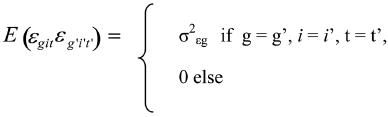
<body><![CDATA[<p align="justify"><font face="verdana" size="2">By contrast to Penrose Model (Penrose, 1959), one of PIMS basic characteristics is that stakeholders are provided with a reference background which is closer to business practices because it collects strategic principies that have been practiced by those companies selected as best practices. Several studies have revealed that this is the differentiating characteristic for PIMS, that it will ensure objectivity as opposed to other strategic models (such as the SWOT analysis and Portfolio Models). Munuera (2007) suggests that PIMS expresses the dimensions of the market structure and competitive position of businesses while the other models are based only on "judgments" or recommendations based on a specific strategy. The academic community found an opportunity to detect and model strategic planning issues by using PIMS methodology. Forinstance, Will and Beasely (1982) were pioneers in recognizing the importance of PIMS, arguing that "... <i>it is probably true that PIMS methodology has created, through its discoveries, a larger background to understand strategic planning..." </i>(p. 435). Fromthis step, scholars began to apply a more rigorous econometric analysis to detect empirical regularities related to the strategy, convinced that the results could be helpful for businesses in their strategic steering processes (Henderson, 1976; Buzzell, Gale, Bradley &amp; Sult&aacute;n, 1975; and Rumel and Wensley, 1980).</font></p>     <p align="justify"><font face="verdana" size="2">PIMS is established as an ambitious project to entail academic and businesses practices. Nevertheless, the most significant contribution towards PIMS methodology comes from Buzzell and Gale (1987), who centered on Lancaster et al. (1980) and PCB Model, but they propose a "definitive" survey that provides for a deeper and more systematic study on the subject, and their proposal has become an arche&#150;type for most of the studies in the same context.</font></p>     <p align="justify"><font face="verdana" size="2">The PCB Model (Phillips, Chang &amp; Buzzell, 1983) had a large influence over the Buzzell and Gale (1987) study because it models the structure of strategic manage&#150;ment tasks in a more complete manner. If expressed mathematically, the funcstion will be abided by:<a href="#nota"><sup>2</sup></a></font></p>     <p align="center"><font face="verdana" size="2"><img src="/img/revistas/cya/n234/a5e1.jpg"></font></p>     <p align="justify"><font face="verdana" size="2">In which C<sub>it</sub> are the costs of company <i>i</i> on the moment <i>t, </i>MS<sub>it</sub> is the market share, P<sub>it</sub> are the relative prices of produc&iacute;s, ROI is the return on investment, CV<sub>c</sub> is the set of control variables for equation, QUA is the quality and &#949;<sub>it</sub> will be the error or disturbance. So, following on Mundlak (1978) we can observe that the PCB Model assumes that conditional expectations of the random effect can be expressed linearly. In this way, two of its four dimensions (MS<sub>it</sub> and ROI<sub>it</sub>) will use the following expressions:<sup><a href="#nota">3</a></sup></font></p>     <p align="center"><img src="/img/revistas/cya/n234/a5e2.jpg" width="470" height="61"></p>     <p align="center"><img src="/img/revistas/cya/n234/a5e3.jpg" width="558" height="56"></p>     <p align="center"><font face="verdana" size="2">Since CV<sub>c</sub> is the set of control variables for equation <i>g, </i>then <i>g </i>=1,... .4, and</font></p>     <p align="center"><img src="/img/revistas/cya/n234/a5e4.jpg" width="388" height="117"></p>     <p align="justify"><font face="verdana" size="2">Then, to control for the persistent effects that can be attributed to unobservable variables, this baseline model is gradually extended by incorporating different error components.</font></p>     ]]></body>
<body><![CDATA[<p align="justify"><font face="verdana" size="2">In summary, the most relevant conclusions of the PIMS studies constitute, at the same time, some of the most polemic aspects:</font></p>     <blockquote>       <p align="justify"><font face="verdana" size="2">&bull; Businesses that cr&eacute;ate a higher added valu&eacute; by employee are more profitable than those who declare opposing characteristics,</font></p>       <p align="justify"><font face="verdana" size="2">&bull; Growth is positively related with profits and negatively with cash flow,</font></p>       <p align="justify"><font face="verdana" size="2">&bull; There is a strong relation between market share and profitability measured by the Return on Investment Ratio (ROI), and</font></p>       <p align="justify"><font face="verdana" size="2">&bull; Quality, measured by the consumers or by competitors, has a positive impact o ver growth and over the company's results, among others.</font></p> </blockquote>     <p align="justify"><font face="verdana" size="2">&nbsp;</font></p>     <p align="justify"><font face="verdana" size="2"><b>A brief review</b></font></p>     <p align="justify"><font face="verdana" size="2">Based on previous findings, four important challenges are established that surround the strategy:<sup><a href="#nota">4</a></sup> the relation between PIMS and the Corporate Strategy evolution, the analysis of PIMS questionnaire, the multicollinearity problems and the Market Share Effect. The following paragraphs are dedicated to the exploratory study of these topics.</font></p>     <p align="justify"><font face="verdana" size="2"><i>Corporate strategy</i></font></p>     ]]></body>
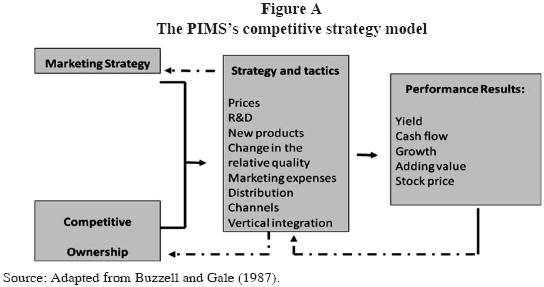
<body><![CDATA[<p align="justify"><font face="verdana" size="2">Schoeffler (1960) has established that since its origins, PIMS methodology should be centered on measuring the contribution of the marketing strategy over the company`s profits. This supposes the definition of strategy with more concrete elements. So, the first integrative effort develops with Rumelt (1974) proposal which lays the basis for the scientifical study on the impact of Corporate Strategy. This allows the emergence of two points of view: one which is centered on Corporate Strategy (Buzzell and Gale, 1987; Palich, Cardinal and Miller, 2000), and another one that emphasizes directive abilities (Goold, Campbell and Alexander, 1994).</font></p>     <p align="justify"><font face="verdana" size="2">The Buzzell and Gale (1987) study was crucial for the development of PIMS studies from the point of view of Corporate Strategy. In their work they explain that the strategy should be oriented towards the market but according to the competitive position of the business and they suggest that the way of evaluating its effectiveness is trough some profitability indicator (see figure A). Nevertheless, the selected strategy target will depend upon the directive's point of view adapted by the company, and therefore the impact over the returns can be significantly affected (Mosqueda Almanza, Pruneda Divildox and Palomares Vaughan, 2009). In fact, Markides (2001) arg&uuml;es that there will always be a variation in the way in which businesses consider strategy. Some will consider it as a competitive advantage, as a set of rules, as an intention or as the background to cr&eacute;ate valu&eacute; in the firm or even adapt it according to the models being used in a particular moment.</font></p>     <p align="justify"><font face="verdana" size="2">In the seventies, strategy emphasized the performance of results. In that time, PIMS was oriented towards an approach on Positional Advantages trying to typify and analyze the consequences of a strategy which is traditionally defined by models such as the Bost&oacute;n Consulting Group Model or the Porter Model. Later, in the eighties, and into present days, Markides (2001) suggests that Corporate Strategy tries to satisfy indicators such as Added Valu&eacute; and Balanced Scorecard, which had effects on PIMS. As a result, PIMS changed its traditional positional approach to that of Advantage resources. The current PIMS approach will measure the success of a strategy based on whether the resources generated by the company are sufficient and adequate for survival, and to adapt to settings characterized by uncertainty rather than by a search of a competitive advantage.</font></p>     <p align="center"><font face="verdana" size="2"><img src="/img/revistas/cya/n234/a5f1.jpg"></font></p>     <p align="justify"><font face="verdana" size="2">Differences in the definition of strategy will explain the lack of consensus that exists among different studies and theories about the conclusions obtained; therefore, it seems appropriate to question whether strategic recommendations endure or whether strategies that were successfiil in a moment in time are no longer usefiil in another time. Certain interest has been found in analyzing other &aacute;reas of the organization which are closely related with Strategic Management in an attempt to cr&eacute;ate a more precise background, but still characterized by the Advantage Resources approach (Robinson and Parry, 2004, Buzzell, 2004).</font></p>     <p align="justify"><font face="verdana" size="2"><i>PIMS survey</i></font></p>     <p align="justify"><font face="verdana" size="2">Studying the PIMS survey will result in verifying its robustness in other contexts such as incomplete markets. Only a few studies have been conducted on the subject.</font></p>     <p align="justify"><font face="verdana" size="2">This apparent lack of interest can be explained by the existence of at least three data bases with characteristics that are similar to the PIMS survey in the market: COM&#150;PUSAT, IRS&#150;Database and FTC&#150;Database. Evidence suggests certain information cross&#150;referencing that result in loss of resources.<a href="#nota"><sup>5</sup></a> Nevertheless, advances on the subject require redesign and eventually adapting an elaborated survey to complete markets, because it will be difficult to be applied outside its context without the emergence of problems with information being biased (Mosqueda, 2007b).</font></p>     <p align="justify"><font face="verdana" size="2">Boyd, Farris and Hilderbrandt (2004) have noticed that perfecting the survey relates to financial ratios that would best express the business economic reality. Similar approaches can be found in Zhen and Lev (1999) and Balasubramanian and Kumar (1990) who argue that more than the marketing expenses/sales ratio, the intensity of investments over profitability is essential.</font></p>     <p align="justify"><font face="verdana" size="2">Also, Ramirez (1997) recognizes that the PIMS survey had to be corrected to make it clearer according to commercial practices in local businesses. Fari&ntilde;as and Jamandreu (1994) and Fari&ntilde;as (1995) go further and analyze the structure both on PIMS surveys and other business strategy surveys, and warn that the questions requiring more changes were related to market characteristics and the strategy model in use.</font></p>     ]]></body>
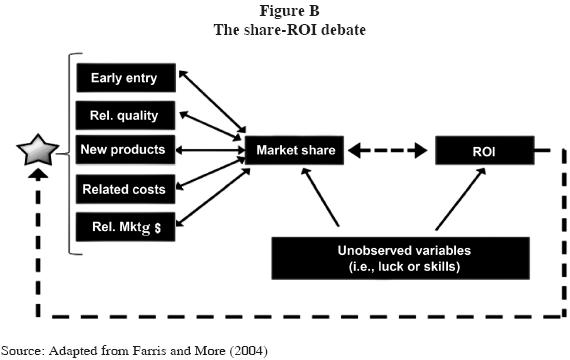
<body><![CDATA[<p align="justify"><font face="verdana" size="2">Recently, Mosqueda et al. (2009) have done empirical research to detect possible abnormalities in the design ofthe PIMS questionnaire. In their study they detected an Alfa Combrach of 0.638 which makes them think about perfecting the survey. In doing so, they used an archetype PIMS survey (2009).<sup><a href="#nota">6</a></sup> Eventually, they recognized that difficulties in applying the questionnaire to a collective of Mexican businesses because of the lack of information were related to questions measuring market share and produc&iacute;s life cycle.</font></p>     <p align="justify"><font face="verdana" size="2"><i>Multicollinearity problems</i></font></p>     <p align="justify"><font face="verdana" size="2">Schoeffler <i>et al. </i>(1974), Rumelt (1974) and, especially, Phillips <i>et al. </i>(1983), represent the first solid attempts on the statistical studies of PIMS. During that stage, incorporating cross&#150;sectional models to the tasks of analysis allowed the elimination of strong biases on the estimations.</font></p>     <p align="justify"><font face="verdana" size="2">In these findings, ROI is considered the most relevant element in measuring the effectiveness of Corporate Strategy. Criticism was immediate, and it meant an opportunity to improve methodological deficiencies.</font></p>     <p align="justify"><font face="verdana" size="2">The central premise on the m&uacute;ltiple regression analysis is that independent variables are independent among them, meaning that they are not related. When this premise is not complied with a multicollinearity problem arises which can be translated as a problem that creates irregular results and causes doubts about the findings (Wooldridge, 2006). Critics suggest that this problem is permanent in the PIMS Model. Ludatikin and Pitts (1983) found in an empirical test that "beyond the 66 possible relations, 38 percent ofthe relations produced in the sector groups are affectedby ahigh degree of multicollinearity" (p. 42).</font></p>     <p align="justify"><font face="verdana" size="2">Considering this problem, Buzzell and Gale (1987) constructed a correlation matrix using PIMS variables. Results suggest that there are no important correlations between any of the variables and that an existing correlation will be located near the 0.30. Schanaars (1994) warns that such result is a clear indication that there is a strong multicollinearity in and among some of the basic PIMS indicator. Tests that were later conducted revealed that the categories of "Relative perceived quality" and "Market share" were strongly correlated, and therefore both categories are not statistically independent. According to Schanaars this corresponds with practice in which it is noticed that no more than 50% of the businesses that took part in the survey show high quality lev&eacute;is and a high participation in market share.</font></p>     <p align="justify"><font face="verdana" size="2">Recent studies dem&oacute;nstrate that multicollinearity is a problem that does not invalidate results but shifts the polemic towards methodological aspects. Wooldridge (2006) and Judge, Griffiths, Hills, Lutkepohl and Lee (1985) consider that m&uacute;ltiple regressions is a solid statistical technique that works well even in the presence of severe multicollinearity cases. Facing this disjunction the critics move towards the design of controlling unobserved variables.</font></p>     <p align="justify"><font face="verdana" size="2">Uniform categorization of PIMS survey as proposed in Thomas y Tymon (1982) and Rodr&iacute;guez (1982). This re&#150;categorization is useful in identifying persistent effects which are <i>a priori </i>attributed to unobserved variables which will confirm the effect of market share. In consequence, the PIMS Model will be gradually extended by incorporating different error components providing more robust results. Other works have developed extensions to the PCB Model focusing on the way to control (measure) the invariant effects in time (Baltagi, 2001 and Hsiao, 1986), the autoregression effects (Camerer y Fahey, 1988 and Boulding and Staelin, 1993), and a third group which try to establish the correlation of random effects with exogenous variables (Mundlak, 1978, Joreskig, 1978 and Joreskog and Sorbom, 1996). Their findings show significant improvements in its explanatory capacity.</font></p>     <p align="justify"><font face="verdana" size="2"><i>The Market Share Effect</i></font></p>     <p align="justify"><font face="verdana" size="2">The starting hypothesis is based on Buzzell <i>et al. </i>(1974) which not only shows the tight relation between market share and profitability but which also makes sure that this is a consequence of the other (see <a href="#f2">Figure B</a>).</font></p>     ]]></body>
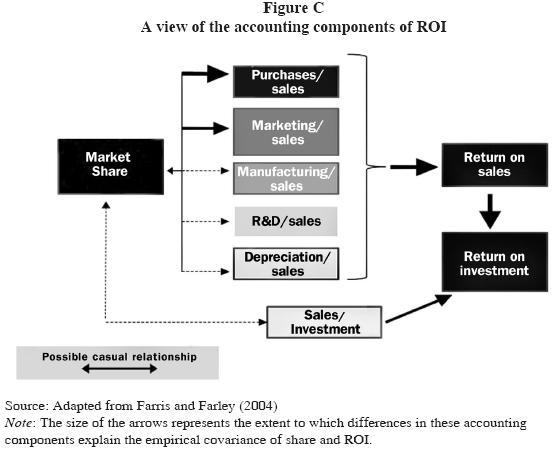
<body><![CDATA[<p align="center"><font face="verdana" size="2"><a name="f2"></a></font></p>     <p align="center"><font face="verdana" size="2"><img src="/img/revistas/cya/n234/a5f2.jpg"></font></p>     <p align="justify"><font face="verdana" size="2">Justification lays on the fact that a business, by having high market participation will provide higher levels of profitability with a given level of effectiveness and consequently its average costs will be low.</font></p>     <p align="justify"><font face="verdana" size="2">Buzzell <i>et al. </i>(1974) and Schoefler <i>et al. </i>(1974) empirically corroborate that hypothesis. For them, market share, intensity of investment and business characteristics are key elements in ROI Nevertheless they do not unveil neither the cause nor the effect.</font></p>     <p align="justify"><font face="verdana" size="2">In Scherer's paper (1987) the findings suggest that the effect of the market share is a "strong indicator" to explain the achieved profitability levels. Amongst the detractors of this hypothesis are Rumel and Wesley (1980) and Wesley (1982) who pay special attention to the fact that it cannot be assured into the market share has an effect (positive or negative) over profitability, because the phenomena had to be first understood. There is a need to develop a solid theoretical background to fully understand other elements that contribute to the level of profitability of a business. Several works suggest that market share is a consequence of having more effectiveness rather than its cause, which clearly implies that the market share effect over profitability is at least a false statement (Matovic, 2002; Jacobson 1988; Jacobson and Aaker 1985).</font></p>     <p align="justify"><font face="verdana" size="2">The origin of this confusi&oacute;n seems to come from the statement made by Demsetz (1973). Demsetz suggests that the high level of performance is a mix of luck and excellent quality management. In his empirical research he found that high executives were expecting to know the easiest way to recognize more attractive markets, develop more attractive products or to deliver marketing efforts in a more efficient way, but this invariably led them to assume that it will only lead to the increase of market share and to obtain more profits. Mosqueda's empirical work (Mosqueda, 2007a) seems to be on the way of confirming the above said; results allow differentiating factors that promote business growth from the possible existence of exceeding strategic (assets) or distinctive competences that are not fully utilized and that explain economic performance.</font></p>     <p align="justify"><font face="verdana" size="2">On the contrary, the Available Resources Theory (Barney, 1991) suggests that bu&#150;sinesses could not have sustainable advantages unless they have unlimited resources (assets) available every time that conditions are verified in the sense that they are imperfectly imitable and imperfectly replaceable by competing businesses in a form in which they could be shaped as sources of competitive advantage.<sup><a href="#nota">7</a></sup></font></p>     <p align="justify"><font face="verdana" size="2">This dilemma produces, as a result, an intermediate theory that considers both the observable and unobservable variables (such as luck, manager's ability, and so on). Gale and Branch (1981) find that in 60% of businesses that apply PIMS, the marketing strategy does not have an impact over profitability because in general there is an inadequate management of cash flow after interests, but they arg&uuml;e that these financial dimensions are strongly related to market share. These statements allow seeing, for the first time, the existence of other factors, different from market share that would explain profitability. In this way, Ailawadi, Warris and Parry (1999), Boulding and Staelin (1993) and Jacobson and Aaker (1985) found that besides the apparent existing effect between market share and ROI, profitability diluted through time by the effects of unobserved factors.</font></p>     <p align="justify"><font face="verdana" size="2">Ailawadi <i>et al. </i>(1999) analyze the accounting components that exist in the market share&#150; ROI relationship and suggest patterns that could provide indirect evidence of the nature of certain variables that cannot be observed. They conclude that the reduction in buying costs is a key element not observed in the manager's abilities or luck that will relate market share to ROI, with independence of on which direction this causality will be interpreted. By using the multivariate estimation technique a high level in the market share effect can be found (0.537 with an error margin of 0.025).</font></p>     <p align="justify"><font face="verdana" size="2">The accounting components which are empirically detected by some studies that have an effect over the market share can be observed in <a href="#f3">figure C</a>. It was precisely by disintegrating the ROI that a clearer idea about empirical causes of covariance between market share and ROUI can be found. In this figure the ratio Purchase/Sales is the most dominant dimensi&oacute;n followed by expenses in marketing and sales. Following on the same ideas, Christen and Gatignon (2004) introduced the development from the field of Random Effects proposed by Hausman (1978) to detect the effect of unobservable variables. The model proposed by Christen and Gatignon is named Random Effect Model (REM) and its target is to detect marginal contribu&#150;tions of non observable elements to the market share.</font></p>     ]]></body>
<body><![CDATA[<p align="center"><font face="verdana" size="2"><a name="f3"></a></font></p>     <p align="center"><font face="verdana" size="2"><img src="/img/revistas/cya/n234/a5f3.jpg"></font></p>     <p align="justify"><font face="verdana" size="2">To validate REM, Christen and Gatignon use PIMs information from 3,898 businesses that were grouped in 6 sectors. Then, the results were contrasted against those obtained by two other models: the simple regression model and the fix effects model. Out of the three methods used, REM was the one that reflected the major effect on market share over ROI although it did not show significant improvements in relation to the simple regression model. The cause seemed to be related to having exclusively concentrated on "tendency"; this situation generates an inefficient estimator for deviations since the adequate measure of "tendencies" should be the main objective of the test. So, this problem was solved after adopting Hausman criteria thanks to the creation of a correlation index (&#961;<sub>&#967;&#945;</sub>) between fixed components of the estimation and Market share. In effect, the new estimator considerably increased its capacity by going from a level of 0.30 to 0.57 for every sample of the market share effect.</font></p>     <p align="justify"><font face="verdana" size="2">&nbsp;</font></p>     <p align="justify"><font face="verdana" size="2"><b>Quality that conducts to profitability and growth</b></font></p>     <p align="justify"><font face="verdana" size="2">Christen and Gatignon (2004) acknowledge that even with recent findings, the persistence of proofs against the market share effect is possible because simple econometric models, in general, produce results that can be interpreted in different ways, a problem that cannot be easily solved, because when trying to use more sophisticated econometric models, valuable information is not always available. Recent works on relative product quality are centered on this indicator as a factor that will end the contraversy about the market share effect.</font></p>     <p align="justify"><font face="verdana" size="2">When businesses are able to produce products/services that are appreciated as of quality in the market, they are able to cr&eacute;ate wealth and can expand.</font></p>     <p align="justify"><font face="verdana" size="2">The most elementary problem when dealing with quality is that of the notion or definition. Different &aacute;reas of knowledge consider quality to be a particular thing; from reduction of variation to perfection, and everything in between. Converging on quality is therefore essential. Montaudon (2009) has considered that it is possible to recognize certain elements about quality that are to be found stable over time: quality is related to an authority, a recognition system, an organization or institution; quality is a collective action in which agreement and convergence must be obtained for others to see or observe the same thing, and finally, quality becomes a notion for self improvement. Even when the authority is no longer there, it is possible to distinguish between quality and what it is not moving towards its self improvement.</font></p>     <p align="justify"><font face="verdana" size="2">Relevant studies on the subject of quality as related to market share are those of Wankhade and Dabade (2006a) &amp; Wankhade and Dabade (2006b), which analyze quality perception and quality uncertainty due to information asymmetry. In industry, critical evaluation of major factors such as the role of divisional top managers and quality policy; the role of the quality department; training, design, supplier quality management; process management; quality data and employees relations based on Badri and Davis (1995) are also considered.</font></p>     <p align="justify"><font face="verdana" size="2">Montaudon and Mosqueda (2010) have elaborated on the creation of an &iacute;ndex for Product Quality that will reduce quality uncertainty and might be helpful in the promotion of an international language of product quality. The index could be used in addition to ISO 900 or industry regulations and would significantly reduce information asymmetry, therefore providing for quality.</font></p>     ]]></body>
<body><![CDATA[<p align="justify"><font face="verdana" size="2">If, and only if, everyone can observe the same thing about quality, can it be considered to provide profitability and growth? Otherwise, it becomes just a part of isolated efforts.</font></p>     <p align="justify"><font face="verdana" size="2">&nbsp;</font></p>     <p align="justify"><font face="verdana" size="2"><b>Summary and implications for future research</b></font></p>     <p align="justify"><font face="verdana" size="2">Even when Schnaars (2004) acknowledges that the consistency of PIMS findings in recent years suggests that generalizations offered by the model are lasting and not transitory, it is estimated that based on the analysis, there are serious arguments to perfect PIMS methodology.</font></p>     <p align="justify"><font face="verdana" size="2">One of the most interesting and relevant &aacute;reas for future PIMS development is related to quality. In fact, one of the most significant findings of the classical studies of Buzzel and Gale (1987) is that relative product quality is considered as adifferentiating element. Therefore, product quality should be analyzed over the profitability and market quota as proposed by Farris et.al (1992) and Hieldebrandt and Temme (2004) because of the need of evaluating the way in which the client perceives quality and its effect on business.</font></p>     <p align="justify"><font face="verdana" size="2">Conclusions based on earlier works show the need for a more precise definition of the business strategy, the redesign of the PIMS survey when it is applied to incomplete markets and, finally, advances have been found in the econometric PIMS study emphasizing the variable relative product quality to sol ve the dilemma of the market share effect.</font></p>     <p align="justify"><font face="verdana" size="2">Despite the progress shown in the PIMS model, the majority of specialists agree that the definitive breakthrough will come when the survey matches the maturity of the market studied. It must be assumed that low&#150;quality inputs may not correctly reflect the strategy. Henderson (1976) explained that rules cannot be inexorable; Farris and Farley (2004) consider that the biggest challenge for PIMS will be the definition of the market that cannot be attached to only one dimensi&oacute;n, but must consider all its complexities.</font></p>     <p align="justify"><font face="verdana" size="2">&nbsp;</font></p>     <p align="justify"><font face="verdana" size="2"><b>References</b></font></p>     <!-- ref --><p align="justify"><font face="verdana" size="2">Ailawadi, K., P. Warris and M. Parry (1999) "Market Share and ROI: Observing the Effect of unobserved variables" <i>International Journal of Research in Marketing. 16, </i>(1), 17&#150;33.    &nbsp;&nbsp;&nbsp;&nbsp;&nbsp;&nbsp;&nbsp;&nbsp;[&#160;<a href="javascript:void(0);" onclick="javascript: window.open('/scielo.php?script=sci_nlinks&ref=2240471&pid=S0186-1042201100020000500001&lng=','','width=640,height=500,resizable=yes,scrollbars=1,menubar=yes,');">Links</a>&#160;]<!-- end-ref --></font></p>     <!-- ref --><p align="justify"><font face="verdana" size="2">Balasubramanian, S. and V. Kumar (1990) "Analyzing Variations in Advertising and Promotional Expenditure" <i>Journal of Marketing 54 </i>(April), 57&#150;68</font>&nbsp;&nbsp;&nbsp;&nbsp;&nbsp;&nbsp;&nbsp;&nbsp;[&#160;<a href="javascript:void(0);" onclick="javascript: window.open('/scielo.php?script=sci_nlinks&ref=2240473&pid=S0186-1042201100020000500002&lng=','','width=640,height=500,resizable=yes,scrollbars=1,menubar=yes,');">Links</a>&#160;]<!-- end-ref --><!-- ref --><p align="justify"><font face="verdana" size="2">Barney, Jay (1986) "Organization Culture: Can It Be a Source of Sustained Competitive Advantage&raquo;, <i>Academy of Management Review, 11 </i>(3), 656&#150;665.    &nbsp;&nbsp;&nbsp;&nbsp;&nbsp;&nbsp;&nbsp;&nbsp;[&#160;<a href="javascript:void(0);" onclick="javascript: window.open('/scielo.php?script=sci_nlinks&ref=2240474&pid=S0186-1042201100020000500003&lng=','','width=640,height=500,resizable=yes,scrollbars=1,menubar=yes,');">Links</a>&#160;]<!-- end-ref --></font></p>     <!-- ref --><p align="justify"><font face="verdana" size="2">Baltagi, B. (2001) <i>Econometric analysis of panel data. </i>United Kingdom: John Wiley and Sons, 2da edici&oacute;n.    &nbsp;&nbsp;&nbsp;&nbsp;&nbsp;&nbsp;&nbsp;&nbsp;[&#160;<a href="javascript:void(0);" onclick="javascript: window.open('/scielo.php?script=sci_nlinks&ref=2240476&pid=S0186-1042201100020000500004&lng=','','width=640,height=500,resizable=yes,scrollbars=1,menubar=yes,');">Links</a>&#160;]<!-- end-ref --></font></p>     <!-- ref --><p align="justify"><font face="verdana" size="2">Bass, F., and D. R. Wittink (1975) "Pooling Issues and Methods in Regression Analysis with Examples in Marketing Research" <i>Journal of Marketing Research, 12 </i>(November), 414&#150;425.    &nbsp;&nbsp;&nbsp;&nbsp;&nbsp;&nbsp;&nbsp;&nbsp;[&#160;<a href="javascript:void(0);" onclick="javascript: window.open('/scielo.php?script=sci_nlinks&ref=2240478&pid=S0186-1042201100020000500005&lng=','','width=640,height=500,resizable=yes,scrollbars=1,menubar=yes,');">Links</a>&#160;]<!-- end-ref --></font></p>     <!-- ref --><p align="justify"><font face="verdana" size="2">Boyd, E., Pa&uacute;l Farris and L. Hilderbrandt (2004) "PIMS and COMPUSTAT data: different horse for the same course" in Farris y More (eds.) <i>The Profit Impact of Marketing Strategy Project: Retrospect and Prospect. </i>Cambridge University Press, pp. 41&#150;72</font>&nbsp;&nbsp;&nbsp;&nbsp;&nbsp;&nbsp;&nbsp;&nbsp;[&#160;<a href="javascript:void(0);" onclick="javascript: window.open('/scielo.php?script=sci_nlinks&ref=2240480&pid=S0186-1042201100020000500006&lng=','','width=640,height=500,resizable=yes,scrollbars=1,menubar=yes,');">Links</a>&#160;]<!-- end-ref --><!-- ref --><p align="justify"><font face="verdana" size="2">Boulding, W. and R. Staelin (1993) "A look on the Cost Side: Market Share and the competitive Environment" <i>Marketing Science. 12, </i>144&#150;166.    &nbsp;&nbsp;&nbsp;&nbsp;&nbsp;&nbsp;&nbsp;&nbsp;[&#160;<a href="javascript:void(0);" onclick="javascript: window.open('/scielo.php?script=sci_nlinks&ref=2240481&pid=S0186-1042201100020000500007&lng=','','width=640,height=500,resizable=yes,scrollbars=1,menubar=yes,');">Links</a>&#160;]<!-- end-ref --></font></p>     <!-- ref --><p align="justify"><font face="verdana" size="2">Buzzell, R., B. Gale, T. Bradley, and Sult&aacute;n, R. (1975) "Market Share&#150;A Key to Pro&#150;fitability" <i>Harvard Business Review, </i>Volume 53, January&#150;February, 97&#150;106.    &nbsp;&nbsp;&nbsp;&nbsp;&nbsp;&nbsp;&nbsp;&nbsp;[&#160;<a href="javascript:void(0);" onclick="javascript: window.open('/scielo.php?script=sci_nlinks&ref=2240483&pid=S0186-1042201100020000500008&lng=','','width=640,height=500,resizable=yes,scrollbars=1,menubar=yes,');">Links</a>&#160;]<!-- end-ref --></font></p>     <!-- ref --><p align="justify"><font face="verdana" size="2">Buzzell, R. D. and B.T. Gale (1987) <i>The PIMS (Profit Impact of Market Strategy) Principies. </i>New York: Free Press.    &nbsp;&nbsp;&nbsp;&nbsp;&nbsp;&nbsp;&nbsp;&nbsp;[&#160;<a href="javascript:void(0);" onclick="javascript: window.open('/scielo.php?script=sci_nlinks&ref=2240485&pid=S0186-1042201100020000500009&lng=','','width=640,height=500,resizable=yes,scrollbars=1,menubar=yes,');">Links</a>&#160;]<!-- end-ref --></font></p>     <!-- ref --><p align="justify"><font face="verdana" size="2">&#150;&#150;&#150;&#150;&#150;&#150;&#150;&#150;&#150;&#150; (2004) "The PIMS program of Strategy Research: A retrospective Appraisal" <i>Journal of Business Research, 57, </i>478&#150;483.    &nbsp;&nbsp;&nbsp;&nbsp;&nbsp;&nbsp;&nbsp;&nbsp;[&#160;<a href="javascript:void(0);" onclick="javascript: window.open('/scielo.php?script=sci_nlinks&ref=2240487&pid=S0186-1042201100020000500010&lng=','','width=640,height=500,resizable=yes,scrollbars=1,menubar=yes,');">Links</a>&#160;]<!-- end-ref --></font></p>     <!-- ref --><p align="justify"><font face="verdana" size="2">Camerer, C. and L. Fahey (1988) "The Reggresion Paradigm: A Critical Appraisal and Suggested Directions" in J. Grant (Ed.), <i>Strategic Management Frontiers, </i>443&#150;459.    &nbsp;&nbsp;&nbsp;&nbsp;&nbsp;&nbsp;&nbsp;&nbsp;[&#160;<a href="javascript:void(0);" onclick="javascript: window.open('/scielo.php?script=sci_nlinks&ref=2240489&pid=S0186-1042201100020000500011&lng=','','width=640,height=500,resizable=yes,scrollbars=1,menubar=yes,');">Links</a>&#160;]<!-- end-ref --></font></p>     <!-- ref --><p align="justify"><font face="verdana" size="2">Christen, Markus and H. Catignon (2004) "PIMS and the market share effect: biased evidence versus fuzzy evidence" in Farris y More (Eds.) <i>The Profit Impact of Marketing Strategy Project: Retrospect and Prospect. </i>Cambridge: Cambridge University Press, pp. 260&#150;271.    &nbsp;&nbsp;&nbsp;&nbsp;&nbsp;&nbsp;&nbsp;&nbsp;[&#160;<a href="javascript:void(0);" onclick="javascript: window.open('/scielo.php?script=sci_nlinks&ref=2240491&pid=S0186-1042201100020000500012&lng=','','width=640,height=500,resizable=yes,scrollbars=1,menubar=yes,');">Links</a>&#160;]<!-- end-ref --></font></p>     <!-- ref --><p align="justify"><font face="verdana" size="2">Day, G. and Robin Wesley (1988) "Assessing Advantages: A Framework for Diagnosis Competitive Superiority" <i>Journal of Marketing, 52, </i>April, 1&#150;20.    &nbsp;&nbsp;&nbsp;&nbsp;&nbsp;&nbsp;&nbsp;&nbsp;[&#160;<a href="javascript:void(0);" onclick="javascript: window.open('/scielo.php?script=sci_nlinks&ref=2240493&pid=S0186-1042201100020000500013&lng=','','width=640,height=500,resizable=yes,scrollbars=1,menubar=yes,');">Links</a>&#160;]<!-- end-ref --></font></p>     <!-- ref --><p align="justify"><font face="verdana" size="2">Demsetz, Harold (1973) "Industry Structure, Market Rivalry, and Public Policy" <i>Journal ofLaw and Economics. </i>Vol. 16, pp. 1&#150;10.    &nbsp;&nbsp;&nbsp;&nbsp;&nbsp;&nbsp;&nbsp;&nbsp;[&#160;<a href="javascript:void(0);" onclick="javascript: window.open('/scielo.php?script=sci_nlinks&ref=2240495&pid=S0186-1042201100020000500014&lng=','','width=640,height=500,resizable=yes,scrollbars=1,menubar=yes,');">Links</a>&#160;]<!-- end-ref --></font></p>     <!-- ref --><p align="justify"><font face="verdana" size="2">Dibb S., L. Simpkin , W. M. Pride , O. C. Ferrell (2006) <i>Marketing Concepts and Strategies, </i>(Fifth European Edition) London: Houghton Mifflin.    &nbsp;&nbsp;&nbsp;&nbsp;&nbsp;&nbsp;&nbsp;&nbsp;[&#160;<a href="javascript:void(0);" onclick="javascript: window.open('/scielo.php?script=sci_nlinks&ref=2240497&pid=S0186-1042201100020000500015&lng=','','width=640,height=500,resizable=yes,scrollbars=1,menubar=yes,');">Links</a>&#160;]<!-- end-ref --></font></p>     <!-- ref --><p align="justify"><font face="verdana" size="2">Fari&ntilde;as, J. and J. Jaumandreu (1994) "La encuesta sobre estrategias empresariales: caracter&iacute;sticas y usos", <i>Econom&iacute;a Industrial, 299, </i>109&#150;119.    &nbsp;&nbsp;&nbsp;&nbsp;&nbsp;&nbsp;&nbsp;&nbsp;[&#160;<a href="javascript:void(0);" onclick="javascript: window.open('/scielo.php?script=sci_nlinks&ref=2240499&pid=S0186-1042201100020000500016&lng=','','width=640,height=500,resizable=yes,scrollbars=1,menubar=yes,');">Links</a>&#160;]<!-- end-ref --></font></p>     <!-- ref --><p align="justify"><font face="verdana" size="2">&#150;&#150;&#150;&#150;&#150;&#150;&#150;&#150;&#150;&#150; (1995) "La encuesta sobre estrategias empresariales: caracter&iacute;sticas y usos", Documento de Trabajo N&uacute;mero 8 del Programa de Investigaciones Econ&oacute;micas, Fundaci&oacute;n Empresa P&uacute;blica, 39 p&aacute;ginas.    &nbsp;&nbsp;&nbsp;&nbsp;&nbsp;&nbsp;&nbsp;&nbsp;[&#160;<a href="javascript:void(0);" onclick="javascript: window.open('/scielo.php?script=sci_nlinks&ref=2240501&pid=S0186-1042201100020000500017&lng=','','width=640,height=500,resizable=yes,scrollbars=1,menubar=yes,');">Links</a>&#160;]<!-- end-ref --></font></p>     <!-- ref --><p align="justify"><font face="verdana" size="2">Farris, P., E. Parry and K. Ailawadi (1992) "Structural Analysis of Models with Composite Dependent Variables" <i>Marketing Science, 11, </i>76&#150;94.    &nbsp;&nbsp;&nbsp;&nbsp;&nbsp;&nbsp;&nbsp;&nbsp;[&#160;<a href="javascript:void(0);" onclick="javascript: window.open('/scielo.php?script=sci_nlinks&ref=2240503&pid=S0186-1042201100020000500018&lng=','','width=640,height=500,resizable=yes,scrollbars=1,menubar=yes,');">Links</a>&#160;]<!-- end-ref --></font></p>     <!-- ref --><p align="justify"><font face="verdana" size="2">&#150;&#150;&#150;&#150;&#150;&#150;&#150;&#150;&#150;&#150; , and J. Farley (2004) "PIMS: Visi&oacute;n, achievement, and scope of the data" in Farris and More (eds.) <i>The Profit Impact of Marketing Strategy Pro&#150;ject: Retrospect and Prospect. </i>Cambridge: University Press, 6&#150;27</font>&nbsp;&nbsp;&nbsp;&nbsp;&nbsp;&nbsp;&nbsp;&nbsp;[&#160;<a href="javascript:void(0);" onclick="javascript: window.open('/scielo.php?script=sci_nlinks&ref=2240505&pid=S0186-1042201100020000500019&lng=','','width=640,height=500,resizable=yes,scrollbars=1,menubar=yes,');">Links</a>&#160;]<!-- end-ref --><!-- ref --><p align="justify"><font face="verdana" size="2">Gale, B. T. and B. Branch (1981) "Cash flow analysis: More important than ever" <i>Harvard Business Review. </i>59 (4), 131&#150;136</font>&nbsp;&nbsp;&nbsp;&nbsp;&nbsp;&nbsp;&nbsp;&nbsp;[&#160;<a href="javascript:void(0);" onclick="javascript: window.open('/scielo.php?script=sci_nlinks&ref=2240506&pid=S0186-1042201100020000500020&lng=','','width=640,height=500,resizable=yes,scrollbars=1,menubar=yes,');">Links</a>&#160;]<!-- end-ref --><!-- ref --><p align="justify"><font face="verdana" size="2">Goold, M., A. Campbell and M. Alexander, (1994) Corporate&#150;Level Strategy: Creating Valu&eacute; in the Multibusiness Company. Chichester: Ed. John Wiley and Sons.    &nbsp;&nbsp;&nbsp;&nbsp;&nbsp;&nbsp;&nbsp;&nbsp;[&#160;<a href="javascript:void(0);" onclick="javascript: window.open('/scielo.php?script=sci_nlinks&ref=2240507&pid=S0186-1042201100020000500021&lng=','','width=640,height=500,resizable=yes,scrollbars=1,menubar=yes,');">Links</a>&#160;]<!-- end-ref --></font></p>     <!-- ref --><p align="justify"><font face="verdana" size="2">Hausman, J. (1978) "Specifications tests in econometric" <i>Econometricam 46, </i>pp. 1251&#150;1271.    &nbsp;&nbsp;&nbsp;&nbsp;&nbsp;&nbsp;&nbsp;&nbsp;[&#160;<a href="javascript:void(0);" onclick="javascript: window.open('/scielo.php?script=sci_nlinks&ref=2240509&pid=S0186-1042201100020000500022&lng=','','width=640,height=500,resizable=yes,scrollbars=1,menubar=yes,');">Links</a>&#160;]<!-- end-ref --></font></p>     <!-- ref --><p align="justify"><font face="verdana" size="2">Hiedelbrant, L. and R. Buzzell (1991) "Panelanalyzen zur Kontrolle 'unbeobachtbarber in der Erfolgsfaktorenforschung" <i>Zeitschrift f&uuml;r Betriebswirtschaft, 66, </i>1409&#150;1426.    &nbsp;&nbsp;&nbsp;&nbsp;&nbsp;&nbsp;&nbsp;&nbsp;[&#160;<a href="javascript:void(0);" onclick="javascript: window.open('/scielo.php?script=sci_nlinks&ref=2240511&pid=S0186-1042201100020000500023&lng=','','width=640,height=500,resizable=yes,scrollbars=1,menubar=yes,');">Links</a>&#160;]<!-- end-ref --></font></p>     <!-- ref --><p align="justify"><font face="verdana" size="2">&#150;&#150;&#150;&#150;&#150;&#150;&#150;&#150;&#150;&#150; , and D. Temme (2004) "The Modelo PCB revisited&#150; the Effect of unobservable variables" in Farris y More (Eds.) <i>The Profit Impact of Marketing Strategy Project: Retrospect and Prospect. </i>Cambridge: Cambridge University Press, 153&#150;187.    &nbsp;&nbsp;&nbsp;&nbsp;&nbsp;&nbsp;&nbsp;&nbsp;[&#160;<a href="javascript:void(0);" onclick="javascript: window.open('/scielo.php?script=sci_nlinks&ref=2240513&pid=S0186-1042201100020000500024&lng=','','width=640,height=500,resizable=yes,scrollbars=1,menubar=yes,');">Links</a>&#160;]<!-- end-ref --></font></p>     <!-- ref --><p align="justify"><font face="verdana" size="2">Henderson, B. (1976) <i>The Rule ofthe Three and Four. BCG: 39. </i>Bost&oacute;n: Ed. John &amp; Wiley &amp; Sons.    &nbsp;&nbsp;&nbsp;&nbsp;&nbsp;&nbsp;&nbsp;&nbsp;[&#160;<a href="javascript:void(0);" onclick="javascript: window.open('/scielo.php?script=sci_nlinks&ref=2240515&pid=S0186-1042201100020000500025&lng=','','width=640,height=500,resizable=yes,scrollbars=1,menubar=yes,');">Links</a>&#160;]<!-- end-ref --></font></p>     <!-- ref --><p align="justify"><font face="verdana" size="2">Hsiao, C. (1986) <i>Analysis of Panel Data. </i>Cambridge: Cambridge: University Press.    &nbsp;&nbsp;&nbsp;&nbsp;&nbsp;&nbsp;&nbsp;&nbsp;[&#160;<a href="javascript:void(0);" onclick="javascript: window.open('/scielo.php?script=sci_nlinks&ref=2240517&pid=S0186-1042201100020000500026&lng=','','width=640,height=500,resizable=yes,scrollbars=1,menubar=yes,');">Links</a>&#160;]<!-- end-ref --></font></p>     <!-- ref --><p align="justify"><font face="verdana" size="2">Jacobson, R. (1988) "Distinguishing Among Competitors Theories ofthe Market Share Effect" <i>Journal of marketing. 52, </i>pp. 68&#150;80</font>&nbsp;&nbsp;&nbsp;&nbsp;&nbsp;&nbsp;&nbsp;&nbsp;[&#160;<a href="javascript:void(0);" onclick="javascript: window.open('/scielo.php?script=sci_nlinks&ref=2240519&pid=S0186-1042201100020000500027&lng=','','width=640,height=500,resizable=yes,scrollbars=1,menubar=yes,');">Links</a>&#160;]<!-- end-ref --><!-- ref --><p align="justify"><font face="verdana" size="2"><i>&#150;&#150;&#150;&#150;&#150;&#150;&#150;&#150;&#150;&#150; , </i>R. and D. Aaker (1985) "Is Market Share All That It's Cracked Up to be?" <i>Journal of marketing. 49, </i>11&#150;22</font>&nbsp;&nbsp;&nbsp;&nbsp;&nbsp;&nbsp;&nbsp;&nbsp;[&#160;<a href="javascript:void(0);" onclick="javascript: window.open('/scielo.php?script=sci_nlinks&ref=2240520&pid=S0186-1042201100020000500028&lng=','','width=640,height=500,resizable=yes,scrollbars=1,menubar=yes,');">Links</a>&#160;]<!-- end-ref --><!-- ref --><p align="justify"><font face="verdana" size="2">Joreskog, K. G. (1978) "An Econometric Model for Multivariate Panel Data" <i>Annales de l'INSEE </i>30&#150;31, pp. 355&#150;366.    &nbsp;&nbsp;&nbsp;&nbsp;&nbsp;&nbsp;&nbsp;&nbsp;[&#160;<a href="javascript:void(0);" onclick="javascript: window.open('/scielo.php?script=sci_nlinks&ref=2240521&pid=S0186-1042201100020000500029&lng=','','width=640,height=500,resizable=yes,scrollbars=1,menubar=yes,');">Links</a>&#160;]<!-- end-ref --></font></p>     <!-- ref --><p align="justify"><font face="verdana" size="2">&#150;&#150;&#150;&#150;&#150;&#150;&#150;&#150;&#150;&#150;, K and D. Sorbom (1996) <i>L1SREL 8: User's reference guide. </i>Chicago: Scientific Software.    &nbsp;&nbsp;&nbsp;&nbsp;&nbsp;&nbsp;&nbsp;&nbsp;[&#160;<a href="javascript:void(0);" onclick="javascript: window.open('/scielo.php?script=sci_nlinks&ref=2240523&pid=S0186-1042201100020000500030&lng=','','width=640,height=500,resizable=yes,scrollbars=1,menubar=yes,');">Links</a>&#160;]<!-- end-ref --></font></p>     <!-- ref --><p align="justify"><font face="verdana" size="2">Judge, G., W. Griffiths, H. Hills, H. Lutkepohl and T. Lee (1985) <i>The Theory and Practice of Econometrics. </i>New York: John Wiley and Sons.    &nbsp;&nbsp;&nbsp;&nbsp;&nbsp;&nbsp;&nbsp;&nbsp;[&#160;<a href="javascript:void(0);" onclick="javascript: window.open('/scielo.php?script=sci_nlinks&ref=2240525&pid=S0186-1042201100020000500031&lng=','','width=640,height=500,resizable=yes,scrollbars=1,menubar=yes,');">Links</a>&#160;]<!-- end-ref --></font></p>     <!-- ref --><p align="justify"><font face="verdana" size="2">Lancaster, L, G. Stevenson and G. Jacob (1980) "Fundamentos de la metodolog&iacute;a PIMS" in Mosqueda Almanza, Rub&eacute;n and Sanjuana Villanueva (Ed.) "Impacto de la estrategia de exportaci&oacute;n sobre el rendimiento" <i>Working paper 0217. </i>Universidad de Guanajuato. Noviembre.    &nbsp;&nbsp;&nbsp;&nbsp;&nbsp;&nbsp;&nbsp;&nbsp;[&#160;<a href="javascript:void(0);" onclick="javascript: window.open('/scielo.php?script=sci_nlinks&ref=2240527&pid=S0186-1042201100020000500032&lng=','','width=640,height=500,resizable=yes,scrollbars=1,menubar=yes,');">Links</a>&#160;]<!-- end-ref --></font></p>     <!-- ref --><p align="justify"><font face="verdana" size="2">Lancaster, L., P. Massingham and R. Ashford (2002) <i>Essentials ofMarketing. </i>(4th ed.) New York: McGraw Hill.    &nbsp;&nbsp;&nbsp;&nbsp;&nbsp;&nbsp;&nbsp;&nbsp;[&#160;<a href="javascript:void(0);" onclick="javascript: window.open('/scielo.php?script=sci_nlinks&ref=2240529&pid=S0186-1042201100020000500033&lng=','','width=640,height=500,resizable=yes,scrollbars=1,menubar=yes,');">Links</a>&#160;]<!-- end-ref --></font></p>     <!-- ref --><p align="justify"><font face="verdana" size="2">Markides, Costas (2001) "Strategy as Balance: from either or to and" <i>Business strategy Review. 12, </i>1&#150;10.    &nbsp;&nbsp;&nbsp;&nbsp;&nbsp;&nbsp;&nbsp;&nbsp;[&#160;<a href="javascript:void(0);" onclick="javascript: window.open('/scielo.php?script=sci_nlinks&ref=2240531&pid=S0186-1042201100020000500034&lng=','','width=640,height=500,resizable=yes,scrollbars=1,menubar=yes,');">Links</a>&#160;]<!-- end-ref --></font></p>     <!-- ref --><p align="justify"><font face="verdana" size="2">Matovic, Dragan (2002) "The Competitive Market Structure ofthe U.S. Lodging Industry and its Impact on the Financial Performance of Hotel Brands" <i>PhD Thesis. </i>Virginia Polytechnic Institute. USA.    &nbsp;&nbsp;&nbsp;&nbsp;&nbsp;&nbsp;&nbsp;&nbsp;[&#160;<a href="javascript:void(0);" onclick="javascript: window.open('/scielo.php?script=sci_nlinks&ref=2240533&pid=S0186-1042201100020000500035&lng=','','width=640,height=500,resizable=yes,scrollbars=1,menubar=yes,');">Links</a>&#160;]<!-- end-ref --></font></p>     <!-- ref --><p align="justify"><font face="verdana" size="2">Montaudon, C. (2009) "Studying quality in the automobile industry. Three appro&#150;aches and case studies" <i>PhD Thesis. </i>Great Britain: Lincoln University. Forthcomming.    &nbsp;&nbsp;&nbsp;&nbsp;&nbsp;&nbsp;&nbsp;&nbsp;[&#160;<a href="javascript:void(0);" onclick="javascript: window.open('/scielo.php?script=sci_nlinks&ref=2240535&pid=S0186-1042201100020000500036&lng=','','width=640,height=500,resizable=yes,scrollbars=1,menubar=yes,');">Links</a>&#160;]<!-- end-ref --></font></p>     <!-- ref --><p align="justify"><font face="verdana" size="2">&#150;&#150;&#150;&#150;&#150;&#150;&#150;&#150;&#150;&#150;, and R. Mosqueda (2010) "Quality Comparing &iacute;ndex (QSI)". <i>Working paper A728. </i>Tecnol&oacute;gico de Monterrey. M&eacute;xico.    &nbsp;&nbsp;&nbsp;&nbsp;&nbsp;&nbsp;&nbsp;&nbsp;[&#160;<a href="javascript:void(0);" onclick="javascript: window.open('/scielo.php?script=sci_nlinks&ref=2240537&pid=S0186-1042201100020000500037&lng=','','width=640,height=500,resizable=yes,scrollbars=1,menubar=yes,');">Links</a>&#160;]<!-- end-ref --></font></p>     <!-- ref --><p align="justify"><font face="verdana" size="2">Mosqueda Almanza, Rub&eacute;n (2007a) "Efecto de la direcci&oacute;n de la estrategia corporativa sobre el rendimiento econ&oacute;mico en las empresas industriales mexicanas" <i>Memorias del Premio Nacional de Finanzas. </i>IMEF&#150;Deloitte &amp; Touch&eacute;. M&eacute;xico.    &nbsp;&nbsp;&nbsp;&nbsp;&nbsp;&nbsp;&nbsp;&nbsp;[&#160;<a href="javascript:void(0);" onclick="javascript: window.open('/scielo.php?script=sci_nlinks&ref=2240539&pid=S0186-1042201100020000500038&lng=','','width=640,height=500,resizable=yes,scrollbars=1,menubar=yes,');">Links</a>&#160;]<!-- end-ref --></font></p>     <!-- ref --><p align="justify"><font face="verdana" size="2">&#150;&#150;&#150;&#150;&#150;&#150;&#150;&#150;&#150;&#150; (2007b) "Estrategia corporativa. Rendimiento econ&oacute;mico" <i>Revista Ejecutivo de Finanzas, 30, </i>64&#150;65.    &nbsp;&nbsp;&nbsp;&nbsp;&nbsp;&nbsp;&nbsp;&nbsp;[&#160;<a href="javascript:void(0);" onclick="javascript: window.open('/scielo.php?script=sci_nlinks&ref=2240541&pid=S0186-1042201100020000500039&lng=','','width=640,height=500,resizable=yes,scrollbars=1,menubar=yes,');">Links</a>&#160;]<!-- end-ref --></font></p>     <!-- ref --><p align="justify"><font face="verdana" size="2">&#150;&#150;&#150;&#150;&#150;&#150;&#150;&#150;&#150;&#150;, G. Pruneda and F. Palomares (2009) "Modelo para medir el impacto de la estrategia comercial en el rendimiento de las empresas PYMES" Memorias del Seminario Estatal de Investigaci&oacute;n, CONCYTEG. M&eacute;xico.    &nbsp;&nbsp;&nbsp;&nbsp;&nbsp;&nbsp;&nbsp;&nbsp;[&#160;<a href="javascript:void(0);" onclick="javascript: window.open('/scielo.php?script=sci_nlinks&ref=2240543&pid=S0186-1042201100020000500040&lng=','','width=640,height=500,resizable=yes,scrollbars=1,menubar=yes,');">Links</a>&#160;]<!-- end-ref --></font></p>     <!-- ref --><p align="justify"><font face="verdana" size="2">Mundlak Y. (1978) "On the pooling of the time series and cross section data" <i>Econometrica 46, </i>69&#150;85.    &nbsp;&nbsp;&nbsp;&nbsp;&nbsp;&nbsp;&nbsp;&nbsp;[&#160;<a href="javascript:void(0);" onclick="javascript: window.open('/scielo.php?script=sci_nlinks&ref=2240545&pid=S0186-1042201100020000500041&lng=','','width=640,height=500,resizable=yes,scrollbars=1,menubar=yes,');">Links</a>&#160;]<!-- end-ref --></font></p>     <!-- ref --><p align="justify"><font face="verdana" size="2">Munuera Alem&aacute;n, Jos&eacute; (2007) <i>Marketing estrat&eacute;gico: teor&iacute;a y casos. </i>(4ta ed.) Madrid: Pir&aacute;mide.    &nbsp;&nbsp;&nbsp;&nbsp;&nbsp;&nbsp;&nbsp;&nbsp;[&#160;<a href="javascript:void(0);" onclick="javascript: window.open('/scielo.php?script=sci_nlinks&ref=2240547&pid=S0186-1042201100020000500042&lng=','','width=640,height=500,resizable=yes,scrollbars=1,menubar=yes,');">Links</a>&#160;]<!-- end-ref --></font></p>     <!-- ref --><p align="justify"><font face="verdana" size="2">Palien, L., L. Cardinal and C. Miller (2000) "Curvilinearity in the Diversification&#150;Performance Linkage: An Examination of Over Three Decades of Research", <i>Strategic Management Journal, 21(2), </i>pp. 155&#150;174.    &nbsp;&nbsp;&nbsp;&nbsp;&nbsp;&nbsp;&nbsp;&nbsp;[&#160;<a href="javascript:void(0);" onclick="javascript: window.open('/scielo.php?script=sci_nlinks&ref=2240549&pid=S0186-1042201100020000500043&lng=','','width=640,height=500,resizable=yes,scrollbars=1,menubar=yes,');">Links</a>&#160;]<!-- end-ref --></font></p>     <!-- ref --><p align="justify"><font face="verdana" size="2">Penrose, E. (1959) <i>The Theory ofthe Growth ofthe Firm. </i>New York: Wiley.    &nbsp;&nbsp;&nbsp;&nbsp;&nbsp;&nbsp;&nbsp;&nbsp;[&#160;<a href="javascript:void(0);" onclick="javascript: window.open('/scielo.php?script=sci_nlinks&ref=2240551&pid=S0186-1042201100020000500044&lng=','','width=640,height=500,resizable=yes,scrollbars=1,menubar=yes,');">Links</a>&#160;]<!-- end-ref --></font></p>     <!-- ref --><p align="justify"><font face="verdana" size="2">Phillips, L., D. Chang and R. D. Buzzell (1983) "Product Quality, Cost Position and Business Performance: A test of some Key Hypothesis" <i>Journal of Marketing, 47 </i>(spring), 26&#150;43.    &nbsp;&nbsp;&nbsp;&nbsp;&nbsp;&nbsp;&nbsp;&nbsp;[&#160;<a href="javascript:void(0);" onclick="javascript: window.open('/scielo.php?script=sci_nlinks&ref=2240553&pid=S0186-1042201100020000500045&lng=','','width=640,height=500,resizable=yes,scrollbars=1,menubar=yes,');">Links</a>&#160;]<!-- end-ref --></font></p>     <!-- ref --><p align="justify"><font face="verdana" size="2">Ramaswany, V., H. Gatingnon and D. Reibstein (2004) "Competitive Marketing behavior in Industrial Markets" <i>Journal of Marketing. 58 </i>(2), 45&#150;56</font>&nbsp;&nbsp;&nbsp;&nbsp;&nbsp;&nbsp;&nbsp;&nbsp;[&#160;<a href="javascript:void(0);" onclick="javascript: window.open('/scielo.php?script=sci_nlinks&ref=2240555&pid=S0186-1042201100020000500046&lng=','','width=640,height=500,resizable=yes,scrollbars=1,menubar=yes,');">Links</a>&#160;]<!-- end-ref --><!-- ref --><p align="justify"><font face="verdana" size="2">Ram&iacute;rez, M. L. (1997) An&aacute;lisis del comportamiento estrat&eacute;gico de las empresas espa&ntilde;olas: Aplicaci&oacute;n a la diversificaci&oacute;n internacional y de producto. 1991&#150;1995. (Tesis in&eacute;dita doctoral) Universidad de Zaragoza, Espa&ntilde;a.    &nbsp;&nbsp;&nbsp;&nbsp;&nbsp;&nbsp;&nbsp;&nbsp;[&#160;<a href="javascript:void(0);" onclick="javascript: window.open('/scielo.php?script=sci_nlinks&ref=2240556&pid=S0186-1042201100020000500047&lng=','','width=640,height=500,resizable=yes,scrollbars=1,menubar=yes,');">Links</a>&#160;]<!-- end-ref --></font></p>     <!-- ref --><p align="justify"><font face="verdana" size="2">Robinson, William and Mark Parry (2004) "Order of market entry: empirical re&#150;sults from the PIMS data and future research topics" in Farris y More (eds.) <i>The Profit Impact of Marketing Strategy Project: Retrospect and Prospect. </i>Cambridge University Press, pp. 73&#150;91.    &nbsp;&nbsp;&nbsp;&nbsp;&nbsp;&nbsp;&nbsp;&nbsp;[&#160;<a href="javascript:void(0);" onclick="javascript: window.open('/scielo.php?script=sci_nlinks&ref=2240558&pid=S0186-1042201100020000500048&lng=','','width=640,height=500,resizable=yes,scrollbars=1,menubar=yes,');">Links</a>&#160;]<!-- end-ref --></font></p>     <!-- ref --><p align="justify"><font face="verdana" size="2">Rodr&iacute;guez, J. (2007) <i>Marketing estrat&eacute;gico: Teor&iacute;a y casos. </i>Madrid: Pir&aacute;mide.    &nbsp;&nbsp;&nbsp;&nbsp;&nbsp;&nbsp;&nbsp;&nbsp;[&#160;<a href="javascript:void(0);" onclick="javascript: window.open('/scielo.php?script=sci_nlinks&ref=2240560&pid=S0186-1042201100020000500049&lng=','','width=640,height=500,resizable=yes,scrollbars=1,menubar=yes,');">Links</a>&#160;]<!-- end-ref --></font></p>     ]]></body>
<body><![CDATA[<!-- ref --><p align="justify"><font face="verdana" size="2">Rumelt, R.P. (1974) <i>Strategy. Structure and Economic Performance. </i>Cambridge: Harvard Business School.    &nbsp;&nbsp;&nbsp;&nbsp;&nbsp;&nbsp;&nbsp;&nbsp;[&#160;<a href="javascript:void(0);" onclick="javascript: window.open('/scielo.php?script=sci_nlinks&ref=2240562&pid=S0186-1042201100020000500050&lng=','','width=640,height=500,resizable=yes,scrollbars=1,menubar=yes,');">Links</a>&#160;]<!-- end-ref --></font></p>     <!-- ref --><p align="justify"><font face="verdana" size="2">&#150;&#150;&#150;&#150;&#150;&#150;&#150;&#150;&#150;&#150;, and Wensley (1980) "In Search ofthe Market Share Effect" University of California. <i>Working paper </i>MGL&#150;61.    &nbsp;&nbsp;&nbsp;&nbsp;&nbsp;&nbsp;&nbsp;&nbsp;[&#160;<a href="javascript:void(0);" onclick="javascript: window.open('/scielo.php?script=sci_nlinks&ref=2240564&pid=S0186-1042201100020000500051&lng=','','width=640,height=500,resizable=yes,scrollbars=1,menubar=yes,');">Links</a>&#160;]<!-- end-ref --></font></p>     <!-- ref --><p align="justify"><font face="verdana" size="2">Schnaars, Steven (1994) <i>Estrategias de marketing: Un enfoque orientado al consumidor. </i>Madrid: Diaz de Santos.    &nbsp;&nbsp;&nbsp;&nbsp;&nbsp;&nbsp;&nbsp;&nbsp;[&#160;<a href="javascript:void(0);" onclick="javascript: window.open('/scielo.php?script=sci_nlinks&ref=2240566&pid=S0186-1042201100020000500052&lng=','','width=640,height=500,resizable=yes,scrollbars=1,menubar=yes,');">Links</a>&#160;]<!-- end-ref --></font></p>     <!-- ref --><p align="justify"><font face="verdana" size="2">Schoeffler, Sidney, R. Buzzell and D. Heany (1974) "Impact of Strategic planning on profit performance". <i>Harvard Business Review. 52, </i>(2), 137&#150;145.    &nbsp;&nbsp;&nbsp;&nbsp;&nbsp;&nbsp;&nbsp;&nbsp;[&#160;<a href="javascript:void(0);" onclick="javascript: window.open('/scielo.php?script=sci_nlinks&ref=2240568&pid=S0186-1042201100020000500053&lng=','','width=640,height=500,resizable=yes,scrollbars=1,menubar=yes,');">Links</a>&#160;]<!-- end-ref --></font></p>     <!-- ref --><p align="justify"><font face="verdana" size="2">&#150;&#150;&#150;&#150;&#150;&#150;&#150;&#150;&#150;&#150;, Sidney (1977). "Cross&#150;Sectional Study of Strategy, Structure, and Performance: Aspects ofthe PIMS Program." In Thorelli, Hans B. (editor) <i>Strategy </i>+ <i>Structure = Performance. </i>Bloomington, IN: Indiana University Press, 108&#150;121.    &nbsp;&nbsp;&nbsp;&nbsp;&nbsp;&nbsp;&nbsp;&nbsp;[&#160;<a href="javascript:void(0);" onclick="javascript: window.open('/scielo.php?script=sci_nlinks&ref=2240570&pid=S0186-1042201100020000500054&lng=','','width=640,height=500,resizable=yes,scrollbars=1,menubar=yes,');">Links</a>&#160;]<!-- end-ref --></font></p>     ]]></body>
<body><![CDATA[<!-- ref --><p align="justify"><font face="verdana" size="2">Sherer, F. M. (1987) "The Validity of Studies with line of Business Data: Comment". <i>American Economic Review, 77, </i>205&#150;217.    &nbsp;&nbsp;&nbsp;&nbsp;&nbsp;&nbsp;&nbsp;&nbsp;[&#160;<a href="javascript:void(0);" onclick="javascript: window.open('/scielo.php?script=sci_nlinks&ref=2240572&pid=S0186-1042201100020000500055&lng=','','width=640,height=500,resizable=yes,scrollbars=1,menubar=yes,');">Links</a>&#160;]<!-- end-ref --></font></p>     <!-- ref --><p align="justify"><font face="verdana" size="2">Thomas, K. and W. G. Tymon (1982) "Necessary properties of relevant research: Lessons from recent criticisms of the organization sciences" <i>Academy of Management Review, </i>45 (4), 345&#150;352.    &nbsp;&nbsp;&nbsp;&nbsp;&nbsp;&nbsp;&nbsp;&nbsp;[&#160;<a href="javascript:void(0);" onclick="javascript: window.open('/scielo.php?script=sci_nlinks&ref=2240574&pid=S0186-1042201100020000500056&lng=','','width=640,height=500,resizable=yes,scrollbars=1,menubar=yes,');">Links</a>&#160;]<!-- end-ref --></font></p>     <!-- ref --><p align="justify"><font face="verdana" size="2">Wallace, T. (1972) "Weaker Criteria and Tests for Linear Restrictions in Regressions" <i>Econometrica, 40, </i>(July), 689&#150;698.    &nbsp;&nbsp;&nbsp;&nbsp;&nbsp;&nbsp;&nbsp;&nbsp;[&#160;<a href="javascript:void(0);" onclick="javascript: window.open('/scielo.php?script=sci_nlinks&ref=2240576&pid=S0186-1042201100020000500057&lng=','','width=640,height=500,resizable=yes,scrollbars=1,menubar=yes,');">Links</a>&#160;]<!-- end-ref --></font></p>     <!-- ref --><p align="justify"><font face="verdana" size="2">Wills, L. and Beasley (1982) "The use of strategic planning techniques in the United Kingdom". <i>Omega, 10, </i>433&#150;440.    &nbsp;&nbsp;&nbsp;&nbsp;&nbsp;&nbsp;&nbsp;&nbsp;[&#160;<a href="javascript:void(0);" onclick="javascript: window.open('/scielo.php?script=sci_nlinks&ref=2240578&pid=S0186-1042201100020000500058&lng=','','width=640,height=500,resizable=yes,scrollbars=1,menubar=yes,');">Links</a>&#160;]<!-- end-ref --></font></p>     <!-- ref --><p align="justify"><font face="verdana" size="2">Wooldridge, J. (2006) <i>Introducci&oacute;n a la econometr&iacute;a. </i>Madrid: Thomson.    &nbsp;&nbsp;&nbsp;&nbsp;&nbsp;&nbsp;&nbsp;&nbsp;[&#160;<a href="javascript:void(0);" onclick="javascript: window.open('/scielo.php?script=sci_nlinks&ref=2240580&pid=S0186-1042201100020000500059&lng=','','width=640,height=500,resizable=yes,scrollbars=1,menubar=yes,');">Links</a>&#160;]<!-- end-ref --></font></p>     ]]></body>
<body><![CDATA[<!-- ref --><p align="justify"><font face="verdana" size="2">Zhen, D. and Baruch Lev (1999) "The valuation of acquired R&amp;D" Working paper. New York University.    &nbsp;&nbsp;&nbsp;&nbsp;&nbsp;&nbsp;&nbsp;&nbsp;[&#160;<a href="javascript:void(0);" onclick="javascript: window.open('/scielo.php?script=sci_nlinks&ref=2240582&pid=S0186-1042201100020000500060&lng=','','width=640,height=500,resizable=yes,scrollbars=1,menubar=yes,');">Links</a>&#160;]<!-- end-ref --></font></p>     <p align="justify"><font face="verdana" size="2">&nbsp;</font></p>     <p align="justify"><font face="verdana" size="2"><a name="nota"></a><b>Notas</b></font></p>     <p align="justify"><font face="verdana" size="2"><sup>1 </sup>Quoted by Schoeffler (1977).</font></p>     <p align="justify"><font face="verdana" size="2"><sup>2 </sup>Even when Hildebrandt and Buzzell (1991) have presented a different econometric proposal insisting that the identified factors of the PCB model are those that determine the marketing strategy efficiency.</font></p>     <p align="justify"><font face="verdana" size="2"><sup>3 </sup>The PIMS Model is integrated by a Survey distributed in &Aacute;reas of Information of Dimensions and four econometric functions. In this way, the Survey is composed of 37 variables or questions (see Dibb, Simkin, Pride and Ferrell, 2006) which are distributed in around six &Aacute;reas of information or Dimensions: a) Return on Investment, b) Market Share, c) Marketing Budgeting, d) Market Attractiveness/ Competitiveness, e) Product Lifecycle and f) Distribution Channel.</font></p>     <p align="justify"><font face="verdana" size="2">Despite the progress to adapt and reclassify the PIMS survey to the reality of immature markets (see Rodr&iacute;guez, 1982 and Mosqueda et al., 2009), there is no consensus on the variables to be included in the PIMS Survey (see Lancaster, Massingham and Ashford, 2002 or Dibb, Simkin, Pride and Ferrell, 2006). Finally, we note that the seminal model to formalize the explanatory variables of PIMS was proposed since the PCB model (Phillips et al., 1983) and was subsequently taken up by the Buzzell &amp; Gale (1987) model. In this way the formalization of fhese variables is in equation (1). So, we base our proposals on the Buzzell &amp; Gale model because it is one of the models which has shown more consistency fhrough time.</font></p>     <p align="justify"><font face="verdana" size="2"><sup>4 </sup>There are several challenges that PIMS model has to face, however, due to little space, this article develops the most critical problems pointed out by Schnaars (1994) and Robinson &amp; Parry (2004). Both papers made an exhaustive study of the challenges that face the PIMS methodology. In particular, they identify those problems it revolves around: econometric specification, strategy, size of the company, methodological tools that encourage inappropriate financial Indices to measure performance, among others.</font></p>     <p align="justify"><font face="verdana" size="2"><sup>5 </sup>For further references see Ramaswany, Gatingnon and Reibstein (2004).</font></p>     ]]></body>
<body><![CDATA[<p align="justify"><font face="verdana" size="2"><sup>6 </sup>Rodr&iacute;guez proposal is to divide the survey into six basic areas: market share, factors that determine ROI, marketing budget, competitive strength, product lifecycle and distribution channel.</font></p>     <p align="justify"><font face="verdana" size="2"><sup>7 </sup>This opens the possibility that strategic assets or distinctive competences could exceed in a specific moment those required for the current horizontal and vertical organization of the business. Growth will therefore be justified as to exploit boundary economies.</font></p>      ]]></body><back>
<ref-list>
<ref id="B1">
<nlm-citation citation-type="journal">
<person-group person-group-type="author">
<name>
<surname><![CDATA[Ailawadi]]></surname>
<given-names><![CDATA[K.]]></given-names>
</name>
<name>
<surname><![CDATA[Warris]]></surname>
<given-names><![CDATA[P.]]></given-names>
</name>
<name>
<surname><![CDATA[Parry]]></surname>
<given-names><![CDATA[M.]]></given-names>
</name>
</person-group>
<article-title xml:lang="en"><![CDATA[Market Share and ROI: Observing the Effect of unobserved variables]]></article-title>
<source><![CDATA[International Journal of Research in Marketing]]></source>
<year>1999</year>
<volume>16</volume>
<numero>1</numero>
<issue>1</issue>
<page-range>17-33</page-range></nlm-citation>
</ref>
<ref id="B2">
<nlm-citation citation-type="journal">
<person-group person-group-type="author">
<name>
<surname><![CDATA[Balasubramanian]]></surname>
<given-names><![CDATA[S.]]></given-names>
</name>
<name>
<surname><![CDATA[Kumar]]></surname>
<given-names><![CDATA[V.]]></given-names>
</name>
</person-group>
<article-title xml:lang="en"><![CDATA[Analyzing Variations in Advertising and Promotional Expenditure]]></article-title>
<source><![CDATA[Journal of Marketing]]></source>
<year>1990</year>
<volume>54</volume>
<page-range>57-68</page-range></nlm-citation>
</ref>
<ref id="B3">
<nlm-citation citation-type="journal">
<person-group person-group-type="author">
<name>
<surname><![CDATA[Barney]]></surname>
<given-names><![CDATA[Jay]]></given-names>
</name>
</person-group>
<article-title xml:lang="en"><![CDATA[Organization Culture: Can It Be a Source of Sustained Competitive Advantage]]></article-title>
<source><![CDATA[Academy of Management Review]]></source>
<year>1986</year>
<volume>11</volume>
<numero>3</numero>
<issue>3</issue>
<page-range>656-665</page-range></nlm-citation>
</ref>
<ref id="B4">
<nlm-citation citation-type="book">
<person-group person-group-type="author">
<name>
<surname><![CDATA[Baltagi]]></surname>
<given-names><![CDATA[B.]]></given-names>
</name>
</person-group>
<source><![CDATA[Econometric analysis of panel data]]></source>
<year>2001</year>
<edition>2</edition>
<publisher-name><![CDATA[John Wiley and Sons]]></publisher-name>
</nlm-citation>
</ref>
<ref id="B5">
<nlm-citation citation-type="journal">
<person-group person-group-type="author">
<name>
<surname><![CDATA[Bass]]></surname>
<given-names><![CDATA[F.]]></given-names>
</name>
<name>
<surname><![CDATA[Wittink]]></surname>
<given-names><![CDATA[D. R.]]></given-names>
</name>
</person-group>
<article-title xml:lang="en"><![CDATA[Pooling Issues and Methods in Regression Analysis with Examples in Marketing Research]]></article-title>
<source><![CDATA[Journal of Marketing Research]]></source>
<year>1975</year>
<volume>12</volume>
<page-range>414-425</page-range></nlm-citation>
</ref>
<ref id="B6">
<nlm-citation citation-type="book">
<person-group person-group-type="author">
<name>
<surname><![CDATA[Boyd]]></surname>
<given-names><![CDATA[E.]]></given-names>
</name>
<name>
<surname><![CDATA[Farris]]></surname>
<given-names><![CDATA[Paúl]]></given-names>
</name>
<name>
<surname><![CDATA[Hilderbrandt]]></surname>
<given-names><![CDATA[L.]]></given-names>
</name>
</person-group>
<article-title xml:lang="en"><![CDATA[PIMS and COMPUSTAT data: different horse for the same course]]></article-title>
<person-group person-group-type="editor">
<name>
<surname><![CDATA[Farris]]></surname>
</name>
<name>
<surname><![CDATA[More]]></surname>
</name>
</person-group>
<source><![CDATA[The Profit Impact of Marketing Strategy Project: Retrospect and Prospect]]></source>
<year>2004</year>
<page-range>41-72</page-range><publisher-name><![CDATA[Cambridge University Press]]></publisher-name>
</nlm-citation>
</ref>
<ref id="B7">
<nlm-citation citation-type="journal">
<person-group person-group-type="author">
<name>
<surname><![CDATA[Boulding]]></surname>
<given-names><![CDATA[W.]]></given-names>
</name>
<name>
<surname><![CDATA[Staelin]]></surname>
<given-names><![CDATA[R.]]></given-names>
</name>
</person-group>
<article-title xml:lang="en"><![CDATA[A look on the Cost Side: Market Share and the competitive Environment]]></article-title>
<source><![CDATA[Marketing Science]]></source>
<year>1993</year>
<volume>12</volume>
<page-range>144-166</page-range></nlm-citation>
</ref>
<ref id="B8">
<nlm-citation citation-type="journal">
<person-group person-group-type="author">
<name>
<surname><![CDATA[Buzzell]]></surname>
<given-names><![CDATA[R.]]></given-names>
</name>
<name>
<surname><![CDATA[Gale]]></surname>
<given-names><![CDATA[B.]]></given-names>
</name>
<name>
<surname><![CDATA[Bradley]]></surname>
<given-names><![CDATA[T.]]></given-names>
</name>
<name>
<surname><![CDATA[Sultán]]></surname>
<given-names><![CDATA[R.]]></given-names>
</name>
</person-group>
<article-title xml:lang="en"><![CDATA[Market Share-A Key to Pro-fitability]]></article-title>
<source><![CDATA[Harvard Business Review]]></source>
<year>1975</year>
<volume>53</volume>
<page-range>97-106</page-range></nlm-citation>
</ref>
<ref id="B9">
<nlm-citation citation-type="book">
<person-group person-group-type="author">
<name>
<surname><![CDATA[Buzzell]]></surname>
<given-names><![CDATA[R. D.]]></given-names>
</name>
<name>
<surname><![CDATA[Gale]]></surname>
<given-names><![CDATA[B.T.]]></given-names>
</name>
</person-group>
<source><![CDATA[The PIMS (Profit Impact of Market Strategy) Principies]]></source>
<year>1987</year>
<publisher-loc><![CDATA[New York ]]></publisher-loc>
<publisher-name><![CDATA[Free Press]]></publisher-name>
</nlm-citation>
</ref>
<ref id="B10">
<nlm-citation citation-type="journal">
<person-group person-group-type="author">
<name>
<surname><![CDATA[Buzzell]]></surname>
<given-names><![CDATA[R. D.]]></given-names>
</name>
</person-group>
<article-title xml:lang="en"><![CDATA[The PIMS program of Strategy Research: A retrospective Appraisal]]></article-title>
<source><![CDATA[Journal of Business Research]]></source>
<year>2004</year>
<volume>57</volume>
<page-range>478-483</page-range></nlm-citation>
</ref>
<ref id="B11">
<nlm-citation citation-type="">
<person-group person-group-type="author">
<name>
<surname><![CDATA[Camerer]]></surname>
<given-names><![CDATA[C.]]></given-names>
</name>
<name>
<surname><![CDATA[Fahey]]></surname>
<given-names><![CDATA[L.]]></given-names>
</name>
</person-group>
<article-title xml:lang="en"><![CDATA[The Reggresion Paradigm: A Critical Appraisal and Suggested Directions]]></article-title>
<person-group person-group-type="editor">
<name>
<surname><![CDATA[Grant]]></surname>
<given-names><![CDATA[J.]]></given-names>
</name>
</person-group>
<source><![CDATA[Strategic Management Frontiers]]></source>
<year>1988</year>
<page-range>443-459</page-range></nlm-citation>
</ref>
<ref id="B12">
<nlm-citation citation-type="book">
<person-group person-group-type="author">
<name>
<surname><![CDATA[Markus]]></surname>
<given-names><![CDATA[Christen]]></given-names>
</name>
<name>
<surname><![CDATA[Catignon]]></surname>
<given-names><![CDATA[H.]]></given-names>
</name>
</person-group>
<article-title xml:lang="en"><![CDATA[PIMS and the market share effect: biased evidence versus fuzzy evidence]]></article-title>
<person-group person-group-type="editor">
<name>
<surname><![CDATA[Farris]]></surname>
</name>
<name>
<surname><![CDATA[More]]></surname>
</name>
</person-group>
<source><![CDATA[The Profit Impact of Marketing Strategy Project: Retrospect and Prospect]]></source>
<year>2004</year>
<page-range>260-271</page-range><publisher-loc><![CDATA[Cambridge ]]></publisher-loc>
<publisher-name><![CDATA[Cambridge University Press]]></publisher-name>
</nlm-citation>
</ref>
<ref id="B13">
<nlm-citation citation-type="journal">
<person-group person-group-type="author">
<name>
<surname><![CDATA[Day]]></surname>
<given-names><![CDATA[G.]]></given-names>
</name>
<name>
<surname><![CDATA[Wesley]]></surname>
<given-names><![CDATA[Robin]]></given-names>
</name>
</person-group>
<article-title xml:lang="en"><![CDATA[Assessing Advantages: A Framework for Diagnosis Competitive Superiority]]></article-title>
<source><![CDATA[Journal of Marketing]]></source>
<year>1988</year>
<volume>52</volume>
<page-range>1-20</page-range></nlm-citation>
</ref>
<ref id="B14">
<nlm-citation citation-type="journal">
<person-group person-group-type="author">
<name>
<surname><![CDATA[Demsetz]]></surname>
<given-names><![CDATA[Harold]]></given-names>
</name>
</person-group>
<article-title xml:lang="en"><![CDATA[Industry Structure, Market Rivalry, and Public Policy]]></article-title>
<source><![CDATA[Journal ofLaw and Economics]]></source>
<year>1973</year>
<volume>16</volume>
<page-range>1-10</page-range></nlm-citation>
</ref>
<ref id="B15">
<nlm-citation citation-type="book">
<person-group person-group-type="author">
<name>
<surname><![CDATA[Dibb]]></surname>
<given-names><![CDATA[S.]]></given-names>
</name>
<name>
<surname><![CDATA[Simpkin]]></surname>
<given-names><![CDATA[L.]]></given-names>
</name>
<name>
<surname><![CDATA[Pride]]></surname>
<given-names><![CDATA[W. M.]]></given-names>
</name>
<name>
<surname><![CDATA[Ferrell]]></surname>
<given-names><![CDATA[O. C.]]></given-names>
</name>
</person-group>
<source><![CDATA[Marketing Concepts and Strategies]]></source>
<year>2006</year>
<edition>Fifth</edition>
<publisher-loc><![CDATA[London ]]></publisher-loc>
<publisher-name><![CDATA[Houghton Mifflin]]></publisher-name>
</nlm-citation>
</ref>
<ref id="B16">
<nlm-citation citation-type="journal">
<person-group person-group-type="author">
<name>
<surname><![CDATA[Fariñas]]></surname>
<given-names><![CDATA[J.]]></given-names>
</name>
<name>
<surname><![CDATA[Jaumandreu]]></surname>
<given-names><![CDATA[J.]]></given-names>
</name>
</person-group>
<article-title xml:lang="es"><![CDATA[La encuesta sobre estrategias empresariales: características y usos]]></article-title>
<source><![CDATA[Economía Industrial]]></source>
<year>1994</year>
<volume>299</volume>
<page-range>109-119</page-range></nlm-citation>
</ref>
<ref id="B17">
<nlm-citation citation-type="book">
<person-group person-group-type="author">
<name>
<surname><![CDATA[Fariñas]]></surname>
<given-names><![CDATA[J.]]></given-names>
</name>
</person-group>
<person-group person-group-type="editor">
<name>
</name>
</person-group>
<source><![CDATA[La encuesta sobre estrategias empresariales: características y usos]]></source>
<year>1995</year>
<page-range>39</page-range><publisher-name><![CDATA[Fundación Empresa Pública]]></publisher-name>
</nlm-citation>
</ref>
<ref id="B18">
<nlm-citation citation-type="journal">
<person-group person-group-type="author">
<name>
<surname><![CDATA[Farris]]></surname>
<given-names><![CDATA[P.]]></given-names>
</name>
<name>
<surname><![CDATA[Parry]]></surname>
<given-names><![CDATA[E.]]></given-names>
</name>
<name>
<surname><![CDATA[Ailawadi]]></surname>
<given-names><![CDATA[K.]]></given-names>
</name>
</person-group>
<article-title xml:lang="en"><![CDATA[Structural Analysis of Models with Composite Dependent Variables]]></article-title>
<source><![CDATA[Marketing Science]]></source>
<year>1992</year>
<volume>11</volume>
<page-range>76-94</page-range></nlm-citation>
</ref>
<ref id="B19">
<nlm-citation citation-type="book">
<person-group person-group-type="author">
<name>
<surname><![CDATA[Farris]]></surname>
<given-names><![CDATA[P.]]></given-names>
</name>
<name>
<surname><![CDATA[Farley]]></surname>
<given-names><![CDATA[J.]]></given-names>
</name>
</person-group>
<article-title xml:lang="en"><![CDATA[PIMS: Visión, achievement, and scope of the data]]></article-title>
<person-group person-group-type="editor">
<name>
<surname><![CDATA[Farris]]></surname>
</name>
<name>
<surname><![CDATA[More]]></surname>
</name>
</person-group>
<source><![CDATA[The Profit Impact of Marketing Strategy Pro-ject: Retrospect and Prospect]]></source>
<year>2004</year>
<page-range>6-27</page-range><publisher-loc><![CDATA[Cambridge ]]></publisher-loc>
<publisher-name><![CDATA[University Press]]></publisher-name>
</nlm-citation>
</ref>
<ref id="B20">
<nlm-citation citation-type="journal">
<person-group person-group-type="author">
<name>
<surname><![CDATA[Gale]]></surname>
<given-names><![CDATA[B. T.]]></given-names>
</name>
<name>
<surname><![CDATA[Branch]]></surname>
<given-names><![CDATA[B.]]></given-names>
</name>
</person-group>
<article-title xml:lang="en"><![CDATA[Cash flow analysis: More important than ever]]></article-title>
<source><![CDATA[Harvard Business Review]]></source>
<year>1981</year>
<volume>59</volume>
<numero>4</numero>
<issue>4</issue>
<page-range>131-136</page-range></nlm-citation>
</ref>
<ref id="B21">
<nlm-citation citation-type="book">
<person-group person-group-type="author">
<name>
<surname><![CDATA[Goold]]></surname>
<given-names><![CDATA[M.]]></given-names>
</name>
<name>
<surname><![CDATA[Campbell]]></surname>
<given-names><![CDATA[A.]]></given-names>
</name>
<name>
<surname><![CDATA[Alexander]]></surname>
<given-names><![CDATA[M.]]></given-names>
</name>
</person-group>
<source><![CDATA[Corporate-Level Strategy: Creating Valué in the Multibusiness Company]]></source>
<year>1994</year>
<publisher-loc><![CDATA[Chichester ]]></publisher-loc>
<publisher-name><![CDATA[John Wiley and Sons]]></publisher-name>
</nlm-citation>
</ref>
<ref id="B22">
<nlm-citation citation-type="journal">
<person-group person-group-type="author">
<name>
<surname><![CDATA[Hausman]]></surname>
<given-names><![CDATA[J.]]></given-names>
</name>
</person-group>
<article-title xml:lang="en"><![CDATA[Specifications tests in econometric]]></article-title>
<source><![CDATA[Econometricam]]></source>
<year>1978</year>
<volume>46</volume>
<page-range>1251-1271</page-range></nlm-citation>
</ref>
<ref id="B23">
<nlm-citation citation-type="journal">
<person-group person-group-type="author">
<name>
<surname><![CDATA[Hiedelbrant]]></surname>
<given-names><![CDATA[L.]]></given-names>
</name>
<name>
<surname><![CDATA[Buzzell]]></surname>
<given-names><![CDATA[R.]]></given-names>
</name>
</person-group>
<article-title xml:lang="de"><![CDATA[Panelanalyzen zur Kontrolle 'unbeobachtbarber in der Erfolgsfaktorenforschung]]></article-title>
<source><![CDATA[Zeitschrift für Betriebswirtschaft]]></source>
<year>1991</year>
<volume>66</volume>
<page-range>1409-1426</page-range></nlm-citation>
</ref>
<ref id="B24">
<nlm-citation citation-type="book">
<person-group person-group-type="author">
<name>
<surname><![CDATA[Hiedelbrant]]></surname>
<given-names><![CDATA[L.]]></given-names>
</name>
<name>
<surname><![CDATA[Temme]]></surname>
<given-names><![CDATA[D.]]></given-names>
</name>
</person-group>
<article-title xml:lang="en"><![CDATA[The Modelo PCB revisited- the Effect of unobservable variables]]></article-title>
<person-group person-group-type="editor">
<name>
<surname><![CDATA[Farris]]></surname>
</name>
<name>
<surname><![CDATA[More]]></surname>
</name>
</person-group>
<source><![CDATA[The Profit Impact of Marketing Strategy Project: Retrospect and Prospect]]></source>
<year>2004</year>
<page-range>153-187</page-range><publisher-loc><![CDATA[Cambridge ]]></publisher-loc>
<publisher-name><![CDATA[Cambridge University Press]]></publisher-name>
</nlm-citation>
</ref>
<ref id="B25">
<nlm-citation citation-type="book">
<person-group person-group-type="author">
<name>
<surname><![CDATA[Henderson]]></surname>
<given-names><![CDATA[B.]]></given-names>
</name>
</person-group>
<source><![CDATA[The Rule ofthe Three and Four]]></source>
<year>1976</year>
<publisher-loc><![CDATA[Bostón ]]></publisher-loc>
<publisher-name><![CDATA[John & Wiley & Sons]]></publisher-name>
</nlm-citation>
</ref>
<ref id="B26">
<nlm-citation citation-type="book">
<person-group person-group-type="author">
<name>
<surname><![CDATA[Hsiao]]></surname>
<given-names><![CDATA[C.]]></given-names>
</name>
</person-group>
<source><![CDATA[Analysis of Panel Data]]></source>
<year>1986</year>
<publisher-loc><![CDATA[Cambridge ]]></publisher-loc>
<publisher-name><![CDATA[University Press]]></publisher-name>
</nlm-citation>
</ref>
<ref id="B27">
<nlm-citation citation-type="journal">
<person-group person-group-type="author">
<name>
<surname><![CDATA[Jacobson]]></surname>
<given-names><![CDATA[R.]]></given-names>
</name>
</person-group>
<article-title xml:lang="en"><![CDATA[Distinguishing Among Competitors Theories ofthe Market Share Effect]]></article-title>
<source><![CDATA[Journal of marketing]]></source>
<year>1988</year>
<volume>52</volume>
<page-range>68-80</page-range></nlm-citation>
</ref>
<ref id="B28">
<nlm-citation citation-type="journal">
<person-group person-group-type="author">
<name>
<surname><![CDATA[Jacobson]]></surname>
<given-names><![CDATA[R.]]></given-names>
</name>
<name>
<surname><![CDATA[Aaker]]></surname>
<given-names><![CDATA[D.]]></given-names>
</name>
</person-group>
<article-title xml:lang="en"><![CDATA[Is Market Share All That It's Cracked Up to be?]]></article-title>
<source><![CDATA[Journal of marketing]]></source>
<year>1985</year>
<volume>49</volume>
<page-range>11-22</page-range></nlm-citation>
</ref>
<ref id="B29">
<nlm-citation citation-type="journal">
<person-group person-group-type="author">
<name>
<surname><![CDATA[Joreskog]]></surname>
<given-names><![CDATA[K. G.]]></given-names>
</name>
</person-group>
<article-title xml:lang="en"><![CDATA[An Econometric Model for Multivariate Panel Data]]></article-title>
<source><![CDATA[Annales de l'INSEE]]></source>
<year>1978</year>
<page-range>355-366</page-range></nlm-citation>
</ref>
<ref id="B30">
<nlm-citation citation-type="book">
<person-group person-group-type="author">
<name>
<surname><![CDATA[Joreskog]]></surname>
<given-names><![CDATA[K. G.]]></given-names>
</name>
</person-group>
<person-group person-group-type="editor">
<name>
</name>
<name>
<surname><![CDATA[Sorbom]]></surname>
<given-names><![CDATA[D.]]></given-names>
</name>
</person-group>
<source><![CDATA[L1SREL 8: User's reference guide]]></source>
<year>1996</year>
<publisher-loc><![CDATA[Chicago ]]></publisher-loc>
<publisher-name><![CDATA[Scientific Software]]></publisher-name>
</nlm-citation>
</ref>
<ref id="B31">
<nlm-citation citation-type="book">
<person-group person-group-type="author">
<name>
<surname><![CDATA[Judge]]></surname>
<given-names><![CDATA[G.]]></given-names>
</name>
<name>
<surname><![CDATA[Griffiths]]></surname>
<given-names><![CDATA[W.]]></given-names>
</name>
<name>
<surname><![CDATA[Hills]]></surname>
<given-names><![CDATA[H.]]></given-names>
</name>
<name>
<surname><![CDATA[Lutkepohl]]></surname>
<given-names><![CDATA[H.]]></given-names>
</name>
<name>
<surname><![CDATA[Lee]]></surname>
<given-names><![CDATA[T.]]></given-names>
</name>
</person-group>
<source><![CDATA[The Theory and Practice of Econometrics]]></source>
<year>1985</year>
<publisher-loc><![CDATA[New York ]]></publisher-loc>
<publisher-name><![CDATA[John Wiley and Sons]]></publisher-name>
</nlm-citation>
</ref>
<ref id="B32">
<nlm-citation citation-type="book">
<person-group person-group-type="author">
<name>
<surname><![CDATA[Lancaster]]></surname>
<given-names><![CDATA[L]]></given-names>
</name>
<name>
<surname><![CDATA[Stevenson]]></surname>
<given-names><![CDATA[G.]]></given-names>
</name>
<name>
<surname><![CDATA[Jacob]]></surname>
<given-names><![CDATA[G.]]></given-names>
</name>
</person-group>
<article-title xml:lang="es"><![CDATA[Fundamentos de la metodología PIMS]]></article-title>
<person-group person-group-type="editor">
<name>
<surname><![CDATA[Mosqueda Almanza]]></surname>
<given-names><![CDATA[Rubén]]></given-names>
</name>
<name>
<surname><![CDATA[Sanjuana Villanueva]]></surname>
</name>
</person-group>
<source><![CDATA[Impacto de la estrategia de exportación sobre el rendimiento]]></source>
<year>1980</year>
<publisher-name><![CDATA[Universidad de Guanajuato]]></publisher-name>
</nlm-citation>
</ref>
<ref id="B33">
<nlm-citation citation-type="book">
<person-group person-group-type="author">
<name>
<surname><![CDATA[Lancaster]]></surname>
<given-names><![CDATA[L.]]></given-names>
</name>
<name>
<surname><![CDATA[Massingham]]></surname>
<given-names><![CDATA[P.]]></given-names>
</name>
<name>
<surname><![CDATA[Ashford]]></surname>
<given-names><![CDATA[R.]]></given-names>
</name>
</person-group>
<source><![CDATA[Essentials ofMarketing]]></source>
<year>2002</year>
<edition>4</edition>
<publisher-loc><![CDATA[New York ]]></publisher-loc>
<publisher-name><![CDATA[McGraw Hill]]></publisher-name>
</nlm-citation>
</ref>
<ref id="B34">
<nlm-citation citation-type="journal">
<person-group person-group-type="author">
<name>
<surname><![CDATA[Costas]]></surname>
<given-names><![CDATA[Markides]]></given-names>
</name>
</person-group>
<article-title xml:lang="en"><![CDATA[Strategy as Balance: from either or to and]]></article-title>
<source><![CDATA[Business strategy Review]]></source>
<year>2001</year>
<volume>12</volume>
<page-range>1-10</page-range></nlm-citation>
</ref>
<ref id="B35">
<nlm-citation citation-type="">
<person-group person-group-type="author">
<name>
<surname><![CDATA[Matovic]]></surname>
<given-names><![CDATA[Dragan]]></given-names>
</name>
</person-group>
<source><![CDATA[Competitive Market Structure ofthe U.S. Lodging Industry and its Impact on the Financial Performance of Hotel Brands]]></source>
<year>2002</year>
</nlm-citation>
</ref>
<ref id="B36">
<nlm-citation citation-type="">
<person-group person-group-type="author">
<name>
<surname><![CDATA[Montaudon]]></surname>
<given-names><![CDATA[C.]]></given-names>
</name>
</person-group>
<source><![CDATA[Studying quality in the automobile industry. Three appro-aches and case studies]]></source>
<year>2009</year>
</nlm-citation>
</ref>
<ref id="B37">
<nlm-citation citation-type="book">
<person-group person-group-type="author">
<name>
<surname><![CDATA[Montaudon]]></surname>
<given-names><![CDATA[C.]]></given-names>
</name>
</person-group>
<person-group person-group-type="editor">
<name>
</name>
<name>
<surname><![CDATA[Mosqueda]]></surname>
<given-names><![CDATA[R.]]></given-names>
</name>
</person-group>
<source><![CDATA[Quality Comparing índex (QSI)]]></source>
<year>2010</year>
<publisher-name><![CDATA[Tecnológico de Monterrey]]></publisher-name>
</nlm-citation>
</ref>
<ref id="B38">
<nlm-citation citation-type="book">
<person-group person-group-type="author">
<name>
<surname><![CDATA[Mosqueda Almanza]]></surname>
<given-names><![CDATA[Rubén]]></given-names>
</name>
</person-group>
<source><![CDATA[Efecto de la dirección de la estrategia corporativa sobre el rendimiento económico en las empresas industriales mexicanas]]></source>
<year>2007</year>
<publisher-name><![CDATA[IMEFDeloitte & Touché]]></publisher-name>
</nlm-citation>
</ref>
<ref id="B39">
<nlm-citation citation-type="journal">
<person-group person-group-type="author">
<name>
<surname><![CDATA[Mosqueda Almanza]]></surname>
<given-names><![CDATA[Rubén]]></given-names>
</name>
</person-group>
<article-title xml:lang="es"><![CDATA[Estrategia corporativa. Rendimiento económico]]></article-title>
<source><![CDATA[Revista Ejecutivo de Finanzas]]></source>
<year>2007</year>
<volume>30</volume>
<page-range>64-65</page-range></nlm-citation>
</ref>
<ref id="B40">
<nlm-citation citation-type="book">
<person-group person-group-type="author">
<name>
<surname><![CDATA[Mosqueda Almanza]]></surname>
<given-names><![CDATA[Rubén]]></given-names>
</name>
</person-group>
<person-group person-group-type="editor">
<name>
</name>
<name>
<surname><![CDATA[Pruneda]]></surname>
<given-names><![CDATA[G.]]></given-names>
</name>
<name>
<surname><![CDATA[Palomares]]></surname>
<given-names><![CDATA[F.]]></given-names>
</name>
</person-group>
<source><![CDATA[Modelo para medir el impacto de la estrategia comercial en el rendimiento de las empresas PYMES]]></source>
<year>2009</year>
<publisher-name><![CDATA[CONCYTEG]]></publisher-name>
</nlm-citation>
</ref>
<ref id="B41">
<nlm-citation citation-type="journal">
<person-group person-group-type="author">
<name>
<surname><![CDATA[Mundlak]]></surname>
<given-names><![CDATA[Y.]]></given-names>
</name>
</person-group>
<article-title xml:lang="en"><![CDATA[On the pooling of the time series and cross section data]]></article-title>
<source><![CDATA[Econometrica]]></source>
<year>1978</year>
<volume>46</volume>
<page-range>69-85</page-range></nlm-citation>
</ref>
<ref id="B42">
<nlm-citation citation-type="book">
<person-group person-group-type="author">
<name>
<surname><![CDATA[Munuera Alemán]]></surname>
<given-names><![CDATA[José]]></given-names>
</name>
</person-group>
<source><![CDATA[Marketing estratégico: teoría y casos]]></source>
<year>2007</year>
<edition>4</edition>
<publisher-loc><![CDATA[Madrid ]]></publisher-loc>
<publisher-name><![CDATA[Pirámide]]></publisher-name>
</nlm-citation>
</ref>
<ref id="B43">
<nlm-citation citation-type="journal">
<person-group person-group-type="author">
<name>
<surname><![CDATA[Palien]]></surname>
<given-names><![CDATA[L.]]></given-names>
</name>
<name>
<surname><![CDATA[Cardinal]]></surname>
<given-names><![CDATA[L.]]></given-names>
</name>
<name>
<surname><![CDATA[Miller]]></surname>
<given-names><![CDATA[C.]]></given-names>
</name>
</person-group>
<article-title xml:lang="en"><![CDATA[Curvilinearity in the Diversification-Performance Linkage: An Examination of Over Three Decades of Research]]></article-title>
<source><![CDATA[Strategic Management Journal]]></source>
<year>2000</year>
<volume>21</volume>
<numero>2</numero>
<issue>2</issue>
<page-range>155-174</page-range></nlm-citation>
</ref>
<ref id="B44">
<nlm-citation citation-type="book">
<person-group person-group-type="author">
<name>
<surname><![CDATA[Penrose]]></surname>
<given-names><![CDATA[E.]]></given-names>
</name>
</person-group>
<source><![CDATA[The Theory ofthe Growth ofthe Firm]]></source>
<year>1959</year>
<publisher-loc><![CDATA[New York ]]></publisher-loc>
<publisher-name><![CDATA[Wiley]]></publisher-name>
</nlm-citation>
</ref>
<ref id="B45">
<nlm-citation citation-type="journal">
<person-group person-group-type="author">
<name>
<surname><![CDATA[Phillips]]></surname>
<given-names><![CDATA[L.]]></given-names>
</name>
<name>
<surname><![CDATA[Chang]]></surname>
<given-names><![CDATA[D.]]></given-names>
</name>
<name>
<surname><![CDATA[Buzzell]]></surname>
<given-names><![CDATA[R. D.]]></given-names>
</name>
</person-group>
<article-title xml:lang="en"><![CDATA[Product Quality, Cost Position and Business Performance: A test of some Key Hypothesis]]></article-title>
<source><![CDATA[Journal of Marketing]]></source>
<year>1983</year>
<volume>47</volume>
<page-range>26-43</page-range></nlm-citation>
</ref>
<ref id="B46">
<nlm-citation citation-type="journal">
<person-group person-group-type="author">
<name>
<surname><![CDATA[Ramaswany]]></surname>
<given-names><![CDATA[V.]]></given-names>
</name>
<name>
<surname><![CDATA[Gatingnon]]></surname>
<given-names><![CDATA[H.]]></given-names>
</name>
<name>
<surname><![CDATA[Reibstein]]></surname>
<given-names><![CDATA[D.]]></given-names>
</name>
</person-group>
<article-title xml:lang="en"><![CDATA[Competitive Marketing behavior in Industrial Markets]]></article-title>
<source><![CDATA[Journal of Marketing]]></source>
<year>2004</year>
<volume>58</volume>
<numero>2</numero>
<issue>2</issue>
<page-range>45-56</page-range></nlm-citation>
</ref>
<ref id="B47">
<nlm-citation citation-type="">
<person-group person-group-type="author">
<name>
<surname><![CDATA[Ramírez]]></surname>
<given-names><![CDATA[M. L.]]></given-names>
</name>
</person-group>
<source><![CDATA[Análisis del comportamiento estratégico de las empresas españolas: Aplicación a la diversificación internacional y de producto. 1991-1995]]></source>
<year>1997</year>
</nlm-citation>
</ref>
<ref id="B48">
<nlm-citation citation-type="book">
<person-group person-group-type="author">
<name>
<surname><![CDATA[Robinson]]></surname>
<given-names><![CDATA[William]]></given-names>
</name>
<name>
<surname><![CDATA[Parry]]></surname>
<given-names><![CDATA[Mark]]></given-names>
</name>
</person-group>
<article-title xml:lang="en"><![CDATA[Order of market entry: empirical re-sults from the PIMS data and future research topics]]></article-title>
<person-group person-group-type="editor">
<name>
<surname><![CDATA[Farris]]></surname>
</name>
<name>
<surname><![CDATA[More]]></surname>
</name>
</person-group>
<source><![CDATA[The Profit Impact of Marketing Strategy Project: Retrospect and Prospect]]></source>
<year>2004</year>
<page-range>73-91</page-range><publisher-name><![CDATA[Cambridge University Press]]></publisher-name>
</nlm-citation>
</ref>
<ref id="B49">
<nlm-citation citation-type="book">
<person-group person-group-type="author">
<name>
<surname><![CDATA[Rodríguez]]></surname>
<given-names><![CDATA[J.]]></given-names>
</name>
</person-group>
<source><![CDATA[Marketing estratégico: Teoría y casos]]></source>
<year>2007</year>
<publisher-loc><![CDATA[Madrid ]]></publisher-loc>
<publisher-name><![CDATA[Pirámide]]></publisher-name>
</nlm-citation>
</ref>
<ref id="B50">
<nlm-citation citation-type="book">
<person-group person-group-type="author">
<name>
<surname><![CDATA[Rumelt]]></surname>
<given-names><![CDATA[R.P.]]></given-names>
</name>
</person-group>
<source><![CDATA[Strategy. Structure and Economic Performance]]></source>
<year>1974</year>
<publisher-loc><![CDATA[Cambridge ]]></publisher-loc>
<publisher-name><![CDATA[Harvard Business School]]></publisher-name>
</nlm-citation>
</ref>
<ref id="B51">
<nlm-citation citation-type="book">
<person-group person-group-type="author">
<name>
<surname><![CDATA[Rumelt]]></surname>
<given-names><![CDATA[R.P.]]></given-names>
</name>
</person-group>
<person-group person-group-type="editor">
<name>
</name>
<name>
<surname><![CDATA[Wensley]]></surname>
</name>
</person-group>
<source><![CDATA[In Search ofthe Market Share Effect]]></source>
<year>1980</year>
<publisher-name><![CDATA[University of California]]></publisher-name>
</nlm-citation>
</ref>
<ref id="B52">
<nlm-citation citation-type="book">
<person-group person-group-type="author">
<name>
<surname><![CDATA[Schnaars]]></surname>
<given-names><![CDATA[Steven]]></given-names>
</name>
</person-group>
<source><![CDATA[Estrategias de marketing: Un enfoque orientado al consumidor]]></source>
<year>1994</year>
<publisher-loc><![CDATA[Madrid ]]></publisher-loc>
<publisher-name><![CDATA[Diaz de Santos]]></publisher-name>
</nlm-citation>
</ref>
<ref id="B53">
<nlm-citation citation-type="journal">
<person-group person-group-type="author">
<name>
<surname><![CDATA[Schoeffler]]></surname>
<given-names><![CDATA[Sidney]]></given-names>
</name>
<name>
<surname><![CDATA[Buzzell]]></surname>
<given-names><![CDATA[R.]]></given-names>
</name>
<name>
<surname><![CDATA[Heany]]></surname>
<given-names><![CDATA[D.]]></given-names>
</name>
</person-group>
<article-title xml:lang="en"><![CDATA[Impact of Strategic planning on profit performance]]></article-title>
<source><![CDATA[Harvard Business Review]]></source>
<year>1974</year>
<volume>52</volume>
<numero>2</numero>
<issue>2</issue>
<page-range>137-145</page-range></nlm-citation>
</ref>
<ref id="B54">
<nlm-citation citation-type="book">
<person-group person-group-type="author">
<name>
<surname><![CDATA[Schoeffler]]></surname>
<given-names><![CDATA[Sidney]]></given-names>
</name>
</person-group>
<article-title xml:lang="en"><![CDATA[Cross-Sectional Study of Strategy, Structure, and Performance: Aspects ofthe PIMS Program]]></article-title>
<person-group person-group-type="editor">
<name>
<surname><![CDATA[Thorelli]]></surname>
<given-names><![CDATA[Hans B.]]></given-names>
</name>
</person-group>
<source><![CDATA[Strategy + Structure = Performance]]></source>
<year>1977</year>
<page-range>108-121</page-range><publisher-loc><![CDATA[Bloomington ]]></publisher-loc>
<publisher-name><![CDATA[Indiana University Press]]></publisher-name>
</nlm-citation>
</ref>
<ref id="B55">
<nlm-citation citation-type="journal">
<person-group person-group-type="author">
<name>
<surname><![CDATA[Sherer]]></surname>
<given-names><![CDATA[F. M.]]></given-names>
</name>
</person-group>
<article-title xml:lang="en"><![CDATA[The Validity of Studies with line of Business Data: Comment]]></article-title>
<source><![CDATA[American Economic Review]]></source>
<year>1987</year>
<volume>77</volume>
<page-range>205-217</page-range></nlm-citation>
</ref>
<ref id="B56">
<nlm-citation citation-type="journal">
<person-group person-group-type="author">
<name>
<surname><![CDATA[Thomas]]></surname>
<given-names><![CDATA[K.]]></given-names>
</name>
<name>
<surname><![CDATA[Tymon]]></surname>
<given-names><![CDATA[W. G.]]></given-names>
</name>
</person-group>
<article-title xml:lang="en"><![CDATA[Necessary properties of relevant research: Lessons from recent criticisms of the organization sciences]]></article-title>
<source><![CDATA[Academy of Management Review]]></source>
<year>1982</year>
<volume>45</volume>
<numero>4</numero>
<issue>4</issue>
<page-range>345-352</page-range></nlm-citation>
</ref>
<ref id="B57">
<nlm-citation citation-type="journal">
<person-group person-group-type="author">
<name>
<surname><![CDATA[Wallace]]></surname>
<given-names><![CDATA[T.]]></given-names>
</name>
</person-group>
<article-title xml:lang="en"><![CDATA[Weaker Criteria and Tests for Linear Restrictions in Regressions]]></article-title>
<source><![CDATA[Econometrica]]></source>
<year>1972</year>
<volume>40</volume>
<page-range>689-698</page-range></nlm-citation>
</ref>
<ref id="B58">
<nlm-citation citation-type="journal">
<person-group person-group-type="author">
<name>
<surname><![CDATA[Wills]]></surname>
<given-names><![CDATA[L.]]></given-names>
</name>
<name>
<surname><![CDATA[Beasley]]></surname>
</name>
</person-group>
<article-title xml:lang="en"><![CDATA[The use of strategic planning techniques in the United Kingdom]]></article-title>
<source><![CDATA[Omega]]></source>
<year>1982</year>
<volume>10</volume>
<page-range>433-440</page-range></nlm-citation>
</ref>
<ref id="B59">
<nlm-citation citation-type="book">
<person-group person-group-type="author">
<name>
<surname><![CDATA[Wooldridge]]></surname>
<given-names><![CDATA[J.]]></given-names>
</name>
</person-group>
<source><![CDATA[Introducción a la econometría]]></source>
<year>2006</year>
<publisher-loc><![CDATA[Madrid ]]></publisher-loc>
<publisher-name><![CDATA[Thomson]]></publisher-name>
</nlm-citation>
</ref>
<ref id="B60">
<nlm-citation citation-type="book">
<person-group person-group-type="author">
<name>
<surname><![CDATA[Zhen]]></surname>
<given-names><![CDATA[D.]]></given-names>
</name>
<name>
<surname><![CDATA[Baruch]]></surname>
<given-names><![CDATA[Lev]]></given-names>
</name>
</person-group>
<source><![CDATA[The valuation of acquired R&D]]></source>
<year></year>
<publisher-name><![CDATA[New York University]]></publisher-name>
</nlm-citation>
</ref>
</ref-list>
</back>
</article>