<?xml version="1.0" encoding="ISO-8859-1"?><article xmlns:mml="http://www.w3.org/1998/Math/MathML" xmlns:xlink="http://www.w3.org/1999/xlink" xmlns:xsi="http://www.w3.org/2001/XMLSchema-instance">
<front>
<journal-meta>
<journal-id>0185-3325</journal-id>
<journal-title><![CDATA[Salud mental]]></journal-title>
<abbrev-journal-title><![CDATA[Salud Ment]]></abbrev-journal-title>
<issn>0185-3325</issn>
<publisher>
<publisher-name><![CDATA[Instituto Nacional de Psiquiatría Ramón de la Fuente Muñiz]]></publisher-name>
</publisher>
</journal-meta>
<article-meta>
<article-id>S0185-33252010000400008</article-id>
<title-group>
<article-title xml:lang="es"><![CDATA[Edwin S Shneidman y la suicidología moderna]]></article-title>
<article-title xml:lang="en"><![CDATA[Edwin S Shneidman and modern suicidology]]></article-title>
</title-group>
<contrib-group>
<contrib contrib-type="author">
<name>
<surname><![CDATA[Chávez-Hernández]]></surname>
<given-names><![CDATA[Ana-María]]></given-names>
</name>
<xref ref-type="aff" rid="A01"/>
</contrib>
<contrib contrib-type="author">
<name>
<surname><![CDATA[Leenaars]]></surname>
<given-names><![CDATA[Antoon A.]]></given-names>
</name>
<xref ref-type="aff" rid="A02"/>
</contrib>
</contrib-group>
<aff id="A01">
<institution><![CDATA[,Universidad de Guanajuato Departamento de Psicología ]]></institution>
<addr-line><![CDATA[ ]]></addr-line>
</aff>
<aff id="A02">
<institution><![CDATA[,Universidad de Leyden  ]]></institution>
<addr-line><![CDATA[ ]]></addr-line>
</aff>
<pub-date pub-type="pub">
<day>00</day>
<month>08</month>
<year>2010</year>
</pub-date>
<pub-date pub-type="epub">
<day>00</day>
<month>08</month>
<year>2010</year>
</pub-date>
<volume>33</volume>
<numero>4</numero>
<fpage>355</fpage>
<lpage>360</lpage>
<copyright-statement/>
<copyright-year/>
<self-uri xlink:href="http://www.scielo.org.mx/scielo.php?script=sci_arttext&amp;pid=S0185-33252010000400008&amp;lng=en&amp;nrm=iso"></self-uri><self-uri xlink:href="http://www.scielo.org.mx/scielo.php?script=sci_abstract&amp;pid=S0185-33252010000400008&amp;lng=en&amp;nrm=iso"></self-uri><self-uri xlink:href="http://www.scielo.org.mx/scielo.php?script=sci_pdf&amp;pid=S0185-33252010000400008&amp;lng=en&amp;nrm=iso"></self-uri><abstract abstract-type="short" xml:lang="en"><p><![CDATA[Edwin S. Shneidman (13-05-1918 - 15-05-2009) is known as the father of contemporary suicidology. His work reflects the intensive study of lives and deaths, especially suicides, and is the mirror to his mind. Few people, like doctor Edwin S. Shneidman, are vouchsafed the rare opportunity to create a new discipline, to name it, to shape it, to contribute to it, and most importantly, to catalyze other competent investigators to invest in it: suicidology. In his reflections, Shneidman does not know whether suicide was looking for him or he was looking for suicide. Part of his motivation on that day in 1949, when he discovered 100's of <<genuine suicide notes&gt;&gt; in the vaults of the Los Angeles Coroner's Office, was that he was restless and looking for some niche in psychology. He had an autonomic reaction with the feeling and knew that had discovered an unknown way to understanding the suicide behavior, and that suicide notes could be the golden road to the unconscious of suicide, and suicidology began. What Shneidman had tried to do in his career was to explain the word suicide. It is not taxonomy. Disregarding all of biology and genetics, suicide is essentially psychological pain. It is not entirely so, but that is what we can investigate and explicate. Shneidman's main contributions have been conceptual. He had made up words and concepts -suicidology, psychological autopsy, postvention, subintentioned death, psychache- where he felt then to be required to reflect some nuances of his thoughts, and he has given renewed emphasis on well-established words and concepts -perturbation, constriction, lethality- when he felt that they were more accurate than some of the current reductionistic jargon. Shneidman is first and foremost a suicidologist. His work in suicide can be subdivided as follows: Definitional and theoretical, suicide notes, administrative and programmatic, clinical and community, and psychological autopsy and postvention. Shneidman, in his important book, Definition of Suicide in which he asserted a psychologically oriented definition of suicide: <<Currently in the Western world, suicide is a conscious act of self-induced annihilation, best understood as a multidimensional malaise in a needful individual who defines an issue for which suicide is perceived as the best solution&gt;&gt;. Shneidman was asked to write the paper <<Suicide&gt;&gt; for the Britannica Encyclopedia. Shneidman decided he would not reproduce the usual tables of statistics of suicide among various countries at various times, but, instead, introduce a potpourri of then current ideas about suicide, a significant paper in the history of suicidology. It shifted the focus to the suicidal mind, away from the statistical. Shneidman through all his clinical and researching work, obtained the famous Ten Suicide Common Characteristics. Although we actually do not know how many commonalities there are, Shneidman's ten of suicide are: 1. The common purpose of suicide is to seek a solution; 2. The common goal of suicide is cessation of consciousness; 3. The common stimulus in suicide is intolerable psychological pain; 4. The common stressor in suicide is frustrated psychological needs; 5. The common emotion in suicide is hopelessness-helplessness; 6. The common cognitive state in suicide is ambivalence; 7. The common perceptual state is constriction; 8. The common action in suicide is egression; 9. The common interpersonal act in suicide is communication of intention; and 10. The common consistency in suicide is with lifelong coping patterns. Also, suicide notes are synonymous with Shneidman's career. Shneidman seeked to illustrate the point that suicide notes -which, after all, are the penultimate act of that person's life- can be very informative when they are placed within the context of the thousand details of that person's life. Using that approach, the suicide notes are illuminated by the life, and many details of the life are tragically illustrated by the content of the notes. Shneidman's work was also programmatic. Perhaps the major pioneering administrative effort in Shneidman's life was his work at the LASPC (Los Angeles Suicide Prevention Center). The LASPC was started in 1955 with Norman Farberow and Robert Litman. It was the first comprehensive center and it became a model for prevention centers that pulled the troika of suicide prevention unto the modern stage. They represent three interwoven aspects of modern suicide work: research, training and clinical service. In 1966, he was called to work at the Institute of Mental Health (NIMH), to draft a proposal for a National Program in Suicide Prevention. When Shneidman went to Washington, there were three suicide prevention centers in the country and three years later (1966-1969) there were more than 100. The paper <<The NIMH Center for Studies of Suicide Prevention&gt;&gt; is not only important because it outlines Shneidman's endeavors in suicide prevention, but it is also marked by its publication in The Bulletin of Suicidology. He neologized the word, suicidology, for that publication. In 1969, after three years at NIMH, Shneidman went to Harvard as a Visiting Professor and then to the Center for Advanced Studies of Behavioral Science, Stanford, as a Fellow. Next, Shneidman went to the University of California, Los Angeles (UCLA). He also, with others, created in 1968 the American Association of Suicidology (AAS). The Bulletin, after Shneidman left NIMH, stopped existing within a year or so. Thus, he wanted a journal for suicidology and created one, under the auspices of the AAS, the Suicide and Life Threatening Behavior Journal (SLTB). Shneidman's career in suicidology has not only been intellectual but also practical. The pamphlet, <<How to Prevent Suicide&gt;&gt; -which sold for $.25- was published in 1967, a year after Shneidman went to NIMH. It was one of the first attempts to meet the responsibility to put out something for the public. It was a prevention effort at the community or public level, something he espoused all his life: Prevention is education. He provided certain rules for treatment of suicidal people and prescriptive advice for the psychotherapist, suggesting a focus on the assessment of the patient's mental lethality. Shneidman's rule: reduce the perturbation, and the lethality will come down with it. Therapy revolves around mollifying pain. Shneidman's key papers on the Psychological Autopsy and Postvention are noted. He outlined his thoughts about what one does after suicide and then labeled what was done with people after the dire event as postvention. His brief paper on the case of the bereaved sets forth the differences that distinguish professional sessions with survivors from ordinary condolence conversation. All his life, Shneidman strongly supported the care of the survivors. He reflected on the life-saving role that others can play in saving a potentially suicidal person's life. But Shneidman also ruefully reflects that, in the final analysis, it is the suicidal individual who must play the vital role of sustaining the drama of living to another day. Stepping back from Shneidman's collected works and his life, one is struck by the generativity, the sheer productiveness of his life.]]></p></abstract>
<abstract abstract-type="short" xml:lang="es"><p><![CDATA[En el año 2003 el suicidio se declaró como un problema de salud pública por la World Health Organization (WHO), y por tanto la Organización de las Naciones Unidas (ONU), junto con la Asociación Internacional de Prevención de Suicidio (IASP), declararon al 10 de septiembre como el <<Día Mundial de la Prevención del Suicidio&gt;&gt;. Esto fue posible gracias al trabajo y dedicación del doctor Edwin S. Shneidman quien logró obtener la atención pública y política sobre el fenómeno suicida y sus graves consecuencias sociales. Edwin S. Shneidman (1918-2009), fue pionero en el campo de la Prevención del Suicidio además de un prolífico pensador y escritor de este tema, manteniéndose a la vanguardia en sus estudios y reflexiones durante más de 50 años. Su creatividad, sensibilidad y agudeza de conocimiento hicieron posible crear una nueva disciplina: la Suicidología, término incluso que él mismo acuñó. Pocas personas tienen la magnífica oportunidad de crear una nueva disciplina, darle nombre, forma y trabajar para contribuir a ella de la manera en que él lo hizo; y más aún, para sensibilizar a otros investigadores competentes e incentivarlos a invertir en ella haciéndola crecer y ganarse un lugar importante en las ciencias de lo humano. El trabajo central de Shneidman, la Suicidología, está basado teoricamente, y de manera primordial en las causas psicológicas y sociológicas del suicidio. Creía que la vida se enriquece con la contemplación de la muerte y el morir; y concibió a la Psicología como la ciencia que debería estar presente en el estudio de estas formas de expresión de la compleja individualidad de la persona, pues consideraba al suicidio, básicamente, como una crisis psicológica. El estudio del suicidio y su propuesta acerca de que éste podría evitarse, se convirtieron en la pasión de su vida. Las contribuciones principales de Shneidman han sido conceptuales. Acuñó palabras y conceptos como suicidología, autopsia psicológica, posvención, muerte sub-intencionada, dolor psicológico. Su trabajo en el campo del suicidio puede ser subdividido así: Evaluación conceptual y teórica del comportamiento suicida; Notas póstumas (o recados suicidas); Aspectos administrativos y programáticos; Aspecto clínico y de comunidad; Autopsia psicológica y posvención. Con motivo del primer aniversario luctuoso de Edwin S. Shneidman este artículo pretende ofrecer al lector un homenaje y un panorama de su labor en el campo de la comprensión científica y la prevención del suicidio. Aún más, este texto ratifica la idea de que marcó un hito en el estudio científico y clínico del acto suicida por medio de una revolucionaria perspectiva de investigación, obteniendo así el título de Padre de la Suicidología Contemporánea.]]></p></abstract>
<kwd-group>
<kwd lng="en"><![CDATA[Edwin Shneidman]]></kwd>
<kwd lng="en"><![CDATA[suicidology]]></kwd>
<kwd lng="en"><![CDATA[psychache]]></kwd>
<kwd lng="en"><![CDATA[postvention]]></kwd>
<kwd lng="es"><![CDATA[Edwin Shneidman]]></kwd>
<kwd lng="es"><![CDATA[suicidología]]></kwd>
<kwd lng="es"><![CDATA[dolor psicológico]]></kwd>
<kwd lng="es"><![CDATA[posvención]]></kwd>
</kwd-group>
</article-meta>
</front><body><![CDATA[ <p align="justify"><font face="verdana" size="4">Art&iacute;culo original</font></p>     <p align="center"><font face="verdana" size="2">&nbsp;</font></p>     <p align="center"><font face="verdana" size="4"><b>Edwin S Shneidman y la suicidolog&iacute;a moderna</b></font></p>     <p align="center"><font face="verdana" size="2">&nbsp;</font></p>     <p align="center"><font face="verdana" size="3"><b>Edwin S Shneidman and modern suicidology</b></font></p>     <p align="center"><font face="verdana" size="2">&nbsp;</font></p>     <p align="center"><font face="verdana" size="2"><b>Ana&#150;Mar&iacute;a Ch&aacute;vez&#150;Hern&aacute;ndez,<sup>1</sup> Antoon A. Leenaars<sup>2</sup></b></font></p>     <p align="justify"><font face="verdana" size="2">&nbsp;</font></p>     <p align="justify"><font face="verdana" size="2"><i><sup>1 </sup>Departamento de Psicolog&iacute;a, Universidad de Guanajuato.</i></font></p>     <p align="justify"><font face="verdana" size="2"><i><sup>2</sup> Exprofesor de la Universidad de Leyden, Pa&iacute;ses Bajos.</i></font></p>     ]]></body>
<body><![CDATA[<p align="justify"><font face="verdana" size="2">&nbsp;</font></p>     <p align="justify"><font face="verdana" size="2"><b>Correspondencia:</b>    <br>   Dra. Ana&#150;Mar&iacute;a Ch&aacute;vez&#150;Hern&aacute;ndez.    <br>   Departamento de Psicolog&iacute;a, Universidad de Guanajuato.    <br>   Av. de las Rosas 501,    <br>   Col. Jardines de Jerez. 37530,    <br>   Le&oacute;n, Gto., M&eacute;xico.    <br>   Tel/fax: (52) (477) 711 6223.    <br>   E.mail: <a href="mailto:anamachavez@hotmail.com">anamachavez@hotmail.com</a>.</font></p>     <p align="justify"><font face="verdana" size="2">&nbsp;</font></p>     ]]></body>
<body><![CDATA[<p align="justify"><font face="verdana" size="2">Recibido: 25 de marzo de 2010.    <br>   Aceptado: 6 de abril de 2010.</font></p>     <p align="justify"><font face="verdana" size="2">&nbsp;</font></p>     <p align="justify"><font face="verdana" size="2"><b>Abstract</b></font></p>     <p align="justify"><font face="verdana" size="2">Edwin S. Shneidman (13&#150;05&#150;1918 &#150; 15&#150;05&#150;2009) is known as the father of contemporary suicidology. His work reflects the intensive study of lives and deaths, especially suicides, and is the mirror to his mind.</font></p>     <p align="justify"><font face="verdana" size="2">Few people, like doctor Edwin S. Shneidman, are vouchsafed the rare opportunity to create a new discipline, to name it, to shape it, to contribute to it, and most importantly, to catalyze other competent investigators to invest in it: suicidology.</font></p>     <p align="justify"><font face="verdana" size="2">In his reflections, Shneidman does not know whether suicide was looking for him or he was looking for suicide. Part of his motivation on that day in 1949, when he discovered 100's of &lt;&lt;genuine suicide notes&gt;&gt; in the vaults of the Los Angeles Coroner's Office, was that he was restless and looking for some niche in psychology. He had an autonomic reaction with the feeling and knew that had discovered an unknown way to understanding the suicide behavior, and that suicide notes could be the golden road to the unconscious of suicide, and suicidology began.</font></p>     <p align="justify"><font face="verdana" size="2">What Shneidman had tried to do in his career was to explain the word suicide. It is not taxonomy. Disregarding all of biology and genetics, suicide is essentially psychological pain. It is not entirely so, but that is what we can investigate and explicate. Shneidman's main contributions have been conceptual. He had made up words and concepts &#150;suicidology, psychological autopsy, postvention, subintentioned death, psychache&#150; where he felt then to be required to reflect some nuances of his thoughts, and he has given renewed emphasis on well&#150;established words and concepts &#150;perturbation, constriction, lethality&#150; when he felt that they were more accurate than some of the current reductionistic jargon.</font></p>     <p align="justify"><font face="verdana" size="2">Shneidman is first and foremost a suicidologist. His work in suicide can be subdivided as follows: Definitional and theoretical, suicide notes, administrative and programmatic, clinical and community, and psychological autopsy and postvention.</font></p>     <p align="justify"><font face="verdana" size="2">Shneidman, in his important book, <i>Definition of Suicide </i>in which he asserted a psychologically oriented definition of suicide: &lt;&lt;Currently in the Western world, suicide is a conscious act of self&#150;induced annihilation, best understood as a multidimensional malaise in a needful individual who defines an issue for which suicide is perceived as the best solution&gt;&gt;.</font></p>     ]]></body>
<body><![CDATA[<p align="justify"><font face="verdana" size="2">Shneidman was asked to write the paper &lt;&lt;Suicide&gt;&gt; for the Britannica Encyclopedia. Shneidman decided he would not reproduce the usual tables of statistics of suicide among various countries at various times, but, instead, introduce a potpourri of then current ideas about suicide, a significant paper in the history of suicidology. It shifted the focus to the suicidal mind, away from the statistical.</font></p>     <p align="justify"><font face="verdana" size="2">Shneidman through all his clinical and researching work, obtained the famous Ten Suicide Common Characteristics. Although we actually do not know how many commonalities there are, Shneidman's ten of suicide are:</font></p>     <p align="justify"><font face="verdana" size="2">1. The common purpose of suicide is to seek a solution; 2. The common goal of suicide is cessation of consciousness; 3. The common stimulus in suicide is intolerable psychological pain; 4. The common stressor in suicide is frustrated psychological needs; 5. The common emotion in suicide is hopelessness&#150;helplessness; 6. The common cognitive state in suicide is ambivalence; 7. The common perceptual state is constriction; 8. The common action in suicide is egression; 9. The common interpersonal act in suicide is communication of intention; and 10. The common consistency in suicide is with lifelong coping patterns.</font></p>     <p align="justify"><font face="verdana" size="2">Also, suicide notes are synonymous with Shneidman's career. Shneidman seeked to illustrate the point that suicide notes &#150;which, after all, are the penultimate act of that person's life&#150; can be very informative when they are placed within the context of the thousand details of that person's life. Using that approach, the suicide notes are illuminated by the life, and many details of the life are tragically illustrated by the content of the notes.</font></p>     <p align="justify"><font face="verdana" size="2">Shneidman's work was also programmatic. Perhaps the major pioneering administrative effort in Shneidman's life was his work at the LASPC (Los Angeles Suicide Prevention Center). The LASPC was started in 1955 with Norman Farberow and Robert Litman. It was the first comprehensive center and it became a model for prevention centers that pulled the troika of suicide prevention unto the modern stage. They represent three interwoven aspects of modern suicide work: research, training and clinical service.</font></p>     <p align="justify"><font face="verdana" size="2">In 1966, he was called to work at the Institute of Mental Health (NIMH), to draft a proposal for a National Program in Suicide Prevention. When Shneidman went to Washington, there were three suicide prevention centers in the country and three years later (1966&#150;1969) there were more than 100. The paper &lt;&lt;The NIMH Center for Studies of Suicide Prevention&gt;&gt; is not only important because it outlines Shneidman's endeavors in suicide prevention, but it is also marked by its publication in <i>The Bulletin of Suicidology. </i>He neologized the word, suicidology, for that publication. In 1969, after three years at NIMH, Shneidman went to Harvard as a Visiting Professor and then to the Center for Advanced Studies of Behavioral Science, Stanford, as a Fellow. Next, Shneidman went to the University of California, Los Angeles (UCLA). He also, with others, created in 1968 the American Association of Suicidology (AAS). The Bulletin, after Shneidman left NIMH, stopped existing within a year or so. Thus, he wanted a journal for suicidology and created one, under the auspices of the AAS, the <i>Suicide and Life Threatening Behavior Journal </i>(SLTB).</font></p>     <p align="justify"><font face="verdana" size="2">Shneidman's career in suicidology has not only been intellectual but also practical. The pamphlet, &lt;&lt;How to Prevent Suicide&gt;&gt; &#150;which sold for $.25&#150; was published in 1967, a year after Shneidman went to NIMH. It was one of the first attempts to meet the responsibility to put out something for the public. It was a prevention effort at the community or public level, something he espoused all his life: Prevention is education.</font></p>     <p align="justify"><font face="verdana" size="2">He provided certain rules for treatment of suicidal people and prescriptive advice for the psychotherapist, suggesting a focus on the assessment of the patient's mental lethality. Shneidman's rule: reduce the perturbation, and the lethality will come down with it. Therapy revolves around mollifying pain.</font></p>     <p align="justify"><font face="verdana" size="2">Shneidman's key papers on the Psychological Autopsy and Postvention are noted. He outlined his thoughts about what one does after suicide and then labeled what was done with people after the dire event as postvention. His brief paper on the case of the bereaved sets forth the differences that distinguish professional sessions with survivors from ordinary condolence conversation. All his life, Shneidman strongly supported the care of the survivors.</font></p>     <p align="justify"><font face="verdana" size="2">He reflected on the life&#150;saving role that others can play in saving a potentially suicidal person's life. But Shneidman also ruefully reflects that, in the final analysis, it is the suicidal individual who must play the vital role of sustaining the drama of living to another day.</font></p>     ]]></body>
<body><![CDATA[<p align="justify"><font face="verdana" size="2">Stepping back from Shneidman's collected works and his life, one is struck by the generativity, the sheer productiveness of his life.</font></p>     <p align="justify"><font face="verdana" size="2"><b>Key words:</b> Edwin Shneidman, suicidology, psychache, postvention.</font></p>     <p align="justify"><font face="verdana" size="2">&nbsp;</font></p>     <p align="justify"><font face="verdana" size="2"><b>Resumen</b></font></p>     <p align="justify"><font face="verdana" size="2">En el a&ntilde;o 2003 el suicidio se declar&oacute; como un problema de salud p&uacute;blica por la World Health Organization (WHO), y por tanto la Organizaci&oacute;n de las Naciones Unidas (ONU), junto con la Asociaci&oacute;n Internacional de Prevenci&oacute;n de Suicidio (IASP), declararon al 10 de septiembre como el <i>&lt;&lt;D&iacute;a Mundial de la Prevenci&oacute;n del Suicidio&gt;&gt;. </i>Esto fue posible gracias al trabajo y dedicaci&oacute;n del doctor Edwin S. Shneidman quien logr&oacute; obtener la atenci&oacute;n p&uacute;blica y pol&iacute;tica sobre el fen&oacute;meno suicida y sus graves consecuencias sociales.</font></p>     <p align="justify"><font face="verdana" size="2">Edwin S. Shneidman (1918&#150;2009), fue pionero en el campo de la Prevenci&oacute;n del Suicidio adem&aacute;s de un prol&iacute;fico pensador y escritor de este tema, manteni&eacute;ndose a la vanguardia en sus estudios y reflexiones durante m&aacute;s de 50 a&ntilde;os. Su creatividad, sensibilidad y agudeza de conocimiento hicieron posible crear una nueva disciplina: la Suicidolog&iacute;a, t&eacute;rmino incluso que &eacute;l mismo acu&ntilde;&oacute;. Pocas personas tienen la magn&iacute;fica oportunidad de crear una nueva disciplina, darle nombre, forma y trabajar para contribuir a ella de la manera en que &eacute;l lo hizo; y m&aacute;s a&uacute;n, para sensibilizar a otros investigadores competentes e incentivarlos a invertir en ella haci&eacute;ndola crecer y ganarse un lugar importante en las ciencias de lo humano.</font></p>     <p align="justify"><font face="verdana" size="2">El trabajo central de Shneidman, la Suicidolog&iacute;a, est&aacute; basado teoricamente, y de manera primordial en las causas psicol&oacute;gicas y sociol&oacute;gicas del suicidio. Cre&iacute;a que la vida se enriquece con la contemplaci&oacute;n de la muerte y el morir; y concibi&oacute; a la Psicolog&iacute;a como la ciencia que deber&iacute;a estar presente en el estudio de estas formas de expresi&oacute;n de la compleja individualidad de la persona, pues consideraba al suicidio, b&aacute;sicamente, como una crisis psicol&oacute;gica. El estudio del suicidio y su propuesta acerca de que &eacute;ste podr&iacute;a evitarse, se convirtieron en la pasi&oacute;n de su vida.</font></p>     <p align="justify"><font face="verdana" size="2">Las contribuciones principales de Shneidman han sido conceptuales. Acu&ntilde;&oacute; palabras y conceptos como suicidolog&iacute;a, autopsia psicol&oacute;gica, posvenci&oacute;n, muerte sub&#150;intencionada, dolor psicol&oacute;gico. Su trabajo en el campo del suicidio puede ser subdividido as&iacute;: Evaluaci&oacute;n conceptual y te&oacute;rica del comportamiento suicida; Notas p&oacute;stumas (o recados suicidas); Aspectos administrativos y program&aacute;ticos; Aspecto cl&iacute;nico y de comunidad; Autopsia psicol&oacute;gica y posvenci&oacute;n.</font></p>     <p align="justify"><font face="verdana" size="2">Con motivo del primer aniversario luctuoso de Edwin S. Shneidman este art&iacute;culo pretende ofrecer al lector un homenaje y un panorama de su labor en el campo de la comprensi&oacute;n cient&iacute;fica y la prevenci&oacute;n del suicidio. A&uacute;n m&aacute;s, este texto ratifica la idea de que marc&oacute; un hito en el estudio cient&iacute;fico y cl&iacute;nico del acto suicida por medio de una revolucionaria perspectiva de investigaci&oacute;n, obteniendo as&iacute; el t&iacute;tulo de <i>Padre de la Suicidolog&iacute;a Contempor&aacute;nea.</i></font></p>     <p align="justify"><font face="verdana" size="2"><b>Palabras clave:</b> Edwin Shneidman, suicidolog&iacute;a, dolor psicol&oacute;gico, posvenci&oacute;n.</font></p>     ]]></body>
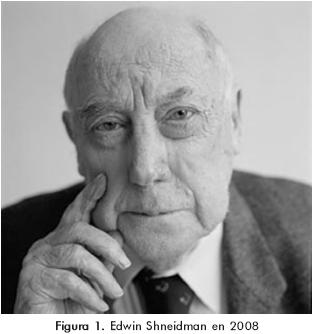
<body><![CDATA[<p align="justify"><font face="verdana" size="2">&nbsp;</font></p>     <p align="justify"><font face="verdana" size="2"><b>INTRODUCCI&Oacute;N</b></font></p>     <p align="justify"><font face="verdana" size="2">El suicidio se manifiesta como un fen&oacute;meno innegable y profundamente significativo para todas las sociedades del mundo hist&oacute;rico. Es s&iacute;ntoma claro de la pugna entre las pasiones del hombre, su base biol&oacute;gica y las fuerzas culturales de su entorno. No obstante, aunque el suicidio es un mismo evento en todos los casos (una persona se quita voluntariamente la propia vida por medio de diversos medios), cada sociedad ha mantenido hacia &eacute;ste consideraciones y acercamientos tan variables como sus peculiares principios culturales, religiosos, morales e ideol&oacute;gicos.</font></p>     <p align="justify"><font face="verdana" size="2">El soci&oacute;logo &Eacute;mile Durkheim<sup>1</sup> introdujo el acto suicida dentro del cat&aacute;logo de los problemas fundamentales de la cultura occidental: consideraba que el suicidio y sus consecuencias en la comunidad rebasaban el mero plano de lo moral y se mostraban como una mezcla de condiciones psicopatol&oacute;gicas y condiciones sociales efectivas, esto es, que el suicidio ten&iacute;a un trasfondo que se anclaba en la din&aacute;mica comunitaria, y sus efectos en la psique individual.</font></p>     <p align="justify"><font face="verdana" size="2">Sin embargo, a pesar de que el hecho suicida era ya un tema cient&iacute;fico y su estudio estaba nutri&eacute;ndose de sus propios presupuestos y conceptos &#150;alejados de los populares o los religiosos&#150;, las metodolog&iacute;as de investigaci&oacute;n segu&iacute;an siendo dispares, inconsistentes y ofrec&iacute;an m&uacute;ltiples respuestas, muchas veces contrapuestas. En los a&ntilde;os 1950 los cient&iacute;ficos pensaban que s&oacute;lo los enfermos mentales se quitaban la vida, es decir, que el suicidio no era un fen&oacute;meno que se diera entre las personas que no demostraban claros signos de psicopatolog&iacute;a y trastorno mental.</font></p>     <p align="justify"><font face="verdana" size="2">Sin embargo, nuevas teor&iacute;as y perspectivas de an&aacute;lisis cient&iacute;fico dieron cuenta de que el estudio del acto suicida deb&iacute;a incorporar muchos factores que hasta ese momento hab&iacute;an pasado inadvertidos, en aras de entenderlo a cabalidad y, adem&aacute;s, poderlo prevenir. Dos fueron las grandes aportaciones a este respecto. En primer lugar, un descreimiento al presupuesto de que &uacute;nicamente los pacientes psiqui&aacute;tricos eran susceptibles de atentar contra su propia vida: la tesis a defender era <i>no todo suicida es psic&oacute;tico, as&iacute; como no todo psic&oacute;tico es suicida. </i>Por otro lado, la propuesta de que todo estudio del fen&oacute;meno acerca de la <i>auto&#150;aniquilaci&oacute;n consciente </i>deb&iacute;a diferenciar, en primera instancia, a los suicidios consumados de aquellos que se hubieran quedado solamente en tentativas suicidas, o lo que es lo mismo, comprender que el estudio del suicidio no deb&iacute;a centrarse solamente en la muerte del sujeto sino tambi&eacute;n en el momento de su planeaci&oacute;n y en los rastros materiales y textuales que &eacute;ste dejaba. Esta visi&oacute;n innovadora que nuestra sociedad occidental contempor&aacute;nea le otorga al suicidio fue uno de los legados del doctor Shneidman.</font></p>     <p align="justify"><font face="verdana" size="2">&nbsp;</font></p>     <p align="justify"><font face="verdana" size="2"><b>EDWIN S. SHNEIDMAN Y LA INVESTIGACI&Oacute;N CIENT&Iacute;FICA DEL SUICIDIO</b></font></p>     <p align="justify"><font face="verdana" size="2">Este prol&iacute;fico pensador y escritor ha sido merecedor del t&iacute;tulo de &lt;&lt;Padre de la Suicidolog&iacute;a moderna&gt;&gt; por ser pionero en el campo de la prevenci&oacute;n y atenci&oacute;n del suicidio. Sus an&aacute;lisis del evento suicida y las conductas autodestructivas, por dem&aacute;s poco simplistas y unidimensionales, crearon la conciencia cient&iacute;fica de que el estudioso ha de abandonar la costumbre de evaluar estas pr&aacute;cticas desde un solo discurso o dispositivo para preferir su investigaci&oacute;n desde una perspectiva compleja, rigurosa y llena de variables provechosas. Como investigador, te&oacute;rico, conferencista y autor, Shneidman ayud&oacute; a establecer el estudio del suicidio como un campo interdisciplinario e ide&oacute; muchos conceptos ahora ampliamente aceptados. Acu&ntilde;&oacute; incluso el t&eacute;rmino &lt;&lt;suicidolog&iacute;a&gt;&gt;<sup>2</sup> y forj&oacute; esta nueva disciplina donde &eacute;l mismo apuntaba: &lt;&lt;la Suicidolog&iacute;a pertenece a la Psicolog&iacute;a porque el suicidio es una crisis psicol&oacute;gica&gt;&gt;.<sup>3</sup> La Suicidolog&iacute;a es, pues, la ciencia de los comportamientos, los pensamientos y los sentimientos autodestructivos, del mismo modo en que la Psicolog&iacute;a es la ciencia referida a la mente y sus procesos, sentimientos, deseos, etc.<sup>4</sup> Su trabajo en el campo del suicidio puede ser subdividido as&iacute;: Evaluaci&oacute;n del Comportamiento Suicida, Conceptualizaci&oacute;n y teor&iacute;a; Notas P&oacute;stumas (o recados suicidas); Aspectos administrativos y program&aacute;ticos; Aspectos cl&iacute;nicos y de comunidad, y Autopsia psicol&oacute;gica y posvenci&oacute;n.<sup>5,6</sup></font></p>     <p align="center"><font face="verdana" size="2"><img src="/img/revistas/sm/v33n4/a8f1.jpg"></font></p>     ]]></body>
<body><![CDATA[<p align="justify"><font face="verdana" size="2">&nbsp;</font></p>     <p align="justify"><font face="verdana" size="2"><b>VIDA Y OBRA</b></font></p>     <p align="justify"><font face="verdana" size="2">Edwin S. Shneidman, hijo de padres jud&iacute;os rusos, naci&oacute; en York, Pensilvania, el 13 de mayo de 1918. Se cri&oacute; en Lincoln Heights, donde su padre era due&ntilde;o de una tienda departamental en Broadway y la avenida Griffin. Estudi&oacute; en la Universidad de California en Los &Aacute;ngeles y en 1940 obtuvo una Maestr&iacute;a en Psicolog&iacute;a. Entre 1942 y 1945 perteneci&oacute; a las fuerzas armadas, y durante la Segunda Guerra Mundial lleg&oacute; a ser capit&aacute;n. Despu&eacute;s de la guerra obtuvo su Doctorado en Psicolog&iacute;a Cl&iacute;nica y se interes&oacute; por estudiar la esquizofrenia, cuando trabajaba en el Hospital de veteranos en Brentwood, EUA. Este trabajo y sus acuciosas labores te&oacute;ricas y pr&aacute;cticas fueron, sin lugar a dudas, el suelo f&eacute;rtil desde el que floreci&oacute; su perspectiva de investigaci&oacute;n revolucionaria.</font></p>     <p align="justify"><font face="verdana" size="2">Una ma&ntilde;ana de 1949, el director del Hospital de Brentwood le pidi&oacute; escribir cartas de p&eacute;same a las viudas de dos j&oacute;venes veteranos de guerra. Ambos se hab&iacute;an quitado la vida. El suicidio, como estudio cl&iacute;nico, no hab&iacute;a interesado hasta entonces a Shneidman, no obstante se aboc&oacute; a investigar exhaustivamente ambos casos. M&aacute;s a&uacute;n, sin importarle que el suicidio, desde la perspectiva del an&aacute;lisis m&eacute;dico, no hubiera sido objeto de tematizaci&oacute;n seria, puso particular inter&eacute;s en su estudio cient&iacute;fico. Uno de los casos suicidas captur&oacute; en forma importante su atenci&oacute;n: se enter&oacute; que el occiso hab&iacute;a dejado una nota p&oacute;stuma. Aunque Shneidman nunca hab&iacute;a visto una nota p&oacute;stuma, decidi&oacute; buscarla y leerla para no interponer sus propios prejuicios y dejar al fen&oacute;meno ofrecerle todos los matices posibles. Este fue el detonante de su nueva empresa de vida. En la oficina del forense, en el centro de Los &Aacute;ngeles, un empleado le indic&oacute; que los libros y expedientes de decesos de la ciudad estaban ubicados en una polvosa b&oacute;veda subterr&aacute;nea. Lo que se supon&iacute;a que era una visita de dos horas se convirti&oacute; en un asunto de varios meses. Busc&oacute; en los folders, recolect&oacute; m&aacute;s de 700 notas p&oacute;stumas,<sup>5</sup> y supo que hab&iacute;a encontrado una valiosa fuente para la comprensi&oacute;n del suicidio, pues para Shneidman una nota p&oacute;stuma es, despu&eacute;s de todo, el pen&uacute;ltimo acto de la existencia de la persona que escribe y resulta enormemente &uacute;til cuando se coloca en el contexto de todos los detalles de su vida. Desde este enfoque, las notas p&oacute;stumas son iluminadas por la vida y muchos detalles de &eacute;sta se ilustran de manera tr&aacute;gica en el contenido de aquellas.<sup>6,7</sup></font></p>     <p align="justify"><font face="verdana" size="2">Siguiendo a su maestro Henry Murray y en clara sinton&iacute;a con lo manifestado por Freud, Shneidman advirti&oacute; que la faceta ling&uuml;&iacute;stica verbal de los sujetos, la narrativa de la vida humana, era un claro s&iacute;ntoma de su situaci&oacute;n psicol&oacute;gica.<sup>8 </sup>Lo que una persona dice y escribe, aunado con el modo de decirlo y entonarlo, puede dar suficientes pistas y directrices para determinar su personalidad y su estado emocional. Por ejemplo &#150;y este fue un experimento que Shneidman realiz&oacute; en 1943&#150;, es posible determinar cu&aacute;l sujeto es el id&oacute;neo para un puesto laboral (seg&uacute;n su personalidad) examinando lo que &eacute;sta escribe sobre s&iacute; misma: la capacidad de respuesta, la lucidez, la cooperatividad y la seguridad en s&iacute; mismo son los elementos que pueden revelar la disposici&oacute;n y competencia del aspirante.<sup>9</sup></font></p>     <p align="justify"><font face="verdana" size="2">Con base en experiencias como la anterior, y con fines de investigaci&oacute;n cl&iacute;nica, Shneidman pidi&oacute; a muchas personas, sin riesgo o previo comportamiento suicida, que escribieran una nota p&oacute;stuma simulando su pr&oacute;xima muerte por suicidio. Reuni&oacute; el mismo n&uacute;mero de notas localizadas anteriormente en las oficinas forenses (700 y m&aacute;s). Decidi&oacute; nuevamente leer estos dos grupos de notas p&oacute;stumas (las genuinas y las simuladas) y en colaboraci&oacute;n con su colega, el doctor Norman Farberow, comenz&oacute; a analizar las notas sin saber si pertenec&iacute;an a un grupo o a otro. Utilizaron el m&eacute;todo de razonamiento inductivo propuesto por Stuart Mill y encontraron que pod&iacute;an distinguir cu&aacute;les notas eran genuinas y cu&aacute;les no, as&iacute; como algunos resultados inesperados y sorprendentes:<sup>10</sup> las notas falsas estaban plenas de drama y melancol&iacute;a, mientras que las notas reales eran notablemente banales, incluyendo frases como: &lt;&lt;deben recoger la ropa en la lavander&iacute;a, hacer dep&oacute;sitos de cheques&gt;&gt;, etc. Una nota dec&iacute;a incluso: &lt;&lt;Querida Mary. Te odio. Con amor, George&gt;&gt;.</font></p>     <p align="justify"><font face="verdana" size="2">El descubrimiento de esta ambivalencia en relaci&oacute;n al morir era revolucionario. El estudio suger&iacute;a que el suicidio es m&aacute;s una reacci&oacute;n que una decisi&oacute;n. Aprender y comprender acerca de a qu&eacute; se est&aacute; reaccionando implicaba entonces una alternativa de acci&oacute;n, la cual pod&iacute;a ser una oportunidad para interrumpir el impulso suicida. Esto se convirti&oacute; en la base del enfoque para salvar vidas de Shneidman. Seg&uacute;n &eacute;l, el suicidio resulta de un &lt;&lt;dolor psicol&oacute;gico&gt;&gt;,<sup>11&#150;13</sup> y acu&ntilde;&oacute; en ingl&eacute;s la palabra <i>Psychache </i>para describir el dolor psicol&oacute;gico insoportable que se deriva de necesidades psicol&oacute;gicas insatisfechas.<sup>14</sup></font></p>     <p align="justify"><font face="verdana" size="2">Sus profundas intelecciones lo llevaron a proponer sus ya conocidas <i>Diez caracter&iacute;sticas comunes a todo suicidio:</i><sup>15,16</sup></font></p>     <p align="justify"><font face="verdana" size="2">1. El prop&oacute;sito com&uacute;n del suicidio es buscar una soluci&oacute;n, 2. El objetivo com&uacute;n es el cese de la conciencia, 3. El est&iacute;mulo com&uacute;n es el Dolor Psicol&oacute;gico Insoportable, 4. El estresor com&uacute;n son las Necesidades Psicol&oacute;gicas Insatisfechas, 5. La emoci&oacute;n com&uacute;n es la desesperanza, la desesperaci&oacute;n, 6. El estado cognoscitivo com&uacute;n es la ambivalencia, 7. El estado perceptual com&uacute;n es la constricci&oacute;n (visi&oacute;n de t&uacute;nel), 8. La acci&oacute;n com&uacute;n es escapar, 9. El acto interpersonal com&uacute;n es la comunicaci&oacute;n de la intenci&oacute;n suicida, y 10. La consistencia permanente de los estilos de vida.</font></p>     <p align="justify"><font face="verdana" size="2">&nbsp;</font></p>     ]]></body>
<body><![CDATA[<p align="justify"><font face="verdana" size="2"><b>UNA NUEVA VISI&Oacute;N EN TORNO AL SUICIDIO</b></font></p>     <p align="justify"><font face="verdana" size="2">Shneidman vio al suicidio como una crisis psicol&oacute;gica y &#150;como lo har&iacute;a Albert Camus&#150; lo defendi&oacute; como &lt;&lt;un verdadero problema filos&oacute;fico&gt;&gt;. De hecho, una de sus grandes ambiciones fue la de incorporar en la <i>Encyclopaedia Britannica </i>(EB) un concepto suficientemente esclarecedor de lo que en realidad es este acto autodestructivo (as&iacute; como de la contemplaci&oacute;n de sus variables f&aacute;cticas e hist&oacute;ricas), con la intenci&oacute;n de llevar el hecho suicida a la comprensi&oacute;n popular, y de este modo facilitar su detecci&oacute;n y prevenci&oacute;n. Por sus m&eacute;ritos y especializaci&oacute;n, ese gran anhelo de renovar la visi&oacute;n del suicidio se vio cumplida y, a mediados de los 50's, la <i>EB </i>le pidi&oacute; redactar un art&iacute;culo en torno a sus ideas del hecho suicida. Destaquemos que desde sus primeros trabajos como suicid&oacute;logo, Shneidman y su equipo realizaron estudios que contradec&iacute;an algunas creencias ampliamente difundidas. Por ejemplo, desde hace d&eacute;cadas se pensaba que s&oacute;lo los enfermos mentales se quitaban la vida, y sin embargo los estudios que realiz&oacute; con su equipo de trabajo mostraron que solamente el 15% de los suicidas eran psic&oacute;ticos.<sup>17</sup> Consider&oacute; que m&aacute;s que una enfermedad mental, el fuerte dolor psicol&oacute;gico <i>(psychache) </i>resultaba ser el mayor com&uacute;n denominador del comportamiento suicida. En sus propias palabras:<sup>18</sup> &lt;&lt;&#91;El suicidio es&#93; el acto consciente de autoaniquilaci&oacute;n, que se entiende como un malestar pluridimensional en un individuo que percibe este acto como la mejor soluci&oacute;n. Los soci&oacute;logos han demostrado que las tasas de suicidio var&iacute;an de acuerdo con factores como la guerra y el desempleo, los psicoanalistas sostienen que es la ira hacia un ser querido que se dirige hacia dentro, los psiquiatras lo ven como un desequilibrio bioqu&iacute;mico. Ning&uacute;n m&eacute;todo tiene la respuesta: Es todo eso y m&aacute;s&gt;&gt;. La idea era entonces <i>hacer algo </i>respecto al suicidio, no s&oacute;lo <i>decir algo </i>sobre &eacute;ste. En tal sentido, al ser solicitado por la Enciclopedia Brit&aacute;nica para escribir un art&iacute;culo sobre el suicidio, Shneidman aprovech&oacute; para introducir sus nuevas ideas acerca del tema lo que contribuy&oacute; a que el enfoque con que se estudiaba la mente suicida cambiara, yendo ahora m&aacute;s all&aacute; de los meros cuadros estad&iacute;sticos.<sup>19,20</sup></font></p>     <p align="justify"><font face="verdana" size="2"><b>La relevancia social de la suicidolog&iacute;a de Edwin S. Shneidman</b></font></p>     <p align="justify"><font face="verdana" size="2">A partir de 1955, Shneidman comenz&oacute; a buscar financiamiento para abrir un Centro de estudio y prevenci&oacute;n del suicidio. Lo interesante de ello es que sus intenciones eran, m&aacute;s que acad&eacute;micas y cient&iacute;ficas, humanitarias. As&iacute;, Edwin Shneidman, junto con Norman Farberow y Robert Litman, establecieron el Primer Centro de Prevenci&oacute;n del Suicidio en Los &Aacute;ngeles, California, en el a&ntilde;o de 1958,<sup>21</sup> en un hospital para tuberculosos que se encontraba abandonado. Dentro de esta t&oacute;nica de trabajo, y despu&eacute;s de casi 10 a&ntilde;os de estudiar el fen&oacute;meno del suicidio y de atender casos de riesgo, Shneidman y Farberow idearon e implementaron la Primera L&iacute;nea telef&oacute;nica de Intervenci&oacute;n en crisis. Ten&iacute;an tantas llamadas que, seg&uacute;n coment&oacute; Edwin,<sup>20</sup> la gente llamaba diciendo: &lt;&lt;D&iacute;game, estoy a punto de cometer una tentativa de suicidio, &iquest;tengo que tomar las p&iacute;ldoras o saltar de un edificio para ser atendido por ustedes, o puedo acortar el camino e ir directamente?&gt;&gt;.</font></p>     <p align="justify"><font face="verdana" size="2">Dichos cambios te&oacute;ricos y de intereses cl&iacute;nicos convirtieron a Shneidman y Farberow en pioneros de la asistencia en los casos de potenciales suicidas, pero tambi&eacute;n en pioneros del proyecto en el cual personas voluntarias, y no necesariamente profesionales de la salud, comenzaron a capacitarse para atender las llamadas telef&oacute;nicas. Los voluntarios ayudaban en tareas tales como hacer las llamadas a las casas, acompa&ntilde;ar a las personas potencialmente suicidas al hospital, rastrear las llamadas telef&oacute;nicas, etc.</font></p>     <p align="justify"><font face="verdana" size="2">A pesar de que la investigaci&oacute;n sobre el suicidio (y el acto suicida en s&iacute;) segu&iacute;a siendo en esa &eacute;poca un tema tab&uacute; y una discusi&oacute;n ampliamente rechazada y estigmatizada, el trabajo de Shneidman y Farberow se volvi&oacute; cada vez m&aacute;s popular y apreciado. No s&oacute;lo eso, durante esos a&ntilde;os la labor de prevenci&oacute;n del suicidio lleg&oacute; a ser tan digna de respeto que captur&oacute; la atenci&oacute;n popular &#150;por medio de pel&iacute;culas y libros&#150; y favoreci&oacute; que la instituci&oacute;n creada por Shneidman y Farberow fuese reconocida como el Centro Nacional de Investigaci&oacute;n del Suicidio.</font></p>     <p align="justify"><font face="verdana" size="2">Otra muestra del reconocimiento que dicho Centro hab&iacute;a alcanzado fue que en 1962 fueron consultados en relaci&oacute;n a la dudosa muerte de Marilyn Monroe. Para estudiar las causas de esta muerte, Shneidman y su equipo realizaron una indagaci&oacute;n basada en t&eacute;cnicas cualitativas y cuantitativas para la obtenci&oacute;n de informaci&oacute;n de car&aacute;cter hist&oacute;rico, cl&iacute;nico y antropol&oacute;gico del sujeto, al que denominaron &lt;&lt;Autopsia Psicol&oacute;gica&gt;&gt;.<sup>22,23</sup> Confeccionaron dicho nombre e inventaron esta metodolog&iacute;a de investigaci&oacute;n considerada hasta ahora como la v&iacute;a <i>princeps </i>para el estudio del suicidio consumado.</font></p>     <p align="justify"><font face="verdana" size="2">El rango de acci&oacute;n de la Suicidolog&iacute;a desarrollada por este autor era, desde un inicio y hasta la fecha, sumamente amplio y fue revel&aacute;ndose como un medio de ayuda social muy fruct&iacute;fero: ofrecer informaci&oacute;n a las personas cercanas al potencial sujeto suicida para manejar y canalizar la situaci&oacute;n, crear v&iacute;as de &lt;&lt;alivio&gt;&gt;, ayuda y compa&ntilde;&iacute;a para el sujeto con pensamientos autodestructivos y contar con suficientes herramientas de an&aacute;lisis para poder determinar el perfil psicol&oacute;gico del occiso y las potenciales causas de su decisi&oacute;n.</font></p>     <p align="justify"><font face="verdana" size="2">A partir de all&iacute;, el equipo de Shneidman recibi&oacute; financiamientos para apoyar a este Centro que ofrec&iacute;a capacitaci&oacute;n, investigaci&oacute;n y servicios para la prevenci&oacute;n y atenci&oacute;n del suicidio, logrando convertirse en el prototipo de institutos que se abrieron posteriormente en Estados Unidos y en otros pa&iacute;ses. Asimismo, propusieron tambi&eacute;n estrategias para la llamada Posvenci&oacute;n del Suicidio.</font></p>     <p align="justify"><font face="verdana" size="2">Impactados por el &eacute;xito del Centro de Los &Aacute;ngeles, el Instituto Nacional de Salud Mental de E.U. invit&oacute; a Shneidman en 1965, a desarrollar el <i>Proyecto Shneidman, </i>una estrategia nacional de prevenci&oacute;n del suicidio que en tres a&ntilde;os hizo posible que el n&uacute;mero de Centros de Prevenci&oacute;n del Suicidio en ese pa&iacute;s aumentara de 15 a m&aacute;s de 100.<sup>24 </sup>Adem&aacute;s, en 1967 se public&oacute; el folleto &lt;&lt;C&oacute;mo prevenir el suicidio&gt;&gt;, el cual fue uno de los primeros intentos de Shneidman por cumplir con la responsabilidad de brindar algo para el p&uacute;blico. Fue un esfuerzo de prevenci&oacute;n a nivel comunitario o p&uacute;blico, algo que defendi&oacute; toda su vida: La prevenci&oacute;n es la educaci&oacute;n,<sup>25</sup> dec&iacute;a. As&iacute; mismo elabor&oacute; una serie de reglas para el tratamiento de los suicidas y asesoramiento normativo para el psicoterapeuta, que sugiere enfocarse en la letalidad mental del paciente. La regla de Shneidman es: al reducir la perturbaci&oacute;n, se reduce la letalidad. La terapia gira entonces alrededor de aplacar el dolor.<sup>26,27</sup> Finalmente, Shneidman acept&oacute; una invitaci&oacute;n para ense&ntilde;ar en Harvard y en dos a&ntilde;os el Gobierno Federal cort&oacute; los fondos que tan arduamente se hab&iacute;an obtenido y las cl&iacute;nicas y proyectos tuvieron que encontrar sus propias v&iacute;as de financiamiento.</font></p>     ]]></body>
<body><![CDATA[<p align="justify"><font face="verdana" size="2">En 1972 se cerr&oacute; el <i>Proyecto Shneidman. </i>Sus teor&iacute;as, que se centraron en las causas psicol&oacute;gicas y sociol&oacute;gicas del suicidio, no eran las favoritas de los administradores de fondos para el financiamiento cient&iacute;fico de la investigaci&oacute;n aplicada en ciencias sociales, quienes en una &eacute;poca de recortes presupuestarios se apuntaron a privilegiar las intervenciones farmac&eacute;uticas y la investigaci&oacute;n neurol&oacute;gica.</font></p>     <p align="justify"><font face="verdana" size="2">Shneidman, sin embargo, no se dej&oacute; intimidar por las vicisitudes pol&iacute;ticas y econ&oacute;micas a su alrededor. A pesar de todo sigui&oacute; siendo un escritor incansable: el estudio del suicidio y la propuesta radical de que &eacute;ste pod&iacute;a evitarse, se hab&iacute;a anclado como la pasi&oacute;n de su vida. Prueba de esto es que Edwin S. Shneidman fue autor de 20 libros y decenas de art&iacute;culos cient&iacute;ficos y de divulgaci&oacute;n. Para &eacute;l, una de sus referencias bibliogr&aacute;ficas m&aacute;s importantes en su vida fue la Enciclopedia Brit&aacute;nica, pues consider&oacute; un honor que se le pidiera hacerse cargo del t&oacute;pico <i>Suicidio.</i></font></p>     <p align="justify"><font face="verdana" size="2">Desde su propia trinchera, protegido por sus convicciones cient&iacute;ficas y humanitarias, realiz&oacute; con avidez avances importantes en sus propias teor&iacute;as y percepciones sobre el suicidio y nunca claudic&oacute; ante las voces que pon&iacute;an en tela de juicio su trabajo; con un caracter&iacute;stico ingenio, sutileza y evidente conocimiento desarmaba a la mayor&iacute;a de los cr&iacute;ticos.</font></p>     <p align="justify"><font face="verdana" size="2">&nbsp;</font></p>     <p align="justify"><font face="verdana" size="2"><b>SUS M&Eacute;RITOS Y SU HERENCIA A LOS SUICID&Oacute;LOGOS</b></font></p>     <p align="justify"><font face="verdana" size="2">La vida de Shneidman es, am&eacute;n de lo ya mencionado, evidencia de que los m&eacute;ritos que recibe una persona pueden ser valiosa herencia para la humanidad. Todo lo que para cualquier otro habr&iacute;a sido motivo de vanidad, para Shneidman fue abonar a&uacute;n m&aacute;s a sus contribuciones para los estudios cl&iacute;nicos y cient&iacute;fico&#150;sociales.</font></p>     <p align="justify"><font face="verdana" size="2">En 1971 fund&oacute; la Asociaci&oacute;n Americana de Suicidolog&iacute;a,<sup>28</sup> la primera organizaci&oacute;n profesional dedicada al estudio del tema. Fue fundador de la primera revista sobre &eacute;l: <i>Suicide and Life&#150;Threatening Behavior. </i>En 1987 recibi&oacute; de la Asociaci&oacute;n Americana de Psicolog&iacute;a un premio por contribuciones distinguidas a la administraci&oacute;n p&uacute;blica (lo cual aumentaba la reputaci&oacute;n seria y confiable de los nuevos seguidores de su perspectiva cient&iacute;fica y social).</font></p>     <p align="justify"><font face="verdana" size="2">Tras una vida plena, Shneidman pas&oacute; sus &uacute;ltimos a&ntilde;os recibiendo hu&eacute;spedes en su casa en Los &Aacute;ngeles, debilitado por la diabetes, el c&aacute;ncer y la insuficiencia card&iacute;aca congestiva. Muri&oacute; el 15 de mayo de 2009, unos d&iacute;as despu&eacute;s de haber celebrado el d&iacute;a 13 su 91 aniversario. Curiosamente su &uacute;ltimo libro fue <i>A commonsense Book of Death.</i><sup>29</sup></font></p>     <p align="justify"><font face="verdana" size="2">&nbsp;</font></p>     <p align="justify"><font face="verdana" size="2"><b>REFERENCIAS</b></font></p>     ]]></body>
<body><![CDATA[<!-- ref --><p align="justify"><font face="verdana" size="2">1. Durkheim E. El suicidio. M&eacute;xico: sexta edici&oacute;n. Coyoac&aacute;n Ed; 2000.    &nbsp;&nbsp;&nbsp;&nbsp;&nbsp;&nbsp;&nbsp;&nbsp;[&#160;<a href="javascript:void(0);" onclick="javascript: window.open('/scielo.php?script=sci_nlinks&ref=9049229&pid=S0185-3325201000040000800001&lng=','','width=640,height=500,resizable=yes,scrollbars=1,menubar=yes,');">Links</a>&#160;]<!-- end-ref --></font></p>     <!-- ref --><p align="justify"><font face="verdana" size="2">2. Shneidman E. Suicide and suicidology: A brief etymological note. Suicide Life&#150;Threatening Behavior 1971;1:260&#150;264.    &nbsp;&nbsp;&nbsp;&nbsp;&nbsp;&nbsp;&nbsp;&nbsp;[&#160;<a href="javascript:void(0);" onclick="javascript: window.open('/scielo.php?script=sci_nlinks&ref=9049231&pid=S0185-3325201000040000800002&lng=','','width=640,height=500,resizable=yes,scrollbars=1,menubar=yes,');">Links</a>&#160;]<!-- end-ref --></font></p>     <!-- ref --><p align="justify"><font face="verdana" size="2">3. Shneidman E. Final thoughts and reflections. The suicidal Mind. New York: Oxford University Press; 1996; pp.157&#150;166.    &nbsp;&nbsp;&nbsp;&nbsp;&nbsp;&nbsp;&nbsp;&nbsp;[&#160;<a href="javascript:void(0);" onclick="javascript: window.open('/scielo.php?script=sci_nlinks&ref=9049233&pid=S0185-3325201000040000800003&lng=','','width=640,height=500,resizable=yes,scrollbars=1,menubar=yes,');">Links</a>&#160;]<!-- end-ref --></font></p>     <!-- ref --><p align="justify"><font face="verdana" size="2">4. Curren T, Edwin S. Shneidman dies at 91; pioneer in the field of suicide prevention. Los Angeles Times Obituarie. (Consultado en octubre de 2009). Disponible en <a href="http://www.latimes.com/news/obituaries/la-me-edwin-shneidman18-2009may18,0,6007627.story" target="_blank">http://www.latimes.com/news/obituaries/la&#150;me&#150;edwin&#150;shneidman18&#150;2009may18,0,6007627.story</a>.    &nbsp;&nbsp;&nbsp;&nbsp;&nbsp;&nbsp;&nbsp;&nbsp;[&#160;<a href="javascript:void(0);" onclick="javascript: window.open('/scielo.php?script=sci_nlinks&ref=9049235&pid=S0185-3325201000040000800004&lng=','','width=640,height=500,resizable=yes,scrollbars=1,menubar=yes,');">Links</a>&#160;]<!-- end-ref --></font></p>     <!-- ref --><p align="justify"><font face="verdana" size="2">5. Leenaars A. Lives and deaths: Biographical notes on the selections from the works of Edwin S. Shneidman. <i>Suicide Life&#150;Threatening Behavior 2010 (en prensa).    &nbsp;&nbsp;&nbsp;&nbsp;&nbsp;&nbsp;&nbsp;&nbsp;[&#160;<a href="javascript:void(0);" onclick="javascript: window.open('/scielo.php?script=sci_nlinks&ref=9049237&pid=S0185-3325201000040000800005&lng=','','width=640,height=500,resizable=yes,scrollbars=1,menubar=yes,');">Links</a>&#160;]<!-- end-ref --></i></font></p>     ]]></body>
<body><![CDATA[<!-- ref --><p align="justify"><font face="verdana" size="2">6. Shneidman E. Definition of suicide. New York: John Wiley &amp; Sons; 1985.    &nbsp;&nbsp;&nbsp;&nbsp;&nbsp;&nbsp;&nbsp;&nbsp;[&#160;<a href="javascript:void(0);" onclick="javascript: window.open('/scielo.php?script=sci_nlinks&ref=9049239&pid=S0185-3325201000040000800006&lng=','','width=640,height=500,resizable=yes,scrollbars=1,menubar=yes,');">Links</a>&#160;]<!-- end-ref --></font></p>     <!-- ref --><p align="justify"><font face="verdana" size="2">7. Shneidman E. Self&#150;destruction: Suicide notes and tragic lives, voices of death. New York: Harper &amp; Row; 1980; pp.41&#150;76.    &nbsp;&nbsp;&nbsp;&nbsp;&nbsp;&nbsp;&nbsp;&nbsp;[&#160;<a href="javascript:void(0);" onclick="javascript: window.open('/scielo.php?script=sci_nlinks&ref=9049241&pid=S0185-3325201000040000800007&lng=','','width=640,height=500,resizable=yes,scrollbars=1,menubar=yes,');">Links</a>&#160;]<!-- end-ref --></font></p>     <!-- ref --><p align="justify"><font face="verdana" size="2">8. Shneidman E. Suicide notes reconsidered. Psychiatry 1973;36: 379&#150;395.    &nbsp;&nbsp;&nbsp;&nbsp;&nbsp;&nbsp;&nbsp;&nbsp;[&#160;<a href="javascript:void(0);" onclick="javascript: window.open('/scielo.php?script=sci_nlinks&ref=9049243&pid=S0185-3325201000040000800008&lng=','','width=640,height=500,resizable=yes,scrollbars=1,menubar=yes,');">Links</a>&#160;]<!-- end-ref --></font></p>     <!-- ref --><p align="justify"><font face="verdana" size="2">9. Shneidman E. An experimental study of the appraisal interview. J Applied Psychology 1963;27:196&#150;205.    &nbsp;&nbsp;&nbsp;&nbsp;&nbsp;&nbsp;&nbsp;&nbsp;[&#160;<a href="javascript:void(0);" onclick="javascript: window.open('/scielo.php?script=sci_nlinks&ref=9049245&pid=S0185-3325201000040000800009&lng=','','width=640,height=500,resizable=yes,scrollbars=1,menubar=yes,');">Links</a>&#160;]<!-- end-ref --></font></p>     <!-- ref --><p align="justify"><font face="verdana" size="2">10. Shneidman E, Little K, Joel W (eds.). Thematic test analysis. New York: Grunne &amp; Stratton; 1951.    &nbsp;&nbsp;&nbsp;&nbsp;&nbsp;&nbsp;&nbsp;&nbsp;[&#160;<a href="javascript:void(0);" onclick="javascript: window.open('/scielo.php?script=sci_nlinks&ref=9049247&pid=S0185-3325201000040000800010&lng=','','width=640,height=500,resizable=yes,scrollbars=1,menubar=yes,');">Links</a>&#160;]<!-- end-ref --></font></p>     ]]></body>
<body><![CDATA[<!-- ref --><p align="justify"><font face="verdana" size="2">11. Ogilvie D, Stone P, Shneidman E. Some characteristics of genuine versus simulated suicide notes. En: Stone P, Dunphy D, Smith M, Ogilvie D (eds.). The General Inquirer: A computer approach to content analysis. Cambridge: MIT Press; 1969; pp. 527&#150;535.    &nbsp;&nbsp;&nbsp;&nbsp;&nbsp;&nbsp;&nbsp;&nbsp;[&#160;<a href="javascript:void(0);" onclick="javascript: window.open('/scielo.php?script=sci_nlinks&ref=9049249&pid=S0185-3325201000040000800011&lng=','','width=640,height=500,resizable=yes,scrollbars=1,menubar=yes,');">Links</a>&#160;]<!-- end-ref --></font></p>     <!-- ref --><p align="justify"><font face="verdana" size="2">12. Shneidman E. The Psychological Pain Assessment Scale. Suicide Life&#150;Threatening Behavior 1999;29:287&#150;294.    &nbsp;&nbsp;&nbsp;&nbsp;&nbsp;&nbsp;&nbsp;&nbsp;[&#160;<a href="javascript:void(0);" onclick="javascript: window.open('/scielo.php?script=sci_nlinks&ref=9049251&pid=S0185-3325201000040000800012&lng=','','width=640,height=500,resizable=yes,scrollbars=1,menubar=yes,');">Links</a>&#160;]<!-- end-ref --></font></p>     <!-- ref --><p align="justify"><font face="verdana" size="2">13. Shneidman E. Perturbation and lethality as precursos of suicide in a gifted group. Suicide Life&#150;Threatening Behavior 1971;1:23&#150;45.    &nbsp;&nbsp;&nbsp;&nbsp;&nbsp;&nbsp;&nbsp;&nbsp;[&#160;<a href="javascript:void(0);" onclick="javascript: window.open('/scielo.php?script=sci_nlinks&ref=9049253&pid=S0185-3325201000040000800013&lng=','','width=640,height=500,resizable=yes,scrollbars=1,menubar=yes,');">Links</a>&#160;]<!-- end-ref --></font></p>     <!-- ref --><p align="justify"><font face="verdana" size="2">14. Shneidman E. Suicide as a psychache. J Nervous Mental Disease 1993;181,147&#150;149.    &nbsp;&nbsp;&nbsp;&nbsp;&nbsp;&nbsp;&nbsp;&nbsp;[&#160;<a href="javascript:void(0);" onclick="javascript: window.open('/scielo.php?script=sci_nlinks&ref=9049255&pid=S0185-3325201000040000800014&lng=','','width=640,height=500,resizable=yes,scrollbars=1,menubar=yes,');">Links</a>&#160;]<!-- end-ref --></font></p>     <!-- ref --><p align="justify"><font face="verdana" size="2">15. Shneidman E. A possible classification of suicidal acts Based on Murray's needs system. Suicide Life&#150;threatening Behavior 1980;10:175&#150;181.    &nbsp;&nbsp;&nbsp;&nbsp;&nbsp;&nbsp;&nbsp;&nbsp;[&#160;<a href="javascript:void(0);" onclick="javascript: window.open('/scielo.php?script=sci_nlinks&ref=9049257&pid=S0185-3325201000040000800015&lng=','','width=640,height=500,resizable=yes,scrollbars=1,menubar=yes,');">Links</a>&#160;]<!-- end-ref --></font></p>     ]]></body>
<body><![CDATA[<!-- ref --><p align="justify"><font face="verdana" size="2">16. Shneidman E. A conspectus for conceptualizing the suicidal scenario. En: Maris R, Berman A, Maltsberger J, Yufit R (eds). Assessment and prediction of suicide. New York: Guilford Press; 1992.    &nbsp;&nbsp;&nbsp;&nbsp;&nbsp;&nbsp;&nbsp;&nbsp;[&#160;<a href="javascript:void(0);" onclick="javascript: window.open('/scielo.php?script=sci_nlinks&ref=9049259&pid=S0185-3325201000040000800016&lng=','','width=640,height=500,resizable=yes,scrollbars=1,menubar=yes,');">Links</a>&#160;]<!-- end-ref --></font></p>     <!-- ref --><p align="justify"><font face="verdana" size="2">17. Shneidman E. Final thoughts and reflections. The suicidal mind. New York: Oxford University Press; 1996; pp.157&#150;166.    &nbsp;&nbsp;&nbsp;&nbsp;&nbsp;&nbsp;&nbsp;&nbsp;[&#160;<a href="javascript:void(0);" onclick="javascript: window.open('/scielo.php?script=sci_nlinks&ref=9049261&pid=S0185-3325201000040000800017&lng=','','width=640,height=500,resizable=yes,scrollbars=1,menubar=yes,');">Links</a>&#160;]<!-- end-ref --></font></p>     <!-- ref --><p align="justify"><font face="verdana" size="2">18. Shneidman E. Definition of suicide. Mew York: John Wiley &amp; Sons; 1985.    &nbsp;&nbsp;&nbsp;&nbsp;&nbsp;&nbsp;&nbsp;&nbsp;[&#160;<a href="javascript:void(0);" onclick="javascript: window.open('/scielo.php?script=sci_nlinks&ref=9049263&pid=S0185-3325201000040000800018&lng=','','width=640,height=500,resizable=yes,scrollbars=1,menubar=yes,');">Links</a>&#160;]<!-- end-ref --></font></p>     <!-- ref --><p align="justify"><font face="verdana" size="2">19. Shneidman E. Suicide. Encyclopaedia Britannica. vol 21, Chicago: William Benton; 1973; pp.383&#150;385.    &nbsp;&nbsp;&nbsp;&nbsp;&nbsp;&nbsp;&nbsp;&nbsp;[&#160;<a href="javascript:void(0);" onclick="javascript: window.open('/scielo.php?script=sci_nlinks&ref=9049265&pid=S0185-3325201000040000800019&lng=','','width=640,height=500,resizable=yes,scrollbars=1,menubar=yes,');">Links</a>&#160;]<!-- end-ref --></font></p>     <!-- ref --><p align="justify"><font face="verdana" size="2">20. Shneidman E. Suicide on my mind, Britannica on my table. American Scholar 1998;67:93&#150;104.    &nbsp;&nbsp;&nbsp;&nbsp;&nbsp;&nbsp;&nbsp;&nbsp;[&#160;<a href="javascript:void(0);" onclick="javascript: window.open('/scielo.php?script=sci_nlinks&ref=9049267&pid=S0185-3325201000040000800020&lng=','','width=640,height=500,resizable=yes,scrollbars=1,menubar=yes,');">Links</a>&#160;]<!-- end-ref --></font></p>     ]]></body>
<body><![CDATA[<!-- ref --><p align="justify"><font face="verdana" size="2">21. Shneidman E, Farberow N. The Los Angeles Prevention Center: A demostration of public health feasibilities. American J Public Health 1965;51,:21&#150;26.    &nbsp;&nbsp;&nbsp;&nbsp;&nbsp;&nbsp;&nbsp;&nbsp;[&#160;<a href="javascript:void(0);" onclick="javascript: window.open('/scielo.php?script=sci_nlinks&ref=9049269&pid=S0185-3325201000040000800021&lng=','','width=640,height=500,resizable=yes,scrollbars=1,menubar=yes,');">Links</a>&#160;]<!-- end-ref --></font></p>     <!-- ref --><p align="justify"><font face="verdana" size="2">22. Shneidman E. The psychological autopsy. En: Gottschalk L, Mcguire F, Dinovo E, Birch H, Heiser J (eds.) Guide to the investigation and reporting of drug abuse deaths. Washington, DC: USDHEW, US; Government Printing Office; 1977; pp.42&#150;57.    &nbsp;&nbsp;&nbsp;&nbsp;&nbsp;&nbsp;&nbsp;&nbsp;[&#160;<a href="javascript:void(0);" onclick="javascript: window.open('/scielo.php?script=sci_nlinks&ref=9049271&pid=S0185-3325201000040000800022&lng=','','width=640,height=500,resizable=yes,scrollbars=1,menubar=yes,');">Links</a>&#160;]<!-- end-ref --></font></p>     <!-- ref --><p align="justify"><font face="verdana" size="2">23. Shneidman E. Comment: The psychological autopsy. American Psychologist 1994;39:75&#150;76.    &nbsp;&nbsp;&nbsp;&nbsp;&nbsp;&nbsp;&nbsp;&nbsp;[&#160;<a href="javascript:void(0);" onclick="javascript: window.open('/scielo.php?script=sci_nlinks&ref=9049273&pid=S0185-3325201000040000800023&lng=','','width=640,height=500,resizable=yes,scrollbars=1,menubar=yes,');">Links</a>&#160;]<!-- end-ref --></font></p>     <!-- ref --><p align="justify"><font face="verdana" size="2">24. Shneidman E. The NIMH Center for Studies of Suicide Prevention. Bulletin Suicidology 1967;1:2&#150;7.    &nbsp;&nbsp;&nbsp;&nbsp;&nbsp;&nbsp;&nbsp;&nbsp;[&#160;<a href="javascript:void(0);" onclick="javascript: window.open('/scielo.php?script=sci_nlinks&ref=9049275&pid=S0185-3325201000040000800024&lng=','','width=640,height=500,resizable=yes,scrollbars=1,menubar=yes,');">Links</a>&#160;]<!-- end-ref --></font></p>     <!-- ref --><p align="justify"><font face="verdana" size="2">25. Shneidman E, Mandelkorn P. How to prevent suicide. Public Affairs Pamphlet. New York: Public Affairs Pamphlets, No. 406; 1967.    &nbsp;&nbsp;&nbsp;&nbsp;&nbsp;&nbsp;&nbsp;&nbsp;[&#160;<a href="javascript:void(0);" onclick="javascript: window.open('/scielo.php?script=sci_nlinks&ref=9049277&pid=S0185-3325201000040000800025&lng=','','width=640,height=500,resizable=yes,scrollbars=1,menubar=yes,');">Links</a>&#160;]<!-- end-ref --></font></p>     ]]></body>
<body><![CDATA[<!-- ref --><p align="justify"><font face="verdana" size="2">26. Shneidman E. Aphorisms of suicide and some implications for psychotherapy. American J Psychotherapy 1984;38:319&#150;328.    &nbsp;&nbsp;&nbsp;&nbsp;&nbsp;&nbsp;&nbsp;&nbsp;[&#160;<a href="javascript:void(0);" onclick="javascript: window.open('/scielo.php?script=sci_nlinks&ref=9049279&pid=S0185-3325201000040000800026&lng=','','width=640,height=500,resizable=yes,scrollbars=1,menubar=yes,');">Links</a>&#160;]<!-- end-ref --></font></p>     <!-- ref --><p align="justify"><font face="verdana" size="2">27. Shneidman E. Psychotherapy with suicidal patients. En: Karasu T, Bellak L (eds). Specialized techniques in individual psychotherapy. New York: Brunner/Mazel; 1980.    &nbsp;&nbsp;&nbsp;&nbsp;&nbsp;&nbsp;&nbsp;&nbsp;[&#160;<a href="javascript:void(0);" onclick="javascript: window.open('/scielo.php?script=sci_nlinks&ref=9049281&pid=S0185-3325201000040000800027&lng=','','width=640,height=500,resizable=yes,scrollbars=1,menubar=yes,');">Links</a>&#160;]<!-- end-ref --></font></p>     <!-- ref --><p align="justify"><font face="verdana" size="2">28. Shneidman E. Some reflections of a founder. Suicide Life&#150;Threatening Behavior 1988;18:1&#150;12.    &nbsp;&nbsp;&nbsp;&nbsp;&nbsp;&nbsp;&nbsp;&nbsp;[&#160;<a href="javascript:void(0);" onclick="javascript: window.open('/scielo.php?script=sci_nlinks&ref=9049283&pid=S0185-3325201000040000800028&lng=','','width=640,height=500,resizable=yes,scrollbars=1,menubar=yes,');">Links</a>&#160;]<!-- end-ref --></font></p>     <!-- ref --><p align="justify"><font face="verdana" size="2">29. Shneidman E. A commonsense book of death. Lanham: Rowman &amp; Littlefield Publishers, Inc.; 2008.    &nbsp;&nbsp;&nbsp;&nbsp;&nbsp;&nbsp;&nbsp;&nbsp;[&#160;<a href="javascript:void(0);" onclick="javascript: window.open('/scielo.php?script=sci_nlinks&ref=9049285&pid=S0185-3325201000040000800029&lng=','','width=640,height=500,resizable=yes,scrollbars=1,menubar=yes,');">Links</a>&#160;]<!-- end-ref --></font></p>     <p align="justify"><font face="verdana" size="2">&nbsp;</font></p>     <p align="justify"><font face="verdana" size="2"><b>NOTA</b></font></p>     ]]></body>
<body><![CDATA[<p align="justify"><font face="verdana" size="2">Art&iacute;culo sin conflicto de intereses.</font></p>      ]]></body><back>
<ref-list>
<ref id="B1">
<label>1</label><nlm-citation citation-type="book">
<person-group person-group-type="author">
<name>
<surname><![CDATA[Durkheim]]></surname>
<given-names><![CDATA[E.]]></given-names>
</name>
</person-group>
<source><![CDATA[El suicidio]]></source>
<year>2000</year>
<edition>sexta</edition>
<publisher-name><![CDATA[Coyoacán]]></publisher-name>
</nlm-citation>
</ref>
<ref id="B2">
<label>2</label><nlm-citation citation-type="journal">
<person-group person-group-type="author">
<name>
<surname><![CDATA[Shneidman]]></surname>
<given-names><![CDATA[E.]]></given-names>
</name>
</person-group>
<article-title xml:lang="en"><![CDATA[Suicide and suicidology: A brief etymological note]]></article-title>
<source><![CDATA[Suicide Life-Threatening Behavior]]></source>
<year>1971</year>
<volume>1</volume>
<page-range>260-264</page-range></nlm-citation>
</ref>
<ref id="B3">
<label>3</label><nlm-citation citation-type="book">
<person-group person-group-type="author">
<name>
<surname><![CDATA[Shneidman]]></surname>
<given-names><![CDATA[E.]]></given-names>
</name>
</person-group>
<source><![CDATA[Final thoughts and reflections: The suicidal Mind]]></source>
<year>1996</year>
<page-range>157-166</page-range><publisher-loc><![CDATA[New York ]]></publisher-loc>
<publisher-name><![CDATA[Oxford University Press]]></publisher-name>
</nlm-citation>
</ref>
<ref id="B4">
<label>4</label><nlm-citation citation-type="journal">
<person-group person-group-type="author">
<name>
<surname><![CDATA[Curren]]></surname>
<given-names><![CDATA[T]]></given-names>
</name>
<name>
<surname><![CDATA[Edwin]]></surname>
<given-names><![CDATA[S.]]></given-names>
</name>
</person-group>
<source><![CDATA[Los Angeles Times ObituarieShneidman dies at 91; pioneer in the field of suicide prevention]]></source>
<year></year>
</nlm-citation>
</ref>
<ref id="B5">
<label>5</label><nlm-citation citation-type="journal">
<person-group person-group-type="author">
<name>
<surname><![CDATA[Leenaars]]></surname>
<given-names><![CDATA[A.]]></given-names>
</name>
</person-group>
<article-title xml:lang="en"><![CDATA[Lives and deaths: Biographical notes on the selections from the works of Edwin S. Shneidman]]></article-title>
<source><![CDATA[Suicide Life-Threatening Behavior]]></source>
<year>2010</year>
</nlm-citation>
</ref>
<ref id="B6">
<label>6</label><nlm-citation citation-type="book">
<person-group person-group-type="author">
<name>
<surname><![CDATA[Shneidman]]></surname>
<given-names><![CDATA[E.]]></given-names>
</name>
</person-group>
<source><![CDATA[Definition of suicide]]></source>
<year>1985</year>
<publisher-loc><![CDATA[New York ]]></publisher-loc>
<publisher-name><![CDATA[John Wiley & Sons]]></publisher-name>
</nlm-citation>
</ref>
<ref id="B7">
<label>7</label><nlm-citation citation-type="book">
<person-group person-group-type="author">
<name>
<surname><![CDATA[Shneidman]]></surname>
<given-names><![CDATA[E.]]></given-names>
</name>
</person-group>
<source><![CDATA[Self-destruction: Suicide notes and tragic lives, voices of death]]></source>
<year>1980</year>
<page-range>41-76</page-range><publisher-loc><![CDATA[New York ]]></publisher-loc>
<publisher-name><![CDATA[Harper & Row]]></publisher-name>
</nlm-citation>
</ref>
<ref id="B8">
<label>8</label><nlm-citation citation-type="journal">
<person-group person-group-type="author">
<name>
<surname><![CDATA[Shneidman]]></surname>
<given-names><![CDATA[E.]]></given-names>
</name>
</person-group>
<article-title xml:lang="en"><![CDATA[Suicide notes reconsidered]]></article-title>
<source><![CDATA[Psychiatry]]></source>
<year>1973</year>
<volume>36</volume>
<page-range>379-395</page-range></nlm-citation>
</ref>
<ref id="B9">
<label>9</label><nlm-citation citation-type="journal">
<person-group person-group-type="author">
<name>
<surname><![CDATA[Shneidman]]></surname>
<given-names><![CDATA[E.]]></given-names>
</name>
</person-group>
<article-title xml:lang="en"><![CDATA[An experimental study of the appraisal interview]]></article-title>
<source><![CDATA[J Applied Psychology]]></source>
<year>1963</year>
<volume>27</volume>
<page-range>196-205</page-range></nlm-citation>
</ref>
<ref id="B10">
<label>10</label><nlm-citation citation-type="book">
<person-group person-group-type="author">
<name>
<surname><![CDATA[Shneidman]]></surname>
<given-names><![CDATA[E]]></given-names>
</name>
<name>
<surname><![CDATA[Little]]></surname>
<given-names><![CDATA[K]]></given-names>
</name>
<name>
<surname><![CDATA[Joel]]></surname>
<given-names><![CDATA[W]]></given-names>
</name>
</person-group>
<source><![CDATA[Thematic test analysis]]></source>
<year>1951</year>
<publisher-loc><![CDATA[New York ]]></publisher-loc>
<publisher-name><![CDATA[Grunne & Stratton]]></publisher-name>
</nlm-citation>
</ref>
<ref id="B11">
<label>11</label><nlm-citation citation-type="book">
<person-group person-group-type="author">
<name>
<surname><![CDATA[Ogilvie]]></surname>
<given-names><![CDATA[D]]></given-names>
</name>
<name>
<surname><![CDATA[Stone]]></surname>
<given-names><![CDATA[P]]></given-names>
</name>
<name>
<surname><![CDATA[Shneidman]]></surname>
<given-names><![CDATA[E.]]></given-names>
</name>
</person-group>
<article-title xml:lang="en"><![CDATA[Some characteristics of genuine versus simulated suicide notes]]></article-title>
<person-group person-group-type="editor">
<name>
<surname><![CDATA[Stone]]></surname>
<given-names><![CDATA[P]]></given-names>
</name>
<name>
<surname><![CDATA[Dunphy]]></surname>
<given-names><![CDATA[D]]></given-names>
</name>
<name>
<surname><![CDATA[Smith]]></surname>
<given-names><![CDATA[M]]></given-names>
</name>
<name>
<surname><![CDATA[Ogilvie]]></surname>
<given-names><![CDATA[D]]></given-names>
</name>
</person-group>
<source><![CDATA[The General Inquirer: A computer approach to content analysis]]></source>
<year>1969</year>
<page-range>527-535</page-range><publisher-loc><![CDATA[Cambridge ]]></publisher-loc>
<publisher-name><![CDATA[MIT Press]]></publisher-name>
</nlm-citation>
</ref>
<ref id="B12">
<label>12</label><nlm-citation citation-type="journal">
<person-group person-group-type="author">
<name>
<surname><![CDATA[Shneidman]]></surname>
<given-names><![CDATA[E.]]></given-names>
</name>
</person-group>
<article-title xml:lang="en"><![CDATA[The Psychological Pain Assessment Scale]]></article-title>
<source><![CDATA[Suicide Life-Threatening Behavior]]></source>
<year>1999</year>
<volume>29</volume>
<page-range>287-294</page-range></nlm-citation>
</ref>
<ref id="B13">
<label>13</label><nlm-citation citation-type="journal">
<person-group person-group-type="author">
<name>
<surname><![CDATA[Shneidman]]></surname>
<given-names><![CDATA[E.]]></given-names>
</name>
</person-group>
<article-title xml:lang="en"><![CDATA[Perturbation and lethality as precursos of suicide in a gifted group]]></article-title>
<source><![CDATA[Suicide Life-Threatening Behavior]]></source>
<year>1971</year>
<volume>1</volume>
<page-range>23-45</page-range></nlm-citation>
</ref>
<ref id="B14">
<label>14</label><nlm-citation citation-type="journal">
<person-group person-group-type="author">
<name>
<surname><![CDATA[Shneidman]]></surname>
<given-names><![CDATA[E.]]></given-names>
</name>
</person-group>
<article-title xml:lang="en"><![CDATA[Suicide as a psychache]]></article-title>
<source><![CDATA[J Nervous Mental Disease]]></source>
<year>1993</year>
<volume>181</volume>
<page-range>147-149</page-range></nlm-citation>
</ref>
<ref id="B15">
<label>15</label><nlm-citation citation-type="journal">
<person-group person-group-type="author">
<name>
<surname><![CDATA[Shneidman]]></surname>
<given-names><![CDATA[E.]]></given-names>
</name>
</person-group>
<article-title xml:lang="en"><![CDATA[A possible classification of suicidal acts Based on Murray's needs system]]></article-title>
<source><![CDATA[Suicide Life-threatening Behavior]]></source>
<year>1980</year>
<volume>10</volume>
<page-range>175-181</page-range></nlm-citation>
</ref>
<ref id="B16">
<label>16</label><nlm-citation citation-type="book">
<person-group person-group-type="author">
<name>
<surname><![CDATA[Shneidman]]></surname>
<given-names><![CDATA[E.]]></given-names>
</name>
</person-group>
<article-title xml:lang="en"><![CDATA[A conspectus for conceptualizing the suicidal scenario]]></article-title>
<person-group person-group-type="editor">
<name>
<surname><![CDATA[Maris]]></surname>
<given-names><![CDATA[R]]></given-names>
</name>
<name>
<surname><![CDATA[Berman]]></surname>
<given-names><![CDATA[A]]></given-names>
</name>
<name>
<surname><![CDATA[Maltsberger]]></surname>
<given-names><![CDATA[J]]></given-names>
</name>
<name>
<surname><![CDATA[Yufit]]></surname>
<given-names><![CDATA[R]]></given-names>
</name>
</person-group>
<source><![CDATA[Assessment and prediction of suicide]]></source>
<year>1992</year>
<publisher-loc><![CDATA[New York ]]></publisher-loc>
<publisher-name><![CDATA[Guilford Press]]></publisher-name>
</nlm-citation>
</ref>
<ref id="B17">
<label>17</label><nlm-citation citation-type="book">
<person-group person-group-type="author">
<name>
<surname><![CDATA[Shneidman]]></surname>
<given-names><![CDATA[E.]]></given-names>
</name>
</person-group>
<source><![CDATA[Final thoughts and reflections: The suicidal mind]]></source>
<year>1996</year>
<page-range>157-166</page-range><publisher-loc><![CDATA[New York ]]></publisher-loc>
<publisher-name><![CDATA[Oxford University Press]]></publisher-name>
</nlm-citation>
</ref>
<ref id="B18">
<label>18</label><nlm-citation citation-type="book">
<person-group person-group-type="author">
<name>
<surname><![CDATA[Shneidman]]></surname>
<given-names><![CDATA[E.]]></given-names>
</name>
</person-group>
<source><![CDATA[Definition of suicide]]></source>
<year>1985</year>
<publisher-loc><![CDATA[Mew York ]]></publisher-loc>
<publisher-name><![CDATA[John Wiley & Sons]]></publisher-name>
</nlm-citation>
</ref>
<ref id="B19">
<label>19</label><nlm-citation citation-type="book">
<person-group person-group-type="author">
<name>
<surname><![CDATA[Shneidman]]></surname>
<given-names><![CDATA[E.]]></given-names>
</name>
</person-group>
<source><![CDATA[Suicide: Encyclopaedia Britannica]]></source>
<year>1973</year>
<volume>21</volume>
<page-range>383-385</page-range><publisher-loc><![CDATA[Chicago ]]></publisher-loc>
<publisher-name><![CDATA[William Benton]]></publisher-name>
</nlm-citation>
</ref>
<ref id="B20">
<label>20</label><nlm-citation citation-type="journal">
<person-group person-group-type="author">
<name>
<surname><![CDATA[Shneidman]]></surname>
<given-names><![CDATA[E.]]></given-names>
</name>
</person-group>
<article-title xml:lang="en"><![CDATA[Suicide on my mind, Britannica on my table]]></article-title>
<source><![CDATA[American Scholar]]></source>
<year>1998</year>
<volume>67</volume>
<page-range>93-104</page-range></nlm-citation>
</ref>
<ref id="B21">
<label>21</label><nlm-citation citation-type="journal">
<person-group person-group-type="author">
<name>
<surname><![CDATA[Shneidman]]></surname>
<given-names><![CDATA[E]]></given-names>
</name>
<name>
<surname><![CDATA[Farberow]]></surname>
<given-names><![CDATA[N.]]></given-names>
</name>
</person-group>
<article-title xml:lang="en"><![CDATA[The Los Angeles Prevention Center: A demostration of public health feasibilities]]></article-title>
<source><![CDATA[American J Public Health]]></source>
<year>1965</year>
<volume>51</volume>
<page-range>21-26</page-range></nlm-citation>
</ref>
<ref id="B22">
<label>22</label><nlm-citation citation-type="book">
<person-group person-group-type="author">
<name>
<surname><![CDATA[Shneidman]]></surname>
<given-names><![CDATA[E.]]></given-names>
</name>
</person-group>
<article-title xml:lang="en"><![CDATA[The psychological autopsy]]></article-title>
<person-group person-group-type="editor">
<name>
<surname><![CDATA[Gottschalk]]></surname>
<given-names><![CDATA[L]]></given-names>
</name>
<name>
<surname><![CDATA[Mcguire]]></surname>
<given-names><![CDATA[F]]></given-names>
</name>
<name>
<surname><![CDATA[Dinovo]]></surname>
<given-names><![CDATA[E]]></given-names>
</name>
<name>
<surname><![CDATA[Birch]]></surname>
<given-names><![CDATA[H]]></given-names>
</name>
<name>
<surname><![CDATA[Heiser]]></surname>
<given-names><![CDATA[J]]></given-names>
</name>
</person-group>
<source><![CDATA[Guide to the investigation and reporting of drug abuse deaths]]></source>
<year>1977</year>
<page-range>42-57</page-range><publisher-loc><![CDATA[Washington^eDC DC]]></publisher-loc>
<publisher-name><![CDATA[USDHEW]]></publisher-name>
</nlm-citation>
</ref>
<ref id="B23">
<label>23</label><nlm-citation citation-type="journal">
<person-group person-group-type="author">
<name>
<surname><![CDATA[Shneidman]]></surname>
<given-names><![CDATA[E.]]></given-names>
</name>
</person-group>
<article-title xml:lang="en"><![CDATA[Comment: The psychological autopsy]]></article-title>
<source><![CDATA[American Psychologist]]></source>
<year>1994</year>
<volume>39</volume>
<page-range>75-76</page-range></nlm-citation>
</ref>
<ref id="B24">
<label>24</label><nlm-citation citation-type="journal">
<person-group person-group-type="author">
<name>
<surname><![CDATA[Shneidman]]></surname>
<given-names><![CDATA[E.]]></given-names>
</name>
</person-group>
<article-title xml:lang="en"><![CDATA[The NIMH Center for Studies of Suicide Prevention]]></article-title>
<source><![CDATA[Bulletin Suicidology]]></source>
<year>1967</year>
<volume>1</volume>
<page-range>2-7</page-range></nlm-citation>
</ref>
<ref id="B25">
<label>25</label><nlm-citation citation-type="">
<person-group person-group-type="author">
<name>
<surname><![CDATA[Shneidman]]></surname>
<given-names><![CDATA[E]]></given-names>
</name>
<name>
<surname><![CDATA[Mandelkorn]]></surname>
<given-names><![CDATA[P.]]></given-names>
</name>
</person-group>
<source><![CDATA[How to prevent suicide]]></source>
<year>1967</year>
<volume>406</volume>
<publisher-loc><![CDATA[New York ]]></publisher-loc>
</nlm-citation>
</ref>
<ref id="B26">
<label>26</label><nlm-citation citation-type="journal">
<person-group person-group-type="author">
<name>
<surname><![CDATA[Shneidman]]></surname>
<given-names><![CDATA[E.]]></given-names>
</name>
</person-group>
<article-title xml:lang="en"><![CDATA[Aphorisms of suicide and some implications for psychotherapy]]></article-title>
<source><![CDATA[American J Psychotherapy]]></source>
<year>1984</year>
<volume>38</volume>
<page-range>319-328</page-range></nlm-citation>
</ref>
<ref id="B27">
<label>27</label><nlm-citation citation-type="book">
<person-group person-group-type="author">
<name>
<surname><![CDATA[Shneidman]]></surname>
<given-names><![CDATA[E.]]></given-names>
</name>
</person-group>
<article-title xml:lang="en"><![CDATA[Psychotherapy with suicidal patients]]></article-title>
<person-group person-group-type="editor">
<name>
<surname><![CDATA[Karasu]]></surname>
<given-names><![CDATA[T]]></given-names>
</name>
<name>
<surname><![CDATA[Bellak]]></surname>
<given-names><![CDATA[L]]></given-names>
</name>
</person-group>
<source><![CDATA[Specialized techniques in individual psychotherapy]]></source>
<year>1980</year>
<publisher-loc><![CDATA[New York ]]></publisher-loc>
<publisher-name><![CDATA[Brunner/Mazel]]></publisher-name>
</nlm-citation>
</ref>
<ref id="B28">
<label>28</label><nlm-citation citation-type="journal">
<person-group person-group-type="author">
<name>
<surname><![CDATA[Shneidman]]></surname>
<given-names><![CDATA[E.]]></given-names>
</name>
</person-group>
<article-title xml:lang="en"><![CDATA[Some reflections of a founder]]></article-title>
<source><![CDATA[Suicide Life-Threatening Behavior]]></source>
<year>1988</year>
<volume>18</volume>
<page-range>1-12</page-range></nlm-citation>
</ref>
<ref id="B29">
<label>29</label><nlm-citation citation-type="book">
<person-group person-group-type="author">
<name>
<surname><![CDATA[Shneidman]]></surname>
<given-names><![CDATA[E.]]></given-names>
</name>
</person-group>
<source><![CDATA[A commonsense book of death]]></source>
<year>2008</year>
<publisher-name><![CDATA[Rowman & Littlefield Publishers, Inc.]]></publisher-name>
</nlm-citation>
</ref>
</ref-list>
</back>
</article>
