<?xml version="1.0" encoding="ISO-8859-1"?><article xmlns:mml="http://www.w3.org/1998/Math/MathML" xmlns:xlink="http://www.w3.org/1999/xlink" xmlns:xsi="http://www.w3.org/2001/XMLSchema-instance">
<front>
<journal-meta>
<journal-id>0036-3634</journal-id>
<journal-title><![CDATA[Salud Pública de México]]></journal-title>
<abbrev-journal-title><![CDATA[Salud pública Méx]]></abbrev-journal-title>
<issn>0036-3634</issn>
<publisher>
<publisher-name><![CDATA[Instituto Nacional de Salud Pública]]></publisher-name>
</publisher>
</journal-meta>
<article-meta>
<article-id>S0036-36342014000600007</article-id>
<title-group>
<article-title xml:lang="en"><![CDATA[Health impact assessment of decreases in PM10 and ozone concentrations in the Mexico City Metropolitan Area: A basis for a new air quality management program]]></article-title>
<article-title xml:lang="es"><![CDATA[Evaluación de impacto en salud ante reducciones de PM10 y ozono en la Zona Metropolitana del Valle de México: Base para un nuevo programa de calidad del aire]]></article-title>
</title-group>
<contrib-group>
<contrib contrib-type="author">
<name>
<surname><![CDATA[Riojas-Rodríguez]]></surname>
<given-names><![CDATA[Horacio]]></given-names>
</name>
<xref ref-type="aff" rid="A01"/>
</contrib>
<contrib contrib-type="author">
<name>
<surname><![CDATA[Álamo-Hernández]]></surname>
<given-names><![CDATA[Urinda]]></given-names>
</name>
<xref ref-type="aff" rid="A01"/>
</contrib>
<contrib contrib-type="author">
<name>
<surname><![CDATA[Texcalac-Sangrador]]></surname>
<given-names><![CDATA[José Luis]]></given-names>
</name>
<xref ref-type="aff" rid="A01"/>
</contrib>
<contrib contrib-type="author">
<name>
<surname><![CDATA[Romieu]]></surname>
<given-names><![CDATA[Isabelle]]></given-names>
</name>
<xref ref-type="aff" rid="A01"/>
</contrib>
</contrib-group>
<aff id="A01">
<institution><![CDATA[,Instituto Nacional de Salud Pública  ]]></institution>
<addr-line><![CDATA[Cuernavaca Morelos]]></addr-line>
<country>México</country>
</aff>
<pub-date pub-type="pub">
<day>00</day>
<month>12</month>
<year>2014</year>
</pub-date>
<pub-date pub-type="epub">
<day>00</day>
<month>12</month>
<year>2014</year>
</pub-date>
<volume>56</volume>
<numero>6</numero>
<fpage>579</fpage>
<lpage>591</lpage>
<copyright-statement/>
<copyright-year/>
<self-uri xlink:href="http://www.scielo.org.mx/scielo.php?script=sci_arttext&amp;pid=S0036-36342014000600007&amp;lng=en&amp;nrm=iso"></self-uri><self-uri xlink:href="http://www.scielo.org.mx/scielo.php?script=sci_abstract&amp;pid=S0036-36342014000600007&amp;lng=en&amp;nrm=iso"></self-uri><self-uri xlink:href="http://www.scielo.org.mx/scielo.php?script=sci_pdf&amp;pid=S0036-36342014000600007&amp;lng=en&amp;nrm=iso"></self-uri><abstract abstract-type="short" xml:lang="en"><p><![CDATA[Objective. To conduct a health impact assessment (HIA) to quantify health benefits for several PM and O3 air pollution reduction scenarios in the Mexico City Metropolitan Area (MCMA). Results from this HIA will contribute to the scientific support of the MCMA air quality management plan (PROAIRE) for the period 2011-2020. Materials and methods. The HIA methodology consisted of four steps: 1) selection of the air pollution reduction scenarios, 2) identification of the at-risk population and health outcomes for the 2005 baseline scenario, 3) selection of concentration-response functions and 4) estimation of health impacts. Results. Reductions of PM10 levels to 20 &#956;g/m³ and O3 levels to 0.050ppm (98 µg/m³) would prevent 2300 and 400 annual deaths respectively. The greatest health impact was seen in the over-65 age group and in mortality due to cardiopulmonary and cardiovascular disease. Conclusion. Improved air quality in the MCMA could provide significant health benefits through focusing interventions by exposure zones.]]></p></abstract>
<abstract abstract-type="short" xml:lang="es"><p><![CDATA[Objetivo. Realizar una evaluación de impacto en salud (EIS) que documente los beneficios en salud ante diversos escenarios de reducción de PM10 y O3 en el aire de la Zona Metropolitana del Valle de México (ZMVM). Los resultados contribuyen al sustento científico del plan de gestión de calidad del aire (PROAIRE 2011-2020). Material y métodos. La metodología de EIS comprende cuatro pasos: 1) selección de los escenarios de reducción, 2) identificación de la población en riesgo y de los eventos en salud para el año basal 2005, 3) selección de las funciones de concentración-respuesta y 4) estimación del impacto en la salud. Resultados. Reducciones de PM10 a 20&#956;g/m³ y de O3 a 0.050ppm (98 µg/m³) evitarían, respectivamente, cerca de 2 300 y 400 muertes por año. El mayor impacto se observa en el grupo de más de 65 años y en la mortalidad por causas cardiopulmonares y cardiovasculares. Conclusiones. Mejorar la calidad del aire en la ZMVM podría reflejar importantes beneficios para la salud focalizados por zonas o áreas de exposición.]]></p></abstract>
<kwd-group>
<kwd lng="en"><![CDATA[air pollution]]></kwd>
<kwd lng="en"><![CDATA[health impact assessment]]></kwd>
<kwd lng="en"><![CDATA[Mexico City]]></kwd>
<kwd lng="es"><![CDATA[contaminación del aire]]></kwd>
<kwd lng="es"><![CDATA[evaluación del impacto en la salud]]></kwd>
<kwd lng="es"><![CDATA[Ciudad de México]]></kwd>
</kwd-group>
</article-meta>
</front><body><![CDATA[ 
	    <p align="justify"><font face="verdana" size="4">Art&iacute;culo original</font></p>

	    <p align="justify"><font face="verdana" size="2">&nbsp;</font></p>

	    <p align="center"><font face="verdana" size="4"><b>Health impact assessment of decreases in PM<sub>10</sub> and ozone concentrations in the Mexico City Metropolitan Area. A basis for a new air quality management program</b></font></p>

	    <p align="justify"><font face="verdana" size="2">&nbsp;</font></p>

	    <p align="center"><font face="verdana" size="3"><b>Evaluaci&oacute;n de impacto en salud ante reducciones de PM<sub>10</sub> y ozono en la Zona Metropolitana del Valle de M&eacute;xico. Base para un nuevo programa de calidad del aire</b></font></p>

	    <p align="center"><font face="verdana" size="2">&nbsp;</font></p>

	    <p align="center"><font face="verdana" size="2"><b>Horacio Riojas&#45;Rodr&iacute;guez, MSc, PhD,<sup>(1)</sup> Urinda &Aacute;lamo&#45;Hern&aacute;ndez, MSc,<sup>(1)</sup></b><b>Jos&eacute; Luis Texcalac&#45;Sangrador, MSc,<sup>(1)</sup> Isabelle Romieu, MD, MPH, ScD.<sup>(1)</sup></b></font></p>

	    <p align="justify"><font face="verdana" size="2">&nbsp;</font></p>

	    <p align="justify"><font face="verdana" size="2"><i>(1) Instituto Nacional de Salud P&uacute;blica. Cuernavaca, Morelos, M&eacute;xico.</i></font></p>

	    ]]></body>
<body><![CDATA[<p align="justify"><font face="verdana" size="2">&nbsp;</font></p>

	    <p align="justify"><font face="verdana" size="2"><a name="n1b"></a><a href="#cor">Corresponding author</a></font></p>

	    <p align="justify"><font face="verdana" size="2">&nbsp;</font></p>
    <hr>

	    <p align="justify"><font face="verdana" size="2"><b>Abstract</b></font></p>

	    <p align="justify"><font face="verdana" size="2"><b>Objective.</b> To conduct a health impact assessment (HIA) to quantify health benefits for several PM and O<sub>3</sub> air pollution reduction scenarios in the Mexico City Metropolitan Area (MCMA). Results from this HIA will contribute to the scientific support of the MCMA air quality management plan (PROAIRE) for the period 2011&#45;2020.</font></p>

	    <p align="justify"><font face="verdana" size="2"><b>Materials and methods</b>. The HIA methodology consisted of four steps: 1) selection of the air pollution reduction scenarios, 2) identification of the at&#45;risk population and health outcomes for the 2005 baseline scenario, 3) selection of concentration&#45;response functions and 4) estimation of health impacts.</font></p>

	    <p align="justify"><font face="verdana" size="2"><b>Results.</b> Reductions of PM<sub>10</sub> levels to 20 &#956;g/m<sup>3</sup> and O<sub>3</sub> levels to 0.050ppm (98 &micro;g/m<sup>3</sup>) would prevent 2300 and 400 annual deaths respectively. The greatest health impact was seen in the over&#45;65 age group and in mortality due to cardiopulmonary and cardiovascular disease.</font></p>

	    <p align="justify"><font face="verdana" size="2"><b>Conclusion.</b> Improved air quality in the MCMA could provide significant health benefits through focusing interventions by exposure zones.</font></p>

	    <p align="justify"><font face="verdana" size="2"><b>Key words:</b> air pollution; health impact assessment; Mexico City.</font>    </p>
	<hr>

	    <p align="justify"><font face="verdana" size="2"><b>Resumen</b></font></p>

	    ]]></body>
<body><![CDATA[<p align="justify"><font face="verdana" size="2"><b>Objetivo.</b> Realizar una evaluaci&oacute;n de impacto en salud (EIS) que documente los beneficios en salud ante diversos escenarios de reducci&oacute;n de PM<sub>10</sub> y O<sub>3</sub> en el aire de la Zona Metropolitana del Valle de M&eacute;xico (ZMVM). Los resultados contribuyen al sustento cient&iacute;fico del plan de gesti&oacute;n de calidad del aire (PROAIRE 2011&#45;2020).</font></p>

	    <p align="justify"><font face="verdana" size="2"><b>Material y m&eacute;todos.</b> La metodolog&iacute;a de EIS comprende cuatro pasos: 1) selecci&oacute;n de los escenarios de reducci&oacute;n, 2) identificaci&oacute;n de la poblaci&oacute;n en riesgo y de los eventos en salud para el a&ntilde;o basal 2005, 3) selecci&oacute;n de las funciones de concentraci&oacute;n&#45;respuesta y 4) estimaci&oacute;n del impacto en la salud.</font></p>

	    <p align="justify"><font face="verdana" size="2"><b>Resultados.</b> Reducciones de PM<sub>10</sub> a 20&#956;g/m<sup>3</sup> y de O<sub>3</sub> a 0.050ppm (98 &micro;g/m<sup>3</sup>) evitar&iacute;an, respectivamente, cerca de 2 300 y 400 muertes por a&ntilde;o. El mayor impacto se observa en el grupo de m&aacute;s de 65 a&ntilde;os y en la mortalidad por causas cardiopulmonares y cardiovasculares.</font></p>

	    <p align="justify"><font face="verdana" size="2"><b>Conclusiones.</b> Mejorar la calidad del aire en la ZMVM podr&iacute;a reflejar importantes beneficios para la salud focalizados por zonas o &aacute;reas de exposici&oacute;n.</font></p>

	    <p align="justify"><font face="verdana" size="2"><b>Palabras clave:</b> contaminaci&oacute;n del aire; evaluaci&oacute;n del impacto en la salud; Ciudad de M&eacute;xico.</font></p>
<hr>
    <p align="justify"><font face="verdana" size="2">&nbsp;</font></p>

	    <p align="justify"><font face="verdana" size="2">A large amount of scientific literature documents the different health effects due to exposure to atmospheric pollutants.<sup>1&#45;3</sup> The results of research conducted worldwide serves to support local governments and international organizations in implementing public policies protective of human health.<sup>4</sup></font></p>

	    <p align="justify"><font face="verdana" size="2">Ozone (O<sub>3</sub>) and particulate matter (PM<sub>10</sub> and PM<sub>2.5</sub>) have received special attention because of the health effects they pose to exposed populations<sup>5,6</sup> and because they are the two criteria pollutants whose concentrations have remained elevated over time in the Mexico City Metropolitan Area (MCMA). Acute and chronic exposures to these pollutants are associated with increased mortality caused by cardiovascular and respiratory disease and increased morbidity from cardiovascular and respiratory disease,<sup>1,6&#45;8</sup> certain types of cancer,<sup>9,10</sup> and reproductive, developmental and neurological effects.<sup>2,11</sup> Exposure to air pollutants during pregnancy and early stages of life is associated with premature birth, delayed intrauterine growth, low birth weight, early death syndrome and infant mortality.<sup>12,13</sup> The groups most susceptible to the health effects of air pollution are children, adults over 65 years of age, persons with chronic diseases such as asthma, chronic obstructive pulmonary disease, and cardiac ischemia, and pregnant women because of prenatal exposure of the fetus.<sup>3,14</sup></font></p>

	    <p align="justify"><font face="verdana" size="2">A variety of studies have documented the relationship between decreased exposure to air pollution and decreases in population mortality and morbidity as well as increases in life expectancy.<sup>15,16</sup> Findings from epidemiological studies have supported the implementation of health protective policies among populations exposed to air pollution.<sup>4,17</sup></font></p>

	    <p align="justify"><font face="verdana" size="2">Over the past 20 years, the health impact assessment (HIA) has served as a methodological tool used by decision&#45;makers in diverse countries, to quantify the impact of interventions on air pollution and human health.<sup>18&#45;20</sup> It has been used in several studies throughout the world, particularly in Europe and the United States,<sup>19&#45;23</sup> and its use has enabled the estimation of economic and health impacts of diverse air quality management measures.<sup>8,24&#45;27</sup></font></p>

	    ]]></body>
<body><![CDATA[<p align="justify"><font face="verdana" size="2">Mexico has a history of evaluating health impacts from exposure to air pollutants, a practice that has been essential for planning interventions in Mexico City and the Metropolitan Area (MCMA).<sup>28&#45;32</sup> Interventions are planned through an air quality management plan, the PROAIRE <i>(Programa para mejorar la calidad del aire de la Zona Metropolitana del Valle de M&eacute;xico)</i>, which is developed every 10 years. The plan puts forth air quality guidelines and public policies for the protection of public health in MCMA. For the 2011&#45;2020 PROAIRE, local authorities took a health&#45;based approach, with a focus on the potential health benefits of reductions in PM<sub>10</sub> and O<sub>3</sub> concentrations.</font></p>

	    <p align="justify"><font face="verdana" size="2">This work documents the results of MCMA of HIA from three different reduction scenarios for PM<sub>10</sub> and O<sub>3</sub> concentrations; and was conducted according to the research methods recommended by the World Health Organization (WHO) and the United States Environmental Protection Agency (US&#45;EPA), using the best calculations available to date, according to the literature reviewed.</font></p>

	    <p align="justify"><font face="verdana" size="2">We selected this methodology because it has been developed and validated in similar scenarios. This methodology is the standard approach for linking epidemiolgical evidence with new air quality standards in Europe and the United States.<sup>49</sup></font></p>

	    <p align="justify"><font face="verdana" size="2">&nbsp;</font></p>

	    <p align="justify"><font face="verdana" size="2"><b>Materials and methods</b></font></p>

	    <p align="justify"><font face="verdana" size="2">The four steps of an HIA include: 1) selection of the air pollution reduction scenarios, 2) identification of the at&#45;risk population and health outcomes for the baseline scenario, 3) selection of concentration&#150;response functions (CRF) and 4) estimation of health impacts.<sup>18,19,21</sup></font></p>

	    <p align="justify"><font face="verdana" size="2"><b>Study area</b></font></p>

	    <p align="justify"><font face="verdana" size="2">The study area was defined by crossing two spatial layers of information (<a href="/img/revistas/spm/v56n6/a7f1.jpg" target="_blank">figure 1</a>) using a Geographic Information System (GIS). The first layer represented PM<sub>10</sub> and O<sub>3</sub> monitoring stations administered by the Atmospheric Monitoring System (SIMAT, by its acronym in Spanish) of the Mexico City Ministry of Environment (SMA&#45;GDF, by its acronym in Spanish). The second layer was the boundary of Mexico City. A grid of 500m<sup>2</sup> resolution was overlaid on the two layers in GIS. As some monitoring stations were located beyond the boundaries of Mexico City and in the neighboring State of Mexico, the final study area included 33 municipalities in the State of Mexico in their entirety.</font></p>

	    <p align="justify"><font face="verdana" size="2">Population and cartographic information was obtained from the National Statistics and Geography Institute (INEGI, by its acronym in Spanish) using data from the 2005 population census. The spatial information was processed and analyzed using ArcGIS Desktop software, release 9.3 and its Spatial Analyst module (Environmental Systems Research Institute, 2009).</font></p>

	    <p align="justify"><font face="verdana" size="2"><b>Air pollution scenarios</b></font></p>

	    ]]></body>
<body><![CDATA[<p align="justify"><font face="verdana" size="2">The reference year used for pollutant concentrations was 2005. Annual average PM<sub>10</sub> and O<sub>3</sub> values were calculated for each SIMAT monitoring station. Annual average PM<sub>10</sub> was calculated using 24&#45;hour daily means. Annual average ozone was calculated using the highest 8&#45;hour moving average for each day. The data were provided by the National Ecology Institute; this data had been previously generated and validated for the "ESCALA Study of Air Pollution and Health effects in Latin America".<sup>33&#45;34</sup> ESCALA is a multicity project carried out in Brazil, Chile and Mexico. The study performed time&#45;series analysis to obtain estimates for total, cause&#45;specific and age&#45;specific mortality associated with changes in air pollution concentrations.<sup>34</sup></font></p>

	    <p align="justify"><font face="verdana" size="2">Health effects were evaluated for three hypothetical PM<sub>10</sub> and O<sub>3</sub> pollution reduction scenarios. For annual average PM<sub>10</sub>, the following concentrations were used: 1) the WHO recommendation of 20&micro;g/m<sup>3</sup>, 2) the European Union recommendation of 40&micro;g/m<sup>3</sup>, and 3) the Mexican Federal standard of 50&micro;g/m<sup>3</sup>. For annual average O<sub>3</sub>, the following concentrations were used: 1) 0.05 ppm, 2) 0.06 ppm and 3) a 5% reduction from the 2005 annual average.</font></p>

	    <p align="justify"><font face="verdana" size="2"><b>Estimating population exposure to pollutants in the study area</b></font></p>

	    <p align="justify"><font face="verdana" size="2">PM<sub>10</sub> and O<sub>3</sub> dispersion was calculated based on the grid delimiting the study area and using inverse distance weighting (IDW) as a geostatistical calculation method.<sup>35</sup> Concentration gradients in the study area were classified using the ArcGIS manual classification method. The study area was classified into 5 zones for PM<sub>10</sub> and 4 zones for O<sub>3</sub> (<a href="/img/revistas/spm/v56n6/a7f1.jpg" target="_blank">figure 1</a>).</font></p>

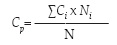
	    <p align="justify"><font face="verdana" size="2">Because the spatial distribution of air pollution does not align with the spatial distribution of the population, we used a population&#45;weighted annual average concentration to estimate population exposure. This weighting approach aims to quantify population exposure by linking the concentration of a pollutant in a particular geographic area with the population residing in that same area.<sup>36,37</sup> To estimate the population&#45;weighted annual average concentration, the GIS layer with concentration zones was overlaid with a layer containing municipal&#45;level population data. The population&#45;weighted annual average concentration for the study area was computed with the following formula:</font></p>

	    <p align="center"><font face="verdana" size="2"><img src="/img/revistas/spm/v56n6/a7fo1.jpg"></font></p>

	    <p align="justify"><font face="verdana" size="2">where:</font></p>

	    <p align="justify"><font face="verdana" size="2">C<i><sub>p</sub></i>= Population&#45;weighted concentration for the study area</font></p>

	    <p align="justify"><font face="verdana" size="2">C<i><sub>i</sub></i>= Concentration in municipality i</font></p>

	    <p align="justify"><font face="verdana" size="2">N<i>i</i>= Number of persons in municipality i</font></p>

	    ]]></body>
<body><![CDATA[<p align="justify"><font face="verdana" size="2">N= Total population in the study area</font></p>

	    <p align="justify"><font face="verdana" size="2">The value obtained for the indicator represents an estimate of the average exposure of the population in each municipality.</font></p>

	    <p align="justify"><font face="verdana" size="2"><b>At&#45;risk population and health outcomes for the baseline scenario</b></font></p>

	    <p align="justify"><font face="verdana" size="2">This HIA uses health outcomes which have been consistently reported as having an association with PM<sub>10</sub> and O<sub>3</sub> exposure and for which the Mexican Health System reports statistics. <a href="/img/revistas/spm/v56n6/a7t1.jpg" target="_blank">Table I</a> presents the population groups included in the study, the health outcomes selected for HIA estimations, and the corresponding International Classification of Diseases (ICD) 9 and 10 codes.</font></p>

	    <p align="justify"><font face="verdana" size="2">The year 2005 was chosen for the baseline scenario since it was the year for which the most recent, highest quality population and health data were available. Data for population, total mortality and cause&#45;specific mortality were provided by Inegi. Data for hospital admissions were obtained from the National Health Information System (SINAIS, by its Spanish acronym).</font></p>

	    <p align="justify"><font face="verdana" size="2"><b>Selection of concentration&#45;response functions (CRF)</b></font></p>

	    <p align="justify"><font face="verdana" size="2">The CRFs used in this study correspond to the relative risks (RR), or a pooled RR, found in epidemiological studies that associate air pollution with health effects. We used CRFs from studies conducted in the MCMA, including the ESCALA project, and recent international epidemiological studies and meta&#45;analyses, which provide reliable estimates (<a href="/img/revistas/spm/v56n6/a7t1.jpg" target="_blank">table I)</a>.<sup>31,33,34,38&#45;47</sup></font></p>

	    <p align="justify"><font face="verdana" size="2"><b>Estimation of health impacts</b></font></p>

	    <p align="justify"><font face="verdana" size="2">The benefits of the air pollution reduction scenarios are expressed in attributable, or preventable, cases per year for each health outcome evaluated (total mortality, mortality from respiratory disease, etc.). These are estimated using the attributable population fraction, which is a function of the CRFs and the fraction of exposed persons in the study population.<sup>21</sup> In this context, attributable population fraction is defined as the reduction in incidence that would be observed if the population exposure were decreased to the levels proposed in the reduction scenarios. This approach assumes that air pollution is only a part of the causal model for each health outcome.</font></p>

	    <p align="justify"><font face="verdana" size="2">The formula for the attributable population fraction (AFpop) of the total population is:</font></p>

	    ]]></body>
<body><![CDATA[<p align="center"><font face="verdana" size="2"><img src="/img/revistas/spm/v56n6/a7fo2.jpg"></font></p>

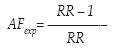
	    <p align="justify"><font face="verdana" size="2">where p<sub>p</sub> represents the fraction of the population exposed to the environmental factor under consideration and RR is the concentration&#45;response function for the change in exposure being evaluated. When the entire population has been exposed, as in the majority of air pollution studies, the p<sub>p</sub> is equal to 1 and the above formula is simplified to the attributable fraction of those who have been exposed (AF<sub>exp</sub>):</font></p>

	    <p align="center"><font face="verdana" size="2"><img src="/img/revistas/spm/v56n6/a7fo3.jpg"></font></p>

	    <p align="justify"><font face="verdana" size="2">Multiplying the AF<sub>exp</sub> by the total number of cases observed in the baseline scenario and using the different concentration scenarios, we can estimate the number of preventable cases as follows:</font></p>

	    <p align="center"><font face="verdana" size="2"><img src="/img/revistas/spm/v56n6/a7fo4.jpg"></font></p>

	    <p align="justify"><font face="verdana" size="2">where:</font></p>

	    <blockquote>
		    <p align="justify"><font face="verdana" size="2">&bull; &#8710;conc is the change in PM<sub>10</sub> or O<sub>3</sub> concentration in each scenario,</font></p>

		    <p align="justify"><font face="verdana" size="2">&bull; CRFcorrected is the CRF expressed as relative risk, per unit change in pollutant concentration,</font></p>

		    <p align="justify"><font face="verdana" size="2">&bull; Number of cases in MCMA is the number of cases observed in 2005 for the outcome evaluated.</font></p>
	</blockquote>

	    ]]></body>
<body><![CDATA[<p align="justify"><font face="verdana" size="2"><b>Uncertainty analysis</b></font></p>

	    <p align="justify"><font face="verdana" size="2">All of the stages described above present a series of assumptions and uncertainties associated with the following aspects: a) selection and frequency of health effects, b) the CRFs, c) the selection of air pollution indicators and d) the exposure distribution in the population. Therefore, the results obtained are only an approximation of what could be expected if air quality was improved. The discussion below describes the expected influence of each uncertainty factor. In addition, a sensitivity analysis was performed to evaluate uncertainty with regard to the CRFs.</font></p>

	    <p align="justify"><font face="verdana" size="2">Generally, a sensitivity analysis estimates results using different thresholds for the estimated point, or suggests different assumptions and examines the variation in the results. For this study, a sensitivity analysis was performed according to the method proposed by Kunzli and Perez,<sup>21</sup> in which the effect of variability in CRFs (upper and lower 95% confidence interval limits) was evaluated. At least two CRF sources were used for the estimates whenever possible.</font></p>

	    <p align="justify"><font face="verdana" size="2">The project was evaluated and approved by research and ethics committees at the National Institute of Public Health (INSP, by its Spanish initials).</font></p>

	    <p align="justify"><font face="verdana" size="2">&nbsp;</font></p>

	    <p align="justify"><font face="verdana" size="2"><b>Results</b></font></p>

	    <p align="justify"><font face="verdana" size="2">The study area obtained by crossing information in the GIS included Mexico City and 33 municipalities representing 68.9% of the population of the State of Mexico. The total population for the study area in the year 2005 was 18 419 138 inhabitants.</font></p>

	    <p align="justify"><font face="verdana" size="2">The highest concentrations of PM<sub>10</sub> were found in the northern part of the study area, while the highest O<sub>3</sub> concentrations were found in the southeast. <a href="/img/revistas/spm/v56n6/a7f1.jpg" target="_blank">Figure 1</a> summarizes the annual average concentration for the study area. The municipalities of Jaltenco and Tlahuac had the highest annual average concentrations of PM<sub>10</sub> and O<sub>3</sub>, 70.1 &micro;g/m<sup>3</sup> and 0.069 ppm, respectively. Based on these results, the following estimates were performed.</font></p>

	    <p align="justify"><font face="verdana" size="2"><b>Evaluation of the impact on total and cause&#45;specific mortality (short&#45;term)</b></font></p>

	    <p align="justify"><font face="verdana" size="2">The estimates for preventable cases, or deaths, vary with the CRF used. <a href="/img/revistas/spm/v56n6/a7t2.jpg" target="_blank">Table II</a> presents total preventable deaths per study zone for each pollution reduction scenario and CRF used. The results indicate that, using the CRF from the ESCALA study and a PM<sub>10</sub> concentration of 20 &micro;g/m<sup>3</sup>, it would be possible to prevent approximately 2300 deaths per year in the entire study area; that is, 13 deaths per 100 000 inhabitants. If a reduction to 40&micro;g/m<sup>3</sup> was achieved roughly 1 040 deaths would be prevented per year, or 6 deaths per 100 000 inhabitants. If the Mexican standard of 50 &micro;g/m<sup>3</sup> was met, approximately 400 deaths would be prevented per year, or 2 per 100 000 inhabitants. Disaggregating by zone the most number of deaths would be prevented by reducing PM<sub>10</sub> concentrations in the center (Z2PM<sub>10</sub>) and northwest zones (Z3PM<sub>10</sub>).</font></p>

	    ]]></body>
<body><![CDATA[<p align="justify"><font face="verdana" size="2">For O<sub>3</sub>, using the CFR from the ESCALA study, the most reliable CRF available, a reduction in annual average concentration to 0.05 ppm would prevent approximately 400 deaths per year; that is, 2 deaths per 100 000 inhabitants. A reduction to 0.06 ppm would prevent approximately 110 deaths per year, and a 5% decrease in concentration would prevent approximately 90 deaths per year. The greatest impact would be expected in the center zone (Z2O<sub>3</sub>).</font></p>

	    <p align="justify"><font face="verdana" size="2">The results indicate that the greatest benefit in mortality would be the group over 65 years of age. Using the baseline population of 982 876 for this age group and CRFs from the ESCALA project, approximately 1400 (95%CI:1 029&#45;2 184) and 300 (95%CI:195&#45;393) deaths would be avoided annually for the most extreme PM<sub>10</sub> and O<sub>3</sub> reduction scenarios. Using the same CRFs, achieving the Mexican standard for PM<sub>10</sub> and decreasing O<sub>3</sub> concentrations by 5% would achieve a reduction of 212 (95%CI 158&#45;340) and 68 (95%CI:45&#45; 091) annual deaths respectively.</font></p>

	    <p align="justify"><font face="verdana" size="2">Using the baseline population of 288 694 for children under 1 year of age in the study area, 265 (95%CI:55&#45;468) deaths would be prevented by reducing PM<sub>10</sub> levels to 20 &micro;g/m3 and 47 (95%CI:10&#45;84) deaths would be avoided by complying with the Mexican PM<sub>10</sub> standard of 50 &micro;g/m3.</font></p>

	    <p align="justify"><font face="verdana" size="2"><a href="/img/revistas/spm/v56n6/a7t3.jpg" target="_blank">Table III</a> presents the estimates for mortality due to specific causes in the entire study area using the best available CRFs. The greatest benefit is seen for cardio&#45;pulmonary and cardiovascular mortality.</font></p>

	    <p align="justify"><font face="verdana" size="2">Long&#45;term estimates indicate that achieving the 20, 40 and 50 &micro;g/m<sup>3</sup> PM<sub>10</sub> scenarios would prevent roughly 10 500 (95%CI:6563&#45;14282), 4,800 (95%CI:2984&#45;6704) and 1 800 (95%CI:1836&#45;1125) deaths, respectively, over a period of 15 years in the population over 30 years of age, using a baseline population of 8 105 538 persons of that age in the study area.</font></p>

	    <p align="justify"><font face="verdana" size="2"><b>Evaluation of the impact on hospitalizations due to specific causes</b></font></p>

	    <p align="justify"><font face="verdana" size="2">In the Mexico City population, approximately 1 650 (95%CI:1415&#45;1902), 660 (95%CI:563&#45;760) and 150 (95%CI:129&#45;175) hospitalizations due to respiratory disease could be prevented per year, for the PM<sub>10</sub> reduction scenarios of 20 &micro;g/m3, 40 &micro;g/m<sup>3</sup>, 50 &micro;g/m<sup>3</sup> respectively. For the same scenarios, 800 (95%CI:570&#45;1 063), 320 (95%CI:225&#45;421) and 70 (95%CI:51&#45;97) hospitalizations due to cardiovascular disease could be prevented. The greatest decrease in hospitalizations would occur in the group over 65 years of age. In this age group, under the most extreme reduction scenario for PM<sub>10</sub>, 360 (95%CI:292&#45;427) hospitalizations due to respiratory disease and 700 (95%CI:548&#45;864) hospitalizations due to cerebrovascular disease would be prevented.</font></p>

	    <p align="justify"><font face="verdana" size="2">Meanwhile, the results indicate that reducing the annual maximum moving average for O<sub>3</sub> to 0.05 ppm would prevent approximately 2000 annual (95%CI:249&#45;3608) hospitalizations due to respiratory disease and 430 (95%CI:185&#45;612) due to cardiovascular disease. Reducing the annual average O<sub>3</sub> concentration by 5% below baseline level would prevent approximately 440 (95%CI:54&#45;809) annual hospitalizations due to respiratory disease and 90 (95%CI:40&#45;133) hospitalizations due to cardiovascular disease.</font></p>

	    <p align="justify"><font face="verdana" size="2"><b>Sensitivity analysis</b></font></p>

	    <p align="justify"><font face="verdana" size="2">The sensitivity analysis evaluates uncertainty in CRFs, specifically the effect of CRF variability on calculations and the effect of using CRFs other than those from the ESCALA project, which are considered to be more reliable for the study area. <a href="/img/revistas/spm/v56n6/a7f2.jpg" target="_blank">Figure 2</a> presents the percentage change in the central estimates for the different effects evaluated. The uncertainty margin associated with the 95% CI is between +/&#45; 14% and +/&#45; 95%, with an average of 51%. The greatest uncertainty corresponds to the estimate of preventable deaths from respiratory disease by reducing O<sub>3</sub> concentrations, while for total preventable deaths and deaths among persons over 65 years of age the uncertainty margin is less than 45%.</font></p>

	    ]]></body>
<body><![CDATA[<p align="justify"><font face="verdana" size="2">The sensitivity analysis using alternative CRFs suggests that for reductions in PM<sub>10</sub> concentrations, the central estimate could be considerably higher for preventable deaths among children under one year of age and deaths due to respiratory and cardiovascular disease; and for reductions in O<sub>3</sub> concentrations, estimates for total preventable deaths and deaths among persons over 65 years of age could also be considerably higher. This finding indicates a possible underestimation of the results ranging from 33 to 105%. On the other hand, the negative percentages found with regard to estimates of total preventable deaths (&#45;19%) and preventable deaths for persons over 65 years of age (&#45;45%) point to a possible overestimation of these results.</font></p>

	    <p align="justify"><font face="verdana" size="2">&nbsp;</font></p>

	    <p align="justify"><font face="verdana" size="2"><b>Discussion</b></font></p>

	    <p align="justify"><font face="verdana" size="2">According to the estimates based on CRFs from the ESCALA project, we can see that if PM<sub>10</sub> levels were to comply with the current limits established by Mexican standards, total mortality in the study area could be reduced by 0.5% (400 deaths, 2 per 100 000). With the strictest measures for reducing PM<sub>10</sub> concentrations to comply with current California EPA standards, greater benefits could be obtained and total annual mortality in the study area could be reduced by 3% (2 300 deaths, 13 per 100 000). Based on this scenario, the estimates for impact on long&#45;term mortality (15 years) indicate that 10500 deaths could be avoided among persons over 30 years of age.</font></p>

	    <p align="justify"><font face="verdana" size="2">Although the benefit is less when reducing O<sub>3</sub> levels, estimates indicate that it would be possible to prevent approximately 400 deaths if the annual 8&#45;hour moving average for O<sub>3</sub> were reduced to 0.05 ppm.</font></p>

	    <p align="justify"><font face="verdana" size="2">A comparative analysis of the results in each of the concentration zones indicates that the impact of reducing particulates is greater in center (Z2PM<sub>10</sub>) and northwest (Z3PM<sub>10</sub>) zones and the impact of reducing O<sub>3</sub> occurs primarily in center (Z2O<sub>3</sub>) and north (Z1O<sub>3</sub>) zones. It is important to remember that the specific calculations for the zones take into account the mortality rate, the exposed population and concentrations of PM<sub>10</sub> and O<sub>3</sub> weighted for the population. Therefore, a greater number of cases are found in zones with a larger exposed population, higher mortality rate and higher PM<sub>10</sub> or O<sub>3</sub> concentrations.</font></p>

	    <p align="justify"><font face="verdana" size="2">With regard to this last point, the annual average exposure to particulate matter varies among the 5 zones, with a difference of 20 micrograms per cubic meter between the zones with the greatest (southwest) and the lowest (northeast) concentrations. These differences occur primarily because a large amount of emissions are generated by mobile sources in the central MCMA region and by activity on unpaved roads in the periphery, while industrial emissions are generated in the northern Mexico City municipalities.<sup>48</sup> The construction material and iron industries generate roughly 400 tons of PM<sub>10</sub> per year in the municipality of Tlalnepantla alone. In Ecatepec, the most significant emissions are generated by metal smelting and forging, and in Acolman by electricity generation. All of these municipalities are located in the northern part of the MCMA. In addition, in the central and northern districts of Mexico City, PM<sub>10</sub> emissions can be as much as 80 tons per year, primarily from heavy vehicular activity, along with industrial activity in some cases. O<sub>3</sub>, on the other hand, tends to be concentrated in the southern and southeastern zones. This is mainly because the dominant air stream transports ozone precursors and ozone, concentrating them in these zones.<sup>48</sup></font></p>

	    <p align="justify"><font face="verdana" size="2">The results show that improving air quality in the MCMA area would provide considerable health benefits. Nevertheless, interpretation of these results should take into account the assumptions and uncertainties associated with the data and methods used. The validity of the results depends mainly on the quality of population and health data, as well as PM<sub>10</sub> and O<sub>3</sub> concentrations and the CRFs used. In our case, with the exception of morbidity data, which may be underestimated, the information comes from reliable information and solid data sources.</font></p>

	    <p align="justify"><font face="verdana" size="2">Most of the assumptions and uncertainties may have resulted in an underestimation of benefits. This underestimation could be due restricting the analysis to O<sub>3</sub> and PM<sub>10</sub> without considering effects of and interactions with other pollutants, such as PM<sub>2.5</sub>, NO<sub>2</sub>, SO<sub>2</sub>, COVs, polycyclic aromatic compounds and CO. In Mexico, the standard for O<sub>3</sub> establishes an annual limit of 0.08 ppm, which should not be exceeded more than 5 times per year as an 8&#45;hour moving average. Nevertheless, using only an annual average for ozone could have underestimated the impacts on health since the average does not reflect that the limit of 0.08 ppm was exceeded on more than 59% of the days of the year in 2005.<sup>48</sup> The annual average for ozone was chosen for this study, rather than the established standard, so as to not overestimate health impact, especially for zones that are further away from air monitoring stations.</font></p>

	    <p align="justify"><font face="verdana" size="2">It is also likely that benefits were underestimated by not evaluating effects such as: changes in pulmonary function; lung cancer; school absenteeism; days with restricted activities; visits to emergency rooms; effects on morbidity from certain illnesses such as chronic bronchitis, asthma or lung cancer; and effects on the reproductive system such as complications in pregnancy, low birth weight, premature birth and delayed cognitive development.</font></p>

	    ]]></body>
<body><![CDATA[<p align="justify"><font face="verdana" size="2">Furthermore, because the long&#45;term CRFs used were not from studies on Mexican populations, only calculations for total mortality were performed for persons over 30 years of age, underestimating the impact due to chronic exposure. For instance, one indicator not included is change in life expectancy. Previous studies show a decrease in this indicator associated with chronic exposure to air pollutants. The Harvard Study for 51 cities in the United States during the 1980s and 1990s reported that a gradual decrease in air pollution levels results in an increase in life expectancy of the population of roughly five months.<sup>16</sup> An APHEIS study showed that reducing chronic exposure to particulates less than 2.5 microns (PM<sub>2.5</sub>) and concentrations less than 15 &micro;g/m3 would increase life expectancy by one month to as much as over two years. That analysis was conducted with a methodology similar to the one used here. The APHEIS analysis could be reproduced for the MCMA when the necessary data is available.</font></p>

	    <p align="justify"><font face="verdana" size="2">The CRF is one of the most important components for calculating health impacts. The sensitivity analysis indicates that, depending on the health outcome under evaluation, a 95% CI for CRFs results in a margin of error of 14 to 95%. Another uncertainty associated with the CRFs is their applicability to different populations and locations. Therefore, for most of the calculations, preference was given to those that included CRFs generated in the MCMA, and especially those estimated in the ESCALA project, since it included data from 1997 to 2005. Further, the ESCALA project incorporated the most recently developed statistical methods which yield the most accurate and reliable calculations for time&#45;series analyses. Using these CRFs reduces the uncertainty since epidemiological and statistical methods have improved in recent years, allowing for the extrapolation of results and the use of indicators in other populations, as is the case of Mexico City. The sensitivity analysis also evaluated the use of alternate CRFs, finding that in most scenarios the central estimates were underestimated. This finding indicates that the benefit would be expected to be greater when other CRFs are used for the estimate. More complex sensitivity analyses using probability models to include other uncertainties were not developed since they require additional data that is not available for the study area.</font></p>

	    <p align="justify"><font face="verdana" size="2">Finally, an economic evaluation of the health effects presented may be complementary to this study. For mortality, we have avoided assigning costs to expected mortality because we consider determining the rate and number of events to be sufficient in terms of benefits. For morbidity, the study could be complemented by assigning a value to each hospitalization event in order to obtain and estimate of the preventable costs in the health sector.</font></p>

	    <p align="justify"><font face="verdana" size="2">In conclusion, air pollution continues to have an impact on public health in the MCMA and the results suggest that reducing the current levels of pollutants such as ozone and PM<sub>10</sub> would prevent hundreds of deaths and hospitalizations. The spatial distribution of concentrations in the metropolitan area enables identifying and implementing focused interventions in the geographic area, specifically by concentration zones. Even with the limitations and uncertainties in the calculations performed, the HIA is a useful tool for the design of public policies. It is recommended that existing standards be reviewed and adjusted in the context of current scientific evidence and international guidelines. It is also recommended that HIAs be performed immediately for other pollutants such as PM<sub>2.5</sub> and for other cities in the country which may have air monitoring networks.</font></p>

	    <p align="justify"><font face="verdana" size="2">&nbsp;</font></p>

	    <p align="justify"><font face="verdana" size="2"><b>Acknowledgements</b></font></p>

	    <p align="justify"><font face="verdana" size="2">This study had the financial support of the Mexico City Government (Instituto de Ciencia y Tecnolog&iacute;a del Distrito Federal). The authors thank Irma Soyachi, Alan Castillo Ferraez and Ana Elizabeth Sandoval Loredo for their assistance in the preparation of this document.</font></p>

	    <p align="justify"><font face="verdana" size="2">&nbsp;</font></p>

	    <p align="justify"><font face="verdana" size="2"><b>References</b></font></p>

	    <!-- ref --><p align="justify"><font face="verdana" size="2">1. Samet J, Krewski D. Health effects associated with exposure to ambient air pollution. J Toxicol Environ Health Part A 2007;70:227&#45;242.    &nbsp;&nbsp;&nbsp;&nbsp;&nbsp;&nbsp;&nbsp;&nbsp;[&#160;<a href="javascript:void(0);" onclick="javascript: window.open('/scielo.php?script=sci_nlinks&ref=9395770&pid=S0036-3634201400060000700001&lng=','','width=640,height=500,resizable=yes,scrollbars=1,menubar=yes,');">Links</a>&#160;]<!-- end-ref --></font></p>

	    <!-- ref --><p align="justify"><font face="verdana" size="2">2. Curtis L, Rea W, Smith&#45;Willis P, Fenyves E, Pan Y. Adverse health effects of outdoor air pollutants. Environ Int 2006;32:815&#45;830.    &nbsp;&nbsp;&nbsp;&nbsp;&nbsp;&nbsp;&nbsp;&nbsp;[&#160;<a href="javascript:void(0);" onclick="javascript: window.open('/scielo.php?script=sci_nlinks&ref=9395772&pid=S0036-3634201400060000700002&lng=','','width=640,height=500,resizable=yes,scrollbars=1,menubar=yes,');">Links</a>&#160;]<!-- end-ref --></font></p>

	    <!-- ref --><p align="justify"><font face="verdana" size="2">3. Brunekreef B, Holgate ST. Air pollution and health. Lancet 2002;360:1233&#45;1242.    &nbsp;&nbsp;&nbsp;&nbsp;&nbsp;&nbsp;&nbsp;&nbsp;[&#160;<a href="javascript:void(0);" onclick="javascript: window.open('/scielo.php?script=sci_nlinks&ref=9395774&pid=S0036-3634201400060000700003&lng=','','width=640,height=500,resizable=yes,scrollbars=1,menubar=yes,');">Links</a>&#160;]<!-- end-ref --></font></p>

	    <!-- ref --><p align="justify"><font face="verdana" size="2">4. WHO. Air quality guidelines global update 2005. Germany: World Health Organization, 2006.    &nbsp;&nbsp;&nbsp;&nbsp;&nbsp;&nbsp;&nbsp;&nbsp;[&#160;<a href="javascript:void(0);" onclick="javascript: window.open('/scielo.php?script=sci_nlinks&ref=9395776&pid=S0036-3634201400060000700004&lng=','','width=640,height=500,resizable=yes,scrollbars=1,menubar=yes,');">Links</a>&#160;]<!-- end-ref --></font></p>

	    <!-- ref --><p align="justify"><font face="verdana" size="2">5. Anderson JO, Thundiyil JG, Stolbach A. Clearing the air: a review of the effects of particulate matter air pollution on human health. J Med Toxicol 2012;8:166&#45;175.    &nbsp;&nbsp;&nbsp;&nbsp;&nbsp;&nbsp;&nbsp;&nbsp;[&#160;<a href="javascript:void(0);" onclick="javascript: window.open('/scielo.php?script=sci_nlinks&ref=9395778&pid=S0036-3634201400060000700005&lng=','','width=640,height=500,resizable=yes,scrollbars=1,menubar=yes,');">Links</a>&#160;]<!-- end-ref --></font></p>

	    <!-- ref --><p align="justify"><font face="verdana" size="2">6. Jerrett M, Burnett RT, Pope CA 3rd, Ito K, Thurston G, Krewski D, <i>et al</i>. Long&#45;term ozone exposure and mortality. N Engl J Med 2009;360:1085&#45;1095.    &nbsp;&nbsp;&nbsp;&nbsp;&nbsp;&nbsp;&nbsp;&nbsp;[&#160;<a href="javascript:void(0);" onclick="javascript: window.open('/scielo.php?script=sci_nlinks&ref=9395780&pid=S0036-3634201400060000700006&lng=','','width=640,height=500,resizable=yes,scrollbars=1,menubar=yes,');">Links</a>&#160;]<!-- end-ref --></font></p>

	    <!-- ref --><p align="justify"><font face="verdana" size="2">7. Katsouyanni K, Samet JM, Anderson HR, Atkinson R, Le Tertre A, Medina S, <i>et al</i>. Air pollution and health: a European and North American approach (APHENA). Res Rep Health Eff Inst 2009;5&#45;90.    &nbsp;&nbsp;&nbsp;&nbsp;&nbsp;&nbsp;&nbsp;&nbsp;[&#160;<a href="javascript:void(0);" onclick="javascript: window.open('/scielo.php?script=sci_nlinks&ref=9395782&pid=S0036-3634201400060000700007&lng=','','width=640,height=500,resizable=yes,scrollbars=1,menubar=yes,');">Links</a>&#160;]<!-- end-ref --></font></p>

	    <!-- ref --><p align="justify"><font face="verdana" size="2">8. Analitis A, Katsouyanni K, Dimakopoulou K, Samoli E, Nikoloulopoulos AK, Petasakis Y, <i>et al</i>. Short&#45;term effects of ambient particles on cardiovascular and respiratory mortality. Epidemiol 2006;17:230&#45;233.    &nbsp;&nbsp;&nbsp;&nbsp;&nbsp;&nbsp;&nbsp;&nbsp;[&#160;<a href="javascript:void(0);" onclick="javascript: window.open('/scielo.php?script=sci_nlinks&ref=9395784&pid=S0036-3634201400060000700008&lng=','','width=640,height=500,resizable=yes,scrollbars=1,menubar=yes,');">Links</a>&#160;]<!-- end-ref --></font></p>

	    <!-- ref --><p align="justify"><font face="verdana" size="2">9. Pope CA 3rd, Burnett RT, Thun MJ, Calle EE, Krewski D, Ito K, <i>et al</i>. Lung cancer, cardiopulmonary mortality, and long&#45;term exposure to fine particulate air pollution. JAMA 2002;287:1132&#45;1141.    &nbsp;&nbsp;&nbsp;&nbsp;&nbsp;&nbsp;&nbsp;&nbsp;[&#160;<a href="javascript:void(0);" onclick="javascript: window.open('/scielo.php?script=sci_nlinks&ref=9395786&pid=S0036-3634201400060000700009&lng=','','width=640,height=500,resizable=yes,scrollbars=1,menubar=yes,');">Links</a>&#160;]<!-- end-ref --></font></p>

	    <!-- ref --><p align="justify"><font face="verdana" size="2">10. Krewski D, Burnett R, Jerrett M, Pope CA, Rainham D, Calle E, <i>et al</i>. Mortality and long&#45;term exposure to ambient air pollution: ongoing analyses based on the American Cancer Society cohort. J Toxicol Environ Health Part A 2005;68:1093&#45;1109.    &nbsp;&nbsp;&nbsp;&nbsp;&nbsp;&nbsp;&nbsp;&nbsp;[&#160;<a href="javascript:void(0);" onclick="javascript: window.open('/scielo.php?script=sci_nlinks&ref=9395788&pid=S0036-3634201400060000700010&lng=','','width=640,height=500,resizable=yes,scrollbars=1,menubar=yes,');">Links</a>&#160;]<!-- end-ref --></font></p>

	    <!-- ref --><p align="justify"><font face="verdana" size="2">11. Gallus S, Negri E, Boffetta P, McLaughlin JK, Bosetti C, La Vecchia C. European studies on long&#45;term exposure to ambient particulate matter and lung cancer. Eur J Cancer Prev 2008;17:191&#45;194.    &nbsp;&nbsp;&nbsp;&nbsp;&nbsp;&nbsp;&nbsp;&nbsp;[&#160;<a href="javascript:void(0);" onclick="javascript: window.open('/scielo.php?script=sci_nlinks&ref=9395790&pid=S0036-3634201400060000700011&lng=','','width=640,height=500,resizable=yes,scrollbars=1,menubar=yes,');">Links</a>&#160;]<!-- end-ref --></font></p>

	    <!-- ref --><p align="justify"><font face="verdana" size="2">12. Lacasa&ntilde;a M, Esplugues A, Ballester F. Exposure to ambient air pollution and prenatal and early childhood health effects. Eur J Epidemiol 2005;20:183&#45;199.    &nbsp;&nbsp;&nbsp;&nbsp;&nbsp;&nbsp;&nbsp;&nbsp;[&#160;<a href="javascript:void(0);" onclick="javascript: window.open('/scielo.php?script=sci_nlinks&ref=9395792&pid=S0036-3634201400060000700012&lng=','','width=640,height=500,resizable=yes,scrollbars=1,menubar=yes,');">Links</a>&#160;]<!-- end-ref --></font></p>

	    <!-- ref --><p align="justify"><font face="verdana" size="2">13. Wigle DT, Arbuckle TE, Walker M, Wade MG, Liu S, Krewski D. Environmental hazards: evidence for effects on child health. J Toxicol Environ Health Part B 2007;10:3&#45;39.    &nbsp;&nbsp;&nbsp;&nbsp;&nbsp;&nbsp;&nbsp;&nbsp;[&#160;<a href="javascript:void(0);" onclick="javascript: window.open('/scielo.php?script=sci_nlinks&ref=9395794&pid=S0036-3634201400060000700013&lng=','','width=640,height=500,resizable=yes,scrollbars=1,menubar=yes,');">Links</a>&#160;]<!-- end-ref --></font></p>

	    <!-- ref --><p align="justify"><font face="verdana" size="2">14. Kampa M, Castanas E. Human health effects of air pollution. Environ Pollut 2008;151:362&#45;367.    &nbsp;&nbsp;&nbsp;&nbsp;&nbsp;&nbsp;&nbsp;&nbsp;[&#160;<a href="javascript:void(0);" onclick="javascript: window.open('/scielo.php?script=sci_nlinks&ref=9395796&pid=S0036-3634201400060000700014&lng=','','width=640,height=500,resizable=yes,scrollbars=1,menubar=yes,');">Links</a>&#160;]<!-- end-ref --></font></p>

	    <!-- ref --><p align="justify"><font face="verdana" size="2">15. Leksell I, Rabl A. Air pollution and mortality: quantification and valuation of years of life lost. Risk Anal 2001;21:843&#45;857.    &nbsp;&nbsp;&nbsp;&nbsp;&nbsp;&nbsp;&nbsp;&nbsp;[&#160;<a href="javascript:void(0);" onclick="javascript: window.open('/scielo.php?script=sci_nlinks&ref=9395798&pid=S0036-3634201400060000700015&lng=','','width=640,height=500,resizable=yes,scrollbars=1,menubar=yes,');">Links</a>&#160;]<!-- end-ref --></font></p>

	    <!-- ref --><p align="justify"><font face="verdana" size="2">16. Pope CA 3rd, Ezzati M, Dockery DW. Fine&#45;particulate air pollution and life expectancy in the United States. N Engl J Med 2009;360:376&#45;386.    &nbsp;&nbsp;&nbsp;&nbsp;&nbsp;&nbsp;&nbsp;&nbsp;[&#160;<a href="javascript:void(0);" onclick="javascript: window.open('/scielo.php?script=sci_nlinks&ref=9395800&pid=S0036-3634201400060000700016&lng=','','width=640,height=500,resizable=yes,scrollbars=1,menubar=yes,');">Links</a>&#160;]<!-- end-ref --></font></p>

	    <!-- ref --><p align="justify"><font face="verdana" size="2">17. APHEIS. Health impact assessment of air pollution and communication strategy: third&#45;year report. Saint&#45;Maurice Cedex: Institut de Veille Sanitaire, 2005.    &nbsp;&nbsp;&nbsp;&nbsp;&nbsp;&nbsp;&nbsp;&nbsp;[&#160;<a href="javascript:void(0);" onclick="javascript: window.open('/scielo.php?script=sci_nlinks&ref=9395802&pid=S0036-3634201400060000700017&lng=','','width=640,height=500,resizable=yes,scrollbars=1,menubar=yes,');">Links</a>&#160;]<!-- end-ref --></font></p>

	    <!-- ref --><p align="justify"><font face="verdana" size="2">18. Harris&#45;Roxas B, Harris E. Differing forms, differing purposes: a typology of health impact assessment. Environmental Impact Assessment Review 2011;31:396&#45;403.    &nbsp;&nbsp;&nbsp;&nbsp;&nbsp;&nbsp;&nbsp;&nbsp;[&#160;<a href="javascript:void(0);" onclick="javascript: window.open('/scielo.php?script=sci_nlinks&ref=9395804&pid=S0036-3634201400060000700018&lng=','','width=640,height=500,resizable=yes,scrollbars=1,menubar=yes,');">Links</a>&#160;]<!-- end-ref --></font></p>

	    <!-- ref --><p align="justify"><font face="verdana" size="2">19. Boldo E, Linares C, Lumbreras J, Borge R, Narros A, Garc&iacute;a&#45;P&eacute;rez J, <i>et al</i>. Health impact assessment of a reduction in ambient PM(2.5) levels in Spain. Environ Int 2011;37:342&#150;8.    &nbsp;&nbsp;&nbsp;&nbsp;&nbsp;&nbsp;&nbsp;&nbsp;[&#160;<a href="javascript:void(0);" onclick="javascript: window.open('/scielo.php?script=sci_nlinks&ref=9395806&pid=S0036-3634201400060000700019&lng=','','width=640,height=500,resizable=yes,scrollbars=1,menubar=yes,');">Links</a>&#160;]<!-- end-ref --></font></p>

	    <!-- ref --><p align="justify"><font face="verdana" size="2">20. Baccini M, Biggeri A, Grillo P, Consonni D, Bertazzi PA. Health impact assessment of fine particle pollution at the regional level. Am J Epidemiol 2011; 174:1396&#45;1405.    &nbsp;&nbsp;&nbsp;&nbsp;&nbsp;&nbsp;&nbsp;&nbsp;[&#160;<a href="javascript:void(0);" onclick="javascript: window.open('/scielo.php?script=sci_nlinks&ref=9395808&pid=S0036-3634201400060000700020&lng=','','width=640,height=500,resizable=yes,scrollbars=1,menubar=yes,');">Links</a>&#160;]<!-- end-ref --></font></p>

	    <!-- ref --><p align="justify"><font face="verdana" size="2">21. P&eacute;rez L, Sunyer J, K&uuml;nzli N. Estimating the health and economic benefits associated with reducing air pollution in the Barcelona metropolitan area (Spain). Gac Sanit 2009;23:287&#150;94.    &nbsp;&nbsp;&nbsp;&nbsp;&nbsp;&nbsp;&nbsp;&nbsp;[&#160;<a href="javascript:void(0);" onclick="javascript: window.open('/scielo.php?script=sci_nlinks&ref=9395810&pid=S0036-3634201400060000700021&lng=','','width=640,height=500,resizable=yes,scrollbars=1,menubar=yes,');">Links</a>&#160;]<!-- end-ref --></font></p>

	    <!-- ref --><p align="justify"><font face="verdana" size="2">22. Remy S, Nawrot T, Fierens F, Petit P, Vanderstraeten P, Nemery B, <i>et al</i>. Health impact of urban air pollution in Belgium. Air Qual Atmos Health 2011;4:243&#150;6.    &nbsp;&nbsp;&nbsp;&nbsp;&nbsp;&nbsp;&nbsp;&nbsp;[&#160;<a href="javascript:void(0);" onclick="javascript: window.open('/scielo.php?script=sci_nlinks&ref=9395812&pid=S0036-3634201400060000700022&lng=','','width=640,height=500,resizable=yes,scrollbars=1,menubar=yes,');">Links</a>&#160;]<!-- end-ref --></font></p>

	    <!-- ref --><p align="justify"><font face="verdana" size="2">23. Boldo E, Medina S, Le Tertre A, Hurley F, M&uuml;cke H&#45;G, Ballester F, <i>et al</i>. Apheis: Health impact assessment of long&#45;term exposure to PM(2.5) in 23 European cities. Eur J Epidemiol 2006;21:449&#45;458.    &nbsp;&nbsp;&nbsp;&nbsp;&nbsp;&nbsp;&nbsp;&nbsp;[&#160;<a href="javascript:void(0);" onclick="javascript: window.open('/scielo.php?script=sci_nlinks&ref=9395814&pid=S0036-3634201400060000700023&lng=','','width=640,height=500,resizable=yes,scrollbars=1,menubar=yes,');">Links</a>&#160;]<!-- end-ref --></font></p>

	    <!-- ref --><p align="justify"><font face="verdana" size="2">24. Jusot JF, Lefranc A, Cassadou S, D'Helf&#45;Blanchard M, Eilstein D, Chardon B, <i>et al</i>. Estimating mortality attribuable to PM<sub>10</sub> particles in 9 French cities participating in the European programme Apheis. Sante Publique 2006;18:71&#45;84.    &nbsp;&nbsp;&nbsp;&nbsp;&nbsp;&nbsp;&nbsp;&nbsp;[&#160;<a href="javascript:void(0);" onclick="javascript: window.open('/scielo.php?script=sci_nlinks&ref=9395816&pid=S0036-3634201400060000700024&lng=','','width=640,height=500,resizable=yes,scrollbars=1,menubar=yes,');">Links</a>&#160;]<!-- end-ref --></font></p>

	    <!-- ref --><p align="justify"><font face="verdana" size="2">25. Yorifuji T, Yamamoto E, Tsuda T, Kawakami N. Health impact assessment of particulate matter in Tokyo, Japan. Arch Environ Occup Health 2005;60:179&#45;185.    &nbsp;&nbsp;&nbsp;&nbsp;&nbsp;&nbsp;&nbsp;&nbsp;[&#160;<a href="javascript:void(0);" onclick="javascript: window.open('/scielo.php?script=sci_nlinks&ref=9395818&pid=S0036-3634201400060000700025&lng=','','width=640,height=500,resizable=yes,scrollbars=1,menubar=yes,');">Links</a>&#160;]<!-- end-ref --></font></p>

	    <!-- ref --><p align="justify"><font face="verdana" size="2">26. Forsberg B, Hansson H&#45;C, Johansson C, Areskoug H, Persson K, J&auml;rvholm B. Comparative health impact assessment of local and regional particulate air pollutants in Scandinavia. Ambio 2005;34:11&#45;19.    &nbsp;&nbsp;&nbsp;&nbsp;&nbsp;&nbsp;&nbsp;&nbsp;[&#160;<a href="javascript:void(0);" onclick="javascript: window.open('/scielo.php?script=sci_nlinks&ref=9395820&pid=S0036-3634201400060000700026&lng=','','width=640,height=500,resizable=yes,scrollbars=1,menubar=yes,');">Links</a>&#160;]<!-- end-ref --></font></p>

	    <!-- ref --><p align="justify"><font face="verdana" size="2">27. Corbett S. The art of the possible: experience and practice in health impact assessment in New South Wales. N S W Public Health Bull 2005;16:116&#45;118.    &nbsp;&nbsp;&nbsp;&nbsp;&nbsp;&nbsp;&nbsp;&nbsp;[&#160;<a href="javascript:void(0);" onclick="javascript: window.open('/scielo.php?script=sci_nlinks&ref=9395822&pid=S0036-3634201400060000700027&lng=','','width=640,height=500,resizable=yes,scrollbars=1,menubar=yes,');">Links</a>&#160;]<!-- end-ref --></font></p>

	    <!-- ref --><p align="justify"><font face="verdana" size="2">28. Mckinley G, Zuk M, H&ouml;jer M, Avalos M, Gonz&aacute;lez I, Iniestra R, <i>et al</i>. Quantification of local and global benefits from air pollution control in Mexico City. Environ Sci Technol 2005;39:1954&#45;1961.    &nbsp;&nbsp;&nbsp;&nbsp;&nbsp;&nbsp;&nbsp;&nbsp;[&#160;<a href="javascript:void(0);" onclick="javascript: window.open('/scielo.php?script=sci_nlinks&ref=9395824&pid=S0036-3634201400060000700028&lng=','','width=640,height=500,resizable=yes,scrollbars=1,menubar=yes,');">Links</a>&#160;]<!-- end-ref --></font></p>

	    <!-- ref --><p align="justify"><font face="verdana" size="2">29. Bell ML, Davis DL, Gouveia N, Borja&#45;Aburto VH, Cifuentes LA. The avoidable health effects of air pollution in three Latin American cities: Santiago, S&atilde;o Paulo, and Mexico City. Environ Res 2006;100:431&#45;440.    &nbsp;&nbsp;&nbsp;&nbsp;&nbsp;&nbsp;&nbsp;&nbsp;[&#160;<a href="javascript:void(0);" onclick="javascript: window.open('/scielo.php?script=sci_nlinks&ref=9395826&pid=S0036-3634201400060000700029&lng=','','width=640,height=500,resizable=yes,scrollbars=1,menubar=yes,');">Links</a>&#160;]<!-- end-ref --></font></p>

	    <!-- ref --><p align="justify"><font face="verdana" size="2">30. Molina L. Air quality in the Mexico Megacity: an integrated assessment. United States of America: Kluwer Academic Publishers, 2002;vol.2:384.    &nbsp;&nbsp;&nbsp;&nbsp;&nbsp;&nbsp;&nbsp;&nbsp;[&#160;<a href="javascript:void(0);" onclick="javascript: window.open('/scielo.php?script=sci_nlinks&ref=9395828&pid=S0036-3634201400060000700030&lng=','','width=640,height=500,resizable=yes,scrollbars=1,menubar=yes,');">Links</a>&#160;]<!-- end-ref --></font></p>

	    <!-- ref --><p align="justify"><font face="verdana" size="2">31. Herman C, Borja&#45;Aburto VH, Kees D, Mu&ntilde;oz&#45;Cruz R, Brander L, Cropper M, <i>et al</i>. Improving air quality in metropolitan Mexico City: an economic valuation. M&eacute;xico: The World Bank, Comision Ambiental Metropolitana, 2002;62.    &nbsp;&nbsp;&nbsp;&nbsp;&nbsp;&nbsp;&nbsp;&nbsp;[&#160;<a href="javascript:void(0);" onclick="javascript: window.open('/scielo.php?script=sci_nlinks&ref=9395830&pid=S0036-3634201400060000700031&lng=','','width=640,height=500,resizable=yes,scrollbars=1,menubar=yes,');">Links</a>&#160;]<!-- end-ref --></font></p>

	    <!-- ref --><p align="justify"><font face="verdana" size="2">32. Borja&#45;Aburto VH, Rosales&#45;Castillo JA, Torres&#45;Meza VM, Corey G, Olaiz&#45;Fernandez G. Evaluation of health effects of pollution. Ancillary benefits and costs of greenhouse gas mitigation. France: OECD, 2000: 592.    &nbsp;&nbsp;&nbsp;&nbsp;&nbsp;&nbsp;&nbsp;&nbsp;[&#160;<a href="javascript:void(0);" onclick="javascript: window.open('/scielo.php?script=sci_nlinks&ref=9395832&pid=S0036-3634201400060000700032&lng=','','width=640,height=500,resizable=yes,scrollbars=1,menubar=yes,');">Links</a>&#160;]<!-- end-ref --></font></p>

	    <!-- ref --><p align="justify"><font face="verdana" size="2">33. Carbajal&#45;Arroyo L, Miranda&#45;Soberanis V, Medina&#45;Ram&oacute;n M, Rojas&#45;Bracho L, Tzintzun G, Sol&iacute;s&#45;Guti&eacute;rrez P, <i>et al</i>. Effect of PM(10) and O(3) on infant mortality among residents in the Mexico City Metropolitan Area: a case&#45;crossover analysis, 1997&#45;2005. J Epidemiol Commu Health 2011;65:715&#45;721.    &nbsp;&nbsp;&nbsp;&nbsp;&nbsp;&nbsp;&nbsp;&nbsp;[&#160;<a href="javascript:void(0);" onclick="javascript: window.open('/scielo.php?script=sci_nlinks&ref=9395834&pid=S0036-3634201400060000700033&lng=','','width=640,height=500,resizable=yes,scrollbars=1,menubar=yes,');">Links</a>&#160;]<!-- end-ref --></font></p>

	    <!-- ref --><p align="justify"><font face="verdana" size="2">34. Romieu I, Gouveia N, Cifuentes LA, de Le&oacute;n AP, Junger W, Vera J, <i>et al</i>. Multicity study of air pollution and mortality in Latin America (the ESCALA study). Res Rep Health Eff Inst, 2012;171:5&#45;86.    &nbsp;&nbsp;&nbsp;&nbsp;&nbsp;&nbsp;&nbsp;&nbsp;[&#160;<a href="javascript:void(0);" onclick="javascript: window.open('/scielo.php?script=sci_nlinks&ref=9395836&pid=S0036-3634201400060000700034&lng=','','width=640,height=500,resizable=yes,scrollbars=1,menubar=yes,');">Links</a>&#160;]<!-- end-ref --></font></p>

	    <!-- ref --><p align="justify"><font face="verdana" size="2">35. Lloyd CD. Local models for spatial analysis. United States of America: CRC Press, 2006;vol.1:244.    &nbsp;&nbsp;&nbsp;&nbsp;&nbsp;&nbsp;&nbsp;&nbsp;[&#160;<a href="javascript:void(0);" onclick="javascript: window.open('/scielo.php?script=sci_nlinks&ref=9395838&pid=S0036-3634201400060000700035&lng=','','width=640,height=500,resizable=yes,scrollbars=1,menubar=yes,');">Links</a>&#160;]<!-- end-ref --></font></p>

	    <!-- ref --><p align="justify"><font face="verdana" size="2">36. Ivy D, Mulholland JA, Russell AG. Development of ambient air quality population&#45;weighted metrics for use in time&#45;series health studies. J Air Waste Manag Assoc 2008;58:711&#45;720.    &nbsp;&nbsp;&nbsp;&nbsp;&nbsp;&nbsp;&nbsp;&nbsp;[&#160;<a href="javascript:void(0);" onclick="javascript: window.open('/scielo.php?script=sci_nlinks&ref=9395840&pid=S0036-3634201400060000700036&lng=','','width=640,height=500,resizable=yes,scrollbars=1,menubar=yes,');">Links</a>&#160;]<!-- end-ref --></font></p>

	    <!-- ref --><p align="justify"><font face="verdana" size="2">37. Zuk M, Tzintzun&#45;Cervantes G, Rojas&#45;Bracho L. Tercer almanaque de datos y tendencias de la calidad del aire en nueve ciudades mexicanas. M&eacute;xico: INE&#45;SEMARNAT, 2007; 116.    &nbsp;&nbsp;&nbsp;&nbsp;&nbsp;&nbsp;&nbsp;&nbsp;[&#160;<a href="javascript:void(0);" onclick="javascript: window.open('/scielo.php?script=sci_nlinks&ref=9395842&pid=S0036-3634201400060000700037&lng=','','width=640,height=500,resizable=yes,scrollbars=1,menubar=yes,');">Links</a>&#160;]<!-- end-ref --></font></p>

	    <!-- ref --><p align="justify"><font face="verdana" size="2">38. Anderson HR, Atkinson RW, Peacock JL, Marston L, Konstantinou K. Meta&#45;analysis of time&#45;series studies and panel studies of particulate matter (PM) and ozone (O3). Copenhagen: World Health Organization Regional Office for Europe, 2004.    &nbsp;&nbsp;&nbsp;&nbsp;&nbsp;&nbsp;&nbsp;&nbsp;[&#160;<a href="javascript:void(0);" onclick="javascript: window.open('/scielo.php?script=sci_nlinks&ref=9395844&pid=S0036-3634201400060000700038&lng=','','width=640,height=500,resizable=yes,scrollbars=1,menubar=yes,');">Links</a>&#160;]<!-- end-ref --></font></p>

	    <!-- ref --><p align="justify"><font face="verdana" size="2">39. O'Neill MS, Bell ML, Ranjit N, Cifuentes LA, Loomis D, Gouveia N, <i>et al</i>. Air pollution and mortality in Latin America: the role of education. Epidemiology 2008;19:810&#45;819.    &nbsp;&nbsp;&nbsp;&nbsp;&nbsp;&nbsp;&nbsp;&nbsp;[&#160;<a href="javascript:void(0);" onclick="javascript: window.open('/scielo.php?script=sci_nlinks&ref=9395846&pid=S0036-3634201400060000700039&lng=','','width=640,height=500,resizable=yes,scrollbars=1,menubar=yes,');">Links</a>&#160;]<!-- end-ref --></font></p>

	    <!-- ref --><p align="justify"><font face="verdana" size="2">40. K&uuml;nzli N, Kaiser R, Medina S, Studnicka M, Chanel O, Filliger P, <i>et al</i>. Public&#45;health impact of outdoor and traffic&#45;related air pollution: a European assessment. Lancet 2000;356:795&#45;801.    &nbsp;&nbsp;&nbsp;&nbsp;&nbsp;&nbsp;&nbsp;&nbsp;[&#160;<a href="javascript:void(0);" onclick="javascript: window.open('/scielo.php?script=sci_nlinks&ref=9395848&pid=S0036-3634201400060000700040&lng=','','width=640,height=500,resizable=yes,scrollbars=1,menubar=yes,');">Links</a>&#160;]<!-- end-ref --></font></p>

	    <!-- ref --><p align="justify"><font face="verdana" size="2">41. Rosales&#45;Castillo JA, Torres&#45;Meza VM, Olaiz&#45;Fern&aacute;ndez G, Borja&#45;Aburto VH. Acute effects of air pollution on health: evidence from epidemiological studies. Salud Publica Mex 2001;43:544&#45;555.    &nbsp;&nbsp;&nbsp;&nbsp;&nbsp;&nbsp;&nbsp;&nbsp;[&#160;<a href="javascript:void(0);" onclick="javascript: window.open('/scielo.php?script=sci_nlinks&ref=9395850&pid=S0036-3634201400060000700041&lng=','','width=640,height=500,resizable=yes,scrollbars=1,menubar=yes,');">Links</a>&#160;]<!-- end-ref --></font></p>

	    <!-- ref --><p align="justify"><font face="verdana" size="2">42. McKinley G, Zuk M, Hojer M, Avalos M, Gonz&aacute;lez I, Hern&aacute;ndez M, <i>et al</i>. The local benefits of global air pollution control in Mexico City. Final Report of the Second Phase of the Integrated Environmental Strategies Program in Mexico. M&eacute;xico DF: Instituto Nacional de Ecolog&iacute;a, Instituto Nacional de Salud P&uacute;blica M&eacute;xico, 2003.    &nbsp;&nbsp;&nbsp;&nbsp;&nbsp;&nbsp;&nbsp;&nbsp;[&#160;<a href="javascript:void(0);" onclick="javascript: window.open('/scielo.php?script=sci_nlinks&ref=9395852&pid=S0036-3634201400060000700042&lng=','','width=640,height=500,resizable=yes,scrollbars=1,menubar=yes,');">Links</a>&#160;]<!-- end-ref --></font></p>

	    <!-- ref --><p align="justify"><font face="verdana" size="2">43. Abbey DE, Petersen F, Mills PK, Beeson WL. Long&#45;term ambient concentrations of total suspended particulates, ozone, and sulfur dioxide and respiratory symptoms in a nonsmoking population. Arch Environ Health 1993;48:33&#45;46.    &nbsp;&nbsp;&nbsp;&nbsp;&nbsp;&nbsp;&nbsp;&nbsp;[&#160;<a href="javascript:void(0);" onclick="javascript: window.open('/scielo.php?script=sci_nlinks&ref=9395854&pid=S0036-3634201400060000700043&lng=','','width=640,height=500,resizable=yes,scrollbars=1,menubar=yes,');">Links</a>&#160;]<!-- end-ref --></font></p>

	    <!-- ref --><p align="justify"><font face="verdana" size="2">44. Ito K, De Leon SF, Lippmann M. Associations between ozone and daily mortality: analysis and meta&#45;analysis. Epidemiol 2005;16:446&#45;457.    &nbsp;&nbsp;&nbsp;&nbsp;&nbsp;&nbsp;&nbsp;&nbsp;[&#160;<a href="javascript:void(0);" onclick="javascript: window.open('/scielo.php?script=sci_nlinks&ref=9395856&pid=S0036-3634201400060000700044&lng=','','width=640,height=500,resizable=yes,scrollbars=1,menubar=yes,');">Links</a>&#160;]<!-- end-ref --></font></p>

	    <!-- ref --><p align="justify"><font face="verdana" size="2">45. Levy JI, Chemerynski SM, Sarnat JA. Ozone exposure and mortality: an empiric bayes metaregression analysis. Epidemiol 2005;16:458&#45;468.    &nbsp;&nbsp;&nbsp;&nbsp;&nbsp;&nbsp;&nbsp;&nbsp;[&#160;<a href="javascript:void(0);" onclick="javascript: window.open('/scielo.php?script=sci_nlinks&ref=9395858&pid=S0036-3634201400060000700045&lng=','','width=640,height=500,resizable=yes,scrollbars=1,menubar=yes,');">Links</a>&#160;]<!-- end-ref --></font></p>

	    <!-- ref --><p align="justify"><font face="verdana" size="2">46. O'Neill MS, Loomis D, Borja&#45;Aburto VH. Ozone, area social conditions, and mortality in Mexico City. Environ Res 2004;94:234&#45;242.    &nbsp;&nbsp;&nbsp;&nbsp;&nbsp;&nbsp;&nbsp;&nbsp;[&#160;<a href="javascript:void(0);" onclick="javascript: window.open('/scielo.php?script=sci_nlinks&ref=9395860&pid=S0036-3634201400060000700046&lng=','','width=640,height=500,resizable=yes,scrollbars=1,menubar=yes,');">Links</a>&#160;]<!-- end-ref --></font></p>

	    <!-- ref --><p align="justify"><font face="verdana" size="2">47. Bell ML, Dominici F, Samet JM. A meta&#45;analysis of time&#45;series studies of ozone and mortality with comparison to the national morbidity, mortality, and air pollution study. Epidemiol 2005;16:436&#45;445.    &nbsp;&nbsp;&nbsp;&nbsp;&nbsp;&nbsp;&nbsp;&nbsp;[&#160;<a href="javascript:void(0);" onclick="javascript: window.open('/scielo.php?script=sci_nlinks&ref=9395862&pid=S0036-3634201400060000700047&lng=','','width=640,height=500,resizable=yes,scrollbars=1,menubar=yes,');">Links</a>&#160;]<!-- end-ref --></font></p>

	    <!-- ref --><p align="justify"><font face="verdana" size="2">48. SMA&#45;GDF. Inventario de emisiones de contaminantes criterio de la Zona Metropolitana del Valle de M&eacute;xico 2006. Ciudad de M&eacute;xico: SMA&#45;GDF, 2008.    &nbsp;&nbsp;&nbsp;&nbsp;&nbsp;&nbsp;&nbsp;&nbsp;[&#160;<a href="javascript:void(0);" onclick="javascript: window.open('/scielo.php?script=sci_nlinks&ref=9395864&pid=S0036-3634201400060000700048&lng=','','width=640,height=500,resizable=yes,scrollbars=1,menubar=yes,');">Links</a>&#160;]<!-- end-ref --></font></p>

	    <!-- ref --><p align="justify"><font face="verdana" size="2">49. K&uuml;nzli N, Kaiser R, Medina S, Studnicka M, Chanel O, Filliger P, <i>et al</i>. Public&#45;health impact of outdoor and traffic&#45;related air pollution: a European assessment. Lancet 2000;356(9232):795&#45;801.    &nbsp;&nbsp;&nbsp;&nbsp;&nbsp;&nbsp;&nbsp;&nbsp;[&#160;<a href="javascript:void(0);" onclick="javascript: window.open('/scielo.php?script=sci_nlinks&ref=9395866&pid=S0036-3634201400060000700049&lng=','','width=640,height=500,resizable=yes,scrollbars=1,menubar=yes,');">Links</a>&#160;]<!-- end-ref --></font></p>

	    <p align="justify"><font face="verdana" size="2">&nbsp;</font></p>

	    <p align="justify"><font face="verdana" size="2"><b>Received on:</b> March 19, 2014    <br>
	<b>Accepted on:</b> September 1, 2014</font></p>

	    ]]></body>
<body><![CDATA[<p align="justify"><font face="verdana" size="2">&nbsp;</font></p>

	    <p align="justify"><font face="verdana" size="2"><a name="cor"></a><a href="#n1b"><img src="/img/revistas/spm/v56n6/flecha.jpg" alt=""></a>Corresponding author: <b>    <br>
	Dr. Isabelle Romieu.</b>    <br>
	Instituto Nacional de Salud P&uacute;blica. Av. Universidad 655,    <br>
	col. Santa Mar&iacute;a Ahuacatitl&aacute;n. 62100 Cuernavaca, Morelos, M&eacute;xico.    <br>
	E&#45;mail: <a href="mailto:iromieu@correo.insp.mx" target="_blank">iromieu@correo.insp.mx</a></font></p>

	    <p align="justify"><font face="verdana" size="2">&nbsp;</font></p>

	    <p align="justify"><font face="verdana" size="2"><i>Declaration of conflict of interests.</i> The authors declare that they have no conflict of interests.</font></p>
     ]]></body><back>
<ref-list>
<ref id="B1">
<label>1</label><nlm-citation citation-type="journal">
<person-group person-group-type="author">
<name>
<surname><![CDATA[Samet]]></surname>
<given-names><![CDATA[J]]></given-names>
</name>
<name>
<surname><![CDATA[Krewski]]></surname>
<given-names><![CDATA[D]]></given-names>
</name>
</person-group>
<article-title xml:lang="en"><![CDATA[Health effects associated with exposure to ambient air pollution]]></article-title>
<source><![CDATA[J Toxicol Environ Health Part A]]></source>
<year>2007</year>
<volume>70</volume>
<page-range>227-242</page-range></nlm-citation>
</ref>
<ref id="B2">
<label>2</label><nlm-citation citation-type="journal">
<person-group person-group-type="author">
<name>
<surname><![CDATA[Curtis]]></surname>
<given-names><![CDATA[L]]></given-names>
</name>
<name>
<surname><![CDATA[Rea]]></surname>
<given-names><![CDATA[W]]></given-names>
</name>
<name>
<surname><![CDATA[Smith-Willis]]></surname>
<given-names><![CDATA[P]]></given-names>
</name>
<name>
<surname><![CDATA[Fenyves]]></surname>
<given-names><![CDATA[E]]></given-names>
</name>
<name>
<surname><![CDATA[Pan]]></surname>
<given-names><![CDATA[Y]]></given-names>
</name>
</person-group>
<article-title xml:lang="en"><![CDATA[Adverse health effects of outdoor air pollutants]]></article-title>
<source><![CDATA[Environ Int]]></source>
<year>2006</year>
<volume>32</volume>
<page-range>815-830</page-range></nlm-citation>
</ref>
<ref id="B3">
<label>3</label><nlm-citation citation-type="journal">
<person-group person-group-type="author">
<name>
<surname><![CDATA[Brunekreef]]></surname>
<given-names><![CDATA[B]]></given-names>
</name>
<name>
<surname><![CDATA[Holgate]]></surname>
<given-names><![CDATA[ST]]></given-names>
</name>
</person-group>
<article-title xml:lang="en"><![CDATA[Air pollution and health]]></article-title>
<source><![CDATA[Lancet]]></source>
<year>2002</year>
<volume>360</volume>
<page-range>1233-1242</page-range></nlm-citation>
</ref>
<ref id="B4">
<label>4</label><nlm-citation citation-type="book">
<collab>WHO</collab>
<source><![CDATA[Air quality guidelines global update 2005]]></source>
<year>2006</year>
<publisher-name><![CDATA[World Health Organization]]></publisher-name>
</nlm-citation>
</ref>
<ref id="B5">
<label>5</label><nlm-citation citation-type="journal">
<person-group person-group-type="author">
<name>
<surname><![CDATA[Anderson]]></surname>
<given-names><![CDATA[JO]]></given-names>
</name>
<name>
<surname><![CDATA[Thundiyil]]></surname>
<given-names><![CDATA[JG]]></given-names>
</name>
<name>
<surname><![CDATA[Stolbach]]></surname>
<given-names><![CDATA[A]]></given-names>
</name>
</person-group>
<article-title xml:lang="en"><![CDATA[Clearing the air: a review of the effects of particulate matter air pollution on human health]]></article-title>
<source><![CDATA[J Med Toxicol]]></source>
<year>2012</year>
<volume>8</volume>
<page-range>166-175</page-range></nlm-citation>
</ref>
<ref id="B6">
<label>6</label><nlm-citation citation-type="journal">
<person-group person-group-type="author">
<name>
<surname><![CDATA[Jerrett]]></surname>
<given-names><![CDATA[M]]></given-names>
</name>
<name>
<surname><![CDATA[Burnett]]></surname>
<given-names><![CDATA[RT]]></given-names>
</name>
<name>
<surname><![CDATA[Pope]]></surname>
<given-names><![CDATA[CA]]></given-names>
</name>
<name>
<surname><![CDATA[Ito]]></surname>
<given-names><![CDATA[K]]></given-names>
</name>
<name>
<surname><![CDATA[Thurston]]></surname>
<given-names><![CDATA[G]]></given-names>
</name>
<name>
<surname><![CDATA[Krewski]]></surname>
<given-names><![CDATA[D]]></given-names>
</name>
</person-group>
<article-title xml:lang="en"><![CDATA[Long-term ozone exposure and mortality]]></article-title>
<source><![CDATA[N Engl J Med]]></source>
<year>2009</year>
<volume>360</volume>
<page-range>1085-1095</page-range></nlm-citation>
</ref>
<ref id="B7">
<label>7</label><nlm-citation citation-type="journal">
<person-group person-group-type="author">
<name>
<surname><![CDATA[Katsouyanni]]></surname>
<given-names><![CDATA[K]]></given-names>
</name>
<name>
<surname><![CDATA[Samet]]></surname>
<given-names><![CDATA[JM]]></given-names>
</name>
<name>
<surname><![CDATA[Anderson]]></surname>
<given-names><![CDATA[HR]]></given-names>
</name>
<name>
<surname><![CDATA[Atkinson]]></surname>
<given-names><![CDATA[R]]></given-names>
</name>
<name>
<surname><![CDATA[Le Tertre]]></surname>
<given-names><![CDATA[A]]></given-names>
</name>
<name>
<surname><![CDATA[Medina]]></surname>
<given-names><![CDATA[S]]></given-names>
</name>
</person-group>
<article-title xml:lang="en"><![CDATA[Air pollution and health: a European and North American approach (APHENA)]]></article-title>
<source><![CDATA[Res Rep Health Eff Inst]]></source>
<year>2009</year>
<page-range>5-90</page-range></nlm-citation>
</ref>
<ref id="B8">
<label>8</label><nlm-citation citation-type="journal">
<person-group person-group-type="author">
<name>
<surname><![CDATA[Analitis]]></surname>
<given-names><![CDATA[A]]></given-names>
</name>
<name>
<surname><![CDATA[Katsouyanni]]></surname>
<given-names><![CDATA[K]]></given-names>
</name>
<name>
<surname><![CDATA[Dimakopoulou]]></surname>
<given-names><![CDATA[K]]></given-names>
</name>
<name>
<surname><![CDATA[Samoli]]></surname>
<given-names><![CDATA[E]]></given-names>
</name>
<name>
<surname><![CDATA[Nikoloulopoulos]]></surname>
<given-names><![CDATA[AK]]></given-names>
</name>
<name>
<surname><![CDATA[Petasakis]]></surname>
<given-names><![CDATA[Y]]></given-names>
</name>
</person-group>
<article-title xml:lang="en"><![CDATA[Short-term effects of ambient particles on cardiovascular and respiratory mortality]]></article-title>
<source><![CDATA[Epidemiol]]></source>
<year>2006</year>
<volume>17</volume>
<page-range>230-233</page-range></nlm-citation>
</ref>
<ref id="B9">
<label>9</label><nlm-citation citation-type="journal">
<person-group person-group-type="author">
<name>
<surname><![CDATA[Pope]]></surname>
<given-names><![CDATA[CA]]></given-names>
</name>
<name>
<surname><![CDATA[Burnett]]></surname>
<given-names><![CDATA[RT]]></given-names>
</name>
<name>
<surname><![CDATA[Thun]]></surname>
<given-names><![CDATA[MJ]]></given-names>
</name>
<name>
<surname><![CDATA[Calle]]></surname>
<given-names><![CDATA[EE]]></given-names>
</name>
<name>
<surname><![CDATA[Krewski]]></surname>
<given-names><![CDATA[D]]></given-names>
</name>
<name>
<surname><![CDATA[Ito]]></surname>
<given-names><![CDATA[K]]></given-names>
</name>
</person-group>
<article-title xml:lang="en"><![CDATA[Lung cancer, cardiopulmonary mortality, and long-term exposure to fine particulate air pollution]]></article-title>
<source><![CDATA[JAMA]]></source>
<year>2002</year>
<volume>287</volume>
<page-range>1132-1141</page-range></nlm-citation>
</ref>
<ref id="B10">
<label>10</label><nlm-citation citation-type="journal">
<person-group person-group-type="author">
<name>
<surname><![CDATA[Krewski]]></surname>
<given-names><![CDATA[D]]></given-names>
</name>
<name>
<surname><![CDATA[Burnett]]></surname>
<given-names><![CDATA[R]]></given-names>
</name>
<name>
<surname><![CDATA[Jerrett]]></surname>
<given-names><![CDATA[M]]></given-names>
</name>
<name>
<surname><![CDATA[Pope]]></surname>
<given-names><![CDATA[CA]]></given-names>
</name>
<name>
<surname><![CDATA[Rainham]]></surname>
<given-names><![CDATA[D]]></given-names>
</name>
<name>
<surname><![CDATA[Calle]]></surname>
<given-names><![CDATA[E]]></given-names>
</name>
</person-group>
<article-title xml:lang="en"><![CDATA[Mortality and long-term exposure to ambient air pollution: ongoing analyses based on the American Cancer Society cohort]]></article-title>
<source><![CDATA[J Toxicol Environ Health Part A]]></source>
<year>2005</year>
<volume>68</volume>
<page-range>1093-1109</page-range></nlm-citation>
</ref>
<ref id="B11">
<label>11</label><nlm-citation citation-type="journal">
<person-group person-group-type="author">
<name>
<surname><![CDATA[Gallus]]></surname>
<given-names><![CDATA[S]]></given-names>
</name>
<name>
<surname><![CDATA[Negri]]></surname>
<given-names><![CDATA[E]]></given-names>
</name>
<name>
<surname><![CDATA[Boffetta]]></surname>
<given-names><![CDATA[P]]></given-names>
</name>
<name>
<surname><![CDATA[McLaughlin]]></surname>
<given-names><![CDATA[JK]]></given-names>
</name>
<name>
<surname><![CDATA[Bosetti]]></surname>
<given-names><![CDATA[C]]></given-names>
</name>
<name>
<surname><![CDATA[La Vecchia]]></surname>
<given-names><![CDATA[C]]></given-names>
</name>
</person-group>
<article-title xml:lang="en"><![CDATA[European studies on long-term exposure to ambient particulate matter and lung cancer]]></article-title>
<source><![CDATA[Eur J Cancer Prev]]></source>
<year>2008</year>
<volume>17</volume>
<page-range>191-194</page-range></nlm-citation>
</ref>
<ref id="B12">
<label>12</label><nlm-citation citation-type="journal">
<person-group person-group-type="author">
<name>
<surname><![CDATA[Lacasaña]]></surname>
<given-names><![CDATA[M]]></given-names>
</name>
<name>
<surname><![CDATA[Esplugues]]></surname>
<given-names><![CDATA[A]]></given-names>
</name>
<name>
<surname><![CDATA[Ballester]]></surname>
<given-names><![CDATA[F]]></given-names>
</name>
</person-group>
<article-title xml:lang="en"><![CDATA[Exposure to ambient air pollution and prenatal and early childhood health effects]]></article-title>
<source><![CDATA[Eur J Epidemiol]]></source>
<year>2005</year>
<volume>20</volume>
<page-range>183-199</page-range></nlm-citation>
</ref>
<ref id="B13">
<label>13</label><nlm-citation citation-type="journal">
<person-group person-group-type="author">
<name>
<surname><![CDATA[Wigle]]></surname>
<given-names><![CDATA[DT]]></given-names>
</name>
<name>
<surname><![CDATA[Arbuckle]]></surname>
<given-names><![CDATA[TE]]></given-names>
</name>
<name>
<surname><![CDATA[Walker]]></surname>
<given-names><![CDATA[M]]></given-names>
</name>
<name>
<surname><![CDATA[Wade]]></surname>
<given-names><![CDATA[MG]]></given-names>
</name>
<name>
<surname><![CDATA[Liu]]></surname>
<given-names><![CDATA[S]]></given-names>
</name>
<name>
<surname><![CDATA[Krewski]]></surname>
<given-names><![CDATA[D]]></given-names>
</name>
</person-group>
<article-title xml:lang="en"><![CDATA[Environmental hazards: evidence for effects on child health]]></article-title>
<source><![CDATA[J Toxicol Environ Health Part B]]></source>
<year>2007</year>
<volume>10</volume>
<page-range>3-39</page-range></nlm-citation>
</ref>
<ref id="B14">
<label>14</label><nlm-citation citation-type="journal">
<person-group person-group-type="author">
<name>
<surname><![CDATA[Kampa]]></surname>
<given-names><![CDATA[M]]></given-names>
</name>
<name>
<surname><![CDATA[Castanas]]></surname>
<given-names><![CDATA[E]]></given-names>
</name>
</person-group>
<article-title xml:lang="en"><![CDATA[Human health effects of air pollution]]></article-title>
<source><![CDATA[Environ Pollut]]></source>
<year>2008</year>
<volume>151</volume>
<page-range>362-367</page-range></nlm-citation>
</ref>
<ref id="B15">
<label>15</label><nlm-citation citation-type="journal">
<person-group person-group-type="author">
<name>
<surname><![CDATA[Leksell]]></surname>
<given-names><![CDATA[I]]></given-names>
</name>
<name>
<surname><![CDATA[Rabl]]></surname>
<given-names><![CDATA[A]]></given-names>
</name>
</person-group>
<article-title xml:lang="en"><![CDATA[Air pollution and mortality: quantification and valuation of years of life lost]]></article-title>
<source><![CDATA[Risk Anal]]></source>
<year>2001</year>
<volume>21</volume>
<page-range>843-857</page-range></nlm-citation>
</ref>
<ref id="B16">
<label>16</label><nlm-citation citation-type="journal">
<person-group person-group-type="author">
<name>
<surname><![CDATA[Pope]]></surname>
<given-names><![CDATA[CA]]></given-names>
</name>
<name>
<surname><![CDATA[Ezzati]]></surname>
<given-names><![CDATA[M]]></given-names>
</name>
<name>
<surname><![CDATA[Dockery]]></surname>
<given-names><![CDATA[DW]]></given-names>
</name>
</person-group>
<article-title xml:lang="en"><![CDATA[Fine-particulate air pollution and life expectancy in the United States]]></article-title>
<source><![CDATA[N Engl J Med]]></source>
<year>2009</year>
<volume>360</volume>
<page-range>376-386</page-range></nlm-citation>
</ref>
<ref id="B17">
<label>17</label><nlm-citation citation-type="book">
<collab>APHEIS</collab>
<source><![CDATA[Health impact assessment of air pollution and communication strategy: third-year report]]></source>
<year>2005</year>
<publisher-loc><![CDATA[Saint-Maurice Cedex ]]></publisher-loc>
<publisher-name><![CDATA[Institut de Veille Sanitaire]]></publisher-name>
</nlm-citation>
</ref>
<ref id="B18">
<label>18</label><nlm-citation citation-type="journal">
<person-group person-group-type="author">
<name>
<surname><![CDATA[Harris-Roxas]]></surname>
<given-names><![CDATA[B]]></given-names>
</name>
<name>
<surname><![CDATA[Harris]]></surname>
<given-names><![CDATA[E]]></given-names>
</name>
</person-group>
<article-title xml:lang="en"><![CDATA[Differing forms, differing purposes: a typology of health impact assessment]]></article-title>
<source><![CDATA[Environmental Impact Assessment Review]]></source>
<year>2011</year>
<volume>31</volume>
<page-range>396-403</page-range></nlm-citation>
</ref>
<ref id="B19">
<label>19</label><nlm-citation citation-type="journal">
<person-group person-group-type="author">
<name>
<surname><![CDATA[Boldo]]></surname>
<given-names><![CDATA[E]]></given-names>
</name>
<name>
<surname><![CDATA[Linares]]></surname>
<given-names><![CDATA[C]]></given-names>
</name>
<name>
<surname><![CDATA[Lumbreras]]></surname>
<given-names><![CDATA[J]]></given-names>
</name>
<name>
<surname><![CDATA[Borge]]></surname>
<given-names><![CDATA[R]]></given-names>
</name>
<name>
<surname><![CDATA[Narros]]></surname>
<given-names><![CDATA[A]]></given-names>
</name>
<name>
<surname><![CDATA[García-Pérez]]></surname>
<given-names><![CDATA[J]]></given-names>
</name>
</person-group>
<article-title xml:lang="en"><![CDATA[Health impact assessment of a reduction in ambient PM(2.5) levels in Spain]]></article-title>
<source><![CDATA[Environ Int]]></source>
<year>2011</year>
<volume>37</volume>
<page-range>342-8</page-range></nlm-citation>
</ref>
<ref id="B20">
<label>20</label><nlm-citation citation-type="journal">
<person-group person-group-type="author">
<name>
<surname><![CDATA[Baccini]]></surname>
<given-names><![CDATA[M]]></given-names>
</name>
<name>
<surname><![CDATA[Biggeri]]></surname>
<given-names><![CDATA[A]]></given-names>
</name>
<name>
<surname><![CDATA[Grillo]]></surname>
<given-names><![CDATA[P]]></given-names>
</name>
<name>
<surname><![CDATA[Consonni]]></surname>
<given-names><![CDATA[D]]></given-names>
</name>
<name>
<surname><![CDATA[Bertazzi]]></surname>
<given-names><![CDATA[PA]]></given-names>
</name>
</person-group>
<article-title xml:lang="en"><![CDATA[Health impact assessment of fine particle pollution at the regional level]]></article-title>
<source><![CDATA[Am J Epidemiol]]></source>
<year>2011</year>
<volume>174</volume>
<page-range>1396-1405</page-range></nlm-citation>
</ref>
<ref id="B21">
<label>21</label><nlm-citation citation-type="journal">
<person-group person-group-type="author">
<name>
<surname><![CDATA[Pérez]]></surname>
<given-names><![CDATA[L]]></given-names>
</name>
<name>
<surname><![CDATA[Sunyer]]></surname>
<given-names><![CDATA[J]]></given-names>
</name>
<name>
<surname><![CDATA[Künzli]]></surname>
<given-names><![CDATA[N]]></given-names>
</name>
</person-group>
<article-title xml:lang="en"><![CDATA[Estimating the health and economic benefits associated with reducing air pollution in the Barcelona metropolitan area (Spain)]]></article-title>
<source><![CDATA[Gac Sanit]]></source>
<year>2009</year>
<volume>23</volume>
<page-range>287-94</page-range></nlm-citation>
</ref>
<ref id="B22">
<label>22</label><nlm-citation citation-type="journal">
<person-group person-group-type="author">
<name>
<surname><![CDATA[Remy]]></surname>
<given-names><![CDATA[S]]></given-names>
</name>
<name>
<surname><![CDATA[Nawrot]]></surname>
<given-names><![CDATA[T]]></given-names>
</name>
<name>
<surname><![CDATA[Fierens]]></surname>
<given-names><![CDATA[F]]></given-names>
</name>
<name>
<surname><![CDATA[Petit]]></surname>
<given-names><![CDATA[P]]></given-names>
</name>
<name>
<surname><![CDATA[Vanderstraeten]]></surname>
<given-names><![CDATA[P]]></given-names>
</name>
<name>
<surname><![CDATA[Nemery]]></surname>
<given-names><![CDATA[B]]></given-names>
</name>
</person-group>
<article-title xml:lang="en"><![CDATA[Health impact of urban air pollution in Belgium]]></article-title>
<source><![CDATA[Air Qual Atmos Health]]></source>
<year>2011</year>
<volume>4</volume>
<page-range>243-6</page-range></nlm-citation>
</ref>
<ref id="B23">
<label>23</label><nlm-citation citation-type="journal">
<person-group person-group-type="author">
<name>
<surname><![CDATA[Boldo]]></surname>
<given-names><![CDATA[E]]></given-names>
</name>
<name>
<surname><![CDATA[Medina]]></surname>
<given-names><![CDATA[S]]></given-names>
</name>
<name>
<surname><![CDATA[Le Tertre]]></surname>
<given-names><![CDATA[A]]></given-names>
</name>
<name>
<surname><![CDATA[Hurley]]></surname>
<given-names><![CDATA[F]]></given-names>
</name>
<name>
<surname><![CDATA[Mücke]]></surname>
<given-names><![CDATA[H-G]]></given-names>
</name>
<name>
<surname><![CDATA[Ballester]]></surname>
<given-names><![CDATA[F]]></given-names>
</name>
</person-group>
<article-title xml:lang="en"><![CDATA[Apheis: Health impact assessment of long-term exposure to PM(2.5) in 23 European cities]]></article-title>
<source><![CDATA[Eur J Epidemiol]]></source>
<year>2006</year>
<volume>21</volume>
<page-range>449-458</page-range></nlm-citation>
</ref>
<ref id="B24">
<label>24</label><nlm-citation citation-type="journal">
<person-group person-group-type="author">
<name>
<surname><![CDATA[Jusot]]></surname>
<given-names><![CDATA[JF]]></given-names>
</name>
<name>
<surname><![CDATA[Lefranc]]></surname>
<given-names><![CDATA[A]]></given-names>
</name>
<name>
<surname><![CDATA[Cassadou]]></surname>
<given-names><![CDATA[S]]></given-names>
</name>
<name>
<surname><![CDATA[D'Helf-Blanchard]]></surname>
<given-names><![CDATA[M]]></given-names>
</name>
<name>
<surname><![CDATA[Eilstein]]></surname>
<given-names><![CDATA[D]]></given-names>
</name>
<name>
<surname><![CDATA[Chardon]]></surname>
<given-names><![CDATA[B]]></given-names>
</name>
</person-group>
<article-title xml:lang="en"><![CDATA[Estimating mortality attribuable to PM10 particles in 9 French cities participating in the European programme Apheis]]></article-title>
<source><![CDATA[Sante Publique]]></source>
<year>2006</year>
<volume>18</volume>
<page-range>71-84</page-range></nlm-citation>
</ref>
<ref id="B25">
<label>25</label><nlm-citation citation-type="journal">
<person-group person-group-type="author">
<name>
<surname><![CDATA[Yorifuji]]></surname>
<given-names><![CDATA[T]]></given-names>
</name>
<name>
<surname><![CDATA[Yamamoto]]></surname>
<given-names><![CDATA[E]]></given-names>
</name>
<name>
<surname><![CDATA[Tsuda]]></surname>
<given-names><![CDATA[T]]></given-names>
</name>
<name>
<surname><![CDATA[Kawakami]]></surname>
<given-names><![CDATA[N]]></given-names>
</name>
</person-group>
<article-title xml:lang="en"><![CDATA[Health impact assessment of particulate matter in Tokyo, Japan]]></article-title>
<source><![CDATA[Arch Environ Occup Health]]></source>
<year>2005</year>
<volume>60</volume>
<page-range>179-185</page-range></nlm-citation>
</ref>
<ref id="B26">
<label>26</label><nlm-citation citation-type="journal">
<person-group person-group-type="author">
<name>
<surname><![CDATA[Forsberg]]></surname>
<given-names><![CDATA[B]]></given-names>
</name>
<name>
<surname><![CDATA[Hansson]]></surname>
<given-names><![CDATA[H-C]]></given-names>
</name>
<name>
<surname><![CDATA[Johansson]]></surname>
<given-names><![CDATA[C]]></given-names>
</name>
<name>
<surname><![CDATA[Areskoug]]></surname>
<given-names><![CDATA[H]]></given-names>
</name>
<name>
<surname><![CDATA[Persson]]></surname>
<given-names><![CDATA[K]]></given-names>
</name>
<name>
<surname><![CDATA[Järvholm]]></surname>
<given-names><![CDATA[B]]></given-names>
</name>
</person-group>
<article-title xml:lang="en"><![CDATA[Comparative health impact assessment of local and regional particulate air pollutants in Scandinavia]]></article-title>
<source><![CDATA[Ambio]]></source>
<year>2005</year>
<volume>34</volume>
<page-range>11-19</page-range></nlm-citation>
</ref>
<ref id="B27">
<label>27</label><nlm-citation citation-type="journal">
<person-group person-group-type="author">
<name>
<surname><![CDATA[Corbett]]></surname>
<given-names><![CDATA[S]]></given-names>
</name>
</person-group>
<article-title xml:lang="en"><![CDATA[The art of the possible: experience and practice in health impact assessment in New South Wales]]></article-title>
<source><![CDATA[N S W Public Health Bull]]></source>
<year>2005</year>
<volume>16</volume>
<page-range>116-118</page-range></nlm-citation>
</ref>
<ref id="B28">
<label>28</label><nlm-citation citation-type="journal">
<person-group person-group-type="author">
<name>
<surname><![CDATA[Mckinley]]></surname>
<given-names><![CDATA[G]]></given-names>
</name>
<name>
<surname><![CDATA[Zuk]]></surname>
<given-names><![CDATA[M]]></given-names>
</name>
<name>
<surname><![CDATA[Höjer]]></surname>
<given-names><![CDATA[M]]></given-names>
</name>
<name>
<surname><![CDATA[Avalos]]></surname>
<given-names><![CDATA[M]]></given-names>
</name>
<name>
<surname><![CDATA[González]]></surname>
<given-names><![CDATA[I]]></given-names>
</name>
<name>
<surname><![CDATA[Iniestra]]></surname>
<given-names><![CDATA[R]]></given-names>
</name>
</person-group>
<article-title xml:lang="en"><![CDATA[Quantification of local and global benefits from air pollution control in Mexico City]]></article-title>
<source><![CDATA[Environ Sci Technol]]></source>
<year>2005</year>
<volume>39</volume>
<page-range>1954-1961</page-range></nlm-citation>
</ref>
<ref id="B29">
<label>29</label><nlm-citation citation-type="journal">
<person-group person-group-type="author">
<name>
<surname><![CDATA[Bell]]></surname>
<given-names><![CDATA[ML]]></given-names>
</name>
<name>
<surname><![CDATA[Davis]]></surname>
<given-names><![CDATA[DL]]></given-names>
</name>
<name>
<surname><![CDATA[Gouveia]]></surname>
<given-names><![CDATA[N]]></given-names>
</name>
<name>
<surname><![CDATA[Borja-Aburto]]></surname>
<given-names><![CDATA[VH]]></given-names>
</name>
<name>
<surname><![CDATA[Cifuentes]]></surname>
<given-names><![CDATA[LA]]></given-names>
</name>
</person-group>
<article-title xml:lang="en"><![CDATA[The avoidable health effects of air pollution in three Latin American cities: Santiago, São Paulo, and Mexico City]]></article-title>
<source><![CDATA[Environ Res]]></source>
<year>2006</year>
<volume>100</volume>
<page-range>431-440</page-range></nlm-citation>
</ref>
<ref id="B30">
<label>30</label><nlm-citation citation-type="book">
<person-group person-group-type="author">
<name>
<surname><![CDATA[Molina]]></surname>
<given-names><![CDATA[L.]]></given-names>
</name>
</person-group>
<source><![CDATA[Air quality in the Mexico Megacity: an integrated assessment]]></source>
<year>2002</year>
<volume>2</volume>
<page-range>384</page-range><publisher-name><![CDATA[Kluwer Academic Publishers]]></publisher-name>
</nlm-citation>
</ref>
<ref id="B31">
<label>31</label><nlm-citation citation-type="book">
<person-group person-group-type="author">
<name>
<surname><![CDATA[Herman]]></surname>
<given-names><![CDATA[C]]></given-names>
</name>
<name>
<surname><![CDATA[Borja-Aburto]]></surname>
<given-names><![CDATA[VH]]></given-names>
</name>
<name>
<surname><![CDATA[Kees]]></surname>
<given-names><![CDATA[D]]></given-names>
</name>
<name>
<surname><![CDATA[Muñoz-Cruz]]></surname>
<given-names><![CDATA[R]]></given-names>
</name>
<name>
<surname><![CDATA[Brander]]></surname>
<given-names><![CDATA[L]]></given-names>
</name>
<name>
<surname><![CDATA[Cropper]]></surname>
<given-names><![CDATA[M]]></given-names>
</name>
</person-group>
<source><![CDATA[Improving air quality in metropolitan Mexico City: an economic valuation]]></source>
<year>2002</year>
<page-range>62</page-range><publisher-loc><![CDATA[México ]]></publisher-loc>
<publisher-name><![CDATA[The World BankComision Ambiental Metropolitana]]></publisher-name>
</nlm-citation>
</ref>
<ref id="B32">
<label>32</label><nlm-citation citation-type="book">
<person-group person-group-type="author">
<name>
<surname><![CDATA[Borja-Aburto]]></surname>
<given-names><![CDATA[VH]]></given-names>
</name>
<name>
<surname><![CDATA[Rosales-Castillo]]></surname>
<given-names><![CDATA[JA]]></given-names>
</name>
<name>
<surname><![CDATA[Torres-Meza]]></surname>
<given-names><![CDATA[VM]]></given-names>
</name>
<name>
<surname><![CDATA[Corey]]></surname>
<given-names><![CDATA[G]]></given-names>
</name>
<name>
<surname><![CDATA[Olaiz-Fernandez]]></surname>
<given-names><![CDATA[G]]></given-names>
</name>
</person-group>
<article-title xml:lang="en"><![CDATA[Evaluation of health effects of pollution]]></article-title>
<source><![CDATA[Ancillary benefits and costs of greenhouse gas mitigation]]></source>
<year>2000</year>
<page-range>592</page-range><publisher-name><![CDATA[OECD]]></publisher-name>
</nlm-citation>
</ref>
<ref id="B33">
<label>33</label><nlm-citation citation-type="journal">
<person-group person-group-type="author">
<name>
<surname><![CDATA[Carbajal-Arroyo]]></surname>
<given-names><![CDATA[L]]></given-names>
</name>
<name>
<surname><![CDATA[Miranda-Soberanis]]></surname>
<given-names><![CDATA[V]]></given-names>
</name>
<name>
<surname><![CDATA[Medina-Ramón]]></surname>
<given-names><![CDATA[M]]></given-names>
</name>
<name>
<surname><![CDATA[Rojas-Bracho]]></surname>
<given-names><![CDATA[L]]></given-names>
</name>
<name>
<surname><![CDATA[Tzintzun]]></surname>
<given-names><![CDATA[G]]></given-names>
</name>
<name>
<surname><![CDATA[Solís-Gutiérrez]]></surname>
<given-names><![CDATA[P]]></given-names>
</name>
</person-group>
<article-title xml:lang="en"><![CDATA[Effect of PM(10) and O(3) on infant mortality among residents in the Mexico City Metropolitan Area: a case-crossover analysis, 1997-2005]]></article-title>
<source><![CDATA[J Epidemiol Commu Health]]></source>
<year>2011</year>
<volume>65</volume>
<page-range>715-721</page-range></nlm-citation>
</ref>
<ref id="B34">
<label>34</label><nlm-citation citation-type="journal">
<person-group person-group-type="author">
<name>
<surname><![CDATA[Romieu]]></surname>
<given-names><![CDATA[I]]></given-names>
</name>
<name>
<surname><![CDATA[Gouveia]]></surname>
<given-names><![CDATA[N]]></given-names>
</name>
<name>
<surname><![CDATA[Cifuentes]]></surname>
<given-names><![CDATA[LA]]></given-names>
</name>
<name>
<surname><![CDATA[de León]]></surname>
<given-names><![CDATA[AP]]></given-names>
</name>
<name>
<surname><![CDATA[Junger]]></surname>
<given-names><![CDATA[W]]></given-names>
</name>
<name>
<surname><![CDATA[Vera]]></surname>
<given-names><![CDATA[J]]></given-names>
</name>
</person-group>
<article-title xml:lang="en"><![CDATA[Multicity study of air pollution and mortality in Latin America (the ESCALA study)]]></article-title>
<source><![CDATA[Res Rep Health Eff Inst,]]></source>
<year>2012</year>
<volume>171</volume>
<page-range>5-86</page-range></nlm-citation>
</ref>
<ref id="B35">
<label>35</label><nlm-citation citation-type="book">
<person-group person-group-type="author">
<name>
<surname><![CDATA[Lloyd]]></surname>
<given-names><![CDATA[CD]]></given-names>
</name>
</person-group>
<source><![CDATA[Local models for spatial analysis]]></source>
<year>2006</year>
<volume>1</volume>
<page-range>244</page-range><publisher-name><![CDATA[CRC Press]]></publisher-name>
</nlm-citation>
</ref>
<ref id="B36">
<label>36</label><nlm-citation citation-type="journal">
<person-group person-group-type="author">
<name>
<surname><![CDATA[Ivy]]></surname>
<given-names><![CDATA[D]]></given-names>
</name>
<name>
<surname><![CDATA[Mulholland]]></surname>
<given-names><![CDATA[JA]]></given-names>
</name>
<name>
<surname><![CDATA[Russell]]></surname>
<given-names><![CDATA[AG]]></given-names>
</name>
</person-group>
<article-title xml:lang="en"><![CDATA[Development of ambient air quality population-weighted metrics for use in time-series health studies]]></article-title>
<source><![CDATA[J Air Waste Manag Assoc]]></source>
<year>2008</year>
<volume>58</volume>
<page-range>711-720</page-range></nlm-citation>
</ref>
<ref id="B37">
<label>37</label><nlm-citation citation-type="book">
<person-group person-group-type="author">
<name>
<surname><![CDATA[Zuk]]></surname>
<given-names><![CDATA[M]]></given-names>
</name>
<name>
<surname><![CDATA[Tzintzun-Cervantes]]></surname>
<given-names><![CDATA[G]]></given-names>
</name>
<name>
<surname><![CDATA[Rojas-Bracho]]></surname>
<given-names><![CDATA[L]]></given-names>
</name>
</person-group>
<source><![CDATA[Tercer almanaque de datos y tendencias de la calidad del aire en nueve ciudades mexicanas]]></source>
<year>2007</year>
<publisher-loc><![CDATA[México ]]></publisher-loc>
<publisher-name><![CDATA[INE-SEMARNAT]]></publisher-name>
</nlm-citation>
</ref>
<ref id="B38">
<label>38</label><nlm-citation citation-type="book">
<person-group person-group-type="author">
<name>
<surname><![CDATA[Anderson]]></surname>
<given-names><![CDATA[HR]]></given-names>
</name>
<name>
<surname><![CDATA[Atkinson]]></surname>
<given-names><![CDATA[RW]]></given-names>
</name>
<name>
<surname><![CDATA[Peacock]]></surname>
<given-names><![CDATA[JL]]></given-names>
</name>
<name>
<surname><![CDATA[Marston]]></surname>
<given-names><![CDATA[L]]></given-names>
</name>
<name>
<surname><![CDATA[Konstantinou]]></surname>
<given-names><![CDATA[K]]></given-names>
</name>
</person-group>
<source><![CDATA[Meta-analysis of time-series studies and panel studies of particulate matter (PM) and ozone (O3)]]></source>
<year>2004</year>
<publisher-loc><![CDATA[Copenhagen ]]></publisher-loc>
<publisher-name><![CDATA[World Health Organization Regional Office for Europe]]></publisher-name>
</nlm-citation>
</ref>
<ref id="B39">
<label>39</label><nlm-citation citation-type="journal">
<person-group person-group-type="author">
<name>
<surname><![CDATA[O'Neill]]></surname>
<given-names><![CDATA[MS]]></given-names>
</name>
<name>
<surname><![CDATA[Bell]]></surname>
<given-names><![CDATA[ML]]></given-names>
</name>
<name>
<surname><![CDATA[Ranjit]]></surname>
<given-names><![CDATA[N]]></given-names>
</name>
<name>
<surname><![CDATA[Cifuentes]]></surname>
<given-names><![CDATA[LA]]></given-names>
</name>
<name>
<surname><![CDATA[Loomis]]></surname>
<given-names><![CDATA[D]]></given-names>
</name>
<name>
<surname><![CDATA[Gouveia]]></surname>
<given-names><![CDATA[N]]></given-names>
</name>
</person-group>
<article-title xml:lang="en"><![CDATA[Air pollution and mortality in Latin America: the role of education]]></article-title>
<source><![CDATA[Epidemiology]]></source>
<year>2008</year>
<volume>19</volume>
<page-range>810-819</page-range></nlm-citation>
</ref>
<ref id="B40">
<label>40</label><nlm-citation citation-type="journal">
<person-group person-group-type="author">
<name>
<surname><![CDATA[Künzli]]></surname>
<given-names><![CDATA[N]]></given-names>
</name>
<name>
<surname><![CDATA[Kaiser]]></surname>
<given-names><![CDATA[R]]></given-names>
</name>
<name>
<surname><![CDATA[Medina]]></surname>
<given-names><![CDATA[S]]></given-names>
</name>
<name>
<surname><![CDATA[Studnicka]]></surname>
<given-names><![CDATA[M]]></given-names>
</name>
<name>
<surname><![CDATA[Chanel]]></surname>
<given-names><![CDATA[O]]></given-names>
</name>
<name>
<surname><![CDATA[Filliger]]></surname>
<given-names><![CDATA[P]]></given-names>
</name>
</person-group>
<article-title xml:lang="en"><![CDATA[Public-health impact of outdoor and traffic-related air pollution: a European assessment]]></article-title>
<source><![CDATA[Lancet]]></source>
<year>2000</year>
<volume>356</volume>
<page-range>795-801</page-range></nlm-citation>
</ref>
<ref id="B41">
<label>41</label><nlm-citation citation-type="journal">
<person-group person-group-type="author">
<name>
<surname><![CDATA[Rosales-Castillo]]></surname>
<given-names><![CDATA[JA]]></given-names>
</name>
<name>
<surname><![CDATA[Torres-Meza]]></surname>
<given-names><![CDATA[VM]]></given-names>
</name>
<name>
<surname><![CDATA[Olaiz-Fernández]]></surname>
<given-names><![CDATA[G]]></given-names>
</name>
<name>
<surname><![CDATA[Borja-Aburto]]></surname>
<given-names><![CDATA[VH]]></given-names>
</name>
</person-group>
<article-title xml:lang="en"><![CDATA[Acute effects of air pollution on health: evidence from epidemiological studies]]></article-title>
<source><![CDATA[Salud Publica Mex]]></source>
<year>2001</year>
<volume>43</volume>
<page-range>544-555</page-range></nlm-citation>
</ref>
<ref id="B42">
<label>42</label><nlm-citation citation-type="book">
<person-group person-group-type="author">
<name>
<surname><![CDATA[McKinley]]></surname>
<given-names><![CDATA[G]]></given-names>
</name>
<name>
<surname><![CDATA[Zuk]]></surname>
<given-names><![CDATA[M]]></given-names>
</name>
<name>
<surname><![CDATA[Hojer]]></surname>
<given-names><![CDATA[M]]></given-names>
</name>
<name>
<surname><![CDATA[Avalos]]></surname>
<given-names><![CDATA[M]]></given-names>
</name>
<name>
<surname><![CDATA[González]]></surname>
<given-names><![CDATA[I]]></given-names>
</name>
<name>
<surname><![CDATA[Hernández]]></surname>
<given-names><![CDATA[M]]></given-names>
</name>
</person-group>
<source><![CDATA[The local benefits of global air pollution control in Mexico City: Final Report of the Second Phase of the Integrated Environmental Strategies Program in Mexico]]></source>
<year>2003</year>
<publisher-loc><![CDATA[México^eDF DF]]></publisher-loc>
<publisher-name><![CDATA[Instituto Nacional de EcologíaInstituto Nacional de Salud Pública México]]></publisher-name>
</nlm-citation>
</ref>
<ref id="B43">
<label>43</label><nlm-citation citation-type="journal">
<person-group person-group-type="author">
<name>
<surname><![CDATA[Abbey]]></surname>
<given-names><![CDATA[DE]]></given-names>
</name>
<name>
<surname><![CDATA[Petersen]]></surname>
<given-names><![CDATA[F]]></given-names>
</name>
<name>
<surname><![CDATA[Mills]]></surname>
<given-names><![CDATA[PK]]></given-names>
</name>
<name>
<surname><![CDATA[Beeson]]></surname>
<given-names><![CDATA[WL]]></given-names>
</name>
</person-group>
<article-title xml:lang="en"><![CDATA[Long-term ambient concentrations of total suspended particulates, ozone, and sulfur dioxide and respiratory symptoms in a nonsmoking population]]></article-title>
<source><![CDATA[Arch Environ Health]]></source>
<year>1993</year>
<volume>48</volume>
<page-range>33-46</page-range></nlm-citation>
</ref>
<ref id="B44">
<label>44</label><nlm-citation citation-type="journal">
<person-group person-group-type="author">
<name>
<surname><![CDATA[Ito]]></surname>
<given-names><![CDATA[K]]></given-names>
</name>
<name>
<surname><![CDATA[De Leon]]></surname>
<given-names><![CDATA[SF]]></given-names>
</name>
<name>
<surname><![CDATA[Lippmann]]></surname>
<given-names><![CDATA[M]]></given-names>
</name>
</person-group>
<article-title xml:lang="en"><![CDATA[Associations between ozone and daily mortality: analysis and meta-analysis]]></article-title>
<source><![CDATA[Epidemiol]]></source>
<year>2005</year>
<volume>16</volume>
<page-range>446-457</page-range></nlm-citation>
</ref>
<ref id="B45">
<label>45</label><nlm-citation citation-type="journal">
<person-group person-group-type="author">
<name>
<surname><![CDATA[Levy]]></surname>
<given-names><![CDATA[JI]]></given-names>
</name>
<name>
<surname><![CDATA[Chemerynski]]></surname>
<given-names><![CDATA[SM]]></given-names>
</name>
<name>
<surname><![CDATA[Sarnat]]></surname>
<given-names><![CDATA[JA]]></given-names>
</name>
</person-group>
<article-title xml:lang="en"><![CDATA[Ozone exposure and mortality: an empiric bayes metaregression analysis]]></article-title>
<source><![CDATA[Epidemiol]]></source>
<year>2005</year>
<volume>16</volume>
<page-range>458-468</page-range></nlm-citation>
</ref>
<ref id="B46">
<label>46</label><nlm-citation citation-type="journal">
<person-group person-group-type="author">
<name>
<surname><![CDATA[O'Neill]]></surname>
<given-names><![CDATA[MS]]></given-names>
</name>
<name>
<surname><![CDATA[Loomis]]></surname>
<given-names><![CDATA[D]]></given-names>
</name>
<name>
<surname><![CDATA[Borja-Aburto]]></surname>
<given-names><![CDATA[VH]]></given-names>
</name>
</person-group>
<article-title xml:lang="en"><![CDATA[Ozone, area social conditions, and mortality in Mexico City]]></article-title>
<source><![CDATA[Environ Res]]></source>
<year>2004</year>
<volume>94</volume>
<page-range>234-242</page-range></nlm-citation>
</ref>
<ref id="B47">
<label>47</label><nlm-citation citation-type="journal">
<person-group person-group-type="author">
<name>
<surname><![CDATA[Bell]]></surname>
<given-names><![CDATA[ML]]></given-names>
</name>
<name>
<surname><![CDATA[Dominici]]></surname>
<given-names><![CDATA[F]]></given-names>
</name>
<name>
<surname><![CDATA[Samet]]></surname>
<given-names><![CDATA[JM]]></given-names>
</name>
</person-group>
<article-title xml:lang="en"><![CDATA[A meta-analysis of time-series studies of ozone and mortality with comparison to the national morbidity, mortality, and air pollution study]]></article-title>
<source><![CDATA[Epidemiol]]></source>
<year>2005</year>
<volume>16</volume>
<page-range>436-445</page-range></nlm-citation>
</ref>
<ref id="B48">
<label>48</label><nlm-citation citation-type="book">
<collab>GDF^dSMA</collab>
<source><![CDATA[Inventario de emisiones de contaminantes criterio de la Zona Metropolitana del Valle de México 2006]]></source>
<year>2008</year>
<publisher-loc><![CDATA[México ]]></publisher-loc>
<publisher-name><![CDATA[SMA-GDF]]></publisher-name>
</nlm-citation>
</ref>
<ref id="B49">
<label>49</label><nlm-citation citation-type="journal">
<person-group person-group-type="author">
<name>
<surname><![CDATA[Künzli]]></surname>
<given-names><![CDATA[N]]></given-names>
</name>
<name>
<surname><![CDATA[Kaiser]]></surname>
<given-names><![CDATA[R]]></given-names>
</name>
<name>
<surname><![CDATA[Medina]]></surname>
<given-names><![CDATA[S]]></given-names>
</name>
<name>
<surname><![CDATA[Studnicka]]></surname>
<given-names><![CDATA[M]]></given-names>
</name>
<name>
<surname><![CDATA[Chanel]]></surname>
<given-names><![CDATA[O]]></given-names>
</name>
<name>
<surname><![CDATA[Filliger]]></surname>
<given-names><![CDATA[P]]></given-names>
</name>
</person-group>
<article-title xml:lang="en"><![CDATA[Public-health impact of outdoor and traffic-related air pollution: a European assessment]]></article-title>
<source><![CDATA[Lancet]]></source>
<year>2000</year>
<volume>356</volume>
<numero>9232</numero>
<issue>9232</issue>
<page-range>795-801</page-range></nlm-citation>
</ref>
</ref-list>
</back>
</article>