<?xml version="1.0" encoding="ISO-8859-1"?><article xmlns:mml="http://www.w3.org/1998/Math/MathML" xmlns:xlink="http://www.w3.org/1999/xlink" xmlns:xsi="http://www.w3.org/2001/XMLSchema-instance">
<front>
<journal-meta>
<journal-id>2007-1132</journal-id>
<journal-title><![CDATA[Revista mexicana de ciencias forestales]]></journal-title>
<abbrev-journal-title><![CDATA[Rev. mex. de cienc. forestales]]></abbrev-journal-title>
<issn>2007-1132</issn>
<publisher>
<publisher-name><![CDATA[Instituto Nacional de Investigaciones Forestales, Agrícolas y Pecuarias]]></publisher-name>
</publisher>
</journal-meta>
<article-meta>
<article-id>S2007-11322010000100009</article-id>
<title-group>
<article-title xml:lang="en"><![CDATA[Seasonal dynamics of total soluble proteins in adult trees of Quercus petraea (Matts.) Liebl. and Fagus sylvatica L.]]></article-title>
<article-title xml:lang="es"><![CDATA[Dinámicas estacionales de proteinas totalmente solubles en árboles de Quercus petraea (Matts.) Liebl. y Fagus sylvatica L.]]></article-title>
</title-group>
<contrib-group>
<contrib contrib-type="author">
<name>
<surname><![CDATA[Valenzuela Nuñez]]></surname>
<given-names><![CDATA[Luis Manuel]]></given-names>
</name>
<xref ref-type="aff" rid="A01"/>
</contrib>
<contrib contrib-type="author">
<name>
<surname><![CDATA[Gérant]]></surname>
<given-names><![CDATA[Dominique]]></given-names>
</name>
<xref ref-type="aff" rid="A02"/>
</contrib>
<contrib contrib-type="author">
<name>
<surname><![CDATA[Maillard]]></surname>
<given-names><![CDATA[Pascale]]></given-names>
</name>
<xref ref-type="aff" rid="A03"/>
</contrib>
<contrib contrib-type="author">
<name>
<surname><![CDATA[Bréda]]></surname>
<given-names><![CDATA[Nathalie]]></given-names>
</name>
<xref ref-type="aff" rid="A03"/>
</contrib>
</contrib-group>
<aff id="A01">
<institution><![CDATA[,Instituto Nacional de Investigaciones Forestales, Agrícolas y Pecuarias Centro Nacional de Investigación Disciplinaria - Relación Agua, Suelo, Planta, Atmósfera ]]></institution>
<addr-line><![CDATA[ ]]></addr-line>
</aff>
<aff id="A02">
<institution><![CDATA[,Université Henri Poincaré Nancy Equipe Ecophysiologie Cellulaire ]]></institution>
<addr-line><![CDATA[ ]]></addr-line>
</aff>
<aff id="A03">
<institution><![CDATA[,Centre National de Recherches Forestières Equipe Phytoécologie ]]></institution>
<addr-line><![CDATA[ ]]></addr-line>
</aff>
<pub-date pub-type="pub">
<day>00</day>
<month>06</month>
<year>2010</year>
</pub-date>
<pub-date pub-type="epub">
<day>00</day>
<month>06</month>
<year>2010</year>
</pub-date>
<volume>1</volume>
<numero>1</numero>
<fpage>75</fpage>
<lpage>83</lpage>
<copyright-statement/>
<copyright-year/>
<self-uri xlink:href="http://www.scielo.org.mx/scielo.php?script=sci_arttext&amp;pid=S2007-11322010000100009&amp;lng=en&amp;nrm=iso"></self-uri><self-uri xlink:href="http://www.scielo.org.mx/scielo.php?script=sci_abstract&amp;pid=S2007-11322010000100009&amp;lng=en&amp;nrm=iso"></self-uri><self-uri xlink:href="http://www.scielo.org.mx/scielo.php?script=sci_pdf&amp;pid=S2007-11322010000100009&amp;lng=en&amp;nrm=iso"></self-uri><abstract abstract-type="short" xml:lang="es"><p><![CDATA[Se estudiaron las proteínas totales solubles en encinos y hayas de aproximadamente 40 años de edad, derribadas en dos fechas (octubre de 1999 y junio de 2000) para estimar las variaciones estacionales de su contenido a nivel interno. La concentración de proteínas solubles totales fue en promedio dos veces más alta en el encino con respecto al haya (7.5 mg g-1 MS vs. 4.2 mg g-1 MS, respectivamente) y 10 veces más bajas que la concentración de carbohidratos no estructurales totales para las mismas especies obtenidas a partir de estudios previos. Al extrapolar las muestras a la biomasa total del árbol, la contribución de C conservado en forma de proteínas solubles en promedio alcanzó 500 gC en los encinos y sólo 250 gC en las hayas. El fuste fue el órgano principal de almacenamiento en ambas especies. Las proteínas solubles constituyeron la fracción principal del nitrógeno en el tallo y las raíces de encino, mientras que en las ramas y en todos los órganos de haya puede ser que otros compuestos nitrogenados sean predominantes. Sus concentraciones totales variaron antes del brote de yemas y crecimiento del tallo en las dos especies. El comportamiento estacional de las proteínas totales solubles en los brotes de cada una de ellas exhibe patrones opuestos, en especial durante la primavera, debido probablemente a una redistribución interna de las proteínas en la parte superior del tallo y de las ramas. Las fechas de concentraciones máximas y mínimas resultaron ser distintas para las proteínas totales solubles y para los carbohidratos totales no estructurales.]]></p></abstract>
<abstract abstract-type="short" xml:lang="en"><p><![CDATA[The complete distribution of total soluble proteins was investigated in 40-year-old oak and beech trees, felled at two dates (October 1999 and June 2000), to estimate seasonal variations in protein content at tree level. The concentration of total soluble proteins was nearly twice as high in oak compared to beech (755 mg.g-1 Dry Mass vs. 4.2 mg.g-1 Dry Mass, respectively) and 10 times lower than total non structural carbohydrates. Scaling from samples to total tree biomass, the contribution of C stored as total soluble proteins accounted for 500 gC in oak trees and only for 250 gC in beech trees. The stem was the major storage compartment in both species. Soluble proteins made up most of nitrogen at the stem and roots of oaks, while in its branches and in all beech organs, several N compounds predominated. These concentrations varied before bud break and stem growth in oak and beech. The seasonal progression of total soluble proteins in twigs of both species showed opposite patterns, especially during Spring, probably due to internal redistribution of proteins from upper stem and large branches. The dates of minimum and maximum concentrations were different for total soluble proteins and total non structural carbohydrates.]]></p></abstract>
<kwd-group>
<kwd lng="es"><![CDATA[Comparación interespecífica]]></kwd>
<kwd lng="es"><![CDATA[distribución]]></kwd>
<kwd lng="es"><![CDATA[escala-árbol]]></kwd>
<kwd lng="es"><![CDATA[Fagus sylvatica]]></kwd>
<kwd lng="es"><![CDATA[proteínas totales solubles]]></kwd>
<kwd lng="es"><![CDATA[Quercus petraea]]></kwd>
<kwd lng="en"><![CDATA[Intraspecific comparison]]></kwd>
<kwd lng="en"><![CDATA[distribution]]></kwd>
<kwd lng="en"><![CDATA[tree scaling]]></kwd>
<kwd lng="en"><![CDATA[Fagus sylvatica]]></kwd>
<kwd lng="en"><![CDATA[total soluble proteins]]></kwd>
<kwd lng="en"><![CDATA[Quercus petraea]]></kwd>
</kwd-group>
</article-meta>
</front><body><![CDATA[  	    <p align="justify"><font face="verdana" size="4">Art&iacute;culos</font></p>  	    <p align="center"><font face="verdana" size="2">&nbsp;</font></p>  	    <p align="center"><font face="verdana" size="4"><b>Seasonal dynamics of total soluble proteins in adult trees of <i>Quercus petraea</i> (Matts.) Liebl. and <i>Fagus sylvatica</i> L.</b></font></p>  	    <p align="center"><font face="verdana" size="2">&nbsp;</font></p>  	    <p align="center"><font face="verdana" size="3"><b>Din&aacute;micas estacionales de proteinas totalmente solubles en &aacute;rboles de <i>Quercus petraea</i> (Matts.) Liebl. y <i>Fagus sylvatica</i> L.</b></font></p>  	    <p align="center"><font face="verdana" size="2">&nbsp;</font></p>  	    <p align="center"><font face="verdana" size="2"><b>Luis Manuel Valenzuela Nu&ntilde;ez<sup>1</sup>,  Dominique G&eacute;rant <sup>2</sup>, Pascale Maillard <sup>3</sup> and Nathalie Br&eacute;da <sup>3</sup></b></font></p>      <p align="justify"><font face="verdana" size="2">&nbsp;</font></p>  	    <p align="justify"><font face="verdana" size="2"><sup><i>1</i></sup> <i>Centro Nacional de Investigaci&oacute;n Disciplinaria &#45; Relaci&oacute;n Agua, Suelo, Planta, Atm&oacute;sfera (CENID&#45;RASPA), INIFAP.</i> Correo&#45;e: <a href="mailto:valenzuela.luis@inifap.gob.mx"><u>valenzuela.luis@inifap.gob.mx</u></a></font></p>  	    ]]></body>
<body><![CDATA[<p align="justify"><font face="verdana" size="2"><sup><i>2</i></sup> <i>Equipe Ecophysiologie Cellulaire, Universit&eacute; Henri Poincar&eacute; Nancy.</i></font></p>  	    <p align="justify"><font face="verdana" size="2"><i><sup>3</sup> Equipe Phyto&eacute;cologie, INRA Centre National de Recherches Foresti&egrave;res.</i></font></p>  	    <p align="justify"><font face="verdana" size="2">&nbsp;</font></p>  	    <p align="justify"><font face="verdana" size="2">Reception date: January 31<sup>st</sup>, 2008.    <br> 	Acceptance date: April 5<sup>th</sup>, 2010.</font></p>  	    <p align="justify"><font face="verdana" size="2">&nbsp;</font></p>         <p align="justify"><font face="verdana" size="2"><b>Resumen</b></font></p>  	    <p align="justify"><font face="verdana" size="2">Se estudiaron las prote&iacute;nas totales solubles en encinos y hayas de aproximadamente 40 a&ntilde;os de edad, derribadas en dos fechas (octubre de 1999 y junio de 2000) para estimar las variaciones estacionales de su contenido a nivel interno. La concentraci&oacute;n de prote&iacute;nas solubles totales fue en promedio dos veces m&aacute;s alta en el encino con respecto al haya (7.5 mg g<sup>&#45;1</sup> MS <i>vs.</i> 4.2 mg g<sup>&#45;1</sup> MS, respectivamente) y 10 veces m&aacute;s bajas que la concentraci&oacute;n de carbohidratos no estructurales totales para las mismas especies obtenidas a partir de estudios previos. Al extrapolar las muestras a la biomasa total del &aacute;rbol, la contribuci&oacute;n de C conservado en forma de prote&iacute;nas solubles en promedio alcanz&oacute; 500 gC en los encinos y s&oacute;lo 250 gC en las hayas. El fuste fue el &oacute;rgano principal de almacenamiento en ambas especies. Las prote&iacute;nas solubles constituyeron la fracci&oacute;n principal del nitr&oacute;geno en el tallo y las ra&iacute;ces de encino, mientras que en las ramas y en todos los &oacute;rganos de haya puede ser que otros compuestos nitrogenados sean predominantes. Sus concentraciones totales variaron antes del brote de yemas y crecimiento del tallo en las dos especies. El comportamiento estacional de las prote&iacute;nas totales solubles en los brotes de cada una de ellas exhibe patrones opuestos, en especial durante la primavera, debido probablemente a una redistribuci&oacute;n interna de las prote&iacute;nas en la parte superior del tallo y de las ramas. Las fechas de concentraciones m&aacute;ximas y m&iacute;nimas resultaron ser distintas para las prote&iacute;nas totales solubles y para los carbohidratos totales no estructurales.</font></p>  	    <p align="justify"><font face="verdana" size="2"><b>Palabras clave</b>: Comparaci&oacute;n interespec&iacute;fica, distribuci&oacute;n, escala&#45;&aacute;rbol, <i>Fagus sylvatica,</i> prote&iacute;nas totales solubles, <i>Quercus petraea.</i></font></p>  	    <p align="justify"><font face="verdana" size="2">&nbsp;</font></p>  	    ]]></body>
<body><![CDATA[<p align="justify"><font face="verdana" size="2"><b>Abstract</b></font></p>  	    <p align="justify"><font face="verdana" size="2">The complete distribution of total soluble proteins was investigated in 40&#45;year&#45;old oak and beech trees, felled at two dates (October 1999 and June 2000), to estimate seasonal variations in protein content at tree level. The concentration of total soluble proteins was nearly twice as high in oak compared to beech (755 mg.g<sup>&#45;1</sup> Dry Mass <i>vs.</i> 4.2 mg.g<sup>&#45;1</sup> Dry Mass, respectively) and 10 times lower than total non structural carbohydrates. Scaling from samples to total tree biomass, the contribution of C stored as total soluble proteins accounted for 500 gC in oak trees and only for 250 gC in beech trees. The stem was the major storage compartment in both species. Soluble proteins made up most of nitrogen at the stem and roots of oaks, while in its branches and in all beech organs, several N compounds predominated. These concentrations varied before bud break and stem growth in oak and beech. The seasonal progression of total soluble proteins in twigs of both species showed opposite patterns, especially during Spring, probably due to internal redistribution of proteins from upper stem and large branches. The dates of minimum and maximum concentrations were different for total soluble proteins and total non structural carbohydrates.</font></p>  	    <p align="justify"><font face="verdana" size="2"><b>Key words</b><i>:</i> Intraspecific comparison, distribution, tree scaling, <i>Fagus sylvatica,</i> total soluble proteins, <i>Quercus petraea.</i></font></p>  	    <p align="justify"><font face="verdana" size="2">&nbsp;</font></p>  	      <p align="justify"><font face="verdana" size="2"><b>INTRODUCTION</b></font></p>  	    <p align="justify"><font face="verdana" size="2">The storage of reserves is one of the major functions of trees as well as nutrient acquisition, transport, growth, defence and reproduction (Chapin et al., 1990). The fundamental aspect of this function is the temporal uncoupling between acquisition and use of resources, especially for deciduous tree species (Vizoso, 2004). Trees perennity depends on a well ordered periodic accumulation of photosynthates and related compounds built up during favourable periods and mostly stored during Winter, before being mobilized again for growth and reproduction when the demand arises (Kramer and Kozlowski, 1979; Stepien et al., 1994; Sauter and Witt, 1997; Terziev et al., 1997). They are stored as carbohydrates, fat and nitrogen compounds in the parenchymatous cells of living wood and bark (Kramer and Kozlowski, 1979; Magel et al., 1997).</font></p>  	    <p align="justify"><font face="verdana" size="2">Carbohydrate storage takes place during the growing season just after budburst and leaf expansion, and increases strongly in Summer when growth ceases to reach a maximal level in Autumn (Kramer and Kozlowski, 1979). During Winter, nitrogenous and carbon reserves are mobilized in trees from perennial organs to fuel maintenance respiration (&Ouml;gren, 2000); however, the main mobilization occurs at bud burst to supply Spring growth needs. Seasonal variations in reserves have been investigated in a variety of fruit trees (Tromp and Ovaa, 1971; Gomez and Faurobert, 2002) and in poplar <i>(Populus</i> spp.) (Millard and Proe, 1991; Stepien and Martin, 1992; Sauter and Neumann, 1994; Cooke and Weih, 2005). Seasonal dynamics of carbon or nitrogen reserves were also investigated in adult temperate forest trees (Hoch <i>et al.,</i> 2003), adult sessile oak <i>(Quercus</i> oetraea (Matt.) Liebl.) and common beech <i>(Fagus sylvatica</i> L.), (Barbaroux and Br&eacute;da, 2002; Barbaroux <i>et al,</i> 2003), and in young trees: cork oak <i>(Quercus suber</i> L.) (Cerasoli <i>et al,</i> 2004a, 2004b), common beech and pedunculate oak <i>(Quercus robur</i> L.) (Vizoso, 2004).</font></p>  	    <p align="justify"><font face="verdana" size="2">Non&#45;structural carbohydrates (primarily starch and sucrose) are the main carbon reserves and represent 35% of dry matter (Kramer and Kozlowski, 1979; Dickson, 1991). For adult trees of <i>Quercus petraea</i> and <i>Fagus sylvatica,</i> total non&#45;structural carbohydrate (TNC) content was higher in twigs and coarse roots than in other perennial organs (Barbaroux <i>et al,</i> 2003). Similar distribution of TNC among tree compartments (roots, stem, and branches) was observed for both species during Spring and Autumn. Concerning the deficit of carbon deduced for both species, Barbaroux <i>et al.</i> (2003) did not exclude the possibility that other reserve materials might also be involved to refill the carbon sinks.</font></p>  	    <p align="justify"><font face="verdana" size="2">Hoch <i>et al.</i> (2003) showed in 100&#45;year&#45;old trees of a mixed forest stand in Switzerland, that non&#45;structural carbohydrates in stem sapwood varied very little between Spring and Summer and that the small reductions observed were not significant. In the absence of particular shortage in non&#45;structural carbohydrates in any of the 10 mature temperate forest tree species that were studied throughout the growing season, these authors also mentioned the possibility that the trees could store other C compounds.</font></p>  	    <p align="justify"><font face="verdana" size="2">Thus, it was important to assess other known storage C compounds such as proteins, amino acids, glycerol forms or fatty acids. In this context, hemicelluloses, which can make up more than 35% of dry matter in the secondary xylem of some hardwood species (Garrote <i>et al.,</i> 1999), was also taken as a carbon reserve pool (Brinson and Dey, 1985).</font></p>  	    ]]></body>
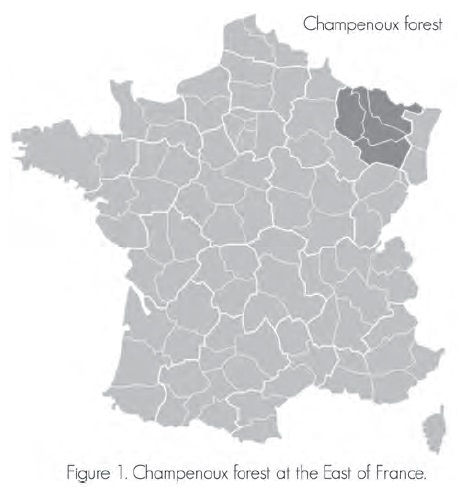
<body><![CDATA[<p align="justify"><font face="verdana" size="2">Additionally, some tree species (e.g. <i>Pinus</i> spp., <i>Acer pseudoplatanus</i> L. and <i>Tilia cordata</i> Mill.) are able to accumulate significant amounts of neutral lipids in their woody tissue, with concentrations even exceeding those in TNC (H&ouml;ll, 1997; Hoch <i>et al.,</i> 2003). Sinnott (1918) classified these species as 'fat&#45;trees' to separate them from those in which TNC serves as the main carbon storage form ('starch&#45;trees').</font></p>  	    <p align="justify"><font face="verdana" size="2">The last category of C compounds concerns storage proteins and amino acids. It has long been known that in trees, especially deciduous, nitrogen containing compounds are stored annually in the bark at leaf fall and are subsequently mobilized for re&#45;growth in spring (Kramer and Kozlowski, 1979). In general terms, nitrogen is stored as both amino acids and proteins in perennial organs (Dickson, 1989). Amino acids may constitute forms of nitrogen immobilization, particularly those containing high N e.g. arginine, asparagine and proline (Dickson, 1989; Nabais <i>et al.,</i> 2005). Among soluble proteins, several can play a role in seasonal nitrogen cycling (Terziev <i>et al.,</i> 1997). These soluble proteins, specialized in storage of nitrogen during Autumn and remobilised in Spring, are named Vegetative Storage Proteins (VSP). VSP were first defined as a major component of the over wintering reserves in apple tree (Tromp and Ovaa, 1971); since then, the existence of VSP has been reported in several broadleaved woody species such as <i>Populus</i> spp. (Stepien, 1992; Sauter and Neuman, 1994; Black <i>et al,</i> 2001; Cooke and Weih, 2005), Hevea brasiliensis M&uuml;ll. (Tian <i>et al.,</i> 1998), Swietenia macrophylla King (Tian <i>et al.,</i> 2003) and <i>Prunus persica</i> L. (Gomez and Faurobert, 2002).</font></p>  	    <p align="justify"><font face="verdana" size="2">As nitrogen content represents less than 1% of dry matter of a tree (Sauter <i>et al.,</i> 1989), nitrogenous reserves are generally considered to be of less importance in comparison with carbohydrate reserves. However, the C contained in nitrogenous reserves would be relevant in the carbon budget of the tree. C in soluble proteins could contribute, with TNC, to the carbon pool needed for winter maintenance respiration and leaf construction. For this reason, the objectives of the present work were: (1) to characterize, by using the samples of Barbaroux <i>et al.</i> (2003), the distribution of total soluble protein within adult oak and beech trees at the period of maximum and minimum TNC content, (2) to quantify soluble protein amounts at the tree level, (3) to compare soluble protein status between the two species and (4) to estimate their contribution to the carbon balance of the two species.</font></p>     <p align="justify"><font face="verdana" size="2">&nbsp;</font></p> 	    <p align="justify"><font face="verdana" size="2"><b>MATERIALS AND METHODS</b></font></p>  	    <p align="justify"><font face="verdana" size="2">Sites and stands description</font></p>  	    <p align="justify"><font face="verdana" size="2">Pure beech and oak stands were located in two state&#45;owned forests managed for natural regeneration, situated 60 km away from each other. The beech stand belongs to the forest of Hesse in Moselle, France (48&deg;40'27'' N, 7&deg;03'53'' E, altitude 305 m) while the oak stand was in the Champenoux forest, located in 15 km east of Nancy, France (48&deg;44' N, 6&deg;14' E, altitude 237 m, <a href="#f1">Figure 1</a>). In 1999, common beech <i>(Fagus sylvatica)</i> stand was 35&#45;year&#45;old, while the oak <i>(Quercus petraea)</i> stand was of 45&#45;year&#45;old on average. Beech stand density was 3800 stems ha<sup>&#45;1</sup>, a basal area of 19.6 m<sup>2</sup> ha<sup>&#45;1</sup>. Height and circumference at 1.30 m from the soil were 12.7 m and 22.7 cm average, respectively. The oak stand density was 2531 stems ha<sup>&#45;1</sup> with a basal area of 23.67 m<sup>2</sup> ha<sup>&#45;1</sup>. Oak dominant height was 17 m and average circumference at 1.30 m from the soil was 36.4 cm. Soils at both sites were luvisol (brown soil leached with pseudogley) with mull humus and high mineral fertility (Br&eacute;da et al., 1995; Granier <i>et al.,</i> 2000). Climate is of the oceanic type with continental influence. Average rainfall was 820 mm and 744 mm in Hesse and Champenoux respectively, and annual average temperature was 9.2&deg;C for both sites.</font></p>  	    <p align="center"><font face="verdana" size="2"><a name="f1"></a></font></p>  	    <p align="center"><font face="verdana" size="2"><img src="/img/revistas/remcf/v1n1/a9f1.jpg"></font></p>  	    <p align="justify"><font face="verdana" size="2">Plant material</font></p>  	    ]]></body>
<body><![CDATA[<p align="justify"><font face="verdana" size="2">Study one.&#45; The aim of this study was to quantify total amount of soluble protein in adult trees of oaks and beeches. The six dominant trees per species were the ones previously harvested for carbohydrate estimations (Barbaroux <i>et al.,</i> 2003). Three trees were harvested in Autumn during leaf fall (October 10<sup>th</sup> to 13<sup>th</sup>, 1999 for oak and November 2<sup>nd</sup> to 4<sup>th</sup>, 1999 for beech) and the three remaining trees were felled the following Spring after leaves were fully expanded (June 1<sup>st</sup> &#45; 7<sup>th</sup>, 2000). These dates correspond to maximum and minimum total carbohydrate reserve concentrations as determined in a previous non&#45;destructive study in the same stands (Barbaroux and Br&eacute;da, 2002).</font></p>  	    <p align="justify"><font face="verdana" size="2">Tree samples were taken from various organs (stem, branches and twigs, coarse and fine roots) and at several positions in each organ. Disk&#45;like samples (1 to 2 cm in longitudinal thickness) were taken from stem heights of 0, 1.3, 3, 6, 9, 12 and 15 m (for oak only). Additional samples were taken from six lateral branches at different heights of the crown.</font></p>  	    <p align="justify"><font face="verdana" size="2">Three segments from each branch were analysed: near the insertion to the stem, at the extremity of the branches (twigs from the last two growing seasons, called twigs from the current year V of the previous year ''n&#45;1") and in the middle of these two points. Furthermore, samples were collected from two lateral roots from each of the three diameter classes: fine roots (&#8709; &lt; 2 mm), medium roots (&#8709; &gt; 5 mm). The medium root category was not sampled for oak as they were gathered with coarse roots for allometric relationship to cpmpute below ground biomass.</font></p>      <p align="justify"><font face="verdana" size="2">For coarse roots, sample discs (5 to 10 cm in longitudinal thickness) were spread over three distances from the stump:15 to 30 cm, 70 to 100 cm and 150 to 250 cm. To scale from wood sample to total tree, the biomass of each tree compartment was measured as described by Barbaroux <i>et al.</i> (2003). As the total amount of C stored in proteins highly epends on the total tree biomass, with bigger trees having the bigger total C reserve pools. For the interspecific comparison, the relative amounts will be presented for the same tree biomass (e.g. g C from proteins per kg of trees biomass).</font></p>  	    <p align="justify"><font face="verdana" size="2">Study two.&#45; The aim of this monitoring was to compare seasonal dynamics of total soluble proteins and TNC reserves. Bud development was visually assessed every second day during Spring 1998. A six&#45;stages scale (dormant winter buds, note = 0, swollen uds, note = 3, broken buds, note = 4, just&#45;unfolded leaves, note = 6, unfolded leaves, note=9, developed leaves with elongation of twigs, note = 10) was used to note the proportion of branches in each class for each tree. Observations were carried out on the upper part of the crown.</font></p>  	    <p align="justify"><font face="verdana" size="2">The bud&#45;burst index ranged from 0 to 10 and was computed as the average note of the 15 dominant trees (Br&eacute;da and Granier, 1996). Bud break was achieved when the average index for the stand ranked the note 8. Afterwards leaf expansion started. Leaf fall was dated from litter fall collection during Autumn; it was achieved when 90% of total stand leaf area index was collected, the remaining leaves staying on the tree up to the next Spring. Seasonal monitoring of total soluble proteins was studied in fine branches represented by the two last annual twigs which were harvested on upper branches drawn by gun, each month, from April 1998 to February 1999.</font></p>  	    <p align="justify"><font face="verdana" size="2">For each of the 9 sampling dates, two branch samples from upper crown were collected per tree. Three trees per species were sampled. Leaves and buds were removed from analysis because leaves represent an organ of temporary storage in the day (Trethewey and Smith, 2000). Sampling was carried&#45;out between 11 h in the morning and 15 h in the afternoon on both sites as described in Barbaroux and Br&eacute;da (2002), to take into account possible variations of reserve contents caused by daily fluctuations.</font></p>  	    <p align="justify"><font face="verdana" size="2">For both sampling designs, tissue sections were weighed immediately after cutting <i>(i.e.</i> fresh weight), frozen and stored at &#45;20&deg;C, until freeze&#45;drying. Dry weight was measured after freeze drying for one week. For oaks, heartwood was removed from stem sections with a saw. Entire samples were cut in small pieces with a saw and grounded twice with a Cyclotec 1093 Sample Mill (Tecator, H&ouml;gan&auml;s, Sweden).</font></p>  	    <p align="justify"><font face="verdana" size="2">Extraction of total soluble proteins</font></p>  	    <p align="justify"><font face="verdana" size="2">Total soluble protein content (g 100 g<sup>&#45;1</sup> DM) was measured in each sample. Plant material powder (10 mg DM) was ground at 4&deg;C with 2mL extraction buffer (Na<sub>2</sub>HPO<sub>4</sub>, 0.1 M, KHHfO, 5 mM, DTT, 0.3% (m/v) PEG and 13 mg of PVP 20,000, pH 7.38 at 4&deg;C) in an Eppendorf tube, using a bulk crusher (Retsch MM 301 ,Gmbh and Co, Germany) twice during 45 seconds. The mixture was centrifuged at 12,000 g for 15 min at 4&deg;C. The supernatant was collected. Total soluble proteins were quantified colorimetrically at 595 nm as described in the Bradford (1976) method, using the Coomassie Blue G 250 (Bio&#45;Rad, 500&#45;0006), with bovine serum albumin as standard.</font></p>  	    ]]></body>
<body><![CDATA[<p align="justify"><font face="verdana" size="2">Assuming that proteins contain about 22.6% of N (Yeoh and Wee, 1994) and according to the N content determined by Barbaroux <i>et al.</i> (2003) in the various organs, N&#45;Protein contribution to total N was calculated. The total amount of C&#45;protein for each tree was counted too by taking the biomass of each tree compartment and from the assumption that, for protein and amino acids, 3.15 g of C were associated with each g of N (Gebbing <i>et al.,</i> 1998).</font></p>  	    <p align="justify"><font face="verdana" size="2">Statistical analyses</font></p>  	    <p align="justify"><font face="verdana" size="2">Data were analysed by one, two or three ways analysis of variance (ANOVA StatView&reg; 5, SAS Institute Inc.). Unless otherwise mentioned, dates, organs or species differences were considered significant if &lt; 0.05.</font></p>     <p align="justify"><font face="verdana" size="2">&nbsp;</font></p> 	    <p align="justify"><font face="verdana" size="2"><b>RESULTS AND DISCUSSION</b></font></p>  	    <p align="justify"><font face="verdana" size="2">Total soluble protein concentrations according to species, organs and dates.</font></p>  	    <p align="justify"><font face="verdana" size="2">Differences in soluble protein concentrations among species/ site (species and site are confounded) are significant whatever the considered organ (<a href="/img/revistas/remcf/v1n1/a9t1.jpg" target="_blank">Table 1</a>). Oak had higher protein concentration than beech for all organs (<a href="/img/revistas/remcf/v1n1/a9f2.jpg" target="_blank">Figure 2</a>): soluble protein concentrations were nearly twice as high in oak (0.75 g. 100 g<sup>&#45;1</sup> DM) compared to beech (0.42 g. 100 g<sup>&#45;1</sup> DM). Our values are comparable to results find by Sauter and Van Cleve (1994): about 6 2g/mg DM in poplar wood, by Marmann <i>et al.</i> (1997): about 4 mg/g DM in woody organs of <i>Fraxinus excelsior</i> L. and by Gomez and Faurobert (2002): about 3 mg/g DM in parenchyma of <i>Prunus persica</i> (L.) Batsch. shoots. Such differences between oak and beech species were also reported for carbohydrate concentrations in all organs (Barbaroux and Br&eacute;da, 2002; Barbaroux <i>et al.,</i> 2003).</font></p>  	    <p align="justify"><font face="verdana" size="2">The effects of species (oak <i>vs.</i> beech, with site effect), date (October <i>vs.</i> June) and organs (coarse and fine roots, base and middle of branches, twigs from current and past years, stem section at 0, 1.3, 5, 6, 9, 12 m height) are shown. Sample numbers per organ were 295 branches, 137 for roots and 89 for stem.</font></p>  	    <p align="justify"><font face="verdana" size="2">By contrast, Barbaroux <i>et al.</i> (2003) did not find differences between the two species for nitrogen content, except in branches where oak nitrogen content was twice that of oak compared to beech. Assuming that proteins contain about 22.6% N (Yeoh and Wee, 1994) and according to the N content determined by Barbaroux <i>et al.</i> (2003) in the different organs, N&#45;Protein contribution to total N was calculated. N&#45;Protein represents the main part of total N (<a href="/img/revistas/remcf/v1n1/a9t2.jpg" target="_blank">Table 2</a>) especially for oak: in stem (91 and 69% of total N in October 1999 and June 2000, respectively) and in roots (59% of total N). By contrast, in oak branches, N&#45;Protein represents only 26&#45;39% of total N. In beech organs, the contribution of N&#45;Protein to total N was also particularly low, about 29% in stem, 19% in roots and only 17% in branches, leading to the hypothesis that other N&#45;compounds contribute to total N in these organs. In a same way, the lowest contribution of N&#45;protein to total N in oak stems found in June compared with October, could result from an involvement of other N compounds during Spring reactivation. N compounds differ with plant species, plant development stage and season of the year (Tromp and Ovaa, 1985). In perennial plants, nitrogen is stored both in protein and in soluble amino compounds. Ureides and amides with low carbon/nitrogen ratios are considered efficient forms of storing and transporting nitrogen in respect to required carbon (Dickson, 1989). There is still controversy over whether amino compounds or proteins are more important. As in the case with oak stems in this study, Kang and Titus (1980) found about 90% of the nitrogen in protein and about 10% in amino compounds in bark tissues of apple. But the relative proportions of each compound varied with the season, part of the tree and fertilization (Dickson, 1989). More recently, Marmann <i>et al.</i> (1997) found that soluble protein N represents about 44% and 19% of total N concentration in the stem and fine roots, respectively, of three&#45;year&#45;old seedlings of <i>Fraxinus excelsior.</i></font></p>  	    <p align="justify"><font face="verdana" size="2">The vertical distribution of soluble protein concentrations exhibits a similar pattern in oak and beech, with an increase in terminal parts of the tree, fine roots and annual twigs (<a href="/img/revistas/remcf/v1n1/a9f2.jpg" target="_blank">Figure 2</a>), whatever the date.</font></p>  	    ]]></body>
<body><![CDATA[<p align="justify"><font face="verdana" size="2">The concentration is stable within the stem. Thus, younger parts of stem, twigs and fine roots exhibited higher total soluble protein concentrations than the older organs. When the distribution of proteins was investigated in the stem, roots and branches of an 8&#45;year&#45;old poplar tree, the highest content was also found consistently in the youngest parts (Sauter <i>et al.,</i> 1989). The present result agrees with those obtained in the same samples for TNC distributions (Barbaroux <i>et al,</i> 2003) and reflects the demand of both young shoots and roots for carbohydrates and soluble proteins for growth (Lacointe <i>et al.,</i> 1993).</font></p>  	    <p align="justify"><font face="verdana" size="2">Surprisingly, only few differences are observed between October 1999and June 2000 in samples of both species (<a href="/img/revistas/remcf/v1n1/a9f2.jpg" target="_blank">Figure 2</a> and <a href="/img/revistas/remcf/v1n1/a9t1.jpg" target="_blank">Table 1</a>) except that the youngest twigs have a higher concentration in June than in October, probably reflecting the growth demand previously mentioned. As no change was found for soluble protein concentrations in perennial organs between the two dates, whereas TNC storage was maximal in October and minimal in June (Barbaroux <i>et al.,</i> 2003) in the same samples, the hypothesis that the chosen sampling dates (October and June) for TNC did not correspond to the extreme dates of protein concentrations was tested.</font></p>  	    <p align="justify"><font face="verdana" size="2">This assumption was strengthened by the seasonal changes in protein content in the literature for poplar, by Sauter and Witt (1997), and for peach tree, by Gomez and Faurobert (2002). In these cases, there was no difference in protein content between June and October whereas February to March instead of October was the date for maximal protein concentrations. In our case, samples from oak and beech branches (where seasonal dynamics would be the highest) collected monthly in 1998 were used to determine more precisely seasonal variations of total soluble protein concentrations.</font></p>  	    <p align="justify"><font face="verdana" size="2">Oak and beech exhibited an opposite pattern during Spring (<a href="/img/revistas/remcf/v1n1/a9f3.jpg" target="_blank">Figure 3</a>). In beech branches, it increased gradually and significantly from April to June, while, in oak, it decreased continuously from maximal concentration in April until minimum concentration in August. Minimum and maximum total soluble proteins concentrations dates were not similar to those for total non carbohydrate reserves (minimum in June and maximum in October). Total soluble proteins concentration changes, preceding that of TNC in Spring, can be used as an early marker of Spring reactivation (Gomez and Faurobert, 2002).</font></p>  	    <p align="justify"><font face="verdana" size="2">These early qualitative changes could mainly result from redistribution inside the tree, with exchanges among tree compartments. They are, however, not enough to discriminate the N used for Spring growth resulting either from current uptake or remobilization from storage organs. The use of <sup>15</sup>N labeled fertilizer is necessary to investigate this difference (Millard, 1996). However, for technical reasons, such experiments have been restricted to younger trees due to difficulties in <sup>15</sup>N labeling at the forest scale. In oak saplings, <sup>15</sup>N x <sup>13</sup>C labeling experiment at the end of the growing season clearly showed that about half of the <sup>15</sup>N stored is used for the growth of the new organs during the following Spring whereas only 20% of <sup>13</sup>C stored is necessary (Vizoso, 2004).</font></p>  	    <p align="justify"><font face="verdana" size="2">Budburst (open triangles) is visually assessed on 30 trees from each species and calculated according to a six stages scale (see material and methods for more details).Up to now, no particular Vegetative Storage Protein (VSP) was identified in both oak and beech, while several proteins were observed for other tree species as nitrogen storage form (Wetzel and Greenwood, 1991). However, the contribution of VSP to the remobilization of stored N remains unclear (Gomez and Faurobert, 2002). Studies have shown considerable variability between species and dormant tissues. Indeed, the percentage of VSP among total protein varies between 15% in <i>Pseudotsuga menziesii</i> (Mirb.) Franco (Roberts <i>et al,</i> 1991 ), 25% in <i>Populus</i> sp. (Langheinrich and Tischner, 1991 ) and up to 70% in <i>Populus</i> sp. wood (Sauter <i>et al,</i> 1988). This study analysed only the total soluble proteins, which are not all vegetative storage proteins (VSP).</font></p>  	    <p align="justify"><font face="verdana" size="2">The study we reported here could not give specific results about VSP as the sampling method (date selections, sample conservation, bark separation ...) did not allow a correct VSP description.</font></p>  	    <p align="justify"><font face="verdana" size="2">Total soluble protein and C&#45;protein quantifications at tree level</font></p>  	    <p align="justify"><font face="verdana" size="2">Oak and beech concentrations in soluble proteins among tree compartments are presented in <a href="/img/revistas/remcf/v1n1/a9f4.jpg" target="_blank">Figure 4a</a>. Once again, concentrations are higher in oak than in beech, in spite of the organ. The highest concentration is found in the fine roots of oak trees (1.8&#45;1.9 g. 100g<sup>&#45;1</sup> DM) and with the exception of medium roots of beech, there is no difference between October and June. The highest differences among tree compartment were found in oak. Total soluble protein concentrations are 10 times lower than total non structural carbohydrates &#91;(10&#45;16g.100g<sup>&#45;1</sup>DM (Barbaroux <i>et al.</i> 2003)&#93; confirming a higher contribution of non structural carbohydrate than that of soluble proteins to dry matter constitution.</font></p>  	    <p align="justify"><font face="verdana" size="2">The aim of the present work was to complete the carbon budget at tree level including other than carbohydrate reserve C storage pool.</font></p>  	    ]]></body>
<body><![CDATA[<p align="justify"><font face="verdana" size="2">The total amount of C&#45;proteins for each tree was calculated by taking into account the biomass of each tree compartment and using the assumption that, for protein and amino acids, 3.15 g of C was associated with each g of N (Gebbing <i>et al.,</i> 1998).</font></p>  	    <p align="justify"><font face="verdana" size="2">In both species, C&#45;protein quantities appeared to be determined by organ biomass, the stem being the biggest storage compartment of C&#45;proteins. About 500 g of C&#45;proteins were measured in oak whatever the date while only 250 g of C&#45;protein in beech (<a href="/img/revistas/remcf/v1n1/a9f4.jpg" target="_blank">Figure 4b</a>) Differences in biomass between the two species can only partly explain the differences in C&#45;protein quantities between oak and beech. Taking tree biomass into account, C&#45;TNC corresponds to 15.3 gC per kg DM and C&#45;proteins 0.48 gC per kg DM in oak, while zero for beech (<a href="/img/revistas/remcf/v1n1/a9t3.jpg" target="_blank">Table 3</a>).</font></p>  	    <p align="justify"><font face="verdana" size="2">Looking for total tree carbon budget, the absolute amount of C stored as soluble proteins is not negligible as it represents 28 and 21% of TNC gC in beech and oak, respectively.</font></p>  	    <p align="justify"><font face="verdana" size="2">The difference between October and June in C&#45;protein amounts which corresponds to the C&#45;protein reserves used between these two dates represents only 75 g in oak and zero in beech (<a href="/img/revistas/remcf/v1n1/a9t3.jpg" target="_blank">Table 3</a>) whereas non structural carbohydrate reserves were estimated to 2400 gC and 880 gC in oak and beech, respectively (Barbaroux <i>et al,</i> 2003). Thus, in this study, the decrease in C&#45;proteins amount calculated between October and June in oak represent 2% of the deficit of carbon estimated by Barbaroux <i>et al.</i> (2003).</font></p>  	    <p align="justify"><font face="verdana" size="2">As proposed before, dates of minimum and maximum total soluble proteins concentrations seem to be not similar to those for total non carbohydrate reserves (minimum in June and maximum in October) and this would explain the low values obtained. Sauter and Van Cleve (1990; 1994) already mentioned a seasonal pattern of proteins clearly different from starch in poplar. They reported a first, rapid and prominent decrease in Spring, still parallels the mobilization of starch during outgrowth of buds. Finally, the involvement for other C&#45;reserve materials has to be investigated, especially for beech. Neither amino&#45;acids nor amides have been included in the present calculation which may also contribute in a small extent to potential carbon source. For nitrogen needs in spring, amino&#45;acids and amides are potential sources in competition with new nitrate uptake. Such a partitioning would be better quantified by using a labeling experiment.</font></p>     <p align="justify"><font face="verdana" size="2">&nbsp;</font></p> 	    <p align="justify"><font face="verdana" size="2"><b>CONCLUSIONS</b></font></p>  	    <p align="justify"><font face="verdana" size="2">The actual results show the distribution of total soluble proteins and TNC in oak and beech trees, and their role in the carbon budget. The two species had a similar intra&#45;tree distribution of total soluble proteins. Furthermore, oak contained higher protein and carbohydrate concentrations than beech across all organs. In terms of an exhaustive assessment for all mobile fractions of a tree, the analysis of soluble N&#45;compounds is very important because it is strongly coupled to carbon metabolism. A strong of result lies in its novel assessment of soluble proteins as a component of the carbon budget. However, the significance of this compound class with respect to C&#45;reserve storage may be arguable. Concentration in proteins are ten times lower than TNC, but the absolute amount of C stored as protein contributes significantly to total tree carbon budget. Soluble proteins are of key importance to nitrogen metabolism especially during Spring flushing and budburst.</font></p>         <p align="justify"><font face="verdana" size="2">&nbsp;</font></p>  	    <p align="justify"><font face="verdana" size="2"><b>ACKNOWLEDGEMENTS</b></font></p>  	    ]]></body>
<body><![CDATA[<p align="justify"><font face="verdana" size="2">The Consejo Nacional de Ciencia y Tecnologia from Mexico, Soci&eacute;t&eacute; Fran&ccedil;aise d'Exportation des Resources Educatives and Forest Department of INRA are gratefully acknowledged for their financial supports for the research conducted in France by L. Valenzuela Nunez. The authors also thank H&eacute;l&egrave;ne Revol from Henri Poincar&eacute; University &#45; Nancy for her contribution to protein in branches analysis and C&eacute;cile Barbaroux who prepared most of the wood samples that were used in these studies.</font></p>  	    <p align="justify"><font face="verdana" size="2">&nbsp;</font></p>  	    <p align="justify"><font face="verdana" size="2"><b>REFERENCES</b></font></p>  	    <!-- ref --><p align="justify"><font face="verdana" size="2">Barbaroux C N. Br&eacute;da and E. Dufr&ecirc;ne. 2003. Distribution of above&#45;ground and below&#45;ground carbohydrate reserves in adult trees of two contrasting broad&#45;leaved species <i>(Quercus petraea</i> and <i>Fagus sylvatica).</i> The New Phytologist 157: 605&#45;615.    &nbsp;&nbsp;&nbsp;&nbsp;&nbsp;&nbsp;&nbsp;&nbsp;[&#160;<a href="javascript:void(0);" onclick="javascript: window.open('/scielo.php?script=sci_nlinks&ref=7933427&pid=S2007-1132201000010000900001&lng=','','width=640,height=500,resizable=yes,scrollbars=1,menubar=yes,');">Links</a>&#160;]<!-- end-ref --></font></p>  	    <!-- ref --><p align="justify"><font face="verdana" size="2">Barbaroux C. and N. Br&eacute;da. 2002. Contrasting distribution and seasonal dynamics of carbohydrate reserves in stem wood of adult ring&#45;porous sessile oak and diffuse porous beech trees. Tree Physiology 22: 1201 &#45; 1210.    &nbsp;&nbsp;&nbsp;&nbsp;&nbsp;&nbsp;&nbsp;&nbsp;[&#160;<a href="javascript:void(0);" onclick="javascript: window.open('/scielo.php?script=sci_nlinks&ref=7933429&pid=S2007-1132201000010000900002&lng=','','width=640,height=500,resizable=yes,scrollbars=1,menubar=yes,');">Links</a>&#160;]<!-- end-ref --></font></p>  	    <!-- ref --><p align="justify"><font face="verdana" size="2">Black B. L., C. M. Parmentier&#45;Line, L. H. Fuchigami and G. D. Coleman. 2001. Ecotypic and genetic variations in poplar bark storage protein gene expression and accumulation. Tree Physiology 21: 1289&#45;1297.    &nbsp;&nbsp;&nbsp;&nbsp;&nbsp;&nbsp;&nbsp;&nbsp;[&#160;<a href="javascript:void(0);" onclick="javascript: window.open('/scielo.php?script=sci_nlinks&ref=7933431&pid=S2007-1132201000010000900003&lng=','','width=640,height=500,resizable=yes,scrollbars=1,menubar=yes,');">Links</a>&#160;]<!-- end-ref --></font></p>  	    <!-- ref --><p align="justify"><font face="verdana" size="2">Bradford, M. 1976. A rapid and sensitive method for the quantification of microgram quantities of proteins utilizing the principle of protein&#45;dye binding. Annals of Biochemistry 72: 248&#45;254.    &nbsp;&nbsp;&nbsp;&nbsp;&nbsp;&nbsp;&nbsp;&nbsp;[&#160;<a href="javascript:void(0);" onclick="javascript: window.open('/scielo.php?script=sci_nlinks&ref=7933433&pid=S2007-1132201000010000900004&lng=','','width=640,height=500,resizable=yes,scrollbars=1,menubar=yes,');">Links</a>&#160;]<!-- end-ref --></font></p>  	    <!-- ref --><p align="justify"><font face="verdana" size="2">Br&eacute;da N., A. Granier, F. Barataud and C. Moyne. 1995. Soil water dynamics in an oak stand. Part I: Soil moisture, water potentials and water uptake by roots. Plant and Soil 172: 17&#45;27.    &nbsp;&nbsp;&nbsp;&nbsp;&nbsp;&nbsp;&nbsp;&nbsp;[&#160;<a href="javascript:void(0);" onclick="javascript: window.open('/scielo.php?script=sci_nlinks&ref=7933435&pid=S2007-1132201000010000900005&lng=','','width=640,height=500,resizable=yes,scrollbars=1,menubar=yes,');">Links</a>&#160;]<!-- end-ref --></font></p>  	    <!-- ref --><p align="justify"><font face="verdana" size="2">Br&eacute;da N. and A. Granier. 1996. Intra&#45; and interannual variations of transpiration, leaf area index and radial growth of a sessile oak stand <i>(Quercus petraea).</i> Annales des Sciences Foresti&egrave;res 53:521&#45;536.    &nbsp;&nbsp;&nbsp;&nbsp;&nbsp;&nbsp;&nbsp;&nbsp;[&#160;<a href="javascript:void(0);" onclick="javascript: window.open('/scielo.php?script=sci_nlinks&ref=7933437&pid=S2007-1132201000010000900006&lng=','','width=640,height=500,resizable=yes,scrollbars=1,menubar=yes,');">Links</a>&#160;]<!-- end-ref --></font></p>  	    <!-- ref --><p align="justify"><font face="verdana" size="2">Brinson K. and P. M. Dey. 1985. Polysaccharides containing xylose, arabinose and galactose in higher plants. <i>In:</i> Dey P. M. and R. A. Dixon (Eds). Biochemistry of storage carbohydrates in green plants. pp. 349&#45;371. Academic Press Ltd. London, UK. 378 p.    &nbsp;&nbsp;&nbsp;&nbsp;&nbsp;&nbsp;&nbsp;&nbsp;[&#160;<a href="javascript:void(0);" onclick="javascript: window.open('/scielo.php?script=sci_nlinks&ref=7933439&pid=S2007-1132201000010000900007&lng=','','width=640,height=500,resizable=yes,scrollbars=1,menubar=yes,');">Links</a>&#160;]<!-- end-ref --></font></p>  	    <!-- ref --><p align="justify"><font face="verdana" size="2">Cerasoli S., P. Maillard, A. Scartazza, E. Brugnoli, M. Chaves M. and S. Pereira J. 2004a. Carbon and nitrogen winter storage and remobilisation during seasonal flush growth in two&#45;years&#45;old cork oak <i>(Quercus suber</i> L.) saplings. Annals of Forest Science 61: 721&#45;729.    &nbsp;&nbsp;&nbsp;&nbsp;&nbsp;&nbsp;&nbsp;&nbsp;[&#160;<a href="javascript:void(0);" onclick="javascript: window.open('/scielo.php?script=sci_nlinks&ref=7933441&pid=S2007-1132201000010000900008&lng=','','width=640,height=500,resizable=yes,scrollbars=1,menubar=yes,');">Links</a>&#160;]<!-- end-ref --></font></p>  	    <!-- ref --><p align="justify"><font face="verdana" size="2">Cerasoli S., A. Scartazza, E. Brugnoli, M. Chaves M. and S. Pereira J. 2004b. Effects of partial defoliation on carbon and nitrogen partitioning and photosynthetic carbon uptake by two&#45;year&#45;old cork oak <i>(Quercus suber)</i> saplings. Tree Physiology 24: 83&#45;90.    &nbsp;&nbsp;&nbsp;&nbsp;&nbsp;&nbsp;&nbsp;&nbsp;[&#160;<a href="javascript:void(0);" onclick="javascript: window.open('/scielo.php?script=sci_nlinks&ref=7933443&pid=S2007-1132201000010000900009&lng=','','width=640,height=500,resizable=yes,scrollbars=1,menubar=yes,');">Links</a>&#160;]<!-- end-ref --></font></p>  	    <!-- ref --><p align="justify"><font face="verdana" size="2">Chapin, F. S., E. D. Schultze and H. A. Mooney. 1990. The ecology and economics of storage in plants. Annual Review of Ecology and Systematics 21: 423&#45;447.    &nbsp;&nbsp;&nbsp;&nbsp;&nbsp;&nbsp;&nbsp;&nbsp;[&#160;<a href="javascript:void(0);" onclick="javascript: window.open('/scielo.php?script=sci_nlinks&ref=7933445&pid=S2007-1132201000010000900010&lng=','','width=640,height=500,resizable=yes,scrollbars=1,menubar=yes,');">Links</a>&#160;]<!-- end-ref --></font></p>  	    <!-- ref --><p align="justify"><font face="verdana" size="2">Cooke, J. E. K. and M. Weih. 2005. Nitrogen storage and seasonal nitrogen cycling in <i>Populus:</i> bridging molecular physiology and ecophysiology. The New Phytologist 167:19&#45;30.    &nbsp;&nbsp;&nbsp;&nbsp;&nbsp;&nbsp;&nbsp;&nbsp;[&#160;<a href="javascript:void(0);" onclick="javascript: window.open('/scielo.php?script=sci_nlinks&ref=7933447&pid=S2007-1132201000010000900011&lng=','','width=640,height=500,resizable=yes,scrollbars=1,menubar=yes,');">Links</a>&#160;]<!-- end-ref --></font></p>  	    <!-- ref --><p align="justify"><font face="verdana" size="2">Dickson, R. E. 1989. Carbon and nitrogen allocation in trees. Annales des Sciences Foresti&egrave;res 46 suppl 631s &#45; 647s.    &nbsp;&nbsp;&nbsp;&nbsp;&nbsp;&nbsp;&nbsp;&nbsp;[&#160;<a href="javascript:void(0);" onclick="javascript: window.open('/scielo.php?script=sci_nlinks&ref=7933449&pid=S2007-1132201000010000900012&lng=','','width=640,height=500,resizable=yes,scrollbars=1,menubar=yes,');">Links</a>&#160;]<!-- end-ref --></font></p>  	    <!-- ref --><p align="justify"><font face="verdana" size="2">Garrote G., H. Dominguez and J. C. Parajo. 1999. Hydrothermal processing of lignocellulosic materials. Holz Als Roh&#45;und Werkstoff 57: 191&#45;202.    &nbsp;&nbsp;&nbsp;&nbsp;&nbsp;&nbsp;&nbsp;&nbsp;[&#160;<a href="javascript:void(0);" onclick="javascript: window.open('/scielo.php?script=sci_nlinks&ref=7933451&pid=S2007-1132201000010000900013&lng=','','width=640,height=500,resizable=yes,scrollbars=1,menubar=yes,');">Links</a>&#160;]<!-- end-ref --></font></p>  	    <!-- ref --><p align="justify"><font face="verdana" size="2">Gebbing T., H. Schnyder and W. K&uuml;hbauch. 1998. Carbon mobilization in shoot parts and roots of wheat during grain filling: assessment by <sup>3</sup>C/<sup>2</sup>C steady&#45;state labelling, growth analysis and balance sheets of reserves. Plant, Cell and Environment 21: 301&#45;313.    &nbsp;&nbsp;&nbsp;&nbsp;&nbsp;&nbsp;&nbsp;&nbsp;[&#160;<a href="javascript:void(0);" onclick="javascript: window.open('/scielo.php?script=sci_nlinks&ref=7933453&pid=S2007-1132201000010000900014&lng=','','width=640,height=500,resizable=yes,scrollbars=1,menubar=yes,');">Links</a>&#160;]<!-- end-ref --></font></p>  	    <!-- ref --><p align="justify"><font face="verdana" size="2">Gomez, L. and M. Faurobert. 2002. Contribution of vegetative storage proteins to seasonal nitrogen variations in the young shoots of peach trees <i>(Prunus persica</i> L. Batsch.). Journal of Experimental Botany 379: 2431&#45;2439.    &nbsp;&nbsp;&nbsp;&nbsp;&nbsp;&nbsp;&nbsp;&nbsp;[&#160;<a href="javascript:void(0);" onclick="javascript: window.open('/scielo.php?script=sci_nlinks&ref=7933455&pid=S2007-1132201000010000900015&lng=','','width=640,height=500,resizable=yes,scrollbars=1,menubar=yes,');">Links</a>&#160;]<!-- end-ref --></font></p>  	    <!-- ref --><p align="justify"><font face="verdana" size="2">Granier A., P. Biron and D. Lemoine. 2000. Water balance, transpiration and canopy conductance in two beech stands. Agricultural and Forest Meteorology 100: 291&#45;308.    &nbsp;&nbsp;&nbsp;&nbsp;&nbsp;&nbsp;&nbsp;&nbsp;[&#160;<a href="javascript:void(0);" onclick="javascript: window.open('/scielo.php?script=sci_nlinks&ref=7933457&pid=S2007-1132201000010000900016&lng=','','width=640,height=500,resizable=yes,scrollbars=1,menubar=yes,');">Links</a>&#160;]<!-- end-ref --></font></p>  	    <!-- ref --><p align="justify"><font face="verdana" size="2">Hoch, G., A. Richter and C. Korner. 2003. Non&#45;structural carbon compounds in temperate forest trees. Plant Cell and Environment 26:1067&#45;1081.    &nbsp;&nbsp;&nbsp;&nbsp;&nbsp;&nbsp;&nbsp;&nbsp;[&#160;<a href="javascript:void(0);" onclick="javascript: window.open('/scielo.php?script=sci_nlinks&ref=7933459&pid=S2007-1132201000010000900017&lng=','','width=640,height=500,resizable=yes,scrollbars=1,menubar=yes,');">Links</a>&#160;]<!-- end-ref --></font></p>  	    <!-- ref --><p align="justify"><font face="verdana" size="2">H&ouml;ll, W. 1997. Storage and mobilization of carbohydrates and lipids. <i>In:</i> Rennenberg H, Eschrich W, Ziegler H, eds. Trees &#45; Contribution to modern tree physiology. Leiden, The Netherlands: Backhuys Publishers. pp. 197 &#45; 211.    &nbsp;&nbsp;&nbsp;&nbsp;&nbsp;&nbsp;&nbsp;&nbsp;[&#160;<a href="javascript:void(0);" onclick="javascript: window.open('/scielo.php?script=sci_nlinks&ref=7933461&pid=S2007-1132201000010000900018&lng=','','width=640,height=500,resizable=yes,scrollbars=1,menubar=yes,');">Links</a>&#160;]<!-- end-ref --></font></p>  	    <!-- ref --><p align="justify"><font face="verdana" size="2">Kang S. M. and J. S. Titus. 1980. Qualitative and quantitative changes in nitrogenous compounds in senescing leaf and bark tissues of apple. Physiologia Plantarum 50: 285&#45;290.    &nbsp;&nbsp;&nbsp;&nbsp;&nbsp;&nbsp;&nbsp;&nbsp;[&#160;<a href="javascript:void(0);" onclick="javascript: window.open('/scielo.php?script=sci_nlinks&ref=7933463&pid=S2007-1132201000010000900019&lng=','','width=640,height=500,resizable=yes,scrollbars=1,menubar=yes,');">Links</a>&#160;]<!-- end-ref --></font></p>  	    <!-- ref --><p align="justify"><font face="verdana" size="2">Kramer, P. J. and T. T. Kozlowski. 1979. Physiology of woody plants. Academic Press Inc. New York, NY. USA. 811 p.    &nbsp;&nbsp;&nbsp;&nbsp;&nbsp;&nbsp;&nbsp;&nbsp;[&#160;<a href="javascript:void(0);" onclick="javascript: window.open('/scielo.php?script=sci_nlinks&ref=7933465&pid=S2007-1132201000010000900020&lng=','','width=640,height=500,resizable=yes,scrollbars=1,menubar=yes,');">Links</a>&#160;]<!-- end-ref --></font></p>  	    <!-- ref --><p align="justify"><font face="verdana" size="2">Lacointe A., A. Kajji, F. A. Daudet, P. Archer and J. S. Frossard. 1993. Mobilization of carbon reserves in young walnut trees. Cambium, Production de Bois et D&eacute;veloppement de L'arbre. Colloque, Soci&eacute;t&eacute; Botanique de France, Paris, (FRA), 1992/04/02&#45;03. Acta Botanica Gallica 140: 435&#45;441.    &nbsp;&nbsp;&nbsp;&nbsp;&nbsp;&nbsp;&nbsp;&nbsp;[&#160;<a href="javascript:void(0);" onclick="javascript: window.open('/scielo.php?script=sci_nlinks&ref=7933467&pid=S2007-1132201000010000900021&lng=','','width=640,height=500,resizable=yes,scrollbars=1,menubar=yes,');">Links</a>&#160;]<!-- end-ref --></font></p>  	    <!-- ref --><p align="justify"><font face="verdana" size="2">Langheinrich, U. and R. Tischner. 1991. Vegetative storage proteins in poplar: Induction and characterization of a 32&#45; and a 36&#45;kilodalton polypeptide. Plant Physiology 97: 1017&#45;1025.    &nbsp;&nbsp;&nbsp;&nbsp;&nbsp;&nbsp;&nbsp;&nbsp;[&#160;<a href="javascript:void(0);" onclick="javascript: window.open('/scielo.php?script=sci_nlinks&ref=7933469&pid=S2007-1132201000010000900022&lng=','','width=640,height=500,resizable=yes,scrollbars=1,menubar=yes,');">Links</a>&#160;]<!-- end-ref --></font></p>  	    <!-- ref --><p align="justify"><font face="verdana" size="2">Magel, E., C. Hillinger, W. H&ouml;ll and H. Ziegler. 1997. Biochemistry and physiology of heartwood formation: role of reserve substances. in: Rennenberg H., W. Eschrich, H. Ziegler (Eds.). Trees, Contributions to Modern Tree Physiology. Backhuys Publishers. Leyden, The Netherlands. pp. 477 &#45; 506.    &nbsp;&nbsp;&nbsp;&nbsp;&nbsp;&nbsp;&nbsp;&nbsp;[&#160;<a href="javascript:void(0);" onclick="javascript: window.open('/scielo.php?script=sci_nlinks&ref=7933471&pid=S2007-1132201000010000900023&lng=','','width=640,height=500,resizable=yes,scrollbars=1,menubar=yes,');">Links</a>&#160;]<!-- end-ref --></font></p>  	    <!-- ref --><p align="justify"><font face="verdana" size="2">Marmann P., R. Wendler, P. Millard and H. Heilmeier. 1997. Nitrogen storage and remobilization in ash <i>(Fraxinus excelsior)</i> under field and laboratory conditions. Trees &#45; Structure and Function 11: 298 &#45; 305.    &nbsp;&nbsp;&nbsp;&nbsp;&nbsp;&nbsp;&nbsp;&nbsp;[&#160;<a href="javascript:void(0);" onclick="javascript: window.open('/scielo.php?script=sci_nlinks&ref=7933473&pid=S2007-1132201000010000900024&lng=','','width=640,height=500,resizable=yes,scrollbars=1,menubar=yes,');">Links</a>&#160;]<!-- end-ref --></font></p>  	    <!-- ref --><p align="justify"><font face="verdana" size="2">Millard, P. 1996. Ecophysiology of the internal cycling of nitrogen for tree growth. J. Plant Nutrition and Soil Science 159: 1&#45;10.    &nbsp;&nbsp;&nbsp;&nbsp;&nbsp;&nbsp;&nbsp;&nbsp;[&#160;<a href="javascript:void(0);" onclick="javascript: window.open('/scielo.php?script=sci_nlinks&ref=7933475&pid=S2007-1132201000010000900025&lng=','','width=640,height=500,resizable=yes,scrollbars=1,menubar=yes,');">Links</a>&#160;]<!-- end-ref --></font></p>  	    <!-- ref --><p align="justify"><font face="verdana" size="2">Millard P. and M. F. Proe. 1991. Leaf demography and the seasonal internal cycling of nitrogen in sycamore <i>(Acer pseudoplatanus</i> L.) seedlings in relation to nitrogen supply. The New Phytologist 117: 587 &#45; 596.    &nbsp;&nbsp;&nbsp;&nbsp;&nbsp;&nbsp;&nbsp;&nbsp;[&#160;<a href="javascript:void(0);" onclick="javascript: window.open('/scielo.php?script=sci_nlinks&ref=7933477&pid=S2007-1132201000010000900026&lng=','','width=640,height=500,resizable=yes,scrollbars=1,menubar=yes,');">Links</a>&#160;]<!-- end-ref --></font></p>  	    <!-- ref --><p align="justify"><font face="verdana" size="2">Nabais C., J. Hagemeyer and H. Freitas. 2005. Nitrogen transport in the xylem sap of <i>Quercus ilex:</i> the role of ornithine. Journal of Plant Physiology 162: 603 &#45; 606.    &nbsp;&nbsp;&nbsp;&nbsp;&nbsp;&nbsp;&nbsp;&nbsp;[&#160;<a href="javascript:void(0);" onclick="javascript: window.open('/scielo.php?script=sci_nlinks&ref=7933479&pid=S2007-1132201000010000900027&lng=','','width=640,height=500,resizable=yes,scrollbars=1,menubar=yes,');">Links</a>&#160;]<!-- end-ref --></font></p>  	    <!-- ref --><p align="justify"><font face="verdana" size="2">&Ouml;gren, E. 2000. Maintenance respiration correlates with sugar but not nitrogen concentration in dormant plants. Physiologia Plantarum 108: 295&#45;299.    &nbsp;&nbsp;&nbsp;&nbsp;&nbsp;&nbsp;&nbsp;&nbsp;[&#160;<a href="javascript:void(0);" onclick="javascript: window.open('/scielo.php?script=sci_nlinks&ref=7933481&pid=S2007-1132201000010000900028&lng=','','width=640,height=500,resizable=yes,scrollbars=1,menubar=yes,');">Links</a>&#160;]<!-- end-ref --></font></p>  	    <!-- ref --><p align="justify"><font face="verdana" size="2">Roberts D. R., P. Toivonen and S. M. Mclnnis. 1991. Discrete proteins associated with over wintering of interior spruce and Douglas&#45;fir seedlings. Canadian Journal of Botany 69: 437&#45;44.    &nbsp;&nbsp;&nbsp;&nbsp;&nbsp;&nbsp;&nbsp;&nbsp;[&#160;<a href="javascript:void(0);" onclick="javascript: window.open('/scielo.php?script=sci_nlinks&ref=7933483&pid=S2007-1132201000010000900029&lng=','','width=640,height=500,resizable=yes,scrollbars=1,menubar=yes,');">Links</a>&#160;]<!-- end-ref --></font></p>  	    <!-- ref --><p align="justify"><font face="verdana" size="2">Sauter J. J. and B. Van Cleve. 1990. Biochemical, immunochemical and ultrastructural results on protein storage in poplar wood <i>(Populus x Canadensis</i> 'robusta'). Planta 183: 92&#45;100.    &nbsp;&nbsp;&nbsp;&nbsp;&nbsp;&nbsp;&nbsp;&nbsp;[&#160;<a href="javascript:void(0);" onclick="javascript: window.open('/scielo.php?script=sci_nlinks&ref=7933485&pid=S2007-1132201000010000900030&lng=','','width=640,height=500,resizable=yes,scrollbars=1,menubar=yes,');">Links</a>&#160;]<!-- end-ref --></font></p>  	    <!-- ref --><p align="justify"><font face="verdana" size="2">Sauter J. J. and B. Van Cleve. 1994. Storage, mobilization and interrelations of starch, sugars, protein and fat in the ray storage tissue of poplar trees. Trees 8: 297&#45;304.    &nbsp;&nbsp;&nbsp;&nbsp;&nbsp;&nbsp;&nbsp;&nbsp;[&#160;<a href="javascript:void(0);" onclick="javascript: window.open('/scielo.php?script=sci_nlinks&ref=7933487&pid=S2007-1132201000010000900031&lng=','','width=640,height=500,resizable=yes,scrollbars=1,menubar=yes,');">Links</a>&#160;]<!-- end-ref --></font></p>  	    <!-- ref --><p align="justify"><font face="verdana" size="2">Sauter J. J., B. Van Cleve and K. Appel. 1988. Protein bodies in ray cells of <i>Populus x canadensis</i> Moench 'robusta'. Planta 173: 31&#45;34.    &nbsp;&nbsp;&nbsp;&nbsp;&nbsp;&nbsp;&nbsp;&nbsp;[&#160;<a href="javascript:void(0);" onclick="javascript: window.open('/scielo.php?script=sci_nlinks&ref=7933489&pid=S2007-1132201000010000900032&lng=','','width=640,height=500,resizable=yes,scrollbars=1,menubar=yes,');">Links</a>&#160;]<!-- end-ref --></font></p>  	    <!-- ref --><p align="justify"><font face="verdana" size="2">Sauter J. J., B. Van Cleve and S. Wellenkamp. 1989. Ultrastructural and biochemical results on the localization and distribution of storage proteins in a poplar tree and in twigs of other tree species. Holzforschung 43: 1&#45;6.    &nbsp;&nbsp;&nbsp;&nbsp;&nbsp;&nbsp;&nbsp;&nbsp;[&#160;<a href="javascript:void(0);" onclick="javascript: window.open('/scielo.php?script=sci_nlinks&ref=7933491&pid=S2007-1132201000010000900033&lng=','','width=640,height=500,resizable=yes,scrollbars=1,menubar=yes,');">Links</a>&#160;]<!-- end-ref --></font></p>  	    <!-- ref --><p align="justify"><font face="verdana" size="2">Sauter J. J. and U. Neumann. 1994. The accumulation of storage materials in ray cells of poplar wood <i>(Populus X canadiensis "robusta"):</i> effect of ringing and defoliation. Journal of Plant Physiology 143: 21&#45;26.    &nbsp;&nbsp;&nbsp;&nbsp;&nbsp;&nbsp;&nbsp;&nbsp;[&#160;<a href="javascript:void(0);" onclick="javascript: window.open('/scielo.php?script=sci_nlinks&ref=7933493&pid=S2007-1132201000010000900034&lng=','','width=640,height=500,resizable=yes,scrollbars=1,menubar=yes,');">Links</a>&#160;]<!-- end-ref --></font></p>  	    <!-- ref --><p align="justify"><font face="verdana" size="2">Sauter J. J. y W. Witt. 1997. Structure and function of rays: storage, mobilization, transport. <i>in:</i> Rennenberg, H., W. Eschrich, H. Ziegler (Eds.). Trees, Contributions to Modern Tree Physiology Backhuys Publishers. Leyden, The Netherlands. pp. 117&#45;195.    &nbsp;&nbsp;&nbsp;&nbsp;&nbsp;&nbsp;&nbsp;&nbsp;[&#160;<a href="javascript:void(0);" onclick="javascript: window.open('/scielo.php?script=sci_nlinks&ref=7933495&pid=S2007-1132201000010000900035&lng=','','width=640,height=500,resizable=yes,scrollbars=1,menubar=yes,');">Links</a>&#160;]<!-- end-ref --></font></p>  	    <!-- ref --><p align="justify"><font face="verdana" size="2">Sinnott, E. W. 1918. Factors determining character and distribution of food reserves in woody plants. Botanical Gazette 66, 162&#45;175.    &nbsp;&nbsp;&nbsp;&nbsp;&nbsp;&nbsp;&nbsp;&nbsp;[&#160;<a href="javascript:void(0);" onclick="javascript: window.open('/scielo.php?script=sci_nlinks&ref=7933497&pid=S2007-1132201000010000900036&lng=','','width=640,height=500,resizable=yes,scrollbars=1,menubar=yes,');">Links</a>&#160;]<!-- end-ref --></font></p>  	    <!-- ref --><p align="justify"><font face="verdana" size="2">Stepien, V. 1992. Contribution &agrave; l'&eacute;tude des prot&eacute;ines de r&eacute;serve v&eacute;g&eacute;tatives du peuplier (<i>Populus x euramericana).</i> Th&egrave;se de l'Universit&eacute; de Nancy 1. 147 p.    &nbsp;&nbsp;&nbsp;&nbsp;&nbsp;&nbsp;&nbsp;&nbsp;[&#160;<a href="javascript:void(0);" onclick="javascript: window.open('/scielo.php?script=sci_nlinks&ref=7933499&pid=S2007-1132201000010000900037&lng=','','width=640,height=500,resizable=yes,scrollbars=1,menubar=yes,');">Links</a>&#160;]<!-- end-ref --></font></p>  	    <!-- ref --><p align="justify"><font face="verdana" size="2">Stepien, V. and F. Martin. 1992. Purification, characterization and localization of the bark storage proteins of poplar. Plant Physiology and Biochemistry. 30: 399&#45;407.    &nbsp;&nbsp;&nbsp;&nbsp;&nbsp;&nbsp;&nbsp;&nbsp;[&#160;<a href="javascript:void(0);" onclick="javascript: window.open('/scielo.php?script=sci_nlinks&ref=7933501&pid=S2007-1132201000010000900038&lng=','','width=640,height=500,resizable=yes,scrollbars=1,menubar=yes,');">Links</a>&#160;]<!-- end-ref --></font></p>  	    <!-- ref --><p align="justify"><font face="verdana" size="2">Stepien, V., J. J. Sauter and F. Martin. 1994. Vegetative storage proteins in woody plants. Plant Physiology and Biochemistry. 32:185 &#45; 192.    &nbsp;&nbsp;&nbsp;&nbsp;&nbsp;&nbsp;&nbsp;&nbsp;[&#160;<a href="javascript:void(0);" onclick="javascript: window.open('/scielo.php?script=sci_nlinks&ref=7933503&pid=S2007-1132201000010000900039&lng=','','width=640,height=500,resizable=yes,scrollbars=1,menubar=yes,');">Links</a>&#160;]<!-- end-ref --></font></p>  	    <!-- ref --><p align="justify"><font face="verdana" size="2">Terziev N., J. Boutelje and K. Larson. 1997. Seasonal fluctuations of low&#45;molecular&#45;weight sugars, starch and nitrogen in sapwood of <i>Pinus sylvestris</i> L. Scandinavian Journal of Forest Ressources. 12:216&#45;224.    &nbsp;&nbsp;&nbsp;&nbsp;&nbsp;&nbsp;&nbsp;&nbsp;[&#160;<a href="javascript:void(0);" onclick="javascript: window.open('/scielo.php?script=sci_nlinks&ref=7933505&pid=S2007-1132201000010000900040&lng=','','width=640,height=500,resizable=yes,scrollbars=1,menubar=yes,');">Links</a>&#160;]<!-- end-ref --></font></p>  	    <!-- ref --><p align="justify"><font face="verdana" size="2">Tian W. M., Y. Q. Han, J. L. Wu and B. Z. Hao. 1998. Characteristics of protein&#45;storing cells associated with a 67 kDa protein in <i>Hevea brasiiensis.</i> Trees 12: 153&#45;159.    &nbsp;&nbsp;&nbsp;&nbsp;&nbsp;&nbsp;&nbsp;&nbsp;[&#160;<a href="javascript:void(0);" onclick="javascript: window.open('/scielo.php?script=sci_nlinks&ref=7933507&pid=S2007-1132201000010000900041&lng=','','width=640,height=500,resizable=yes,scrollbars=1,menubar=yes,');">Links</a>&#160;]<!-- end-ref --></font></p>  	    <!-- ref --><p align="justify"><font face="verdana" size="2">Tian W. M., J. L. Wu, B. Z. Hao and Z. H. Hu. 2003. Vegetative storage proteins in the tropical tree <i>Swietenia macrophylla:</i> seasonal fluctuation in relation to a fundamental role in the regulation of tree growth. Canadian Journal of Botany 81: 492 &#45; 500.    &nbsp;&nbsp;&nbsp;&nbsp;&nbsp;&nbsp;&nbsp;&nbsp;[&#160;<a href="javascript:void(0);" onclick="javascript: window.open('/scielo.php?script=sci_nlinks&ref=7933509&pid=S2007-1132201000010000900042&lng=','','width=640,height=500,resizable=yes,scrollbars=1,menubar=yes,');">Links</a>&#160;]<!-- end-ref --></font></p>  	    <!-- ref --><p align="justify"><font face="verdana" size="2">Trethewey, R. N. and A. M. Smith. 2000. Starch metabolism in leaves. <i>in:</i> Leegood, R.C., T. D. Sharkey, S. von Caemmerer (Eds.). Photosynthesis: Physiology and Metabolism. Advances in photosynthesis. Vol. 9. Kluwer Academic Publishers, The Netherlands. pp. 205&#45;231.    &nbsp;&nbsp;&nbsp;&nbsp;&nbsp;&nbsp;&nbsp;&nbsp;[&#160;<a href="javascript:void(0);" onclick="javascript: window.open('/scielo.php?script=sci_nlinks&ref=7933511&pid=S2007-1132201000010000900043&lng=','','width=640,height=500,resizable=yes,scrollbars=1,menubar=yes,');">Links</a>&#160;]<!-- end-ref --></font></p>  	    <!-- ref --><p align="justify"><font face="verdana" size="2">Tromp, J. and J. C. Ovaa. 1971. Phloem translocation of storage nitrogen in apple. Physiologia Plantarum 25: 407 &#45; 413.    &nbsp;&nbsp;&nbsp;&nbsp;&nbsp;&nbsp;&nbsp;&nbsp;[&#160;<a href="javascript:void(0);" onclick="javascript: window.open('/scielo.php?script=sci_nlinks&ref=7933513&pid=S2007-1132201000010000900044&lng=','','width=640,height=500,resizable=yes,scrollbars=1,menubar=yes,');">Links</a>&#160;]<!-- end-ref --></font></p>  	    <!-- ref --><p align="justify"><font face="verdana" size="2">Tromp, J. and J. C. Ovaa. 1985. Response of young apple trees to time of nitrogen fertilization with respect to the nitrogen, potassium, and calcium levels in xylem sap, new growth and the tree as a whole. Journal of Plant Physiology 119: 301&#45;309.    &nbsp;&nbsp;&nbsp;&nbsp;&nbsp;&nbsp;&nbsp;&nbsp;[&#160;<a href="javascript:void(0);" onclick="javascript: window.open('/scielo.php?script=sci_nlinks&ref=7933515&pid=S2007-1132201000010000900045&lng=','','width=640,height=500,resizable=yes,scrollbars=1,menubar=yes,');">Links</a>&#160;]<!-- end-ref --></font></p>  	    <!-- ref --><p align="justify"><font face="verdana" size="2">Vizoso, S. 2004. Effets combin&eacute;s de l'augmentation de la concentration atmosph&eacute;rique en CO<sub>2</sub> et du niveau de fertilisation azot&eacute;e sur la gestion du carbone et de 'azote chez le ch&ecirc;ne p&eacute;doncul&eacute; <i>(Quercus robur)</i> et le h&ecirc;tre <i>(Fagus sylvatica).</i> Th&egrave;se de l'Universit&eacute; Henri Poincar&eacute; Nancy 1. 122 p.    &nbsp;&nbsp;&nbsp;&nbsp;&nbsp;&nbsp;&nbsp;&nbsp;[&#160;<a href="javascript:void(0);" onclick="javascript: window.open('/scielo.php?script=sci_nlinks&ref=7933517&pid=S2007-1132201000010000900046&lng=','','width=640,height=500,resizable=yes,scrollbars=1,menubar=yes,');">Links</a>&#160;]<!-- end-ref --></font></p>  	    <!-- ref --><p align="justify"><font face="verdana" size="2">Wetzel, S. and J. S. Greenwood. 1991. The 32&#45;kilodalton vegetative storage protein of <i>Salix microstachya</i> Turz. Plant Physiology 97: 771&#45;777.    &nbsp;&nbsp;&nbsp;&nbsp;&nbsp;&nbsp;&nbsp;&nbsp;[&#160;<a href="javascript:void(0);" onclick="javascript: window.open('/scielo.php?script=sci_nlinks&ref=7933519&pid=S2007-1132201000010000900047&lng=','','width=640,height=500,resizable=yes,scrollbars=1,menubar=yes,');">Links</a>&#160;]<!-- end-ref --></font></p>  	    <!-- ref --><p align="justify"><font face="verdana" size="2">Yeoh, H. H. and Y. C. Wee 1994. Leaf protein contents and nitrogen&#45;to&#45;protein conversion factors for 90 plant species. Food Chemistry 49: 245&#45;250.    &nbsp;&nbsp;&nbsp;&nbsp;&nbsp;&nbsp;&nbsp;&nbsp;[&#160;<a href="javascript:void(0);" onclick="javascript: window.open('/scielo.php?script=sci_nlinks&ref=7933521&pid=S2007-1132201000010000900048&lng=','','width=640,height=500,resizable=yes,scrollbars=1,menubar=yes,');">Links</a>&#160;]<!-- end-ref --></font></p>      ]]></body><back>
<ref-list>
<ref id="B1">
<nlm-citation citation-type="journal">
<person-group person-group-type="author">
<name>
<surname><![CDATA[Barbaroux]]></surname>
<given-names><![CDATA[C]]></given-names>
</name>
<name>
<surname><![CDATA[Bréda]]></surname>
<given-names><![CDATA[N]]></given-names>
</name>
<name>
<surname><![CDATA[Dufrêne]]></surname>
<given-names><![CDATA[E]]></given-names>
</name>
</person-group>
<article-title xml:lang="en"><![CDATA[Distribution of above-ground and below-ground carbohydrate reserves in adult trees of two contrasting broad-leaved species (Quercus petraea and Fagus sylvatica)]]></article-title>
<source><![CDATA[The New Phytologist]]></source>
<year>2003</year>
<volume>157</volume>
<page-range>605-615</page-range></nlm-citation>
</ref>
<ref id="B2">
<nlm-citation citation-type="journal">
<person-group person-group-type="author">
<name>
<surname><![CDATA[Barbaroux]]></surname>
<given-names><![CDATA[C]]></given-names>
</name>
<name>
<surname><![CDATA[Bréda]]></surname>
<given-names><![CDATA[N]]></given-names>
</name>
</person-group>
<article-title xml:lang="en"><![CDATA[Contrasting distribution and seasonal dynamics of carbohydrate reserves in stem wood of adult ring-porous sessile oak and diffuse porous beech trees]]></article-title>
<source><![CDATA[Tree Physiology]]></source>
<year>2002</year>
<volume>22</volume>
<page-range>1201 - 1210</page-range></nlm-citation>
</ref>
<ref id="B3">
<nlm-citation citation-type="journal">
<person-group person-group-type="author">
<name>
<surname><![CDATA[Black]]></surname>
<given-names><![CDATA[B. L.]]></given-names>
</name>
<name>
<surname><![CDATA[Parmentier-Line]]></surname>
<given-names><![CDATA[C. M.]]></given-names>
</name>
<name>
<surname><![CDATA[Fuchigami]]></surname>
<given-names><![CDATA[L. H.]]></given-names>
</name>
<name>
<surname><![CDATA[Coleman]]></surname>
<given-names><![CDATA[G. D.]]></given-names>
</name>
</person-group>
<article-title xml:lang="en"><![CDATA[Ecotypic and genetic variations in poplar bark storage protein gene expression and accumulation]]></article-title>
<source><![CDATA[Tree Physiology]]></source>
<year>2001</year>
<volume>21</volume>
<page-range>1289-1297</page-range></nlm-citation>
</ref>
<ref id="B4">
<nlm-citation citation-type="journal">
<person-group person-group-type="author">
<name>
<surname><![CDATA[Bradford]]></surname>
<given-names><![CDATA[M]]></given-names>
</name>
</person-group>
<article-title xml:lang="en"><![CDATA[A rapid and sensitive method for the quantification of microgram quantities of proteins utilizing the principle of protein-dye binding]]></article-title>
<source><![CDATA[Annals of Biochemistry]]></source>
<year>1976</year>
<volume>72</volume>
<page-range>248-254</page-range></nlm-citation>
</ref>
<ref id="B5">
<nlm-citation citation-type="journal">
<person-group person-group-type="author">
<name>
<surname><![CDATA[Bréda]]></surname>
<given-names><![CDATA[N]]></given-names>
</name>
<name>
<surname><![CDATA[Granier]]></surname>
<given-names><![CDATA[A]]></given-names>
</name>
<name>
<surname><![CDATA[Barataud]]></surname>
<given-names><![CDATA[F]]></given-names>
</name>
<name>
<surname><![CDATA[Moyne]]></surname>
<given-names><![CDATA[C]]></given-names>
</name>
</person-group>
<article-title xml:lang="en"><![CDATA[Soil water dynamics in an oak stand. Part I: Soil moisture, water potentials and water uptake by roots]]></article-title>
<source><![CDATA[Plant and Soil]]></source>
<year>1995</year>
<volume>172</volume>
<page-range>17-27</page-range></nlm-citation>
</ref>
<ref id="B6">
<nlm-citation citation-type="journal">
<person-group person-group-type="author">
<name>
<surname><![CDATA[Bréda]]></surname>
<given-names><![CDATA[N]]></given-names>
</name>
<name>
<surname><![CDATA[Granier]]></surname>
<given-names><![CDATA[A]]></given-names>
</name>
</person-group>
<article-title xml:lang="en"><![CDATA[Intra- and interannual variations of transpiration, leaf area index and radial growth of a sessile oak stand (Quercus petraea)]]></article-title>
<source><![CDATA[Annales des Sciences Forestières]]></source>
<year>1996</year>
<volume>53</volume>
<page-range>521-536</page-range></nlm-citation>
</ref>
<ref id="B7">
<nlm-citation citation-type="book">
<person-group person-group-type="author">
<name>
<surname><![CDATA[Brinson]]></surname>
<given-names><![CDATA[K]]></given-names>
</name>
<name>
<surname><![CDATA[Dey]]></surname>
<given-names><![CDATA[P. M.]]></given-names>
</name>
</person-group>
<article-title xml:lang="en"><![CDATA[Polysaccharides containing xylose, arabinose and galactose in higher plants]]></article-title>
<person-group person-group-type="editor">
<name>
<surname><![CDATA[Dey]]></surname>
<given-names><![CDATA[P. M.]]></given-names>
</name>
<name>
<surname><![CDATA[Dixon]]></surname>
<given-names><![CDATA[R. A.]]></given-names>
</name>
</person-group>
<source><![CDATA[Biochemistry of storage carbohydrates in green plants]]></source>
<year>1985</year>
<page-range>349-371</page-range><publisher-loc><![CDATA[London ]]></publisher-loc>
<publisher-name><![CDATA[Academic Press]]></publisher-name>
</nlm-citation>
</ref>
<ref id="B8">
<nlm-citation citation-type="journal">
<person-group person-group-type="author">
<name>
<surname><![CDATA[Cerasoli]]></surname>
<given-names><![CDATA[S]]></given-names>
</name>
<name>
<surname><![CDATA[Maillard]]></surname>
<given-names><![CDATA[P]]></given-names>
</name>
<name>
<surname><![CDATA[Scartazza]]></surname>
<given-names><![CDATA[A]]></given-names>
</name>
<name>
<surname><![CDATA[Brugnoli]]></surname>
<given-names><![CDATA[E]]></given-names>
</name>
<name>
<surname><![CDATA[Chaves M]]></surname>
<given-names><![CDATA[M]]></given-names>
</name>
<name>
<surname><![CDATA[Pereira J]]></surname>
<given-names><![CDATA[S]]></given-names>
</name>
</person-group>
<article-title xml:lang="en"><![CDATA[Carbon and nitrogen winter storage and remobilisation during seasonal flush growth in two-years-old cork oak (Quercus suber L.) saplings]]></article-title>
<source><![CDATA[Annals of Forest Science]]></source>
<year>2004</year>
<volume>61</volume>
<page-range>721-729</page-range></nlm-citation>
</ref>
<ref id="B9">
<nlm-citation citation-type="journal">
<person-group person-group-type="author">
<name>
<surname><![CDATA[Cerasoli]]></surname>
<given-names><![CDATA[S]]></given-names>
</name>
<name>
<surname><![CDATA[Scartazza]]></surname>
<given-names><![CDATA[A]]></given-names>
</name>
<name>
<surname><![CDATA[Brugnoli]]></surname>
<given-names><![CDATA[E]]></given-names>
</name>
<name>
<surname><![CDATA[Chaves M]]></surname>
<given-names><![CDATA[M]]></given-names>
</name>
<name>
<surname><![CDATA[Pereira J]]></surname>
<given-names><![CDATA[S]]></given-names>
</name>
</person-group>
<article-title xml:lang="en"><![CDATA[Effects of partial defoliation on carbon and nitrogen partitioning and photosynthetic carbon uptake by two-year-old cork oak (Quercus suber) saplings]]></article-title>
<source><![CDATA[Tree Physiology]]></source>
<year>2004</year>
<volume>24</volume>
<page-range>83-90</page-range></nlm-citation>
</ref>
<ref id="B10">
<nlm-citation citation-type="journal">
<person-group person-group-type="author">
<name>
<surname><![CDATA[Chapin]]></surname>
<given-names><![CDATA[F. S.]]></given-names>
</name>
<name>
<surname><![CDATA[Schultze]]></surname>
<given-names><![CDATA[E. D.]]></given-names>
</name>
<name>
<surname><![CDATA[Mooney]]></surname>
<given-names><![CDATA[H. A.]]></given-names>
</name>
</person-group>
<article-title xml:lang="en"><![CDATA[The ecology and economics of storage in plants]]></article-title>
<source><![CDATA[Annual Review of Ecology and Systematics]]></source>
<year>1990</year>
<volume>21</volume>
<page-range>423-447</page-range></nlm-citation>
</ref>
<ref id="B11">
<nlm-citation citation-type="journal">
<person-group person-group-type="author">
<name>
<surname><![CDATA[Cooke]]></surname>
<given-names><![CDATA[J. E. K.]]></given-names>
</name>
<name>
<surname><![CDATA[Weih]]></surname>
<given-names><![CDATA[M]]></given-names>
</name>
</person-group>
<article-title xml:lang="en"><![CDATA[Nitrogen storage and seasonal nitrogen cycling in Populus: bridging molecular physiology and ecophysiology]]></article-title>
<source><![CDATA[The New Phytologist]]></source>
<year>2005</year>
<volume>167</volume>
<page-range>19-30</page-range></nlm-citation>
</ref>
<ref id="B12">
<nlm-citation citation-type="">
<person-group person-group-type="author">
<name>
<surname><![CDATA[Dickson]]></surname>
<given-names><![CDATA[R. E.]]></given-names>
</name>
</person-group>
<article-title xml:lang="en"><![CDATA[Carbon and nitrogen allocation in trees]]></article-title>
<source><![CDATA[Annales des Sciences Forestières]]></source>
<year>1989</year>
<volume>46</volume>
<page-range>631s - 647s</page-range></nlm-citation>
</ref>
<ref id="B13">
<nlm-citation citation-type="journal">
<person-group person-group-type="author">
<name>
<surname><![CDATA[Garrote]]></surname>
<given-names><![CDATA[G]]></given-names>
</name>
<name>
<surname><![CDATA[Dominguez]]></surname>
<given-names><![CDATA[H]]></given-names>
</name>
<name>
<surname><![CDATA[Parajo]]></surname>
<given-names><![CDATA[J. C.]]></given-names>
</name>
</person-group>
<article-title xml:lang="en"><![CDATA[Hydrothermal processing of lignocellulosic materials]]></article-title>
<source><![CDATA[Holz Als Roh-und Werkstoff]]></source>
<year>1999</year>
<volume>57</volume>
<page-range>191-202</page-range></nlm-citation>
</ref>
<ref id="B14">
<nlm-citation citation-type="journal">
<person-group person-group-type="author">
<name>
<surname><![CDATA[Gebbing]]></surname>
<given-names><![CDATA[T]]></given-names>
</name>
<name>
<surname><![CDATA[Schnyder]]></surname>
<given-names><![CDATA[H]]></given-names>
</name>
<name>
<surname><![CDATA[Kühbauch]]></surname>
<given-names><![CDATA[W]]></given-names>
</name>
</person-group>
<article-title xml:lang="en"><![CDATA[Carbon mobilization in shoot parts and roots of wheat during grain filling: assessment by ³C/²C steady-state labelling, growth analysis and balance sheets of reserves]]></article-title>
<source><![CDATA[Plant, Cell and Environment]]></source>
<year>1998</year>
<volume>21</volume>
<page-range>301-313</page-range></nlm-citation>
</ref>
<ref id="B15">
<nlm-citation citation-type="journal">
<person-group person-group-type="author">
<name>
<surname><![CDATA[Gomez]]></surname>
<given-names><![CDATA[L]]></given-names>
</name>
<name>
<surname><![CDATA[Faurobert]]></surname>
<given-names><![CDATA[M]]></given-names>
</name>
</person-group>
<article-title xml:lang="en"><![CDATA[Contribution of vegetative storage proteins to seasonal nitrogen variations in the young shoots of peach trees (Prunus persica L. Batsch.)]]></article-title>
<source><![CDATA[Journal of Experimental Botany]]></source>
<year>2002</year>
<volume>379</volume>
<page-range>2431-2439</page-range></nlm-citation>
</ref>
<ref id="B16">
<nlm-citation citation-type="journal">
<person-group person-group-type="author">
<name>
<surname><![CDATA[Granier]]></surname>
<given-names><![CDATA[A]]></given-names>
</name>
<name>
<surname><![CDATA[Biron]]></surname>
<given-names><![CDATA[P]]></given-names>
</name>
<name>
<surname><![CDATA[Lemoine]]></surname>
<given-names><![CDATA[D]]></given-names>
</name>
</person-group>
<article-title xml:lang="en"><![CDATA[Water balance, transpiration and canopy conductance in two beech stands]]></article-title>
<source><![CDATA[Agricultural and Forest Meteorology]]></source>
<year>2000</year>
<volume>100</volume>
<page-range>291-308</page-range></nlm-citation>
</ref>
<ref id="B17">
<nlm-citation citation-type="journal">
<person-group person-group-type="author">
<name>
<surname><![CDATA[Hoch]]></surname>
<given-names><![CDATA[G]]></given-names>
</name>
<name>
<surname><![CDATA[Richter]]></surname>
<given-names><![CDATA[A]]></given-names>
</name>
<name>
<surname><![CDATA[Korner]]></surname>
<given-names><![CDATA[C]]></given-names>
</name>
</person-group>
<article-title xml:lang="en"><![CDATA[Non-structural carbon compounds in temperate forest trees]]></article-title>
<source><![CDATA[Plant Cell and Environment]]></source>
<year>2003</year>
<volume>26</volume>
<page-range>1067-1081</page-range></nlm-citation>
</ref>
<ref id="B18">
<nlm-citation citation-type="book">
<person-group person-group-type="author">
<name>
<surname><![CDATA[Höll]]></surname>
<given-names><![CDATA[W]]></given-names>
</name>
</person-group>
<article-title xml:lang="en"><![CDATA[Storage and mobilization of carbohydrates and lipids]]></article-title>
<person-group person-group-type="editor">
<name>
<surname><![CDATA[Rennenberg]]></surname>
<given-names><![CDATA[H]]></given-names>
</name>
<name>
<surname><![CDATA[Eschrich]]></surname>
<given-names><![CDATA[W]]></given-names>
</name>
<name>
<surname><![CDATA[Ziegler]]></surname>
<given-names><![CDATA[H]]></given-names>
</name>
</person-group>
<source><![CDATA[Trees - Contribution to modern tree physiology]]></source>
<year>1997</year>
<page-range>197 - 211</page-range><publisher-loc><![CDATA[Leiden ]]></publisher-loc>
<publisher-name><![CDATA[Backhuys Publishers]]></publisher-name>
</nlm-citation>
</ref>
<ref id="B19">
<nlm-citation citation-type="journal">
<person-group person-group-type="author">
<name>
<surname><![CDATA[Kang]]></surname>
<given-names><![CDATA[S. M.]]></given-names>
</name>
<name>
<surname><![CDATA[Titus]]></surname>
<given-names><![CDATA[J. S.]]></given-names>
</name>
</person-group>
<article-title xml:lang="en"><![CDATA[Qualitative and quantitative changes in nitrogenous compounds in senescing leaf and bark tissues of apple]]></article-title>
<source><![CDATA[Physiologia Plantarum]]></source>
<year>1980</year>
<volume>50</volume>
<page-range>285-290</page-range></nlm-citation>
</ref>
<ref id="B20">
<nlm-citation citation-type="book">
<person-group person-group-type="author">
<name>
<surname><![CDATA[Kramer]]></surname>
<given-names><![CDATA[P. J.]]></given-names>
</name>
<name>
<surname><![CDATA[Kozlowski]]></surname>
<given-names><![CDATA[T. T.]]></given-names>
</name>
</person-group>
<source><![CDATA[Physiology of woody plants]]></source>
<year>1979</year>
<page-range>811</page-range><publisher-loc><![CDATA[New York^eNY NY]]></publisher-loc>
<publisher-name><![CDATA[Academic Press Inc]]></publisher-name>
</nlm-citation>
</ref>
<ref id="B21">
<nlm-citation citation-type="journal">
<person-group person-group-type="author">
<name>
<surname><![CDATA[Lacointe]]></surname>
<given-names><![CDATA[A]]></given-names>
</name>
<name>
<surname><![CDATA[Kajji]]></surname>
<given-names><![CDATA[A]]></given-names>
</name>
<name>
<surname><![CDATA[Daudet]]></surname>
<given-names><![CDATA[F. A.]]></given-names>
</name>
<name>
<surname><![CDATA[Archer]]></surname>
<given-names><![CDATA[P]]></given-names>
</name>
<name>
<surname><![CDATA[Frossard]]></surname>
<given-names><![CDATA[J. S.]]></given-names>
</name>
</person-group>
<article-title xml:lang="en"><![CDATA[Mobilization of carbon reserves in young walnut trees. Cambium, Production de Bois et Développement de L'arbre. Colloque, Société Botanique de France, Paris, (FRA), 1992/04/02-03]]></article-title>
<source><![CDATA[Acta Botanica Gallica]]></source>
<year>1993</year>
<volume>140</volume>
<page-range>435-441</page-range></nlm-citation>
</ref>
<ref id="B22">
<nlm-citation citation-type="journal">
<person-group person-group-type="author">
<name>
<surname><![CDATA[Langheinrich]]></surname>
<given-names><![CDATA[U]]></given-names>
</name>
<name>
<surname><![CDATA[Tischner]]></surname>
<given-names><![CDATA[R]]></given-names>
</name>
</person-group>
<article-title xml:lang="en"><![CDATA[Vegetative storage proteins in poplar: Induction and characterization of a 32- and a 36-kilodalton polypeptide]]></article-title>
<source><![CDATA[Plant Physiology]]></source>
<year>1991</year>
<volume>97</volume>
<page-range>1017-1025</page-range></nlm-citation>
</ref>
<ref id="B23">
<nlm-citation citation-type="book">
<person-group person-group-type="author">
<name>
<surname><![CDATA[Magel]]></surname>
<given-names><![CDATA[E]]></given-names>
</name>
<name>
<surname><![CDATA[Hillinger]]></surname>
<given-names><![CDATA[C]]></given-names>
</name>
<name>
<surname><![CDATA[Höll]]></surname>
<given-names><![CDATA[W]]></given-names>
</name>
<name>
<surname><![CDATA[Ziegler]]></surname>
<given-names><![CDATA[H]]></given-names>
</name>
</person-group>
<article-title xml:lang="en"><![CDATA[Biochemistry and physiology of heartwood formation: role of reserve substances]]></article-title>
<person-group person-group-type="editor">
<name>
<surname><![CDATA[Rennenberg]]></surname>
<given-names><![CDATA[H]]></given-names>
</name>
<name>
<surname><![CDATA[Eschrich]]></surname>
<given-names><![CDATA[W]]></given-names>
</name>
<name>
<surname><![CDATA[Ziegler]]></surname>
<given-names><![CDATA[H]]></given-names>
</name>
</person-group>
<source><![CDATA[Trees, Contributions to Modern Tree Physiology]]></source>
<year>1997</year>
<page-range>477 - 506</page-range><publisher-loc><![CDATA[Leyden ]]></publisher-loc>
<publisher-name><![CDATA[Backhuys Publishers]]></publisher-name>
</nlm-citation>
</ref>
<ref id="B24">
<nlm-citation citation-type="journal">
<person-group person-group-type="author">
<name>
<surname><![CDATA[Marmann]]></surname>
<given-names><![CDATA[P]]></given-names>
</name>
<name>
<surname><![CDATA[Wendler]]></surname>
<given-names><![CDATA[R]]></given-names>
</name>
<name>
<surname><![CDATA[Millard]]></surname>
<given-names><![CDATA[P]]></given-names>
</name>
<name>
<surname><![CDATA[Heilmeier]]></surname>
<given-names><![CDATA[H]]></given-names>
</name>
</person-group>
<article-title xml:lang="en"><![CDATA[Nitrogen storage and remobilization in ash (Fraxinus excelsior) under field and laboratory conditions]]></article-title>
<source><![CDATA[Trees - Structure and Function]]></source>
<year>1997</year>
<volume>11</volume>
<page-range>298 - 305</page-range></nlm-citation>
</ref>
<ref id="B25">
<nlm-citation citation-type="journal">
<person-group person-group-type="author">
<name>
<surname><![CDATA[Millard]]></surname>
<given-names><![CDATA[P]]></given-names>
</name>
</person-group>
<article-title xml:lang="en"><![CDATA[Ecophysiology of the internal cycling of nitrogen for tree growth]]></article-title>
<source><![CDATA[J. Plant Nutrition and Soil Science]]></source>
<year>1996</year>
<volume>159</volume>
<page-range>1-10</page-range></nlm-citation>
</ref>
<ref id="B26">
<nlm-citation citation-type="journal">
<person-group person-group-type="author">
<name>
<surname><![CDATA[Millard]]></surname>
<given-names><![CDATA[P]]></given-names>
</name>
<name>
<surname><![CDATA[Proe]]></surname>
<given-names><![CDATA[M. F.]]></given-names>
</name>
</person-group>
<article-title xml:lang="en"><![CDATA[Leaf demography and the seasonal internal cycling of nitrogen in sycamore (Acer pseudoplatanus L.) seedlings in relation to nitrogen supply]]></article-title>
<source><![CDATA[The New Phytologist]]></source>
<year>1991</year>
<volume>117</volume>
<page-range>587 - 596</page-range></nlm-citation>
</ref>
<ref id="B27">
<nlm-citation citation-type="journal">
<person-group person-group-type="author">
<name>
<surname><![CDATA[Nabais]]></surname>
<given-names><![CDATA[C]]></given-names>
</name>
<name>
<surname><![CDATA[Hagemeyer]]></surname>
<given-names><![CDATA[J]]></given-names>
</name>
<name>
<surname><![CDATA[Freitas]]></surname>
<given-names><![CDATA[H]]></given-names>
</name>
</person-group>
<article-title xml:lang="en"><![CDATA[Nitrogen transport in the xylem sap of Quercus ilex: the role of ornithine]]></article-title>
<source><![CDATA[Journal of Plant Physiology]]></source>
<year>2005</year>
<volume>162</volume>
<page-range>603 - 606</page-range></nlm-citation>
</ref>
<ref id="B28">
<nlm-citation citation-type="journal">
<person-group person-group-type="author">
<name>
<surname><![CDATA[Ögren]]></surname>
<given-names><![CDATA[E]]></given-names>
</name>
</person-group>
<article-title xml:lang="en"><![CDATA[Maintenance respiration correlates with sugar but not nitrogen concentration in dormant plants]]></article-title>
<source><![CDATA[Physiologia Plantarum]]></source>
<year>2000</year>
<volume>108</volume>
<page-range>295-299</page-range></nlm-citation>
</ref>
<ref id="B29">
<nlm-citation citation-type="journal">
<person-group person-group-type="author">
<name>
<surname><![CDATA[Roberts]]></surname>
<given-names><![CDATA[D. R.]]></given-names>
</name>
<name>
<surname><![CDATA[Toivonen]]></surname>
<given-names><![CDATA[P]]></given-names>
</name>
<name>
<surname><![CDATA[Mclnnis]]></surname>
<given-names><![CDATA[S. M.]]></given-names>
</name>
</person-group>
<article-title xml:lang="en"><![CDATA[Discrete proteins associated with over wintering of interior spruce and Douglas-fir seedlings]]></article-title>
<source><![CDATA[Canadian Journal of Botany]]></source>
<year>1991</year>
<volume>69</volume>
<page-range>437</page-range></nlm-citation>
</ref>
<ref id="B30">
<nlm-citation citation-type="journal">
<person-group person-group-type="author">
<name>
<surname><![CDATA[Sauter J]]></surname>
<given-names><![CDATA[J]]></given-names>
</name>
<name>
<surname><![CDATA[Van Cleve]]></surname>
<given-names><![CDATA[B]]></given-names>
</name>
</person-group>
<article-title xml:lang="en"><![CDATA[Biochemical, immunochemical and ultrastructural results on protein storage in poplar wood (Populus x Canadensis 'robusta')]]></article-title>
<source><![CDATA[Planta]]></source>
<year>1990</year>
<volume>183</volume>
<page-range>92-100</page-range></nlm-citation>
</ref>
<ref id="B31">
<nlm-citation citation-type="journal">
<person-group person-group-type="author">
<name>
<surname><![CDATA[Sauter]]></surname>
<given-names><![CDATA[J. J.]]></given-names>
</name>
<name>
<surname><![CDATA[Van Cleve]]></surname>
<given-names><![CDATA[B]]></given-names>
</name>
</person-group>
<article-title xml:lang="en"><![CDATA[Storage, mobilization and interrelations of starch, sugars, protein and fat in the ray storage tissue of poplar trees]]></article-title>
<source><![CDATA[Trees]]></source>
<year>1994</year>
<volume>8</volume>
<page-range>297-304</page-range></nlm-citation>
</ref>
<ref id="B32">
<nlm-citation citation-type="journal">
<person-group person-group-type="author">
<name>
<surname><![CDATA[Sauter]]></surname>
<given-names><![CDATA[J. J.]]></given-names>
</name>
<name>
<surname><![CDATA[Van Cleve]]></surname>
<given-names><![CDATA[B]]></given-names>
</name>
<name>
<surname><![CDATA[Appel]]></surname>
<given-names><![CDATA[K]]></given-names>
</name>
</person-group>
<article-title xml:lang="en"><![CDATA[Protein bodies in ray cells of Populus x canadensis Moench 'robusta']]></article-title>
<source><![CDATA[Planta]]></source>
<year>1988</year>
<volume>173</volume>
<page-range>31-34</page-range></nlm-citation>
</ref>
<ref id="B33">
<nlm-citation citation-type="journal">
<person-group person-group-type="author">
<name>
<surname><![CDATA[Sauter]]></surname>
<given-names><![CDATA[J. J.]]></given-names>
</name>
<name>
<surname><![CDATA[Van Cleve]]></surname>
<given-names><![CDATA[B]]></given-names>
</name>
<name>
<surname><![CDATA[Wellenkamp]]></surname>
<given-names><![CDATA[S]]></given-names>
</name>
</person-group>
<article-title xml:lang="en"><![CDATA[Ultrastructural and biochemical results on the localization and distribution of storage proteins in a poplar tree and in twigs of other tree species]]></article-title>
<source><![CDATA[Holzforschung]]></source>
<year>1989</year>
<volume>43</volume>
<page-range>1-6</page-range></nlm-citation>
</ref>
<ref id="B34">
<nlm-citation citation-type="journal">
<person-group person-group-type="author">
<name>
<surname><![CDATA[Sauter]]></surname>
<given-names><![CDATA[J. J.]]></given-names>
</name>
<name>
<surname><![CDATA[Neumann]]></surname>
<given-names><![CDATA[U]]></given-names>
</name>
</person-group>
<article-title xml:lang="en"><![CDATA[The accumulation of storage materials in ray cells of poplar wood (Populus X canadiensis "robusta"): effect of ringing and defoliation]]></article-title>
<source><![CDATA[Journal of Plant Physiology]]></source>
<year>1994</year>
<volume>143</volume>
<page-range>21-26</page-range></nlm-citation>
</ref>
<ref id="B35">
<nlm-citation citation-type="book">
<person-group person-group-type="author">
<name>
<surname><![CDATA[Sauter]]></surname>
<given-names><![CDATA[J. J.]]></given-names>
</name>
<name>
<surname><![CDATA[Witt]]></surname>
<given-names><![CDATA[W]]></given-names>
</name>
</person-group>
<article-title xml:lang="en"><![CDATA[Structure and function of rays: storage, mobilization, transport]]></article-title>
<person-group person-group-type="editor">
<name>
<surname><![CDATA[Rennenberg]]></surname>
<given-names><![CDATA[H]]></given-names>
</name>
<name>
<surname><![CDATA[Eschrich]]></surname>
<given-names><![CDATA[W]]></given-names>
</name>
<name>
<surname><![CDATA[Ziegler]]></surname>
<given-names><![CDATA[H]]></given-names>
</name>
</person-group>
<source><![CDATA[Trees, Contributions to Modern Tree Physiology]]></source>
<year>1997</year>
<page-range>117-195</page-range><publisher-loc><![CDATA[Leyden ]]></publisher-loc>
<publisher-name><![CDATA[Backhuys Publishers]]></publisher-name>
</nlm-citation>
</ref>
<ref id="B36">
<nlm-citation citation-type="journal">
<person-group person-group-type="author">
<name>
<surname><![CDATA[Sinnott]]></surname>
<given-names><![CDATA[E. W.]]></given-names>
</name>
</person-group>
<article-title xml:lang="en"><![CDATA[Factors determining character and distribution of food reserves in woody plants]]></article-title>
<source><![CDATA[Botanical Gazette]]></source>
<year>1918</year>
<volume>66</volume>
<page-range>162-175</page-range></nlm-citation>
</ref>
<ref id="B37">
<nlm-citation citation-type="book">
<person-group person-group-type="author">
<name>
<surname><![CDATA[Stepien]]></surname>
<given-names><![CDATA[V]]></given-names>
</name>
</person-group>
<source><![CDATA[Contribution à l'étude des protéines de réserve végétatives du peuplier (Populus x euramericana)]]></source>
<year>1992</year>
<volume>1</volume>
<page-range>147</page-range><publisher-name><![CDATA[Thèse de l'Université de Nancy]]></publisher-name>
</nlm-citation>
</ref>
<ref id="B38">
<nlm-citation citation-type="journal">
<person-group person-group-type="author">
<name>
<surname><![CDATA[Stepien]]></surname>
<given-names><![CDATA[V]]></given-names>
</name>
<name>
<surname><![CDATA[Martin]]></surname>
<given-names><![CDATA[F]]></given-names>
</name>
</person-group>
<article-title xml:lang="en"><![CDATA[Purification, characterization and localization of the bark storage proteins of poplar]]></article-title>
<source><![CDATA[Plant Physiology and Biochemistry]]></source>
<year>1992</year>
<volume>30</volume>
<page-range>399-407</page-range></nlm-citation>
</ref>
<ref id="B39">
<nlm-citation citation-type="journal">
<person-group person-group-type="author">
<name>
<surname><![CDATA[Stepien]]></surname>
<given-names><![CDATA[V]]></given-names>
</name>
<name>
<surname><![CDATA[Sauter]]></surname>
<given-names><![CDATA[J. J.]]></given-names>
</name>
<name>
<surname><![CDATA[Martin]]></surname>
<given-names><![CDATA[F]]></given-names>
</name>
</person-group>
<article-title xml:lang="en"><![CDATA[Vegetative storage proteins in woody plants]]></article-title>
<source><![CDATA[Plant Physiology and Biochemistry]]></source>
<year>1994</year>
<volume>32</volume>
<page-range>185 - 192</page-range></nlm-citation>
</ref>
<ref id="B40">
<nlm-citation citation-type="journal">
<person-group person-group-type="author">
<name>
<surname><![CDATA[Terziev]]></surname>
<given-names><![CDATA[N]]></given-names>
</name>
<name>
<surname><![CDATA[Boutelje]]></surname>
<given-names><![CDATA[J]]></given-names>
</name>
<name>
<surname><![CDATA[Larson]]></surname>
<given-names><![CDATA[K]]></given-names>
</name>
</person-group>
<article-title xml:lang="en"><![CDATA[Seasonal fluctuations of low-molecular-weight sugars, starch and nitrogen in sapwood of Pinus sylvestris L. Scandinavian]]></article-title>
<source><![CDATA[Journal of Forest Ressources]]></source>
<year>1997</year>
<volume>12</volume>
<page-range>216-224</page-range></nlm-citation>
</ref>
<ref id="B41">
<nlm-citation citation-type="journal">
<person-group person-group-type="author">
<name>
<surname><![CDATA[Tian]]></surname>
<given-names><![CDATA[W. M.]]></given-names>
</name>
<name>
<surname><![CDATA[Han]]></surname>
<given-names><![CDATA[Y. Q.]]></given-names>
</name>
<name>
<surname><![CDATA[Wu]]></surname>
<given-names><![CDATA[J. L.]]></given-names>
</name>
<name>
<surname><![CDATA[Hao]]></surname>
<given-names><![CDATA[B. Z.]]></given-names>
</name>
</person-group>
<article-title xml:lang="en"><![CDATA[Characteristics of protein-storing cells associated with a 67 kDa protein in Hevea brasiiensis]]></article-title>
<source><![CDATA[Trees]]></source>
<year>1998</year>
<volume>12</volume>
<page-range>153-159</page-range></nlm-citation>
</ref>
<ref id="B42">
<nlm-citation citation-type="journal">
<person-group person-group-type="author">
<name>
<surname><![CDATA[Tian]]></surname>
<given-names><![CDATA[W. M.]]></given-names>
</name>
<name>
<surname><![CDATA[Wu]]></surname>
<given-names><![CDATA[J. L.]]></given-names>
</name>
<name>
<surname><![CDATA[Hao]]></surname>
<given-names><![CDATA[B. Z.]]></given-names>
</name>
<name>
<surname><![CDATA[Hu]]></surname>
<given-names><![CDATA[Z. H.]]></given-names>
</name>
</person-group>
<article-title xml:lang="en"><![CDATA[Vegetative storage proteins in the tropical tree Swietenia macrophylla: seasonal fluctuation in relation to a fundamental role in the regulation of tree growth]]></article-title>
<source><![CDATA[Canadian Journal of Botany]]></source>
<year>2003</year>
<volume>81</volume>
<page-range>492 - 500</page-range></nlm-citation>
</ref>
<ref id="B43">
<nlm-citation citation-type="book">
<person-group person-group-type="author">
<name>
<surname><![CDATA[Trethewey]]></surname>
<given-names><![CDATA[R. N.]]></given-names>
</name>
<name>
<surname><![CDATA[Smith]]></surname>
<given-names><![CDATA[A. M.]]></given-names>
</name>
</person-group>
<article-title xml:lang="en"><![CDATA[Starch metabolism in leaves]]></article-title>
<person-group person-group-type="editor">
<name>
<surname><![CDATA[Leegood]]></surname>
<given-names><![CDATA[R.C.]]></given-names>
</name>
<name>
<surname><![CDATA[Sharkey]]></surname>
<given-names><![CDATA[T. D.]]></given-names>
</name>
<name>
<surname><![CDATA[Caemmerer]]></surname>
<given-names><![CDATA[S. von]]></given-names>
</name>
</person-group>
<source><![CDATA[Photosynthesis: Physiology and Metabolism. Advances in photosynthesis]]></source>
<year>2000</year>
<volume>9</volume>
<page-range>205-231</page-range><publisher-name><![CDATA[Kluwer Academic Publishers]]></publisher-name>
</nlm-citation>
</ref>
<ref id="B44">
<nlm-citation citation-type="journal">
<person-group person-group-type="author">
<name>
<surname><![CDATA[Tromp]]></surname>
<given-names><![CDATA[J]]></given-names>
</name>
<name>
<surname><![CDATA[Ovaa]]></surname>
<given-names><![CDATA[J. C]]></given-names>
</name>
</person-group>
<article-title xml:lang="en"><![CDATA[Phloem translocation of storage nitrogen in apple]]></article-title>
<source><![CDATA[Physiologia Plantarum]]></source>
<year>1971</year>
<volume>25</volume>
<page-range>407 - 413</page-range></nlm-citation>
</ref>
<ref id="B45">
<nlm-citation citation-type="journal">
<person-group person-group-type="author">
<name>
<surname><![CDATA[Tromp]]></surname>
<given-names><![CDATA[J]]></given-names>
</name>
<name>
<surname><![CDATA[Ovaa]]></surname>
<given-names><![CDATA[J. C.]]></given-names>
</name>
</person-group>
<article-title xml:lang="en"><![CDATA[Response of young apple trees to time of nitrogen fertilization with respect to the nitrogen, potassium, and calcium levels in xylem sap, new growth and the tree as a whole]]></article-title>
<source><![CDATA[Journal of Plant Physiology]]></source>
<year>1985</year>
<volume>119</volume>
<page-range>301-309</page-range></nlm-citation>
</ref>
<ref id="B46">
<nlm-citation citation-type="book">
<person-group person-group-type="author">
<name>
<surname><![CDATA[Vizoso]]></surname>
<given-names><![CDATA[S]]></given-names>
</name>
</person-group>
<source><![CDATA[Effets combinés de l'augmentation de la concentration atmosphérique en CO2 et du niveau de fertilisation azotée sur la gestion du carbone et de 'azote chez le chêne pédonculé (Quercus robur) et le hêtre (Fagus sylvatica)]]></source>
<year>2004</year>
<page-range>122</page-range><publisher-name><![CDATA[Thèse de l'Université Henri Poincaré Nancy]]></publisher-name>
</nlm-citation>
</ref>
<ref id="B47">
<nlm-citation citation-type="journal">
<person-group person-group-type="author">
<name>
<surname><![CDATA[Wetzel]]></surname>
<given-names><![CDATA[S]]></given-names>
</name>
<name>
<surname><![CDATA[Greenwood]]></surname>
<given-names><![CDATA[J. S.]]></given-names>
</name>
</person-group>
<article-title xml:lang="en"><![CDATA[The 32-kilodalton vegetative storage protein of Salix microstachya Turz]]></article-title>
<source><![CDATA[Plant Physiology]]></source>
<year>1991</year>
<volume>97</volume>
<page-range>771-777</page-range></nlm-citation>
</ref>
<ref id="B48">
<nlm-citation citation-type="journal">
<person-group person-group-type="author">
<name>
<surname><![CDATA[Yeoh]]></surname>
<given-names><![CDATA[H. H.]]></given-names>
</name>
<name>
<surname><![CDATA[Wee]]></surname>
<given-names><![CDATA[Y. C.]]></given-names>
</name>
</person-group>
<article-title xml:lang="en"><![CDATA[Leaf protein contents and nitrogen-to-protein conversion factors for 90 plant species]]></article-title>
<source><![CDATA[Food Chemistry]]></source>
<year>1994</year>
<volume>49</volume>
<page-range>245-250</page-range></nlm-citation>
</ref>
</ref-list>
</back>
</article>
