<?xml version="1.0" encoding="ISO-8859-1"?><article xmlns:mml="http://www.w3.org/1998/Math/MathML" xmlns:xlink="http://www.w3.org/1999/xlink" xmlns:xsi="http://www.w3.org/2001/XMLSchema-instance">
<front>
<journal-meta>
<journal-id>1870-3453</journal-id>
<journal-title><![CDATA[Revista mexicana de biodiversidad]]></journal-title>
<abbrev-journal-title><![CDATA[Rev. Mex. Biodiv.]]></abbrev-journal-title>
<issn>1870-3453</issn>
<publisher>
<publisher-name><![CDATA[Instituto de Biología]]></publisher-name>
</publisher>
</journal-meta>
<article-meta>
<article-id>S1870-34532006000200006</article-id>
<title-group>
<article-title xml:lang="en"><![CDATA[A new leech species of Semiscolex (Arhynchobdellida: Semiscolecidae) from Lake Catemaco, Veracruz, Mexico]]></article-title>
<article-title xml:lang="es"><![CDATA[Especie nueva de sanguijuela del género Semiscolex (Arhynchobdellida: Semiscolecidae) del lago de Catemaco, Veracruz, México]]></article-title>
</title-group>
<contrib-group>
<contrib contrib-type="author">
<name>
<surname><![CDATA[Oceguera-Figueroa]]></surname>
<given-names><![CDATA[Alejandro]]></given-names>
</name>
<xref ref-type="aff" rid="A01"/>
</contrib>
</contrib-group>
<aff id="A01">
<institution><![CDATA[,American Museum of Natural History  ]]></institution>
<addr-line><![CDATA[New York ]]></addr-line>
<country>U.S.A.</country>
</aff>
<pub-date pub-type="pub">
<day>00</day>
<month>12</month>
<year>2006</year>
</pub-date>
<pub-date pub-type="epub">
<day>00</day>
<month>12</month>
<year>2006</year>
</pub-date>
<volume>77</volume>
<numero>2</numero>
<fpage>199</fpage>
<lpage>203</lpage>
<copyright-statement/>
<copyright-year/>
<self-uri xlink:href="http://www.scielo.org.mx/scielo.php?script=sci_arttext&amp;pid=S1870-34532006000200006&amp;lng=en&amp;nrm=iso"></self-uri><self-uri xlink:href="http://www.scielo.org.mx/scielo.php?script=sci_abstract&amp;pid=S1870-34532006000200006&amp;lng=en&amp;nrm=iso"></self-uri><self-uri xlink:href="http://www.scielo.org.mx/scielo.php?script=sci_pdf&amp;pid=S1870-34532006000200006&amp;lng=en&amp;nrm=iso"></self-uri><abstract abstract-type="short" xml:lang="en"><p><![CDATA[Semiscolex lamothei sp. nov. from Catemaco lake, Veracruz, México, is described based on the examination of 18 specimens. The new species differs from other species of the genus by the presence of 1/2 + 5 + 1/2 annuli between gonopores. The new species has morphological features previously not described for any other member of the genus, such as well-developed ejaculatory bulbs and postcaeca in the posterior part of the crop. This is the first record of the genus and the family in the northern hemisphere of the Americas.]]></p></abstract>
<abstract abstract-type="short" xml:lang="es"><p><![CDATA[Se describe Semiscolex lamothei sp. nov. del lago de Catemaco, Veracruz, México con base en 18 ejemplares. Se diferencia del resto de las especies del género por presentar 1/2 + 5 + 1/2 anillos entre los gonoporos. Esta nueva especie del género Semiscolex presenta características morfológicas no descritas en otros miembros del grupo, como bulbos eyaculadores bien desarrollados y postciegos en la región terminal del buche. Es el primer registro del género y de la familia en el hemisferio norte del continente americano.]]></p></abstract>
<kwd-group>
<kwd lng="en"><![CDATA[leech]]></kwd>
<kwd lng="en"><![CDATA[Semiscolex]]></kwd>
<kwd lng="en"><![CDATA[new species]]></kwd>
<kwd lng="en"><![CDATA[Catemaco]]></kwd>
<kwd lng="en"><![CDATA[Veracruz]]></kwd>
<kwd lng="en"><![CDATA[Mexico]]></kwd>
<kwd lng="es"><![CDATA[sanguijuela]]></kwd>
<kwd lng="es"><![CDATA[Semiscolex]]></kwd>
<kwd lng="es"><![CDATA[especie nueva]]></kwd>
<kwd lng="es"><![CDATA[Catemaco]]></kwd>
<kwd lng="es"><![CDATA[Veracruz]]></kwd>
<kwd lng="es"><![CDATA[México]]></kwd>
</kwd-group>
</article-meta>
</front><body><![CDATA[ <p align="justify"><font face="verdana" size="4">Taxonom&iacute;a y sistem&aacute;tica</font></p>     <p align="justify"><font face="verdana" size="2">&nbsp;</font></p>     <p align="justify"><font face="verdana" size="4"><b>A new leech species of <i>Semiscolex </i>(Arhynchobdellida: Semiscolecidae) from Lake Catemaco, Veracruz, Mexico</b></font></p>     <p align="justify"><font face="verdana" size="2">&nbsp;</font></p>     <p align="justify"><font face="verdana" size="3"><b>Especie nueva de sanguijuela del g&eacute;nero <i>Semiscolex </i>(Arhynchobdellida: Semiscolecidae) del lago de Catemaco, Veracruz, M&eacute;xico</b></font></p>     <p align="justify"><font face="verdana" size="2">&nbsp;</font></p>     <p align="justify"><font face="verdana" size="2"><b>Alejandro Oceguera&#150;Figueroa</b></font></p>     <p align="justify"><font face="verdana" size="2">&nbsp;</font></p>     <p align="justify"><font face="verdana" size="2"><i>City University of New York (CUNY), Graduate School and University Center, and Division of Invertebrate Zoology, American Museum of Natural History, Central Park West at 79<sup>th</sup> street, New York, NY 10024, U.S.A.</i></font></p>     <p align="justify"><font face="verdana" size="2">&nbsp;</font></p>     ]]></body>
<body><![CDATA[<p align="justify"><font face="verdana" size="2"><b>Correspondent:</b>    <br>   <a href="mailto:aoceguera@amnh.org">aoceguera@amnh.org</a></font></p>     <p align="justify"><font face="verdana" size="2">&nbsp;</font></p>     <p align="justify"><font face="verdana" size="2">Recibido: 02 febrero 2006    <br> Aceptado: 28 abril 2006</font></p>     <p align="justify"><font face="verdana" size="2">&nbsp;</font></p>     <p align="justify"><font face="verdana" size="2"><b>Abstract</b></font></p>     <p align="justify"><font face="verdana" size="2"><i>Semiscolex lamothei </i>sp. nov. from Catemaco lake, Veracruz, M&eacute;xico, is described based on the examination of 18 specimens. The new species differs from other species of the genus by the presence of 1/2 + 5 + 1/2 annuli between gonopores. The new species has morphological features previously not described for any other member of the genus, such as well&#150;developed ejaculatory bulbs and postcaeca in the posterior part of the crop. This is the first record of the genus and the family in the northern hemisphere of the Americas.</font></p>     <p align="justify"><font face="verdana" size="2"><b>Key words:</b> leech, <i>Semiscolex, </i>new species, Catemaco, Veracruz, Mexico.</font></p>     <p align="justify"><font face="verdana" size="2">&nbsp;</font></p>     ]]></body>
<body><![CDATA[<p align="justify"><font face="verdana" size="2"><b>Resumen</b></font></p>     <p align="justify"><font face="verdana" size="2">Se describe <i>Semiscolex lamothei </i>sp. nov. del lago de Catemaco, Veracruz, M&eacute;xico con base en 18 ejemplares. Se diferencia del resto de las especies del g&eacute;nero por presentar 1/2 + 5 + 1/2 anillos entre los gonoporos. Esta nueva especie del g&eacute;nero <i>Semiscolex </i>presenta caracter&iacute;sticas morfol&oacute;gicas no descritas en otros miembros del grupo, como bulbos eyaculadores bien desarrollados y postciegos en la regi&oacute;n terminal del buche. Es el primer registro del g&eacute;nero y de la familia en el hemisferio norte del continente americano.</font></p>     <p align="justify"><font face="verdana" size="2"><b>Palabras clave:</b> sanguijuela, <i>Semiscolex, </i>especie nueva, Catemaco, Veracruz, M&eacute;xico.</font></p>     <p align="justify"><font face="verdana" size="2">&nbsp;</font></p>     <p align="justify"><font face="verdana" size="2"><b>Introduction</b></font></p>     <p align="justify"><font face="verdana" size="2">The genus <i>Semiscolex </i>Kinberg 1866 includes species of predaceous agnathous leeches distributed in South America, and is diagnosed by the presence of a well developed vagina, one pair of testisacs per somite, complete somite XII separating gonopores, and the absence of jaws (Ringuelet, 1985; Sawyer, 1986). The number of species included in this genus is not clear. Sawyer (1986) considered only 3 species: <i>Semiscolex juvenilis </i>Kinberg, 1866, <i>Semiscolex intermedius </i>Ringuelet, 1942 and <i>Semiscolex similis </i>(Weyenbergh, 1879), whereas Ringuelet (1985) considered 2 additional taxa: <i>Semiscolex zonatus </i>Oka, 1930 and <i>Semiscolex notatus </i>Cordero, 1937. The inclusion of the genus <i>Semiscolex </i>into the macrophagous family Haemopidae proposed by Richardson (1969) is also controversial (Sawyer, 1986; Borda and Siddall, 2004). Recent phylogenetic studies (Borda and Siddall, 2004; Oceguera&#150;Figueroa, 2005; Phillips and Siddall, 2005) demonstrated that the family is polyphyletic with North American + European Haemopidae and South American <i>Semiscolex </i>+ <i>Patagoniobdella </i>forming independent lineages. The latter group, formed by <i>Semiscolex </i>and <i>Patagoniobdella </i>was earlier recognized by Scriban and Autrum in 1934 and emended by Ringuelet (1972) as Family Semiscolecidae.</font></p>     <p align="justify"><font face="verdana" size="2">During a survey study of leeches in Veracruz, Mexico, specimens of a previously undescribed species from the genus <i>Semiscolex </i>was found. The morphological description of the new species is presented.</font></p>     <p align="justify"><font face="verdana" size="2">&nbsp;</font></p>     <p align="justify"><font face="verdana" size="2"><b>Materials and Methods</b></font></p>     <p align="justify"><font face="verdana" size="2">Leeches were found attached to submerged rocks in Catemaco Lake, Veracruz, Mexico. All the specimens were collected under the Scientific Collecting License FAUT0056,   issued  to   Virginia  Le&oacute;n  R&egrave;gagnon,   by hand and transported to laboratory in plastic containers. Specimens were relaxed with the gradual addition of 70% ethanol and fixed either in 4% formalin or in 100% ethanol. Dissections and drawings were accomplished under a stereoscopic microscope Zeiss 475052&#150;9901. Microphotographs of whole specimens were taken with a digital camera Canon EOS Digital Rebel. Specimens were deposited in the Colecci&oacute;n Nacional de Helmintos (CNHE), Instituto de Biolog&iacute;a, Universidad Nacional Aut&oacute;noma de M&eacute;xico and in the American Museum of Natural History, New York, USA (AMNH).</font></p>     ]]></body>
<body><![CDATA[<p align="justify"><font face="verdana" size="2">&nbsp;</font></p>     <p align="justify"><font face="verdana" size="2"><b>Description</b></font></p>     <p align="justify"><font face="verdana" size="2"><i>Semiscolex lamothei </i>Oceguera&#150;Figueroa sp. nov. <a href="/img/revistas/rmbiodiv/v77n2/a06f1.jpg" target="_blank">(Figures 1,</a> <a href="#f2">2,</a> <a href="#f3">3,</a> <a href="#f4">4,</a> <a href="#f5">5,</a> <a href="#f6">6)</a>.</font></p>     <p align="center"><font face="verdana" size="2"><a name="f2"></a></font></p>     <p align="center"><font face="verdana" size="2"><img src="/img/revistas/rmbiodiv/v77n2/a06f2.jpg"></font></p>     <p align="center"><font face="verdana" size="2"><a name="f3" id="f3"></a></font></p>     <p align="center"><font face="verdana" size="2"><img src="/img/revistas/rmbiodiv/v77n2/a06f3.jpg"></font></p>     <p align="center"><font face="verdana" size="2"><a name="f4" id="f4"></a></font></p>     <p align="center"><font face="verdana" size="2"><img src="/img/revistas/rmbiodiv/v77n2/a06f4.jpg"></font></p>     <p align="center"><font face="verdana" size="2"><a name="f5" id="f5"></a></font></p>     ]]></body>
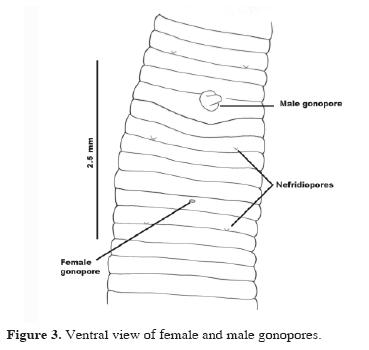
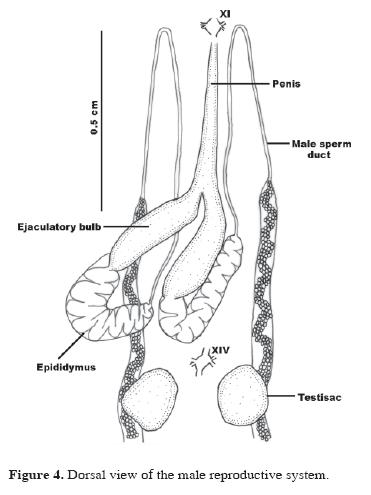
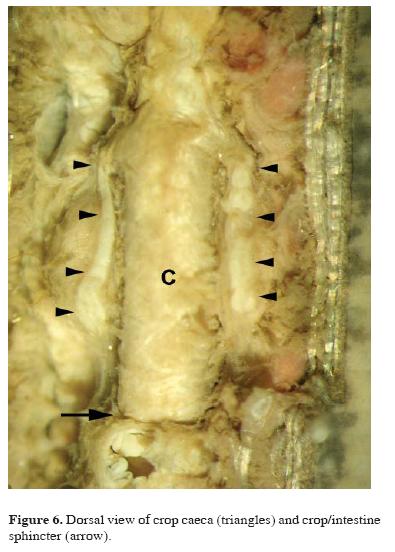
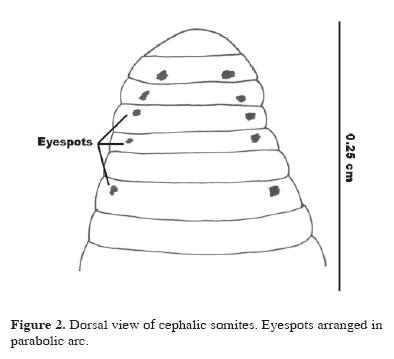
<body><![CDATA[<p align="center"><font face="verdana" size="2"><img src="/img/revistas/rmbiodiv/v77n2/a06f5.jpg"></font></p>     <p align="center"><font face="verdana" size="2"><a name="f6" id="f6"></a></font></p>     <p align="center"><font face="verdana" size="2"><img src="/img/revistas/rmbiodiv/v77n2/a06f6.jpg"></font></p>     <p align="justify"><font face="verdana" size="2">Based on the examination of 18 specimens (with 4 dissections).</font></p>     <p align="justify"><font face="verdana" size="2"><i>External morphology. </i>Body firm, muscular, size medium, body elongate, brownish, dorsal surface darker than venter, with longitudinal obscure stripes along all the length of the body alternating with lighter spots and stripes in metameric order. Largest specimen 87.2 mm long, 8 mm wide; smallest specimen 54.8 mm long and 5 mm wide <a href="/img/revistas/rmbiodiv/v77n2/a06f1.jpg" target="_blank">(Fig. 1)</a>. Diameter uniform along the body with anterior part thinner than the rest of the body. Clitellum not obvious and weakly defined, from X b5 to XIII a2. Dorsum with 8&#150;10 white papillae on each a2 forming well&#150;defined transversal rows and small white papillae irregularly distributed in almost all annuli. Five pairs of eyespots arranged in parabolic arc on uniannulate somites II,&nbsp; III, IV and on first annulus of biannulate somites V and VI. Fourth and fi fth pair of eyespots separated by one annulus <a href="#f2">(Fig. 2)</a>. Ventral surface with few small white papillae irregularly distributed in almost every annuli. One pair of nephridopores in each posterior margin of b2 of somites VIII&#150;XXIV, 17 pairs in total. In some specimens, each nephridiopore surrounded by black pigments. Male gonopore on XI b6, in some specimens displaced to XI b5/b6 but never reaching interannular area. Female gonopore on XIII b1, in some specimens displaced to XII/XIII. 1/2 + 5 + 1/2 annuli between gonopores <a href="#f3">(Fig. 3)</a>. Somites I, II, III,&nbsp;IV uniannulate, somite V and VI biannulate, somite VII triannulate, VIII quadriannulate, somites of middle series, IX&#150;XXIII, complete quinquannulate, XXIV and XXV quadriannulate, XVI triannulate and XXVII biannulate. Anus located on the dorsal surface at XXVI a2. Caudal sucker directed ventrally in relaxed specimens, thinner than the posterior part of the body.</font></p>     <p align="justify"><font face="verdana" size="2"><i>Internal morphology. </i>Male reproductive anatomy. Ten pairs of testisacs at interganglionic intervals from XIV/XV to XXIII/XXIV. Ascending male sperm ducts (i.e., "vasa deferentia") lateral to testisacs, surrounded by glands in the ascending portion, after somite XIII without glands. In somite XI each sperm duct forms an anteriorly directed loop, which descends to somite XIII and connects with tightly coiled sperm ducts or epididymes. Each epididymus forms a loop, and is followed by a muscular ejaculatory bulb; both ejaculatory bulbs fuse to form penis <a href="#f4">(Fig. 4)</a>. Female reproductive anatomy arranged principally on the left of midline. Globular ovaries between somites XII/ XIII. Right oviduct crosses ventral to the nerve cord and both the right and left oviduct independently insert into the anterior portion of the vagina. Vagina forms posteriorly directed loop at XIII <a href="#f5">(Fig. 5)</a>.</font></p>     <p align="justify"><font face="verdana" size="2">Digestive system. Pharynx euthylaematous, without jaws (agnathus), descendig to somite XII. Crop tubular with one pair of caeca on somite XVIII <a href="#f6">(Fig. 6)</a>. Crop/intestinal sphincter in XIX. Intestine tubular acaecate.</font></p>     <p align="justify"><font face="verdana" size="2">&nbsp;</font></p>     <p align="justify"><font face="verdana" size="2"><b>Taxonomic summary</b></font></p>     <p align="justify"><font face="verdana" size="2"><i>Material examined: </i><b>Holotype. </b>(CNHE 5429) Fixed in 4% formalin and preserved in a mixture of ethanol, glycerine and formalin. Length 87.1 mm, width 7.6 mm, Mexico, Lake Catemaco, Veracruz, near Colonia La Victoria. 18&deg; 22' 33.4''N, 95&deg; 06' 34.4''W. Altitude 355 m. Coll. A. Oceguera&#150;Figueroa, E. Mart&iacute;nez, L. Romero, R. Bautista, and A. Espinoza, September 9, 2005. <b>Paratypes </b>CNHE: 13 specimens 5430; AMNH 4 specimens 5325 Annelida, locality, collectors and date as for the holotype.</font></p>     ]]></body>
<body><![CDATA[<p align="justify"><font face="verdana" size="2"><i>Etymology: </i>Named after Rafael Lamothe Argumedo for his contributions to Mexican zoology.</font></p>     <p align="justify"><font face="verdana" size="2">&nbsp;</font></p>     <p align="justify"><font face="verdana" size="2"><b>Remarks</b></font></p>     <p align="justify"><font face="verdana" size="2">Previous diagnosis for members of the genus <i>Semiscolex </i>include one pair of testisacs per somite, complete somite XII separating gonopores, well developed vagina and absence of jaws (Ringuelet,1985; Sawyer, 1986). These characteristics are consistent with the species described herein, and it is thus clear that this species belongs to <i>Semiscolex.</i></font></p>     <p align="justify"><font face="verdana" size="2"><i>Semiscolex lamothei </i>can be easily distinguished from other species of <i>Semiscolex </i>based on the number of annuli between gonopores. <i>Semiscolex zonatus </i>has 1/2 + 4 + 1/2; <i>S. similis 6; S. juvenilis 7; S. notatus 8; and S. intermedus </i>1/2 + 6 + 1/2 annuli between gonopores, whereas <i>Semiscolex lamothei </i>possesses 1/2 + 5 <b>+</b> 1/2<b>.</b></font></p>     <p align="justify"><font face="verdana" size="2"><i>Semiscolex lamothei </i>has morphological features previously not described for any other member of the genus. Based on Ringuelet's (1985) description, <i>Semiscolex </i>species have globular epidydymes followed by an ejaculatory duct that connects to the penis. However, <i>Semiscolex lamothei </i>lacks ejaculatory ducts, and instead has epidydymes that are directly followed by well&#150;developed ejaculatory bulbs. Richardson (1969) suggested that members of the genus <i>Semiscolex </i>lack ejaculatory bulbs, apparently based on Ringuelet's descriptions. It is interesting to note that, in <i>S. lamothei, </i>the base of the penis, the ejaculatory bulbs, and the epididymes are surrounded by a membranous sheath, forming a sac, similar to that described by Ringuelet (1985). It would appear that Ringuelet did not dissect that sac, and did not observe the ejaculatory bulbs. Additionally, <i>Semiscolex lamothei </i>is the only known species of the genus with postcaeca in the posterior part of the crop. Wheather or not ejaculatory bulbs and postcaeca were overlooked by previous workers in their analyses of South American species, or if <i>Semiscolex lamothei </i>is the unique among <i>Semiscolex </i>species with this condition needs to be investigated in future studies. In the second case, the establishment of a new genus is strongly supported by the presence of paired ejaculatory bulbs in <i>S. lamothei </i>versus a single fused bulb in <i>Semiscolex </i>species, but until a detailed analysis of South American species is carried out, it is preferable to consider this species into the genus <i>Semiscolex.</i></font></p>     <p align="justify"><font face="verdana" size="2">The description of a new species of the South American genus <i>Semiscolex </i>in the northern hemisphere suggests a more intensive faunal interchange after the formation of Panama Isthmus (1.2 MYA) than previously recognized for leeches (Ringuelet, 1978). This geographical distribution is similar to the pattern seen in blood&#150;feeding leeches of the genus <i>Haementeria </i>(Ringuelet, 1985; Oceguera&#150;Figueroa, 2006) and in leeches of the non blood&#150;feeding genus <i>Helobdella </i>(Siddall et al., 2005).</font></p>     <p align="justify"><font face="verdana" size="2">&nbsp;</font></p>     <p align="justify"><font face="verdana" size="2"><b>Acknowledgments</b></font></p>     <p align="justify"><font face="verdana" size="2">I thank Elizabeth Mart&iacute;nez, Arlette Espinoza, Roc&iacute;o Bautista and Luz Romero for their assistance in the collection of samples and Carmen Loyola (IBUNAM) for her assistance in microphotography. I thank V. Le&oacute;n&#150;R&egrave;gagnon (IBUNAM), for her comments on early versions of this manuscript. This study was partially founded by CONACyT (172322) in the form of a graduate scholarship and NSF 0102383 to Jonathan Campbell (UTA) and Virginia Le&oacute;n&#150;R&egrave;gagnon.</font></p>     ]]></body>
<body><![CDATA[<p align="justify"><font face="verdana" size="2">&nbsp;</font></p>     <p align="justify"><font face="verdana" size="2"><b>Literature cited</b></font></p>     <!-- ref --><p align="justify"><font face="verdana" size="2">Borda, E. and M. E. Siddall. 2004. Arhynchobdellida (Annelida: Oligochaeta: Hirudinida): phylogenetic relationships and evolution. Molecular Phylogenetics and Evolution 30: 213&#150;225.</font>&nbsp;&nbsp;&nbsp;&nbsp;&nbsp;&nbsp;&nbsp;&nbsp;[&#160;<a href="javascript:void(0);" onclick="javascript: window.open('/scielo.php?script=sci_nlinks&ref=7482384&pid=S1870-3453200600020000600001&lng=','','width=640,height=500,resizable=yes,scrollbars=1,menubar=yes,');">Links</a>&#160;]<!-- end-ref --><!-- ref --><p align="justify"><font face="verdana" size="2">Oceguera&#150;Figueroa, A. 2005. Estudio taxon&oacute;mico de Euhirud&iacute;neos mexicanos y su ubicaci&oacute;n en el contexto de las hip&oacute;tesis filogen&eacute;ticas recientes. Masters Thesis, Instituto de Biolog&iacute;a, Universidad Nacional Aut&oacute;noma de M&eacute;xico, D.F. 76p.</font>&nbsp;&nbsp;&nbsp;&nbsp;&nbsp;&nbsp;&nbsp;&nbsp;[&#160;<a href="javascript:void(0);" onclick="javascript: window.open('/scielo.php?script=sci_nlinks&ref=7482385&pid=S1870-3453200600020000600002&lng=','','width=640,height=500,resizable=yes,scrollbars=1,menubar=yes,');">Links</a>&#160;]<!-- end-ref --><!-- ref --><p align="justify"><font face="verdana" size="2">Oceguera&#150;Figueroa, A. 2006. A new species of freshwater leech of the genus <i>Haementeria </i>(Annelida: Glossiphoniidae) from Jalisco State, Mexico. Zootaxa 1110: 39&#150;45.</font>&nbsp;&nbsp;&nbsp;&nbsp;&nbsp;&nbsp;&nbsp;&nbsp;[&#160;<a href="javascript:void(0);" onclick="javascript: window.open('/scielo.php?script=sci_nlinks&ref=7482386&pid=S1870-3453200600020000600003&lng=','','width=640,height=500,resizable=yes,scrollbars=1,menubar=yes,');">Links</a>&#160;]<!-- end-ref --><!-- ref --><p align="justify"><font face="verdana" size="2">Phillips, A. J. and M. E. Siddall. 2005. Phylogeny of the New World medicinal leech family Macrobdellidae (Oligocheta: Hirudinida: Arhynchobdellida). Zoologica Scripta 34: 559&#150;564.</font>&nbsp;&nbsp;&nbsp;&nbsp;&nbsp;&nbsp;&nbsp;&nbsp;[&#160;<a href="javascript:void(0);" onclick="javascript: window.open('/scielo.php?script=sci_nlinks&ref=7482387&pid=S1870-3453200600020000600004&lng=','','width=640,height=500,resizable=yes,scrollbars=1,menubar=yes,');">Links</a>&#160;]<!-- end-ref --><!-- ref --><p align="justify"><font face="verdana" size="2">Richardson, L. R. 1969. A contribution to the systematics of the Hirudinid leeches, with description of new families,    genera    and    species.    Acta   Zoologica Academiae Scientiarum Hungaricae 15: 97&#150;149.</font>&nbsp;&nbsp;&nbsp;&nbsp;&nbsp;&nbsp;&nbsp;&nbsp;[&#160;<a href="javascript:void(0);" onclick="javascript: window.open('/scielo.php?script=sci_nlinks&ref=7482388&pid=S1870-3453200600020000600005&lng=','','width=640,height=500,resizable=yes,scrollbars=1,menubar=yes,');">Links</a>&#160;]<!-- end-ref --><!-- ref --><p align="justify"><font face="verdana" size="2">Ringuelet, R.  A.   1972.  Nuevos  taxia de Hirudineos neotropicos con la redefinici&oacute;n de Semiscolecidae y  la descripci&oacute;n  de Cyclobdellidae Fam.  nov.  y Mesobdellidae Fam. nov. Physis 82: 193&#150;201.</font>&nbsp;&nbsp;&nbsp;&nbsp;&nbsp;&nbsp;&nbsp;&nbsp;[&#160;<a href="javascript:void(0);" onclick="javascript: window.open('/scielo.php?script=sci_nlinks&ref=7482389&pid=S1870-3453200600020000600006&lng=','','width=640,height=500,resizable=yes,scrollbars=1,menubar=yes,');">Links</a>&#160;]<!-- end-ref --><!-- ref --><p align="justify"><font face="verdana" size="2">Ringuelet, R. A. 1978. Biogeograf&iacute;a de los hirud&iacute;neos de Am&eacute;rica del Sur y de Mesoam&eacute;rica. Obra de Centenario del Museo de la Plata 6: 1&#150;27.</font>&nbsp;&nbsp;&nbsp;&nbsp;&nbsp;&nbsp;&nbsp;&nbsp;[&#160;<a href="javascript:void(0);" onclick="javascript: window.open('/scielo.php?script=sci_nlinks&ref=7482390&pid=S1870-3453200600020000600007&lng=','','width=640,height=500,resizable=yes,scrollbars=1,menubar=yes,');">Links</a>&#160;]<!-- end-ref --><!-- ref --><p align="justify"><font face="verdana" size="2">Ringuelet, R. A. 1985. Fauna de agua dulce de la Rep&uacute;blica de Argentina, Hirudinea, FECIC, Buenos Aires, 321 p.</font>&nbsp;&nbsp;&nbsp;&nbsp;&nbsp;&nbsp;&nbsp;&nbsp;[&#160;<a href="javascript:void(0);" onclick="javascript: window.open('/scielo.php?script=sci_nlinks&ref=7482391&pid=S1870-3453200600020000600008&lng=','','width=640,height=500,resizable=yes,scrollbars=1,menubar=yes,');">Links</a>&#160;]<!-- end-ref --><!-- ref --><p align="justify"><font face="verdana" size="2">Sawyer, R.  T.   1986.  Leech Biology  and Behaviour. Clarendon Press, Oxford. 1065 p.</font>&nbsp;&nbsp;&nbsp;&nbsp;&nbsp;&nbsp;&nbsp;&nbsp;[&#160;<a href="javascript:void(0);" onclick="javascript: window.open('/scielo.php?script=sci_nlinks&ref=7482392&pid=S1870-3453200600020000600009&lng=','','width=640,height=500,resizable=yes,scrollbars=1,menubar=yes,');">Links</a>&#160;]<!-- end-ref --><!-- ref --><p align="justify"><font face="verdana" size="2">Siddall, M. E., R. B. Budinoff and E. Borda. 2005. Phylogenetic     evaluation     of     systematics     and biogeography of the leech family Glossiphoniidae. Invertebrate Systematics 19: 105&#150;112.</font>&nbsp;&nbsp;&nbsp;&nbsp;&nbsp;&nbsp;&nbsp;&nbsp;[&#160;<a href="javascript:void(0);" onclick="javascript: window.open('/scielo.php?script=sci_nlinks&ref=7482393&pid=S1870-3453200600020000600010&lng=','','width=640,height=500,resizable=yes,scrollbars=1,menubar=yes,');">Links</a>&#160;]<!-- end-ref --> ]]></body><back>
<ref-list>
<ref id="B1">
<nlm-citation citation-type="journal">
<person-group person-group-type="author">
<name>
<surname><![CDATA[Borda]]></surname>
<given-names><![CDATA[E.]]></given-names>
</name>
<name>
<surname><![CDATA[Siddall]]></surname>
<given-names><![CDATA[M. E.]]></given-names>
</name>
</person-group>
<article-title xml:lang="en"><![CDATA[Arhynchobdellida (Annelida: Oligochaeta: Hirudinida): phylogenetic relationships and evolution]]></article-title>
<source><![CDATA[Molecular Phylogenetics and Evolution]]></source>
<year>2004</year>
<numero>30</numero>
<issue>30</issue>
<page-range>213-225</page-range></nlm-citation>
</ref>
<ref id="B2">
<nlm-citation citation-type="">
<person-group person-group-type="author">
<name>
<surname><![CDATA[Oceguera-Figueroa]]></surname>
<given-names><![CDATA[A.]]></given-names>
</name>
</person-group>
<source><![CDATA[Estudio taxonómico de Euhirudíneos mexicanos y su ubicación en el contexto de las hipótesis filogenéticas recientes]]></source>
<year>2005</year>
</nlm-citation>
</ref>
<ref id="B3">
<nlm-citation citation-type="journal">
<person-group person-group-type="author">
<name>
<surname><![CDATA[Oceguera-Figueroa]]></surname>
<given-names><![CDATA[A.]]></given-names>
</name>
</person-group>
<article-title xml:lang="en"><![CDATA[A new species of freshwater leech of the genus Haementeria (Annelida: Glossiphoniidae) from Jalisco State, Mexico]]></article-title>
<source><![CDATA[Zootaxa]]></source>
<year>2006</year>
<numero>1110</numero>
<issue>1110</issue>
<page-range>39-45</page-range></nlm-citation>
</ref>
<ref id="B4">
<nlm-citation citation-type="journal">
<person-group person-group-type="author">
<name>
<surname><![CDATA[Phillips]]></surname>
<given-names><![CDATA[A. J.]]></given-names>
</name>
<name>
<surname><![CDATA[Siddall]]></surname>
<given-names><![CDATA[M. E.]]></given-names>
</name>
</person-group>
<article-title xml:lang="en"><![CDATA[Phylogeny of the New World medicinal leech family Macrobdellidae (Oligocheta: Hirudinida: Arhynchobdellida)]]></article-title>
<source><![CDATA[Zoologica Scripta]]></source>
<year>2005</year>
<numero>34</numero>
<issue>34</issue>
<page-range>559-564</page-range></nlm-citation>
</ref>
<ref id="B5">
<nlm-citation citation-type="journal">
<person-group person-group-type="author">
<name>
<surname><![CDATA[Richardson]]></surname>
<given-names><![CDATA[L. R.]]></given-names>
</name>
</person-group>
<article-title xml:lang="en"><![CDATA[A contribution to the systematics of the Hirudinid leeches, with description of new families, genera and species]]></article-title>
<source><![CDATA[Acta Zoologica Academiae Scientiarum Hungaricae]]></source>
<year>1969</year>
<numero>15</numero>
<issue>15</issue>
<page-range>97-149</page-range></nlm-citation>
</ref>
<ref id="B6">
<nlm-citation citation-type="">
<person-group person-group-type="author">
<name>
<surname><![CDATA[Ringuelet]]></surname>
<given-names><![CDATA[R. A.]]></given-names>
</name>
</person-group>
<article-title xml:lang="es"><![CDATA[Nuevos taxia de Hirudineos neotropicos con la redefinición de Semiscolecidae y la descripción de Cyclobdellidae Fam. nov. y Mesobdellidae Fam. nov.]]></article-title>
<source><![CDATA[]]></source>
<year>1972</year>
</nlm-citation>
</ref>
<ref id="B7">
<nlm-citation citation-type="journal">
<person-group person-group-type="author">
<name>
<surname><![CDATA[Ringuelet]]></surname>
<given-names><![CDATA[R. A.]]></given-names>
</name>
</person-group>
<article-title xml:lang="es"><![CDATA[Biogeografía de los hirudíneos de América del Sur y de Mesoamérica]]></article-title>
<source><![CDATA[Obra de Centenario del Museo de la Plata]]></source>
<year>1978</year>
<numero>6</numero>
<issue>6</issue>
<page-range>1-27</page-range></nlm-citation>
</ref>
<ref id="B8">
<nlm-citation citation-type="book">
<person-group person-group-type="author">
<name>
<surname><![CDATA[Ringuelet]]></surname>
<given-names><![CDATA[R. A.]]></given-names>
</name>
</person-group>
<source><![CDATA[Fauna de agua dulce de la República de Argentina, Hirudinea]]></source>
<year>1985</year>
<page-range>321</page-range><publisher-loc><![CDATA[Buenos Aires ]]></publisher-loc>
<publisher-name><![CDATA[FECIC]]></publisher-name>
</nlm-citation>
</ref>
<ref id="B9">
<nlm-citation citation-type="book">
<person-group person-group-type="author">
<name>
<surname><![CDATA[Sawyer]]></surname>
<given-names><![CDATA[R. T.]]></given-names>
</name>
</person-group>
<source><![CDATA[Leech Biology and Behaviour]]></source>
<year>1986</year>
<page-range>1065</page-range><publisher-loc><![CDATA[Oxford ]]></publisher-loc>
<publisher-name><![CDATA[Clarendon Press]]></publisher-name>
</nlm-citation>
</ref>
<ref id="B10">
<nlm-citation citation-type="journal">
<person-group person-group-type="author">
<name>
<surname><![CDATA[Siddall]]></surname>
<given-names><![CDATA[M. E.]]></given-names>
</name>
<name>
<surname><![CDATA[Budinoff]]></surname>
<given-names><![CDATA[R. B.]]></given-names>
</name>
<name>
<surname><![CDATA[Borda]]></surname>
<given-names><![CDATA[E.]]></given-names>
</name>
</person-group>
<article-title xml:lang="en"><![CDATA[Phylogenetic evaluation of systematics and biogeography of the leech family Glossiphoniidae]]></article-title>
<source><![CDATA[Invertebrate Systematics]]></source>
<year>2005</year>
<numero>19</numero>
<issue>19</issue>
<page-range>105-112</page-range></nlm-citation>
</ref>
</ref-list>
</back>
</article>