<?xml version="1.0" encoding="ISO-8859-1"?><article xmlns:mml="http://www.w3.org/1998/Math/MathML" xmlns:xlink="http://www.w3.org/1999/xlink" xmlns:xsi="http://www.w3.org/2001/XMLSchema-instance">
<front>
<journal-meta>
<journal-id>1870-0462</journal-id>
<journal-title><![CDATA[Tropical and subtropical agroecosystems]]></journal-title>
<abbrev-journal-title><![CDATA[Trop. subtrop. agroecosyt]]></abbrev-journal-title>
<issn>1870-0462</issn>
<publisher>
<publisher-name><![CDATA[Universidad Autónoma de Yucatán, Facultad de Medicina Veterinaria]]></publisher-name>
</publisher>
</journal-meta>
<article-meta>
<article-id>S1870-04622011000200004</article-id>
<title-group>
<article-title xml:lang="en"><![CDATA[Rock phosphate amendment effects on Kenaf (Hibiscus cannabinus L.) growth and yield]]></article-title>
<article-title xml:lang="es"><![CDATA[Efecto de la fertilización con fosfato sobre el crecimiento y producción de Kenaf (Hibiscus cannabinus L.)]]></article-title>
</title-group>
<contrib-group>
<contrib contrib-type="author">
<name>
<surname><![CDATA[Akande]]></surname>
<given-names><![CDATA[M. O]]></given-names>
</name>
<xref ref-type="aff" rid="A01"/>
</contrib>
<contrib contrib-type="author">
<name>
<surname><![CDATA[Makinde]]></surname>
<given-names><![CDATA[E. A.]]></given-names>
</name>
<xref ref-type="aff" rid="A02"/>
</contrib>
<contrib contrib-type="author">
<name>
<surname><![CDATA[Aluko]]></surname>
<given-names><![CDATA[O. A.]]></given-names>
</name>
<xref ref-type="aff" rid="A01"/>
</contrib>
<contrib contrib-type="author">
<name>
<surname><![CDATA[Oluwatoyinbo]]></surname>
<given-names><![CDATA[F. I.]]></given-names>
</name>
<xref ref-type="aff" rid="A03"/>
</contrib>
<contrib contrib-type="author">
<name>
<surname><![CDATA[Adediran]]></surname>
<given-names><![CDATA[J. A]]></given-names>
</name>
<xref ref-type="aff" rid="A01"/>
</contrib>
</contrib-group>
<aff id="A01">
<institution><![CDATA[,Obafemi Awolowo University Institute of Agricultural Research and Training ]]></institution>
<addr-line><![CDATA[ ]]></addr-line>
</aff>
<aff id="A02">
<institution><![CDATA[,University of Agriculture Department of Horticulture ]]></institution>
<addr-line><![CDATA[ ]]></addr-line>
</aff>
<aff id="A03">
<institution><![CDATA[,Federal College of Agriculture  ]]></institution>
<addr-line><![CDATA[Ibadan ]]></addr-line>
<country>Nigeria</country>
</aff>
<pub-date pub-type="pub">
<day>00</day>
<month>08</month>
<year>2011</year>
</pub-date>
<pub-date pub-type="epub">
<day>00</day>
<month>08</month>
<year>2011</year>
</pub-date>
<volume>14</volume>
<numero>2</numero>
<fpage>559</fpage>
<lpage>565</lpage>
<copyright-statement/>
<copyright-year/>
<self-uri xlink:href="http://www.scielo.org.mx/scielo.php?script=sci_arttext&amp;pid=S1870-04622011000200004&amp;lng=en&amp;nrm=iso"></self-uri><self-uri xlink:href="http://www.scielo.org.mx/scielo.php?script=sci_abstract&amp;pid=S1870-04622011000200004&amp;lng=en&amp;nrm=iso"></self-uri><self-uri xlink:href="http://www.scielo.org.mx/scielo.php?script=sci_pdf&amp;pid=S1870-04622011000200004&amp;lng=en&amp;nrm=iso"></self-uri><abstract abstract-type="short" xml:lang="en"><p><![CDATA[Ogun rock phosphate (ORP) amended with an organic waste and urea on growth and seed yield of two varieties of Kenaf (Cuba 108 and Tainung 1) was evaluated. Use of ORP as a phosphorus source was compared with NPK 20-10-10. Performance on the effects of treatments: ORP + cowdung; ORP + compost; ORP + poultry manure and ORP + Urea on kenaf growth and seed yields were assessed and compared with a no fertilizer control treatment. Results showed that P application significantly increased Kenaf plant height and seed yield. NPK -treated plants were significantly taller than the unfertilized plants. However, plants treated with amended ORP had comparable heights among the three organic sources and with NPK fertilization. NPK fertilization gave the highest seed yields with the two varieties. The highest relative agronomic efficiency (RAE) value of 87 and 48 % relative to mineral fertilizer (100 %) were obtained from plants treated with ORP + Compost for Cuba 108 and Tainung 1 respectively, in 2006. In 2007, the highest RAE value of 89% was obtained from plants treated with ORP + PM for Cuba 108 and 95% with ORP + Urea for Tainung 1. NPK - treated soil had the highest soil available P. ORP application is comparably effective with NPK 20-10-10 when applied with organic manures and urea for kenaf production.]]></p></abstract>
<abstract abstract-type="short" xml:lang="es"><p><![CDATA[Se evaluó roca fosfórica Ogun (ORP) combinada con residuos orgánicos y ureasobre el crecimiento y producción de dos variedades de Kenaf (Cuba 108 y Tainung 1). Se evaluó ORP como fuente de fosforo en relación al uso de NPK 20-10-10. Los tratamientos fueron: ORP + estiércol vacuno; ORP + composta; ORP + excreta avícolas; ORP + Urea; y; no fertilización. Se encontró que la aplicación de P increment altura y la producción de semilla de Kenaf. La utilización de NPK increment la talla de las plantas en comparación con las plantas no fertilizadas. La altura de las plantas con ORP+residuos orgánicos y fertilizadas con NPK fue similar. La fertilización con NPK produjo mayores rendimintos de semilla en las dos variedades de Kenaf. La mayor eficiencia agronómica relativa (RAE) 87 y 48% en relación a la fertilización mineral (100%) se obtuvo de las plantas con ORP + composta para la variedad Cuba 108 y Tainung 1 respectivamente, en 2006. En 2007, la mayor RAE (89%) fue obtenido en las plantas con ORP + excreta avícola para Cuba 108 y un RAE de 95% con ORP + Urea para Tainung 1. Los suelos que recibieron NPK tuvieron la mayor cantidad de P disponible. Para la producción de Kenaf la aplicación de ORP tiene una efectividad comparable al uso de NPK 20-10-10 cuando se aplica de manera conjunta con excretas y urea.]]></p></abstract>
<kwd-group>
<kwd lng="en"><![CDATA[Available P]]></kwd>
<kwd lng="en"><![CDATA[Ogun rock phosphate]]></kwd>
<kwd lng="en"><![CDATA[Organic manure]]></kwd>
<kwd lng="en"><![CDATA[Relative agronomic efficiency]]></kwd>
<kwd lng="es"><![CDATA[P disponible]]></kwd>
<kwd lng="es"><![CDATA[fosfatos]]></kwd>
<kwd lng="es"><![CDATA[excretas]]></kwd>
<kwd lng="es"><![CDATA[eficiencia agronómica relativa]]></kwd>
</kwd-group>
</article-meta>
</front><body><![CDATA[  	    <p align="justify"><font face="verdana" size="4">Estudios sobre agroecosistemas</font></p>  	    <p align="justify"><font face="verdana" size="2">&nbsp;</font></p>  	    <p align="center"><font face="verdana" size="4"><b>Rock phosphate amendment effects on Kenaf (<i>Hibiscus cannabinus</i> L.) Growth and yield</b></font></p>  	    <p align="justify"><font face="verdana" size="2">&nbsp;</font></p>  	    <p align="center"><font face="verdana" size="3"><b>Efecto de la fertilizaci&oacute;n con fosfato sobre el crecimiento y producci&oacute;n de Kenaf (<i>Hibiscus cannabinus</i> L.)</b></font></p>  	    <p align="justify"><font face="verdana" size="2">&nbsp;</font></p>  	    <p align="center"><font face="verdana" size="2"><b>M. O Akande*<sup>1</sup>, E. A. Makinde<sup>2</sup>, O. A. Aluko<sup>1</sup>, F. I. Oluwatoyinbo<sup>3</sup> and J. A. Adediran<sup>1</sup></b></font></p>  	    <p align="justify"><font face="verdana" size="2">&nbsp;</font></p>  	    <p align="justify"><font face="verdana" size="2"><i><sup>1</sup> Institute of Agricultural Research and Training, Obafemi Awolowo University, PMB 5029 Moor Plantation, Ibadan, Nigeria. *Corresponding Author E&#45; mail:</i> <a href="mailto:michaelojoakande@yahoo.com">michaelojoakande@yahoo.com</a> <i>or</i> <a href="mailto:moakande@iartng.org">moakande@iartng.org</a> <i>Tel: +2347055756955, +2347033982833</i></font></p>  	    ]]></body>
<body><![CDATA[<p align="justify"><font face="verdana" size="2"><i><sup>2</sup> Department of Horticulture. University of Agriculture, Abeokuta, Nigeria.</i></font></p>  	    <p align="justify"><font face="verdana" size="2"><i><sup>3</sup> Federal College of Agriculture, P.M.B. 5029, Moor Plantation, Ibadan, Nigeria.</i></font></p>  	        <p align="justify"><font face="verdana" size="2">&nbsp;</font></p>  	    <p align="justify"><font face="verdana" size="2">Submitted September 10, 2010    <br> 	Accepted January 13, 2011    <br> 	Revised received January 27, 2011</font></p>  	    <p align="justify"><font face="verdana" size="2">&nbsp;</font></p>  	    <p align="justify"><font face="verdana" size="2"><b>Abstract</b></font></p>  	    <p align="justify"><font face="verdana" size="2">Ogun rock phosphate (ORP) amended with an organic waste and urea on growth and seed yield of two varieties of Kenaf (Cuba 108 and Tainung 1) was evaluated. Use of ORP as a phosphorus source was compared with NPK 20&#45;10&#45;10. Performance on the effects of treatments: ORP + cowdung; ORP + compost; ORP + poultry manure and ORP + Urea on kenaf growth and seed yields were assessed and compared with a no fertilizer control treatment. Results showed that P application significantly increased Kenaf plant height and seed yield. NPK &#45;treated plants were significantly taller than the unfertilized plants. However, plants treated with amended ORP had comparable heights among the three organic sources and with NPK fertilization. NPK fertilization gave the highest seed yields with the two varieties. The highest relative agronomic efficiency (RAE) value of 87 and 48 % relative to mineral fertilizer (100 %) were obtained from plants treated with ORP + Compost for Cuba 108 and Tainung 1 respectively, in 2006. In 2007, the highest RAE value of 89% was obtained from plants treated with ORP + PM for Cuba 108 and 95% with ORP + Urea for Tainung 1. NPK &#45; treated soil had the highest soil available P. ORP application is comparably effective with NPK 20&#45;10&#45;10 when applied with organic manures and urea for kenaf production.</font></p>  	    <p align="justify"><font face="verdana" size="2"><b>Keywords:</b> Available P; Ogun rock phosphate; Organic manure; Relative agronomic efficiency.</font></p>  	    ]]></body>
<body><![CDATA[<p align="justify"><font face="verdana" size="2">&nbsp;</font></p>  	    <p align="justify"><font face="verdana" size="2"><b>Resumen</b></font></p>  	    <p align="justify"><font face="verdana" size="2">Se evalu&oacute; roca fosf&oacute;rica Ogun (ORP) combinada con residuos org&aacute;nicos y ureasobre el crecimiento y producci&oacute;n de dos variedades de Kenaf (Cuba 108 y Tainung 1). Se evalu&oacute; ORP como fuente de fosforo en relaci&oacute;n al uso de NPK 20&#45;10&#45;10. Los tratamientos fueron: ORP + esti&eacute;rcol vacuno; ORP + composta; ORP + excreta av&iacute;colas; ORP + Urea; y; no fertilizaci&oacute;n. Se encontr&oacute; que la aplicaci&oacute;n de P increment altura y la producci&oacute;n de semilla de Kenaf. La utilizaci&oacute;n de NPK increment la talla de las plantas en comparaci&oacute;n con las plantas no fertilizadas. La altura de las plantas con ORP+residuos org&aacute;nicos y fertilizadas con NPK fue similar. La fertilizaci&oacute;n con NPK produjo mayores rendimintos de semilla en las dos variedades de Kenaf. La mayor eficiencia agron&oacute;mica relativa (RAE) 87 y 48% en relaci&oacute;n a la fertilizaci&oacute;n mineral (100%) se obtuvo de las plantas con ORP + composta para la variedad Cuba 108 y Tainung 1 respectivamente, en 2006. En 2007, la mayor RAE (89%) fue obtenido en las plantas con ORP + excreta av&iacute;cola para Cuba 108 y un RAE de 95% con ORP + Urea para Tainung 1. Los suelos que recibieron NPK tuvieron la mayor cantidad de P disponible. Para la producci&oacute;n de Kenaf la aplicaci&oacute;n de ORP tiene una efectividad comparable al uso de NPK 20&#45;10&#45;10 cuando se aplica de manera conjunta con excretas y urea.</font></p>  	    <p align="justify"><font face="verdana" size="2"><b>Palabras claves:</b> P disponible; fosfatos; excretas; eficiencia agron&oacute;mica relativa.</font></p> 	    <p align="justify">&nbsp;</p>      <p align="justify"><font face="verdana" size="2"><b>INTRODUCTION</b></font></p>  	    <p align="justify"><font face="verdana" size="2">Phosphorus (P) is an essential nutrient for crop growth and development among the macronutrients. Most of the tropical soils are known to have low phosphorus status (Balasubramanian <i>et al,</i> 1978; Adepetu, 1986). Inclusion of phosphorus fertilizers in any crop fertilization programme is therefore very important for these soils. Significant responses to phosphorus applied through water &#45; soluble sources have been observed for arable crops (Adetunji, 1995, 1997). However, economic and environmental considerations, as well as availability make their use unsuitable since they are rather expensive and not readily available to the resource&#45;poor African farmers. Therefore, the use of locally&#45; available alternatives, such as indigenous rock phosphate is now being advocated. Ogun rock phosphate (ORP) is one of the indigenous phosphate sources recently discovered in Nigeria. The phosphorus content in the rock is about 25&#45;31 % P<sub>2</sub>O<sub>5</sub> and has low solubility (Akande, 2005 and Adetunji, 2005). Application of ground rock phosphate has been proved to be beneficial to crops (Akande et. al., 2008a). There are however, a limited range of climatic and soil conditions in which rock phosphates will be sufficiently reactive for use as direct application fertilizers, especially for fast&#45;growing annual crops. Numerous studies have been conducted on amending rock phosphates to increase their immediate P availability and also possibly enhance their rate of dissolution after application to soils. The methods of enhancing the quality of phosphate rock and its agronomic efficiency include composting with organic manures, partially acidulating with mineral acids and compacting with super phosphate (Chien and Hammond, 1978. Mishra and Bangar, 1986, Chien <i>et al.,</i> 1990 and Adediran and Sobulo, 1997). Incorporation of poultry manure or cow dung with Ogun phosphate rock significantly improved release of P and performance of crops (Akande etal., 2005; Akande etal., 2008b).</font></p>  	    <p align="justify"><font face="verdana" size="2">Kenaf (<i>Hibiscus cannabinus</i> L.) is an annual fibre crop cultivated throughout the tropics. As with other crops, proper fertility maintenance is needed to optimize kenaf yields and minimize production cost. The objective of this study was to evaluate the effectiveness of Ogun Rock Phosphate (ORP) amended with Urea and organic manures on the growth and seed yield of Kenaf.</font></p>  	    <p align="justify"><font face="verdana" size="2">&nbsp;</font></p>  	    <p align="justify"><font face="verdana" size="2"><b>MATERIALS AND METHODS</b></font></p>  	    ]]></body>
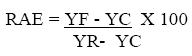
<body><![CDATA[<p align="justify"><font face="verdana" size="2">Field trials were carried out at the Institute of Agricultural Research and Training, Moor Plantation, Ibadan, (Latitude 7<sup>o</sup> 30<sup>1</sup> N, and Longitude 3<sup>o</sup> 54<sup>1</sup> E) in the humid zone of Nigeria in 2006 and 2007. Mean annual rainfall was 1350 mm. Pre&#45;crop soil samples from surface soil (0 &#45; 15 cm depth) were taken for chemical and physical analyses before the field was ploughed and harrowed in 2006. The experiment was laid out on the field in a randomized complete block design with three replications. Plot size was 3 m x 2 m. Two varieties of Kenaf (Cuba 108 and Tainung 1) seeds were planted at a spacing of 50 cm x 10 cm. Weeds were chemically controlled using 5L ha<sup>&#45;1</sup> each of Gramoxone (Paraquat) and Premextra (Atrazine) with a supplementary weeding at 6 and 10 weeks after planting. The seedlings were thinned to one per stand a week after planting. There were seven treatments which consisted of control; NPK 20&#45;10&#45;10; Ogun rock phosphate (ORP); ORP + urea; ORP + cow dung; ORP + poultry manure and ORP + compost. Ogun rock phosphate and urea were applied at the rates of 100 kg P<sub>2</sub>O<sub>5</sub> and 60 kg N ha<sup>&#45;1</sup> respectively. NPK 20&#45;10&#45;10 was applied at the rate of 100 kg ha<sup>&#45;1</sup> and organic manures were applied at the rate of 2.5 tonnes ha<sup>&#45;1</sup>. The organic manure had a pH of 7.6, with a total N content of 1.65%. The available P and the Exchangeable K contents were 0.52 and 0.91%, respectively. The fertilizers were side &#45;dressed and drilled into the soil 3 cm away from the seedlings two weeks after planting. Plant height was measured with a meter rule while the stem girth was measured with a venier calliper at 12 weeks after planting at the top, middle and bottom portions of the stem, to assess the effects of the treatments on the fibre production. At maturity, the seeds were harvested and yield was computed from plants off the boarder rows. In 2007, the experiment was repeated as in the previous year. Neither ploughing nor harrowing was done but slash and hoe weeding of the site was done to enable minimal soil disturbance. Treatments were reapplied and all the necessary agronomic practices were carried out as in the previous year. Soil samples were taken per plot prior and post&#45; cropping to determine the soil available P.</font></p>  	    <p align="justify"><font face="verdana" size="2">&nbsp;</font></p>  	    <p align="justify"><font face="verdana" size="2"><b>Soil analysis</b></font></p>  	    <p align="justify"><font face="verdana" size="2">The Exchangeable bases (K, Na, Ca and Mg) as well as the Potassium, Calcium and Sodium contents of the soil were determined. The Available P, the Soil exchangeable acidity and the Organic carbon were also determined along with the Particle size distribution.</font></p>  	    <p align="justify"><font face="verdana" size="2">&nbsp;</font></p>  	    <p align="justify"><font face="verdana" size="2"><b>Relative Agronomic Efficiency (RAE)</b></font></p>  	    <p align="justify"><font face="verdana" size="2">The vertical comparison approach was used in this study to measure the relative agronomic efficiency (RAE) index of the Ogun Rock Phosphate. This approach defines the RAE index as the ratio of the yield response above control with the test fertilizer at the same rate (Engelstad et. al., 1974). Mathematically:</font></p>  	    <p align="center"><font face="verdana" size="2"><img src="/img/revistas/tsa/v14n2/a4i1.jpg"></font></p>  	    <p align="justify"><font face="verdana" size="2">Where:</font></p>  	    <p align="justify"><font face="verdana" size="2">RAE= Relative Agronomic Effectiveness. YF and YR are yields obtained in treatments that received different rates of Ogun Rock Phosphate or Single Super Phosphate, respectively. YC is the yield in the control treatment.</font></p>  	    ]]></body>
<body><![CDATA[<p align="justify"><font face="verdana" size="2">&nbsp;</font></p>  	    <p align="justify"><font face="verdana" size="2"><b>Statistical analysis</b></font></p>  	    <p align="justify"><font face="verdana" size="2">Data collected were subjected to analysis of variance using mixed model procedure of statistical analysis system (SAS, 1994).</font></p>  	    <p align="justify"><font face="verdana" size="2">&nbsp;</font></p>  	    <p align="justify"><font face="verdana" size="2"><b>RESULTS</b></font></p>  	    <p align="justify"><font face="verdana" size="2"><b>Soil Characteristics</b></font></p>  	    <p align="justify"><font face="verdana" size="2">The soil is sandy loam and slightly acidic. The exchangeable bases, total N, and available P were low, implying that the soil was low in fertility (<a href="#t1">Table 1</a>).</font></p>  	    <p align="center"><font face="verdana" size="2"><a name="t1"></a></font></p>  	    <p align="center"><font face="verdana" size="2"><img src="/img/revistas/tsa/v14n2/a4t1.jpg"></font></p>  	    <p align="justify"><font face="verdana" size="2">&nbsp;</font></p>  	    ]]></body>
<body><![CDATA[<p align="justify"><font face="verdana" size="2"><b>Effect of ORP amendment on Kenaf plant height and stem girth</b></font></p>  	    <p align="justify"><font face="verdana" size="2">Application of amemended ORP had significant effect on plant heights of the two varieties of kenaf in 2006 and 2007. Plant height ranged from 224.1 &#45; 279.7 cm and 229.9 &#45; 278.8 cm for Cuba 108 and Tainung 1 respectively in 2006 while in 2007, it ranged from 213 &#45; 239 cm and 215 &#45; 238 cm for Cuba 108 and Tainung respectively. NPK treated plants produced the tallest plants for Cuba 108 and Tainung 1 in both years. Complementary applications of ORP with organic manures and urea were similar in height and they were all taller than the un&#45; amended ORP. The untreated control produced the shortest plants (<a href="/img/revistas/tsa/v14n2/a4t2.jpg" target="_blank">Table 2</a>).</font></p>  	    <p align="justify"><font face="verdana" size="2">Stem girth ranged from 3.8&#45;7.1 mm and 3.1 &#45;4.9 mm for Cuba 108 and Tainung 1, respectively in 2006 while in 2007, it ranged from 4.0 &#45; 4.8 mm and 4.0 mm for Cuba 108 and Tainung 1 respectively. NPK&#45;treated plants had the highest values of top stem girth. The lowest values were from the control treatment for the two varieties of kenaf. All the amended ORP treated plants were similar and were greater than the un&#45; amended ORP.</font></p>  	    <p align="justify"><font face="verdana" size="2">The middle stem girth ranged from 8.4 &#45; 13.0 mm and 6.5 &#45; 11.6 mm for Cuba 108 and Tainung 1 respectively, in 2006 while in 2007, it ranged from 8.3 &#45; 9.3 mm and 8.1 &#45; 10.2 mm for Cuba 108 and Tainung 1 respectively. NPK treated plants obtained the highest values of middle stem girth and the lowest values were from the control for the two varieties of kenaf. All the amended ORP treated plants were similar and were greater than the un&#45; amended ORP.</font></p>  	    <p align="justify"><font face="verdana" size="2">The bottom stem girth ranged from 13.7 &#45; 19.0 mm and 12.0 &#45; 16.2 mm for Cuba 108 and Tainung 1 respectively, in 2006 while in 2007, it ranged from 13.8 &#45; 15.7 mm and 13.5 &#45; 17.6 mmfor Cuba 108 and Tainung 1 respectively. NPK&#45; treated plants gave the highest values of bottom stem girth and the lowest values were from the control for the two varieties of kenaf. All the amended ORP treated plants were similar and were greater than the un&#45; amended ORP.</font></p>  	    <p align="justify"><font face="verdana" size="2">&nbsp;</font></p>  	    <p align="justify"><font face="verdana" size="2"><b>Effect of ORP amendment on kenaf seed yield</b></font></p>  	    <p align="justify"><font face="verdana" size="2">Application of un&#45;amended ORP, amended ORP and NPK fertilizers had significant effect on seed yields of the two varieties of kenaf in both years. The yield ranged from 784.33 to 1440.87 kg ha<sup>&#45;1</sup> for Cuba 108 while in Tainung 1, it ranged from 726.45 &#45; 1076.62 kg ha<sup>&#45;1</sup> in 2006 and in 2007, it ranged from 472.85 &#45;700.48 kg ha<sup>&#45;1</sup> and 522.49 &#45; 691.16kg ha<sup>&#45;1</sup> for Cuba 108 and Tainung 1 respectively (<a href="#t3">Table 3</a>). NPK&#45;treated plants had the highest seed yields in the two varieties. The ORP &#45; amended&#45; treated plants gave significantly higher yields than plants with un&#45;amended ORP which gave yields significantly higher than from the control plants. Yields among the amended sources were however, comparable (<a href="#t3">Table 3</a>).</font></p>  	    <p align="center"><font face="verdana" size="2"><a name="t3"></a></font></p>  	    <p align="center"><font face="verdana" size="2"><img src="/img/revistas/tsa/v14n2/a4t3.jpg"></font></p>  	    ]]></body>
<body><![CDATA[<p align="justify"><font face="verdana" size="2">&nbsp;</font></p>  	    <p align="justify"><font face="verdana" size="2"><b>Relative agronomic efficiency (R A E) of amended and un&#45;amended ORP</b></font></p>  	    <p align="justify"><font face="verdana" size="2">The agronomic effectiveness of un&#45;amended ORP and amended ORP relative to mineral fertilizer ranged from 24 &#45; 87% and 12 &#45; 48% for Cuba 108 and Tainung 1 in 2006 respectively whereas in 2007, it ranged from 20 &#45; 89% and 37 &#45; 95% for Cuba 108 and Tainung&#45;1 respectively (<a href="#t4">Table 4</a>). The highest relative agronomic efficiency (RAE) value of 87 and 48% were obtained from plants treated with ORP + CP for Cuba 108 and Tainung 1 respectively in 2006 whereas in 2007 the highest RAE values of 89 and 95% were obtained from the plants treated with ORP + PM and ORP + Urea for Cuba 108 and Tainung&#45;1 respectively. The lowest RAE value was obtained from the un&#45;amended ORP in the two varieties of Kenaf in 2006 and 2007.</font></p>  	    <p align="center"><font face="verdana" size="2"><a name="t4"></a></font></p>  	    <p align="center"><font face="verdana" size="2"><img src="/img/revistas/tsa/v14n2/a4t4.jpg"></font></p>  	    <p align="justify"><font face="verdana" size="2">&nbsp;</font></p>  	    <p align="justify"><font face="verdana" size="2"><b>Soil available P</b></font></p>  	    <p align="justify"><font face="verdana" size="2">The results showed that the P fertilizers had positive effect on P released into the soil (<a href="#t5">Table 5</a>). The soil available P values ranged from 4.82 &#45; 12.64 mg kg<sup>&#45;1</sup> for Cuba 108 and 4.62 &#45; 11.44 mg kg<sup>&#45;1</sup> in Tainung &#45;1 prior to 2<sup>nd</sup> cropping. At the end of 2<sup>nd</sup> cropping soil available P ranged from 3.12 &#45; 14.82 mg kg<sup>&#45;1</sup> and 3.24 &#45; 13.86 mg kg<sup>&#45;1</sup> for Cuba 108 and Tainung &#45;1 respectively. Prior to cropping and at the end of cropping in 2007, NPK application gave the highest value of soil available P and was closely followed by all the amended ORP treatments while the control had the lowest value. All the ORP treatments amended with organic manures and urea were similar and were higher than in plots treated only with ORP. It could be observed from the results that soil available P has tremendously increased in all treatments except the control that decreased when compared, prior to cropping.</font></p>  	    <p align="center"><font face="verdana" size="2"><a name="t5"></a></font></p>  	    <p align="center"><font face="verdana" size="2"><img src="/img/revistas/tsa/v14n2/a4t5.jpg"></font></p>  	    ]]></body>
<body><![CDATA[<p align="justify"><font face="verdana" size="2">&nbsp;</font></p>  	    <p align="justify"><font face="verdana" size="2"><b>DISCUSSION</b></font></p>  	    <p align="justify"><font face="verdana" size="2">The positive response of kenaf to applied fertilizer was due to the initial low fertility status of the soil on which the study was conducted. Soil pH was slightly acidic but was within the range for kenaf production. The observed low nitrogen content can be attributed to land use, vegetation and intensity of cropping at the site due to plant uptake from previous croppings. Available phosphorus (Bray 1) was very low (5.4 mg kg<sup>&#45;1</sup>) based on the 8&#45;12 mg kg<sup>&#45;1</sup> critical level reported by Udo and Ogunwale (1977).</font></p>  	    <p align="justify"><font face="verdana" size="2">Maximum kenaf growth and seed yield are usually limited by inadequate availability of nutrients. The results highlighted the superiority of fertilized plant over un&#45;fertilized plant in terms of plant height, stem girth and seed yield production. The consistently low performance of the un&#45;fertilized kenaf plants indicates the crop's potential to give optimal yields with adequate fertilization. In this study, the height, stem girth and seed yield were markedly increased by amended ORP, un&#45;amended ORP and NPK fertilizers. This was reflected in increased plant height, stem girth and seed yield. Increase in yield has been reported as an overall benefit that can be derived from phosphate application (Enwezor <i>et al,</i> 1989, Akande <i>et al.</i> 1998; Yusuf <i>et al.,</i> 2003, Akande, 2005).</font></p>  	    <p align="justify"><font face="verdana" size="2">The relative agronomic effectiveness (RAE) of un&#45;amended and amended ORP were measured by relative response curves. The low RAE value of the un &#45; amended ORP in the two years was probably as a result of the non &#45; water soluble P content of ORP compared to NPK 20&#45;10&#45;10 and amended ORP. Phosphorus from NPK is more readily available because of its higher solubility while addition of organic manure to ORP would have enhanced the release of P from rock phosphate (Akande <i>et al.,</i> 2008b). In 2007, the RAE values of un&#45;amended and amended ORP had increased tremendously when compared to 2006 except for the treatments ORP, ORP + CD and ORP + CP for Cuba 108 where the reverse was the case. The observed trend in 2007 was due to the fact that more available P had been released from the ORP into the soil. This might be due to the fact that the ORP had enough time to solubilise in the soil after the ORP application. The RAEs are within the range of values (63 %) reported from Togo phosphate rock in Nigerian soils (Mokwunye, 1979). Bationo et al. (1987) reported values of between 48 and 83%. Similar findings had been reported (Akande et. al., 1998; Akintokun et. al., 2003 and Akande, 2005).</font></p>  	    <p align="justify"><font face="verdana" size="2">Soil available P increased across the treatments prior to and at the end of cropping in 2007. NPK application gave the highest value of soil available P because of its solubility. This further supports the findings of Khasawneh and Doll (1978) that the residual effects of soluble P fertilizer were greater than those of rock phosphate in the first 3 or 4 years after application. The efficacy of cow dung, compost, poultry manure and urea in facilitating the release of P from rock phosphate occurs after 2 croppings as these materials when co&#45;applied with ORP resulted in significantly higher available P than applying ORP only. The increase in P availability observed through amendment of rock phosphate with organic materials was also explained by Khanna et. al. (1983) as resulting from the conversion of rock phosphate P to water&#45; soluble form and greater efficiency of the dissolved P in terms of its availability to plant. The presence of organic matter through the addition of organic waste materials which provides weak humic acid could be responsible for the dissolution of rock phosphate in the soil. The dissolved ORP was therefore capable of increasing the availability of P for plant growth.</font></p>  	    <p align="justify"><font face="verdana" size="2">&nbsp;</font></p>  	    <p align="justify"><font face="verdana" size="2"><b>CONCLUSION</b></font></p>  	    <p align="justify"><font face="verdana" size="2">Results from this study have shown that application of ORP as a source of P, either amended or un&#45;amended improves the growth and seed yield of kenaf. However, amending the ORP with the various organic wastes and urea gives comparable growth and seed yields with NPK application. They also give comparable relative agronomic effectiveness with NPK fertilization and therefore can be used as alternative.</font></p>  	    <p align="justify"><font face="verdana" size="2">&nbsp;</font></p>  	    ]]></body>
<body><![CDATA[<p align="justify"><font face="verdana" size="2"><b>ACKNOWLEDGEMENTS</b></font></p>  	    <p align="justify"><font face="verdana" size="2">The authors appreciate the financial support given by the Institute of Agricultural Research and Training, Obafemi Awolowo University, Ibadan and also the assistance received from Mr. Adeyeye and other technical staff of the Industrial Crop Improvement Programme of the Institute.</font></p>  	    <p align="justify"><font face="verdana" size="2">&nbsp;</font></p>  	    <p align="justify"><font face="verdana" size="2"><b>REFERENCES</b></font></p>  	    <!-- ref --><p align="justify"><font face="verdana" size="2">Adediran, J A., R.A. Sobulo 1997. The potentials and use of rock phosphates in the Sub Saharan Africa. A case study in Nigeria. In: (Agboola et al.) Proceedings of 3<sup>rd</sup> All African Soil Society, University of Ibadan, Ibadan. Nigeria, August 1995. Pp 295 &#45; 305.    &nbsp;&nbsp;&nbsp;&nbsp;&nbsp;&nbsp;&nbsp;&nbsp;[&#160;<a href="javascript:void(0);" onclick="javascript: window.open('/scielo.php?script=sci_nlinks&ref=10101990&pid=S1870-0462201100020000400001&lng=','','width=640,height=500,resizable=yes,scrollbars=1,menubar=yes,');">Links</a>&#160;]<!-- end-ref --></font></p>  	    <!-- ref --><p align="justify"><font face="verdana" size="2">Adepetu, J. A. 1986. Soil fertility and fertilizer requirement in Oyo, Ogun and Ondo states of Nigeria. Federal Ministry of Agriculture and Water Resources (publ.), Lagos.    &nbsp;&nbsp;&nbsp;&nbsp;&nbsp;&nbsp;&nbsp;&nbsp;[&#160;<a href="javascript:void(0);" onclick="javascript: window.open('/scielo.php?script=sci_nlinks&ref=10101992&pid=S1870-0462201100020000400002&lng=','','width=640,height=500,resizable=yes,scrollbars=1,menubar=yes,');">Links</a>&#160;]<!-- end-ref --></font></p>  	    <!-- ref --><p align="justify"><font face="verdana" size="2">Adetunji, M.T. 1995. Equilibrium phosphate concentration as an estimate of phosphate needs of maize in some tropical Alfisols. Tropical Agriculture. (Trinidad) 72:285&#45;289</font>&nbsp;&nbsp;&nbsp;&nbsp;&nbsp;&nbsp;&nbsp;&nbsp;[&#160;<a href="javascript:void(0);" onclick="javascript: window.open('/scielo.php?script=sci_nlinks&ref=10101994&pid=S1870-0462201100020000400003&lng=','','width=640,height=500,resizable=yes,scrollbars=1,menubar=yes,');">Links</a>&#160;]<!-- end-ref --><!-- ref --><p align="justify"><font face="verdana" size="2">Adetunji, M.T. 1997. Phosphorus adsorption capacity of low activity clay soil of south western Nigeria and its usefulness in evaluating P requirement of rice. Nutrient Cycling in Agro ecosystem 47: 181&#45;188.    &nbsp;&nbsp;&nbsp;&nbsp;&nbsp;&nbsp;&nbsp;&nbsp;[&#160;<a href="javascript:void(0);" onclick="javascript: window.open('/scielo.php?script=sci_nlinks&ref=10101995&pid=S1870-0462201100020000400004&lng=','','width=640,height=500,resizable=yes,scrollbars=1,menubar=yes,');">Links</a>&#160;]<!-- end-ref --></font></p>  	    <!-- ref --><p align="justify"><font face="verdana" size="2">Adetunji, M.T. 2005. Soil quality for ecological security and sustainable agriculture. UNAAB Inaugural Lecture, Series No 19, University of Agriculture, Abeokuta, 39p.    &nbsp;&nbsp;&nbsp;&nbsp;&nbsp;&nbsp;&nbsp;&nbsp;[&#160;<a href="javascript:void(0);" onclick="javascript: window.open('/scielo.php?script=sci_nlinks&ref=10101997&pid=S1870-0462201100020000400005&lng=','','width=640,height=500,resizable=yes,scrollbars=1,menubar=yes,');">Links</a>&#160;]<!-- end-ref --></font></p>  	    <!-- ref --><p align="justify"><font face="verdana" size="2">Akande, M.O. 2005. Response of maize and cowpea grown sequentially to direct application of phosphate rock. Ph.D. Thesis submitted to the University of Agriculture Abeokuta, Nigeria. 167p.    &nbsp;&nbsp;&nbsp;&nbsp;&nbsp;&nbsp;&nbsp;&nbsp;[&#160;<a href="javascript:void(0);" onclick="javascript: window.open('/scielo.php?script=sci_nlinks&ref=10101999&pid=S1870-0462201100020000400006&lng=','','width=640,height=500,resizable=yes,scrollbars=1,menubar=yes,');">Links</a>&#160;]<!-- end-ref --></font></p>  	    <!-- ref --><p align="justify"><font face="verdana" size="2">Akande, M.O., E. A. Aduayi, R.A. Sobulo, A. Olayinka. 1998. Efficiency of rock phosphate as a fertilizer source in South West Nigeria. Journal of Plant Nutrition. 21: 1339 &#45; 1353.    &nbsp;&nbsp;&nbsp;&nbsp;&nbsp;&nbsp;&nbsp;&nbsp;[&#160;<a href="javascript:void(0);" onclick="javascript: window.open('/scielo.php?script=sci_nlinks&ref=10102001&pid=S1870-0462201100020000400007&lng=','','width=640,height=500,resizable=yes,scrollbars=1,menubar=yes,');">Links</a>&#160;]<!-- end-ref --></font></p>  	    <!-- ref --><p align="justify"><font face="verdana" size="2">Akande, M.O., J. A. Adediran, F. I. Oluwatoyinbo. 2005. Effect of rock phosphate amended with poultry manure on soil available P and yield of maize and cowpea. African Journal of Biotechnology 4: 444&#45;448.    &nbsp;&nbsp;&nbsp;&nbsp;&nbsp;&nbsp;&nbsp;&nbsp;[&#160;<a href="javascript:void(0);" onclick="javascript: window.open('/scielo.php?script=sci_nlinks&ref=10102003&pid=S1870-0462201100020000400008&lng=','','width=640,height=500,resizable=yes,scrollbars=1,menubar=yes,');">Links</a>&#160;]<!-- end-ref --></font></p>  	    <!-- ref --><p align="justify"><font face="verdana" size="2">Akande, M. O., J. A. Adediran, F. I. Oluwatoyinbo, E. A. Makinde, M. T. Adetunji. 2008a. Suitability of poultry manure amended rock phosphate on growth, nutrient uptake and yield of Chilli pepper (<i>Capsicum fruitscens L).</i> Nigerian Journal of Soil Science. 18:178&#45;186.    &nbsp;&nbsp;&nbsp;&nbsp;&nbsp;&nbsp;&nbsp;&nbsp;[&#160;<a href="javascript:void(0);" onclick="javascript: window.open('/scielo.php?script=sci_nlinks&ref=10102005&pid=S1870-0462201100020000400009&lng=','','width=640,height=500,resizable=yes,scrollbars=1,menubar=yes,');">Links</a>&#160;]<!-- end-ref --></font></p>  	    <!-- ref --><p align="justify"><font face="verdana" size="2">Akande, M. O., F. I. Oluwatoyinbo, C. O. Kayode, F. A. Olowookere. 2008b. Effects of Ogun phosphate rock amended with different levels of cowdung on the growth and yield of maize okra intercrop relayed with cowpea. African Journal of Biotechnology 7 (17): 3039&#45;3043.    &nbsp;&nbsp;&nbsp;&nbsp;&nbsp;&nbsp;&nbsp;&nbsp;[&#160;<a href="javascript:void(0);" onclick="javascript: window.open('/scielo.php?script=sci_nlinks&ref=10102007&pid=S1870-0462201100020000400010&lng=','','width=640,height=500,resizable=yes,scrollbars=1,menubar=yes,');">Links</a>&#160;]<!-- end-ref --></font></p>  	    <!-- ref --><p align="justify"><font face="verdana" size="2">Akintokun, O. O., M. T. Adetunji, P. O. Akintokun. 2003. Phosphorus availability to soybean from an indigenous phosphate rock sample in soil from southwest Nigeria. Nutrient Cycling in Agro ecosystems. 65: 35&#45;42.    &nbsp;&nbsp;&nbsp;&nbsp;&nbsp;&nbsp;&nbsp;&nbsp;[&#160;<a href="javascript:void(0);" onclick="javascript: window.open('/scielo.php?script=sci_nlinks&ref=10102009&pid=S1870-0462201100020000400011&lng=','','width=640,height=500,resizable=yes,scrollbars=1,menubar=yes,');">Links</a>&#160;]<!-- end-ref --></font></p>  	    <!-- ref --><p align="justify"><font face="verdana" size="2">Balasubramanian, V., I. A. Nnadi, G.I. Lombin, Y.A. Yayock. 1978. Fertilizer use in Nigeria. II. Future prospects and problems. Samara Conference Paper No 32 IAR, Samara, Nigeria.    &nbsp;&nbsp;&nbsp;&nbsp;&nbsp;&nbsp;&nbsp;&nbsp;[&#160;<a href="javascript:void(0);" onclick="javascript: window.open('/scielo.php?script=sci_nlinks&ref=10102011&pid=S1870-0462201100020000400012&lng=','','width=640,height=500,resizable=yes,scrollbars=1,menubar=yes,');">Links</a>&#160;]<!-- end-ref --></font></p>  	    <!-- ref --><p align="justify"><font face="verdana" size="2">Bationo, A., S.H. Chien, A.U. Mokwunye. 1987. Chemical characteristics and agronomic values of some phosphate rocks in West Africa. Proced. Int. Drought Symposium on food grain production in semi arid regions of sub &#45; Saharan Africa. pp. 399&#45; 408. OAU/STRRC &#45; SAFGRAD Publication.    &nbsp;&nbsp;&nbsp;&nbsp;&nbsp;&nbsp;&nbsp;&nbsp;[&#160;<a href="javascript:void(0);" onclick="javascript: window.open('/scielo.php?script=sci_nlinks&ref=10102013&pid=S1870-0462201100020000400013&lng=','','width=640,height=500,resizable=yes,scrollbars=1,menubar=yes,');">Links</a>&#160;]<!-- end-ref --></font></p>  	    <!-- ref --><p align="justify"><font face="verdana" size="2">Chien S.H., L.L. Hammond. 1978. A comparison of various laboratory methods for predicting the agronomic potential of phosphate rock for direct application. Soil Science Society of American Journal. 42: 935 &#45; 939.    &nbsp;&nbsp;&nbsp;&nbsp;&nbsp;&nbsp;&nbsp;&nbsp;[&#160;<a href="javascript:void(0);" onclick="javascript: window.open('/scielo.php?script=sci_nlinks&ref=10102015&pid=S1870-0462201100020000400014&lng=','','width=640,height=500,resizable=yes,scrollbars=1,menubar=yes,');">Links</a>&#160;]<!-- end-ref --></font></p>  	    <!-- ref --><p align="justify"><font face="verdana" size="2">Chien S.H., P.W.G. Sale, L.L. Hammond. 1990. Comparison of the effectiveness of phosphorous fertilizer products. In: Phosphorous Requirements for Sustainable Agriculture in Asia and Oceania. Pp 143 &#45;156. International Rice Research Institute. Manilla, Philippines.    &nbsp;&nbsp;&nbsp;&nbsp;&nbsp;&nbsp;&nbsp;&nbsp;[&#160;<a href="javascript:void(0);" onclick="javascript: window.open('/scielo.php?script=sci_nlinks&ref=10102017&pid=S1870-0462201100020000400015&lng=','','width=640,height=500,resizable=yes,scrollbars=1,menubar=yes,');">Links</a>&#160;]<!-- end-ref --></font></p>  	    <!-- ref --><p align="justify"><font face="verdana" size="2">Engelstad, O.P., A. Jugsujinda, S.K. De Datta. 1974. Response of flooded rice to phosphate rocks varying in citrate solubility. Soil Science Society America Proceedings 38: 524 &#45;529.    &nbsp;&nbsp;&nbsp;&nbsp;&nbsp;&nbsp;&nbsp;&nbsp;[&#160;<a href="javascript:void(0);" onclick="javascript: window.open('/scielo.php?script=sci_nlinks&ref=10102019&pid=S1870-0462201100020000400016&lng=','','width=640,height=500,resizable=yes,scrollbars=1,menubar=yes,');">Links</a>&#160;]<!-- end-ref --></font></p>  	    <!-- ref --><p align="justify"><font face="verdana" size="2">Enwezor, W. O., E.J. Udo, N.J. Usoroh, K. A. Ayotade, J. A. Adepetu, V.O. Chude, C.I. Udegbe (Eds). 1989. Fertilizer use and management practices for crops in Nigeria. (No. 2) Produced by the fertilizer procurement and distribution division of the Federal Ministry of Agriculture, Water Resources and Rural Development. Lagos, Nigeria.    &nbsp;&nbsp;&nbsp;&nbsp;&nbsp;&nbsp;&nbsp;&nbsp;[&#160;<a href="javascript:void(0);" onclick="javascript: window.open('/scielo.php?script=sci_nlinks&ref=10102021&pid=S1870-0462201100020000400017&lng=','','width=640,height=500,resizable=yes,scrollbars=1,menubar=yes,');">Links</a>&#160;]<!-- end-ref --></font></p>  	    <!-- ref --><p align="justify"><font face="verdana" size="2">Khanna, S.S., N.K. Tomar, A.P. Gupta. 1983. Efficiency of incubated phosphate fertilizers varying in water solubility with organic matter to wheat. Proc. Third International Congress on Phosphorus Compounds. Brussels Belgium, pp. 567 &#45; 580.    &nbsp;&nbsp;&nbsp;&nbsp;&nbsp;&nbsp;&nbsp;&nbsp;[&#160;<a href="javascript:void(0);" onclick="javascript: window.open('/scielo.php?script=sci_nlinks&ref=10102023&pid=S1870-0462201100020000400018&lng=','','width=640,height=500,resizable=yes,scrollbars=1,menubar=yes,');">Links</a>&#160;]<!-- end-ref --></font></p>  	    <!-- ref --><p align="justify"><font face="verdana" size="2">Khasawneh, F.E., E.C. Doll. 1978. The use of rock phosphate for direct application to soils. Advances in Agronomy 30: 159 &#45; 203.    &nbsp;&nbsp;&nbsp;&nbsp;&nbsp;&nbsp;&nbsp;&nbsp;[&#160;<a href="javascript:void(0);" onclick="javascript: window.open('/scielo.php?script=sci_nlinks&ref=10102025&pid=S1870-0462201100020000400019&lng=','','width=640,height=500,resizable=yes,scrollbars=1,menubar=yes,');">Links</a>&#160;]<!-- end-ref --></font></p>  	    <!-- ref --><p align="justify"><font face="verdana" size="2">Mishra, M.M., K.C. Bangar. 1986. Rock phosphate composting: Transformation of phosphorus forms and mechanisms of solubilization. Biology Agriculture Horticulture. 3: 331 &#45; 340.    &nbsp;&nbsp;&nbsp;&nbsp;&nbsp;&nbsp;&nbsp;&nbsp;[&#160;<a href="javascript:void(0);" onclick="javascript: window.open('/scielo.php?script=sci_nlinks&ref=10102027&pid=S1870-0462201100020000400020&lng=','','width=640,height=500,resizable=yes,scrollbars=1,menubar=yes,');">Links</a>&#160;]<!-- end-ref --></font></p>  	    <!-- ref --><p align="justify"><font face="verdana" size="2">Mokwunye, A.U. 1979. Phosphorus fertilizer in Nigerian savanna: II. Evaluation of three phosphate sources applied in maize at Samara. Tropical Agriculture (Trinidad): 56:65 &#45; 68.    &nbsp;&nbsp;&nbsp;&nbsp;&nbsp;&nbsp;&nbsp;&nbsp;[&#160;<a href="javascript:void(0);" onclick="javascript: window.open('/scielo.php?script=sci_nlinks&ref=10102029&pid=S1870-0462201100020000400021&lng=','','width=640,height=500,resizable=yes,scrollbars=1,menubar=yes,');">Links</a>&#160;]<!-- end-ref --></font></p>  	    <!-- ref --><p align="justify"><font face="verdana" size="2">Statistical Analysis System (SAS) 1994. SAS Users Guide. Statistics. 1994 Edition. Statistical Analysis System Institute, Cary, NC.    &nbsp;&nbsp;&nbsp;&nbsp;&nbsp;&nbsp;&nbsp;&nbsp;[&#160;<a href="javascript:void(0);" onclick="javascript: window.open('/scielo.php?script=sci_nlinks&ref=10102031&pid=S1870-0462201100020000400022&lng=','','width=640,height=500,resizable=yes,scrollbars=1,menubar=yes,');">Links</a>&#160;]<!-- end-ref --></font></p>  	    <!-- ref --><p align="justify"><font face="verdana" size="2">Udo, I, J.A. Ogunwale. 1977. Phosphorus fractions in selected Nigeria soils, Soil Science Society of American Journal. 41:1141&#45;1146.    &nbsp;&nbsp;&nbsp;&nbsp;&nbsp;&nbsp;&nbsp;&nbsp;[&#160;<a href="javascript:void(0);" onclick="javascript: window.open('/scielo.php?script=sci_nlinks&ref=10102033&pid=S1870-0462201100020000400023&lng=','','width=640,height=500,resizable=yes,scrollbars=1,menubar=yes,');">Links</a>&#160;]<!-- end-ref --></font></p>  	    <!-- ref --><p align="justify"><font face="verdana" size="2">Yusuf, A.A., V.O. Chude, B.H. Janssen. 2003. Response of rice (<i>Oryza sativa</i> L) to phosphate fertilizers varying in solubility. African Soils; 33: 57 &#45; 72.    &nbsp;&nbsp;&nbsp;&nbsp;&nbsp;&nbsp;&nbsp;&nbsp;[&#160;<a href="javascript:void(0);" onclick="javascript: window.open('/scielo.php?script=sci_nlinks&ref=10102035&pid=S1870-0462201100020000400024&lng=','','width=640,height=500,resizable=yes,scrollbars=1,menubar=yes,');">Links</a>&#160;]<!-- end-ref --></font></p>      ]]></body><back>
<ref-list>
<ref id="B1">
<nlm-citation citation-type="book">
<person-group person-group-type="author">
<name>
<surname><![CDATA[Adediran]]></surname>
<given-names><![CDATA[J A.]]></given-names>
</name>
<name>
<surname><![CDATA[Sobulo]]></surname>
<given-names><![CDATA[R.A.]]></given-names>
</name>
</person-group>
<article-title xml:lang="en"><![CDATA[The potentials and use of rock phosphates in the Sub Saharan Africa. A case study in Nigeria]]></article-title>
<person-group person-group-type="editor">
<name>
<surname><![CDATA[Agboola]]></surname>
</name>
</person-group>
<source><![CDATA[Proceedings of 3rd All African Soil Society]]></source>
<year>1997</year>
<month>Au</month>
<day>gu</day>
<page-range>295 - 305</page-range><publisher-loc><![CDATA[Ibadan ]]></publisher-loc>
<publisher-name><![CDATA[University of Ibadan]]></publisher-name>
</nlm-citation>
</ref>
<ref id="B2">
<nlm-citation citation-type="book">
<person-group person-group-type="author">
<name>
<surname><![CDATA[Adepetu]]></surname>
<given-names><![CDATA[J. A.]]></given-names>
</name>
</person-group>
<source><![CDATA[Soil fertility and fertilizer requirement in Oyo, Ogun and Ondo states of Nigeria]]></source>
<year>1986</year>
<publisher-loc><![CDATA[Lagos ]]></publisher-loc>
<publisher-name><![CDATA[Federal Ministry of Agriculture and Water Resources (publ.)]]></publisher-name>
</nlm-citation>
</ref>
<ref id="B3">
<nlm-citation citation-type="journal">
<person-group person-group-type="author">
<name>
<surname><![CDATA[Adetunji]]></surname>
<given-names><![CDATA[M.T.]]></given-names>
</name>
</person-group>
<article-title xml:lang="en"><![CDATA[Equilibrium phosphate concentration as an estimate of phosphate needs of maize in some tropical Alfisols. Tropical Agriculture]]></article-title>
<source><![CDATA[(Trinidad)]]></source>
<year>1995</year>
<volume>72</volume>
<page-range>285-28</page-range></nlm-citation>
</ref>
<ref id="B4">
<nlm-citation citation-type="journal">
<person-group person-group-type="author">
<name>
<surname><![CDATA[Adetunji]]></surname>
<given-names><![CDATA[M.T.]]></given-names>
</name>
</person-group>
<article-title xml:lang="en"><![CDATA[Phosphorus adsorption capacity of low activity clay soil of south western Nigeria and its usefulness in evaluating P requirement of rice]]></article-title>
<source><![CDATA[Nutrient Cycling in Agro ecosystem]]></source>
<year>1997</year>
<volume>47</volume>
<page-range>181-188</page-range></nlm-citation>
</ref>
<ref id="B5">
<nlm-citation citation-type="book">
<person-group person-group-type="author">
<name>
<surname><![CDATA[Adetunji]]></surname>
<given-names><![CDATA[M.T.]]></given-names>
</name>
</person-group>
<source><![CDATA[Soil quality for ecological security and sustainable agriculture]]></source>
<year>2005</year>
<page-range>39</page-range><publisher-loc><![CDATA[Abeokuta ]]></publisher-loc>
<publisher-name><![CDATA[University of Agriculture]]></publisher-name>
</nlm-citation>
</ref>
<ref id="B6">
<nlm-citation citation-type="">
<person-group person-group-type="author">
<name>
<surname><![CDATA[Akande]]></surname>
<given-names><![CDATA[M.O.]]></given-names>
</name>
</person-group>
<source><![CDATA[Response of maize and cowpea grown sequentially to direct application of phosphate rock]]></source>
<year>2005</year>
<page-range>167</page-range></nlm-citation>
</ref>
<ref id="B7">
<nlm-citation citation-type="journal">
<person-group person-group-type="author">
<name>
<surname><![CDATA[Akande]]></surname>
<given-names><![CDATA[M.O.]]></given-names>
</name>
<name>
<surname><![CDATA[Aduayi]]></surname>
<given-names><![CDATA[E. A.]]></given-names>
</name>
<name>
<surname><![CDATA[Sobulo]]></surname>
<given-names><![CDATA[R.A.]]></given-names>
</name>
<name>
<surname><![CDATA[Olayinka]]></surname>
<given-names><![CDATA[A.]]></given-names>
</name>
</person-group>
<article-title xml:lang="en"><![CDATA[Efficiency of rock phosphate as a fertilizer source in South West Nigeria]]></article-title>
<source><![CDATA[Journal of Plant Nutrition]]></source>
<year>1998</year>
<volume>21</volume>
<page-range>1339 - 1353</page-range></nlm-citation>
</ref>
<ref id="B8">
<nlm-citation citation-type="journal">
<person-group person-group-type="author">
<name>
<surname><![CDATA[Akande]]></surname>
<given-names><![CDATA[M.O.]]></given-names>
</name>
<name>
<surname><![CDATA[Adediran]]></surname>
<given-names><![CDATA[J. A.]]></given-names>
</name>
<name>
<surname><![CDATA[Oluwatoyinbo]]></surname>
<given-names><![CDATA[F. I.]]></given-names>
</name>
</person-group>
<article-title xml:lang="en"><![CDATA[Effect of rock phosphate amended with poultry manure on soil available P and yield of maize and cowpea]]></article-title>
<source><![CDATA[African Journal of Biotechnology]]></source>
<year>2005</year>
<volume>4</volume>
<page-range>444-448</page-range></nlm-citation>
</ref>
<ref id="B9">
<nlm-citation citation-type="journal">
<person-group person-group-type="author">
<name>
<surname><![CDATA[Akande]]></surname>
<given-names><![CDATA[M. O.]]></given-names>
</name>
<name>
<surname><![CDATA[Adediran]]></surname>
<given-names><![CDATA[J. A.]]></given-names>
</name>
<name>
<surname><![CDATA[Oluwatoyinbo]]></surname>
<given-names><![CDATA[F. I.]]></given-names>
</name>
<name>
<surname><![CDATA[Makinde]]></surname>
<given-names><![CDATA[E. A.]]></given-names>
</name>
<name>
<surname><![CDATA[Adetunji]]></surname>
<given-names><![CDATA[M. T.]]></given-names>
</name>
</person-group>
<article-title xml:lang="en"><![CDATA[Suitability of poultry manure amended rock phosphate on growth, nutrient uptake and yield of Chilli pepper (Capsicum fruitscens L)]]></article-title>
<source><![CDATA[Nigerian Journal of Soil Science]]></source>
<year>2008</year>
<volume>18</volume>
<page-range>178-186</page-range></nlm-citation>
</ref>
<ref id="B10">
<nlm-citation citation-type="journal">
<person-group person-group-type="author">
<name>
<surname><![CDATA[Akande]]></surname>
<given-names><![CDATA[M. O.]]></given-names>
</name>
<name>
<surname><![CDATA[Oluwatoyinbo]]></surname>
<given-names><![CDATA[]F. I.]]></given-names>
</name>
<name>
<surname><![CDATA[Kayode]]></surname>
<given-names><![CDATA[C. O.]]></given-names>
</name>
<name>
<surname><![CDATA[Olowookere]]></surname>
<given-names><![CDATA[F. A.]]></given-names>
</name>
</person-group>
<article-title xml:lang="en"><![CDATA[Effects of Ogun phosphate rock amended with different levels of cowdung on the growth and yield of maize okra intercrop relayed with cowpea]]></article-title>
<source><![CDATA[African Journal of Biotechnology]]></source>
<year>2008</year>
<volume>7</volume>
<numero>17</numero>
<issue>17</issue>
<page-range>3039-3043</page-range></nlm-citation>
</ref>
<ref id="B11">
<nlm-citation citation-type="journal">
<person-group person-group-type="author">
<name>
<surname><![CDATA[Akintokun]]></surname>
<given-names><![CDATA[O. O.]]></given-names>
</name>
<name>
<surname><![CDATA[Adetunji]]></surname>
<given-names><![CDATA[M. T.]]></given-names>
</name>
<name>
<surname><![CDATA[Akintokun]]></surname>
<given-names><![CDATA[P. O.]]></given-names>
</name>
</person-group>
<article-title xml:lang="en"><![CDATA[Phosphorus availability to soybean from an indigenous phosphate rock sample in soil from southwest Nigeria]]></article-title>
<source><![CDATA[Nutrient Cycling in Agro ecosystems]]></source>
<year>2003</year>
<volume>65</volume>
<page-range>35-42</page-range></nlm-citation>
</ref>
<ref id="B12">
<nlm-citation citation-type="">
<person-group person-group-type="author">
<name>
<surname><![CDATA[Balasubramanian]]></surname>
<given-names><![CDATA[V.]]></given-names>
</name>
<name>
<surname><![CDATA[Nnadi]]></surname>
<given-names><![CDATA[I. A.]]></given-names>
</name>
<name>
<surname><![CDATA[Lombin]]></surname>
<given-names><![CDATA[G.I.]]></given-names>
</name>
<name>
<surname><![CDATA[Yayock]]></surname>
<given-names><![CDATA[Y.A.]]></given-names>
</name>
</person-group>
<source><![CDATA[Fertilizer use in Nigeria. II. Future prospects and problems]]></source>
<year>1978</year>
<publisher-loc><![CDATA[Samara ]]></publisher-loc>
</nlm-citation>
</ref>
<ref id="B13">
<nlm-citation citation-type="book">
<person-group person-group-type="author">
<name>
<surname><![CDATA[Bationo]]></surname>
<given-names><![CDATA[A.]]></given-names>
</name>
<name>
<surname><![CDATA[Chien]]></surname>
<given-names><![CDATA[S.H.]]></given-names>
</name>
<name>
<surname><![CDATA[Mokwunye]]></surname>
<given-names><![CDATA[A.U.]]></given-names>
</name>
</person-group>
<article-title xml:lang="en"><![CDATA[Chemical characteristics and agronomic values of some phosphate rocks in West Africa]]></article-title>
<source><![CDATA[Proced. Int. Drought Symposium on food grain production in semi arid regions of sub - Saharan Africa]]></source>
<year>1987</year>
<page-range>399- 408</page-range><publisher-name><![CDATA[OAUSTRRC - SAFGRAD]]></publisher-name>
</nlm-citation>
</ref>
<ref id="B14">
<nlm-citation citation-type="journal">
<person-group person-group-type="author">
<name>
<surname><![CDATA[Chien]]></surname>
<given-names><![CDATA[S.H.]]></given-names>
</name>
<name>
<surname><![CDATA[Hammond]]></surname>
<given-names><![CDATA[L.L.]]></given-names>
</name>
</person-group>
<article-title xml:lang="en"><![CDATA[A comparison of various laboratory methods for predicting the agronomic potential of phosphate rock for direct application]]></article-title>
<source><![CDATA[Soil Science Society of American Journal]]></source>
<year>1978</year>
<volume>42</volume>
<page-range>935 - 939</page-range></nlm-citation>
</ref>
<ref id="B15">
<nlm-citation citation-type="book">
<person-group person-group-type="author">
<name>
<surname><![CDATA[Chien]]></surname>
<given-names><![CDATA[S.H.]]></given-names>
</name>
<name>
<surname><![CDATA[Sale]]></surname>
<given-names><![CDATA[P.W.G.]]></given-names>
</name>
<name>
<surname><![CDATA[Hammond]]></surname>
<given-names><![CDATA[L.L.]]></given-names>
</name>
</person-group>
<article-title xml:lang="en"><![CDATA[Comparison of the effectiveness of phosphorous fertilizer products]]></article-title>
<source><![CDATA[Phosphorous Requirements for Sustainable Agriculture in Asia and Oceania]]></source>
<year>1990</year>
<page-range>143 -156</page-range><publisher-loc><![CDATA[Manilla ]]></publisher-loc>
<publisher-name><![CDATA[International Rice Research Institute]]></publisher-name>
</nlm-citation>
</ref>
<ref id="B16">
<nlm-citation citation-type="journal">
<person-group person-group-type="author">
<name>
<surname><![CDATA[Engelstad]]></surname>
<given-names><![CDATA[O.P.]]></given-names>
</name>
<name>
<surname><![CDATA[Jugsujinda]]></surname>
<given-names><![CDATA[A.]]></given-names>
</name>
<name>
<surname><![CDATA[De Datta]]></surname>
<given-names><![CDATA[S.K.]]></given-names>
</name>
</person-group>
<article-title xml:lang="en"><![CDATA[Response of flooded rice to phosphate rocks varying in citrate solubility]]></article-title>
<source><![CDATA[Soil Science Society America Proceedings]]></source>
<year>1974</year>
<volume>38</volume>
<page-range>524 -529</page-range></nlm-citation>
</ref>
<ref id="B17">
<nlm-citation citation-type="book">
<person-group person-group-type="author">
<name>
<surname><![CDATA[Enwezor]]></surname>
<given-names><![CDATA[W. O.]]></given-names>
</name>
<name>
<surname><![CDATA[Udo]]></surname>
<given-names><![CDATA[E.J.]]></given-names>
</name>
<name>
<surname><![CDATA[Usoroh]]></surname>
<given-names><![CDATA[N.J.]]></given-names>
</name>
<name>
<surname><![CDATA[Ayotade]]></surname>
<given-names><![CDATA[K. A.]]></given-names>
</name>
<name>
<surname><![CDATA[Adepetu]]></surname>
<given-names><![CDATA[J. A.]]></given-names>
</name>
<name>
<surname><![CDATA[Chude]]></surname>
<given-names><![CDATA[V.O.]]></given-names>
</name>
<name>
<surname><![CDATA[Udegbe]]></surname>
<given-names><![CDATA[C.I.]]></given-names>
</name>
</person-group>
<source><![CDATA[Fertilizer use and management practices for crops in Nigeria]]></source>
<year>1989</year>
<publisher-name><![CDATA[Produced by the fertilizer procurement and distribution division of the Federal Ministry of Agriculture, Water Resources and Rural Development]]></publisher-name>
</nlm-citation>
</ref>
<ref id="B18">
<nlm-citation citation-type="">
<person-group person-group-type="author">
<name>
<surname><![CDATA[Khanna]]></surname>
<given-names><![CDATA[S.S.]]></given-names>
</name>
<name>
<surname><![CDATA[Tomar]]></surname>
<given-names><![CDATA[N.K.]]></given-names>
</name>
<name>
<surname><![CDATA[Gupta]]></surname>
<given-names><![CDATA[A.P.]]></given-names>
</name>
</person-group>
<article-title xml:lang="en"><![CDATA[Efficiency of incubated phosphate fertilizers varying in water solubility with organic matter to wheat]]></article-title>
<source><![CDATA[Proc. Third International Congress on Phosphorus Compounds]]></source>
<year>1983</year>
<page-range>567 - 580</page-range><publisher-loc><![CDATA[Brussels ]]></publisher-loc>
</nlm-citation>
</ref>
<ref id="B19">
<nlm-citation citation-type="journal">
<person-group person-group-type="author">
<name>
<surname><![CDATA[Khasawneh]]></surname>
<given-names><![CDATA[F.E.]]></given-names>
</name>
<name>
<surname><![CDATA[Doll]]></surname>
<given-names><![CDATA[E.C.]]></given-names>
</name>
</person-group>
<article-title xml:lang="en"><![CDATA[The use of rock phosphate for direct application to soils]]></article-title>
<source><![CDATA[Advances in Agronomy]]></source>
<year>1978</year>
<volume>30</volume>
<page-range>159 - 203</page-range></nlm-citation>
</ref>
<ref id="B20">
<nlm-citation citation-type="journal">
<person-group person-group-type="author">
<name>
<surname><![CDATA[Mishra]]></surname>
<given-names><![CDATA[M.M.]]></given-names>
</name>
<name>
<surname><![CDATA[Bangar]]></surname>
<given-names><![CDATA[K.C.]]></given-names>
</name>
</person-group>
<article-title xml:lang="en"><![CDATA[Rock phosphate composting: Transformation of phosphorus forms and mechanisms of solubilization]]></article-title>
<source><![CDATA[Biology Agriculture Horticulture]]></source>
<year>1986</year>
<volume>3</volume>
<page-range>331 - 340</page-range></nlm-citation>
</ref>
<ref id="B21">
<nlm-citation citation-type="journal">
<person-group person-group-type="author">
<name>
<surname><![CDATA[Mokwunye]]></surname>
<given-names><![CDATA[A.U.]]></given-names>
</name>
</person-group>
<article-title xml:lang="en"><![CDATA[Phosphorus fertilizer in Nigerian savanna: II. Evaluation of three phosphate sources applied in maize at Samara]]></article-title>
<source><![CDATA[Tropical Agriculture (Trinidad):]]></source>
<year>1979</year>
<volume>56</volume>
<page-range>65 - 68</page-range></nlm-citation>
</ref>
<ref id="B22">
<nlm-citation citation-type="book">
<collab>Statistical Analysis System</collab>
<source><![CDATA[SAS Users Guide. Statistics. 1994 Edition]]></source>
<year>1994</year>
<publisher-loc><![CDATA[Cary^eNC NC]]></publisher-loc>
<publisher-name><![CDATA[Statistical Analysis System Institute]]></publisher-name>
</nlm-citation>
</ref>
<ref id="B23">
<nlm-citation citation-type="journal">
<person-group person-group-type="author">
<name>
<surname><![CDATA[Udo]]></surname>
<given-names><![CDATA[I]]></given-names>
</name>
<name>
<surname><![CDATA[Ogunwale]]></surname>
<given-names><![CDATA[J.A.]]></given-names>
</name>
</person-group>
<article-title xml:lang="en"><![CDATA[Phosphorus fractions in selected Nigeria soils]]></article-title>
<source><![CDATA[Soil Science Society of American Journal]]></source>
<year>1977</year>
<volume>41</volume>
<page-range>1141-1146</page-range></nlm-citation>
</ref>
<ref id="B24">
<nlm-citation citation-type="journal">
<person-group person-group-type="author">
<name>
<surname><![CDATA[Yusuf]]></surname>
<given-names><![CDATA[A.A.]]></given-names>
</name>
<name>
<surname><![CDATA[Chude]]></surname>
<given-names><![CDATA[V.O.]]></given-names>
</name>
<name>
<surname><![CDATA[Janssen]]></surname>
<given-names><![CDATA[B.H.]]></given-names>
</name>
</person-group>
<article-title xml:lang="en"><![CDATA[Response of rice (Oryza sativa L) to phosphate fertilizers varying in solubility]]></article-title>
<source><![CDATA[African Soils]]></source>
<year>2003</year>
<volume>33</volume>
<page-range>57 - 72</page-range></nlm-citation>
</ref>
</ref-list>
</back>
</article>
