<?xml version="1.0" encoding="ISO-8859-1"?><article xmlns:mml="http://www.w3.org/1998/Math/MathML" xmlns:xlink="http://www.w3.org/1999/xlink" xmlns:xsi="http://www.w3.org/2001/XMLSchema-instance">
<front>
<journal-meta>
<journal-id>1405-3195</journal-id>
<journal-title><![CDATA[Agrociencia]]></journal-title>
<abbrev-journal-title><![CDATA[Agrociencia]]></abbrev-journal-title>
<issn>1405-3195</issn>
<publisher>
<publisher-name><![CDATA[Colegio de Postgraduados]]></publisher-name>
</publisher>
</journal-meta>
<article-meta>
<article-id>S1405-31952015000300002</article-id>
<title-group>
<article-title xml:lang="en"><![CDATA[Genetic variability and diversity of mutant rice revealed by quantitative traits and molecular markers]]></article-title>
<article-title xml:lang="es"><![CDATA[Variabilidad genética y diversidad de mutantes de arroz, reveladas por características cuantitativas y marcadores moleculares]]></article-title>
</title-group>
<contrib-group>
<contrib contrib-type="author">
<name>
<surname><![CDATA[Oladosu]]></surname>
<given-names><![CDATA[Yusuff]]></given-names>
</name>
<xref ref-type="aff" rid="A01"/>
</contrib>
<contrib contrib-type="author">
<name>
<surname><![CDATA[Rafii]]></surname>
<given-names><![CDATA[Mohd Y.]]></given-names>
</name>
<xref ref-type="aff" rid="A01"/>
</contrib>
<contrib contrib-type="author">
<name>
<surname><![CDATA[Abdullah]]></surname>
<given-names><![CDATA[Norhani]]></given-names>
</name>
<xref ref-type="aff" rid="A02"/>
</contrib>
<contrib contrib-type="author">
<name>
<surname><![CDATA[Malek]]></surname>
<given-names><![CDATA[Mohammad Abdul]]></given-names>
</name>
<xref ref-type="aff" rid="A03"/>
</contrib>
<contrib contrib-type="author">
<name>
<surname><![CDATA[Rahim]]></surname>
<given-names><![CDATA[Harun A.]]></given-names>
</name>
<xref ref-type="aff" rid="A04"/>
</contrib>
<contrib contrib-type="author">
<name>
<surname><![CDATA[Hussin]]></surname>
<given-names><![CDATA[Ghazali]]></given-names>
</name>
<xref ref-type="aff" rid="A05"/>
</contrib>
<contrib contrib-type="author">
<name>
<surname><![CDATA[Ismail]]></surname>
<given-names><![CDATA[Mohd Razi]]></given-names>
</name>
<xref ref-type="aff" rid="A01"/>
</contrib>
<contrib contrib-type="author">
<name>
<surname><![CDATA[Latif]]></surname>
<given-names><![CDATA[Mohammad Abdul]]></given-names>
</name>
<xref ref-type="aff" rid="A06"/>
</contrib>
<contrib contrib-type="author">
<name>
<surname><![CDATA[Kareem]]></surname>
<given-names><![CDATA[Isiaka]]></given-names>
</name>
<xref ref-type="aff" rid="A01"/>
</contrib>
</contrib-group>
<aff id="A01">
<institution><![CDATA[,International Institute of Tropical Agriculture  ]]></institution>
<addr-line><![CDATA[Ibadan Oyo]]></addr-line>
<country>Nigeria</country>
</aff>
<aff id="A02">
<institution><![CDATA[,Universiti Putra Malaysia Faculty of Biochemistry and Biomolecular Science ]]></institution>
<addr-line><![CDATA[Serdang Selangor]]></addr-line>
<country>Malasia</country>
</aff>
<aff id="A03">
<institution><![CDATA[,Bangladesh Institute of Nuclear Agriculture  ]]></institution>
<addr-line><![CDATA[Mymensingh ]]></addr-line>
<country>Bangladesh</country>
</aff>
<aff id="A04">
<institution><![CDATA[,Malaysian Nuclear Agency Bioscience and Agrotechnology Division ]]></institution>
<addr-line><![CDATA[Kajang Selangor]]></addr-line>
<country>Malaysia</country>
</aff>
<aff id="A05">
<institution><![CDATA[,Malaysian Agricultural Research and Development Institute Strategic Livestock Research Centre ]]></institution>
<addr-line><![CDATA[Serdang Selangor]]></addr-line>
<country>Malasia</country>
</aff>
<aff id="A06">
<institution><![CDATA[,Bangladesh Rice Research Institute  ]]></institution>
<addr-line><![CDATA[Gazipur Dhaka]]></addr-line>
<country>Bangladesh</country>
</aff>
<pub-date pub-type="pub">
<day>00</day>
<month>05</month>
<year>2015</year>
</pub-date>
<pub-date pub-type="epub">
<day>00</day>
<month>05</month>
<year>2015</year>
</pub-date>
<volume>49</volume>
<numero>3</numero>
<fpage>249</fpage>
<lpage>266</lpage>
<copyright-statement/>
<copyright-year/>
<self-uri xlink:href="http://www.scielo.org.mx/scielo.php?script=sci_arttext&amp;pid=S1405-31952015000300002&amp;lng=en&amp;nrm=iso"></self-uri><self-uri xlink:href="http://www.scielo.org.mx/scielo.php?script=sci_abstract&amp;pid=S1405-31952015000300002&amp;lng=en&amp;nrm=iso"></self-uri><self-uri xlink:href="http://www.scielo.org.mx/scielo.php?script=sci_pdf&amp;pid=S1405-31952015000300002&amp;lng=en&amp;nrm=iso"></self-uri><abstract abstract-type="short" xml:lang="en"><p><![CDATA[Genetic variability with mutagenic agents has been employed in plant breeding due to its significant contribution to the improvement of the existing rice genotypes by using genetically diverse parents. This study evaluated the genetic variability and diversity of mutant rice using quantitative traits and inter-simple sequence repeats (ISSR) molecular markers. A field experiment was carried out on M5 generation of 31 developed mutant lines and their parent (control). Morphological traits and 25 ISSR molecular markers were used as tools for determining cultivar identities and genetic diversity. The selected primers generated 443 clear polymorphic bands with an average number of 18 per primer. The bands were 85.10 % polymorphic. Un-weighted Pair Group of Arithmetic Means (UPGMA) with similarity coefficients were used for cluster analysis. Through this, all the genotypes were grouped into six clusters. It was shown that crosses between MR219-ML8 and MR219-ML22 could be done for development of high yielding varieties. Also, these mutants could be used as donor parents in rice breeding programs and some can be recommended as new rice varieties suitable for rice cultivation in Malaysia.]]></p></abstract>
<abstract abstract-type="short" xml:lang="es"><p><![CDATA[La variabilidad genética con agentes mutagénicos se ha usada en el cultivo de plantas debido a su contribución significativa a la mejora de los genotipos existentes de arroz a través de padres genéticamente diversos. En este estudio se evalúo la variabilidad y diversidad de mutantes de arroz mediante rasgos cuantitativos y marcadores moleculares de inter-secuencias simples repetidas (ISSR). El estudio se realizó en campo, en la generación M5 de 31 líneas mutantes desarrolladas y su padre (testigo). Características morfológicas y 25 marcadores ISSR se utilizaron como herramientas para determinar las identidades y diversidad genética de los cultivares. Los iniciadores seleccionados generaron claras 443 bandas polimórficas claras con un número promedio de 18 bandas por iniciador. Las bandas fueron 85.10 % polimórficas. El método no ponderado de pares de grupo de medias aritméticas (UPGMA) con coeficientes de similitud se usó para el análisis de los grupos. Mediante esto, todos los genotipos se agruparon en seis grupos. Las cruzas entre MR219-ML8 y MR219-ML22 podrían generarse para desarrollar variedades de alto rendimiento. Además, estos mutantes se pueden usar como padres donadores en programas de mejoramiento de arroz y algunos pueden recomendarse como variedades nuevas de arroz adecuadas para su cultivo en Malasia.]]></p></abstract>
<kwd-group>
<kwd lng="en"><![CDATA[Plant breeding]]></kwd>
<kwd lng="en"><![CDATA[genetic diversity]]></kwd>
<kwd lng="en"><![CDATA[molecular marker]]></kwd>
<kwd lng="en"><![CDATA[mutagenicity]]></kwd>
<kwd lng="en"><![CDATA[polymerase chain reaction (PCR)]]></kwd>
<kwd lng="es"><![CDATA[Mejoramiento de plantas]]></kwd>
<kwd lng="es"><![CDATA[diversidad genética]]></kwd>
<kwd lng="es"><![CDATA[marcador molecular]]></kwd>
<kwd lng="es"><![CDATA[mutagenicidad]]></kwd>
<kwd lng="es"><![CDATA[reacción en cadenas de la polimerasa (PCR)]]></kwd>
</kwd-group>
</article-meta>
</front><body><![CDATA[  	    <p align="justify"><font face="verdana" size="4">Biotecnolog&iacute;a</font></p>  	    <p align="justify"><font face="verdana" size="2">&nbsp;</font></p>  	    <p align="center"><font face="verdana" size="4"><b>Genetic variability and diversity of mutant rice revealed by quantitative traits and molecular markers</b></font></p>  	    <p align="justify"><font face="verdana" size="2">&nbsp;</font></p>  	    <p align="center"><font face="verdana" size="3"><b>Variabilidad gen&eacute;tica y diversidad de mutantes de arroz, reveladas por caracter&iacute;sticas cuantitativas y marcadores moleculares</b></font></p>  	    <p align="justify"><font face="verdana" size="2">&nbsp;</font></p>  	    <p align="center"><font face="verdana" size="2"><b>Yusuff Oladosu<sup>1</sup>, Mohd Y. Rafii<sup>1,2*</sup>, Norhani Abdullah<sup>1,3</sup>, Mohammad Abdul Malek<sup>1,4</sup>, Harun A. Rahim<sup>5</sup>, Ghazali Hussin<sup>6</sup>, Mohd Razi Ismail<sup>1</sup>, Mohammad Abdul Latif <sup>2,7</sup>, Isiaka Kareem<sup>1</sup></b></font></p>  	    <p align="justify"><font face="verdana" size="2">&nbsp;</font></p>  	    <p align="justify"><font face="verdana" size="2"><sup><i>1</i></sup> <i>Institute of Tropical Agriculture.</i></font></p>  	    ]]></body>
<body><![CDATA[<p align="justify"><font face="verdana" size="2"><i><sup>2</sup> Department of Crop Science, Faculty of Agriculture. * Author for correspondence.</i></font></p>  	    <p align="justify"><font face="verdana" size="2"><i><sup>3</sup> Departament of Biochemistry, Faculty of Biochemistry and Biomolecular Science. Universiti Putra Malaysia, 43400 UPM Serdang, Selangor, Malaysia. (</i><a href="mailto:mrafii@upm.edu.my">mrafii@upm.edu.my</a><i>).</i></font></p>      <p align="justify"><font face="verdana" size="2"><i><sup>4</sup> Bangladesh Institute of Nuclear Agriculture, Mymensingh&#45;2202, Bangladesh.</i></font></p>  	    <p align="justify"><font face="verdana" size="2"><i><sup>5</sup> Bioscience and Agrotechnology Division, Malaysian Nuclear Agency, Bangi, 43000 Kajang, Selangor, Malaysia.</i></font></p>  	    <p align="justify"><font face="verdana" size="2"><i><sup>6</sup> Strategic Livestock Research Centre, Malaysian Agricultural Research and Development Institute (MARDI), Kluang, Johor, Malaysia.</i></font></p>  	    <p align="justify"><font face="verdana" size="2"><i><sup>7</sup> Bangladesh Rice Research Institute (BRRI), Gazipur, Dhaka, Bangladesh.</i></font></p>  	    <p align="justify"><font face="verdana" size="2">&nbsp;</font></p>  	    <p align="justify"><font face="verdana" size="2">Received: May, 2014.    <br> 	Approved: March, 2015.</font></p>  	    <p align="justify"><font face="verdana" size="2">&nbsp;</font></p>  	    ]]></body>
<body><![CDATA[<p align="justify"><font face="verdana" size="2"><b>Abstract</b></font></p>  	    <p align="justify"><font face="verdana" size="2">Genetic variability with mutagenic agents has been employed in plant breeding due to its significant contribution to the improvement of the existing rice genotypes by using genetically diverse parents. This study evaluated the genetic variability and diversity of mutant rice using quantitative traits and inter&#45;simple sequence repeats (ISSR) molecular markers. A field experiment was carried out on M<sub>5</sub> generation of 31 developed mutant lines and their parent (control). Morphological traits and 25 ISSR molecular markers were used as tools for determining cultivar identities and genetic diversity. The selected primers generated 443 clear polymorphic bands with an average number of 18 per primer. The bands were 85.10 % polymorphic. Un&#45;weighted Pair Group of Arithmetic Means (UPGMA) with similarity coefficients were used for cluster analysis. Through this, all the genotypes were grouped into six clusters. It was shown that crosses between MR219&#45;ML8 and MR219&#45;ML22 could be done for development of high yielding varieties. Also, these mutants could be used as donor parents in rice breeding programs and some can be recommended as new rice varieties suitable for rice cultivation in Malaysia.</font></p>  	    <p align="justify"><font face="verdana" size="2"><b>Keywords:</b> Plant breeding, genetic diversity, molecular marker, mutagenicity, polymerase chain reaction (PCR).</font></p>  	    <p align="justify"><font face="verdana" size="2">&nbsp;</font></p>  	    <p align="justify"><font face="verdana" size="2"><b>Resumen</b></font></p>  	    <p align="justify"><font face="verdana" size="2">La variabilidad gen&eacute;tica con agentes mutag&eacute;nicos se ha usada en el cultivo de plantas debido a su contribuci&oacute;n significativa a la mejora de los genotipos existentes de arroz a trav&eacute;s de padres gen&eacute;ticamente diversos. En este estudio se eval&uacute;o la variabilidad y diversidad de mutantes de arroz mediante rasgos cuantitativos y marcadores moleculares de inter&#45;secuencias simples repetidas (ISSR). El estudio se realiz&oacute; en campo, en la generaci&oacute;n M5 de 31 l&iacute;neas mutantes desarrolladas y su padre (testigo). Caracter&iacute;sticas morfol&oacute;gicas y 25 marcadores ISSR se utilizaron como herramientas para determinar las identidades y diversidad gen&eacute;tica de los cultivares. Los iniciadores seleccionados generaron claras 443 bandas polim&oacute;rficas claras con un n&uacute;mero promedio de 18 bandas por iniciador. Las bandas fueron 85.10 % polim&oacute;rficas. El m&eacute;todo no ponderado de pares de grupo de medias aritm&eacute;ticas (UPGMA) con coeficientes de similitud se us&oacute; para el an&aacute;lisis de los grupos. Mediante esto, todos los genotipos se agruparon en seis grupos. Las cruzas entre MR219&#45;ML8 y MR219&#45;ML22 podr&iacute;an generarse para desarrollar variedades de alto rendimiento. Adem&aacute;s, estos mutantes se pueden usar como padres donadores en programas de mejoramiento de arroz y algunos pueden recomendarse como variedades nuevas de arroz adecuadas para su cultivo en Malasia.</font></p>  	    <p align="justify"><font face="verdana" size="2"><b>Palabras clave:</b> Mejoramiento de plantas, diversidad gen&eacute;tica, marcador molecular, mutagenicidad, reacci&oacute;n en cadenas de la polimerasa (PCR).</font></p>  	    <p align="justify"><font face="verdana" size="2">&nbsp;</font></p>  	    <p align="justify"><font face="verdana" size="2"><b>Introduction</b></font></p>  	    <p align="justify"><font face="verdana" size="2">Rice varieties are subjected to mutagenesis because the crop is the world's leading food and most consumed staple (Sharma and Singh, 2013). The frequency of spontaneous mutation occurring in nature is very low and because it is difficult for plant breeders to use spontaneous mutations in plant breeding programmes, they utilize induced mutation (Haussmann and Parzies, 2009). The purpose of induced mutations is to increase the frequency of improving the plant varieties and developing new ones. Such developments and improvements could come through direct use of a mutant line by physical or chemical mutagenesis, or indirect use of a mutant line which is utilized as a parental variety in cross breeding (crosses between mutant lines or with commercial varieties) for the release of semi&#45;dwarf and high yielding varieties (Baloch <i>et al</i>., 2003; Qayyoum <i>et al</i>., 2000).</font></p>  	    ]]></body>
<body><![CDATA[<p align="justify"><font face="verdana" size="2">The estimation of genetic diversity differences between genotypes is a first step in plant breeding and it requires knowing the amount of genetic diversity present in the candidate populations for starting the programme. DNA marker technology is readily available for evaluating genetic variability and relatedness among crop germplasm in rice varieties (Shah <i>et al.,</i> 2013), because it provides very effective and reliable tools for measuring genetic diversity in crop germplasm and studying evolutionary relationships. DNA markers can reveal differences among the genotypes at molecular level because they yield information to deciding the distinctiveness of species and their ranking, according to the number of close relatives and phylogenetic positions.</font></p>  	    <p align="justify"><font face="verdana" size="2">Molecular markers used in rice breeding include Restriction Fragment Length Polymorphisms (RFLPs), Diversity Array Technology (DArT), Inter Simple Sequence Repeat (ISSR), Rando<i>&#956;</i>Ly Amplified Polymorphic DNA markers (RAPDs), Simple Sequence Repeat (SSR) or Microsatellites, Amplified Fragment Length Polymorphisms (AFLPs), and they assist in genetic and breeding researches. Inter&#45;simple sequence repeats (ISSRs) are the regions that lie within microsatellite repeats and offer great potential for determining intra&#45; and inter&#45;genomic diversity compared to other arbitrary primers because they reveal variations within unique regions of the genome at several loci simultaneously (Zietkiewicz <i>et al</i>., 1994). Therefore, ISSR markers are used for characterization of germplasm (Charters and Wilkinson, 2000), estimating the level of genetic diversity between and within crop species (Ajibade <i>et</i> <i>al.,</i> 2000), to identify DNA markers closely linked to specific agronomic traits of interest (Levin <i>et al</i>., 2000), determining the distribution of microsatellites in the genome (Pasakinskiene <i>et al.,</i> 2000), and for evaluating differences among closely related cultivars and varieties (Prevost <i>et al.,</i> 1999). Information is needed about maximizing parental selection to broaden the germplasm base of rice breeding programmes. Therefore, this study was carried out to evaluate genetic variability and diversity of mutant rice using quantitative traits and ISSR molecular markers.</font></p>  	    <p align="justify"><font face="verdana" size="2">&nbsp;</font></p>  	    <p align="justify"><font face="verdana" size="2"><b>Materials and Methods</b></font></p>  	    <p align="justify"><font face="verdana" size="2"><b>Development and selection of mutant lines</b></font></p>  	    <p align="justify"><font face="verdana" size="2">Because MR219 is the rice variety covering almost 90 % of the cultivated areas in Malaysia (Bashar <i>et al.,</i> 2014), efforts are made to increase its yield. Therefore, seeds were sent to Japan for radiosensitivity determination through ion beam irradiation, and 100 seeds were subjected to 0, 10, 20, 40, 60, 80, 100, 120, 160, and 200 Gray (Gy) to determine the optimum doses for the production of high mutant frequency and spectrum, which was 60 Gy. The M<sub>1</sub> seedlings were transplanted into the field with 25 cm &times; 25 cm planting distance; 10 000 M<sub>1</sub> seedlings were planted to produce M<sub>2</sub> seeds and from 5,250 selected plants two panicles per hill were rando<i>&#956;</i>Ly harvested. About 5 % of M<sub>2</sub> populations were selected for screening in M<sub>3</sub>. After series of selection and fixation, 31 potential lines with the required adaptive traits were recovered at M<sub>4</sub> generation during the 2009&#45;2012 seasons (M<sub>0</sub>&#45;M<sub>4</sub>). For our study, 32 genotypes containing 31 mutant lines derived from MR219 (Ibrahim <i>et al</i>., 2013) and MR219 parent variety were evaluated in two locations.</font></p>  	    <p align="justify"><font face="verdana" size="2"><b>Experimental sites</b></font></p>  	    <p align="justify"><font face="verdana" size="2">This study was carried out at the experimental station of the University Putra Malaysia, Serdang, Selangor, Malaysia, located at 3&deg; 02' N, 101&deg; 42' E. Another replication was carried out on farmers' field at Melor, Kelantan, Malaysia, located at 5&deg; 58' N, 102&deg; 17' E. During the growing seasons, monthly average maximum and minimum temperature and relative humidity were 33.5 &deg;C, 21.5 &deg;C and 92.5 %, respectively; rainfall, evaporation and sunshine hours were 9.8 mm d<sup>&#45;1</sup>, 4.6 mm d<sup>&#45;1</sup>, and 6.6 h d<sup>&#45;1</sup> respectively.</font></p>  	    <p align="justify"><font face="verdana" size="2"><b>Plant materials, crop management and experimental design</b></font></p>  	    <p align="justify"><font face="verdana" size="2">The 31 developed mutant lines along with un&#45;irradiated parent (control) were planted in a nursery and 28 d old seedlings were transplanted into puddled fields at 25 cm &times; 30 cm spacing in 32 rows of 7 m length and 30.8 m width. The periods of cultivation were February to June 2013 and December 2013 to April 2014. The experimental design was randomized complete block (RCB) with three replications.</font></p>  	    ]]></body>
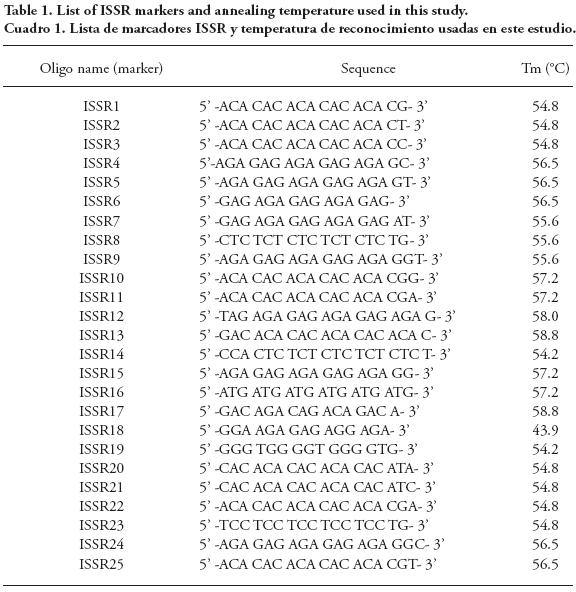
<body><![CDATA[<p align="justify"><font face="verdana" size="2"><b>Cultural practices</b></font></p>  	    <p align="justify"><font face="verdana" size="2">Throughout the experimental period the field was kept weed free, by weeding it every three weeks until harvesting. NPK fertilizer was 80&#45;60&#45;40 kg ha<sup>&#45;1</sup>: P and K were applied as a single dose at transplanting, whereas N was applied at 15, 35, 55, and 75 d after transplanting.</font></p>  	    <p align="justify"><font face="verdana" size="2"><b>Data collection</b></font></p>  	    <p align="justify"><font face="verdana" size="2">Data were collected by sampling five plants in the middle of the rows with exclusion of the plot border rows. The traits of M<sub>5</sub> measured were plant height, days to maturity, number of effective tillers, total number of grains per panicle, total grain weight per hill, 100 grain weight, seed length/width ratio, yield per plant and yield per hectare.</font></p>  	    <p align="justify"><font face="verdana" size="2"><b>Molecular markers</b></font></p>  	    <p align="justify"><font face="verdana" size="2">Twenty five ISSR primers with clear amplifications were selected for the genetic diversity study of genotypes (<a href="#t1">Table 1</a>).</font></p>  	    <p align="center"><font face="verdana" size="2"><a name="t1"></a></font></p>  	    <p align="center"><font face="verdana" size="2"><img src="/img/revistas/agro/v49n3/a02t1.jpg"></font></p>  	    <p align="justify"><font face="verdana" size="2"><b>DNA extraction</b></font></p>  	    <p align="justify"><font face="verdana" size="2">DNA was extracted from young leaves of rice plants using the CTAB method (Doyle, 1990) with minor modifications. The crude DNA (pellet form) was washed with 75 % ethanol, dissolved in 50 <i>&#956;</i>L TE buffer and treated with RNAse. The quality of the extracted DNA was checked using spectrophotometer (Nanodrop).</font></p>  	    ]]></body>
<body><![CDATA[<p align="justify"><font face="verdana" size="2"><b>Amplification and electrophoresis</b></font></p>  	    <p align="justify"><font face="verdana" size="2">PCR was optimized to 15 <i>&#956;</i>L with reaction mixture containing 1 <i>&#956;</i>L with 60 ng of template DNA, 7.5 <i>&#956;</i>L of PCR master mix (PCR master mix&#45;2X containing 0.06U <i>&#956;</i>L of Taq DNA polymerase, 3 mM MgCl<sub>2</sub> and 400 <i>&#956;</i>M of each dNTPs)(Product code # BIO&#45;5180&#45;1000, from 1st BASE Company, Science Park Road, Singapore), 1 <i>&#956;</i>L ISSR primer and 5.5 <i>&#956;</i>L nuclease free water (double&#45;distilled water) using a PCR machine (My cycler thermo cycler, BIO RAD, Watertown, Massachusetts, USA). Touch down PCR protocol was followed in this experiment (Korbie and Mattick, 2008), which included three phases. The temperature was adjusted to 95 &deg;C for 3 min before the first phase. In the first phase temperature and duration were respectively 95 &deg;C for 30 s for denaturation, Tm +10 &deg;C for 45 s for annealing and 72 &deg;C for 60 s for elongation. In the second phase the temperature and duration were respectively 95 &deg;C for 30 s for denaturation, Tm &#45;5 &deg;C for 45 s for annealing and 72 &deg;C for 60 s for elongation. In the third phase, the temperature and duration were adjusted to 72 &deg;C for 5 min for elongation. Phases 1 and 2 were repeated 10 and 20 times, respectively. Five microliters (5 <i>&#956;</i>L) of each PCR product was mixed with DNA loading dye, loaded on an agarose gel (1.8 %w/v) and run at 90 V for 90 min in 1&times; TBE buffer. Band pattern was documented using an UVPRO Alpha Innotech gel documentation unit.</font></p>  	    <p align="justify"><font face="verdana" size="2"><b>Data analysis</b></font></p>  	    <p align="justify"><font face="verdana" size="2">The data were analyzed using ANOVA with SAS 9.1 (SAS, 2002). Cluster analysis was performed with quantitative data for grouping similar accessions using NTSYS&#45;PC 2.1. with two algorithms: Un&#45;weighted Pairing Group Method with arithmetic averages (UPGMA), and SAHN clustering method. First, quantitative data were standardized using the software STAND and the Jaccard similarity coefficient was calculated with the quantitative database. The fitting between the distance matrix and the dendrogram was estimated by using a cophenetic correlation coefficient (r) (Sokal and Rohlf, 1962) through NTSYS pc 2.1 software (Rohlf, 2000). The average genetic distance was used as a cut&#45;off value for the description of the clusters. Distances were later used for principal component analysis (PCA).</font></p>  	    <p align="justify"><font face="verdana" size="2"><b>Band scoring and data analysis</b></font></p>  	    <p align="justify"><font face="verdana" size="2">Genotypes were scored for the presence or absence of the ISSR bands utilizing UVIDoc version 99.02. The bands scored were those reproducible and above 100 bp in length and the data were entered into a binary matrix as 1 (present) and 0 (absent). Similar bands were assumed as representative of the same locus. The Excel file containing the binary data was imported into NT Edit of NTSYS&#45;pc 2.02J. The 0/1 matrix was then used to calculate similarity as DICE coefficient using SIMQUAL subroutine in SIMILARITY routine. The genetic similarity was transformed to genetic dissimilarity with the equation:</font></p>  	    <p align="center"><font face="verdana" size="2"><img src="/img/revistas/agro/v49n3/a02e1.jpg"></font></p>  	    <p align="justify"><font face="verdana" size="2">where <i>Dij</i>: genetic distance for each genotype pair (<i>i</i> and <i>j</i>), and <i>Sij</i>: genetic similarity for each genotype pair (i and j).</font></p>  	    <p align="justify"><font face="verdana" size="2">Based on the dissimilarity matrix generated, a dendrogram was obtained using the UPGMA clustering procedure. The adjustment between the dissimilarity matrix and the dendrogram was estimated by the cophenetic correlation coefficient (r) according to Sokal and Rohlf (1962). The average genetic distance was used as cut&#45;off value to define genotype clusters. In addition, the evolved score matrix was employed for analyzing effective number of alleles (Ne), Nei's gene diversity (H) and Shannon information index (I) using POPGENE (version 1.31) software. NTSYS&#45;PC Mantel test was used to determine the correlation between quantitative traits and molecular data.</font></p>  	    <p align="justify"><font face="verdana" size="2">&nbsp;</font></p>  	    ]]></body>
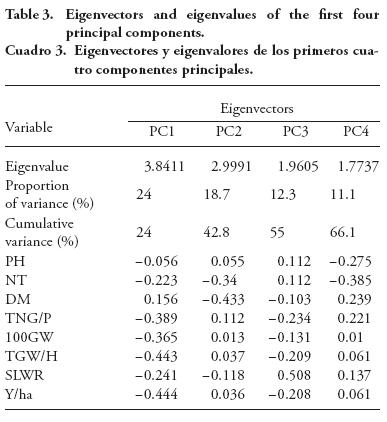
<body><![CDATA[<p align="justify"><font face="verdana" size="2"><b>Results and Discussion</b></font></p>  	    <p align="justify"><font face="verdana" size="2"><b>Morphological analysis</b></font></p>  	    <p align="justify"><font face="verdana" size="2">The data presented in <a href="/img/revistas/agro/v49n3/a02t2.jpg" target="_blank">Table 2</a> represent the mean performance of the tested entries for agronomic traits in two locations. Results showed that all tested genotypes including MR219 (parent) and its new derived mutants were statistically different from one another (p &#8804; 0.01) in their days to maturity, yield and yield components with the exception of 100 grain weight. Days to maturity in mutants were significantly shorter than that of the parent with the exception of lines MR219&#45;ML7 and MR219&#45;ML26. The days to maturity recorded for the 31 derived mutants ranged between 107 d in MR219&#45;<i>&#956;</i>L04 to 116 d in MR219&#45;ML7 and MR219&#45;ML26. The shorter life cycle and variability displayed in other traits reflects the likelihood of having significant improvement of important agronomic traits in rice using mutation breeding. It is worth noting that most of the derived mutants showed better performance than MR219 in days to maturity, numbers of effective tillers, total number of grains per panicle, total grain weight per hill, seed length to width ratio and yield per hectare. Thus, the results showed a considerable amount of variation at the morphological level and the significance of mutation breeding for enhancing genetic variability in breeding programmes. Since mutation breeding enhances the quantitative traits of rice genotypes (Saleem <i>et al.,</i> 2005, Shehata <i>et al.,</i> 2009, Babaei <i>et al.</i>, 2011 and Gomma <i>et al.,</i> 1995), we conclude that mutation breeding is a welcoming tool for betterment of rice productivity without denying other methods for the achievement of the same objective.</font></p>  	    <p align="justify"><font face="verdana" size="2"><b>Diversity assessment using quantitative traits</b></font></p>  	    <p align="justify"><font face="verdana" size="2">Genetic divergence analysis among the rice genotypes on the basis of quantitative traits plays a part in the selection of the diverse genotypes for further improvements of the rice varieties through breeding (Shahidullah <i>et al</i>., 2009). The diversity analysis using quantitative traits is a traditional approach (Kaw, 1995), but it can be used in classifying and differentiating different genotypes or species in a population (Franco <i>et al.,</i> 2001).</font></p>  	    <p align="justify"><font face="verdana" size="2">In our study, the standardized morphological data were utilized to compute Euclidean distances among the 32 rice genotypes and an UPGMA dendrogram was generated using quantitative traits. The dendrogram showed that similar genotypes tend to cluster together (<a href="/img/revistas/agro/v49n3/a02f1.jpg" target="_blank">Figure 1</a>) and the 32 rice genotypes were grouped into five major clusters (<a href="#t3">Table 3</a>) with dissimilarity coefficient of 1.43. Among the five clusters, groups I and IV had one variety each, group III had the highest number (22) of varieties, and groups II and V had four varieties each. This implies that these groups contain accessions that belong to different lines and would have some morphological and yield differences among themselves (Arif <i>et al.,</i> 2005). Varieties clustered together showed close relationship phenotypically, whereas those distant from one another were phenotypically and genetically different. For those clustered together, the irradiation probably changed similar components of their genes; therefore, they will appear similar to showcase their genetic composition, due to mutation brought about by irradiation. These dissimilarities might be traced to environmental influence on the varieties or accessions over a period of time. Thus, crossing between these closely related varieties would not be an agronomic advantage because it will result in low heterotic vigour and degeneration of offspring.</font></p>  	    <p align="center"><font face="verdana" size="2"><a name="t3"></a></font></p>  	    <p align="center"><font face="verdana" size="2"><img src="/img/revistas/agro/v49n3/a02t3.jpg"></font></p>  	    <p align="justify"><font face="verdana" size="2">For distant genotypes, it could be inferred that chromosomal changes caused by irradiation treatments took place at different locations and levels in the chromosome; thus, differences between genotypes would be wider. These changes are important for breeding programmes as this will lead to achievement of higher heterotic vigour, which is the ultimate aim of breeding programmes especially those designed for food security and other agricultural or aesthetic purposes. Higher genetic diversity that might be advantageous to breeding varieties with desirable traits is the lot of mutation breeding in rice (Latif <i>et al.,</i> 20011a, b), and as such it is well rooted in this study. This implies that mutation breeding will be a tool for generating genetic divergence in order to attain desirable traits in rice or other cultivars.</font></p>  	    <p align="justify"><font face="verdana" size="2">PCA is a multivariate grouping approach based on similarity coefficients or variance&#45;covariance or correlation values. In our study it showed diversity among 32 rice accessions through few eigenvectors. Therefore, it is expected to be highly informative about the differences of major groups (Behera <i>et al.,</i> 2012).</font></p>  	    ]]></body>
<body><![CDATA[<p align="justify"><font face="verdana" size="2">In our study, the first four principal components (PC) contributed 66.1 % of the total variation out of which PC1 explained 24 % of the variation, and PC2, PC3 and PC4 explained 18.7 %, 12.3 %, and 11.1 %, respectively (<a href="/img/revistas/agro/v49n3/a02t4.jpg" target="_blank">Table 4</a>). These results are due to the fact that the highest level of variation is usually recorded in the first or the second or both PC. Thus, for the total variation, 42.8% was explained by PC1 and PC2 in our study; and 82.7 % by PC1 among 32 rice genotypes (Lasalita&#45;Zapico <i>et al</i>., 2010), and 68.6 % by PC1 and PC2 (Caldo <i>et al.,</i> 1996).</font></p>  	    <p align="justify"><font face="verdana" size="2"><b>Cluster analysis using ISSR markers</b></font></p>  	    <p align="justify"><font face="verdana" size="2">The selected primers generated 443 clear polymorphic bands (<a href="/img/revistas/agro/v49n3/a02t4.jpg" target="_blank">Table 4</a>) and gel pictures of ISSR markers showing different patterns of polymorphism are shown in <a href="/img/revistas/agro/v49n3/a02f2.jpg" target="_blank">Figures 2</a> and <a href="/img/revistas/agro/v49n3/a02f3.jpg" target="_blank">3</a>. The size of the amplified products ranged from 100 to 3000 bp. The number of bands generated per primer varied from 11 to 22. Primer ISSR21 generated the minimum number of bands, whereas the peak was observed in primers ISSR10 and ISSR18, and average number of bands per primer was 18. Overall, bands were 85.10 % polymorphic in the accessions evaluated. Monomorphic bands are constant bands and cannot be used to study diversity, whereas polymorphic bands reveal differences that can be used to examine and establish systematic relationships among individuals and populations. The number of alleles detected depends upon fingerprinting techniques and materials used in the study (Thomson <i>et al.,</i> 2009; Kaushik <i>et al.,</i> 2011). The variation in the number of bands amplified by different primers is due to factors such as primer structure, template quantity and number of annealing sites in the genome (Muralidharan and Wakeland, 1993). Each individual primer has a unique multi&#45;locus phenotype.</font></p>  	    <p align="justify"><font face="verdana" size="2">Jaccard's genetic similarity coefficient among rice genotypes ranged from 0.17 to 0.63 in our study. This indicates a high level of genetic variability because dendrogram coefficients ranging from 0.04 to 0.92 are categorized as great indicators of variation among rice genotypes (Tu <i>et al.,</i> 2007; Wong <i>et al.,</i> 2009). The lowest genetic similarity was observed between MR219&#45;ML8 and MR219&#45;ML22, whereas the highest similarity was found between MR219&#45;ML9 and MR219&#45;ML10. The difference between the highest and the lowest values of genetic distance showed a wide range of variability among the 32 accessions evaluated. Genotypes were grouped into six major clusters with a threshold genetic distance of 0.396. The highest number of genotypes was found in cluster IV with nine, followed by clusters I, II and III with seven, and clusters V and VI had only one genotype each (<a href="/img/revistas/agro/v49n3/a02f4.jpg" target="_blank">Figure 4</a>). High genetic diversity among mutant rice varieties in our study might be due to the effect of ion beam irradiation. The genetic diversity in the genotypes of clusters V and VI could be explained by some morphological or agronomical traits that differentiated them from the other varieties or genotypes (Arif <i>et al.,</i> 2005).</font></p>  	    <p align="justify"><font face="verdana" size="2"><b>Genetic diversity with ISSR markers</b></font></p>  	    <p align="justify"><font face="verdana" size="2">Several rice genotypes were studied using enzymatic markers (Glaszmann, 1987), physiological and morphological characters (Oka, 1988; Vairavan <i>et al.,</i> 1973), as well as molecular markers. These molecular markers included RFLP (Mc Couch and Tanksley, 1991), microsatellite (Yang <i>et al.,</i> 1994), RAPD (Sarma and Bahar, 2005) and ISSR (Bhuyan, 2007). It is argued that ISSRs are not suitable for estimating the effective number of alleles (Ne) and Nei's gene diversity (H) because different bands on the gels do not imply different alleles. Therefore, it should be taken into account that estimates of diversity as number of alleles and Nei's gene diversity shown in our study by using dominant markers are likely underestimated. Average values for Ne ranged from 1.14 to 1.38 among the 25 markers, between 0.25 to 0.46 for H, from 0.15 to 0.35 for Shannon's information index (I), and for PIC between 0.22 for ISSR21 and 0.35 for ISSR23 and ISSR24 (<a href="/img/revistas/agro/v49n3/a02t4.jpg" target="_blank">Table 4</a>). The PIC value provides an estimate of the discriminating power of a marker based on the number of alleles at a locus and relative frequencies of these alleles. These values shown for Ne's gene diversity, Shanon's information index and PIC might be slightly lower or higher in different research areas (Mazid <i>et al.,</i> 2013, Singh <i>et al.,</i> 2010; Cheng <i>et al.,</i> 2012). The outcome of our study further establishes that the range of values for these diversity parameters is around 0.20. It should be noted that the minimum and maximum for each of these parameters are not usually or supposedly to be similar or the same, as reported by Mazid <i>et al</i> (2013) for PIC and by Cheng <i>et al.</i> (2012) for Nei's gene diversity values. Determination of minimum and maximum value could be linked to the use of different markers as well as examination of different varieties or species.</font></p>  	    <p align="justify"><font face="verdana" size="2"><b>Correlation between phenotypic and ISSR markers data</b></font></p>  	    <p align="justify"><font face="verdana" size="2">The correlation between the Euclidean distance matrices based on the phenotypic traits and ISSR data was r=0.2, which indicates a low positive correlation between quantitative traits and ISSR markers. The reduced level of association between molecular and quantitative traits might be due to the uncontrollable influence of the environmental factors on the quantitative traits, because molecular work is less influenced by the environment. This is the usual trend of the association between quantitative traits and molecular analyses in a single crop (Mazid <i>et al.,</i> 2013; Singh <i>et al.,</i> 2011) Thus, varietal or genotype selection and related decisions could be reliably based on the molecular result.</font></p>  	    <p align="justify"><font face="verdana" size="2">The overall results obtained from both quantitative and molecular data indicate that irradiation might introduce a significant level of genetic and morphological diversities in mutant lines, relative to what is inherent in the parent. Genetic diversity is evident through the use quantitative traits and it is confirmed at the molecular level (Babaei, 2010; Domingo <i>et al</i>., 2007). This is attested to by the result of the correlation between molecular and quantitative trait parameters in our study; besides, our results showed that irradiation could generate a considerable amount of genetic variability, and provide new avenues for crop improvement and diversification (Elayaraja <i>et al.,</i> 2005; Luzi&#45;Kihupi <i>et al.,</i> 2009). This crop improvement might also be successful development of mutant lines with desirable traits, which are absent in the parent (Shehata <i>et al.,</i> 2009). The similarity coefficients, dendrogram clusters and principal component analysis from the ISSR data in the M5 population, were highly correlated with the quantitative trait results. This shows the effectiveness of ISSR markers in varietal identification and detection of mutants with high reproducibility levels. Therefore, ISSR markers might overcome the major limitations to the methods of low reproducibility of RAPD, high cost of AFLP and the need to know the flanking sequences to develop species specific primers for SSR polymorphism (Reddy <i>et al.,</i> 2002).</font></p>  	    <p align="justify"><font face="verdana" size="2">&nbsp;</font></p>  	    ]]></body>
<body><![CDATA[<p align="justify"><font face="verdana" size="2"><b>Conclusions</b></font></p>  	    <p align="justify"><font face="verdana" size="2">Both quantitative traits and molecular markers are useful tools for assessing genetic variability and diversity of mutant rice genotypes. There was a positive low correlation between quantitative trait and molecular data. Based on the molecular analysis, the diversity between MR219&#45;ML8 and MR219&#45;ML22 suggests that successful crossings could be done between them to develop high yielding varieties. Besides, there was genetic stability of the mutants because all ISSR markers showed homozygous bands. Finally, the best lines are MR219&#45;ML10 and MR219&#45;ML4 followed by MR219&#45;ML9 and MR219&#45;ML21 for higher grain yield production.</font></p>  	    <p align="justify"><font face="verdana" size="2">&nbsp;</font></p>  	    <p align="justify"><font face="verdana" size="2"><b>Acknowledgment</b></font></p>  	    <p align="justify"><font face="verdana" size="2">The authors would like to acknowledge the financial support of IAEA's Coordinated Research Project (CRP) for Food and Feed &#91;CRP Code: D2.30.30&#93;. We also appreciate Malaysia Ministry of Education for Long&#45;Term Research Grant Scheme (LRGS) on enhancing sustainable rice production and MOSTI for Science Fund (06&#45;03&#45;01&#45;SF0110).</font></p>  	    <p align="justify"><font face="verdana" size="2">&nbsp;</font></p>  	    <p align="justify"><font face="verdana" size="2"><b>Literature Cited</b></font></p>  	    <!-- ref --><p align="justify"><font face="verdana" size="2">Ajibade, S. R., N. F. Weeden and S. M. Chite. 2000. Inter&#45;simple sequence repeat analysis of genetic relationships in the genus Viglla. Euphytica 111: 47&#45;55.    &nbsp;&nbsp;&nbsp;&nbsp;&nbsp;&nbsp;&nbsp;&nbsp;[&#160;<a href="javascript:void(0);" onclick="javascript: window.open('/scielo.php?script=sci_nlinks&ref=597362&pid=S1405-3195201500030000200001&lng=','','width=640,height=500,resizable=yes,scrollbars=1,menubar=yes,');">Links</a>&#160;]<!-- end-ref --></font></p>  	    <!-- ref --><p align="justify"><font face="verdana" size="2">Arif, M., S. Kousar, M. Asghar Bajwa, A. Arif, and Y. Zafar. 2005. Genetic diversity among rice genotypes of Pakistan through random amplified polymorphic DNA (RAPD) analysis. Pak. J. Bot. 37: 585&#45;592.    &nbsp;&nbsp;&nbsp;&nbsp;&nbsp;&nbsp;&nbsp;&nbsp;[&#160;<a href="javascript:void(0);" onclick="javascript: window.open('/scielo.php?script=sci_nlinks&ref=597364&pid=S1405-3195201500030000200002&lng=','','width=640,height=500,resizable=yes,scrollbars=1,menubar=yes,');">Links</a>&#160;]<!-- end-ref --></font></p>  	    <!-- ref --><p align="justify"><font face="verdana" size="2">Babaei, A. 2010. Genetic diversity analysis of Nemat rice mutant (<i>Oryza sativa</i> L.) via RAPD marker. American&#45;Eurasian J. Agric. Environ. Sci. 8: 452&#45;456.    &nbsp;&nbsp;&nbsp;&nbsp;&nbsp;&nbsp;&nbsp;&nbsp;[&#160;<a href="javascript:void(0);" onclick="javascript: window.open('/scielo.php?script=sci_nlinks&ref=597366&pid=S1405-3195201500030000200003&lng=','','width=640,height=500,resizable=yes,scrollbars=1,menubar=yes,');">Links</a>&#160;]<!-- end-ref --></font></p>  	    <!-- ref --><p align="justify"><font face="verdana" size="2">Babaei, A., G. A. Nematzadeh, and H. Hashemi. 2011. An evaluation of genetic differentiation in rice mutants using semi&#45;random markers and morphological characteristics. Austr. J. Crop Sci. 5: 1715&#45;1722.    &nbsp;&nbsp;&nbsp;&nbsp;&nbsp;&nbsp;&nbsp;&nbsp;[&#160;<a href="javascript:void(0);" onclick="javascript: window.open('/scielo.php?script=sci_nlinks&ref=597368&pid=S1405-3195201500030000200004&lng=','','width=640,height=500,resizable=yes,scrollbars=1,menubar=yes,');">Links</a>&#160;]<!-- end-ref --></font></p>  	    <!-- ref --><p align="justify"><font face="verdana" size="2">Baloch. A. W., A. M. Soomro, M. A. Javed, H. R. Bughio, S. M. Alam, M. S. Bughio, T. Mohammed, and N. N. Mastoi. 2003. Induction of salt tolerance in rice through mutation breeding. Asian J. Plant Sci. 2: 273&#45;276.    &nbsp;&nbsp;&nbsp;&nbsp;&nbsp;&nbsp;&nbsp;&nbsp;[&#160;<a href="javascript:void(0);" onclick="javascript: window.open('/scielo.php?script=sci_nlinks&ref=597370&pid=S1405-3195201500030000200005&lng=','','width=640,height=500,resizable=yes,scrollbars=1,menubar=yes,');">Links</a>&#160;]<!-- end-ref --></font></p>  	    <!-- ref --><p align="justify"><font face="verdana" size="2">Bashar, Z., U. A.Wayayok, and A. M. S. Mohd. 2014. Determination of some physical properties of common Malaysian rice MR219 seeds. Austr. J. Crop Sci. 8: 332&#45;337.    &nbsp;&nbsp;&nbsp;&nbsp;&nbsp;&nbsp;&nbsp;&nbsp;[&#160;<a href="javascript:void(0);" onclick="javascript: window.open('/scielo.php?script=sci_nlinks&ref=597372&pid=S1405-3195201500030000200006&lng=','','width=640,height=500,resizable=yes,scrollbars=1,menubar=yes,');">Links</a>&#160;]<!-- end-ref --></font></p>  	    <!-- ref --><p align="justify"><font face="verdana" size="2">Behera, L., B. C. Patra, R. K. Sahu, A. Nanda, S. C. Sahu, A. Patnaik, G. J. N. Rao, and O. N. Singh. 2012. Assessment of genetic diversity in medicinal rices using microsatellite markers. Austr. J. Crop Sci. 6:1369&#45;1376.    &nbsp;&nbsp;&nbsp;&nbsp;&nbsp;&nbsp;&nbsp;&nbsp;[&#160;<a href="javascript:void(0);" onclick="javascript: window.open('/scielo.php?script=sci_nlinks&ref=597374&pid=S1405-3195201500030000200007&lng=','','width=640,height=500,resizable=yes,scrollbars=1,menubar=yes,');">Links</a>&#160;]<!-- end-ref --></font></p>  	    <!-- ref --><p align="justify"><font face="verdana" size="2">Bhuyan, N., B. K. Borah and R. N. Sarma. 2007. Genetic diversity analysis in traditional lowland rice (<i>Oryza sativa</i> L.) of Assam using RAPD and ISSR markers. Current Sci. 93: 967&#150;972.    &nbsp;&nbsp;&nbsp;&nbsp;&nbsp;&nbsp;&nbsp;&nbsp;[&#160;<a href="javascript:void(0);" onclick="javascript: window.open('/scielo.php?script=sci_nlinks&ref=597376&pid=S1405-3195201500030000200008&lng=','','width=640,height=500,resizable=yes,scrollbars=1,menubar=yes,');">Links</a>&#160;]<!-- end-ref --></font></p>  	    <!-- ref --><p align="justify"><font face="verdana" size="2">Caldo, R. A., L. S. Sebastian, and J. E. Hernandez. 1996. Morphology&#45;based genetic diversity analysis of ancestral lines of Philippine rice cultivars. Phil. J. Crop Sci. 21: 86&#150;92.    &nbsp;&nbsp;&nbsp;&nbsp;&nbsp;&nbsp;&nbsp;&nbsp;[&#160;<a href="javascript:void(0);" onclick="javascript: window.open('/scielo.php?script=sci_nlinks&ref=597378&pid=S1405-3195201500030000200009&lng=','','width=640,height=500,resizable=yes,scrollbars=1,menubar=yes,');">Links</a>&#160;]<!-- end-ref --></font></p>  	    <!-- ref --><p align="justify"><font face="verdana" size="2">Charters, Y. M. and M. J. Wilkinson. 2000. The use of selfpollinated progenies as 'in&#45;groups' for the genetic characterization of cocoa germ plasm. Theor. Appl. Genet. 100: 160&#45; 166.    &nbsp;&nbsp;&nbsp;&nbsp;&nbsp;&nbsp;&nbsp;&nbsp;[&#160;<a href="javascript:void(0);" onclick="javascript: window.open('/scielo.php?script=sci_nlinks&ref=597380&pid=S1405-3195201500030000200010&lng=','','width=640,height=500,resizable=yes,scrollbars=1,menubar=yes,');">Links</a>&#160;]<!-- end-ref --></font></p>  	    <!-- ref --><p align="justify"><font face="verdana" size="2">Cheng, Z. Q., F. Y. Ying, D. Q. Li, T. Q. Yu, J. Fu, H. J. Yan, and X. Q. Huang. 2012. Genetic diversity of wild rice species in Yunnan province of China. Rice Sci. 19: 21&#150;28.    &nbsp;&nbsp;&nbsp;&nbsp;&nbsp;&nbsp;&nbsp;&nbsp;[&#160;<a href="javascript:void(0);" onclick="javascript: window.open('/scielo.php?script=sci_nlinks&ref=597382&pid=S1405-3195201500030000200011&lng=','','width=640,height=500,resizable=yes,scrollbars=1,menubar=yes,');">Links</a>&#160;]<!-- end-ref --></font></p>  	    <!-- ref --><p align="justify"><font face="verdana" size="2">Domingo, C., F. Andr&eacute;s, and M. Tal&oacute;n. 2007. Rice cv. Bahia mutagenized population: a new resource for rice breeding in the Mediterranean basin. Spanish J. Agric. Res. 5: 341&#45; 347.    &nbsp;&nbsp;&nbsp;&nbsp;&nbsp;&nbsp;&nbsp;&nbsp;[&#160;<a href="javascript:void(0);" onclick="javascript: window.open('/scielo.php?script=sci_nlinks&ref=597384&pid=S1405-3195201500030000200012&lng=','','width=640,height=500,resizable=yes,scrollbars=1,menubar=yes,');">Links</a>&#160;]<!-- end-ref --></font></p>  	    <!-- ref --><p align="justify"><font face="verdana" size="2">Doyle, J. J. 1990. Isolation of plant DNA from fresh tissue. Focus 12: 13&#150;15.    &nbsp;&nbsp;&nbsp;&nbsp;&nbsp;&nbsp;&nbsp;&nbsp;[&#160;<a href="javascript:void(0);" onclick="javascript: window.open('/scielo.php?script=sci_nlinks&ref=597386&pid=S1405-3195201500030000200013&lng=','','width=640,height=500,resizable=yes,scrollbars=1,menubar=yes,');">Links</a>&#160;]<!-- end-ref --></font></p>  	    <!-- ref --><p align="justify"><font face="verdana" size="2">Elayaraja K., M. Prakash, K. Saravanan, S. B. Kumar, and J. Ganesan. 2005. Studies on variability, heritability and genetic advance for certain quantitative characters in mutant population of rice (<i>Oryza sativa</i> L.). Crop Research&#45;Hisar 1: 134&#45;137.    &nbsp;&nbsp;&nbsp;&nbsp;&nbsp;&nbsp;&nbsp;&nbsp;[&#160;<a href="javascript:void(0);" onclick="javascript: window.open('/scielo.php?script=sci_nlinks&ref=597388&pid=S1405-3195201500030000200014&lng=','','width=640,height=500,resizable=yes,scrollbars=1,menubar=yes,');">Links</a>&#160;]<!-- end-ref --></font></p>  	    <!-- ref --><p align="justify"><font face="verdana" size="2">Franco, J., J. Crossa, J. M. Ribaut, J. Betran, M. L. Warburton, and M. Khairallah, 2001. A method for combining molecular markers and phenotypic attributes for classifying plant genotypes. Theor. Appl. Genet. 103: 944&#45;952.    &nbsp;&nbsp;&nbsp;&nbsp;&nbsp;&nbsp;&nbsp;&nbsp;[&#160;<a href="javascript:void(0);" onclick="javascript: window.open('/scielo.php?script=sci_nlinks&ref=597390&pid=S1405-3195201500030000200015&lng=','','width=640,height=500,resizable=yes,scrollbars=1,menubar=yes,');">Links</a>&#160;]<!-- end-ref --></font></p>  	    <!-- ref --><p align="justify"><font face="verdana" size="2">Glaszmann, J. C., 1987. Isozymes and classification of Asian rice varieties. Theor. Appl. Genet. 74: 21&#45;30.    &nbsp;&nbsp;&nbsp;&nbsp;&nbsp;&nbsp;&nbsp;&nbsp;[&#160;<a href="javascript:void(0);" onclick="javascript: window.open('/scielo.php?script=sci_nlinks&ref=597392&pid=S1405-3195201500030000200016&lng=','','width=640,height=500,resizable=yes,scrollbars=1,menubar=yes,');">Links</a>&#160;]<!-- end-ref --></font></p>  	    <!-- ref --><p align="justify"><font face="verdana" size="2">Gomma, M. E., A. A. El&#45;Hissewy, A. B. Khattab, and A. A. Abd&#45;Allah. 1995. Improvement of yield and some related characters of rice (<i>Oryza sativa</i> L.), by irradiation. Menofiya J. Agric. Res 20: 395&#45;408.    &nbsp;&nbsp;&nbsp;&nbsp;&nbsp;&nbsp;&nbsp;&nbsp;[&#160;<a href="javascript:void(0);" onclick="javascript: window.open('/scielo.php?script=sci_nlinks&ref=597394&pid=S1405-3195201500030000200017&lng=','','width=640,height=500,resizable=yes,scrollbars=1,menubar=yes,');">Links</a>&#160;]<!-- end-ref --></font></p>  	    <!-- ref --><p align="justify"><font face="verdana" size="2">Haussmann, B. I., and H. K. Parzies. 2009. Methodologies for generating variability. Part 1: Use of genetic resources in plant breeding and farmer participation. <i>In</i>: Plant Breeding and Farmer Participation. Ceccarelli, S., E.P. Guimar&atilde;es, and E. Weltzien (eds). Food And Agriculture Organization of The United Nations. Rome. pp: 107&#45;194.    &nbsp;&nbsp;&nbsp;&nbsp;&nbsp;&nbsp;&nbsp;&nbsp;[&#160;<a href="javascript:void(0);" onclick="javascript: window.open('/scielo.php?script=sci_nlinks&ref=597396&pid=S1405-3195201500030000200018&lng=','','width=640,height=500,resizable=yes,scrollbars=1,menubar=yes,');">Links</a>&#160;]<!-- end-ref -->.</font></p>  	    <!-- ref --><p align="justify"><font face="verdana" size="2">Ibrahim, R., A.R. Harun, S. Hussein, A. Mat Zin, S. Othman, M. Mahmud, M.R. Yusof, S.H. MohdNahar, Z.S. Kamaruddin, and P.K. Ana Ling, 2013. Application of mutation techniques and biotechnology for minimal water requirement and improvement of amylose content in rice. Mutation breeding project forum for nuclear cooperation in Asia (FNCA) 6: 46&#45;59.    &nbsp;&nbsp;&nbsp;&nbsp;&nbsp;&nbsp;&nbsp;&nbsp;[&#160;<a href="javascript:void(0);" onclick="javascript: window.open('/scielo.php?script=sci_nlinks&ref=597398&pid=S1405-3195201500030000200019&lng=','','width=640,height=500,resizable=yes,scrollbars=1,menubar=yes,');">Links</a>&#160;]<!-- end-ref --></font></p>  	    <!-- ref --><p align="justify"><font face="verdana" size="2">Kaushik, A., S. Jain, S. R. McCouch, and R. K. Jain. 2011. Phylogenetic relationships among various groups of rice (<i>Oryza sativa</i> L.) as revealed by microsatellite and transposable element&#45;based marker analysis. Indian J. Genet. Plant Breed. 71:139&#45;150.    &nbsp;&nbsp;&nbsp;&nbsp;&nbsp;&nbsp;&nbsp;&nbsp;[&#160;<a href="javascript:void(0);" onclick="javascript: window.open('/scielo.php?script=sci_nlinks&ref=597400&pid=S1405-3195201500030000200020&lng=','','width=640,height=500,resizable=yes,scrollbars=1,menubar=yes,');">Links</a>&#160;]<!-- end-ref --></font></p>  	    <!-- ref --><p align="justify"><font face="verdana" size="2">Kaw, R. N., 1995. Analysis of divergence in some cold&#45;tolerant rices. Indian J. Genet. Plant Breed. 55: 84 &#45;89.    &nbsp;&nbsp;&nbsp;&nbsp;&nbsp;&nbsp;&nbsp;&nbsp;[&#160;<a href="javascript:void(0);" onclick="javascript: window.open('/scielo.php?script=sci_nlinks&ref=597402&pid=S1405-3195201500030000200021&lng=','','width=640,height=500,resizable=yes,scrollbars=1,menubar=yes,');">Links</a>&#160;]<!-- end-ref --></font></p>  	    <!-- ref --><p align="justify"><font face="verdana" size="2">Korbie, D. J. and J. S. Mattick. 2008. Touchdown PCR for increased specificity and sensitivity in PCR amplification. Nature Protocols 3: 1452&#45;1456.    &nbsp;&nbsp;&nbsp;&nbsp;&nbsp;&nbsp;&nbsp;&nbsp;[&#160;<a href="javascript:void(0);" onclick="javascript: window.open('/scielo.php?script=sci_nlinks&ref=597404&pid=S1405-3195201500030000200022&lng=','','width=640,height=500,resizable=yes,scrollbars=1,menubar=yes,');">Links</a>&#160;]<!-- end-ref --></font></p>  	    <!-- ref --><p align="justify"><font face="verdana" size="2">Lasalita&#45;Zapico, F. C., J. A. Namocatcat, and J. L. Cari&ntilde;o&#45;Turner. 2010. Genetic diversity analysis of traditional upland rice cultivars in Kihan, Malapatan, Sarangani Province, Philippines using morphometric markers. Phil. J. Crop Sci. 139: 177&#150;180.    &nbsp;&nbsp;&nbsp;&nbsp;&nbsp;&nbsp;&nbsp;&nbsp;[&#160;<a href="javascript:void(0);" onclick="javascript: window.open('/scielo.php?script=sci_nlinks&ref=597406&pid=S1405-3195201500030000200023&lng=','','width=640,height=500,resizable=yes,scrollbars=1,menubar=yes,');">Links</a>&#160;]<!-- end-ref --></font></p>  	    <!-- ref --><p align="justify"><font face="verdana" size="2">Latif M. A., M. R. Yusop, M. M. Rahman, and M. R. Bashar Talukdar. 2011a. Microsatellite and minisatellite markers based DNA fingerprinting and genetic diversity of blast and ufra resistant genotypes. Comptes Rendus Biol. 334: 282&#150;289.    &nbsp;&nbsp;&nbsp;&nbsp;&nbsp;&nbsp;&nbsp;&nbsp;[&#160;<a href="javascript:void(0);" onclick="javascript: window.open('/scielo.php?script=sci_nlinks&ref=597408&pid=S1405-3195201500030000200024&lng=','','width=640,height=500,resizable=yes,scrollbars=1,menubar=yes,');">Links</a>&#160;]<!-- end-ref --></font></p>  	    <!-- ref --><p align="justify"><font face="verdana" size="2">Latif, M. A., M. M. Rahman, M. S. Kabir, M. A. Ali, M. T. Islam, and M. Y. Rafii. 2011b. Genetic diversity analyzed by quantitative traits among rice (<i>Oryza sativa</i> L.) genotypes resistant to blast disease. Afr. J. Microbiol. Res. 5: 4383&#150;4391.    &nbsp;&nbsp;&nbsp;&nbsp;&nbsp;&nbsp;&nbsp;&nbsp;[&#160;<a href="javascript:void(0);" onclick="javascript: window.open('/scielo.php?script=sci_nlinks&ref=597410&pid=S1405-3195201500030000200025&lng=','','width=640,height=500,resizable=yes,scrollbars=1,menubar=yes,');">Links</a>&#160;]<!-- end-ref --></font></p>  	    <!-- ref --><p align="justify"><font face="verdana" size="2">Levin, I., N. Gilboa, E. Yeselson, S. Shen, and A. A. Schaffer. 2000. Fxr, a major locus that modulates the fructose to glucose ratio in mature tomato fruits. Theor. Appl. Genet. 100: 256&#45;262.    &nbsp;&nbsp;&nbsp;&nbsp;&nbsp;&nbsp;&nbsp;&nbsp;[&#160;<a href="javascript:void(0);" onclick="javascript: window.open('/scielo.php?script=sci_nlinks&ref=597412&pid=S1405-3195201500030000200026&lng=','','width=640,height=500,resizable=yes,scrollbars=1,menubar=yes,');">Links</a>&#160;]<!-- end-ref --></font></p>  	    <!-- ref --><p align="justify"><font face="verdana" size="2">Luzi&#45;Kihupi, A., J. A, Zakayo, H. Tusekelege, M. Mkuya, N. J. M. Kibanda, K. J. Khatib, and A. Maerere. 2009. Mutation breeding for rice improvement in Tanzania. Book of Abstracts, International Symposium on Induced Mutations in Plants Held at Vienna, Austria 12&#150;15 August 2008. FAO. Rome. pp: 177.    &nbsp;&nbsp;&nbsp;&nbsp;&nbsp;&nbsp;&nbsp;&nbsp;[&#160;<a href="javascript:void(0);" onclick="javascript: window.open('/scielo.php?script=sci_nlinks&ref=597414&pid=S1405-3195201500030000200027&lng=','','width=640,height=500,resizable=yes,scrollbars=1,menubar=yes,');">Links</a>&#160;]<!-- end-ref --></font></p>  	    <!-- ref --><p align="justify"><font face="verdana" size="2">Mazid, M. S., M. Y. Rafii, M. M. Hanafi, H. A. Rahim, and M. A. Latif. 2013. Genetic variation, heritability, divergence and biomass accumulation of rice genotypes resistant to bacterial blight revealed by quantitative traits and ISSR markers. Physiologia Plantarum 149: 432&#45;447.    &nbsp;&nbsp;&nbsp;&nbsp;&nbsp;&nbsp;&nbsp;&nbsp;[&#160;<a href="javascript:void(0);" onclick="javascript: window.open('/scielo.php?script=sci_nlinks&ref=597416&pid=S1405-3195201500030000200028&lng=','','width=640,height=500,resizable=yes,scrollbars=1,menubar=yes,');">Links</a>&#160;]<!-- end-ref --></font></p>  	    <!-- ref --><p align="justify"><font face="verdana" size="2">McCouch, S. R., and S. D. Tanksley. 1991. Development and use of restriction fragment length polymorphism in rice breeding and genetics. <i>In</i>: Khush, G. S., and G. H. Toenniessen (eds). Rice Biotechnology. Biotechnology in Agriculture No. 6. International Rice Research Institute. Manila, Philippines. pp: 109&#45;133.    &nbsp;&nbsp;&nbsp;&nbsp;&nbsp;&nbsp;&nbsp;&nbsp;[&#160;<a href="javascript:void(0);" onclick="javascript: window.open('/scielo.php?script=sci_nlinks&ref=597418&pid=S1405-3195201500030000200029&lng=','','width=640,height=500,resizable=yes,scrollbars=1,menubar=yes,');">Links</a>&#160;]<!-- end-ref --></font></p>  	    <!-- ref --><p align="justify"><font face="verdana" size="2">Muralidharan, K., and E. K. Wakeland. 1993. Concentration of primer and template qualitatively affects products in random&#45;amplified polymorphic DNA PCR. Biotechniques 14: 362&#45;364.    &nbsp;&nbsp;&nbsp;&nbsp;&nbsp;&nbsp;&nbsp;&nbsp;[&#160;<a href="javascript:void(0);" onclick="javascript: window.open('/scielo.php?script=sci_nlinks&ref=597420&pid=S1405-3195201500030000200030&lng=','','width=640,height=500,resizable=yes,scrollbars=1,menubar=yes,');">Links</a>&#160;]<!-- end-ref --></font></p>  	    <!-- ref --><p align="justify"><font face="verdana" size="2">Oka, H. I. 1988. Indica&#45;Japonica differentiation of rice cultivars. <i>In</i>: Oka, H. I. (ed). Origin of Cultivated Rice. Japan Science Society Press/Elsevier. Tokyo/Amsterdam. pp: 141&#45;179.    &nbsp;&nbsp;&nbsp;&nbsp;&nbsp;&nbsp;&nbsp;&nbsp;[&#160;<a href="javascript:void(0);" onclick="javascript: window.open('/scielo.php?script=sci_nlinks&ref=597422&pid=S1405-3195201500030000200031&lng=','','width=640,height=500,resizable=yes,scrollbars=1,menubar=yes,');">Links</a>&#160;]<!-- end-ref --></font></p>  	    <!-- ref --><p align="justify"><font face="verdana" size="2">Pasakinskiene, I., C. M. Griffiths, A. J. E. Bettany, Y. Paplauskiene, and M. W. Humphreys (2000) Anchored simple&#45;sequence repeats as primers to generate species&#45;specific DNA markers in Lolium and Festuca grasses. Theor. Appl. Genet. 100: 384&#45;390.    &nbsp;&nbsp;&nbsp;&nbsp;&nbsp;&nbsp;&nbsp;&nbsp;[&#160;<a href="javascript:void(0);" onclick="javascript: window.open('/scielo.php?script=sci_nlinks&ref=597424&pid=S1405-3195201500030000200032&lng=','','width=640,height=500,resizable=yes,scrollbars=1,menubar=yes,');">Links</a>&#160;]<!-- end-ref --></font></p>  	    <!-- ref --><p align="justify"><font face="verdana" size="2">Prevost, A. and M. J. Wilkinson. 1999. A new system of comparing PCR primers applied to ISSR fingerprinting of potato cultivars. Theor. Appl. Genet. 98: 107&#45;112.    &nbsp;&nbsp;&nbsp;&nbsp;&nbsp;&nbsp;&nbsp;&nbsp;[&#160;<a href="javascript:void(0);" onclick="javascript: window.open('/scielo.php?script=sci_nlinks&ref=597426&pid=S1405-3195201500030000200033&lng=','','width=640,height=500,resizable=yes,scrollbars=1,menubar=yes,');">Links</a>&#160;]<!-- end-ref --></font></p>  	    <!-- ref --><p align="justify"><font face="verdana" size="2">Qayyoum, A., M. U. Mufti, and S. A. Rabbani. 2000. Evaluation of different rice genotypes for stability in yield performance. Pak. J. Scient. Ind. Res. 43: 188&#45;190.    &nbsp;&nbsp;&nbsp;&nbsp;&nbsp;&nbsp;&nbsp;&nbsp;[&#160;<a href="javascript:void(0);" onclick="javascript: window.open('/scielo.php?script=sci_nlinks&ref=597428&pid=S1405-3195201500030000200034&lng=','','width=640,height=500,resizable=yes,scrollbars=1,menubar=yes,');">Links</a>&#160;]<!-- end-ref --></font></p>  	    <!-- ref --><p align="justify"><font face="verdana" size="2">Reddy, M. P., N. Sarla, and E. A. Siddiq. 2002. Inter simple sequence repeat (ISSR) polymorphism and its application in plant breeding. Euphytica 128: 9&#150;17.    &nbsp;&nbsp;&nbsp;&nbsp;&nbsp;&nbsp;&nbsp;&nbsp;[&#160;<a href="javascript:void(0);" onclick="javascript: window.open('/scielo.php?script=sci_nlinks&ref=597430&pid=S1405-3195201500030000200035&lng=','','width=640,height=500,resizable=yes,scrollbars=1,menubar=yes,');">Links</a>&#160;]<!-- end-ref --></font></p>  	    <!-- ref --><p align="justify"><font face="verdana" size="2">Rohlf, F. J. 2000. NTSYS&#45;pc: numerical taxonomy and multivariate analysis system, version 2.1. Exeter Software.    &nbsp;&nbsp;&nbsp;&nbsp;&nbsp;&nbsp;&nbsp;&nbsp;[&#160;<a href="javascript:void(0);" onclick="javascript: window.open('/scielo.php?script=sci_nlinks&ref=597432&pid=S1405-3195201500030000200036&lng=','','width=640,height=500,resizable=yes,scrollbars=1,menubar=yes,');">Links</a>&#160;]<!-- end-ref --></font></p>  	    <!-- ref --><p align="justify"><font face="verdana" size="2">Saleem, M. Y., Z. Mukhtar, A. A. Cheema, and B. M. Atta. 2005. Induced mutation and <i>in vitro</i> techniques as a method to induce salt tolerance in Basmati rice (<i>Oryza sativa</i> L.). Int. J. Environ. Sci. Technol. 2: 141&#45; 145.    &nbsp;&nbsp;&nbsp;&nbsp;&nbsp;&nbsp;&nbsp;&nbsp;[&#160;<a href="javascript:void(0);" onclick="javascript: window.open('/scielo.php?script=sci_nlinks&ref=597434&pid=S1405-3195201500030000200037&lng=','','width=640,height=500,resizable=yes,scrollbars=1,menubar=yes,');">Links</a>&#160;]<!-- end-ref --></font></p>  	    <!-- ref --><p align="justify"><font face="verdana" size="2">Sarma, R. N., and B. Bahar. 2005. Genetic variation of Bora rice (glutinous rice) of Assam as revealed by RAPDs. Plant Genetic Resources Newsletter 144:34&#150;38.    &nbsp;&nbsp;&nbsp;&nbsp;&nbsp;&nbsp;&nbsp;&nbsp;[&#160;<a href="javascript:void(0);" onclick="javascript: window.open('/scielo.php?script=sci_nlinks&ref=597436&pid=S1405-3195201500030000200038&lng=','','width=640,height=500,resizable=yes,scrollbars=1,menubar=yes,');">Links</a>&#160;]<!-- end-ref --></font></p>  	    <!-- ref --><p align="justify"><font face="verdana" size="2">SAS Institute. (2002). SAS/STAT software, version 9.1.    &nbsp;&nbsp;&nbsp;&nbsp;&nbsp;&nbsp;&nbsp;&nbsp;[&#160;<a href="javascript:void(0);" onclick="javascript: window.open('/scielo.php?script=sci_nlinks&ref=597438&pid=S1405-3195201500030000200039&lng=','','width=640,height=500,resizable=yes,scrollbars=1,menubar=yes,');">Links</a>&#160;]<!-- end-ref --></font></p>  	    <!-- ref --><p align="justify"><font face="verdana" size="2">Shah, S. M., S. A. Naveed, and M. Arif. 2013. Genetic diversity in basmati and non&#45;basmati rice varieties based on microsatellite markers. Pak. J. Bot. 45: 423&#45;431.    &nbsp;&nbsp;&nbsp;&nbsp;&nbsp;&nbsp;&nbsp;&nbsp;[&#160;<a href="javascript:void(0);" onclick="javascript: window.open('/scielo.php?script=sci_nlinks&ref=597440&pid=S1405-3195201500030000200040&lng=','','width=640,height=500,resizable=yes,scrollbars=1,menubar=yes,');">Links</a>&#160;]<!-- end-ref --></font></p>  	    <!-- ref --><p align="justify"><font face="verdana" size="2">Shahidullah, S. M., M. M. Hanafi, M. Ashrafuzzaman, M. R. Ismail, and M. A. Salam. 2009. Phenological characters and genetic divergence in aromatic rices. Afr. J. Biotechnol. 8: 3199&#150;3207.    &nbsp;&nbsp;&nbsp;&nbsp;&nbsp;&nbsp;&nbsp;&nbsp;[&#160;<a href="javascript:void(0);" onclick="javascript: window.open('/scielo.php?script=sci_nlinks&ref=597442&pid=S1405-3195201500030000200041&lng=','','width=640,height=500,resizable=yes,scrollbars=1,menubar=yes,');">Links</a>&#160;]<!-- end-ref --></font></p>  	    <!-- ref --><p align="justify"><font face="verdana" size="2">Sharma, A., and S. K. Singh. 2013. Induced mutation&#45;a tool for creation of genetic variability in rice (Oryza sativa L.). J. Crop Weed&nbsp;9: 132&#45;138.    &nbsp;&nbsp;&nbsp;&nbsp;&nbsp;&nbsp;&nbsp;&nbsp;[&#160;<a href="javascript:void(0);" onclick="javascript: window.open('/scielo.php?script=sci_nlinks&ref=597444&pid=S1405-3195201500030000200042&lng=','','width=640,height=500,resizable=yes,scrollbars=1,menubar=yes,');">Links</a>&#160;]<!-- end-ref --></font></p>  	    <!-- ref --><p align="justify"><font face="verdana" size="2">Shehata, S. M., M. H. Ammar, A. F. Abdelkalik, and B. A. Zayed, 2009. Morphological, molecular and biochemical evaluation of Egyptian jasmine rice variety and its M<sub>5</sub> derived mutants. Afr. J. Biotechnol. 8: 6110&#45;6116.    &nbsp;&nbsp;&nbsp;&nbsp;&nbsp;&nbsp;&nbsp;&nbsp;[&#160;<a href="javascript:void(0);" onclick="javascript: window.open('/scielo.php?script=sci_nlinks&ref=597446&pid=S1405-3195201500030000200043&lng=','','width=640,height=500,resizable=yes,scrollbars=1,menubar=yes,');">Links</a>&#160;]<!-- end-ref --></font></p>  	    <!-- ref --><p align="justify"><font face="verdana" size="2">Singh V. K., P. Upadhyay, P. Sinha, A. K. Mall, S. K. Jaiswal, A. Singh, R. K. Ellur, S. Biradar, R. M. Sundaram, S. Singh, I. Ahmed, B. Mishra, A. K. Singh, and C. Kole. 2011. Determination of genetic relationships among elite thermosensitive genic male sterile lines (TGMS) of rice (<i>Oryza sativa</i> L.) employing morphological and simple sequence repeat (SSR) markers. J. Genet. 90: 11&#150;19.    &nbsp;&nbsp;&nbsp;&nbsp;&nbsp;&nbsp;&nbsp;&nbsp;[&#160;<a href="javascript:void(0);" onclick="javascript: window.open('/scielo.php?script=sci_nlinks&ref=597448&pid=S1405-3195201500030000200044&lng=','','width=640,height=500,resizable=yes,scrollbars=1,menubar=yes,');">Links</a>&#160;]<!-- end-ref --></font></p>  	    <!-- ref --><p align="justify"><font face="verdana" size="2">Singh, S., R. K. Gautam, R. K. Singh, R. Deshmukh, and A. Ojha. 2010. Molecular diversity in rice genotypes differing in physiological mechanisms of salt tolerance through SSR and ISSR markers. Int. J. Applied Biol. Pharmaceut. Technol. 1: 550&#150;560.    &nbsp;&nbsp;&nbsp;&nbsp;&nbsp;&nbsp;&nbsp;&nbsp;[&#160;<a href="javascript:void(0);" onclick="javascript: window.open('/scielo.php?script=sci_nlinks&ref=597450&pid=S1405-3195201500030000200045&lng=','','width=640,height=500,resizable=yes,scrollbars=1,menubar=yes,');">Links</a>&#160;]<!-- end-ref --></font></p>  	    <!-- ref --><p align="justify"><font face="verdana" size="2">Sokal, R. R. and F. J. Rohlf. 1962. The comparison of dendrograms by objective methods. Taxon 11: 33&#45;40.    &nbsp;&nbsp;&nbsp;&nbsp;&nbsp;&nbsp;&nbsp;&nbsp;[&#160;<a href="javascript:void(0);" onclick="javascript: window.open('/scielo.php?script=sci_nlinks&ref=597452&pid=S1405-3195201500030000200046&lng=','','width=640,height=500,resizable=yes,scrollbars=1,menubar=yes,');">Links</a>&#160;]<!-- end-ref --></font></p>  	    <!-- ref --><p align="justify"><font face="verdana" size="2">Thomson, M. J., N. R. Polato, J. Prasetiyono, K. R. Trijatmiko, T. S. Silitonga, and S. R. McCouch. 2009. Genetic diversity of isolated populations of Indonesian landraces of rice (<i>Oryza sativa</i> L.), collected in East Kalimantan on the Island of Borneo. Rice 2: 80&#150;92.    &nbsp;&nbsp;&nbsp;&nbsp;&nbsp;&nbsp;&nbsp;&nbsp;[&#160;<a href="javascript:void(0);" onclick="javascript: window.open('/scielo.php?script=sci_nlinks&ref=597454&pid=S1405-3195201500030000200047&lng=','','width=640,height=500,resizable=yes,scrollbars=1,menubar=yes,');">Links</a>&#160;]<!-- end-ref --></font></p>  	    <!-- ref --><p align="justify"><font face="verdana" size="2">Tu, M., B. R. Lu, Y. Zhu, and Y. Wang. 2007. Abundant within&#45;varietal genetic diversity in rice germplasm from Yunnan Province of China revealed by SSR fingerprints. Biochem. Genet. 45: 789&#45;801.    &nbsp;&nbsp;&nbsp;&nbsp;&nbsp;&nbsp;&nbsp;&nbsp;[&#160;<a href="javascript:void(0);" onclick="javascript: window.open('/scielo.php?script=sci_nlinks&ref=597456&pid=S1405-3195201500030000200048&lng=','','width=640,height=500,resizable=yes,scrollbars=1,menubar=yes,');">Links</a>&#160;]<!-- end-ref --></font></p>  	    <!-- ref --><p align="justify"><font face="verdana" size="2">Vairavan, S., E. A. Siddiq, V. Arunachalam, and M. S. Swaminathan. 1973. A study on the nature of genetic divergence in rice from Assam and North East Himalayas. Theor. Appl. Genet. 43:213&#150;221.    &nbsp;&nbsp;&nbsp;&nbsp;&nbsp;&nbsp;&nbsp;&nbsp;[&#160;<a href="javascript:void(0);" onclick="javascript: window.open('/scielo.php?script=sci_nlinks&ref=597458&pid=S1405-3195201500030000200049&lng=','','width=640,height=500,resizable=yes,scrollbars=1,menubar=yes,');">Links</a>&#160;]<!-- end-ref --></font></p>  	    <!-- ref --><p align="justify"><font face="verdana" size="2">Weising, K., P. Winter, B. H&uuml;ttel, and G. Kahl. 1998. Microsatellites markers for molecular breeding. J. Crop Prod. 1: 113&#45;143.    &nbsp;&nbsp;&nbsp;&nbsp;&nbsp;&nbsp;&nbsp;&nbsp;[&#160;<a href="javascript:void(0);" onclick="javascript: window.open('/scielo.php?script=sci_nlinks&ref=597460&pid=S1405-3195201500030000200050&lng=','','width=640,height=500,resizable=yes,scrollbars=1,menubar=yes,');">Links</a>&#160;]<!-- end-ref --></font></p>  	    <!-- ref --><p align="justify"><font face="verdana" size="2">Wong, S. C., P. H. Yiu, S. T. W. Bong, H. H. Lee, P. N. P. Neoh, and A. Rajan. 2009. Analysis of Sarawak Bario rice diversity using microsatellite markers. Am. J. Agric. Biol. Sci. 4:298&#45;304.    &nbsp;&nbsp;&nbsp;&nbsp;&nbsp;&nbsp;&nbsp;&nbsp;[&#160;<a href="javascript:void(0);" onclick="javascript: window.open('/scielo.php?script=sci_nlinks&ref=597462&pid=S1405-3195201500030000200051&lng=','','width=640,height=500,resizable=yes,scrollbars=1,menubar=yes,');">Links</a>&#160;]<!-- end-ref --></font></p>  	    <!-- ref --><p align="justify"><font face="verdana" size="2">Yang, G. P., M. A. Saghai Maroof, C. G. Xu, Q. Zang, and R. M. Biyashev. 1994. Comparative analysis of microsatellite DNA polymorphism in landraces and cultivars of rice<i>.</i> Mol. General Genet. 245: 187&#45;194.    &nbsp;&nbsp;&nbsp;&nbsp;&nbsp;&nbsp;&nbsp;&nbsp;[&#160;<a href="javascript:void(0);" onclick="javascript: window.open('/scielo.php?script=sci_nlinks&ref=597464&pid=S1405-3195201500030000200052&lng=','','width=640,height=500,resizable=yes,scrollbars=1,menubar=yes,');">Links</a>&#160;]<!-- end-ref --></font></p>  	    <!-- ref --><p align="justify"><font face="verdana" size="2">Zi&#281;tkiewicz, E., A. Rafalski, and D. Labuda. 1994. Genomic fingerprinting by simple sequence repeat (SSR)&#45;anchored polymerase chain reaction amplification. Genomics 20: 176&#45;183.    &nbsp;&nbsp;&nbsp;&nbsp;&nbsp;&nbsp;&nbsp;&nbsp;[&#160;<a href="javascript:void(0);" onclick="javascript: window.open('/scielo.php?script=sci_nlinks&ref=597466&pid=S1405-3195201500030000200053&lng=','','width=640,height=500,resizable=yes,scrollbars=1,menubar=yes,');">Links</a>&#160;]<!-- end-ref --></font></p>      ]]></body><back>
<ref-list>
<ref id="B1">
<nlm-citation citation-type="journal">
<person-group person-group-type="author">
<name>
<surname><![CDATA[Ajibade]]></surname>
<given-names><![CDATA[S. R.]]></given-names>
</name>
<name>
<surname><![CDATA[Weeden]]></surname>
<given-names><![CDATA[N. F.]]></given-names>
</name>
<name>
<surname><![CDATA[Chite]]></surname>
<given-names><![CDATA[S. M.]]></given-names>
</name>
</person-group>
<article-title xml:lang="en"><![CDATA[Inter-simple sequence repeat analysis of genetic relationships in the genus Viglla]]></article-title>
<source><![CDATA[Euphytica]]></source>
<year>2000</year>
<volume>111</volume>
<page-range>47-55</page-range></nlm-citation>
</ref>
<ref id="B2">
<nlm-citation citation-type="journal">
<person-group person-group-type="author">
<name>
<surname><![CDATA[Arif]]></surname>
<given-names><![CDATA[M.]]></given-names>
</name>
<name>
<surname><![CDATA[Kousar]]></surname>
<given-names><![CDATA[S.]]></given-names>
</name>
<name>
<surname><![CDATA[Asghar Bajwa]]></surname>
<given-names><![CDATA[M.]]></given-names>
</name>
<name>
<surname><![CDATA[Arif]]></surname>
<given-names><![CDATA[A.]]></given-names>
</name>
<name>
<surname><![CDATA[Zafar]]></surname>
<given-names><![CDATA[Y.]]></given-names>
</name>
</person-group>
<article-title xml:lang="en"><![CDATA[Genetic diversity among rice genotypes of Pakistan through random amplified polymorphic DNA (RAPD) analysis]]></article-title>
<source><![CDATA[Pak. J. Bot.]]></source>
<year>2005</year>
<volume>37</volume>
<page-range>585-592</page-range></nlm-citation>
</ref>
<ref id="B3">
<nlm-citation citation-type="journal">
<person-group person-group-type="author">
<name>
<surname><![CDATA[Babaei]]></surname>
<given-names><![CDATA[A.]]></given-names>
</name>
</person-group>
<article-title xml:lang="en"><![CDATA[Genetic diversity analysis of Nemat rice mutant (Oryza sativa L.) via RAPD marker]]></article-title>
<source><![CDATA[American-Eurasian J. Agric. Environ. Sci.]]></source>
<year>2010</year>
<volume>8</volume>
<page-range>452-456</page-range></nlm-citation>
</ref>
<ref id="B4">
<nlm-citation citation-type="journal">
<person-group person-group-type="author">
<name>
<surname><![CDATA[Babaei]]></surname>
<given-names><![CDATA[A.]]></given-names>
</name>
<name>
<surname><![CDATA[Nematzadeh]]></surname>
<given-names><![CDATA[G. A.]]></given-names>
</name>
<name>
<surname><![CDATA[Hashemi]]></surname>
<given-names><![CDATA[H.]]></given-names>
</name>
</person-group>
<article-title xml:lang="en"><![CDATA[An evaluation of genetic differentiation in rice mutants using semi-random markers and morphological characteristics]]></article-title>
<source><![CDATA[Austr. J. Crop Sci.]]></source>
<year>2011</year>
<volume>5</volume>
<page-range>1715-1722</page-range></nlm-citation>
</ref>
<ref id="B5">
<nlm-citation citation-type="journal">
<person-group person-group-type="author">
<name>
<surname><![CDATA[Baloch]]></surname>
<given-names><![CDATA[A. W.]]></given-names>
</name>
<name>
<surname><![CDATA[Soomro]]></surname>
<given-names><![CDATA[A. M.]]></given-names>
</name>
<name>
<surname><![CDATA[Javed]]></surname>
<given-names><![CDATA[M. A.]]></given-names>
</name>
<name>
<surname><![CDATA[Bughio]]></surname>
<given-names><![CDATA[H. R.]]></given-names>
</name>
<name>
<surname><![CDATA[Alam]]></surname>
<given-names><![CDATA[S. M.]]></given-names>
</name>
<name>
<surname><![CDATA[Bughio]]></surname>
<given-names><![CDATA[M. S.]]></given-names>
</name>
<name>
<surname><![CDATA[Mohammed]]></surname>
<given-names><![CDATA[T.]]></given-names>
</name>
<name>
<surname><![CDATA[Mastoi]]></surname>
<given-names><![CDATA[N. N.]]></given-names>
</name>
</person-group>
<article-title xml:lang="en"><![CDATA[Induction of salt tolerance in rice through mutation breeding]]></article-title>
<source><![CDATA[Asian J. Plant Sci.]]></source>
<year>2003</year>
<volume>2</volume>
<page-range>273-276</page-range></nlm-citation>
</ref>
<ref id="B6">
<nlm-citation citation-type="journal">
<person-group person-group-type="author">
<name>
<surname><![CDATA[Bashar]]></surname>
<given-names><![CDATA[Z.]]></given-names>
</name>
<name>
<surname><![CDATA[Wayayok]]></surname>
<given-names><![CDATA[U. A.]]></given-names>
</name>
<name>
<surname><![CDATA[Mohd]]></surname>
<given-names><![CDATA[A. M. S.]]></given-names>
</name>
</person-group>
<article-title xml:lang="en"><![CDATA[Determination of some physical properties of common Malaysian rice MR219 seeds]]></article-title>
<source><![CDATA[Austr. J. Crop Sci.]]></source>
<year>2014</year>
<volume>8</volume>
<page-range>332-337</page-range></nlm-citation>
</ref>
<ref id="B7">
<nlm-citation citation-type="journal">
<person-group person-group-type="author">
<name>
<surname><![CDATA[Behera]]></surname>
<given-names><![CDATA[L.]]></given-names>
</name>
<name>
<surname><![CDATA[Patra]]></surname>
<given-names><![CDATA[B. C.]]></given-names>
</name>
<name>
<surname><![CDATA[Sahu]]></surname>
<given-names><![CDATA[R. K.]]></given-names>
</name>
<name>
<surname><![CDATA[Nanda]]></surname>
<given-names><![CDATA[A.]]></given-names>
</name>
<name>
<surname><![CDATA[Sahu]]></surname>
<given-names><![CDATA[S. C.]]></given-names>
</name>
<name>
<surname><![CDATA[Patnaik]]></surname>
<given-names><![CDATA[A.]]></given-names>
</name>
<name>
<surname><![CDATA[Rao]]></surname>
<given-names><![CDATA[G. J. N.]]></given-names>
</name>
<name>
<surname><![CDATA[Singh]]></surname>
<given-names><![CDATA[O. N.]]></given-names>
</name>
</person-group>
<article-title xml:lang="en"><![CDATA[Assessment of genetic diversity in medicinal rices using microsatellite markers]]></article-title>
<source><![CDATA[Austr. J. Crop Sci.]]></source>
<year>2012</year>
<volume>6</volume>
<page-range>1369-1376</page-range></nlm-citation>
</ref>
<ref id="B8">
<nlm-citation citation-type="journal">
<person-group person-group-type="author">
<name>
<surname><![CDATA[Bhuyan]]></surname>
<given-names><![CDATA[N.]]></given-names>
</name>
<name>
<surname><![CDATA[Borah]]></surname>
<given-names><![CDATA[B. K.]]></given-names>
</name>
<name>
<surname><![CDATA[Sarma]]></surname>
<given-names><![CDATA[R. N.]]></given-names>
</name>
</person-group>
<article-title xml:lang="en"><![CDATA[Genetic diversity analysis in traditional lowland rice (Oryza sativa L.) of Assam using RAPD and ISSR markers]]></article-title>
<source><![CDATA[Current Sci.]]></source>
<year>2007</year>
<volume>93</volume>
<page-range>967-972</page-range></nlm-citation>
</ref>
<ref id="B9">
<nlm-citation citation-type="journal">
<person-group person-group-type="author">
<name>
<surname><![CDATA[Caldo]]></surname>
<given-names><![CDATA[R. A.]]></given-names>
</name>
<name>
<surname><![CDATA[Sebastian]]></surname>
<given-names><![CDATA[L. S.]]></given-names>
</name>
<name>
<surname><![CDATA[Hernandez]]></surname>
<given-names><![CDATA[J. E.]]></given-names>
</name>
</person-group>
<article-title xml:lang="en"><![CDATA[Morphology-based genetic diversity analysis of ancestral lines of Philippine rice cultivars]]></article-title>
<source><![CDATA[Phil. J. Crop Sci.]]></source>
<year>1996</year>
<volume>21</volume>
<page-range>86-92</page-range></nlm-citation>
</ref>
<ref id="B10">
<nlm-citation citation-type="journal">
<person-group person-group-type="author">
<name>
<surname><![CDATA[Charters]]></surname>
<given-names><![CDATA[Y. M.]]></given-names>
</name>
<name>
<surname><![CDATA[Wilkinson]]></surname>
<given-names><![CDATA[M. J.]]></given-names>
</name>
</person-group>
<article-title xml:lang="en"><![CDATA[The use of selfpollinated progenies as 'in-groups' for the genetic characterization of cocoa germ plasm]]></article-title>
<source><![CDATA[Theor. Appl. Genet.]]></source>
<year>2000</year>
<volume>100</volume>
<page-range>160- 166</page-range></nlm-citation>
</ref>
<ref id="B11">
<nlm-citation citation-type="journal">
<person-group person-group-type="author">
<name>
<surname><![CDATA[Cheng]]></surname>
<given-names><![CDATA[Z. Q.]]></given-names>
</name>
<name>
<surname><![CDATA[Ying]]></surname>
<given-names><![CDATA[F. Y.]]></given-names>
</name>
<name>
<surname><![CDATA[Li]]></surname>
<given-names><![CDATA[D. Q.]]></given-names>
</name>
<name>
<surname><![CDATA[Yu]]></surname>
<given-names><![CDATA[T. Q.]]></given-names>
</name>
<name>
<surname><![CDATA[Fu]]></surname>
<given-names><![CDATA[J.]]></given-names>
</name>
<name>
<surname><![CDATA[Yan]]></surname>
<given-names><![CDATA[H. J.]]></given-names>
</name>
<name>
<surname><![CDATA[Huang]]></surname>
<given-names><![CDATA[X. Q.]]></given-names>
</name>
</person-group>
<article-title xml:lang="en"><![CDATA[Genetic diversity of wild rice species in Yunnan province of China]]></article-title>
<source><![CDATA[Rice Sci.]]></source>
<year>2012</year>
<volume>19</volume>
<page-range>21-28</page-range></nlm-citation>
</ref>
<ref id="B12">
<nlm-citation citation-type="journal">
<person-group person-group-type="author">
<name>
<surname><![CDATA[Domingo]]></surname>
<given-names><![CDATA[C.]]></given-names>
</name>
<name>
<surname><![CDATA[Andrés]]></surname>
<given-names><![CDATA[F.]]></given-names>
</name>
<name>
<surname><![CDATA[Talón]]></surname>
<given-names><![CDATA[M.]]></given-names>
</name>
</person-group>
<article-title xml:lang="en"><![CDATA[Rice cv. Bahia mutagenized population: a new resource for rice breeding in the Mediterranean basin]]></article-title>
<source><![CDATA[Spanish J. Agric. Res.]]></source>
<year>2007</year>
<volume>5</volume>
<page-range>341- 347</page-range></nlm-citation>
</ref>
<ref id="B13">
<nlm-citation citation-type="journal">
<person-group person-group-type="author">
<name>
<surname><![CDATA[Doyle]]></surname>
<given-names><![CDATA[J. J.]]></given-names>
</name>
</person-group>
<article-title xml:lang="en"><![CDATA[Isolation of plant DNA from fresh tissue]]></article-title>
<source><![CDATA[Focus]]></source>
<year>1990</year>
<volume>12</volume>
<page-range>13-15</page-range></nlm-citation>
</ref>
<ref id="B14">
<nlm-citation citation-type="journal">
<person-group person-group-type="author">
<name>
<surname><![CDATA[Elayaraja]]></surname>
<given-names><![CDATA[K.]]></given-names>
</name>
<name>
<surname><![CDATA[Prakash]]></surname>
<given-names><![CDATA[M.]]></given-names>
</name>
<name>
<surname><![CDATA[Saravanan]]></surname>
<given-names><![CDATA[K.]]></given-names>
</name>
<name>
<surname><![CDATA[Kumar]]></surname>
<given-names><![CDATA[S. B.]]></given-names>
</name>
<name>
<surname><![CDATA[Ganesan]]></surname>
<given-names><![CDATA[J.]]></given-names>
</name>
</person-group>
<article-title xml:lang="en"><![CDATA[Studies on variability, heritability and genetic advance for certain quantitative characters in mutant population of rice (Oryza sativa L.)]]></article-title>
<source><![CDATA[Crop Research-Hisar]]></source>
<year>2005</year>
<volume>1</volume>
<page-range>134-137</page-range></nlm-citation>
</ref>
<ref id="B15">
<nlm-citation citation-type="journal">
<person-group person-group-type="author">
<name>
<surname><![CDATA[Franco]]></surname>
<given-names><![CDATA[J.]]></given-names>
</name>
<name>
<surname><![CDATA[Crossa]]></surname>
<given-names><![CDATA[J.]]></given-names>
</name>
<name>
<surname><![CDATA[Ribaut]]></surname>
<given-names><![CDATA[J. M.]]></given-names>
</name>
<name>
<surname><![CDATA[Betran]]></surname>
<given-names><![CDATA[J.]]></given-names>
</name>
<name>
<surname><![CDATA[Warburton]]></surname>
<given-names><![CDATA[M. L.]]></given-names>
</name>
<name>
<surname><![CDATA[Khairallah]]></surname>
<given-names><![CDATA[M.]]></given-names>
</name>
</person-group>
<article-title xml:lang="en"><![CDATA[A method for combining molecular markers and phenotypic attributes for classifying plant genotypes]]></article-title>
<source><![CDATA[Theor. Appl. Genet.]]></source>
<year>2001</year>
<volume>103</volume>
<page-range>944-952</page-range></nlm-citation>
</ref>
<ref id="B16">
<nlm-citation citation-type="journal">
<person-group person-group-type="author">
<name>
<surname><![CDATA[Glaszmann]]></surname>
<given-names><![CDATA[J. C.]]></given-names>
</name>
</person-group>
<article-title xml:lang="en"><![CDATA[Isozymes and classification of Asian rice varieties]]></article-title>
<source><![CDATA[Theor. Appl. Genet.]]></source>
<year>1987</year>
<volume>74</volume>
<page-range>21-30</page-range></nlm-citation>
</ref>
<ref id="B17">
<nlm-citation citation-type="journal">
<person-group person-group-type="author">
<name>
<surname><![CDATA[Gomma]]></surname>
<given-names><![CDATA[M. E.]]></given-names>
</name>
<name>
<surname><![CDATA[El-Hissewy]]></surname>
<given-names><![CDATA[A. A.]]></given-names>
</name>
<name>
<surname><![CDATA[Khattab]]></surname>
<given-names><![CDATA[A. B.]]></given-names>
</name>
<name>
<surname><![CDATA[Abd-Allah]]></surname>
<given-names><![CDATA[A. A.]]></given-names>
</name>
</person-group>
<article-title xml:lang="en"><![CDATA[Improvement of yield and some related characters of rice (Oryza sativa L.), by irradiation]]></article-title>
<source><![CDATA[Menofiya J. Agric. Res]]></source>
<year>1995</year>
<volume>20</volume>
<page-range>395-408</page-range></nlm-citation>
</ref>
<ref id="B18">
<nlm-citation citation-type="book">
<person-group person-group-type="author">
<name>
<surname><![CDATA[Haussmann]]></surname>
<given-names><![CDATA[B. I.]]></given-names>
</name>
<name>
<surname><![CDATA[Parzies]]></surname>
<given-names><![CDATA[H. K.]]></given-names>
</name>
</person-group>
<article-title xml:lang="en"><![CDATA[Methodologies for generating variability. Part 1: Use of genetic resources in plant breeding and farmer participation]]></article-title>
<person-group person-group-type="editor">
<name>
<surname><![CDATA[Ceccarelli]]></surname>
<given-names><![CDATA[S.]]></given-names>
</name>
<name>
<surname><![CDATA[Guimarães]]></surname>
<given-names><![CDATA[E.P.]]></given-names>
</name>
<name>
<surname><![CDATA[Weltzien]]></surname>
<given-names><![CDATA[E.]]></given-names>
</name>
</person-group>
<source><![CDATA[Plant Breeding and Farmer Participation]]></source>
<year>2009</year>
<page-range>107-194</page-range><publisher-loc><![CDATA[Rome ]]></publisher-loc>
<publisher-name><![CDATA[Food And Agriculture Organization of The United Nations]]></publisher-name>
</nlm-citation>
</ref>
<ref id="B19">
<nlm-citation citation-type="">
<person-group person-group-type="author">
<name>
<surname><![CDATA[Ibrahim]]></surname>
<given-names><![CDATA[R.]]></given-names>
</name>
<name>
<surname><![CDATA[Harun]]></surname>
<given-names><![CDATA[A.R.]]></given-names>
</name>
<name>
<surname><![CDATA[Hussein]]></surname>
<given-names><![CDATA[S.]]></given-names>
</name>
<name>
<surname><![CDATA[Mat Zin]]></surname>
<given-names><![CDATA[A.]]></given-names>
</name>
<name>
<surname><![CDATA[Othman]]></surname>
<given-names><![CDATA[S.]]></given-names>
</name>
<name>
<surname><![CDATA[Mahmud]]></surname>
<given-names><![CDATA[M.]]></given-names>
</name>
<name>
<surname><![CDATA[Yusof]]></surname>
<given-names><![CDATA[M.R.]]></given-names>
</name>
<name>
<surname><![CDATA[MohdNahar]]></surname>
<given-names><![CDATA[S.H.]]></given-names>
</name>
<name>
<surname><![CDATA[Kamaruddin]]></surname>
<given-names><![CDATA[Z.S.]]></given-names>
</name>
<name>
<surname><![CDATA[Ana Ling]]></surname>
<given-names><![CDATA[P.K.]]></given-names>
</name>
</person-group>
<article-title xml:lang="en"><![CDATA[Application of mutation techniques and biotechnology for minimal water requirement and improvement of amylose content in rice]]></article-title>
<source><![CDATA[Mutation breeding project forum for nuclear cooperation in Asia (FNCA)]]></source>
<year>2013</year>
<volume>6</volume>
<page-range>46-59</page-range></nlm-citation>
</ref>
<ref id="B20">
<nlm-citation citation-type="journal">
<person-group person-group-type="author">
<name>
<surname><![CDATA[Kaushik]]></surname>
<given-names><![CDATA[A.]]></given-names>
</name>
<name>
<surname><![CDATA[Jain]]></surname>
<given-names><![CDATA[S.]]></given-names>
</name>
<name>
<surname><![CDATA[McCouch]]></surname>
<given-names><![CDATA[S. R.]]></given-names>
</name>
<name>
<surname><![CDATA[Jain]]></surname>
<given-names><![CDATA[R. K.]]></given-names>
</name>
</person-group>
<article-title xml:lang="en"><![CDATA[Phylogenetic relationships among various groups of rice (Oryza sativa L.) as revealed by microsatellite and transposable element-based marker analysis]]></article-title>
<source><![CDATA[Indian J. Genet. Plant Breed.]]></source>
<year>2011</year>
<volume>71</volume>
<page-range>139-150</page-range></nlm-citation>
</ref>
<ref id="B21">
<nlm-citation citation-type="journal">
<person-group person-group-type="author">
<name>
<surname><![CDATA[Kaw]]></surname>
<given-names><![CDATA[R. N.]]></given-names>
</name>
</person-group>
<article-title xml:lang="en"><![CDATA[Analysis of divergence in some cold-tolerant rices]]></article-title>
<source><![CDATA[Indian J. Genet. Plant Breed.]]></source>
<year>1995</year>
<volume>55</volume>
<page-range>84 -89</page-range></nlm-citation>
</ref>
<ref id="B22">
<nlm-citation citation-type="journal">
<person-group person-group-type="author">
<name>
<surname><![CDATA[Korbie]]></surname>
<given-names><![CDATA[D. J.]]></given-names>
</name>
<name>
<surname><![CDATA[Mattick]]></surname>
<given-names><![CDATA[J. S.]]></given-names>
</name>
</person-group>
<article-title xml:lang="en"><![CDATA[Touchdown PCR for increased specificity and sensitivity in PCR amplification]]></article-title>
<source><![CDATA[Nature Protocols]]></source>
<year>2008</year>
<volume>3</volume>
<page-range>1452-1456</page-range></nlm-citation>
</ref>
<ref id="B23">
<nlm-citation citation-type="journal">
<person-group person-group-type="author">
<name>
<surname><![CDATA[Lasalita-Zapico]]></surname>
<given-names><![CDATA[F. C.]]></given-names>
</name>
<name>
<surname><![CDATA[Namocatcat]]></surname>
<given-names><![CDATA[J. A.]]></given-names>
</name>
<name>
<surname><![CDATA[Cariño-Turner]]></surname>
<given-names><![CDATA[J. L.]]></given-names>
</name>
</person-group>
<article-title xml:lang="en"><![CDATA[Genetic diversity analysis of traditional upland rice cultivars in Kihan, Malapatan, Sarangani Province, Philippines using morphometric markers]]></article-title>
<source><![CDATA[Phil. J. Crop Sci.]]></source>
<year>2010</year>
<volume>139</volume>
<page-range>177-180</page-range></nlm-citation>
</ref>
<ref id="B24">
<nlm-citation citation-type="journal">
<person-group person-group-type="author">
<name>
<surname><![CDATA[Latif]]></surname>
<given-names><![CDATA[M. A.]]></given-names>
</name>
<name>
<surname><![CDATA[Yusop]]></surname>
<given-names><![CDATA[M. R.]]></given-names>
</name>
<name>
<surname><![CDATA[Rahman]]></surname>
<given-names><![CDATA[M. M.]]></given-names>
</name>
<name>
<surname><![CDATA[Bashar Talukdar]]></surname>
<given-names><![CDATA[M. R.]]></given-names>
</name>
</person-group>
<article-title xml:lang="en"><![CDATA[Microsatellite and minisatellite markers based DNA fingerprinting and genetic diversity of blast and ufra resistant genotypes]]></article-title>
<source><![CDATA[Comptes Rendus Biol.]]></source>
<year>2011</year>
<volume>334</volume>
<page-range>282-289</page-range></nlm-citation>
</ref>
<ref id="B25">
<nlm-citation citation-type="journal">
<person-group person-group-type="author">
<name>
<surname><![CDATA[Latif]]></surname>
<given-names><![CDATA[M. A.]]></given-names>
</name>
<name>
<surname><![CDATA[Rahman]]></surname>
<given-names><![CDATA[M. M.]]></given-names>
</name>
<name>
<surname><![CDATA[Kabir]]></surname>
<given-names><![CDATA[M. S.]]></given-names>
</name>
<name>
<surname><![CDATA[Ali]]></surname>
<given-names><![CDATA[M. A.]]></given-names>
</name>
<name>
<surname><![CDATA[Islam]]></surname>
<given-names><![CDATA[M. T.]]></given-names>
</name>
<name>
<surname><![CDATA[Rafii]]></surname>
<given-names><![CDATA[M. Y.]]></given-names>
</name>
</person-group>
<article-title xml:lang="en"><![CDATA[Genetic diversity analyzed by quantitative traits among rice (Oryza sativa L.) genotypes resistant to blast disease]]></article-title>
<source><![CDATA[Afr. J. Microbiol. Res.]]></source>
<year>2011</year>
<volume>5</volume>
<page-range>4383-4391</page-range></nlm-citation>
</ref>
<ref id="B26">
<nlm-citation citation-type="journal">
<person-group person-group-type="author">
<name>
<surname><![CDATA[Levin]]></surname>
<given-names><![CDATA[I.]]></given-names>
</name>
<name>
<surname><![CDATA[Gilboa]]></surname>
<given-names><![CDATA[N.]]></given-names>
</name>
<name>
<surname><![CDATA[Yeselson]]></surname>
<given-names><![CDATA[E.]]></given-names>
</name>
<name>
<surname><![CDATA[Shen]]></surname>
<given-names><![CDATA[S.]]></given-names>
</name>
<name>
<surname><![CDATA[Schaffer]]></surname>
<given-names><![CDATA[A. A.]]></given-names>
</name>
</person-group>
<article-title xml:lang="en"><![CDATA[Fxr, a major locus that modulates the fructose to glucose ratio in mature tomato fruits]]></article-title>
<source><![CDATA[Theor. Appl. Genet.]]></source>
<year>2000</year>
<volume>100</volume>
<page-range>256-262</page-range></nlm-citation>
</ref>
<ref id="B27">
<nlm-citation citation-type="book">
<person-group person-group-type="author">
<name>
<surname><![CDATA[Luzi-Kihupi]]></surname>
<given-names><![CDATA[A.]]></given-names>
</name>
<name>
<surname><![CDATA[Zakayo]]></surname>
<given-names><![CDATA[J. A]]></given-names>
</name>
<name>
<surname><![CDATA[Tusekelege]]></surname>
<given-names><![CDATA[H.]]></given-names>
</name>
<name>
<surname><![CDATA[Mkuya]]></surname>
<given-names><![CDATA[M.]]></given-names>
</name>
<name>
<surname><![CDATA[Kibanda]]></surname>
<given-names><![CDATA[N. J. M.]]></given-names>
</name>
<name>
<surname><![CDATA[Khatib]]></surname>
<given-names><![CDATA[K. J.]]></given-names>
</name>
<name>
<surname><![CDATA[Maerere]]></surname>
<given-names><![CDATA[A.]]></given-names>
</name>
</person-group>
<article-title xml:lang="en"><![CDATA[Mutation breeding for rice improvement in Tanzania]]></article-title>
<source><![CDATA[Book of Abstracts, International Symposium on Induced Mutations in Plants Held at Vienna, Austria]]></source>
<year>2009</year>
<month>12</month>
<day>-1</day>
<page-range>177</page-range><publisher-loc><![CDATA[Rome ]]></publisher-loc>
<publisher-name><![CDATA[FAO]]></publisher-name>
</nlm-citation>
</ref>
<ref id="B28">
<nlm-citation citation-type="journal">
<person-group person-group-type="author">
<name>
<surname><![CDATA[Mazid]]></surname>
<given-names><![CDATA[M. S.]]></given-names>
</name>
<name>
<surname><![CDATA[Rafii]]></surname>
<given-names><![CDATA[M. Y.]]></given-names>
</name>
<name>
<surname><![CDATA[Hanafi]]></surname>
<given-names><![CDATA[M. M.]]></given-names>
</name>
<name>
<surname><![CDATA[Rahim]]></surname>
<given-names><![CDATA[H. A.]]></given-names>
</name>
<name>
<surname><![CDATA[Latif]]></surname>
<given-names><![CDATA[M. A.]]></given-names>
</name>
</person-group>
<article-title xml:lang="en"><![CDATA[Genetic variation, heritability, divergence and biomass accumulation of rice genotypes resistant to bacterial blight revealed by quantitative traits and ISSR markers]]></article-title>
<source><![CDATA[Physiologia Plantarum]]></source>
<year>2013</year>
<volume>149</volume>
<page-range>432-447</page-range></nlm-citation>
</ref>
<ref id="B29">
<nlm-citation citation-type="book">
<person-group person-group-type="author">
<name>
<surname><![CDATA[McCouch]]></surname>
<given-names><![CDATA[S. R.]]></given-names>
</name>
<name>
<surname><![CDATA[Tanksley]]></surname>
<given-names><![CDATA[S. D.]]></given-names>
</name>
</person-group>
<article-title xml:lang="en"><![CDATA[Development and use of restriction fragment length polymorphism in rice breeding and genetics]]></article-title>
<person-group person-group-type="editor">
<name>
<surname><![CDATA[Khush]]></surname>
<given-names><![CDATA[G. S.]]></given-names>
</name>
<name>
<surname><![CDATA[Toenniessen]]></surname>
<given-names><![CDATA[G. H.]]></given-names>
</name>
</person-group>
<source><![CDATA[Rice Biotechnology]]></source>
<year>1991</year>
<page-range>109-133</page-range><publisher-loc><![CDATA[Manila ]]></publisher-loc>
<publisher-name><![CDATA[International Rice Research Institute]]></publisher-name>
</nlm-citation>
</ref>
<ref id="B30">
<nlm-citation citation-type="journal">
<person-group person-group-type="author">
<name>
<surname><![CDATA[Muralidharan]]></surname>
<given-names><![CDATA[K.]]></given-names>
</name>
<name>
<surname><![CDATA[Wakeland]]></surname>
<given-names><![CDATA[E. K.]]></given-names>
</name>
</person-group>
<article-title xml:lang="en"><![CDATA[Concentration of primer and template qualitatively affects products in random-amplified polymorphic DNA PCR]]></article-title>
<source><![CDATA[Biotechniques]]></source>
<year>1993</year>
<volume>14</volume>
<page-range>362-364</page-range></nlm-citation>
</ref>
<ref id="B31">
<nlm-citation citation-type="book">
<person-group person-group-type="author">
<name>
<surname><![CDATA[Oka]]></surname>
<given-names><![CDATA[H. I.]]></given-names>
</name>
</person-group>
<article-title xml:lang="en"><![CDATA[Indica-Japonica differentiation of rice cultivars]]></article-title>
<person-group person-group-type="editor">
<name>
<surname><![CDATA[Oka]]></surname>
<given-names><![CDATA[H. I.]]></given-names>
</name>
</person-group>
<source><![CDATA[Origin of Cultivated Rice]]></source>
<year>1988</year>
<page-range>141-179</page-range><publisher-loc><![CDATA[TokyoAmsterdam ]]></publisher-loc>
<publisher-name><![CDATA[Japan Science Society PressElsevier]]></publisher-name>
</nlm-citation>
</ref>
<ref id="B32">
<nlm-citation citation-type="journal">
<person-group person-group-type="author">
<name>
<surname><![CDATA[Pasakinskiene]]></surname>
<given-names><![CDATA[I.]]></given-names>
</name>
<name>
<surname><![CDATA[Griffiths]]></surname>
<given-names><![CDATA[C. M.]]></given-names>
</name>
<name>
<surname><![CDATA[Bettany]]></surname>
<given-names><![CDATA[A. J. E.]]></given-names>
</name>
<name>
<surname><![CDATA[Paplauskiene]]></surname>
<given-names><![CDATA[Y.]]></given-names>
</name>
<name>
<surname><![CDATA[Humphreys]]></surname>
<given-names><![CDATA[M. W.]]></given-names>
</name>
</person-group>
<article-title xml:lang="en"><![CDATA[Anchored simple-sequence repeats as primers to generate species-specific DNA markers in Lolium and Festuca grasses]]></article-title>
<source><![CDATA[Theor. Appl. Genet.]]></source>
<year>2000</year>
<volume>100</volume>
<page-range>384-390</page-range></nlm-citation>
</ref>
<ref id="B33">
<nlm-citation citation-type="journal">
<person-group person-group-type="author">
<name>
<surname><![CDATA[Prevost]]></surname>
<given-names><![CDATA[A.]]></given-names>
</name>
<name>
<surname><![CDATA[Wilkinson]]></surname>
<given-names><![CDATA[M. J.]]></given-names>
</name>
</person-group>
<article-title xml:lang="en"><![CDATA[A new system of comparing PCR primers applied to ISSR fingerprinting of potato cultivars]]></article-title>
<source><![CDATA[Theor. Appl. Genet.]]></source>
<year>1999</year>
<volume>98</volume>
<page-range>107-112</page-range></nlm-citation>
</ref>
<ref id="B34">
<nlm-citation citation-type="journal">
<person-group person-group-type="author">
<name>
<surname><![CDATA[Qayyoum]]></surname>
<given-names><![CDATA[A.]]></given-names>
</name>
<name>
<surname><![CDATA[Mufti]]></surname>
<given-names><![CDATA[M. U.]]></given-names>
</name>
<name>
<surname><![CDATA[Rabbani]]></surname>
<given-names><![CDATA[S. A.]]></given-names>
</name>
</person-group>
<article-title xml:lang="en"><![CDATA[Evaluation of different rice genotypes for stability in yield performance]]></article-title>
<source><![CDATA[Pak. J. Scient. Ind. Res.]]></source>
<year>2000</year>
<volume>43</volume>
<page-range>188-190</page-range></nlm-citation>
</ref>
<ref id="B35">
<nlm-citation citation-type="journal">
<person-group person-group-type="author">
<name>
<surname><![CDATA[Reddy]]></surname>
<given-names><![CDATA[M. P.]]></given-names>
</name>
<name>
<surname><![CDATA[Sarla]]></surname>
<given-names><![CDATA[N.]]></given-names>
</name>
<name>
<surname><![CDATA[Siddiq]]></surname>
<given-names><![CDATA[E. A.]]></given-names>
</name>
</person-group>
<article-title xml:lang="en"><![CDATA[Inter simple sequence repeat (ISSR) polymorphism and its application in plant breeding]]></article-title>
<source><![CDATA[Euphytica]]></source>
<year>2002</year>
<volume>128</volume>
<page-range>9-17</page-range></nlm-citation>
</ref>
<ref id="B36">
<nlm-citation citation-type="book">
<person-group person-group-type="author">
<name>
<surname><![CDATA[Rohlf]]></surname>
<given-names><![CDATA[F. J.]]></given-names>
</name>
</person-group>
<source><![CDATA[NTSYS-pc: numerical taxonomy and multivariate analysis system, version 2.1]]></source>
<year>2000</year>
<publisher-name><![CDATA[Exeter Software]]></publisher-name>
</nlm-citation>
</ref>
<ref id="B37">
<nlm-citation citation-type="journal">
<person-group person-group-type="author">
<name>
<surname><![CDATA[Saleem]]></surname>
<given-names><![CDATA[M. Y.]]></given-names>
</name>
<name>
<surname><![CDATA[Mukhtar]]></surname>
<given-names><![CDATA[Z.]]></given-names>
</name>
<name>
<surname><![CDATA[Cheema]]></surname>
<given-names><![CDATA[A. A.]]></given-names>
</name>
<name>
<surname><![CDATA[Atta]]></surname>
<given-names><![CDATA[B. M.]]></given-names>
</name>
</person-group>
<article-title xml:lang="en"><![CDATA[Induced mutation and in vitro techniques as a method to induce salt tolerance in Basmati rice (Oryza sativa L.)]]></article-title>
<source><![CDATA[Int. J. Environ. Sci. Technol.]]></source>
<year>2005</year>
<volume>2</volume>
<page-range>141- 145</page-range></nlm-citation>
</ref>
<ref id="B38">
<nlm-citation citation-type="journal">
<person-group person-group-type="author">
<name>
<surname><![CDATA[Sarma]]></surname>
<given-names><![CDATA[R. N.]]></given-names>
</name>
<name>
<surname><![CDATA[Bahar]]></surname>
<given-names><![CDATA[B.]]></given-names>
</name>
</person-group>
<article-title xml:lang="en"><![CDATA[Genetic variation of Bora rice (glutinous rice) of Assam as revealed by RAPDs]]></article-title>
<source><![CDATA[Plant Genetic Resources Newsletter]]></source>
<year>2005</year>
<numero>144</numero>
<issue>144</issue>
<page-range>34-38</page-range></nlm-citation>
</ref>
<ref id="B39">
<nlm-citation citation-type="">
<collab>SAS Institute</collab>
<source><![CDATA[SAS/STAT software, version 9.1]]></source>
<year>2002</year>
</nlm-citation>
</ref>
<ref id="B40">
<nlm-citation citation-type="journal">
<person-group person-group-type="author">
<name>
<surname><![CDATA[Shah]]></surname>
<given-names><![CDATA[S. M.]]></given-names>
</name>
<name>
<surname><![CDATA[Naveed]]></surname>
<given-names><![CDATA[S. A.]]></given-names>
</name>
<name>
<surname><![CDATA[Arif]]></surname>
<given-names><![CDATA[M.]]></given-names>
</name>
</person-group>
<article-title xml:lang="en"><![CDATA[Genetic diversity in basmati and non-basmati rice varieties based on microsatellite markers]]></article-title>
<source><![CDATA[Pak. J. Bot.]]></source>
<year>2013</year>
<volume>45</volume>
<page-range>423-431</page-range></nlm-citation>
</ref>
<ref id="B41">
<nlm-citation citation-type="journal">
<person-group person-group-type="author">
<name>
<surname><![CDATA[Shahidullah]]></surname>
<given-names><![CDATA[S. M.]]></given-names>
</name>
<name>
<surname><![CDATA[Hanafi]]></surname>
<given-names><![CDATA[M. M.]]></given-names>
</name>
<name>
<surname><![CDATA[Ashrafuzzaman]]></surname>
<given-names><![CDATA[M.]]></given-names>
</name>
<name>
<surname><![CDATA[Ismail]]></surname>
<given-names><![CDATA[M. R.]]></given-names>
</name>
<name>
<surname><![CDATA[Salam]]></surname>
<given-names><![CDATA[M. A.]]></given-names>
</name>
</person-group>
<article-title xml:lang="en"><![CDATA[Phenological characters and genetic divergence in aromatic rices]]></article-title>
<source><![CDATA[Afr. J. Biotechnol]]></source>
<year>2009</year>
<volume>8</volume>
<page-range>3199-3207</page-range></nlm-citation>
</ref>
<ref id="B42">
<nlm-citation citation-type="journal">
<person-group person-group-type="author">
<name>
<surname><![CDATA[Sharma]]></surname>
<given-names><![CDATA[A.]]></given-names>
</name>
<name>
<surname><![CDATA[Singh]]></surname>
<given-names><![CDATA[S. K.]]></given-names>
</name>
</person-group>
<article-title xml:lang="en"><![CDATA[Induced mutation-a tool for creation of genetic variability in rice (Oryza sativa L.)]]></article-title>
<source><![CDATA[J. Crop Weed]]></source>
<year>2013</year>
<volume>9</volume>
<page-range>132-138</page-range></nlm-citation>
</ref>
<ref id="B43">
<nlm-citation citation-type="journal">
<person-group person-group-type="author">
<name>
<surname><![CDATA[Shehata]]></surname>
<given-names><![CDATA[S. M.]]></given-names>
</name>
<name>
<surname><![CDATA[Ammar]]></surname>
<given-names><![CDATA[M. H.]]></given-names>
</name>
<name>
<surname><![CDATA[Abdelkalik]]></surname>
<given-names><![CDATA[A. F.]]></given-names>
</name>
<name>
<surname><![CDATA[Zayed]]></surname>
<given-names><![CDATA[B. A.]]></given-names>
</name>
</person-group>
<article-title xml:lang="en"><![CDATA[Morphological, molecular and biochemical evaluation of Egyptian jasmine rice variety and its M5 derived mutants]]></article-title>
<source><![CDATA[Afr. J. Biotechnol.]]></source>
<year>2009</year>
<volume>8</volume>
<page-range>6110-6116</page-range></nlm-citation>
</ref>
<ref id="B44">
<nlm-citation citation-type="journal">
<person-group person-group-type="author">
<name>
<surname><![CDATA[Singh]]></surname>
<given-names><![CDATA[V. K.]]></given-names>
</name>
<name>
<surname><![CDATA[Upadhyay]]></surname>
<given-names><![CDATA[P.]]></given-names>
</name>
<name>
<surname><![CDATA[Sinha]]></surname>
<given-names><![CDATA[P.]]></given-names>
</name>
<name>
<surname><![CDATA[Mall]]></surname>
<given-names><![CDATA[A. K.]]></given-names>
</name>
<name>
<surname><![CDATA[Jaiswal]]></surname>
<given-names><![CDATA[S. K.]]></given-names>
</name>
<name>
<surname><![CDATA[Singh]]></surname>
<given-names><![CDATA[A.]]></given-names>
</name>
<name>
<surname><![CDATA[Ellur]]></surname>
<given-names><![CDATA[R. K.]]></given-names>
</name>
<name>
<surname><![CDATA[Biradar]]></surname>
<given-names><![CDATA[S.]]></given-names>
</name>
<name>
<surname><![CDATA[Sundaram]]></surname>
<given-names><![CDATA[R. M.]]></given-names>
</name>
<name>
<surname><![CDATA[Singh]]></surname>
<given-names><![CDATA[S.]]></given-names>
</name>
<name>
<surname><![CDATA[Ahmed]]></surname>
<given-names><![CDATA[I.]]></given-names>
</name>
<name>
<surname><![CDATA[Mishra]]></surname>
<given-names><![CDATA[B.]]></given-names>
</name>
<name>
<surname><![CDATA[Singh]]></surname>
<given-names><![CDATA[A. K.]]></given-names>
</name>
<name>
<surname><![CDATA[Kole]]></surname>
<given-names><![CDATA[C.]]></given-names>
</name>
</person-group>
<article-title xml:lang="en"><![CDATA[Determination of genetic relationships among elite thermosensitive genic male sterile lines (TGMS) of rice (Oryza sativa L.) employing morphological and simple sequence repeat (SSR) markers]]></article-title>
<source><![CDATA[J. Genet.]]></source>
<year>2011</year>
<volume>90</volume>
<page-range>11-19</page-range></nlm-citation>
</ref>
<ref id="B45">
<nlm-citation citation-type="journal">
<person-group person-group-type="author">
<name>
<surname><![CDATA[Singh]]></surname>
<given-names><![CDATA[S.]]></given-names>
</name>
<name>
<surname><![CDATA[Gautam]]></surname>
<given-names><![CDATA[R. K.]]></given-names>
</name>
<name>
<surname><![CDATA[Singh]]></surname>
<given-names><![CDATA[R. K.]]></given-names>
</name>
<name>
<surname><![CDATA[Deshmukh]]></surname>
<given-names><![CDATA[R.]]></given-names>
</name>
<name>
<surname><![CDATA[Ojha]]></surname>
<given-names><![CDATA[A.]]></given-names>
</name>
</person-group>
<article-title xml:lang="en"><![CDATA[Molecular diversity in rice genotypes differing in physiological mechanisms of salt tolerance through SSR and ISSR markers]]></article-title>
<source><![CDATA[Int. J. Applied Biol. Pharmaceut. Technol.]]></source>
<year>2010</year>
<volume>1</volume>
<page-range>550-560</page-range></nlm-citation>
</ref>
<ref id="B46">
<nlm-citation citation-type="journal">
<person-group person-group-type="author">
<name>
<surname><![CDATA[Sokal]]></surname>
<given-names><![CDATA[R. R.]]></given-names>
</name>
<name>
<surname><![CDATA[Rohlf]]></surname>
<given-names><![CDATA[F. J.]]></given-names>
</name>
</person-group>
<article-title xml:lang="en"><![CDATA[The comparison of dendrograms by objective methods]]></article-title>
<source><![CDATA[Taxon]]></source>
<year>1962</year>
<volume>11</volume>
<page-range>33-40</page-range></nlm-citation>
</ref>
<ref id="B47">
<nlm-citation citation-type="journal">
<person-group person-group-type="author">
<name>
<surname><![CDATA[Thomson]]></surname>
<given-names><![CDATA[M. J.]]></given-names>
</name>
<name>
<surname><![CDATA[Polato]]></surname>
<given-names><![CDATA[N. R.]]></given-names>
</name>
<name>
<surname><![CDATA[Prasetiyono]]></surname>
<given-names><![CDATA[J.]]></given-names>
</name>
<name>
<surname><![CDATA[Trijatmiko]]></surname>
<given-names><![CDATA[K. R.]]></given-names>
</name>
<name>
<surname><![CDATA[Silitonga]]></surname>
<given-names><![CDATA[T. S.]]></given-names>
</name>
<name>
<surname><![CDATA[McCouch]]></surname>
<given-names><![CDATA[S. R.]]></given-names>
</name>
</person-group>
<article-title xml:lang="en"><![CDATA[Genetic diversity of isolated populations of Indonesian landraces of rice (Oryza sativa L.), collected in East Kalimantan on the Island of Borneo]]></article-title>
<source><![CDATA[Rice]]></source>
<year>2009</year>
<volume>2</volume>
<page-range>80-92</page-range></nlm-citation>
</ref>
<ref id="B48">
<nlm-citation citation-type="journal">
<person-group person-group-type="author">
<name>
<surname><![CDATA[Tu]]></surname>
<given-names><![CDATA[M.]]></given-names>
</name>
<name>
<surname><![CDATA[Lu]]></surname>
<given-names><![CDATA[B. R.]]></given-names>
</name>
<name>
<surname><![CDATA[Zhu]]></surname>
<given-names><![CDATA[Y.]]></given-names>
</name>
<name>
<surname><![CDATA[Wang]]></surname>
<given-names><![CDATA[Y.]]></given-names>
</name>
</person-group>
<article-title xml:lang="en"><![CDATA[Abundant within-varietal genetic diversity in rice germplasm from Yunnan Province of China revealed by SSR fingerprints]]></article-title>
<source><![CDATA[Biochem. Genet.]]></source>
<year>2007</year>
<volume>45</volume>
<page-range>789-801</page-range></nlm-citation>
</ref>
<ref id="B49">
<nlm-citation citation-type="journal">
<person-group person-group-type="author">
<name>
<surname><![CDATA[Vairavan]]></surname>
<given-names><![CDATA[S.]]></given-names>
</name>
<name>
<surname><![CDATA[Siddiq]]></surname>
<given-names><![CDATA[E. A.]]></given-names>
</name>
<name>
<surname><![CDATA[Arunachalam]]></surname>
<given-names><![CDATA[V.]]></given-names>
</name>
<name>
<surname><![CDATA[Swaminathan]]></surname>
<given-names><![CDATA[M. S.]]></given-names>
</name>
</person-group>
<article-title xml:lang="en"><![CDATA[A study on the nature of genetic divergence in rice from Assam and North East Himalayas]]></article-title>
<source><![CDATA[Theor. Appl. Genet.]]></source>
<year>1973</year>
<volume>43</volume>
<page-range>213-221</page-range></nlm-citation>
</ref>
<ref id="B50">
<nlm-citation citation-type="journal">
<person-group person-group-type="author">
<name>
<surname><![CDATA[Weising]]></surname>
<given-names><![CDATA[K.]]></given-names>
</name>
<name>
<surname><![CDATA[Winter]]></surname>
<given-names><![CDATA[P.]]></given-names>
</name>
<name>
<surname><![CDATA[Hüttel]]></surname>
<given-names><![CDATA[B.]]></given-names>
</name>
<name>
<surname><![CDATA[Kahl]]></surname>
<given-names><![CDATA[G.]]></given-names>
</name>
</person-group>
<article-title xml:lang="en"><![CDATA[Microsatellites markers for molecular breeding]]></article-title>
<source><![CDATA[J. Crop Prod.]]></source>
<year>1998</year>
<volume>1</volume>
<page-range>113-143</page-range></nlm-citation>
</ref>
<ref id="B51">
<nlm-citation citation-type="journal">
<person-group person-group-type="author">
<name>
<surname><![CDATA[Wong]]></surname>
<given-names><![CDATA[S. C.]]></given-names>
</name>
<name>
<surname><![CDATA[Yiu]]></surname>
<given-names><![CDATA[P. H.]]></given-names>
</name>
<name>
<surname><![CDATA[Bong]]></surname>
<given-names><![CDATA[S. T. W.]]></given-names>
</name>
<name>
<surname><![CDATA[Lee]]></surname>
<given-names><![CDATA[H. H.]]></given-names>
</name>
<name>
<surname><![CDATA[Neoh]]></surname>
<given-names><![CDATA[P. N. P.]]></given-names>
</name>
<name>
<surname><![CDATA[Rajan]]></surname>
<given-names><![CDATA[A.]]></given-names>
</name>
</person-group>
<article-title xml:lang="en"><![CDATA[Analysis of Sarawak Bario rice diversity using microsatellite markers]]></article-title>
<source><![CDATA[Am. J. Agric. Biol. Sci.]]></source>
<year>2009</year>
<volume>4</volume>
<page-range>298-304</page-range></nlm-citation>
</ref>
<ref id="B52">
<nlm-citation citation-type="journal">
<person-group person-group-type="author">
<name>
<surname><![CDATA[Yang]]></surname>
<given-names><![CDATA[G. P.]]></given-names>
</name>
<name>
<surname><![CDATA[Saghai Maroof]]></surname>
<given-names><![CDATA[M. A.]]></given-names>
</name>
<name>
<surname><![CDATA[Xu]]></surname>
<given-names><![CDATA[C. G.]]></given-names>
</name>
<name>
<surname><![CDATA[Zang]]></surname>
<given-names><![CDATA[Q.]]></given-names>
</name>
<name>
<surname><![CDATA[Biyashev]]></surname>
<given-names><![CDATA[R. M.]]></given-names>
</name>
</person-group>
<article-title xml:lang="en"><![CDATA[Comparative analysis of microsatellite DNA polymorphism in landraces and cultivars of rice]]></article-title>
<source><![CDATA[Mol. General Genet.]]></source>
<year>1994</year>
<volume>245</volume>
<page-range>187-194</page-range></nlm-citation>
</ref>
<ref id="B53">
<nlm-citation citation-type="journal">
<person-group person-group-type="author">
<name>
<surname><![CDATA[Zi&#281;tkiewicz]]></surname>
<given-names><![CDATA[E.]]></given-names>
</name>
<name>
<surname><![CDATA[Rafalski]]></surname>
<given-names><![CDATA[A.]]></given-names>
</name>
<name>
<surname><![CDATA[Labuda]]></surname>
<given-names><![CDATA[D.]]></given-names>
</name>
</person-group>
<article-title xml:lang="en"><![CDATA[Genomic fingerprinting by simple sequence repeat (SSR)-anchored polymerase chain reaction amplification]]></article-title>
<source><![CDATA[Genomics]]></source>
<year>1994</year>
<volume>20</volume>
<page-range>176-183</page-range></nlm-citation>
</ref>
</ref-list>
</back>
</article>