<?xml version="1.0" encoding="ISO-8859-1"?><article xmlns:mml="http://www.w3.org/1998/Math/MathML" xmlns:xlink="http://www.w3.org/1999/xlink" xmlns:xsi="http://www.w3.org/2001/XMLSchema-instance">
<front>
<journal-meta>
<journal-id>0188-9532</journal-id>
<journal-title><![CDATA[Revista mexicana de ingeniería biomédica]]></journal-title>
<abbrev-journal-title><![CDATA[Rev. mex. ing. bioméd]]></abbrev-journal-title>
<issn>0188-9532</issn>
<publisher>
<publisher-name><![CDATA[Sociedad Mexicana de Ingeniería Biomédica]]></publisher-name>
</publisher>
</journal-meta>
<article-meta>
<article-id>S0188-95322015000100004</article-id>
<title-group>
<article-title xml:lang="en"><![CDATA[Association between Abnormal Electrocardiogram and Less Complex Heart Rate Variability Estimated by the Correlation Dimension]]></article-title>
<article-title xml:lang="es"><![CDATA[Asociación entre Electrocardiograma Anormal y Menor Complejidad de la Variabilidad de la Frecuencia Cardiaca Estimada Mediante la Dimensión de Correlación]]></article-title>
</title-group>
<contrib-group>
<contrib contrib-type="author">
<name>
<surname><![CDATA[Lerma]]></surname>
<given-names><![CDATA[C.]]></given-names>
</name>
<xref ref-type="aff" rid="A01"/>
</contrib>
<contrib contrib-type="author">
<name>
<surname><![CDATA[Reyna]]></surname>
<given-names><![CDATA[M.A.]]></given-names>
</name>
<xref ref-type="aff" rid="A02"/>
</contrib>
<contrib contrib-type="author">
<name>
<surname><![CDATA[Carvajal]]></surname>
<given-names><![CDATA[R.]]></given-names>
</name>
<xref ref-type="aff" rid="A03"/>
</contrib>
</contrib-group>
<aff id="A01">
<institution><![CDATA[,Instituto Nacional de Cardiología Ignacio Chávez Departamento de Instrumentación Electromecánica ]]></institution>
<addr-line><![CDATA[México Distrito Federal]]></addr-line>
<country>México</country>
</aff>
<aff id="A02">
<institution><![CDATA[,Universidad Autónoma de Baja California Instituto de Ingeniería ]]></institution>
<addr-line><![CDATA[Mexicali Baja California]]></addr-line>
<country>México</country>
</aff>
<aff id="A03">
<institution><![CDATA[,Universidad Autónoma de Sinaloa Facultad de Informática ]]></institution>
<addr-line><![CDATA[Culiacán Sinaloa]]></addr-line>
<country>México</country>
</aff>
<pub-date pub-type="pub">
<day>00</day>
<month>00</month>
<year>2015</year>
</pub-date>
<pub-date pub-type="epub">
<day>00</day>
<month>00</month>
<year>2015</year>
</pub-date>
<volume>36</volume>
<numero>1</numero>
<fpage>55</fpage>
<lpage>64</lpage>
<copyright-statement/>
<copyright-year/>
<self-uri xlink:href="http://www.scielo.org.mx/scielo.php?script=sci_arttext&amp;pid=S0188-95322015000100004&amp;lng=en&amp;nrm=iso"></self-uri><self-uri xlink:href="http://www.scielo.org.mx/scielo.php?script=sci_abstract&amp;pid=S0188-95322015000100004&amp;lng=en&amp;nrm=iso"></self-uri><self-uri xlink:href="http://www.scielo.org.mx/scielo.php?script=sci_pdf&amp;pid=S0188-95322015000100004&amp;lng=en&amp;nrm=iso"></self-uri><abstract abstract-type="short" xml:lang="en"><p><![CDATA[Objective: To compare the correlation dimension (CD) of heart rate variability (HRV) in adults with and without abnormal electrocardiogram (ECG). Methods: A 24-hr Holter and a standard ECG were recorded from 100 university workers. After exclusion of 10 recordings with more than 5% of false RR intervals, a total of 90 subjects (age 46.2±8.7 years old, 45 were women) were included in the study. Two cardiologists classified 29 standard ECG as abnormal. CD was calculated from HRV time-series of 10,000 beats in the morning (from 11am), afternoon (from 5pm) and night (from 2am). Demographical characteristics were compared by ANOVA (considering ECG diagnosis and sex as independent factors) or by Fisher's exact test. Mean CD values were compared by analysis of variance considering as independent factors the ECG diagnosis, sex and time of day. Results: All demographical characteristics were similar except for a higher proportion of males with abnormal ECG (69%) than with normal ECG (41%). CD was not different with respect to the time of day, but it was higher in subjects with normal ECG (10.86 ± 2.41) than those with abnormal ECG (10.20 ± 2.48), and it was also higher in females than males: 11.04 ± 2.14 versus 10.63 ± 2.71 (normal ECG group), 10.84 ± 2.41 versus 9.92 ± 2.44 (abnormal ECG group). Conclusion: The finding of abnormal ECG is associated with HRV decreased complexity in adults.]]></p></abstract>
<abstract abstract-type="short" xml:lang="es"><p><![CDATA[Objetivo: Comparar la dimensión de correlación (DC) de la variabilidad de la frecuencia cardiaca (VFC) entre adultos con electrocardiograma (ECG) normal y anormal. Métodos: Se registró un Holter de 24 horas y un electrocardiograma (ECG) estándar de 100 trabajadores universitarios. Después de la exclusión de 10 registros con más de 5% de intervalos RR falsos, se incluyeron en el estudio a 90 sujetos (edad 46.2±8.7 años, 45 mujeres). Dos cardiólogos clasificaron 29 ECG estándar como anormales. La DC se calculó en series de tiempo de VFC de 10,000 latidos en la mañana (desde las 11:00), tarde (desde las 17:00) y noche (desde las 2:00). Las características demográficas fueron comparadas mediante análisis de varianza (considerando diagnóstico de ECG y sexo como factores independientes) o con prueba exacta de Fisher. Los valores promedio de DC fueron comparados con análisis de varianza considerando como factores independientes el diagnóstico de ECG, sexo y hora del día. Resultados: Las características demográficas fueron similares excepto por mayor proporción de hombres con ECG anormal (69%) que normal (41%). La DC no fue diferente con respecto a la hora del día, pero fue mayor en sujetos con ECG normal (10.86 ± 2.41) que con ECG anormal (10.20 ± 2.48), y también fue mayor en mujeres que en hombres: 11.04 ± 2.14 vs 10.63 ± 2.71 (grupo de ECG normal), 10.84 ± 2.41 vs 9.92 ± 2.44 (grupo de ECG anormal). Conclusión: El hallazgo de ECG anormal en adultos está asociado con menor complejidad de la VFC.]]></p></abstract>
<kwd-group>
<kwd lng="en"><![CDATA[adult humans]]></kwd>
<kwd lng="en"><![CDATA[circadian]]></kwd>
<kwd lng="en"><![CDATA[correlation dimension]]></kwd>
<kwd lng="en"><![CDATA[gender-based differences]]></kwd>
<kwd lng="en"><![CDATA[nonlinear analysis]]></kwd>
<kwd lng="es"><![CDATA[humanos adultos]]></kwd>
<kwd lng="es"><![CDATA[circadiano]]></kwd>
<kwd lng="es"><![CDATA[dimensión de correlación]]></kwd>
<kwd lng="es"><![CDATA[diferencias de género]]></kwd>
<kwd lng="es"><![CDATA[análisis no lineal]]></kwd>
</kwd-group>
</article-meta>
</front><body><![CDATA[  	    <p align="justify"><font face="verdana" size="4">Art&iacute;culos de investigaci&oacute;n original</font></p>  	    <p align="justify">&nbsp;</p>  	    <p align="center"><font face="verdana" size="4"><b>Association between Abnormal Electrocardiogram and Less Complex Heart Rate Variability Estimated by the Correlation Dimension</b></font></p>      <p align="center"><font face="verdana" size="2">&nbsp;</font></p>  	    <p align="center"><font face="verdana" size="3"><b>Asociaci&oacute;n entre Electrocardiograma Anormal y Menor Complejidad de la Variabilidad de la Frecuencia Cardiaca Estimada Mediante la Dimensi&oacute;n de Correlaci&oacute;n</b></font></p>      <p align="center"><font face="verdana" size="2">&nbsp;</font></p>  	    <p align="center"><font face="verdana" size="2"><b>C. Lerma<sup>1</sup>, M.A. Reyna<sup>2</sup>, R. Carvajal<sup>3,&#8224;</sup></b></font></p>  	    <p align="justify"><font face="verdana" size="2">&nbsp;</font></p>  	    <p align="justify"><font face="verdana" size="2"><sup><i>1</i></sup> <i>Departamento de Instrumentaci&oacute;n Electromec&aacute;nica, Instituto Nacional de Cardiolog&iacute;a Ignacio Ch&aacute;vez, M&eacute;xico, Distrito Federal, M&eacute;xico.</i></font></p>  	    ]]></body>
<body><![CDATA[<p align="justify"><font face="verdana" size="2"><i><sup>2</sup> Instituto de Ingenier&iacute;a. Universidad Aut&oacute;noma de Baja California, Campus Mexicali, Mexicali, Baja California, M&eacute;xico.</i></font></p>  	    <p align="justify"><font face="verdana" size="2"><i><sup>3</sup> Facultad de Inform&aacute;tica Mazatl&aacute;n, Universidad Aut&oacute;noma de Sinaloa, Mazatl&aacute;n, Sinaloa, M&eacute;xico.</i></font></p>  	    <p align="justify"><font face="verdana" size="2"><i>&#8224; In memoriam.</i></font></p>  	    <p align="justify"><font face="verdana" size="2">&nbsp;</font></p>  	    <p align="justify"><font face="verdana" size="2"><b>Correspondencia:</b>    <br> 	Dr. Marco Antonio Reyna Carranza    <br> 	<i>Lerdo de Tejada 1699, Col. Rep&uacute;blica Mexicana. Mexicali, B.C. C.P. 21257,    <br> 	M&eacute;xico. Phone: &#43; 52 (686) 566 4150 ext. 170 Fax: &#43;52 (686) 565 4431 ext. 107    <br> 	</i>Correo electr&oacute;nico: <a href="mailto:mreyna@uabc.mx">mreyna@uabc.mx</a></font></p> 	    <p align="justify">&nbsp;</p>  	    ]]></body>
<body><![CDATA[<p align="justify"><font face="verdana" size="2">Fecha de recepci&oacute;n: 8 de septiembre de 2014    <br> 	Fecha de aceptaci&oacute;n: 21 de diciembre de 2014</font></p>  	    <p align="justify"><font face="verdana" size="2">&nbsp;</font></p>  	    <p align="justify"><font face="verdana" size="2"><b>ABSTRACT</b></font></p>  	    <p align="justify"><font face="verdana" size="2"><b>Objective:</b> To compare the correlation dimension (CD) of heart rate variability (HRV) in adults with and without abnormal electrocardiogram (ECG).</font></p>  	    <p align="justify"><font face="verdana" size="2"><b>Methods:</b> A 24&#45;hr Holter and a standard ECG were recorded from 100 university workers. After exclusion of 10 recordings with more than 5&#37; of false RR intervals, a total of 90 subjects (age 46.2&#177;8.7 years old, 45 were women) were included in the study. Two cardiologists classified 29 standard ECG as abnormal. CD was calculated from HRV time&#45;series of 10,000 beats in the morning (from 11am), afternoon (from 5pm) and night (from 2am). Demographical characteristics were compared by ANOVA (considering ECG diagnosis and sex as independent factors) or by Fisher's exact test. Mean CD values were compared by analysis of variance considering as independent factors the ECG diagnosis, sex and time of day.</font></p>  	    <p align="justify"><font face="verdana" size="2"><b>Results:</b> All demographical characteristics were similar except for a higher proportion of males with abnormal ECG (69&#37;) than with normal ECG (41&#37;). CD was not different with respect to the time of day, but it was higher in subjects with normal ECG (10.86 &#177; 2.41) than those with abnormal ECG (10.20 &#177; 2.48), and it was also higher in females than males: 11.04 &#177; 2.14 versus 10.63 &#177; 2.71 (normal ECG group), 10.84 &#177; 2.41 versus 9.92 &#177; 2.44 (abnormal ECG group).</font></p>  	    <p align="justify"><font face="verdana" size="2"><b>Conclusion:</b> The finding of abnormal ECG is associated with HRV decreased complexity in adults.</font></p>  	    <p align="justify"><font face="verdana" size="2"><b>Keywords:</b> adult humans, circadian, correlation dimension, gender&#45;based differences, nonlinear analysis.</font></p>  	    <p align="justify"><font face="verdana" size="2">&nbsp;</font></p>  	    ]]></body>
<body><![CDATA[<p align="justify"><font face="verdana" size="2"><b>RESUMEN</b></font></p>  	    <p align="justify"><font face="verdana" size="2"><b>Objetivo:</b> Comparar la dimensi&oacute;n de correlaci&oacute;n (DC) de la variabilidad de la frecuencia cardiaca (VFC) entre adultos con electrocardiograma (ECG) normal y anormal.</font></p>  	    <p align="justify"><font face="verdana" size="2"><b>M&eacute;todos:</b> Se registr&oacute; un Holter de 24 horas y un electrocardiograma (ECG) est&aacute;ndar de 100 trabajadores universitarios. Despu&eacute;s de la exclusi&oacute;n de 10 registros con m&aacute;s de 5&#37; de intervalos RR falsos, se incluyeron en el estudio a 90 sujetos (edad 46.2&#177;8.7 a&ntilde;os, 45 mujeres). Dos cardi&oacute;logos clasificaron 29 ECG est&aacute;ndar como anormales. La DC se calcul&oacute; en series de tiempo de VFC de 10,000 latidos en la ma&ntilde;ana (desde las 11:00), tarde (desde las 17:00) y noche (desde las 2:00). Las caracter&iacute;sticas demogr&aacute;ficas fueron comparadas mediante an&aacute;lisis de varianza (considerando diagn&oacute;stico de ECG y sexo como factores independientes) o con prueba exacta de Fisher. Los valores promedio de DC fueron comparados con an&aacute;lisis de varianza considerando como factores independientes el diagn&oacute;stico de ECG, sexo y hora del d&iacute;a.</font></p>  	    <p align="justify"><font face="verdana" size="2"><b>Resultados:</b> Las caracter&iacute;sticas demogr&aacute;ficas fueron similares excepto por mayor proporci&oacute;n de hombres con ECG anormal (69&#37;) que normal (41&#37;). La DC no fue diferente con respecto a la hora del d&iacute;a, pero fue mayor en sujetos con ECG normal (10.86 &#177; 2.41) que con ECG anormal (10.20 &#177; 2.48), y tambi&eacute;n fue mayor en mujeres que en hombres: 11.04 &#177; 2.14 vs 10.63 &#177; 2.71 (grupo de ECG normal), 10.84 &#177; 2.41 vs 9.92 &#177; 2.44 (grupo de ECG anormal).</font></p>  	    <p align="justify"><font face="verdana" size="2"><b>Conclusi&oacute;n:</b> El hallazgo de ECG anormal en adultos est&aacute; asociado con menor complejidad de la VFC.</font></p>  	    <p align="justify"><font face="verdana" size="2"><b>Palabras clave:</b> humanos adultos, circadiano, dimensi&oacute;n de correlaci&oacute;n, diferencias de g&eacute;nero, an&aacute;lisis no lineal.</font></p>  	    <p align="justify"><font face="verdana" size="2">&nbsp;</font></p>  	    <p align="justify"><font face="verdana" size="2"><b>INTRODUCTION</b></font></p>  	    <p align="justify"><font face="verdana" size="2">Heart rate variability (HRV), usually measured from RR intervals of normal sinus to normal sinus beats of the electrocardiogram (ECG), it is the oscillation in the interval between consecutive heart beats &#91;1, 2&#93;. HRV fluctuations are the result of interactions between the autonomous nervous system and the cardiovascular system &#91;3&#93;, along with many other factors &#91;4&#93;. HRV fluctuations occur even during rest, and therefore there is a normal variability which has been very useful for research of heart rate regulation physiology and it has diagnostic and prognostic applications &#91;2&#93;.</font></p>  	    <p align="justify"><font face="verdana" size="2">There are several methods for HRV analysis &#91;2&#93;. Traditional ones include time domain and frequency domain techniques. Time domain methods are based on estimation of statistical parameters such as mean and standard deviation. Frequency domain methods are based on estimation of the power spectral density in order to obtain indexes derived from the area under the curve at different frequencies; some of these indexes are used as indicators of sympathetic and parasympathetic modulation of the heart rate &#91;1, 5&#93;. These methods are useful for the diagnosis and characterization of several pathologies, including the prediction of morbidity and mortality in patients with myocardial infarction &#91;6&#93;, diabetes mellitus &#91;7&#93;, heart failure &#91;8&#93;, and multiple organs dysfunction &#91;9&#93;. In most of instances, morbidity and mortality is associated with reduction in HRV. However, decreased HRV is also associated with aging &#91;10&#93;.</font></p>  	    ]]></body>
<body><![CDATA[<p align="justify"><font face="verdana" size="2">HRV has been recognized as a signal with complex behavior, and it has been studied with different methods to evaluate nonlinear characteristics and complexity &#91;11, 12&#93;. Complexity of a system or dynamic process might be viewed as "some increasing function of the degree to which its components engage in structured, organized interactions" &#91;13&#93;. Complex systems cannot be explained as a sum of its parts, since there are interactions between its components that are nonlinear. Several studies have shown the nonlinear nature of cardiac processes suggesting that the fluctuations in the inter&#45;beat intervals of a healthy heart could be the result, at least in part, of an intrinsic variability of the autonomous nervous system which has nonlinear behavior &#91;14&#93;. Several investigations have supported the hypothesis of the healthy heart having a complex behavior, while aging and disease are usually accompanied with increasingly regular behavior. Irregularity and unpredictability are characteristic features associated with a healthy condition, while decreased in complexity and increase in periodicity are factors associated to disease &#91;15&#45;21&#93;.</font></p>  	    <p align="justify"><font face="verdana" size="2">The aforementioned changes are usually not detectable by time domain and frequency domain methods but can be measured with methods derived from complexity analysis &#91;18, 19&#93;. According to this approach, many diseases that alter the autonomic function lead to a loss of physiological complexity and therefore, to larger regularity or periodicity. Comparisons of HRV time&#45;series from patients with diverse pathologies (including those with risk of sudden death or heart failure) have supported these ideas &#91;18&#93;. The sinus rhythm dynamics is typically less complex in these types of patients than in healthy individuals &#91;15&#45;22&#93;.</font></p>  	    <p align="justify"><font face="verdana" size="2">There are many methods to estimate complexity including correlation dimension (CD), Lyapunov exponent, approximate entropy, multiscale entropy, Shannon entropy and Lempel&#45;Ziv complexity &#91;15, 18&#45;22&#93;. The approach of this work is based on dimensional analysis, which allows estimation of the degrees of freedom of a system, i.e. the number of variables that are necessary to describe the system. From this point of view, a system is more complex as more variables are required for its description, and therefore, a higher dimension indicates higher complexity &#91;23&#93;. Several forms to measure dimensionality of a system have been proposed, such as capacity dimension, information dimension and CD. The latter is frequently used to characterize HRV complexity, although its estimation requires definition of certain parameters for a correct algorithm functioning. Previous research with CD of HRV in healthy persons and pathologies such as hypertrophic cardiomyopathy, dilated cardiomyopathy, and aortic stenosis had revealed significant differences of CD when compared by several factors such as day versus night, patients versus healthy controls, and women versus men, in subjects from Poland and Germany &#91;24&#45;26&#93;.</font></p>  	    <p align="justify"><font face="verdana" size="2">The aim of this work was to compare the CD of HRV in adults with and without abnormal ECG. Since decreased complexity in HRV has been observed in many pathologies &#91;18&#45;21&#93;, we hypothesize that subjects with an abnormal ECG (regardless of etiology) have decreased HRV complexity, which would be reflected in lower CD values (compared to those with normal ECG).</font></p>  	    <p align="justify"><font face="verdana" size="2">&nbsp;</font></p>  	    <p align="justify"><font face="verdana" size="2"><b>METHODOLOGY</b></font></p>  	    <p align="justify"><font face="verdana" size="2"><b>Participants</b></font></p>  	    <p align="justify"><font face="verdana" size="2">The study includes a randomly selected sample of 100 adult academic and administrative workers from a Mexican public University (UABC&#45;Mexicali) in the northwest of the country. All participants filled out a questionnaire and signed an informed consent. The questionnaire collected basic anthropometric information such as age, height and weight. Body mass index (BMI) was estimated as weight/height<sup>2</sup> (Kg/m<sup>2</sup>). A 24&#45;hr ambulatory ECG (Holter) and a standard ECG were recorded from each participant.</font></p>  	    <p align="justify"><font face="verdana" size="2">&nbsp;</font></p>  	    <p align="justify"><font face="verdana" size="2"><b>Equipment characteristics and data processing</b></font></p>  	    ]]></body>
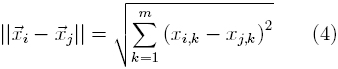
<body><![CDATA[<p align="justify"><font face="verdana" size="2">A portable Omron Digital Wrist Blood Pressure Monitor (Model HEM&#45;609, Omron Health Care Inc) was used to obtain the mean of three repeated measures of systolic blood pressure (SBP) and diastolic blood pressure (DBP) in mmHg. After 8 hours fasting, blood glucose (mg/dL) was measured with portable One&#45;Touch Ultra equipment (Lifescan, Johnson and Johnson Co.).</font></p>  	    <p align="justify"><font face="verdana" size="2">The ECG Holters were recorded with a Trillium 3000 system (Forest Medical) using two simultaneous channels with a sample rate of 256 samples per second per channel. Detection of the R&#45;wave of each heartbeat was performed with software provided by the same Holter system. RR intervals, measured in milliseconds (ms) were calculated from consecutive normal (sinus) heartbeats. False RR intervals due to artifacts and RR intervals of ectopic heart beats were eliminated with an adaptive filtering technique &#91;27&#93;. After elimination of 10 records with less than 95&#37; of sinus RR intervals, 90 records were included in the HRV analysis of this study.</font></p>  	    <p align="justify"><font face="verdana" size="2">The standard ECG of each participant was obtained at rest with an electrocardiograph Cardiax PC EKG (IMED Co. Ltd.) with a sample rate of 500 samples per second. Each ECG was assessed by two cardiologists. 29 ECGs were classified as abnormal based on several findings: old myocardial infarction (<i>n</i> &#61; 4), low voltage in the frontal plane (<i>n</i> &#61; 3), nonspecific ST&#45;segment changes (<i>n</i> &#61; 2), incomplete bundle branch block (<i>n</i> &#61; 5), right bundle branch block (<i>n</i> &#61; 1), early repolarization pattern (<i>n</i> &#61; 3), sinus bradycardia (<i>n</i> &#61; 3), left atrium hypertrophy (<i>n</i> &#61; 2), left ventricular hypertrophy (<i>n</i> &#61; 1), myocardial ischemia (<i>n</i> &#61; 2), short PR interval (<i>n</i> &#61; 1), and sinus tachycardia (<i>n</i> &#61; 2). The 10 subjects excluded from the study due to insufficient (less than 95&#37;) number of sinus RR intervals corresponded to 3 with abnormal ECG and 7 with normal ECG.</font></p>  	    <p align="justify"><font face="verdana" size="2">&nbsp;</font></p>  	    <p align="justify"><font face="verdana" size="2"><b>Correlation dimension analysis</b></font></p>  	    <p align="justify"><font face="verdana" size="2">CD is associated with the number of independent variables that would be necessary to describe the dynamical system (degrees of freedom). Estimation of correlation dimension from a time&#45;series requires adequate algorithm selection and the definition of several parameters: time delay value (<i>&#964;</i>), embedding dimension (<i>m</i>) and number of time&#45;series points (heartbeats). Details about parameters selection and other methodological aspects are described elsewhere &#91;26&#93;. The Grassberger&#45;Procaccia algorithm was used in this work &#91;28&#93;. From a vector defined as <i>y<sub>i</sub></i>, <i>i</i> &#61; 1, <i>N, N</i> points are embedded in an m&#45;dimensional phase space, in order to obtain,</font></p>  	    <center> 		    <p align="center"><img src="/img/revistas/rmib/v36n1/a4e1.jpg"></p> 	</center>  	    <p align="left"><font face="verdana" size="2">where <i>&#964;</i> is the time delay, wherein express as number of heartbeats. For each embedding dimension <i>m, a</i> preliminary correlation dimension (CD) can be estimated from the following equation,</font></p>  	    <p align="center"><font face="verdana" size="2"><img src="/img/revistas/rmib/v36n1/a4e2.jpg"></font></p>  	    ]]></body>
<body><![CDATA[<p align="justify"><font face="verdana" size="2">where <i>C<sub>m</sub></i>(<i>r</i>) is the integral correlation. The integral correlation measures the number of <i>x<sub>j</sub></i> points, which are correlated in a hyper&#45;sphere of radius <i>r</i> around the point <i>x<sub>i</sub></i>.</font></p>  	    <p align="justify"><font face="verdana" size="2">The integral correlation is defined by,</font></p>  	    <p align="center"><font face="verdana" size="2"><img src="/img/revistas/rmib/v36n1/a4e3.jpg"></font></p>  	    <p align="justify"><font face="verdana" size="2">where <i>N</i> is the number of points and &#920;(<i>z</i>) is the Heaviside function, that is,</font></p>  	    <p align="center"><font face="verdana" size="2"><img src="/img/revistas/rmib/v36n1/a4i1.jpg"></font></p>  	    <p align="justify"><font face="verdana" size="2">and <img src="/img/revistas/rmib/v36n1/a4i2.jpg"> stands for the distance between the attractor pairs of points, which is formed in the phase space. This distance was calculated as the Euclidian norm,</font></p>  	    <p align="center"><font face="verdana" size="2"><img src="/img/revistas/rmib/v36n1/a4e4.jpg"></font></p>  	    <p align="justify"><font face="verdana" size="2">where <i>m</i> represents the embedding dimension.</font></p>  	    <p align="justify"><font face="verdana" size="2">When log<sub>2</sub>(<i>C<sub>m</sub></i>(<i>r</i>)) is plotted versus log <sub>2</sub>(<i>r</i>), a curve is obtained for each embedding dimension <i>k</i>, for <i>k</i> &#61; 1, 2, &#183; &#183; &#183; <i>m</i>, which in small values of r (equation 2), is a straight line. This region where there is a linear behavior is called the scaling region. The slope of this straight line, determined by the linear regression is the CD for this embedding dimension. The slope is plotted versus the embedding dimension in order to obtain a curve, which tends to constant values for higher values of <i>m</i> (saturation value). This saturation value is the estimated CD of the studied system.</font></p>  	    <p align="justify"><font face="verdana" size="2">CD estimations were carried out with programs developed in <i>C</i><sup>&#43;&#43;</sup> and Matlab. The parameter values chosen for the algorithm were: <i>&#964;</i> &#61; 5 heartbeats, <i>m</i> &#61; 20 and <i>N</i> &#61; 10,000 heartbeats. In order to test differences between morning, afternoon, and night time, segments of 10,000 consecutive RR intervals were selected starting at 11:00, 17:00 and 2:00 hours for each subject.</font></p>  	    ]]></body>
<body><![CDATA[<p align="justify"><font face="verdana" size="2">&nbsp;</font></p>  	    <p align="justify"><font face="verdana" size="2"><b>Statistical analysis</b></font></p>  	    <p align="justify"><font face="verdana" size="2">The statistical analysis was performed with the software NCSS 2007 version 07.1.5 and the software SPSS version 15.0. Normal distribution of CD values was tested with the Kolmogorov&#45;Smirnov test, with Lilliefors correction. Then, homoscedasticity was tested with the Levene test. In all cases normal distribution and homoscedasticity were confirmed. Mean CD values were compared by analysis of variance (ANOVA) with the following independent factors: (i) time period (morning, afternoon or night), (ii) sex (male or female) and (iii) ECG diagnosis (normal or abnormal). Multiple comparisons a posteriori were performed with the Tukey&#45;Kramer test. Demographical characteristics were compared by ANOVA (considering ECG diagnosis and sex as independent factors) or by Fisher's exact test.</font></p>  	    <p align="justify"><font face="verdana" size="2">&nbsp;</font></p>  	    <p align="justify"><font face="verdana" size="2"><b>RESULTS AND DISCUSSION</b></font></p>  	    <p align="justify"><font face="verdana" size="2">Compared by ECG diagnosis (normal or abnormal) and sex (female or male), all demographical characteristics were similar except for a higher proportion of males with abnormal ECG (20 out of 29) than with normal ECG (25 out of 61) (<a href="/img/revistas/rmib/v36n1/a4t1.jpg" target="_blank">Table 1</a>).</font></p>  	    <p align="justify"><font face="verdana" size="2">The results of CD analysis are shown in <a href="/img/revistas/rmib/v36n1/a4t2.jpg" target="_blank">Table 2</a>. Females had larger CD values than males, and participants with abnormal ECG had smaller values than those with normal ECG. There were no significant differences of CD values with respect to the time periods.</font></p>  	    <p align="justify"><font face="verdana" size="2">&nbsp;HRV is an output signal from a complex nonlinear control system (<i>i.e.</i>, the cardiovascular system), which has many redundant mechanisms &#91;4&#93;. In healthy humans, HRV displays a highly irregular self&#45;correlated behavior and it can be considered as a complex signal, as it has been documented with several indexes of complexity (<i>e.g.</i> Shannon Entropy, Lempel&#45;Ziv complexity, correlation dimension) &#91;26, 29&#93;. In many circumstances, when the cardiovascular system is submitted to stressful stimulus, HRV CD has shown evidence of less complex behavior (<i>e.g.</i>, high altitude &#91;30&#93;, mental stress &#91;22&#93;, and daily life tasks that require voluntarily manage attention &#91;31&#93;. Furthermore, in the presence of chronic pathologies, CD also evidences a decrease in HRV complexity (<i>e.g.</i>, diabetes mellitus, hypertension, congestive heart failure and hyperthyroidism) &#91;26, 32, 33&#93;.</font></p>  	    <p align="justify"><font face="verdana" size="2">Herein, adults with abnormal ECG had smaller CD compared to those with normal ECG. The difference was significant, even with the highly heterogeneities of ECG abnormalities between subjects. This is consistent with other studies that show decreased CD associated with specific cardiac conditions, such as aortic stenosis &#91;25&#93; and congestive heart failure &#91;26&#93;. The complex dynamics of the heart rhythm and other systems, which are modulated by the autonomous nervous system, could be interpreted as functional advantages &#91;4&#93;. Complex systems operate under a wide range of conditions and, therefore, they are adaptable and flexible. These characteristics allow them to deal with demands from a changing environment that can be highly unpredictable. Several analyses with nonlinear HRV indexes had been proposed as clinical indicators of diverse physiological status, from subjects during fetal development &#91;21, 34&#93;, normal adults &#91;15, 22, 31&#93;, as well as within a large variety of cardiovascular pathologies, such as ventricular fibrillation &#91;19&#93;, and sudden cardiac death &#91;18, 35&#93;.</font></p>  	    <p align="justify"><font face="verdana" size="2">Most of the studies report a decrease in HRV complexity associated to specific pathologies or as physiological response to stress &#91;18&#45;21&#93;. Moreover, new evidences of the autonomous nervous system control upon HRV have been documented with these indexes &#91;36, 37&#93;.</font></p>  	    ]]></body>
<body><![CDATA[<p align="justify"><font face="verdana" size="2">Our finding of decreased HRV complexity in persons with abnormal ECG suggests that the presence of an ECG abnormality is associated with a decreased adaptability of the mechanisms that regulate heart rate, including the autonomous nervous system (i.e. an abnormal unbalance between sympathetic and parasympathetic nervous system is reflected in abnormal behavior of HRV, usually oriented towards decreased complexity). Elucidation of the clinical impact of decreased complexity in the presence of abnormal ECG requires further studies. However, decreased complexity in HRV is associated with lower survival in various pathologies (heart failure, coronary artery disease, cardiac arrhythmia, renal dysfunction, diabetes mellitus and low serum potassium) &#91;32&#93;.</font></p>  	    <p align="justify"><font face="verdana" size="2">The current study found a significantly higher CD in women than men, which is consistent with other study performed in Poland &#91;24&#93;. Regarding the time of day, no difference in CD between morning, afternoon and night was found, which contrast with other two studies which showed circadian CD behavior with lower CD values during morning, increased CD during the afternoon and the highest CD values during night &#91;24, 26&#93;. Nevertheless, the CD values of our study from subjects with normal ECG are within the range of CD values during the night reported on both of these studies &#91;24, 26&#93;. Among the potential explanation of these discrepancies are two factors: (1) the subjects were selected from different geographical zones (it is not known if this factor influence CD) and (2) the comparison criteria are different (previous studies focused on patients with specific cardiac pathologies and clinically healthy individuals while the current study compared subjects non&#45;specific abnormal ECG).</font></p>  	    <p align="justify"><font face="verdana" size="2">&nbsp;</font></p>  	    <p align="justify"><font face="verdana" size="2"><b>Limitations</b></font></p>  	    <p align="justify"><font face="verdana" size="2">There are many known risk factors for cardiac mortality which were not considered in the current study (e.g., smoking, sedentary life style, family history of cardiovascular disease, current cardiovascular disease, pharmacological treatment, previous diagnosis of abnormal ECG and phase of menstrual cycle or menopause). A study with a larger number of participants is needed in order to assess the contribution of these factors to the association between decreased HRV complexity and an abnormal ECG finding. The influence of the unbalanced number of samples per group was not controlled in the design of the study, because the ECG diagnosis was an outcome and not a selection criterion. However, from the statistical point of view, we consider that is enough the estimation of the statistical significance (<i>p</i>&#45;values) with consideration of the degrees of freedom (as part of the ANOVA test). Further research is needed to expand the current assessment of CD and abnormal ECG finding in order to include other methods that estimate complexity (e.g. Shannon entropy and Lempel Ziv complexity).</font></p>  	    <p align="justify"><font face="verdana" size="2">&nbsp;</font></p>  	    <p align="justify"><font face="verdana" size="2"><b>CONCLUSIONS</b></font></p>  	    <p align="justify"><font face="verdana" size="2">Several studies show that when there is an imbalance in the autonomic nervous system (i.e. imbalance between the sympathetic nervous system and the parasympathetic nervous system), an abnormal behavior in HRV is observed. For lower HRV, greater imbalance of the autonomic nervous system is expected. Several specific pathologies have shown to alter HRV behavior. However, our study analyzed HRV (through CD) not aimed towards a specific disease group, but a group of individuals with and without electrocardiographic abnormalities identified in the standard ECG. It was observed that subjects with abnormal ECG had a less complex HRV. The observation of the standard ECG abnormalities associated with a decreased complexity of HRV in adults could help to identify early onset of cardiovascular disease and even early detection of risk of sudden cardiac death.</font></p>  	    <p align="justify"><font face="verdana" size="2">&nbsp;</font></p>  	    <p align="justify"><font face="verdana" size="2"><b>REFERENCES</b></font></p>  	    ]]></body>
<body><![CDATA[<!-- ref --><p align="justify"><font face="verdana" size="2">1. S. Akselrod, D. Gordon, F.A. Ubel, D.C. Shannon, A.C. Berger, R.J. Cohen, "Power spectrum analysis of heart rate fluctuation: a quantitative probe of beat&#45;to&#45;beat cardiovascular control," <i>Science</i>, vol. 213, pp. 220&#45;222, 1981.    &nbsp;&nbsp;&nbsp;&nbsp;&nbsp;&nbsp;&nbsp;&nbsp;[&#160;<a href="javascript:void(0);" onclick="javascript: window.open('/scielo.php?script=sci_nlinks&ref=8517975&pid=S0188-9532201500010000400001&lng=','','width=640,height=500,resizable=yes,scrollbars=1,menubar=yes,');">Links</a>&#160;]<!-- end-ref --></font></p>  	    <!-- ref --><p align="justify"><font face="verdana" size="2">2. Task Force of the European Society of Cardiology and the North American Society of Pacing and Electrophysiology, "Heart rate variability: standards of measurement, physiological interpretation and clinical use," <i>Circulation</i>, 93, pp. 1043&#45;1065, 1996.    &nbsp;&nbsp;&nbsp;&nbsp;&nbsp;&nbsp;&nbsp;&nbsp;[&#160;<a href="javascript:void(0);" onclick="javascript: window.open('/scielo.php?script=sci_nlinks&ref=8517977&pid=S0188-9532201500010000400002&lng=','','width=640,height=500,resizable=yes,scrollbars=1,menubar=yes,');">Links</a>&#160;]<!-- end-ref --></font></p>  	    <!-- ref --><p align="justify"><font face="verdana" size="2">3. F.L. Abel, E.P. McCutcheon, <i>Neural Control</i>. In: Abel FL, McCutcheon EP, eds. London: Little Brown and Company, 1979.    &nbsp;&nbsp;&nbsp;&nbsp;&nbsp;&nbsp;&nbsp;&nbsp;[&#160;<a href="javascript:void(0);" onclick="javascript: window.open('/scielo.php?script=sci_nlinks&ref=8517979&pid=S0188-9532201500010000400003&lng=','','width=640,height=500,resizable=yes,scrollbars=1,menubar=yes,');">Links</a>&#160;]<!-- end-ref --></font></p>  	    <!-- ref --><p align="justify"><font face="verdana" size="2">4. P.B. Persson, "Modulation of cardiovascular control mechanisms and their interaction," <i>Physiol Rev</i>., vol. 76, pp. 193&#45;244, 1996.    &nbsp;&nbsp;&nbsp;&nbsp;&nbsp;&nbsp;&nbsp;&nbsp;[&#160;<a href="javascript:void(0);" onclick="javascript: window.open('/scielo.php?script=sci_nlinks&ref=8517981&pid=S0188-9532201500010000400004&lng=','','width=640,height=500,resizable=yes,scrollbars=1,menubar=yes,');">Links</a>&#160;]<!-- end-ref --></font></p>  	    <!-- ref --><p align="justify"><font face="verdana" size="2">5. D.L. Eckberg, "Sympathovagal balance: a critical appraisal," <i>Circulation</i>, vol. 96, pp. 3224&#45;3232, 1997.    &nbsp;&nbsp;&nbsp;&nbsp;&nbsp;&nbsp;&nbsp;&nbsp;[&#160;<a href="javascript:void(0);" onclick="javascript: window.open('/scielo.php?script=sci_nlinks&ref=8517983&pid=S0188-9532201500010000400005&lng=','','width=640,height=500,resizable=yes,scrollbars=1,menubar=yes,');">Links</a>&#160;]<!-- end-ref --></font></p>  	    ]]></body>
<body><![CDATA[<!-- ref --><p align="justify"><font face="verdana" size="2">6. R.E. Kleiger, J.P. Miller, J.T. Bigger, A.J. Moss, "Decreased heart rate variability and its association with increased mortality after acute myocardial infarction," <i>Am J Cardiol</i>., vol. 59, pp. 256&#45;262, 1987.    &nbsp;&nbsp;&nbsp;&nbsp;&nbsp;&nbsp;&nbsp;&nbsp;[&#160;<a href="javascript:void(0);" onclick="javascript: window.open('/scielo.php?script=sci_nlinks&ref=8517985&pid=S0188-9532201500010000400006&lng=','','width=640,height=500,resizable=yes,scrollbars=1,menubar=yes,');">Links</a>&#160;]<!-- end-ref --></font></p>  	    <!-- ref --><p align="justify"><font face="verdana" size="2">7. M. Pagani, G. Malfatto, S. Pierini, <i>et al.,</i> "Spectral analysis of heart rate variability in the assessment of autonomic diabetic neuropathy," <i>J Auton Nerv Syst</i>., vol. 23, pp. 143&#45;153, 1988.    &nbsp;&nbsp;&nbsp;&nbsp;&nbsp;&nbsp;&nbsp;&nbsp;[&#160;<a href="javascript:void(0);" onclick="javascript: window.open('/scielo.php?script=sci_nlinks&ref=8517987&pid=S0188-9532201500010000400007&lng=','','width=640,height=500,resizable=yes,scrollbars=1,menubar=yes,');">Links</a>&#160;]<!-- end-ref --></font></p>  	    <!-- ref --><p align="justify"><font face="verdana" size="2">8. S. Guzzetti, R. Magatelli, E. Borroni, S. Mezzetti, "Heart rate variability in chronic heart failure," <i>Auton Neurosci</i>., vol. 90, pp. 102&#45;105, 2001.    &nbsp;&nbsp;&nbsp;&nbsp;&nbsp;&nbsp;&nbsp;&nbsp;[&#160;<a href="javascript:void(0);" onclick="javascript: window.open('/scielo.php?script=sci_nlinks&ref=8517989&pid=S0188-9532201500010000400008&lng=','','width=640,height=500,resizable=yes,scrollbars=1,menubar=yes,');">Links</a>&#160;]<!-- end-ref --></font></p>  	    <!-- ref --><p align="justify"><font face="verdana" size="2">9. J. Pontet, P. Contreras, A. Curbelo, <i>et al.</i>, "Heart rate variability as early marker of multiple organ dysfunction syndrome in septic patients," <i>J Crit Care</i>, vol. 18, pp.156&#45;163, 2003.    &nbsp;&nbsp;&nbsp;&nbsp;&nbsp;&nbsp;&nbsp;&nbsp;[&#160;<a href="javascript:void(0);" onclick="javascript: window.open('/scielo.php?script=sci_nlinks&ref=8517991&pid=S0188-9532201500010000400009&lng=','','width=640,height=500,resizable=yes,scrollbars=1,menubar=yes,');">Links</a>&#160;]<!-- end-ref --></font></p>  	    <!-- ref --><p align="justify"><font face="verdana" size="2">10. V.K. Yeragani, E. Sobolewski, J. Kay, V.C. Jampala, G. Igel, "Effect of age on long&#45;term heart rate variability," <i>Cardiovasc Res.</i>, vol. 35, pp. 35&#45;42, 1997.    &nbsp;&nbsp;&nbsp;&nbsp;&nbsp;&nbsp;&nbsp;&nbsp;[&#160;<a href="javascript:void(0);" onclick="javascript: window.open('/scielo.php?script=sci_nlinks&ref=8517993&pid=S0188-9532201500010000400010&lng=','','width=640,height=500,resizable=yes,scrollbars=1,menubar=yes,');">Links</a>&#160;]<!-- end-ref --></font></p>  	    ]]></body>
<body><![CDATA[<!-- ref --><p align="justify"><font face="verdana" size="2">11. L. Glass, D. Kaplan, "Time series analysis of complex dynamics in physiology and medicine," <i>Med Prog Technol.</i>, vol. 19, pp. 115&#45;28, 1993.    &nbsp;&nbsp;&nbsp;&nbsp;&nbsp;&nbsp;&nbsp;&nbsp;[&#160;<a href="javascript:void(0);" onclick="javascript: window.open('/scielo.php?script=sci_nlinks&ref=8517995&pid=S0188-9532201500010000400011&lng=','','width=640,height=500,resizable=yes,scrollbars=1,menubar=yes,');">Links</a>&#160;]<!-- end-ref --></font></p>  	    <!-- ref --><p align="justify"><font face="verdana" size="2">12. A. Voss, J. Kurths, H.J. Kleiner, A. Witt, N. Wessel, "Improved analysis of heart rate variability by methods of nonlinear dynamics," <i>J Electrocardiol.</i>, vol. 28, Suppl, pp. 81&#45;88, 1995.    &nbsp;&nbsp;&nbsp;&nbsp;&nbsp;&nbsp;&nbsp;&nbsp;[&#160;<a href="javascript:void(0);" onclick="javascript: window.open('/scielo.php?script=sci_nlinks&ref=8517997&pid=S0188-9532201500010000400012&lng=','','width=640,height=500,resizable=yes,scrollbars=1,menubar=yes,');">Links</a>&#160;]<!-- end-ref --></font></p>  	    <!-- ref --><p align="justify"><font face="verdana" size="2">13. R.B. Northrop, <i>Introduction to complexity and complex systems</i>, CRC Press (Boca Raton, Florida), 2011.    &nbsp;&nbsp;&nbsp;&nbsp;&nbsp;&nbsp;&nbsp;&nbsp;[&#160;<a href="javascript:void(0);" onclick="javascript: window.open('/scielo.php?script=sci_nlinks&ref=8517999&pid=S0188-9532201500010000400013&lng=','','width=640,height=500,resizable=yes,scrollbars=1,menubar=yes,');">Links</a>&#160;]<!-- end-ref --></font></p>  	    <!-- ref --><p align="justify"><font face="verdana" size="2">14. A. Babloyantz, A. Destexhe, "Is the normal heart a periodic oscillator&#63;" <i>Biol Cybern</i>, vol. 58, 203&#45;211, 1988.    &nbsp;&nbsp;&nbsp;&nbsp;&nbsp;&nbsp;&nbsp;&nbsp;[&#160;<a href="javascript:void(0);" onclick="javascript: window.open('/scielo.php?script=sci_nlinks&ref=8518001&pid=S0188-9532201500010000400014&lng=','','width=640,height=500,resizable=yes,scrollbars=1,menubar=yes,');">Links</a>&#160;]<!-- end-ref --></font></p>  	    <!-- ref --><p align="justify"><font face="verdana" size="2">15. F. Beckers, B. Verheyden, A.E. Aubert, "Aging and nonlinear heart rate control in a healthy population," <i>Am J Physiol Heart Circ Physiol.</i>, vol. 290, H2560&#45;H2570, 2006.    &nbsp;&nbsp;&nbsp;&nbsp;&nbsp;&nbsp;&nbsp;&nbsp;[&#160;<a href="javascript:void(0);" onclick="javascript: window.open('/scielo.php?script=sci_nlinks&ref=8518003&pid=S0188-9532201500010000400015&lng=','','width=640,height=500,resizable=yes,scrollbars=1,menubar=yes,');">Links</a>&#160;]<!-- end-ref --></font></p>  	    ]]></body>
<body><![CDATA[<!-- ref --><p align="justify"><font face="verdana" size="2">16. A.L. Goldberger, D.R. Rigney, B.J. West, "Chaos and fractals in human physiology," <i>Sci Am.</i>, vol. 262, pp. 42&#45;49, 1990.    &nbsp;&nbsp;&nbsp;&nbsp;&nbsp;&nbsp;&nbsp;&nbsp;[&#160;<a href="javascript:void(0);" onclick="javascript: window.open('/scielo.php?script=sci_nlinks&ref=8518005&pid=S0188-9532201500010000400016&lng=','','width=640,height=500,resizable=yes,scrollbars=1,menubar=yes,');">Links</a>&#160;]<!-- end-ref --></font></p>  	    <!-- ref --><p align="justify"><font face="verdana" size="2">17. L.A. Lipsitz, A.L. Goldberger, "Loss of 'complexity' and aging. Potential applications of fractals and chaos theory to senescence," <i>JAMA</i>, vol. 267, pp. 1806&#45;1809, 1992.    &nbsp;&nbsp;&nbsp;&nbsp;&nbsp;&nbsp;&nbsp;&nbsp;[&#160;<a href="javascript:void(0);" onclick="javascript: window.open('/scielo.php?script=sci_nlinks&ref=8518007&pid=S0188-9532201500010000400017&lng=','','width=640,height=500,resizable=yes,scrollbars=1,menubar=yes,');">Links</a>&#160;]<!-- end-ref --></font></p>  	    <!-- ref --><p align="justify"><font face="verdana" size="2">18. H.V. Huikuri, J.S. Perkiomaki, R. Maestri, G.D. Pinna, "Clinical impact of evaluation of cardiovascular control by novel methods of heart rate dynamics," <i>Philos Transact A Math Phys Eng Sci.</i>, vol. 367, pp. 1223&#45;1238, 2009.    &nbsp;&nbsp;&nbsp;&nbsp;&nbsp;&nbsp;&nbsp;&nbsp;[&#160;<a href="javascript:void(0);" onclick="javascript: window.open('/scielo.php?script=sci_nlinks&ref=8518009&pid=S0188-9532201500010000400018&lng=','','width=640,height=500,resizable=yes,scrollbars=1,menubar=yes,');">Links</a>&#160;]<!-- end-ref --></font></p>  	    <!-- ref --><p align="justify"><font face="verdana" size="2">19. J.E. Skinner, C.M. Pratt, T. Vybiral, "A reduction in the correlation dimension of heartbeat intervals precedes imminent ventricular fibrillation in human subjects," <i>Am Heart J.</i>, vol. 125, pp. 731&#45;743, 1993.    &nbsp;&nbsp;&nbsp;&nbsp;&nbsp;&nbsp;&nbsp;&nbsp;[&#160;<a href="javascript:void(0);" onclick="javascript: window.open('/scielo.php?script=sci_nlinks&ref=8518011&pid=S0188-9532201500010000400019&lng=','','width=640,height=500,resizable=yes,scrollbars=1,menubar=yes,');">Links</a>&#160;]<!-- end-ref --></font></p>  	    <!-- ref --><p align="justify"><font face="verdana" size="2">20. M. Javorka, Z. Trunkvalterova, I. Tonhajzerova, J. Javorkova, K. Javorka, M. Baumert, "Short&#45;term heart rate complexity is reduced in patients with type 1 diabetes mellitus," <i>Clin Neurophysiol.</i>, vol. 119, no. 5, pp. 1071&#45;1081, 2008.    &nbsp;&nbsp;&nbsp;&nbsp;&nbsp;&nbsp;&nbsp;&nbsp;[&#160;<a href="javascript:void(0);" onclick="javascript: window.open('/scielo.php?script=sci_nlinks&ref=8518013&pid=S0188-9532201500010000400020&lng=','','width=640,height=500,resizable=yes,scrollbars=1,menubar=yes,');">Links</a>&#160;]<!-- end-ref --></font></p>  	    ]]></body>
<body><![CDATA[<!-- ref --><p align="justify"><font face="verdana" size="2">21. M. Ferrario, M.G. Signorini, G. Magenes, "Complexity analysis of the fetal heart rate variability: early identification of severe intrauterine growth&#45;restricted fetuses," <i>Med Biol Eng Comput.</i>, vol. 47, no. 9, pp. 911&#45;919, 2009.    &nbsp;&nbsp;&nbsp;&nbsp;&nbsp;&nbsp;&nbsp;&nbsp;[&#160;<a href="javascript:void(0);" onclick="javascript: window.open('/scielo.php?script=sci_nlinks&ref=8518015&pid=S0188-9532201500010000400021&lng=','','width=640,height=500,resizable=yes,scrollbars=1,menubar=yes,');">Links</a>&#160;]<!-- end-ref --></font></p>  	    <!-- ref --><p align="justify"><font face="verdana" size="2">22. P. Melillo, M. Bracali, L. Pecchia, "Nonlinear Heart Rate Variability features for real&#45;life stress detection. Case study: students under stress due to university examination," <i>Biomed Eng Online</i>, vol. 10, pp. 1&#45;13, 2011.    &nbsp;&nbsp;&nbsp;&nbsp;&nbsp;&nbsp;&nbsp;&nbsp;[&#160;<a href="javascript:void(0);" onclick="javascript: window.open('/scielo.php?script=sci_nlinks&ref=8518017&pid=S0188-9532201500010000400022&lng=','','width=640,height=500,resizable=yes,scrollbars=1,menubar=yes,');">Links</a>&#160;]<!-- end-ref --></font></p>  	    <!-- ref --><p align="justify"><font face="verdana" size="2">23. C.D. Wagner, B. Nafz, P.B. Persson, "Chaos in blood pressure control," <i>Cardiovasc Res.</i>, vol. 31, pp. 380&#45;387, 1996.    &nbsp;&nbsp;&nbsp;&nbsp;&nbsp;&nbsp;&nbsp;&nbsp;[&#160;<a href="javascript:void(0);" onclick="javascript: window.open('/scielo.php?script=sci_nlinks&ref=8518019&pid=S0188-9532201500010000400023&lng=','','width=640,height=500,resizable=yes,scrollbars=1,menubar=yes,');">Links</a>&#160;]<!-- end-ref --></font></p>  	    <!-- ref --><p align="justify"><font face="verdana" size="2">24. R. Carvajal, J.J. Zebrowski, M. Vallverdu, <i>et al.</i>, "Dimensional analysis of HRV in hypertrophic cardiomyopathy patients," <i>IEEE Eng Med Biol Mag</i>, vol. 21, pp. 71&#45;78, 2002.    &nbsp;&nbsp;&nbsp;&nbsp;&nbsp;&nbsp;&nbsp;&nbsp;[&#160;<a href="javascript:void(0);" onclick="javascript: window.open('/scielo.php?script=sci_nlinks&ref=8518021&pid=S0188-9532201500010000400024&lng=','','width=640,height=500,resizable=yes,scrollbars=1,menubar=yes,');">Links</a>&#160;]<!-- end-ref --></font></p>  	    <!-- ref --><p align="justify"><font face="verdana" size="2">25. R. Carvajal, M. Vallverdu, R. Baranowski, J.J. Orlowska&#45;Baranowska, J.J. Zebrowski, P. Caminal, "Dynamic nonlinear analysis of heart rate variability in patients with aortic stenosis," <i>Comput Cardiol.</i>, vol. 29, pp. 449&#45;452, 2002.    &nbsp;&nbsp;&nbsp;&nbsp;&nbsp;&nbsp;&nbsp;&nbsp;[&#160;<a href="javascript:void(0);" onclick="javascript: window.open('/scielo.php?script=sci_nlinks&ref=8518023&pid=S0188-9532201500010000400025&lng=','','width=640,height=500,resizable=yes,scrollbars=1,menubar=yes,');">Links</a>&#160;]<!-- end-ref --></font></p>  	    ]]></body>
<body><![CDATA[<!-- ref --><p align="justify"><font face="verdana" size="2">26. R. Carvajal, N. Wessel, M. Vallverd&uacute;, P. Caminal, A. Voss, "Correlation dimension analysis of heart rate variability in patients with dilated cardiomyopathy," <i>Comput Methods Programs Biomed.</i>, vol. 78, pp. 133&#45;140, 2005.    &nbsp;&nbsp;&nbsp;&nbsp;&nbsp;&nbsp;&nbsp;&nbsp;[&#160;<a href="javascript:void(0);" onclick="javascript: window.open('/scielo.php?script=sci_nlinks&ref=8518025&pid=S0188-9532201500010000400026&lng=','','width=640,height=500,resizable=yes,scrollbars=1,menubar=yes,');">Links</a>&#160;]<!-- end-ref --></font></p>  	    <!-- ref --><p align="justify"><font face="verdana" size="2">27. N. Wessel, A. Voss, H. Malberg, <i>et al.</i>, "Nonlinear analysis of complex phenomena in cardiological data," <i>Herzschr Elektrophys</i>, vol. 11, pp. 159&#45;173, 2000.    &nbsp;&nbsp;&nbsp;&nbsp;&nbsp;&nbsp;&nbsp;&nbsp;[&#160;<a href="javascript:void(0);" onclick="javascript: window.open('/scielo.php?script=sci_nlinks&ref=8518027&pid=S0188-9532201500010000400027&lng=','','width=640,height=500,resizable=yes,scrollbars=1,menubar=yes,');">Links</a>&#160;]<!-- end-ref --></font></p>  	    <!-- ref --><p align="justify"><font face="verdana" size="2">28. P. Grassberger, I. Procaccia, "Measuring the strangeness of strange attractors," <i>Physica D</i>, vol. 9, pp. 189&#45;208, 1983.    &nbsp;&nbsp;&nbsp;&nbsp;&nbsp;&nbsp;&nbsp;&nbsp;[&#160;<a href="javascript:void(0);" onclick="javascript: window.open('/scielo.php?script=sci_nlinks&ref=8518029&pid=S0188-9532201500010000400028&lng=','','width=640,height=500,resizable=yes,scrollbars=1,menubar=yes,');">Links</a>&#160;]<!-- end-ref --></font></p>  	    <!-- ref --><p align="justify"><font face="verdana" size="2">29. J.J. Zebrowski, W. Poplawska, R. Baranowski, "Entropy, pattern entropy, and related methods for the analysis of data on the time intervals between heartbeats from 24&#45;h electrocardiograms," <i>Phys Rev E Stat Phys Plasmas Fluids Relat Interdiscip Topics</i>, vol. 50, pp. 4187&#45;4205, 1994.    &nbsp;&nbsp;&nbsp;&nbsp;&nbsp;&nbsp;&nbsp;&nbsp;[&#160;<a href="javascript:void(0);" onclick="javascript: window.open('/scielo.php?script=sci_nlinks&ref=8518031&pid=S0188-9532201500010000400029&lng=','','width=640,height=500,resizable=yes,scrollbars=1,menubar=yes,');">Links</a>&#160;]<!-- end-ref --></font></p>  	    <!-- ref --><p align="justify"><font face="verdana" size="2">30. Y. Yamamoto, R.L. Hughson, J.R. Sutton, <i>et al.</i>, "Operation Everest II: an indication of deterministic chaos in human heart rate variability at simulated extreme altitude," <i>Biol Cybern</i>, vol. 69, pp. 205&#45;212, 1993.    &nbsp;&nbsp;&nbsp;&nbsp;&nbsp;&nbsp;&nbsp;&nbsp;[&#160;<a href="javascript:void(0);" onclick="javascript: window.open('/scielo.php?script=sci_nlinks&ref=8518033&pid=S0188-9532201500010000400030&lng=','','width=640,height=500,resizable=yes,scrollbars=1,menubar=yes,');">Links</a>&#160;]<!-- end-ref --></font></p>  	    ]]></body>
<body><![CDATA[<!-- ref --><p align="justify"><font face="verdana" size="2">31. X. Bornas, J. Llabr&eacute;s, A. Morillas&#45;Romero, B. Aguayo&#45;Siquier, M. Balle, M. Tortella&#45;Feliu, "Complexity of everyday life heart rate dynamics and attentional control in healthy students," <i>Nonlinear Dynamics Psychol Life Sci.</i>, vol. 17, pp. 345&#45;60, 2013.    &nbsp;&nbsp;&nbsp;&nbsp;&nbsp;&nbsp;&nbsp;&nbsp;[&#160;<a href="javascript:void(0);" onclick="javascript: window.open('/scielo.php?script=sci_nlinks&ref=8518035&pid=S0188-9532201500010000400031&lng=','','width=640,height=500,resizable=yes,scrollbars=1,menubar=yes,');">Links</a>&#160;]<!-- end-ref --></font></p>  	    <!-- ref --><p align="justify"><font face="verdana" size="2">32. D. Almoznino&#45;Sarafian, G. Sarafian, I. Zyssman, <i>et al.</i> "Application of HRV&#45;CD for estimation of life expectancy in various clinical disorders," <i>Eur J Intern Med.</i>, vol. 20, pp. 779&#45;783, 2009.    &nbsp;&nbsp;&nbsp;&nbsp;&nbsp;&nbsp;&nbsp;&nbsp;[&#160;<a href="javascript:void(0);" onclick="javascript: window.open('/scielo.php?script=sci_nlinks&ref=8518037&pid=S0188-9532201500010000400032&lng=','','width=640,height=500,resizable=yes,scrollbars=1,menubar=yes,');">Links</a>&#160;]<!-- end-ref --></font></p>  	    <!-- ref --><p align="justify"><font face="verdana" size="2">33. J.L. Chen, Y.J. Tseng, H.W. Chiu, T.C. Hsiao, W.C. Chu, "Nonlinear analysis of heart rate dynamics in hyperthyroidism," <i>Physiol Meas.</i>, vol. 28, 427&#45;437, 2007.    &nbsp;&nbsp;&nbsp;&nbsp;&nbsp;&nbsp;&nbsp;&nbsp;[&#160;<a href="javascript:void(0);" onclick="javascript: window.open('/scielo.php?script=sci_nlinks&ref=8518039&pid=S0188-9532201500010000400033&lng=','','width=640,height=500,resizable=yes,scrollbars=1,menubar=yes,');">Links</a>&#160;]<!-- end-ref --></font></p>  	    <!-- ref --><p align="justify"><font face="verdana" size="2">34. A. Kikuchi, T. Shimizu, A. Hayashi, <i>et al.</i>, "Nonlinear analyses of heart rate variability in normal and growth&#45;restricted fetuses," <i>Early Hum Dev.</i>, vol. 82, pp. 217&#45;226, 2006.    &nbsp;&nbsp;&nbsp;&nbsp;&nbsp;&nbsp;&nbsp;&nbsp;[&#160;<a href="javascript:void(0);" onclick="javascript: window.open('/scielo.php?script=sci_nlinks&ref=8518041&pid=S0188-9532201500010000400034&lng=','','width=640,height=500,resizable=yes,scrollbars=1,menubar=yes,');">Links</a>&#160;]<!-- end-ref --></font></p>  	    <!-- ref --><p align="justify"><font face="verdana" size="2">35. H.V. Huikuri, T. Seppanen, M.J. Koistinen, <i>et al.</i>, "Abnormalities in beat&#45;to&#45;beat dynamics of heart rate before the spontaneous onset of life&#45;threatening ventricular tachyarrhythmias in patients with prior myocardial infarction," <i>Circulation</i>, vol. 93, pp. 1836&#45;1844, 1996.    &nbsp;&nbsp;&nbsp;&nbsp;&nbsp;&nbsp;&nbsp;&nbsp;[&#160;<a href="javascript:void(0);" onclick="javascript: window.open('/scielo.php?script=sci_nlinks&ref=8518043&pid=S0188-9532201500010000400035&lng=','','width=640,height=500,resizable=yes,scrollbars=1,menubar=yes,');">Links</a>&#160;]<!-- end-ref --></font></p>  	    ]]></body>
<body><![CDATA[<!-- ref --><p align="justify"><font face="verdana" size="2">36. A. Voss, K. Hnatkova, N. Wessel, <i>et al.</i>, "Multiparametric analysis of heart rate variability used for risk stratification among survivors of acute myocardial infarction," <i>Pacing Clin Electrophysiol.</i>, vol. 21, pp. 186&#45;192, 1998.    &nbsp;&nbsp;&nbsp;&nbsp;&nbsp;&nbsp;&nbsp;&nbsp;[&#160;<a href="javascript:void(0);" onclick="javascript: window.open('/scielo.php?script=sci_nlinks&ref=8518045&pid=S0188-9532201500010000400036&lng=','','width=640,height=500,resizable=yes,scrollbars=1,menubar=yes,');">Links</a>&#160;]<!-- end-ref --></font></p>  	    <!-- ref --><p align="justify"><font face="verdana" size="2">37. M.A. Woo, W.G. Stevenson, D.K. Moser, H.R: Middlekauff, "Complex heart rate variability and serum norepinephrine levels in patients with advanced heart failure," <i>J Am Coll Cardiol.</i>, vol. 23, pp. 565&#45;569, 1994.    &nbsp;&nbsp;&nbsp;&nbsp;&nbsp;&nbsp;&nbsp;&nbsp;[&#160;<a href="javascript:void(0);" onclick="javascript: window.open('/scielo.php?script=sci_nlinks&ref=8518047&pid=S0188-9532201500010000400037&lng=','','width=640,height=500,resizable=yes,scrollbars=1,menubar=yes,');">Links</a>&#160;]<!-- end-ref --></font></p>      ]]></body><back>
<ref-list>
<ref id="B1">
<label>1</label><nlm-citation citation-type="journal">
<person-group person-group-type="author">
<name>
<surname><![CDATA[Akselrod]]></surname>
<given-names><![CDATA[S.]]></given-names>
</name>
<name>
<surname><![CDATA[Gordon]]></surname>
<given-names><![CDATA[D.]]></given-names>
</name>
<name>
<surname><![CDATA[Ubel]]></surname>
<given-names><![CDATA[F.A.]]></given-names>
</name>
<name>
<surname><![CDATA[Shannon]]></surname>
<given-names><![CDATA[D.C.]]></given-names>
</name>
<name>
<surname><![CDATA[Berger]]></surname>
<given-names><![CDATA[A.C.]]></given-names>
</name>
<name>
<surname><![CDATA[Cohen]]></surname>
<given-names><![CDATA[R.J.]]></given-names>
</name>
</person-group>
<article-title xml:lang="en"><![CDATA[Power spectrum analysis of heart rate fluctuation: a quantitative probe of beat-to-beat cardiovascular control]]></article-title>
<source><![CDATA[Science]]></source>
<year>1981</year>
<volume>213</volume>
<page-range>220-222</page-range></nlm-citation>
</ref>
<ref id="B2">
<label>2</label><nlm-citation citation-type="journal">
<collab>Task Force of the European Society of Cardiology</collab>
<collab>the North American Society of Pacing and Electrophysiology</collab>
<article-title xml:lang="en"><![CDATA[Heart rate variability: standards of measurement, physiological interpretation and clinical use]]></article-title>
<source><![CDATA[Circulation]]></source>
<year>1996</year>
<volume>93</volume>
<page-range>1043-1065</page-range></nlm-citation>
</ref>
<ref id="B3">
<label>3</label><nlm-citation citation-type="book">
<person-group person-group-type="author">
<name>
<surname><![CDATA[Abel]]></surname>
<given-names><![CDATA[F.L.]]></given-names>
</name>
<name>
<surname><![CDATA[McCutcheon]]></surname>
<given-names><![CDATA[E.P.]]></given-names>
</name>
</person-group>
<article-title xml:lang="en"><![CDATA[Neural Control]]></article-title>
<person-group person-group-type="editor">
<name>
<surname><![CDATA[Abel]]></surname>
<given-names><![CDATA[FL]]></given-names>
</name>
<name>
<surname><![CDATA[McCutcheon]]></surname>
<given-names><![CDATA[EP]]></given-names>
</name>
</person-group>
<source><![CDATA[]]></source>
<year>1979</year>
<publisher-loc><![CDATA[London ]]></publisher-loc>
<publisher-name><![CDATA[Little Brown and Company]]></publisher-name>
</nlm-citation>
</ref>
<ref id="B4">
<label>4</label><nlm-citation citation-type="journal">
<person-group person-group-type="author">
<name>
<surname><![CDATA[Persson]]></surname>
<given-names><![CDATA[P.B.]]></given-names>
</name>
</person-group>
<article-title xml:lang="en"><![CDATA[Modulation of cardiovascular control mechanisms and their interaction]]></article-title>
<source><![CDATA[Physiol Rev.]]></source>
<year>1996</year>
<volume>76</volume>
<page-range>193-244</page-range></nlm-citation>
</ref>
<ref id="B5">
<label>5</label><nlm-citation citation-type="journal">
<person-group person-group-type="author">
<name>
<surname><![CDATA[Eckberg]]></surname>
<given-names><![CDATA[D.L.]]></given-names>
</name>
</person-group>
<article-title xml:lang="en"><![CDATA[Sympathovagal balance: a critical appraisal]]></article-title>
<source><![CDATA[Circulation]]></source>
<year>1997</year>
<volume>96</volume>
<page-range>3224-3232</page-range></nlm-citation>
</ref>
<ref id="B6">
<label>6</label><nlm-citation citation-type="journal">
<person-group person-group-type="author">
<name>
<surname><![CDATA[Kleiger]]></surname>
<given-names><![CDATA[R.E.]]></given-names>
</name>
<name>
<surname><![CDATA[Miller]]></surname>
<given-names><![CDATA[J.P.]]></given-names>
</name>
<name>
<surname><![CDATA[Bigger]]></surname>
<given-names><![CDATA[J.T.]]></given-names>
</name>
<name>
<surname><![CDATA[Moss]]></surname>
<given-names><![CDATA[A.J.]]></given-names>
</name>
</person-group>
<article-title xml:lang="en"><![CDATA[Decreased heart rate variability and its association with increased mortality after acute myocardial infarction]]></article-title>
<source><![CDATA[Am J Cardiol.]]></source>
<year>1987</year>
<volume>59</volume>
<page-range>256-262</page-range></nlm-citation>
</ref>
<ref id="B7">
<label>7</label><nlm-citation citation-type="journal">
<person-group person-group-type="author">
<name>
<surname><![CDATA[Pagani]]></surname>
<given-names><![CDATA[M.]]></given-names>
</name>
<name>
<surname><![CDATA[Malfatto]]></surname>
<given-names><![CDATA[G.]]></given-names>
</name>
<name>
<surname><![CDATA[Pierini]]></surname>
<given-names><![CDATA[S.]]></given-names>
</name>
</person-group>
<article-title xml:lang="en"><![CDATA[Spectral analysis of heart rate variability in the assessment of autonomic diabetic neuropathy]]></article-title>
<source><![CDATA[J Auton Nerv Syst.]]></source>
<year>1988</year>
<volume>23</volume>
<page-range>143-153</page-range></nlm-citation>
</ref>
<ref id="B8">
<label>8</label><nlm-citation citation-type="journal">
<person-group person-group-type="author">
<name>
<surname><![CDATA[Guzzetti]]></surname>
<given-names><![CDATA[S.]]></given-names>
</name>
<name>
<surname><![CDATA[Magatelli]]></surname>
<given-names><![CDATA[R.]]></given-names>
</name>
<name>
<surname><![CDATA[Borroni]]></surname>
<given-names><![CDATA[E.]]></given-names>
</name>
<name>
<surname><![CDATA[Mezzetti]]></surname>
<given-names><![CDATA[S.]]></given-names>
</name>
</person-group>
<article-title xml:lang="en"><![CDATA[Heart rate variability in chronic heart failure]]></article-title>
<source><![CDATA[Auton Neurosci.]]></source>
<year>2001</year>
<volume>90</volume>
<page-range>102-105</page-range></nlm-citation>
</ref>
<ref id="B9">
<label>9</label><nlm-citation citation-type="journal">
<person-group person-group-type="author">
<name>
<surname><![CDATA[Pontet]]></surname>
<given-names><![CDATA[J.]]></given-names>
</name>
<name>
<surname><![CDATA[Contreras]]></surname>
<given-names><![CDATA[P.]]></given-names>
</name>
<name>
<surname><![CDATA[Curbelo]]></surname>
<given-names><![CDATA[A.]]></given-names>
</name>
</person-group>
<article-title xml:lang="en"><![CDATA[Heart rate variability as early marker of multiple organ dysfunction syndrome in septic patients]]></article-title>
<source><![CDATA[J Crit Care]]></source>
<year>2003</year>
<volume>18</volume>
<page-range>156-163</page-range></nlm-citation>
</ref>
<ref id="B10">
<label>10</label><nlm-citation citation-type="journal">
<person-group person-group-type="author">
<name>
<surname><![CDATA[Yeragani]]></surname>
<given-names><![CDATA[V.K.]]></given-names>
</name>
<name>
<surname><![CDATA[Sobolewski]]></surname>
<given-names><![CDATA[E.]]></given-names>
</name>
<name>
<surname><![CDATA[Kay]]></surname>
<given-names><![CDATA[J.]]></given-names>
</name>
<name>
<surname><![CDATA[Jampala]]></surname>
<given-names><![CDATA[V.C.]]></given-names>
</name>
<name>
<surname><![CDATA[Igel]]></surname>
<given-names><![CDATA[G.]]></given-names>
</name>
</person-group>
<article-title xml:lang="en"><![CDATA[Effect of age on long-term heart rate variability]]></article-title>
<source><![CDATA[Cardiovasc Res.]]></source>
<year>1997</year>
<volume>35</volume>
<page-range>35-42</page-range></nlm-citation>
</ref>
<ref id="B11">
<label>11</label><nlm-citation citation-type="journal">
<person-group person-group-type="author">
<name>
<surname><![CDATA[Glass]]></surname>
<given-names><![CDATA[L.]]></given-names>
</name>
<name>
<surname><![CDATA[Kaplan]]></surname>
<given-names><![CDATA[D.]]></given-names>
</name>
</person-group>
<article-title xml:lang="en"><![CDATA[Time series analysis of complex dynamics in physiology and medicine]]></article-title>
<source><![CDATA[Med Prog Technol.]]></source>
<year>1993</year>
<volume>19</volume>
<page-range>115-28</page-range></nlm-citation>
</ref>
<ref id="B12">
<label>12</label><nlm-citation citation-type="journal">
<person-group person-group-type="author">
<name>
<surname><![CDATA[Voss]]></surname>
<given-names><![CDATA[A.]]></given-names>
</name>
<name>
<surname><![CDATA[Kurths]]></surname>
<given-names><![CDATA[J.]]></given-names>
</name>
<name>
<surname><![CDATA[Kleiner]]></surname>
<given-names><![CDATA[H.J.]]></given-names>
</name>
<name>
<surname><![CDATA[Witt]]></surname>
<given-names><![CDATA[A.]]></given-names>
</name>
<name>
<surname><![CDATA[Wessel]]></surname>
<given-names><![CDATA[N.]]></given-names>
</name>
</person-group>
<article-title xml:lang="en"><![CDATA[Improved analysis of heart rate variability by methods of nonlinear dynamics]]></article-title>
<source><![CDATA[J Electrocardiol.]]></source>
<year>1995</year>
<volume>28</volume>
<numero>^sSuppl</numero>
<issue>^sSuppl</issue>
<supplement>Suppl</supplement>
<page-range>81-88</page-range></nlm-citation>
</ref>
<ref id="B13">
<label>13</label><nlm-citation citation-type="book">
<person-group person-group-type="author">
<name>
<surname><![CDATA[Northrop]]></surname>
<given-names><![CDATA[R.B.]]></given-names>
</name>
</person-group>
<source><![CDATA[Introduction to complexity and complex systems]]></source>
<year>2011</year>
<publisher-loc><![CDATA[Boca Raton^eFlorida Florida]]></publisher-loc>
<publisher-name><![CDATA[CRC Press]]></publisher-name>
</nlm-citation>
</ref>
<ref id="B14">
<label>14</label><nlm-citation citation-type="journal">
<person-group person-group-type="author">
<name>
<surname><![CDATA[Babloyantz]]></surname>
<given-names><![CDATA[A.]]></given-names>
</name>
<name>
<surname><![CDATA[Destexhe]]></surname>
<given-names><![CDATA[A.]]></given-names>
</name>
</person-group>
<article-title xml:lang="en"><![CDATA[Is the normal heart a periodic oscillator?]]></article-title>
<source><![CDATA[Biol Cybern]]></source>
<year>1988</year>
<volume>58</volume>
<page-range>203-211</page-range></nlm-citation>
</ref>
<ref id="B15">
<label>15</label><nlm-citation citation-type="journal">
<person-group person-group-type="author">
<name>
<surname><![CDATA[Beckers]]></surname>
<given-names><![CDATA[F.]]></given-names>
</name>
<name>
<surname><![CDATA[Verheyden]]></surname>
<given-names><![CDATA[B.]]></given-names>
</name>
<name>
<surname><![CDATA[Aubert]]></surname>
<given-names><![CDATA[A.E.]]></given-names>
</name>
</person-group>
<article-title xml:lang="en"><![CDATA[Aging and nonlinear heart rate control in a healthy population]]></article-title>
<source><![CDATA[Am J Physiol Heart Circ Physiol.]]></source>
<year>2006</year>
<volume>290</volume>
<page-range>H2560-H2570</page-range></nlm-citation>
</ref>
<ref id="B16">
<label>16</label><nlm-citation citation-type="journal">
<person-group person-group-type="author">
<name>
<surname><![CDATA[Goldberger]]></surname>
<given-names><![CDATA[A.L.]]></given-names>
</name>
<name>
<surname><![CDATA[Rigney]]></surname>
<given-names><![CDATA[D.R.]]></given-names>
</name>
<name>
<surname><![CDATA[West]]></surname>
<given-names><![CDATA[B.J.]]></given-names>
</name>
</person-group>
<article-title xml:lang="en"><![CDATA[Chaos and fractals in human physiology]]></article-title>
<source><![CDATA[Sci Am.]]></source>
<year>1990</year>
<volume>262</volume>
<page-range>42-49</page-range></nlm-citation>
</ref>
<ref id="B17">
<label>17</label><nlm-citation citation-type="journal">
<person-group person-group-type="author">
<name>
<surname><![CDATA[Lipsitz]]></surname>
<given-names><![CDATA[L.A.]]></given-names>
</name>
<name>
<surname><![CDATA[Goldberger]]></surname>
<given-names><![CDATA[A.L.]]></given-names>
</name>
</person-group>
<source><![CDATA[JAMA]]></source>
<year>1992</year>
<volume>267</volume>
<page-range>1806-1809</page-range></nlm-citation>
</ref>
<ref id="B18">
<label>18</label><nlm-citation citation-type="journal">
<person-group person-group-type="author">
<name>
<surname><![CDATA[Huikuri]]></surname>
<given-names><![CDATA[H.V.]]></given-names>
</name>
<name>
<surname><![CDATA[Perkiomaki]]></surname>
<given-names><![CDATA[J.S.]]></given-names>
</name>
<name>
<surname><![CDATA[Maestri]]></surname>
<given-names><![CDATA[R.]]></given-names>
</name>
<name>
<surname><![CDATA[Pinna]]></surname>
<given-names><![CDATA[G.D.]]></given-names>
</name>
</person-group>
<article-title xml:lang="en"><![CDATA[Clinical impact of evaluation of cardiovascular control by novel methods of heart rate dynamics]]></article-title>
<source><![CDATA[Philos Transact A Math Phys Eng Sci.]]></source>
<year>2009</year>
<volume>367</volume>
<page-range>1223-1238</page-range></nlm-citation>
</ref>
<ref id="B19">
<label>19</label><nlm-citation citation-type="journal">
<person-group person-group-type="author">
<name>
<surname><![CDATA[Skinner]]></surname>
<given-names><![CDATA[J.E.]]></given-names>
</name>
<name>
<surname><![CDATA[Pratt]]></surname>
<given-names><![CDATA[C.M.]]></given-names>
</name>
<name>
<surname><![CDATA[Vybiral]]></surname>
<given-names><![CDATA[T.]]></given-names>
</name>
</person-group>
<article-title xml:lang="en"><![CDATA[A reduction in the correlation dimension of heartbeat intervals precedes imminent ventricular fibrillation in human subjects]]></article-title>
<source><![CDATA[Am Heart J.]]></source>
<year>1993</year>
<volume>125</volume>
<page-range>731-743</page-range></nlm-citation>
</ref>
<ref id="B20">
<label>20</label><nlm-citation citation-type="journal">
<person-group person-group-type="author">
<name>
<surname><![CDATA[Javorka]]></surname>
<given-names><![CDATA[M.]]></given-names>
</name>
<name>
<surname><![CDATA[Trunkvalterova]]></surname>
<given-names><![CDATA[Z.]]></given-names>
</name>
<name>
<surname><![CDATA[Tonhajzerova]]></surname>
<given-names><![CDATA[I.]]></given-names>
</name>
<name>
<surname><![CDATA[Javorkova]]></surname>
<given-names><![CDATA[J.]]></given-names>
</name>
<name>
<surname><![CDATA[Javorka]]></surname>
<given-names><![CDATA[K.]]></given-names>
</name>
<name>
<surname><![CDATA[Baumert]]></surname>
<given-names><![CDATA[M.]]></given-names>
</name>
</person-group>
<article-title xml:lang="en"><![CDATA[Short-term heart rate complexity is reduced in patients with type 1 diabetes mellitus]]></article-title>
<source><![CDATA[Clin Neurophysiol.]]></source>
<year>2008</year>
<volume>119</volume>
<numero>5</numero>
<issue>5</issue>
<page-range>1071-1081</page-range></nlm-citation>
</ref>
<ref id="B21">
<label>21</label><nlm-citation citation-type="journal">
<person-group person-group-type="author">
<name>
<surname><![CDATA[Ferrario]]></surname>
<given-names><![CDATA[M.]]></given-names>
</name>
<name>
<surname><![CDATA[Signorini]]></surname>
<given-names><![CDATA[M.G.]]></given-names>
</name>
<name>
<surname><![CDATA[Magenes]]></surname>
<given-names><![CDATA[G.]]></given-names>
</name>
</person-group>
<article-title xml:lang="en"><![CDATA[Complexity analysis of the fetal heart rate variability: early identification of severe intrauterine growth-restricted fetuses]]></article-title>
<source><![CDATA[Med Biol Eng Comput.]]></source>
<year>2009</year>
<volume>47</volume>
<numero>9</numero>
<issue>9</issue>
<page-range>911-919</page-range></nlm-citation>
</ref>
<ref id="B22">
<label>22</label><nlm-citation citation-type="journal">
<person-group person-group-type="author">
<name>
<surname><![CDATA[Melillo]]></surname>
<given-names><![CDATA[P.]]></given-names>
</name>
<name>
<surname><![CDATA[Bracali]]></surname>
<given-names><![CDATA[M.]]></given-names>
</name>
<name>
<surname><![CDATA[Pecchia]]></surname>
<given-names><![CDATA[L.]]></given-names>
</name>
</person-group>
<article-title xml:lang="en"><![CDATA[Nonlinear Heart Rate Variability features for real-life stress detection. Case study: students under stress due to university examination]]></article-title>
<source><![CDATA[Biomed Eng Online]]></source>
<year>2011</year>
<volume>10</volume>
<page-range>1-13</page-range></nlm-citation>
</ref>
<ref id="B23">
<label>23</label><nlm-citation citation-type="journal">
<person-group person-group-type="author">
<name>
<surname><![CDATA[Wagner]]></surname>
<given-names><![CDATA[C.D.]]></given-names>
</name>
<name>
<surname><![CDATA[Nafz]]></surname>
<given-names><![CDATA[B.]]></given-names>
</name>
<name>
<surname><![CDATA[Persson]]></surname>
<given-names><![CDATA[P.B.]]></given-names>
</name>
</person-group>
<article-title xml:lang="en"><![CDATA[Chaos in blood pressure control]]></article-title>
<source><![CDATA[Cardiovasc Res.]]></source>
<year>1996</year>
<volume>31</volume>
<page-range>380-387</page-range></nlm-citation>
</ref>
<ref id="B24">
<label>24</label><nlm-citation citation-type="journal">
<person-group person-group-type="author">
<name>
<surname><![CDATA[Carvajal]]></surname>
<given-names><![CDATA[R.]]></given-names>
</name>
<name>
<surname><![CDATA[Zebrowski]]></surname>
<given-names><![CDATA[J.J.]]></given-names>
</name>
<name>
<surname><![CDATA[Vallverdu]]></surname>
<given-names><![CDATA[M.]]></given-names>
</name>
</person-group>
<article-title xml:lang="en"><![CDATA[Dimensional analysis of HRV in hypertrophic cardiomyopathy patients]]></article-title>
<source><![CDATA[IEEE Eng Med Biol Mag]]></source>
<year>2002</year>
<volume>21</volume>
<page-range>71-78</page-range></nlm-citation>
</ref>
<ref id="B25">
<label>25</label><nlm-citation citation-type="journal">
<person-group person-group-type="author">
<name>
<surname><![CDATA[Carvajal]]></surname>
<given-names><![CDATA[R.]]></given-names>
</name>
<name>
<surname><![CDATA[Vallverdu]]></surname>
<given-names><![CDATA[M.]]></given-names>
</name>
<name>
<surname><![CDATA[Baranowski]]></surname>
<given-names><![CDATA[R.]]></given-names>
</name>
<name>
<surname><![CDATA[Orlowska-Baranowska]]></surname>
<given-names><![CDATA[J.J.]]></given-names>
</name>
<name>
<surname><![CDATA[Zebrowski]]></surname>
<given-names><![CDATA[J.J.]]></given-names>
</name>
<name>
<surname><![CDATA[Caminal]]></surname>
<given-names><![CDATA[P.]]></given-names>
</name>
</person-group>
<article-title xml:lang="en"><![CDATA[Dynamic nonlinear analysis of heart rate variability in patients with aortic stenosis]]></article-title>
<source><![CDATA[Comput Cardiol.]]></source>
<year>2002</year>
<volume>29</volume>
<page-range>449-452</page-range></nlm-citation>
</ref>
<ref id="B26">
<label>26</label><nlm-citation citation-type="journal">
<person-group person-group-type="author">
<name>
<surname><![CDATA[Carvajal]]></surname>
<given-names><![CDATA[R.]]></given-names>
</name>
<name>
<surname><![CDATA[Wessel]]></surname>
<given-names><![CDATA[N.]]></given-names>
</name>
<name>
<surname><![CDATA[Vallverdú]]></surname>
<given-names><![CDATA[M.]]></given-names>
</name>
<name>
<surname><![CDATA[Caminal]]></surname>
<given-names><![CDATA[P.]]></given-names>
</name>
<name>
<surname><![CDATA[Voss]]></surname>
<given-names><![CDATA[A.]]></given-names>
</name>
</person-group>
<article-title xml:lang="en"><![CDATA[Correlation dimension analysis of heart rate variability in patients with dilated cardiomyopathy]]></article-title>
<source><![CDATA[Comput Methods Programs Biomed.]]></source>
<year>2005</year>
<volume>78</volume>
<page-range>133-140</page-range></nlm-citation>
</ref>
<ref id="B27">
<label>27</label><nlm-citation citation-type="journal">
<person-group person-group-type="author">
<name>
<surname><![CDATA[Wessel]]></surname>
<given-names><![CDATA[N.]]></given-names>
</name>
<name>
<surname><![CDATA[Voss]]></surname>
<given-names><![CDATA[A.]]></given-names>
</name>
<name>
<surname><![CDATA[Malberg]]></surname>
<given-names><![CDATA[H.]]></given-names>
</name>
</person-group>
<article-title xml:lang="en"><![CDATA[Nonlinear analysis of complex phenomena in cardiological data]]></article-title>
<source><![CDATA[Herzschr Elektrophys]]></source>
<year>2000</year>
<volume>11</volume>
<page-range>159-173</page-range></nlm-citation>
</ref>
<ref id="B28">
<label>28</label><nlm-citation citation-type="journal">
<person-group person-group-type="author">
<name>
<surname><![CDATA[Grassberger]]></surname>
<given-names><![CDATA[P.]]></given-names>
</name>
<name>
<surname><![CDATA[Procaccia]]></surname>
<given-names><![CDATA[I.]]></given-names>
</name>
</person-group>
<article-title xml:lang="en"><![CDATA[Measuring the strangeness of strange attractors]]></article-title>
<source><![CDATA[Physica D]]></source>
<year>1983</year>
<volume>9</volume>
<page-range>189-208</page-range></nlm-citation>
</ref>
<ref id="B29">
<label>29</label><nlm-citation citation-type="journal">
<person-group person-group-type="author">
<name>
<surname><![CDATA[Zebrowski]]></surname>
<given-names><![CDATA[J.J.]]></given-names>
</name>
<name>
<surname><![CDATA[Poplawska]]></surname>
<given-names><![CDATA[W.]]></given-names>
</name>
<name>
<surname><![CDATA[Baranowski]]></surname>
<given-names><![CDATA[R.]]></given-names>
</name>
</person-group>
<article-title xml:lang="en"><![CDATA[Entropy, pattern entropy, and related methods for the analysis of data on the time intervals between heartbeats from 24-h electrocardiograms]]></article-title>
<source><![CDATA[Phys Rev E Stat Phys Plasmas Fluids Relat Interdiscip Topics]]></source>
<year>1994</year>
<volume>50</volume>
<page-range>4187-4205</page-range></nlm-citation>
</ref>
<ref id="B30">
<label>30</label><nlm-citation citation-type="journal">
<person-group person-group-type="author">
<name>
<surname><![CDATA[Yamamoto]]></surname>
<given-names><![CDATA[Y.]]></given-names>
</name>
<name>
<surname><![CDATA[Hughson]]></surname>
<given-names><![CDATA[R.L.]]></given-names>
</name>
<name>
<surname><![CDATA[Sutton]]></surname>
<given-names><![CDATA[J.R.]]></given-names>
</name>
</person-group>
<article-title xml:lang="en"><![CDATA[Operation Everest II: an indication of deterministic chaos in human heart rate variability at simulated extreme altitude]]></article-title>
<source><![CDATA[Biol Cybern]]></source>
<year>1993</year>
<volume>69</volume>
<page-range>205-212</page-range></nlm-citation>
</ref>
<ref id="B31">
<label>31</label><nlm-citation citation-type="journal">
<person-group person-group-type="author">
<name>
<surname><![CDATA[Bornas]]></surname>
<given-names><![CDATA[X.]]></given-names>
</name>
<name>
<surname><![CDATA[Llabrés]]></surname>
<given-names><![CDATA[J.]]></given-names>
</name>
<name>
<surname><![CDATA[Morillas-Romero]]></surname>
<given-names><![CDATA[A.]]></given-names>
</name>
<name>
<surname><![CDATA[Aguayo-Siquier]]></surname>
<given-names><![CDATA[B.]]></given-names>
</name>
<name>
<surname><![CDATA[Balle]]></surname>
<given-names><![CDATA[M.]]></given-names>
</name>
<name>
<surname><![CDATA[Tortella-Feliu]]></surname>
<given-names><![CDATA[M.]]></given-names>
</name>
</person-group>
<article-title xml:lang="en"><![CDATA[Complexity of everyday life heart rate dynamics and attentional control in healthy students]]></article-title>
<source><![CDATA[Nonlinear Dynamics Psychol Life Sci.]]></source>
<year>2013</year>
<volume>17</volume>
<page-range>345-60</page-range></nlm-citation>
</ref>
<ref id="B32">
<label>32</label><nlm-citation citation-type="journal">
<person-group person-group-type="author">
<name>
<surname><![CDATA[Almoznino-Sarafian]]></surname>
<given-names><![CDATA[D.]]></given-names>
</name>
<name>
<surname><![CDATA[Sarafian]]></surname>
<given-names><![CDATA[G.]]></given-names>
</name>
<name>
<surname><![CDATA[Zyssman]]></surname>
<given-names><![CDATA[I.]]></given-names>
</name>
</person-group>
<article-title xml:lang="en"><![CDATA[Application of HRV-CD for estimation of life expectancy in various clinical disorders]]></article-title>
<source><![CDATA[Eur J Intern Med.]]></source>
<year>2009</year>
<volume>20</volume>
<page-range>779-783</page-range></nlm-citation>
</ref>
<ref id="B33">
<label>33</label><nlm-citation citation-type="journal">
<person-group person-group-type="author">
<name>
<surname><![CDATA[Chen]]></surname>
<given-names><![CDATA[J.L.]]></given-names>
</name>
<name>
<surname><![CDATA[Tseng]]></surname>
<given-names><![CDATA[Y.J.]]></given-names>
</name>
<name>
<surname><![CDATA[Chiu]]></surname>
<given-names><![CDATA[H.W.]]></given-names>
</name>
<name>
<surname><![CDATA[Hsiao]]></surname>
<given-names><![CDATA[T.C.]]></given-names>
</name>
<name>
<surname><![CDATA[Chu]]></surname>
<given-names><![CDATA[W.C.]]></given-names>
</name>
</person-group>
<article-title xml:lang="en"><![CDATA[Nonlinear analysis of heart rate dynamics in hyperthyroidism]]></article-title>
<source><![CDATA[Physiol Meas.]]></source>
<year>2007</year>
<volume>28</volume>
<page-range>427-437</page-range></nlm-citation>
</ref>
<ref id="B34">
<label>34</label><nlm-citation citation-type="journal">
<person-group person-group-type="author">
<name>
<surname><![CDATA[Kikuchi]]></surname>
<given-names><![CDATA[A.]]></given-names>
</name>
<name>
<surname><![CDATA[Shimizu]]></surname>
<given-names><![CDATA[T.]]></given-names>
</name>
<name>
<surname><![CDATA[Hayashi]]></surname>
<given-names><![CDATA[A.]]></given-names>
</name>
</person-group>
<article-title xml:lang="en"><![CDATA[Nonlinear analyses of heart rate variability in normal and growth-restricted fetuses]]></article-title>
<source><![CDATA[Early Hum Dev.]]></source>
<year>2006</year>
<volume>82</volume>
<page-range>217-226</page-range></nlm-citation>
</ref>
<ref id="B35">
<label>35</label><nlm-citation citation-type="journal">
<person-group person-group-type="author">
<name>
<surname><![CDATA[Huikuri]]></surname>
<given-names><![CDATA[H.V.]]></given-names>
</name>
<name>
<surname><![CDATA[Seppanen]]></surname>
<given-names><![CDATA[T.]]></given-names>
</name>
<name>
<surname><![CDATA[Koistinen]]></surname>
<given-names><![CDATA[M.J.]]></given-names>
</name>
</person-group>
<article-title xml:lang="en"><![CDATA[Abnormalities in beat-to-beat dynamics of heart rate before the spontaneous onset of life-threatening ventricular tachyarrhythmias in patients with prior myocardial infarction]]></article-title>
<source><![CDATA[Circulation]]></source>
<year>1996</year>
<volume>93</volume>
<page-range>1836-1844</page-range></nlm-citation>
</ref>
<ref id="B36">
<label>36</label><nlm-citation citation-type="journal">
<person-group person-group-type="author">
<name>
<surname><![CDATA[Voss]]></surname>
<given-names><![CDATA[A.]]></given-names>
</name>
<name>
<surname><![CDATA[Hnatkova]]></surname>
<given-names><![CDATA[K.]]></given-names>
</name>
<name>
<surname><![CDATA[Wessel]]></surname>
<given-names><![CDATA[N.]]></given-names>
</name>
</person-group>
<article-title xml:lang="en"><![CDATA[Multiparametric analysis of heart rate variability used for risk stratification among survivors of acute myocardial infarction]]></article-title>
<source><![CDATA[Pacing Clin Electrophysiol.]]></source>
<year>1998</year>
<volume>21</volume>
<page-range>186-192</page-range></nlm-citation>
</ref>
<ref id="B37">
<label>37</label><nlm-citation citation-type="journal">
<person-group person-group-type="author">
<name>
<surname><![CDATA[Woo]]></surname>
<given-names><![CDATA[M.A.]]></given-names>
</name>
<name>
<surname><![CDATA[Stevenson]]></surname>
</name>
<name>
<surname><![CDATA[Moser]]></surname>
<given-names><![CDATA[D.K.]]></given-names>
</name>
<name>
<surname><![CDATA[Middlekauff]]></surname>
<given-names><![CDATA[H.R]]></given-names>
</name>
</person-group>
<article-title xml:lang="en"><![CDATA[Complex heart rate variability and serum norepinephrine levels in patients with advanced heart failure]]></article-title>
<source><![CDATA[J Am Coll Cardiol.]]></source>
<year>1994</year>
<volume>23</volume>
<page-range>565-569</page-range></nlm-citation>
</ref>
</ref-list>
</back>
</article>