<?xml version="1.0" encoding="ISO-8859-1"?><article xmlns:mml="http://www.w3.org/1998/Math/MathML" xmlns:xlink="http://www.w3.org/1999/xlink" xmlns:xsi="http://www.w3.org/2001/XMLSchema-instance">
<front>
<journal-meta>
<journal-id>0188-9532</journal-id>
<journal-title><![CDATA[Revista mexicana de ingeniería biomédica]]></journal-title>
<abbrev-journal-title><![CDATA[Rev. mex. ing. bioméd]]></abbrev-journal-title>
<issn>0188-9532</issn>
<publisher>
<publisher-name><![CDATA[Sociedad Mexicana de Ingeniería Biomédica]]></publisher-name>
</publisher>
</journal-meta>
<article-meta>
<article-id>S0188-95322014000300005</article-id>
<title-group>
<article-title xml:lang="en"><![CDATA[Assessment of Three Alternating Pressure Sequences Applied to a Dynamic Cushion to Relieve Pressure on Seating Areas]]></article-title>
<article-title xml:lang="es"><![CDATA[Evaluación de tres secuencias de inflado alternantes aplicadas a un cojín dinámico para la liberación de presión en el área de sentado]]></article-title>
</title-group>
<contrib-group>
<contrib contrib-type="author">
<name>
<surname><![CDATA[Arias]]></surname>
<given-names><![CDATA[S.]]></given-names>
</name>
<xref ref-type="aff" rid="A01"/>
</contrib>
<contrib contrib-type="author">
<name>
<surname><![CDATA[Rogeli]]></surname>
<given-names><![CDATA[P.]]></given-names>
</name>
<xref ref-type="aff" rid="A01"/>
</contrib>
<contrib contrib-type="author">
<name>
<surname><![CDATA[Cardiel]]></surname>
<given-names><![CDATA[E.]]></given-names>
</name>
<xref ref-type="aff" rid="A01"/>
</contrib>
<contrib contrib-type="author">
<name>
<surname><![CDATA[Sanada]]></surname>
<given-names><![CDATA[H.]]></given-names>
</name>
<xref ref-type="aff" rid="A02"/>
</contrib>
<contrib contrib-type="author">
<name>
<surname><![CDATA[Mori]]></surname>
<given-names><![CDATA[T.]]></given-names>
</name>
<xref ref-type="aff" rid="A02"/>
</contrib>
<contrib contrib-type="author">
<name>
<surname><![CDATA[Noguchi]]></surname>
<given-names><![CDATA[H.]]></given-names>
</name>
<xref ref-type="aff" rid="A02"/>
</contrib>
<contrib contrib-type="author">
<name>
<surname><![CDATA[Nakagami]]></surname>
<given-names><![CDATA[G.]]></given-names>
</name>
<xref ref-type="aff" rid="A02"/>
</contrib>
<contrib contrib-type="author">
<name>
<surname><![CDATA[Garay]]></surname>
<given-names><![CDATA[L.]]></given-names>
</name>
<xref ref-type="aff" rid="A03"/>
</contrib>
</contrib-group>
<aff id="A01">
<institution><![CDATA[,Instituto Politécnico Nacional  ]]></institution>
<addr-line><![CDATA[México Distrito Federal]]></addr-line>
<country>México</country>
</aff>
<aff id="A02">
<institution><![CDATA[,University of Tokyo  ]]></institution>
<addr-line><![CDATA[Tokio ]]></addr-line>
<country>Japón</country>
</aff>
<aff id="A03">
<institution><![CDATA[,Instituto Politécnico Nacional  ]]></institution>
<addr-line><![CDATA[México Distrito Federal]]></addr-line>
<country>México</country>
</aff>
<pub-date pub-type="pub">
<day>00</day>
<month>00</month>
<year>2014</year>
</pub-date>
<pub-date pub-type="epub">
<day>00</day>
<month>00</month>
<year>2014</year>
</pub-date>
<volume>35</volume>
<numero>3</numero>
<fpage>253</fpage>
<lpage>262</lpage>
<copyright-statement/>
<copyright-year/>
<self-uri xlink:href="http://www.scielo.org.mx/scielo.php?script=sci_arttext&amp;pid=S0188-95322014000300005&amp;lng=en&amp;nrm=iso"></self-uri><self-uri xlink:href="http://www.scielo.org.mx/scielo.php?script=sci_abstract&amp;pid=S0188-95322014000300005&amp;lng=en&amp;nrm=iso"></self-uri><self-uri xlink:href="http://www.scielo.org.mx/scielo.php?script=sci_pdf&amp;pid=S0188-95322014000300005&amp;lng=en&amp;nrm=iso"></self-uri><abstract abstract-type="short" xml:lang="en"><p><![CDATA[Pressure ulcers are injuries to the skin and/or underlying tissues caused by prolonged high pressures on supporting body areas, they affect mainly people with poor mobility that have stayed in seating position for a long time. Reducing the amount and duration of pressure has been widely accepted for minimizing the risk of formation of pressure ulcers. Recently, dynamic cushions have been developed to relieve pressure on supporting areas; nevertheless, there is no sufficient information about the adequate characteristics of alternating sequences for pressure ulcers prevention. Therefore, the aim of this work is to explore three sequences of alternating movements designed for an air cell cushion by comparing pressure redistribution on supporting areas when applied on healthy volunteers. The purpose of these sequences is to redistribute the pressure over a larger contact area. To evaluate the effect of the alternating sequences, eight healthy volunteers were asked to sit on the air cell cushion, and to try the three alternating sequences for 12 minutes, 2 minutes on static mode and 10 minutes on alternating mode. A parameter for quantitative assessment of alternating sequences was proposed in this work by determining the coefficient of variation of interface pressure. Furthermore, the percentage of relative change of coefficient of variation was computed for evaluating performance of the alternating sequences comparing to the static mode. It was found that the three proposed strategies maintained values of interface pressure lower than previous work. Additionally, the relative change allowed to differentiate the effects of alternation of each sequence showing the second strategy as the most effective. The results are encouraging for further studies in subjects who require a wheelchair for mobility.]]></p></abstract>
<abstract abstract-type="short" xml:lang="es"><p><![CDATA[Las úlceras por presión son lesiones en la piel y tejidos subyacentes, causadas por presiones excesivas y prolongadas en las superficies de apoyo del cuerpo. Estas lesiones afectan principalmente a personas con poca movilidad física, como aquellas que permanecen sentados por largos periodos. Para disminuir el riesgo del padecimiento de estas lesiones, se ha recomendado como punto de partida reducir la magnitud y el tiempo de acción de las presiones en las zonas de apoyo. Se han desarrollado cojines dinámicos para sillas de ruedas, los cuales generan movimientos alternantes en las diferentes zonas de apoyo, producido por la inyección de aire, con el fin de disminuir las presiones en esas zonas. Sin embargo, no se han encontrado referencias de las características adecuadas de las secuencias de movimientos alternantes para prevenir la aparición de esas lesiones. El propósito de este trabajo es evaluar tres secuencias de movimientos alternantes diseñadas para un cojín de aire. La evaluación se realizó comparando la distribución de presiones en zonas de apoyo antes y durante la aplicación de estas secuencias alternantes en personas sanas. Las secuencias propuestas se aplican para el inflado y desinflado de celdas que forman el cojín y fueron diseñadas con el objetivo de distribuir las presiones en un área mayor de apoyo. La prueba se realizó en 8 sujetos sanos, con un tiempo de estudio de 12 minutos para cada secuencia diseñada; 2 minutos en modo estático y 10 minutos en modo alternante. Se propuso determinar el coeficiente de variación para evaluar de forma cuantitativa el efecto de las secuencias alternantes sobre la presión de interfaz. Además se calculó el porcentaje de variación relativa del coeficiente de variabilidad entre los modos basal (estático) y alternante como una herramienta para evaluar el desempeño de las secuencias propuestas en relación a la presión de interfaz. Se encontró que las tres estrategias mantuvieron presiones de interfaz por debajo de los valores reportados en trabajos previos. El porcentaje de variación relativa permitió diferenciar el efecto de la alternancia de cada una de las secuencias propuestas, mostrando la segunda estrategia como la más efectiva. Los resultados obtenidos son alentadores para continuar el estudio en sujetos que requieren una silla de ruedas para su movilidad.]]></p></abstract>
<kwd-group>
<kwd lng="en"><![CDATA[pressure ulcers]]></kwd>
<kwd lng="en"><![CDATA[dynamic cushion]]></kwd>
<kwd lng="en"><![CDATA[strategy of control]]></kwd>
<kwd lng="en"><![CDATA[pressure distribution]]></kwd>
<kwd lng="en"><![CDATA[wheelchair cushion]]></kwd>
<kwd lng="en"><![CDATA[alternating system]]></kwd>
<kwd lng="en"><![CDATA[prevention]]></kwd>
<kwd lng="es"><![CDATA[ulceras por presión]]></kwd>
<kwd lng="es"><![CDATA[cojines dinámicos]]></kwd>
<kwd lng="es"><![CDATA[estrategias de control]]></kwd>
<kwd lng="es"><![CDATA[distribución de presión]]></kwd>
<kwd lng="es"><![CDATA[cojines para silla de ruedas]]></kwd>
<kwd lng="es"><![CDATA[sistemas alternantes]]></kwd>
<kwd lng="es"><![CDATA[prevención]]></kwd>
</kwd-group>
</article-meta>
</front><body><![CDATA[  	    <p align="justify"><font face="verdana" size="4">Art&iacute;culos de investigaci&oacute;n original</font></p>  	    <p>&nbsp;</p>  	    <p align="center"><font face="verdana" size="4"><b>Assessment of Three Alternating Pressure Sequences Applied to a Dynamic Cushion to Relieve Pressure on Seating Areas</b></font></p> 	    <p align="center">&nbsp;</p> 	    <p align="center"><font face="verdana" size="3"><b>Evaluaci&oacute;n de tres secuencias de inflado alternantes aplicadas a un coj&iacute;n din&aacute;mico para la liberaci&oacute;n de presi&oacute;n en el &aacute;rea de sentado</b></font></p>  	    <p>&nbsp;</p>  	    <p align="center"><font face="verdana" size="2"><b>S. Arias* P. Rogeli* E. Cardiel* H. Sanada** T. Mori** H. Noguchi<sup>**</sup> G. Nakagami<sup>**</sup> L. Garay***</b></font></p>  	    <p>&nbsp;</p>  	    <p align="justify"><font face="verdana" size="2"><i>* CINVESTAV&#45;IPN.</i></font></p>  	    ]]></body>
<body><![CDATA[<p align="justify"><font face="verdana" size="2"><i>** The University of Tokyo.</i></font></p>  	    <p align="justify"><font face="verdana" size="2"><i>*** Instituto Polit&eacute;cnico Nacional.</i></font></p>  	    <p>&nbsp;</p>  	    <p align="justify"><font face="verdana" size="2"><b>Correspondencia:</b>    <br> 	<i>Sandra Arias    <br> 	Av. IPN 2508 Zacatenco 07360,    <br> 	M&eacute;xico DF</i>    <br> 	Correo electr&oacute;nico: <a href="mailto:sarias@cinvestav.mx">sarias@cinvestav.mx</a></font></p>  	    <p>&nbsp;</p>  	    <p align="justify"><font face="verdana" size="2">Fecha de recepci&oacute;n: 22 de mayo de 2014    ]]></body>
<body><![CDATA[<br> 	Fecha de aceptaci&oacute;n: 17 de octubre de 2014</font></p>  	    <p>&nbsp;</p>  	    <p align="justify"><font face="verdana" size="2"><b>ABSTRACT</b></font></p>  	    <p align="justify"><font face="verdana" size="2">Pressure ulcers are injuries to the skin and/or underlying tissues caused by prolonged high pressures on supporting body areas, they affect mainly people with poor mobility that have stayed in seating position for a long time. Reducing the amount and duration of pressure has been widely accepted for minimizing the risk of formation of pressure ulcers. Recently, dynamic cushions have been developed to relieve pressure on supporting areas; nevertheless, there is no sufficient information about the adequate characteristics of alternating sequences for pressure ulcers prevention. Therefore, the aim of this work is to explore three sequences of alternating movements designed for an air cell cushion by comparing pressure redistribution on supporting areas when applied on healthy volunteers. The purpose of these sequences is to redistribute the pressure over a larger contact area. To evaluate the effect of the alternating sequences, eight healthy volunteers were asked to sit on the air cell cushion, and to try the three alternating sequences for 12 minutes, 2 minutes on static mode and 10 minutes on alternating mode. A parameter for quantitative assessment of alternating sequences was proposed in this work by determining the coefficient of variation of interface pressure. Furthermore, the percentage of relative change of coefficient of variation was computed for evaluating performance of the alternating sequences comparing to the static mode. It was found that the three proposed strategies maintained values of interface pressure lower than previous work. Additionally, the relative change allowed to differentiate the effects of alternation of each sequence showing the second strategy as the most effective. The results are encouraging for further studies in subjects who require a wheelchair for mobility.</font></p>  	    <p align="justify"><font face="verdana" size="2"><b>Keywords:</b> pressure ulcers, dynamic cushion, strategy of control, pressure distribution, wheelchair cushion, alternating system, prevention.</font></p>  	    <p>&nbsp;</p>  	    <p align="justify"><font face="verdana" size="2"><b>RESUMEN</b></font></p>  	    <p align="justify"><font face="verdana" size="2">Las &uacute;lceras por presi&oacute;n son lesiones en la piel y tejidos subyacentes, causadas por presiones excesivas y prolongadas en las superficies de apoyo del cuerpo. Estas lesiones afectan principalmente a personas con poca movilidad f&iacute;sica, como aquellas que permanecen sentados por largos periodos. Para disminuir el riesgo del padecimiento de estas lesiones, se ha recomendado como punto de partida reducir la magnitud y el tiempo de acci&oacute;n de las presiones en las zonas de apoyo. Se han desarrollado cojines din&aacute;micos para sillas de ruedas, los cuales generan movimientos alternantes en las diferentes zonas de apoyo, producido por la inyecci&oacute;n de aire, con el fin de disminuir las presiones en esas zonas. Sin embargo, no se han encontrado referencias&nbsp;de las caracter&iacute;sticas adecuadas de las secuencias de movimientos alternantes para prevenir la aparici&oacute;n de esas lesiones. El prop&oacute;sito de este trabajo es evaluar tres secuencias de movimientos alternantes dise&ntilde;adas para un coj&iacute;n de aire. La evaluaci&oacute;n se realiz&oacute; comparando la distribuci&oacute;n de presiones en zonas de apoyo antes y durante la aplicaci&oacute;n de estas secuencias alternantes en personas sanas. Las secuencias propuestas se aplican para el inflado y desinflado de celdas que forman el coj&iacute;n y fueron dise&ntilde;adas con el objetivo de distribuir las presiones en un &aacute;rea mayor de apoyo. La prueba se realiz&oacute; en 8 sujetos sanos, con un tiempo de estudio de 12 minutos para cada secuencia dise&ntilde;ada; 2 minutos en modo est&aacute;tico y 10 minutos en modo alternante. Se propuso determinar el coeficiente de variaci&oacute;n para evaluar de forma cuantitativa el efecto de las secuencias alternantes sobre la presi&oacute;n de interfaz. Adem&aacute;s se calcul&oacute; el porcentaje de variaci&oacute;n relativa del coeficiente de variabilidad entre los modos basal (est&aacute;tico) y alternante como una herramienta para evaluar el desempe&ntilde;o de las secuencias propuestas en relaci&oacute;n a la presi&oacute;n de interfaz. Se encontr&oacute; que las tres estrategias mantuvieron presiones de interfaz por debajo de los valores reportados en trabajos previos. El porcentaje de variaci&oacute;n relativa permiti&oacute; diferenciar el efecto de la alternancia de cada una de las secuencias propuestas, mostrando la segunda estrategia como la m&aacute;s efectiva. Los resultados obtenidos son alentadores para continuar el estudio en sujetos que requieren una silla de ruedas para su movilidad.</font></p>  	    <p align="justify"><font face="verdana" size="2"><b>Palabras clave:</b> ulceras por presi&oacute;n, cojines din&aacute;micos, estrategias de control, distribuci&oacute;n de presi&oacute;n, cojines para silla de ruedas, sistemas alternantes, prevenci&oacute;n.</font></p>  	    <p>&nbsp;</p>  	    ]]></body>
<body><![CDATA[<p align="justify"><font face="verdana" size="2"><b>INTRODUCTION</b></font></p>  	    <p align="justify"><font face="verdana" size="2">Pressure ulcers are injuries caused by high pressure applied on the skin for a prolonged time &#91;1&#93;. They are usually located over a bony prominence and affect people with poor mobility that have maintained seating position for a long time&#91;2&#93;. Pressure ulcers are significant problem for wheelchair users due to the implications in health care cost and suffering&#91;3&#93;.</font></p>  	    <p align="justify"><font face="verdana" size="2">Pressure ulcer prevention is focused on the reduction and the release of pressure over seating area&#91;4&#93;&#91;5&#93;. For this reason, several types of wheelchair cushions have been developed for reducing the excessive pressure on a local region and redistributing the loads over a larger surface seating area&#91;6&#93;. Commercially available cushions include those made of foam, gel, a combination of foam and gel, static air cushions, as well as some prototypes as hydraulic cushions &#91;7&#93;&#91;8&#93;&#91;9&#93;.</font></p>  	    <p align="justify"><font face="verdana" size="2">Being that even the best support surfaces do not redistribute pressure to a threshold below the risk of developing pressure ulcers&#91;1&#93;, it has been suggested that relieving pressure by periodical intervals is a good strategy for preventing pressure ulcers&#91;10&#93;&#91;11&#93;. Recently, some dynamic air cushions have been developed to relief pressure by alternating inflation and deflation over a period&#91;12&#93;&#91;13&#93;&#91;14&#93;. These cushions are very helpful when patient repositioning is not performed frequently&#91;15&#93;. These dynamic cushions relieve pressure over the seating area without the need of moving the patient&#91;16&#93;.</font></p>  	    <p align="justify"><font face="verdana" size="2">Likewise, there has been increased interest in the study and improvement on the effectiveness of the alternating pressure for preventing pressure ulcers&#91;17&#93;. Nonetheless, consensus of the proper mechanical characteristics of the cushion and the alternating methods have not been established &#91;18&#93;.</font></p>  	    <p align="justify"><font face="verdana" size="2">The purpose of this study is to explore three different alternating pressure sequences for pressure redistribution on the user contact area. These sequences were designed to avoid pressure concentration on a small area and were implemented on an air cell cushion described in the previous work&#91;19&#93;. Thus attempting to reduce the risk of formation of pressure ulcers on wheelchair users.</font></p>  	    <p align="justify"><font face="verdana" size="2">To evaluate the three alternating sequences, a comparison study was carried out among responses of the developed air&#45;cell cushion, under with/without the alternating pressure sequences. A parameter to evaluate the magnitude of pressure alternation by using changes of coefficient of variation CV is proposed in this work.</font></p>  	    <p>&nbsp;</p>  	    <p align="justify"><font face="verdana" size="2"><b>METHODOLOGY</b></font></p>  	    <p align="justify"><font face="verdana" size="2"><b>Developed Cushion</b></font></p>  	    ]]></body>
<body><![CDATA[<p align="justify"><font face="verdana" size="2">The cushion consists of 12 air cells interconnected in pairs thus resulting into 6 sections, 4 sections for covering buttocks area and 2 sections for thighs area. Each cell has a pressure sensor to measure inner pressure and all sections are individually inflated by 6 electrovalves and deflated by other 6 electro&#45;valves, controlled by a software developed in LabVIEW&reg;. The cushion is made of vinyl with dimensions corresponding to an adult size cushion, the cushion sections can be observed in <a href="#f1">Figure 1</a>. Further information of the description and calibration of this system was reported in a previous work &#91;19&#93;.</font></p>  	    <p align="center"><font face="verdana" size="2"><a name="f1"></a></font></p>  	    <p align="center"><font face="verdana" size="2"><img src="/img/revistas/rmib/v35n3/a5f1.jpg"></font></p>  	    <p align="justify">&nbsp;</p> 	    <p align="justify"><font face="verdana" size="2"><b>Alternating Sequences</b></font></p>  	    <p align="justify"><font face="verdana" size="2">Three strategies of control of the air cell cushion were programmed.</font></p>  	    <blockquote> 		    <p align="justify"><font face="verdana" size="2">A) <i>Alternating strategy 1:</i> This sequence is based on the common strategies of dual commercial cushions&#91;13&#93; with a variant in the cycle characteristics of inflating and deflating sequence. This strategy is realized in four phases as shown in <a href="#f2">figure 2</a> where three sections of the cushion are inflated at a maximum inner pressure of 37 mmHg while the other three are deflated at a minimum inner pressure of 32 mmHg. It is continuously alternated over all the supporting area. Each cycle of 4 phases lasts about 30 seconds.</font></p>  		    <p align="center"><font face="verdana" size="2"><a name="f2"></a></font></p>  		    <p align="center"><font face="verdana" size="2"><img src="/img/revistas/rmib/v35n3/a5f2.jpg"></font></p>  		    ]]></body>
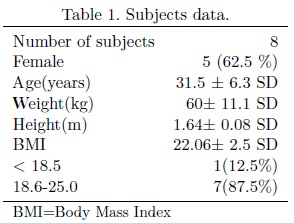
<body><![CDATA[<p align="justify"><font face="verdana" size="2">B) <i>Alternating strategy 2:</i> The aim of this strategy is to generate a mechanical stimulation intended to promote blood flow by alternating pressure on the thighs and buttocks individually from the front to the back of supporting areas and vice versa &#91;20&#93;. This strategy consists of 4 steps that last about 2 minutes: the first step is to inflate all the air cells to a basal inner pressure of 32 mmHg, the second step is to increase the pressure under the area of the thighs up to 40 mmHg and after that release the pressure in this area down to 30 mmHg, and maintaining this low inner pressure until the next phase is achieved. Then in the third step, the gluteal is stimulated by inflating and deflating the right and left sides in 5 phases from a minimum pressure of 30 mmHg to a maximum inner pressure of 40 mmHg. The final step is to release the inner pressure on the thighs and gluteal area at 27 mmHg, after that it makes a pause of 18 seconds and start the process all over again. This sequence induces pressure releasing in frontal and sagittal plane which are similar to the movements generated by healthy subjects during seating &#91;21&#93;.</font></p>  		    <p align="justify"><font face="verdana" size="2">C) <i>Random strategy:</i> The purpose of this strategy is to modify the pressure in the supporting areas all the time. This strategy involves three randomized parameters, the selection and number of cells and the inner pressure to be inflated or deflated. This strategy can reach a maximum inner pressure of 40 mmHg and a minimum inner pressure of 20 mmHg. The duration of each cycle depends of the time that the random parameters are reached.</font></p> 		    <p align="justify">&nbsp;</p> 	</blockquote>  	    <p align="justify"><font face="verdana" size="2"><b>Participants for the Study</b></font></p>  	    <p align="justify"><font face="verdana" size="2">Eight healthy volunteers, 5 females and 3 males, were recruited to participate in this study. Participants were between the ages of 23 to 43. A written consent was obtained from the volunteers before starting the measurements and the procedure was also fully explained to them. Further information about participant characteristics is provided in <a href="#t1">Table 1</a>.</font></p>  	    <p align="center"><font face="verdana" size="2"><a name="t1"></a></font></p>  	    <p align="center"><font face="verdana" size="2"><img src="/img/revistas/rmib/v35n3/a5t1.jpg"></font></p>  	    <p align="justify">&nbsp;</p>     <p align="justify"><font face="verdana" size="2"><b>Protocol of Evaluation</b></font></p>  	    <p align="justify"><font face="verdana" size="2">Volunteers underwent three alternating strategies. For this purpose a standard wheelchair was used. Before starting each study, the cushion was inflated at 7 mmHg as baseline inner pressure without load by a developed algorithm in order to standardize our proposal of set up. At the beginning of the study, the volunteers were asked to sit straight on the cushion placed on the wheelchair and to place their feet on the footrest, while placing their back on the back of the chair with their hands resting on thighs. The hips, knees and ankles were flexed at 90&deg;. Finally they were asked to try as much as possible not to move during the study. The study for each method was started at least one minute after static seating and lasted for 12 minutes, 2 minutes on static sitting and 10 minutes with the alternating method of the cushion.</font></p> 	    ]]></body>
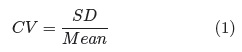
<body><![CDATA[<p align="justify">&nbsp;</p>  	    <p align="justify"><font face="verdana" size="2"><b>Equipment to Evaluate Interface Pressure</b></font></p>  	    <p align="justify"><font face="verdana" size="2">In order to evaluate the changes on interface pressure on the sitting area after applying the proposed strategies, we used a pressure mapping system with a 1024 sensors (32 x 32) matrix with a sensing area of 471.4 mm x 471.4 mm and a sample rate configured at 8 frames per second (CONFORMat, Nitta Co., Osaka Japan)&#91;13&#93;. The sensor mat was placed between the cushion and the participant. The system was calibrated according to the manufacturer's instructions before starting the study.</font></p> 	    <p align="justify">&nbsp;</p>  	    <p align="justify"><font face="verdana" size="2"><b>Data Analysis</b></font></p>  	    <p align="justify"><font face="verdana" size="2"><i>Variation of interface pressure</i></font></p>  	    <p align="justify"><font face="verdana" size="2">To evaluate the pressure redistribution during the application of alternating strategy, the entire map given by CONFORMat was divided into 8 sections, 4 sections on the right side and 4 sections on the left side, <a href="#f3">Figure 3</a>. For each section, coefficient of variation (CV) of interface pressure was computed for 2 minutes on static sitting defined as 'Baseline' and the last 2 minute recordings during the 10 minutes of the alternating sequence. Coefficient of variation is the ratio between standard deviation SD to the Mean as shown in equation 1.</font></p>  	    <p align="center"><font face="verdana" size="2"><img src="/img/revistas/rmib/v35n3/a5e1.jpg"></font></p>  	    <p align="center"><font face="verdana" size="2"><a name="f3"></a></font></p>  	    <p align="center"><font face="verdana" size="2"><img src="/img/revistas/rmib/v35n3/a5f3.jpg"></font></p>  	    ]]></body>
<body><![CDATA[<p align="justify"><font face="verdana" size="2">To compare among the strategies, the percentage of relative change of coefficient of variation for interface pressure was computed in every section of each strategy of control as shown in equation 2.</font></p>  	    <p align="center"><font face="verdana" size="2"><img src="/img/revistas/rmib/v35n3/a5e2.jpg"></font></p>  	    <p align="justify"><font face="verdana" size="2">Where <i>CV<sub>Alt</sub></i> is the coefficient of variation of the alternating phase, and <i>CV<sub>st</sub><sub>c</sub></i> is the coefficient of variation of the static phase or baseline. Positive values indicate that the coefficient of variation was higher on the alternating strategy, and negative values indicate that the static phase was higher compared with the alternating method. The highest increase of variation among the strategies indicates larger alternation of pressure on the seating areas.</font></p>  	    <p align="justify"><font face="verdana" size="2"><i>Interface pressure parameters</i></font></p>  	    <p align="justify"><font face="verdana" size="2">In order to observe the pressure distribution during each alternating sequence, the user contact area was computed and grouped into 10 intervals of 20 mnHg each, from 0&#45;200 mnHg. The contact area for each interval of pressure was computed from the average of the last two minutes of recordings of the study. Additionally, parameters commonly used for evaluating cushions&#91;13&#93;&#91;15&#93; such as mean value, and peak pressure were computed from these recordings.</font></p> 	    <p align="justify">&nbsp;</p>  	    <p align="justify"><font face="verdana" size="2"><b>Statistical Analysis</b></font></p>  	    <p align="justify"><font face="verdana" size="2">A normal distribution test was performed with the Kolmogorov&#45;Smirnov test for each coefficient of variation determined for all the sections, including both static and alternating modes. A paired t&#45;student test was performed to detect differences among the coefficients of variation for each alternative strategy with the baseline pressure condition, which indicates a general performance. All differences with p&#45;Values less than 0.05 were considered significant.</font></p>  	    <p>&nbsp;</p>  	    <p align="justify"><font face="verdana" size="2"><b>RESULTS AND DISCUSSION</b></font></p>  	    ]]></body>
<body><![CDATA[<p align="justify"><font face="verdana" size="2"><b>Variation of interface pressure</b></font></p>  	    <p align="justify"><font face="verdana" size="2">In alternating strategy 1, there was no significant difference between the static mode and the alternating strategy. <a href="/img/revistas/rmib/v35n3/a5f4.jpg" target="_blank">Figure 4</a> shows the changes in terms of coefficient of variation after the application of the alternating method. It suggests that there was no significant relief of interface pressure in the supporting area.</font></p>  	    <p align="justify"><font face="verdana" size="2">In alternating strategy 2, there was significant difference in all the sections comparing the static mode and the alternating strategy. <a href="/img/revistas/rmib/v35n3/a5f5.jpg" target="_blank">Figure 5</a> shows the comparison between the static mode and alternating strategy 2. There was clear increase on the variation after applying this method.</font></p>  	    <p align="justify"><font face="verdana" size="2">In the random strategy 5 from 8 sections from interface pressure map showed significant differences. <a href="/img/revistas/rmib/v35n3/a5f6.jpg" target="_blank">Figure 6</a> shows the changes of coefficient of variation between static mode and after applying the alternating method.</font></p>  	    <p align="justify"><font face="verdana" size="2">In <a href="/img/revistas/rmib/v35n3/a5f5.jpg" target="_blank">figures 5</a> and <a href="/img/revistas/rmib/v35n3/a5f6.jpg" target="_blank">6</a>, it can be observed that the CV in the Front and Back sections from the left and the right side increase more than the other sections. In addition, an increase of the contact area (<a href="/img/revistas/rmib/v35n3/a5t3.jpg" target="_blank">Table 3</a>) was obtained because of the immersion of the body to the cushion. These conditions are associated with pressure redistribution.</font></p>  	    <p align="justify"><font face="verdana" size="2">The percentages of increasing of CV from the three alternating methods and the significant changes after applying the strategies are summarized in <a href="/img/revistas/rmib/v35n3/a5t2.jpg" target="_blank">Table 2</a>. Negative values observed in some sections suggest that there was a decrease of variation of interface pressure after applying the method. As observed in <a href="/img/revistas/rmib/v35n3/a5t2.jpg" target="_blank">Table 2</a>, alternating strategy 2 showed the greatest percentage of increasing of variation and also obtained the higher number of sections with significant differences between static and alternating modes which is the best response compared with the other alternating strategies.</font></p>  	    <p align="justify"><font face="verdana" size="2">It might be because this strategy inflate and deflate the sections under the buttocks and thighs separately, which induce a widespread movement.</font></p>  	    <p align="justify"><font face="verdana" size="2"><i>Interface pressure parameters</i></font></p>  	    <p align="justify"><font face="verdana" size="2">The pressure distribution, which corresponds to the user contact area for each interval, is observed in <a href="/img/revistas/rmib/v35n3/a5f7.jpg" target="_blank">Figure 7</a>. As observed, the highest concentration of pressure is in the interval of 2040 mmHg for the three strategies, followed by the interval of 40&#45;60 mmHg, which is favorable for pressure ulcers prevention &#91;1&#93;. Pressures lower than 120mmHg were obtained for the three strategies. The highest peak of pressure observed in this study corresponds to one sensor area of the entire matrix, which is not meaningful. Similar studies have reported histograms with interface pressure up to 180 mmHg &#91;22&#93;.</font></p>  	    <p align="justify"><font face="verdana" size="2">The proposed alternating strategies showed similar results among them regarding interface pressure parameters, mean pressure, peak pressure and user contact area, at least within the last 2 minutes of sitting, as shown in <a href="/img/revistas/rmib/v35n3/a5t3.jpg" target="_blank">Table 3</a>. Usually, dynamic cushions may cause increase of peak values because of the reduction of contact area, but the results obtained in this work show that the proposed strategies did not cause these effects, which could be good for preventing pressure ulcers &#91;13&#93;.</font></p>  	    ]]></body>
<body><![CDATA[<p align="justify"><font face="verdana" size="2">There are some studies for comparing mechanical behavior of different types of wheelchair cushions&#91;7&#93;&#91;15&#93;, but there is a lack of studies related to alternating sequences for dynamic cushions. The present study showed that the three proposed alternating sequences obtained similar values regarding to interface pressure parameters, these results were expected because the characteristics of the cushion did not change with the alternating method. Moreover, coefficient of variation was very useful for assessing the alternating characteristics of the strategies proposed. An additional contribution of the presented alternating sequences is that these strategies continuously change the pressure by inflating and deflating the air cells at short time among cycles of alternation which provides a mechanical stimulation on sitting area that could promote stimulation of blood flow maintaining pressure redistribution. However, to assess this hypothesis, clinical studies should be done.</font></p>  	    <p>&nbsp;</p>  	    <p align="justify"><font face="verdana" size="2"><b>CONCLUSIONS</b></font></p>  	    <p align="justify"><font face="verdana" size="2">In the present study, we explored three alternating strategies for controlling a dynamic cushion. The three strategies showed favorable results related with interface pressure values. Additionally, we presented a method for determining coefficient of variation; this was very helpful for assessing the magnitude of alternation of the sequences, which indicates stimulation on sitting area. Regarding this parameter, alternating strategy 2 showed the best performance. The variation of pressure on the buttocks is important for preventing pressure ulcer.</font></p>  	    <p align="justify"><font face="verdana" size="2">Although, the results for healthy volunteers obtained on this study are encouraging, clinical studies are suggested to probe the effectiveness of the alternating strategies for dynamic cushion during a long period of time of sitting. Furthermore, given that pressure is not the only factor for pressure ulcer development, it is recommended that the cushion should be evaluated on studies that follow up skin conditions.</font></p>  	    <p align="justify"><font face="verdana" size="2">The random strategy presented in this work might affect the posture of the user; we recommend evaluation of posture in addition to the pressure measurement.</font></p>  	    <p align="justify"><font face="verdana" size="2">As observed, the good performance of a dynamic cushion does not only depend on the design of the cushion, but also on the method of distributing, relieving and alternating pressure on seating areas. With the alternating methods presented in this work, we attempt to create a dynamic cushion for preventing pressure ulcers on wheelchair users.</font></p>  	    <p>&nbsp;</p>  	    <p align="justify"><font face="verdana" size="2"><b>REFERENCES</b></font></p>  	    <!-- ref --><p align="justify"><font face="verdana" size="2">1. International review, "Pressure ulcer prevention: pressure, shear, friction and microclimate in context", A consensus document. London: Wounds International, 2010.    &nbsp;&nbsp;&nbsp;&nbsp;&nbsp;&nbsp;&nbsp;&nbsp;[&#160;<a href="javascript:void(0);" onclick="javascript: window.open('/scielo.php?script=sci_nlinks&ref=8554866&pid=S0188-9532201400030000500001&lng=','','width=640,height=500,resizable=yes,scrollbars=1,menubar=yes,');">Links</a>&#160;]<!-- end-ref --></font></p>  	    <!-- ref --><p align="justify"><font face="verdana" size="2">2. Alam, M. Fitzpatrick's Dermatology in General Medicine. Archives of Dermatology, 2008, 140(3), 372&#45;372</font>&nbsp;&nbsp;&nbsp;&nbsp;&nbsp;&nbsp;&nbsp;&nbsp;[&#160;<a href="javascript:void(0);" onclick="javascript: window.open('/scielo.php?script=sci_nlinks&ref=8554868&pid=S0188-9532201400030000500002&lng=','','width=640,height=500,resizable=yes,scrollbars=1,menubar=yes,');">Links</a>&#160;]<!-- end-ref --><!-- ref --><p align="justify"><font face="verdana" size="2">3. Bennett, Gerry, Carol Dealey, and John Posnett. "The cost of pressure ulcers in the UK". Age and ageing, 2004, 33(3): 230&#45;235.    &nbsp;&nbsp;&nbsp;&nbsp;&nbsp;&nbsp;&nbsp;&nbsp;[&#160;<a href="javascript:void(0);" onclick="javascript: window.open('/scielo.php?script=sci_nlinks&ref=8554869&pid=S0188-9532201400030000500003&lng=','','width=640,height=500,resizable=yes,scrollbars=1,menubar=yes,');">Links</a>&#160;]<!-- end-ref --></font></p>  	    <!-- ref --><p align="justify"><font face="verdana" size="2">4. Hamanami, Kazunori, Akihiro Tokuhiro, and Hajime Inoue. "Finding the optimal setting of inflated air pressure for a multicell air cushion for wheelchair patients with spinal cord injury". Acta Medica Okayama, 2004, 58(1): 37&#45;44.    &nbsp;&nbsp;&nbsp;&nbsp;&nbsp;&nbsp;&nbsp;&nbsp;[&#160;<a href="javascript:void(0);" onclick="javascript: window.open('/scielo.php?script=sci_nlinks&ref=8554871&pid=S0188-9532201400030000500004&lng=','','width=640,height=500,resizable=yes,scrollbars=1,menubar=yes,');">Links</a>&#160;]<!-- end-ref --></font></p>  	    <!-- ref --><p align="justify"><font face="verdana" size="2">5. Sprigle, Stephen, Kao&#45;Chi Chung, and Clifford E. Brubaker. "Reduction of sitting pressures with custom contoured cushions". J Rehabil Res Dev, 1990, 27(2): 135&#45;140.    &nbsp;&nbsp;&nbsp;&nbsp;&nbsp;&nbsp;&nbsp;&nbsp;[&#160;<a href="javascript:void(0);" onclick="javascript: window.open('/scielo.php?script=sci_nlinks&ref=8554873&pid=S0188-9532201400030000500005&lng=','','width=640,height=500,resizable=yes,scrollbars=1,menubar=yes,');">Links</a>&#160;]<!-- end-ref --></font></p>  	    <!-- ref --><p align="justify"><font face="verdana" size="2">6. Apatsidis, Dimitrios P., Stephan E. Solomonidis, and Shona M. Michael. "Pressure distribution at the seating interface of custom&#45;molded wheelchair seats: Effect of various materials". Archives of physical medicine and rehabilitation, 2002, 83(8): 1151&#45;1156</font>&nbsp;&nbsp;&nbsp;&nbsp;&nbsp;&nbsp;&nbsp;&nbsp;[&#160;<a href="javascript:void(0);" onclick="javascript: window.open('/scielo.php?script=sci_nlinks&ref=8554875&pid=S0188-9532201400030000500006&lng=','','width=640,height=500,resizable=yes,scrollbars=1,menubar=yes,');">Links</a>&#160;]<!-- end-ref --><!-- ref --><p align="justify"><font face="verdana" size="2">7. Gil&#45;Agudo, A., et al. "Comparative study of pressure distribution at the user&#45;cushion interface with different cushions in a population with spinal cord injury". Clinical Biomechanics, 2009, 24(7): 558&#45;563.    &nbsp;&nbsp;&nbsp;&nbsp;&nbsp;&nbsp;&nbsp;&nbsp;[&#160;<a href="javascript:void(0);" onclick="javascript: window.open('/scielo.php?script=sci_nlinks&ref=8554876&pid=S0188-9532201400030000500007&lng=','','width=640,height=500,resizable=yes,scrollbars=1,menubar=yes,');">Links</a>&#160;]<!-- end-ref --></font></p>  	    <!-- ref --><p align="justify"><font face="verdana" size="2">8. Stockton, Lesley, and Shyam Rithalia. "Pressure&#45;reducing cushions: Perceptions of comfort from the wheelchair users' perspective using interface pressure, temperature and humidity measurements". Journal of tissue viability, 2009, 18(2): 2835.    &nbsp;&nbsp;&nbsp;&nbsp;&nbsp;&nbsp;&nbsp;&nbsp;[&#160;<a href="javascript:void(0);" onclick="javascript: window.open('/scielo.php?script=sci_nlinks&ref=8554878&pid=S0188-9532201400030000500008&lng=','','width=640,height=500,resizable=yes,scrollbars=1,menubar=yes,');">Links</a>&#160;]<!-- end-ref --></font></p>  	    <!-- ref --><p align="justify"><font face="verdana" size="2">9. Gonz&aacute;lez, C. E., et al. "Asiento hidr&aacute;ulico con movimiento para prevenir &uacute;lceras por presi&oacute;n". Revista Mexicana de Ingenier&iacute;a Biom&eacute;dica, 2006, 27(1): 38&#45;44.    &nbsp;&nbsp;&nbsp;&nbsp;&nbsp;&nbsp;&nbsp;&nbsp;[&#160;<a href="javascript:void(0);" onclick="javascript: window.open('/scielo.php?script=sci_nlinks&ref=8554880&pid=S0188-9532201400030000500009&lng=','','width=640,height=500,resizable=yes,scrollbars=1,menubar=yes,');">Links</a>&#160;]<!-- end-ref --></font></p>  	    <!-- ref --><p align="justify"><font face="verdana" size="2">10. Yih&#45;Kuen, et al. "Wavelet&#45;based spectrum analysis of sacral skin blood flow response to alternating pressure". Archives of physical medicine and rehabilitation, 2008, 89(1): 137&#45;145.    &nbsp;&nbsp;&nbsp;&nbsp;&nbsp;&nbsp;&nbsp;&nbsp;[&#160;<a href="javascript:void(0);" onclick="javascript: window.open('/scielo.php?script=sci_nlinks&ref=8554882&pid=S0188-9532201400030000500010&lng=','','width=640,height=500,resizable=yes,scrollbars=1,menubar=yes,');">Links</a>&#160;]<!-- end-ref --></font></p>  	    <!-- ref --><p align="justify"><font face="verdana" size="2">11. Vanderwee, Katrien, Maria Grypdonck, and Tom Defloor. "Alternating pressure air mattresses as prevention for pressure ulcers: A literature review". International journal of nursing studies, 2008, 45(5): 784&#45;801.    &nbsp;&nbsp;&nbsp;&nbsp;&nbsp;&nbsp;&nbsp;&nbsp;[&#160;<a href="javascript:void(0);" onclick="javascript: window.open('/scielo.php?script=sci_nlinks&ref=8554884&pid=S0188-9532201400030000500011&lng=','','width=640,height=500,resizable=yes,scrollbars=1,menubar=yes,');">Links</a>&#160;]<!-- end-ref --></font></p>  	    <!-- ref --><p align="justify"><font face="verdana" size="2">12. Attard, J., S. V. S. Rithalia, and J. Kulkarni. "Pressure relief characteristics in alternating pressure air cushions". Prosthetics and orthotics international, 1997, 21(3): 229&#45;233.    &nbsp;&nbsp;&nbsp;&nbsp;&nbsp;&nbsp;&nbsp;&nbsp;[&#160;<a href="javascript:void(0);" onclick="javascript: window.open('/scielo.php?script=sci_nlinks&ref=8554886&pid=S0188-9532201400030000500012&lng=','','width=640,height=500,resizable=yes,scrollbars=1,menubar=yes,');">Links</a>&#160;]<!-- end-ref --></font></p>  	    <!-- ref --><p align="justify"><font face="verdana" size="2">13. Nakagami, Gojiro, Hiromi Sanada, and Junko Sugama. "Development and evaluation of a self&#45;regulating alternating pressure air cushion". Disability and Rehabilitation: Assistive Technology (2013): 1&#45;5.    &nbsp;&nbsp;&nbsp;&nbsp;&nbsp;&nbsp;&nbsp;&nbsp;[&#160;<a href="javascript:void(0);" onclick="javascript: window.open('/scielo.php?script=sci_nlinks&ref=8554888&pid=S0188-9532201400030000500013&lng=','','width=640,height=500,resizable=yes,scrollbars=1,menubar=yes,');">Links</a>&#160;]<!-- end-ref --></font></p>  	    <!-- ref --><p align="justify"><font face="verdana" size="2">14. McInnes, Elizabeth, et al. "Support surfaces for pressure ulcer prevention". Cochrane Database Syst Rev 4 (2011).    &nbsp;&nbsp;&nbsp;&nbsp;&nbsp;&nbsp;&nbsp;&nbsp;[&#160;<a href="javascript:void(0);" onclick="javascript: window.open('/scielo.php?script=sci_nlinks&ref=8554890&pid=S0188-9532201400030000500014&lng=','','width=640,height=500,resizable=yes,scrollbars=1,menubar=yes,');">Links</a>&#160;]<!-- end-ref --></font></p>  	    <!-- ref --><p align="justify"><font face="verdana" size="2">15. Ferrarin, Maurizio, Giuseppe Andreoni, and Antonio Pedotti. "Comparative biomechanical evaluation of different wheelchair seat cushions". Journal of rehabilitation research and development 2000, 37(3): 315&#45;324.    &nbsp;&nbsp;&nbsp;&nbsp;&nbsp;&nbsp;&nbsp;&nbsp;[&#160;<a href="javascript:void(0);" onclick="javascript: window.open('/scielo.php?script=sci_nlinks&ref=8554892&pid=S0188-9532201400030000500015&lng=','','width=640,height=500,resizable=yes,scrollbars=1,menubar=yes,');">Links</a>&#160;]<!-- end-ref --></font></p>  	    <!-- ref --><p align="justify"><font face="verdana" size="2">16. McLeod, A. G. "Principles of alternating pressure surfaces". Advances in Skin &amp; Wound Care, 1997, 10(7): 30&#45;36.    &nbsp;&nbsp;&nbsp;&nbsp;&nbsp;&nbsp;&nbsp;&nbsp;[&#160;<a href="javascript:void(0);" onclick="javascript: window.open('/scielo.php?script=sci_nlinks&ref=8554894&pid=S0188-9532201400030000500016&lng=','','width=640,height=500,resizable=yes,scrollbars=1,menubar=yes,');">Links</a>&#160;]<!-- end-ref --></font></p>  	    <!-- ref --><p align="justify"><font face="verdana" size="2">17. Stockton, Lesley, and Shyam Rithalia. "Is dynamic seating a modality worth considering in the prevention of pressure ulcers?". Journal of tissue viability, 2008, 17(1): 15&#45;21.    &nbsp;&nbsp;&nbsp;&nbsp;&nbsp;&nbsp;&nbsp;&nbsp;[&#160;<a href="javascript:void(0);" onclick="javascript: window.open('/scielo.php?script=sci_nlinks&ref=8554896&pid=S0188-9532201400030000500017&lng=','','width=640,height=500,resizable=yes,scrollbars=1,menubar=yes,');">Links</a>&#160;]<!-- end-ref --></font></p>  	    <!-- ref --><p align="justify"><font face="verdana" size="2">18. Clancy, Michael J. "Pressure redistribution devices: What works, at what cost and what's next?" Journal of tissue viability, 2013, 22(3): 57&#45;62.    &nbsp;&nbsp;&nbsp;&nbsp;&nbsp;&nbsp;&nbsp;&nbsp;[&#160;<a href="javascript:void(0);" onclick="javascript: window.open('/scielo.php?script=sci_nlinks&ref=8554898&pid=S0188-9532201400030000500018&lng=','','width=640,height=500,resizable=yes,scrollbars=1,menubar=yes,');">Links</a>&#160;]<!-- end-ref --></font></p>  	    <!-- ref --><p align="justify"><font face="verdana" size="2">19. Arias, Sandra, et al. "A pressure distribution measurement system for supporting areas of wheelchair users". Engineering in Medicine and Biology Society (EMBC), 2013 35th Annual International Conference of the IEEE. IEEE, 2013.    &nbsp;&nbsp;&nbsp;&nbsp;&nbsp;&nbsp;&nbsp;&nbsp;[&#160;<a href="javascript:void(0);" onclick="javascript: window.open('/scielo.php?script=sci_nlinks&ref=8554900&pid=S0188-9532201400030000500019&lng=','','width=640,height=500,resizable=yes,scrollbars=1,menubar=yes,');">Links</a>&#160;]<!-- end-ref --></font></p>  	    <!-- ref --><p align="justify"><font face="verdana" size="2">20. S. Arias, E. Cardiel, P. Rogeli, T. Mori, H. Noguchi, G. Nakagami and H. Sanada, "An Alternating Pressure Sequence Proposal for an Air&#45;Cell Cushion for Preventing Pressure Ulcers". Engineering in Medicine and Biology Society (EMBC), 2014 36th Annual International Conference of the EEE. IEEE, 2014.    &nbsp;&nbsp;&nbsp;&nbsp;&nbsp;&nbsp;&nbsp;&nbsp;[&#160;<a href="javascript:void(0);" onclick="javascript: window.open('/scielo.php?script=sci_nlinks&ref=8554902&pid=S0188-9532201400030000500020&lng=','','width=640,height=500,resizable=yes,scrollbars=1,menubar=yes,');">Links</a>&#160;]<!-- end-ref --></font></p>  	    <!-- ref --><p align="justify"><font face="verdana" size="2">21. Reenalda, Jasper, et al. "Analysis of healthy sitting behavior: interface pressure distribution and subcutaneous tissue oxygenation". Journal of Rehabilitation Research &amp; Development, 2009, 46(5): 577&#45;586.    &nbsp;&nbsp;&nbsp;&nbsp;&nbsp;&nbsp;&nbsp;&nbsp;[&#160;<a href="javascript:void(0);" onclick="javascript: window.open('/scielo.php?script=sci_nlinks&ref=8554904&pid=S0188-9532201400030000500021&lng=','','width=640,height=500,resizable=yes,scrollbars=1,menubar=yes,');">Links</a>&#160;]<!-- end-ref --></font></p>  	    <!-- ref --><p align="justify"><font face="verdana" size="2">22. Bar, C. A. "Evaluation of cushions using dynamic pressure measurement". Prosthetics and Orthotics International, 1991, 15(3): 232&#45;240.    &nbsp;&nbsp;&nbsp;&nbsp;&nbsp;&nbsp;&nbsp;&nbsp;[&#160;<a href="javascript:void(0);" onclick="javascript: window.open('/scielo.php?script=sci_nlinks&ref=8554906&pid=S0188-9532201400030000500022&lng=','','width=640,height=500,resizable=yes,scrollbars=1,menubar=yes,');">Links</a>&#160;]<!-- end-ref --></font></p>      ]]></body><back>
<ref-list>
<ref id="B1">
<label>1</label><nlm-citation citation-type="book">
<collab>International review</collab>
<source><![CDATA[Pressure ulcer prevention: pressure, shear, friction and microclimate in context]]></source>
<year>2010</year>
<publisher-loc><![CDATA[London ]]></publisher-loc>
<publisher-name><![CDATA[Wounds International]]></publisher-name>
</nlm-citation>
</ref>
<ref id="B2">
<label>2</label><nlm-citation citation-type="journal">
<person-group person-group-type="author">
<name>
<surname><![CDATA[Alam]]></surname>
<given-names><![CDATA[M.]]></given-names>
</name>
</person-group>
<article-title xml:lang="en"><![CDATA[Fitzpatrick's Dermatology in General Medicine]]></article-title>
<source><![CDATA[Archives of Dermatology]]></source>
<year>2008</year>
<volume>140</volume>
<numero>3</numero>
<issue>3</issue>
<page-range>372-372</page-range></nlm-citation>
</ref>
<ref id="B3">
<label>3</label><nlm-citation citation-type="journal">
<person-group person-group-type="author">
<name>
<surname><![CDATA[Bennett]]></surname>
<given-names><![CDATA[Gerry]]></given-names>
</name>
<name>
<surname><![CDATA[Dealey]]></surname>
<given-names><![CDATA[Carol]]></given-names>
</name>
<name>
<surname><![CDATA[Posnett]]></surname>
<given-names><![CDATA[John]]></given-names>
</name>
</person-group>
<article-title xml:lang="en"><![CDATA[The cost of pressure ulcers in the UK]]></article-title>
<source><![CDATA[Age and ageing]]></source>
<year>2004</year>
<volume>33</volume>
<numero>3</numero>
<issue>3</issue>
<page-range>230-235</page-range></nlm-citation>
</ref>
<ref id="B4">
<label>4</label><nlm-citation citation-type="journal">
<person-group person-group-type="author">
<name>
<surname><![CDATA[Hamanami]]></surname>
<given-names><![CDATA[Kazunori]]></given-names>
</name>
<name>
<surname><![CDATA[Tokuhiro]]></surname>
<given-names><![CDATA[Akihiro]]></given-names>
</name>
<name>
<surname><![CDATA[Inoue]]></surname>
<given-names><![CDATA[Hajime]]></given-names>
</name>
</person-group>
<article-title xml:lang="en"><![CDATA[Finding the optimal setting of inflated air pressure for a multicell air cushion for wheelchair patients with spinal cord injury]]></article-title>
<source><![CDATA[Acta Medica Okayama]]></source>
<year>2004</year>
<volume>58</volume>
<numero>1</numero>
<issue>1</issue>
<page-range>37-44</page-range></nlm-citation>
</ref>
<ref id="B5">
<label>5</label><nlm-citation citation-type="journal">
<person-group person-group-type="author">
<name>
<surname><![CDATA[Sprigle]]></surname>
<given-names><![CDATA[Stephen]]></given-names>
</name>
<name>
<surname><![CDATA[Chung]]></surname>
<given-names><![CDATA[Kao-Chi]]></given-names>
</name>
<name>
<surname><![CDATA[Brubaker]]></surname>
<given-names><![CDATA[Clifford E.]]></given-names>
</name>
</person-group>
<source><![CDATA[J Rehabil Res Dev]]></source>
<year>1990</year>
<volume>27</volume>
<numero>2</numero>
<issue>2</issue>
<page-range>135-140</page-range></nlm-citation>
</ref>
<ref id="B6">
<label>6</label><nlm-citation citation-type="journal">
<person-group person-group-type="author">
<name>
<surname><![CDATA[Apatsidis]]></surname>
<given-names><![CDATA[Dimitrios P.]]></given-names>
</name>
<name>
<surname><![CDATA[Stephan E.]]></surname>
<given-names><![CDATA[Solomonidis]]></given-names>
</name>
<name>
<surname><![CDATA[Shona M.]]></surname>
<given-names><![CDATA[Michael]]></given-names>
</name>
</person-group>
<article-title xml:lang="en"><![CDATA[Pressure distribution at the seating interface of custom-molded wheelchair seats: Effect of various materials]]></article-title>
<source><![CDATA[Archives of physical medicine and rehabilitation]]></source>
<year>2002</year>
<volume>83</volume>
<numero>8</numero>
<issue>8</issue>
<page-range>1151-1156</page-range></nlm-citation>
</ref>
<ref id="B7">
<label>7</label><nlm-citation citation-type="journal">
<person-group person-group-type="author">
<name>
<surname><![CDATA[Gil-Agudo]]></surname>
<given-names><![CDATA[A.]]></given-names>
</name>
</person-group>
<article-title xml:lang="en"><![CDATA[Comparative study of pressure distribution at the user-cushion interface with different cushions in a population with spinal cord injury]]></article-title>
<source><![CDATA[Clinical Biomechanics]]></source>
<year>2009</year>
<volume>24</volume>
<numero>7</numero>
<issue>7</issue>
<page-range>558-563</page-range></nlm-citation>
</ref>
<ref id="B8">
<label>8</label><nlm-citation citation-type="journal">
<person-group person-group-type="author">
<name>
<surname><![CDATA[Stockton]]></surname>
<given-names><![CDATA[Lesley]]></given-names>
</name>
<name>
<surname><![CDATA[Rithalia]]></surname>
<given-names><![CDATA[Shyam]]></given-names>
</name>
</person-group>
<article-title xml:lang="en"><![CDATA[Pressure-reducing cushions: Perceptions of comfort from the wheelchair users' perspective using interface pressure, temperature and humidity measurements]]></article-title>
<source><![CDATA[Journal of tissue viability]]></source>
<year>2009</year>
<volume>18</volume>
<numero>2</numero>
<issue>2</issue>
<page-range>2835</page-range></nlm-citation>
</ref>
<ref id="B9">
<label>9</label><nlm-citation citation-type="journal">
<person-group person-group-type="author">
<name>
<surname><![CDATA[González]]></surname>
<given-names><![CDATA[C. E.]]></given-names>
</name>
</person-group>
<article-title xml:lang="es"><![CDATA[Asiento hidráulico con movimiento para prevenir úlceras por presión]]></article-title>
<source><![CDATA[Revista Mexicana de Ingeniería Biomédica]]></source>
<year>2006</year>
<volume>27</volume>
<numero>1</numero>
<issue>1</issue>
<page-range>38-44</page-range></nlm-citation>
</ref>
<ref id="B10">
<label>10</label><nlm-citation citation-type="journal">
<person-group person-group-type="author">
<name>
<surname><![CDATA[Yih-Kuen]]></surname>
</name>
</person-group>
<article-title xml:lang="en"><![CDATA[Wavelet-based spectrum analysis of sacral skin blood flow response to alternating pressure]]></article-title>
<source><![CDATA[Archives of physical medicine and rehabilitation]]></source>
<year>2008</year>
<volume>89</volume>
<numero>1</numero>
<issue>1</issue>
<page-range>137-145</page-range></nlm-citation>
</ref>
<ref id="B11">
<label>11</label><nlm-citation citation-type="journal">
<person-group person-group-type="author">
<name>
<surname><![CDATA[Vanderwee]]></surname>
<given-names><![CDATA[Katrien]]></given-names>
</name>
<name>
<surname><![CDATA[Grypdonck]]></surname>
<given-names><![CDATA[Maria]]></given-names>
</name>
<name>
<surname><![CDATA[Defloor]]></surname>
<given-names><![CDATA[Tom]]></given-names>
</name>
</person-group>
<article-title xml:lang="en"><![CDATA[Alternating pressure air mattresses as prevention for pressure ulcers: A literature review]]></article-title>
<source><![CDATA[International journal of nursing studies]]></source>
<year>2008</year>
<volume>45</volume>
<numero>5</numero>
<issue>5</issue>
<page-range>784-801</page-range></nlm-citation>
</ref>
<ref id="B12">
<label>12</label><nlm-citation citation-type="journal">
<person-group person-group-type="author">
<name>
<surname><![CDATA[Attard]]></surname>
<given-names><![CDATA[J.]]></given-names>
</name>
<name>
<surname><![CDATA[Rithalia]]></surname>
<given-names><![CDATA[S. V. S.]]></given-names>
</name>
<name>
<surname><![CDATA[Kulkarni]]></surname>
<given-names><![CDATA[J.]]></given-names>
</name>
</person-group>
<article-title xml:lang="en"><![CDATA[Pressure relief characteristics in alternating pressure air cushions]]></article-title>
<source><![CDATA[Prosthetics and orthotics international]]></source>
<year>1997</year>
<volume>21</volume>
<numero>3</numero>
<issue>3</issue>
<page-range>229-233</page-range></nlm-citation>
</ref>
<ref id="B13">
<label>13</label><nlm-citation citation-type="book">
<person-group person-group-type="author">
<name>
<surname><![CDATA[Nakagami]]></surname>
<given-names><![CDATA[Gojiro]]></given-names>
</name>
<name>
<surname><![CDATA[Sanada]]></surname>
<given-names><![CDATA[Hiromi]]></given-names>
</name>
<name>
<surname><![CDATA[Sugama]]></surname>
<given-names><![CDATA[Junko]]></given-names>
</name>
</person-group>
<source><![CDATA[Development and evaluation of a self-regulating alternating pressure air cushion]]></source>
<year>2013</year>
<page-range>1-5</page-range><publisher-name><![CDATA[Disability and Rehabilitation: Assistive Technology]]></publisher-name>
</nlm-citation>
</ref>
<ref id="B14">
<label>14</label><nlm-citation citation-type="journal">
<person-group person-group-type="author">
<name>
<surname><![CDATA[McInnes]]></surname>
<given-names><![CDATA[Elizabeth]]></given-names>
</name>
</person-group>
<article-title xml:lang="en"><![CDATA[Support surfaces for pressure ulcer prevention]]></article-title>
<source><![CDATA[Cochrane Database Syst Rev]]></source>
<year>2011</year>
<volume>4</volume>
</nlm-citation>
</ref>
<ref id="B15">
<label>15</label><nlm-citation citation-type="journal">
<person-group person-group-type="author">
<name>
<surname><![CDATA[Ferrarin]]></surname>
<given-names><![CDATA[Maurizio]]></given-names>
</name>
<name>
<surname><![CDATA[Andreoni]]></surname>
<given-names><![CDATA[Giuseppe]]></given-names>
</name>
<name>
<surname><![CDATA[Pedotti]]></surname>
<given-names><![CDATA[Antonio]]></given-names>
</name>
</person-group>
<article-title xml:lang="en"><![CDATA[Comparative biomechanical evaluation of different wheelchair seat cushions]]></article-title>
<source><![CDATA[Journal of rehabilitation research and development]]></source>
<year>2000</year>
<volume>37</volume>
<numero>3</numero>
<issue>3</issue>
<page-range>315-324</page-range></nlm-citation>
</ref>
<ref id="B16">
<label>16</label><nlm-citation citation-type="journal">
<person-group person-group-type="author">
<name>
<surname><![CDATA[McLeod]]></surname>
<given-names><![CDATA[A. G.]]></given-names>
</name>
</person-group>
<article-title xml:lang="en"><![CDATA[Principles of alternating pressure surfaces]]></article-title>
<source><![CDATA[Advances in Skin & Wound Care]]></source>
<year>1997</year>
<volume>10</volume>
<numero>7</numero>
<issue>7</issue>
<page-range>30-36</page-range></nlm-citation>
</ref>
<ref id="B17">
<label>17</label><nlm-citation citation-type="journal">
<person-group person-group-type="author">
<name>
<surname><![CDATA[Stockton]]></surname>
<given-names><![CDATA[Lesley]]></given-names>
</name>
<name>
<surname><![CDATA[Rithalia]]></surname>
<given-names><![CDATA[Shyam]]></given-names>
</name>
</person-group>
<article-title xml:lang="en"><![CDATA[Is dynamic seating a modality worth considering in the prevention of pressure ulcers?]]></article-title>
<source><![CDATA[Journal of tissue viability]]></source>
<year>2008</year>
<volume>17</volume>
<numero>1</numero>
<issue>1</issue>
<page-range>15-21</page-range></nlm-citation>
</ref>
<ref id="B18">
<label>18</label><nlm-citation citation-type="journal">
<person-group person-group-type="author">
<name>
<surname><![CDATA[Clancy]]></surname>
<given-names><![CDATA[Michael J.]]></given-names>
</name>
</person-group>
<article-title xml:lang="en"><![CDATA[Pressure redistribution devices: What works, at what cost and what's next?]]></article-title>
<source><![CDATA[Journal of tissue viability]]></source>
<year>2013</year>
<volume>22</volume>
<numero>3</numero>
<issue>3</issue>
<page-range>57-62</page-range></nlm-citation>
</ref>
<ref id="B19">
<label>19</label><nlm-citation citation-type="book">
<person-group person-group-type="author">
<name>
<surname><![CDATA[Arias]]></surname>
<given-names><![CDATA[Sandra]]></given-names>
</name>
</person-group>
<article-title xml:lang="en"><![CDATA[A pressure distribution measurement system for supporting areas of wheelchair users]]></article-title>
<collab>Engineering in Medicine and Biology Society</collab>
<source><![CDATA[35th Annual International Conference of the IEEE]]></source>
<year>2013</year>
<publisher-name><![CDATA[IEEE]]></publisher-name>
</nlm-citation>
</ref>
<ref id="B20">
<label>20</label><nlm-citation citation-type="book">
<person-group person-group-type="author">
<name>
<surname><![CDATA[Arias]]></surname>
<given-names><![CDATA[S.]]></given-names>
</name>
<name>
<surname><![CDATA[Cardiel]]></surname>
<given-names><![CDATA[E.]]></given-names>
</name>
<name>
<surname><![CDATA[Rogeli]]></surname>
<given-names><![CDATA[P.]]></given-names>
</name>
<name>
<surname><![CDATA[Mori]]></surname>
<given-names><![CDATA[T.]]></given-names>
</name>
<name>
<surname><![CDATA[Noguchi]]></surname>
<given-names><![CDATA[H.]]></given-names>
</name>
<name>
<surname><![CDATA[Nakagami]]></surname>
<given-names><![CDATA[G.]]></given-names>
</name>
<name>
<surname><![CDATA[Sanada]]></surname>
<given-names><![CDATA[H.]]></given-names>
</name>
</person-group>
<article-title xml:lang="en"><![CDATA[An Alternating Pressure Sequence Proposal for an Air-Cell Cushion for Preventing Pressure Ulcers]]></article-title>
<collab>Engineering in Medicine and Biology Society</collab>
<source><![CDATA[36th Annual International Conference of the EEE]]></source>
<year>2014</year>
<publisher-name><![CDATA[IEEE]]></publisher-name>
</nlm-citation>
</ref>
<ref id="B21">
<label>21</label><nlm-citation citation-type="journal">
<person-group person-group-type="author">
<name>
<surname><![CDATA[Reenalda]]></surname>
<given-names><![CDATA[Jasper]]></given-names>
</name>
</person-group>
<article-title xml:lang="en"><![CDATA[Analysis of healthy sitting behavior: interface pressure distribution and subcutaneous tissue oxygenation]]></article-title>
<source><![CDATA[Journal of Rehabilitation Research & Development]]></source>
<year>2009</year>
<volume>46</volume>
<numero>5</numero>
<issue>5</issue>
<page-range>577-586</page-range></nlm-citation>
</ref>
<ref id="B22">
<label>22</label><nlm-citation citation-type="journal">
<person-group person-group-type="author">
<name>
<surname><![CDATA[Bar]]></surname>
<given-names><![CDATA[C. A.]]></given-names>
</name>
</person-group>
<article-title xml:lang="en"><![CDATA[Evaluation of cushions using dynamic pressure measurement]]></article-title>
<source><![CDATA[Prosthetics and Orthotics International]]></source>
<year>1991</year>
<volume>15</volume>
<numero>3</numero>
<issue>3</issue>
<page-range>232-240</page-range></nlm-citation>
</ref>
</ref-list>
</back>
</article>