<?xml version="1.0" encoding="ISO-8859-1"?><article xmlns:mml="http://www.w3.org/1998/Math/MathML" xmlns:xlink="http://www.w3.org/1999/xlink" xmlns:xsi="http://www.w3.org/2001/XMLSchema-instance">
<front>
<journal-meta>
<journal-id>0187-893X</journal-id>
<journal-title><![CDATA[Educación química]]></journal-title>
<abbrev-journal-title><![CDATA[Educ. quím]]></abbrev-journal-title>
<issn>0187-893X</issn>
<publisher>
<publisher-name><![CDATA[Universidad Nacional Autónoma de México, Facultad de Química]]></publisher-name>
</publisher>
</journal-meta>
<article-meta>
<article-id>S0187-893X2013000100005</article-id>
<title-group>
<article-title xml:lang="en"><![CDATA[Gustav Charles Bonaventure Chancel]]></article-title>
</title-group>
<contrib-group>
<contrib contrib-type="author">
<name>
<surname><![CDATA[Wisniak]]></surname>
<given-names><![CDATA[Jaime]]></given-names>
</name>
<xref ref-type="aff" rid="A01"/>
</contrib>
</contrib-group>
<aff id="A01">
<institution><![CDATA[,Ben-Gurion University of the Negev. Department of Chemical Engineering. ]]></institution>
<addr-line><![CDATA[Beer-Sheva ]]></addr-line>
<country>Israel</country>
</aff>
<pub-date pub-type="pub">
<day>00</day>
<month>01</month>
<year>2013</year>
</pub-date>
<pub-date pub-type="epub">
<day>00</day>
<month>01</month>
<year>2013</year>
</pub-date>
<volume>24</volume>
<numero>1</numero>
<fpage>23</fpage>
<lpage>30</lpage>
<copyright-statement/>
<copyright-year/>
<self-uri xlink:href="http://www.scielo.org.mx/scielo.php?script=sci_arttext&amp;pid=S0187-893X2013000100005&amp;lng=en&amp;nrm=iso"></self-uri><self-uri xlink:href="http://www.scielo.org.mx/scielo.php?script=sci_abstract&amp;pid=S0187-893X2013000100005&amp;lng=en&amp;nrm=iso"></self-uri><self-uri xlink:href="http://www.scielo.org.mx/scielo.php?script=sci_pdf&amp;pid=S0187-893X2013000100005&amp;lng=en&amp;nrm=iso"></self-uri><abstract abstract-type="short" xml:lang="en"><p><![CDATA[Gustave Charles Bonaventure Chancel (1822-1890) worked on problems related to analytical chemistry, wine industry, and organic chemistry. His main findings were on the subject of ketones, their nature, reactions, and derivatives. To his credit are the discovery or synthesis of 4-heptanone, butyraldehyde, butyronitrile, valeraldehyde, nitroalkyl acids, benzophenone, phenylurea, diphenylurea, double esters, benzenesulfonyl chloride, n-propanol, etc. His discoveries helped in the acceptance of Gerhardt and Laurent chemical classification theories.]]></p></abstract>
<abstract abstract-type="short" xml:lang="es"><p><![CDATA[Gustave Charles Bonaventure Chancel (1822-1890) trabajó en problemas relacionados con química analítica, industria del vino y química orgánica. Sus principales descubrimientos fueron en el área de las cetonas, su naturaleza, reacciones y derivados. A su crédito se anota el descubrimiento o la síntesis de 4-heptanona, aldehido butírico, butironitrilo, aldehído va-lerico, ácidos nitroalquílicos, benzofenona, fenilurea, difenilu-rea, ésteres dobles, cloruro de sulfonilbenceno, n-propanol, etc. Sus descubrimientos fueron críticos para la aceptación de las teorías de clasificación química de Gerhardt y Laurent.]]></p></abstract>
<kwd-group>
<kwd lng="en"><![CDATA[benzophenone]]></kwd>
<kwd lng="en"><![CDATA[benzophenyl chloride]]></kwd>
<kwd lng="en"><![CDATA[butyraldehyde]]></kwd>
<kwd lng="en"><![CDATA[ketones]]></kwd>
<kwd lng="en"><![CDATA[phenylurea]]></kwd>
<kwd lng="en"><![CDATA[n-propanol]]></kwd>
<kwd lng="en"><![CDATA[wine industry]]></kwd>
<kwd lng="es"><![CDATA[benzofenona]]></kwd>
<kwd lng="es"><![CDATA[cloruro de benzofenilo]]></kwd>
<kwd lng="es"><![CDATA[butir-aldehído]]></kwd>
<kwd lng="es"><![CDATA[cetonas]]></kwd>
<kwd lng="es"><![CDATA[fenilurea]]></kwd>
<kwd lng="es"><![CDATA[n-propanol]]></kwd>
<kwd lng="es"><![CDATA[industria vitivinícola]]></kwd>
</kwd-group>
</article-meta>
</front><body><![CDATA[ <p align="justify"><font face="verdana" size="4">Para quitarle el polvo</font></p>     <p align="justify">&nbsp;</p>  	    <p align="center"><font face="verdana" size="4"><b>Gustav Charles Bonaventure Chancel</b></font></p>     <p align="center">&nbsp;</p>      <p align="center"><font face="verdana" size="2"><b>Jaime Wisniak*</b> </font></p>     <p align="center">&nbsp;</p>     <p align="justify"><font face="verdana" size="2"><i>* Department of Chemical Engineering, Ben&#150;Gurion University of the Negev, Beer&#150;Sheva, Israel 84105. </i>Correo electr&oacute;nico: <a href="mailto:wisniak@exchange,bgu.ac.il">wisniak@exchange,bgu.ac.il</a></font></p>     <p align="justify">&nbsp;</p>     <p align="justify"><font face="verdana" size="2">Fecha de recepci&oacute;n: 12 de junio de 2012.     <br>   Fecha de aceptaci&oacute;n: 1 de septiembre de 2012.</font></p>     ]]></body>
<body><![CDATA[<p align="center">&nbsp;</p>     <p align="justify"><font face="verdana" size="2"><b>Abstract</b></font></p>      <p align="justify"><font face="verdana" size="2">Gustave Charles Bonaventure Chancel (1822&#150;1890) worked on problems related to analytical chemistry, wine industry, and organic chemistry. His main findings were on the subject of ketones, their nature, reactions, and derivatives. To his credit are the discovery or synthesis of 4&#150;heptanone, butyraldehyde, butyronitrile, valeraldehyde, nitroalkyl acids, benzophenone, phenylurea, diphenylurea, double esters, benzenesulfonyl chloride, <i>n</i>&#150;propanol, etc. His discoveries helped in the acceptance of Gerhardt and Laurent chemical classification theories.</font></p>  	    <p align="justify"><font face="verdana" size="2"><b>Keywords:</b> benzophenone, benzophenyl chloride, butyraldehyde, ketones, phenylurea, n&#150;propanol, wine industry.</font></p>  	    <p align="justify">&nbsp;</p> 	    <p align="justify"><font face="verdana" size="2"><b>Resumen</b></font></p>      <p align="justify"><font face="verdana" size="2">Gustave Charles Bonaventure Chancel (1822&#150;1890) trabaj&oacute; en problemas relacionados con qu&iacute;mica anal&iacute;tica, industria del vino y qu&iacute;mica org&aacute;nica. Sus principales descubrimientos fueron en el &aacute;rea de las cetonas, su naturaleza, reacciones y derivados. A su cr&eacute;dito se anota el descubrimiento o la s&iacute;ntesis de 4&#150;heptanona, aldehido but&iacute;rico, butironitrilo, aldeh&iacute;do va&#150;lerico, &aacute;cidos nitroalqu&iacute;licos, benzofenona, fenilurea, difenilu&#150;rea, &eacute;steres dobles, cloruro de sulfonilbenceno, <i>n</i>&#150;propanol, etc. Sus descubrimientos fueron cr&iacute;ticos para la aceptaci&oacute;n de las teor&iacute;as de clasificaci&oacute;n qu&iacute;mica de Gerhardt y Laurent.</font></p>  	    <p align="justify"><font face="verdana" size="2"><b>Palabras clave:</b> benzofenona, cloruro de benzofenilo, butir&#150;aldeh&iacute;do, cetonas, fenilurea, <i>n</i>&#150;propanol, industria vitivin&iacute;cola.</font></p>     <p align="justify">&nbsp;</p>      <p align="justify"><font face="verdana" size="2"><b>LIFE AND CAREER</b></font></p>  	    ]]></body>
<body><![CDATA[<p align="justify"><font face="verdana" size="2">Gustave Charles Bonaventure Chancel was born in Loriol, France, on January 18, 1882, the son of a former artillery officer. He studied at the coll&egrave;ge Charlemagne and then entered the &Eacute;cole Centrale in Paris. After graduation he worked in the laboratory of Th&eacute;ophile&#150;Jules Pelouze (1807&#150;1867), where he begun studies on the derivatives of butyric acid, which led, in 1844, to the publication of his first memoir, on the action of ammonia on ethyl butyrate (Chancel, 1844a). A year later his researches of butyric acid were published in <i>Recueil des Savants &Eacute;trangers</i> (a journal issued by the Acad&eacute;mie des Sciences for publishing important scientific contributions of non&#150;members), accompanied by a highly favorable report by Jean&#150;Baptiste Andr&eacute; Dumas (1800&#150;1884). Chancel was then only 23 years old. In 1846 he was nominated chemistry assistant at the &Eacute;cole des Mines, a position he kept until 1848 when he was appointed as temporary replacement for Charles&#150;Fr&eacute;d&eacute;ric Gerhardt (1816&#150;1856) at the chair in chemistry of the Facult&eacute; des Sciences of Montpellier, who had received a leave of absence to Paris for two years; Chancel had just been awarded his doctorate at the same faculty (Chancel, 1848). In 1851 Gerhardt forsake the chair and Chancel kept it, first as <i>charg&eacute; de course</i> and eventually as <i>professeur titulaire</i> on February 1852. From that time on, Chancel collaborated with Gerhardt and Auguste Laurent (1807&#150;1853) in important works in organic chemistry and provided important experimental evidence to the new theory of structure of organic chemistry they were developing (Chancel and Gerhardt, 1851, 1852; Chancel and Laurent, 1847ab, 1848a; Laurent and Chancel, 1847, 1848). In 1865 Paul Gervais (1816&#150;1879), professor of zoology and comparative anatomy and Dean of the Facult&eacute; des Sciences in Montpellier, accepted the chair of zoology at the Sorbonne, and Chancel was appointed Dean in his place. The position had the privilege of accommodations at the Jardin des Plants; Chancel moved there with his wife Adeline de Pirch, whom he had married in 1848, and their four children. In 1879 Chancel was elected Rector, a position he kept until his death on August 5, 1890 (De Forcrand, 1891).</font></p>  	    <p align="justify"><font face="verdana" size="2">Chancel received many honors for his contributions to science and public life. He was honorary, correspondent, or associate member of the most important French scientific societies, among them, the Acad&eacute;mie des Sciences et Lettres de Montpellier, Soci&eacute;t&eacute; d'Agriculture, Conseil d'Hygiene de l'He&#150;rault, Soci&eacute;t&eacute; de G&eacute;ographie, Association pour l'Advance&#150;ment des Sciences, Soci&eacute;t&eacute; Chimique, etc. He was appointed Officier de l'Instruction Publique (1868), Chevalier de la L&eacute;gion d'Honneur (1866) and promoted to Officier (1886), and Chevalier de la Rose du Br&eacute;sil (1872). In 1863 and 1869 he failed to be elected as corresponding member to the Section de Chimie de la Acad&eacute;mie des Sciences. In 1880 he was finally elected after he had published his important work on the nitrogenated acids derived from acetones (Chancel, 1878; De Forcrand, 1891). In 1884 he was awarded the Jecker Prize by the Acad&eacute;mie des Sciences, a prize established in 1851 to accelerate the progress in organic chemistry.</font></p>  	    <p align="justify">&nbsp;</p>     <p align="justify"><font face="verdana" size="2"><b>SCIENTIFIC ARCHIVEMENTS</b></font></p>  	    <p align="justify"><font face="verdana" size="2">The research activity of Chancel was carried in three areas: analytical and inorganic chemistry, wine industry, and organic chemistry.</font></p>     <p align="justify">&nbsp;</p>      <p align="justify"><font face="verdana" size="2"><b>1. Viticulture and wine making</b></font></p>  	    <p align="justify"><font face="verdana" size="2">Chancel was living in a viticultural region, and it was natural that he would be interested in the problems that affected the industry. In particular, he devoted much time to the question of plastering and wine falsification (Chancel, 1861&#150;1866, 1865, 1875). The practice of adding calcium sulfate to the vat at the moment of fermentation of the grape must, or at the end of the same, was very common in certain viniculture regions. It was particularly used for wines, which were heavily colored and had a large concentration of cream of tartar. These characteristics made the wines hard to keep and unable to withstand long trips without substantial alteration. Addition of calcium sulfate, a practice called plastering, seemed to attenuate these disadvantages. In spite of the long time that this practice had been in use, there were no indications that it affected the health of the consumers.</font></p>  	    <p align="justify"><font face="verdana" size="2">In 1854 Chancel formed part of a committee appointed by the Chamber of Commerce of Montpellier to study the question of plastering of wines. The conclusions became public in 1865 and were partly published in <i>Comptes Rendus</i> (Bussy and Buignet, 1865). The work reported by Antoine Bussy (1794&#150;1882) and Henri Buignet (1815&#150;1876) related to the study of the possible reactions that might take place between the foreign substance, calcium sulfate, and cream of tartar, in an alcoholic medium. For this purpose they prepared a synthetic solution with the three ingredients and studied its behavior and properties. They found that addition of calcium sulfate decomposed the cream of tartar, without changing the initial acidity of the solution of cream of tartar in alcohol. The reaction took place between one equivalent of each of the two salts. If an excess of sulfate was added, it remained in solution unaltered, or it precipitated. The sulfate reacted totally, the calcium becoming neutral calcium tartrate, of which the largest part precipitated. The sulfuric acid released became part of the solution, apparently as potassium bisulfate.</font></p>  	    <p align="justify"><font face="verdana" size="2">In his study on plastering (Chancel, 1865), Chancel reported that although the weight of grapes of southern France (the Midi), which were used to produce one liter of wine, contained 8 to 9 g of tartar, the resulting wine contained only 2.5 g. To understand the reason of the difference he measured the solubility of potassium bitartrate in water and alcoholic water, in the temperature range 0&deg; to 40&deg;C, and observed that the solubility in the latter was much less than in pure water. Addition of calcium sulfate to the wine precipitated neutral calcium tartrate and left in solution free tartaric acid and potassium sulfate. The amounts of each of these substances were different when the calcium sulfate was added to the must before fermentation. Chancel's results clearly indicated that addition of calcium sulfate before fermentation resulted in the passing into the wine of all the potassium tartrate present in the grapes, with the corresponding increase in tartrate content; addition of calcium sulfate after fermentation decreased the tartrate content, increased the acidimetry of the wine, improved its color and stability, and introduced in the wine, as sulfate, the largest part of potassium present in the marc in the state of bitartrate.</font></p>  	    ]]></body>
<body><![CDATA[<p align="justify"><font face="verdana" size="2">In 1866 Chancel summarized all his findings in a detailed memoir presented to the Acad&eacute;mie des Sciences et des Lettres de Montpellier (Chancel, 1866). There he discussed in detail the practice of plastering, and proved by many experiments that calcium sulfate clarifies and increases the chances of preserving the wine, that it increases the acid degree, and also enhances the color and assures stability. He also proved that although this practice increased significantly the amount of chalk present in the wine, its influence was harmless within certain limits.</font></p>  	    <p align="justify"><font face="verdana" size="2">The problems related to plastering and deplastering occupied the French wine industry for many years, and the following information is of interest.</font></p>  	    <p align="justify"><font face="verdana" size="2">In 1891 the President of the Union Chamber of Wholesale Commerce of Wines and Spirits of Paris transmitted to the Acad&eacute;mie a report of a work they had commissioned on deplastering of wine, particularly using salts of strontium (Anonymous, 1891). The Acad&eacute;mie appointed a review committee of the same, composed of Marcelin Berthelot (18271907), Pierre &Eacute;mile Duclaux (1840&#150;1904), and Armand Gautier (1837&#150;1920). The report was published the next year (Berthelot et al., 1892) and its main conclusions were: "For above thirty years the employment of plaster in the manipulation of wines has been general throughout the south of France. A recent law has decreed that the maximum quantity of potassium sulfate per liter in merchantable wine shall be two grams, and therefore the wine trade demands a method for reducing the quantity of sulfate in wines on hand to the legal limit. Some of these have already begun to use for this purpose a mixture of tartrate of strontium and tartaric acid. These substances added in the right proportion cause the precipitation of sulfate of strontium and solution in the wine of bitartrate of potassium. This operation replaces in the wine the tartrate of potassium removed by the plaster, but unfortunately the wine also retains in solution more or less of tartrate of strontium. This salt is not a normal constituent of wine. It is not found in any foodstuff. .When pure, these salts are not believed to be poisonous in ordinary doses. The question submitted by the Chamber of Commerce includes in effect a question of principle and one of fact. In principle one might say that wine being a natural product, the addition of any chemical substance whatever should be looked upon as a falsification, more especially is this the case when the purpose of the substance added is to mask the real character of the wine and deceive the purchaser as to the real nature of the merchandise he purchases.</font></p>  	    <p align="justify"><font face="verdana" size="2">Moreover, it appears to the committee that to furnish the Chamber of Commerce with a method for deplastering wines will in effect throw the authority of the Academy in favor of plastering&hellip;It is to the interest of no one, either among the vintners or among the merchants, to furnish grounds for proclaiming to the world that French wines are artificial products made, not by vintners, but by chemists. The authority of the Academy cannot be used for any such purpose.Though strontium may not be a poison in ordinary doses.it is by no means certain that when used in sensible doses&hellip;it will be without effect upon the bodily functions.The experiments of M. Soborde have shown that tartrate of strontium may produce congestion of the kidney in animals.The committee recommends that the Academy reply to the Chamber of Commerce that it declines to approve of the employment of salts of strontium for deplastering wines, and reprobates such practices."</font></p>     <p align="justify"><font face="verdana" size="2">Shortly thereafter, Henry &Eacute;mile Quantin reported the results of his study of deplastered wines (Quantin, 1892). He found that not only were the chloride, nitrate, and carbonate of baryta commonly used, but also that the tartrate, acetate, and phosphate were also employed for this purpose. Berthelot, in discussing Quantin's paper, remarked that the deplas&#150;tering of wines by means of the salts of baryta was not merely a method of falsification of a common alimentary substance, but a real, wholesale manufacture of poisons (Berthelot, 1892).</font></p>  	    <p align="justify"><font face="verdana" size="2">In a following work Chancel studied the gums present in wine and their influence in the determination of the glucose content (Chancel, 1875). These gums were optically active substances, capable of reducing Pasteur's cupropotassium reagent for the detection of glucose, Chancel demonstrated that the analytical procedure was affected only in wines having very small contents of glucose because although wines contained normally about one gram of gum per liter, the reducing power of this compound was not more than 1/7 that of glucose.</font></p>  	    <p align="justify"><font face="verdana" size="2">In 1877 he published a memoir on the identification and quantification of the different substances, such as fuchsine, caramels, cochineal carmine, logwood dye, and orcein and al&#150;kanet reds, etc., which were used to falsify wines (Chancel, 1877). The general procedure consisted in adding to the wine a solution of lead sub acetate, which resulted in the total precipitation of the coloring material, except for the case of high fuchsine content. In the latter case it was preferable to separate the dye with amyl alcohol. Chancel paper described a procedure for separating the different dyes from the precipitate: Addition of a solution of potassium carbonate dissolved fuchsine and all the coloring material originating from logwood and alkanet. The solution was then treated with acetic acid and then with amyl alcohol, which extracted the fuchsine.</font></p>     <p align="justify">&nbsp;</p>      <p align="justify"><font face="verdana" size="2"><b>2. Analytical and inorganic chemistry</b></font></p>  	    <p align="justify"><font face="verdana" size="2">Between 1858 and 1864 Chancel published several memoirs on the use of alkaline hyposulfites in chemical analysis, the direct separation of iron and aluminum, the separation and dosage of phosphoric acid in the presence of bases, separation of magnesium with the help of alkalis, the determination of phosphoric acid in ferrous natural substances, an analytical reaction of cobalt, the separation of copper and zinc, lead and silver, aluminum and chromia, as well as a new method for the determination of nickel and cobalt.</font></p>     ]]></body>
<body><![CDATA[<p align="justify"><font face="verdana" size="2">According to Chancel (Chancel, 1858) alkaline hypos&#150;ulfites yielded with many salts neat reactions, little studied, which could become very useful in analytical chemistry. As an example he used the reagent to perform the clean separation of iron from alumina, a separation which was extremely difficult to carry on using the then known procedures. Addition of an excess of hyposulfite to a solution of ferric sulfide or chloride yielded a clear liquid, without precipitation and without release of gas; the sulfur had simple transformed into tetrathionic acid, S<sub>4</sub>O<sub>5</sub>. A ferrous salt transformed into a double salt of iron and sodium. Similarly, weak bases, such as aluminum and chromium sesquioxide, reacted with hyposul&#150;furous acid to form highly unstable compounds. Addition of an excess of sodium hyposulfite to a solution of an aluminum salt, followed by heating, resulted in the release of SO<sub>2</sub> and the precipitation of alumina and free sulfur. The same phenomenon was observed with chromium salts. The precipitates were easily separated by filtration. Chancel's procedure proved that aluminum (or chromium) could be precipitated from a solution or separated from iron by the simple addition of sodium hyposulfite and heating.</font></p>  	    <p align="justify"><font face="verdana" size="2">Chancel developed a new method for the separation and dosage of phosphoric acid based on the insolubility of yellow silver phosphate in a neutral liquid (Chancel, 1859). Nitric acid was added to dissolve a phosphate insoluble in water, followed by addition of silver nitrate; no precipitation took place because the liquid is acid. The liquid was now neutralized by adding silver carbonate in slight excess, resulting in the deposit of a yellow precipitate of silver phosphate. In a second publication on the subject (Chancel, 1860bc), Chancel reported that the separation of phosphoric acid could also be done by replacing silver nitrate and silver carbonate by the same salts of lead of barium. When phosphoric acid was accompanied by salts of sesquioxide of iron, aluminum, or chromium, it could not be separated by silver nitrate and carbonate because it precipitated together with the phosphates of the sesquioxides. Use of lead nitrate and lead carbonate easily removed the limitation because lead phosphate precipitated ahead of the sesquioxide. Further experimental work led to an improved method for separating phosphoric acid based on the total insolubility of bismuth phosphate in solutions containing nitric acid, even in large concentrations. Pyrophosphoric acid and metaphosphates were also completely precipitated by acid bismuth nitrate. Chancel found that although the presence of ferric salts obstructed notably the precipitation of bismuth phosphate; this inconvenience could be eliminated by reducing iron with the help of hydrogen sulfide, making thus the procedure highly fit for the analysis of cinder, agricultural soil, mineral waters, iron minerals, etc. (Chancel, 1860c).</font></p>  	    <p align="justify"><font face="verdana" size="2">Chancel also developed an analytical procedure for separating magnesium from alkalis (Chancel, 1860a). Magnesium present together with ammonium chloride and free ammonia can be precipitated by addition of ammonium phosphate, a double phosphate of magnesium and ammonium precipitates, easily converted into magnesium pyrophosphate by calcination.</font></p>     <p align="justify"><font face="verdana" size="2">Chancel also investigated chromium oxide and some new reactions of this compound. The accepted procedure for separating chromium and zinc from other metals was to treat the solution with an excess of alcoholic potash to avoid dissolution of chromium, zinc and aluminum oxides. According to Chancel (Chancel, 1856) this was incorrect because his experience indicated that chromium and zinc could not coexist in such a solution without mutual precipitation. Instead he suggested a better procedure based on treating a potash solution with lead dioxide, which resulted in the total precipitation of chromium in the state of lead chromate. This reaction constituted a simple procedure for converting chromium oxide into chromic acid. The wet procedure was easier to perform than the dry one (using potassium nitrate) commonly used in most laboratories.</font></p>  	    <p align="justify"><font face="verdana" size="2">Chancel published several memoirs on physical chemistry, in particular, a fast method for determining the density of a gas (Chancel, 1882b), based on a modification of Dumas's method (Dumas, 1832). He reported the density of several gases (hydrogen, oxygen, nitrogen, chlorine, ammonia, carbon monoxide, sulfur dioxide, and methyl chloride) at atmospheric conditions. His list is of interest because it reports the formula of the gas using the two&#150;volume basis (proposed particularly by Laurent and Gerhardt, and used today) instead of the 4&#150;volume one. Another piece of work in collaboration with Charles Martins (1806&#150;1889) described the physical phenomena that accompany the rupture, by water freezing, of hollow projectiles of different caliber (Martins and Chancel, 1870).</font></p>  	    <p align="justify"><font face="verdana" size="2">Chancel summarized his findings on the subject of analytical chemistry in two books, one an elementary teaching course (Chancel, 1851a), and the other a treatise of qualitative and quantitative chemical analysis, in 2 volumes, published together with Gerhardt (Gerhard and Chancel, 1859).</font></p>     <p align="justify">&nbsp;</p>      <p align="justify"><font face="verdana" size="2"><b>Organic chemistry</b></font></p>  	    <p align="justify"><font face="verdana" size="2">This is the area of Chancel's most significant contributions, particularly on the properties, reactions, and derivatives of ketones, to which he devoted the largest part of his efforts. In his first work Chancel studied the action of several reagents on butyric ether (ethyl butyrate), which was easily prepared by fermentation of sugar (Chancel, 1844a). It was known that ethyl oxalate in the presence of ammonia converted into ox&#150;amide, a substance discovered by Dumas (Dumas, 1830) who classified it within the type amide compounds. Chancel expected, and so found, that butyric ether would behave in the same manner. The product of the reaction (butyramide) presented all the properties of an amide; it crystallized in pearly transparent plates, melting at 115&deg;C, did not alter in contact with air at room temperature, but heated it decomposed into ammonia and butyric acid. The formula confirmed the one for butyric acid that Th&eacute;ophile&#150;Jules Pelouze (1807&#150;1867) and Am&eacute;d&eacute;e G&eacute;lis (1815&#150;1882) had determined previously (Pelouze and G&eacute;lis, 1844).</font></p>  	    <p align="justify"><font face="verdana" size="2">In a following work (Chancel, 1844b) Chancel studied the dry distillation of small amounts of calcium butyrate and found that under the action of heat this compound decomposed into carbon dioxide (which combined with the calcium to produce calcium carbonate) and volatile butyrone (4&#150;hep&#150;tanone), which passed over as a slightly colored oily liquid. Chancel purified butyrone by distillation and determined its formula (C<sub>7</sub>H<sub>7</sub>O) and properties. Butyrone was attacked by nitric acid, yielding nitrobutyric acid and a volatile liquid smelling like butyric ether. Distilled in the presence of PCl<sub>3</sub> it decomposed into phosphoric acid, HCl, and chlorobutyrene (C<sub>14</sub>H<sub>13</sub>Cl). Distillation of large amounts of calcium butyrate (Chancel, 1844bc, 1845a) yielded a liquid fraction composed of three different substances, which could be separated by fractional distillation. The first fraction, distilling at about 95&deg;C, was a colorless limpid liquid identified as an aldehyde, which Chancel named butyral, as an abbreviation of butyral&#150;dehyde, formula C<sub>8</sub>H<sub>8</sub>O (basis four volumes). The second fraction, distilling at 144&deg;C, was butyrone, and the third fraction was a yellow liquid boiling between 225&deg; and 230&deg;C. Chancel also studied the reaction products of butyral with several compounds, among them, chlorine, phosphorus trichloride, and nitric acid. Nitrobutyric acid was remarkable for the properties and the beauty of its metallic salts (Chancel, 1844b).</font></p>  	    ]]></body>
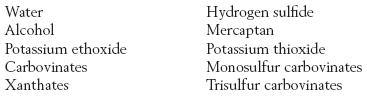
<body><![CDATA[<p align="justify"><font face="verdana" size="2">According to Chancel, acetones (ketones), a series of compounds generated during the dry distillation of monobasic acids similar to acetic acid, had not been studied in detail; their constitution was ill known, in spite of the interesting reactions they carried on (Chancel, 1845b). Now he studied the dry distillation of sodium acetate, propionate (m&eacute;tacet&#150;ique acide), butyrate, and valerate, and found that each decomposed into a hydrocarbon and an oxygenated compound. The oxygenated compounds were acetones (ketones), which resulted from the juxtaposition of simple hydrocarbons belonging to two different series. Dry distillation should then be considered a reduction process and since it was possible to remove two equivalents of oxygen from a monobasic acid without touching its carbon and hydrogen atoms, then the resulting product should be an aldehyde. Consequently, Chancel defined an aldehyde as a compound that differed from its acid by two equivalent of oxygen and was able to regenerate the acid by a simple fixation of oxygen. Aldehydes and ketones had the common characteristic of regenerating the same acid so that a ketone of a given series should be considered as the result of the union of the aldehyde of the series with the simple hydrocarbon of the previous series. From these facts, Chancel concluded that two roads were possible during the dry distillation of a monobasic acid; in both the acid was reduced and the oxygen eliminated oxidized part of the elements. If the reduction was complete the resulting product was a saturated hydrocarbon; if the reduction was partial, then two equivalents of the acid participated in the reaction, oxygen was eliminated in the form of water and carbon dioxide, and a ketone was produced. Dry distillation of a small quantity of butyrate yielded butyrone pure, raising the temperature resulted in the decomposition of bu&#150;tyrone into butyric aldehyde and a simple hydrocarbon (Chancel, 1845b).</font></p>  	    <p align="justify"><font face="verdana" size="2">In a following work (Chancel, 1845c) proceeded to test his theory by studying the dry distillation of barium valerate. The salt decomposed at temperatures above 350&deg;C, yielding a flammable gas and a small amount of a colored liquid having a penetrating odor. When the temperature reached 400&deg;C the amount of liquid increased substantially and the residue in the distillation flask was essentially barium carbonate with a small amount of carbon. Fractional distillation of the liquid phase produced a considerable amount of a liquid boiling at a temperature slightly above 100&deg;C, which proved to be valeral (valeraldehyde), and a heavier fraction consisting of valerone and other derivatives. Chancel determined the physical properties of valeral, as well some of its chemical reactions, particularly oxidation, which yielded valeric acid, and reaction with nitric aid, which yielded nitrovaleric acid (Chancel, 1845c).</font></p>  	    <p align="justify"><font face="verdana" size="2">Chancel also studied the dry distillation of other salts of monobasic acids, for example, copper butyrate (Chancel, 1846). When heated between 245&deg;&#150;250&deg;C this salt decomposed into a volatile and colorless liquid, which proved to be butyric acid, boiling at about 163&deg;C, and a gas mixture of carbon dioxide and a hydrocarbon. The solid residue left in the flask was pure copper, finely divided. Chancel also observed that heating suddenly copper butyrate to a high temperature transformed it in to white crystalline solid, which he believed to be the acetate of cuprous oxide.</font></p>  	    <p align="justify"><font face="verdana" size="2">Chancel also found that the dry distillation of calcium benzoate, yielded calcium carbonate, a flammable gas mixture, and a liquid mixture of several compounds, among them benzene and a crystalline body which he believed to be the acetonide of benzoic acid, with formula C<sub>13</sub>H<sub>10</sub>O (C = 12). He proposed naming this new compound benzophenone, a name showing its simultaneous belonging to the benzoic and the benzene series, as well as the acetone class (Chancel, 1849a).</font></p>  	    <p align="justify"><font face="verdana" size="2">Later, in 1847, together with Laurent (Chancel and Laurent, 1847b), Chancel reconsidered nitrobutyric acid to be metacetonitric acid or nitropropionic acid. Additional experiences with nitrobutyric acid (Chancel, 1878) led Chancel to realize that the nitrogenated acid generated by butyrone was not nitropropionic acid and did not have its properties or composition. Nevertheless, since it was related to propionic acid he decided to rename it nitropropyl acid. His experiments indicated that the correct formula for the acid and its ammonium and potassium salts were C<sub>3</sub>H<sub>6</sub>N<sub>2</sub>O<sub>4</sub>, C<sub>3</sub>H<sub>9</sub>N<sub>3</sub>O<sub>4</sub>, and C<sub>3</sub>H<sub>5</sub>N<sub>2</sub>O<sub>4</sub>K, respectively, which corresponded to the di&#150;nitropropane and its derivatives that Edmund ter Meer had obtained previously (Meer, 1876). Chancel proved that these nitro acids corresponded to the formula C<sub>n</sub>H<sub>n+1</sub>&#150;CHN<sub>2</sub>O<sub>4</sub> (Chancel, 1878, 1882a). The formation of nitroalkyl acids was general and characterized neatly all compounds pertaining to the ketone class and allowed differentiating between the primary and the secondary and tertiary alcohols. In a following publication (Chancel, 1883) Chancel proved that this general method of preparation applied not only to free ke&#150;tones, but also to the combinations susceptible to originate by the action of nitric acid. Chancel used ethyl acetolacetate, CH<sub>3</sub>&#150;CO&#150;CH<sub>2</sub>&#150;COOC<sub>2</sub>H<sub>5</sub>, as the building block for these syntheses, because under the action of diluted alkalis or acids, it split into carbon dioxide and a mixed acetone, CH<sub>3</sub>&#150;CO&#150;CH<sub>2</sub>&#150;CnH<sub>2n+1</sub>.</font></p>      <p align="justify"><font face="verdana" size="2">In a following memoir (Chancel, 1849b) Chancel described the action of ammonium sulfide on nitrobenzamide. Frederick Field was the first to prepare this amide, by heating ammonium <i>p</i>&#150;isopropylbenzoate (Field, 1848); Chancel prepared it by reacting the nitrobenzoic ester with ammonia. According to Chancel, this was an unusual reaction because of the change in chemical functions that took place. It did not belong to the benzoic series because it represents carbanil&#150;amide (phenylurea), that is, a double carbonate of aniline and ammonia, less two equivalents of water, C<sub>7</sub>H<sub>8</sub>N<sub>2</sub>O. Carba&#150;nilamide presented the functions or urea, it combined with acids and metal salts yielding crystallizable salt (Chancel, 1849ac, 1850a).</font></p>  	    <p align="justify"><font face="verdana" size="2">Chancel referred here to the publication of Williamson's results on the preparation of esters (Williamson, 1850; Chancel, 1850b). Without claiming priority on the subject, he wanted to report that he had achieved the same results using a somewhat different procedure. His method consisted in heating gently a mixture a potassium sulfovinate and potassium ethoxide; the resulting product was a very volatile liquid having all the properties of ethyl ether. This outcome indicated that one equivalent of alcohol could fix the elements of one equivalent of ethylene to yield one equivalent of ether. He also performed the reaction at ambient temperature replacing potassium sulfovinate (ethyl hydrogen sulfate) by potassium sulfomethylate; the product was a highly flammable gas, little soluble in water, which could be condensed by ice. Chancel believed that it was methyl ethyl ether. These results led him to prepare similar ethers using polybasic acids, such as carbonic (H<sub>2</sub>CO<sub>3</sub>), oxalic, and succinic. Heating car&#150;bomethylate (CH<sub>3</sub>COO<sub>3</sub>K) and potassium oxamethylate &#91;C<sub>2</sub>O<sub>4</sub>(CH<sub>3</sub>)K&#93; with potassium sulfovinate he obtained two new ethers belonging to the ethyl and methyl series.</font></p>  	    <p align="justify"><font face="verdana" size="2">In a following paper (Chancel, 1851b) reported the preparation of double esters of acids such as oxalic, succinic, carbonic, sulfocarbonic, etc., and gave details on the preparation of ethyl methyl oxalate, ethyl amyl oxalate, ethyl methyl carbonate, and ethyl methyl sulfocarbonate (COS<sub>2</sub>EtMe). In the presence of ammonia, the latter compound transformed into urethane (ethyl carbamate, NH<sub>2</sub>COOC<sub>2</sub>H<sub>5</sub>), sulfourethane, and methyl mercaptan (CH<sub>3</sub>SH).</font></p>  	    <p align="justify"><font face="verdana" size="2">In another work, Chancel studied the xanthates (Chancel, 1851c), which had been discovered by William Christoffer Zeise (1789&#150;1847) (Zeise, 1823); compounds arising from the reaction of carbon disulfide and alcoholic potash. He was interested in examining the possibility of producing two series of parallel salts, one with xanthates and the other with carbovinates, as follows:</font></p>     <p align="center"><img src="/img/revistas/eq/v24n1/a5t1.jpg"></p>     ]]></body>
<body><![CDATA[<p align="justify"><font face="verdana" size="2">The experimental results confirmed completely this possibility. Potassium thioxide reacted exothermally with carbon disulfide, producing among other compounds, potassium trisulfur carbovinate and a white salt soluble in water and alcohol, which precipitated silver, copper, and mercury salts. The pertinent precipitates decomposed on heating yielding sulfides (Chancel, 1851c).</font></p>  	    <p align="justify"><font face="verdana" size="2">Chancel and Gerhardt went on to prove that the combinations of sulfuric acid with organic materials were parallel to other combinations in which the group CO had replaced the group SO<sub>2</sub> (Gerhardt and Chancel, 1852). As a result they discovered two new compounds, benzenesulfonyl chloride, C<sub>6</sub>H<sub>5</sub>ClSO<sub>2</sub>, corresponding to benzoyl chloride C<sub>6</sub>H<sub>5</sub>COCl, and phenylsulfimide, C<sub>6</sub>H<sub>7</sub>NSO<sub>2</sub>, corresponding to benz&#150;amide chloride C<sub>6</sub>H<sub>5</sub>CONH<sub>2</sub>). Chancel and Diacon studied the reactions and generation of the acids of the thionic acid series, prepared by the method proposed by Heinrich Wacken&#150;roder (1798&#150;1854) (Wackenroder, 1847; Chancel and Diacon, 1863).</font></p>  	    <p align="justify"><font face="verdana" size="2">In addition, to Chancel's research on ketones, mention can also be made of that published in 1853 about propanol, named originally propionic alcohol (Chancel, 1853). Balard (Balard, 1844) studied the residues of the distillation of the spirits of marc and found that their main component was valeric alcohol (pentanol). Based on the idea of homologue bodies, Chancel thought and proved that heating of the spirits would also result in the formation of other alcohols. Inspection of the more volatile fraction of the distillation of the spirits of marc indicated the presence of a new alcohol, which he named propionic alcohol (propanol), because it was located between ordinary alcohol and butyric alcohol (butanol). He named the alcohol hydrate of trityl (hydrate de trityle) and assigned it the formula C<sub>3</sub>H<sub>8</sub>O (Chancel, 1853).</font></p>  	    <p align="justify"><font face="verdana" size="2">In two following memoirs (Chancel, 1869ab) indicated it had been demonstrated that the alcohol prepared by Berth&#150;elot by reacting propylene with sulfuric acid (Berthelot, 1855) was identical with the isopropanol synthesized by Frie&#150;del (Friedel, 1863), but there were doubts regarding the true nature of the alcohol that he had prepared in 1853. Friedel had shown the significant difference between an ordinary alcohol and an iso&#150;alcohol; the latter was unable to yield by oxidation an acid having the same number of carbons; it actually regenerated the ketone from which it originated. On the other hand, a normal alcohol yielded the corresponding aldehyde and acid. Hence it was necessary to resource to oxidation to characterize an alcohol and determine its constitution. This is what Chancel did with the alcohol he had discovered, finding that it was easy to transform it into propi&#150;onic acid and propionyl hydride (propanal). Chancel also described the properties of his propanol and his finding that in the presence of water a composition was obtained that boiled at a lower temperature than the anhydrous alcohol, 87.5&deg;C at 738 mmHg (in today terms, a minimum&#150;boiling point azeo&#150;trope; the coordinates of the azeotrope are 86.95&deg;C, with a water content of 71.7% weight). In addition, his alcohol was levorotatory, deviating the polarization plane by 8&deg; to the left, hence its molecular rotatory power was <i>&alpha;</i> = &#150;5.0. Chancel prepared many derivatives of propanol, among them, the chloride and iodide, esters, etc.</font></p>  	    <p align="justify"><font face="verdana" size="2">Chancel's propanol was the normal primary alcohol of ethylcarbinol <i>(n</i>&#150;propanol). He did not discover its isomer, isopropanol (secondary propanol) obtained in 1855 by Mar&#150;celin Berthelot (1827&#150;1907) and repeated in 1862 by Friedel through acetone (De Forcrand, 1891).</font></p>  	    <p align="justify"><font face="verdana" size="2">In his last years, Chancel and Fr&eacute;d&eacute;ric Parmentier, did research on calcium butyrates, on the solubility of carbon disul&#150;fide and chloroform in water, the determination of chloroform, and about a crystalline hydrate of chloroform (Chancel and Parmentier, 1884, 1885abc, 1887a, 1888). It was usually accepted that carbon disulfide in the presence of alkaline solutions (for example, KOH) yielded a mixture of potassium carbonate and sulfocarbonate (Chancel and Parmentier, 1884). Chancel and Parmentier believed that the process was more complicated than the above explanation. Addition of an aqueous solution of carbon disulfide (or a mixture of both compounds) to water of barite, hardly caused a reaction at room temperature, but on heating a white precipitate of barium carbonate rapidly formed while the solution became yellow and afterwards lost its color. Chancel and Parmentier proved that after enough time all the carbon contained in carbon disulfide transformed into carbon dioxide. Analysis of the resulting mixture indicated that the actual reaction was CS<sub>2</sub> + 2Ba(OH)<sub>2</sub> = BaCO<sub>3</sub> + BaS<sub>2</sub>H<sub>2</sub> + H<sub>2</sub>O, when conducted in the absence of air. In the presence of air the sulhydrate of barium sulfide oxidized into barium hyposulfite, only slightly soluble in water. These results suggested to Chancel and Parmentier an easy procedure for the dosage of small amounts of carbon disulfide, which was of particular interest to vineyard regions afflicted by phylloxera, an aphid that feeds on the roots of grapevines, deforming and girdling the roots and cutting the flow of nutrients and water to the vine. Phylloxera was then controlled through the highly dangerous and difficult technique of injecting carbon disulfide into the soil. Eug&egrave;ne Melchior P&eacute;ligot (1811&#150;1890) believed that an aqueous solution of carbon disulfide was an excellent insecticide (Peligot, 1884); several analytical methods had been developed to quantify the composition of such solutions, with large divergence between the results. P&eacute;ligot determined the solubility of carbon disulfide in water at room temperature as 4.52 g CS<sub>2</sub>/L (Peligot, 1884). Chancel and Parmentier proposed a better procedure based on determining the amount of barium carbonate resulting from the addition of water of barite to saturated aqueous solutions of carbon disulfide, at different temperatures. In a following publication (Chancel and Parmentier, 1885c) Chancel and Parmentier extended their results to the range 0&deg; to 49&deg;C, and found that the solubility of carbon disulfide in water decreased as the temperature increased, a result indicating that there was no interaction between the solvent and the solute, although they recognized that carbon disulfide formed several stable hydrates. On heating the aqueous solution became turbid and on distillation all the carbon disulfide passed over with the first portion, separating itself from the small amount of water that it contained, which also distilled initially. Chancel and Parmentier asked themselves if other substances similar to carbon disulfide also formed hydrates not so stable, and also escaped totally by distillation. One such substance is chloroform, and Chancel and Parmentier determined its solubility in water in the temperature range 00 to 54.9&deg;C (Chancel and Parmentier, 1888). The results were surprising, as the temperature increased the solubility of chloroform decreased up to about 30&deg;C and then it started to increase. Measurements of the density of the solution showed the same behavior, it decreased between 0&deg; and 30&deg;C and then it started increasing. Chancel and Parmentier also measured the density of pure chloroform and found it to decrease steadily from 0&deg; to 35&deg;C.</font></p>     <p align="justify"><font face="verdana" size="2">During their studies on the solubility of chloroform in water, Chancel and Parmentier (Chancel and Parmentier, 1885a) observed that when the solution was maintained at 0&deg;C, crystals appeared at the liquid&#150;liquid interphase. These crystals proved to be a well&#150;defined chloroform hydrate, consisting of colorless lamella, similar to those of potassium chlorate, melting at 1.6&deg;C and having the composition CHQ<sub>13</sub>.18H<sub>2</sub>O. Chancel and Parmentier used a calorimeter to determine that the formation of the hydrate was exothermic, with release of 22.9 cal/g hydrate.</font></p>  	    <p align="justify"><font face="verdana" size="2">Le Ch&acirc;telier (Le Ch&acirc;telier, 1885) deduced the equation <i>dx / x = (k / d)(dt / T</i><sup>2</sup>j to describe the variation of solubility with their heat of solution, at saturation. The relation indicates that when a compound dissolves to saturation with absorption of heat, its solubility will increase with temperature, and vice versa, if the solution is exothermic. Chancel and Par&#150;mentier (Chancel and Parmentier, 1887a) went to prove that the relation was not valid for all bodies. They inspected two similar salts, calcium n&#150;butyrate and calcium isobutyrate, for which the solubility presents opposite behavior and the heats of solution are easy to measure. Their results indicated that in the range 0&deg; and 100&deg;C (in intervals of 50) the solubility of n&#150;butyrate of calcium of n&#150;butyrate in water decreased in the interval 0&deg; to 60&deg;C and then began to increase continuously; the molar heat of solution, measured in a Berthelot calorimeter, was found to be +5.8 cal, at 9&deg;C. The solubility of calcium isobutyrate, increased in the range 0&deg; to 80&deg;C and then began to decrease; the molar heat of solution was found to be &#150;0.6 cal. Their results indicated that when the solubility increased with temperature, it did not necessarily corresponded to absorption of heat, as required by the laws determined by Henri Louis Le Ch&acirc;telier (1850&#150;1930) (Le Ch&acirc;telier, 1885). Le Ch&acirc;telier contested these results by repeating Chancel and Parmentier experiments and claiming that the experimental values determined by the latter were well within the limits of the possible error (Le Ch&acirc;telier, 1887). He also claimed that their solubility measurements were incorrect because when a solution of calcium isobutyrate was evaporated, a different hydrate resulted and the solubility curve should present a sudden change in its tangent. Chancel and Parmentier looked at this possibility cal (Chancel and Par&#150;mentier, 1887b) and did not find it; the situation was the resultant of many superimposed phenomena and not a discontinuity of two phenomena. The solubility curve was continuous and did not present a cusp point.</font></p>     <p align="justify"><font face="verdana" size="2">In this controversy, thermodynamic theory supported the view of Le Chat&ecirc;lier, although his relation was strictly valid only for ideal solutions. In a binary system forming hydrates (one or more), a decrease in temperature would result in a decrease in solubility of component 1 up to the eutectic point; heating would now increase the solubility up to the composition that signaled the presence of a hydrate (or solvate). The process would repeat itself for additional hydrates (higher concentration), until the system was pure component 1. Mathematically, each eutectic represented a cusp point.</font></p>     <p align="justify">&nbsp;</p>      ]]></body>
<body><![CDATA[<p align="justify"><font face="verdana" size="2"><b>REFERENCES</b></font></p>  	    <!-- ref --><p align="justify"><font face="verdana" size="2">Anonymous, <i>Compt. Rendus,</i> 113, 789, 1891.    &nbsp;&nbsp;&nbsp;&nbsp;&nbsp;&nbsp;&nbsp;&nbsp;[&#160;<a href="javascript:void(0);" onclick="javascript: window.open('/scielo.php?script=sci_nlinks&ref=3147873&pid=S0187-893X201300010000500001&lng=','','width=640,height=500,resizable=yes,scrollbars=1,menubar=yes,');">Links</a>&#160;]<!-- end-ref --></font></p>  	    <!-- ref --><p align="justify"><font face="verdana" size="2">Balard, M&eacute;moire sur l'Alcool Amylique, <i>Compt. Rendus,</i> <b>19,</b> 634&#150;641, 1844.    &nbsp;&nbsp;&nbsp;&nbsp;&nbsp;&nbsp;&nbsp;&nbsp;[&#160;<a href="javascript:void(0);" onclick="javascript: window.open('/scielo.php?script=sci_nlinks&ref=3147875&pid=S0187-893X201300010000500002&lng=','','width=640,height=500,resizable=yes,scrollbars=1,menubar=yes,');">Links</a>&#160;]<!-- end-ref --></font></p>  	    <!-- ref --><p align="justify"><font face="verdana" size="2">Berthelot, M., Sur la Reproduction de l'Alcool par le Bicarbure d'Hydrog&eacute;ne, <i>Compt. Rendus,</i> <b>40,</b> 102&#150;106, 1855.    &nbsp;&nbsp;&nbsp;&nbsp;&nbsp;&nbsp;&nbsp;&nbsp;[&#160;<a href="javascript:void(0);" onclick="javascript: window.open('/scielo.php?script=sci_nlinks&ref=3147877&pid=S0187-893X201300010000500003&lng=','','width=640,height=500,resizable=yes,scrollbars=1,menubar=yes,');">Links</a>&#160;]<!-- end-ref --> </font></p>     <!-- ref --><p align="justify"><font face="verdana" size="2">Berthelot, M., Observation sur D&eacute;pl&acirc;trage des Vins, <i>Compt. Rendus,</i> <b>114,</b> 371, 1892.    &nbsp;&nbsp;&nbsp;&nbsp;&nbsp;&nbsp;&nbsp;&nbsp;[&#160;<a href="javascript:void(0);" onclick="javascript: window.open('/scielo.php?script=sci_nlinks&ref=3147879&pid=S0187-893X201300010000500004&lng=','','width=640,height=500,resizable=yes,scrollbars=1,menubar=yes,');">Links</a>&#160;]<!-- end-ref --></font></p>  	    <!-- ref --><p align="justify"><font face="verdana" size="2">Berthelot, M., Gautier, H., Duclaux, P. &Eacute;., Rapport sur le D&eacute;pl&acirc;trage des Vins, <i>Compt. Rendus,</i> <b>114,</b> 152&#150;155, 1892.    &nbsp;&nbsp;&nbsp;&nbsp;&nbsp;&nbsp;&nbsp;&nbsp;[&#160;<a href="javascript:void(0);" onclick="javascript: window.open('/scielo.php?script=sci_nlinks&ref=3147881&pid=S0187-893X201300010000500005&lng=','','width=640,height=500,resizable=yes,scrollbars=1,menubar=yes,');">Links</a>&#160;]<!-- end-ref --> </font></p> 	    <!-- ref --><p align="justify"><font face="verdana" size="2">Bussy, A., Buignet, H., Recherches sur l'Action R&eacute;ciproque de la Cr&egrave;me de Tartre et du Sulfate de Chaux, Pour Servir &agrave; l'&Eacute;tude des Vines Pl&acirc;tr&eacute;s, <i>Compt. Rendus,</i> <b>60,</b> 200&#150;212, 1865.    &nbsp;&nbsp;&nbsp;&nbsp;&nbsp;&nbsp;&nbsp;&nbsp;[&#160;<a href="javascript:void(0);" onclick="javascript: window.open('/scielo.php?script=sci_nlinks&ref=3147883&pid=S0187-893X201300010000500006&lng=','','width=640,height=500,resizable=yes,scrollbars=1,menubar=yes,');">Links</a>&#160;]<!-- end-ref --> </font></p> 	    <!-- ref --><p align="justify"><font face="verdana" size="2">Chancel, G., De l'Action de l'Ammoniaque sur l'&Eacute;ther Butyrique, <i>Compt. Rendus,</i> <b>18,</b> 949&#150;951, 1844a.    &nbsp;&nbsp;&nbsp;&nbsp;&nbsp;&nbsp;&nbsp;&nbsp;[&#160;<a href="javascript:void(0);" onclick="javascript: window.open('/scielo.php?script=sci_nlinks&ref=3147885&pid=S0187-893X201300010000500007&lng=','','width=640,height=500,resizable=yes,scrollbars=1,menubar=yes,');">Links</a>&#160;]<!-- end-ref --> </font></p>     <!-- ref --><p align="justify"><font face="verdana" size="2">Chancel, G., M&eacute;moire sur la Butyrone, <i>Compt. Rendus,</i> <b>18,</b> 1023&#150;1028, 1844b.    &nbsp;&nbsp;&nbsp;&nbsp;&nbsp;&nbsp;&nbsp;&nbsp;[&#160;<a href="javascript:void(0);" onclick="javascript: window.open('/scielo.php?script=sci_nlinks&ref=3147887&pid=S0187-893X201300010000500008&lng=','','width=640,height=500,resizable=yes,scrollbars=1,menubar=yes,');">Links</a>&#160;]<!-- end-ref --></font></p>  	    <!-- ref --><p align="justify"><font face="verdana" size="2">Chancel, G., Recherches sur les Produits de la Distillation S&egrave;che du Bu&#150;tyrate de Chaux, <i>Compt. Rendus,</i> <b>19,</b> 1440&#150;1447, 1844c.    &nbsp;&nbsp;&nbsp;&nbsp;&nbsp;&nbsp;&nbsp;&nbsp;[&#160;<a href="javascript:void(0);" onclick="javascript: window.open('/scielo.php?script=sci_nlinks&ref=3147889&pid=S0187-893X201300010000500009&lng=','','width=640,height=500,resizable=yes,scrollbars=1,menubar=yes,');">Links</a>&#160;]<!-- end-ref --></font></p>  	    <!-- ref --><p align="justify"><font face="verdana" size="2">Chancel, G., Recherches sur les Produits de la Distillation S&egrave;che du Bu&#150;tyrate de Chaux, <i>Compt. Rendus,</i> <b>20,</b> 865&#150;872, 1845a;    &nbsp;&nbsp;&nbsp;&nbsp;&nbsp;&nbsp;&nbsp;&nbsp;[&#160;<a href="javascript:void(0);" onclick="javascript: window.open('/scielo.php?script=sci_nlinks&ref=3147891&pid=S0187-893X201300010000500010&lng=','','width=640,height=500,resizable=yes,scrollbars=1,menubar=yes,');">Links</a>&#160;]<!-- end-ref --><!-- ref --> <i>J. Pharm.,</i> <b>7,</b> 113&#150;122, 348&#150;356, 1845a.    &nbsp;&nbsp;&nbsp;&nbsp;&nbsp;&nbsp;&nbsp;&nbsp;[&#160;<a href="javascript:void(0);" onclick="javascript: window.open('/scielo.php?script=sci_nlinks&ref=3147892&pid=S0187-893X201300010000500011&lng=','','width=640,height=500,resizable=yes,scrollbars=1,menubar=yes,');">Links</a>&#160;]<!-- end-ref --></font></p>  	    <!-- ref --><p align="justify"><font face="verdana" size="2">Chancel, G., Th&eacute;orie de la Formation et de la Constitution des Produits Pyrog&eacute;n&eacute;s, <i>Compt. Rendus,</i> <b>20,</b> 1580&#150;1587, 1845b.    &nbsp;&nbsp;&nbsp;&nbsp;&nbsp;&nbsp;&nbsp;&nbsp;[&#160;<a href="javascript:void(0);" onclick="javascript: window.open('/scielo.php?script=sci_nlinks&ref=3147894&pid=S0187-893X201300010000500012&lng=','','width=640,height=500,resizable=yes,scrollbars=1,menubar=yes,');">Links</a>&#160;]<!-- end-ref --></font></p>  	    <!-- ref --><p align="justify"><font face="verdana" size="2">Chancel, G., Recherches sur l'Acide Val&eacute;rique, <i>Compt. Rendus,</i> <b>21</b> , 905-911, 1845c.    &nbsp;&nbsp;&nbsp;&nbsp;&nbsp;&nbsp;&nbsp;&nbsp;[&#160;<a href="javascript:void(0);" onclick="javascript: window.open('/scielo.php?script=sci_nlinks&ref=3147896&pid=S0187-893X201300010000500013&lng=','','width=640,height=500,resizable=yes,scrollbars=1,menubar=yes,');">Links</a>&#160;]<!-- end-ref --></font></p>  	    <!-- ref --><p align="justify"><font face="verdana" size="2">Chancel, G., Recherches de Chimie Organique, <i>Compt. Rendus,</i> <b>22,</b> 498-501, 1846.    &nbsp;&nbsp;&nbsp;&nbsp;&nbsp;&nbsp;&nbsp;&nbsp;[&#160;<a href="javascript:void(0);" onclick="javascript: window.open('/scielo.php?script=sci_nlinks&ref=3147898&pid=S0187-893X201300010000500014&lng=','','width=640,height=500,resizable=yes,scrollbars=1,menubar=yes,');">Links</a>&#160;]<!-- end-ref --></font></p>  	    <!-- ref --><p align="justify"><font face="verdana" size="2">Chancel, G., Th&egrave;ses de Chimie et de Physique Soutenues Devant la Facult&eacute; des Sciences de Paris, pour le Grade de Docteur &egrave;s Sciences, 17 Avril 1848.    &nbsp;&nbsp;&nbsp;&nbsp;&nbsp;&nbsp;&nbsp;&nbsp;[&#160;<a href="javascript:void(0);" onclick="javascript: window.open('/scielo.php?script=sci_nlinks&ref=3147900&pid=S0187-893X201300010000500015&lng=','','width=640,height=500,resizable=yes,scrollbars=1,menubar=yes,');">Links</a>&#160;]<!-- end-ref --></font></p>     ]]></body>
<body><![CDATA[<!-- ref --><p align="justify"><font face="verdana" size="2">Chancel, G., Recherches sur la S&eacute;rie Benzoique et ses D&eacute;riv&eacute;s, <i>Compt. Rendus,</i> <b>28,</b> 83&#150;86, 1849a.    &nbsp;&nbsp;&nbsp;&nbsp;&nbsp;&nbsp;&nbsp;&nbsp;[&#160;<a href="javascript:void(0);" onclick="javascript: window.open('/scielo.php?script=sci_nlinks&ref=3147902&pid=S0187-893X201300010000500016&lng=','','width=640,height=500,resizable=yes,scrollbars=1,menubar=yes,');">Links</a>&#160;]<!-- end-ref --></font></p>  	    <!-- ref --><p align="justify"><font face="verdana" size="2">Chancel, G., Recherches sur les Compos&eacute;s Nitrog&eacute;n&eacute;s de la S&eacute;rie Benzoique, <i>Compt. Rendus,</i> <b>28,</b> 293&#150;295, 1849b.    &nbsp;&nbsp;&nbsp;&nbsp;&nbsp;&nbsp;&nbsp;&nbsp;[&#160;<a href="javascript:void(0);" onclick="javascript: window.open('/scielo.php?script=sci_nlinks&ref=3147904&pid=S0187-893X201300010000500017&lng=','','width=640,height=500,resizable=yes,scrollbars=1,menubar=yes,');">Links</a>&#160;]<!-- end-ref --></font></p>  	    <!-- ref --><p align="justify"><font face="verdana" size="2">Chancel, G., Sur l'Acide Carbanilique et les Carbanilates, <i>Compt. Rendus,</i> <b>28,</b> 422&#150;424, 1849c.    &nbsp;&nbsp;&nbsp;&nbsp;&nbsp;&nbsp;&nbsp;&nbsp;[&#160;<a href="javascript:void(0);" onclick="javascript: window.open('/scielo.php?script=sci_nlinks&ref=3147906&pid=S0187-893X201300010000500018&lng=','','width=640,height=500,resizable=yes,scrollbars=1,menubar=yes,');">Links</a>&#160;]<!-- end-ref --></font></p>  	    <!-- ref --><p align="justify"><font face="verdana" size="2">Chancel, G., Sur les &Eacute;thers Carbaniliques de l'Alcool et du M&eacute;thyl&egrave;ne, <i>Compt. Rendus,</i> <b>30,</b> 751&#150;753, 1850a.    &nbsp;&nbsp;&nbsp;&nbsp;&nbsp;&nbsp;&nbsp;&nbsp;[&#160;<a href="javascript:void(0);" onclick="javascript: window.open('/scielo.php?script=sci_nlinks&ref=3147908&pid=S0187-893X201300010000500019&lng=','','width=640,height=500,resizable=yes,scrollbars=1,menubar=yes,');">Links</a>&#160;]<!-- end-ref --></font></p>  	    <!-- ref --><p align="justify"><font face="verdana" size="2">Chancel, G., Sur l'&Eacute;th&eacute;rification et sur une Nouvelle Classe d'&Eacute;thers, <i>Compt. Rendus,</i> <b>31,</b> 521&#150;523, 744&#150;743, 1850b.    &nbsp;&nbsp;&nbsp;&nbsp;&nbsp;&nbsp;&nbsp;&nbsp;[&#160;<a href="javascript:void(0);" onclick="javascript: window.open('/scielo.php?script=sci_nlinks&ref=3147910&pid=S0187-893X201300010000500020&lng=','','width=640,height=500,resizable=yes,scrollbars=1,menubar=yes,');">Links</a>&#160;]<!-- end-ref --></font></p>  	    ]]></body>
<body><![CDATA[<!-- ref --><p align="justify"><font face="verdana" size="2">Chancel, G., <i>Cours El&eacute;mentaire d'Analyse Chimique,</i> V. Masson, Paris, 1851a.    &nbsp;&nbsp;&nbsp;&nbsp;&nbsp;&nbsp;&nbsp;&nbsp;[&#160;<a href="javascript:void(0);" onclick="javascript: window.open('/scielo.php?script=sci_nlinks&ref=3147912&pid=S0187-893X201300010000500021&lng=','','width=640,height=500,resizable=yes,scrollbars=1,menubar=yes,');">Links</a>&#160;]<!-- end-ref --></font></p>  	    <!-- ref --><p align="justify"><font face="verdana" size="2">Chancel, G., Recherches sur une Nouvelle Classe d'&Eacute;thers, <i>Compt. Rendus,</i> <b>32,</b> 587&#150;589, 1851b.    &nbsp;&nbsp;&nbsp;&nbsp;&nbsp;&nbsp;&nbsp;&nbsp;[&#160;<a href="javascript:void(0);" onclick="javascript: window.open('/scielo.php?script=sci_nlinks&ref=3147914&pid=S0187-893X201300010000500022&lng=','','width=640,height=500,resizable=yes,scrollbars=1,menubar=yes,');">Links</a>&#160;]<!-- end-ref --></font></p>  	    <!-- ref --><p align="justify"><font face="verdana" size="2">Chancel, G., Recherches sur de Nouvelles Combinaisons Chimiques Or&#150;ganiques Sulfur&eacute;es, <i>Compt. Rendus,</i> <b>32,</b> 642&#150;644, 1851c.    &nbsp;&nbsp;&nbsp;&nbsp;&nbsp;&nbsp;&nbsp;&nbsp;[&#160;<a href="javascript:void(0);" onclick="javascript: window.open('/scielo.php?script=sci_nlinks&ref=3147916&pid=S0187-893X201300010000500023&lng=','','width=640,height=500,resizable=yes,scrollbars=1,menubar=yes,');">Links</a>&#160;]<!-- end-ref --></font></p>  	    <!-- ref --><p align="justify"><font face="verdana" size="2">Chancel, G., Recherches sur l'Alcool Propionique, <i>Compt. Rendus,</i> <b>37,</b> 410&#150;412, 1853.    &nbsp;&nbsp;&nbsp;&nbsp;&nbsp;&nbsp;&nbsp;&nbsp;[&#160;<a href="javascript:void(0);" onclick="javascript: window.open('/scielo.php?script=sci_nlinks&ref=3147918&pid=S0187-893X201300010000500024&lng=','','width=640,height=500,resizable=yes,scrollbars=1,menubar=yes,');">Links</a>&#160;]<!-- end-ref --></font></p>  	    <!-- ref --><p align="justify"><font face="verdana" size="2">Chancel, G., Sur Quelques R&eacute;actions Nouvelles de l'Oxyde de Chrome, <i>Compt. Rendus,</i> <b>43,</b> 927&#150;928, 1856.    &nbsp;&nbsp;&nbsp;&nbsp;&nbsp;&nbsp;&nbsp;&nbsp;[&#160;<a href="javascript:void(0);" onclick="javascript: window.open('/scielo.php?script=sci_nlinks&ref=3147920&pid=S0187-893X201300010000500025&lng=','','width=640,height=500,resizable=yes,scrollbars=1,menubar=yes,');">Links</a>&#160;]<!-- end-ref --></font></p>  	    ]]></body>
<body><![CDATA[<!-- ref --><p align="justify"><font face="verdana" size="2">Chancel, G., De l'Emploi des Hyposulfites dans l'Analise &#150; Application &agrave; la S&eacute;paration Directe du Fer avec l'Alumine, <i>Compt. Rendus,</i> <b>46,</b> 987-990, 1858.    &nbsp;&nbsp;&nbsp;&nbsp;&nbsp;&nbsp;&nbsp;&nbsp;[&#160;<a href="javascript:void(0);" onclick="javascript: window.open('/scielo.php?script=sci_nlinks&ref=3147922&pid=S0187-893X201300010000500026&lng=','','width=640,height=500,resizable=yes,scrollbars=1,menubar=yes,');">Links</a>&#160;]<!-- end-ref --></font></p>  	    <!-- ref --><p align="justify"><font face="verdana" size="2">Chancel, G., M&eacute;moire sur la S&eacute;paration et le Dosage de l'Acide Phospho&#150;rique en Pr&eacute;sence des Bases, <i>Compt. Rendus,</i> <b>49,</b> 997&#150;999, 1859.    &nbsp;&nbsp;&nbsp;&nbsp;&nbsp;&nbsp;&nbsp;&nbsp;[&#160;<a href="javascript:void(0);" onclick="javascript: window.open('/scielo.php?script=sci_nlinks&ref=3147924&pid=S0187-893X201300010000500027&lng=','','width=640,height=500,resizable=yes,scrollbars=1,menubar=yes,');">Links</a>&#160;]<!-- end-ref --></font></p>  	    <!-- ref --><p align="justify"><font face="verdana" size="2">Chancel, G., Sur la S&eacute;paration de la Magn&eacute;sie d'Avec les Alcalis, <i>Compt. Rendus,</i> <b>50,</b> 94&#150;95, 1860a.    &nbsp;&nbsp;&nbsp;&nbsp;&nbsp;&nbsp;&nbsp;&nbsp;[&#160;<a href="javascript:void(0);" onclick="javascript: window.open('/scielo.php?script=sci_nlinks&ref=3147926&pid=S0187-893X201300010000500028&lng=','','width=640,height=500,resizable=yes,scrollbars=1,menubar=yes,');">Links</a>&#160;]<!-- end-ref --></font></p>  	    <!-- ref --><p align="justify"><font face="verdana" size="2">Chancel, G., Recherches sur la S&eacute;paration et le Dosage de l'Acide Phos&#150;phorique, <i>Compt. Rendus,</i> <b>50,</b> 416&#150;420, 1860b;    &nbsp;&nbsp;&nbsp;&nbsp;&nbsp;&nbsp;&nbsp;&nbsp;[&#160;<a href="javascript:void(0);" onclick="javascript: window.open('/scielo.php?script=sci_nlinks&ref=3147928&pid=S0187-893X201300010000500029&lng=','','width=640,height=500,resizable=yes,scrollbars=1,menubar=yes,');">Links</a>&#160;]<!-- end-ref --><!-- ref --> <i>J. Pharm.,</i> <b>37,</b> 116-117, 1860b.    &nbsp;&nbsp;&nbsp;&nbsp;&nbsp;&nbsp;&nbsp;&nbsp;[&#160;<a href="javascript:void(0);" onclick="javascript: window.open('/scielo.php?script=sci_nlinks&ref=3147929&pid=S0187-893X201300010000500030&lng=','','width=640,height=500,resizable=yes,scrollbars=1,menubar=yes,');">Links</a>&#160;]<!-- end-ref --></font></p>  	    <!-- ref --><p align="justify"><font face="verdana" size="2">Chancel, G., Sur la D&eacute;termination de l'Acide Phosphorique dans les Substances Naturelles Complexes, et Particuli&egrave;rement dans celles qui Contiennent du Fer, <i>Compt. Rendus,</i> <b>51</b> , 882&#150;884, 1860c.    &nbsp;&nbsp;&nbsp;&nbsp;&nbsp;&nbsp;&nbsp;&nbsp;[&#160;<a href="javascript:void(0);" onclick="javascript: window.open('/scielo.php?script=sci_nlinks&ref=3147931&pid=S0187-893X201300010000500031&lng=','','width=640,height=500,resizable=yes,scrollbars=1,menubar=yes,');">Links</a>&#160;]<!-- end-ref --></font></p>  	    <!-- ref --><p align="justify"><font face="verdana" size="2">Chancel, G., &Eacute;tudes sur la Composition des Vins et sur les Proc&eacute;d&eacute;s de Vinification, <i>M&eacute;m. Acad. Sect. Sci. Montpellier,</i> <b>6,</b> 237&#150;260, 1861&#150;1866.    &nbsp;&nbsp;&nbsp;&nbsp;&nbsp;&nbsp;&nbsp;&nbsp;[&#160;<a href="javascript:void(0);" onclick="javascript: window.open('/scielo.php?script=sci_nlinks&ref=3147933&pid=S0187-893X201300010000500032&lng=','','width=640,height=500,resizable=yes,scrollbars=1,menubar=yes,');">Links</a>&#160;]<!-- end-ref --></font></p>  	    <!-- ref --><p align="justify"><font face="verdana" size="2">Chancel, G., De l'Influence du Pl&acirc;trage sur la Composition des Vins, <i>Compt. Rendus,</i> <b>60,</b> 408&#150;412, 1865.    &nbsp;&nbsp;&nbsp;&nbsp;&nbsp;&nbsp;&nbsp;&nbsp;[&#160;<a href="javascript:void(0);" onclick="javascript: window.open('/scielo.php?script=sci_nlinks&ref=3147935&pid=S0187-893X201300010000500033&lng=','','width=640,height=500,resizable=yes,scrollbars=1,menubar=yes,');">Links</a>&#160;]<!-- end-ref --></font></p>  	    <!-- ref --><p align="justify"><font face="verdana" size="2">Chancel, G., Nouvelles Recherches sur l'Alcool Propylique de Fermentation, <i>Compt. Rendus,</i> 68, 659&#150;663, 1869a.    &nbsp;&nbsp;&nbsp;&nbsp;&nbsp;&nbsp;&nbsp;&nbsp;[&#160;<a href="javascript:void(0);" onclick="javascript: window.open('/scielo.php?script=sci_nlinks&ref=3147937&pid=S0187-893X201300010000500034&lng=','','width=640,height=500,resizable=yes,scrollbars=1,menubar=yes,');">Links</a>&#160;]<!-- end-ref --></font></p>  	    <!-- ref --><p align="justify"><font face="verdana" size="2">Chancel, G., Sur les &Eacute;thers de l'Alcool Propylique de Fermentation, <i>Compt. Rendus,</i> <b>68,</b> 726&#150;727, 1869b.    &nbsp;&nbsp;&nbsp;&nbsp;&nbsp;&nbsp;&nbsp;&nbsp;[&#160;<a href="javascript:void(0);" onclick="javascript: window.open('/scielo.php?script=sci_nlinks&ref=3147939&pid=S0187-893X201300010000500035&lng=','','width=640,height=500,resizable=yes,scrollbars=1,menubar=yes,');">Links</a>&#160;]<!-- end-ref --></font></p>  	    <!-- ref --><p align="justify"><font face="verdana" size="2">Chancel, G., Sur la Gomme du Vin et sur son Influence sur la D&eacute;termina&#150;tion du Glucose, <i>Compt. Rendus,</i> <b>81</b> , 46&#150;48, 1875.    &nbsp;&nbsp;&nbsp;&nbsp;&nbsp;&nbsp;&nbsp;&nbsp;[&#160;<a href="javascript:void(0);" onclick="javascript: window.open('/scielo.php?script=sci_nlinks&ref=3147941&pid=S0187-893X201300010000500036&lng=','','width=640,height=500,resizable=yes,scrollbars=1,menubar=yes,');">Links</a>&#160;]<!-- end-ref --></font></p>  	    <!-- ref --><p align="justify"><font face="verdana" size="2">Chancel, C., Recherche et D&eacute;termination des Principales Mati&egrave;res Colorantes Employ&eacute;es pour Falsifier les Vines, <i>Compt. Rendus,</i> <b>84,</b> 348-151, 1877.    &nbsp;&nbsp;&nbsp;&nbsp;&nbsp;&nbsp;&nbsp;&nbsp;[&#160;<a href="javascript:void(0);" onclick="javascript: window.open('/scielo.php?script=sci_nlinks&ref=3147943&pid=S0187-893X201300010000500037&lng=','','width=640,height=500,resizable=yes,scrollbars=1,menubar=yes,');">Links</a>&#160;]<!-- end-ref --></font></p>  	    <!-- ref --><p align="justify"><font face="verdana" size="2">Chancel G., Recherches sur les Acides Nitrogen&eacute;s D&eacute;rives des Ac&eacute;tones, <i>Compt. Rendus,</i> <b>86,</b> 1405&#150;1408, 1878; <b>94,</b> 399&#150;403,1882a.    &nbsp;&nbsp;&nbsp;&nbsp;&nbsp;&nbsp;&nbsp;&nbsp;[&#160;<a href="javascript:void(0);" onclick="javascript: window.open('/scielo.php?script=sci_nlinks&ref=3147945&pid=S0187-893X201300010000500038&lng=','','width=640,height=500,resizable=yes,scrollbars=1,menubar=yes,');">Links</a>&#160;]<!-- end-ref --></font></p>  	    <!-- ref --><p align="justify"><font face="verdana" size="2">Chancel, G., M&eacute;thode Exp&eacute;ditive pour la D&eacute;termination de la Densit&eacute; des Gaz, <i>Compt. Rendus,</i> <b>94,</b> 626&#150;631, 1882b.    &nbsp;&nbsp;&nbsp;&nbsp;&nbsp;&nbsp;&nbsp;&nbsp;[&#160;<a href="javascript:void(0);" onclick="javascript: window.open('/scielo.php?script=sci_nlinks&ref=3147947&pid=S0187-893X201300010000500039&lng=','','width=640,height=500,resizable=yes,scrollbars=1,menubar=yes,');">Links</a>&#160;]<!-- end-ref --></font></p>  	    <!-- ref --><p align="justify"><font face="verdana" size="2">Chancel, G., Nouvelle M&eacute;thode de Synth&egrave;se des Acides Alkylnitreux, <i>Compt. Rendus,</i> <b>96,</b> 1466&#150;1470, 1883.    &nbsp;&nbsp;&nbsp;&nbsp;&nbsp;&nbsp;&nbsp;&nbsp;[&#160;<a href="javascript:void(0);" onclick="javascript: window.open('/scielo.php?script=sci_nlinks&ref=3147949&pid=S0187-893X201300010000500040&lng=','','width=640,height=500,resizable=yes,scrollbars=1,menubar=yes,');">Links</a>&#160;]<!-- end-ref --></font></p>  	    <!-- ref --><p align="justify"><font face="verdana" size="2">Chancel, G., Diacon, E., Sur les R&eacute;actions et la G&eacute;n&eacute;ration des Acides de la S&eacute;rie Thionique, <i>Compt. Rendus,</i> <b>56,</b> 710&#150;712, 1863.    &nbsp;&nbsp;&nbsp;&nbsp;&nbsp;&nbsp;&nbsp;&nbsp;[&#160;<a href="javascript:void(0);" onclick="javascript: window.open('/scielo.php?script=sci_nlinks&ref=3147951&pid=S0187-893X201300010000500041&lng=','','width=640,height=500,resizable=yes,scrollbars=1,menubar=yes,');">Links</a>&#160;]<!-- end-ref --></font></p>  	    <!-- ref --><p align="justify"><font face="verdana" size="2">Chancel, G., Gerhardt, C., Sur la Constitution des Compos&eacute;s Organiques, Laurent et Gerhardt, <i>Compt. Rendus,</i> 65&#150;84, 1851.    &nbsp;&nbsp;&nbsp;&nbsp;&nbsp;&nbsp;&nbsp;&nbsp;[&#160;<a href="javascript:void(0);" onclick="javascript: window.open('/scielo.php?script=sci_nlinks&ref=3147953&pid=S0187-893X201300010000500042&lng=','','width=640,height=500,resizable=yes,scrollbars=1,menubar=yes,');">Links</a>&#160;]<!-- end-ref --></font></p>  	    <!-- ref --><p align="justify"><font face="verdana" size="2">Chancel, G., Gerhardt, C., Recherches sur les Combinaisons de l'Acide Sulfurique avec les Mati&egrave;res Organiques, <i>Compt. Rendus,</i> <b>35,</b> 690-694, 1852.    &nbsp;&nbsp;&nbsp;&nbsp;&nbsp;&nbsp;&nbsp;&nbsp;[&#160;<a href="javascript:void(0);" onclick="javascript: window.open('/scielo.php?script=sci_nlinks&ref=3147955&pid=S0187-893X201300010000500043&lng=','','width=640,height=500,resizable=yes,scrollbars=1,menubar=yes,');">Links</a>&#160;]<!-- end-ref --></font></p>  	    <!-- ref --><p align="justify"><font face="verdana" size="2">Chancel, G., Laurent, A., Sur le M&eacute;tac&eacute;tonitrates et sur un Nouveau Pro&#150;c&eacute;d&eacute; de Pr&eacute;paration des Imides, <i>Soc. Philom. Paris, Proc. Verb.,</i> 104-106, 1847a.    &nbsp;&nbsp;&nbsp;&nbsp;&nbsp;&nbsp;&nbsp;&nbsp;[&#160;<a href="javascript:void(0);" onclick="javascript: window.open('/scielo.php?script=sci_nlinks&ref=3147957&pid=S0187-893X201300010000500044&lng=','','width=640,height=500,resizable=yes,scrollbars=1,menubar=yes,');">Links</a>&#160;]<!-- end-ref --></font></p>  	    <!-- ref --><p align="justify"><font face="verdana" size="2">Chancel, G., Laurent, A., Sur le M&eacute;tac&eacute;tonitrates et sur un Nouveau Pro&#150;c&eacute;d&eacute; de Pr&eacute;paration des Nitryles, <i>Compt. Rendus,</i> <b>25,</b> 883&#150;886, 1847b.    &nbsp;&nbsp;&nbsp;&nbsp;&nbsp;&nbsp;&nbsp;&nbsp;[&#160;<a href="javascript:void(0);" onclick="javascript: window.open('/scielo.php?script=sci_nlinks&ref=3147959&pid=S0187-893X201300010000500045&lng=','','width=640,height=500,resizable=yes,scrollbars=1,menubar=yes,');">Links</a>&#160;]<!-- end-ref --></font></p>  	    <!-- ref --><p align="justify"><font face="verdana" size="2">Chancel, G., Laurent, A., Action de l'Acide Nitrique sur la Butyrone, <i>J. Pharm.,</i> <b>13,</b> 462&#150;464, 1848a.    &nbsp;&nbsp;&nbsp;&nbsp;&nbsp;&nbsp;&nbsp;&nbsp;[&#160;<a href="javascript:void(0);" onclick="javascript: window.open('/scielo.php?script=sci_nlinks&ref=3147961&pid=S0187-893X201300010000500046&lng=','','width=640,height=500,resizable=yes,scrollbars=1,menubar=yes,');">Links</a>&#160;]<!-- end-ref --></font></p>  	    <!-- ref --><p align="justify"><font face="verdana" size="2">Chancel, G., Parmentier, F., Sur Quelques R&eacute;actions du Sulfure de Carbone et sur la Solubilit&eacute; de ce Corps dans l'Eau, <i>Compt. Rendus,</i> <b>99,</b> 892&#150;894, 1884.    &nbsp;&nbsp;&nbsp;&nbsp;&nbsp;&nbsp;&nbsp;&nbsp;[&#160;<a href="javascript:void(0);" onclick="javascript: window.open('/scielo.php?script=sci_nlinks&ref=3147963&pid=S0187-893X201300010000500047&lng=','','width=640,height=500,resizable=yes,scrollbars=1,menubar=yes,');">Links</a>&#160;]<!-- end-ref --></font></p>  	    <!-- ref --><p align="justify"><font face="verdana" size="2">Chancel, G., Parmentier, F., Sur un Hydrate de Chloroforme, Compt. Rendus, 100, 27&#150;30, 1885a.    &nbsp;&nbsp;&nbsp;&nbsp;&nbsp;&nbsp;&nbsp;&nbsp;[&#160;<a href="javascript:void(0);" onclick="javascript: window.open('/scielo.php?script=sci_nlinks&ref=3147965&pid=S0187-893X201300010000500048&lng=','','width=640,height=500,resizable=yes,scrollbars=1,menubar=yes,');">Links</a>&#160;]<!-- end-ref --> </font></p>     <!-- ref --><p align="justify"><font face="verdana" size="2">Chancel, G., Parmentier, F., Sur une R&eacute;action Caract&eacute;ristique des Alcools Secondaires, <i>Compt. Rendus,</i> <b>100,</b> 601&#150;605, 1885b.    &nbsp;&nbsp;&nbsp;&nbsp;&nbsp;&nbsp;&nbsp;&nbsp;[&#160;<a href="javascript:void(0);" onclick="javascript: window.open('/scielo.php?script=sci_nlinks&ref=3147967&pid=S0187-893X201300010000500049&lng=','','width=640,height=500,resizable=yes,scrollbars=1,menubar=yes,');">Links</a>&#160;]<!-- end-ref --> </font></p>     <!-- ref --><p align="justify"><font face="verdana" size="2">Chancel, G., Parmentier, F., Sur la Solubilit&eacute; du Sulfure de Carbone et sur Celle du Chloroforme, <i>Compt. Rendus,</i> <b>100,</b> 773&#150;776, 1885c.    &nbsp;&nbsp;&nbsp;&nbsp;&nbsp;&nbsp;&nbsp;&nbsp;[&#160;<a href="javascript:void(0);" onclick="javascript: window.open('/scielo.php?script=sci_nlinks&ref=3147969&pid=S0187-893X201300010000500050&lng=','','width=640,height=500,resizable=yes,scrollbars=1,menubar=yes,');">Links</a>&#160;]<!-- end-ref --> </font></p>     <!-- ref --><p align="justify"><font face="verdana" size="2">Chancel, G., Parmentier, F., Sur l'Orthobutyrate et sur l'Isobutyrate de Chaux, <i>Compt. Rendus,</i> <b>104,</b> 474&#150;478, 1887a.    &nbsp;&nbsp;&nbsp;&nbsp;&nbsp;&nbsp;&nbsp;&nbsp;[&#160;<a href="javascript:void(0);" onclick="javascript: window.open('/scielo.php?script=sci_nlinks&ref=3147971&pid=S0187-893X201300010000500051&lng=','','width=640,height=500,resizable=yes,scrollbars=1,menubar=yes,');">Links</a>&#160;]<!-- end-ref --> </font></p>     <!-- ref --><p align="justify"><font face="verdana" size="2">Chancel, G., Parmentier, F., Sur la Variation de Solubilit&eacute; des Corps avec les Quantit&eacute;s de Chaleur D&eacute;gag&eacute;es, <i>Compt. Rendus,</i> <b>104,</b> 881&#150;882, 1887b.    &nbsp;&nbsp;&nbsp;&nbsp;&nbsp;&nbsp;&nbsp;&nbsp;[&#160;<a href="javascript:void(0);" onclick="javascript: window.open('/scielo.php?script=sci_nlinks&ref=3147973&pid=S0187-893X201300010000500052&lng=','','width=640,height=500,resizable=yes,scrollbars=1,menubar=yes,');">Links</a>&#160;]<!-- end-ref --></font></p>  	    <!-- ref --><p align="justify"><font face="verdana" size="2">Chancel, G., Parmentier, F., Sur un Proc&eacute;d&eacute; de Dosage du Chloroforme et sur la Solubilit&eacute; de ce Corps dans l'Eau, <i>Compt. Rendus,</i> <b>106,</b> 577, 1888.    &nbsp;&nbsp;&nbsp;&nbsp;&nbsp;&nbsp;&nbsp;&nbsp;[&#160;<a href="javascript:void(0);" onclick="javascript: window.open('/scielo.php?script=sci_nlinks&ref=3147975&pid=S0187-893X201300010000500053&lng=','','width=640,height=500,resizable=yes,scrollbars=1,menubar=yes,');">Links</a>&#160;]<!-- end-ref --></font></p>  	    <!-- ref --><p align="justify"><font face="verdana" size="2">De Forcrand, M. R., Notice sur la Vie et les Travaux de G. Chancel, <i>Bull. Soc. Chim.,</i> <b>5,</b> i&#150;xx, 1891.    &nbsp;&nbsp;&nbsp;&nbsp;&nbsp;&nbsp;&nbsp;&nbsp;[&#160;<a href="javascript:void(0);" onclick="javascript: window.open('/scielo.php?script=sci_nlinks&ref=3147977&pid=S0187-893X201300010000500054&lng=','','width=640,height=500,resizable=yes,scrollbars=1,menubar=yes,');">Links</a>&#160;]<!-- end-ref --> </font></p>     <!-- ref --><p align="justify"><font face="verdana" size="2">Dumas, J.&#150;B., Sur l'Oxamide, Mati&egrave;re qui se Rapproche de Quelques Substances Animales, <i>Ann. Chim. Phys.,</i> &#91;2&#93;, <b>64,</b> 129&#150;143, 1830.    &nbsp;&nbsp;&nbsp;&nbsp;&nbsp;&nbsp;&nbsp;&nbsp;[&#160;<a href="javascript:void(0);" onclick="javascript: window.open('/scielo.php?script=sci_nlinks&ref=3147979&pid=S0187-893X201300010000500055&lng=','','width=640,height=500,resizable=yes,scrollbars=1,menubar=yes,');">Links</a>&#160;]<!-- end-ref --> </font></p>     <!-- ref --><p align="justify"><font face="verdana" size="2">Dumas, J.&#150;B., Dissertation sur la Densit&eacute; de la Vapeur de Quelques Corps Simples. <i>Ann. Chim. Phys.</i> &#91;2&#93;, 170&#150;178, 1832.    &nbsp;&nbsp;&nbsp;&nbsp;&nbsp;&nbsp;&nbsp;&nbsp;[&#160;<a href="javascript:void(0);" onclick="javascript: window.open('/scielo.php?script=sci_nlinks&ref=3147981&pid=S0187-893X201300010000500056&lng=','','width=640,height=500,resizable=yes,scrollbars=1,menubar=yes,');">Links</a>&#160;]<!-- end-ref --> </font></p>     <!-- ref --><p align="justify"><font face="verdana" size="2">Field, F., On the Products of Decomposition of Cuminate of Ammonia by Heat, <i>Chem. Soc. Mem.,</i> <b>3,</b> 404&#150;411, 1845&#150;1848.    &nbsp;&nbsp;&nbsp;&nbsp;&nbsp;&nbsp;&nbsp;&nbsp;[&#160;<a href="javascript:void(0);" onclick="javascript: window.open('/scielo.php?script=sci_nlinks&ref=3147983&pid=S0187-893X201300010000500057&lng=','','width=640,height=500,resizable=yes,scrollbars=1,menubar=yes,');">Links</a>&#160;]<!-- end-ref --> </font></p>     <!-- ref --><p align="justify"><font face="verdana" size="2">Friedel, C., Sur l'Alcool D&eacute;riv&eacute; de l'Ac&eacute;tone par l'Action de l'Hydrog&egrave;ne Naissant, <i>Bull. Chem. Soc,</i> 247&#150;248, 1863.    &nbsp;&nbsp;&nbsp;&nbsp;&nbsp;&nbsp;&nbsp;&nbsp;[&#160;<a href="javascript:void(0);" onclick="javascript: window.open('/scielo.php?script=sci_nlinks&ref=3147985&pid=S0187-893X201300010000500058&lng=','','width=640,height=500,resizable=yes,scrollbars=1,menubar=yes,');">Links</a>&#160;]<!-- end-ref --><!-- ref --> Gerhardt, C., Chancel, G., Recherches sur les Combinaisons de l'Acide</font>&nbsp;&nbsp;&nbsp;&nbsp;&nbsp;&nbsp;&nbsp;&nbsp;[&#160;<a href="javascript:void(0);" onclick="javascript: window.open('/scielo.php?script=sci_nlinks&ref=3147986&pid=S0187-893X201300010000500059&lng=','','width=640,height=500,resizable=yes,scrollbars=1,menubar=yes,');">Links</a>&#160;]<!-- end-ref --><!-- ref --><p align="justify"><font face="verdana" size="2">Sulfurique avec les Mati&egrave;res Organiques, <i>Compt. Rendus,</i> <b>35,</b> 690-694, 1852.    &nbsp;&nbsp;&nbsp;&nbsp;&nbsp;&nbsp;&nbsp;&nbsp;[&#160;<a href="javascript:void(0);" onclick="javascript: window.open('/scielo.php?script=sci_nlinks&ref=3147987&pid=S0187-893X201300010000500060&lng=','','width=640,height=500,resizable=yes,scrollbars=1,menubar=yes,');">Links</a>&#160;]<!-- end-ref --></font></p>  	    <!-- ref --><p align="justify"><font face="verdana" size="2">Gerhardt, C., Chancel, G., <i>Pr&eacute;cis d'Analyse Chimique Quantitative,</i> Masson, Paris, 1859.    &nbsp;&nbsp;&nbsp;&nbsp;&nbsp;&nbsp;&nbsp;&nbsp;[&#160;<a href="javascript:void(0);" onclick="javascript: window.open('/scielo.php?script=sci_nlinks&ref=3147989&pid=S0187-893X201300010000500061&lng=','','width=640,height=500,resizable=yes,scrollbars=1,menubar=yes,');">Links</a>&#160;]<!-- end-ref --></font></p>  	    <!-- ref --><p align="justify"><font face="verdana" size="2">Laurent, A., Chancel, G., Sur les M&eacute;tac&eacute;tonitrates et sur un Nouveaux Proc&eacute;d&eacute; de Pr&eacute;paration des Nitryles, <i>Compt. Rendus,</i> <b>25,</b> 883&#150;886, 1847.    &nbsp;&nbsp;&nbsp;&nbsp;&nbsp;&nbsp;&nbsp;&nbsp;[&#160;<a href="javascript:void(0);" onclick="javascript: window.open('/scielo.php?script=sci_nlinks&ref=3147991&pid=S0187-893X201300010000500062&lng=','','width=640,height=500,resizable=yes,scrollbars=1,menubar=yes,');">Links</a>&#160;]<!-- end-ref --></font></p>  	    <!-- ref --><p align="justify"><font face="verdana" size="2">Laurent, A., Chancel, G., Action de l'Acide Nitrique sur la Butyrone, <i>J. Pharm.,</i> <b>13,</b> 462&#150;464, 1848.    &nbsp;&nbsp;&nbsp;&nbsp;&nbsp;&nbsp;&nbsp;&nbsp;[&#160;<a href="javascript:void(0);" onclick="javascript: window.open('/scielo.php?script=sci_nlinks&ref=3147993&pid=S0187-893X201300010000500063&lng=','','width=640,height=500,resizable=yes,scrollbars=1,menubar=yes,');">Links</a>&#160;]<!-- end-ref --></font></p>  	    <!-- ref --><p align="justify"><font face="verdana" size="2">Le Ch&acirc;telier, H., Sur les Lois de la Dissolution, <i>Compt. Rendus,</i> <b>100,</b> 50-52, 1885.    &nbsp;&nbsp;&nbsp;&nbsp;&nbsp;&nbsp;&nbsp;&nbsp;[&#160;<a href="javascript:void(0);" onclick="javascript: window.open('/scielo.php?script=sci_nlinks&ref=3147995&pid=S0187-893X201300010000500064&lng=','','width=640,height=500,resizable=yes,scrollbars=1,menubar=yes,');">Links</a>&#160;]<!-- end-ref --></font></p>  	    <!-- ref --><p align="justify"><font face="verdana" size="2">Le Ch&acirc;telier, H., Sur les Lois de la Dissolution, R&eacute;ponse &agrave; MM. Chancel et Parmentier, <i>Compt. Rendus,</i> <b>104,</b> 679&#150;682, 1887.    &nbsp;&nbsp;&nbsp;&nbsp;&nbsp;&nbsp;&nbsp;&nbsp;[&#160;<a href="javascript:void(0);" onclick="javascript: window.open('/scielo.php?script=sci_nlinks&ref=3147997&pid=S0187-893X201300010000500065&lng=','','width=640,height=500,resizable=yes,scrollbars=1,menubar=yes,');">Links</a>&#160;]<!-- end-ref --></font></p>  	    <!-- ref --><p align="justify"><font face="verdana" size="2">Martins, C., Chancel, G., Des Ph&eacute;nom&egrave;nes Physiques qui Accompagnent la Rupture par la Cong&eacute;lation de l'Eau des Projectiles Creux de Divers Calibres, <i>Compt. Rendus,</i> <b>70,</b> 1149&#150;1153, 1870.    &nbsp;&nbsp;&nbsp;&nbsp;&nbsp;&nbsp;&nbsp;&nbsp;[&#160;<a href="javascript:void(0);" onclick="javascript: window.open('/scielo.php?script=sci_nlinks&ref=3147999&pid=S0187-893X201300010000500066&lng=','','width=640,height=500,resizable=yes,scrollbars=1,menubar=yes,');">Links</a>&#160;]<!-- end-ref --></font></p>  	    <!-- ref --><p align="justify"><font face="verdana" size="2">Meer, E. t., &Uuml;ber Dinitroverbindungen des Fettreihe, <i>Liebig's Annalen,</i> <b>181,</b> 1&#150;22, 1876.    &nbsp;&nbsp;&nbsp;&nbsp;&nbsp;&nbsp;&nbsp;&nbsp;[&#160;<a href="javascript:void(0);" onclick="javascript: window.open('/scielo.php?script=sci_nlinks&ref=3148001&pid=S0187-893X201300010000500067&lng=','','width=640,height=500,resizable=yes,scrollbars=1,menubar=yes,');">Links</a>&#160;]<!-- end-ref --></font></p>  	    <!-- ref --><p align="justify"><font face="verdana" size="2">Peligot, E., Note sur le Sulfure de Carbone et sur l'Emploi de sa Dissolution dans l'Eau Pour le Traitment des Vignes Phyllox&eacute;r&eacute;es, <i>Compt. Rendus,</i> <b>99,</b> 587&#150;591, 1884.    &nbsp;&nbsp;&nbsp;&nbsp;&nbsp;&nbsp;&nbsp;&nbsp;[&#160;<a href="javascript:void(0);" onclick="javascript: window.open('/scielo.php?script=sci_nlinks&ref=3148003&pid=S0187-893X201300010000500068&lng=','','width=640,height=500,resizable=yes,scrollbars=1,menubar=yes,');">Links</a>&#160;]<!-- end-ref --></font></p>  	    <!-- ref --><p align="justify"><font face="verdana" size="2">Pelouze, J., G&eacute;lis, A., M&eacute;moire sur l'Acide Butyrique, <i>Ann. Chim.,</i> <b>10,</b>434&#150;456, 1844.    &nbsp;&nbsp;&nbsp;&nbsp;&nbsp;&nbsp;&nbsp;&nbsp;[&#160;<a href="javascript:void(0);" onclick="javascript: window.open('/scielo.php?script=sci_nlinks&ref=3148005&pid=S0187-893X201300010000500069&lng=','','width=640,height=500,resizable=yes,scrollbars=1,menubar=yes,');">Links</a>&#160;]<!-- end-ref --></font></p>  	    <!-- ref --><p align="justify"><font face="verdana" size="2">Quantin, H., Contribution &agrave; l'&Eacute;tude des Vins D&eacute;pl&acirc;tr&eacute;s, <i>Compt. Rendus,</i><b>114,</b> 369&#150;371, 1892.    &nbsp;&nbsp;&nbsp;&nbsp;&nbsp;&nbsp;&nbsp;&nbsp;[&#160;<a href="javascript:void(0);" onclick="javascript: window.open('/scielo.php?script=sci_nlinks&ref=3148007&pid=S0187-893X201300010000500070&lng=','','width=640,height=500,resizable=yes,scrollbars=1,menubar=yes,');">Links</a>&#160;]<!-- end-ref --> </font></p>     <!-- ref --><p align="justify"><font face="verdana" size="2">Wackenroder, H., Sur un Nouvel Acide de Soufre, <i>Annal de Chimie,</i> <b>20,</b>144&#150;162, 1847.    &nbsp;&nbsp;&nbsp;&nbsp;&nbsp;&nbsp;&nbsp;&nbsp;[&#160;<a href="javascript:void(0);" onclick="javascript: window.open('/scielo.php?script=sci_nlinks&ref=3148009&pid=S0187-893X201300010000500071&lng=','','width=640,height=500,resizable=yes,scrollbars=1,menubar=yes,');">Links</a>&#160;]<!-- end-ref --></font></p>  	    <!-- ref --><p align="justify"><font face="verdana" size="2">Williamson, A. W., Theory of &#094;therification, <i>Phil.. Mag.,</i> 37, 350&#150;356, 1850;    &nbsp;&nbsp;&nbsp;&nbsp;&nbsp;&nbsp;&nbsp;&nbsp;[&#160;<a href="javascript:void(0);" onclick="javascript: window.open('/scielo.php?script=sci_nlinks&ref=3148011&pid=S0187-893X201300010000500072&lng=','','width=640,height=500,resizable=yes,scrollbars=1,menubar=yes,');">Links</a>&#160;]<!-- end-ref --><!-- ref --> Sur la Th&eacute;orie de l'Eth&eacute;rification, <i>Ann. Chim. Phys.</i> &#91;3&#93;, <b>40,</b> 98-114, 1854.    &nbsp;&nbsp;&nbsp;&nbsp;&nbsp;&nbsp;&nbsp;&nbsp;[&#160;<a href="javascript:void(0);" onclick="javascript: window.open('/scielo.php?script=sci_nlinks&ref=3148012&pid=S0187-893X201300010000500073&lng=','','width=640,height=500,resizable=yes,scrollbars=1,menubar=yes,');">Links</a>&#160;]<!-- end-ref --></font></p>  	    <!-- ref --><p align="justify"><font face="verdana" size="2">Zeise, W. C., Om Xhantogensyren med nogle af dens Producter og Foreninger, <i>Annal. de Chimie,</i> <b>21</b> , 82&#150;133, 1823.    &nbsp;&nbsp;&nbsp;&nbsp;&nbsp;&nbsp;&nbsp;&nbsp;[&#160;<a href="javascript:void(0);" onclick="javascript: window.open('/scielo.php?script=sci_nlinks&ref=3148014&pid=S0187-893X201300010000500074&lng=','','width=640,height=500,resizable=yes,scrollbars=1,menubar=yes,');">Links</a>&#160;]<!-- end-ref --></font></p>      ]]></body><back>
<ref-list>
<ref id="B1">
<nlm-citation citation-type="">
<person-group person-group-type="author">
<name>
</name>
<name>
</name>
</person-group>
<source><![CDATA[Compt. Rendus]]></source>
<year>1891</year>
<volume>113</volume>
<page-range>789</page-range></nlm-citation>
</ref>
<ref id="B2">
<nlm-citation citation-type="journal">
<person-group person-group-type="author">
<name>
<surname><![CDATA[Balard]]></surname>
</name>
</person-group>
<article-title xml:lang="fr"><![CDATA[Mémoire sur l'Alcool Amylique]]></article-title>
<source><![CDATA[Compt. Rendus]]></source>
<year>1844</year>
<volume>19</volume>
<page-range>634-641</page-range></nlm-citation>
</ref>
<ref id="B3">
<nlm-citation citation-type="journal">
<person-group person-group-type="author">
<name>
<surname><![CDATA[Berthelot]]></surname>
<given-names><![CDATA[M.]]></given-names>
</name>
</person-group>
<article-title xml:lang="fr"><![CDATA[Sur la Reproduction de l'Alcool par le Bicarbure d'Hydrogéne]]></article-title>
<source><![CDATA[Compt. Rendus]]></source>
<year>1855</year>
<volume>40</volume>
<page-range>102-106</page-range></nlm-citation>
</ref>
<ref id="B4">
<nlm-citation citation-type="journal">
<person-group person-group-type="author">
<name>
<surname><![CDATA[Berthelot]]></surname>
<given-names><![CDATA[M.]]></given-names>
</name>
</person-group>
<article-title xml:lang="fr"><![CDATA[Observation sur Déplâtrage des Vins]]></article-title>
<source><![CDATA[Compt. Rendus]]></source>
<year>1892</year>
<volume>114</volume>
<page-range>371</page-range></nlm-citation>
</ref>
<ref id="B5">
<nlm-citation citation-type="journal">
<person-group person-group-type="author">
<name>
<surname><![CDATA[Berthelot]]></surname>
<given-names><![CDATA[M.]]></given-names>
</name>
<name>
<surname><![CDATA[Gautier]]></surname>
<given-names><![CDATA[H.]]></given-names>
</name>
<name>
<surname><![CDATA[Duclaux]]></surname>
<given-names><![CDATA[P. É.]]></given-names>
</name>
</person-group>
<article-title xml:lang="fr"><![CDATA[Rapport sur le Déplâtrage des Vins]]></article-title>
<source><![CDATA[Compt. Rendus]]></source>
<year>1892</year>
<volume>114</volume>
<page-range>152-155</page-range></nlm-citation>
</ref>
<ref id="B6">
<nlm-citation citation-type="journal">
<person-group person-group-type="author">
<name>
<surname><![CDATA[Bussy]]></surname>
<given-names><![CDATA[A.]]></given-names>
</name>
<name>
<surname><![CDATA[Buignet]]></surname>
<given-names><![CDATA[H.]]></given-names>
</name>
</person-group>
<article-title xml:lang="fr"><![CDATA[Recherches sur l'Action Réciproque de la Crème de Tartre et du Sulfate de Chaux, Pour Servir à l'Étude des Vines Plâtrés]]></article-title>
<source><![CDATA[Compt. Rendus]]></source>
<year>1865</year>
<volume>60</volume>
<page-range>200-212</page-range></nlm-citation>
</ref>
<ref id="B7">
<nlm-citation citation-type="journal">
<person-group person-group-type="author">
<name>
<surname><![CDATA[Chancel]]></surname>
<given-names><![CDATA[G.]]></given-names>
</name>
</person-group>
<article-title xml:lang="fr"><![CDATA[De l'Action de l'Ammoniaque sur l'Éther Butyrique]]></article-title>
<source><![CDATA[Compt. Rendus]]></source>
<year>1844</year>
<volume>18</volume>
<page-range>949-951</page-range></nlm-citation>
</ref>
<ref id="B8">
<nlm-citation citation-type="journal">
<person-group person-group-type="author">
<name>
<surname><![CDATA[Chancel]]></surname>
<given-names><![CDATA[G.]]></given-names>
</name>
</person-group>
<article-title xml:lang="fr"><![CDATA[Mémoire sur la Butyrone]]></article-title>
<source><![CDATA[Compt. Rendus]]></source>
<year>1844</year>
<volume>18</volume>
<page-range>1023-1028</page-range></nlm-citation>
</ref>
<ref id="B9">
<nlm-citation citation-type="journal">
<person-group person-group-type="author">
<name>
<surname><![CDATA[Chancel]]></surname>
<given-names><![CDATA[G.]]></given-names>
</name>
</person-group>
<article-title xml:lang="fr"><![CDATA[Recherches sur les Produits de la Distillation Sèche du Bu-tyrate de Chaux]]></article-title>
<source><![CDATA[Compt. Rendus]]></source>
<year>1844</year>
<volume>19</volume>
<page-range>1440-1447</page-range></nlm-citation>
</ref>
<ref id="B10">
<nlm-citation citation-type="journal">
<person-group person-group-type="author">
<name>
<surname><![CDATA[Chancel]]></surname>
<given-names><![CDATA[G.]]></given-names>
</name>
</person-group>
<article-title xml:lang="fr"><![CDATA[Recherches sur les Produits de la Distillation Sèche du Bu-tyrate de Chaux]]></article-title>
<source><![CDATA[Compt. Rendus]]></source>
<year>1845</year>
<volume>20</volume>
<page-range>865-872</page-range></nlm-citation>
</ref>
<ref id="B11">
<nlm-citation citation-type="journal">
<source><![CDATA[J. Pharm.]]></source>
<year>1845</year>
<volume>7</volume>
</nlm-citation>
</ref>
<ref id="B12">
<nlm-citation citation-type="journal">
<person-group person-group-type="author">
<name>
<surname><![CDATA[Chancel]]></surname>
<given-names><![CDATA[G.]]></given-names>
</name>
</person-group>
<article-title xml:lang="fr"><![CDATA[Théorie de la Formation et de la Constitution des Produits Pyrogénés]]></article-title>
<source><![CDATA[Compt. Rendus]]></source>
<year>1845</year>
<volume>20</volume>
<page-range>1580-1587</page-range></nlm-citation>
</ref>
<ref id="B13">
<nlm-citation citation-type="journal">
<person-group person-group-type="author">
<name>
<surname><![CDATA[Chancel]]></surname>
<given-names><![CDATA[G.]]></given-names>
</name>
</person-group>
<article-title xml:lang="fr"><![CDATA[Recherches sur l'Acide Valérique]]></article-title>
<source><![CDATA[Compt. Rendus]]></source>
<year>1845</year>
<volume>21</volume>
<page-range>905-911</page-range></nlm-citation>
</ref>
<ref id="B14">
<nlm-citation citation-type="journal">
<person-group person-group-type="author">
<name>
<surname><![CDATA[Chancel]]></surname>
<given-names><![CDATA[G.]]></given-names>
</name>
</person-group>
<article-title xml:lang="fr"><![CDATA[Recherches de Chimie Organique]]></article-title>
<source><![CDATA[Compt. Rendus]]></source>
<year>1846</year>
<volume>22</volume>
<page-range>498-501</page-range></nlm-citation>
</ref>
<ref id="B15">
<nlm-citation citation-type="">
<person-group person-group-type="author">
<name>
<surname><![CDATA[Chancel]]></surname>
<given-names><![CDATA[G.]]></given-names>
</name>
</person-group>
<source><![CDATA[Thèses de Chimie et de Physique Soutenues Devant la Faculté des Sciences de Paris, pour le Grade de Docteur ès Sciences]]></source>
<year>17 A</year>
<month>vr</month>
<day>il</day>
</nlm-citation>
</ref>
<ref id="B16">
<nlm-citation citation-type="journal">
<person-group person-group-type="author">
<name>
<surname><![CDATA[Chancel]]></surname>
<given-names><![CDATA[G.]]></given-names>
</name>
</person-group>
<article-title xml:lang="fr"><![CDATA[Recherches sur la Série Benzoique et ses Dérivés]]></article-title>
<source><![CDATA[Compt. Rendus]]></source>
<year>1849</year>
<volume>28</volume>
<page-range>83-86</page-range></nlm-citation>
</ref>
<ref id="B17">
<nlm-citation citation-type="journal">
<person-group person-group-type="author">
<name>
<surname><![CDATA[Chancel]]></surname>
<given-names><![CDATA[G.]]></given-names>
</name>
</person-group>
<article-title xml:lang="fr"><![CDATA[Recherches sur les Composés Nitrogénés de la Série Benzoique]]></article-title>
<source><![CDATA[Compt. Rendus]]></source>
<year>1849</year>
<volume>28</volume>
<page-range>293-295</page-range></nlm-citation>
</ref>
<ref id="B18">
<nlm-citation citation-type="journal">
<person-group person-group-type="author">
<name>
<surname><![CDATA[Chancel]]></surname>
<given-names><![CDATA[G.]]></given-names>
</name>
</person-group>
<article-title xml:lang="fr"><![CDATA[Sur l'Acide Carbanilique et les Carbanilates]]></article-title>
<source><![CDATA[Compt. Rendus]]></source>
<year>1849</year>
<volume>28</volume>
<page-range>422-424</page-range></nlm-citation>
</ref>
<ref id="B19">
<nlm-citation citation-type="journal">
<person-group person-group-type="author">
<name>
<surname><![CDATA[Chancel]]></surname>
<given-names><![CDATA[G.]]></given-names>
</name>
</person-group>
<article-title xml:lang="fr"><![CDATA[Sur les Éthers Carbaniliques de l'Alcool et du Méthylène]]></article-title>
<source><![CDATA[Compt. Rendus]]></source>
<year>1850</year>
<volume>30</volume>
<page-range>751-753</page-range></nlm-citation>
</ref>
<ref id="B20">
<nlm-citation citation-type="journal">
<person-group person-group-type="author">
<name>
<surname><![CDATA[Chancel]]></surname>
<given-names><![CDATA[G.]]></given-names>
</name>
</person-group>
<article-title xml:lang="fr"><![CDATA[Sur l'Éthérification et sur une Nouvelle Classe d'Éthers]]></article-title>
<source><![CDATA[Compt. Rendus]]></source>
<year>1850</year>
<volume>31</volume>
</nlm-citation>
</ref>
<ref id="B21">
<nlm-citation citation-type="book">
<person-group person-group-type="author">
<name>
<surname><![CDATA[Chancel]]></surname>
<given-names><![CDATA[G.]]></given-names>
</name>
</person-group>
<source><![CDATA[Cours Elémentaire d'Analyse Chimique]]></source>
<year>1851</year>
<publisher-loc><![CDATA[Paris ]]></publisher-loc>
<publisher-name><![CDATA[V. Masson]]></publisher-name>
</nlm-citation>
</ref>
<ref id="B22">
<nlm-citation citation-type="journal">
<person-group person-group-type="author">
<name>
<surname><![CDATA[Chancel]]></surname>
<given-names><![CDATA[G.]]></given-names>
</name>
</person-group>
<article-title xml:lang="fr"><![CDATA[Recherches sur une Nouvelle Classe d'Éthers]]></article-title>
<source><![CDATA[Compt. Rendus]]></source>
<year>1851</year>
<volume>32</volume>
<page-range>587-589</page-range></nlm-citation>
</ref>
<ref id="B23">
<nlm-citation citation-type="journal">
<person-group person-group-type="author">
<name>
<surname><![CDATA[Chancel]]></surname>
<given-names><![CDATA[G.]]></given-names>
</name>
</person-group>
<article-title xml:lang="fr"><![CDATA[Recherches sur de Nouvelles Combinaisons Chimiques Or-ganiques Sulfurées]]></article-title>
<source><![CDATA[Compt. Rendus]]></source>
<year>1851</year>
<volume>32</volume>
<page-range>642-644</page-range></nlm-citation>
</ref>
<ref id="B24">
<nlm-citation citation-type="journal">
<person-group person-group-type="author">
<name>
<surname><![CDATA[Chancel]]></surname>
<given-names><![CDATA[G.]]></given-names>
</name>
</person-group>
<article-title xml:lang="fr"><![CDATA[Recherches sur l'Alcool Propionique]]></article-title>
<source><![CDATA[Compt. Rendus]]></source>
<year>1853</year>
<volume>37</volume>
<page-range>410-412</page-range></nlm-citation>
</ref>
<ref id="B25">
<nlm-citation citation-type="journal">
<person-group person-group-type="author">
<name>
<surname><![CDATA[Chancel]]></surname>
<given-names><![CDATA[G.]]></given-names>
</name>
</person-group>
<article-title xml:lang="fr"><![CDATA[Sur Quelques Réactions Nouvelles de l'Oxyde de Chrome]]></article-title>
<source><![CDATA[Compt. Rendus]]></source>
<year>1856</year>
<volume>43</volume>
<page-range>927-928</page-range></nlm-citation>
</ref>
<ref id="B26">
<nlm-citation citation-type="journal">
<person-group person-group-type="author">
<name>
<surname><![CDATA[Chancel]]></surname>
<given-names><![CDATA[G.]]></given-names>
</name>
</person-group>
<article-title xml:lang="fr"><![CDATA[De l'Emploi des Hyposulfites dans l'Analise - Application à la Séparation Directe du Fer avec l'Alumine]]></article-title>
<source><![CDATA[Compt. Rendus]]></source>
<year>1858</year>
<volume>46</volume>
<page-range>987-990</page-range></nlm-citation>
</ref>
<ref id="B27">
<nlm-citation citation-type="journal">
<person-group person-group-type="author">
<name>
<surname><![CDATA[Chancel]]></surname>
<given-names><![CDATA[G.]]></given-names>
</name>
</person-group>
<article-title xml:lang="fr"><![CDATA[Mémoire sur la Séparation et le Dosage de l'Acide Phospho-rique en Présence des Bases]]></article-title>
<source><![CDATA[Compt. Rendus]]></source>
<year>1859</year>
<volume>49</volume>
<page-range>997-999</page-range></nlm-citation>
</ref>
<ref id="B28">
<nlm-citation citation-type="journal">
<person-group person-group-type="author">
<name>
<surname><![CDATA[Chancel]]></surname>
<given-names><![CDATA[G.]]></given-names>
</name>
</person-group>
<article-title xml:lang="fr"><![CDATA[Sur la Séparation de la Magnésie d'Avec les Alcalis]]></article-title>
<source><![CDATA[Compt. Rendus]]></source>
<year>1860</year>
<volume>50</volume>
<page-range>94-95</page-range></nlm-citation>
</ref>
<ref id="B29">
<nlm-citation citation-type="journal">
<person-group person-group-type="author">
<name>
<surname><![CDATA[Chancel]]></surname>
<given-names><![CDATA[G.]]></given-names>
</name>
</person-group>
<article-title xml:lang="fr"><![CDATA[Recherches sur la Séparation et le Dosage de l'Acide Phos-phorique]]></article-title>
<source><![CDATA[Compt. Rendus]]></source>
<year>1860</year>
<volume>50</volume>
<page-range>416-420</page-range></nlm-citation>
</ref>
<ref id="B30">
<nlm-citation citation-type="journal">
<source><![CDATA[J. Pharm.]]></source>
<year>1860</year>
<volume>37</volume>
<page-range>116-117</page-range></nlm-citation>
</ref>
<ref id="B31">
<nlm-citation citation-type="journal">
<person-group person-group-type="author">
<name>
<surname><![CDATA[Chancel]]></surname>
<given-names><![CDATA[G.]]></given-names>
</name>
</person-group>
<article-title xml:lang="fr"><![CDATA[Sur la Détermination de l'Acide Phosphorique dans les Substances Naturelles Complexes, et Particulièrement dans celles qui Contiennent du Fer]]></article-title>
<source><![CDATA[Compt. Rendus]]></source>
<year>1860</year>
<volume>51</volume>
<page-range>882-884</page-range></nlm-citation>
</ref>
<ref id="B32">
<nlm-citation citation-type="journal">
<person-group person-group-type="author">
<name>
<surname><![CDATA[Chancel]]></surname>
<given-names><![CDATA[G.]]></given-names>
</name>
</person-group>
<article-title xml:lang="fr"><![CDATA[Études sur la Composition des Vins et sur les Procédés de Vinification]]></article-title>
<source><![CDATA[Mém. Acad. Sect. Sci. Montpellier]]></source>
<year>1861</year>
<month>-1</month>
<day>86</day>
<volume>6</volume>
<page-range>237-260</page-range></nlm-citation>
</ref>
<ref id="B33">
<nlm-citation citation-type="journal">
<person-group person-group-type="author">
<name>
<surname><![CDATA[Chancel]]></surname>
<given-names><![CDATA[G.]]></given-names>
</name>
</person-group>
<article-title xml:lang="fr"><![CDATA[De l'Influence du Plâtrage sur la Composition des Vins]]></article-title>
<source><![CDATA[Compt. Rendus]]></source>
<year>1865</year>
<volume>60</volume>
<page-range>408-412</page-range></nlm-citation>
</ref>
<ref id="B34">
<nlm-citation citation-type="journal">
<person-group person-group-type="author">
<name>
<surname><![CDATA[Chancel]]></surname>
<given-names><![CDATA[G.]]></given-names>
</name>
</person-group>
<article-title xml:lang="fr"><![CDATA[Nouvelles Recherches sur l'Alcool Propylique de Fermentation]]></article-title>
<source><![CDATA[Compt. Rendus]]></source>
<year>1869</year>
<volume>68</volume>
<page-range>659-663</page-range></nlm-citation>
</ref>
<ref id="B35">
<nlm-citation citation-type="journal">
<person-group person-group-type="author">
<name>
<surname><![CDATA[Chancel]]></surname>
<given-names><![CDATA[G.]]></given-names>
</name>
</person-group>
<article-title xml:lang="fr"><![CDATA[Sur les Éthers de l'Alcool Propylique de Fermentation]]></article-title>
<source><![CDATA[Compt. Rendus]]></source>
<year>1869</year>
<volume>68</volume>
<page-range>726-727</page-range></nlm-citation>
</ref>
<ref id="B36">
<nlm-citation citation-type="journal">
<person-group person-group-type="author">
<name>
<surname><![CDATA[Chancel]]></surname>
<given-names><![CDATA[G.]]></given-names>
</name>
</person-group>
<article-title xml:lang="fr"><![CDATA[Sur la Gomme du Vin et sur son Influence sur la Détermina-tion du Glucose]]></article-title>
<source><![CDATA[Compt. Rendus]]></source>
<year>1875</year>
<volume>81</volume>
<page-range>46-48</page-range></nlm-citation>
</ref>
<ref id="B37">
<nlm-citation citation-type="journal">
<person-group person-group-type="author">
<name>
<surname><![CDATA[Chancel]]></surname>
<given-names><![CDATA[C.]]></given-names>
</name>
</person-group>
<article-title xml:lang="fr"><![CDATA[Recherche et Détermination des Principales Matières Colorantes Employées pour Falsifier les Vines]]></article-title>
<source><![CDATA[Compt. Rendus]]></source>
<year>1877</year>
<volume>84</volume>
<page-range>348-151</page-range></nlm-citation>
</ref>
<ref id="B38">
<nlm-citation citation-type="journal">
<person-group person-group-type="author">
<name>
<surname><![CDATA[Chancel]]></surname>
<given-names><![CDATA[G.]]></given-names>
</name>
</person-group>
<article-title xml:lang="fr"><![CDATA[Recherches sur les Acides Nitrogenés Dérives des Acétones]]></article-title>
<source><![CDATA[Compt. Rendus]]></source>
<year>1878</year>
<volume>86</volume>
<page-range>1405-1408</page-range></nlm-citation>
</ref>
<ref id="B39">
<nlm-citation citation-type="journal">
<person-group person-group-type="author">
<name>
<surname><![CDATA[Chancel]]></surname>
<given-names><![CDATA[G.]]></given-names>
</name>
</person-group>
<article-title xml:lang="fr"><![CDATA[Méthode Expéditive pour la Détermination de la Densité des Gaz]]></article-title>
<source><![CDATA[Compt. Rendus]]></source>
<year>1882</year>
<volume>94</volume>
<page-range>626-631</page-range></nlm-citation>
</ref>
<ref id="B40">
<nlm-citation citation-type="journal">
<person-group person-group-type="author">
<name>
<surname><![CDATA[Chancel]]></surname>
<given-names><![CDATA[G.]]></given-names>
</name>
</person-group>
<article-title xml:lang="fr"><![CDATA[Nouvelle Méthode de Synthèse des Acides Alkylnitreux]]></article-title>
<source><![CDATA[Compt. Rendus]]></source>
<year>1883</year>
<volume>96</volume>
<page-range>1466-1470</page-range></nlm-citation>
</ref>
<ref id="B41">
<nlm-citation citation-type="journal">
<person-group person-group-type="author">
<name>
<surname><![CDATA[Chancel]]></surname>
<given-names><![CDATA[G.]]></given-names>
</name>
<name>
<surname><![CDATA[Diacon]]></surname>
<given-names><![CDATA[E.]]></given-names>
</name>
</person-group>
<article-title xml:lang="fr"><![CDATA[Sur les Réactions et la Génération des Acides de la Série Thionique]]></article-title>
<source><![CDATA[Compt. Rendus]]></source>
<year>1863</year>
<volume>56</volume>
<page-range>710-712</page-range></nlm-citation>
</ref>
<ref id="B42">
<nlm-citation citation-type="journal">
<person-group person-group-type="author">
<name>
<surname><![CDATA[Chancel]]></surname>
<given-names><![CDATA[G.]]></given-names>
</name>
<name>
<surname><![CDATA[Gerhardt]]></surname>
<given-names><![CDATA[C.]]></given-names>
</name>
</person-group>
<article-title xml:lang="fr"><![CDATA[Sur la Constitution des Composés Organiques, Laurent et Gerhardt]]></article-title>
<source><![CDATA[Compt. Rendus]]></source>
<year>1851</year>
<page-range>65-84</page-range></nlm-citation>
</ref>
<ref id="B43">
<nlm-citation citation-type="journal">
<person-group person-group-type="author">
<name>
<surname><![CDATA[Chancel]]></surname>
<given-names><![CDATA[G.]]></given-names>
</name>
<name>
<surname><![CDATA[Gerhardt]]></surname>
<given-names><![CDATA[C.]]></given-names>
</name>
</person-group>
<article-title xml:lang="fr"><![CDATA[Recherches sur les Combinaisons de l'Acide Sulfurique avec les Matières Organiques]]></article-title>
<source><![CDATA[Compt. Rendus]]></source>
<year>1852</year>
<volume>35</volume>
<page-range>690-694</page-range></nlm-citation>
</ref>
<ref id="B44">
<nlm-citation citation-type="journal">
<person-group person-group-type="author">
<name>
<surname><![CDATA[Chancel]]></surname>
<given-names><![CDATA[G.]]></given-names>
</name>
<name>
<surname><![CDATA[Laurent]]></surname>
<given-names><![CDATA[A.]]></given-names>
</name>
</person-group>
<article-title xml:lang="fr"><![CDATA[Sur le Métacétonitrates et sur un Nouveau Pro-cédé de Préparation des Imides]]></article-title>
<source><![CDATA[Soc. Philom. Paris, Proc. Verb.]]></source>
<year>1847</year>
<page-range>104-106</page-range></nlm-citation>
</ref>
<ref id="B45">
<nlm-citation citation-type="journal">
<person-group person-group-type="author">
<name>
<surname><![CDATA[Chancel]]></surname>
<given-names><![CDATA[G.]]></given-names>
</name>
<name>
<surname><![CDATA[Laurent]]></surname>
<given-names><![CDATA[A.]]></given-names>
</name>
</person-group>
<article-title xml:lang="fr"><![CDATA[Sur le Métacétonitrates et sur un Nouveau Pro-cédé de Préparation des Nitryles]]></article-title>
<source><![CDATA[Compt. Rendus]]></source>
<year>1847</year>
<volume>25</volume>
<page-range>883-886</page-range></nlm-citation>
</ref>
<ref id="B46">
<nlm-citation citation-type="journal">
<person-group person-group-type="author">
<name>
<surname><![CDATA[Chancel]]></surname>
<given-names><![CDATA[G.]]></given-names>
</name>
<name>
<surname><![CDATA[Laurent]]></surname>
<given-names><![CDATA[A.]]></given-names>
</name>
</person-group>
<article-title xml:lang="fr"><![CDATA[Action de l'Acide Nitrique sur la Butyrone]]></article-title>
<source><![CDATA[J. Pharm.]]></source>
<year>1848</year>
<volume>13</volume>
<page-range>462-464</page-range></nlm-citation>
</ref>
<ref id="B47">
<nlm-citation citation-type="journal">
<person-group person-group-type="author">
<name>
<surname><![CDATA[Chancel]]></surname>
<given-names><![CDATA[G.]]></given-names>
</name>
<name>
<surname><![CDATA[Parmentier]]></surname>
<given-names><![CDATA[F.]]></given-names>
</name>
</person-group>
<article-title xml:lang="fr"><![CDATA[Sur Quelques Réactions du Sulfure de Carbone et sur la Solubilité de ce Corps dans l'Eau]]></article-title>
<source><![CDATA[Compt. Rendus]]></source>
<year>1884</year>
<volume>99</volume>
<page-range>892-894</page-range></nlm-citation>
</ref>
<ref id="B48">
<nlm-citation citation-type="journal">
<person-group person-group-type="author">
<name>
<surname><![CDATA[Chancel]]></surname>
<given-names><![CDATA[G.]]></given-names>
</name>
<name>
<surname><![CDATA[Parmentier]]></surname>
<given-names><![CDATA[F.]]></given-names>
</name>
</person-group>
<article-title xml:lang="en"><![CDATA[Sur un Hydrate de Chloroforme]]></article-title>
<source><![CDATA[Compt. Rendus]]></source>
<year>1885</year>
<volume>100</volume>
<page-range>27-30</page-range></nlm-citation>
</ref>
<ref id="B49">
<nlm-citation citation-type="journal">
<person-group person-group-type="author">
<name>
<surname><![CDATA[Chancel]]></surname>
<given-names><![CDATA[G.]]></given-names>
</name>
<name>
<surname><![CDATA[Parmentier]]></surname>
<given-names><![CDATA[F.]]></given-names>
</name>
</person-group>
<article-title xml:lang="fr"><![CDATA[Sur une Réaction Caractéristique des Alcools Secondaires]]></article-title>
<source><![CDATA[Compt. Rendus]]></source>
<year>1885</year>
<volume>100</volume>
<page-range>601-605</page-range></nlm-citation>
</ref>
<ref id="B50">
<nlm-citation citation-type="journal">
<person-group person-group-type="author">
<name>
<surname><![CDATA[Chancel]]></surname>
<given-names><![CDATA[G.]]></given-names>
</name>
<name>
<surname><![CDATA[Parmentier]]></surname>
<given-names><![CDATA[F.]]></given-names>
</name>
</person-group>
<article-title xml:lang="fr"><![CDATA[Sur la Solubilité du Sulfure de Carbone et sur Celle du Chloroforme]]></article-title>
<source><![CDATA[Compt. Rendus]]></source>
<year>1885</year>
<volume>100</volume>
<page-range>773-776</page-range></nlm-citation>
</ref>
<ref id="B51">
<nlm-citation citation-type="journal">
<person-group person-group-type="author">
<name>
<surname><![CDATA[Chancel]]></surname>
<given-names><![CDATA[G.]]></given-names>
</name>
<name>
<surname><![CDATA[Parmentier]]></surname>
<given-names><![CDATA[F.]]></given-names>
</name>
</person-group>
<article-title xml:lang="fr"><![CDATA[Sur l'Orthobutyrate et sur l'Isobutyrate de Chaux]]></article-title>
<source><![CDATA[Compt. Rendus]]></source>
<year>1887</year>
<volume>104</volume>
<page-range>474-478</page-range></nlm-citation>
</ref>
<ref id="B52">
<nlm-citation citation-type="journal">
<person-group person-group-type="author">
<name>
<surname><![CDATA[Chancel]]></surname>
<given-names><![CDATA[G.]]></given-names>
</name>
<name>
<surname><![CDATA[Parmentier]]></surname>
<given-names><![CDATA[F.]]></given-names>
</name>
</person-group>
<article-title xml:lang="fr"><![CDATA[Sur la Variation de Solubilité des Corps avec les Quantités de Chaleur Dégagées]]></article-title>
<source><![CDATA[Compt. Rendus]]></source>
<year>1887</year>
<volume>104</volume>
<page-range>881-882</page-range></nlm-citation>
</ref>
<ref id="B53">
<nlm-citation citation-type="journal">
<person-group person-group-type="author">
<name>
<surname><![CDATA[Chancel]]></surname>
<given-names><![CDATA[G.]]></given-names>
</name>
<name>
<surname><![CDATA[Parmentier]]></surname>
<given-names><![CDATA[F.]]></given-names>
</name>
</person-group>
<article-title xml:lang="fr"><![CDATA[Sur un Procédé de Dosage du Chloroforme et sur la Solubilité de ce Corps dans l'Eau]]></article-title>
<source><![CDATA[Compt. Rendus]]></source>
<year>1888</year>
<volume>106</volume>
<page-range>577</page-range></nlm-citation>
</ref>
<ref id="B54">
<nlm-citation citation-type="journal">
<person-group person-group-type="author">
<name>
<surname><![CDATA[De Forcrand]]></surname>
<given-names><![CDATA[M. R.]]></given-names>
</name>
</person-group>
<article-title xml:lang="fr"><![CDATA[Notice sur la Vie et les Travaux de G. Chancel]]></article-title>
<source><![CDATA[Bull. Soc. Chim.]]></source>
<year>1891</year>
<volume>5</volume>
<numero>i-xx</numero>
<issue>i-xx</issue>
</nlm-citation>
</ref>
<ref id="B55">
<nlm-citation citation-type="journal">
<person-group person-group-type="author">
<name>
<surname><![CDATA[Dumas]]></surname>
<given-names><![CDATA[J.-B.]]></given-names>
</name>
</person-group>
<article-title xml:lang="fr"><![CDATA[Sur l'Oxamide, Matière qui se Rapproche de Quelques Substances Animales]]></article-title>
<source><![CDATA[Ann. Chim. Phys.]]></source>
<year>1830</year>
<volume>64</volume>
<page-range>129-143</page-range></nlm-citation>
</ref>
<ref id="B56">
<nlm-citation citation-type="journal">
<person-group person-group-type="author">
<name>
<surname><![CDATA[Dumas]]></surname>
<given-names><![CDATA[J.-B.]]></given-names>
</name>
</person-group>
<article-title xml:lang="fr"><![CDATA[Dissertation sur la Densité de la Vapeur de Quelques Corps Simples]]></article-title>
<source><![CDATA[Ann. Chim. Phys.]]></source>
<year>1832</year>
<volume>2</volume>
<page-range>170-178</page-range></nlm-citation>
</ref>
<ref id="B57">
<nlm-citation citation-type="journal">
<person-group person-group-type="author">
<name>
<surname><![CDATA[Field]]></surname>
<given-names><![CDATA[F.]]></given-names>
</name>
</person-group>
<article-title xml:lang="fr"><![CDATA[On the Products of Decomposition of Cuminate of Ammonia by Heat]]></article-title>
<source><![CDATA[Chem. Soc. Mem.]]></source>
<year>1845</year>
<month>-1</month>
<day>84</day>
<volume>3</volume>
<page-range>404-411</page-range></nlm-citation>
</ref>
<ref id="B58">
<nlm-citation citation-type="journal">
<person-group person-group-type="author">
<name>
<surname><![CDATA[Friedel]]></surname>
<given-names><![CDATA[C.]]></given-names>
</name>
</person-group>
<article-title xml:lang="fr"><![CDATA[Sur l'Alcool Dérivé de l'Acétone par l'Action de l'Hydrogène Naissant]]></article-title>
<source><![CDATA[Bull. Chem. Soc]]></source>
<year>1863</year>
<page-range>247-248</page-range></nlm-citation>
</ref>
<ref id="B59">
<nlm-citation citation-type="">
<person-group person-group-type="author">
<name>
<surname><![CDATA[Gerhardt]]></surname>
<given-names><![CDATA[C.]]></given-names>
</name>
<name>
<surname><![CDATA[Chancel]]></surname>
<given-names><![CDATA[G.]]></given-names>
</name>
</person-group>
<source><![CDATA[Recherches sur les Combinaisons de l'Acide]]></source>
<year></year>
</nlm-citation>
</ref>
<ref id="B60">
<nlm-citation citation-type="journal">
<article-title xml:lang="fr"><![CDATA[Sulfurique avec les Matières Organiques]]></article-title>
<source><![CDATA[Compt. Rendus]]></source>
<year>1852</year>
<volume>35</volume>
<page-range>690-694</page-range></nlm-citation>
</ref>
<ref id="B61">
<nlm-citation citation-type="book">
<person-group person-group-type="author">
<name>
<surname><![CDATA[Gerhardt]]></surname>
<given-names><![CDATA[C.]]></given-names>
</name>
<name>
<surname><![CDATA[Chancel]]></surname>
<given-names><![CDATA[G.]]></given-names>
</name>
</person-group>
<source><![CDATA[Précis d'Analyse Chimique Quantitative]]></source>
<year>1859</year>
<publisher-loc><![CDATA[Paris ]]></publisher-loc>
<publisher-name><![CDATA[Masson]]></publisher-name>
</nlm-citation>
</ref>
<ref id="B62">
<nlm-citation citation-type="journal">
<person-group person-group-type="author">
<name>
<surname><![CDATA[Laurent]]></surname>
<given-names><![CDATA[A.]]></given-names>
</name>
<name>
<surname><![CDATA[Chancel]]></surname>
<given-names><![CDATA[G.]]></given-names>
</name>
</person-group>
<article-title xml:lang="fr"><![CDATA[Sur les Métacétonitrates et sur un Nouveaux Procédé de Préparation des Nitryles]]></article-title>
<source><![CDATA[Compt. Rendus]]></source>
<year>1847</year>
<volume>25</volume>
<page-range>883-886</page-range></nlm-citation>
</ref>
<ref id="B63">
<nlm-citation citation-type="journal">
<person-group person-group-type="author">
<name>
<surname><![CDATA[Laurent]]></surname>
<given-names><![CDATA[A.]]></given-names>
</name>
<name>
<surname><![CDATA[Chancel]]></surname>
<given-names><![CDATA[G.]]></given-names>
</name>
</person-group>
<article-title xml:lang="fr"><![CDATA[Action de l'Acide Nitrique sur la Butyrone]]></article-title>
<source><![CDATA[J. Pharm.]]></source>
<year>1848</year>
<volume>13</volume>
<page-range>462-464</page-range></nlm-citation>
</ref>
<ref id="B64">
<nlm-citation citation-type="journal">
<person-group person-group-type="author">
<name>
<surname><![CDATA[Le Châtelier]]></surname>
<given-names><![CDATA[H.]]></given-names>
</name>
</person-group>
<article-title xml:lang="fr"><![CDATA[Sur les Lois de la Dissolution]]></article-title>
<source><![CDATA[Compt. Rendus]]></source>
<year>1885</year>
<volume>100</volume>
<page-range>50-52</page-range></nlm-citation>
</ref>
<ref id="B65">
<nlm-citation citation-type="journal">
<person-group person-group-type="author">
<name>
<surname><![CDATA[Le Châtelier]]></surname>
<given-names><![CDATA[H.]]></given-names>
</name>
</person-group>
<article-title xml:lang="fr"><![CDATA[Sur les Lois de la Dissolution, Réponse à MM. Chancel et Parmentier]]></article-title>
<source><![CDATA[Compt. Rendus]]></source>
<year>1887</year>
<volume>104</volume>
<page-range>679-682</page-range></nlm-citation>
</ref>
<ref id="B66">
<nlm-citation citation-type="journal">
<person-group person-group-type="author">
<name>
<surname><![CDATA[Martins]]></surname>
<given-names><![CDATA[C.]]></given-names>
</name>
<name>
<surname><![CDATA[Chancel]]></surname>
<given-names><![CDATA[G.]]></given-names>
</name>
</person-group>
<article-title xml:lang="fr"><![CDATA[Des Phénomènes Physiques qui Accompagnent la Rupture par la Congélation de l'Eau des Projectiles Creux de Divers Calibres]]></article-title>
<source><![CDATA[Compt. Rendus]]></source>
<year>1870</year>
<volume>70</volume>
<page-range>1149-1153</page-range></nlm-citation>
</ref>
<ref id="B67">
<nlm-citation citation-type="journal">
<person-group person-group-type="author">
<name>
<surname><![CDATA[Meer]]></surname>
<given-names><![CDATA[E. t.]]></given-names>
</name>
</person-group>
<article-title xml:lang="fr"><![CDATA[Über Dinitroverbindungen des Fettreihe]]></article-title>
<source><![CDATA[Liebig's Annalen]]></source>
<year>1876</year>
<volume>181</volume>
<page-range>1-22</page-range></nlm-citation>
</ref>
<ref id="B68">
<nlm-citation citation-type="journal">
<person-group person-group-type="author">
<name>
<surname><![CDATA[Peligot]]></surname>
<given-names><![CDATA[E.]]></given-names>
</name>
</person-group>
<article-title xml:lang="fr"><![CDATA[Note sur le Sulfure de Carbone et sur l'Emploi de sa Dissolution dans l'Eau Pour le Traitment des Vignes Phylloxérées]]></article-title>
<source><![CDATA[Compt. Rendus]]></source>
<year>1884</year>
<volume>99</volume>
<page-range>587-591</page-range></nlm-citation>
</ref>
<ref id="B69">
<nlm-citation citation-type="journal">
<person-group person-group-type="author">
<name>
<surname><![CDATA[Pelouze]]></surname>
<given-names><![CDATA[J.]]></given-names>
</name>
<name>
<surname><![CDATA[Gélis]]></surname>
<given-names><![CDATA[A.]]></given-names>
</name>
</person-group>
<article-title xml:lang="fr"><![CDATA[Mémoire sur l'Acide Butyrique]]></article-title>
<source><![CDATA[Ann. Chim.]]></source>
<year>1844</year>
<volume>10</volume>
<page-range>434-456</page-range></nlm-citation>
</ref>
<ref id="B70">
<nlm-citation citation-type="journal">
<person-group person-group-type="author">
<name>
<surname><![CDATA[Quantin]]></surname>
<given-names><![CDATA[H.]]></given-names>
</name>
</person-group>
<article-title xml:lang="fr"><![CDATA[Contribution à l'Étude des Vins Déplâtrés]]></article-title>
<source><![CDATA[Compt. Rendus]]></source>
<year>1892</year>
<volume>114</volume>
<page-range>369-371</page-range></nlm-citation>
</ref>
<ref id="B71">
<nlm-citation citation-type="journal">
<person-group person-group-type="author">
<name>
<surname><![CDATA[Wackenroder]]></surname>
<given-names><![CDATA[H.]]></given-names>
</name>
</person-group>
<article-title xml:lang="fr"><![CDATA[Sur un Nouvel Acide de Soufre]]></article-title>
<source><![CDATA[Annal de Chimie]]></source>
<year>1847</year>
<volume>20</volume>
<page-range>144-162</page-range></nlm-citation>
</ref>
<ref id="B72">
<nlm-citation citation-type="journal">
<person-group person-group-type="author">
<name>
<surname><![CDATA[Williamson]]></surname>
<given-names><![CDATA[A. W.]]></given-names>
</name>
</person-group>
<article-title xml:lang="en"><![CDATA[Theory of &#094;therification]]></article-title>
<source><![CDATA[Phil.. Mag.]]></source>
<year>1850</year>
<volume>37</volume>
<page-range>350-356</page-range></nlm-citation>
</ref>
<ref id="B73">
<nlm-citation citation-type="journal">
<article-title xml:lang="fr"><![CDATA[Sur la Théorie de l'Ethérification]]></article-title>
<source><![CDATA[Ann. Chim. Phys.]]></source>
<year>1854</year>
<volume>40</volume>
<page-range>98-114</page-range></nlm-citation>
</ref>
<ref id="B74">
<nlm-citation citation-type="journal">
<person-group person-group-type="author">
<name>
<surname><![CDATA[Zeise]]></surname>
<given-names><![CDATA[W. C.]]></given-names>
</name>
</person-group>
<article-title xml:lang="fr"><![CDATA[Om Xhantogensyren med nogle af dens Producter og Foreninger]]></article-title>
<source><![CDATA[Annal. de Chimie]]></source>
<year>1823</year>
<volume>21</volume>
<page-range>82-133</page-range></nlm-citation>
</ref>
</ref-list>
</back>
</article>
