<?xml version="1.0" encoding="ISO-8859-1"?><article xmlns:mml="http://www.w3.org/1998/Math/MathML" xmlns:xlink="http://www.w3.org/1999/xlink" xmlns:xsi="http://www.w3.org/2001/XMLSchema-instance">
<front>
<journal-meta>
<journal-id>0185-3325</journal-id>
<journal-title><![CDATA[Salud mental]]></journal-title>
<abbrev-journal-title><![CDATA[Salud Ment]]></abbrev-journal-title>
<issn>0185-3325</issn>
<publisher>
<publisher-name><![CDATA[Instituto Nacional de Psiquiatría Ramón de la Fuente Muñiz]]></publisher-name>
</publisher>
</journal-meta>
<article-meta>
<article-id>S0185-33252008000200001</article-id>
<title-group>
<article-title xml:lang="en"><![CDATA[How important is psychoneuroimmunology?]]></article-title>
</title-group>
<contrib-group>
<contrib contrib-type="author">
<name>
<surname><![CDATA[Leonard]]></surname>
<given-names><![CDATA[Brian E.]]></given-names>
</name>
<xref ref-type="aff" rid="A01"/>
</contrib>
</contrib-group>
<aff id="A01">
<institution><![CDATA[,National University of Ireland Pharmacology Department ]]></institution>
<addr-line><![CDATA[Galway ]]></addr-line>
</aff>
<pub-date pub-type="pub">
<day>00</day>
<month>04</month>
<year>2008</year>
</pub-date>
<pub-date pub-type="epub">
<day>00</day>
<month>04</month>
<year>2008</year>
</pub-date>
<volume>31</volume>
<numero>2</numero>
<fpage>83</fpage>
<lpage>85</lpage>
<copyright-statement/>
<copyright-year/>
<self-uri xlink:href="http://www.scielo.org.mx/scielo.php?script=sci_arttext&amp;pid=S0185-33252008000200001&amp;lng=en&amp;nrm=iso"></self-uri><self-uri xlink:href="http://www.scielo.org.mx/scielo.php?script=sci_abstract&amp;pid=S0185-33252008000200001&amp;lng=en&amp;nrm=iso"></self-uri><self-uri xlink:href="http://www.scielo.org.mx/scielo.php?script=sci_pdf&amp;pid=S0185-33252008000200001&amp;lng=en&amp;nrm=iso"></self-uri></article-meta>
</front><body><![CDATA[ <p align="justify"><font face="verdana" size="4">Editorial</font></p>     <p align="center"><font face="verdana" size="2">&nbsp;</font></p>     <p align="center"><font face="verdana" size="4"><b>How important is psychoneuroimmunology?</b></font></p>     <p align="center"><font face="verdana" size="2">&nbsp;</font></p>     <p align="center"><font face="verdana" size="2"><b>Brian E.Leonard<sup>1</sup></b></font></p>     <p align="justify"><font face="verdana" size="2">&nbsp;</font></p>     <p align="justify"><font face="verdana" size="2"><sup>1 </sup><i>Pharmacology Department, National University of Ireland, Galway. Brain and Behaviour Research Institute, University of Maastricht, The Netherlands.</i></font></p>     <p align="justify"><font face="verdana" size="2">&nbsp;</font></p>     <p align="justify"><font face="verdana" size="2">Psychoneuroimmunology is a recent hybrid science that encompasses immunology, endocrinology, neuroscience, psychiatry and psychology. However, the concept that the brain has a profound effect on the physical, as well as the mental, health is not new. For example, the Roman physician Galen, 1800 years B.P., reported that only 20% of his patients had a major physical basis for their medical symptoms. He also noted that melancholic women were more prone to develop cancer than those with a sanguine temperament. Anecdotal reports occurred in the medical literature regarding the association of different types of cancer with depression. Later, it was observed that the survival time of a patient with a serious, life&#150;threatening infection (such as TB or AIDs) is significantly affected by the psychological state of the patient. The more positive the attitude to the infection, the longer the survival time. Thus, by the late 20<sup>th</sup> century there were numerous clinical observations suggesting that the brain has a major effect on the immune system, and conversely, the immune system can affect the mental state. </font></p>     <p align="justify"><font face="verdana" size="2">The fundamental basis of psychoneuroimmunology was a serious subject of basic research before clinically relevant studies were undertaken. Hans Seyle, in the 1930's, developed the concept of homeostasis to stress in which he showed that the hypothalamic&#150;pituitary&#150;adrenal (HPA) axis, and the immune system, played an essential role in the adaptive response. Later, investigators in the Soviet Union, the USA and Europe demonstrated that changes in the immune system could be classically conditioned in the Pavlovian sense.<sup>1</sup> Thus in rodents, an immune response elicited by an unpleasant (painful or noxious) stimulus, termed the unconditioned stimulus, when paired with a neutral conditioning stimulus (for example, light, sound, scratching the skin of the animal) could be observed at a later occasion when the conditioning stimulus alone was applied. By the 1980's, it was well&#150;established that specific brain lesions could influence the immune system. For example, lesions of the cortex were associated with a decrease in natural killer cell activity, T&#150;cell proliferation and antibody synthesis, while the newly discovered immunotransmitters, the interleukins, were shown to profoundly influence the HPA axis and brain neurotransmitter function.<sup>2</sup></font></p>     ]]></body>
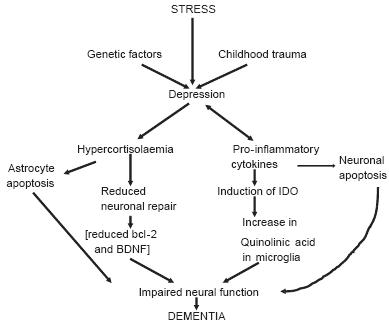
<body><![CDATA[<p align="justify"><font face="verdana" size="2">By the late 1990's, it was evident that there is a constant &lt;&lt;cross&#150;talk&gt;&gt; between the central and peripheral neurotransmitters, the endocrine and immune systems. Some 30+ cytokines and chemokines had been identified, and cytokine receptors were shown to be widely distributed not only on immune cells but also neurons and accessory cells in the brain (microglia and astrocytes). It is now well&#150;established that:</font></p>     <blockquote>       <p align="justify"><font face="verdana" size="2">1. The brain, the HPA axis and immune systems are closely inter&#150;related.<sup>3</sup></font></p>       <p align="justify"><font face="verdana" size="2">2. Stress and emotional states significantly affect immune function and can precipitate physical as well as causing psychological changes.</font></p>       <p align="justify"><font face="verdana" size="2">3. Cytokines play a key role as immunotransmitters and coordinate the activity of the endocrine, immune and neurotransmitter systems.<sup>4,5</sup></font></p> </blockquote>     <p align="justify"><font face="verdana" size="2">&nbsp;</font></p>     <p align="justify"><font face="verdana" size="2"><b>IS IT ALL IN THE BRAIN?</b></font></p>     <p align="justify"><font face="verdana" size="2">It is now well&#150;established that in addition to immune cells in the blood and spleen that produce pro&#150;inflammatory &#91;interleukin (IL)&#150;1,&#150;6, tumour necrosis factor (TNFalpha), interferon gamma (INF) and anti&#150;inflammatory (IL&#150;4,&#150;10,&#150;13, transforming growth factor (TGF)beta&#93; cytokines, astrocytes, microglia and neurons in the brain also produce these immunotransmitters.<sup>4</sup> In addition, endogenous opioids (endorphins and enkephalins) and cannabinoids (such as anadamide) inhibit cellular immunity. In depression, there is an increase in pro&#150;inflammatory cytokines in the blood and brain. Similar changes occur after chronic stress and following brain lesions resulting from stroke.<sup>6</sup> These changes are associated with an increased release of glucocorticoids and an increase in such inflammatory mediators as prostaglandin (PG), E2 and nitric oxide, events that reflect the actions of the pro&#150;inflammatory cytokines on the hypothalamus (increase in HPA activity), cyclooxygenase (increased PGE2) and inducible nitric oxide synthase (NO).<sup>7 </sup>Thus depression is associated with a chronic, low grade inflammation that ultimately contributes to increased apoptosis and cortical atrophy. The macrophage theory of depression, proposed by Smith in 1991, arose from these observations. In essence, this theory stated that the increase in pro&#150;inflammatory cytokines and a reduction in anti&#150;inflammatory cytokines was a reflection of a chronic, low grade inflammatory process that was ultimately responsible for the symptoms of depression.<sup>8</sup> In support of this theory, it was found that the therapeutic use of IFN alpha for the treatment of hepatitis or multiple sclerosis, for example, is associated with depressive symptoms in a substantial minority of otherwise non&#150;depressed patients.<sup>9</sup> Similar changes can be initiated in animals and man by a lipopolysaccharide (LPS) challenge. LPS is derived from the coat of pathogenic bacteria and activates macrophages thereby increasing the blood and brain concentrations of pro&#150;inflammatory cytokines. Thus the main biological markers of depression (dysfunctional monoamine neurotransmitters, hypercortisolaemia, depressed mood, increased inflammatory status) can be ascribed to an increase in peripheral and central macrophage activity from which the cytokines are derived.</font></p>     <p align="justify"><font face="verdana" size="2">A possible consequence of the chronic inflammation is an increase in apoptosis leading to neurodegenerative changes in the brain.<sup>7</sup> There is evidence that such changes occur in both depression and schizophrenia.<sup>10</sup> The inflammatory changes shown to occur in major depression are qualitatively similar to those reported in patients with Alzheimer's disease. This has led to the suggestion that chronic depression can predispose patients to dementia in later life. <a href="#f1">Figure 1</a> summarises the immune/endocrine cascades that may form the basis for the progression from chronic depression to dementia.</font></p>     <p align="center"><font face="verdana" size="2"><a name="f1"></a></font></p>     ]]></body>
<body><![CDATA[<p align="center"><font face="verdana" size="2"><img src="/img/revistas/sm/v31n2/a1f1.jpg"></font></p>     <p align="justify"><font face="verdana" size="2">&nbsp;</font></p>     <p align="justify"><font face="verdana" size="2"><b>PSYCHOLOGICAL&#150;IMMUNE INTERACTIONS</b></font></p>     <p align="justify"><font face="verdana" size="2">The lack of adaptation to stress underlies most major psychiatric disorders. From the psychological perspective, a defective coping strategy may be associated with the personality of the individual (neuroticism, extraversion, etc.), the coping ability, gender and mood state.<sup>11,12</sup> Clearly the nature of the stress, its severity and duration are also important factors.</font></p>     <p align="justify"><font face="verdana" size="2">It is now apparent that cerebral lateralization also plays a role in the response to stress. Thus those individuals showing predominantly right cortical activation to a stressful stimulus are more likely to experience negative symptoms than those showing left cortical activation to the same stimulus. Such individuals also show a greater degree of behavioural inhibition, and respond more strongly to negative than positive challenges. In studies in monkeys it has been shown that animals showing right cortical activation tend to be more emotional, have raised basal cortisol and a reduction in the activity of natural killer cells.</font></p>     <p align="justify"><font face="verdana" size="2">&nbsp;</font></p>     <p align="justify"><font face="verdana" size="2"><b>WHAT ARE THE LIMITATIONS OF PSYCHONEUROIMMUNOLOGY (PNI)?</b></font></p>     <p align="justify"><font face="verdana" size="2">There are several problems that currently limit the advance of PNI in clinical and experimental neuroscience.</font></p>     <p align="justify"><font face="verdana" size="2">Firstly, there is a large variation in the immune parameters following a specific stressor due to genetic, environmental background, adaptive capacity and, in clinical studies, personality of the subject or patient.<sup>12</sup></font></p>     <p align="justify"><font face="verdana" size="2">Secondly, even in well&#150;controlled experimental situations there is a need to distinguish between statistical and biologically important changes. For example, it is generally unknown if a statistically large and significant change in an immune parameter has any biological relevance for the health of the subject. Even a large change may still be within the normal range of values and the subject is not therefore immunocompromised. A brief survey of the published literature clearly indicates that qualitatively and quantitatively different results are obtained, often within the same laboratory, for patients supposedly suffering from the same condition and using the same methods to determine the immune parameter. Problems of non&#150;replication of results can be attributed to the heterogeneity of the patients studied and the controls used (age, gender, whether hospitalised or in the community, time of blood or tissue sampling, type of medication used, etc.).</font></p>     ]]></body>
<body><![CDATA[<p align="justify"><font face="verdana" size="2">Thirdly, there is often a high degree of variability due to the different assays used and, to date, there is no agreement regarding the standard methods that should be used.</font></p>     <p align="justify"><font face="verdana" size="2">Fourthly, most clinical studies are based on single point analyses. All immune parameters change according to the circadian rhythm so, unless the samples are taken at exactly the same time of day, it is difficult to draw any conclusions regarding the relevance of the findings. Ideally, the immune changes should be assessed at intervals over the 24&#150;hour period but this is, in practice, difficult to achieve particularly with psychiatric patients.</font></p>     <p align="justify"><font face="verdana" size="2">Fifthly, it is often assumed that there is only one immune compartment outside of the Central Nervous System. This is untrue! For example, in the blood compartment the mitogen induced proliferation of lymphocytes is mediated by glucocorticoids, but in the spleen compartment the catecholamines are the mediators. This could result in significant differences in interpretation of the results of a study.</font></p>     <p align="justify"><font face="verdana" size="2">Finally, few clinical studies take the psychological state of the patient into account at the time of sampling. All animals can learn to immunosuppress or immunoenhance their T&#150;cell, B&#150;cell and Natural Killer cell function. Such factors are often ignored in both clinical and experimental studies that explore the relationship between different types of stressor and/or psychological status and immune function.</font></p>     <p align="justify"><font face="verdana" size="2">&nbsp;</font></p>     <p align="justify"><font face="verdana" size="2"><b>HOW USEFUL IS PSYCHONEUROIMMUNOLGY?</b></font></p>     <p align="justify"><font face="verdana" size="2">PNI is still in its infancy as a method for exploring the interface between behaviour, brain function, the immune and endocrine systems. For that reason, reliable data collection is essential in order to develop hypotheses that are necessary to establish PNI as a valuable contributor to understanding normal and abnormal mental processes. It is therefore essential to better standardize the experimental procedures and to take into account the complexity of factors that influence immune function. Unless this is achieved, PNI research will continue to be treated as a relatively obscure, minority interest.</font></p>     <p align="justify"><font face="verdana" size="2">&nbsp;</font></p>     <p align="justify"><font face="verdana" size="2"><b>REFERENCES</b></font></p>     <!-- ref --><p align="justify"><font face="verdana" size="2">1. Ader R, Cohen N. Conditioning the immune system. Neth J Med 1991;39:263&#150;276.</font>&nbsp;&nbsp;&nbsp;&nbsp;&nbsp;&nbsp;&nbsp;&nbsp;[&#160;<a href="javascript:void(0);" onclick="javascript: window.open('/scielo.php?script=sci_nlinks&ref=9020886&pid=S0185-3325200800020000100001&lng=','','width=640,height=500,resizable=yes,scrollbars=1,menubar=yes,');">Links</a>&#160;]<!-- end-ref --><!-- ref --><p align="justify"><font face="verdana" size="2">2. Ballieux RE. Bidirectional communication between the brain and the immune system. Eur J Clin Invest 1992;22:6&#150;9.</font>&nbsp;&nbsp;&nbsp;&nbsp;&nbsp;&nbsp;&nbsp;&nbsp;[&#160;<a href="javascript:void(0);" onclick="javascript: window.open('/scielo.php?script=sci_nlinks&ref=9020887&pid=S0185-3325200800020000100002&lng=','','width=640,height=500,resizable=yes,scrollbars=1,menubar=yes,');">Links</a>&#160;]<!-- end-ref --><!-- ref --><p align="justify"><font face="verdana" size="2">3. Besedovsky HO, del Rey AE, Sorkin E. Immune&#150;neuroendocrine interations. J Immunol 1985;135(suppl.1):750S&#150;754S.</font>&nbsp;&nbsp;&nbsp;&nbsp;&nbsp;&nbsp;&nbsp;&nbsp;[&#160;<a href="javascript:void(0);" onclick="javascript: window.open('/scielo.php?script=sci_nlinks&ref=9020888&pid=S0185-3325200800020000100003&lng=','','width=640,height=500,resizable=yes,scrollbars=1,menubar=yes,');">Links</a>&#160;]<!-- end-ref --><!-- ref --><p align="justify"><font face="verdana" size="2">4. Dantzer R. How do cytokines say hello to the brain? Neural verses humoral mediation. Eur C network 1994;5:271&#150;273.</font>&nbsp;&nbsp;&nbsp;&nbsp;&nbsp;&nbsp;&nbsp;&nbsp;[&#160;<a href="javascript:void(0);" onclick="javascript: window.open('/scielo.php?script=sci_nlinks&ref=9020889&pid=S0185-3325200800020000100004&lng=','','width=640,height=500,resizable=yes,scrollbars=1,menubar=yes,');">Links</a>&#160;]<!-- end-ref --><!-- ref --><p align="justify"><font face="verdana" size="2">5. Connor T, Leonard BE. Depression,stress and immunological activation: the role of cytokines in depressive disorders. Life Sci 1998;62:583&#150;606.</font>&nbsp;&nbsp;&nbsp;&nbsp;&nbsp;&nbsp;&nbsp;&nbsp;[&#160;<a href="javascript:void(0);" onclick="javascript: window.open('/scielo.php?script=sci_nlinks&ref=9020890&pid=S0185-3325200800020000100005&lng=','','width=640,height=500,resizable=yes,scrollbars=1,menubar=yes,');">Links</a>&#160;]<!-- end-ref --><!-- ref --><p align="justify"><font face="verdana" size="2">6. Maier SF, Watkins LR, Fleshner M. Psychoneuroimmunology&#150;the interface between behaviour. Brain and immunity. Amer Psychol 1994;49: 1004&#150;1017.</font>&nbsp;&nbsp;&nbsp;&nbsp;&nbsp;&nbsp;&nbsp;&nbsp;[&#160;<a href="javascript:void(0);" onclick="javascript: window.open('/scielo.php?script=sci_nlinks&ref=9020891&pid=S0185-3325200800020000100006&lng=','','width=640,height=500,resizable=yes,scrollbars=1,menubar=yes,');">Links</a>&#160;]<!-- end-ref --><!-- ref --><p align="justify"><font face="verdana" size="2">7. Leonard BE, Myint AM. Changes in the immune system in depression and dementia: causal or co&#150;incidental effects? Dialog Clin Neurosci 2006; 8:163&#150;174.</font>&nbsp;&nbsp;&nbsp;&nbsp;&nbsp;&nbsp;&nbsp;&nbsp;[&#160;<a href="javascript:void(0);" onclick="javascript: window.open('/scielo.php?script=sci_nlinks&ref=9020892&pid=S0185-3325200800020000100007&lng=','','width=640,height=500,resizable=yes,scrollbars=1,menubar=yes,');">Links</a>&#160;]<!-- end-ref --><!-- ref --><p align="justify"><font face="verdana" size="2">8. Smith RS. The macrophage theory of depression. Med Hypoth 1991;35: 97&#150;104.</font>&nbsp;&nbsp;&nbsp;&nbsp;&nbsp;&nbsp;&nbsp;&nbsp;[&#160;<a href="javascript:void(0);" onclick="javascript: window.open('/scielo.php?script=sci_nlinks&ref=9020893&pid=S0185-3325200800020000100008&lng=','','width=640,height=500,resizable=yes,scrollbars=1,menubar=yes,');">Links</a>&#160;]<!-- end-ref --><!-- ref --><p align="justify"><font face="verdana" size="2">9. Wichers MC, Koek GH, Robaeys G, Verkerk R, Scharpe S et al. IDO and interferon alpha induced depression symptoms; a shift in hypothesis from tryptophan depletion. Med Hypoth 2005;10:538&#150;544.</font>&nbsp;&nbsp;&nbsp;&nbsp;&nbsp;&nbsp;&nbsp;&nbsp;[&#160;<a href="javascript:void(0);" onclick="javascript: window.open('/scielo.php?script=sci_nlinks&ref=9020894&pid=S0185-3325200800020000100009&lng=','','width=640,height=500,resizable=yes,scrollbars=1,menubar=yes,');">Links</a>&#160;]<!-- end-ref --><!-- ref --><p align="justify"><font face="verdana" size="2">10. Leonard BE. Is there an immunologic basis for schizophrenia? Expert Rev Clin Immunol 2005;1:103&#150;112.</font>&nbsp;&nbsp;&nbsp;&nbsp;&nbsp;&nbsp;&nbsp;&nbsp;[&#160;<a href="javascript:void(0);" onclick="javascript: window.open('/scielo.php?script=sci_nlinks&ref=9020895&pid=S0185-3325200800020000100010&lng=','','width=640,height=500,resizable=yes,scrollbars=1,menubar=yes,');">Links</a>&#160;]<!-- end-ref --><!-- ref --><p align="justify"><font face="verdana" size="2">11. Glaser GR, Kielcolt&#150;Glaser JK, Stout JC, Tarr KL, Speicher CE et al. Stress related impairments in cellular immunity. Psychiat Res 1985;16:233&#150;239.</font>&nbsp;&nbsp;&nbsp;&nbsp;&nbsp;&nbsp;&nbsp;&nbsp;[&#160;<a href="javascript:void(0);" onclick="javascript: window.open('/scielo.php?script=sci_nlinks&ref=9020896&pid=S0185-3325200800020000100011&lng=','','width=640,height=500,resizable=yes,scrollbars=1,menubar=yes,');">Links</a>&#160;]<!-- end-ref --><!-- ref --><p align="justify"><font face="verdana" size="2">12. Kielcolt&#150;Glaser JK, Glaser R. Methological issues in behavioral immunology research in humans. Brain Behav Immun 1988;2:67&#150;78.</font>&nbsp;&nbsp;&nbsp;&nbsp;&nbsp;&nbsp;&nbsp;&nbsp;[&#160;<a href="javascript:void(0);" onclick="javascript: window.open('/scielo.php?script=sci_nlinks&ref=9020897&pid=S0185-3325200800020000100012&lng=','','width=640,height=500,resizable=yes,scrollbars=1,menubar=yes,');">Links</a>&#160;]<!-- end-ref --> ]]></body><back>
<ref-list>
<ref id="B1">
<label>1</label><nlm-citation citation-type="journal">
<person-group person-group-type="author">
<name>
<surname><![CDATA[Ader]]></surname>
<given-names><![CDATA[R]]></given-names>
</name>
<name>
<surname><![CDATA[Cohen]]></surname>
<given-names><![CDATA[N.]]></given-names>
</name>
</person-group>
<article-title xml:lang="en"><![CDATA[Conditioning the immune system]]></article-title>
<source><![CDATA[Neth J Med]]></source>
<year>1991</year>
<volume>39</volume>
<page-range>263-276</page-range></nlm-citation>
</ref>
<ref id="B2">
<label>2</label><nlm-citation citation-type="journal">
<person-group person-group-type="author">
<name>
<surname><![CDATA[Ballieux]]></surname>
<given-names><![CDATA[RE.]]></given-names>
</name>
</person-group>
<article-title xml:lang="en"><![CDATA[Bidirectional communication between the brain and the immune system]]></article-title>
<source><![CDATA[Eur J Clin Invest]]></source>
<year>1992</year>
<volume>22</volume>
<page-range>6-9</page-range></nlm-citation>
</ref>
<ref id="B3">
<label>3</label><nlm-citation citation-type="journal">
<person-group person-group-type="author">
<name>
<surname><![CDATA[Besedovsky]]></surname>
<given-names><![CDATA[HO]]></given-names>
</name>
<name>
<surname><![CDATA[del Rey]]></surname>
<given-names><![CDATA[AE]]></given-names>
</name>
<name>
<surname><![CDATA[Sorkin]]></surname>
<given-names><![CDATA[E.]]></given-names>
</name>
</person-group>
<article-title xml:lang="en"><![CDATA[Immune-neuroendocrine interations]]></article-title>
<source><![CDATA[J Immunol]]></source>
<year>1985</year>
<volume>135</volume>
<numero>^s1</numero>
<issue>^s1</issue>
<supplement>1</supplement>
<page-range>750S-754S</page-range></nlm-citation>
</ref>
<ref id="B4">
<label>4</label><nlm-citation citation-type="journal">
<person-group person-group-type="author">
<name>
<surname><![CDATA[Dantzer]]></surname>
<given-names><![CDATA[R.]]></given-names>
</name>
</person-group>
<article-title xml:lang="en"><![CDATA[How do cytokines say hello to the brain? Neural verses humoral mediation]]></article-title>
<source><![CDATA[Eur C network]]></source>
<year>1994</year>
<volume>5</volume>
<page-range>271-273</page-range></nlm-citation>
</ref>
<ref id="B5">
<label>5</label><nlm-citation citation-type="journal">
<person-group person-group-type="author">
<name>
<surname><![CDATA[Connor]]></surname>
<given-names><![CDATA[T]]></given-names>
</name>
<name>
<surname><![CDATA[Leonard]]></surname>
<given-names><![CDATA[BE.]]></given-names>
</name>
</person-group>
<article-title xml:lang="en"><![CDATA[Depression,stress and immunological activation: the role of cytokines in depressive disorders]]></article-title>
<source><![CDATA[Life Sci]]></source>
<year>1998</year>
<volume>62</volume>
<page-range>583-606</page-range></nlm-citation>
</ref>
<ref id="B6">
<label>6</label><nlm-citation citation-type="journal">
<person-group person-group-type="author">
<name>
<surname><![CDATA[Maier]]></surname>
<given-names><![CDATA[SF]]></given-names>
</name>
<name>
<surname><![CDATA[Watkins]]></surname>
<given-names><![CDATA[LR]]></given-names>
</name>
<name>
<surname><![CDATA[Fleshner]]></surname>
<given-names><![CDATA[M.]]></given-names>
</name>
</person-group>
<article-title xml:lang="en"><![CDATA[Psychoneuroimmunology-the interface between behaviour: Brain and immunity]]></article-title>
<source><![CDATA[Amer Psychol]]></source>
<year>1994</year>
<volume>49</volume>
<page-range>1004-1017</page-range></nlm-citation>
</ref>
<ref id="B7">
<label>7</label><nlm-citation citation-type="journal">
<person-group person-group-type="author">
<name>
<surname><![CDATA[Leonard]]></surname>
<given-names><![CDATA[BE]]></given-names>
</name>
<name>
<surname><![CDATA[Myint]]></surname>
<given-names><![CDATA[AM.]]></given-names>
</name>
</person-group>
<article-title xml:lang="en"><![CDATA[Changes in the immune system in depression and dementia: causal or co-incidental effects?]]></article-title>
<source><![CDATA[Dialog Clin Neurosci]]></source>
<year>2006</year>
<volume>8</volume>
<page-range>163-174</page-range></nlm-citation>
</ref>
<ref id="B8">
<label>8</label><nlm-citation citation-type="journal">
<person-group person-group-type="author">
<name>
<surname><![CDATA[Smith]]></surname>
<given-names><![CDATA[RS.]]></given-names>
</name>
</person-group>
<article-title xml:lang="en"><![CDATA[The macrophage theory of depression]]></article-title>
<source><![CDATA[Med Hypoth]]></source>
<year>1991</year>
<volume>35</volume>
<page-range>97-104</page-range></nlm-citation>
</ref>
<ref id="B9">
<label>9</label><nlm-citation citation-type="journal">
<person-group person-group-type="author">
<name>
<surname><![CDATA[Wichers]]></surname>
<given-names><![CDATA[MC]]></given-names>
</name>
<name>
<surname><![CDATA[Koek]]></surname>
<given-names><![CDATA[GH]]></given-names>
</name>
<name>
<surname><![CDATA[Robaeys]]></surname>
<given-names><![CDATA[G]]></given-names>
</name>
<name>
<surname><![CDATA[Verkerk]]></surname>
<given-names><![CDATA[R]]></given-names>
</name>
<name>
<surname><![CDATA[Scharpe]]></surname>
<given-names><![CDATA[S]]></given-names>
</name>
</person-group>
<article-title xml:lang="en"><![CDATA[IDO and interferon alpha induced depression symptoms; a shift in hypothesis from tryptophan depletion]]></article-title>
<source><![CDATA[Med Hypoth]]></source>
<year>2005</year>
<volume>10</volume>
<page-range>538-544</page-range></nlm-citation>
</ref>
<ref id="B10">
<label>10</label><nlm-citation citation-type="journal">
<person-group person-group-type="author">
<name>
<surname><![CDATA[Leonard]]></surname>
<given-names><![CDATA[BE.]]></given-names>
</name>
</person-group>
<article-title xml:lang="en"><![CDATA[Is there an immunologic basis for schizophrenia?]]></article-title>
<source><![CDATA[Expert Rev Clin Immunol]]></source>
<year>2005</year>
<volume>1</volume>
<page-range>103-112</page-range></nlm-citation>
</ref>
<ref id="B11">
<label>11</label><nlm-citation citation-type="journal">
<person-group person-group-type="author">
<name>
<surname><![CDATA[Glaser]]></surname>
<given-names><![CDATA[GR]]></given-names>
</name>
<name>
<surname><![CDATA[Kielcolt-Glaser]]></surname>
<given-names><![CDATA[JK]]></given-names>
</name>
<name>
<surname><![CDATA[Stout]]></surname>
<given-names><![CDATA[JC]]></given-names>
</name>
<name>
<surname><![CDATA[Tarr]]></surname>
<given-names><![CDATA[KL]]></given-names>
</name>
<name>
<surname><![CDATA[Speicher]]></surname>
<given-names><![CDATA[CE]]></given-names>
</name>
</person-group>
<article-title xml:lang="en"><![CDATA[Stress related impairments in cellular immunity]]></article-title>
<source><![CDATA[Psychiat Res]]></source>
<year>1985</year>
<volume>16</volume>
<page-range>233-239</page-range></nlm-citation>
</ref>
<ref id="B12">
<label>12</label><nlm-citation citation-type="journal">
<person-group person-group-type="author">
<name>
<surname><![CDATA[Kielcolt-Glaser]]></surname>
<given-names><![CDATA[JK]]></given-names>
</name>
<name>
<surname><![CDATA[Glaser]]></surname>
<given-names><![CDATA[R.]]></given-names>
</name>
</person-group>
<article-title xml:lang="en"><![CDATA[Methological issues in behavioral immunology research in humans]]></article-title>
<source><![CDATA[Brain Behav Immun]]></source>
<year>1988</year>
<volume>2</volume>
<page-range>67-78</page-range></nlm-citation>
</ref>
</ref-list>
</back>
</article>