<?xml version="1.0" encoding="ISO-8859-1"?><article xmlns:mml="http://www.w3.org/1998/Math/MathML" xmlns:xlink="http://www.w3.org/1999/xlink" xmlns:xsi="http://www.w3.org/2001/XMLSchema-instance">
<front>
<journal-meta>
<journal-id>0036-3634</journal-id>
<journal-title><![CDATA[Salud Pública de México]]></journal-title>
<abbrev-journal-title><![CDATA[Salud pública Méx]]></abbrev-journal-title>
<issn>0036-3634</issn>
<publisher>
<publisher-name><![CDATA[Instituto Nacional de Salud Pública]]></publisher-name>
</publisher>
</journal-meta>
<article-meta>
<article-id>S0036-36342003000900004</article-id>
<title-group>
<article-title xml:lang="en"><![CDATA[Incidence and mortality of cervical cancer in Latin America]]></article-title>
<article-title xml:lang="es"><![CDATA[Incidencia y mortalidad de cáncer cervical en América Latina]]></article-title>
</title-group>
<contrib-group>
<contrib contrib-type="author">
<name>
<surname><![CDATA[Arrossi]]></surname>
<given-names><![CDATA[Silvina]]></given-names>
</name>
<xref ref-type="aff" rid="A01"/>
</contrib>
<contrib contrib-type="author">
<name>
<surname><![CDATA[Sankaranarayanan]]></surname>
<given-names><![CDATA[Rengaswamy]]></given-names>
</name>
<xref ref-type="aff" rid="A01"/>
</contrib>
<contrib contrib-type="author">
<name>
<surname><![CDATA[Parkin]]></surname>
<given-names><![CDATA[Donald Maxwell]]></given-names>
</name>
<xref ref-type="aff" rid="A01"/>
</contrib>
</contrib-group>
<aff id="A01">
<institution><![CDATA[,International Agency for Research on Cancer  ]]></institution>
<addr-line><![CDATA[Lyon ]]></addr-line>
<country>France</country>
</aff>
<pub-date pub-type="pub">
<day>00</day>
<month>00</month>
<year>2003</year>
</pub-date>
<pub-date pub-type="epub">
<day>00</day>
<month>00</month>
<year>2003</year>
</pub-date>
<volume>45</volume>
<fpage>306</fpage>
<lpage>314</lpage>
<copyright-statement/>
<copyright-year/>
<self-uri xlink:href="http://www.scielo.org.mx/scielo.php?script=sci_arttext&amp;pid=S0036-36342003000900004&amp;lng=en&amp;nrm=iso"></self-uri><self-uri xlink:href="http://www.scielo.org.mx/scielo.php?script=sci_abstract&amp;pid=S0036-36342003000900004&amp;lng=en&amp;nrm=iso"></self-uri><self-uri xlink:href="http://www.scielo.org.mx/scielo.php?script=sci_pdf&amp;pid=S0036-36342003000900004&amp;lng=en&amp;nrm=iso"></self-uri><abstract abstract-type="short" xml:lang="en"><p><![CDATA[Cervical cancer incidence and mortality estimates for 2000 are presented for the 21 Latin American countries, using estimates from the statistical package GLOBOCAN 2000. Additional data on time-trends are also presented, using the WHO mortality database. By the year 2000, some 76 000 cervical cancer and almost 30 000 deaths were estimated for the whole region, which represent 16% and 13% of the world burden, respectively. Thus, Latin American countries are among those with highest incidence rates in the world, together with countries from Sub-Saharan Africa, South and South East Asia. Variation in incidence among countries is large. Very high rates are found in Haiti (ASR 93.9 per 100 000), Nicaragua (ASR 61.1 per 100 000) and Bolivia (ASR 58.1 per 100 000). It seems unlikely that differences in risks in the region can be explained as the result of screening activities. Several descriptive studies carried out to evaluate the screening programmes in Latin America have pointed out problems related to insufficient coverage and frequency of screening. Other related problems include inadequate collection and reading of cytological samplings as well as incomplete follow-up of women after the test. The main challenge for Latin America countries remains on how to organize effective screening programmes, and for this, a real and urgent commitment from public health services and decision-makers in the region is needed.]]></p></abstract>
<abstract abstract-type="short" xml:lang="es"><p><![CDATA[Se presentan estimaciones de la incidencia y de la mortalidad por cáncer cervical para los 21 países latinoamericanos en el año 2000. Se utilizaron el paquete estadístico GLOBOCAN 2000 y las bases de datos de mortalidad de la Organización Mundial de la Salud. En el año 2000, al menos 76 000 casos incidentes de cáncer cervical y 30 000 muertes se estimaron para la Región en general, lo cual representa 16 y 13% del total del mundo, respectivamente. Por lo tanto, los países de América Latina se encuentran en un área geográfica con tasas de incidencia de las más altas en el mundo, junto con países del Sub-Sahara, en Africa, y del sureste de Asia. La variación de la incidencia entre los países es grande; existen tasas muy altas en Haití (93.9 por 100 000), Nicaragua (61.1 por 100 000) y Bolivia (58.1 por 100 000). Es poco probable que las diferencias en los riesgos entre las regiones sean explicadas como resultado de las actividades de tamizaje. Varios estudios descriptivos se han llevado a cabo para evaluar programas de tamizaje en América Latina, señalando problemas relacionados con la frecuencia y la difusión insuficiente del tamizaje. Otro problema relacionado incluye la inadecuada colección y lectura de muestras citológicas, así como el seguimiento incompleto de las mujeres después de la prueba. El principal cambio para los países de América Latina se encuentra en cómo organizar programas efectivos de tamizaje y, para esto, es necesaria una real y urgente integración entre los servicios de salud pública y los tomadores de decisiones en la Región.]]></p></abstract>
<kwd-group>
<kwd lng="en"><![CDATA[cervical cancer]]></kwd>
<kwd lng="en"><![CDATA[incidence]]></kwd>
<kwd lng="en"><![CDATA[mortality]]></kwd>
<kwd lng="en"><![CDATA[public health]]></kwd>
<kwd lng="en"><![CDATA[Latin America]]></kwd>
<kwd lng="es"><![CDATA[cáncer cervical]]></kwd>
<kwd lng="es"><![CDATA[incidencia]]></kwd>
<kwd lng="es"><![CDATA[mortalidad]]></kwd>
<kwd lng="es"><![CDATA[salud pública]]></kwd>
<kwd lng="es"><![CDATA[América Latina]]></kwd>
</kwd-group>
</article-meta>
</front><body><![CDATA[ <p align="right"><font face="Verdana" size="2"><b>ARTICLE    </b> ARTÍCULOS</font></p>     <p>&nbsp;</p>     <p><font face="Verdana" size="4"><b>Incidence and    mortality of cervical cancer in Latin America </b></font></p>     <p>&nbsp;</p>     <p><font face="Verdana" size="3"><b>Incidencia y    mortalidad de c&aacute;ncer cervical en Am&eacute;rica Latina </b></font></p>     <p>&nbsp;</p>     <p>&nbsp;</p>     <p><font face="Verdana" size="2"><b>Silvina Arrossi,    MSc; Rengaswamy Sankaranarayanan, MD; Donald Maxwell Parkin, MD </b></font></p>     <p><font face="Verdana" size="2"> International    Agency for Research on Cancer, Lyon, France</font></p>     <p>&nbsp;</p>     ]]></body>
<body><![CDATA[<p>&nbsp;</p> <hr size="1" noshade>     <p><font face="Verdana" size="2"><b>ABSTRACT </b></font></p>     <p><font face="Verdana" size="2">Cervical cancer    incidence and mortality estimates for 2000 are presented for the 21 Latin American    countries, using estimates from the statistical package GLOBOCAN 2000. Additional    data on time-trends are also presented, using the WHO mortality database. By    the year 2000, some 76 000 cervical cancer and almost 30 000 deaths were estimated    for the whole region, which represent 16% and 13% of the world burden, respectively.    Thus, Latin American countries are among those with highest incidence rates    in the world, together with countries from Sub-Saharan Africa, South and South    East Asia. Variation in incidence among countries is large. Very high rates    are found in Haiti (ASR 93.9 per 100 000), Nicaragua (ASR 61.1 per 100 000)    and Bolivia (ASR 58.1 per 100 000). It seems unlikely that differences in risks    in the region can be explained as the result of screening activities. Several    descriptive studies carried out to evaluate the screening programmes in Latin    America have pointed out problems related to insufficient coverage and frequency    of screening. Other related problems include inadequate collection and reading    of cytological samplings as well as incomplete follow-up of women after the    test. The main challenge for Latin America countries remains on how to organize    effective screening programmes, and for this, a real and urgent commitment from    public health services and decision-makers in the region is needed.This paper    is available too at: <a href="http://www.insp.mx/salud/index.html">http://www.insp.mx/salud/index.html</a>    </font></p>     <p><font face="Verdana" size="2"><b>Key words:</b>    cervical cancer; incidence; mortality, public health; Latin America </font></p> <hr size="1" noshade>     <p><font face="Verdana" size="2"><b>RESUMEN</b></font></p>     <p><font face="Verdana" size="2">Se presentan estimaciones    de la incidencia y de la mortalidad por c&aacute;ncer cervical para los 21 pa&iacute;ses    latinoamericanos en el a&ntilde;o 2000. Se utilizaron el paquete estad&iacute;stico    GLOBOCAN 2000 y las bases de datos de mortalidad de la Organizaci&oacute;n Mundial    de la Salud. En el a&ntilde;o 2000, al menos 76 000 casos incidentes de c&aacute;ncer    cervical y 30 000 muertes se estimaron para la Regi&oacute;n en general, lo    cual representa 16 y 13% del total del mundo, respectivamente. Por lo tanto,    los pa&iacute;ses de Am&eacute;rica Latina se encuentran en un &aacute;rea geogr&aacute;fica    con tasas de incidencia de las m&aacute;s altas en el mundo, junto con pa&iacute;ses    del Sub-Sahara, en Africa, y del sureste de Asia. La variaci&oacute;n de la    incidencia entre los pa&iacute;ses es grande; existen tasas muy altas en Hait&iacute;    (93.9 por 100 000), Nicaragua (61.1 por 100 000) y Bolivia (58.1 por 100 000).    Es poco probable que las diferencias en los riesgos entre las regiones sean    explicadas como resultado de las actividades de tamizaje. Varios estudios descriptivos    se han llevado a cabo para evaluar programas de tamizaje en Am&eacute;rica Latina,    se&ntilde;alando problemas relacionados con la frecuencia y la difusi&oacute;n    insuficiente del tamizaje. Otro problema relacionado incluye la inadecuada colecci&oacute;n    y lectura de muestras citol&oacute;gicas, as&iacute; como el seguimiento incompleto    de las mujeres despu&eacute;s de la prueba. El principal cambio para los pa&iacute;ses    de Am&eacute;rica Latina se encuentra en c&oacute;mo organizar programas efectivos    de tamizaje y, para esto, es necesaria una real y urgente integraci&oacute;n    entre los servicios de salud p&uacute;blica y los tomadores de decisiones en    la Regi&oacute;n. Este art&iacute;culo est&aacute; disponible en: <a href="http://www.insp.mx/salud/index.html">http://www.insp.mx/salud/index.html</a>    </font></p>     <p><font face="Verdana" size="2"><b>Palabras clave:</b>    c&aacute;ncer cervical; incidencia; mortalidad; salud p&uacute;blica; Am&eacute;rica    Latina </font></p> <hr size="1" noshade>     <p>&nbsp;</p>     <p>&nbsp;</p>     <p><font face="Verdana" size="2">Latin America is    one of the regions of the world where the incidence of cervical cancer is high.<SUP>1</SUP>    This tumour is the second most common cancer among women and the second cause    of death from cancer. This picture is not new. In 1987, an analysis of trends    in cervical cancer in Latin America was published, pointing out not only the    magnitude of the problem, but also the fact that, contrary to what was happening    in developed countries, mortality due to cervical cancer between 1975 and 1985    had been increasing.<SUP>2</SUP> In 1996, a second trend analysis was published,    showing that in Latin American countries almost no significant downward changes    in mortality had been observed between 1960 and 1993.<SUP>3</SUP> </font></p>     ]]></body>
<body><![CDATA[<p><font face="Verdana" size="2"> The relative lack    of success of most Latin American countries in the prevention and control of    cervical cancer contrasts with the observation of declines in incidence and    mortality in North America. By now, enough evidence exists about the protective    effects of well-organized screening programmes, which can potentially reduce    incidence and mortality by up to 90%.<SUP>4</SUP> This evidence comes mainly    from the experience of developed countries, and especially from the Nordic countries<SUP>5-7    </SUP>where large reductions were achieved following the introduction of population    screening programmes. In Latin America, screening programs, where they exist,    have been introduced piecemeal, lack both organisation and quality control,    and have failed to meet their objectives. </font></p>     <p><font face="Verdana" size="2"> By the year 2000,    some 76 000 new cervical cancer cases and almost 30 000 deaths were estimated    for the whole region, which represent 16% and 13% of the world burden respectively.    This paper examines the geographical variations in incidence and mortality in    the 21 Latin American countries (LAC), Argentina, Bolivia, Brazil, Chile, Colombia,    Costa Rica, Cuba, Dominican Republic, Ecuador, El Salvador, Guatemala, Haiti,    Honduras, Mexico, Nicaragua, Panama, Paraguay, Peru, Puerto Rico, Uruguay and    Venezuela. The estimates are taken from GLOBOCAN 2000<SUP>8</SUP> and have been    derived using different sources of information and methods. </font></p>     <p><font face="Verdana" size="2"> Mortality statistics    have the great advantage of comprehensive coverage and availability. However,    in many Latin American countries coverage is incomplete, while in others, completeness    of registration varies according to geographic area and age group. In general,    registration of vital events is less complete in rural areas and is worse in    areas with poor living conditions.<SUP>9</SUP> The proportion of deaths certified    as due to ill-defined causes varies from country to country (range 1-48%) and    in general is associated with lack of access to medical services and lack of    training or insufficient understanding of the uses of this type of information.    Although great improvements have been made in the quality of mortality data    during recent years, in some countries, such as Brazil, Honduras, Peru and El    Salvador, this continues to be an important problem. </font></p>     <p><font face="Verdana" size="2"> Incidence data    are produced by population-based cancer registries (PBCRs), which collect information    on all new cases of cancer in a defined population. Cancer registries may cover    national populations or, more often, certain cities or regions.<SUP>1</SUP>    In Latin America, several countries have initiated PBCRs during the last decades    (Argentina, Brazil, Chile, Colombia, Costa Rica, Cuba, Paraguay, Peru, Puerto    Rico and Uruguay), but in fact most of them have faced difficulties in producing    continuous incidence data at a good level of quality. By now, only two registries,    in Cali, Colombia, and Puerto Rico, have produced good quality long-term incidence    rates.<SUP>10</SUP> To overcome these difficulties, estimates of incidence and    mortality were produced using all available sources of information, mainly incidence    and mortality but also survival data or frequency data where no population-based    registry and/or mortality statistics are available. </font></p>     <p>&nbsp;</p>     <p><font face="Verdana" size="3"><b>Material and    Methods </b> </font></p>     <p><font face="Verdana" size="2">The GLOBOCAN package    gives statistical and graphical information on cancer incidence and mortality    for 173 countries in the world. The methods used to estimated mortality for    the countries of Latin America were as follows: </font></p>     <p><font face="Verdana" size="2">1. National mortality    data were available for five countries: </font></p>     <blockquote>       <p><font face="Verdana" size="2"> Argentina (1998)<a href="#n1"><sup>1</sup></a>      </font></p>       ]]></body>
<body><![CDATA[<p><font face="Verdana" size="2"> Chile (1995-1998)<a href="#n1"><sup>1</sup></a>      </font></p>       <p><font face="Verdana" size="2"> Uruguay (1995-1998)<a href="#n1"><sup>1</sup></a>      </font></p>       <p><font face="Verdana" size="2"> Costa Rica (1993-1995)<a href="#n2"><sup>2</sup></a>      </font></p>       <p><font face="Verdana" size="2"> Cuba (1993-1996)<a href="#n2"><sup>2</sup></a>      </font></p> </blockquote>     <p><font face="Verdana" size="2">2. National data    were available but known to under-estimate the true mortality: The published    rates have been corrected by multiplying the estimated percentage of under-registration    as published by PAHO.<SUP>8</SUP> In the case of Brazil, important differences    in the levels of completeness and quality of vital events are observed among    sub-regions, and therefore correction was made both for under-registration and    for the percentage of ill-defined causes of death using sub-regional proportions    as provided by the Brazilian Ministry of Health. </font></p>     <blockquote>       <p><font face="Verdana" size="2"> Dominican Republic      (1983-1985)<a href="#n2"><SUP>2</SUP></a> </font></p>       <p><font face="Verdana" size="2"> El Salvador      (1991-1993)<a href="#n2"><SUP>2</SUP></a> </font></p>       <p><font face="Verdana" size="2"> Mexico (1993-1995)<a href="#n2"><SUP>2</SUP></a>      </font></p>       <p><font face="Verdana" size="2"> Panama (1989)<a href="#n2"><SUP>2</SUP></a>      </font></p>       ]]></body>
<body><![CDATA[<p><font face="Verdana" size="2"> Colombia (1992-1994<a href="#n2"><SUP>2</SUP></a>      </font></p>       <p><font face="Verdana" size="2"> Ecuador (1993-1995)<a href="#n2"><SUP>2</SUP></a>      </font></p>       <p><font face="Verdana" size="2"> Venezuela (1992-1994)<a href="#n2"><SUP>2</SUP></a>      </font></p>       <p><font face="Verdana" size="2"> Brazil (1995-1998)<a href="#n1"><sup>1</sup></a>      </font></p> </blockquote>     <p><font face="Verdana" size="2">3. Estimates were    derived from data of one or more cancer registries covering the whole country:    </font></p>     <blockquote>       <p><font face="Verdana" size="2"> Puerto Rico      (1991). </font></p> </blockquote>     <p><font face="Verdana" size="2">4. Mortality was    estimated from incidence, using country/regional survival when no recent cancer    mortality data were available or known to be of poor quality: </font></p>     <blockquote>       <p><font face="Verdana" size="2"> Haiti, Guatemala,      Honduras, Nicaragua, Bolivia, Paraguay and Peru. </font></p> </blockquote>     ]]></body>
<body><![CDATA[<p><font face="Verdana" size="2"> Within LAC many    deaths from cancer of the uterine cervix and uterine corpus are inadequately    coded as "uterine cancer not otherwise specified" (ICD-9 179). This    lack of specificity in the assignment of uterine cancer deaths was corrected    by allocating the deaths coded as "unspecified" to either uterine    cervix (ICD-9 180) or uterine corpus cancer (ICD-9 182) according to the age-specific    proportions specified as 180 and 182 in each country. Thus, mortality estimates    may not correspond to the rate published by WHO.<SUP>11</SUP> This correction    was applied also to incidence data from cancer registries, although the proportion    of "unspecified" cases is much smaller than in mortality data. </font></p>     <p><font face="Verdana" size="2"><b>Incidence </b></font></p>     <p><font face="Verdana" size="2">In countries with    good national cancer registration systems, this was the preferred source of    incidence data. For all other countries, incidence was estimated from mortality    by assuming that the logarithm of the incidence rate of a given cancer can be    expressed as a linear function of the logarithm of mortality in each sex-age    group.<SUP>12</SUP> The ratio of mortality to incidence (M/I) is a good indicator    of the completeness of cancer registry data.<SUP>13</SUP> To ensure that these    datasets were the highest possible quality, careful consideration of each registry<a name="3n"></a><a href="#n3"><sup>3</sup></a>    sex specific M/I ratios for each primary site was made. Registries were excluded    from the model datasets if the M/I ratios were considered unreasonably high    or low for the cancer in question. Thus, the specific model for countries from    LAC was built based on available mortality and incidence data provided by five    Latin American cancer registries: Montevideo, Uruguay (1990-1992), Puerto Rico    (1988-1991), Cali, Colombia (1987-1991), Cuba (1986) and Costa Rica (1988-1992).    </font></p>     <p><font face="Verdana" size="2">1. Good quality    incidence data at national level was available for: Costa Rica (CI5-VII, 1988-1992)    and Puerto Rico (CI5-VII, 1988-1991). </font></p>     <p><font face="Verdana" size="2">2. Incidence estimates    were based on mortality data using the "LAC" model: </font></p>     <blockquote>       <p><font face="Verdana" size="2"> Argentina, Chile,      Uruguay, Venezuela, Brazil, Dominican Republic, El Salvador, Panama, Colombia      and Ecuador (corrections made for countries with low quality data as explained      in the mortality section). </font></p> </blockquote>     <p><font face="Verdana" size="2">3. Incidence data    from cancer registries with local/regional coverage were taken as representative    of the country: </font></p>     <blockquote>       <p><font face="Verdana" size="2"> Paraguay: Asuncion,      1988-1989. </font></p>       ]]></body>
<body><![CDATA[<p><font face="Verdana" size="2"> Peru: Trujillo,      1991-1995 and Lima, 1990-1991. </font></p> </blockquote>     <p><font face="Verdana" size="2">4. When the quality    of the mortality data was very low (under-registration over 40%) and no incidence    data were available, an average sub-regional rate for all sites was built based    on incidence data from countries in the sub-region for which methods 1, 2 or    3 were used. For each specific country, this average rate was partitioned using    any available data on the relative frequency of different cancers (by age and    sex) taken from scientific articles or existing mortality data. The sets of    &#168;all sites&#168; incidence rates were built as follows: </font></p>     <blockquote>       <p><font face="Verdana" size="2"> The Caribbean:      incidence rates from Cuba, Dominican Republic, Jamaica, Puerto Rico and Trinidad      and Tobago; Central America: incidence rates from Costa Rica, El Salvador,      Mexico and Panama; South America: incidence rates from Brazil, Colombia, Ecuador,      Guyana, Suriname and Venezuela. </font></p>       <p><font face="Verdana" size="2"> Nicaragua: set      of regional rates + proportions (WHO mortality (1992-1994) converted to incidence.      </font></p>       <p><font face="Verdana" size="2"> Haiti: set of      regional rates + proportions.<SUP>14</SUP> </font></p>       <p><font face="Verdana" size="2"> Bolivia: set      of regional rates + proportions, La Paz (1988-1992). </font></p> </blockquote>     <p><font face="Verdana" size="2">5. No data: The    country-specific rates are calculated from the average of the estimated rates    for countries in the same country sub-region for which methods 1, 2 or 3 were    used: </font></p>     <blockquote>       <p><font face="Verdana" size="2"> Guatemala and      Honduras: average of incidence rates of Costa Rica, El Salvador, Mexico and      Panama. </font></p> </blockquote>     ]]></body>
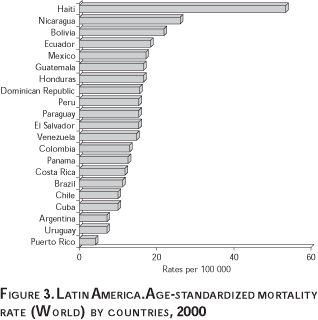
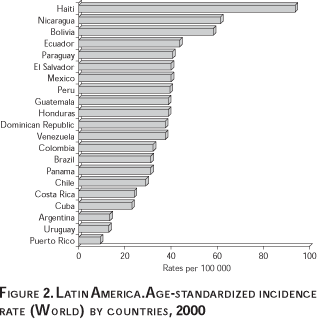
<body><![CDATA[<p><font face="Verdana" size="2"> Incidence and    mortality rates are presented as Age Standardized Rates, calculated using the    weights of the "world standard" population in five age classes: 0-15,    15-44, 45-54, 55-64 and 65 years and older (0.31, 0.43, 0.11, 0.08 and 0.07).    Estimates of country populations (by age and sex) for the year 2000 were taken    from the United Nations population projections.<SUP>15</SUP> </font></p>     <p><font face="Verdana" size="2"><b>Incidence and    mortality data in time trend analysis </b></font></p>     <p><font face="Verdana" size="2">Difficulties in    using incidence and mortality data for the analysis of cervical cancer time    trends have been widely recognized.<SUP>1,16</SUP> It frequently happens that    socio-economic development is accompanied both by changes in the quality of    available data (especially mortality) and in the risk of cervix cancer. The    same applies to the problems linked to the capacity to distinguish cancers of    the cervix and corpus, as already mentioned. This complicates interpretation    of trends based on published data. Despite these difficulties, the work carried    out by Restrepo and colleagues<SUP>2</SUP> and Robles and colleagues<SUP>3</SUP>    showed that much can be learnt about the evolution of cervical cancer in Latin    America using available data. As in these previous studies, data has been taken    from the WHO database<SUP>11</SUP> and no correction was performed for deaths    coded as "uterus unspecified". Thus, mortality rates used in time    trend analysis may differ from data from GLOBOCAN 2000 presented above. Countries    have been selected according to two criteria: a low level of under-registration    (up to 25%) and the availability of reasonably long time series in the WHO database.    The years for which data are available vary from country to country and therefore    time series do not always coincide. </font></p>     <p>&nbsp;</p>     <p><font face="Verdana" size="3"><b>Results </b></font></p>     <p><font face="Verdana" size="2"><a href="/img/revistas/spm/v45s3/3a06f01.gif">Figure    1</a> shows the world geographical distribution of cervical cancer age standardized    incidence rates by country. Two facts are evident from this map: The first one    is that in the year 2000 most Latin countries were among those with incidence    rates in the highest two quintiles, together with countries from Sub-Saharan    Africa, South and South East Asia. The exceptions are Argentina (ASR 14.2 per    100 000), Uruguay (ASR 13.8 per 100 000) and Puerto Rico (ASR 10.3 per 100 000),    with rates similar to the level observed in Western Europe.<SUP>17</SUP> The    second observation is the large variation found between countries (see also    <a href="#fig2">Figures 2</a> and <a href="#fig3">3</a>). The Latin Caribbean    has the lowest and the highest risks in the whole of Latin America, Puerto Rico    (ASR 10.3 per 100 000) and Haiti (ASR 93.9 per 100 000). The estimated incidence    for Haiti is the highest in the world; this is because incidence was estimated    using the only available data on frequency of different cancers in the country.    In effect, in the special survey of cancer cases carried out by Mitacek,<SUP>14</SUP>    cervical cancer represented around 40% of total female cancer cases. Very high    rates are also found in Nicaragua (ASR 61.1 per 100 000) and Bolivia (ASR 58.1    per 100 000), in South and Central America respectively. Total estimated new    cases and deaths from cervical cancer in each country are presented in <a href="#tab1">Table    I</a>. </font></p>     <p><a name="fig2"></a></p>     <p>&nbsp;</p>     <p align="center"><img src="/img/revistas/spm/v45s3/3a06f02.gif"></p>     <p>&nbsp;</p>     ]]></body>
<body><![CDATA[<p align="center"><a name="fig3"></a></p>     <p>&nbsp;</p>     <p align="center"><img src="/img/revistas/spm/v45s3/3a06f03.gif"></p>     <p>&nbsp;</p>     <p align="center"><a name="tab1"></a></p>     <p>&nbsp;</p>     <p align="center"><img src="/img/revistas/spm/v45s3/3a06t01.gif"></p>     <p>&nbsp;</p>     <p><font face="Verdana" size="2"> The ratio of mortality    to incidence is around 40%, although Haiti, Uruguay, Argentina and Costa Rica    have M/I ratios of 45% or higher. </font></p>     <p><font face="Verdana" size="2"><b>Determinants    of variations in risks </b></font></p>     ]]></body>
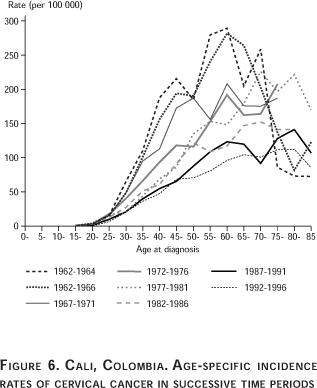
<body><![CDATA[<p><font face="Verdana" size="2">Variations in incidence    among Latin countries are difficult to explain given the lack of data on the    geographical distribution of risk factors. Historically, cervical cancer was    associated with a number of demographic, cultural and socio-economic variables    characteristic of less developed societies (young age at first coitus, elevated    number of partners, low socioeconomic status, low education level, poor genital    hygiene, among others). Since it has become established that certain sexually    transmitted types of human papilloma virus (HPV) are a necessary cause of cervical    cancer<SUP>18</SUP> it seems that most of these factors are surrogates for HPV    infection. However, it is very difficult to establish whether variations in    incidence observed among Latin American countries are due to differences in    prevalences of HPV infection. Three recent population-based prevalence surveys,    carried out in Colombia, Mexico and Costa Rica, gave similar figures of between    15 and 16%.<SUP>19-21</SUP> Worldwide, there are very few systematic studies    on the prevalence of HPV infection, but in general the range of variation seems    too small to explain differences in the risk of cancer between populations.<SUP>1</SUP>    Some of the geographical variation may be the result of differences in the prevalence    of different subtypes of HPV and host related factors,<SUP>18,22</SUP> but the    scientific evidence is still too limited to obtain any definitive conclusion.    </font></p>     <p><font face="Verdana" size="2"> Geographical variation    of other etiological factors may explain some of the variation. High parity,    smoking, oral contraception and deficient diets are probably co-factors for    cervical cancer, increasing the risk among HPV-positive women.<SUP>23-26</SUP>    Some of these factors are highly influenced by the demographic and socioeconomic    patterns of each country. Lower fertility rates and delayed ages at first childbirth    are associated with some aspects of socio-economic development (probably female    education and literacy). This link between development and cervical cancer has    been shown in an ecological analysis of correlates of cervical cancer using    data from GLOBOCAN 2000 for all developing countries.<SUP>27</SUP> Increased    risk of cervical cancer correlates with reduced life expectancy, fewer doctors,    more infants with low birth weight and more adults with tuberculosis and HIV,    all of which are indicators of low social and economic development. In South    America, Argentina and Uruguay, two highly urbanized countries that historically    had demographic and developmental patterns similar to those of more developed    countries, exhibit risks that are among the lowest in the Region. </font></p>     <p><font face="Verdana" size="2"> Although some    of the countries in the region introduced screening programmes several decades    ago, it seems unlikely that differences in risks in Latin America can be explained    as the result of screening activities. The protective effect of screening in    Latin America has been assessed in four case-control studies.<SUP>28-31</SUP>    All four studies showed a decreased risk for women who had ever received a Pap    test but they also pointed out problems related to inadequate coverage and frequency    of screening. Another problem faced by screening programmes in Latin America    is the inadequate collection and reading of cytological samplings as well as    incomplete follow-up of women after the test.<SUP>32</SUP> </font></p>     <p><font face="Verdana" size="2"> If a screening    programme is effective, its impact should be evident through the analysis of    time series. <a href="#fig4">Figure 4</a> shows trends in age-adjusted cervical    cancer mortality in eight Latin American countries between 1960 and 1994. It    can be seen that in Puerto Rico, with rates similar to those of Mexico, Venezuela    and Uruguay at the beginning of the period, there has been a persistent declining    trend that placed it, by the end of the 1990s, as the country with the lowest    risk in the Region. This decline is concomitant with the introduction of an    extended early detection programme, the effect of which can be seen in the progressive    decline in age-specific rates, especially in the middle of the age range (30-69)    where screening should have the highest effect (<a href="#fig5">Figure 5</a>).    A somewhat similar decline can be seen in Cali, Colombia, after the introduction    of a screening programme in 1967 (<a href="#fig6">Figure 6</a>), where an increase    in registrations of carcinoma in-situ (detected by screening) accompanied the    decline in incidence of invasive disease.<SUP>30 </SUP></font></p>     <p><a name="fig4"></a></p>     <p>&nbsp;</p>     <p align="center"><img src="/img/revistas/spm/v45s3/3a06f04.gif"></p>     <p>&nbsp;</p>     <p align="center"><a name="fig5"></a></p>     <p>&nbsp;</p>     ]]></body>
<body><![CDATA[<p align="center"><img src="/img/revistas/spm/v45s3/3a06f05.gif"></p>     <p>&nbsp;</p>     <p align="center"><a name="fig6"></a></p>     <p>&nbsp;</p>     <p align="center"><img src="/img/revistas/spm/v45s3/3a06f06.gif"></p>     <p>&nbsp;</p>     <p><font face="Verdana" size="2"> In Cuba, Chile,    Mexico and Costa Rica, very limited changes in mortality from cervical cancer    appear to have followed the introduction of cervical screening. Cervical cancer    mortality increased from 1965 onward in Mexico, where a national cervical cancer    screening programme was initiated in 1974, and now operates in the Federal District    and all 31 states of the country. Although since the 1990s a slightly decreasing    trend has been observed, its risk still remains among the highest in the Region.    In 1996 the Secretariat of Health in Mexico published a new regulation for the    Cervical Cytology Screening Program, changing the frequency of screening, emphasizing    the screening of high-risk subjects and giving special consideration to monitoring    the quality of cytologic smears.<SUP>29</SUP> In Costa Rica, nationwide cytology    services have been available to women aged <u>&gt;</u> 15 years since 1970, but    mortality has remained almost unchanged. Improved reporting and diagnoses have    probably masked more pronounced actual declines.<SUP>3</SUP> In Cuba, an evaluation    of the screening programme was carried out for the period 1980-1994.<SUP>33</SUP>    According to this evaluation the programme appears to have had no impact on    either incidence or mortality. </font></p>     <p><font face="Verdana" size="2"> In Chile, mortality    rates increased steadily between 1960 and 1975, and then began to decrease,    although at a rather slow pace. This limited decline has been quite disappointing    in light of the organized screening programme in practice since the early 1970s.<SUP>34,35</SUP>    The contrasting evolution of Chile and Argentina is noteworthy, given that these    two countries have similar socio-economic and demographic profiles, being in    an advanced position in relation to the changes in fertility and mortality patterns    which are affecting most Latin American countries.<SUP>36</SUP> Contrary to    Chile, the mortality rates in Argentina have been, since 1965, among the lowest    in the Region, and this in spite of its lack of extended organized screening    programmes. In part, this striking difference between the two countries may    be more apparent than real, the consequence of differences in coding of uterus    cancer deaths. In Chile the proportion of cancer of the uterus reported as "unspecified"    has steadily decreased from almost 50% at the beginning of the 1960s to around    10% in the 1990s. On the contrary, in Argentina, this figure has been of around    45% for the last 30 years, and the percentage has increased in recent years.<SUP>37</SUP>    Thus, if rates presented in GLOBOCAN 2000 (corrected for "uterus unspecified")    are considered to compare both countries, the difference between the two countries    has been reduced by half (<a href="#tab1">Table I</a>). </font></p>     <p><font face="Verdana" size="2"><b>The future </b></font></p>     <p><font face="Verdana" size="2">Although population    growth in the Region is slowing (from 28% in 1950-1955 to an estimated 1.51%    in 1995-2000), there are projected to be quite marked changes in the age structure    over the next 20-25 years. Thus, by 2025 the percentage of the population aged    65 and over will double to 10.8%, and in 2050 it will be 20.9% compared with    just 5.6% today. This will have a marked effect in the burden of chronic diseases,    such as cancer, where the risk is highest in the elderly. It is difficult to    predict the evolution in the risk of cervix cancer, but as we have seen, although    there is some indication of modest declines in some countries, it remains high    in most of them. Thus, cervical cancer remains responsible for the death and    poor quality of life of thousands of women in age groups with heavy social,    economic, and family responsibilities. This has enormous consequences not only    for the health status of women but also for the living conditions of their families.    All this suffering and deaths are essentially avoidable with existing scientific    and technological knowledge. The relative risks for the association between    HPV infection and cervical neoplasia are of a magnitude even greater than that    for the association between smoking and lung cancer.<SUP>38</SUP> However, until    effective vaccines for HPV allow realistic primary prevention, early detection    and treatment via organized screening programmes remains the strategy of choice.    The most cost-effective approaches in different settings have been the subject    of increasing debate in recent years, as the reviews in this supplement make    clear. But the main challenge remains how to give people access to the available    technology to reduce morbidity and mortality from cervical cancer, and for this,    a real and urgent commitment from public health officers and decision-makers    in the Region is needed. </font></p>     ]]></body>
<body><![CDATA[<p>&nbsp;</p>     <p><font face="Verdana" size="3"><b>References </b></font></p>     <!-- ref --><p><font face="Verdana" size="2">1. Parkin DM, Bray    FI, Devesa SS. Cancer burden in the year 2000. The global picture. Eur J Cancer    2001;37:s4-s66. </font>&nbsp;&nbsp;&nbsp;&nbsp;&nbsp;&nbsp;&nbsp;&nbsp;[&#160;<a href="javascript:void(0);" onclick="javascript: window.open('/scielo.php?script=sci_nlinks&ref=9181637&pid=S0036-3634200300090000400001&lng=','','width=640,height=500,resizable=yes,scrollbars=1,menubar=yes,');">Links</a>&#160;]<!-- end-ref --><!-- ref --><p><font face="Verdana" size="2">2. Restrepo H.    Cancer epidemiology and control in women in Latin America and the Caribbean.    In: G&oacute;mez E, ed. Gender, women, and health in the Americas. Washington,    DC: PAHO, 1993 Scientific Publication: No. 541. 90-103. </font>&nbsp;&nbsp;&nbsp;&nbsp;&nbsp;&nbsp;&nbsp;&nbsp;[&#160;<a href="javascript:void(0);" onclick="javascript: window.open('/scielo.php?script=sci_nlinks&ref=9181638&pid=S0036-3634200300090000400002&lng=','','width=640,height=500,resizable=yes,scrollbars=1,menubar=yes,');">Links</a>&#160;]<!-- end-ref --><!-- ref --><p><font face="Verdana" size="2">3. Robles SC, White    F, Peruga A. Trends in cervical cancer mortality in the Americas. Bull Pan Am    Health Organ 2002;30:290-3011. </font>&nbsp;&nbsp;&nbsp;&nbsp;&nbsp;&nbsp;&nbsp;&nbsp;[&#160;<a href="javascript:void(0);" onclick="javascript: window.open('/scielo.php?script=sci_nlinks&ref=9181639&pid=S0036-3634200300090000400003&lng=','','width=640,height=500,resizable=yes,scrollbars=1,menubar=yes,');">Links</a>&#160;]<!-- end-ref --><!-- ref --><p><font face="Verdana" size="2">4. Parkin DM. Screening    for cervix cancer in developing countries. In: Miller AB, Chamberlain J, Day    NE, Hakama M Prorok PC, ed Cancer screening. Cambridge: UICC, 1991;184-198.    </font>&nbsp;&nbsp;&nbsp;&nbsp;&nbsp;&nbsp;&nbsp;&nbsp;[&#160;<a href="javascript:void(0);" onclick="javascript: window.open('/scielo.php?script=sci_nlinks&ref=9181640&pid=S0036-3634200300090000400004&lng=','','width=640,height=500,resizable=yes,scrollbars=1,menubar=yes,');">Links</a>&#160;]<!-- end-ref --><!-- ref --><p><font face="Verdana" size="2">5. Hakama M, Hakulinen    T, Pukkala E, Saxen E, Teppo L. Risk indicators of breast and cervical cancer    on ecologic and individual levels. Am J Epidemiol 1982;116:990-1000. </font>&nbsp;&nbsp;&nbsp;&nbsp;&nbsp;&nbsp;&nbsp;&nbsp;[&#160;<a href="javascript:void(0);" onclick="javascript: window.open('/scielo.php?script=sci_nlinks&ref=9181641&pid=S0036-3634200300090000400005&lng=','','width=640,height=500,resizable=yes,scrollbars=1,menubar=yes,');">Links</a>&#160;]<!-- end-ref --><!-- ref --><p><font face="Verdana" size="2">6. Hakulinen T,    Hansluwka H, L&oacute;pez AD, Nakada T. Global and regional mortality patterns    by cause of death in 1980. Int J Epidemiol 1986;15: 226-233. </font>&nbsp;&nbsp;&nbsp;&nbsp;&nbsp;&nbsp;&nbsp;&nbsp;[&#160;<a href="javascript:void(0);" onclick="javascript: window.open('/scielo.php?script=sci_nlinks&ref=9181642&pid=S0036-3634200300090000400006&lng=','','width=640,height=500,resizable=yes,scrollbars=1,menubar=yes,');">Links</a>&#160;]<!-- end-ref --><!-- ref --><p><font face="Verdana" size="2">7. Hakulinen T,    Teppo L, Saxen E. Do the predictions for cancer incidence come true? Experience    from Finland. Cancer 1986;57:2454-2458. </font>&nbsp;&nbsp;&nbsp;&nbsp;&nbsp;&nbsp;&nbsp;&nbsp;[&#160;<a href="javascript:void(0);" onclick="javascript: window.open('/scielo.php?script=sci_nlinks&ref=9181643&pid=S0036-3634200300090000400007&lng=','','width=640,height=500,resizable=yes,scrollbars=1,menubar=yes,');">Links</a>&#160;]<!-- end-ref --><!-- ref --><p><font face="Verdana" size="2">8. Ferlay J, Bray    F, Pisani P, Parkin DM, ed GLOBOCAN 2000: Cancer incidence, mortality and prevalence    worldwide. Lyon: IARC Press, 2001; Version 1.0. IARC CancerBase No. 5. </font>&nbsp;&nbsp;&nbsp;&nbsp;&nbsp;&nbsp;&nbsp;&nbsp;[&#160;<a href="javascript:void(0);" onclick="javascript: window.open('/scielo.php?script=sci_nlinks&ref=9181644&pid=S0036-3634200300090000400008&lng=','','width=640,height=500,resizable=yes,scrollbars=1,menubar=yes,');">Links</a>&#160;]<!-- end-ref --><!-- ref --><p><font face="Verdana" size="2">9. PAHO. Health    statistics from the Americas. Washington, DC: PAHO, 1998; Scientific Publication    No. 567. </font>&nbsp;&nbsp;&nbsp;&nbsp;&nbsp;&nbsp;&nbsp;&nbsp;[&#160;<a href="javascript:void(0);" onclick="javascript: window.open('/scielo.php?script=sci_nlinks&ref=9181645&pid=S0036-3634200300090000400009&lng=','','width=640,height=500,resizable=yes,scrollbars=1,menubar=yes,');">Links</a>&#160;]<!-- end-ref --><!-- ref --><p><font face="Verdana" size="2">10. Parkin DM,    Whelan SL, Ferlay J, Raymond L, Young J ed. Cancer incidence in five continents    Lyon: IARC, 1997; Scientific Publication No. 143, Vol VII. </font>&nbsp;&nbsp;&nbsp;&nbsp;&nbsp;&nbsp;&nbsp;&nbsp;[&#160;<a href="javascript:void(0);" onclick="javascript: window.open('/scielo.php?script=sci_nlinks&ref=9181646&pid=S0036-3634200300090000400010&lng=','','width=640,height=500,resizable=yes,scrollbars=1,menubar=yes,');">Links</a>&#160;]<!-- end-ref --><!-- ref --><p><font face="Verdana" size="2">11. World Health    Organization, WHO Mortality Databank. Internet address: <a href="http://www-dep.iarc.fr/dataava/infodata.htm">http://www-dep.iarc.fr/dataava/infodata.htm</a>.    </font>&nbsp;&nbsp;&nbsp;&nbsp;&nbsp;&nbsp;&nbsp;&nbsp;[&#160;<a href="javascript:void(0);" onclick="javascript: window.open('/scielo.php?script=sci_nlinks&ref=9181647&pid=S0036-3634200300090000400011&lng=','','width=640,height=500,resizable=yes,scrollbars=1,menubar=yes,');">Links</a>&#160;]<!-- end-ref --><!-- ref --><p><font face="Verdana" size="2">12. Parkin DM,    Pisani P, Ferlay J. Estimates of the worldwide incidence of 25 major cancers    in 1990. Int J Cancer 1999;80:827-841. </font>&nbsp;&nbsp;&nbsp;&nbsp;&nbsp;&nbsp;&nbsp;&nbsp;[&#160;<a href="javascript:void(0);" onclick="javascript: window.open('/scielo.php?script=sci_nlinks&ref=9181648&pid=S0036-3634200300090000400012&lng=','','width=640,height=500,resizable=yes,scrollbars=1,menubar=yes,');">Links</a>&#160;]<!-- end-ref --><!-- ref --><p><font face="Verdana" size="2">13. Parkin DM,    Chen VW, Ferlay J, Galceran J, Storm H, Whelan S. Comparability and quality    control in cancer registration. Lyon: IARC, 1994; Technical Report No. 19. </font>&nbsp;&nbsp;&nbsp;&nbsp;&nbsp;&nbsp;&nbsp;&nbsp;[&#160;<a href="javascript:void(0);" onclick="javascript: window.open('/scielo.php?script=sci_nlinks&ref=9181649&pid=S0036-3634200300090000400013&lng=','','width=640,height=500,resizable=yes,scrollbars=1,menubar=yes,');">Links</a>&#160;]<!-- end-ref --><!-- ref --><p><font face="Verdana" size="2">14. Mitacek EJ,    St Vallieres D, Polednak AP. Cancer in Haiti 1979-84: Distribution of various    forms of cancer according to geographical area and sex. Int J Cancer 1986;38:9-16.    </font>&nbsp;&nbsp;&nbsp;&nbsp;&nbsp;&nbsp;&nbsp;&nbsp;[&#160;<a href="javascript:void(0);" onclick="javascript: window.open('/scielo.php?script=sci_nlinks&ref=9181650&pid=S0036-3634200300090000400014&lng=','','width=640,height=500,resizable=yes,scrollbars=1,menubar=yes,');">Links</a>&#160;]<!-- end-ref --><!-- ref --><p><font face="Verdana" size="2">15. United Nations.    World population prospects: The 2000 Revision. Comprehensive Tables. New York    (NY): United Nations, 2001; Vol 1 . </font>&nbsp;&nbsp;&nbsp;&nbsp;&nbsp;&nbsp;&nbsp;&nbsp;[&#160;<a href="javascript:void(0);" onclick="javascript: window.open('/scielo.php?script=sci_nlinks&ref=9181651&pid=S0036-3634200300090000400015&lng=','','width=640,height=500,resizable=yes,scrollbars=1,menubar=yes,');">Links</a>&#160;]<!-- end-ref --><!-- ref --><p><font face="Verdana" size="2">16. Parkin DM.    The epidemiological basis for evaluating screening policies. In: Franco E, and    Monsonego J ed. New Developments in cervical cancer screening and prevention.    Oxford: Blackwell Science, 1997;51-69. </font>&nbsp;&nbsp;&nbsp;&nbsp;&nbsp;&nbsp;&nbsp;&nbsp;[&#160;<a href="javascript:void(0);" onclick="javascript: window.open('/scielo.php?script=sci_nlinks&ref=9181652&pid=S0036-3634200300090000400016&lng=','','width=640,height=500,resizable=yes,scrollbars=1,menubar=yes,');">Links</a>&#160;]<!-- end-ref --><!-- ref --><p><font face="Verdana" size="2">17. Bray F, Sankila    R, Ferlay J, Parkin DM. Estimates of cancer incidence and mortality in Europe    in 1995. Eur J Cancer 2002;38:99-166. </font>&nbsp;&nbsp;&nbsp;&nbsp;&nbsp;&nbsp;&nbsp;&nbsp;[&#160;<a href="javascript:void(0);" onclick="javascript: window.open('/scielo.php?script=sci_nlinks&ref=9181653&pid=S0036-3634200300090000400017&lng=','','width=640,height=500,resizable=yes,scrollbars=1,menubar=yes,');">Links</a>&#160;]<!-- end-ref --><!-- ref --><p><font face="Verdana" size="2">18. Bosch FX, Manos    MM, Mu&ntilde;oz N, Sherman M, Jansen AM, Peto J, Schiffman MH <I>et al</I>.    Prevalence of human papillomavirus in cervical cancer: A worldwide perspective.    International biological study on cervical cancer (IBSCC) Study Group. J Natl    Cancer Inst 1995;87:796-802. </font>&nbsp;&nbsp;&nbsp;&nbsp;&nbsp;&nbsp;&nbsp;&nbsp;[&#160;<a href="javascript:void(0);" onclick="javascript: window.open('/scielo.php?script=sci_nlinks&ref=9181654&pid=S0036-3634200300090000400018&lng=','','width=640,height=500,resizable=yes,scrollbars=1,menubar=yes,');">Links</a>&#160;]<!-- end-ref --><!-- ref --><p><font face="Verdana" size="2">19. Molano M, Posso    H, Weiderpass E, van den Brule AJ, Ronderos M, Francheschi S, Meijer CJ <I>et    al</I>. Prevalence and determinants of HPV infection among Colombian women with    normal cytology. Br J Cancer 2002;87:324-333. </font>&nbsp;&nbsp;&nbsp;&nbsp;&nbsp;&nbsp;&nbsp;&nbsp;[&#160;<a href="javascript:void(0);" onclick="javascript: window.open('/scielo.php?script=sci_nlinks&ref=9181655&pid=S0036-3634200300090000400019&lng=','','width=640,height=500,resizable=yes,scrollbars=1,menubar=yes,');">Links</a>&#160;]<!-- end-ref --><!-- ref --><p><font face="Verdana" size="2">20. Lazcano-Ponce    E, Herrero R, Mu&ntilde;oz N, Cruz A, Shah KV, Alonso P <I>et al</I>. Epidemiology    of HPV infection among Mexican women with normal cervical cytology. Int J Cancer    2001;91:412-420. </font>&nbsp;&nbsp;&nbsp;&nbsp;&nbsp;&nbsp;&nbsp;&nbsp;[&#160;<a href="javascript:void(0);" onclick="javascript: window.open('/scielo.php?script=sci_nlinks&ref=9181656&pid=S0036-3634200300090000400020&lng=','','width=640,height=500,resizable=yes,scrollbars=1,menubar=yes,');">Links</a>&#160;]<!-- end-ref --><!-- ref --><p><font face="Verdana" size="2">21. Herrero R,    Hildesheim A, Bratti C, Sherman ME, Hutchinson M, Morales J <I>et al</I>. Population-based    study of human papillomavirus infection and cervical neoplasia in rural Costa    Rica. J Natl Cancer Inst 2000; 92:464-474. </font>&nbsp;&nbsp;&nbsp;&nbsp;&nbsp;&nbsp;&nbsp;&nbsp;[&#160;<a href="javascript:void(0);" onclick="javascript: window.open('/scielo.php?script=sci_nlinks&ref=9181657&pid=S0036-3634200300090000400021&lng=','','width=640,height=500,resizable=yes,scrollbars=1,menubar=yes,');">Links</a>&#160;]<!-- end-ref --><!-- ref --><p><font face="Verdana" size="2">22. Bosch FX, de    Sanjos&eacute; S, Castellsague X, Mu&ntilde;oz N. Geographical and social patterns    of cervical cancer incidence. In: Franco E, Monsonego J, ed. New developments    in cervical cancer screening and prevention. Oxford: Blackwell Science, 1997;23-33.    </font>&nbsp;&nbsp;&nbsp;&nbsp;&nbsp;&nbsp;&nbsp;&nbsp;[&#160;<a href="javascript:void(0);" onclick="javascript: window.open('/scielo.php?script=sci_nlinks&ref=9181658&pid=S0036-3634200300090000400022&lng=','','width=640,height=500,resizable=yes,scrollbars=1,menubar=yes,');">Links</a>&#160;]<!-- end-ref --><!-- ref --><p><font face="Verdana" size="2">23. Mu&ntilde;oz    N, Francheschi S, Bosetti C, Moreno V, Herrero R, Smith JS, Shah KV <I>et al</I>.    Role of parity and human papillomavirus in cervical cancer: The IARC multicentric    case-control study. Lancet 2002;359:1093-1101. </font>&nbsp;&nbsp;&nbsp;&nbsp;&nbsp;&nbsp;&nbsp;&nbsp;[&#160;<a href="javascript:void(0);" onclick="javascript: window.open('/scielo.php?script=sci_nlinks&ref=9181659&pid=S0036-3634200300090000400023&lng=','','width=640,height=500,resizable=yes,scrollbars=1,menubar=yes,');">Links</a>&#160;]<!-- end-ref --><!-- ref --><p><font face="Verdana" size="2">24. Hildesheim    A, Herrero R, Castle PE, Wacholder S, Bratti MC, Sherman ME <I>et al</I>. HPV    co-factors related to the development of cervical cancer: Results from a population-based    study in Costa Rica. Br J Cancer 2001;84: 1219-1226. </font>&nbsp;&nbsp;&nbsp;&nbsp;&nbsp;&nbsp;&nbsp;&nbsp;[&#160;<a href="javascript:void(0);" onclick="javascript: window.open('/scielo.php?script=sci_nlinks&ref=9181660&pid=S0036-3634200300090000400024&lng=','','width=640,height=500,resizable=yes,scrollbars=1,menubar=yes,');">Links</a>&#160;]<!-- end-ref --><!-- ref --><p><font face="Verdana" size="2">25. Moreno V, Bosch    FX, Mu&ntilde;oz N, Meijer CJ, Shah KV, Walboomers JM, <I>et al</I>. Effect    of oral contraceptives on risk of cervical cancer in women with human papillomavirus    infection: The IARC multicentric case-control study. Lancet 2002;359:1085-1092.    </font>&nbsp;&nbsp;&nbsp;&nbsp;&nbsp;&nbsp;&nbsp;&nbsp;[&#160;<a href="javascript:void(0);" onclick="javascript: window.open('/scielo.php?script=sci_nlinks&ref=9181661&pid=S0036-3634200300090000400025&lng=','','width=640,height=500,resizable=yes,scrollbars=1,menubar=yes,');">Links</a>&#160;]<!-- end-ref --><!-- ref --><p><font face="Verdana" size="2">26. Santos C, Mu&ntilde;oz    N, Klug S, Almonte M, Guerrero I, Alvarez M <I>et al</I>. HPV types and cofactors    causing cervical cancer in Peru. Br J Cancer 2001;85:966-971. </font>&nbsp;&nbsp;&nbsp;&nbsp;&nbsp;&nbsp;&nbsp;&nbsp;[&#160;<a href="javascript:void(0);" onclick="javascript: window.open('/scielo.php?script=sci_nlinks&ref=9181662&pid=S0036-3634200300090000400026&lng=','','width=640,height=500,resizable=yes,scrollbars=1,menubar=yes,');">Links</a>&#160;]<!-- end-ref --><!-- ref --><p><font face="Verdana" size="2">27. Drain PK, Holmes    KK, Hughes JP, Koutsky LA. Determinants of cervical cancer rates in developing    countries. Int J Cancer 2002;100:199-205. </font>&nbsp;&nbsp;&nbsp;&nbsp;&nbsp;&nbsp;&nbsp;&nbsp;[&#160;<a href="javascript:void(0);" onclick="javascript: window.open('/scielo.php?script=sci_nlinks&ref=9181663&pid=S0036-3634200300090000400027&lng=','','width=640,height=500,resizable=yes,scrollbars=1,menubar=yes,');">Links</a>&#160;]<!-- end-ref --><!-- ref --><p><font face="Verdana" size="2">28. Hern&aacute;ndez-Avila    M, Lazcano-Ponce EC, de Ruiz PA, Romieu I. Evaluation of the cervical cancer    screening programme in Mexico: A population-based case-control study. Int J    Epidemiol 1998;27:370-376. </font>&nbsp;&nbsp;&nbsp;&nbsp;&nbsp;&nbsp;&nbsp;&nbsp;[&#160;<a href="javascript:void(0);" onclick="javascript: window.open('/scielo.php?script=sci_nlinks&ref=9181664&pid=S0036-3634200300090000400028&lng=','','width=640,height=500,resizable=yes,scrollbars=1,menubar=yes,');">Links</a>&#160;]<!-- end-ref --><!-- ref --><p><font face="Verdana" size="2">29. Jim&eacute;nez-P&eacute;rez    M,Thomas DB. Has the use of pap smears reduced the risk of invasive cervical    cancer in Guadalajara, Mexico? Int J Cancer 1999; 82:804-809. </font>&nbsp;&nbsp;&nbsp;&nbsp;&nbsp;&nbsp;&nbsp;&nbsp;[&#160;<a href="javascript:void(0);" onclick="javascript: window.open('/scielo.php?script=sci_nlinks&ref=9181665&pid=S0036-3634200300090000400029&lng=','','width=640,height=500,resizable=yes,scrollbars=1,menubar=yes,');">Links</a>&#160;]<!-- end-ref --><!-- ref --><p><font face="Verdana" size="2">30. Aristizabal    N, Cuello C, Correa P, Collazos T, Haenszel W. The impact of vaginal cytology    on cervical cancer risks in Cali, Colombia. Int J Cancer 1984;34:5-9. </font>&nbsp;&nbsp;&nbsp;&nbsp;&nbsp;&nbsp;&nbsp;&nbsp;[&#160;<a href="javascript:void(0);" onclick="javascript: window.open('/scielo.php?script=sci_nlinks&ref=9181666&pid=S0036-3634200300090000400030&lng=','','width=640,height=500,resizable=yes,scrollbars=1,menubar=yes,');">Links</a>&#160;]<!-- end-ref --><!-- ref --><p><font face="Verdana" size="2">31. Herrero R,    Brinton LA, Reeves WC, Brenes MM, de Britton RC, Gaitan E <I>et al</I>. Screening    for cervical cancer in Latin America: A case-control study. Int J Epidemiol    1992; 21: 1050-1056. </font>&nbsp;&nbsp;&nbsp;&nbsp;&nbsp;&nbsp;&nbsp;&nbsp;[&#160;<a href="javascript:void(0);" onclick="javascript: window.open('/scielo.php?script=sci_nlinks&ref=9181667&pid=S0036-3634200300090000400031&lng=','','width=640,height=500,resizable=yes,scrollbars=1,menubar=yes,');">Links</a>&#160;]<!-- end-ref --><!-- ref --><p><font face="Verdana" size="2">32. Lazcano-Ponce    EC, Alonso de Ruiz P, L&oacute;pez-Carrillo L, N&aacute;jera-Aguilar P, Avila-Ceniceros    R, Escand&oacute;n-Romero C <I>et al</I>. Validity and reproducibility of cytologic    diagnosis in a sample of cervical cancer screening centers in Mexico. Acta Cytol    1997 Mar-Apr;41(2):277-284. </font>&nbsp;&nbsp;&nbsp;&nbsp;&nbsp;&nbsp;&nbsp;&nbsp;[&#160;<a href="javascript:void(0);" onclick="javascript: window.open('/scielo.php?script=sci_nlinks&ref=9181668&pid=S0036-3634200300090000400032&lng=','','width=640,height=500,resizable=yes,scrollbars=1,menubar=yes,');">Links</a>&#160;]<!-- end-ref --><!-- ref --><p><font face="Verdana" size="2">33. Pan American    Health Organization. Evaluation of the cervical cancer control program in Cuba    (Short Communication). Bull Pan Am Health Organ 1996;30:387-391. </font>&nbsp;&nbsp;&nbsp;&nbsp;&nbsp;&nbsp;&nbsp;&nbsp;[&#160;<a href="javascript:void(0);" onclick="javascript: window.open('/scielo.php?script=sci_nlinks&ref=9181669&pid=S0036-3634200300090000400033&lng=','','width=640,height=500,resizable=yes,scrollbars=1,menubar=yes,');">Links</a>&#160;]<!-- end-ref --><!-- ref --><p><font face="Verdana" size="2">34. Taucher E,    Albala C, Icaza G. Adult Mortality from chronic diseases in Chile, 1986-90.    In: Timaeus I, Chackiel J, Ruzicka L, ed. Adult mortality in Latin America.    Oxford: Clarendon Press, 1996:253-275. </font>&nbsp;&nbsp;&nbsp;&nbsp;&nbsp;&nbsp;&nbsp;&nbsp;[&#160;<a href="javascript:void(0);" onclick="javascript: window.open('/scielo.php?script=sci_nlinks&ref=9181670&pid=S0036-3634200300090000400034&lng=','','width=640,height=500,resizable=yes,scrollbars=1,menubar=yes,');">Links</a>&#160;]<!-- end-ref --><!-- ref --><p><font face="Verdana" size="2">35. Sankaranarayanan    R, Budukh AM, Rajkumar R. Effective screening programmes for cervical cancer    in low- and middle-income developing countries. Bull World Health Organ 2001;79:954-962.    </font>&nbsp;&nbsp;&nbsp;&nbsp;&nbsp;&nbsp;&nbsp;&nbsp;[&#160;<a href="javascript:void(0);" onclick="javascript: window.open('/scielo.php?script=sci_nlinks&ref=9181671&pid=S0036-3634200300090000400035&lng=','','width=640,height=500,resizable=yes,scrollbars=1,menubar=yes,');">Links</a>&#160;]<!-- end-ref --><!-- ref --><p><font face="Verdana" size="2">36. Frenk J, Bobadilla    SL, Lozano R. The epidemiological transition in Latin America. In: Timaeus I,    Chackiel J, Ruzicka L, ed. Adult mortality in Latin America. Oxford: Clarendon    Press, 1996:123-139. </font>&nbsp;&nbsp;&nbsp;&nbsp;&nbsp;&nbsp;&nbsp;&nbsp;[&#160;<a href="javascript:void(0);" onclick="javascript: window.open('/scielo.php?script=sci_nlinks&ref=9181672&pid=S0036-3634200300090000400036&lng=','','width=640,height=500,resizable=yes,scrollbars=1,menubar=yes,');">Links</a>&#160;]<!-- end-ref --><!-- ref --><p><font face="Verdana" size="2">37. Argentina,    Ministry of Health. Estad&iacute;sticas vitales. Informaci&oacute;n b&aacute;sica    a&ntilde;o 2000. Buenos Aires: Direcci&oacute;n de Estad&iacute;sticas e Informaci&oacute;n    de Salud, 2000. </font>&nbsp;&nbsp;&nbsp;&nbsp;&nbsp;&nbsp;&nbsp;&nbsp;[&#160;<a href="javascript:void(0);" onclick="javascript: window.open('/scielo.php?script=sci_nlinks&ref=9181673&pid=S0036-3634200300090000400037&lng=','','width=640,height=500,resizable=yes,scrollbars=1,menubar=yes,');">Links</a>&#160;]<!-- end-ref --><!-- ref --><p><font face="Verdana" size="2">38. Franco E, Duarte-Franco    E, Ferenczy A. Cervical cancer: Epidemiology, prevention and the role of human    papillomavirus infection. CMAJ 2001; 164(7):1017-1025. </font>&nbsp;&nbsp;&nbsp;&nbsp;&nbsp;&nbsp;&nbsp;&nbsp;[&#160;<a href="javascript:void(0);" onclick="javascript: window.open('/scielo.php?script=sci_nlinks&ref=9181674&pid=S0036-3634200300090000400038&lng=','','width=640,height=500,resizable=yes,scrollbars=1,menubar=yes,');">Links</a>&#160;]<!-- end-ref --><p>&nbsp;</p>     <p>&nbsp;</p>     <p><font face="Verdana" size="2"><b>Address reprint    requests to: </b>    <br>   Silvina Arrossi, MSc    <br>   IARC     <br>   150 Cours Albert Thomas     <br>   69372, Lyon Cedex. France    <br>   E-mail: <a href="mailto:arrossi@iarc.fr">arrossi@iarc.fr</a> </font></p>     <p><font face="Verdana" size="2"><b>Received on:</b>    October 1, 2002    <br>   <b>Accepted on:</b>February 17, 2003 </font></p>     ]]></body>
<body><![CDATA[<p>&nbsp;</p>     <p>&nbsp;</p>     <p><font face="Verdana" size="2">This analysis was supported by a grant from the    Bill and Melinda Gates Foundation to the IARC, through the Alliance for Cervical    Cancer Prevention (Website: <a href="http://www.alliance-cxca.org">www.alliance-cxca.org</a>).        <br>   <a name="n1"></a>1 Data provided by national Ministries of Health    <br>   <a name="n2"></a>2    Data provided by WHO    <br>   <a name="n3"></a><a href="#3n">3</a> Only Latin American registries with published    data in CI5-VI or VII were considered.</font></p>      ]]></body><back>
<ref-list>
<ref id="B1">
<label>1</label><nlm-citation citation-type="journal">
<person-group person-group-type="author">
<name>
<surname><![CDATA[Parkin]]></surname>
<given-names><![CDATA[DM]]></given-names>
</name>
<name>
<surname><![CDATA[Bray]]></surname>
<given-names><![CDATA[FI]]></given-names>
</name>
<name>
<surname><![CDATA[Devesa]]></surname>
<given-names><![CDATA[SS]]></given-names>
</name>
</person-group>
<article-title xml:lang="en"><![CDATA[Cancer burden in the year 2000: The global picture]]></article-title>
<source><![CDATA[Eur J Cancer]]></source>
<year>2001</year>
<volume>37</volume>
<page-range>s4-s66</page-range></nlm-citation>
</ref>
<ref id="B2">
<label>2</label><nlm-citation citation-type="book">
<person-group person-group-type="author">
<name>
<surname><![CDATA[Restrepo]]></surname>
<given-names><![CDATA[H]]></given-names>
</name>
</person-group>
<article-title xml:lang="en"><![CDATA[Cancer epidemiology and control in women in Latin America and the Caribbean]]></article-title>
<person-group person-group-type="editor">
<name>
<surname><![CDATA[Gómez]]></surname>
<given-names><![CDATA[E]]></given-names>
</name>
</person-group>
<source><![CDATA[Gender, women, and health in the Americas]]></source>
<year>1993</year>
<page-range>90-103</page-range><publisher-loc><![CDATA[Washington^eDC DC]]></publisher-loc>
<publisher-name><![CDATA[PAHO]]></publisher-name>
</nlm-citation>
</ref>
<ref id="B3">
<label>3</label><nlm-citation citation-type="journal">
<person-group person-group-type="author">
<name>
<surname><![CDATA[Robles]]></surname>
<given-names><![CDATA[SC]]></given-names>
</name>
<name>
<surname><![CDATA[White]]></surname>
<given-names><![CDATA[F]]></given-names>
</name>
<name>
<surname><![CDATA[Peruga]]></surname>
<given-names><![CDATA[A]]></given-names>
</name>
</person-group>
<article-title xml:lang="en"><![CDATA[Trends in cervical cancer mortality in the Americas]]></article-title>
<source><![CDATA[Bull Pan Am Health Organ]]></source>
<year>2002</year>
<volume>30</volume>
<page-range>290-3011</page-range></nlm-citation>
</ref>
<ref id="B4">
<label>4</label><nlm-citation citation-type="book">
<person-group person-group-type="author">
<name>
<surname><![CDATA[Parkin]]></surname>
<given-names><![CDATA[DM]]></given-names>
</name>
</person-group>
<article-title xml:lang="en"><![CDATA[Screening for cervix cancer in developing countries]]></article-title>
<person-group person-group-type="editor">
<name>
<surname><![CDATA[Miller]]></surname>
<given-names><![CDATA[AB]]></given-names>
</name>
<name>
<surname><![CDATA[Chamberlain]]></surname>
<given-names><![CDATA[J]]></given-names>
</name>
<name>
<surname><![CDATA[Day]]></surname>
<given-names><![CDATA[NE]]></given-names>
</name>
<name>
<surname><![CDATA[Hakama]]></surname>
<given-names><![CDATA[M]]></given-names>
</name>
<name>
<surname><![CDATA[Prorok]]></surname>
<given-names><![CDATA[PC]]></given-names>
</name>
</person-group>
<source><![CDATA[Cancer screening]]></source>
<year>1991</year>
<page-range>184-198</page-range><publisher-loc><![CDATA[Cambridge ]]></publisher-loc>
<publisher-name><![CDATA[UICC]]></publisher-name>
</nlm-citation>
</ref>
<ref id="B5">
<label>5</label><nlm-citation citation-type="journal">
<person-group person-group-type="author">
<name>
<surname><![CDATA[Hakama]]></surname>
<given-names><![CDATA[M]]></given-names>
</name>
<name>
<surname><![CDATA[Hakulinen]]></surname>
<given-names><![CDATA[T]]></given-names>
</name>
<name>
<surname><![CDATA[Pukkala]]></surname>
<given-names><![CDATA[E]]></given-names>
</name>
<name>
<surname><![CDATA[Saxen]]></surname>
<given-names><![CDATA[E]]></given-names>
</name>
<name>
<surname><![CDATA[Teppo]]></surname>
<given-names><![CDATA[L]]></given-names>
</name>
</person-group>
<article-title xml:lang="en"><![CDATA[Risk indicators of breast and cervical cancer on ecologic and individual levels]]></article-title>
<source><![CDATA[Am J Epidemiol]]></source>
<year>1982</year>
<volume>116</volume>
<page-range>990-1000</page-range></nlm-citation>
</ref>
<ref id="B6">
<label>6</label><nlm-citation citation-type="journal">
<person-group person-group-type="author">
<name>
<surname><![CDATA[Hakulinen]]></surname>
<given-names><![CDATA[T]]></given-names>
</name>
<name>
<surname><![CDATA[Hansluwka]]></surname>
<given-names><![CDATA[H]]></given-names>
</name>
<name>
<surname><![CDATA[López]]></surname>
<given-names><![CDATA[AD]]></given-names>
</name>
<name>
<surname><![CDATA[Nakada]]></surname>
<given-names><![CDATA[T]]></given-names>
</name>
</person-group>
<article-title xml:lang="en"><![CDATA[Global and regional mortality patterns by cause of death in 1980]]></article-title>
<source><![CDATA[Int J Epidemiol]]></source>
<year>1986</year>
<volume>15</volume>
<page-range>226-233</page-range></nlm-citation>
</ref>
<ref id="B7">
<label>7</label><nlm-citation citation-type="journal">
<person-group person-group-type="author">
<name>
<surname><![CDATA[Hakulinen]]></surname>
<given-names><![CDATA[T]]></given-names>
</name>
<name>
<surname><![CDATA[Teppo]]></surname>
<given-names><![CDATA[L]]></given-names>
</name>
<name>
<surname><![CDATA[Saxen]]></surname>
<given-names><![CDATA[E]]></given-names>
</name>
</person-group>
<article-title xml:lang="en"><![CDATA[Do the predictions for cancer incidence come true?: Experience from Finland]]></article-title>
<source><![CDATA[Cancer]]></source>
<year>1986</year>
<volume>57</volume>
<page-range>2454-2458</page-range></nlm-citation>
</ref>
<ref id="B8">
<label>8</label><nlm-citation citation-type="book">
<person-group person-group-type="author">
<name>
<surname><![CDATA[Ferlay]]></surname>
<given-names><![CDATA[J]]></given-names>
</name>
<name>
<surname><![CDATA[Bray]]></surname>
<given-names><![CDATA[F]]></given-names>
</name>
<name>
<surname><![CDATA[Pisani]]></surname>
<given-names><![CDATA[P]]></given-names>
</name>
<name>
<surname><![CDATA[Parkin]]></surname>
<given-names><![CDATA[DM]]></given-names>
</name>
</person-group>
<collab>GLOBOCAN</collab>
<source><![CDATA[Cancer incidence, mortality and prevalence worldwide]]></source>
<year>2001</year>
<publisher-loc><![CDATA[Lyon ]]></publisher-loc>
<publisher-name><![CDATA[IARC Press]]></publisher-name>
</nlm-citation>
</ref>
<ref id="B9">
<label>9</label><nlm-citation citation-type="book">
<collab>PAHO</collab>
<source><![CDATA[Health statistics from the Americas]]></source>
<year>1998</year>
<publisher-loc><![CDATA[Washington^eDC DC]]></publisher-loc>
<publisher-name><![CDATA[PAHO]]></publisher-name>
</nlm-citation>
</ref>
<ref id="B10">
<label>10</label><nlm-citation citation-type="book">
<person-group person-group-type="author">
<name>
<surname><![CDATA[Parkin]]></surname>
<given-names><![CDATA[DM]]></given-names>
</name>
<name>
<surname><![CDATA[Whelan]]></surname>
<given-names><![CDATA[SL]]></given-names>
</name>
<name>
<surname><![CDATA[Ferlay]]></surname>
<given-names><![CDATA[J]]></given-names>
</name>
<name>
<surname><![CDATA[Raymond]]></surname>
<given-names><![CDATA[L]]></given-names>
</name>
<name>
<surname><![CDATA[Young]]></surname>
<given-names><![CDATA[J]]></given-names>
</name>
</person-group>
<source><![CDATA[Cancer incidence in five continents Lyon]]></source>
<year>1997</year>
<publisher-name><![CDATA[IARC]]></publisher-name>
</nlm-citation>
</ref>
<ref id="B11">
<label>11</label><nlm-citation citation-type="">
<collab>World Health Organization</collab>
<source><![CDATA[WHO Mortality Databank]]></source>
<year></year>
</nlm-citation>
</ref>
<ref id="B12">
<label>12</label><nlm-citation citation-type="journal">
<person-group person-group-type="author">
<name>
<surname><![CDATA[Parkin]]></surname>
<given-names><![CDATA[DM]]></given-names>
</name>
<name>
<surname><![CDATA[Pisani]]></surname>
<given-names><![CDATA[P]]></given-names>
</name>
<name>
<surname><![CDATA[Ferlay]]></surname>
<given-names><![CDATA[J]]></given-names>
</name>
</person-group>
<article-title xml:lang="en"><![CDATA[Estimates of the worldwide incidence of 25 major cancers in 1990]]></article-title>
<source><![CDATA[Int J Cancer]]></source>
<year>1999</year>
<volume>80</volume>
<page-range>827-841</page-range></nlm-citation>
</ref>
<ref id="B13">
<label>13</label><nlm-citation citation-type="book">
<person-group person-group-type="author">
<name>
<surname><![CDATA[Parkin]]></surname>
<given-names><![CDATA[DM]]></given-names>
</name>
<name>
<surname><![CDATA[Chen]]></surname>
<given-names><![CDATA[VW]]></given-names>
</name>
<name>
<surname><![CDATA[Ferlay]]></surname>
<given-names><![CDATA[J]]></given-names>
</name>
<name>
<surname><![CDATA[Galceran]]></surname>
<given-names><![CDATA[J]]></given-names>
</name>
<name>
<surname><![CDATA[Storm]]></surname>
<given-names><![CDATA[H]]></given-names>
</name>
<name>
<surname><![CDATA[Whelan]]></surname>
<given-names><![CDATA[S]]></given-names>
</name>
</person-group>
<source><![CDATA[Comparability and quality control in cancer registration]]></source>
<year>1994</year>
<publisher-loc><![CDATA[Lyon ]]></publisher-loc>
<publisher-name><![CDATA[IARC]]></publisher-name>
</nlm-citation>
</ref>
<ref id="B14">
<label>14</label><nlm-citation citation-type="journal">
<person-group person-group-type="author">
<name>
<surname><![CDATA[Mitacek]]></surname>
<given-names><![CDATA[EJ]]></given-names>
</name>
<name>
<surname><![CDATA[St Vallieres]]></surname>
<given-names><![CDATA[D]]></given-names>
</name>
<name>
<surname><![CDATA[Polednak]]></surname>
<given-names><![CDATA[AP]]></given-names>
</name>
</person-group>
<article-title xml:lang="en"><![CDATA[Cancer in Haiti 1979-84: Distribution of various forms of cancer according to geographical area and sex]]></article-title>
<source><![CDATA[Int J Cancer]]></source>
<year>1986</year>
<volume>38</volume>
<page-range>9-16</page-range></nlm-citation>
</ref>
<ref id="B15">
<label>15</label><nlm-citation citation-type="book">
<collab>United Nations</collab>
<source><![CDATA[World population prospects: The 2000 Revision. Comprehensive Tables]]></source>
<year>2001</year>
<publisher-loc><![CDATA[New York^eNY NY]]></publisher-loc>
<publisher-name><![CDATA[United Nations]]></publisher-name>
</nlm-citation>
</ref>
<ref id="B16">
<label>16</label><nlm-citation citation-type="book">
<person-group person-group-type="author">
<name>
<surname><![CDATA[Parkin]]></surname>
<given-names><![CDATA[DM]]></given-names>
</name>
</person-group>
<article-title xml:lang="en"><![CDATA[The epidemiological basis for evaluating screening policies]]></article-title>
<person-group person-group-type="editor">
<name>
<surname><![CDATA[Franco]]></surname>
<given-names><![CDATA[E]]></given-names>
</name>
<name>
<surname><![CDATA[Monsonego]]></surname>
<given-names><![CDATA[J]]></given-names>
</name>
</person-group>
<source><![CDATA[New Developments in cervical cancer screening and prevention]]></source>
<year>1997</year>
<page-range>51-69</page-range><publisher-loc><![CDATA[Oxford ]]></publisher-loc>
<publisher-name><![CDATA[Blackwell Science]]></publisher-name>
</nlm-citation>
</ref>
<ref id="B17">
<label>17</label><nlm-citation citation-type="journal">
<person-group person-group-type="author">
<name>
<surname><![CDATA[Bray]]></surname>
<given-names><![CDATA[F]]></given-names>
</name>
<name>
<surname><![CDATA[Sankila]]></surname>
<given-names><![CDATA[R]]></given-names>
</name>
<name>
<surname><![CDATA[Ferlay]]></surname>
<given-names><![CDATA[J]]></given-names>
</name>
<name>
<surname><![CDATA[Parkin]]></surname>
<given-names><![CDATA[DM]]></given-names>
</name>
</person-group>
<article-title xml:lang="en"><![CDATA[Estimates of cancer incidence and mortality in Europe in 1995]]></article-title>
<source><![CDATA[Eur J Cancer]]></source>
<year>2002</year>
<volume>38</volume>
<page-range>99-166</page-range></nlm-citation>
</ref>
<ref id="B18">
<label>18</label><nlm-citation citation-type="journal">
<person-group person-group-type="author">
<name>
<surname><![CDATA[Bosch]]></surname>
<given-names><![CDATA[FX]]></given-names>
</name>
<name>
<surname><![CDATA[Manos]]></surname>
<given-names><![CDATA[MM]]></given-names>
</name>
<name>
<surname><![CDATA[Muñoz]]></surname>
<given-names><![CDATA[N]]></given-names>
</name>
<name>
<surname><![CDATA[Sherman]]></surname>
<given-names><![CDATA[M]]></given-names>
</name>
<name>
<surname><![CDATA[Jansen]]></surname>
<given-names><![CDATA[AM]]></given-names>
</name>
<name>
<surname><![CDATA[Peto]]></surname>
<given-names><![CDATA[J]]></given-names>
</name>
<name>
<surname><![CDATA[Schiffman]]></surname>
<given-names><![CDATA[MH]]></given-names>
</name>
</person-group>
<article-title xml:lang="en"><![CDATA[Prevalence of human papillomavirus in cervical cancer: A worldwide perspective. International biological study on cervical cancer (IBSCC) Study Group]]></article-title>
<source><![CDATA[J Natl Cancer Inst]]></source>
<year>1995</year>
<volume>87</volume>
<page-range>796-802</page-range></nlm-citation>
</ref>
<ref id="B19">
<label>19</label><nlm-citation citation-type="journal">
<person-group person-group-type="author">
<name>
<surname><![CDATA[Molano]]></surname>
<given-names><![CDATA[M]]></given-names>
</name>
<name>
<surname><![CDATA[Posso]]></surname>
<given-names><![CDATA[H]]></given-names>
</name>
<name>
<surname><![CDATA[Weiderpass]]></surname>
<given-names><![CDATA[E]]></given-names>
</name>
<name>
<surname><![CDATA[van den Brule]]></surname>
<given-names><![CDATA[AJ]]></given-names>
</name>
<name>
<surname><![CDATA[Ronderos]]></surname>
<given-names><![CDATA[M]]></given-names>
</name>
<name>
<surname><![CDATA[Francheschi]]></surname>
<given-names><![CDATA[S]]></given-names>
</name>
<name>
<surname><![CDATA[Meijer]]></surname>
<given-names><![CDATA[CJ]]></given-names>
</name>
</person-group>
<article-title xml:lang="en"><![CDATA[Prevalence and determinants of HPV infection among Colombian women with normal cytology]]></article-title>
<source><![CDATA[Br J Cancer]]></source>
<year>2002</year>
<volume>87</volume>
<page-range>324-333</page-range></nlm-citation>
</ref>
<ref id="B20">
<label>20</label><nlm-citation citation-type="journal">
<person-group person-group-type="author">
<name>
<surname><![CDATA[Lazcano-Ponce]]></surname>
<given-names><![CDATA[E]]></given-names>
</name>
<name>
<surname><![CDATA[Herrero]]></surname>
<given-names><![CDATA[R]]></given-names>
</name>
<name>
<surname><![CDATA[Muñoz]]></surname>
<given-names><![CDATA[N]]></given-names>
</name>
<name>
<surname><![CDATA[Cruz]]></surname>
<given-names><![CDATA[A]]></given-names>
</name>
<name>
<surname><![CDATA[Shah]]></surname>
<given-names><![CDATA[KV]]></given-names>
</name>
<name>
<surname><![CDATA[Alonso]]></surname>
<given-names><![CDATA[P]]></given-names>
</name>
</person-group>
<article-title xml:lang="en"><![CDATA[Epidemiology of HPV infection among Mexican women with normal cervical cytology]]></article-title>
<source><![CDATA[Int J Cancer]]></source>
<year>2001</year>
<volume>91</volume>
<page-range>412-420</page-range></nlm-citation>
</ref>
<ref id="B21">
<label>21</label><nlm-citation citation-type="journal">
<person-group person-group-type="author">
<name>
<surname><![CDATA[Herrero]]></surname>
<given-names><![CDATA[R]]></given-names>
</name>
<name>
<surname><![CDATA[Hildesheim]]></surname>
<given-names><![CDATA[A]]></given-names>
</name>
<name>
<surname><![CDATA[Bratti]]></surname>
<given-names><![CDATA[C]]></given-names>
</name>
<name>
<surname><![CDATA[Sherman]]></surname>
<given-names><![CDATA[ME]]></given-names>
</name>
<name>
<surname><![CDATA[Hutchinson]]></surname>
<given-names><![CDATA[M]]></given-names>
</name>
<name>
<surname><![CDATA[Morales]]></surname>
<given-names><![CDATA[J]]></given-names>
</name>
</person-group>
<article-title xml:lang="en"><![CDATA[Population-based study of human papillomavirus infection and cervical neoplasia in rural Costa Rica]]></article-title>
<source><![CDATA[J Natl Cancer Inst]]></source>
<year>2000</year>
<volume>92</volume>
<page-range>464-474</page-range></nlm-citation>
</ref>
<ref id="B22">
<label>22</label><nlm-citation citation-type="book">
<person-group person-group-type="author">
<name>
<surname><![CDATA[Bosch]]></surname>
<given-names><![CDATA[FX]]></given-names>
</name>
<name>
<surname><![CDATA[de Sanjosé]]></surname>
<given-names><![CDATA[S]]></given-names>
</name>
<name>
<surname><![CDATA[Castellsague]]></surname>
<given-names><![CDATA[X]]></given-names>
</name>
<name>
<surname><![CDATA[Muñoz]]></surname>
<given-names><![CDATA[N]]></given-names>
</name>
</person-group>
<article-title xml:lang="en"><![CDATA[Geographical and social patterns of cervical cancer incidence]]></article-title>
<person-group person-group-type="editor">
<name>
<surname><![CDATA[Franco]]></surname>
<given-names><![CDATA[E]]></given-names>
</name>
<name>
<surname><![CDATA[Monsonego]]></surname>
<given-names><![CDATA[J]]></given-names>
</name>
</person-group>
<source><![CDATA[New developments in cervical cancer screening and prevention]]></source>
<year>1997</year>
<page-range>23-33</page-range><publisher-loc><![CDATA[Oxford ]]></publisher-loc>
<publisher-name><![CDATA[Blackwell Science]]></publisher-name>
</nlm-citation>
</ref>
<ref id="B23">
<label>23</label><nlm-citation citation-type="journal">
<person-group person-group-type="author">
<name>
<surname><![CDATA[Muñoz]]></surname>
<given-names><![CDATA[N]]></given-names>
</name>
<name>
<surname><![CDATA[Francheschi]]></surname>
<given-names><![CDATA[S]]></given-names>
</name>
<name>
<surname><![CDATA[Bosetti]]></surname>
<given-names><![CDATA[C]]></given-names>
</name>
<name>
<surname><![CDATA[Moreno]]></surname>
<given-names><![CDATA[V]]></given-names>
</name>
<name>
<surname><![CDATA[Herrero]]></surname>
<given-names><![CDATA[R]]></given-names>
</name>
<name>
<surname><![CDATA[Smith]]></surname>
<given-names><![CDATA[JS]]></given-names>
</name>
<name>
<surname><![CDATA[Shah]]></surname>
<given-names><![CDATA[KV]]></given-names>
</name>
</person-group>
<article-title xml:lang="en"><![CDATA[Role of parity and human papillomavirus in cervical cancer: The IARC multicentric case-control study]]></article-title>
<source><![CDATA[Lancet]]></source>
<year>2002</year>
<volume>359</volume>
<page-range>1093-1101</page-range></nlm-citation>
</ref>
<ref id="B24">
<label>24</label><nlm-citation citation-type="journal">
<person-group person-group-type="author">
<name>
<surname><![CDATA[Hildesheim]]></surname>
<given-names><![CDATA[A]]></given-names>
</name>
<name>
<surname><![CDATA[Herrero]]></surname>
<given-names><![CDATA[R]]></given-names>
</name>
<name>
<surname><![CDATA[Castle]]></surname>
<given-names><![CDATA[PE]]></given-names>
</name>
<name>
<surname><![CDATA[Wacholder]]></surname>
<given-names><![CDATA[S]]></given-names>
</name>
<name>
<surname><![CDATA[Bratti]]></surname>
<given-names><![CDATA[MC]]></given-names>
</name>
<name>
<surname><![CDATA[Sherman]]></surname>
<given-names><![CDATA[ME]]></given-names>
</name>
</person-group>
<article-title xml:lang="en"><![CDATA[HPV co-factors related to the development of cervical cancer: Results from a population-based study in Costa Rica]]></article-title>
<source><![CDATA[Br J Cancer]]></source>
<year>2001</year>
<volume>84</volume>
<page-range>1219-1226</page-range></nlm-citation>
</ref>
<ref id="B25">
<label>25</label><nlm-citation citation-type="journal">
<person-group person-group-type="author">
<name>
<surname><![CDATA[Moreno]]></surname>
<given-names><![CDATA[V]]></given-names>
</name>
<name>
<surname><![CDATA[Bosch]]></surname>
<given-names><![CDATA[FX]]></given-names>
</name>
<name>
<surname><![CDATA[Muñoz]]></surname>
<given-names><![CDATA[N]]></given-names>
</name>
<name>
<surname><![CDATA[Meijer]]></surname>
<given-names><![CDATA[CJ]]></given-names>
</name>
<name>
<surname><![CDATA[Shah]]></surname>
<given-names><![CDATA[KV]]></given-names>
</name>
<name>
<surname><![CDATA[Walboomers]]></surname>
<given-names><![CDATA[JM]]></given-names>
</name>
</person-group>
<article-title xml:lang="en"><![CDATA[Effect of oral contraceptives on risk of cervical cancer in women with human papillomavirus infection: The IARC multicentric case-control study]]></article-title>
<source><![CDATA[Lancet]]></source>
<year>2002</year>
<volume>359</volume>
<page-range>1085-1092</page-range></nlm-citation>
</ref>
<ref id="B26">
<label>26</label><nlm-citation citation-type="journal">
<person-group person-group-type="author">
<name>
<surname><![CDATA[Santos]]></surname>
<given-names><![CDATA[C]]></given-names>
</name>
<name>
<surname><![CDATA[Muñoz]]></surname>
<given-names><![CDATA[N]]></given-names>
</name>
<name>
<surname><![CDATA[Klug]]></surname>
<given-names><![CDATA[S]]></given-names>
</name>
<name>
<surname><![CDATA[Almonte]]></surname>
<given-names><![CDATA[M]]></given-names>
</name>
<name>
<surname><![CDATA[Guerrero]]></surname>
<given-names><![CDATA[I]]></given-names>
</name>
<name>
<surname><![CDATA[Alvarez]]></surname>
<given-names><![CDATA[M]]></given-names>
</name>
</person-group>
<article-title xml:lang="en"><![CDATA[HPV types and cofactors causing cervical cancer in Peru]]></article-title>
<source><![CDATA[Br J Cancer]]></source>
<year>2001</year>
<volume>85</volume>
<page-range>966-971</page-range></nlm-citation>
</ref>
<ref id="B27">
<label>27</label><nlm-citation citation-type="journal">
<person-group person-group-type="author">
<name>
<surname><![CDATA[Drain]]></surname>
<given-names><![CDATA[PK]]></given-names>
</name>
<name>
<surname><![CDATA[Holmes]]></surname>
<given-names><![CDATA[KK]]></given-names>
</name>
<name>
<surname><![CDATA[Hughes]]></surname>
<given-names><![CDATA[JP]]></given-names>
</name>
<name>
<surname><![CDATA[Koutsky]]></surname>
<given-names><![CDATA[LA]]></given-names>
</name>
</person-group>
<article-title xml:lang="en"><![CDATA[Determinants of cervical cancer rates in developing countries]]></article-title>
<source><![CDATA[Int J Cancer]]></source>
<year>2002</year>
<volume>100</volume>
<page-range>199-205</page-range></nlm-citation>
</ref>
<ref id="B28">
<label>28</label><nlm-citation citation-type="journal">
<person-group person-group-type="author">
<name>
<surname><![CDATA[Hernández-Avila]]></surname>
<given-names><![CDATA[M]]></given-names>
</name>
<name>
<surname><![CDATA[Lazcano-Ponce]]></surname>
<given-names><![CDATA[EC]]></given-names>
</name>
<name>
<surname><![CDATA[de Ruiz]]></surname>
<given-names><![CDATA[PA]]></given-names>
</name>
<name>
<surname><![CDATA[Romieu]]></surname>
<given-names><![CDATA[I]]></given-names>
</name>
</person-group>
<article-title xml:lang="en"><![CDATA[Evaluation of the cervical cancer screening programme in Mexico: A population-based case-control study]]></article-title>
<source><![CDATA[Int J Epidemiol]]></source>
<year>1998</year>
<volume>27</volume>
<page-range>370-376</page-range></nlm-citation>
</ref>
<ref id="B29">
<label>29</label><nlm-citation citation-type="journal">
<person-group person-group-type="author">
<name>
<surname><![CDATA[Jiménez-Pérez]]></surname>
<given-names><![CDATA[M]]></given-names>
</name>
<name>
<surname><![CDATA[Thomas]]></surname>
<given-names><![CDATA[DB]]></given-names>
</name>
</person-group>
<article-title xml:lang="en"><![CDATA[Has the use of pap smears reduced the risk of invasive cervical cancer in Guadalajara, Mexico?]]></article-title>
<source><![CDATA[Int J Cancer]]></source>
<year>1999</year>
<volume>82</volume>
<page-range>804-809</page-range></nlm-citation>
</ref>
<ref id="B30">
<label>30</label><nlm-citation citation-type="journal">
<person-group person-group-type="author">
<name>
<surname><![CDATA[Aristizabal]]></surname>
<given-names><![CDATA[N]]></given-names>
</name>
<name>
<surname><![CDATA[Cuello]]></surname>
<given-names><![CDATA[C]]></given-names>
</name>
<name>
<surname><![CDATA[Correa]]></surname>
<given-names><![CDATA[P]]></given-names>
</name>
<name>
<surname><![CDATA[Collazos]]></surname>
<given-names><![CDATA[T]]></given-names>
</name>
<name>
<surname><![CDATA[Haenszel]]></surname>
<given-names><![CDATA[W]]></given-names>
</name>
</person-group>
<article-title xml:lang="en"><![CDATA[The impact of vaginal cytology on cervical cancer risks in Cali, Colombia]]></article-title>
<source><![CDATA[Int J Cancer]]></source>
<year>1984</year>
<volume>34</volume>
<page-range>5-9</page-range></nlm-citation>
</ref>
<ref id="B31">
<label>31</label><nlm-citation citation-type="journal">
<person-group person-group-type="author">
<name>
<surname><![CDATA[Herrero]]></surname>
<given-names><![CDATA[R]]></given-names>
</name>
<name>
<surname><![CDATA[Brinton]]></surname>
<given-names><![CDATA[LA]]></given-names>
</name>
<name>
<surname><![CDATA[Reeves]]></surname>
<given-names><![CDATA[WC]]></given-names>
</name>
<name>
<surname><![CDATA[Brenes]]></surname>
<given-names><![CDATA[MM]]></given-names>
</name>
<name>
<surname><![CDATA[de Britton]]></surname>
<given-names><![CDATA[RC]]></given-names>
</name>
<name>
<surname><![CDATA[Gaitan]]></surname>
<given-names><![CDATA[E]]></given-names>
</name>
</person-group>
<article-title xml:lang="en"><![CDATA[Screening for cervical cancer in Latin America: A case-control study]]></article-title>
<source><![CDATA[Int J Epidemiol]]></source>
<year>1992</year>
<volume>21</volume>
<page-range>1050-1056</page-range></nlm-citation>
</ref>
<ref id="B32">
<label>32</label><nlm-citation citation-type="journal">
<person-group person-group-type="author">
<name>
<surname><![CDATA[Lazcano-Ponce]]></surname>
<given-names><![CDATA[EC]]></given-names>
</name>
<name>
<surname><![CDATA[Alonso de Ruiz]]></surname>
<given-names><![CDATA[P]]></given-names>
</name>
<name>
<surname><![CDATA[López-Carrillo]]></surname>
<given-names><![CDATA[L]]></given-names>
</name>
<name>
<surname><![CDATA[Nájera-Aguilar]]></surname>
<given-names><![CDATA[P]]></given-names>
</name>
<name>
<surname><![CDATA[Avila-Ceniceros]]></surname>
<given-names><![CDATA[R]]></given-names>
</name>
<name>
<surname><![CDATA[Escandón-Romero]]></surname>
<given-names><![CDATA[C]]></given-names>
</name>
</person-group>
<article-title xml:lang="en"><![CDATA[Validity and reproducibility of cytologic diagnosis in a sample of cervical cancer screening centers in Mexico]]></article-title>
<source><![CDATA[Acta Cytol]]></source>
<year>1997</year>
<volume>41</volume>
<numero>2</numero>
<issue>2</issue>
<page-range>277-284</page-range></nlm-citation>
</ref>
<ref id="B33">
<label>33</label><nlm-citation citation-type="journal">
<collab>Pan American Health Organization</collab>
<article-title xml:lang="en"><![CDATA[Evaluation of the cervical cancer control program in Cuba (Short Communication)]]></article-title>
<source><![CDATA[Bull Pan Am Health Organ]]></source>
<year>1996</year>
<volume>30</volume>
<page-range>387-391</page-range></nlm-citation>
</ref>
<ref id="B34">
<label>34</label><nlm-citation citation-type="book">
<person-group person-group-type="author">
<name>
<surname><![CDATA[Taucher]]></surname>
<given-names><![CDATA[E]]></given-names>
</name>
<name>
<surname><![CDATA[Albala]]></surname>
<given-names><![CDATA[C]]></given-names>
</name>
<name>
<surname><![CDATA[Icaza]]></surname>
<given-names><![CDATA[G]]></given-names>
</name>
</person-group>
<article-title xml:lang="en"><![CDATA[Adult Mortality from chronic diseases in Chile, 1986-90]]></article-title>
<person-group person-group-type="editor">
<name>
<surname><![CDATA[Timaeus]]></surname>
<given-names><![CDATA[I]]></given-names>
</name>
<name>
<surname><![CDATA[Chackiel]]></surname>
<given-names><![CDATA[J]]></given-names>
</name>
<name>
<surname><![CDATA[Ruzicka]]></surname>
<given-names><![CDATA[L]]></given-names>
</name>
</person-group>
<source><![CDATA[Adult mortality in Latin America]]></source>
<year>1996</year>
<page-range>253-275</page-range><publisher-loc><![CDATA[Oxford ]]></publisher-loc>
<publisher-name><![CDATA[Clarendon Press]]></publisher-name>
</nlm-citation>
</ref>
<ref id="B35">
<label>35</label><nlm-citation citation-type="journal">
<person-group person-group-type="author">
<name>
<surname><![CDATA[Sankaranarayanan]]></surname>
<given-names><![CDATA[R]]></given-names>
</name>
<name>
<surname><![CDATA[Budukh]]></surname>
<given-names><![CDATA[AM]]></given-names>
</name>
<name>
<surname><![CDATA[Rajkumar]]></surname>
<given-names><![CDATA[R]]></given-names>
</name>
</person-group>
<article-title xml:lang="en"><![CDATA[Effective screening programmes for cervical cancer in low- and middle-income developing countries]]></article-title>
<source><![CDATA[Bull World Health Organ]]></source>
<year>2001</year>
<volume>79</volume>
<page-range>954-962</page-range></nlm-citation>
</ref>
<ref id="B36">
<label>36</label><nlm-citation citation-type="book">
<person-group person-group-type="author">
<name>
<surname><![CDATA[Frenk]]></surname>
<given-names><![CDATA[J]]></given-names>
</name>
<name>
<surname><![CDATA[Bobadilla]]></surname>
<given-names><![CDATA[SL]]></given-names>
</name>
<name>
<surname><![CDATA[Lozano]]></surname>
<given-names><![CDATA[R]]></given-names>
</name>
</person-group>
<article-title xml:lang="en"><![CDATA[The epidemiological transition in Latin America]]></article-title>
<person-group person-group-type="editor">
<name>
<surname><![CDATA[Timaeus]]></surname>
<given-names><![CDATA[I]]></given-names>
</name>
<name>
<surname><![CDATA[Chackiel]]></surname>
<given-names><![CDATA[J]]></given-names>
</name>
<name>
<surname><![CDATA[Ruzicka]]></surname>
<given-names><![CDATA[L]]></given-names>
</name>
</person-group>
<source><![CDATA[Adult mortality in Latin America]]></source>
<year>1996</year>
<page-range>123-139</page-range><publisher-loc><![CDATA[Oxford ]]></publisher-loc>
<publisher-name><![CDATA[Clarendon Press]]></publisher-name>
</nlm-citation>
</ref>
<ref id="B37">
<label>37</label><nlm-citation citation-type="book">
<collab>Argentina^dMinistry of Health</collab>
<source><![CDATA[Estadísticas vitales: Información básica año 2000]]></source>
<year></year>
<publisher-loc><![CDATA[Buenos Aires ]]></publisher-loc>
<publisher-name><![CDATA[Dirección de Estadísticas e Información de Salud, 2000]]></publisher-name>
</nlm-citation>
</ref>
<ref id="B38">
<label>38</label><nlm-citation citation-type="journal">
<person-group person-group-type="author">
<name>
<surname><![CDATA[Franco]]></surname>
<given-names><![CDATA[E]]></given-names>
</name>
<name>
<surname><![CDATA[Duarte-Franco]]></surname>
<given-names><![CDATA[E]]></given-names>
</name>
<name>
<surname><![CDATA[Ferenczy]]></surname>
<given-names><![CDATA[A]]></given-names>
</name>
</person-group>
<article-title xml:lang="en"><![CDATA[Cervical cancer: Epidemiology, prevention and the role of human papillomavirus infection]]></article-title>
<source><![CDATA[CMAJ]]></source>
<year>2001</year>
<volume>164</volume>
<numero>7</numero>
<issue>7</issue>
<page-range>1017-1025</page-range></nlm-citation>
</ref>
</ref-list>
</back>
</article>