<?xml version="1.0" encoding="ISO-8859-1"?><article xmlns:mml="http://www.w3.org/1998/Math/MathML" xmlns:xlink="http://www.w3.org/1999/xlink" xmlns:xsi="http://www.w3.org/2001/XMLSchema-instance">
<front>
<journal-meta>
<journal-id>0016-7169</journal-id>
<journal-title><![CDATA[Geofísica internacional]]></journal-title>
<abbrev-journal-title><![CDATA[Geofís. Intl]]></abbrev-journal-title>
<issn>0016-7169</issn>
<publisher>
<publisher-name><![CDATA[Universidad Nacional Autónoma de México, Instituto de Geofísica]]></publisher-name>
</publisher>
</journal-meta>
<article-meta>
<article-id>S0016-71692007000100002</article-id>
<title-group>
<article-title xml:lang="en"><![CDATA[Geodynamics of the Wadati-Benioff zone earthquakes: The 2004 Sumatra earthquake and other great earthquakes]]></article-title>
</title-group>
<contrib-group>
<contrib contrib-type="author">
<name>
<surname><![CDATA[Scalera]]></surname>
<given-names><![CDATA[Giancarlo]]></given-names>
</name>
<xref ref-type="aff" rid="A01"/>
</contrib>
</contrib-group>
<aff id="A01">
<institution><![CDATA[,Istituto Nazionale di Geofisica e Vulcanologia  ]]></institution>
<addr-line><![CDATA[Roma ]]></addr-line>
<country>Italy</country>
</aff>
<pub-date pub-type="pub">
<day>00</day>
<month>03</month>
<year>2007</year>
</pub-date>
<pub-date pub-type="epub">
<day>00</day>
<month>03</month>
<year>2007</year>
</pub-date>
<volume>46</volume>
<numero>1</numero>
<fpage>19</fpage>
<lpage>50</lpage>
<copyright-statement/>
<copyright-year/>
<self-uri xlink:href="http://www.scielo.org.mx/scielo.php?script=sci_arttext&amp;pid=S0016-71692007000100002&amp;lng=en&amp;nrm=iso"></self-uri><self-uri xlink:href="http://www.scielo.org.mx/scielo.php?script=sci_abstract&amp;pid=S0016-71692007000100002&amp;lng=en&amp;nrm=iso"></self-uri><self-uri xlink:href="http://www.scielo.org.mx/scielo.php?script=sci_pdf&amp;pid=S0016-71692007000100002&amp;lng=en&amp;nrm=iso"></self-uri><abstract abstract-type="short" xml:lang="es"><p><![CDATA[Se presenta una nueva interpretación del sismo de Sumatra de 2004 en base al desplazamiento del polo de rotación de la Tierra observado en Matera, Italia; los datos sísmicos para los dos días siguientes al sismo; la radiación P de alta frecuencia, la geomorfología y los datos satelitales IGG sobre hundimiento/levantamiento costeros. La solución del mecanismo CMT admite una falla casi vertical que explicaría el elevado momento sísmico y el desplazamiento de 10 cm del polhody en dirección opuesta al azimut del epicentro. Se revisan las historias de caso para importantes sismos históricos y se concluye que los desplazamientos para Chile 1960 y Alaska 1964 son similares, implicando un surgimiento de material litosférico confi rmado con las irregularidades observadas en la distribución de hipocentros en la zona de Wadati-Benioff. En los sismos sudamericanos también se observa una correlación entre sismos y erupciones volcánicas. Se argumenta a favor de una revisión del modelo original del rebote elástico y del concepto de subducción a gran escala.]]></p></abstract>
<abstract abstract-type="short" xml:lang="en"><p><![CDATA[The displacement of the Earth's instantaneous rotation pole - observed at ASI of Matera, Italy - the seismic data (USGS) in the two days following the main shock, the high frequency P-wave radiation, the geomorphologic data, and the satellite data of uplift/subsidence of the coasts (IGG) converge toward a new interpretation of the Great Sumatran earthquake (TU=26 December 2004 - 00h 58m, Lat=3.3°N, Lon=95.8°E, H=10 km, M=9.3) based on the second conjugate - nearly vertical - CMT fault plane solution. In a non-double-couple treatment that considers non-negligible non-elastic contributions to the earthquake phenomena, only a nearly vertical fault can explain both high values of seismic moment and the &#8776;3.0 mas (&#8776;10 cm) polhody displacement toward an azimuth exactly opposite to the epicentre azimuth. Case-histories of great earthquakes are then reviewed to highlight the overall analogies. The similarity of the vertical displacements shown by these earthquakes (Chile 1960, Alaska 1964, ...) leads to a common interpretation necessitating resort to a prevailing uprising of lithospheric material. This interpretation is supported by the inspection of the irregularities of the hypocentredistribution along the Wadati-Benioff zones. Moreover, in the case of great South American earthquakes, a volcanic eruptions-earthquakes correlation is clearly recognisable. A thorough revision of the pure elastic rebound model of great earthquakes occurrence and a complete overcoming of the large scale subduction concept is then needed.]]></p></abstract>
<kwd-group>
<kwd lng="es"><![CDATA[Geodinámica]]></kwd>
<kwd lng="es"><![CDATA[corrimiento polar]]></kwd>
<kwd lng="es"><![CDATA[grandes sismos]]></kwd>
<kwd lng="es"><![CDATA[erupciones volcánicas]]></kwd>
<kwd lng="es"><![CDATA[expansión de la tierra]]></kwd>
<kwd lng="en"><![CDATA[Geodynamics]]></kwd>
<kwd lng="en"><![CDATA[polar motion]]></kwd>
<kwd lng="en"><![CDATA[great earthquakes]]></kwd>
<kwd lng="en"><![CDATA[volcanic eruptions]]></kwd>
<kwd lng="en"><![CDATA[expanding Earth.]]></kwd>
</kwd-group>
</article-meta>
</front><body><![CDATA[ <p align="justify"><font face="verdana" size="4">Geof&iacute;sica internacional</font></p>     <p align="justify"><font face="verdana" size="2">&nbsp;</font></p>     <p align="center"><font face="verdana" size="4"><b>Geodynamics of the Wadati&#150;Benioff zone earthquakes: The 2004 Sumatra earthquake and other great earthquakes</b></font></p>     <p align="center"><font face="verdana" size="2">&nbsp;</font></p>     <p align="center"><font face="verdana" size="2"><b>Giancarlo Scalera</b></font></p>     <p align="justify"><font face="verdana" size="2">&nbsp;</font></p>     <p align="justify"><font face="verdana" size="2"><i>INGV &#150; Istituto Nazionale di Geofisica e Vulcanologia, Via di Vigna Murata 605, 00143 Roma, Italy Email: <a href="mailto:scalera@ingv.it">scalera@ingv.it</a></i></font></p>     <p align="justify"><font face="verdana" size="2">&nbsp;</font></p>     <p align="justify"><font face="verdana" size="2">Received: Julio 7, 2006    <br>   Accepted: December 6, 2006</font></p>     ]]></body>
<body><![CDATA[<p align="justify"><font face="verdana" size="2">&nbsp;</font></p>     <p align="justify"><font face="verdana" size="2"><b>Resumen</b></font></p>     <p align="justify"><font face="verdana" size="2">Se presenta una nueva interpretaci&oacute;n del sismo de Sumatra de 2004 en base al desplazamiento del polo de rotaci&oacute;n de la Tierra observado en Matera, Italia; los datos s&iacute;smicos para los dos d&iacute;as siguientes al sismo; la radiaci&oacute;n P de alta frecuencia, la geomorfolog&iacute;a y los datos satelitales IGG sobre hundimiento/levantamiento costeros. La soluci&oacute;n del mecanismo CMT admite una falla casi vertical que explicar&iacute;a el elevado momento s&iacute;smico y el desplazamiento de 10 cm del polhody en direcci&oacute;n opuesta al azimut del epicentro. Se revisan las historias de caso para importantes sismos hist&oacute;ricos y se concluye que los desplazamientos para Chile 1960 y Alaska 1964 son similares, implicando un surgimiento de material litosf&eacute;rico confi rmado con las irregularidades observadas en la distribuci&oacute;n de hipocentros en la zona de Wadati&#150;Benioff. En los sismos sudamericanos tambi&eacute;n se observa una correlaci&oacute;n entre sismos y erupciones volc&aacute;nicas. Se argumenta a favor de una revisi&oacute;n del modelo original del rebote el&aacute;stico y del concepto de subducci&oacute;n a gran escala.</font></p>     <p align="justify"><font face="verdana" size="2"><b>Palabras clave: </b>Geodin&aacute;mica, corrimiento polar, grandes sismos, erupciones volc&aacute;nicas, expansi&oacute;n de la tierra.</font></p>     <p align="justify"><font face="verdana" size="2">&nbsp;</font></p>     <p align="justify"><font face="verdana" size="2"><b>Abstract</b></font></p>     <p align="justify"><font face="verdana" size="2">The displacement of the Earth's instantaneous rotation pole &#150; observed at ASI of Matera, Italy &#150; the seismic data (USGS) in the two days following the main shock, the high frequency P&#150;wave radiation, the geomorphologic data, and the satellite data of uplift/subsidence of the coasts (IGG) converge toward a new interpretation of the Great Sumatran earthquake (TU=26 December 2004 &#150; 00h 58m, Lat=3.3&deg;N, Lon=95.8&deg;E, H=10 km, M=9.3) based on the second conjugate &#150; nearly vertical &#150; CMT fault plane solution. In a non&#150;double&#150;couple treatment that considers non&#150;negligible non&#150;elastic contributions to the earthquake phenomena, only a nearly vertical fault can explain both high values of seismic moment and the &asymp;3.0 mas (&asymp;10 cm) polhody displacement toward an azimuth exactly opposite to the epicentre azimuth.</font></p>     <p align="justify"><font face="verdana" size="2">Case&#150;histories of great earthquakes are then reviewed to highlight the overall analogies. The similarity of the vertical displacements shown by these earthquakes (Chile 1960, Alaska 1964, ...) leads to a common interpretation necessitating resort to a prevailing uprising of lithospheric material. This interpretation is supported by the inspection of the irregularities of the hypocentredistribution along the Wadati&#150;Benioff zones. Moreover, in the case of great South American earthquakes, a volcanic eruptions&#150;earthquakes correlation is clearly recognisable.</font></p>     <p align="justify"><font face="verdana" size="2">A thorough revision of the pure elastic rebound model of great earthquakes occurrence and a complete overcoming of the large scale subduction concept is then needed.</font></p>     <p align="justify"><font face="verdana" size="2"><b>Key words: </b>Geodynamics, polar motion, great earthquakes, volcanic eruptions, expanding Earth.</font></p>     ]]></body>
<body><![CDATA[<p align="justify"><font face="verdana" size="2">&nbsp;</font></p>     <p align="justify"><font face="verdana" size="2"><b>Introduction</b></font></p>     <p align="justify"><font face="verdana" size="2"><i>Historical</i></font></p>     <p align="justify"><font face="verdana" size="2">The problem of the origin and cause of earthquakes has occupied the scientific thinking from antiquity. Over the past hundred years or so, the problem has been examined in the light of various rival theories of global tectonics. The mechanical model of elastic rebound (Reid, 1906) has become widely accepted. Ideas on the origin of global or local strains followed from the choice of a global theory. Different explanations for the origin of earthquakes may be found in the theories of a shrinking Earth (Dana, 1873; Jeffreys, 1962), of permanentism and geodynamic regimes (Beloussov, 1981), of continental drift and plate tectonics assuming a constant Earth radius (Wegener, 1915; McKenzie, 1977), of surge tectonics (Meyerhoff <i>et al., </i>1992), as well as different versions of an expanding Earth (Owen, 1857, Mantovani, 1889; Hilgenberg, 1933, 1974; Egyed, 1956, 1971; Carey, 1975, 1976; Owen, 1976. 1992; Scalera, 2003, 2006a).</font></p>     <p align="justify"><font face="verdana" size="2">Plate tectonics assumes a perfect balance between newly created and recycled crust, as a result of assuming a constant Earth radius. It provides a complete explanation of the occurrence of seismic zones at different types of plate boundaries (convergent active margins, divergent margins, passive margins, transcurrent margins), and of different types of earthquakes. It requires subduction zones to exist where the oceanic crust can be recycled in the mantle to compensate for the creation of young crust at the mid&#150;oceanic ridges.</font></p>     <p align="justify"><font face="verdana" size="2">Wadati&#150;Benioff zones to a depth of 700 km are interpreted as huge reverse faults.</font></p>     <p align="justify"><font face="verdana" size="2">However, many geological features seem at odds with subduction. The concept has been criticized by several authors (e.g., Carey, 1975, 1976; Chudinov, 1998, among others). Moreover, there are paradoxical features such as the expanding ring (Perin, 1994, 2003, 2006), striking resemblances between shapes of coasts and basins in the Pacific region (Scalera, 1993, 2003), and many other arguments against a large&#150;scale subduction hypothesis (Cwojdzinski, 2003; Scalera and Jacob, 2003; Scalera, 2003, 2006a, 2006b, 2006c; Choi, 2005; Lavecchia and Scalera, 2006; Ollier, 2006a).</font></p>     <p align="justify"><font face="verdana" size="2">The occurrence of large shallow earthquakes represents an opportunity for gathering critical data to discuss the nature of the Wadati&#150;Benioff zone in the light of different tectonic theories. Shallow earthquake sources may be better suited to this task than are deeper events.</font></p>     <p align="justify"><font face="verdana" size="2">&nbsp;</font></p>     <p align="justify"><font size="2" face="verdana"><i>The 2004 Sumatra earthquake</i></font></p>     ]]></body>
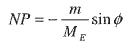
<body><![CDATA[<p align="justify"><font face="verdana" size="2">A great earthquake occurred near the coast of NW Sumatra on December 26, 2004 (Lat=3.3&deg;N, Lon=95.8&deg;E, H=10 km, TU=26 December 2004&#150;00h 58m, <i>M<sub>w</sub>=9.3). </i>The event was accompanied by a disastrous tsunami that killed 280 000 people. The extremely large magnitude places this earthquake among the largest of the last hundred years <a href="/img/revistas/geoint/v46n1/a2t3.jpg" target="_blank">(see Table 3)</a>. Some difficulties have arisen in the interpretation of this event because the assumed angle of convergence of the Indian plate becomes nearly parallel to the Sunda Arc in some segments. Other difficulties originate in a discrepancy between the values of <i>M<sub>w</sub> </i>(magnitude estimated from surface waves with a period T &gt; 40s) and the magnitude <i>M </i>derived from the normal modes of the Earth. Some authors have attempted to model the fault plane as a subhorizontal rectangle of approximately 200 x 400 km, which seems to disagree with the sequence of seismic events in the early hours and days after the main shock.</font></p>     <p align="justify"><font face="verdana" size="2">Thus subhorizontal faulting may be unrealistic and an alternative interpretation of this earthquake may be timely. While this paper was in process several other relevant reports have appeared and the paper grew to become a short review.</font></p>     <p align="justify"><font face="verdana" size="2">&nbsp;</font></p>     <p align="justify"><font face="verdana" size="2"><b>Displacement of the Earth's instantaneous rotation pole</b></font></p>     <p align="justify"><font face="verdana" size="2">A displacement of nearly 1.5 milliarcsecond (1.0 mas &asymp; 3.0 cm) of the instantaneous rotation axis of the Earth was observed nearly coseismically during the Sumatra earthquake by Giuseppe Bianco (2005) of the Italian Space Agency at the Matera Satellite Laser Ranging (SLR) Observatory. This was the first time that this kind of displacement has been observed using high&#150;precision astro&#150;geodetic technology.</font></p>     <p align="justify"><font face="verdana" size="2">At the time of the earthquake the instantaneous Earth rotation pole jumped from a larger polhody orbit to an inner one <a href="/img/revistas/geoint/v46n1/a2f1.jpg" target="_blank">(Figure 1)</a>. The two nearly concentric orbits are separated by a distance of &asymp; 1.5 mas <a href="/img/revistas/geoint/v46n1/a2f1.jpg" target="_blank">(Figure 1b)</a>. But this cannot be considered the true displacement of the instantaneous rotation pole. An extrapolation must be made to estimate the expected position of the rotation pole on December 26. Three vectors of the rotational pole displacement on two&#150;day time intervals have been used to evaluate a vectorial average of the expected two&#150;days displacement (see the dotted empty red circle in <a href="/img/revistas/geoint/v46n1/a2f1.jpg" target="_blank">Figure 1b</a>). The distance between the expected and the observed pole for December 26 is nearly 3.0 mas (9.5 cm), and the azimuth of displacement is exactly opposite to the epicentral azimuth (Longitude &asymp; 96&deg;).</font></p>     <p align="justify"><font face="verdana" size="2">Atmospheric motions could produce anomalies of similar amplitude in the polhody (Gambis, 2005; MacMillan, 2005; Lambert <i>et al., </i>2006). However, the signal of atmospheric disturbances is different and their azimuth and time of occurrence would be unrelated to the seismic event. I use the geographic coordinates of the rotation pole as provided by the International Earth Rotation and Reference Systems Service (IERS, 2006). No detectable displacement of the centre of mass of the Earth was reported.</font></p>     <p align="justify"><font face="verdana" size="2">Following a line of reasoning already developed in preceding papers (Scalera, 1999, 2002, 2005a, 2006a) it is possible to infer the mass movement which produced the shift in the Earth's axis of rotation. It is found that a net protrusion, or extrusion, of mass occurred during the earthquake near 3.5 degrees north of the equator. The inertial axis of the planet was displaced away from the extrusion zone. Immediately the instantaneous rotational pole shifted toward the new inertial axis position. Actually, the rotation axis does not move with respect to a celestial reference frame, so it might be more appropriate to say that the whole Earth's body rotated until the new inertia axis regained its position in coincidence with the pole of rotation. The shift in the event of a pure intrusion or subduction would be opposite in direction.</font></p>     <p align="justify"><font face="verdana" size="2">If the present interpretation is well&#150;grounded the mass displacement in the epicentral region of the Sumatra earthquake was one of surfaceward extrusion rather than of subhorizontal subduction. Indeed, if one assumes a rigid Earth (Schiaparelli, 1883, 1891), when a mass <i>m&lt;&lt; M<sub>E</sub> </i>is added to the Earth mass <i>M<sub>E</sub> </i>at a point <i>L </i>of the surface at a colatitude <img src="/img/revistas/geoint/v46n1/a2s1.jpg"> in the northern hemisphere we may write</font></p>     <p align="justify"><font face="verdana" size="2"><img src="/img/revistas/geoint/v46n1/a2e1.jpg">.........................................(1)</font></p>     ]]></body>
<body><![CDATA[<p align="justify"><font face="verdana" size="2">where <i>A </i>and <i>B </i>are the equatorial and the polar moment of inertia, respectively.</font></p>     <p align="justify"><font face="verdana" size="2">The second term in Eq (1)</font></p>     <p align="justify"><font face="verdana" size="2"><img src="/img/revistas/geoint/v46n1/a2e1a.jpg"></font></p>     <p align="justify"><font face="verdana" size="2">arises from the displacement of the centre of mass from <i>O </i>to <i>O' </i>and is normally neglected (Schiaparelli, 1891), because it is small in comparison with the first term if the mass transport on the Earth happens with a roughly random spatial distribution and with a probability close to zero of happening very near the equator. Thus the expression to compute the displacement of the inertial pole in the rigid case is</font></p>     <p align="justify"><font face="verdana" size="2"><img src="/img/revistas/geoint/v46n1/a2e1b.jpg"></font></p>     <p align="justify"><font face="verdana" size="2">Let us check the validity of this expression. Suppose that a rectangular prism of 1000 km by 50 km (50&bull;10<sup>9</sup> m<sup>2</sup>) and height 30 km is representative of the volume displaced during the main earthquake of December 26, 2004. A vertical displacement by 10 m is assumed and a mean density of 2.7 g/cm<sup>3</sup> is assigned to the material. The extruded volume is then 10x50&bull;10<sup>9</sup> = 500&bull;10<sup>9</sup> m<sup>3</sup> and the mass is 2.7&bull;10<sup>6</sup> x 500&bull;10<sup>9 </sup>= 13.5&bull;10<sup>17</sup> g, which is to say 2.2&bull;10<sup>&#150;10</sup> <i>M<sub>E</sub></i>. Considering the presence of the layer of oceanic water (density &asymp; 1.0 g/cm<sup>3</sup>) covering nearly all the region, the density contrast of the extruded volume is reduced to 1.7 g/cm<sup>3</sup> and the effective mass to 8.5&bull;10<sup>17</sup> g.</font></p>     <p align="justify"><font face="verdana" size="2">In addition, a protrusion of the mantle of comparable amount (10 m) should be emplaced above the Moho. A reasonable density contrast of &asymp; 0.6 g/cm<sup>3</sup> leads to a final effective mass of 0.6&bull;10<sup>6</sup>g/m<sup>3</sup> x 500&bull;10<sup>9</sup> m<sup>3</sup> = 3.0&bull;10<sup>17</sup> g. Roughly, this will produce a shift of the inertial axis of</font></p>     <p align="justify"><font face="verdana" size="2"><img src="/img/revistas/geoint/v46n1/a2e1c.jpg"></font></p>     <p align="justify"><font face="verdana" size="2">while the term related to the displacement of the centre of mass <i>NP </i>is</font></p>     <p align="justify"><font face="verdana" size="2"><img src="/img/revistas/geoint/v46n1/a2e1d.jpg"></font></p>     ]]></body>
<body><![CDATA[<p align="justify"><font face="verdana" size="2">in agreement with the magnitude orders  of the observations.</font></p>     <p align="justify"><font face="verdana" size="2">If the viscoelastic behaviour of the Earth is taken into account (Lambeck, 1980 and 1988; Spada, 1992, 1997), the introduction of the Love numbers <i>k </i>leads to</font></p>     <p align="justify"><font face="verdana" size="2"><img src="/img/revistas/geoint/v46n1/a2e2.jpg">.................................................(2)</font></p>     <p align="justify"><font face="verdana" size="2">The factor <i>(1+k') </i>is less than 1 as <i>k' </i>ranges from <i>k'=&#150;</i>0.30 at the surface to <i>k'=&#150;0.45 </i>at the boundary between the upper and the lower mantle. Thus, the viscoelastic formula (2) leads to numerical values for <i>PP' </i>which are smaller by 40% than the values in the rigid case:</font></p>     <p align="justify"><font face="verdana" size="2"><img src="/img/revistas/geoint/v46n1/a2e2a.jpg"></font></p>     <p align="justify"><font face="verdana" size="2">The values in both cases are of the right magnitude order, but they still underestimate the observed value of 9.5 cm. Possibly a more realistic model of density contrasts and shape of the extruded mass will account for the difference. On the other hand, if we assume the same mass to be displaced nearly horizontally (&asymp;8&deg;), the effect on the axis of rotation would be an order of magnitude smaller.</font></p>     <p align="justify"><font face="verdana" size="2">The above considerations can be generalized as follows. If we assume with Dahlen (1971, 1973) that most relevant earthquake activity is of the underthrust type, the integrated effect of all earthquakes should be such as to shift the secular polar motion toward an azimuthal direction nearly opposite to the observed one (Spada, 1992, 1997). For this reason, the role of earthquakes in driving the secular polar motion was ruled out. This opinion should now be reconsidered or revised on the strength of the observed effect of the Sumatra earthquake on the pole of rotation <a href="/img/revistas/geoint/v46n1/a2f1.jpg" target="_blank">(Figure 1ab,</a> <a href="/img/revistas/geoint/v46n1/a2f2.jpg" target="_blank">Figure 2)</a>.</font></p>     <p align="justify"><font face="verdana" size="2">Consider the possibility of a dominant extrusion of material (assuming that horizontal displacements cancel out) instead of thrusting. Then the integrated effect of the global seismicity would be in the opposite direction from that found by Spada (1997). The integrated effect would be in the correct azimuthal direction, and the earthquakes could add their contribution to the total secular polar motion. Let us only say here that an asymmetrical expansion of the planet &#150; with a maximum expansion rate in the Nazca region with a surface annual emplacement of new mass &asymp; <i>M<sub>E</sub></i>&bull;10<sup>&#150;11 </sup>&#151; might be the main cause of the secular polar motion and of the Chandler wobble (Scalera, 2002, 2003, 2006a). If earthquakes make the Earth rounder, it would also be true that they make the Earth larger.</font></p>     <p align="justify"><font face="verdana" size="2">&nbsp;</font></p>     <p align="justify"><font face="verdana" size="2"><b>Clues from seismic tomography</b></font></p>     ]]></body>
<body><![CDATA[<p align="justify"><font face="verdana" size="2">S&#150;wave seismic tomography <a href="/img/revistas/geoint/v46n1/a2f3.jpg" target="_blank">(Figure 3a)</a> of the Indonesian and Sumatra region reveals a clear high&#150;velocity body that plunges under the Sunda shelf at the classic inclination angle of about 45&deg; to a depth of 200 km, starting from the trench (Ritzwoller <i>et al., </i>2005). No earthquakes deeper than 250 km are found in the seismic history of the region. More detailed global and regional tomography (Bijwaard <i>et al., </i>1998; Hafkenscheid <i>et al. </i>2001) shows that at a depth of 200 km to 800 km the high&#150;velocity body becomes nearly vertical <a href="/img/revistas/geoint/v46n1/a2f3.jpg" target="_blank">(Figure 3b)</a>.</font></p>     <p align="justify"><font face="verdana" size="2">Ritzwoller <i>et al. </i>(2005) show the subducting high&#150;velocity lithospheric slab being bounded towards the NE by a Wadati&#150;Benioff zone which is well&#150;defi ned only down to 200 km. Along this surface we should imagine, following plate tectonics, that a mutual shift occurs between the plunging Indian plate and the backarc lithosphere. Instead, from the <a href="/img/revistas/geoint/v46n1/a2f3.jpg" target="_blank">Figure 3b</a> is more easy to deduce on ongoing separation of two lithospheric blocks.</font></p>     <p align="justify"><font face="verdana" size="2">The geodynamics that has been added on top of the original kinematics of plate tectonics holds the accumulation of tectonic potential energy to be purely elastic in a brittle environment. The Sumatra earthquake was a shallow event, and the elastic rebound model is generally adopted. Thus the subducting lithosphere would be moving with a secular rate of a few centimetres per year (6.1 cm for the NOVEL1 model) from the surface toward the transition zone and further down <a href="/img/revistas/geoint/v46n1/a2f4.jpg" target="_blank">(Figure 4a)</a>, while the back&#150;arc lithosphere sticks to the subducting oceanic plate by friction and asperities, allowing them to travel together <a href="/img/revistas/geoint/v46n1/a2f4.jpg" target="_blank">(Figure 4b)</a>. Finally a fracture starts on the Wadati&#150;Benioff zone <a href="/img/revistas/geoint/v46n1/a2f4.jpg" target="_blank">(Figure 4c)</a> and the back&#150;arc lithosphere rebounds elastically upwards to the surface <a href="/img/revistas/geoint/v46n1/a2f4.jpg" target="_blank">(Figure 4d)</a>, and the subducting lithosphere is free to accelerate.</font></p>     <p align="justify"><font face="verdana" size="2">Certainly, this alleged mechanism of earthquake generation might be compatible with a sudden upwelling of material, but it should be remembered that immediately after rupture, a sudden downward movement of the 'subducting' slab must also occur. Moreover, in a net secular balance, the downward movement would prevail, and earthquake excitation would no longer agree with the secular polar motion.</font></p>     <p align="justify"><font face="verdana" size="2">In the elastic rebound model, a horizontal displacement of the arc and backarc is also foreseen. This sudden displacement of tens of centimetres or meters should occur against a stationary ocean, causing a steep wall of water which was not observed. Instead, a gradual withdrawal of the ocean was observed before the arrival of the main tsunami wave.</font></p>     <p align="justify"><font face="verdana" size="2">&nbsp;</font></p>     <p align="justify"><font face="verdana" size="2"><b>The focal mechanism</b></font></p>     <p align="justify"><font face="verdana" size="2">The Harvard Centroid Moment Tensor solution <a href="/img/revistas/geoint/v46n1/a2f5.jpg" target="_blank">(Figure 5a)</a> provides two equally possible fault plane solutions for the Sumatra earthquake:</font></p>     <p align="justify"><font face="verdana" size="2"><img src="/img/revistas/geoint/v46n1/a2e2b.jpg"></font></p>     <p align="justify"><font face="verdana" size="2">Solution P1 is adopted by the scientific community because it agrees with a geodynamic model which is accepted as valid because it is consistent with plate tectonics. The other solution P2 involves a near&#150;vertical fault plane. P1 and P2 are shown in <a href="/img/revistas/geoint/v46n1/a2f5.jpg" target="_blank">Figure 5b</a> on a vertical section of the focal sphere normal to the strike.</font></p>     ]]></body>
<body><![CDATA[<p align="justify"><font face="verdana" size="2">Because of the low dip angle of 8&deg; one speaks of a sub&#150;horizontal slip. The value of &asymp; 30.0 km was assigned to the focal depth. Because of the low dip angle, the shallow focal depth and the fault width of 100&#150;200 km the rupture will be completely located in the brittle crustal environment. This means that a large number of major aftershocks should be expected within hours and days in a broad, fl at crustal&#150;subcrustal area of approximately 200 x 500 km<sup>2</sup>. Instead, the distribution of the large (M <u>&gt;</u> 6) aftershocks in the two days after the main shock looked completely different (see next section).</font></p>     <p align="justify"><font face="verdana" size="2">A near&#150;horizontal displacement of a huge region of the crust seems hard to credit. Any long narrow slab undergoing longitudinal horizontal stress above the rupture limit should develop brittle thrust fractures throughout at dip angles of about 45&deg; (Tarakanov, 2005). We are in the presence of a paradox. The second fault plane P2 &#150; a near&#150;vertical plane &#151; should be considered within an alternative tectonic and geodynamic model.</font></p>     <p align="justify"><font face="verdana" size="2">&nbsp;</font></p>     <p align="justify"><font face="verdana" size="2"><b>The second fault plane solution</b></font></p>     <p align="justify"><font face="verdana" size="2">The fault&#150;plane solution P2 requires a nearly vertical fault motion. In this case, the rupture plane would cross the entire crust. Referring to <a href="/img/revistas/geoint/v46n1/a2f6.jpg" target="_blank">Figure 6</a>, a possible model of rupture evolution &#150; among many similar ones &#150; can be constructed. In this example, initially <a href="/img/revistas/geoint/v46n1/a2f6.jpg" target="_blank">(Figure 6a)</a> a slow decoupling of oceanic and continental lithosphere occurs under the arc. Under the effect of this tensional regime the arc <a href="/img/revistas/geoint/v46n1/a2f6.jpg" target="_blank">(Figure 6a)</a> shows a tendency to subside <a href="/img/revistas/geoint/v46n1/a2f6.jpg" target="_blank">(Figure 6b)</a>. This agrees with coral reef subsidence data (Sieh <i>et al., </i>1999; Zachariasen <i>et al., </i>1999; Zachariasen <i>et al., </i>2000; and others). Then a first subvertical fracture <a href="/img/revistas/geoint/v46n1/a2f6.jpg" target="_blank">(Figure 6c)</a> is produced by a sudden uplift of subcrustal or sublithospheric material being pushed upward by a phase change triggered by the tensional regime. The uplifted face may have a downward rebound, which would produce a tilt of the neighbouring plate <a href="/img/revistas/geoint/v46n1/a2f6.jpg" target="_blank">(Figure 6c)</a>. This is consistent with the observed uplift of the coralline barrier to the west and the subsidence of the larger islands. Finally, a large number of aftershocks would be produced on new faults <a href="/img/revistas/geoint/v46n1/a2f6.jpg" target="_blank">(Figure 6d)</a> and along the entire major fault, in a wide area. Lateral spreading of the arc could also be triggered by the main rupture <a href="/img/revistas/geoint/v46n1/a2f6.jpg" target="_blank">(Figure 6d)</a>.</font></p>     <p align="justify"><font face="verdana" size="2">This model should lead to a longer fault length. This confirmed by an elongated as the P1 solution. This is because an elongated distribution of epicentres of aftershocks Mw <u>&gt;</u> 6.0 occurred within two hours and within two days after the main shock (see in <a href="/img/revistas/geoint/v46n1/a2t1.jpg" target="_blank">Table 1</a> the very preliminary epicentres of 26 and 27 December 2004; see also the map in <a href="/img/revistas/geoint/v46n1/a2f7.jpg" target="_blank">Figure 7</a>) &#151; an elongation of &asymp;1200 km.</font></p>     <p align="justify"><font face="verdana" size="2">If the P1 horizontal solution were the fault plane we would expect an immediate activation of the entire alleged fault surface (rectangular boundary in <a href="/img/revistas/geoint/v46n1/a2f7.jpg" target="_blank">Figure 7</a>). However, this fault surface has apparently not shown the expected immediate high&#150;magnitude aftershock activity. This might represent an important clue favouring a vertical fault solution such as P2, extending more than 1200 km from west Sumatra to the northern tip of the Andaman Islands (see the bold dotted line in <a href="/img/revistas/geoint/v46n1/a2f7.jpg" target="_blank">Figure 7</a>). The expected series of aftershocks occurred in this long region. It should be noted that the first large aftershock (<i>M<sub>w</sub></i>=6.2; T=1:21:18; Lat=6.37; Lon=93.36) was more than 3&deg; north of the epicentre of the main shock. The second major aftershock (<i>M<sub>w</sub></i>=6.0; T=2:51:59; Lat=12.49; Lon=92.58) was more than 9&deg; north of the main event. These events occurred less than 2 hours apart. The elongated space window and the narrow time window strongly suggest that these events were true aftershocks on the same long structure. The non perfect plain&#150;shape of the rupture surface is not a problem for a vertical fracture (also zigzag fracture could be allowed) while grater mechanical problems arises for a &gt; 1000 km length subhorizontal fault in developing along such long arched thrust front.</font></p>     <p align="justify"><font face="verdana" size="2">The elongated shape of the fault also agrees with a quick calculation of the length of the high frequency P&#150;wave record on seismograms (Lomax, 2005; Lomax and Michelini, 2005). The P&#150;wave radiation was compatible in duration with a fault rupture propagation of at least 1100 km. The NNW directivity of initial propagation is assured by the characteristic different length and frequency &#150; Doppler effect &#150; of the P wave train recorded at different azimuths (Bilham, 2005a; Ishii et <i>al., </i>2005).</font></p>     <p align="justify"><font face="verdana" size="2">It is true that the inconsistency of the plate tectonics bias in adopting the P1 fault&#150;plane solution was not recognized in papers devoted to the great Sumatra earthquake. However, the need for a steeper slip plane was mentioned in a normal&#150;mode analysis by Park <i>et al. </i>(2005).</font></p>     <p align="justify"><font face="verdana" size="2">&nbsp;</font></p>     ]]></body>
<body><![CDATA[<p align="justify"><font face="verdana" size="2"><b>The USGS preliminary hypocentral data and the Harvard CMT catalogue</b></font></p>     <p align="justify"><font face="verdana" size="2">I have extracted seismic data from the USGS global catalogue with the further aim of analyzing the 3&#150;D distribution of preliminary hypocenters. The data were partitioned in a two&#150;hours time&#150;window from the origin time of the main shock, then in two days window from the origin time and up to the end of February 2005. I consider especially the first two shorter time windows, as I believe that a seismic event <i>(sensu lato) </i>is better characterized by what happens immediately after the main shock.</font></p>     <p align="justify"><font face="verdana" size="2">The data from December 26, 00h 00m 00s, to December 27, 24h 00m 00s, are listed in <a href="/img/revistas/geoint/v46n1/a2t2.jpg" target="_blank">Table 2</a>, and the selected events are chronologically numbered. Events that have a CMT fault solution in the Harvard catalogue are shown with an asterisk. Double asterisks indicate the presence of CMT solutions plotted in <a href="/img/revistas/geoint/v46n1/a2f9.jpg" target="_blank">Figure 9c</a>.</font></p>     <p align="justify"><font face="verdana" size="2">All the extracted sets of data contain subsets of a large number of earthquakes whose depths were fi xed at 30 km.</font></p>     <p align="justify"><font face="verdana" size="2">Because of inadequate focal depth control, I removed them from the figures.</font></p>     <p align="justify"><font face="verdana" size="2">In <a href="/img/revistas/geoint/v46n1/a2f8.jpg" target="_blank">Figure 8a</a> a complete set of 20 events (M <u>&gt;</u> 5.5) which occurred in the first two hours from the main event is shown as red circles. The projection of the hypocenters on the XZ plane (grey circle) shows more clearly the presence of events with fi xed 30 km depths. These events are not just of unknown depth but due to computational effects the same uncertainty is refl ected in latitude and longitude errors. The main shock (large red dot in <a href="/img/revistas/geoint/v46n1/a2f8.jpg" target="_blank">Figure 8a</a>) is a member of this subset. The same computational difficulty made it impossible to determine the focal mechanisms for nearly all aftershocks up to the evening of December 26. In <a href="/img/revistas/geoint/v46n1/a2f8.jpg" target="_blank">Figure 8b</a> the same time and magnitude window is shown without the 30km&#150;depth data &#150; but including the main shock. Then the total number is decreased to seven events.</font></p>     <p align="justify"><font face="verdana" size="2">The distribution of these hypocenters, numbered from 1 (main shock) to 7, is crustal and undercrustal, covering from a minimum depth of 15 km to a maximum depth of 51 km. The depth scale is exaggerated more than 10 times. While plate tectonics would expect a focal distribution dipping to the northeast, if we observe the seismicity from a high zenithal point displaced a little toward north <a href="/img/revistas/geoint/v46n1/a2f8.jpg" target="_blank">(Figure 8c)</a> it actually dips slightly to the southwest &#150; consider the good alignment of the hypocenters 7, 5, 2, 3, and 1. The events do not occur on the alleged subduction interface.</font></p>     <p align="justify"><font face="verdana" size="2">I repeated the same system of plotting with a time window lasting for two days (26 and 27 December). In <a href="/img/revistas/geoint/v46n1/a2f9.jpg" target="_blank">Figure 9a</a> the total number of events, 56 hypocenters, is shown with their projection on the XZ plane. The 56 events are listed in <a href="/img/revistas/geoint/v46n1/a2t2.jpg" target="_blank">Table 2</a>. After elimination of the events with a pre&#150;assigned depth of 30 km, the remaining 29 hypocenters are shown in <a href="/img/revistas/geoint/v46n1/a2f9.jpg" target="_blank">Figure 9b and 9c</a>. No well&#150;defi ned NNE dipping subduction trend can be detected. In <a href="/img/revistas/geoint/v46n1/a2f9.jpg" target="_blank">Figure 9a&#150;c</a> a small group of hypocenters at a depth of nearly 50 km is spotted near event number 3 in <a href="/img/revistas/geoint/v46n1/a2f8.jpg" target="_blank">Figure 8b and c</a>. In <a href="/img/revistas/geoint/v46n1/a2f9.jpg" target="_blank">Figure 9d</a>, in order to facilitate the understanding of the spatial&#150;temporal pattern, chronological numbers are shown for the 29 selected events.</font></p>     <p align="justify"><font face="verdana" size="2">The focal mechanisms of aftershocks have been published after the second half of 26 December. Many of them are inconsistent with sub&#150;horizontal subduction. Harvard CMT focal mechanisms are shown in <a href="/img/revistas/geoint/v46n1/a2f9.jpg" target="_blank">Figure 9c</a> and numbered following the event numbers of <a href="/img/revistas/geoint/v46n1/a2f9.jpg" target="_blank">Figure 9d</a>.</font></p>     <p align="justify"><font face="verdana" size="2">&nbsp;</font></p>     ]]></body>
<body><![CDATA[<p align="justify"><font face="verdana" size="2"><b>The seismic moment</b></font></p>     <p align="justify"><font face="verdana" size="2">The definition of seismic moment is:</font></p>     <p align="justify"><font face="verdana" size="2"><img src="/img/revistas/geoint/v46n1/a2e3.jpg">......................................................................(3)</font></p>     <p align="justify"><font face="verdana" size="2">with &micro; the shear modulus of the material, <i>s </i>the mutual dislocation of the two sides of the fault, and <i>A </i>the area of the fracture surface. The moment magnitude is defi ned in terms of the seismic moment:</font></p>     <p align="justify"><font face="verdana" size="2"><img src="/img/revistas/geoint/v46n1/a2e4.jpg">........................................................(4)</font></p>     <p align="justify"><font face="verdana" size="2">The longest&#150;period normal modes of the earth, <sub>0</sub>S<sub>2</sub> and <sub>0</sub>S<sub>3</sub> were analyzed by Stein and Okal (2005). They yield a moment <i>M<sub>0</sub> = </i>1.3&bull;10<sup>30</sup> dyn&bull;cm, three times larger than <i>M<sub>0</sub> = </i>4.0&bull;10<sup>29</sup> dyn&bull;cm evaluated from long&#150;period surface waves. From (4) an ultra&#150;long period magnitude, <i>M<sub>w</sub> = </i>9.3, results, which is significantly larger than the previously reported <i>M<sub>w</sub></i> = 9.0.</font></p>     <p align="justify"><font face="verdana" size="2">The fact that the ultra&#150;long period moment is higher than that from 300&#150;s surface waves used by the Harvard CMT project reflects a significant physics process we may misunderstand. The interpretation of Stein and Okal (2005) is that a fast slip of several meters occurred on the southern third (around 400 km) of the sub&#150;horizontal fault. Only this part of the total length of the fault would be responsible for the long&#150;period surface wave excitation. A slower slip would have occurred on the northern two thirds of the fracture which would have mostly excited the normal modes of the Earth. However, because the envisaged subhorizontal slip, this interpretation cannot account for the 10 cm displacement of the polhody path in a non&#150;double&#150;couple treatment. Indeed, horizontal displacements, referring to <a href="/img/revistas/geoint/v46n1/a2f2.jpg" target="_blank">Figure 2</a>, are in a plane perpendicular to the page and near parallel to the Earth's fi gure axis, and then producing negligible variation of inertial moment.</font></p>     <p align="justify"><font face="verdana" size="2">Lomnitz and Nilden&#150;Hofseth (2005) proposed that the tsunami may have been generated by in&#150;phase action of the <sub>0</sub>S<sub>2</sub> and <sub>0</sub>S<sub>3</sub> spheroidal normal modes. Although <sub>0</sub>S<sub>2</sub> and <sub>0</sub>S<sub>3</sub> frequencies are present in the spectra of the tide&#150;gauge records, the conclusions of the authors are not incompatible with a bulging of the sea fl oor and with the generation of the first tsunami wave by this bulge. Only a protrusion of material can explain both the normal mode excitation and the rotation pole displacement.</font></p>     <p align="justify"><font face="verdana" size="2">I submit that the discrepancy between surface wave <i>M<sub>o</sub> </i>and normal mode <i>M<sub>o</sub> </i>should be considered an important anomaly &#150; in the Kuhn (1969) sense &#150; whose clarification could lead to a substantial transformation of our view, recognizing the inadequacy of the pure elastic rebound model, and moreover, of the subduction hypothesis. Here I search for a solution by adopting the nearly vertical slip plane of the conjugate P2 fault solution instead of following plate tectonics prescriptions.</font></p>     <p align="justify"><font face="verdana" size="2">Indeed, assuming an average rigidity of 5.0&bull;10<sup>11</sup> dyn/cm<sup>2</sup> (see Table A.3 in Bullen and Bolt, 1985), with 15 m of slip on a near&#150;vertical fault 1200 km long and 50 km deep (the maximum depth of a brittle fracture) we obtain a moment</font></p>     ]]></body>
<body><![CDATA[<p align="justify"><font face="verdana" size="2"><img src="/img/revistas/geoint/v46n1/a2e4a.jpg"></font></p>     <p align="justify"><font face="verdana" size="2">which agrees with the <i>M<sub>o</sub> </i>measured using long period surface waves. With the adoption of the P2 fault parameters, there is no need to limit the slip zone to the southern third of the aftershock zone. The apparent excess seismic moment derived from the <sub>0</sub>S<sub>2</sub> and <sub>0</sub>S<sub>3</sub> modes (Stein and Okal, 2005) might be linked to a large amount of energy release, not by an 'elastic rebound' process but as a non&#150;elastic displacement of materials &#150; presumably a vertical fl ow &#150; that has caused the strong <sub>0</sub>S<sub>2</sub> and <sub>0</sub>S<sub>3</sub> excitation, and the Earth's instantaneous rotational pole displacement. This vertical displacement should have bulged the belt zone between the Sunda Trench and the proposed rupture line (<a href="/img/revistas/geoint/v46n1/a2f7.jpg" target="_blank">Figure 7</a>, bold dotted line).</font></p>     <p align="justify"><font face="verdana" size="2">On the other hand, if the assumption of a sub&#150;horizontal fault is adopted, using a single couple model (Julian <i>et al. </i>1998; Miller <i>et al., </i>1998), we may account for the observed seismic moment but not for the displacement of the Earth's rotation axis. A near&#150;vertical fault could agree with both the seismic moment and the polhody shift. Some scientists have attributed the observed displacement of the polhody to chance or to atmospheric forcing (Gambis, 2005; MacMillan, 2005), because the precise azimuthal relation between polhody displacement and epicentre position &#150; shown in <a href="/img/revistas/geoint/v46n1/a2f1.jpg" target="_blank">Figure 1</a> &#150; has not been generally recognized by the geoscientists community.</font></p>     <p align="justify"><font face="verdana" size="2">An analogy can be envisaged between the mass movement that occurred during the Sumatra event and some typical volcanic earthquakes. The spectra of some volcanic earthquakes tend to be displaced toward the low frequencies. Most of these volcanic earthquakes cannot be described by a double couple (Julian <i>et al., </i>1998; Miller <i>et al., </i>1998). They are more destructive than might be expected from their low <i>M<sub>b</sub> </i>value, as computed from 1 sec period waves. However, <i>M<sub>s</sub></i> as computed from lower frequencies, at 20&#150;30 sec, provides a more realistic estimate of energy and damage. A possible origin of such volcanic events could involve laccolite or dike emplacement, or coseismic volcano flank gravitative sliding. Large earthquakes with an excess of low frequency energy can similarly be ascribed to slow phase changes involving expansion of a suitable volume of deep materials. To be more specific, one might suppose that these extremely large earthquakes might involve elastic rebound plus upwelling of mantle material constituting a substantial non&#150;elastic additional portion of the mass movement.</font></p>     <p align="justify"><font face="verdana" size="2">&nbsp;</font></p>     <p align="justify"><font face="verdana" size="2"><b>Sea&#150;level variation and Satellite data in Sumatra</b></font></p>     <p align="justify"><font face="verdana" size="2">Published preliminary results of the Geographic Survey Institute of Japan show post&#150;seismic level variations of the coast over the entire region. Data are provided by satellites Radarsat&#150;1, Envisat, ERS &#150;1<i>/2, </i>Aster, Spot&#150;5, updated to March 10, 2005. The coralline barrier to the west has been uplifted by the earthquake, and the Andaman Islands and parts of the north&#150;west coast of Sumatra subsided (Searle, 2005). This is in agreement with the framework of this paper.</font></p>     <p align="justify"><font face="verdana" size="2">Bilham (2004) reports further geodetic results in good agreement with the postseismic level variation revealed by the satellites.</font></p>     <p align="justify"><font face="verdana" size="2">A new interpretation of emergence and submergence of coral micro&#150;atolls (Sieh <i>et al., </i>1999; Zachariasen <i>et al., </i>1999; Zachariasen <i>et al., </i>2000; and others) suggests a possible cyclic uplift and subsidence of the coral rings. The authors propose the applicability of a plate tectonic model as in <a href="/img/revistas/geoint/v46n1/a2f4.jpg" target="_blank">Figure 4</a>. In this case, the atolls should slowly subside due to the push or pull of the subducting slab until the earthquake allows them jump back and rise. However, the evidence suggests a sudden subsidence in the geological past.</font></p>     <p align="justify"><font face="verdana" size="2">In <a href="/img/revistas/geoint/v46n1/a2f7.jpg" target="_blank">Figure 7</a> the uplifted and subsided zones reported by the Japanese GSI are shown in red and in yellow, respectively. The proposed vertical rupture (bold dotted line) is the divide between the uplifted and subsided areas. Large ofiolite formations in the Nicobar and Andaman islands (Coleman, 1977) represent further evidence of a near&#150;steady uplift of the arc in geologic time, and of a different rate of emergence along the Sunda Arc. The sudden subsidence might be explained as a part of the process of vertical fracture of the crust <a href="/img/revistas/geoint/v46n1/a2f6.jpg" target="_blank">(Figure 6)</a>.</font></p>     ]]></body>
<body><![CDATA[<p align="justify"><font face="verdana" size="2">The GRACE satellites (Han <i>et al., </i>2006) observed variations of surface gravity of &#150;15 &micro;Gal east of the Sunda trench, and a symmetrical anomaly of +15 &micro;Gal west of the trench. This pattern of anomalies does not fi t a fault dislocation without a substantial lateral and vertical expansion of the oceanic crust to be added to the model. Han <i>et al. </i>(2006) adopt initially a subhorizontal slip in agreement with the focal mechanism, but the fi t to the gravity data is poor. Their suggestion of local expansion supports the class of models proposed in this paper in <a href="/img/revistas/geoint/v46n1/a2f6.jpg" target="_blank">Figure 6</a>.</font></p>     <p align="justify"><font face="verdana" size="2">&nbsp;</font></p>     <p align="justify"><font face="verdana" size="2"><b>Case&#150;histories of great earthquakes. Characteristics and analogies</b></font></p>     <p align="justify"><font face="verdana" size="2">Common characteristics among large earthquakes of the past can help clarify the processes at the seismic source. The greatest moment magnitude <i>(M<sub>w</sub>) </i>seismic events of the past century are listed in <a href="/img/revistas/geoint/v46n1/a2t3.jpg" target="_blank">Table 3</a>.</font></p>     <p align="justify"><font face="verdana" size="2">Event 8 is probably an aftershock of the earthquake of December 26, 2004. The more recent events are numbered 1, 2, and 7. The first two have been extensively studied by the scientific community.</font></p>     <p align="justify"><font face="verdana" size="2">&nbsp;</font></p>     <p align="justify"><font face="verdana" size="2"><i>Chile earthquake</i></font></p>     <p align="justify"><font face="verdana" size="2">A large seismic event struck the Chilean coast at 19.10:40 UT on May 22, 1960 (Plafker and Savage, 1970; Cifuentes, 1989; Cifuentes and Silver, 1989). The hypocenter was at 38.05&deg;S &#150; 72.34&deg;W and the focal depth was estimated around 35 km, similar to the Sumatra earthquake. A recent relocation (Krawczyk and the SPOC Team, 2003) provides a more western and slightly deeper hypocenter &gt; 73&deg; 05' W, 38&deg; 15' S, H = 38.5 km). This new hypocenter was based on 3D seismic imaging of the crust from the SPOC'experiment which shows the hypothetical subduction slab in a more westerly position. The relocation by more than 75 km may be considered a further anomaly from the point of view of the currently accepted geodynamic picture. The earlier epicentre is closer to the volcanic range.</font></p>     <p align="justify"><font face="verdana" size="2">The Chilean earthquake was preceded by a sequence of foreshocks that began 33 hours before the main shock (USGS, 2006). It ruptured 150 km of the northern segment of the fault. The records suggest that a large slow and silent foreshock took place on the deepest portion of the fault 15 minutes before the main shock, with a seismic moment comparable to that of the main event (Plafker and Savage, 1970; Kanamori and Cipar, 1974; Lund, 1982; Cifuentes, 1989; Cifuentes and Silver, 1989). Lund (1982) assumed that a solitary wave (soliton) was generated by this foreshock of 7.9 <i>M<sub>w</sub> </i>.This precursor was detected on the strainmeter at Pasadena. It was modelled tentatively &#150; using the observed surface deformation <a href="/img/revistas/geoint/v46n1/a2f10.jpg" target="_blank">(Figure 10a)</a> &#150; by Linde and Silver (1989). The moderate uplift of the coastline was explained as a double slope fault that started to slip slowly at the deepest edge (Linde and Silver, 1989). In this case, the rupture would have to nucleate in the subcrustal ductile lithosphere where the stress produced by the subducting slab would dissipate. Barrientos and Ward (1990) propose a fault of variable slip to fi t the surface displacements. The deeper portion of their displacement fi eld was attributed to postseismic creep, but the precursor remains unaccounted for. The zero&#150;slip line divides the two zones into more superficial and deeper slip, thus posing some severe mechanical problems.</font></p>     <p align="justify"><font face="verdana" size="2">Another problem is the amount of slip on the alleged 20&deg; dipping fault. A computed slip of nearly 20 m is at odds with the Nazca&#150;South America convergence rate of nearly 8 cm/yr, as it suggests 250 years of earlier strain accumulation. This problem is also found among other great earthquakes.</font></p>     ]]></body>
<body><![CDATA[<p align="justify"><font face="verdana" size="2">The association of volcanic phenomena with strong earthquakes was documented by Charles Darwin (1809&#150;1882) in the 1835 Concepcion earthquake (Darwin, 1897, page 236):</font></p>     <p align="justify"><font face="verdana" size="2">"I <i>have &#91;in other papers&#93; given an account of the remarkable volcanic phenomena, which accompanied this earthquake. These phenomena appear to me to prove that the action, by which large tracts of land are uplifted, and by which volcanic eruptions are produced, is in every respect identical".</i></font></p>     <p align="justify"><font face="verdana" size="2">And in the more detailed description (Darwin, 1840):</font></p>     <p align="justify"><font face="verdana" size="2"><i>"We see, therefore, that, in 1835, &#150;the earthquake of Chiloe, &#150;the activity of the train of the neighbouring volcanoes, &#150; the elevation of the land around Conception, &#150;and the submarine eruption at Juan Fernandez, took place simultaneously, and were parts of one and the same great phenomenon."</i></font></p>     <p align="justify"><font face="verdana" size="2">In the 1960 Chile earthquake, 17 of 38 active Andean volcanoes (Casertano, 1963) had eruptions or other minor volcanic activities within a few months of the earthquake. The following erupted in close coincidence with the seismic event: Copahue, Llaima, Villarrica, Cordon, Calbuco, Lautaro. There were also eruptions of volcanoes to the north: Planchon&#150;Peteroa, San Jos&eacute;, Tupungatito, Lascar, San Pedro, Guallatiri (Casertano, 1963; Smithsonian Institution, 2006).</font></p>     <p align="justify"><font face="verdana" size="2">Similar correlations occurred along all the Cordillera on the occasion of the 1906 Ecuador earthquake (Mw=8.8), including eruptions of Purac&eacute; and Reventador in the north, Ubinas in the central section and Cerro Azul, Nevados, Villarrica, Calbuco, Huequi in the South (Smithsonian Institution, 2006). The history of correlation between earthquake and volcanic phenomena on the South American Cordillera can be traced back in the time, finding descriptions of them also in seventeenth century European books (d'Avity, 1643; Placet, 1666, see pages 74&#150;78 of first edition).</font></p>     <p align="justify"><font face="verdana" size="2">In <a href="/img/revistas/geoint/v46n1/a2f11.jpg" target="_blank">Figure 11</a> the data from the Smithsonian catalogue are shown for South American eruptions from 1800 to 1999. There are some interesting peaks which coincide with major earthquakes. Whether the correlation is real or coincidental is still a matter of debate. However, the data suggest a possible link between Wadati&#150;Benioff earthquakes and volcanic phenomena, due to a rise of deep material (Scalera 1997, 2006b, 2006c).</font></p>     <p align="justify"><font face="verdana" size="2">Except for transform fault earthquakes and shallow tectonics events, all problems and paradoxes may thus be resolved in a more natural way. A sudden aseismic change of phase can produce an increase of volume at great depth &#150; in a tensional regime &#150; with elastic fracture of the overlying brittle material and continued anelastic flow.</font></p>     <p align="justify"><font face="verdana" size="2">&nbsp;</font></p>     <p align="justify"><font size="2" face="verdana"><i>Alaska earthquake</i></font></p>     ]]></body>
<body><![CDATA[<p align="justify"><font face="verdana" size="2">In the late afternoon of March 27, 1964, the second largest earthquake (but eventually the largest on recent reassessment of magnitude by Okal &#150; seminar at INGV headquarters) ever experienced by mankind struck the gulf of Alaska, with epicentre (61.0&deg;N, 147.7&deg;W) about 150 km east of Anchorage, near College Fiord (Anonymous, 1964). In the map attached to the first available report (Anonymous, 1964) a delineation of the uplifted and subsided zones is drawn <a href="/img/revistas/geoint/v46n1/a2f10.jpg" target="_blank">(Figure 10b)</a>.</font></p>     <p align="justify"><font face="verdana" size="2">As in the Sumatra earthquake, in the Alaska seismic event a long belt &#150; at least 500 km &#150; of subsided crust followed an inner zone from near Anchorage to Kenai Peninsula and Kodiak Island. A subsidence of up to 2.0 m was recorded. An emergence zone with a peak uplift of 8 m was recognized on the external region facing the Pacific. It was probably of the same length as the subsided one. The absence of islands far from Prince William Sound made impossible a precise estimate of the uplifted belt length (Anonymous, 1964; Landen, 1964; Plafker, 1965). The focal mechanism of the event was determined by various authors (Press and Jackson, 1964; Savage and Hastie, 1966; Stauder and Bollinger, 1966) and a discussion developed about the true slip surface, i.e. the main or conjugate fault solution. The hypothesis of a sub&#150;horizontal thrust fault was favoured from comparison between observations of vertical displacements and modelled ones (Plafker, 1965; Savage and Hastie, 1966; Stauder and Bollinger, 1966).</font></p>     <p align="justify"><font face="verdana" size="2">The early focal mechanism determination by Press and Jackson (1964) was defi nitely a vertical blind fault of 200 x 800 km at 15&#150;20 km depth. However, Plafker (1965) suggested the possibility of both main and conjugate fault solutions. Savage and Hastie (1966) and Stauder and Bollinger (1966) followed Plafker's suggestion of a sub&#150;horizontal rupture but remained undecided between the two alternative fault&#150;plane solutions. Shortly after, the advent of plate tectonics was decisive in the steering of the choices of the geosciences community, but the question is still open.</font></p>     <p align="justify"><font face="verdana" size="2">As Charles Darwin noted (1897) for South America, the movement of uplift and subsidence of the coastlines is very complicated, and sometime linked with volcanic and seismic events. My idea is that these vertical movements are the result of deep anelastic displacements of visco&#150;plastic material, which can precede, go along, as well as follow, the elastic fracture. These displacements can interact in a complicated way with the inhomogeneities of the crustal cover, producing an irregular pattern superimposed on a more extended regular trend (i.e. the elongated trends of subsidence and emergence in the great earthquakes of arcs).</font></p>     <p align="justify"><font face="verdana" size="2">&nbsp;</font></p>     <p align="justify"><font size="2" face="verdana"><i>Chi&#150;Chi, Taiwan, earthquake</i></font></p>     <p align="justify"><font face="verdana" size="2">On September 21 1999, a magnitude Mw=7.6 earthquake (not listed in <a href="/img/revistas/geoint/v46n1/a2t1.jpg" target="_blank">Table 1</a>) occurred near the town of Chi&#150;Chi, Taiwan (23.85&deg;N, 120.81&deg;E), causing more than 2400 dead. The earthquake was a 'subduction&#150;related' crustal event (depth=7.0&#150;10.0 km) (Abrahamson <i>et al.</i>, 1999; Shin <i>et al., </i>1999; Cattin <i>et al., </i>2004). It ruptured 85 km of the N&#150;S Chelungpu Thrust Fault. According to the current interpretation, Taiwan is a result of collision between the Eurasian continent and an island arc. The Eurasian plate is envisaged as subducting towards east, under the Luzon arc.</font></p>     <p align="justify"><font face="verdana" size="2">The interpretation was judged problematic because, albeit a subduction event, the surface deformation (Lin <i>et al., </i>2001; Johnson and Segall, 2004) was steeper than the expected sub&#150;horizontal fault in the initial superficial segment of a subducting slab (Seno, 2000; Seno <i>et al., </i>2000). A propagation of the rupture was hypothesized along a sub&#150;horizontal decollement, but the western edge of the fault became progressively steeper up to its final surface vertical emersion.</font></p>     <p align="justify"><font face="verdana" size="2">Some difficulties arise of the hypocenter distribution of the aftershock sequence (Kao and Chen, 2000; Johnson and Segall, 2004). It is uneven and presents at least three groups of hypocenters at different locations and depths. A group (labelled B10, B12, B24, B25 in Kao and Chen, 2000) is nearly 50 km east from the main shock, on the eastern side of the orogen. This group may correspond to a wide and complex mass&#150;movement involving the entire orogen. The deeper group of aftershocks (depth 25&#150;37 km) bears witness to the plutonic origin of the mass movement.</font></p>     <p align="justify"><font face="verdana" size="2">While in the western side of the orogen the Pliocene and Miocene strata (1.8&#150;23.8 Ma) are correctly located, the Oligocene facies (23.8&#150;33.7 Ma) are unconformally superimposed on the younger ones (<a href="/img/revistas/geoint/v46n1/a2f1.jpg" target="_blank">Figure 1c</a> in Johnson and Segall, 2004). The Oligocene represents the more central axes of the Taiwan orogen and this inverted age pattern of the geologic facies is typical of a pronounced uplift of the orogen core followed or accompanied by a lateral spreading and thrusting on the younger low&#150;land (Ollier, 2002, 2003; Ollier and Pain, 2000).</font></p>     ]]></body>
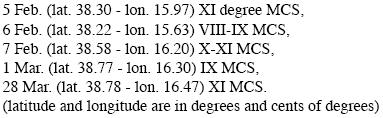
<body><![CDATA[<p align="justify"><font face="verdana" size="2">Similar phenomena of lateral spreading are well documented by geologic and geodetic surveys on young orogens (Coltorti and Ollier, 2000; Ollier, 2002, 2003; Ollier and Pain, 2000; Saroli <i>et al., </i>2005; Serpelloni <i>et al. </i>2006).</font></p>     <p align="justify"><font face="verdana" size="2">This is a further case of vague or unfavourable evidence of sub&#150;horizontal underthrust, and many efforts are actually dedicated in Taiwan to made more clear both the geological setting of the region and the fault geometry (by deep drilling).</font></p>     <p align="justify"><font face="verdana" size="2">&nbsp;</font></p>     <p align="justify"><font size="2" face="verdana"><i>The historical Calabrian earthquake sequence of 1783</i></font></p>     <p align="justify"><font face="verdana" size="2">On 5 February 1783 a seismic sequence occurred in Calabria, southern Italy, along the superficial part of the Sicilian&#150;Calabrian arc and the Wadati&#150;Benioff zone. The main shocks of the sequence occurred in two months and the data were <i>(INGV&#150;Catalogue of the Strong Italian Earthquakes</i>, Boschi <i>et al., </i>2000: <a href="http://storing.ingv.it/cft/" target="_blank">http://storing.ingv.it/cft/</a>):</font></p>     <p align="justify"><font face="verdana" size="2"><img src="/img/revistas/geoint/v46n1/a2e4b.jpg"></font></p>     <p align="justify"><font face="verdana" size="2">The five epicentres &#150; which was determined by macroseismic effects and isoseismal maps &#150; occurred progressively more N&#150;NE on an elongated path of nearly 100 km length (Tiberti <i>et al., </i>2006). The cumulative effects of this fi ve main shocks of the sequence and of their three years long series of aftershocks produced damages so impressive and wide that would deserve to be classifi ed by the statements which defi ne the XII MCS degree <i>(Total damage &#150; Almost everything is destroyed. Lines of sight and level distorted. Objects thrown into the air. The ground moves in waves or ripples. Large amounts of rock may move).</i></font></p>     <p align="justify"><font face="verdana" size="2">Indeed, typical in this seismic event was the sliding of whole hills towards the valley fl oors, in some cases dragging complete towns for hundreds of meters. Many rivers were obstructed and lakes were created. On the Tyrrhenian site, near Scilla, a huge landslide with a front of near 3 km made a portion of Mount Campall&agrave; falled and disappeared in the sea (Tiberti <i>et al., </i>2006). I cite this sequence as example of slow propagation of stress along an arc, of documented sparse punctuated episodes of surface masses sliding triggered by earthquakes &#150; which contribute to the spreading of an orogen in geological time &#150;, and of all these occurrence of phenomena just on an orogen in a documented present state of uplifting (e.g. see Calabrian coastal terrace analysis in Valensise and Pantosti, 1992; Cucci, 2004; Cucci and Tertulliani, 2006). Further possibly coseismic uplift occurred during the Calabrian earthquake of 1905 (Sept. 8, lat. 38.67, lon. 16.07, I<sub>o</sub>=X MCS), as documented by terraces creation along Calabrian Tyrrhenian coasts (Cucci and Tertulliani, 2006). Hypothesis on possible vertical slip along vertical faults has been made by Galli and Bosi (2003) reanalysing the catastrophic 1638 Calabrian earthquake. Again I see &#150; this time in the Recent &#150; the action of the earthquakes in contributing &#150; as part of a long causal chain &#150; to the mountain building and spreading, as already highlighted analysis of mine (Scalera, 1997, 1006c, 2007) and of others (Moretti and Guerra, 1997) and in satellite imaging results (Saroli <i>et al., </i>2005).</font></p>     <p align="justify"><font face="verdana" size="2">&nbsp;</font></p>     <p align="justify"><font size="2" face="verdana"><i>Transform fault earthquakes</i></font></p>     ]]></body>
<body><![CDATA[<p align="justify"><font face="verdana" size="2">All the preceding considerations are about contradictions on the subject of Wadati&#150;Benioff zone earthquakes, as revealed by near&#150;surface 'subduction' earthquakes. But as concerns strike&#150;slip earthquakes in transform zones, comparable problems exist. The Parkfi eld experiment in California was set up with the aim to confirm the recurrence of strong earthquakes in the Parkfi eld segment of the San Andreas fault (in 1857, 1881, 1901, 1922, 1934, 1966) and the mechanical model of earthquake occurrence, proposed by Reid in 1906. According to this model, an earthquake occurs when an increasing stress overcomes the frictional static stress of a pre&#150;existing fracture, or the strength of the brittle material. The event did not occur before 1993, as forecasted, and the geophysical arrays of strainmeters and other instruments did not recorded a significant accumulation of strain or other geophysical precursors around 1993 nor before 2004, when the event at last happened (Lindh, 2005; Langbein <i>et al., </i>2005). Certainly this result, if confi rmed, is a refutation of the alleged mechanism of stress&#150;strain accumulation currently accepted by global tectonics.</font></p>     <p align="justify"><font face="verdana" size="2">&nbsp;</font></p>     <p align="justify"><font face="verdana" size="2"><b>Wadati&#150;Benioff zones</b></font></p>     <p align="justify"><font face="verdana" size="2">In this section a brief review of a number of ' subduction' zones at active margins will be made. Some common characteristics are highlighted, and the incompatibility of these peculiarities with plate tectonics is stressed (Scalera, 2006b, 2006c). The new features of the Wadati&#150;Benioff zones are made visible <a href="/img/revistas/geoint/v46n1/a2f12.jpg" target="_blank">(Figure 12abcdef)</a> using the relocated hypocentral data by Engdahl <i>et al. </i>(1998).</font></p>     <p align="justify"><font face="verdana" size="2">&nbsp;</font></p>     <p align="justify"><font size="2" face="verdana"><i>Mediterranean</i></font></p>     <p align="justify"><font face="verdana" size="2">The Mediterranean is characterised by two well&#150;defi ned regions of deep earthquakes (Berckhemer and Hs&uuml;, 1982; Cadet and Funiciello, 2004; Scalera, 2004, 2005c; Vannucci <i>et al., </i>2004). The focal depth does not exceed 200 km in the Aegean region, while it reaches more than 400 km in the southern Tyrrhenian region <a href="/img/revistas/geoint/v46n1/a2f12.jpg" target="_blank">(Figure 12a)</a>. Minor spots of intermediate depth earthquakes are present under the northern Apennines (depth up to 60 km), around the Gibraltar region (two non relocated hypocenter show a depth greater than 500 km, while are absent in the Engdahl <i>et al., </i>1998, catalogue) and under the narrow, tube&#150;like, near&#150;vertical focal volume in Vrancea, Romania (depths 60&#150;200 km). There is an opinion that the cause of deep seismicity is a subductive process, but there is some doubt in the case of Vrancea, currently interpreted as a relic of a former wide Carpatian Wadati&#150;Benioff zone.</font></p>     <p align="justify"><font face="verdana" size="2">Careful reconstructions of Pangea (Bullard <i>et al., </i>1965; Owen, 1983; other references in Scalera and Jacob, 2003) suggest little deformation of plates in geologic time. Thus a non&#150;uniform pattern of deep hypocenters is unlikely to be generated by Africa&#150;Eurasia interaction by a uniform motion of two plates. Moreover, in this region the consistent amount of evidence of extensional processes is at odds with the alleged Africa&#150;Europe convergence (Michard, 2006; among others). Especially impressive in <a href="/img/revistas/geoint/v46n1/a2f12.jpg" target="_blank">Figure 12a</a>, and at odd with plate tectonics is the presence of narrow pipe&#150;like distribution of hypocenter under Vrancea and South Tyrrhenian region, which both are located under zones of maximum curvature of the relative arcs (Calabrian arc and southern 'syntaxial' zone of Carpatian arc). Similar situation is valid for Indian Himalayan arc (see next section). New interpretations in a framework of a progressively enlarging Tethys and Mediterranean region are needed (Scalera, 2005b).</font></p>     <p align="justify"><font face="verdana" size="2">&nbsp;</font></p>     <p align="justify"><font size="2" face="verdana"><i>India</i></font></p>     ]]></body>
<body><![CDATA[<p align="justify"><font face="verdana" size="2">The India&#150;Asia collision generates deep hypocenters only under the two syntaxial zones of the Himalaya <a href="/img/revistas/geoint/v46n1/a2f12.jpg" target="_blank">(Figure 12b)</a>. Due to the small extension of the India fragment, the same or greater reservations may be raised as in the case of the Africa&#150;Europe collision. The expected distribution of deep foci should be more uniform and the two syntaxial zones should be connected by a well developed Wadati&#150;Benioff zone. But in addition to the absence of deep foci, a slope that is opposite to the expected is found under the western deep foci zone, and here some fi laments of hypocentres are discernible <a href="/img/revistas/geoint/v46n1/a2f12.jpg" target="_blank">(Figure 12b)</a>.</font></p>     <p align="justify"><font face="verdana" size="2">Most Himalayan crustal seismicity (depth range 0&#150;40 km, not plotted in <a href="/img/revistas/geoint/v46n1/a2f12.jpg" target="_blank">Figure 12b</a>) has compressional focal mechanisms on the Indian margin and tensional ones on the Tibet one. This agrees with an orogen in a gravitational spreading phase, without need to made recourse to continental collision. Moreover the Himalaya is caracterized by a clear zone of extrusion of deep material &#150; verging toward south &#150; in clear contradiction with the alleged subductive process (Beaumont <i>et al., </i>2001; Hodges <i>et al. </i>2001; Ernst, 2005; among others). A confutation that this extrusion is totally due to the combined action of atmospheric erosion and isostasy has been proposed by Ollier (2006b). The documented extrusion front of Himalaya fi ts with the general meaning of this paper and is probably linked to plutonic phenomena leading to material expansion and uprising.</font></p>     <p align="justify"><font face="verdana" size="2">&nbsp;</font></p>     <p align="justify"><font size="2" face="verdana"><i>Sunda</i></font></p>     <p align="justify"><font face="verdana" size="2">In its segment from Sumatra to the Andaman islands, the Sunda arc has hypocenters not deeper than 250&#150;300 km. Deepest seismicity is present under Java up to New Guinea, with focal depths up to 700 km. Here the hypocenters have the tendency to cluster in large columnar zones of which the great islands and groups of islands are like (architectonic) capitals <a href="/img/revistas/geoint/v46n1/a2f12.jpg" target="_blank">(Figure 12c)</a>. The alleged uniform northward motion of the Indian plate sea&#150;fl oor under Sunda arc (Puspito and Shimazaki, 1995; Hafkenscheid <i>et al., </i>2001) &#150; besides a near tangential motion on the Andaman arc segment, which poses severe mechanical problems &#150; should produce a similar uniform downgoing motion of the subducted slab, without preferences of earthquakes to occur under the islands. Many evidences of prevailing extensional and vertical tectonics regimes has been collected by Lindley (2006) on the New Guinea boundary between the Australian and Pacific plates, that are ad odds with the current alleged convergent movements of the two plates. Then 'subduction' is unlikely as source of this the non&#150;uniform columnar&#150;filamentous hypocentral pattern observed under that boundary.</font></p>     <p align="justify"><font face="verdana" size="2">&nbsp;</font></p>     <p align="justify"><font size="2" face="verdana"><i>East Asia arcs</i></font></p>     <p align="justify"><font face="verdana" size="2">Most classical iconography of the Wadati&#150;Benioff zone in the 'subduction regions' is taken from narrow vertical sections perpendicular to the East Asia arcs <a href="/img/revistas/geoint/v46n1/a2f13.jpg" target="_blank">(Figure 13a)</a>. The quite good alignment of hypocenters along a slope dipping &asymp; 45&deg; in the Honshu region <a href="/img/revistas/geoint/v46n1/a2f13.jpg" target="_blank">(Figure 13a)</a> is part of a set of possible cases (smaller slope, higher slope, curved, two slope, broken, etc.) described in the current theory for a number of different Wadati&#150;Benioff regions, but ever in a two&#150;dimensional representation.</font></p>     <p align="justify"><font face="verdana" size="2">If observed in a different way &#150; and taking advantage of the recently available higher quality relocated hypocentral data (Engdahl <i>et al., </i>1998) &#150; the reality appears somewhat more complicated. Plotting all East Asian Wadati&#150;Benioff zones in 3D, using a larger scale, from Kamchatka Peninsula to the China Sea and the Marianas, the irregular and fi lamentous structure of the subduction zones is highlighted <a href="/img/revistas/geoint/v46n1/a2f12.jpg" target="_blank">(Figure 12d)</a>. No direct link between this kind of uneven pattern and the subductive process can be easily invoked. Also the alleged spoon&#150;like structure of the Wadati&#150;Benioff zone is not clearly recognizable. Considering that the alleged displacement of the Pacific plate follows the WNW direction of the Hawaii islands chain, and that the major fracture zones in the Jurassic seafl oor of Western Pacific aligns near parallel to the Asian arcs, also in this case a near uniform rate of subduction should be expected and a consequent greather uniformity of the deep hypocentral distribution.</font></p>     <p align="justify"><font face="verdana" size="2">&nbsp;</font></p>     ]]></body>
<body><![CDATA[<p align="justify"><font size="2" face="verdana"><i>South America</i></font></p>     <p align="justify"><font face="verdana" size="2">Classical two&#150;dimensional plottings of vertical sections the hypocenters under the Central Andes mountain belt (see an example in <a href="/img/revistas/geoint/v46n1/a2f13.jpg" target="_blank">Figure 13b</a>) show a regular dipping pattern of hypocenters up to 300 km depth, with a tendency towards a lower slope in the lithosphere (0&#150;100 km, <a href="/img/revistas/geoint/v46n1/a2f13.jpg" target="_blank">Figure 13b</a>) and a long zone of absence of seismic foci between 350 km and 500 km. Instead, in the three&#150;dimensional views shown in <a href="/img/revistas/geoint/v46n1/a2f12.jpg" target="_blank">Figure 12ef</a>, all the South American Wadati&#150;Benioff zone &#150; from Colombia to Cape Horn &#150; is characterised by strong inhomogeneities in the hypocentral spatial distribution, with focal zones tapering toward deep points.</font></p>     <p align="justify"><font face="verdana" size="2">In <a href="/img/revistas/geoint/v46n1/a2f12.jpg" target="_blank">Figure 12ef</a>, the vertical scale has been greatly enhanced to highlight the unexpected pattern of these seismofocal zones. The brown circles represent the seventy&#150;two volcanoes along the Andes Cordillera, which has been active in historical time (data from Smithsonian Institution, 2006). The volcanic provinces are grossly divided in relation to the seismofocal zone features. Some North&#150;South gaps in the deep hypocentral pattern are in relation to gaps and lower density of the volcanoes distribution, adding further elements to the possible stronger&#150;than&#150;supposed link between seismic and volcanic phenomena (Scalera, 1997). Geomorphic and tectonic fi eld studies of the Andes points toward a rapid uplift of the Cordillera from Miocene, and the creation of the Interandean Depression as result of a lateral spreading (Coltorti and Ollier, 2000), which is at odd with a compressional origin of the orogen. Very problematic, in a region in which subduction is credited to be in a steady&#150;state activity at least from Cretaceous, is the young age of the uplifting and the tectonic stand&#150;still that allowed a recognized planation phase of the Cordillera (Coltorti and Ollier, 2000).</font></p>     <p align="justify"><font face="verdana" size="2">A different font of energy for mountain building should then be searched for, in agreement with the requirements of this paper (Scalera, 2006b, 2006c, 2007).</font></p>     <p align="justify"><font face="verdana" size="2">In conclusion of this brief and incomplete review: using a more general, wider scale, ad three&#150;dimensional view, together with higher quality data (Engdahl <i>et al., </i>1998), it is possible to recognize that Wadati&#150;Benioff zones do not correspond to what is prescribed by plate tectonic theory, and to what we expect to see having in mind the narrow hypocenters vertical sections of the classical seismological iconography (e.g. <a href="/img/revistas/geoint/v46n1/a2f13.jpg" target="_blank">Figure 13ab</a>). Filaments of hypocentres characterize the large scale 3&#150;D plots of the catalogue of the relocated events <a href="/img/revistas/geoint/v46n1/a2f12.jpg" target="_blank">(Figure 12abcdef)</a>. These fi laments are real characteristics of hypocenter distribution because their separation can easily reach an order of magnitude of degrees. The fi laments have the tendency to taper in depth, leading to the idea of a narrow origin of the disturbance, which propagates and becomes progressively wider toward the surface. Instead of a downgoing subduction they evoke the image of trees, or smoke coming out of chimneys. If those fi laments are taken as basic features in constructing a new paradigm of Wadati&#150;Benioff zones, there is little place for a downgoing slab. It seems more credible that an upward migration of matter or energy could be involved, in accord to what indicated by the analysis of the polhody displacement during the great Sumatran earthquake in the first part of this paper.</font></p>     <p align="justify"><font face="verdana" size="2">&nbsp;</font></p>     <p align="justify"><font face="verdana" size="2"><b>Concluding remarks</b></font></p>     <p align="justify"><font face="verdana" size="2">Some aspects of the link between great earthquakes and sudden Polar Motion anomalies suggest that subduction cannot be invoked as a cause.</font></p>     <p align="justify"><font face="verdana" size="2">1)&nbsp;The Matera Observatory SLR observations on the Polar Motion shift from the Sumatra main shock (Bianco, 2005) support a geodynamics of Wadati&#150;Benioff zones in agreement with the interpretation of Scalera (1997, 2004, 2005ab, 2006ac, 2007), in which an upward displacement of mantle material is responsible for the tectonic phenomena in the trench, the arc and the backarc zones.</font></p>     <p align="justify"><font face="verdana" size="2">2)&nbsp;A subhorizontal fracture of 500 x 200 km is not supported by the data, because the sequence of strong aftershocks which occurred in the first few hours after the main event had a linear arched structure with a length of up to 1200 km. This agrees with the P&#150;wave train propagation and duration (Lomax and Michelini, 2005). The broader distribution of later aftershocks may have been caused by a diffuse fracturing of the crust and dikes and/or laccolite emplacements around the main fault.</font></p>     ]]></body>
<body><![CDATA[<p align="justify"><font face="verdana" size="2">3)&nbsp;Pure near&#150;vertical dislocation is in good agreement with the oceanographic data of sea level variation, and other geodetic results. However, it should be remembered that an unsolved problem exists for the geodesy as that concerns the treatment of the data if the planet is in a state of asymmetrical expansion (Scalera, 2003). Scarcity of observation stations on the oceanic hemisphere, the presence of the constant parameter 'Earth Radius' in several point of the computation (also in the passages from terrestrial to celestial reference frame) while a radius dependent from time should be adopted, the lack of awareness of this problem, made the geodetic results &#150; especially the horizontal displacement vectors &#150; still possibly containing distortions of the reality, which magnitude of distortion could be dependent from region and from length of baselines (Scalera, 2003, 2006a).</font></p>     <p align="justify"><font face="verdana" size="2">4)&nbsp;Double couple tensorial treatment likely does not hold in this presumably not wholly elastic processes. Subhorizontal fractures from 500 x 200 km to 1200 x 200 km cannot explain the observed 10 cm displacement of the polhody path. The second conjugate CMT fault plane solution (P2: Strike= 129; Dip= 83; Slip= 87) is a more likely solution because it fulfi ls the need &#150; coming from a variety of data and arguments &#150; for vertical displacement, and it agrees with the observed data of PM and seismic moment.</font></p>     <p align="justify"><font face="verdana" size="2">5)&nbsp;The excess of seismic moment measured by analyzing the spectral amplitude of the <sub>0</sub>S<sub>2</sub> and <sub>0</sub>S<sub>3</sub> Earth's normal modes (Stein and Okal, 2005) is presumably of non&#150;elastic origin. The excess moment could be linked to energy released by an additional vertical displacement of mantle materials, describable in terms of a single&#150;force model, produced by changes of phase in a metastable material in a tensional environment &#150; not in a pure 'elastic rebound' process of fracture describable in terms of a double couple model. The excess volume could be properly the mechanism needed for contributing to the slow mountains building process.</font></p>     <p align="justify"><font face="verdana" size="2">6) The cause of this vertical displacement is unknown, and only hypotheses can be proposed at present. Phase changes starting from a metastable state in a wide region of the upper mantle driven by local decompression under the trench due to global expansion can be envisaged (Scalera, 2006b, 2006c). At present this would remain a possibility among many. But it should be recalled that phase changes has been for a long time studied (Green and Ringwood, 1970; Van der Hilst <i>et al.</i>, 2005) and attributed to increasing pressure. Ritsema (1970) has envisaged the possibility that deep earthquakes could be caused by sudden transformations of mantle materials toward a close&#150;packed phase along the downgoing 'subduction path'. My interpretation is opposite: deep earthquakes triggered by transformations toward more open&#150;packed phases could occur along a surfaceward path (Scalera, 2006b, 2006c, 2007).</font></p>     <p align="justify"><font face="verdana" size="2">7) The main discriminating factor which determines the direction of mass displacement is the sudden effect on the length of day (LOD) which amounts to a few microseconds and is still within the level of observational error (Chao and Gross, 2005). An improvement by one or two order of magnitude of time measurement methodologies is essential. The effect should be in the direction of an increase of the LOD and not a decrease as prescribed by plate tectonics (Chao and Gross, 2005).</font></p>     <p align="justify"><font face="verdana" size="2">8) The frequency of occurrence of great earthquakes in the Sunda arc and the present and historical vertical displacements suggest that one is in presence of the early stages of mountain building. The uplifted terraces surprised Charles Darwin in Chile and other South American coasts. But uplifted terraces are discovered also today along active margins (the Italian case of Calabrian arc in Valensise and Pantosti, 1992; Cucci, 2004; Cucci and Tertulliani, 2006) and are surely part of the active and non&#150;steady&#150;state slow process of construction of an orogen. Modern views of orogenic processes (Ollier, 2003) attribute only a few million years to the present&#150;day mountain system. The Sunda Arc is expanding toward the ocean without encountering major obstacles, and the secular rate of uplift will presumably be small. Wherever expansion finds obstacles, as in the Himalaya arc pressing against India, the rate and the maximum elevations could be greater.</font></p>     <p align="justify"><font face="verdana" size="2">9)&nbsp;Interpretation of the nature of largest recent earthquakes should be revised. A close examination of the 1960 Chile and the 1964 Alaska earthquakes should be performed, as there are important analogies between them. There are some typical patterns of uplift of the arc and forearc in these events, as well as patterns of minor subsidence in a parallel arc and inner&#150;arc belt. Prior to plate tectonics the interpretation involved large normal faults associated to more superficial thrust and vertical faults (see the fi gure on page 156 in Tuzo Wilson, 1954), or a vertical plane of a blind fault (Press and Jackson, 1964). No scarp was observed at the boundary between uplifted and subsided belts. Such interpretations should be eventually reappraised in a new general framework. Additional support in favour of a possible sudden uplift of material during earthquakes is provided by the correlation between extreme Andean earthquakes and volcanic eruptions <a href="/img/revistas/geoint/v46n1/a2f11.jpg" target="_blank">(Figure 11)</a>. In the case of the 1960 Chile earthquake, a number of significant eruptions began months before the seismic event. This could be a clue for resolving the cause&#150;effect relation between extreme earthquakes and eruptions. The correlation cannot always be generalized to other zones, such as the Sunda&#150;Indonesian arc. This difference in behaviour between Wadati&#150;Benioff zones deserve to be deeper investigated and could have a link with a model of asymmetrical Earth expansion (Scalera, 2002, 2003, 2006a).</font></p>     <p align="justify"><font face="verdana" size="2">10)&nbsp;Further common characteristics among subduction zones can be found, abandoning the classical two&#150;dimensional iconography of Wadati&#150;Benioff zones (two examples in <a href="/img/revistas/geoint/v46n1/a2f13.jpg" target="_blank">Figure 13ab</a>). The classical orthogonal&#150;to&#150;arc narrow vertical sections showing the alignment of hypocentres (with a typical downgoing bending of 35&deg;&#150;45&deg;) have been substituted by 3D plots <a href="/img/revistas/geoint/v46n1/a2f12.jpg" target="_blank">(Figure 12a,b,c,d,e,f)</a> of very large portions of active margins (e.g. from Kamchatka to Marianas, from Myanmar to New Guinea to Philippines, from Central America to Terra del Fuoco, from Gibraltar to the Black Sea, etc.). The revealed inhomogeneities in the hypocentral patterns, especially their fi lament like necklaces, convey the possible hypotheses about their origin in opposite directions with respect to plate tectonics. An upward movement of material or energy is favoured by these observations (Scalera, 2006b, 2006c).</font></p>     <p align="justify"><font face="verdana" size="2">11)&nbsp;To ascertain the true nature of global strong seismicity is not research without practical consequences. It is fundamental research and as such it has strong links to everyday life, social and economic development and civil defense. Indeed, there will be no hope of improving or inaugurating methodologies of earthquake forecasting if a wrong earthquake mechanics model has been adopted at a starting point of the inference chain. Considerations should then be made by the scientific community and civil defense institutions on the possibility of starting new lines of research on earthquake forecasting, making assumptions different from the plate tectonics models and from the pure elastic fracture model. Ideas on energy migration like those expressed by Blot and Choi (2004), in combination with whether old or new global&#150;tectonics&#150;independent forecasting methods (Pattern recognition, Keilis&#150;Borok and Press, 1980; shear wave splitting, Crampin <i>et al., </i>2003; etc.), deserve a new appraisal by the Earth&#150;science community. But also, more simple inspection of the data <a href="/img/revistas/geoint/v46n1/a2f11.jpg" target="_blank">(see Figure 11)</a> and their recurrences can make us aware of the proximity of extreme earthquakes and series of volcanic eruptions on the Andean Cordillera, and of the necessity for South American civil defence bodies to start appropriate damage prevention programs. Impressive realistic descriptions of an extreme event &#150; with huge damages on large coastal regions south of Lima produced by earthquakes associated to violent tsunamis and volcanic phenomena can be already found in seventeenth century document of d'Avity (1643) and Placet (1666). Albeit a responsible awareness must be kept about the possibility that the expected time&#150;recurrence could be not fulfi lled &#150; like the 2004 Parkfi eld earthquake (the forecast was 1988 +/&#150;5 years so the earthquake actually occurred 16 years after the forecasted date) &#150; it would be worth trying to start a more intense long program of detailed integrated geophysical observations on the Andean orogen and volcanoes, considering the possible recurrence of the extreme events (<img src="/img/revistas/geoint/v46n1/a2s2.jpg"> 40 years, on average) that is shown in <a href="/img/revistas/geoint/v46n1/a2f11.jpg" target="_blank">Figure 11</a>.</font></p>     <p align="justify"><font face="verdana" size="2">These considerations give support to a number of global tectonic hypotheses that can work without subduction, and an expanding Earth (Scalera, 2003; Scalera and Jacob, 2003) is among them, being supported by a number of additional evidence. The possibility to explain the value of the instantaneous rotation pole displacement in this new interpretation, make this proposed seismogenesis view more complete than the one inferred in the plate tectonic framework.</font></p>     ]]></body>
<body><![CDATA[<p align="justify"><font face="verdana" size="2">But only repeated observations on &#150; unfortunately inevitable &#150; future extremely great earthquakes will lead to confi rmation or confutation of the theses proposed in this paper.</font></p>     <p align="justify"><font face="verdana" size="2">&nbsp;</font></p>     <p align="justify"><font face="verdana" size="2"><b>Acknowledgements</b></font></p>     <p align="justify"><font face="verdana" size="2">The seminars held at the Accademia Dei Lincei in Rome &#150; January 25, 2005 &#150;, with the presentation of Giuseppe Bianco on the measurement, in Matera SRL observatory, of the Earth's rotation pole displacement, have raised in me the purpose to write about the Wadati&#150;Benioff zones earthquakes. A preliminary version of this paper have enjoyed the suggestions and corrections of Dong Choi. Email discussion with Cinna Lomnitz have greatly enlarged my views, consenting the improving of the manuscript and the adding of some consideration on the Parkfi eld experiment that before I underestimated. Discussions with Roberto Devoti have clarifi ed some points. The Generic Mapping Tools (GTM) internet facilities have allowed the creation of <a href="/img/revistas/geoint/v46n1/a2f7.jpg" target="_blank">Figure 7</a> and 10. The ideas expressed in the text are, however, of my complete responsibility.</font></p>     <p align="justify"><font face="verdana" size="2"><b>Note added in proofs: </b>further elements which have importance in the topics treated in this paper has been published in the meantime the manuscript was in processing. Aftershocks distributions have been detected in two different segments of the Andaman&#150;Nicobar&#150;Sumatra arc. Mishra et al. (2007), of the Indian Geological Survey, installed a more than 500 km long digital seismometer network on the Andaman&#150;Nicobar islands. Albeit the aftershock hypocenters need a careful relocation because the presence of Pn phases and consequent poor depth constraints, a long near vertical 'wall' of hypocenters is discernible along all the covered segment of the arc, which is at odd with the expected pattern. More southerly, near the Aceh Basin west of North Sumatra, Araki et al. (2006), of several Japanese Scientific Institutions, installed a network of ocean bottom seismometers (OBS), which worked for twenty days, providing a precise set of hypocentral data. The revealed pattern of foci seems steeper (20&deg; instead of 8&deg;) and divided in several segments not defi ning a unique subhorizontal slip surface. A disruption of a plate margin can be recognized.</font></p>     <p align="justify"><font face="verdana" size="2">The opportunity to increase our knowledge on the real nature of the active margins and of the great shallow earthquakes should be a grounded reason to install permanent OBS networks along the trenches, like South American Pacific margin, on which extreme magnitude earthquakes are expected to occur. The benefi ts possibly aquired from this eventual endeavour would be of comparable value with respect to the 'great physics' enterprises.</font></p>     <p align="justify"><font face="verdana" size="2">&nbsp;</font></p>     <p align="justify"><font face="verdana" size="2"><b>Appendix</b></font></p>     <p align="justify"><font face="verdana" size="2">This passage is translated from French from pages 74&#150;78 of the book of Fran&ccedil;ois Placet, Friar Prior of the Abbey of Bellozanne (Normandie, France), <i>La corruption du grand et petit monde. OÃ¹ il est trait&eacute; des changemens funestes arrivez en tout l'univers e en la nature humaine depuis le pech&eacute; d'Adam. </i>Alliot &amp; Alliot, Paris, 1666, pp.367. The event, taking into account the font to which Placet refers (d'Avity, 1643; but its first edition was in 1626) should be a great earthquake that has followed of few years the unique known eruption of volcano Omate ((Huaynaputina) in 1600. The event could be the earthquake of 1604. The passage, with the great damages described, poses the problem of possible reevaluation toward higher value of the magnitudes of historical South American earthquakes.</font></p>     <p align="justify"><font face="verdana" size="2">&#91;...&#93;    ]]></body>
<body><![CDATA[<br> To thirtyfive leagues <i>&#91;<img src="/img/revistas/geoint/v46n1/a2s2.jpg">140 km, using the 'Ancient Regime' French league value of 3.898 km &#150; called Paris&#150;league&#93; </i>from Lima &#150; following the first Tome of 'The World' by d'Avity <i>&#91;Pierre d'Avity or Davity 1573&#150;1640&#93; </i>edited by Mr. de Recolles &#150; there is the renowned harbour of Pisco, with a town inhabited by several noble and virtuous people. Once a day, they noticed that all of a sudden the sea had receded, leaving dried all the shore. Then they pour out hastening to admire a so extraordinary sight, without having awareness of the approaching misfortune. Because indeed, shortly after, they perceive a great bulge in the sea, and then the waters to foam and boil, the waves to grow and collide each other, to roar, to rage and to run quickly. But anymore they were waves, but mountains of water, so high that them lose any hope to save their life running away. They &#150; waiting nothing but the moment in which they would have been swallow together with their towns and countryside &#150; fall on their knees raising the eyes and arms to heaven, asking the intervention of He to whom only seas and winds obey. And, as matter of fact, the sea &#150; climbing over the wharfs and overcoming its habitual borders &#150; divided in two parts, leaving dry the places where these unlucky persons were kneeling, and safe the town behind them. The water reached &#150; to right and to left &#150; the height of two rods <i>&#91;'piques' in the text; may be the French ancient measure unity: the value was <img src="/img/revistas/geoint/v46n1/a2s2.jpg">1.60 m, but this value seems too low, and probably Placet refers to the perch or rod which higher values were different according to the use (perche&#150;du&#150;roi = 5.847 m; perche ordinaire = 6.497 m; perche d'arpent, of surveyors = 7.146 m) and fi t better with the course of this text. Also should be considered that Pisco's Harbour could have been far from the epicentre and the tsunami waves could have arrived attenuated and then only 3 m high waves are then possible&#93;, </i>it overfl owed on the dry&#150;land for a league, and swept three hundreds of leagues <i>&#91;<img src="/img/revistas/geoint/v46n1/a2s2.jpg">1200 km&#93; </i>along the coast. Under the rush of that sea &#150; violently agitated and steaming &#150; all the country was destroyed, the trees were fell down, the houses and villages were demolished, because the billows largely overcame the height of their loftier walls.</font></p>     <p align="justify"><font face="verdana" size="2">Camana, a renowned town &#150; far two hundred thirty leagues <i>&#91;<img src="/img/revistas/geoint/v46n1/a2s2.jpg">920 km&#93; </i>from Lima &#150;, and its harbour was destroyed with a number of other resorts, but especially suffered the town of Arica where the sea fl ooded the coast three times in a very short lapse of time.</font></p>     <p align="justify"><font face="verdana" size="2">Afterwards, the mountain Omate <i>&#91;Oneate in the text&#93;, </i>which in the course of some years had erupted a quantity of ashes, begins to shake, and after a bit of time suddenly the region was wholly affected by a great trembling and was shacked in a so terrible way, that it impossible to believe that another <i>&#91;earthquake&#93; </i>of equal greatness was ever occurred. Because it affected more than three hundreds leagues <i>&#91;<img src="/img/revistas/geoint/v46n1/a2s2.jpg">1200 km&#93; </i>along marine regions and more than ninety leagues on dry&#150;land. And in the lapse of an half of one quarter of an hour it swallow up many town, devastating completely the others. Higher blocks were projected in the air, mountains were fragmented and shattered, the riverbeds were obstructed, and everything was buried under the rubbles produced by its propagation.</font></p>     <p align="justify"><font face="verdana" size="2">As soon as this great disruption was blown over, the survivors saw the general desolation of their countries: the delightful valleys were fi lled by the ruins of the mountains, and, on the contrary, the mountains were changed in precipices and valleys. They supposed to have by then escaped the danger, but soon many rivers whose water&#150;course was obstructed by the collapse of the mountains, fi nally regained their room throwing down with violence those obstacles, and a new dread was shed everywhere. Nevertheless, fi nally all this was placated by the Providence, which gifted them new stable courses. &#91;...&#93;</font></p>     <p align="justify"><font face="verdana" size="2">&nbsp;</font></p>     <p align="justify"><font face="verdana" size="2"><b>Bibliography</b></font></p>     <!-- ref --><p align="justify"><font face="verdana" size="2">ABRAHAMSON, N., N. AMIN, J.P. BARDET, J. GOLTZ, I.P. LAM, J. MEYER, J. MOEHLE, M. O'ROURKE, W.S. TSENG and J. UZARSKI, EERI TEAM, 1999. The Chi&#150;Chi, Taiwan earthquake of September 21, 1999. EERI Special Earthquake Report, 12p.</font>&nbsp;&nbsp;&nbsp;&nbsp;&nbsp;&nbsp;&nbsp;&nbsp;[&#160;<a href="javascript:void(0);" onclick="javascript: window.open('/scielo.php?script=sci_nlinks&ref=3918505&pid=S0016-7169200700010000200001&lng=','','width=640,height=500,resizable=yes,scrollbars=1,menubar=yes,');">Links</a>&#160;]<!-- end-ref --><!-- ref --><p align="justify"><font face="verdana" size="2">ANONYMOUS, 1964. The Great Alaska Earthquake, March 27, 1964. State of Alaska Department of Natural resources, Division of Mines and Minerals, Miscellaneous Paper No. 1, 4p.</font>&nbsp;&nbsp;&nbsp;&nbsp;&nbsp;&nbsp;&nbsp;&nbsp;[&#160;<a href="javascript:void(0);" onclick="javascript: window.open('/scielo.php?script=sci_nlinks&ref=3918506&pid=S0016-7169200700010000200002&lng=','','width=640,height=500,resizable=yes,scrollbars=1,menubar=yes,');">Links</a>&#160;]<!-- end-ref --><!-- ref --><p align="justify"><font face="verdana" size="2">ARAKI, E., M. SHINOHARA, K. OBANA, T. YAMADA, Y. KANEDA, T. KANAZAWA and K. SUYEHIRO, 2006. Aftershock distribution of the 26 December 2004 Sumatra&#150;Andaman earthquake from ocean bottom seismographic observation. <i>Earth Planets Space, 58, </i>113&#150;119.</font>&nbsp;&nbsp;&nbsp;&nbsp;&nbsp;&nbsp;&nbsp;&nbsp;[&#160;<a href="javascript:void(0);" onclick="javascript: window.open('/scielo.php?script=sci_nlinks&ref=3918507&pid=S0016-7169200700010000200003&lng=','','width=640,height=500,resizable=yes,scrollbars=1,menubar=yes,');">Links</a>&#160;]<!-- end-ref --><!-- ref --><p align="justify"><font face="verdana" size="2">BARRIENTOS, S. E. and S. N. WARD, 1990. The 1960 Chile earthquake: inversion for slip distribution from surface deformation. <i>Geophys. J. Int., 103, </i>589&#150;598.</font>&nbsp;&nbsp;&nbsp;&nbsp;&nbsp;&nbsp;&nbsp;&nbsp;[&#160;<a href="javascript:void(0);" onclick="javascript: window.open('/scielo.php?script=sci_nlinks&ref=3918508&pid=S0016-7169200700010000200004&lng=','','width=640,height=500,resizable=yes,scrollbars=1,menubar=yes,');">Links</a>&#160;]<!-- end-ref --><!-- ref --><p align="justify"><font face="verdana" size="2">BEAUMONT, C., R. A. JAMLESON, M. H. NGUYEN and B. LEE, 2001. Himalayan tectonics explained by extrusion of a low&#150;viscosity crustal channel coupled to focused surface denudation. <i>Nature, 414, </i>738&#150;742.</font>&nbsp;&nbsp;&nbsp;&nbsp;&nbsp;&nbsp;&nbsp;&nbsp;[&#160;<a href="javascript:void(0);" onclick="javascript: window.open('/scielo.php?script=sci_nlinks&ref=3918509&pid=S0016-7169200700010000200005&lng=','','width=640,height=500,resizable=yes,scrollbars=1,menubar=yes,');">Links</a>&#160;]<!-- end-ref --><!-- ref --><p align="justify"><font face="verdana" size="2">BELOUSSOV, V. V., 1981. Continental Endogenous regimes. Mir Publisher, Moscow, 295p.</font>&nbsp;&nbsp;&nbsp;&nbsp;&nbsp;&nbsp;&nbsp;&nbsp;[&#160;<a href="javascript:void(0);" onclick="javascript: window.open('/scielo.php?script=sci_nlinks&ref=3918510&pid=S0016-7169200700010000200006&lng=','','width=640,height=500,resizable=yes,scrollbars=1,menubar=yes,');">Links</a>&#160;]<!-- end-ref --><!-- ref --><p align="justify"><font face="verdana" size="2">BERCKHEMER, H. and K. HS&Uuml; (eds.), (1982). Alpine&#150;Mediterranean Geodynamics. Geodynamic Series AGU vol. 7 (AGU &amp; GSA), 216p.</font>&nbsp;&nbsp;&nbsp;&nbsp;&nbsp;&nbsp;&nbsp;&nbsp;[&#160;<a href="javascript:void(0);" onclick="javascript: window.open('/scielo.php?script=sci_nlinks&ref=3918511&pid=S0016-7169200700010000200007&lng=','','width=640,height=500,resizable=yes,scrollbars=1,menubar=yes,');">Links</a>&#160;]<!-- end-ref --><!-- ref --><p align="justify"><font face="verdana" size="2">BIANCO, G., 2005. Gli effetti del terremoto del sud&#150;est asiatico sulla geodinamica globale. PowerPoint file of the seminar held at the Meeting Il Terremoto &#150; Maremoto nel Sud&#150;Est Asiatico del 26 dicembre 2004. Accademia Nazionale dei Lincei, Roma January 25, 2005, <a href="http://www.fis.uniroma3.it/%7Eplastino/seminars/terr_mar.html" target="_blank">http://www.fis.uniroma3.it/<img src="/img/revistas/geoint/v46n1/a2s2.jpg">plastino/seminars/terr_mar.html</a></font>&nbsp;&nbsp;&nbsp;&nbsp;&nbsp;&nbsp;&nbsp;&nbsp;[&#160;<a href="javascript:void(0);" onclick="javascript: window.open('/scielo.php?script=sci_nlinks&ref=3918512&pid=S0016-7169200700010000200008&lng=','','width=640,height=500,resizable=yes,scrollbars=1,menubar=yes,');">Links</a>&#160;]<!-- end-ref --><!-- ref --><p align="justify"><font face="verdana" size="2">BIJWAARD, H., W. SPAKMAN and E. R. ENGDAHL, 1998. Closing the gap between regional and global travel time tomography. <i>J. Geophys. Res., 103 (B12), </i>30055&#150;30078.</font>&nbsp;&nbsp;&nbsp;&nbsp;&nbsp;&nbsp;&nbsp;&nbsp;[&#160;<a href="javascript:void(0);" onclick="javascript: window.open('/scielo.php?script=sci_nlinks&ref=3918513&pid=S0016-7169200700010000200009&lng=','','width=640,height=500,resizable=yes,scrollbars=1,menubar=yes,');">Links</a>&#160;]<!-- end-ref --><!-- ref --><p align="justify"><font face="verdana" size="2">BILHAM, R., 2005a. A Flying Start, Then a Slow Slip. <i>Science, 308, </i>1126&#150;1127.</font>&nbsp;&nbsp;&nbsp;&nbsp;&nbsp;&nbsp;&nbsp;&nbsp;[&#160;<a href="javascript:void(0);" onclick="javascript: window.open('/scielo.php?script=sci_nlinks&ref=3918514&pid=S0016-7169200700010000200010&lng=','','width=640,height=500,resizable=yes,scrollbars=1,menubar=yes,');">Links</a>&#160;]<!-- end-ref --><!-- ref --><p align="justify"><font face="verdana" size="2">BILHAM, R., 2005b. <a href="http://cires.colorado.edu/%7Ebilham/IndonesiAndaman2004.htm" target="_blank">http://cires.colorado.edu/~bilham/IndonesiAndaman2004.htm</a></font>&nbsp;&nbsp;&nbsp;&nbsp;&nbsp;&nbsp;&nbsp;&nbsp;[&#160;<a href="javascript:void(0);" onclick="javascript: window.open('/scielo.php?script=sci_nlinks&ref=3918515&pid=S0016-7169200700010000200011&lng=','','width=640,height=500,resizable=yes,scrollbars=1,menubar=yes,');">Links</a>&#160;]<!-- end-ref --><!-- ref --><p align="justify"><font face="verdana" size="2">BLOT, C. and D. R. CHOI, 2004. Recent devastating earthquakes in Japan and Indonesia viewed from the seismic energy transmigration concept. New Concepts in Global Tectonics Newsletter, n.33, 3&#150;12.</font>&nbsp;&nbsp;&nbsp;&nbsp;&nbsp;&nbsp;&nbsp;&nbsp;[&#160;<a href="javascript:void(0);" onclick="javascript: window.open('/scielo.php?script=sci_nlinks&ref=3918516&pid=S0016-7169200700010000200012&lng=','','width=640,height=500,resizable=yes,scrollbars=1,menubar=yes,');">Links</a>&#160;]<!-- end-ref --><!-- ref --><p align="justify"><font face="verdana" size="2">BOSCHI, E., E. GUIDOBONI, G. FERRARI, D. MARIOTTI, G. VALENSISE and P. GASPERINI, 2000. Catalogue of strong Italian earthquakes from 461 B.C. to 1997 &#150; Introductory texts and CD&#150;rom. Version 3 of Catalogo dei forti terremoti in Italia. Istituto Nazionale di Geofisica &amp; Storia Geofisica Ambiente, Bologna, <i>Annali di Geofisica, 43 (4), </i>607&#150;868. (<a href="http://storing.ingv.it/cft/" target="_blank">http://storing.ingv.it/cft/</a>)</font>&nbsp;&nbsp;&nbsp;&nbsp;&nbsp;&nbsp;&nbsp;&nbsp;[&#160;<a href="javascript:void(0);" onclick="javascript: window.open('/scielo.php?script=sci_nlinks&ref=3918517&pid=S0016-7169200700010000200013&lng=','','width=640,height=500,resizable=yes,scrollbars=1,menubar=yes,');">Links</a>&#160;]<!-- end-ref --><!-- ref --><p align="justify"><font face="verdana" size="2">BULLARD, E. C., J. E. EVERETT and A. G. SMITH 1965. Fit of continents around Atlantic. Roy. Soc. London, Phyl. Trans. Ser. A, <i>258, </i>41&#150;75.</font>&nbsp;&nbsp;&nbsp;&nbsp;&nbsp;&nbsp;&nbsp;&nbsp;[&#160;<a href="javascript:void(0);" onclick="javascript: window.open('/scielo.php?script=sci_nlinks&ref=3918518&pid=S0016-7169200700010000200014&lng=','','width=640,height=500,resizable=yes,scrollbars=1,menubar=yes,');">Links</a>&#160;]<!-- end-ref --><!-- ref --><p align="justify"><font face="verdana" size="2">BULLEN, K. E. and B. A. BOLT, 1985. An introduction to the theory of seismology. Fourth Edition. Cambridge University Press, Cambridge, 499p.</font>&nbsp;&nbsp;&nbsp;&nbsp;&nbsp;&nbsp;&nbsp;&nbsp;[&#160;<a href="javascript:void(0);" onclick="javascript: window.open('/scielo.php?script=sci_nlinks&ref=3918519&pid=S0016-7169200700010000200015&lng=','','width=640,height=500,resizable=yes,scrollbars=1,menubar=yes,');">Links</a>&#160;]<!-- end-ref --><!-- ref --><p align="justify"><font face="verdana" size="2">CADET, J. P. and R. FUNICIELLO (Coordinators), (2004). Geodynamic Map of the Mediterranean. Sheet 1 &amp; 2 (CGMW &#150; ENS &#150; INGV &#150; ROMA3 &#150; UNESCO &#150; UNI V. P&amp;M CURIE. Centre Impression of Commission for the Geological Map of the World, Limoges, France).</font>&nbsp;&nbsp;&nbsp;&nbsp;&nbsp;&nbsp;&nbsp;&nbsp;[&#160;<a href="javascript:void(0);" onclick="javascript: window.open('/scielo.php?script=sci_nlinks&ref=3918520&pid=S0016-7169200700010000200016&lng=','','width=640,height=500,resizable=yes,scrollbars=1,menubar=yes,');">Links</a>&#160;]<!-- end-ref --><!-- ref --><p align="justify"><font face="verdana" size="2">CAREY, S. W., 1975. The subduction myth. Proceedings of the Southeast Asia Petroleum Exploration Society, Singapore, 2, 41&#150;69.</font>&nbsp;&nbsp;&nbsp;&nbsp;&nbsp;&nbsp;&nbsp;&nbsp;[&#160;<a href="javascript:void(0);" onclick="javascript: window.open('/scielo.php?script=sci_nlinks&ref=3918521&pid=S0016-7169200700010000200017&lng=','','width=640,height=500,resizable=yes,scrollbars=1,menubar=yes,');">Links</a>&#160;]<!-- end-ref --><!-- ref --><p align="justify"><font face="verdana" size="2">CAREY, S. W., 1976. <i>The expanding Earth. </i>Elsevier, Amsterdam, 488p.</font>&nbsp;&nbsp;&nbsp;&nbsp;&nbsp;&nbsp;&nbsp;&nbsp;[&#160;<a href="javascript:void(0);" onclick="javascript: window.open('/scielo.php?script=sci_nlinks&ref=3918522&pid=S0016-7169200700010000200018&lng=','','width=640,height=500,resizable=yes,scrollbars=1,menubar=yes,');">Links</a>&#160;]<!-- end-ref --><!-- ref --><p align="justify"><font face="verdana" size="2">CASERTANO, L., 1963. General characteristics of active Andean volcanoes and a summary of their activities during recent centuries. <i>Bull. Seism. Soc. Am., 53 (6), </i>1415&#150;1433.</font>&nbsp;&nbsp;&nbsp;&nbsp;&nbsp;&nbsp;&nbsp;&nbsp;[&#160;<a href="javascript:void(0);" onclick="javascript: window.open('/scielo.php?script=sci_nlinks&ref=3918523&pid=S0016-7169200700010000200019&lng=','','width=640,height=500,resizable=yes,scrollbars=1,menubar=yes,');">Links</a>&#160;]<!-- end-ref --><!-- ref --><p align="justify"><font face="verdana" size="2">CASTELLO, B., G. SELVAGGI, C. CHIARABBA and A. AMATO, 2006. CSI &#150; Catalogo della sismicit&agrave; italiana 1981&#150;2002, version 1.1. INGV, Roma, <a href="http://www.ingv.it/CSI/" target="_blank">http://www.ingv.it/CSI/</a></font>&nbsp;&nbsp;&nbsp;&nbsp;&nbsp;&nbsp;&nbsp;&nbsp;[&#160;<a href="javascript:void(0);" onclick="javascript: window.open('/scielo.php?script=sci_nlinks&ref=3918524&pid=S0016-7169200700010000200020&lng=','','width=640,height=500,resizable=yes,scrollbars=1,menubar=yes,');">Links</a>&#160;]<!-- end-ref --><!-- ref --><p align="justify"><font face="verdana" size="2">CATTIN, R., A. LOEVENBRUCK and X. LE PICHON, 2004. Why does the co&#150;seismic slip of the 1999 Chi&#150;Chi (Taiwan) earthquake increase progressively northwestward on the plane of rupture? <i>Tectonophys., 386, </i>67&#150;80.</font>&nbsp;&nbsp;&nbsp;&nbsp;&nbsp;&nbsp;&nbsp;&nbsp;[&#160;<a href="javascript:void(0);" onclick="javascript: window.open('/scielo.php?script=sci_nlinks&ref=3918525&pid=S0016-7169200700010000200021&lng=','','width=640,height=500,resizable=yes,scrollbars=1,menubar=yes,');">Links</a>&#160;]<!-- end-ref --><!-- ref --><p align="justify"><font face="verdana" size="2">CHAO, B. F. and R. S. GROSS, 2005. Did the 26 December 2004 Sumatra, Indonesia, earthquake disrupt the Earth's rotation as the mass media have said? <i>EOS, 86, </i>1&#150;2.</font>&nbsp;&nbsp;&nbsp;&nbsp;&nbsp;&nbsp;&nbsp;&nbsp;[&#160;<a href="javascript:void(0);" onclick="javascript: window.open('/scielo.php?script=sci_nlinks&ref=3918526&pid=S0016-7169200700010000200022&lng=','','width=640,height=500,resizable=yes,scrollbars=1,menubar=yes,');">Links</a>&#160;]<!-- end-ref --><!-- ref --><p align="justify"><font face="verdana" size="2">CHOI, D. R., 2005. Plate subduction is not the cause for the Great Indonesian Earthquake on December 26, 2004. <i>New Concepts in Global Tectonics Newsletter, 34, </i>21&#150;26.</font>&nbsp;&nbsp;&nbsp;&nbsp;&nbsp;&nbsp;&nbsp;&nbsp;[&#160;<a href="javascript:void(0);" onclick="javascript: window.open('/scielo.php?script=sci_nlinks&ref=3918527&pid=S0016-7169200700010000200023&lng=','','width=640,height=500,resizable=yes,scrollbars=1,menubar=yes,');">Links</a>&#160;]<!-- end-ref --><!-- ref --><p align="justify"><font face="verdana" size="2">CHUDINOV, Y. V., 1998. Global eduction tectonics of the expanding Earth. VSP BV, The Netherlands, 201 p.</font>&nbsp;&nbsp;&nbsp;&nbsp;&nbsp;&nbsp;&nbsp;&nbsp;[&#160;<a href="javascript:void(0);" onclick="javascript: window.open('/scielo.php?script=sci_nlinks&ref=3918528&pid=S0016-7169200700010000200024&lng=','','width=640,height=500,resizable=yes,scrollbars=1,menubar=yes,');">Links</a>&#160;]<!-- end-ref --><!-- ref --><p align="justify"><font face="verdana" size="2">CIFUENTES, I. L., 1989. The 1960 Chilean earthquake. <i>J. Geophys. Res., 94 </i>(B1), 665&#150;680.</font>&nbsp;&nbsp;&nbsp;&nbsp;&nbsp;&nbsp;&nbsp;&nbsp;[&#160;<a href="javascript:void(0);" onclick="javascript: window.open('/scielo.php?script=sci_nlinks&ref=3918529&pid=S0016-7169200700010000200025&lng=','','width=640,height=500,resizable=yes,scrollbars=1,menubar=yes,');">Links</a>&#160;]<!-- end-ref --><!-- ref --><p align="justify"><font face="verdana" size="2">CIFUENTES, I. L. and P. G. SILVER, 1989. Low&#150;frequency source characteristics of the great 1960 Chilean earthquake. <i>J. Geophys. Res., 94 (B1), </i>643&#150;663.</font>&nbsp;&nbsp;&nbsp;&nbsp;&nbsp;&nbsp;&nbsp;&nbsp;[&#160;<a href="javascript:void(0);" onclick="javascript: window.open('/scielo.php?script=sci_nlinks&ref=3918530&pid=S0016-7169200700010000200026&lng=','','width=640,height=500,resizable=yes,scrollbars=1,menubar=yes,');">Links</a>&#160;]<!-- end-ref --><!-- ref --><p align="justify"><font face="verdana" size="2">COLEMAN, R. G., 1977. Ophiolites, ancient oceanic lithosphere? Springer&#150;Verlag, Berlin, 229p.</font>&nbsp;&nbsp;&nbsp;&nbsp;&nbsp;&nbsp;&nbsp;&nbsp;[&#160;<a href="javascript:void(0);" onclick="javascript: window.open('/scielo.php?script=sci_nlinks&ref=3918531&pid=S0016-7169200700010000200027&lng=','','width=640,height=500,resizable=yes,scrollbars=1,menubar=yes,');">Links</a>&#160;]<!-- end-ref --><!-- ref --><p align="justify"><font face="verdana" size="2">COLTORTI, M. and C. D. OLLIER, 2000. Geomorphic and tectonic evolution of the Ecuadorian Andes. <i>Geomorphology, 32, </i>1&#150;19.</font>&nbsp;&nbsp;&nbsp;&nbsp;&nbsp;&nbsp;&nbsp;&nbsp;[&#160;<a href="javascript:void(0);" onclick="javascript: window.open('/scielo.php?script=sci_nlinks&ref=3918532&pid=S0016-7169200700010000200028&lng=','','width=640,height=500,resizable=yes,scrollbars=1,menubar=yes,');">Links</a>&#160;]<!-- end-ref --><!-- ref --><p align="justify"><font face="verdana" size="2">CRAMPIN, S., Y. GAO, S. CHASTIN, S. PEACOCK and P. JACKSON, 2003. Speculations on earthquake forecasting. <i>Seism. Res. Lett., 74 (3), </i>271&#150;273.</font>&nbsp;&nbsp;&nbsp;&nbsp;&nbsp;&nbsp;&nbsp;&nbsp;[&#160;<a href="javascript:void(0);" onclick="javascript: window.open('/scielo.php?script=sci_nlinks&ref=3918533&pid=S0016-7169200700010000200029&lng=','','width=640,height=500,resizable=yes,scrollbars=1,menubar=yes,');">Links</a>&#160;]<!-- end-ref --><!-- ref --><p align="justify"><font face="verdana" size="2">CUCCI, L., 2004. Raised marine terraces in the Northern Calabrian Arc (Southern Italy): a <i><img src="/img/revistas/geoint/v46n1/a2s2.jpg"></i> 600 kyr&#150;long geological record of regional uplift. <i>Ann. Geophys., 47 (4), </i>1391&#150;1406.</font>&nbsp;&nbsp;&nbsp;&nbsp;&nbsp;&nbsp;&nbsp;&nbsp;[&#160;<a href="javascript:void(0);" onclick="javascript: window.open('/scielo.php?script=sci_nlinks&ref=3918534&pid=S0016-7169200700010000200030&lng=','','width=640,height=500,resizable=yes,scrollbars=1,menubar=yes,');">Links</a>&#160;]<!-- end-ref --><!-- ref --><p align="justify"><font face="verdana" size="2">CUCCI, L. and A. TERTULLIANI, 2006. I terrazzi marini nell'area di Capo Vaticano (arco calabro): solo un record di sollevamento regionale o anche di deformazione cosismica? (Marine terraces in the area of Capo Vaticano (Calabrian arc): Only records of regional uplift or also a clue of coseismic deformation?) (in Italian). Il <i>Quaternario &#150; Italian Journal of Quaternary Sciences, 19 (1), </i>89&#150;101.</font>&nbsp;&nbsp;&nbsp;&nbsp;&nbsp;&nbsp;&nbsp;&nbsp;[&#160;<a href="javascript:void(0);" onclick="javascript: window.open('/scielo.php?script=sci_nlinks&ref=3918535&pid=S0016-7169200700010000200031&lng=','','width=640,height=500,resizable=yes,scrollbars=1,menubar=yes,');">Links</a>&#160;]<!-- end-ref --><!-- ref --><p align="justify"><font face="verdana" size="2">CWOJDZINSKI, S., 2003. The tectonic structure of the continental lithosphere considered in the light of the expanding Earth theory &#150; A proposal of a new interpretation of deep seismic data. Polish Geological Institute Special Papers n&deg;9, Warszawa, 80p.</font>&nbsp;&nbsp;&nbsp;&nbsp;&nbsp;&nbsp;&nbsp;&nbsp;[&#160;<a href="javascript:void(0);" onclick="javascript: window.open('/scielo.php?script=sci_nlinks&ref=3918536&pid=S0016-7169200700010000200032&lng=','','width=640,height=500,resizable=yes,scrollbars=1,menubar=yes,');">Links</a>&#160;]<!-- end-ref --><!-- ref --><p align="justify"><font face="verdana" size="2">DAHLEN, F. A., 1971. The excitation of the Chandler Wobble by earthquakes. <i>Geophys. J. R. Astr. Soc., 25, </i>157&#150;206.</font>&nbsp;&nbsp;&nbsp;&nbsp;&nbsp;&nbsp;&nbsp;&nbsp;[&#160;<a href="javascript:void(0);" onclick="javascript: window.open('/scielo.php?script=sci_nlinks&ref=3918537&pid=S0016-7169200700010000200033&lng=','','width=640,height=500,resizable=yes,scrollbars=1,menubar=yes,');">Links</a>&#160;]<!-- end-ref --><!-- ref --><p align="justify"><font face="verdana" size="2">DAHLEN, F. A., 1973. A correction to the excitation of the Chandler Wobble by earthquakes. <i>Geophys. J. R Astr. Soc., </i>32, 203&#150;217.</font>&nbsp;&nbsp;&nbsp;&nbsp;&nbsp;&nbsp;&nbsp;&nbsp;[&#160;<a href="javascript:void(0);" onclick="javascript: window.open('/scielo.php?script=sci_nlinks&ref=3918538&pid=S0016-7169200700010000200034&lng=','','width=640,height=500,resizable=yes,scrollbars=1,menubar=yes,');">Links</a>&#160;]<!-- end-ref --><!-- ref --><p align="justify"><font face="verdana" size="2">DANA, J. D., 1873. On some results of the Earth's contraction from cooling, including a discussion of the origins of mountains, and the nature of the Earth's interior. <i>Am. J. Sci., 5, </i>423&#150;443.</font>&nbsp;&nbsp;&nbsp;&nbsp;&nbsp;&nbsp;&nbsp;&nbsp;[&#160;<a href="javascript:void(0);" onclick="javascript: window.open('/scielo.php?script=sci_nlinks&ref=3918539&pid=S0016-7169200700010000200035&lng=','','width=640,height=500,resizable=yes,scrollbars=1,menubar=yes,');">Links</a>&#160;]<!-- end-ref --><!-- ref --><p align="justify"><font face="verdana" size="2">DARWIN, C., 1840. On the connexion of certain volcanic phenomena in South America; and on the formation of mountains chains and volcanos, as the effect of the same power by which continents are elevated. <i>Transaction of the Geological Society of London, 2d ser., pt. 3(5), </i>601&#150;631. (reprinted in P.H. Barrett (ed.) The collected papers of Charles Darwin (two volumes in one). The University of Chicago Press, Chicago, 1977, 326p.)</font>&nbsp;&nbsp;&nbsp;&nbsp;&nbsp;&nbsp;&nbsp;&nbsp;[&#160;<a href="javascript:void(0);" onclick="javascript: window.open('/scielo.php?script=sci_nlinks&ref=3918540&pid=S0016-7169200700010000200036&lng=','','width=640,height=500,resizable=yes,scrollbars=1,menubar=yes,');">Links</a>&#160;]<!-- end-ref --><!-- ref --><p align="justify"><font face="verdana" size="2">DARWIN, C., 1897. Geological observations &#150; on the volcanic islands and parts of south America visited during the voyage of H.M.S. 'Beagle'. Third edition. Appleton and Co., New York, 603p.</font>&nbsp;&nbsp;&nbsp;&nbsp;&nbsp;&nbsp;&nbsp;&nbsp;[&#160;<a href="javascript:void(0);" onclick="javascript: window.open('/scielo.php?script=sci_nlinks&ref=3918541&pid=S0016-7169200700010000200037&lng=','','width=640,height=500,resizable=yes,scrollbars=1,menubar=yes,');">Links</a>&#160;]<!-- end-ref --><!-- ref --><p align="justify"><font face="verdana" size="2">D'AVITY, P., 1643. Le Monde ou la description generale de ses quatre parties. Avec tous ses empires, royaumes, estats, et republiques. O&ugrave; sont deduits &amp; traictez par ordre leurs noms, assiette, confi ns, moers, richesses, forces, gouvernement &amp; religion; et la genealogie des empereurs, roys, and princes souverains, lesquels y ont domin&eacute; iusques &agrave;nostre temps. Claude Sonnius &amp; Denys Bechet, Paris, Tome I,358p.</font>&nbsp;&nbsp;&nbsp;&nbsp;&nbsp;&nbsp;&nbsp;&nbsp;[&#160;<a href="javascript:void(0);" onclick="javascript: window.open('/scielo.php?script=sci_nlinks&ref=3918542&pid=S0016-7169200700010000200038&lng=','','width=640,height=500,resizable=yes,scrollbars=1,menubar=yes,');">Links</a>&#160;]<!-- end-ref --><!-- ref --><p align="justify"><font face="verdana" size="2">EGYED, L., 1956. A new theory of the internal constitution of the Earth and its geological&#150;geophysical consequences. <i>Acta Geologica Academiae Scientiarum Hungaricae, Magyar Tudomanyos Akademia F&ouml;ldtani K&ouml;zl&ouml;ny, 4, </i>43&#150;83.</font>&nbsp;&nbsp;&nbsp;&nbsp;&nbsp;&nbsp;&nbsp;&nbsp;[&#160;<a href="javascript:void(0);" onclick="javascript: window.open('/scielo.php?script=sci_nlinks&ref=3918543&pid=S0016-7169200700010000200039&lng=','','width=640,height=500,resizable=yes,scrollbars=1,menubar=yes,');">Links</a>&#160;]<!-- end-ref --><!-- ref --><p align="justify"><font face="verdana" size="2">EGYED, L., 1971. Die Erdbeden und die Erde (Earthquakes and the Earth) (in German). Akad&eacute;miai Kiado, Budapest, 123p.</font>&nbsp;&nbsp;&nbsp;&nbsp;&nbsp;&nbsp;&nbsp;&nbsp;[&#160;<a href="javascript:void(0);" onclick="javascript: window.open('/scielo.php?script=sci_nlinks&ref=3918544&pid=S0016-7169200700010000200040&lng=','','width=640,height=500,resizable=yes,scrollbars=1,menubar=yes,');">Links</a>&#160;]<!-- end-ref --><!-- ref --><p align="justify"><font face="verdana" size="2">ENGDAHL, E. R., R. D. VAN DER HILST and R. P. BULAND, 1998. Global teleseismic earthquake relocation with improved travel times and procedures for depth determination. <i>Bull. Seism. Soc. Amer., 88,</i><i>722&#150;743</i></font>&nbsp;&nbsp;&nbsp;&nbsp;&nbsp;&nbsp;&nbsp;&nbsp;[&#160;<a href="javascript:void(0);" onclick="javascript: window.open('/scielo.php?script=sci_nlinks&ref=3918545&pid=S0016-7169200700010000200041&lng=','','width=640,height=500,resizable=yes,scrollbars=1,menubar=yes,');">Links</a>&#160;]<!-- end-ref --><!-- ref --><p align="justify"><font face="verdana" size="2">ERNST, W. G., 2005. Alpine and Pacific styles of Phanerozoic mountain building: subduction&#150;zone petrogenesis of continental crust. <i>Terra Nova, 17, </i>165&#150;188.</font>&nbsp;&nbsp;&nbsp;&nbsp;&nbsp;&nbsp;&nbsp;&nbsp;[&#160;<a href="javascript:void(0);" onclick="javascript: window.open('/scielo.php?script=sci_nlinks&ref=3918546&pid=S0016-7169200700010000200042&lng=','','width=640,height=500,resizable=yes,scrollbars=1,menubar=yes,');">Links</a>&#160;]<!-- end-ref --><!-- ref --><p align="justify"><font face="verdana" size="2">GALLI, P. and V. BOSI, 2004. Catastrophic 1638 earthquakes in Calabria (southern Italy) : New insights from paleoseismological investigatio. <i>J. Geophys. Res., 108 (B1), </i>doi : 10.1029/2001JB001713. 1, 1&#150;20.</font>&nbsp;&nbsp;&nbsp;&nbsp;&nbsp;&nbsp;&nbsp;&nbsp;[&#160;<a href="javascript:void(0);" onclick="javascript: window.open('/scielo.php?script=sci_nlinks&ref=3918547&pid=S0016-7169200700010000200043&lng=','','width=640,height=500,resizable=yes,scrollbars=1,menubar=yes,');">Links</a>&#160;]<!-- end-ref --><!-- ref --><p align="justify"><font face="verdana" size="2">GAMBIS, D., 2005. Did the Earth's axis tremble? Le Magazine de l'Observatoire de Paris, 1, 13&#150;13. <a href="http://magazine.obspm.fr/IMG/pdf/MagN1.pdf" target="_blank">http://www.obspm.fr/<img src="/img/revistas/geoint/v46n1/a2s2.jpg">unicom/magazine/IMG/pdf/MagN1.pdf</a></font>&nbsp;&nbsp;&nbsp;&nbsp;&nbsp;&nbsp;&nbsp;&nbsp;[&#160;<a href="javascript:void(0);" onclick="javascript: window.open('/scielo.php?script=sci_nlinks&ref=3918548&pid=S0016-7169200700010000200044&lng=','','width=640,height=500,resizable=yes,scrollbars=1,menubar=yes,');">Links</a>&#160;]<!-- end-ref --><!-- ref --><p align="justify"><font face="verdana" size="2">GREEN, D. and A. RINGWOOD (eds.), 1970. Phase transformation &amp; the Earth's interior. Proceedings of the Symposium held in Canberra, 6&#150;10 January 1969, by the International Upper Mantle Committee and The Australian Academy of Sciences, North&#150;Holland Publishing Company, Amsterdam, 519p.</font>&nbsp;&nbsp;&nbsp;&nbsp;&nbsp;&nbsp;&nbsp;&nbsp;[&#160;<a href="javascript:void(0);" onclick="javascript: window.open('/scielo.php?script=sci_nlinks&ref=3918549&pid=S0016-7169200700010000200045&lng=','','width=640,height=500,resizable=yes,scrollbars=1,menubar=yes,');">Links</a>&#160;]<!-- end-ref --><!-- ref --><p align="justify"><font face="verdana" size="2">HAFKENSCHEID, E., S. J. H. BUITER, M. J. R. WORTEL, W. SPAKMAN and H. BIJWAARD, 2001. Modelling the seismic velocity structure beneath Indonesia: a comparison with tomography. <i>Tectonophys., 333, </i>35&#150;46.</font>&nbsp;&nbsp;&nbsp;&nbsp;&nbsp;&nbsp;&nbsp;&nbsp;[&#160;<a href="javascript:void(0);" onclick="javascript: window.open('/scielo.php?script=sci_nlinks&ref=3918550&pid=S0016-7169200700010000200046&lng=','','width=640,height=500,resizable=yes,scrollbars=1,menubar=yes,');">Links</a>&#160;]<!-- end-ref --><!-- ref --><p align="justify"><font face="verdana" size="2">HILGENBERG, O. C., 1933. Vom wachsenden Erdball (The Expanding Earth). Berlin, Giessmann &amp; Bartsch, 56p.</font>&nbsp;&nbsp;&nbsp;&nbsp;&nbsp;&nbsp;&nbsp;&nbsp;[&#160;<a href="javascript:void(0);" onclick="javascript: window.open('/scielo.php?script=sci_nlinks&ref=3918551&pid=S0016-7169200700010000200047&lng=','','width=640,height=500,resizable=yes,scrollbars=1,menubar=yes,');">Links</a>&#160;]<!-- end-ref --><!-- ref --><p align="justify"><font face="verdana" size="2">HILGENBERG, O.C., 1974. Debate about the Earth; the question should not be, 'drifters or fi xists?' but instead, 'Earth expansion with or without creation of new matter?<sup>'</sup>' <i>Geotektonische Forschungen, 45 (1&#150;2), </i>Geotektonik, neuartig gesehen, 159&#150;194.</font>&nbsp;&nbsp;&nbsp;&nbsp;&nbsp;&nbsp;&nbsp;&nbsp;[&#160;<a href="javascript:void(0);" onclick="javascript: window.open('/scielo.php?script=sci_nlinks&ref=3918552&pid=S0016-7169200700010000200048&lng=','','width=640,height=500,resizable=yes,scrollbars=1,menubar=yes,');">Links</a>&#160;]<!-- end-ref --><!-- ref --><p align="justify"><font face="verdana" size="2">HODGES, K. V., J. M. HURTADO and K. X. WHIPPIE, 2001. Southward extrusion of Tibetan crust and ist effect on the Himalayan tectonics. <i>Tectonics, 20 (6), </i>799&#150;809.</font>&nbsp;&nbsp;&nbsp;&nbsp;&nbsp;&nbsp;&nbsp;&nbsp;[&#160;<a href="javascript:void(0);" onclick="javascript: window.open('/scielo.php?script=sci_nlinks&ref=3918553&pid=S0016-7169200700010000200049&lng=','','width=640,height=500,resizable=yes,scrollbars=1,menubar=yes,');">Links</a>&#160;]<!-- end-ref --><!-- ref --><p align="justify"><font face="verdana" size="2">IERS, 2006. Interactive download of data facility: http://hpiers.obspm.fr/eop&#150;pc/</font>&nbsp;&nbsp;&nbsp;&nbsp;&nbsp;&nbsp;&nbsp;&nbsp;[&#160;<a href="javascript:void(0);" onclick="javascript: window.open('/scielo.php?script=sci_nlinks&ref=3918554&pid=S0016-7169200700010000200050&lng=','','width=640,height=500,resizable=yes,scrollbars=1,menubar=yes,');">Links</a>&#160;]<!-- end-ref --><!-- ref --><p align="justify"><font face="verdana" size="2">INGV, 2006. Catalogue of Strong Earthquakes in Italy. http://storing.ingv.it/cft/</font>&nbsp;&nbsp;&nbsp;&nbsp;&nbsp;&nbsp;&nbsp;&nbsp;[&#160;<a href="javascript:void(0);" onclick="javascript: window.open('/scielo.php?script=sci_nlinks&ref=3918555&pid=S0016-7169200700010000200051&lng=','','width=640,height=500,resizable=yes,scrollbars=1,menubar=yes,');">Links</a>&#160;]<!-- end-ref --><!-- ref --><p align="justify"><font face="verdana" size="2">ISHII, M., P. M. SHEARER, H. HOUSTON and J. E. VIDALE, 2005. Extent, duration and speed of the 2004 Sumatra&#150;Andaman earthquake imaged by the Hi&#150;Net array. <i>Nature, </i>doi:10.1038/nature03675. 1&#150;4.</font>&nbsp;&nbsp;&nbsp;&nbsp;&nbsp;&nbsp;&nbsp;&nbsp;[&#160;<a href="javascript:void(0);" onclick="javascript: window.open('/scielo.php?script=sci_nlinks&ref=3918556&pid=S0016-7169200700010000200052&lng=','','width=640,height=500,resizable=yes,scrollbars=1,menubar=yes,');">Links</a>&#160;]<!-- end-ref --><!-- ref --><p align="justify"><font face="verdana" size="2">JEFFREYS, H., 1962. The Earth &#150; Its origin, history and physical constitution (4<sup>th</sup> edition). Cambridge University Press, Cambridge, 438p.</font>&nbsp;&nbsp;&nbsp;&nbsp;&nbsp;&nbsp;&nbsp;&nbsp;[&#160;<a href="javascript:void(0);" onclick="javascript: window.open('/scielo.php?script=sci_nlinks&ref=3918557&pid=S0016-7169200700010000200053&lng=','','width=640,height=500,resizable=yes,scrollbars=1,menubar=yes,');">Links</a>&#160;]<!-- end-ref --><!-- ref --><p align="justify"><font face="verdana" size="2">JOHNSON, K. M. and P. SEGALL, 2004. Imaging the ramp&#150;d&eacute;collement geometry of the Chelungpu fault using coseismic GPS displacements from the 1999 Chi&#150;Chi, Taiwan earthquake. <i>Tectonophys., 378, </i>123&#150;139.</font>&nbsp;&nbsp;&nbsp;&nbsp;&nbsp;&nbsp;&nbsp;&nbsp;[&#160;<a href="javascript:void(0);" onclick="javascript: window.open('/scielo.php?script=sci_nlinks&ref=3918558&pid=S0016-7169200700010000200054&lng=','','width=640,height=500,resizable=yes,scrollbars=1,menubar=yes,');">Links</a>&#160;]<!-- end-ref --><!-- ref --><p align="justify"><font face="verdana" size="2">JULIAN, B. R., A. D.MILLER and G. R. FOULGER, 1998. Non&#150;double&#150;couple earthquakes, 1, Theory. <i>Rev. Geophysics, 36 (4), </i>525&#150;549.</font>&nbsp;&nbsp;&nbsp;&nbsp;&nbsp;&nbsp;&nbsp;&nbsp;[&#160;<a href="javascript:void(0);" onclick="javascript: window.open('/scielo.php?script=sci_nlinks&ref=3918559&pid=S0016-7169200700010000200055&lng=','','width=640,height=500,resizable=yes,scrollbars=1,menubar=yes,');">Links</a>&#160;]<!-- end-ref --><!-- ref --><p align="justify"><font face="verdana" size="2">KANAMORI, H. and J. J. CIPAR, 1974. Focal processes of the great Chilean earthquake May 22, 1960. <i>Phys. Earth Planet. Inter., 9, </i>128&#150;136.</font>&nbsp;&nbsp;&nbsp;&nbsp;&nbsp;&nbsp;&nbsp;&nbsp;[&#160;<a href="javascript:void(0);" onclick="javascript: window.open('/scielo.php?script=sci_nlinks&ref=3918560&pid=S0016-7169200700010000200056&lng=','','width=640,height=500,resizable=yes,scrollbars=1,menubar=yes,');">Links</a>&#160;]<!-- end-ref --><!-- ref --><p align="justify"><font face="verdana" size="2">KAO, H. and W.&#150;P. CHEN, 2000. The Chi&#150;Chi earthquake sequence: Active, out&#150;of&#150;sequence thrust faulting in Taiwan. <i>Science, 288, </i>2346&#150;2349.</font>&nbsp;&nbsp;&nbsp;&nbsp;&nbsp;&nbsp;&nbsp;&nbsp;[&#160;<a href="javascript:void(0);" onclick="javascript: window.open('/scielo.php?script=sci_nlinks&ref=3918561&pid=S0016-7169200700010000200057&lng=','','width=640,height=500,resizable=yes,scrollbars=1,menubar=yes,');">Links</a>&#160;]<!-- end-ref --><!-- ref --><p align="justify"><font face="verdana" size="2">KEILIS&#150;BOROK,V. I. and F. PRESS, 1980. On seismological applications of pattern recognition. <i>In: </i>C. All&egrave;gre (ed.) Source Mechanism and Earthquake Prediction Applications, Paris, 51&#150;60.</font>&nbsp;&nbsp;&nbsp;&nbsp;&nbsp;&nbsp;&nbsp;&nbsp;[&#160;<a href="javascript:void(0);" onclick="javascript: window.open('/scielo.php?script=sci_nlinks&ref=3918562&pid=S0016-7169200700010000200058&lng=','','width=640,height=500,resizable=yes,scrollbars=1,menubar=yes,');">Links</a>&#160;]<!-- end-ref --><!-- ref --><p align="justify"><font face="verdana" size="2">KHUN, T., 1969. The Structure of Scientific Revolutions. Chicago University Press, Chicago, 276p.</font>&nbsp;&nbsp;&nbsp;&nbsp;&nbsp;&nbsp;&nbsp;&nbsp;[&#160;<a href="javascript:void(0);" onclick="javascript: window.open('/scielo.php?script=sci_nlinks&ref=3918563&pid=S0016-7169200700010000200059&lng=','','width=640,height=500,resizable=yes,scrollbars=1,menubar=yes,');">Links</a>&#160;]<!-- end-ref --><!-- ref --><p align="justify"><font face="verdana" size="2">KRAWCZYK, C. and SPOC TEAM, 2003. Amphibious seismic survey images plate interface at 1960 Chile Earthquake. <i>EOS, Tran. Amer. Geophys. Union, 84 (32), </i>301&#150;305.</font>&nbsp;&nbsp;&nbsp;&nbsp;&nbsp;&nbsp;&nbsp;&nbsp;[&#160;<a href="javascript:void(0);" onclick="javascript: window.open('/scielo.php?script=sci_nlinks&ref=3918564&pid=S0016-7169200700010000200060&lng=','','width=640,height=500,resizable=yes,scrollbars=1,menubar=yes,');">Links</a>&#160;]<!-- end-ref --><!-- ref --><p align="justify"><font face="verdana" size="2">LAMBECK, K., 1980. The Earth's variable rotation &#150;Geophysical causes and consequences. Cambridge University Press. Cambridge, 447p.</font>&nbsp;&nbsp;&nbsp;&nbsp;&nbsp;&nbsp;&nbsp;&nbsp;[&#160;<a href="javascript:void(0);" onclick="javascript: window.open('/scielo.php?script=sci_nlinks&ref=3918565&pid=S0016-7169200700010000200061&lng=','','width=640,height=500,resizable=yes,scrollbars=1,menubar=yes,');">Links</a>&#160;]<!-- end-ref --><!-- ref --><p align="justify"><font face="verdana" size="2">LAMBECK, K., 1988. Geophysical Geodesy &#150; The Slow Deformations of the Earth. Oxford Science Publications, New York, 718p.</font>&nbsp;&nbsp;&nbsp;&nbsp;&nbsp;&nbsp;&nbsp;&nbsp;[&#160;<a href="javascript:void(0);" onclick="javascript: window.open('/scielo.php?script=sci_nlinks&ref=3918566&pid=S0016-7169200700010000200062&lng=','','width=640,height=500,resizable=yes,scrollbars=1,menubar=yes,');">Links</a>&#160;]<!-- end-ref --><!-- ref --><p align="justify"><font face="verdana" size="2">LAMBERT, S. B., C. BIZOUARD and V. DEHANT, 2006. Rapid variations in polar motion during the 2005&#150;2006 winter season. <i>Geophys. Res. Lett., 33, </i>L13303, doi: 10.1029/ 2006GL026422, 1&#150;4.</font>&nbsp;&nbsp;&nbsp;&nbsp;&nbsp;&nbsp;&nbsp;&nbsp;[&#160;<a href="javascript:void(0);" onclick="javascript: window.open('/scielo.php?script=sci_nlinks&ref=3918567&pid=S0016-7169200700010000200063&lng=','','width=640,height=500,resizable=yes,scrollbars=1,menubar=yes,');">Links</a>&#160;]<!-- end-ref --><!-- ref --><p align="justify"><font face="verdana" size="2">LANDEN, D., 1964: Alaska earthquake, 27 March 1964. <i>Science, 145, </i>74&#150;76.</font>&nbsp;&nbsp;&nbsp;&nbsp;&nbsp;&nbsp;&nbsp;&nbsp;[&#160;<a href="javascript:void(0);" onclick="javascript: window.open('/scielo.php?script=sci_nlinks&ref=3918568&pid=S0016-7169200700010000200064&lng=','','width=640,height=500,resizable=yes,scrollbars=1,menubar=yes,');">Links</a>&#160;]<!-- end-ref --><!-- ref --><p align="justify"><font face="verdana" size="2">LANGBEIN, J., 2003. Earthquake Research at Parkfield. US Geological Survey report. <a href="http://www.scec.org/news/01news/es_abstracts/langbeinES1.pdf" target="_blank">http://www.scec.org/news/01news/es_abstracts/langbeinES1.pdf</a></font>&nbsp;&nbsp;&nbsp;&nbsp;&nbsp;&nbsp;&nbsp;&nbsp;[&#160;<a href="javascript:void(0);" onclick="javascript: window.open('/scielo.php?script=sci_nlinks&ref=3918569&pid=S0016-7169200700010000200065&lng=','','width=640,height=500,resizable=yes,scrollbars=1,menubar=yes,');">Links</a>&#160;]<!-- end-ref --><!-- ref --><p align="justify"><font face="verdana" size="2">LANGBEIN, J. and many others, 2005. Preliminary report on the 28 September 2004, M 6.0 Parkfield, California, earthquake. <i>Seism. Res. Lett., 76 (1), </i>10&#150;26.</font>&nbsp;&nbsp;&nbsp;&nbsp;&nbsp;&nbsp;&nbsp;&nbsp;[&#160;<a href="javascript:void(0);" onclick="javascript: window.open('/scielo.php?script=sci_nlinks&ref=3918570&pid=S0016-7169200700010000200066&lng=','','width=640,height=500,resizable=yes,scrollbars=1,menubar=yes,');">Links</a>&#160;]<!-- end-ref --><!-- ref --><p align="justify"><font face="verdana" size="2">LAVECCHIA, G. and G. SCALERA (eds.), 2006. Frontiers in Earth Sciences: New Ideas and Interpretations. <i>Annals of Geophysics, Supplement to 49 (1), </i>514p.</font>&nbsp;&nbsp;&nbsp;&nbsp;&nbsp;&nbsp;&nbsp;&nbsp;[&#160;<a href="javascript:void(0);" onclick="javascript: window.open('/scielo.php?script=sci_nlinks&ref=3918571&pid=S0016-7169200700010000200067&lng=','','width=640,height=500,resizable=yes,scrollbars=1,menubar=yes,');">Links</a>&#160;]<!-- end-ref --><!-- ref --><p align="justify"><font face="verdana" size="2">LIN, A., T. OUCHI, A. CHEN and T. MARUYAMA, 2001. Co&#150;seismic displacements, folding and shortening structures along the Chelungpu surface rupture zone occurred during the 1999 Chi&#150;Chi (Taiwan) Earthquake. <i>Tectonophys., 330, </i>225&#150;244.</font>&nbsp;&nbsp;&nbsp;&nbsp;&nbsp;&nbsp;&nbsp;&nbsp;[&#160;<a href="javascript:void(0);" onclick="javascript: window.open('/scielo.php?script=sci_nlinks&ref=3918572&pid=S0016-7169200700010000200068&lng=','','width=640,height=500,resizable=yes,scrollbars=1,menubar=yes,');">Links</a>&#160;]<!-- end-ref --><!-- ref --><p align="justify"><font face="verdana" size="2">LINDE, A. T. and P. G. SILVER, 1989. Elevation changes and the great 1960 Chilean earthquake: Support for aseismic slip. <i>Geophys. Res. Lett., 16 (11), </i>1305&#150;1308.</font>&nbsp;&nbsp;&nbsp;&nbsp;&nbsp;&nbsp;&nbsp;&nbsp;[&#160;<a href="javascript:void(0);" onclick="javascript: window.open('/scielo.php?script=sci_nlinks&ref=3918573&pid=S0016-7169200700010000200069&lng=','','width=640,height=500,resizable=yes,scrollbars=1,menubar=yes,');">Links</a>&#160;]<!-- end-ref --><!-- ref --><p align="justify"><font face="verdana" size="2">LINDLEY, I. D., 2006. Extensional and vertical tectonics in the New Guinea islands: implications for island arc evolution. <i>In: </i>Lavecchia, G. and G. Scalera (eds.), 2006: Frontiers in Earth Sciences: New Ideas and Interpretations. <i>Annals of Geophysics, Supplement to Vol. 49 (1), </i>403&#150;426.</font>&nbsp;&nbsp;&nbsp;&nbsp;&nbsp;&nbsp;&nbsp;&nbsp;[&#160;<a href="javascript:void(0);" onclick="javascript: window.open('/scielo.php?script=sci_nlinks&ref=3918574&pid=S0016-7169200700010000200070&lng=','','width=640,height=500,resizable=yes,scrollbars=1,menubar=yes,');">Links</a>&#160;]<!-- end-ref --><!-- ref --><p align="justify"><font face="verdana" size="2">LINDH, A. G., 2005. Success and failure at Parkfield. <i>Seism. Res. Lett., 76 (1), </i>3&#150;6.</font>&nbsp;&nbsp;&nbsp;&nbsp;&nbsp;&nbsp;&nbsp;&nbsp;[&#160;<a href="javascript:void(0);" onclick="javascript: window.open('/scielo.php?script=sci_nlinks&ref=3918575&pid=S0016-7169200700010000200071&lng=','','width=640,height=500,resizable=yes,scrollbars=1,menubar=yes,');">Links</a>&#160;]<!-- end-ref --><!-- ref --><p align="justify"><font face="verdana" size="2">LOMAX, A., 2005. Rapid estimation of rupture extent for large earthquakes: Application to the 2004, M9 Sumatra&#150;Andaman mega thrust. <i>Geophys. Res. Letters, </i>v. 32, L1034, doi: 10.1029/2005GL022437.</font>&nbsp;&nbsp;&nbsp;&nbsp;&nbsp;&nbsp;&nbsp;&nbsp;[&#160;<a href="javascript:void(0);" onclick="javascript: window.open('/scielo.php?script=sci_nlinks&ref=3918576&pid=S0016-7169200700010000200072&lng=','','width=640,height=500,resizable=yes,scrollbars=1,menubar=yes,');">Links</a>&#160;]<!-- end-ref --><!-- ref --><p align="justify"><font face="verdana" size="2">LOMAX, A. and A. MICHELINI, 2005. Rapid Determination of Earthquake Size for Hazard Warning. <i>EOS, 86 (21), </i>202&#150;202.</font>&nbsp;&nbsp;&nbsp;&nbsp;&nbsp;&nbsp;&nbsp;&nbsp;[&#160;<a href="javascript:void(0);" onclick="javascript: window.open('/scielo.php?script=sci_nlinks&ref=3918577&pid=S0016-7169200700010000200073&lng=','','width=640,height=500,resizable=yes,scrollbars=1,menubar=yes,');">Links</a>&#160;]<!-- end-ref --><!-- ref --><p align="justify"><font face="verdana" size="2">LOMNITZ, C., 2006. The Parkfield prediction experiment: Scientific alternatives to elastic rebound. Personal communication and preprint. 8p.</font>&nbsp;&nbsp;&nbsp;&nbsp;&nbsp;&nbsp;&nbsp;&nbsp;[&#160;<a href="javascript:void(0);" onclick="javascript: window.open('/scielo.php?script=sci_nlinks&ref=3918578&pid=S0016-7169200700010000200074&lng=','','width=640,height=500,resizable=yes,scrollbars=1,menubar=yes,');">Links</a>&#160;]<!-- end-ref --><!-- ref --><p align="justify"><font face="verdana" size="2">LOMNITZ, C. and S. NILSEN&#150;HOFSETH, 2005. The Indian Ocean disaster: Tsunami Physics and early warning dilemmas. <i>EOS, Trans., Amer. Geophys. Union, 86 (7), </i>15 February, 65&#150;76.</font>&nbsp;&nbsp;&nbsp;&nbsp;&nbsp;&nbsp;&nbsp;&nbsp;[&#160;<a href="javascript:void(0);" onclick="javascript: window.open('/scielo.php?script=sci_nlinks&ref=3918579&pid=S0016-7169200700010000200075&lng=','','width=640,height=500,resizable=yes,scrollbars=1,menubar=yes,');">Links</a>&#160;]<!-- end-ref --><!-- ref --><p align="justify"><font face="verdana" size="2">LUND, F., 1982. Interpretation of the precursor to the 1960 great Chilean earthquake as a seismic solitary wave. Preprint of the Depart. De Fisica, Faculdad de Ciencias F&iacute;sicas y Matem&aacute;ticas, Universidad de Chile, 23p.</font>&nbsp;&nbsp;&nbsp;&nbsp;&nbsp;&nbsp;&nbsp;&nbsp;[&#160;<a href="javascript:void(0);" onclick="javascript: window.open('/scielo.php?script=sci_nlinks&ref=3918580&pid=S0016-7169200700010000200076&lng=','','width=640,height=500,resizable=yes,scrollbars=1,menubar=yes,');">Links</a>&#160;]<!-- end-ref --><!-- ref --><p align="justify"><font face="verdana" size="2">McKENZIE, D. P., 1977. Plate tectonics and its relationship to the evolution of ideas in the geological sciences. <i>Daedalus, </i>Summer, 97&#150;124.</font>&nbsp;&nbsp;&nbsp;&nbsp;&nbsp;&nbsp;&nbsp;&nbsp;[&#160;<a href="javascript:void(0);" onclick="javascript: window.open('/scielo.php?script=sci_nlinks&ref=3918581&pid=S0016-7169200700010000200077&lng=','','width=640,height=500,resizable=yes,scrollbars=1,menubar=yes,');">Links</a>&#160;]<!-- end-ref --><!-- ref --><p align="justify"><font face="verdana" size="2">MAC MILLAN, D., 2005. Could we have detected the Sumatra Earthquake with VLBI? <i>IVS Newsletter, </i>April 2005 (11), 1&#150;1.</font>&nbsp;&nbsp;&nbsp;&nbsp;&nbsp;&nbsp;&nbsp;&nbsp;[&#160;<a href="javascript:void(0);" onclick="javascript: window.open('/scielo.php?script=sci_nlinks&ref=3918582&pid=S0016-7169200700010000200078&lng=','','width=640,height=500,resizable=yes,scrollbars=1,menubar=yes,');">Links</a>&#160;]<!-- end-ref --><!-- ref --><p align="justify"><font face="verdana" size="2">MANTOVANI, R., 1889. Les fractures de l'&eacute;corce terrestre et la th&eacute;orie de Laplace. <i>Bull. Soc. Sc. et Arts R&eacute;union, </i>41&#150;53.</font>&nbsp;&nbsp;&nbsp;&nbsp;&nbsp;&nbsp;&nbsp;&nbsp;[&#160;<a href="javascript:void(0);" onclick="javascript: window.open('/scielo.php?script=sci_nlinks&ref=3918583&pid=S0016-7169200700010000200079&lng=','','width=640,height=500,resizable=yes,scrollbars=1,menubar=yes,');">Links</a>&#160;]<!-- end-ref --><!-- ref --><p align="justify"><font face="verdana" size="2">MEYERHOFF, A. A, I. TANER, A. E. L. MORRIS, B. D. MARTIN, W. B. AGOCS and H. A. MEYERHOFF 1992. Surge tectonics: a new hypothesis of Earth dynamics. <i>In: </i>Chatterjee, V. S. and Hotton, N. III (eds.): New Concepts in Global Tectonics. Texas Tech University Press, Lubbock, 309&#150;409.</font>&nbsp;&nbsp;&nbsp;&nbsp;&nbsp;&nbsp;&nbsp;&nbsp;[&#160;<a href="javascript:void(0);" onclick="javascript: window.open('/scielo.php?script=sci_nlinks&ref=3918584&pid=S0016-7169200700010000200080&lng=','','width=640,height=500,resizable=yes,scrollbars=1,menubar=yes,');">Links</a>&#160;]<!-- end-ref --><!-- ref --><p align="justify"><font face="verdana" size="2">MICHARD, A., 2006. Extensions in Alpine Western Europe and West Mediterranean. <i>Comptes Rendus Ge&oacute;science, 338, </i>225&#150;228.</font>&nbsp;&nbsp;&nbsp;&nbsp;&nbsp;&nbsp;&nbsp;&nbsp;[&#160;<a href="javascript:void(0);" onclick="javascript: window.open('/scielo.php?script=sci_nlinks&ref=3918585&pid=S0016-7169200700010000200081&lng=','','width=640,height=500,resizable=yes,scrollbars=1,menubar=yes,');">Links</a>&#160;]<!-- end-ref --><!-- ref --><p align="justify"><font face="verdana" size="2">MILLER, A. D., B. R. JULIAN and G. R. FOULGER, 1998. Non&#150;double&#150;couple earthquakes, 2, Observations. <i>Rev. Geophys., 36 (4), </i>551&#150;568.</font>&nbsp;&nbsp;&nbsp;&nbsp;&nbsp;&nbsp;&nbsp;&nbsp;[&#160;<a href="javascript:void(0);" onclick="javascript: window.open('/scielo.php?script=sci_nlinks&ref=3918586&pid=S0016-7169200700010000200082&lng=','','width=640,height=500,resizable=yes,scrollbars=1,menubar=yes,');">Links</a>&#160;]<!-- end-ref --><!-- ref --><p align="justify"><font face="verdana" size="2">MISHRA, O. P., J. R. KAYAL, G. K. CHAKRABORTTY, O. P. SINGH and D. GHOSH, 2007. Aftershock investigation in the Andaman&#150;Nicobar Islands of India and its seismotectonic implications. <i>Bull. Seism. Soc. Amer., 97 (1 A), S71&#150;S85.</i></font>&nbsp;&nbsp;&nbsp;&nbsp;&nbsp;&nbsp;&nbsp;&nbsp;[&#160;<a href="javascript:void(0);" onclick="javascript: window.open('/scielo.php?script=sci_nlinks&ref=3918587&pid=S0016-7169200700010000200083&lng=','','width=640,height=500,resizable=yes,scrollbars=1,menubar=yes,');">Links</a>&#160;]<!-- end-ref --><!-- ref --><p align="justify"><font face="verdana" size="2">MORETTI, A. and I. GUERRA, 1997. Tettonica dal Messiniano ad oggi in Calabria: Implicazioni sulla geodinamica del sistema Tirreno&#150;Arco Calabro. <i>Boll. Soc. Geol. It., 116, </i>125&#150;142.</font>&nbsp;&nbsp;&nbsp;&nbsp;&nbsp;&nbsp;&nbsp;&nbsp;[&#160;<a href="javascript:void(0);" onclick="javascript: window.open('/scielo.php?script=sci_nlinks&ref=3918588&pid=S0016-7169200700010000200084&lng=','','width=640,height=500,resizable=yes,scrollbars=1,menubar=yes,');">Links</a>&#160;]<!-- end-ref --><!-- ref --><p align="justify"><font face="verdana" size="2">OLLIER, C. D., 2002. The structure and origin of mountains: pre&#150;planation and post&#150;planation gravity structures. <i>In: </i>Dramis F. (ed.): Large Scale vertical movements and related gravitational processes. Proceedings of the international Workshop held in Camerino and Rome 21&#150;26 June 1999, Camerino University Publication (special number), Edimond, 147&#150;155.</font>&nbsp;&nbsp;&nbsp;&nbsp;&nbsp;&nbsp;&nbsp;&nbsp;[&#160;<a href="javascript:void(0);" onclick="javascript: window.open('/scielo.php?script=sci_nlinks&ref=3918589&pid=S0016-7169200700010000200085&lng=','','width=640,height=500,resizable=yes,scrollbars=1,menubar=yes,');">Links</a>&#160;]<!-- end-ref --><!-- ref --><p align="justify"><font face="verdana" size="2">OLLIER, C. D., 2003. The origin of mountains on an expanding Earth, and other hypotheses. <i>In: </i>Scalera, G. and Jacob, K.&#150;H. (eds.), 2003: Why Expanding Earth?&#150; A book in Honour of Ott Christoph Hilgenberg. Proceedings of the 3rd Lautenthaler Montanistisches Colloquium, Mining Industry Museum, Lautenthal (Germany) May 26, 2001, INGV, Rome, 129&#150;160.</font>&nbsp;&nbsp;&nbsp;&nbsp;&nbsp;&nbsp;&nbsp;&nbsp;[&#160;<a href="javascript:void(0);" onclick="javascript: window.open('/scielo.php?script=sci_nlinks&ref=3918590&pid=S0016-7169200700010000200086&lng=','','width=640,height=500,resizable=yes,scrollbars=1,menubar=yes,');">Links</a>&#160;]<!-- end-ref --><!-- ref --><p align="justify"><font face="verdana" size="2">OLLIER, C. D., 2006a. A plate tectonics failure: the geological cycle and conservation of continents and oceans. <i>In: </i>Lavecchia, G. and G. Scalera (eds.), 2006: Frontiers in Earth Sciences: New Ideas and Interpretations. <i>Annals of Geophysics, Supplement to 49 (1), </i>427&#150;436.</font>&nbsp;&nbsp;&nbsp;&nbsp;&nbsp;&nbsp;&nbsp;&nbsp;[&#160;<a href="javascript:void(0);" onclick="javascript: window.open('/scielo.php?script=sci_nlinks&ref=3918591&pid=S0016-7169200700010000200087&lng=','','width=640,height=500,resizable=yes,scrollbars=1,menubar=yes,');">Links</a>&#160;]<!-- end-ref --><!-- ref --><p align="justify"><font face="verdana" size="2">OLLIER, C., 2006b. Mountain uplift, climate and isostasy. <i>New Concepts in Global Tectonics Newsletter, 40, </i>14&#150;17.</font>&nbsp;&nbsp;&nbsp;&nbsp;&nbsp;&nbsp;&nbsp;&nbsp;[&#160;<a href="javascript:void(0);" onclick="javascript: window.open('/scielo.php?script=sci_nlinks&ref=3918592&pid=S0016-7169200700010000200088&lng=','','width=640,height=500,resizable=yes,scrollbars=1,menubar=yes,');">Links</a>&#160;]<!-- end-ref --><!-- ref --><p align="justify"><font face="verdana" size="2">OLLIER, C. and C. PAIN, 2000. The origin of mountains. Routledge, London and New York, 345p.</font>&nbsp;&nbsp;&nbsp;&nbsp;&nbsp;&nbsp;&nbsp;&nbsp;[&#160;<a href="javascript:void(0);" onclick="javascript: window.open('/scielo.php?script=sci_nlinks&ref=3918593&pid=S0016-7169200700010000200089&lng=','','width=640,height=500,resizable=yes,scrollbars=1,menubar=yes,');">Links</a>&#160;]<!-- end-ref --><!-- ref --><p align="justify"><font face="verdana" size="2">OWEN, H. G., 1976. Continental displacements and expansion of the Earth during the Mesozoic and Cenozoic. <i>Philosophical Trans. of the Royal Society of London, Series A: Mathematical and Physical Sciences, 281 (1303), </i>223&#150;291.</font>&nbsp;&nbsp;&nbsp;&nbsp;&nbsp;&nbsp;&nbsp;&nbsp;[&#160;<a href="javascript:void(0);" onclick="javascript: window.open('/scielo.php?script=sci_nlinks&ref=3918594&pid=S0016-7169200700010000200090&lng=','','width=640,height=500,resizable=yes,scrollbars=1,menubar=yes,');">Links</a>&#160;]<!-- end-ref --><!-- ref --><p align="justify"><font face="verdana" size="2">OWEN, H. G., 1983. Atlas of continental displacement, 200 million years to the present. Cambridge University Press, Cambridge, 159p.</font>&nbsp;&nbsp;&nbsp;&nbsp;&nbsp;&nbsp;&nbsp;&nbsp;[&#160;<a href="javascript:void(0);" onclick="javascript: window.open('/scielo.php?script=sci_nlinks&ref=3918595&pid=S0016-7169200700010000200091&lng=','','width=640,height=500,resizable=yes,scrollbars=1,menubar=yes,');">Links</a>&#160;]<!-- end-ref --><!-- ref --><p align="justify"><font face="verdana" size="2">OWEN, H. G., 1992. Has the Earth increased in size? <i>In: </i>Chatterjee, V.S. and Hotton, N. III (eds.): New Concepts in Global Tectonics. Texas Tech University Press, Lubbock, 241&#150;257.</font>&nbsp;&nbsp;&nbsp;&nbsp;&nbsp;&nbsp;&nbsp;&nbsp;[&#160;<a href="javascript:void(0);" onclick="javascript: window.open('/scielo.php?script=sci_nlinks&ref=3918596&pid=S0016-7169200700010000200092&lng=','','width=640,height=500,resizable=yes,scrollbars=1,menubar=yes,');">Links</a>&#160;]<!-- end-ref --><!-- ref --><p align="justify"><font face="verdana" size="2">OWEN, R., 1857. Key to the geology of the globe: An essay, designed to show that the present geographical, hydro graphical, and geological structures, observed on the Earth's crust, were the result of forces acting according to fixed, demonstrable laws, analogous to those governing'the development of organic bodies. Nashville, Tennessee, Stevenson &amp; Owen, W.T. Berry &amp; Co., viii&#150; 256p.</font>&nbsp;&nbsp;&nbsp;&nbsp;&nbsp;&nbsp;&nbsp;&nbsp;[&#160;<a href="javascript:void(0);" onclick="javascript: window.open('/scielo.php?script=sci_nlinks&ref=3918597&pid=S0016-7169200700010000200093&lng=','','width=640,height=500,resizable=yes,scrollbars=1,menubar=yes,');">Links</a>&#160;]<!-- end-ref --><!-- ref --><p align="justify"><font face="verdana" size="2">PARK, J., T.&#150;R. A. SONG, J. TROMP, E. OKAL, S. STEIN, G. ROULT, E. CLEVEDE, G. LASKE, H. KANAMORI, P. DAVIS, J. BERGER, C. BRAITENBERG, M. VAN CAMP, X. LEI, H. SUN, H. XU and S. ROSAT, 2005. Earth's Free Oscillations Excited by the 26 December 2004 Sumatra&#150;Andaman Earthquake. <i>Science, </i>308 (20 May), 1139&#150;1144.</font>&nbsp;&nbsp;&nbsp;&nbsp;&nbsp;&nbsp;&nbsp;&nbsp;[&#160;<a href="javascript:void(0);" onclick="javascript: window.open('/scielo.php?script=sci_nlinks&ref=3918598&pid=S0016-7169200700010000200094&lng=','','width=640,height=500,resizable=yes,scrollbars=1,menubar=yes,');">Links</a>&#160;]<!-- end-ref --><!-- ref --><p align="justify"><font face="verdana" size="2">PERIN, I., 1994. Expans&atilde;o em anel hemisf&eacute;rico terrestre. <i>Bol. Res. Expand. Soc. Bras. Geol., 2, </i>267&#150;267.</font>&nbsp;&nbsp;&nbsp;&nbsp;&nbsp;&nbsp;&nbsp;&nbsp;[&#160;<a href="javascript:void(0);" onclick="javascript: window.open('/scielo.php?script=sci_nlinks&ref=3918599&pid=S0016-7169200700010000200095&lng=','','width=640,height=500,resizable=yes,scrollbars=1,menubar=yes,');">Links</a>&#160;]<!-- end-ref --><!-- ref --><p align="justify"><font face="verdana" size="2">PERIN, I., 2003. The expanding hemispheric ring. <i>In: </i>Scalera, G. and Jacob, K.&#150;H. (eds.), 2003: Why Expanding Earth?&#150; A book in Honour of Ott Christoph Hilgenberg. Proceedings of the 3rd Lautenthaler Montanistisches Colloquium, Mining Industry Museum, Lautenthal (Germany) May 26, 2001, INGV, Rome, 243&#150;257.</font>&nbsp;&nbsp;&nbsp;&nbsp;&nbsp;&nbsp;&nbsp;&nbsp;[&#160;<a href="javascript:void(0);" onclick="javascript: window.open('/scielo.php?script=sci_nlinks&ref=3918600&pid=S0016-7169200700010000200096&lng=','','width=640,height=500,resizable=yes,scrollbars=1,menubar=yes,');">Links</a>&#160;]<!-- end-ref --><!-- ref --><p align="justify"><font face="verdana" size="2">PERIN, I., 2006. Consolidation: The expanding hemispheric rings. Published by the author, <a href="mailto:iltonp@terra.com.br">iltonp@terra.com.br</a>, 21p.</font>&nbsp;&nbsp;&nbsp;&nbsp;&nbsp;&nbsp;&nbsp;&nbsp;[&#160;<a href="javascript:void(0);" onclick="javascript: window.open('/scielo.php?script=sci_nlinks&ref=3918601&pid=S0016-7169200700010000200097&lng=','','width=640,height=500,resizable=yes,scrollbars=1,menubar=yes,');">Links</a>&#160;]<!-- end-ref --><!-- ref --><p align="justify"><font face="verdana" size="2">PLACET, F., 1666. La corruption du grand et petit monde. O&ugrave; il est trait&eacute; des changemens funestes arrivez en tout l'univers e en la nature humaine depuis le pech&eacute; d'Adam. Alliot &amp; Alliot, Paris, 367p.</font>&nbsp;&nbsp;&nbsp;&nbsp;&nbsp;&nbsp;&nbsp;&nbsp;[&#160;<a href="javascript:void(0);" onclick="javascript: window.open('/scielo.php?script=sci_nlinks&ref=3918602&pid=S0016-7169200700010000200098&lng=','','width=640,height=500,resizable=yes,scrollbars=1,menubar=yes,');">Links</a>&#160;]<!-- end-ref --><!-- ref --><p align="justify"><font face="verdana" size="2">PLAFKER, G., 1965. Tectonic deformation associated with the 1964 Alaska earthquake. <i>Science, 148 (3678), </i>1675&#150;1687.</font>&nbsp;&nbsp;&nbsp;&nbsp;&nbsp;&nbsp;&nbsp;&nbsp;[&#160;<a href="javascript:void(0);" onclick="javascript: window.open('/scielo.php?script=sci_nlinks&ref=3918603&pid=S0016-7169200700010000200099&lng=','','width=640,height=500,resizable=yes,scrollbars=1,menubar=yes,');">Links</a>&#160;]<!-- end-ref --><!-- ref --><p align="justify"><font face="verdana" size="2">PLAFKER, G. and J. C. SAVAGE, 1970. Mechanism of the Chilean Earthquakes of May 21 and 22, 1960. <i>Geol. Soc. Amer. Bull., 81, </i>1001&#150;1030.</font>&nbsp;&nbsp;&nbsp;&nbsp;&nbsp;&nbsp;&nbsp;&nbsp;[&#160;<a href="javascript:void(0);" onclick="javascript: window.open('/scielo.php?script=sci_nlinks&ref=3918604&pid=S0016-7169200700010000200100&lng=','','width=640,height=500,resizable=yes,scrollbars=1,menubar=yes,');">Links</a>&#160;]<!-- end-ref --><!-- ref --><p align="justify"><font face="verdana" size="2">PRESS, F. and D. JACKSON, 1964. Alaskan earthquake, 27 March 1964: Vertical extent of faulting and elastic strain energy release. <i>Science, 147, </i>867&#150;868.</font>&nbsp;&nbsp;&nbsp;&nbsp;&nbsp;&nbsp;&nbsp;&nbsp;[&#160;<a href="javascript:void(0);" onclick="javascript: window.open('/scielo.php?script=sci_nlinks&ref=3918605&pid=S0016-7169200700010000200101&lng=','','width=640,height=500,resizable=yes,scrollbars=1,menubar=yes,');">Links</a>&#160;]<!-- end-ref --><!-- ref --><p align="justify"><font face="verdana" size="2">PUSPITO, N. T. and K. SHIMAZAKI, 1995. Mantle structure and seismotectonics of the Sunda and Banda Arcs. <i>Tectonophys., 251, </i>215&#150;228.</font>&nbsp;&nbsp;&nbsp;&nbsp;&nbsp;&nbsp;&nbsp;&nbsp;[&#160;<a href="javascript:void(0);" onclick="javascript: window.open('/scielo.php?script=sci_nlinks&ref=3918606&pid=S0016-7169200700010000200102&lng=','','width=640,height=500,resizable=yes,scrollbars=1,menubar=yes,');">Links</a>&#160;]<!-- end-ref --><!-- ref --><p align="justify"><font face="verdana" size="2">RITSEMA, A. R., 1970. The mechanism of mantle earthquakes in relation to phase transformation processes. <i>In: </i>Green, D. and A. Ringwood (eds.), 1970: Phase Transformation &amp; the Earth's Interior. Proceedings of the symposium held in Canberra, 6&#150;10 January 1969, by the International Upper Mantle Committee and the Australian Academy of Sciences, North&#150;Holland Publishing Company, Amsterdam, 503&#150;510.</font>&nbsp;&nbsp;&nbsp;&nbsp;&nbsp;&nbsp;&nbsp;&nbsp;[&#160;<a href="javascript:void(0);" onclick="javascript: window.open('/scielo.php?script=sci_nlinks&ref=3918607&pid=S0016-7169200700010000200103&lng=','','width=640,height=500,resizable=yes,scrollbars=1,menubar=yes,');">Links</a>&#160;]<!-- end-ref --><!-- ref --><p align="justify"><font face="verdana" size="2">RITZWOLLER, M. H., N. M. SHAPIRO and E. R. ENGDAHL, 2005. Structural context of the Great Sumatra&#150;Andaman Islands Earthquake. Preprint submitted. Readable at the web site <a href="http://ciei.colorado.edu/pubs/2005/4.pdf" target="_blank">http://ciei.colorado.edu/pubs/2005/4.pdf</a></font>&nbsp;&nbsp;&nbsp;&nbsp;&nbsp;&nbsp;&nbsp;&nbsp;[&#160;<a href="javascript:void(0);" onclick="javascript: window.open('/scielo.php?script=sci_nlinks&ref=3918608&pid=S0016-7169200700010000200104&lng=','','width=640,height=500,resizable=yes,scrollbars=1,menubar=yes,');">Links</a>&#160;]<!-- end-ref --><!-- ref --><p align="justify"><font face="verdana" size="2">SAROLI, M., S. STRAMONDO, M. MORO and F. DOUMAZ, 2005. Movements detection of deep seated gravitational slope deformations by means of InSAR data and photogeological interpretation: northern Sicily case study. <i>Terra Nova, 17, </i>35&#150;43.</font>&nbsp;&nbsp;&nbsp;&nbsp;&nbsp;&nbsp;&nbsp;&nbsp;[&#160;<a href="javascript:void(0);" onclick="javascript: window.open('/scielo.php?script=sci_nlinks&ref=3918609&pid=S0016-7169200700010000200105&lng=','','width=640,height=500,resizable=yes,scrollbars=1,menubar=yes,');">Links</a>&#160;]<!-- end-ref --><!-- ref --><p align="justify"><font face="verdana" size="2">SAVAGE, J. C. and L. M. HASTIE, 1966. Surface deformation associated with dip&#150;slip faulting. <i>J. Geophys. Res., 71 (20), </i>4897&#150;4904.</font>&nbsp;&nbsp;&nbsp;&nbsp;&nbsp;&nbsp;&nbsp;&nbsp;[&#160;<a href="javascript:void(0);" onclick="javascript: window.open('/scielo.php?script=sci_nlinks&ref=3918610&pid=S0016-7169200700010000200106&lng=','','width=640,height=500,resizable=yes,scrollbars=1,menubar=yes,');">Links</a>&#160;]<!-- end-ref --><!-- ref --><p align="justify"><font face="verdana" size="2">SCALERA, G., 1997. The relation among seismic activity, volcanic rock emplacement and Bouguer anomalies in Italy. <i>Natural Hazards, </i>Kluwer, The Netherlands, 15, 165&#150;181.</font>&nbsp;&nbsp;&nbsp;&nbsp;&nbsp;&nbsp;&nbsp;&nbsp;[&#160;<a href="javascript:void(0);" onclick="javascript: window.open('/scielo.php?script=sci_nlinks&ref=3918611&pid=S0016-7169200700010000200107&lng=','','width=640,height=500,resizable=yes,scrollbars=1,menubar=yes,');">Links</a>&#160;]<!-- end-ref --><!-- ref --><p align="justify"><font face="verdana" size="2">SCALERA, G., 1999. I moti e la forma della Terra (Motions and shape of the Earth) (in Italian). Tangram&#150;Istituto Nazionale di Geofisica, Roma, 195p.</font>&nbsp;&nbsp;&nbsp;&nbsp;&nbsp;&nbsp;&nbsp;&nbsp;[&#160;<a href="javascript:void(0);" onclick="javascript: window.open('/scielo.php?script=sci_nlinks&ref=3918612&pid=S0016-7169200700010000200108&lng=','','width=640,height=500,resizable=yes,scrollbars=1,menubar=yes,');">Links</a>&#160;]<!-- end-ref --><!-- ref --><p align="justify"><font face="verdana" size="2">SCALERA, G., 2002. Possible relations among expanding Earth, TPW and Polar Motion. <i>In: </i>Maslov, L. (ed.): Proceedings International Symposium on New Concepts in Global Tectonics, held in May 2002 in La Junta, Colorado, Otero Junior College Press, La Junta, 37&#150;50.</font>&nbsp;&nbsp;&nbsp;&nbsp;&nbsp;&nbsp;&nbsp;&nbsp;[&#160;<a href="javascript:void(0);" onclick="javascript: window.open('/scielo.php?script=sci_nlinks&ref=3918613&pid=S0016-7169200700010000200109&lng=','','width=640,height=500,resizable=yes,scrollbars=1,menubar=yes,');">Links</a>&#160;]<!-- end-ref --><!-- ref --><p align="justify"><font face="verdana" size="2">SCALERA, G., 2003. The expanding Earth: a sound idea for the new millennium. <i>In: </i>Scalera, G. and Jacob, K.&#150; H. (eds.), 2003: Why Expanding Earth? &#150; A book in Honour of Ott Christoph Hilgenberg. Proceedings of the 3rd Lautenthaler Montanistisches Colloquium, Mining Industry Museum, Lautenthal (Germany) May 26, 2001, INGV, Rome, 181&#150;232.</font>&nbsp;&nbsp;&nbsp;&nbsp;&nbsp;&nbsp;&nbsp;&nbsp;[&#160;<a href="javascript:void(0);" onclick="javascript: window.open('/scielo.php?script=sci_nlinks&ref=3918614&pid=S0016-7169200700010000200110&lng=','','width=640,height=500,resizable=yes,scrollbars=1,menubar=yes,');">Links</a>&#160;]<!-- end-ref --><!-- ref --><p align="justify"><font face="verdana" size="2">SCALERA, G., 2004. A new interpretation of the origin of the Wadati&#150;Benioff zones in the Mediterranean region. <i>New </i><i>Concepts in Global Tectonics Newsletter, 32, </i>15&#150;24.</font>&nbsp;&nbsp;&nbsp;&nbsp;&nbsp;&nbsp;&nbsp;&nbsp;[&#160;<a href="javascript:void(0);" onclick="javascript: window.open('/scielo.php?script=sci_nlinks&ref=3918615&pid=S0016-7169200700010000200111&lng=','','width=640,height=500,resizable=yes,scrollbars=1,menubar=yes,');">Links</a>&#160;]<!-- end-ref --><!-- ref --><p align="justify"><font face="verdana" size="2">SCALERA, G., 2005a. The geodynamic significance of the earth axis displacement during the Sumatra earthquake. <i>New Concepts In Global Tectonics Newsletter, 34 </i>(March), 32&#150;34.</font>&nbsp;&nbsp;&nbsp;&nbsp;&nbsp;&nbsp;&nbsp;&nbsp;[&#160;<a href="javascript:void(0);" onclick="javascript: window.open('/scielo.php?script=sci_nlinks&ref=3918616&pid=S0016-7169200700010000200112&lng=','','width=640,height=500,resizable=yes,scrollbars=1,menubar=yes,');">Links</a>&#160;]<!-- end-ref --><!-- ref --><p align="justify"><font face="verdana" size="2">SCALERA, G., 2005b. A new interpretation of the Mediterranean arcs: Mantle wedge intrusion instead of subduction. <i>Boll. Soc. Geol. It., </i>Volume Speciale 5, 129&#150;147.</font>&nbsp;&nbsp;&nbsp;&nbsp;&nbsp;&nbsp;&nbsp;&nbsp;[&#160;<a href="javascript:void(0);" onclick="javascript: window.open('/scielo.php?script=sci_nlinks&ref=3918617&pid=S0016-7169200700010000200113&lng=','','width=640,height=500,resizable=yes,scrollbars=1,menubar=yes,');">Links</a>&#160;]<!-- end-ref --><!-- ref --><p align="justify"><font face="verdana" size="2">SCALERA, G., 2006a. TPW and Polar Motion as due to an asymmetrical Earth expansion. Annals of Geophysics. <i>In: </i>Lavecchia, G. and G. Scalera (eds.), 2006: Frontiers in Earth Sciences: New Ideas and Interpretations. <i>Annals of Geophysics, Supplement to 49 (1), </i>483&#150;500.</font>&nbsp;&nbsp;&nbsp;&nbsp;&nbsp;&nbsp;&nbsp;&nbsp;[&#160;<a href="javascript:void(0);" onclick="javascript: window.open('/scielo.php?script=sci_nlinks&ref=3918618&pid=S0016-7169200700010000200114&lng=','','width=640,height=500,resizable=yes,scrollbars=1,menubar=yes,');">Links</a>&#160;]<!-- end-ref --><!-- ref --><p align="justify"><font face="verdana" size="2">SCALERA, G., 2006b. The geodynamic meaning of the Wadati&#150;Benioff earthquakes: From Apennines to a global perspective for mountain&#150;building. <i>In: </i>D. Slejko and A. Rebez (eds.): Extended abstracts book of the 25<sup>th </sup>GNGTS (National Group for Solid Earth Geophysics) annual Meeting, held in Rome 28&#150;30 november 2006. 8&#150;14.</font>&nbsp;&nbsp;&nbsp;&nbsp;&nbsp;&nbsp;&nbsp;&nbsp;[&#160;<a href="javascript:void(0);" onclick="javascript: window.open('/scielo.php?script=sci_nlinks&ref=3918619&pid=S0016-7169200700010000200115&lng=','','width=640,height=500,resizable=yes,scrollbars=1,menubar=yes,');">Links</a>&#160;]<!-- end-ref --><!-- ref --><p align="justify"><font face="verdana" size="2">SCALERA, G., 2006c. The geodynamic meaning of the deep earthquakes: First clues for a global perspective for fold belts? <i>New Concepts in Global Tectonics Newsletter, 41, </i>45&#150;54.</font>&nbsp;&nbsp;&nbsp;&nbsp;&nbsp;&nbsp;&nbsp;&nbsp;[&#160;<a href="javascript:void(0);" onclick="javascript: window.open('/scielo.php?script=sci_nlinks&ref=3918620&pid=S0016-7169200700010000200116&lng=','','width=640,height=500,resizable=yes,scrollbars=1,menubar=yes,');">Links</a>&#160;]<!-- end-ref --><!-- ref --><p align="justify"><font face="verdana" size="2">SCALERA, G., 2007. Terremoti, trasformazioni di fase, catene a pieghe: &egrave; possibile una nuova prospettiva globale? (Earthquakes, phase changes, fold belts: it is possible a new global perspective?) (in Italian). <i>Rendiconti Soc. Geol. It., 4, </i>Nuova Serie, 296&#150;299.</font>&nbsp;&nbsp;&nbsp;&nbsp;&nbsp;&nbsp;&nbsp;&nbsp;[&#160;<a href="javascript:void(0);" onclick="javascript: window.open('/scielo.php?script=sci_nlinks&ref=3918621&pid=S0016-7169200700010000200117&lng=','','width=640,height=500,resizable=yes,scrollbars=1,menubar=yes,');">Links</a>&#160;]<!-- end-ref --><!-- ref --><p align="justify"><font face="verdana" size="2">SCALERA, G. and K.&#150;H. JACOB (eds.), 2003. Why Expanding Earth? &#150; A book in Honour of Ott Christoph Hilgenberg. Proceedings of the 3rd Lautenthaler Montanistisches Colloquium, Mining Industry Museum, Lautenthal (Germany) May 26, 2001, INGV, Rome, 465p.</font>&nbsp;&nbsp;&nbsp;&nbsp;&nbsp;&nbsp;&nbsp;&nbsp;[&#160;<a href="javascript:void(0);" onclick="javascript: window.open('/scielo.php?script=sci_nlinks&ref=3918622&pid=S0016-7169200700010000200118&lng=','','width=640,height=500,resizable=yes,scrollbars=1,menubar=yes,');">Links</a>&#160;]<!-- end-ref --><!-- ref --><p align="justify"><font face="verdana" size="2">SCHIAPARELLI, G. V., 1883. La rotazione della Terra sotto l'infl uenza delle azioni geologiche; discorso del 30 agosto 1882 (The Earth's rotation undergoing the action of the geological processes &#150; a prolusion held in August 30, 1882) (in Italian). <i>Bollettino del Club Alpino Italiano, </i>Torino, 468&#150;486.</font>&nbsp;&nbsp;&nbsp;&nbsp;&nbsp;&nbsp;&nbsp;&nbsp;[&#160;<a href="javascript:void(0);" onclick="javascript: window.open('/scielo.php?script=sci_nlinks&ref=3918623&pid=S0016-7169200700010000200119&lng=','','width=640,height=500,resizable=yes,scrollbars=1,menubar=yes,');">Links</a>&#160;]<!-- end-ref --><!-- ref --><p align="justify"><font face="verdana" size="2">SCHIAPARELLI, G.V., 1891. Della rotazione della Terra sotto l'influenza delle azioni geologiche; memoria presentata all'Osservatorio di Poulkova nell'occasione della sua festa semisecolare (About the Earth's rotation under the infl uence of the geologic processes; a report presented at the Poulkova Observatory on the occasion of its fi ftieth anniversary celebration) (in Italian). Il Nuovo Cimento, Terza serie, Tomo XXX, Tipografia Pieraccini&#150;Salvioni, Pisa.</font>&nbsp;&nbsp;&nbsp;&nbsp;&nbsp;&nbsp;&nbsp;&nbsp;[&#160;<a href="javascript:void(0);" onclick="javascript: window.open('/scielo.php?script=sci_nlinks&ref=3918624&pid=S0016-7169200700010000200120&lng=','','width=640,height=500,resizable=yes,scrollbars=1,menubar=yes,');">Links</a>&#160;]<!-- end-ref --><!-- ref --><p align="justify"><font face="verdana" size="2">SEARLE, M., 2005. Co&#150;seismic uplift of coral reefs along the western Andaman Islands during the December 26th 2004 earthquake. <i>Coral Reefs, 25 (2), </i>doi 10.1007/ s00338&#150;005&#150;0051&#150;z.</font>&nbsp;&nbsp;&nbsp;&nbsp;&nbsp;&nbsp;&nbsp;&nbsp;[&#160;<a href="javascript:void(0);" onclick="javascript: window.open('/scielo.php?script=sci_nlinks&ref=3918625&pid=S0016-7169200700010000200121&lng=','','width=640,height=500,resizable=yes,scrollbars=1,menubar=yes,');">Links</a>&#160;]<!-- end-ref --><!-- ref --><p align="justify"><font face="verdana" size="2">SENO, T., 2000. Report on the surface ruptures of the Taiwan earthquake on Sept. 20, 1999. <a href="http://www.eri.u-tokyo.ac.jp/seno/" target="_blank">http://www.eri.u&#150;tokyo.ac.jp/seno/Taiwan.report.eng.html</a></font>&nbsp;&nbsp;&nbsp;&nbsp;&nbsp;&nbsp;&nbsp;&nbsp;[&#160;<a href="javascript:void(0);" onclick="javascript: window.open('/scielo.php?script=sci_nlinks&ref=3918626&pid=S0016-7169200700010000200122&lng=','','width=640,height=500,resizable=yes,scrollbars=1,menubar=yes,');">Links</a>&#160;]<!-- end-ref --><!-- ref --><p align="justify"><font face="verdana" size="2">SENO, T., K. OTSUKI and C.&#150;N. YANG, 2000. The 1999 Chi&#150;Chi, Taiwan earthquake: A subduction zone earthquake on land. <i>Bull. Earth. Res. Inst., 75, 57&#150;77.</i></font>&nbsp;&nbsp;&nbsp;&nbsp;&nbsp;&nbsp;&nbsp;&nbsp;[&#160;<a href="javascript:void(0);" onclick="javascript: window.open('/scielo.php?script=sci_nlinks&ref=3918627&pid=S0016-7169200700010000200123&lng=','','width=640,height=500,resizable=yes,scrollbars=1,menubar=yes,');">Links</a>&#160;]<!-- end-ref --><!-- ref --><p align="justify"><font face="verdana" size="2">SERPELLONI, E., M. ANZIDEI , P. BALDI , G. CASULA and A. GALVANI, 2006. GPS measurement of active strains across the Apennines. <i>In: </i>Lavecchia, G. and G. Scalera (eds.), 2006: Frontiers in Earth Sciences: New Ideas and Interpretations. <i>Ann. Geophys., Supplement to Vol. 49 (1), 483&#150;500.</i></font>&nbsp;&nbsp;&nbsp;&nbsp;&nbsp;&nbsp;&nbsp;&nbsp;[&#160;<a href="javascript:void(0);" onclick="javascript: window.open('/scielo.php?script=sci_nlinks&ref=3918628&pid=S0016-7169200700010000200124&lng=','','width=640,height=500,resizable=yes,scrollbars=1,menubar=yes,');">Links</a>&#160;]<!-- end-ref --><!-- ref --><p align="justify"><font face="verdana" size="2">SHIN&#150;CHAN, H., C. K. SHUM, M. BEVIS, JI CHEN and K. CHUNG&#150;YEN, 2006. Crustal dilatation observed by GRACE after the 2004 Sumatra&#150;Andaman earthquake. <i>Science, 313, </i>4 August, 658&#150;662.</font>&nbsp;&nbsp;&nbsp;&nbsp;&nbsp;&nbsp;&nbsp;&nbsp;[&#160;<a href="javascript:void(0);" onclick="javascript: window.open('/scielo.php?script=sci_nlinks&ref=3918629&pid=S0016-7169200700010000200125&lng=','','width=640,height=500,resizable=yes,scrollbars=1,menubar=yes,');">Links</a>&#160;]<!-- end-ref --><!-- ref --><p align="justify"><font face="verdana" size="2">SHIN, T. C., K. W. KUO, W. H. K. LEE, T. L. TENG and Y. B. TSAI, 1999. A preliminary report on the 1999 Chi&#150;Chi (Taiwan) earthquake. Preprint, 16p.</font>&nbsp;&nbsp;&nbsp;&nbsp;&nbsp;&nbsp;&nbsp;&nbsp;[&#160;<a href="javascript:void(0);" onclick="javascript: window.open('/scielo.php?script=sci_nlinks&ref=3918630&pid=S0016-7169200700010000200126&lng=','','width=640,height=500,resizable=yes,scrollbars=1,menubar=yes,');">Links</a>&#160;]<!-- end-ref --><!-- ref --><p align="justify"><font face="verdana" size="2">SIEH, K. and D. NATAWIDJAJA, 2000. Neotectonics of the Sumatran fault, Indonesia. <i>J. Geophys. Res., 105 (B12), </i>28295&#150;28326.</font>&nbsp;&nbsp;&nbsp;&nbsp;&nbsp;&nbsp;&nbsp;&nbsp;[&#160;<a href="javascript:void(0);" onclick="javascript: window.open('/scielo.php?script=sci_nlinks&ref=3918631&pid=S0016-7169200700010000200127&lng=','','width=640,height=500,resizable=yes,scrollbars=1,menubar=yes,');">Links</a>&#160;]<!-- end-ref --><!-- ref --><p align="justify"><font face="verdana" size="2">SIEH, K., S. N. WARD, D. NATAWIDJAJA and B. W. SUWARGADI, 1999. Crustal Deformation at the Sumatran Subduction Zone Revealed by Coral Rings, <i>Geophys. Res. Lett., 26, </i>3141&#150;3144.</font>&nbsp;&nbsp;&nbsp;&nbsp;&nbsp;&nbsp;&nbsp;&nbsp;[&#160;<a href="javascript:void(0);" onclick="javascript: window.open('/scielo.php?script=sci_nlinks&ref=3918632&pid=S0016-7169200700010000200128&lng=','','width=640,height=500,resizable=yes,scrollbars=1,menubar=yes,');">Links</a>&#160;]<!-- end-ref --><!-- ref --><p align="justify"><font face="verdana" size="2">SMITHSONIAN INSTITUTION, 2006. Global Volcanism Program web&#150;site: <a href="http://www.volcano.si.edu/" target="_blank">http://www.volcano.si.edu</a></font>&nbsp;&nbsp;&nbsp;&nbsp;&nbsp;&nbsp;&nbsp;&nbsp;[&#160;<a href="javascript:void(0);" onclick="javascript: window.open('/scielo.php?script=sci_nlinks&ref=3918633&pid=S0016-7169200700010000200129&lng=','','width=640,height=500,resizable=yes,scrollbars=1,menubar=yes,');">Links</a>&#160;]<!-- end-ref --><!-- ref --><p align="justify"><font face="verdana" size="2">SPADA, G., 1992. Rebound post&#150;glaciale e dinamica rotazionale di un pianeta viscoelastico stratificato (Postglacial rebound and rotational dynamics of a layered viscoelastic planet) (in Italian). Tesi di Dottorato di Ricerca in Geofisica, Universit&agrave; di Bologna, 303p.</font>&nbsp;&nbsp;&nbsp;&nbsp;&nbsp;&nbsp;&nbsp;&nbsp;[&#160;<a href="javascript:void(0);" onclick="javascript: window.open('/scielo.php?script=sci_nlinks&ref=3918634&pid=S0016-7169200700010000200130&lng=','','width=640,height=500,resizable=yes,scrollbars=1,menubar=yes,');">Links</a>&#160;]<!-- end-ref --><!-- ref --><p align="justify"><font face="verdana" size="2">SPADA, G., 1997. Why are earthquakes nudging the pole toward 140&deg;E? <i>Geophys. Res. Lett., 24, </i>539&#150;542.</font>&nbsp;&nbsp;&nbsp;&nbsp;&nbsp;&nbsp;&nbsp;&nbsp;[&#160;<a href="javascript:void(0);" onclick="javascript: window.open('/scielo.php?script=sci_nlinks&ref=3918635&pid=S0016-7169200700010000200131&lng=','','width=640,height=500,resizable=yes,scrollbars=1,menubar=yes,');">Links</a>&#160;]<!-- end-ref --><!-- ref --><p align="justify"><font face="verdana" size="2">STAUDER, W. and G. A. BOLLINGER, 1966. The focal mechanism of the Alaska earthquake of March 28, 1964, and its aftershock Sequence. <i>J. Geophys. Res., 71 (22), </i>5283&#150;5296.</font>&nbsp;&nbsp;&nbsp;&nbsp;&nbsp;&nbsp;&nbsp;&nbsp;[&#160;<a href="javascript:void(0);" onclick="javascript: window.open('/scielo.php?script=sci_nlinks&ref=3918636&pid=S0016-7169200700010000200132&lng=','','width=640,height=500,resizable=yes,scrollbars=1,menubar=yes,');">Links</a>&#160;]<!-- end-ref --><!-- ref --><p align="justify"><font face="verdana" size="2">STEIN, S. and E. OKAL, 2005. Ultra&#150;long period seismic moment of the great December 26, 2004 Sumatra earthquake and implications for the slip process. Web site <a href="http://www.iris.iris.edu/sumatra/files/Sumatramoment.doc" target="_blank">http://www.iris.iris.edu/sumatra/files/Sumatramoment.doc</a></font>&nbsp;&nbsp;&nbsp;&nbsp;&nbsp;&nbsp;&nbsp;&nbsp;[&#160;<a href="javascript:void(0);" onclick="javascript: window.open('/scielo.php?script=sci_nlinks&ref=3918637&pid=S0016-7169200700010000200133&lng=','','width=640,height=500,resizable=yes,scrollbars=1,menubar=yes,');">Links</a>&#160;]<!-- end-ref --><!-- ref --><p align="justify"><font face="verdana" size="2">TARAKANOV, R. Z., 2005. On the nature of seismic focal zones. <i>New Concepts in Global Tectonics Newsletter, 34, </i>6&#150;20.</font>&nbsp;&nbsp;&nbsp;&nbsp;&nbsp;&nbsp;&nbsp;&nbsp;[&#160;<a href="javascript:void(0);" onclick="javascript: window.open('/scielo.php?script=sci_nlinks&ref=3918638&pid=S0016-7169200700010000200134&lng=','','width=640,height=500,resizable=yes,scrollbars=1,menubar=yes,');">Links</a>&#160;]<!-- end-ref --><!-- ref --><p align="justify"><font face="verdana" size="2">TIBERTI, M. M., U. FRACASSI and G. VALENSISE, 2006. Il quadro sismotettonico del grande terremoto del 1905. <i>In: </i>I. Guerra and A. Savaglio (eds.): 8 settembre 1905 &#150; Terremoto in Calabria. Pubblicazione del Dipartimento di Fisica dell'Universit&agrave; della Calabria, Castrovillari, 181&#150;205.</font>&nbsp;&nbsp;&nbsp;&nbsp;&nbsp;&nbsp;&nbsp;&nbsp;[&#160;<a href="javascript:void(0);" onclick="javascript: window.open('/scielo.php?script=sci_nlinks&ref=3918639&pid=S0016-7169200700010000200135&lng=','','width=640,height=500,resizable=yes,scrollbars=1,menubar=yes,');">Links</a>&#160;]<!-- end-ref --><!-- ref --><p align="justify"><font face="verdana" size="2">USGS, 2006. Earthquake Hazards Program &#150; Online Earthquakes Global and regional Catalogues Search. <a href="http://neic.usgs.gov/neis/epic/epic.html" target="_blank">http://neic.usgs.gov/neis/epic/epic.html</a></font>&nbsp;&nbsp;&nbsp;&nbsp;&nbsp;&nbsp;&nbsp;&nbsp;[&#160;<a href="javascript:void(0);" onclick="javascript: window.open('/scielo.php?script=sci_nlinks&ref=3918640&pid=S0016-7169200700010000200136&lng=','','width=640,height=500,resizable=yes,scrollbars=1,menubar=yes,');">Links</a>&#160;]<!-- end-ref --><!-- ref --><p align="justify"><font face="verdana" size="2">VALENSISE, G. and D. PANTOSTI, 1992. A 125 Kyr&#150;long geological record of seismic source repeatability: the Messina Straits (southern Italy) and the 1908 earthquake (Ms 7&frac12;)<i>. Terra Nova, 4, </i>472&#150;483.</font>&nbsp;&nbsp;&nbsp;&nbsp;&nbsp;&nbsp;&nbsp;&nbsp;[&#160;<a href="javascript:void(0);" onclick="javascript: window.open('/scielo.php?script=sci_nlinks&ref=3918641&pid=S0016-7169200700010000200137&lng=','','width=640,height=500,resizable=yes,scrollbars=1,menubar=yes,');">Links</a>&#160;]<!-- end-ref --><!-- ref --><p align="justify"><font face="verdana" size="2">VAN DER HILST, R. D., J. D. BASS, J. MATAS and J. TRAMPERT (eds.), 2005. Earth's Deep Mantle: Structure, Composition, and Evolution. AGU Geophysical Monograph 160, Washington, 334p.</font>&nbsp;&nbsp;&nbsp;&nbsp;&nbsp;&nbsp;&nbsp;&nbsp;[&#160;<a href="javascript:void(0);" onclick="javascript: window.open('/scielo.php?script=sci_nlinks&ref=3918642&pid=S0016-7169200700010000200138&lng=','','width=640,height=500,resizable=yes,scrollbars=1,menubar=yes,');">Links</a>&#160;]<!-- end-ref --><!-- ref --><p align="justify"><font face="verdana" size="2">VANNUCCI, G., S. PONDRELLI, A. ARGNANI, A. MORELLI, P. GASPERINI and E. BOSCHI, 2004. An Atlas of Mediterranean Seismicity. <i>Annals of Geophysics, Supplement to Vol. 47 (1), </i>247&#150;306.</font>&nbsp;&nbsp;&nbsp;&nbsp;&nbsp;&nbsp;&nbsp;&nbsp;[&#160;<a href="javascript:void(0);" onclick="javascript: window.open('/scielo.php?script=sci_nlinks&ref=3918643&pid=S0016-7169200700010000200139&lng=','','width=640,height=500,resizable=yes,scrollbars=1,menubar=yes,');">Links</a>&#160;]<!-- end-ref --><!-- ref --><p align="justify"><font face="verdana" size="2">WEGENER, A., 1915. Die Entstehung der Kontinente und Ozeane. Fiedr. Vieweg &amp; Sohn. Braunschweig, 94p. II edition 1920, III edition 1922.</font>&nbsp;&nbsp;&nbsp;&nbsp;&nbsp;&nbsp;&nbsp;&nbsp;[&#160;<a href="javascript:void(0);" onclick="javascript: window.open('/scielo.php?script=sci_nlinks&ref=3918644&pid=S0016-7169200700010000200140&lng=','','width=640,height=500,resizable=yes,scrollbars=1,menubar=yes,');">Links</a>&#160;]<!-- end-ref --><!-- ref --><p align="justify"><font face="verdana" size="2">WILSON, J. T., 1954. The development and structure of the crust. <i>In: </i>G.P. Kuiper (ed.): The Earth as a planet. The University of Chicago Press, Chicago, 138&#150;214.</font>&nbsp;&nbsp;&nbsp;&nbsp;&nbsp;&nbsp;&nbsp;&nbsp;[&#160;<a href="javascript:void(0);" onclick="javascript: window.open('/scielo.php?script=sci_nlinks&ref=3918645&pid=S0016-7169200700010000200141&lng=','','width=640,height=500,resizable=yes,scrollbars=1,menubar=yes,');">Links</a>&#160;]<!-- end-ref --><!-- ref --><p align="justify"><font face="verdana" size="2">ZACHARIASEN, J., K. SIEH, F. TAYLOR, R, EDWARDS and W. HANTORO, 1999. Submergence and uplift associated with the giant 1833 Sumatran subduction earthquake: Evidence from coral microatolls. <i>J. Geophys. Res., 104 (B1), </i>895&#150;919.</font>&nbsp;&nbsp;&nbsp;&nbsp;&nbsp;&nbsp;&nbsp;&nbsp;[&#160;<a href="javascript:void(0);" onclick="javascript: window.open('/scielo.php?script=sci_nlinks&ref=3918646&pid=S0016-7169200700010000200142&lng=','','width=640,height=500,resizable=yes,scrollbars=1,menubar=yes,');">Links</a>&#160;]<!-- end-ref --><!-- ref --><p align="justify"><font face="verdana" size="2">ZACHARIASEN, J., K. SIEH, F. TAYLOR and W. HANTORO, 2000. Modern vertical deformation above the Sumatran subduction zone: Paleogeodetic insights from coral microatolls. <i>Seismol. Soc. Amer. Bull., 90, </i>897&#150;913.</font>&nbsp;&nbsp;&nbsp;&nbsp;&nbsp;&nbsp;&nbsp;&nbsp;[&#160;<a href="javascript:void(0);" onclick="javascript: window.open('/scielo.php?script=sci_nlinks&ref=3918647&pid=S0016-7169200700010000200143&lng=','','width=640,height=500,resizable=yes,scrollbars=1,menubar=yes,');">Links</a>&#160;]<!-- end-ref --> ]]></body><back>
<ref-list>
<ref id="B1">
<nlm-citation citation-type="confpro">
<person-group person-group-type="author">
<name>
<surname><![CDATA[ABRAHAMSON]]></surname>
<given-names><![CDATA[N.]]></given-names>
</name>
<name>
<surname><![CDATA[AMIN]]></surname>
<given-names><![CDATA[N.]]></given-names>
</name>
<name>
<surname><![CDATA[BARDET]]></surname>
<given-names><![CDATA[J.P.]]></given-names>
</name>
<name>
<surname><![CDATA[GOLTZ]]></surname>
<given-names><![CDATA[J.]]></given-names>
</name>
<name>
<surname><![CDATA[LAM]]></surname>
<given-names><![CDATA[I.P.]]></given-names>
</name>
<name>
<surname><![CDATA[MEYER]]></surname>
<given-names><![CDATA[J.]]></given-names>
</name>
<name>
<surname><![CDATA[MOEHLE]]></surname>
<given-names><![CDATA[J.]]></given-names>
</name>
<name>
<surname><![CDATA[O'ROURKE]]></surname>
<given-names><![CDATA[M.]]></given-names>
</name>
<name>
<surname><![CDATA[TSENG]]></surname>
<given-names><![CDATA[W.S.]]></given-names>
</name>
<name>
<surname><![CDATA[UZARSKI]]></surname>
<given-names><![CDATA[J.]]></given-names>
</name>
</person-group>
<source><![CDATA[]]></source>
<year></year>
<conf-name><![CDATA[ The Chi-Chi, Taiwan earthquake]]></conf-name>
<conf-date>September 21, 1999</conf-date>
<conf-loc> </conf-loc>
<page-range>12</page-range></nlm-citation>
</ref>
<ref id="B2">
<nlm-citation citation-type="book">
<person-group person-group-type="author">
<name>
<surname><![CDATA[ANONYMOUS]]></surname>
</name>
</person-group>
<source><![CDATA[The Great Alaska Earthquake]]></source>
<year>Marc</year>
<month>h </month>
<day>27</day>
<page-range>4</page-range><publisher-name><![CDATA[State of Alaska Department of Natural resources, Division of Mines and Minerals]]></publisher-name>
</nlm-citation>
</ref>
<ref id="B3">
<nlm-citation citation-type="journal">
<person-group person-group-type="author">
<name>
<surname><![CDATA[ARAKI]]></surname>
<given-names><![CDATA[E.]]></given-names>
</name>
<name>
<surname><![CDATA[SHINOHARA]]></surname>
<given-names><![CDATA[M.]]></given-names>
</name>
<name>
<surname><![CDATA[OBANA]]></surname>
<given-names><![CDATA[K.]]></given-names>
</name>
<name>
<surname><![CDATA[YAMADA]]></surname>
<given-names><![CDATA[T.]]></given-names>
</name>
<name>
<surname><![CDATA[KANEDA]]></surname>
<given-names><![CDATA[Y.]]></given-names>
</name>
<name>
<surname><![CDATA[KANAZAWA]]></surname>
<given-names><![CDATA[T.]]></given-names>
</name>
<name>
<surname><![CDATA[SUYEHIRO]]></surname>
<given-names><![CDATA[K.]]></given-names>
</name>
</person-group>
<source><![CDATA[Earth Planets Space]]></source>
<year>2006</year>
<volume>58</volume>
<page-range>113-119</page-range></nlm-citation>
</ref>
<ref id="B4">
<nlm-citation citation-type="journal">
<person-group person-group-type="author">
<name>
<surname><![CDATA[BARRIENTOS]]></surname>
<given-names><![CDATA[S. E.]]></given-names>
</name>
<name>
<surname><![CDATA[WARD]]></surname>
<given-names><![CDATA[S. N.]]></given-names>
</name>
</person-group>
<article-title xml:lang="en"><![CDATA[The 1960 Chile earthquake: inversion for slip distribution from surface deformation]]></article-title>
<source><![CDATA[Geophys. J. Int.]]></source>
<year>1990</year>
<volume>103</volume>
<page-range>589-598</page-range></nlm-citation>
</ref>
<ref id="B5">
<nlm-citation citation-type="journal">
<person-group person-group-type="author">
<name>
<surname><![CDATA[BEAUMONT]]></surname>
<given-names><![CDATA[C.]]></given-names>
</name>
<name>
<surname><![CDATA[JAMLESON]]></surname>
<given-names><![CDATA[R. A.]]></given-names>
</name>
<name>
<surname><![CDATA[NGUYEN]]></surname>
<given-names><![CDATA[M. H.]]></given-names>
</name>
<name>
<surname><![CDATA[LEE]]></surname>
<given-names><![CDATA[B.]]></given-names>
</name>
</person-group>
<article-title xml:lang="en"><![CDATA[Himalayan tectonics explained by extrusion of a low-viscosity crustal channel coupled to focused surface denudation]]></article-title>
<source><![CDATA[Nature]]></source>
<year>2001</year>
<volume>414</volume>
<page-range>738-742</page-range></nlm-citation>
</ref>
<ref id="B6">
<nlm-citation citation-type="book">
<person-group person-group-type="author">
<name>
<surname><![CDATA[BELOUSSOV]]></surname>
<given-names><![CDATA[V. V.]]></given-names>
</name>
</person-group>
<source><![CDATA[Continental Endogenous regimes]]></source>
<year>1981</year>
<page-range>295</page-range><publisher-loc><![CDATA[Moscow ]]></publisher-loc>
<publisher-name><![CDATA[Mir Publisher]]></publisher-name>
</nlm-citation>
</ref>
<ref id="B7">
<nlm-citation citation-type="book">
<person-group person-group-type="author">
<name>
<surname><![CDATA[BERCKHEMER]]></surname>
<given-names><![CDATA[H.]]></given-names>
</name>
<name>
<surname><![CDATA[HSÜ]]></surname>
<given-names><![CDATA[K.]]></given-names>
</name>
</person-group>
<source><![CDATA[Alpine-Mediterranean Geodynamics]]></source>
<year></year>
<volume>7</volume>
<page-range>216</page-range><publisher-name><![CDATA[AGU & GSA]]></publisher-name>
</nlm-citation>
</ref>
<ref id="B8">
<nlm-citation citation-type="confpro">
<person-group person-group-type="author">
<name>
<surname><![CDATA[BIANCO]]></surname>
<given-names><![CDATA[G.]]></given-names>
</name>
</person-group>
<source><![CDATA[Gli effetti del terremoto del sud-est asiatico sulla geodinamica globale]]></source>
<year>2005</year>
<conf-name><![CDATA[ seminar held at the Meeting Il Terremoto - Maremoto nel Sud-Est Asiatico del 26 dicembre 2004]]></conf-name>
<conf-date>January 25, 2005</conf-date>
<conf-loc>Roma </conf-loc>
</nlm-citation>
</ref>
<ref id="B9">
<nlm-citation citation-type="journal">
<person-group person-group-type="author">
<name>
<surname><![CDATA[BIJWAARD]]></surname>
<given-names><![CDATA[H.]]></given-names>
</name>
<name>
<surname><![CDATA[SPAKMAN]]></surname>
<given-names><![CDATA[W.]]></given-names>
</name>
<name>
<surname><![CDATA[ENGDAHL]]></surname>
<given-names><![CDATA[E. R.]]></given-names>
</name>
</person-group>
<article-title xml:lang="en"><![CDATA[Closing the gap between regional and global travel time tomography]]></article-title>
<source><![CDATA[J. Geophys. Res.]]></source>
<year>1998</year>
<volume>103</volume>
<numero>B12</numero>
<issue>B12</issue>
<page-range>30055-30078</page-range></nlm-citation>
</ref>
<ref id="B10">
<nlm-citation citation-type="journal">
<person-group person-group-type="author">
<name>
<surname><![CDATA[BILHAM]]></surname>
<given-names><![CDATA[R.]]></given-names>
</name>
</person-group>
<article-title xml:lang="en"><![CDATA[A Flying Start, Then a Slow Slip]]></article-title>
<source><![CDATA[Science]]></source>
<year>2005</year>
<month>a</month>
<volume>308</volume>
<page-range>1126-1127</page-range></nlm-citation>
</ref>
<ref id="B11">
<nlm-citation citation-type="">
<person-group person-group-type="author">
<name>
<surname><![CDATA[BILHAM]]></surname>
<given-names><![CDATA[R.]]></given-names>
</name>
</person-group>
<source><![CDATA[]]></source>
<year>2005</year>
<month>b</month>
</nlm-citation>
</ref>
<ref id="B12">
<nlm-citation citation-type="journal">
<person-group person-group-type="author">
<name>
<surname><![CDATA[BLOT]]></surname>
<given-names><![CDATA[C.]]></given-names>
</name>
<name>
<surname><![CDATA[CHOI]]></surname>
<given-names><![CDATA[D. R.]]></given-names>
</name>
</person-group>
<article-title xml:lang="en"><![CDATA[Recent devastating earthquakes in Japan and Indonesia viewed from the seismic energy transmigration concept]]></article-title>
<source><![CDATA[New Concepts in Global Tectonics Newsletter]]></source>
<year>2004</year>
<numero>33</numero>
<issue>33</issue>
<page-range>3-12</page-range></nlm-citation>
</ref>
<ref id="B13">
<nlm-citation citation-type="journal">
<person-group person-group-type="author">
<name>
<surname><![CDATA[BOSCHI]]></surname>
<given-names><![CDATA[E.]]></given-names>
</name>
<name>
<surname><![CDATA[GUIDOBONI]]></surname>
<given-names><![CDATA[E.]]></given-names>
</name>
<name>
<surname><![CDATA[FERRARI]]></surname>
<given-names><![CDATA[G.]]></given-names>
</name>
<name>
<surname><![CDATA[MARIOTTI]]></surname>
<given-names><![CDATA[D.]]></given-names>
</name>
<name>
<surname><![CDATA[VALENSISE]]></surname>
<given-names><![CDATA[G.]]></given-names>
</name>
<name>
<surname><![CDATA[GASPERINI]]></surname>
<given-names><![CDATA[P.]]></given-names>
</name>
</person-group>
<article-title xml:lang="en"><![CDATA[Catalogue of strong Italian earthquakes from 461 B.C. to 1997 - Introductory texts and CD-rom]]></article-title>
<source><![CDATA[Annali di Geofisica]]></source>
<year>2000</year>
<volume>43</volume>
<numero>4</numero>
<issue>4</issue>
<page-range>607-868</page-range></nlm-citation>
</ref>
<ref id="B14">
<nlm-citation citation-type="journal">
<person-group person-group-type="author">
<name>
<surname><![CDATA[BULLARD]]></surname>
<given-names><![CDATA[E. C.]]></given-names>
</name>
<name>
<surname><![CDATA[EVERETT]]></surname>
<given-names><![CDATA[J. E.]]></given-names>
</name>
<name>
<surname><![CDATA[SMITH]]></surname>
<given-names><![CDATA[A. G.]]></given-names>
</name>
</person-group>
<article-title xml:lang="en"><![CDATA[Fit of continents around Atlantic]]></article-title>
<source><![CDATA[Roy. Soc. London, Phyl. Trans. Ser. A]]></source>
<year>1965</year>
<volume>258</volume>
<page-range>41-75</page-range></nlm-citation>
</ref>
<ref id="B15">
<nlm-citation citation-type="book">
<person-group person-group-type="author">
<name>
<surname><![CDATA[BULLEN]]></surname>
<given-names><![CDATA[K. E.]]></given-names>
</name>
<name>
<surname><![CDATA[BOLT]]></surname>
<given-names><![CDATA[B. A.]]></given-names>
</name>
</person-group>
<source><![CDATA[An introduction to the theory of seismology]]></source>
<year>1985</year>
<edition>Fourth</edition>
<page-range>499</page-range><publisher-loc><![CDATA[Cambridge ]]></publisher-loc>
<publisher-name><![CDATA[Cambridge University Press]]></publisher-name>
</nlm-citation>
</ref>
<ref id="B16">
<nlm-citation citation-type="book">
<person-group person-group-type="author">
<name>
<surname><![CDATA[CADET]]></surname>
<given-names><![CDATA[J. P.]]></given-names>
</name>
<name>
<surname><![CDATA[FUNICIELLO]]></surname>
<given-names><![CDATA[R.]]></given-names>
</name>
</person-group>
<source><![CDATA[Geodynamic Map of the Mediterranean: Sheet 1 & 2 (CGMW - ENS - INGV - ROMA3 - UNESCO - UNI V. P&M CURIE]]></source>
<year>2004</year>
<publisher-loc><![CDATA[Limoges ]]></publisher-loc>
<publisher-name><![CDATA[Centre Impression of Commission for the Geological Map of the World]]></publisher-name>
</nlm-citation>
</ref>
<ref id="B17">
<nlm-citation citation-type="confpro">
<person-group person-group-type="author">
<name>
<surname><![CDATA[CAREY]]></surname>
<given-names><![CDATA[S. W.]]></given-names>
</name>
</person-group>
<source><![CDATA[The subduction myth]]></source>
<year>1975</year>
<volume>2</volume>
<conf-name><![CDATA[ Proceedings of the Southeast Asia Petroleum Exploration Society]]></conf-name>
<conf-loc>Singapore </conf-loc>
<page-range>41-69</page-range></nlm-citation>
</ref>
<ref id="B18">
<nlm-citation citation-type="book">
<person-group person-group-type="author">
<name>
<surname><![CDATA[CAREY]]></surname>
<given-names><![CDATA[S. W.]]></given-names>
</name>
</person-group>
<source><![CDATA[The expanding Earth]]></source>
<year>1976</year>
<page-range>488</page-range><publisher-loc><![CDATA[Amsterdam ]]></publisher-loc>
<publisher-name><![CDATA[Elsevier]]></publisher-name>
</nlm-citation>
</ref>
<ref id="B19">
<nlm-citation citation-type="journal">
<person-group person-group-type="author">
<name>
<surname><![CDATA[CASERTANO]]></surname>
<given-names><![CDATA[L.]]></given-names>
</name>
</person-group>
<source><![CDATA[Bull. Seism. Soc. Am.]]></source>
<year>1963</year>
<volume>53</volume>
<numero>6</numero>
<issue>6</issue>
<page-range>1415-1433</page-range></nlm-citation>
</ref>
<ref id="B20">
<nlm-citation citation-type="">
<person-group person-group-type="author">
<name>
<surname><![CDATA[CASTELLO]]></surname>
<given-names><![CDATA[B.]]></given-names>
</name>
<name>
<surname><![CDATA[SELVAGGI]]></surname>
<given-names><![CDATA[G.]]></given-names>
</name>
<name>
<surname><![CDATA[CHIARABBA]]></surname>
<given-names><![CDATA[C.]]></given-names>
</name>
<name>
<surname><![CDATA[AMATO]]></surname>
<given-names><![CDATA[A.]]></given-names>
</name>
</person-group>
<source><![CDATA[CSI - Catalogo della sismicità italiana 1981-2002]]></source>
<year>2006</year>
<publisher-loc><![CDATA[Roma ]]></publisher-loc>
</nlm-citation>
</ref>
<ref id="B21">
<nlm-citation citation-type="journal">
<person-group person-group-type="author">
<name>
<surname><![CDATA[CATTIN]]></surname>
<given-names><![CDATA[R.]]></given-names>
</name>
<name>
<surname><![CDATA[LOEVENBRUCK]]></surname>
<given-names><![CDATA[A.]]></given-names>
</name>
<name>
<surname><![CDATA[LE PICHON]]></surname>
<given-names><![CDATA[X.]]></given-names>
</name>
</person-group>
<article-title xml:lang="en"><![CDATA[Why does the co-seismic slip of the 1999 Chi-Chi (Taiwan) earthquake increase progressively northwestward on the plane of rupture?]]></article-title>
<source><![CDATA[Tectonophys]]></source>
<year>2004</year>
<volume>386</volume>
<page-range>67-80</page-range></nlm-citation>
</ref>
<ref id="B22">
<nlm-citation citation-type="journal">
<person-group person-group-type="author">
<name>
<surname><![CDATA[CHAO]]></surname>
<given-names><![CDATA[B. F.]]></given-names>
</name>
<name>
<surname><![CDATA[GROSS]]></surname>
<given-names><![CDATA[R. S.]]></given-names>
</name>
</person-group>
<article-title xml:lang="en"><![CDATA[Did the 26 December 2004 Sumatra, Indonesia, earthquake disrupt the Earth's rotation as the mass media have said?]]></article-title>
<source><![CDATA[EOS]]></source>
<year>2005</year>
<volume>86</volume>
<page-range>1-2</page-range></nlm-citation>
</ref>
<ref id="B23">
<nlm-citation citation-type="journal">
<person-group person-group-type="author">
<name>
<surname><![CDATA[CHOI]]></surname>
<given-names><![CDATA[D. R.]]></given-names>
</name>
</person-group>
<article-title xml:lang="en"><![CDATA[Plate subduction is not the cause for the Great Indonesian Earthquake on December 26, 2004]]></article-title>
<source><![CDATA[New Concepts in Global Tectonics Newsletter]]></source>
<year>2005</year>
<volume>34</volume>
<page-range>21-26</page-range></nlm-citation>
</ref>
<ref id="B24">
<nlm-citation citation-type="book">
<person-group person-group-type="author">
<name>
<surname><![CDATA[CHUDINOV]]></surname>
<given-names><![CDATA[Y. V.]]></given-names>
</name>
</person-group>
<source><![CDATA[Global eduction tectonics of the expanding Earth]]></source>
<year>1998</year>
<page-range>201</page-range><publisher-name><![CDATA[VSP BV]]></publisher-name>
</nlm-citation>
</ref>
<ref id="B25">
<nlm-citation citation-type="journal">
<person-group person-group-type="author">
<name>
<surname><![CDATA[CIFUENTES]]></surname>
<given-names><![CDATA[I. L.]]></given-names>
</name>
</person-group>
<article-title xml:lang="en"><![CDATA[The 1960 Chilean earthquake]]></article-title>
<source><![CDATA[J. Geophys. Res.]]></source>
<year>1989</year>
<volume>94</volume>
<numero>B1</numero>
<issue>B1</issue>
<page-range>665-680</page-range></nlm-citation>
</ref>
<ref id="B26">
<nlm-citation citation-type="journal">
<person-group person-group-type="author">
<name>
<surname><![CDATA[CIFUENTES]]></surname>
<given-names><![CDATA[I. L.]]></given-names>
</name>
<name>
<surname><![CDATA[SILVER]]></surname>
<given-names><![CDATA[P. G.]]></given-names>
</name>
</person-group>
<source><![CDATA[J. Geophys. Res.]]></source>
<year>1989</year>
<volume>94</volume>
<numero>B1</numero>
<issue>B1</issue>
<page-range>643-663</page-range></nlm-citation>
</ref>
<ref id="B27">
<nlm-citation citation-type="book">
<person-group person-group-type="author">
<name>
<surname><![CDATA[COLEMAN]]></surname>
<given-names><![CDATA[R. G.]]></given-names>
</name>
</person-group>
<source><![CDATA[Ophiolites, ancient oceanic lithosphere?]]></source>
<year>1977</year>
<page-range>229</page-range><publisher-loc><![CDATA[Berlin ]]></publisher-loc>
<publisher-name><![CDATA[Springer-Verlag]]></publisher-name>
</nlm-citation>
</ref>
<ref id="B28">
<nlm-citation citation-type="journal">
<person-group person-group-type="author">
<name>
<surname><![CDATA[COLTORTI]]></surname>
<given-names><![CDATA[M.]]></given-names>
</name>
<name>
<surname><![CDATA[OLLIER]]></surname>
<given-names><![CDATA[C. D.]]></given-names>
</name>
</person-group>
<article-title xml:lang="en"><![CDATA[Geomorphic and tectonic evolution of the Ecuadorian Andes]]></article-title>
<source><![CDATA[Geomorphology]]></source>
<year>2000</year>
<volume>32</volume>
<page-range>1-19</page-range></nlm-citation>
</ref>
<ref id="B29">
<nlm-citation citation-type="journal">
<person-group person-group-type="author">
<name>
<surname><![CDATA[CRAMPIN]]></surname>
<given-names><![CDATA[S.]]></given-names>
</name>
<name>
<surname><![CDATA[GAO]]></surname>
<given-names><![CDATA[Y.]]></given-names>
</name>
<name>
<surname><![CDATA[CHASTIN]]></surname>
<given-names><![CDATA[S.]]></given-names>
</name>
<name>
<surname><![CDATA[PEACOCK]]></surname>
<given-names><![CDATA[S.]]></given-names>
</name>
<name>
<surname><![CDATA[JACKSON]]></surname>
<given-names><![CDATA[P.]]></given-names>
</name>
</person-group>
<source><![CDATA[Seism. Res. Lett.]]></source>
<year>2003</year>
<volume>74</volume>
<numero>3</numero>
<issue>3</issue>
<page-range>271-273</page-range></nlm-citation>
</ref>
<ref id="B30">
<nlm-citation citation-type="journal">
<person-group person-group-type="author">
<name>
<surname><![CDATA[CUCCI]]></surname>
<given-names><![CDATA[L.]]></given-names>
</name>
</person-group>
<article-title xml:lang="en"><![CDATA[Raised marine terraces in the Northern Calabrian Arc (Southern Italy): a <img border=0 width=14 height=8 id="_x0000_i1045" src="/img/revistas/geoint/v46n1/a2s2.jpg">600 kyr-long geological record of regional uplift]]></article-title>
<source><![CDATA[Ann. Geophys.]]></source>
<year>2004</year>
<volume>47</volume>
<numero>4</numero>
<issue>4</issue>
<page-range>1391-1406</page-range></nlm-citation>
</ref>
<ref id="B31">
<nlm-citation citation-type="journal">
<person-group person-group-type="author">
<name>
<surname><![CDATA[CUCCI]]></surname>
<given-names><![CDATA[L.]]></given-names>
</name>
<name>
<surname><![CDATA[TERTULLIANI]]></surname>
<given-names><![CDATA[A.]]></given-names>
</name>
</person-group>
<article-title xml:lang="it"><![CDATA[I terrazzi marini nell'area di Capo Vaticano (arco calabro): solo un record di sollevamento regionale o anche di deformazione cosismica? (Marine terraces in the area of Capo Vaticano (Calabrian arc): Only records of regional uplift or also a clue of coseismic deformation?)]]></article-title>
<source><![CDATA[Il Quaternario - Italian Journal of Quaternary Sciences]]></source>
<year>2006</year>
<volume>19</volume>
<numero>1</numero>
<issue>1</issue>
<page-range>89-101</page-range></nlm-citation>
</ref>
<ref id="B32">
<nlm-citation citation-type="book">
<person-group person-group-type="author">
<name>
<surname><![CDATA[CWOJDZINSKI]]></surname>
<given-names><![CDATA[S.]]></given-names>
</name>
</person-group>
<source><![CDATA[The tectonic structure of the continental lithosphere considered in the light of the expanding Earth theory: A proposal of a new interpretation of deep seismic data]]></source>
<year>2003</year>
<volume>9</volume>
<page-range>80</page-range><publisher-loc><![CDATA[Warszawa ]]></publisher-loc>
<publisher-name><![CDATA[Polish Geological Institute]]></publisher-name>
</nlm-citation>
</ref>
<ref id="B33">
<nlm-citation citation-type="journal">
<person-group person-group-type="author">
<name>
<surname><![CDATA[DAHLEN]]></surname>
<given-names><![CDATA[F. A.]]></given-names>
</name>
</person-group>
<article-title xml:lang="en"><![CDATA[The excitation of the Chandler Wobble by earthquakes]]></article-title>
<source><![CDATA[Geophys. J. R. Astr. Soc.]]></source>
<year>1971</year>
<volume>25</volume>
<page-range>157-206</page-range></nlm-citation>
</ref>
<ref id="B34">
<nlm-citation citation-type="journal">
<person-group person-group-type="author">
<name>
<surname><![CDATA[DAHLEN]]></surname>
<given-names><![CDATA[F. A.]]></given-names>
</name>
</person-group>
<article-title xml:lang="en"><![CDATA[A correction to the excitation of the Chandler Wobble by earthquakes]]></article-title>
<source><![CDATA[Geophys. J. R Astr. Soc.]]></source>
<year>1973</year>
<volume>32</volume>
<page-range>203-217</page-range></nlm-citation>
</ref>
<ref id="B35">
<nlm-citation citation-type="journal">
<person-group person-group-type="author">
<name>
<surname><![CDATA[DANA]]></surname>
<given-names><![CDATA[J. D.]]></given-names>
</name>
</person-group>
<article-title xml:lang="en"><![CDATA[On some results of the Earth's contraction from cooling, including a discussion of the origins of mountains, and the nature of the Earth's interior]]></article-title>
<source><![CDATA[Am. J. Sci.]]></source>
<year>1873</year>
<volume>5</volume>
<page-range>423-443</page-range></nlm-citation>
</ref>
<ref id="B36">
<nlm-citation citation-type="journal">
<person-group person-group-type="author">
<name>
<surname><![CDATA[DARWIN]]></surname>
<given-names><![CDATA[C.]]></given-names>
</name>
</person-group>
<article-title xml:lang="en"><![CDATA[On the connexion of certain volcanic phenomena in South America; and on the formation of mountains chains and volcanos, as the effect of the same power by which continents are elevated]]></article-title>
<person-group person-group-type="editor">
<name>
<surname><![CDATA[Barrett]]></surname>
<given-names><![CDATA[P.H.]]></given-names>
</name>
</person-group>
<source><![CDATA[Transaction of the Geological Society of LondonThe collected papers of Charles Darwin]]></source>
<year>1840</year>
<month>19</month>
<day>77</day>
<volume>3</volume>
<numero>5</numero>
<issue>5</issue>
<page-range>601-631</page-range><page-range>326</page-range><publisher-loc><![CDATA[Chicago ]]></publisher-loc>
<publisher-name><![CDATA[The University of Chicago Press]]></publisher-name>
</nlm-citation>
</ref>
<ref id="B37">
<nlm-citation citation-type="book">
<person-group person-group-type="author">
<name>
<surname><![CDATA[DARWIN]]></surname>
<given-names><![CDATA[C.]]></given-names>
</name>
</person-group>
<source><![CDATA[Geological observations - on the volcanic islands and parts of south America visited during the voyage of H.M.S. 'Beagle']]></source>
<year>1897</year>
<edition>Third</edition>
<page-range>603</page-range><publisher-loc><![CDATA[New York ]]></publisher-loc>
<publisher-name><![CDATA[Appleton and Co.]]></publisher-name>
</nlm-citation>
</ref>
<ref id="B38">
<nlm-citation citation-type="book">
<person-group person-group-type="author">
<name>
<surname><![CDATA[D'AVITY]]></surname>
<given-names><![CDATA[P.]]></given-names>
</name>
</person-group>
<source><![CDATA[Le Monde ou la description generale de ses quatre parties. Avec tous ses empires, royaumes, estats, et republiques: OÃ¹ sont deduits & traictez par ordre leurs noms, assiette, confins, moers, richesses, forces, gouvernement & religion; et la genealogie des empereurs, roys, and princes souverains, lesquels y ont dominé iusques ànostre temps]]></source>
<year>1643</year>
<volume>I</volume>
<page-range>358</page-range><publisher-loc><![CDATA[Paris ]]></publisher-loc>
<publisher-name><![CDATA[Claude Sonnius & Denys Bechet]]></publisher-name>
</nlm-citation>
</ref>
<ref id="B39">
<nlm-citation citation-type="journal">
<person-group person-group-type="author">
<name>
<surname><![CDATA[EGYED]]></surname>
<given-names><![CDATA[L.]]></given-names>
</name>
</person-group>
<article-title xml:lang="en"><![CDATA[A new theory of the internal constitution of the Earth and its geological-geophysical consequences]]></article-title>
<source><![CDATA[Acta Geologica Academiae Scientiarum Hungaricae, Magyar Tudomanyos Akademia Földtani Közlöny]]></source>
<year>1956</year>
<volume>4</volume>
<page-range>43-83</page-range></nlm-citation>
</ref>
<ref id="B40">
<nlm-citation citation-type="book">
<person-group person-group-type="author">
<name>
<surname><![CDATA[EGYED]]></surname>
<given-names><![CDATA[L.]]></given-names>
</name>
</person-group>
<source><![CDATA[Die Erdbeden und die Erde (Earthquakes and the Earth)]]></source>
<year>1971</year>
<page-range>123</page-range><publisher-loc><![CDATA[Budapest ]]></publisher-loc>
<publisher-name><![CDATA[Akadémiai Kiado]]></publisher-name>
</nlm-citation>
</ref>
<ref id="B41">
<nlm-citation citation-type="journal">
<person-group person-group-type="author">
<name>
<surname><![CDATA[ENGDAHL]]></surname>
<given-names><![CDATA[E. R.]]></given-names>
</name>
<name>
<surname><![CDATA[VAN DER HILST]]></surname>
<given-names><![CDATA[R. D.]]></given-names>
</name>
<name>
<surname><![CDATA[BULAND]]></surname>
<given-names><![CDATA[R. P.]]></given-names>
</name>
</person-group>
<article-title xml:lang="en"><![CDATA[Global teleseismic earthquake relocation with improved travel times and procedures for depth determination]]></article-title>
<source><![CDATA[Bull. Seism. Soc. Amer.]]></source>
<year>1998</year>
<volume>88</volume>
<page-range>722-743</page-range></nlm-citation>
</ref>
<ref id="B42">
<nlm-citation citation-type="journal">
<person-group person-group-type="author">
<name>
<surname><![CDATA[ERNST]]></surname>
<given-names><![CDATA[W. G.]]></given-names>
</name>
</person-group>
<article-title xml:lang="en"><![CDATA[Alpine and Pacific styles of Phanerozoic mountain building: subduction-zone petrogenesis of continental crust]]></article-title>
<source><![CDATA[Terra Nova]]></source>
<year>2005</year>
<volume>17</volume>
<page-range>165-188</page-range></nlm-citation>
</ref>
<ref id="B43">
<nlm-citation citation-type="journal">
<person-group person-group-type="author">
<name>
<surname><![CDATA[GALLI]]></surname>
<given-names><![CDATA[P]]></given-names>
</name>
<name>
<surname><![CDATA[BOSI]]></surname>
<given-names><![CDATA[V.]]></given-names>
</name>
</person-group>
<article-title xml:lang="en"><![CDATA[Catastrophic 1638 earthquakes in Calabria (southern Italy): New insights from paleoseismological investigatio]]></article-title>
<source><![CDATA[J. Geophys. Res.]]></source>
<year>2004</year>
<volume>108</volume>
<numero>B1</numero>
<issue>B1</issue>
<page-range>1-20</page-range></nlm-citation>
</ref>
<ref id="B44">
<nlm-citation citation-type="journal">
<person-group person-group-type="author">
<name>
<surname><![CDATA[GAMBIS]]></surname>
<given-names><![CDATA[D.]]></given-names>
</name>
</person-group>
<article-title xml:lang="en"><![CDATA[Did the Earth's axis tremble?]]></article-title>
<source><![CDATA[Le Magazine de l'Observatoire de Paris]]></source>
<year>2005</year>
<volume>1</volume>
<page-range>13-13</page-range></nlm-citation>
</ref>
<ref id="B45">
<nlm-citation citation-type="confpro">
<person-group person-group-type="author">
<name>
<surname><![CDATA[GREEN]]></surname>
<given-names><![CDATA[D.]]></given-names>
</name>
<name>
<surname><![CDATA[RINGWOOD]]></surname>
<given-names><![CDATA[A.]]></given-names>
</name>
</person-group>
<source><![CDATA[Phase transformation & the Earth's interior]]></source>
<year>1970</year>
<conf-name><![CDATA[ Proceedings of the Symposium held in Canberra, 6-10 January 1969]]></conf-name>
<conf-loc> </conf-loc>
<page-range>519</page-range><publisher-loc><![CDATA[Amsterdam ]]></publisher-loc>
<publisher-name><![CDATA[North-Holland Publishing Company]]></publisher-name>
</nlm-citation>
</ref>
<ref id="B46">
<nlm-citation citation-type="journal">
<person-group person-group-type="author">
<name>
<surname><![CDATA[HAFKENSCHEID]]></surname>
<given-names><![CDATA[E.]]></given-names>
</name>
<name>
<surname><![CDATA[BUITER]]></surname>
<given-names><![CDATA[S. J. H.]]></given-names>
</name>
<name>
<surname><![CDATA[WORTEL]]></surname>
<given-names><![CDATA[M. J. R.]]></given-names>
</name>
<name>
<surname><![CDATA[SPAKMAN]]></surname>
<given-names><![CDATA[W.]]></given-names>
</name>
<name>
<surname><![CDATA[BIJWAARD]]></surname>
<given-names><![CDATA[H.]]></given-names>
</name>
</person-group>
<article-title xml:lang="en"><![CDATA[Modelling the seismic velocity structure beneath Indonesia: a comparison with tomography]]></article-title>
<source><![CDATA[Tectonophys.]]></source>
<year>2001</year>
<volume>333</volume>
<page-range>35-46</page-range></nlm-citation>
</ref>
<ref id="B47">
<nlm-citation citation-type="book">
<person-group person-group-type="author">
<name>
<surname><![CDATA[HILGENBERG]]></surname>
<given-names><![CDATA[O. C.]]></given-names>
</name>
</person-group>
<source><![CDATA[Vom wachsenden Erdball (The Expanding Earth)]]></source>
<year>1933</year>
<page-range>56</page-range><publisher-loc><![CDATA[Berlin ]]></publisher-loc>
<publisher-name><![CDATA[Giessmann & Bartsch]]></publisher-name>
</nlm-citation>
</ref>
<ref id="B48">
<nlm-citation citation-type="journal">
<person-group person-group-type="author">
<name>
<surname><![CDATA[HILGENBERG]]></surname>
<given-names><![CDATA[O.C.]]></given-names>
</name>
</person-group>
<article-title xml:lang="en"><![CDATA[Debate about the Earth; the question should not be, 'drifters or fi xists?' but instead, 'Earth expansion with or without creation of new matter?]]></article-title>
<source><![CDATA[Geotektonische Forschungen]]></source>
<year>1974</year>
<volume>45</volume>
<page-range>1-2</page-range></nlm-citation>
</ref>
<ref id="B49">
<nlm-citation citation-type="journal">
<person-group person-group-type="author">
<name>
<surname><![CDATA[HODGES]]></surname>
<given-names><![CDATA[K. V.]]></given-names>
</name>
<name>
<surname><![CDATA[HURTADO]]></surname>
<given-names><![CDATA[J. M.]]></given-names>
</name>
<name>
<surname><![CDATA[WHIPPIE]]></surname>
<given-names><![CDATA[K. X.]]></given-names>
</name>
</person-group>
<source><![CDATA[TectonicsSouthward extrusion of Tibetan crust and ist effect on the Himalayan tectonics]]></source>
<year>2001</year>
<volume>20</volume>
<numero>6</numero>
<issue>6</issue>
<page-range>799-809</page-range></nlm-citation>
</ref>
<ref id="B50">
<nlm-citation citation-type="">
<collab>IERS</collab>
<source><![CDATA[Interactive download of data facility]]></source>
<year>2006</year>
</nlm-citation>
</ref>
<ref id="B51">
<nlm-citation citation-type="">
<collab>INGV</collab>
<source><![CDATA[Catalogue of Strong Earthquakes in Italy]]></source>
<year>2006</year>
</nlm-citation>
</ref>
<ref id="B52">
<nlm-citation citation-type="journal">
<person-group person-group-type="author">
<name>
<surname><![CDATA[ISHII]]></surname>
<given-names><![CDATA[M.]]></given-names>
</name>
<name>
<surname><![CDATA[SHEARER]]></surname>
<given-names><![CDATA[P. M.]]></given-names>
</name>
<name>
<surname><![CDATA[HOUSTON]]></surname>
<given-names><![CDATA[H.]]></given-names>
</name>
<name>
<surname><![CDATA[VIDALE]]></surname>
<given-names><![CDATA[J. E.]]></given-names>
</name>
</person-group>
<article-title xml:lang="en"><![CDATA[Extent, duration and speed of the 2004 Sumatra-Andaman earthquake imaged by the Hi-Net array]]></article-title>
<source><![CDATA[Nature]]></source>
<year>2005</year>
<page-range>1-4</page-range></nlm-citation>
</ref>
<ref id="B53">
<nlm-citation citation-type="book">
<person-group person-group-type="author">
<name>
<surname><![CDATA[JEFFREYS]]></surname>
<given-names><![CDATA[H.]]></given-names>
</name>
</person-group>
<source><![CDATA[The Earth - Its origin, history and physical constitution]]></source>
<year>1962</year>
<edition>4</edition>
<page-range>438</page-range><publisher-loc><![CDATA[Cambridge ]]></publisher-loc>
<publisher-name><![CDATA[Cambridge University Press]]></publisher-name>
</nlm-citation>
</ref>
<ref id="B54">
<nlm-citation citation-type="journal">
<person-group person-group-type="author">
<name>
<surname><![CDATA[JOHNSON]]></surname>
<given-names><![CDATA[K. M.]]></given-names>
</name>
<name>
<surname><![CDATA[SEGALL]]></surname>
<given-names><![CDATA[P.]]></given-names>
</name>
</person-group>
<article-title xml:lang="en"><![CDATA[Imaging the ramp-décollement geometry of the Chelungpu fault using coseismic GPS displacements from the 1999 Chi-Chi, Taiwan earthquake]]></article-title>
<source><![CDATA[Tectonophys.]]></source>
<year>2004</year>
<volume>378</volume>
<page-range>123-139</page-range></nlm-citation>
</ref>
<ref id="B55">
<nlm-citation citation-type="journal">
<person-group person-group-type="author">
<name>
<surname><![CDATA[JULIAN]]></surname>
<given-names><![CDATA[B. R.]]></given-names>
</name>
<name>
<surname><![CDATA[MILLER]]></surname>
<given-names><![CDATA[A. D.]]></given-names>
</name>
<name>
<surname><![CDATA[FOULGER]]></surname>
<given-names><![CDATA[G. R.]]></given-names>
</name>
</person-group>
<article-title xml:lang="en"><![CDATA[Non-double-couple earthquakes, 1, Theory]]></article-title>
<source><![CDATA[Rev. Geophysics]]></source>
<year>1998</year>
<volume>36</volume>
<numero>4</numero>
<issue>4</issue>
<page-range>525-549</page-range></nlm-citation>
</ref>
<ref id="B56">
<nlm-citation citation-type="journal">
<person-group person-group-type="author">
<name>
<surname><![CDATA[KANAMORI]]></surname>
<given-names><![CDATA[H.]]></given-names>
</name>
<name>
<surname><![CDATA[CIPAR]]></surname>
<given-names><![CDATA[J. J.]]></given-names>
</name>
</person-group>
<article-title xml:lang="en"><![CDATA[Focal processes of the great Chilean earthquake May 22, 1960]]></article-title>
<source><![CDATA[Phys. Earth Planet. Inter.]]></source>
<year>1974</year>
<volume>9</volume>
<page-range>128-136</page-range></nlm-citation>
</ref>
<ref id="B57">
<nlm-citation citation-type="journal">
<person-group person-group-type="author">
<name>
<surname><![CDATA[KAO]]></surname>
<given-names><![CDATA[H.]]></given-names>
</name>
<name>
<surname><![CDATA[CHEN]]></surname>
<given-names><![CDATA[W.-P.]]></given-names>
</name>
</person-group>
<article-title xml:lang="en"><![CDATA[The Chi-Chi earthquake sequence: Active, out-of-sequence thrust faulting in Taiwan]]></article-title>
<source><![CDATA[Science]]></source>
<year>2000</year>
<volume>288</volume>
<page-range>2346-2349</page-range></nlm-citation>
</ref>
<ref id="B58">
<nlm-citation citation-type="">
<person-group person-group-type="author">
<name>
<surname><![CDATA[KEILIS-BOROK]]></surname>
<given-names><![CDATA[V. I.]]></given-names>
</name>
<name>
<surname><![CDATA[PRESS]]></surname>
<given-names><![CDATA[F.]]></given-names>
</name>
</person-group>
<article-title xml:lang="en"><![CDATA[On seismological applications of pattern recognition]]></article-title>
<person-group person-group-type="editor">
<name>
<surname><![CDATA[Allègre]]></surname>
<given-names><![CDATA[C.]]></given-names>
</name>
</person-group>
<source><![CDATA[Source Mechanism and Earthquake Prediction Applications]]></source>
<year>1980</year>
<page-range>51-60</page-range><publisher-loc><![CDATA[Paris ]]></publisher-loc>
</nlm-citation>
</ref>
<ref id="B59">
<nlm-citation citation-type="book">
<person-group person-group-type="author">
<name>
<surname><![CDATA[KHUN]]></surname>
<given-names><![CDATA[T.]]></given-names>
</name>
</person-group>
<source><![CDATA[The Structure of Scientific Revolutions]]></source>
<year>1969</year>
<page-range>276</page-range><publisher-loc><![CDATA[Chicago ]]></publisher-loc>
<publisher-name><![CDATA[Chicago University Press]]></publisher-name>
</nlm-citation>
</ref>
<ref id="B60">
<nlm-citation citation-type="journal">
<person-group person-group-type="author">
<name>
<surname><![CDATA[KRAWCZYK]]></surname>
<given-names><![CDATA[C.]]></given-names>
</name>
</person-group>
<collab>SPOC TEAM</collab>
<source><![CDATA[EOS, Tran. Amer. Geophys. Union]]></source>
<year>2003</year>
<volume>84</volume>
<numero>32</numero>
<issue>32</issue>
<page-range>301-305</page-range></nlm-citation>
</ref>
<ref id="B61">
<nlm-citation citation-type="book">
<person-group person-group-type="author">
<name>
<surname><![CDATA[LAMBECK]]></surname>
<given-names><![CDATA[K.]]></given-names>
</name>
</person-group>
<source><![CDATA[The Earth's variable rotation -Geophysical causes and consequences]]></source>
<year>1980</year>
<page-range>447</page-range><publisher-loc><![CDATA[Cambridge ]]></publisher-loc>
<publisher-name><![CDATA[Cambridge University Press]]></publisher-name>
</nlm-citation>
</ref>
<ref id="B62">
<nlm-citation citation-type="book">
<person-group person-group-type="author">
<name>
<surname><![CDATA[LAMBECK]]></surname>
<given-names><![CDATA[K.]]></given-names>
</name>
</person-group>
<source><![CDATA[Geophysical Geodesy - The Slow Deformations of the Earth]]></source>
<year>1988</year>
<page-range>718</page-range><publisher-loc><![CDATA[New York ]]></publisher-loc>
<publisher-name><![CDATA[Oxford Science Publications]]></publisher-name>
</nlm-citation>
</ref>
<ref id="B63">
<nlm-citation citation-type="journal">
<person-group person-group-type="author">
<name>
<surname><![CDATA[LAMBERT]]></surname>
<given-names><![CDATA[S. B.]]></given-names>
</name>
<name>
<surname><![CDATA[BIZOUARD]]></surname>
<given-names><![CDATA[C.]]></given-names>
</name>
<name>
<surname><![CDATA[DEHANT]]></surname>
<given-names><![CDATA[V.]]></given-names>
</name>
</person-group>
<article-title xml:lang="en"><![CDATA[Rapid variations in polar motion during the 2005-2006 winter season]]></article-title>
<source><![CDATA[Geophys. Res. Lett.]]></source>
<year>2006</year>
<volume>33</volume>
<page-range>1-4</page-range></nlm-citation>
</ref>
<ref id="B64">
<nlm-citation citation-type="journal">
<person-group person-group-type="author">
<name>
<surname><![CDATA[LANDEN]]></surname>
<given-names><![CDATA[D.]]></given-names>
</name>
</person-group>
<article-title xml:lang="en"><![CDATA[Alaska earthquake, 27 March 1964]]></article-title>
<source><![CDATA[Science]]></source>
<year>1964</year>
<volume>145</volume>
<page-range>74-76</page-range></nlm-citation>
</ref>
<ref id="B65">
<nlm-citation citation-type="">
<person-group person-group-type="author">
<name>
<surname><![CDATA[LANGBEIN]]></surname>
<given-names><![CDATA[J.]]></given-names>
</name>
</person-group>
<source><![CDATA[Earthquake Research at Parkfield: US Geological Survey report]]></source>
<year>2003</year>
</nlm-citation>
</ref>
<ref id="B66">
<nlm-citation citation-type="journal">
<person-group person-group-type="author">
<name>
<surname><![CDATA[LANGBEIN]]></surname>
<given-names><![CDATA[J.]]></given-names>
</name>
</person-group>
<article-title xml:lang="en"><![CDATA[Preliminary report on the 28 September 2004, M 6.0 Parkfield, California, earthquake]]></article-title>
<source><![CDATA[Seism. Res. Lett.]]></source>
<year>2005</year>
<volume>76</volume>
<numero>1</numero>
<issue>1</issue>
<page-range>10-26</page-range></nlm-citation>
</ref>
<ref id="B67">
<nlm-citation citation-type="journal">
<person-group person-group-type="author">
<name>
<surname><![CDATA[LAVECCHIA]]></surname>
<given-names><![CDATA[G.]]></given-names>
</name>
<name>
<surname><![CDATA[SCALERA]]></surname>
<given-names><![CDATA[G.]]></given-names>
</name>
</person-group>
<article-title xml:lang="en"><![CDATA[Frontiers in Earth Sciences: New Ideas and Interpretations]]></article-title>
<source><![CDATA[Annals of Geophysics]]></source>
<year>2006</year>
<numero>1^s49</numero>
<issue>1^s49</issue>
<supplement>49</supplement>
<page-range>514</page-range></nlm-citation>
</ref>
<ref id="B68">
<nlm-citation citation-type="journal">
<person-group person-group-type="author">
<name>
<surname><![CDATA[LIN]]></surname>
<given-names><![CDATA[A.]]></given-names>
</name>
<name>
<surname><![CDATA[OUCHI]]></surname>
<given-names><![CDATA[T.]]></given-names>
</name>
<name>
<surname><![CDATA[CHEN]]></surname>
<given-names><![CDATA[A.]]></given-names>
</name>
<name>
<surname><![CDATA[MARUYAMA]]></surname>
<given-names><![CDATA[T.]]></given-names>
</name>
</person-group>
<article-title xml:lang="en"><![CDATA[Co-seismic displacements, folding and shortening structures along the Chelungpu surface rupture zone occurred during the 1999 Chi-Chi (Taiwan) Earthquake]]></article-title>
<source><![CDATA[Tectonophys.]]></source>
<year>2001</year>
<volume>330</volume>
<page-range>225-244</page-range></nlm-citation>
</ref>
<ref id="B69">
<nlm-citation citation-type="journal">
<person-group person-group-type="author">
<name>
<surname><![CDATA[LINDE]]></surname>
<given-names><![CDATA[A. T.]]></given-names>
</name>
<name>
<surname><![CDATA[SILVER]]></surname>
<given-names><![CDATA[P. G.]]></given-names>
</name>
</person-group>
<article-title xml:lang="en"><![CDATA[Elevation changes and the great 1960 Chilean earthquake: Support for aseismic slip]]></article-title>
<source><![CDATA[Geophys. Res. Lett.]]></source>
<year>1989</year>
<volume>16</volume>
<numero>11</numero>
<issue>11</issue>
<page-range>1305-1308</page-range></nlm-citation>
</ref>
<ref id="B70">
<nlm-citation citation-type="journal">
<person-group person-group-type="author">
<name>
<surname><![CDATA[LINDLEY]]></surname>
<given-names><![CDATA[I. D.]]></given-names>
</name>
</person-group>
<article-title xml:lang="en"><![CDATA[Extensional and vertical tectonics in the New Guinea islands: implications for island arc evolution]]></article-title>
<person-group person-group-type="editor">
<name>
<surname><![CDATA[Lavecchia]]></surname>
<given-names><![CDATA[G.]]></given-names>
</name>
<name>
<surname><![CDATA[Scalera]]></surname>
<given-names><![CDATA[G.]]></given-names>
</name>
</person-group>
<source><![CDATA[Annals of GeophysicsFrontiers in Earth Sciences: New Ideas and Interpretations]]></source>
<year>2006</year>
<month>20</month>
<day>06</day>
<volume>49</volume>
<numero>1^sSupplement</numero>
<issue>1^sSupplement</issue>
<supplement>Supplement</supplement>
<page-range>403-426</page-range></nlm-citation>
</ref>
<ref id="B71">
<nlm-citation citation-type="journal">
<person-group person-group-type="author">
<name>
<surname><![CDATA[LINDH]]></surname>
<given-names><![CDATA[A. G.]]></given-names>
</name>
</person-group>
<article-title xml:lang="en"><![CDATA[Success and failure at Parkfield]]></article-title>
<source><![CDATA[Seism. Res. Lett.]]></source>
<year>2005</year>
<volume>76</volume>
<numero>1</numero>
<issue>1</issue>
<page-range>3-6</page-range></nlm-citation>
</ref>
<ref id="B72">
<nlm-citation citation-type="journal">
<person-group person-group-type="author">
<name>
<surname><![CDATA[LOMAX]]></surname>
<given-names><![CDATA[A.]]></given-names>
</name>
</person-group>
<article-title xml:lang="en"><![CDATA[Rapid estimation of rupture extent for large earthquakes: Application to the 2004, M9 Sumatra-Andaman mega thrust]]></article-title>
<source><![CDATA[Geophys. Res. Letters]]></source>
<year>2005</year>
<volume>32</volume>
</nlm-citation>
</ref>
<ref id="B73">
<nlm-citation citation-type="journal">
<person-group person-group-type="author">
<name>
<surname><![CDATA[LOMAX]]></surname>
<given-names><![CDATA[A.]]></given-names>
</name>
<name>
<surname><![CDATA[MICHELINI]]></surname>
<given-names><![CDATA[A.]]></given-names>
</name>
</person-group>
<article-title xml:lang="en"><![CDATA[Rapid Determination of Earthquake Size for Hazard Warning]]></article-title>
<source><![CDATA[EOS]]></source>
<year>2005</year>
<volume>86</volume>
<numero>21</numero>
<issue>21</issue>
<page-range>202-202</page-range></nlm-citation>
</ref>
<ref id="B74">
<nlm-citation citation-type="">
<person-group person-group-type="author">
<name>
<surname><![CDATA[LOMNITZ]]></surname>
<given-names><![CDATA[C.]]></given-names>
</name>
</person-group>
<source><![CDATA[The Parkfield prediction experiment: Scientific alternatives to elastic rebound]]></source>
<year>2006</year>
<page-range>8</page-range></nlm-citation>
</ref>
<ref id="B75">
<nlm-citation citation-type="journal">
<person-group person-group-type="author">
<name>
<surname><![CDATA[LOMNITZ]]></surname>
<given-names><![CDATA[C.]]></given-names>
</name>
<name>
<surname><![CDATA[NILSEN-HOFSETH]]></surname>
<given-names><![CDATA[S.]]></given-names>
</name>
</person-group>
<article-title xml:lang="en"><![CDATA[The Indian Ocean disaster: Tsunami Physics and early warning dilemmas]]></article-title>
<source><![CDATA[EOS, Trans., Amer. Geophys. Union]]></source>
<year>2005</year>
<volume>86</volume>
<numero>7</numero>
<issue>7</issue>
<page-range>65-76</page-range></nlm-citation>
</ref>
<ref id="B76">
<nlm-citation citation-type="book">
<person-group person-group-type="author">
<name>
<surname><![CDATA[LUND]]></surname>
<given-names><![CDATA[F.]]></given-names>
</name>
</person-group>
<source><![CDATA[Interpretation of the precursor to the 1960 great Chilean earthquake as a seismic solitary wave]]></source>
<year>1982</year>
<page-range>23</page-range><publisher-name><![CDATA[Faculdad de Ciencias Físicas y Matemáticas, Universidad de Chile]]></publisher-name>
</nlm-citation>
</ref>
<ref id="B77">
<nlm-citation citation-type="journal">
<person-group person-group-type="author">
<name>
<surname><![CDATA[McKENZIE]]></surname>
<given-names><![CDATA[D. P.]]></given-names>
</name>
</person-group>
<article-title xml:lang="en"><![CDATA[Plate tectonics and its relationship to the evolution of ideas in the geological sciences]]></article-title>
<source><![CDATA[Daedalus]]></source>
<year>1977</year>
<page-range>97-124</page-range></nlm-citation>
</ref>
<ref id="B78">
<nlm-citation citation-type="journal">
<person-group person-group-type="author">
<name>
<surname><![CDATA[MAC MILLAN]]></surname>
<given-names><![CDATA[D.]]></given-names>
</name>
</person-group>
<article-title xml:lang="en"><![CDATA[Could we have detected the Sumatra Earthquake with VLBI?]]></article-title>
<source><![CDATA[IVS Newsletter]]></source>
<year>2005</year>
<month>Ap</month>
<day>ri</day>
<volume>11</volume>
<page-range>1-1</page-range></nlm-citation>
</ref>
<ref id="B79">
<nlm-citation citation-type="journal">
<person-group person-group-type="author">
<name>
<surname><![CDATA[MANTOVANI]]></surname>
<given-names><![CDATA[R.]]></given-names>
</name>
</person-group>
<article-title xml:lang="fr"><![CDATA[Les fractures de l'écorce terrestre et la théorie de Laplace]]></article-title>
<source><![CDATA[Bull. Soc. Sc. et Arts Réunion]]></source>
<year>1889</year>
<page-range>41-53</page-range></nlm-citation>
</ref>
<ref id="B80">
<nlm-citation citation-type="book">
<person-group person-group-type="author">
<name>
<surname><![CDATA[MEYERHOFF]]></surname>
<given-names><![CDATA[A.]]></given-names>
</name>
<name>
<surname><![CDATA[TANER]]></surname>
<given-names><![CDATA[A, I.]]></given-names>
</name>
<name>
<surname><![CDATA[MORRIS]]></surname>
<given-names><![CDATA[A. E. L.]]></given-names>
</name>
<name>
<surname><![CDATA[MARTIN]]></surname>
<given-names><![CDATA[B. D.]]></given-names>
</name>
<name>
<surname><![CDATA[AGOCS]]></surname>
<given-names><![CDATA[W. B.]]></given-names>
</name>
<name>
<surname><![CDATA[MEYERHOFF]]></surname>
<given-names><![CDATA[H. A.]]></given-names>
</name>
</person-group>
<article-title xml:lang="en"><![CDATA[Surge tectonics: a new hypothesis of Earth dynamics]]></article-title>
<person-group person-group-type="editor">
<name>
<surname><![CDATA[Chatterjee]]></surname>
<given-names><![CDATA[V. S.]]></given-names>
</name>
<name>
<surname><![CDATA[Hotton]]></surname>
<given-names><![CDATA[N. III]]></given-names>
</name>
</person-group>
<source><![CDATA[New Concepts in Global Tectonics]]></source>
<year>1992</year>
<page-range>309-409</page-range><publisher-loc><![CDATA[Lubbock ]]></publisher-loc>
<publisher-name><![CDATA[Texas Tech University Press]]></publisher-name>
</nlm-citation>
</ref>
<ref id="B81">
<nlm-citation citation-type="journal">
<person-group person-group-type="author">
<name>
<surname><![CDATA[MICHARD]]></surname>
<given-names><![CDATA[A.]]></given-names>
</name>
</person-group>
<article-title xml:lang="en"><![CDATA[Extensions in Alpine Western Europe and West Mediterranean]]></article-title>
<source><![CDATA[Comptes Rendus Geóscience]]></source>
<year>2006</year>
<volume>338</volume>
<page-range>225-228</page-range></nlm-citation>
</ref>
<ref id="B82">
<nlm-citation citation-type="journal">
<person-group person-group-type="author">
<name>
<surname><![CDATA[MILLER]]></surname>
<given-names><![CDATA[A. D.]]></given-names>
</name>
<name>
<surname><![CDATA[JULIAN]]></surname>
<given-names><![CDATA[B. R.]]></given-names>
</name>
<name>
<surname><![CDATA[FOULGER]]></surname>
<given-names><![CDATA[G. R.]]></given-names>
</name>
</person-group>
<article-title xml:lang="en"><![CDATA[Non-double-couple earthquakes, 2, Observations]]></article-title>
<source><![CDATA[Rev. Geophys.]]></source>
<year>1998</year>
<volume>36</volume>
<numero>4</numero>
<issue>4</issue>
<page-range>551-568</page-range></nlm-citation>
</ref>
<ref id="B83">
<nlm-citation citation-type="journal">
<person-group person-group-type="author">
<name>
<surname><![CDATA[MISHRA]]></surname>
<given-names><![CDATA[O. P.]]></given-names>
</name>
<name>
<surname><![CDATA[KAYAL]]></surname>
<given-names><![CDATA[J. R.]]></given-names>
</name>
<name>
<surname><![CDATA[CHAKRABORTTY]]></surname>
<given-names><![CDATA[G. K.]]></given-names>
</name>
<name>
<surname><![CDATA[SINGH]]></surname>
<given-names><![CDATA[O. P.]]></given-names>
</name>
<name>
<surname><![CDATA[GHOSH]]></surname>
<given-names><![CDATA[D.]]></given-names>
</name>
</person-group>
<article-title xml:lang="en"><![CDATA[Aftershock investigation in the Andaman-Nicobar Islands of India and its seismotectonic implications]]></article-title>
<source><![CDATA[Bull. Seism. Soc. Amer.]]></source>
<year>2007</year>
<volume>97</volume>
<numero>1 A</numero>
<issue>1 A</issue>
<page-range>S71-S85</page-range></nlm-citation>
</ref>
<ref id="B84">
<nlm-citation citation-type="journal">
<person-group person-group-type="author">
<name>
<surname><![CDATA[MORETTI]]></surname>
<given-names><![CDATA[A.]]></given-names>
</name>
<name>
<surname><![CDATA[GUERRA]]></surname>
<given-names><![CDATA[I.]]></given-names>
</name>
</person-group>
<article-title xml:lang="it"><![CDATA[Tettonica dal Messiniano ad oggi in Calabria: Implicazioni sulla geodinamica del sistema Tirreno-Arco Calabro]]></article-title>
<source><![CDATA[Boll. Soc. Geol. It.]]></source>
<year>1997</year>
<volume>116</volume>
<page-range>125-142</page-range></nlm-citation>
</ref>
<ref id="B85">
<nlm-citation citation-type="confpro">
<person-group person-group-type="author">
<name>
<surname><![CDATA[OLLIER]]></surname>
<given-names><![CDATA[C. D.]]></given-names>
</name>
</person-group>
<article-title xml:lang="en"><![CDATA[The structure and origin of mountains: pre-planation and post-planation gravity structures]]></article-title>
<person-group person-group-type="editor">
<name>
<surname><![CDATA[Dramis]]></surname>
<given-names><![CDATA[F.]]></given-names>
</name>
</person-group>
<source><![CDATA[Large Scale vertical movements and related gravitational processes]]></source>
<year>2002</year>
<conf-name><![CDATA[ Proceedings of the international Workshop held in Camerino and Rome 21-26 June 1999]]></conf-name>
<conf-loc> </conf-loc>
<page-range>147-155</page-range><publisher-loc><![CDATA[Edimond ]]></publisher-loc>
<publisher-name><![CDATA[Camerino University Publication]]></publisher-name>
</nlm-citation>
</ref>
<ref id="B86">
<nlm-citation citation-type="confpro">
<person-group person-group-type="author">
<name>
<surname><![CDATA[OLLIER]]></surname>
<given-names><![CDATA[C. D.]]></given-names>
</name>
</person-group>
<person-group person-group-type="editor">
<name>
<surname><![CDATA[Scalera]]></surname>
<given-names><![CDATA[G.]]></given-names>
</name>
<name>
<surname><![CDATA[Jacob]]></surname>
<given-names><![CDATA[K.-H.]]></given-names>
</name>
</person-group>
<source><![CDATA[Why Expanding Earth?- A book in Honour of Ott Christoph Hilgenberg]]></source>
<year>2003</year>
<month>20</month>
<day>03</day>
<conf-name><![CDATA[ Proceedings of the 3rd Lautenthaler Montanistisches Colloquium, Mining Industry Museum, Lautenthal (Germany) May 26, 2001]]></conf-name>
<conf-loc>Rome </conf-loc>
<page-range>129-160</page-range></nlm-citation>
</ref>
<ref id="B87">
<nlm-citation citation-type="journal">
<person-group person-group-type="author">
<name>
<surname><![CDATA[OLLIER]]></surname>
<given-names><![CDATA[C. D.]]></given-names>
</name>
</person-group>
<article-title xml:lang="en"><![CDATA[A plate tectonics failure: the geological cycle and conservation of continents and oceans]]></article-title>
<person-group person-group-type="editor">
<name>
<surname><![CDATA[Lavecchia]]></surname>
<given-names><![CDATA[G.]]></given-names>
</name>
<name>
<surname><![CDATA[Scalera]]></surname>
<given-names><![CDATA[G.]]></given-names>
</name>
</person-group>
<source><![CDATA[Annals of GeophysicsFrontiers in Earth Sciences: New Ideas and Interpretations]]></source>
<year>2006</year>
<month>a2</month>
<day>00</day>
<volume>49</volume>
<numero>1^sSupplement</numero>
<issue>1^sSupplement</issue>
<supplement>Supplement</supplement>
<page-range>427-436</page-range></nlm-citation>
</ref>
<ref id="B88">
<nlm-citation citation-type="journal">
<person-group person-group-type="author">
<name>
<surname><![CDATA[OLLIER]]></surname>
<given-names><![CDATA[C.]]></given-names>
</name>
</person-group>
<article-title xml:lang="en"><![CDATA[Mountain uplift, climate and isostasy]]></article-title>
<source><![CDATA[New Concepts in Global Tectonics Newsletter]]></source>
<year>2006</year>
<month>b</month>
<volume>40</volume>
<page-range>14-17</page-range></nlm-citation>
</ref>
<ref id="B89">
<nlm-citation citation-type="book">
<person-group person-group-type="author">
<name>
<surname><![CDATA[OLLIER]]></surname>
<given-names><![CDATA[C.]]></given-names>
</name>
<name>
<surname><![CDATA[PAIN]]></surname>
<given-names><![CDATA[C.]]></given-names>
</name>
</person-group>
<source><![CDATA[The origin of mountains]]></source>
<year>2000</year>
<page-range>345</page-range><publisher-loc><![CDATA[London and New York ]]></publisher-loc>
<publisher-name><![CDATA[Routledge]]></publisher-name>
</nlm-citation>
</ref>
<ref id="B90">
<nlm-citation citation-type="journal">
<person-group person-group-type="author">
<name>
<surname><![CDATA[OWEN]]></surname>
<given-names><![CDATA[H. G.]]></given-names>
</name>
</person-group>
<article-title xml:lang="en"><![CDATA[Continental displacements and expansion of the Earth during the Mesozoic and Cenozoic]]></article-title>
<source><![CDATA[Philosophical Trans. of the Royal Society of London, Series A: Mathematical and Physical Sciences]]></source>
<year>1976</year>
<volume>281</volume>
<numero>1303</numero>
<issue>1303</issue>
<page-range>223-291</page-range></nlm-citation>
</ref>
<ref id="B91">
<nlm-citation citation-type="book">
<person-group person-group-type="author">
<name>
<surname><![CDATA[OWEN]]></surname>
<given-names><![CDATA[H. G.]]></given-names>
</name>
</person-group>
<source><![CDATA[Atlas of continental displacement, 200 million years to the present]]></source>
<year>1983</year>
<page-range>159</page-range><publisher-loc><![CDATA[Cambridge ]]></publisher-loc>
<publisher-name><![CDATA[Cambridge University Press]]></publisher-name>
</nlm-citation>
</ref>
<ref id="B92">
<nlm-citation citation-type="book">
<person-group person-group-type="author">
<name>
<surname><![CDATA[OWEN]]></surname>
<given-names><![CDATA[H. G.]]></given-names>
</name>
</person-group>
<article-title xml:lang="en"><![CDATA[Has the Earth increased in size?]]></article-title>
<person-group person-group-type="editor">
<name>
<surname><![CDATA[Chatterjee]]></surname>
<given-names><![CDATA[V.S.]]></given-names>
</name>
<name>
<surname><![CDATA[Hotton]]></surname>
<given-names><![CDATA[N. III]]></given-names>
</name>
</person-group>
<source><![CDATA[New Concepts in Global Tectonics]]></source>
<year>1992</year>
<page-range>241-257</page-range><publisher-loc><![CDATA[Lubbock ]]></publisher-loc>
<publisher-name><![CDATA[Texas Tech University Press]]></publisher-name>
</nlm-citation>
</ref>
<ref id="B93">
<nlm-citation citation-type="book">
<person-group person-group-type="author">
<name>
<surname><![CDATA[OWEN]]></surname>
<given-names><![CDATA[R.]]></given-names>
</name>
</person-group>
<source><![CDATA[Key to the geology of the globe: An essay, designed to show that the present geographical, hydro graphical, and geological structures, observed on the Earth's crust, were the result of forces acting according to fixed, demonstrable laws, analogous to those governing'the development of organic bodies]]></source>
<year>1857</year>
<volume>viii</volume>
<page-range>256</page-range><publisher-loc><![CDATA[Tennessee^eNashville Nashville]]></publisher-loc>
<publisher-name><![CDATA[Stevenson & Owen, W.T. Berry & Co.]]></publisher-name>
</nlm-citation>
</ref>
<ref id="B94">
<nlm-citation citation-type="journal">
<person-group person-group-type="author">
<name>
<surname><![CDATA[PARK]]></surname>
<given-names><![CDATA[J.]]></given-names>
</name>
<name>
<surname><![CDATA[SONG]]></surname>
<given-names><![CDATA[T.-R. A.]]></given-names>
</name>
<name>
<surname><![CDATA[TROMP]]></surname>
<given-names><![CDATA[J.]]></given-names>
</name>
<name>
<surname><![CDATA[OKAL]]></surname>
<given-names><![CDATA[E.]]></given-names>
</name>
<name>
<surname><![CDATA[STEIN]]></surname>
<given-names><![CDATA[S.]]></given-names>
</name>
<name>
<surname><![CDATA[ROULT]]></surname>
<given-names><![CDATA[G.]]></given-names>
</name>
<name>
<surname><![CDATA[CLEVEDE]]></surname>
<given-names><![CDATA[E.]]></given-names>
</name>
<name>
<surname><![CDATA[LASKE]]></surname>
<given-names><![CDATA[G.]]></given-names>
</name>
<name>
<surname><![CDATA[KANAMORI]]></surname>
<given-names><![CDATA[H.]]></given-names>
</name>
<name>
<surname><![CDATA[DAVIS]]></surname>
<given-names><![CDATA[P.]]></given-names>
</name>
<name>
<surname><![CDATA[BERGER]]></surname>
<given-names><![CDATA[J.]]></given-names>
</name>
<name>
<surname><![CDATA[BRAITENBERG]]></surname>
<given-names><![CDATA[C.]]></given-names>
</name>
<name>
<surname><![CDATA[VAN CAMP]]></surname>
<given-names><![CDATA[M.]]></given-names>
</name>
<name>
<surname><![CDATA[LEI]]></surname>
<given-names><![CDATA[X.]]></given-names>
</name>
<name>
<surname><![CDATA[SUN]]></surname>
<given-names><![CDATA[H.]]></given-names>
</name>
<name>
<surname><![CDATA[XU]]></surname>
<given-names><![CDATA[H.]]></given-names>
</name>
<name>
<surname><![CDATA[ROSAT]]></surname>
<given-names><![CDATA[S.]]></given-names>
</name>
</person-group>
<article-title xml:lang="en"><![CDATA[Earth's Free Oscillations Excited by the 26 December 2004 Sumatra-Andaman Earthquake]]></article-title>
<source><![CDATA[Science]]></source>
<year>2005</year>
<volume>308</volume>
<page-range>1139-1144</page-range></nlm-citation>
</ref>
<ref id="B95">
<nlm-citation citation-type="journal">
<person-group person-group-type="author">
<name>
<surname><![CDATA[PERIN]]></surname>
<given-names><![CDATA[I.]]></given-names>
</name>
</person-group>
<article-title xml:lang="pt"><![CDATA[Expansão em anel hemisférico terrestre]]></article-title>
<source><![CDATA[Bol. Res. Expand. Soc. Bras. Geol.]]></source>
<year>1994</year>
<volume>2</volume>
<page-range>267-267</page-range></nlm-citation>
</ref>
<ref id="B96">
<nlm-citation citation-type="confpro">
<person-group person-group-type="author">
<name>
<surname><![CDATA[PERIN]]></surname>
<given-names><![CDATA[I.]]></given-names>
</name>
</person-group>
<article-title xml:lang="en"><![CDATA[The expanding hemispheric ring]]></article-title>
<person-group person-group-type="editor">
<name>
<surname><![CDATA[Scalera]]></surname>
<given-names><![CDATA[G.]]></given-names>
</name>
<name>
<surname><![CDATA[Jacob]]></surname>
<given-names><![CDATA[K.-H.]]></given-names>
</name>
</person-group>
<source><![CDATA[Why Expanding Earth?- A book in Honour of Ott Christoph Hilgenberg]]></source>
<year>2003</year>
<month>20</month>
<day>03</day>
<conf-name><![CDATA[ Proceedings of the 3rd Lautenthaler Montanistisches Colloquium, Mining Industry Museum, Lautenthal (Germany)]]></conf-name>
<conf-date>May 26, 2001</conf-date>
<conf-loc>Rome </conf-loc>
<page-range>243-257</page-range></nlm-citation>
</ref>
<ref id="B97">
<nlm-citation citation-type="">
<person-group person-group-type="author">
<name>
<surname><![CDATA[PERIN]]></surname>
<given-names><![CDATA[I.]]></given-names>
</name>
</person-group>
<source><![CDATA[Consolidation: The expanding hemispheric rings]]></source>
<year>2006</year>
<page-range>21</page-range></nlm-citation>
</ref>
<ref id="B98">
<nlm-citation citation-type="book">
<person-group person-group-type="author">
<name>
<surname><![CDATA[PLACET]]></surname>
<given-names><![CDATA[F.]]></given-names>
</name>
</person-group>
<source><![CDATA[La corruption du grand et petit monde: Où il est traité des changemens funestes arrivez en tout l'univers e en la nature humaine depuis le peché d'Adam]]></source>
<year>1666</year>
<page-range>367</page-range><publisher-loc><![CDATA[Paris ]]></publisher-loc>
<publisher-name><![CDATA[Alliot & Alliot]]></publisher-name>
</nlm-citation>
</ref>
<ref id="B99">
<nlm-citation citation-type="journal">
<person-group person-group-type="author">
<name>
<surname><![CDATA[PLAFKER]]></surname>
<given-names><![CDATA[G.]]></given-names>
</name>
</person-group>
<article-title xml:lang="en"><![CDATA[Tectonic deformation associated with the 1964 Alaska earthquake]]></article-title>
<source><![CDATA[Science]]></source>
<year>1965</year>
<volume>148</volume>
<numero>3678</numero>
<issue>3678</issue>
<page-range>1675-1687</page-range></nlm-citation>
</ref>
<ref id="B100">
<nlm-citation citation-type="journal">
<person-group person-group-type="author">
<name>
<surname><![CDATA[PLAFKER]]></surname>
<given-names><![CDATA[G.]]></given-names>
</name>
<name>
<surname><![CDATA[SAVAGE]]></surname>
<given-names><![CDATA[J. C.]]></given-names>
</name>
</person-group>
<article-title xml:lang="en"><![CDATA[Mechanism of the Chilean Earthquakes of May 21 and 22, 1960]]></article-title>
<source><![CDATA[Geol. Soc. Amer. Bull.]]></source>
<year>1970</year>
<volume>81</volume>
<page-range>1001-1030</page-range></nlm-citation>
</ref>
<ref id="B101">
<nlm-citation citation-type="journal">
<person-group person-group-type="author">
<name>
<surname><![CDATA[PRESS]]></surname>
<given-names><![CDATA[F.]]></given-names>
</name>
<name>
<surname><![CDATA[JACKSON]]></surname>
<given-names><![CDATA[D.]]></given-names>
</name>
</person-group>
<article-title xml:lang="en"><![CDATA[Alaskan earthquake, 27 March 1964: Vertical extent of faulting and elastic strain energy release]]></article-title>
<source><![CDATA[Science]]></source>
<year>1964</year>
<volume>147</volume>
<page-range>867-868</page-range></nlm-citation>
</ref>
<ref id="B102">
<nlm-citation citation-type="journal">
<person-group person-group-type="author">
<name>
<surname><![CDATA[PUSPITO]]></surname>
<given-names><![CDATA[N. T.]]></given-names>
</name>
<name>
<surname><![CDATA[SHIMAZAKI]]></surname>
<given-names><![CDATA[K.]]></given-names>
</name>
</person-group>
<article-title xml:lang="en"><![CDATA[Mantle structure and seismotectonics of the Sunda and Banda Arcs]]></article-title>
<source><![CDATA[Tectonophys.]]></source>
<year>1995</year>
<volume>251</volume>
<page-range>215-228</page-range></nlm-citation>
</ref>
<ref id="B103">
<nlm-citation citation-type="confpro">
<person-group person-group-type="author">
<name>
<surname><![CDATA[RITSEMA]]></surname>
<given-names><![CDATA[A. R.]]></given-names>
</name>
</person-group>
<article-title xml:lang="en"><![CDATA[The mechanism of mantle earthquakes in relation to phase transformation processes]]></article-title>
<person-group person-group-type="editor">
<name>
<surname><![CDATA[Green]]></surname>
<given-names><![CDATA[D.]]></given-names>
</name>
<name>
<surname><![CDATA[Ringwood]]></surname>
<given-names><![CDATA[A.]]></given-names>
</name>
</person-group>
<source><![CDATA[Phase Transformation & the Earth's Interior]]></source>
<year>1970</year>
<month>19</month>
<day>70</day>
<conf-name><![CDATA[ Proceedings of the symposium held in Canberra, 6-10 January 1969]]></conf-name>
<conf-loc> </conf-loc>
<page-range>503-510</page-range><publisher-loc><![CDATA[Amsterdam ]]></publisher-loc>
<publisher-name><![CDATA[North-Holland Publishing Company]]></publisher-name>
</nlm-citation>
</ref>
<ref id="B104">
<nlm-citation citation-type="">
<person-group person-group-type="author">
<name>
<surname><![CDATA[RITZWOLLER]]></surname>
<given-names><![CDATA[M. H.]]></given-names>
</name>
<name>
<surname><![CDATA[SHAPIRO]]></surname>
<given-names><![CDATA[N. M.]]></given-names>
</name>
<name>
<surname><![CDATA[ENGDAHL]]></surname>
<given-names><![CDATA[E. R.]]></given-names>
</name>
</person-group>
<source><![CDATA[Structural context of the Great Sumatra-Andaman Islands Earthquake]]></source>
<year>2005</year>
</nlm-citation>
</ref>
<ref id="B105">
<nlm-citation citation-type="journal">
<person-group person-group-type="author">
<name>
<surname><![CDATA[SAROLI]]></surname>
<given-names><![CDATA[M.]]></given-names>
</name>
<name>
<surname><![CDATA[STRAMONDO]]></surname>
<given-names><![CDATA[S.]]></given-names>
</name>
<name>
<surname><![CDATA[MORO]]></surname>
<given-names><![CDATA[M.]]></given-names>
</name>
<name>
<surname><![CDATA[DOUMAZ]]></surname>
<given-names><![CDATA[F.]]></given-names>
</name>
</person-group>
<article-title xml:lang="en"><![CDATA[Movements detection of deep seated gravitational slope deformations by means of InSAR data and photogeological interpretation: northern Sicily case study]]></article-title>
<source><![CDATA[Terra Nova]]></source>
<year>2005</year>
<volume>17</volume>
<page-range>35-43</page-range></nlm-citation>
</ref>
<ref id="B106">
<nlm-citation citation-type="journal">
<person-group person-group-type="author">
<name>
<surname><![CDATA[SAVAGE]]></surname>
<given-names><![CDATA[J. C.]]></given-names>
</name>
<name>
<surname><![CDATA[HASTIE]]></surname>
<given-names><![CDATA[L. M.]]></given-names>
</name>
</person-group>
<article-title xml:lang="en"><![CDATA[Surface deformation associated with dip-slip faulting]]></article-title>
<source><![CDATA[J. Geophys. Res.]]></source>
<year>1966</year>
<volume>71</volume>
<numero>20</numero>
<issue>20</issue>
<page-range>4897-4904</page-range></nlm-citation>
</ref>
<ref id="B107">
<nlm-citation citation-type="book">
<person-group person-group-type="author">
<name>
<surname><![CDATA[SCALERA]]></surname>
<given-names><![CDATA[G.]]></given-names>
</name>
</person-group>
<source><![CDATA[The relation among seismic activity, volcanic rock emplacement and Bouguer anomalies in Italy]]></source>
<year>1997</year>
<volume>15</volume>
<page-range>165-181</page-range><publisher-loc><![CDATA[The Netherlands ]]></publisher-loc>
<publisher-name><![CDATA[Natural Hazards, Kluwer]]></publisher-name>
</nlm-citation>
</ref>
<ref id="B108">
<nlm-citation citation-type="book">
<person-group person-group-type="author">
<name>
<surname><![CDATA[SCALERA]]></surname>
<given-names><![CDATA[G.]]></given-names>
</name>
</person-group>
<source><![CDATA[I moti e la forma della Terra (Motions and shape of the Earth)]]></source>
<year>1999</year>
<page-range>195</page-range><publisher-loc><![CDATA[Roma ]]></publisher-loc>
<publisher-name><![CDATA[Tangram-Istituto Nazionale di Geofisica]]></publisher-name>
</nlm-citation>
</ref>
<ref id="B109">
<nlm-citation citation-type="confpro">
<person-group person-group-type="author">
<name>
<surname><![CDATA[SCALERA]]></surname>
<given-names><![CDATA[G.]]></given-names>
</name>
</person-group>
<article-title xml:lang="en"><![CDATA[Possible relations among expanding Earth, TPW and Polar Motion]]></article-title>
<person-group person-group-type="editor">
<name>
<surname><![CDATA[Maslov]]></surname>
<given-names><![CDATA[L.]]></given-names>
</name>
</person-group>
<source><![CDATA[]]></source>
<year>2002</year>
<conf-name><![CDATA[ Proceedings International Symposium on New Concepts in Global Tectonics]]></conf-name>
<conf-date>May 2002</conf-date>
<conf-loc>Colorado La Junta</conf-loc>
<page-range>37-50</page-range></nlm-citation>
</ref>
<ref id="B110">
<nlm-citation citation-type="confpro">
<person-group person-group-type="author">
<name>
<surname><![CDATA[SCALERA]]></surname>
<given-names><![CDATA[G.]]></given-names>
</name>
</person-group>
<article-title xml:lang="en"><![CDATA[The expanding Earth: a sound idea for the new millennium]]></article-title>
<person-group person-group-type="editor">
<name>
<surname><![CDATA[Scalera]]></surname>
<given-names><![CDATA[G.]]></given-names>
</name>
<name>
<surname><![CDATA[Jacob]]></surname>
<given-names><![CDATA[K.- H.]]></given-names>
</name>
</person-group>
<source><![CDATA[Why Expanding Earth? - A book in Honour of Ott Christoph Hilgenberg]]></source>
<year>2003</year>
<month>20</month>
<day>03</day>
<conf-name><![CDATA[ Proceedings of the 3rd Lautenthaler Montanistisches Colloquium, Mining Industry Museum, Lautenthal (Germany)]]></conf-name>
<conf-date>May 26, 2001</conf-date>
<conf-loc>Rome </conf-loc>
<page-range>181-232</page-range></nlm-citation>
</ref>
<ref id="B111">
<nlm-citation citation-type="journal">
<person-group person-group-type="author">
<name>
<surname><![CDATA[SCALERA]]></surname>
<given-names><![CDATA[G.]]></given-names>
</name>
</person-group>
<article-title xml:lang="en"><![CDATA[A new interpretation of the origin of the Wadati-Benioff zones in the Mediterranean region]]></article-title>
<source><![CDATA[New Concepts in Global Tectonics Newsletter]]></source>
<year>2004</year>
<volume>32</volume>
<page-range>15-24</page-range></nlm-citation>
</ref>
<ref id="B112">
<nlm-citation citation-type="journal">
<person-group person-group-type="author">
<name>
<surname><![CDATA[SCALERA]]></surname>
<given-names><![CDATA[G.]]></given-names>
</name>
</person-group>
<article-title xml:lang="en"><![CDATA[The geodynamic significance of the earth axis displacement during the Sumatra earthquake]]></article-title>
<source><![CDATA[New Concepts In Global Tectonics Newsletter]]></source>
<year>2005</year>
<month>a</month>
<volume>34</volume>
<page-range>32-34</page-range></nlm-citation>
</ref>
<ref id="B113">
<nlm-citation citation-type="journal">
<person-group person-group-type="author">
<name>
<surname><![CDATA[SCALERA]]></surname>
<given-names><![CDATA[G.]]></given-names>
</name>
</person-group>
<article-title xml:lang="en"><![CDATA[A new interpretation of the Mediterranean arcs: Mantle wedge intrusion instead of subduction]]></article-title>
<source><![CDATA[Boll. Soc. Geol. It.]]></source>
<year>2005</year>
<month>b</month>
<volume>Speciale 5</volume>
<page-range>129-147</page-range></nlm-citation>
</ref>
<ref id="B114">
<nlm-citation citation-type="journal">
<person-group person-group-type="author">
<name>
<surname><![CDATA[SCALERA]]></surname>
<given-names><![CDATA[G.]]></given-names>
</name>
</person-group>
<article-title xml:lang="en"><![CDATA[TPW and Polar Motion as due to an asymmetrical Earth expansion: Annals of Geophysics]]></article-title>
<source><![CDATA[Annals of Geophysics]]></source>
<year>2006</year>
<month>a</month>
<volume>1</volume>
<numero>^sSupplement</numero>
<issue>^sSupplement</issue>
<supplement>Supplement</supplement>
<page-range>483-500</page-range></nlm-citation>
</ref>
<ref id="B115">
<nlm-citation citation-type="confpro">
<person-group person-group-type="author">
<name>
<surname><![CDATA[SCALERA]]></surname>
<given-names><![CDATA[G]]></given-names>
</name>
</person-group>
<article-title xml:lang="en"><![CDATA[The geodynamic meaning of the Wadati-Benioff earthquakes: From Apennines to a global perspective for mountain-building]]></article-title>
<person-group person-group-type="editor">
<name>
<surname><![CDATA[Slejko]]></surname>
<given-names><![CDATA[D.]]></given-names>
</name>
<name>
<surname><![CDATA[Rebez]]></surname>
<given-names><![CDATA[A.]]></given-names>
</name>
</person-group>
<source><![CDATA[]]></source>
<year>2006</year>
<month>b</month>
<conf-name><![CDATA[ Extended abstracts book of the 25th GNGTS (National Group for Solid Earth Geophysics) annual Meeting]]></conf-name>
<conf-date>28-30 november 2006</conf-date>
<conf-loc>Rome </conf-loc>
<page-range>8-14</page-range></nlm-citation>
</ref>
<ref id="B116">
<nlm-citation citation-type="journal">
<person-group person-group-type="author">
<name>
<surname><![CDATA[SCALERA]]></surname>
<given-names><![CDATA[G.]]></given-names>
</name>
</person-group>
<article-title xml:lang="en"><![CDATA[The geodynamic meaning of the deep earthquakes: First clues for a global perspective for fold belts?]]></article-title>
<source><![CDATA[New Concepts in Global Tectonics Newsletter]]></source>
<year>2006</year>
<month>c</month>
<volume>41</volume>
<page-range>45-54</page-range></nlm-citation>
</ref>
<ref id="B117">
<nlm-citation citation-type="journal">
<person-group person-group-type="author">
<name>
<surname><![CDATA[SCALERA]]></surname>
<given-names><![CDATA[G.]]></given-names>
</name>
</person-group>
<article-title xml:lang="it"><![CDATA[Terremoti, trasformazioni di fase, catene a pieghe: è possibile una nuova prospettiva globale? (Earthquakes, phase changes, fold belts: it is possible a new global perspective?)]]></article-title>
<source><![CDATA[Rendiconti Soc. Geol. It]]></source>
<year>2007</year>
<volume>4</volume>
<page-range>296-299</page-range></nlm-citation>
</ref>
<ref id="B118">
<nlm-citation citation-type="confpro">
<person-group person-group-type="author">
<name>
<surname><![CDATA[SCALERA]]></surname>
<given-names><![CDATA[G.]]></given-names>
</name>
<name>
<surname><![CDATA[JACOB]]></surname>
<given-names><![CDATA[K.-H.]]></given-names>
</name>
</person-group>
<source><![CDATA[Why Expanding Earth? - A book in Honour of Ott Christoph Hilgenberg]]></source>
<year>2003</year>
<conf-name><![CDATA[ Proceedings of the 3rd Lautenthaler Montanistisches Colloquium, Mining Industry Museum, Lautenthal (Germany)]]></conf-name>
<conf-date>May 26, 2001</conf-date>
<conf-loc>Rome </conf-loc>
<page-range>465</page-range></nlm-citation>
</ref>
<ref id="B119">
<nlm-citation citation-type="journal">
<person-group person-group-type="author">
<name>
<surname><![CDATA[SCHIAPARELLI]]></surname>
<given-names><![CDATA[G. V.]]></given-names>
</name>
</person-group>
<article-title xml:lang="en"><![CDATA[La rotazione della Terra sotto l'infl uenza delle azioni geologiche; discorso del 30 agosto 1882 (The Earth's rotation undergoing the action of the geological processes - a prolusion held in August 30, 1882)]]></article-title>
<source><![CDATA[Bollettino del Club Alpino Italiano]]></source>
<year>1883</year>
<page-range>468-486</page-range><publisher-loc><![CDATA[Torino ]]></publisher-loc>
</nlm-citation>
</ref>
<ref id="B120">
<nlm-citation citation-type="book">
<person-group person-group-type="author">
<name>
<surname><![CDATA[SCHIAPARELLI]]></surname>
<given-names><![CDATA[G.V.]]></given-names>
</name>
</person-group>
<source><![CDATA[Della rotazione della Terra sotto l'influenza delle azioni geologiche; memoria presentata all'Osservatorio di Poulkova nell'occasione della sua festa semisecolare (About the Earth's rotation under the infl uence of the geologic processes; a report presented at the Poulkova Observatory on the occasion of its fi ftieth anniversary celebration) (in Italian)]]></source>
<year>1891</year>
<volume>XXX</volume>
<publisher-loc><![CDATA[Pisa ]]></publisher-loc>
<publisher-name><![CDATA[Tipografia Pieraccini-Salvioni]]></publisher-name>
</nlm-citation>
</ref>
<ref id="B121">
<nlm-citation citation-type="journal">
<person-group person-group-type="author">
<name>
<surname><![CDATA[SEARLE]]></surname>
<given-names><![CDATA[M.]]></given-names>
</name>
</person-group>
<article-title xml:lang="en"><![CDATA[Co-seismic uplift of coral reefs along the western Andaman Islands during the December 26th 2004 earthquake]]></article-title>
<source><![CDATA[Coral Reefs]]></source>
<year>2005</year>
<volume>25</volume>
<numero>(2</numero>
<issue>(2</issue>
</nlm-citation>
</ref>
<ref id="B122">
<nlm-citation citation-type="">
<person-group person-group-type="author">
<name>
<surname><![CDATA[SENO]]></surname>
<given-names><![CDATA[T.]]></given-names>
</name>
</person-group>
<source><![CDATA[Report on the surface ruptures of the Taiwan earthquake on Sept. 20, 1999]]></source>
<year>2000</year>
</nlm-citation>
</ref>
<ref id="B123">
<nlm-citation citation-type="journal">
<person-group person-group-type="author">
<name>
<surname><![CDATA[SENO]]></surname>
<given-names><![CDATA[T.]]></given-names>
</name>
<name>
<surname><![CDATA[OTSUKI]]></surname>
<given-names><![CDATA[K.]]></given-names>
</name>
<name>
<surname><![CDATA[YANG]]></surname>
<given-names><![CDATA[C.-N.]]></given-names>
</name>
</person-group>
<article-title xml:lang="en"><![CDATA[The 1999 Chi-Chi, Taiwan earthquake: A subduction zone earthquake on land]]></article-title>
<source><![CDATA[Bull. Earth. Res. Inst.]]></source>
<year>2000</year>
<volume>75</volume>
<page-range>57-77</page-range></nlm-citation>
</ref>
<ref id="B124">
<nlm-citation citation-type="journal">
<person-group person-group-type="author">
<name>
<surname><![CDATA[SERPELLONI]]></surname>
<given-names><![CDATA[E.]]></given-names>
</name>
<name>
<surname><![CDATA[ANZIDEI]]></surname>
<given-names><![CDATA[M.]]></given-names>
</name>
<name>
<surname><![CDATA[BALDI]]></surname>
<given-names><![CDATA[P.]]></given-names>
</name>
<name>
<surname><![CDATA[CASULA]]></surname>
<given-names><![CDATA[G.]]></given-names>
</name>
<name>
<surname><![CDATA[GALVANI]]></surname>
<given-names><![CDATA[A.]]></given-names>
</name>
</person-group>
<article-title xml:lang="en"><![CDATA[GPS measurement of active strains across the Apennines]]></article-title>
<person-group person-group-type="editor">
<name>
<surname><![CDATA[Lavecchia]]></surname>
<given-names><![CDATA[G.]]></given-names>
</name>
<name>
<surname><![CDATA[Scalera]]></surname>
<given-names><![CDATA[G.]]></given-names>
</name>
</person-group>
<source><![CDATA[Ann. Geophys.Frontiers in Earth Sciences: New Ideas and Interpretations]]></source>
<year>2006</year>
<month>20</month>
<day>06</day>
<volume>49</volume>
<numero>1^sSupplement</numero>
<issue>1^sSupplement</issue>
<supplement>Supplement</supplement>
<page-range>483-500</page-range></nlm-citation>
</ref>
<ref id="B125">
<nlm-citation citation-type="journal">
<person-group person-group-type="author">
<name>
<surname><![CDATA[SHIN-CHAN]]></surname>
<given-names><![CDATA[H.]]></given-names>
</name>
<name>
<surname><![CDATA[SHUM]]></surname>
<given-names><![CDATA[C. K.]]></given-names>
</name>
<name>
<surname><![CDATA[BEVIS]]></surname>
<given-names><![CDATA[M.]]></given-names>
</name>
<name>
<surname><![CDATA[CHEN]]></surname>
<given-names><![CDATA[JI]]></given-names>
</name>
<name>
<surname><![CDATA[CHUNG-YEN]]></surname>
<given-names><![CDATA[K.]]></given-names>
</name>
</person-group>
<article-title xml:lang="en"><![CDATA[Crustal dilatation observed by GRACE after the 2004 Sumatra-Andaman earthquake]]></article-title>
<source><![CDATA[Science]]></source>
<year>2006</year>
<volume>313</volume>
<page-range>658-662</page-range></nlm-citation>
</ref>
<ref id="B126">
<nlm-citation citation-type="">
<person-group person-group-type="author">
<name>
<surname><![CDATA[SHIN]]></surname>
<given-names><![CDATA[T. C.]]></given-names>
</name>
<name>
<surname><![CDATA[KUO]]></surname>
<given-names><![CDATA[K. W.]]></given-names>
</name>
<name>
<surname><![CDATA[LEE]]></surname>
<given-names><![CDATA[W. H. K.]]></given-names>
</name>
<name>
<surname><![CDATA[TENG]]></surname>
<given-names><![CDATA[T. L.]]></given-names>
</name>
<name>
<surname><![CDATA[TSAI]]></surname>
<given-names><![CDATA[Y. B.]]></given-names>
</name>
</person-group>
<source><![CDATA[A preliminary report on the 1999 Chi-Chi (Taiwan) earthquake]]></source>
<year>1999</year>
<page-range>16</page-range></nlm-citation>
</ref>
<ref id="B127">
<nlm-citation citation-type="journal">
<person-group person-group-type="author">
<name>
<surname><![CDATA[SIEH]]></surname>
<given-names><![CDATA[K.]]></given-names>
</name>
<name>
<surname><![CDATA[NATAWIDJAJA]]></surname>
<given-names><![CDATA[D.]]></given-names>
</name>
</person-group>
<article-title xml:lang="en"><![CDATA[Neotectonics of the Sumatran fault, Indonesia]]></article-title>
<source><![CDATA[J. Geophys. Res.]]></source>
<year>2000</year>
<volume>105</volume>
<numero>B12</numero>
<issue>B12</issue>
<page-range>28295-28326</page-range></nlm-citation>
</ref>
<ref id="B128">
<nlm-citation citation-type="journal">
<person-group person-group-type="author">
<name>
<surname><![CDATA[SIEH]]></surname>
<given-names><![CDATA[K.]]></given-names>
</name>
<name>
<surname><![CDATA[WARD]]></surname>
<given-names><![CDATA[S. N.]]></given-names>
</name>
<name>
<surname><![CDATA[NATAWIDJAJA]]></surname>
<given-names><![CDATA[D.]]></given-names>
</name>
<name>
<surname><![CDATA[SUWARGADI]]></surname>
<given-names><![CDATA[B. W.]]></given-names>
</name>
</person-group>
<article-title xml:lang="en"><![CDATA[Crustal Deformation at the Sumatran Subduction Zone Revealed by Coral Rings]]></article-title>
<source><![CDATA[Geophys. Res. Lett.]]></source>
<year>1999</year>
<volume>26</volume>
<page-range>3141-3144</page-range></nlm-citation>
</ref>
<ref id="B129">
<nlm-citation citation-type="">
<collab>SMITHSONIAN INSTITUTION</collab>
<source><![CDATA[Global Volcanism Program web-site]]></source>
<year>2006</year>
</nlm-citation>
</ref>
<ref id="B130">
<nlm-citation citation-type="">
<person-group person-group-type="author">
<name>
<surname><![CDATA[SPADA]]></surname>
<given-names><![CDATA[G.]]></given-names>
</name>
</person-group>
<source><![CDATA[Rebound post-glaciale e dinamica rotazionale di un pianeta viscoelastico stratificato (Postglacial rebound and rotational dynamics of a layered viscoelastic planet)]]></source>
<year>1992</year>
<page-range>303</page-range></nlm-citation>
</ref>
<ref id="B131">
<nlm-citation citation-type="journal">
<person-group person-group-type="author">
<name>
<surname><![CDATA[SPADA]]></surname>
<given-names><![CDATA[G.]]></given-names>
</name>
</person-group>
<source><![CDATA[Geophys. Res. Lett.]]></source>
<year>1997</year>
<volume>24</volume>
<page-range>539-542</page-range></nlm-citation>
</ref>
<ref id="B132">
<nlm-citation citation-type="journal">
<person-group person-group-type="author">
<name>
<surname><![CDATA[STAUDER]]></surname>
<given-names><![CDATA[W.]]></given-names>
</name>
<name>
<surname><![CDATA[BOLLINGER]]></surname>
<given-names><![CDATA[G. A.]]></given-names>
</name>
</person-group>
<article-title xml:lang="en"><![CDATA[The focal mechanism of the Alaska earthquake of March 28, 1964, and its aftershock Sequence]]></article-title>
<source><![CDATA[J. Geophys. Res.]]></source>
<year>1966</year>
<volume>71</volume>
<numero>(22</numero>
<issue>(22</issue>
<page-range>5283-5296</page-range></nlm-citation>
</ref>
<ref id="B133">
<nlm-citation citation-type="">
<person-group person-group-type="author">
<name>
<surname><![CDATA[STEIN]]></surname>
<given-names><![CDATA[S.]]></given-names>
</name>
<name>
<surname><![CDATA[OKAL]]></surname>
<given-names><![CDATA[E.]]></given-names>
</name>
</person-group>
<source><![CDATA[Ultra-long period seismic moment of the great December 26, 2004 Sumatra earthquake and implications for the slip process]]></source>
<year>2005</year>
</nlm-citation>
</ref>
<ref id="B134">
<nlm-citation citation-type="journal">
<person-group person-group-type="author">
<name>
<surname><![CDATA[TARAKANOV]]></surname>
<given-names><![CDATA[R. Z.]]></given-names>
</name>
</person-group>
<article-title xml:lang="en"><![CDATA[On the nature of seismic focal zones]]></article-title>
<source><![CDATA[New Concepts in Global Tectonics Newsletter]]></source>
<year>2005</year>
<volume>34</volume>
<page-range>6-20</page-range></nlm-citation>
</ref>
<ref id="B135">
<nlm-citation citation-type="book">
<person-group person-group-type="author">
<name>
<surname><![CDATA[TIBERTI]]></surname>
<given-names><![CDATA[M. M.]]></given-names>
</name>
<name>
<surname><![CDATA[FRACASSI]]></surname>
<given-names><![CDATA[U.]]></given-names>
</name>
<name>
<surname><![CDATA[VALENSISE]]></surname>
<given-names><![CDATA[G.]]></given-names>
</name>
</person-group>
<article-title xml:lang="it"><![CDATA[Il quadro sismotettonico del grande terremoto del 1905]]></article-title>
<person-group person-group-type="editor">
<name>
<surname><![CDATA[Guerra]]></surname>
<given-names><![CDATA[I.]]></given-names>
</name>
<name>
<surname><![CDATA[Savaglio]]></surname>
<given-names><![CDATA[A.]]></given-names>
</name>
</person-group>
<source><![CDATA[8 settembre 1905 - Terremoto in Calabria]]></source>
<year>2006</year>
<page-range>181-205</page-range><publisher-loc><![CDATA[Castrovillari ]]></publisher-loc>
<publisher-name><![CDATA[Pubblicazione del Dipartimento di Fisica dell'Università della Calabria]]></publisher-name>
</nlm-citation>
</ref>
<ref id="B136">
<nlm-citation citation-type="">
<collab>USGS</collab>
<source><![CDATA[Earthquake Hazards Program - Online Earthquakes Global and regional Catalogues Search]]></source>
<year>2006</year>
</nlm-citation>
</ref>
<ref id="B137">
<nlm-citation citation-type="journal">
<person-group person-group-type="author">
<name>
<surname><![CDATA[VALENSISE]]></surname>
<given-names><![CDATA[G.]]></given-names>
</name>
<name>
<surname><![CDATA[PANTOSTI]]></surname>
<given-names><![CDATA[D.]]></given-names>
</name>
</person-group>
<article-title xml:lang="en"><![CDATA[A 125 Kyr-long geological record of seismic source repeatability: the Messina Straits (southern Italy) and the 1908 earthquake (Ms 7½)]]></article-title>
<source><![CDATA[Terra Nova]]></source>
<year>1992</year>
<volume>4</volume>
<page-range>472-483</page-range></nlm-citation>
</ref>
<ref id="B138">
<nlm-citation citation-type="">
<person-group person-group-type="author">
<name>
<surname><![CDATA[VAN DER HILST]]></surname>
<given-names><![CDATA[R. D.]]></given-names>
</name>
<name>
<surname><![CDATA[BASS]]></surname>
<given-names><![CDATA[J. D.]]></given-names>
</name>
<name>
<surname><![CDATA[MATAS]]></surname>
<given-names><![CDATA[J.]]></given-names>
</name>
<name>
<surname><![CDATA[TRAMPERT]]></surname>
<given-names><![CDATA[J.]]></given-names>
</name>
</person-group>
<source><![CDATA[Earth's Deep Mantle: Structure, Composition, and Evolution]]></source>
<year>2005</year>
<page-range>334</page-range><publisher-loc><![CDATA[Washington ]]></publisher-loc>
</nlm-citation>
</ref>
<ref id="B139">
<nlm-citation citation-type="journal">
<person-group person-group-type="author">
<name>
<surname><![CDATA[VANNUCCI]]></surname>
<given-names><![CDATA[G., S.]]></given-names>
</name>
<name>
<surname><![CDATA[PONDRELLI]]></surname>
<given-names><![CDATA[A.]]></given-names>
</name>
<name>
<surname><![CDATA[ARGNANI]]></surname>
<given-names><![CDATA[A]]></given-names>
</name>
<name>
<surname><![CDATA[MORELLI]]></surname>
<given-names><![CDATA[P.]]></given-names>
</name>
<name>
<surname><![CDATA[GASPERINI]]></surname>
</name>
<name>
<surname><![CDATA[BOSCHI]]></surname>
<given-names><![CDATA[E.]]></given-names>
</name>
</person-group>
<article-title xml:lang="en"><![CDATA[An Atlas of Mediterranean Seismicity]]></article-title>
<source><![CDATA[Annals of Geophysics]]></source>
<year>2004</year>
<volume>47</volume>
<numero>1^sSupplement</numero>
<issue>1^sSupplement</issue>
<supplement>Supplement</supplement>
<page-range>247-306</page-range></nlm-citation>
</ref>
<ref id="B140">
<nlm-citation citation-type="book">
<person-group person-group-type="author">
<name>
<surname><![CDATA[WEGENER]]></surname>
<given-names><![CDATA[A.]]></given-names>
</name>
</person-group>
<source><![CDATA[Die Entstehung der Kontinente und Ozeane]]></source>
<year>1915</year>
<edition>II</edition>
<page-range>94</page-range><publisher-loc><![CDATA[Braunschweig ]]></publisher-loc>
<publisher-name><![CDATA[Fiedr. Vieweg & Sohn]]></publisher-name>
</nlm-citation>
</ref>
<ref id="B141">
<nlm-citation citation-type="book">
<person-group person-group-type="author">
<name>
<surname><![CDATA[WILSON]]></surname>
<given-names><![CDATA[J. T.]]></given-names>
</name>
</person-group>
<article-title xml:lang="en"><![CDATA[The development and structure of the crust]]></article-title>
<person-group person-group-type="editor">
<name>
<surname><![CDATA[Kuiper]]></surname>
<given-names><![CDATA[G.P.]]></given-names>
</name>
</person-group>
<source><![CDATA[The Earth as a planet]]></source>
<year>1954</year>
<page-range>138-214</page-range><publisher-loc><![CDATA[Chicago ]]></publisher-loc>
<publisher-name><![CDATA[The University of Chicago Press]]></publisher-name>
</nlm-citation>
</ref>
<ref id="B142">
<nlm-citation citation-type="journal">
<person-group person-group-type="author">
<name>
<surname><![CDATA[ZACHARIASEN]]></surname>
<given-names><![CDATA[J.]]></given-names>
</name>
<name>
<surname><![CDATA[SIEH]]></surname>
<given-names><![CDATA[K.]]></given-names>
</name>
<name>
<surname><![CDATA[TAYLOR]]></surname>
<given-names><![CDATA[F.]]></given-names>
</name>
<name>
<surname><![CDATA[EDWARDS]]></surname>
<given-names><![CDATA[R]]></given-names>
</name>
<name>
<surname><![CDATA[HANTORO]]></surname>
<given-names><![CDATA[W.]]></given-names>
</name>
</person-group>
<article-title xml:lang="en"><![CDATA[Submergence and uplift associated with the giant 1833 Sumatran subduction earthquake: Evidence from coral microatolls]]></article-title>
<source><![CDATA[J. Geophys. Res.]]></source>
<year>1999</year>
<volume>104</volume>
<numero>B1</numero>
<issue>B1</issue>
<page-range>895-919</page-range></nlm-citation>
</ref>
<ref id="B143">
<nlm-citation citation-type="journal">
<person-group person-group-type="author">
<name>
<surname><![CDATA[ZACHARIASEN]]></surname>
<given-names><![CDATA[J.]]></given-names>
</name>
<name>
<surname><![CDATA[SIEH]]></surname>
<given-names><![CDATA[K.]]></given-names>
</name>
<name>
<surname><![CDATA[TAYLOR]]></surname>
<given-names><![CDATA[F.]]></given-names>
</name>
<name>
<surname><![CDATA[HANTORO]]></surname>
<given-names><![CDATA[W.]]></given-names>
</name>
</person-group>
<article-title xml:lang="en"><![CDATA[Modern vertical deformation above the Sumatran subduction zone: Paleogeodetic insights from coral microatolls]]></article-title>
<source><![CDATA[Seismol. Soc. Amer. Bull.]]></source>
<year>2000</year>
<volume>90</volume>
<page-range>897-913</page-range></nlm-citation>
</ref>
</ref-list>
</back>
</article>